
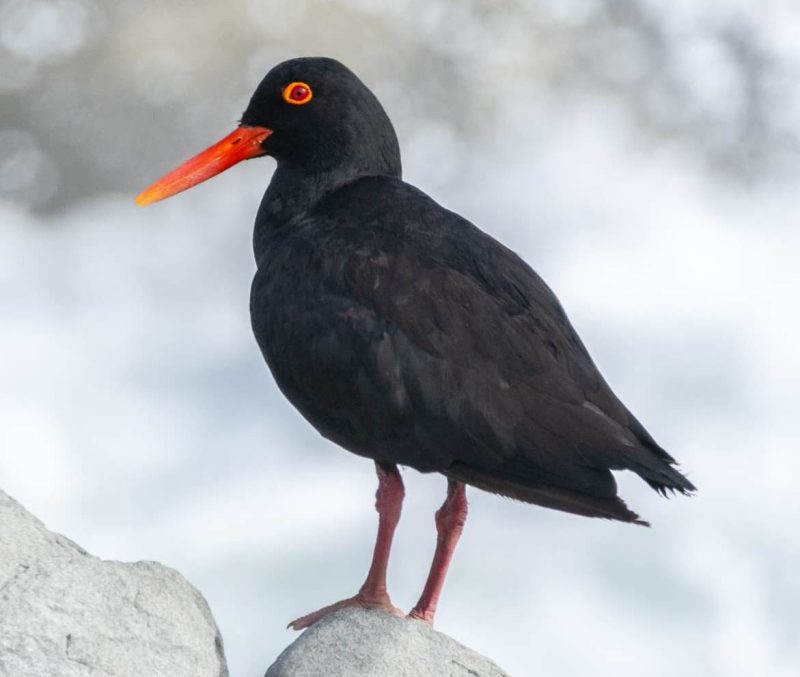
We counted the African Oystercatchers on the 10 km of shoreline of Robben Island on 13 June 2026. There were 420 adults and three juveniles.
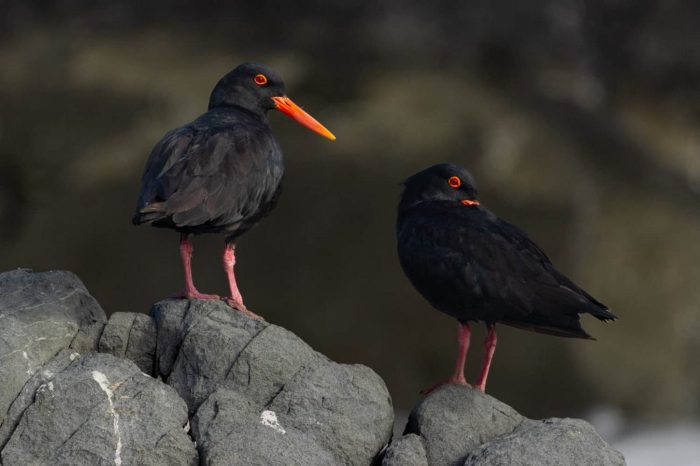
The previous survey of African Oystercatchers on Robben Island was less than a month ago, on 17 May 2026, and the total number counted was 479 birds. This is the kind of variability we experience between surveys. We don’t know whether the variation is due to our inefficiencies, or whether it is genuine, with a few tens of birds moving between the mainland and the island.
Besides the oystercatchers, we observed lots of other things …
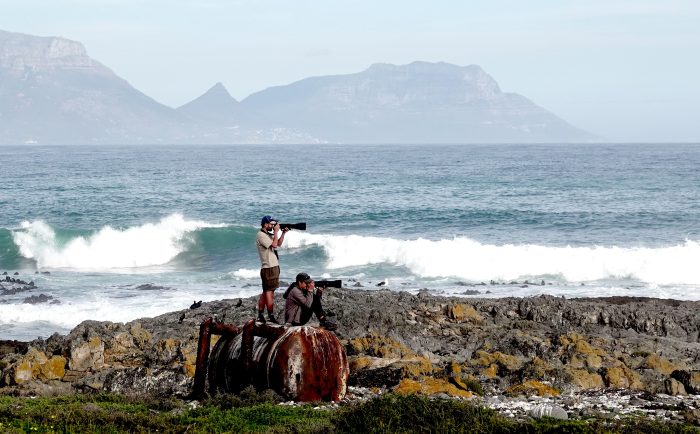
… What are these guys focusing on? …
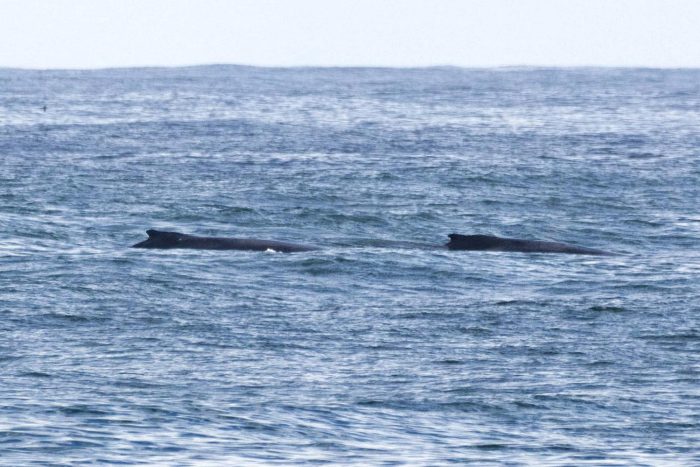
… two Humpback Whales
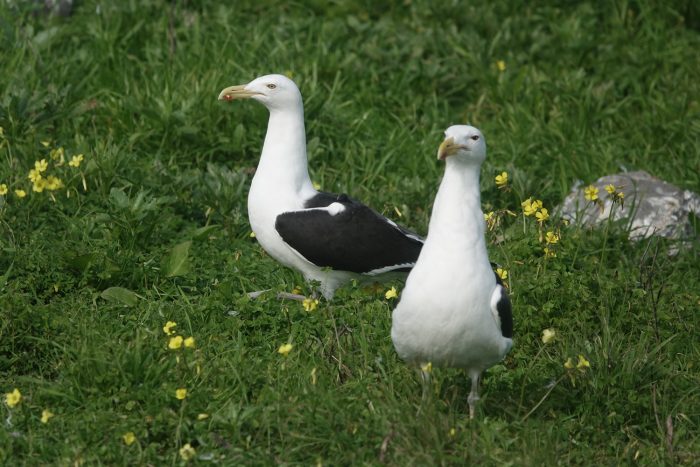
During past couple of months, the interior of the island has changed from brown to green. There has been excellent early winter rain in Greater Cape Town. There are already some flowers. The Kelp Gulls are settling into their colony round the northern edge of the island. But there seemed to be no nests as yet.
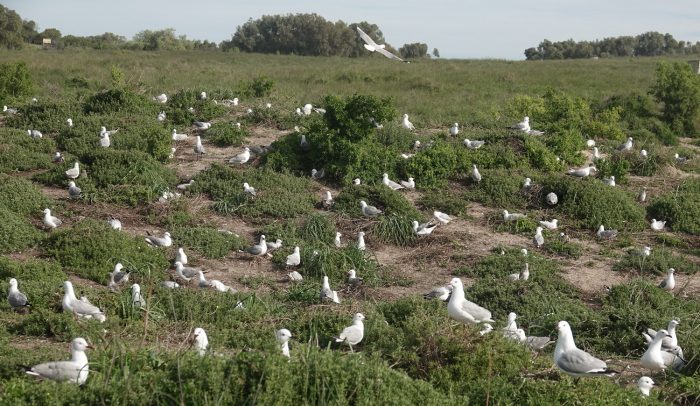
On the other hand, breeding for Hartlaub’s Gulls has been ongoing for several months through autumn. Not only are there nests with eggs, there are fledglings and …
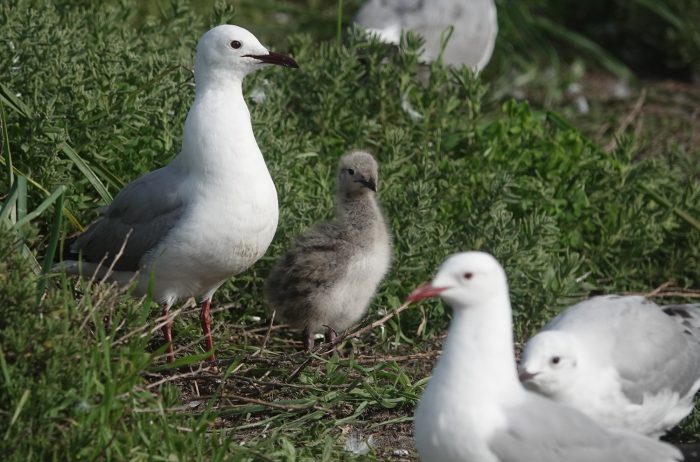
… small chicks.
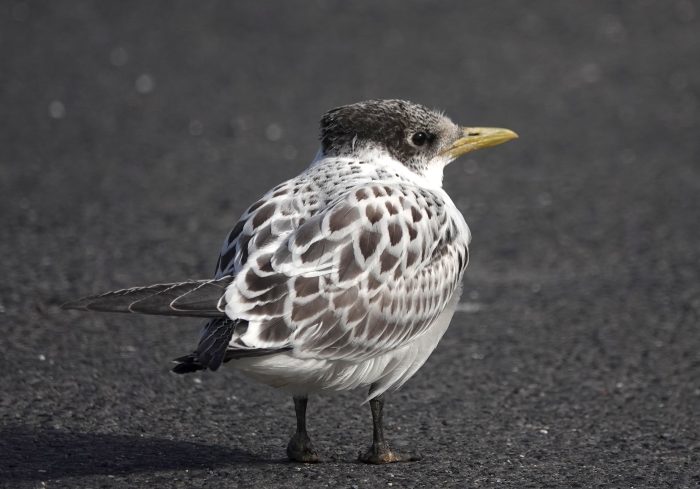
The Greater Crested Terns seem to near the end of breeding. Most of the juveniles that are remaining on the island can fly.
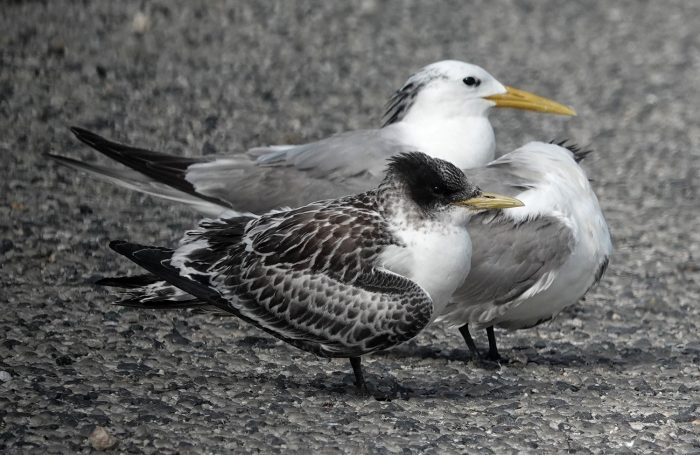
It is striking how much shorter the fledgling’s bill length is compared to the adult behind it. The chick in the front of the group can fly, but its bill has a lot of growing to do. This needs a consultation with Janine le Roux’s MSc thesis, on the growth of Greater Crested Tern chicks. Janine found that when a Greater Crested Tern chick hatches, the tarsus is already about 64% of adult size, and is almost completely grown halfway through the fledging period. Well-developed legs at hatching are essential, because the chick has to be instantly mobile. The wings start at 6% of adult size, and grow rapidly; the chick can fly when the wings reaches 72% of adult length. The bill lags behind in growth. It is 24% of adult length at hatching, and only 58% at fledging. This is a clever strategy, because once the chick can fly, it gets taken out to sea by its parents, and they feed it at the spot where the food is. No more flying long distance with fish-in-bill. This is an efficient system.
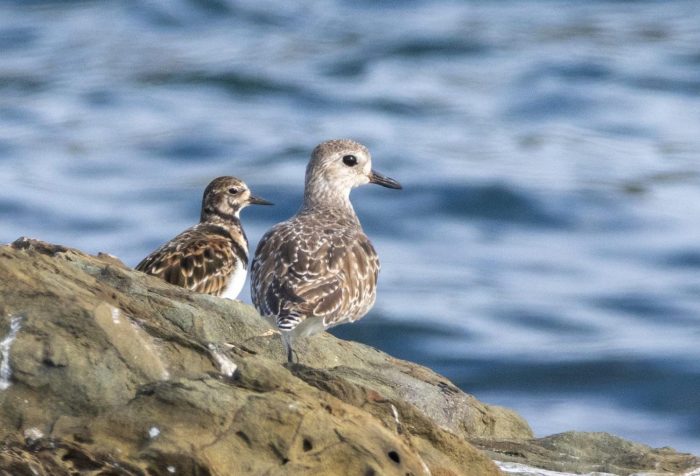
Other species seen during the count included this Ruddy Turnstone and this Grey Plover. It is June, and these species are about to start breeding on the Siberian tundra. The juveniles of these two species don’t breed until they are two years old. It is pointless, and risky, flying all the way to Siberia just to look around. So they spend their first “summer” in the southern hemisphere, and those of us who live in the southern hemisphere say they are “overwintering“, but a northern hemispherist would say they are “oversummering”.
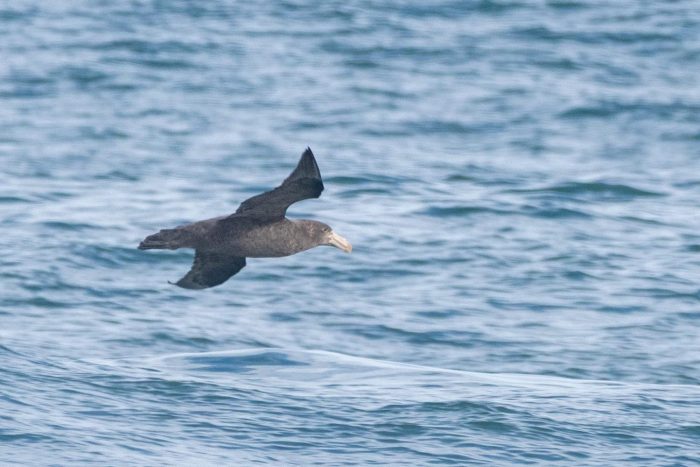
This Northern Giant Petrel flew close inshore. This is an unusual sighting.
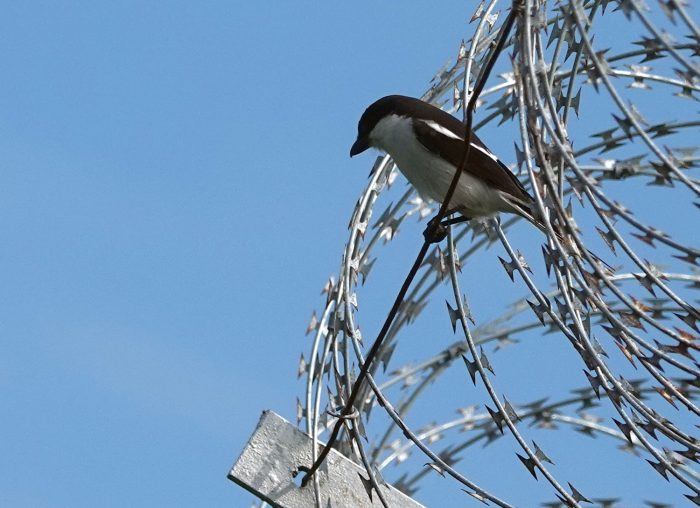
This Southern Fiscal carefully avoided perching on the razor wire at the prison.
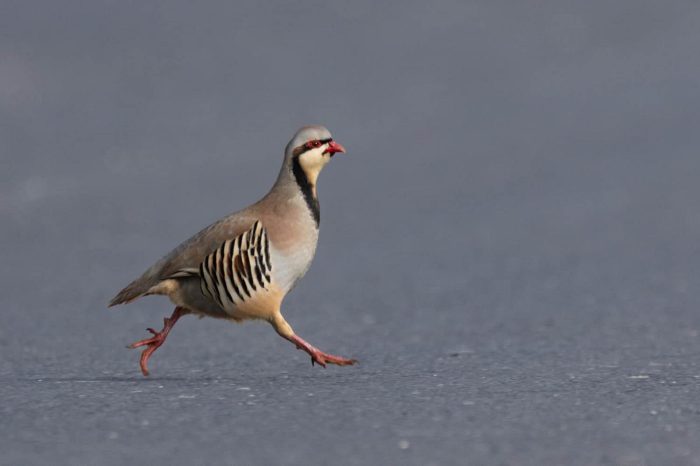
Chukar crossing a road at speed!
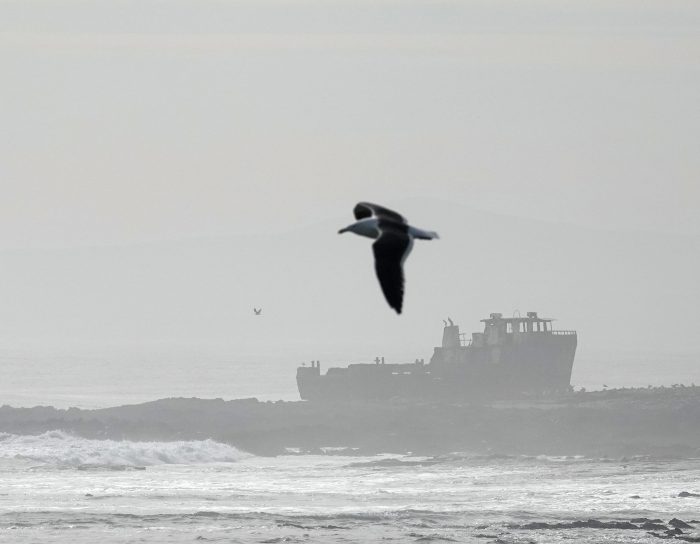
The Sea Challenger went aground on the northern tip of Robben Island in May 1998, 28 years ago. It is one of the key landmarks on the perimeter of the island that we use for orientation. It was solidly built and is slowly starting to show the first signs of disintegration.
We are extremely grateful to the Robben Island Museum for their logistic support that enables this monitoring to be done.