
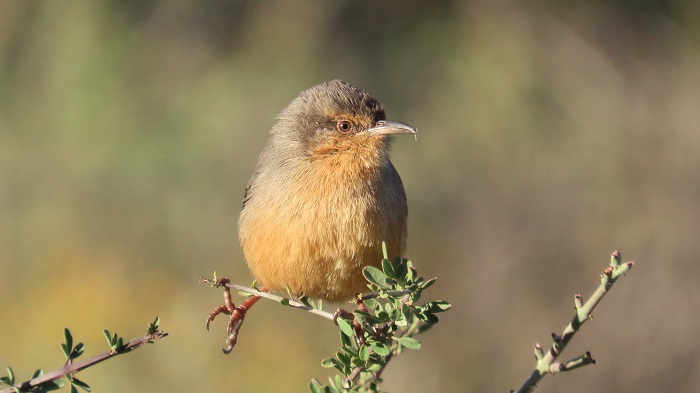
Cover image of Long-billed Crombec by Johan van Rooyen – Swartberg, Western Cape
Crombecs belong to the Family MACROSPHENIDAE (African Warblers). This is a recently recognised collection of species from the once vast family Sylviidae. The family is confined to sub-Saharan Africa. Macrosphenidae comprises 18 species from six genera.
Identification
The Long-billed Crombec is a very small (10-12 cm), round-bodied warbler with an extremely short tail and a longish, slightly de-curved bill.
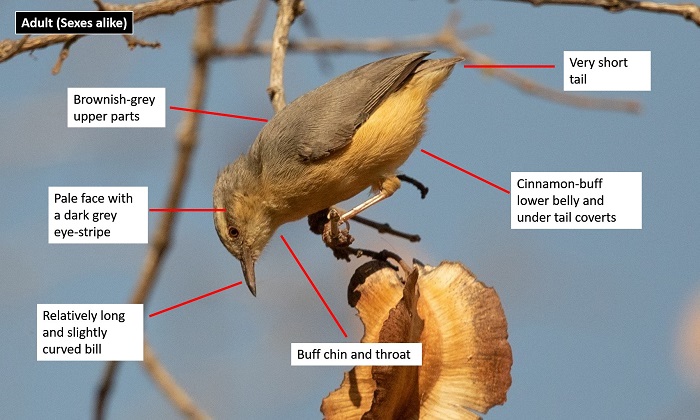
Kapama Game Reserve, Limpopo
Photo by Lance Robinson
The sexes are alike. Adults are very short-tailed, appearing almost tailless in the field. The crown is brownish grey with a slightly buffier nape. It has a whitish to pale tawny supercilium with dark grey lores, that extend as an eye stripe to behind the eye. The ear coverts and cheeks are pale buff while the remainder of the upper parts, including the upper tail are brownish grey. The chin and throat are buffy white with indistinct grey mottling. The rest of the underparts are cinnamon-buff and the colouring is most intense on the belly and flanks. The bill is dark grey with a pinkish base. The eyes are brown and the legs and feet vary from pinkish to yellowish brown. Immatures closely resemble the adults but are paler below.
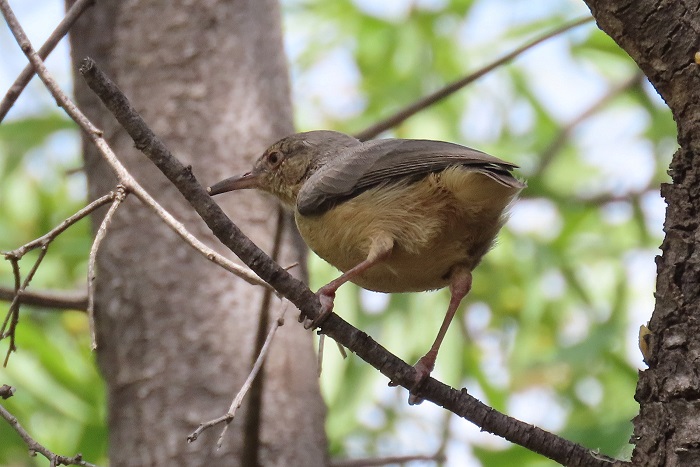
Cedarberg, Western Cape
Photo by Zenobia van Dyk
The Long-billed Crombec most resembles the Red-faced Crombec (Sylvietta ruficapilla). The latter is shorter-billed, with a darker, more uniformly rufous face that lacks the pale supercilium and dark eye stripe.
Status and Distribution
The Long-billed Crombec is widespread in southern Africa, and its range extends into Angola, Mozambique, Zambia and the DRC. In southern Africa, it is absent from Lesotho and from much of the grassland biome. It has strongholds in the woodlands of northern and eastern Botswana, the Limpopo province and the lowveld of Mpumalanga and eSwatini (Swaziland). In most other regions, its distribution appears discontinuous, presumably reflecting patchiness of suitable habitat.
The Long-billed Crombec is common across its southern African range.
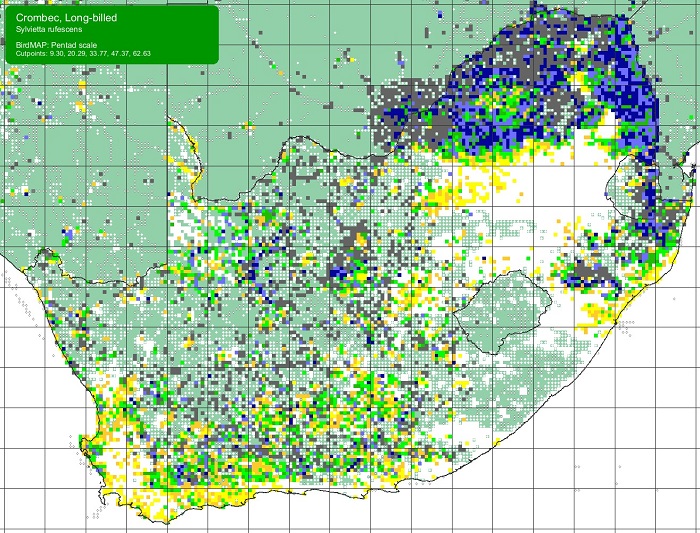
Details for map interpretation can be found here.
The Long-billed Crombec is not threatened. It is widespread and relatively unspecialised in its habitat requirements.
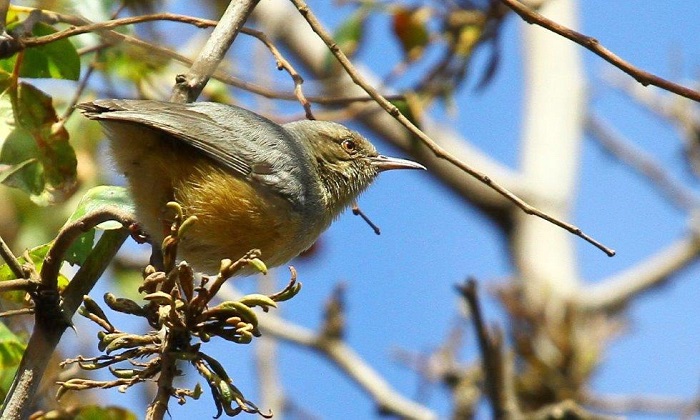
Magaliesberg Natural Area, North West
Photo by Mark Stanton
Habitat
The Long-billed Crombec is most common in woodland habitats. It inhabits a variety of woodland types from dry savannas with scattered trees and bushes to mixed-species woodland with a well-developed, bushy understorey. In arid and semi-arid areas like the Karoo, it is found along drainage lines with taller shrubs, and in patches of taller scrub. In the Western Cape, it is found in taller fynbos and occasionally also alien Acacia thickets. Breeds in gardens in Namibia and the Karoo. It is not found in unwooded grasslands or forest interiors.
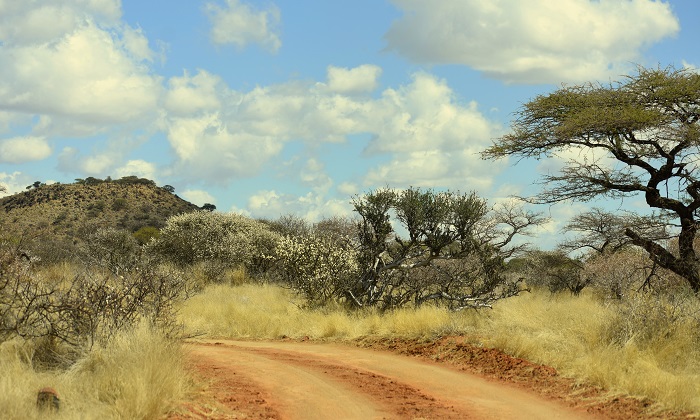
Mokala National Park, Northern Cape
Photo by Karis Daniel
Behaviour
The Long-billed Crombec is most often encountered singly, in pairs, or in family groups. It is resident, but probably moves locally in response to rainfall in the drier parts of its range. They are fairly tame and confiding, moving restlessly through bushes and the lower canopies of trees. Typically flies into the lower part of a shrub or tree before working its way upwards, then flying on to the next shrub or tree. It has a bouncy, undulating flight.
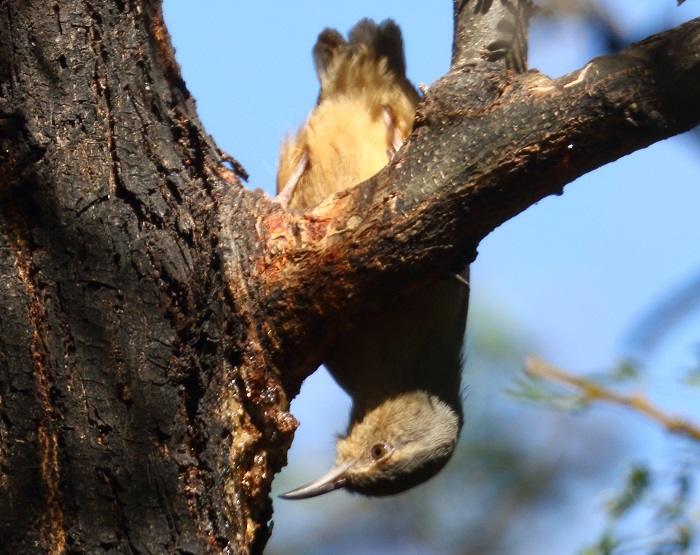
Karoo National Park, Western Cape
Photo by Alan Manson
The Long-billed Crombec frequently joins mixed-species foraging flocks. Forages with agile hops on trunks, branches, twigs and leaves. Often hangs upside-down to probe crevices in branches, and digs into termite tunnels on trees and fence posts. May hawk termites in flight, but returns to a perch to eat them. Gleans food from twigs and leaves, less frequently from branches and main stems or from the ground. The diet consists of invertebrates, including termites, spiders, mantids, beetles, ticks, caterpillars, and insect eggs. Also eats seeds, fruit, including grapes, and the nectar of various Aloe species.
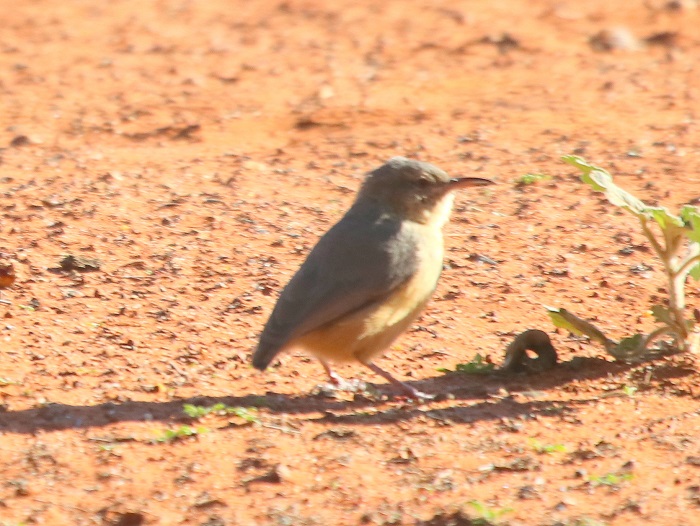
Mokala National Park, Northern Cape
Photo by Sybrand Venter
The Long-billed Crombec breeds during spring and summer (August to March). It usually starts breeding a little earlier in the south of its range due to the influence of winter rainfall. The Long-billed Crombec is a monogamous, solitary nester. Pairs are territorial.
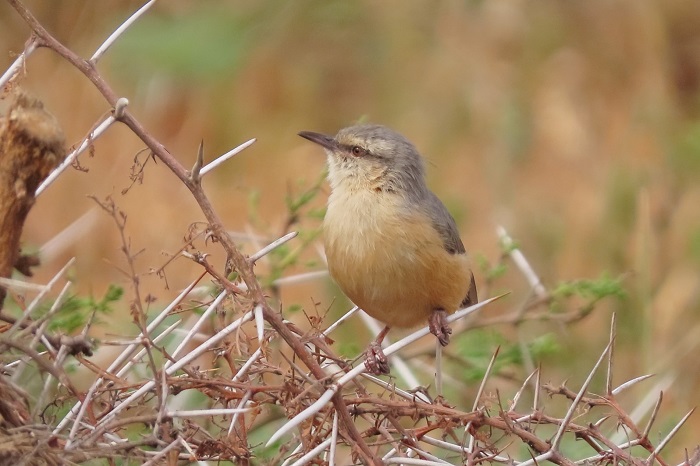
Kgomo-Kgomo, North West
Photo by Colin Summersgill
The nest is a small, deep-cupped bag built inside a tree or shrub, mostly less than 1m above the ground. It is open above with a distinctly raised lip around the lower rim of the opening. The ‘bag’ is made from shreds of inner-bark, leaf petioles, plant down, and fine bits of grass. It is held together and attached to the supporting twig by spider web silk. The exterior is decorated with rotten wood chips, caterpillar faeces, and skeletonised leaves. The cup is lined with fine, dry grass or plant down and sometimes sheep wool. Nest sites are sometimes reused in successive breeding seasons. It is built in 7 to 10 days.
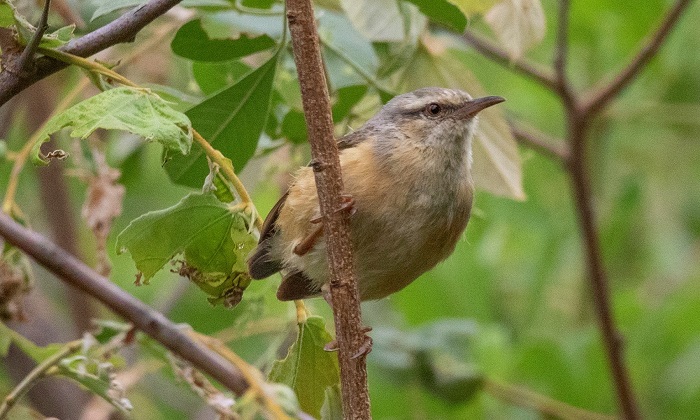
Mabula Game Reserve, Limpopo
Photo by Lance Robinson
1 to 3 (usually 2) eggs are laid per clutch at 1 day intervals. Incubation usually starts at clutch completion and takes around 14 days. Incubation is performed by both sexes. The chicks are altricial and the nestling period takes a further 14 days. The young are fed and cared for by both adults. They are dependent on their parents for at least 10 days after leaving the nest. Broods of the Long-billed Crombec are occasionally parasitised by the Klaas’s Cuckoo (Chrysococcyx klaas).
Further Resources
This species text is adapted from the first Southern African Bird Atlas Project (SABAP1), 1997.
The use of photographs by Alan Manson, Colin Summersgill, Johan van Rooyen, Karis Daniel, Lance Robinson, Mark Stanton, Ryan Tippett, Sybrand Venter, and Zenobia van Dyk is acknowledged.
Other common names: Cape Crombec, Long-billed Sylvietta (Alt. English); Bosveldstompstert (Afrikaans); iNdibilitshe (isiZulu)); Crombec à long bec (French); Kaapse Krombek (Dutch); Langschnabel-Sylvietta, Kurzschwanz-Sylvietta (German); Rabicurta-de-bico-comprido (Portuguese).
Recommended citation format: Tippett RM 2026. Long-billed Crombec Sylvietta rufescens. Biodiversity and Development Institute. Available online at https://thebdi.org/2026/08/07/long-billed-crombec-sylvietta-rufescens/
List of bird species in this format is available here.
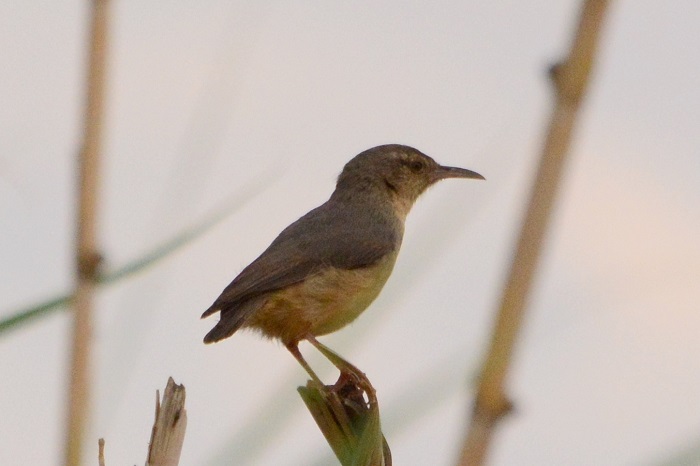
Carnarvon district, Northern Cape
Photo by Ryan Tippett
