
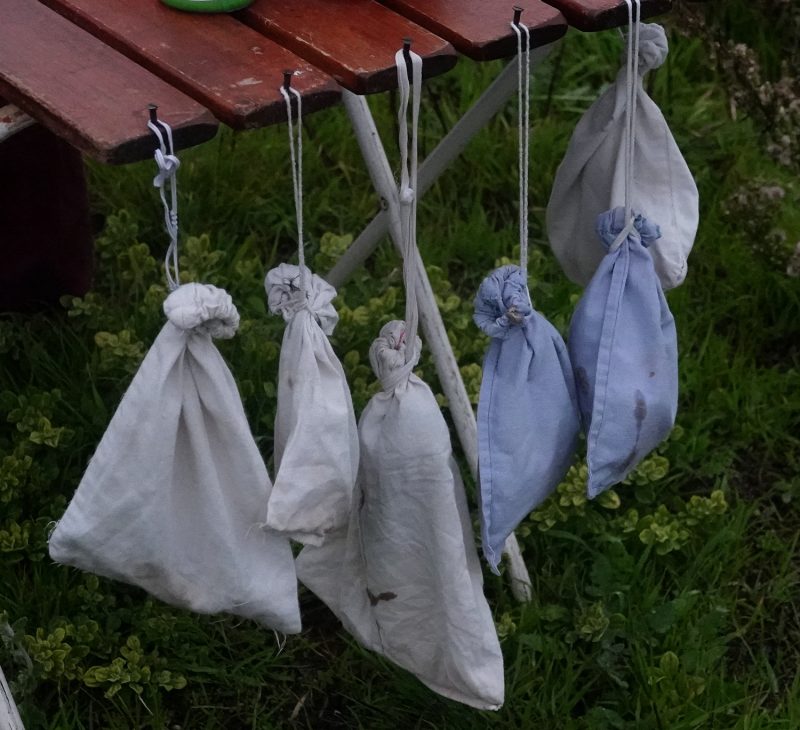
On 24 May 2026, we were bird ringing at the Strandfontein Sewage Works at a different spot to where we were eight days ago, on 16 May! Relevant permissions were obtained beforehand.

These sewage works represents one of Cape Town’s most precious bird resources. The effluent flows from the main treatment operation through a large series of pans which attract a vast variety of birds. Especially during the dry summer months, the superabundance of water, generated by flushing loos and having showers, provides a critical drought refuge in a region where three centuries of development have destroyed or damaged many of the natural wetlands.
Conditions were near-perfect for mist netting. As the reflections in the photo above shows, there was little wind and it was overcast for most of the morning. We handled 80 birds of 11 species:
| Species | Count |
| Cape Teal | 2 |
| Black Crake | 1 |
| Brown-throated Martin | 33 |
| Cape Robin-chat | 2 |
| Lesser Swamp Warbler | 27 |
| Little Rush Warbler | 5 |
| Levaillant’s Cisticola | 3 |
| Cape Wagtail | 1 |
| Southern Double-collared Sunbird | 1 |
| Southern Masked Weaver | 4 |
| Southern Red Bishop | 1 |
| Totals : 11 species | 80 birds |
Three of the 80 birds we handled would qualify as waterbirds, on a strict assessment. These are the top two species on the list above. Seven of the remaining nine species would be considered as frequently associated with water, the exceptions being the Cape Robin-chat and the Southern Double-collared Sunbird.
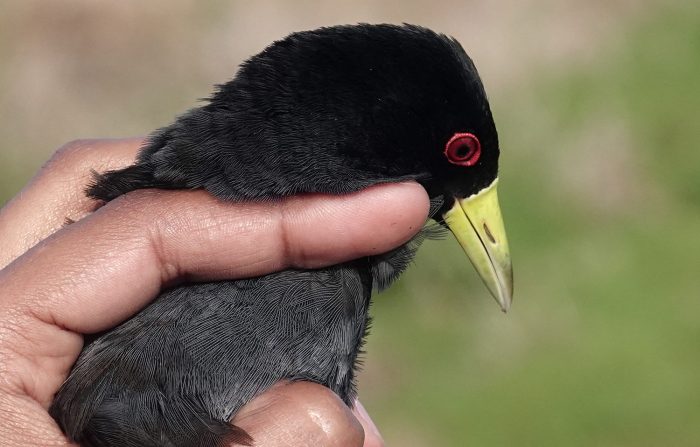
Pride of place goes to the Black Crake, a reedbed skulker.
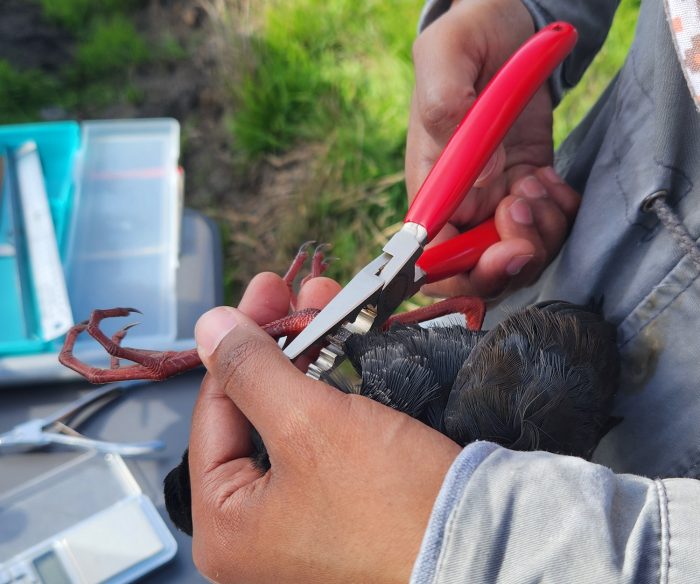
We ring Black Crakes above the “ankle”. The ringing pliers has slots of various size; the ringer chooses the appropriate size for the ring being fitted. The leg is held gently but firmly so that there is no chance of the leg being damaged as the ring is closed into a neat circular cylinder. The ring size is chosen so that it is loose, but not wobbly.
We also caught two Cape Teal …
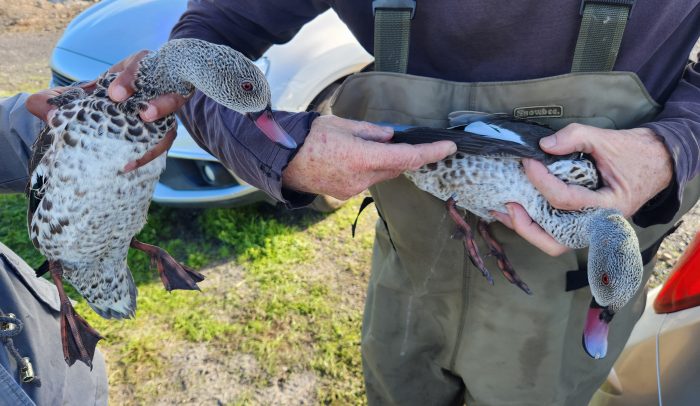
… and that made up the three waterbirds, of two species.
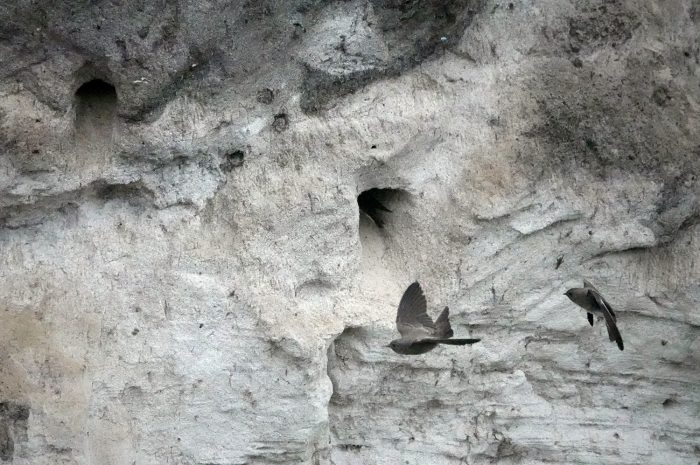
There was an exceptionally late Brown-throated Martin breeding colony nearby, still active in May. In the winter rainfall area breeding peaks from September to December but has been recorded throughout the year.
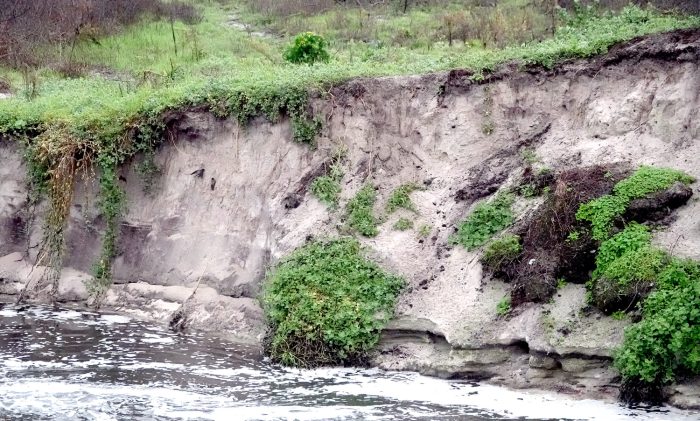
This demonstrates the recipe for creating a breeding site for Brown-throated Martins. The near vertical sandbank is maintained by the thick tangle of vegetation at the top of the “cliff” which prevents the sand from slipping off, and a stream to keep eroding the base! The martins are exploiting the opportunity far beyond the limits of the “normal” breeding season.
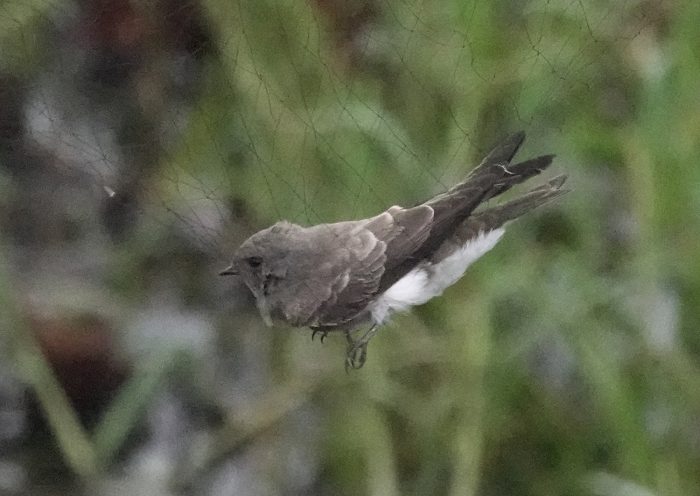
An adult Brown-throated Martin in a mist net.
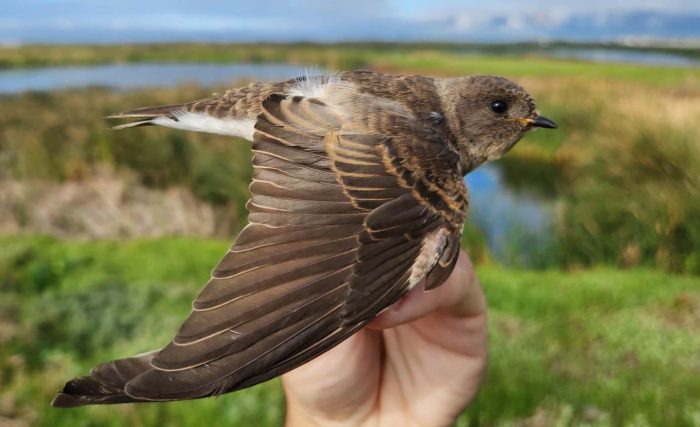
Newly fledged Brown-throated Martin
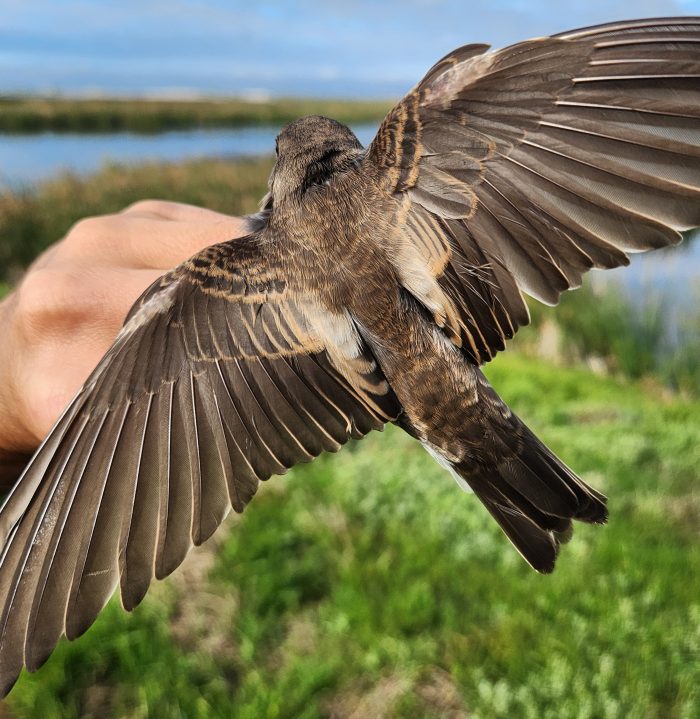
Another angle on the bird above, What gives it away as a young bird is pale-brown edging to so many of the feathers …
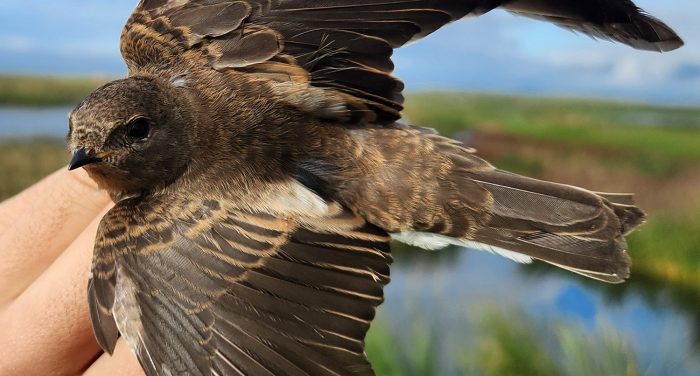
… including the feathers on the rump, the row of feathers forming the wing coverts, and the tips of the tail feathers.
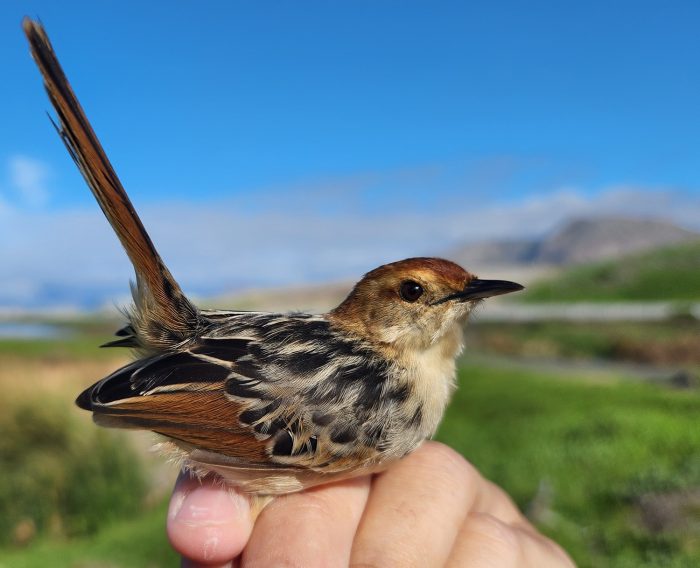
Levaillant’s Cisticola with the Muizenberg Mountains in the background!
The Strandfontein Sewage Works is best known for the large array of waterbirds attracted there. Here is a tiny selection of common species …
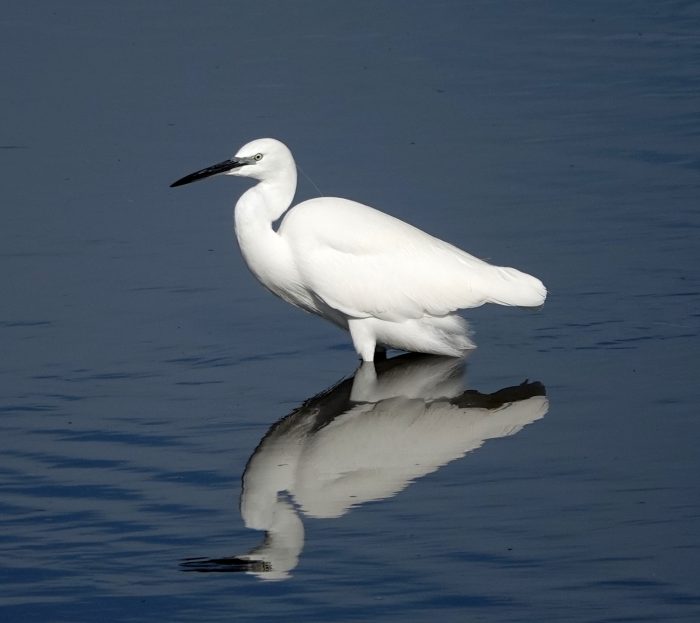
… Little Egret in one of the shallow ponds …
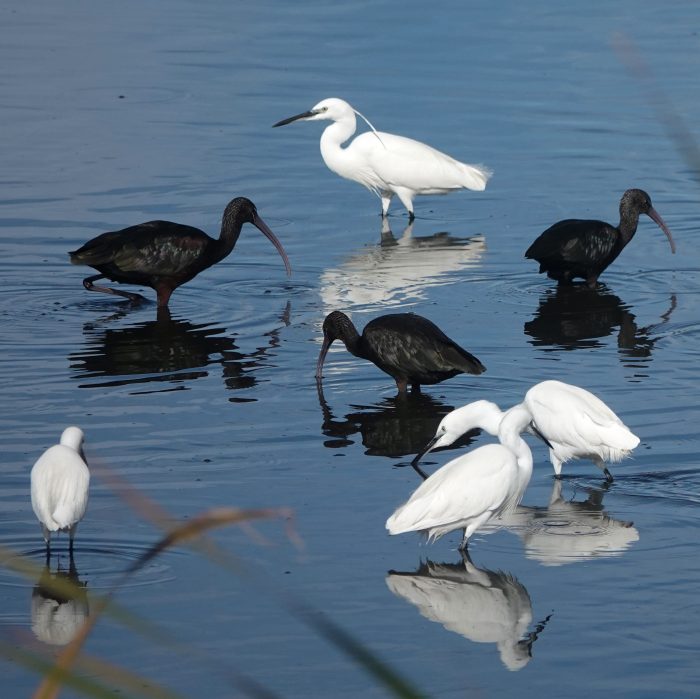
… Glossy Ibis and Little Egret hunting for food together …
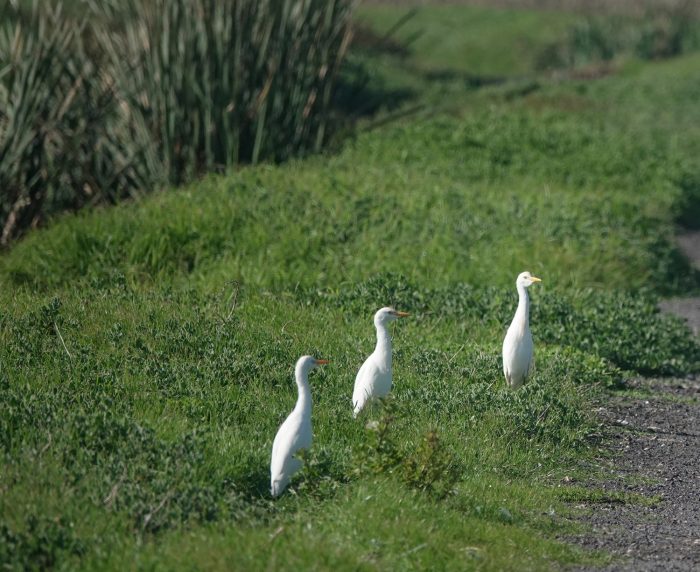
… Cattle Egrets on a bank between ponds …
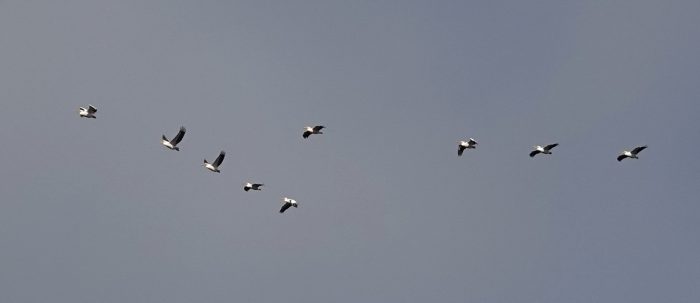
.. Great White Pelicans flying over …
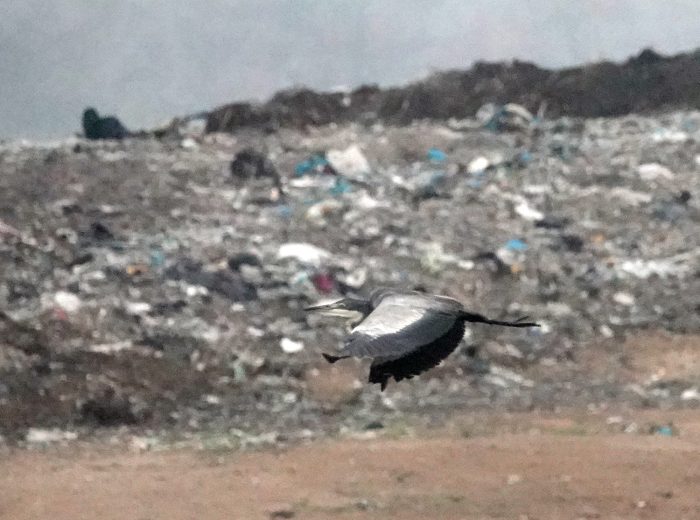
… and a Black-necked Heron on its way to the adjacent rubbish dump …
So that’s the wrap about our bird ringing at Strandfontein Sewage Works, 24 May 2026.