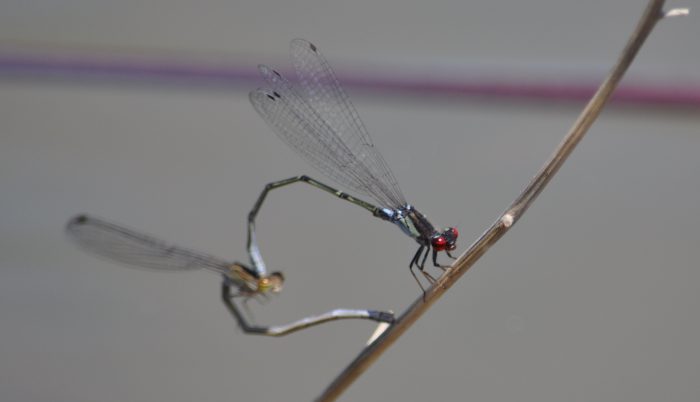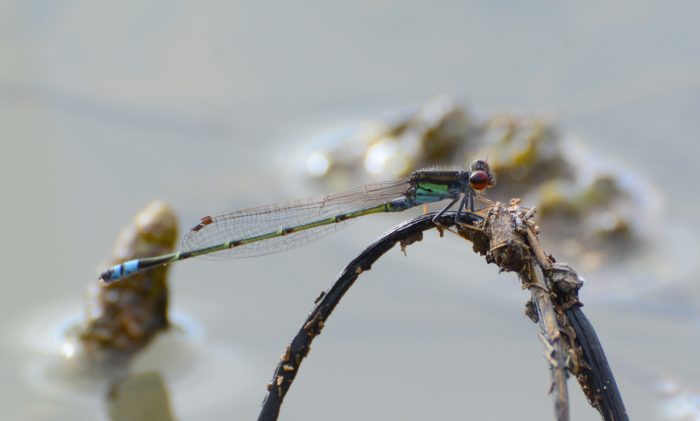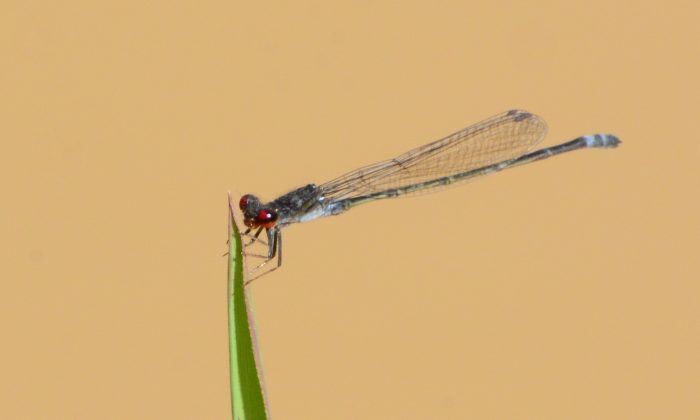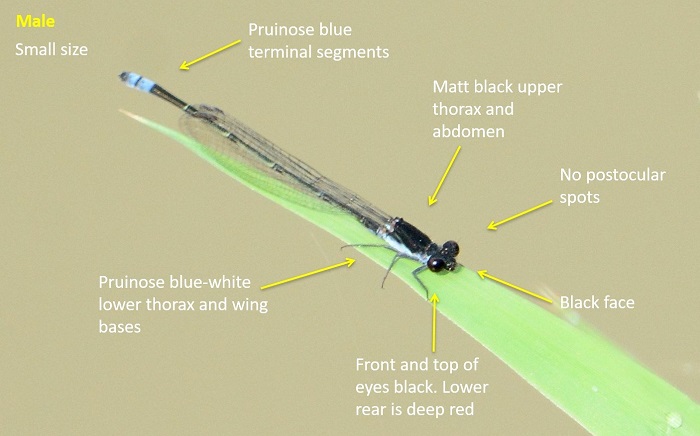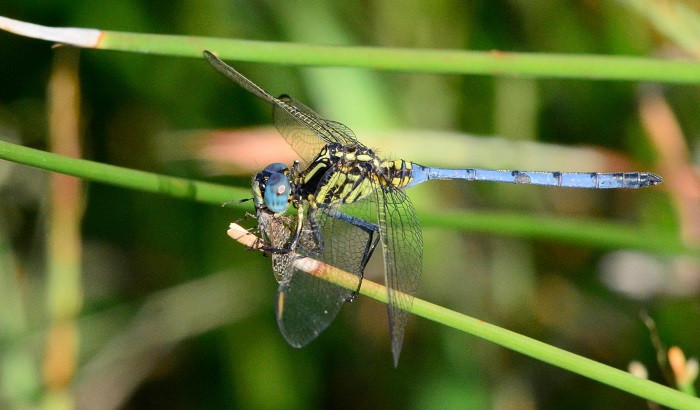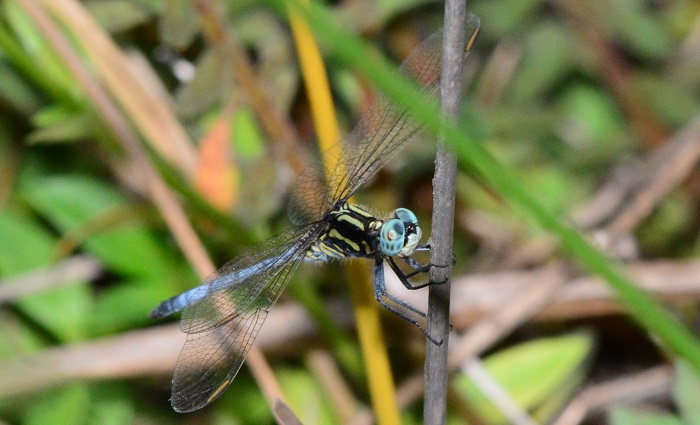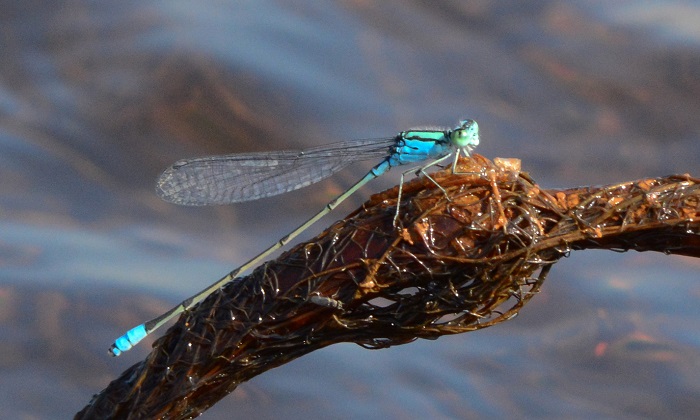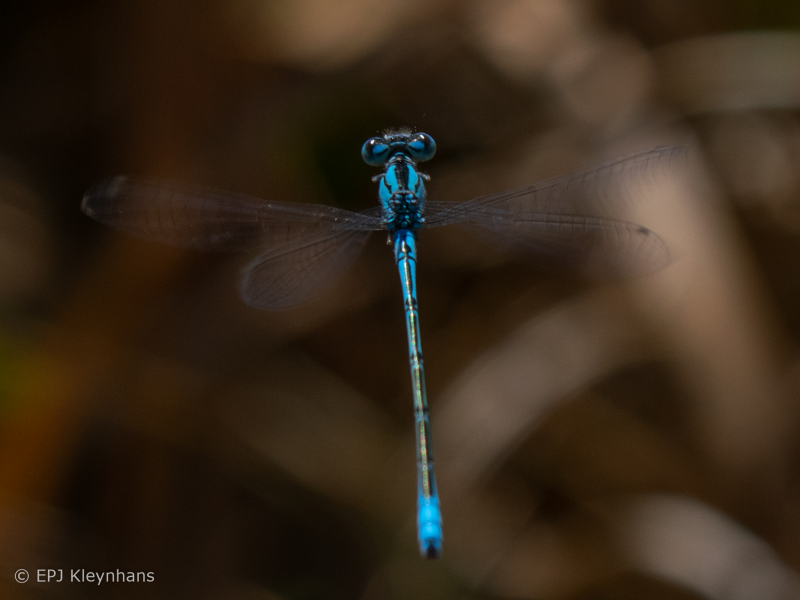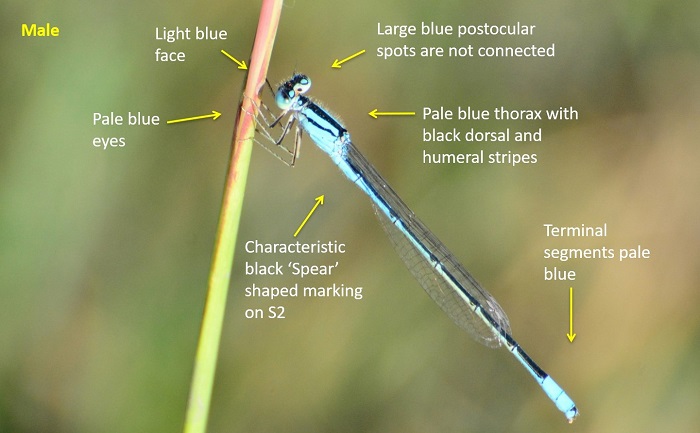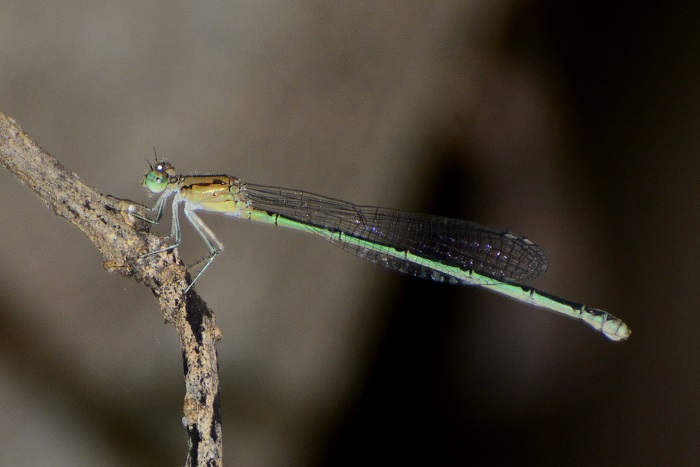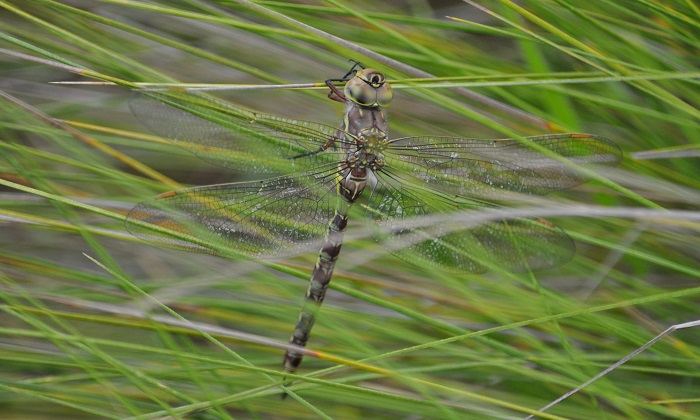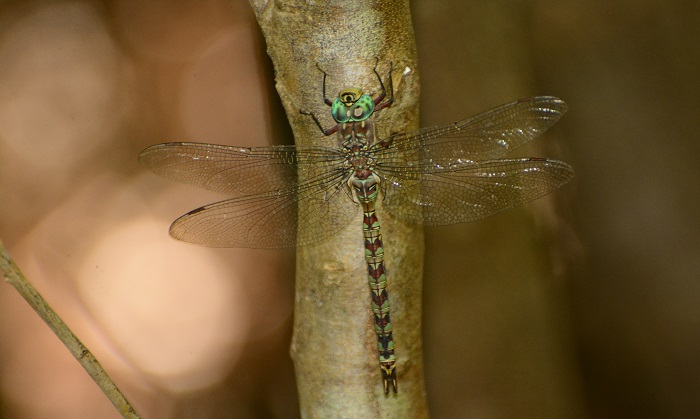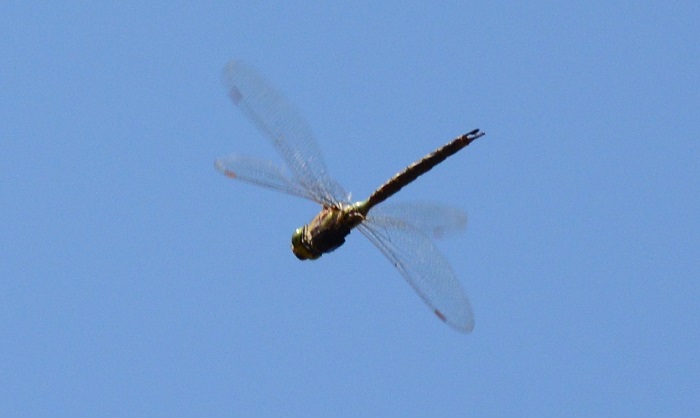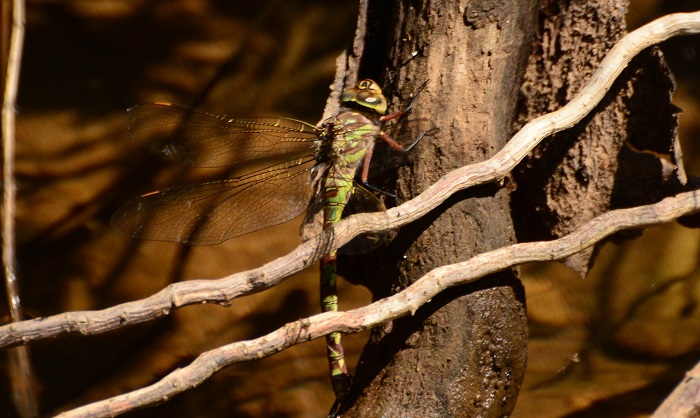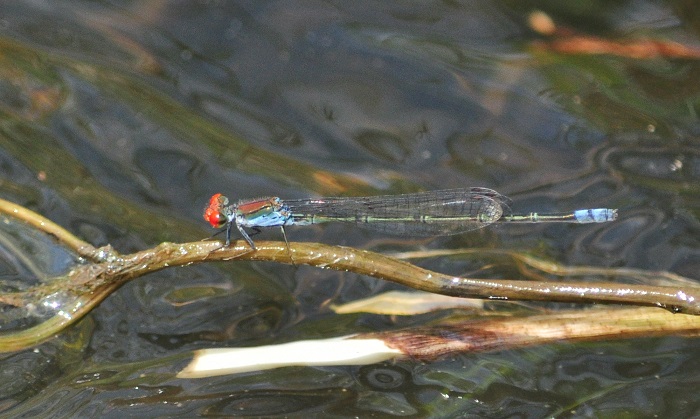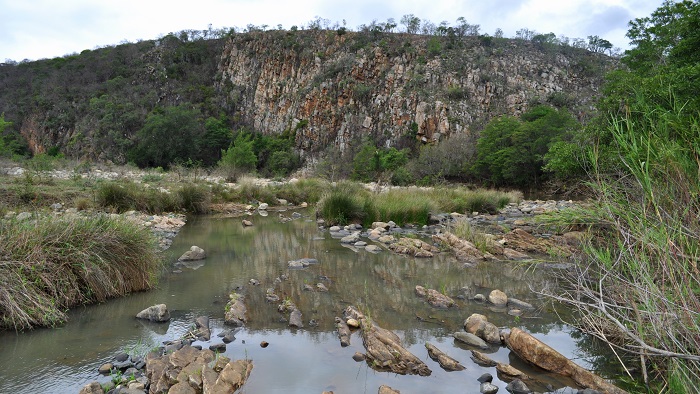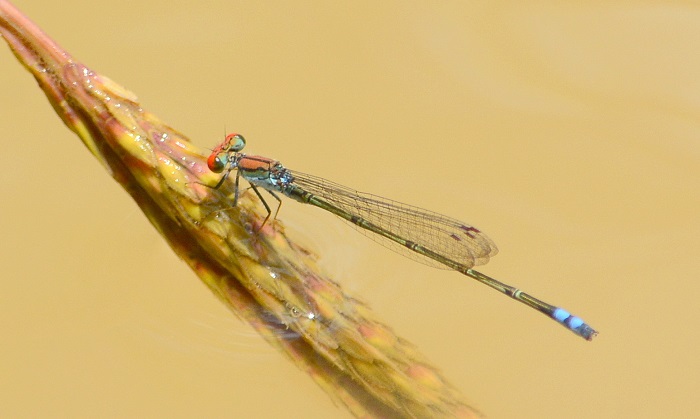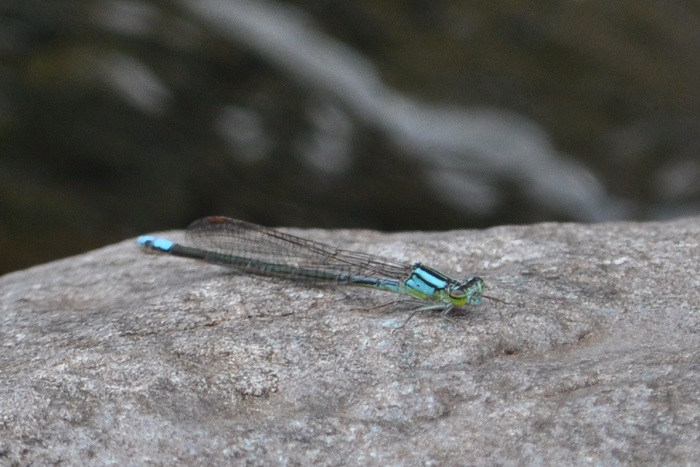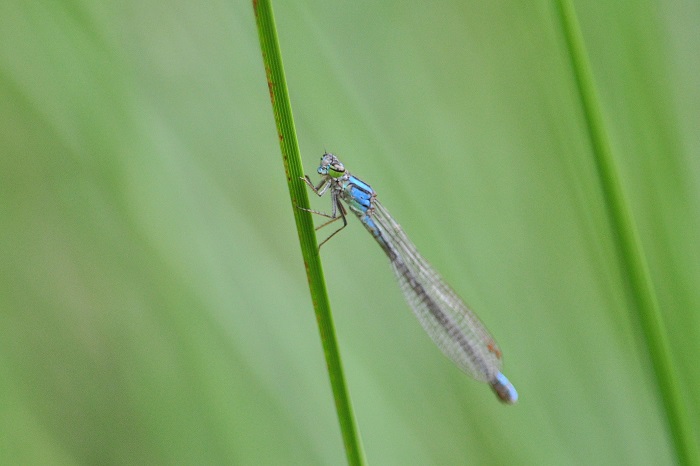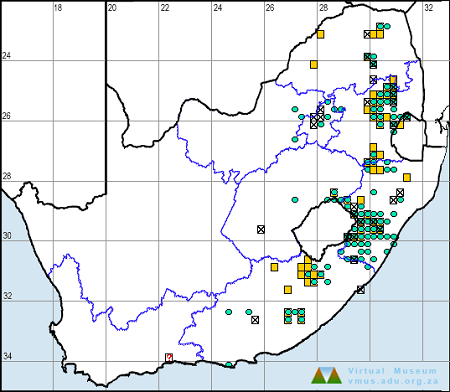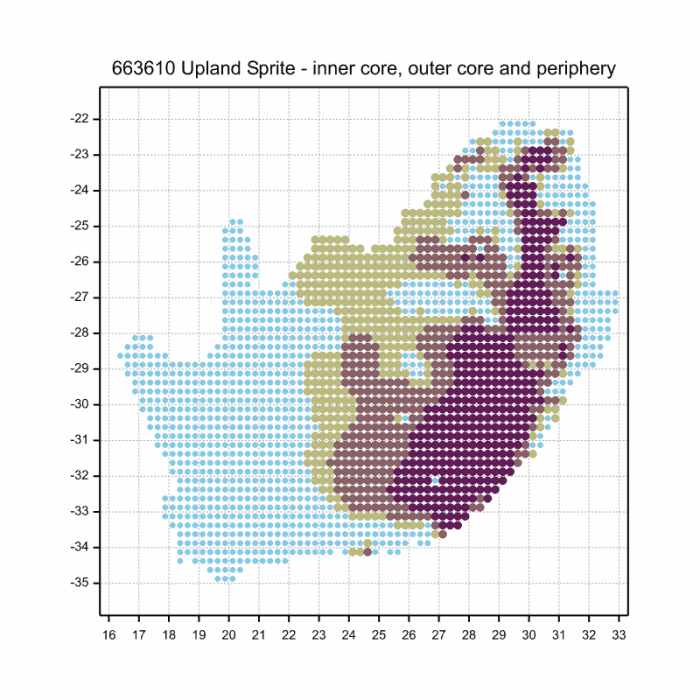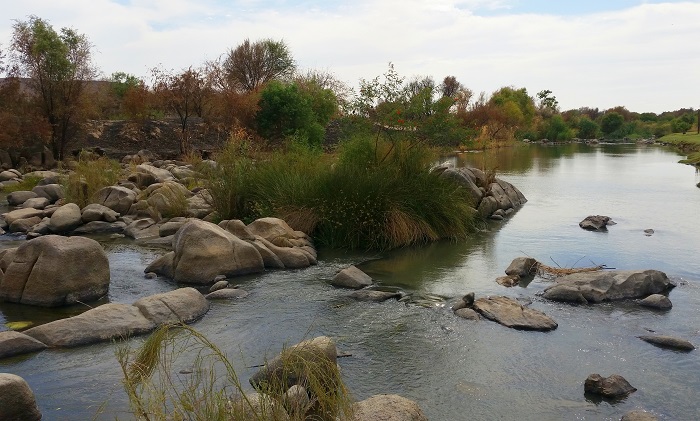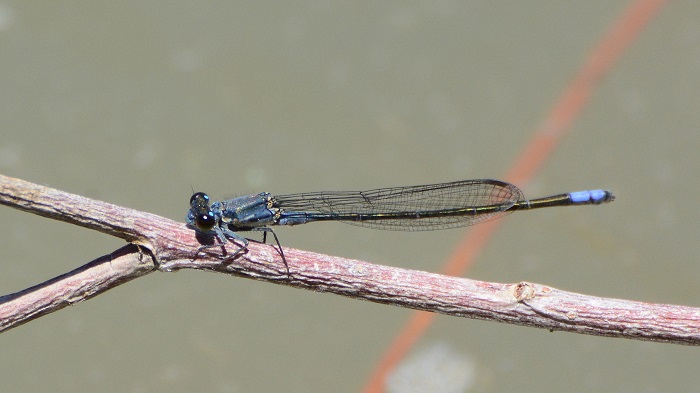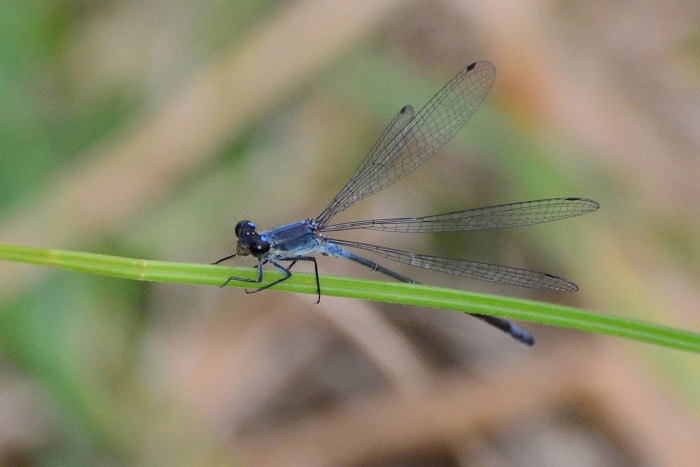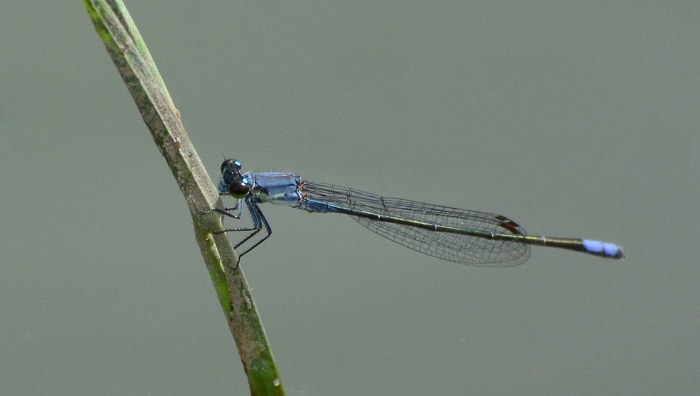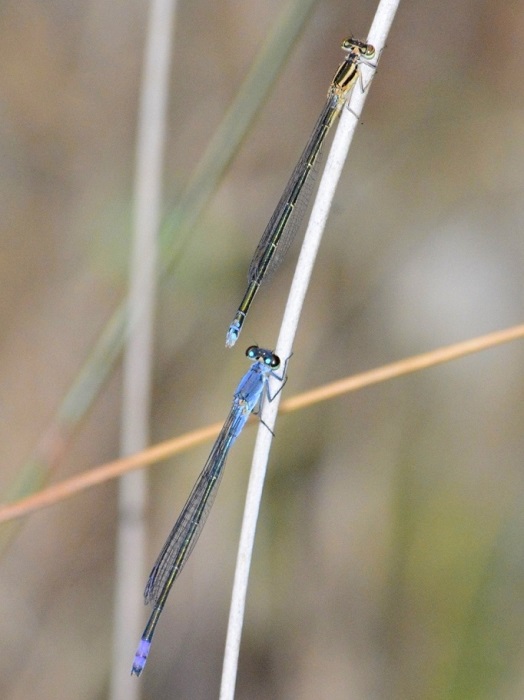
African Emerald (Hemicordulia africana)

Cover photo by Richard Johnstone.

Find the African Emerald in the FBIS database (Freshwater Biodiversity Information System) here.

Family Corduliidae

Hemicordulia africana is the only African member of this largely Asian family.

Identification

African Emerald Hemicordulia africana – Male
Richardsbay, KwaZulu-Natal
Photo by Georg Jacobs

Medium-large size

Length reaches 47mm; Wingspan up to 65mm.

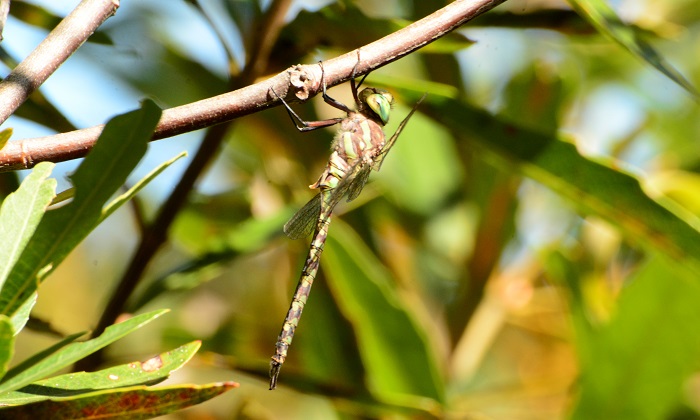
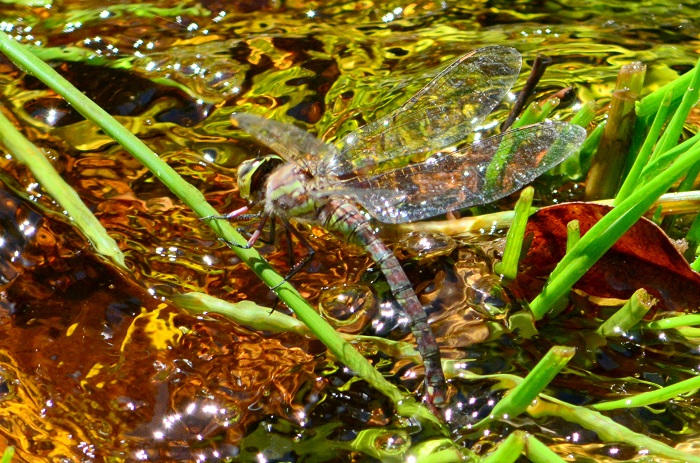
The African Emerald is unlike any other dragonfly in the region. The metallic green colouration, combined with its unique wing venation and tiny black pterostigmas render this species unmistakable. In poor light conditions, which is when this species is most active, the overall colouration appears dark blackish-green. In sunlight, it is bright metallic green.

Females are less colourful than the males, showing a reduced amount of metallic colouration and dark yellow wing bases.

The African Emerald could be mistaken for Zyxomma atlanticum (Smoky Duskdarter), especially in flight and in poor light. Both species occur in the same habitat and are similar in size and behaviour.

Click here for more details on identification of the African Emerald.

African Emerald Hemicordulia africana – Female
Photo by Corne Rautenbach

Habitat

The African Emerald is a forest-dwelling species. It inhabits coastal forest and especially swamp forests in north-eastern KwaZulu-Natal. It is most often seen along forest tracks and clearings. The African Emerald breeds in forested pools, streams, and rivers.

Habitat – Kosi Bay, KwaZulu-Natal
Photo by Lauren Arnold.

Behaviour

The African Emerald is elusive and crepuscular, being most active at dusk, but may also emerge at other times, during very humid conditions. They spend much of the day hidden in dense, shaded vegetation. African Emeralds hunt back and forth along a selected route at forest edges and clearings near water. The African Emerald is somewhat inquisitive and may approach an observer before moving off again. It regularly pauses to rest by hanging vertically from a perch.

African Emerald Hemicordulia africana – Female
Photo by Richard Johnstone

Status and Conservation

The African Emerald is uncommon and localised. It is listed as Near Threatened in the IUCN Red List of Threatened Species. The presence of this species in South Africa is erratic, and it may be absent from some areas during drought periods.

Distribution

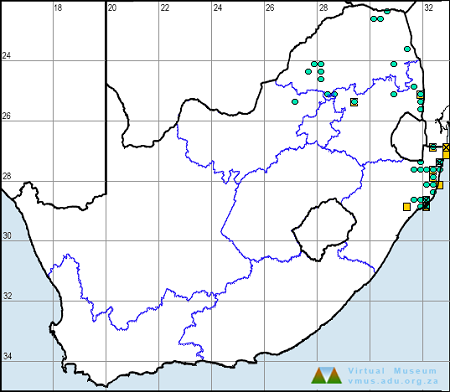
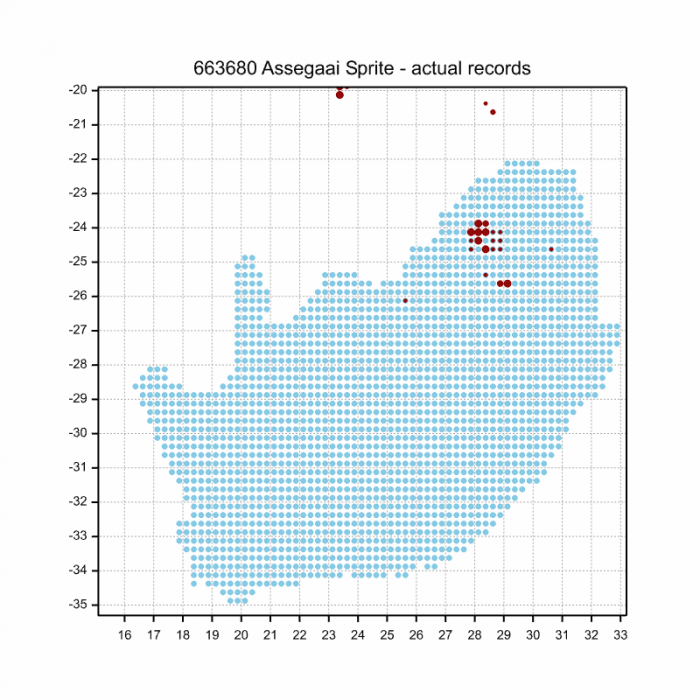
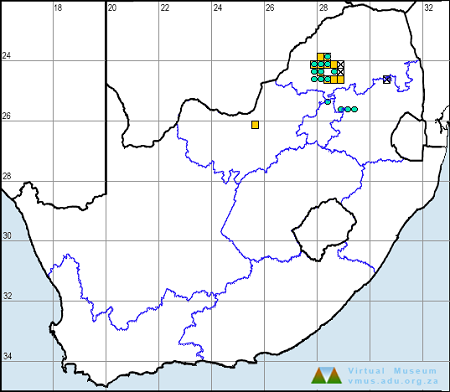
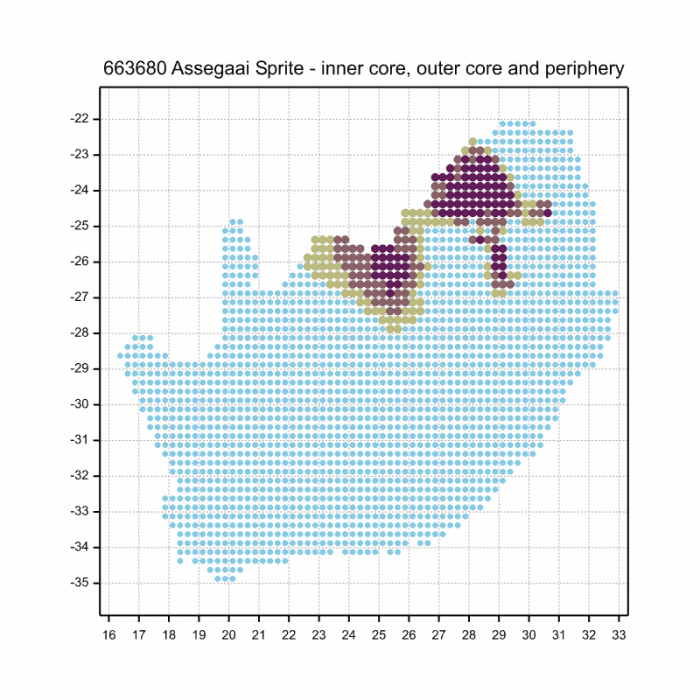
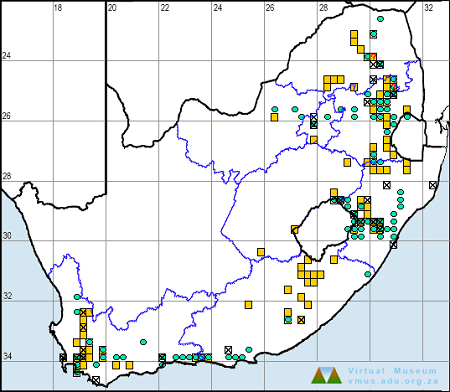
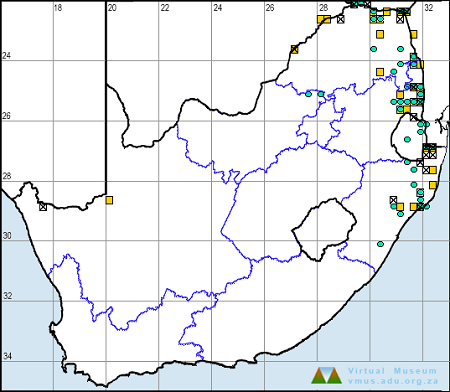
Hemicordulia africana has a disjunct distribution in Eastern and Southern Africa, although it is likely to be under recorded in many areas.

In South Africa it is restricted to the coastal plain of north-eastern KwaZulu-Natal, where it has been recorded from Kosi Bay down to Richards Bay.

African Emerald Hemicordulia africana – Male
Kosi Bay, KwaZulu-Natal
Photo by Felicity Grundlingh

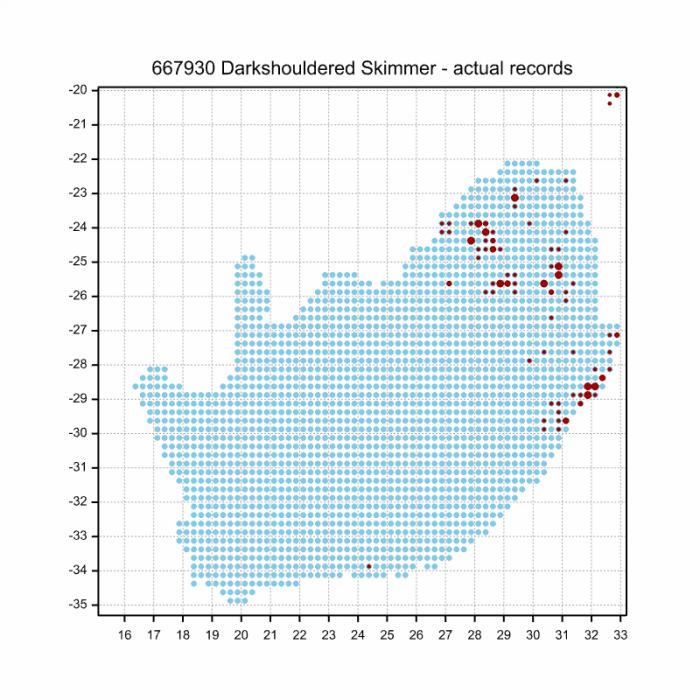
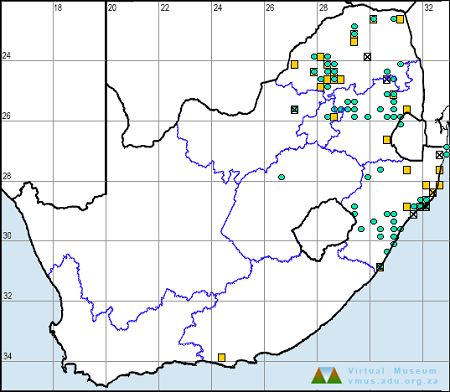
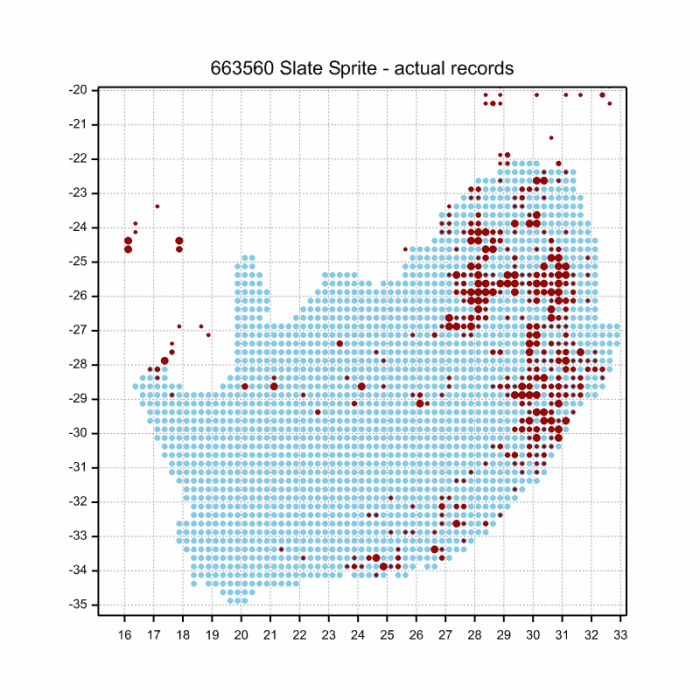
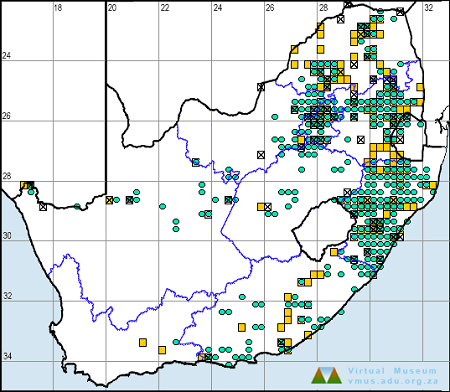
Below is a map showing the distribution of records for African Emerald in the OdonataMAP database as at February 2020.

Below is a map showing the distribution of records for African Emerald in the OdonataMAP database as of December 2024.

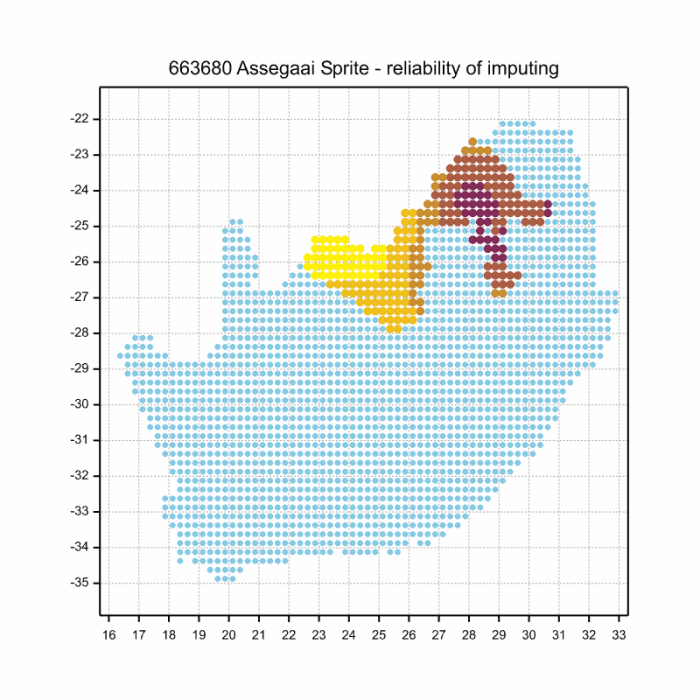
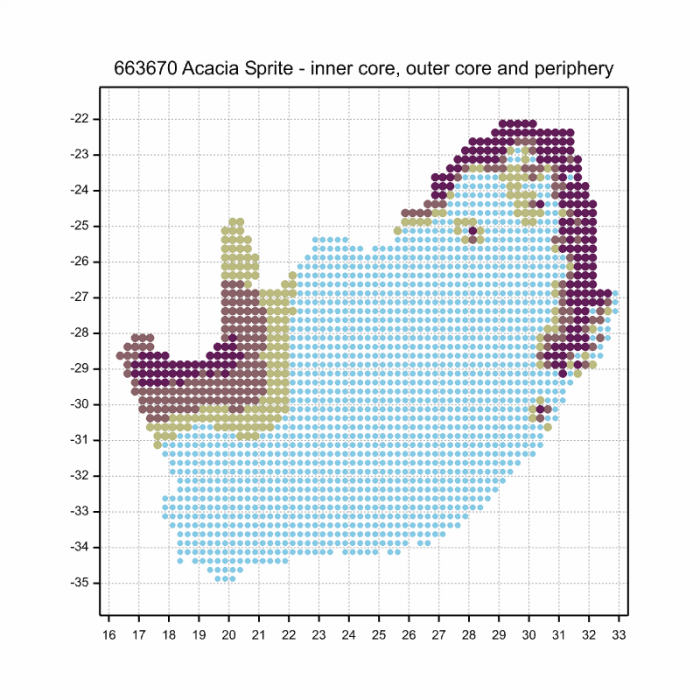
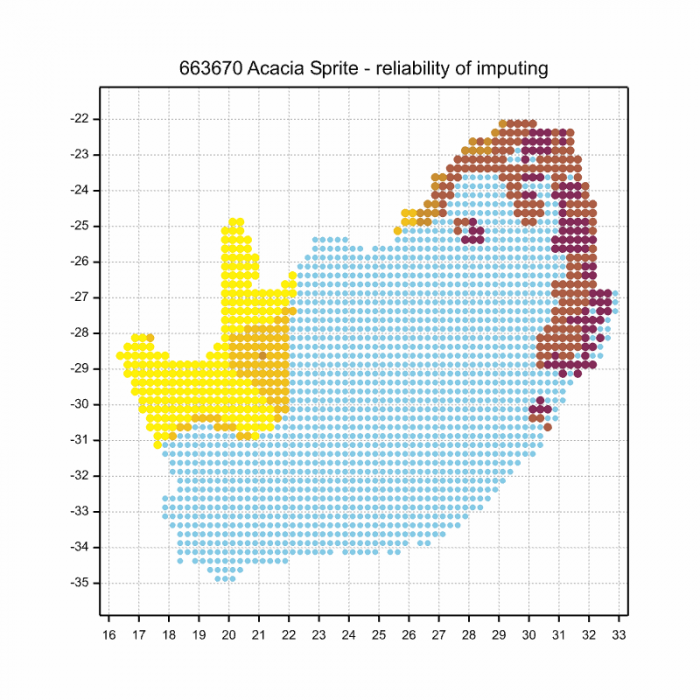
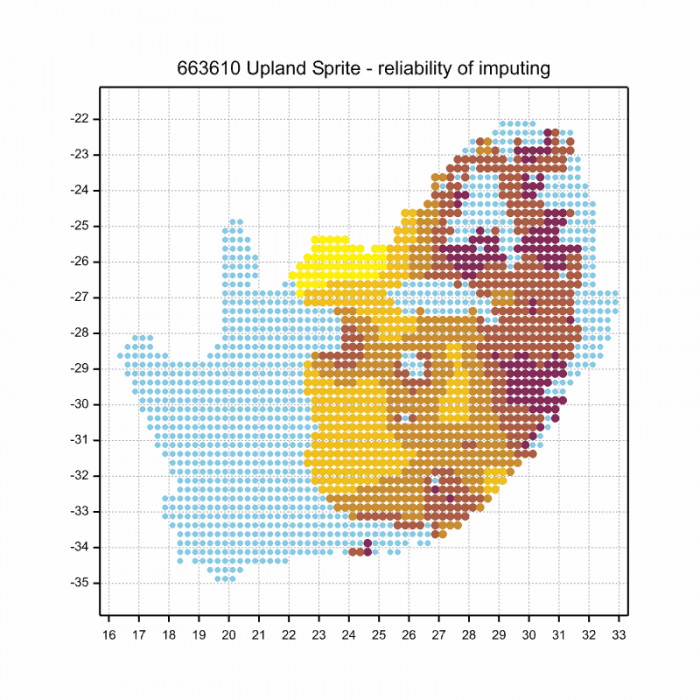
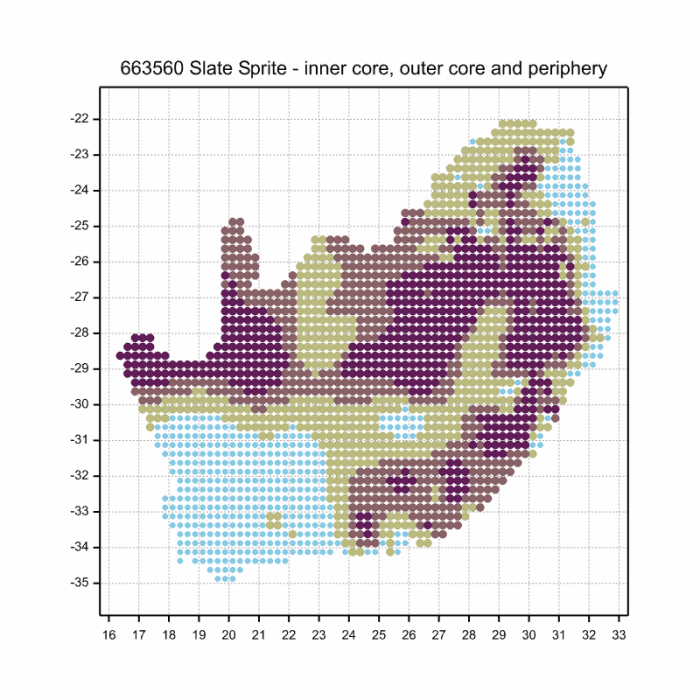
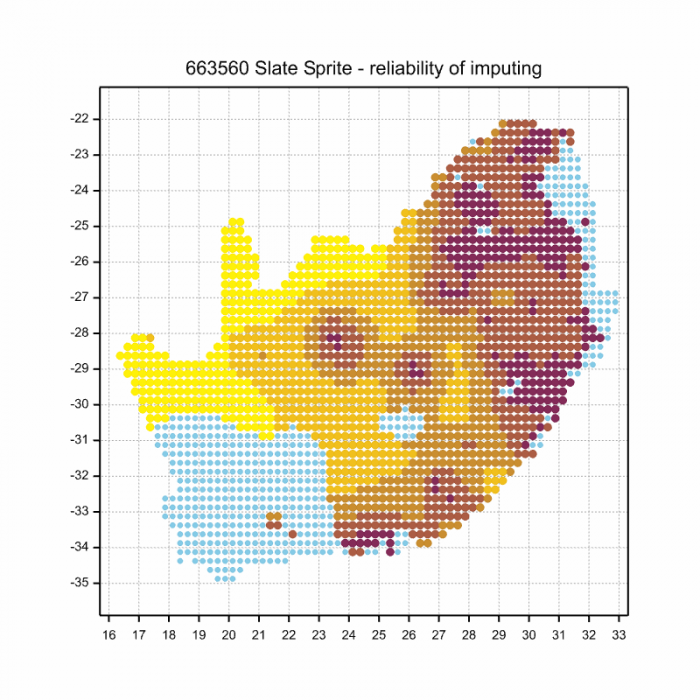
The next map below is an imputed map, produced by an interpolation algorithm, which attempts to generate a full distribution map from the partial information in the map above. This map will be improved by the submission of records to the OdonataMAP section of the Virtual Museum.

Ultimately, we will produce a series of maps for all the odonata species in the region. The current algorithm is a new algorithm. The objective is mainly to produce “smoothed” maps that could go into a field guide for odonata. This basic version of the algorithm (as mapped above) does not make use of “explanatory variables” (e.g. altitude, terrain roughness, presence of freshwater — we will be producing maps that take these variables into account soon). Currently, it only makes use of the OdonataMAP records for the species being mapped, as well as all the other records of all other species. The basic maps are “optimistic” and will generally show ranges to be larger than what they probably are.

These maps use the data in the OdonataMAP section of the Virtual Museum, and also the database assembled by the previous JRS funded project, which was led by Professor Michael Samways and Dr KD Dijkstra.

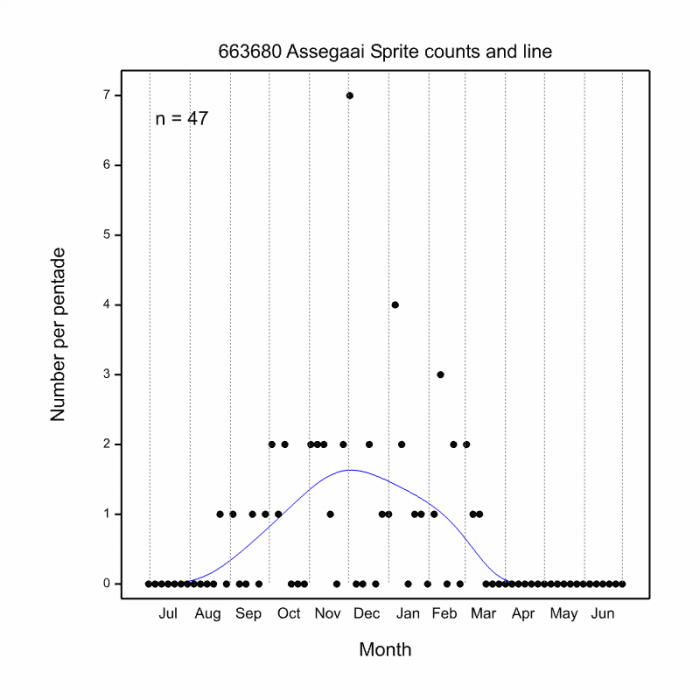
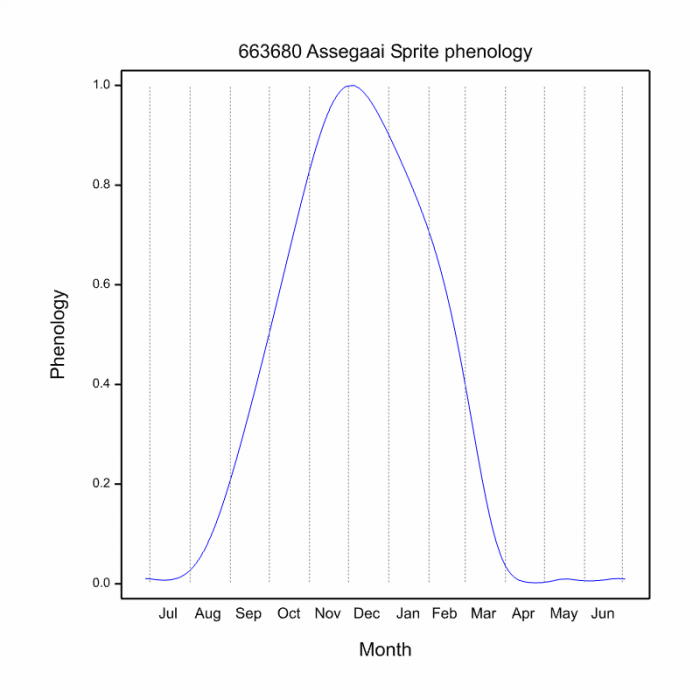
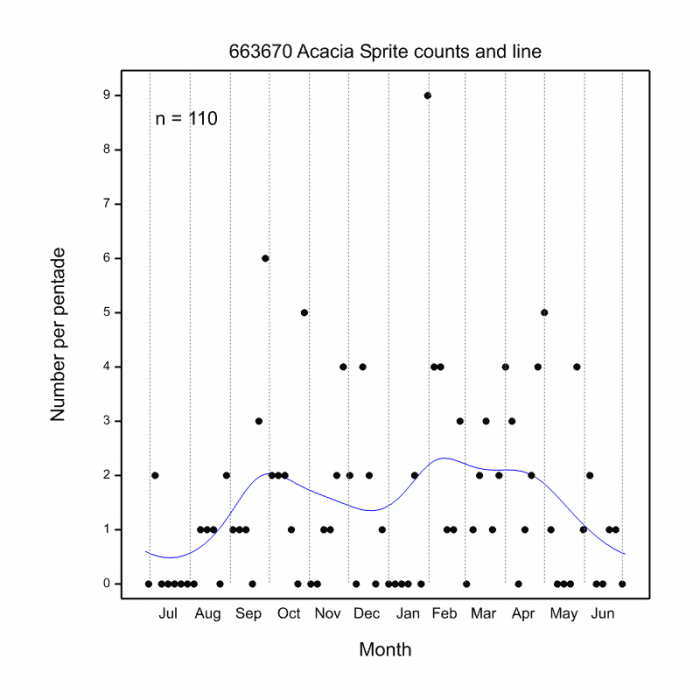
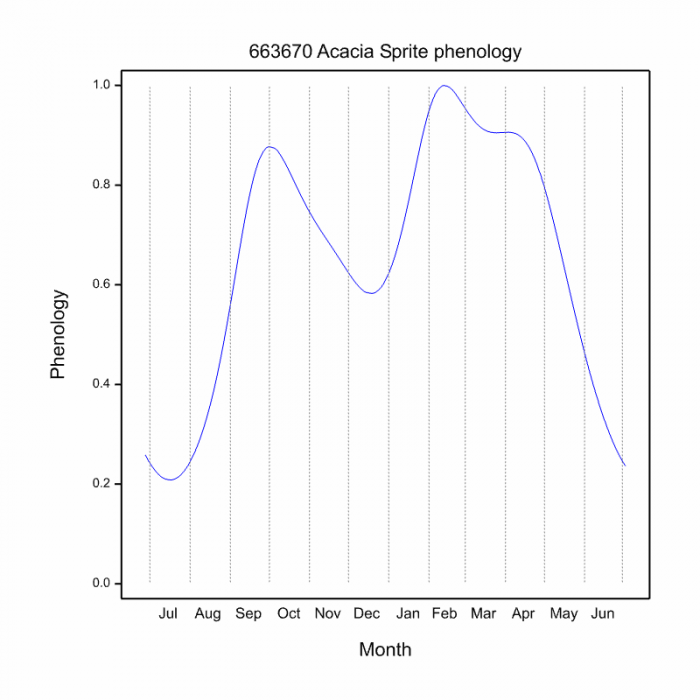
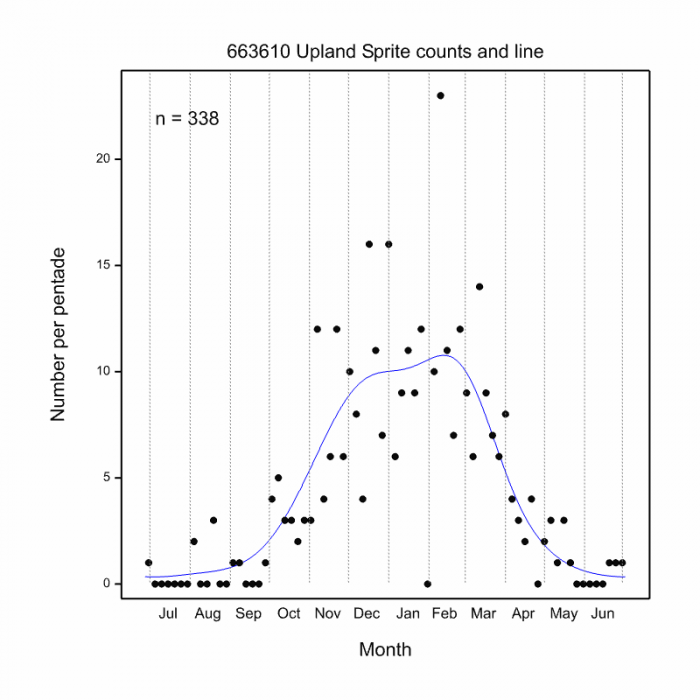
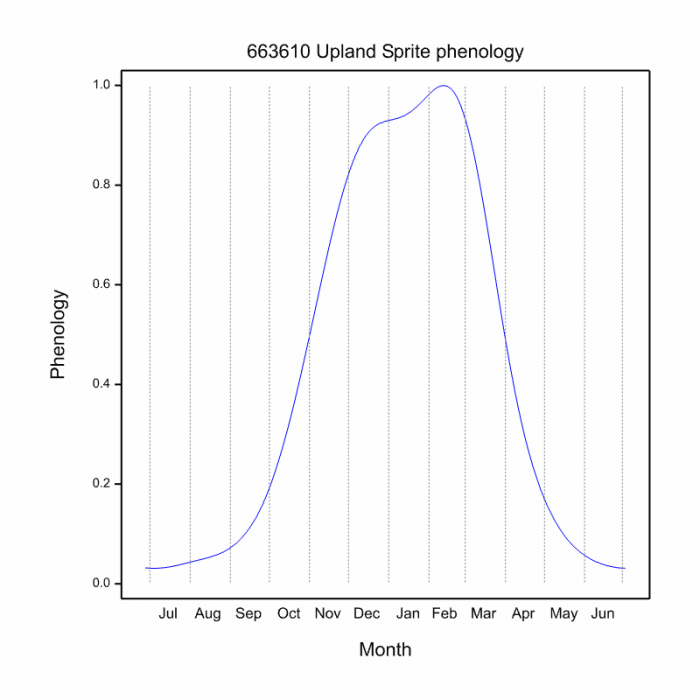
Phenology

African Emerald Hemicordulia africana – Male
Kosi Bay, KwaZulu-Natal
Photo by Felicity Grundlingh

Further Resources

The use of photographs by Corne Rautenbach, Felicity Grundlingh, Georg Jacobs, Lauren Arnold, and Richard Johnstone is acknowledged.

African Emerald Hemicordulia africana Dijkstra, 2007

Other Common names: Afrikaanse Swalker (Afrikaans)

Recommended citation format: Loftie-Eaton M; Navarro R; Tippett RM; Underhill L. 2025. African Emerald Hemicordulia africana. Biodiversity and Development Institute. Available online at https://thebdi.org/2020/05/15/african-emerald-hemicordulia-africana/

References: Tarboton, M; Tarboton, W. (2019). A Guide to the Dragonflies & Damselflies of South Africa. Struik Nature.

Samways, MJ. (2008). Dragonflies and Damselflies of South Africa. Pensoft

Samways, MJ. (2016). Manual of Freshwater Assessment for South Africa: Dragonfly Biotic Index.Suricata 2. South African National Biodiversity Institute, Pretoria

Similar Species

Clubbed Talontail (Crenigomphus hartmanni)

Cover photo by Alan Manson.

Find the Clubbed Talontail in the FBIS database (Freshwater Biodiversity Information System) here.

Family Gomphidae

Identification

Clubbed Talontail Crenigomphus hartmanni – Male
Mkuze River, KwaZulu-Natal
Photo by Ryan Tippett

Medium-large size

Length up to 54mm; Wingspan attains 72mm.

Male Clubbed Talontails are very similar to the rare Horned Talontail (Crenigomphus cornutus). The Clubbed Talontail is best identified by the small but distinct foliations on segments 8 and 9 of the abdomen. Crenigomphus cornutus lacks these.

The Clubbed Talontail may also be mistaken for Ceratogomphus pictus (Common Thorntail) at first glance, but the two species have very different clasper structures (males). Females of the two are closer in appearance, but those of Crenigomphus hartmanni have brown markings on the last few abdominal segments.

The Lined Claspertail (Onychogomphus supinus) is also similar. Both species are roughly the same size and share the same colouration. The males differ by their very different clasper structures.

Click here for more details on identification of the Clubbed Talontail.

Habitat

The Clubbed Talontail inhabits flowing rocky rivers and streams in savanna regions. It prefers shallow, swift-flowing sections with pebbles or gravelly substrate. The Clubbed Talontail is often found in relatively open areas with tall clumps of grass and bushes.

Habitat – Mkuze River, KwaZulu-Natal
Photo by Rowan Poortier

Behaviour

The Clubbed Talontail often perches prominently on the tops of bushes or grass and reed stems. It frequently also sits on rocks close to the water. The Clubbed Talontail hunts from a perch. It flies low and fast over the water or vegetation and quickly returns to settle again. Non-breeding individuals are regularly found on grass or bushes far from water, especially late in the season. Females occur in the same vicinity as the males.

The Clubbed Talontail is most active from October to April (see Phenology below).

Clubbed Talontail Crenigomphus hartmanni – Male
Mkuze River, KwaZulu-Natal
Photo by Ryan Tippett

Status and Conservation

The Clubbed Talontail is fairly common but localised in South Africa. It is listed as of Least Concern in the IUCN Red List of Threatened Species. The Clubbed Talontail is only found in undisturbed habitats.

Clubbed Talontail Crenigomphus hartmanni – Larval ecdysis
Orange River near Prieska, Northern Cape
Photo by Ryan Tippett

Distribution

The Clubbed Talontail occurs in East and southern Africa, from Kenya and Uganda in the north to South Africa. In South Africa it is largely restricted to the eastern interior, but is also found sparsely along the Orange River and at scattered locations in the Eastern and Western Cape.

Below is a map showing the distribution of records for Clubbed Talontail in the OdonataMAP database as at February 2020.

Below is a map showing the distribution of records for Clubbed Talontail in the OdonataMAP database as of December 2024.

The next map below is an imputed map, produced by an interpolation algorithm, which attempts to generate a full distribution map from the partial information in the map above. This map will be improved by the submission of records to the OdonataMAP section of the Virtual Museum.

Ultimately, we will produce a series of maps for all the odonata species in the region. The current algorithm is a new algorithm. The objective is mainly to produce “smoothed” maps that could go into a field guide for odonata. This basic version of the algorithm (as mapped above) does not make use of “explanatory variables” (e.g. altitude, terrain roughness, presence of freshwater — we will be producing maps that take these variables into account soon). Currently, it only makes use of the OdonataMAP records for the species being mapped, as well as all the other records of all other species. The basic maps are “optimistic” and will generally show ranges to be larger than what they probably are.

These maps use the data in the OdonataMAP section of the Virtual Museum, and also the database assembled by the previous JRS funded project, which was led by Professor Michael Samways and Dr KD Dijkstra.

Phenology

Clubbed Talontail Crenigomphus hartmanni – Male
Mkuze River, KwaZulu-Natal
Photo by Ryan Tippett

Further Resources

The use of photographs by Alan Manson and Rowan Poortier is acknowledged. All other photographs by Ryan Tippett.

Clubbed Talontail Crenigomphus hartmanni (Förster, 1898)

Other Common Names: Hartmann’s Talontail (Alt. English); Knoppiekloustert (Afrikaans).

Recommended citation format: Loftie-Eaton M; Navarro R; Tippett RM; Underhill L. 2025. Clubbed Talontail Crenigomphus hartmanni. Biodiversity and Development Institute. Available online at https://thebdi.org/2020/05/15/clubbed-talontail-crenigomphus-hartmanni/

References: Tarboton, M; Tarboton, W. (2019). A Guide to the Dragonflies & Damselflies of South Africa. Struik Nature.

Samways, MJ. (2008). Dragonflies and Damselflies of South Africa. Pensoft

Samways, MJ. (2016). Manual of Freshwater Assessment for South Africa: Dragonfly Biotic Index. Suricata 2. South African National Biodiversity Institute, Pretoria

Martens, A; Suhling, F. (2007). Dragonflies and Damselflies of Namibia. Gamsberg Macmillan.

Similar Species

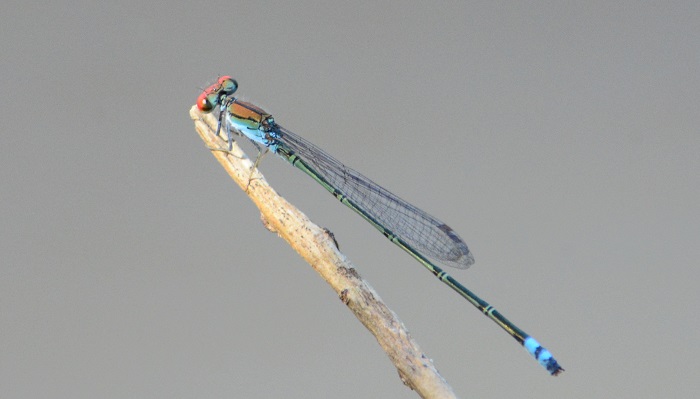
Palmiet Sprite (Pseudagrion furcigerum)

Cover photo by Gregg Darling.

Find the Palmiet Sprite in the FBIS database (Freshwater Biodiversity Information System) here.

Family Coenagrionidae

Identification

Palmiet Sprite Pseudagrion furcigerum – Male
Seweweekspoort, Western Cape
Photo by Ryan Tippett

Small size

Length attains 37mm; Wingspan up to 49mm.

Male Palmiet Sprites closely resemble Pseudagrion kersteni (Powder-faced Sprite). The Palmiet Sprite is best identified by having a bright, lime green labrum whereas the Powder-faced Sprite has a blackish labrum.

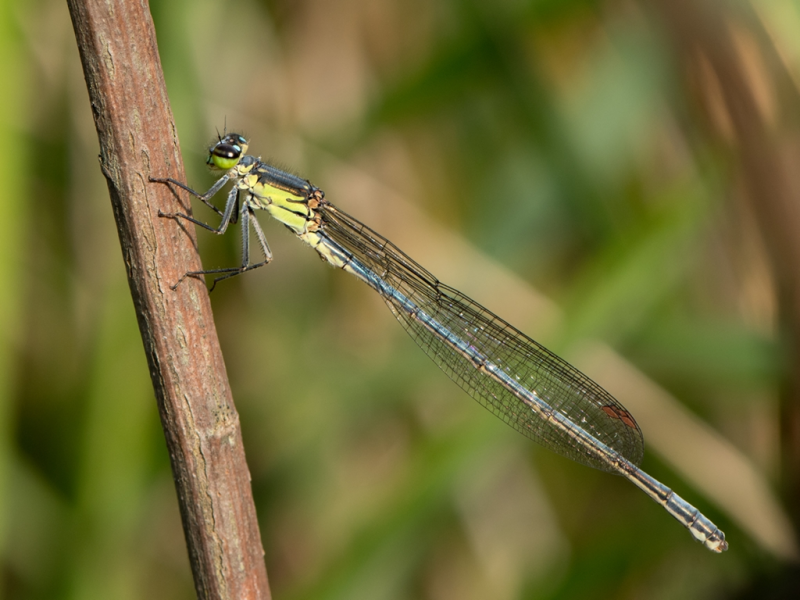
Females are unusual among sprites in being quite colourful. They range in colour from green to bright orange and show diagnostic blackish (occasionally blue) markings near the tip of the abdomen.

Click here for more details on identification.

Habitat

The Palmiet Sprite occupies clear, rocky streams and rivers, often in mountainous areas. It frequents both still and flowing sections, but prefers habitats with a rich growth of sedge, grasses, ferns, and especially Palmiet reeds. The Palmiet Sprite inhabits both well-wooded and open habitats.

Habitat – Harold Porter Botanical Gardens, Western Cape
Photo by Sharon Stanton

Behaviour

The Palmiet Sprite is a conspicuous species that sits in the open on an overhanging reed or on a rock close to the water. They often spend long periods perched, and both sexes regularly occur together. They feed on small, aerial insects.

Most active from September to April (see Phenology below).

Palmiet Sprite Pseudagrion furcigerum – Male
Seweweekspoort, Western Cape
Photo by Ryan Tippett

Status and Conservation

The Palmiet Sprite is locally common. It is listed as of Least Concern in the IUCN Red List of Threatened Species. The Palmiet Sprite is only known from high-quality habitats and as such is not tolerant of habitat degradation.

Palmiet Sprite Pseudagrion furcigerum – Mating pair
Marloth Nature Reserve, Western Cape
Photo by Ryan Tippett

Distribution

The Palmiet Sprite is endemic to South Africa. It is restricted to the Western Cape and the south-western parts of the Eastern Cape Province.

Below is a map showing the distribution of records for Palmiet Sprite in the OdonataMAP database as at February 2020.

Below is a map showing the distribution of records for Palmiet Sprite in the OdonataMAP database as of December 2024.

The next map below is an imputed map, produced by an interpolation algorithm, which attempts to generate a full distribution map from the partial information in the map above. This map will be improved by the submission of records to the OdonataMAP section of the Virtual Museum.

Ultimately, we will produce a series of maps for all the odonata species in the region. The current algorithm is a new algorithm. The objective is mainly to produce “smoothed” maps that could go into a field guide for odonata. This basic version of the algorithm (as mapped above) does not make use of “explanatory variables” (e.g. altitude, terrain roughness, presence of freshwater — we will be producing maps that take these variables into account soon). Currently, it only makes use of the OdonataMAP records for the species being mapped, as well as all the other records of all other species. The basic maps are “optimistic” and will generally show ranges to be larger than what they probably are.

These maps use the data in the OdonataMAP section of the Virtual Museum, and also the database assembled by the previous JRS funded project, which was led by Professor Michael Samways and Dr KD Dijkstra.

Palmiet Sprite Pseudagrion furcigerum – Male
Marloth Nature Reserve, Western Cape
Photo by Ryan Tippett

Phenology

Palmiet Sprite Pseudagrion furcigerum – Female
Marloth Nature Reserve, Western Cape
Photo by Ryan Tippett

Further Resources

The use of photographs by Gregg Darling and Sharon Stanton is acknowledged. All other photos by Ryan Tippett.

Palmiet Sprite Pseudagrion furcigerum (Rambur, 1842)

Other common names: Palmietgesie (Afrikaans).

Recommended citation format: Loftie-Eaton M; Navarro R; Tippett RM; Underhill L. 2025.Palmiet Sprite Pseudagrion furcigerum.  Biodiversity and Development Institute. Available online at https://thebdi.org/2020/05/15/palmiet-sprite-pseudagrion-furcigerum/

References: Tarboton, M; Tarboton, W. (2019). A Guide to the Dragonflies & Damselflies of South Africa. Struik Nature.

Samways, MJ. (2008). Dragonflies and Damselflies of South Africa. Pensoft

Samways, MJ. (2016). Manual of Freshwater Assessment for South Africa: Dragonfly Biotic Index. Suricata 2. South African National Biodiversity Institute, Pretoria

Palmiet Sprite Pseudagrion furcigerum – Male
Ruiterbos, Western Cape
Photo by Ryan Tippett

Similar Species

Mountain Sprite (Pseudagrion draconis)

Cover photo by Corrie du Toit.

Find the Mountain Sprite in the FBIS database (Freshwater Biodiversity Information System) here.

Family Coenagrionidae

Identification

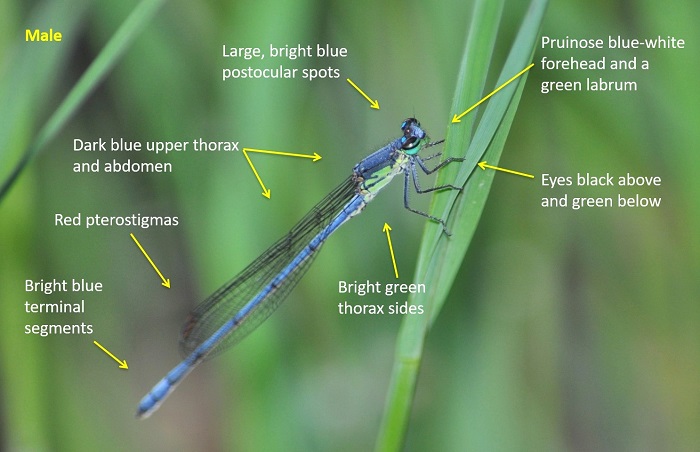
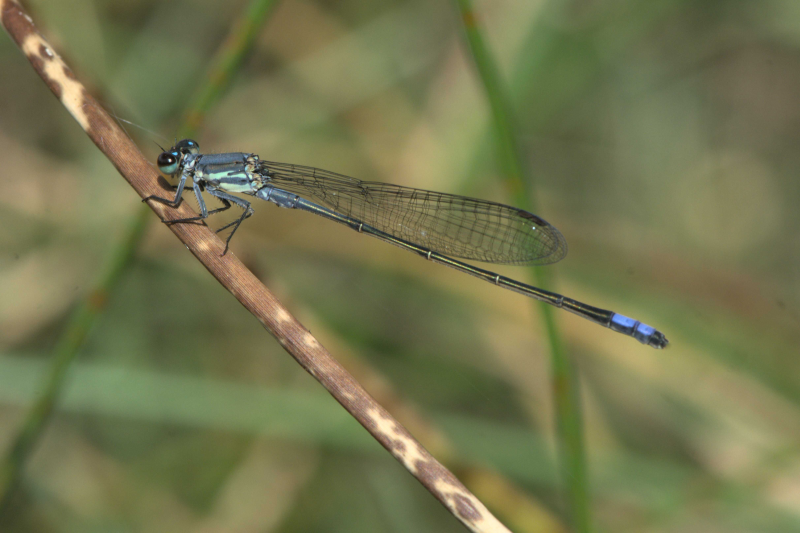
Mountain Sprite Pseudagrion draconis – Male
Seweweekspoort, Western Cape
Photo by Ryan Tippett

Small size

Length up to 37mm; Wingspan reaches 47mm.

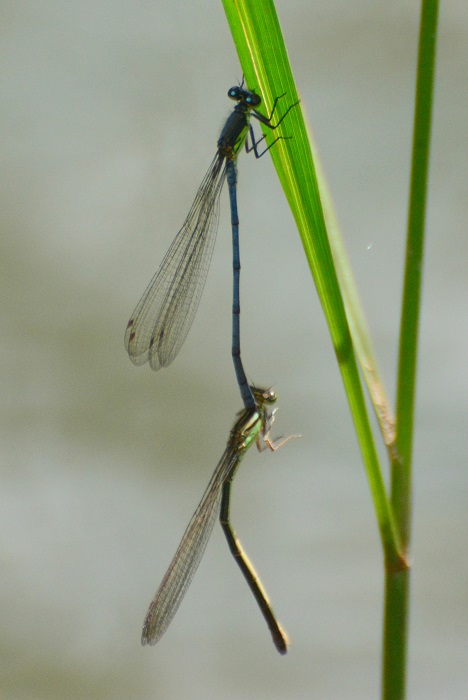
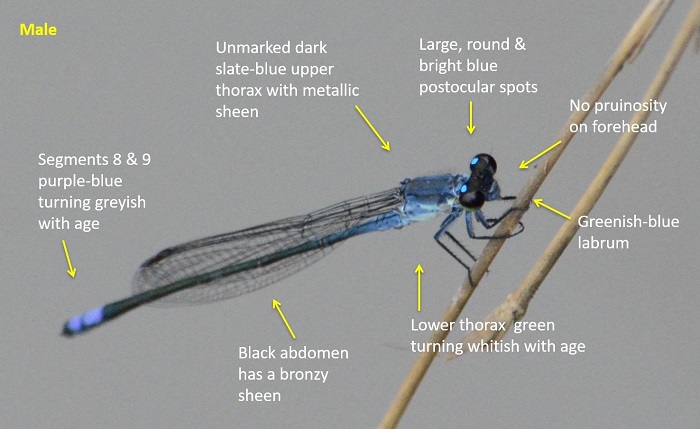
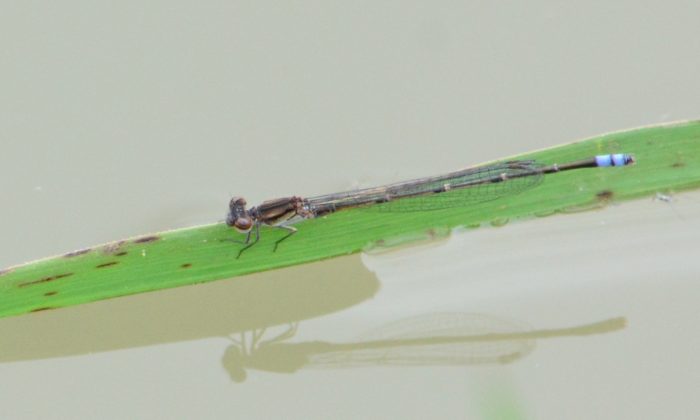
Populations of the Mountain Sprite in the southern parts of the Western Cape have very reduced or absent postocular spots. These spots are quite large, round, and bright blue over the rest of its range.

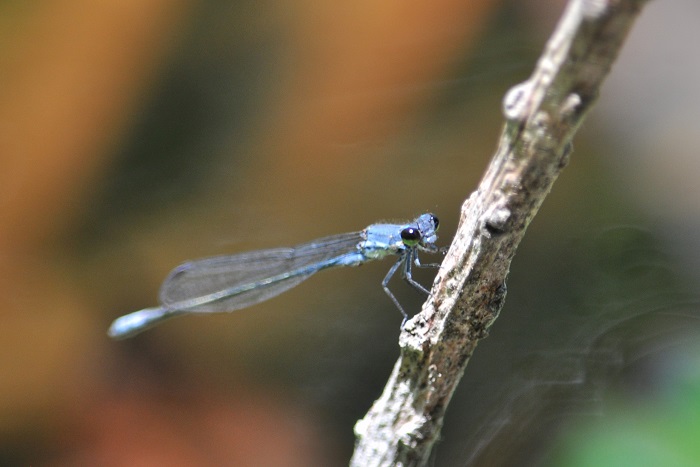
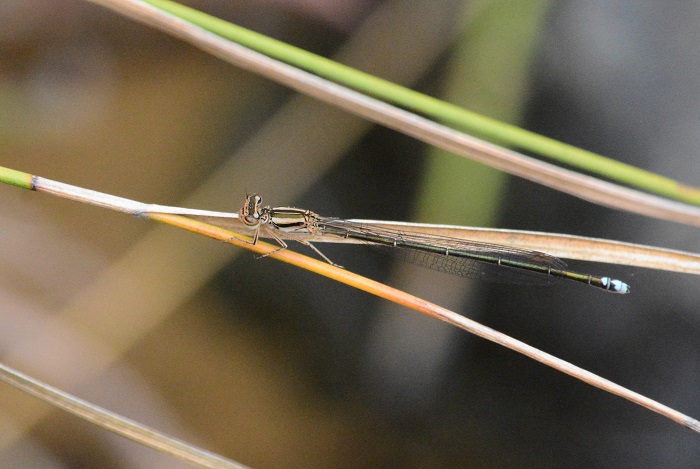
The Mountain Sprite is most similar to Pseudagrion salisburyense (Slate Sprite) and Pseudagrion spernatum (Upland Sprite).

The Mountain Sprite is differentiated from S. salisburyense by having a pruinose white forehead and a lightly pruinose, dark blue abdomen. Told apart from P. spernatum by having a black rather than green labrum. In addition the species all have differently shaped claspers.

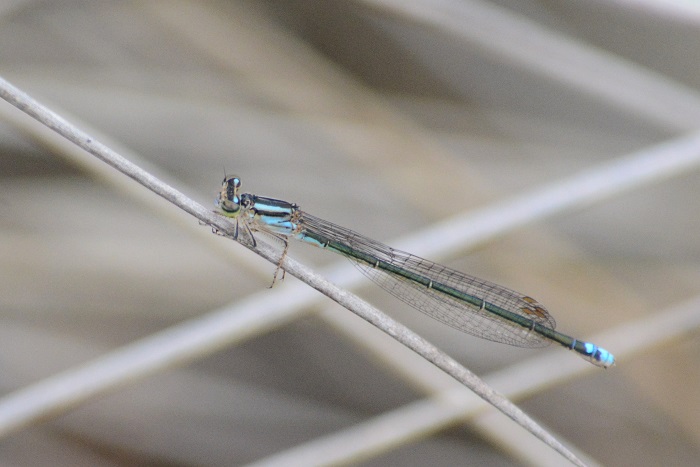
Females are variably coloured from yellowish to green with darker humeral stripes. They are best identified by their association with the males.

Click here for more details on identification.
Habitat

The Mountain Sprite inhabits streams and rivers in mountainous regions. It frequents sites with running water, large rocks, and tall fringing grass, reeds, and bushes.

The Mountain Sprite occurs at lower altitudes in the Western Cape but has been recorded up to 2100m above sea level in the Drakensberg, KwaZulu-Natal.

Habitat – Seweweekspoort, Western Cape
Photo by Ryan Tippett
Habitat – Kogelberg Nature Reserve, Western Cape
Photo by Sharon Stanton

Behaviour

The Mountain Sprite perches on vegetation or rocks close to the water. It flies low between emergent and overhanging grass and sedge stems. Males and females are frequently found side by side.

Mountain Sprites are most active from October to April (see Phenology below).

Mountain Sprite Pseudagrion draconis – Male
Grootrivier, Cedarberg, Western Cape
Photo by Ryan Tippett

Status and Conservation

The Mountain Sprite is locally common across its range. It is listed as of Least Concern in the IUCN Red List of Threatened Species.

Distribution

The Mountain Sprite is endemic to South Africa, where it is mainly found in the southern and central mountainous regions. It ranges from the Cedarberg in the Western Cape to the Drakensberg regions of the Eastern Cape, KwaZulu-Natal, Free State, and Lesotho. There are also a few records from southern Gauteng

Mountain Sprite Pseudagrion draconis – Male
Seweweekspoort, Western Cape
Photo by Ryan Tippett

Below is a map showing the distribution of records for Mountain Sprite in the OdonataMAP database as at February 2020.

Below is a map showing the distribution of records for Mountain Sprite in the OdonataMAP database as of December 2024.
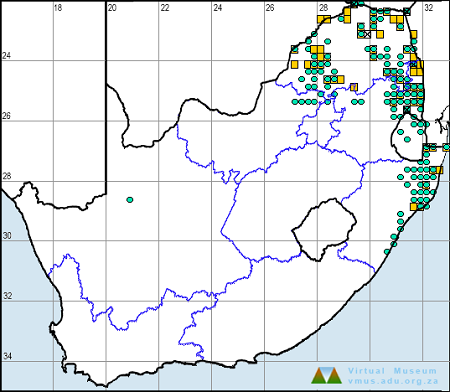
The next map below is an imputed map, produced by an interpolation algorithm, which attempts to generate a full distribution map from the partial information in the map above. This map will be improved by the submission of records to the OdonataMAP section of the Virtual Museum.

Ultimately, we will produce a series of maps for all the odonata species in the region. The current algorithm is a new algorithm. The objective is mainly to produce “smoothed” maps that could go into a field guide for odonata. This basic version of the algorithm (as mapped above) does not make use of “explanatory variables” (e.g. altitude, terrain roughness, presence of freshwater — we will be producing maps that take these variables into account soon). Currently, it only makes use of the OdonataMAP records for the species being mapped, as well as all the other records of all other species. The basic maps are “optimistic” and will generally show ranges to be larger than what they probably are.

These maps use the data in the OdonataMAP section of the Virtual Museum, and also the database assembled by the previous JRS funded project, which was led by Professor Michael Samways and Dr KD Dijkstra.

Phenology

Mountain Sprite Pseudagrion draconis – Male
Vanrhynsdorp Waterfall, Western Cape
Photo by Ryan Tippett

Further Resources

The use of photographs by Corrie du Toit and Sharon Stanton is acknowledged. All other photographs by Ryan Tippett.

Mountain Sprite Pseudagrion draconis Barnard, 1937

Other common names: Berggesie (Afrikaans)

Recommended citation format: Loftie-Eaton M; Navarro R; Tippett RM; Underhill L. 2025. Mountain Sprite Pseudagrion draconis. Biodiversity and Development Institute. Available online at https://thebdi.org/2020/05/15/mountain-sprite-pseudagrion-draconis/

References: Tarboton, M; Tarboton, W. (2019). A Guide to the Dragonflies & Damselflies of South Africa. Struik Nature.

Samways, MJ. (2008). Dragonflies and Damselflies of South Africa. Pensoft

Samways, MJ. (2016). Manual of Freshwater Assessment for South Africa: Dragonfly Biotic Index. Suricata 2. South African National Biodiversity Institute, Pretoria

Similar Species

Yellow-faced Sprite (Pseudagrion citricola)

Cover photo by Evert Kleynhans.

Find the Yellow-faced Sprite in the FBIS database (Freshwater Biodiversity Information System) here.

Family Coenagrionidae

Identification

Yellow-faced Sprite Pseudagrion citricola – Male
Near Underberg, KwaZulu-Natal
Photo by Ryan Tippett

Small size

Length up to 42mm; Wingspan reaches 50mm.

Pseudagrion citricola is one of three ‘yellow-faced’ sprites in the region. The other two are the Springwater Sprite (Pseudagrion caffrum) and the Great Sprite (Pseudagrion gamblesi). The latter is easily distinguished by its significantly larger size and distinctive bright blue terminal segments. Pseudagrion citricola is most similar to Pseudagrion caffrum, but can be differentiated by having postocular spots and brighter blue terminal segments on the abdomen.

Click here for more details on identification.

Habitat

The Yellow-faced Sprite favours the grass, reed, and sedge-lined margins of perennial streams and rivers. It sometimes also inhabits marshes and suitable dams adjoining streams.

The Yellow-faced Sprite occurs mostly at high altitudes in the north of its range, above 1200m above sea level. It can be found at Lower altitudes in the Eastern and Western Cape.

Habitat – Near Underberg, KwaZulu-Natal
Photo by Ryan Tippett

Behaviour

The Yellow-faced Sprite is a fairly conspicuous species that perches openly on grass stems near the water. It flies fast and low over the water when disturbed or switching perches.

The Yellow-faced Sprite is most active from September to May (see Phenology below).

Yellow-faced Sprite Pseudagrion citricola – Males
Wilge River, Free State
Photo by Ryan Tippett

Status and Conservation

The Yellow-faced Sprite is common but localised throughout its range. It is listed as of Least Concern in the IUCN Red List of Threatened Species.

Yellow-faced Sprite Pseudagrion citricola – Male
Colesberg, Northern Cape
Photo by Ryan Tippett

Distribution

Pseudagrion citricola is a South African endemic. It is sparsely distributed in the interior mountains of the Western Cape. The Yellow-faced Sprite is more widespread and numerous in the Eastern Cape, extending up onto the highveld areas of the Free State, KwaZulu-Natal, North-West, Gauteng, and Mpumalanga.

Yellow-faced Sprite Pseudagrion citricola – Teneral male
Near Underberg, KwaZulu-Natal
Photo by Ryan Tippett

Below is a map showing the distribution of records for Yellow-faced Sprite in the OdonataMAP database as at February 2020.

Below is a map showing the distribution of records for Yellow-faced Sprite in the OdonataMAP database as of December 2024.

The next map below is an imputed map, produced by an interpolation algorithm, which attempts to generate a full distribution map from the partial information in the map above. This map will be improved by the submission of records to the OdonataMAP section of the Virtual Museum.

Ultimately, we will produce a series of maps for all the odonata species in the region. The current algorithm is a new algorithm. The objective is mainly to produce “smoothed” maps that could go into a field guide for odonata. This basic version of the algorithm (as mapped above) does not make use of “explanatory variables” (e.g. altitude, terrain roughness, presence of freshwater — we will be producing maps that take these variables into account soon). Currently, it only makes use of the OdonataMAP records for the species being mapped, as well as all the other records of all other species. The basic maps are “optimistic” and will generally show ranges to be larger than what they probably are.

These maps use the data in the OdonataMAP section of the Virtual Museum, and also the database assembled by the previous JRS funded project, which was led by Professor Michael Samways and Dr KD Dijkstra.

Yellow-faced Sprite Pseudagrion citricola – Male
Wilge River, Free State
Photo by Ryan Tippett

Phenology

Yellow-faced Sprite Pseudagrion citricola – Male
Royal Natal National Park, KwaZulu-Natal
Photo by Ryan Tippett

Further Resources

The use of photographs by Evert Kleynhans is acknowledged. Other photographs by Ryan Tippett.

Yellow-faced Sprite Pseudagrion citricola Barnard, 1937

Other Common Names: Jaloerse Gesie (Afrikaans).

Recommended citation format: Loftie-Eaton M; Navarro R; Tippett RM; Underhill L. 2025. Yellow-faced Sprite Pseudagrion citricola. Biodiversity and Development Institute. Available online at https://thebdi.org/2020/05/08/springwater-sprite-pseudagrion-caffrum/

References: Tarboton, M; Tarboton, W. (2019). A Guide to the Dragonflies & Damselflies of South Africa. Struik Nature.

Samways, MJ. (2008). Dragonflies and Damselflies of South Africa. Pensoft

Samways, MJ. (2016). Manual of Freshwater Assessment for South Africa: Dragonfly Biotic Index. Suricata 2. South African National Biodiversity Institute, Pretoria

Yellow-faced Sprite Pseudagrion citricola – Male
Colesberg, Northern Cape
Photo by Ryan Tippett

Similar Species

Round-winged Bluet (Proischnura rotundipennis)

Cover photo by Lappies Labuschagne.

Find the Round-winged Bluet in the FBIS database (Freshwater Biodiversity Information System) here.

Family Coenagrionidae

Identification

Round-winged Bluet Proischnura rotundipennis – Male
Near Himeville, KwaZulu-Natal
Photo by Desire Darling

Very small size

Length up to 22mm; Wingspan reaches 32mm.

The Round-winged Bluet is a small blue and black damselfly that closely resembles other bluet species. Males are most similar to Ischnura senegalensis, Azuragrion nigridorsum and Africallagma glaucum. The Round-winged Bluet can be told apart by the characteristic blue-rimmed pterostigmas, crescent-shaped postocular spots, and all-black S10.

Females can be mistaken for those of other bluet species. However, they are readily identifiable by their pale blue-rimmed pterostigmas.

Click here for more details on identification.

Habitat

The Round-winged Bluet is restricted to the grassland biome where it inhabits the grassy verges of slow-flowing streams, ponds, and marshes. It is often found in places that are shallowly flooded. The Round-winged Bluet can sometimes also be found at dams that offer suitable habitat. It mostly occurs in areas over 1200m above sea level.

Habitat near Reitz, Free State
Photo by Ryan Tippett

Behaviour

The Round-winged Bluet perches prominently on grass and sedge stems over the water. It often perches relatively high up on vegetation. The Round-winged Bluet is active from September to April (see Phenology below).

Status and Conservation

The Round-winged Bluet is a scarce and localized South African endemic. It is listed as of Least Concern in the IUCN Red List of Threatened Species. The Round-winged Bluet is fairly sensitive to habitat degradation but occasionally occurs at suitable man-made habitats.

Distribution

Proischnura rotundipennis is endemic to South Africa. It occurs from the central Eastern Cape, to the interior of KwaZulu-Natal, the eastern FreeState and up to Gauteng, Mpumalanga and as far north as the Soutpansberg in Limpopo.

Below is a map showing the distribution of records for Round-winged Bluet in the OdonataMAP database as at February 2020.

Below is a map showing the distribution of records for Round-winged Bluet in the OdonataMAP database as of December 2024.

The next map below is an imputed map, produced by an interpolation algorithm, which attempts to generate a full distribution map from the partial information in the map above. This map will be improved by the submission of records to the OdonataMAP section of the Virtual Museum.

Ultimately, we will produce a series of maps for all the odonata species in the region. The current algorithm is a new algorithm. The objective is mainly to produce “smoothed” maps that could go into a field guide for odonata. This basic version of the algorithm (as mapped above) does not make use of “explanatory variables” (e.g. altitude, terrain roughness, presence of freshwater — we will be producing maps that take these variables into account soon). Currently, it only makes use of the OdonataMAP records for the species being mapped, as well as all the other records of all other species. The basic maps are “optimistic” and will generally show ranges to be larger than what they probably are.

These maps use the data in the OdonataMAP section of the Virtual Museum, and also the database assembled by the previous JRS funded project, which was led by Professor Michael Samways and Dr KD Dijkstra.

Phenology

Further Resources

The use of photographs by Desire Darling and Lappies Labuschagne is acknowledged.

Round-winged Bluet Proischnura rotundipennis Ris, 1921

Other Common names: Rondevlerkbloutjie (Afrikaans).

Recommended citation format: Loftie-Eaton M; Navarro R; Tippett RM; Underhill L. 2025. Round-winged Bluet Proischnura rotundipennis. Biodiversity and Development Institute. Available online at https://thebdi.org/2020/05/13/round-winged-bluet-proischnura-rotundipennis/

References: Tarboton, M; Tarboton, W. (2019). A Guide to the Dragonflies & Damselflies of South Africa. Struik Nature.

Samways, MJ. (2008). Dragonflies and Damselflies of South Africa. Pensoft

Samways, MJ. (2016). Manual of Freshwater Assessment for South Africa: Dragonfly Biotic Index.Suricata 2. South African National Biodiversity Institute, Pretoria

Similar Species

Bold Skimmer (Orthetrum stemmale)

Cover photo by Alan Manson.

Find this species in the FBIS database (Freshwater Biodiversity Information System) here.

Family Libellulidae

Identification

Bold Skimmer Orthetrum stemmale – Male
Mkuze Game Reserve, KwaZulu-Natal
Photo by Ryan Tippett

Medium sized

Length up to 50mm; Wingspan reaches 81mm.

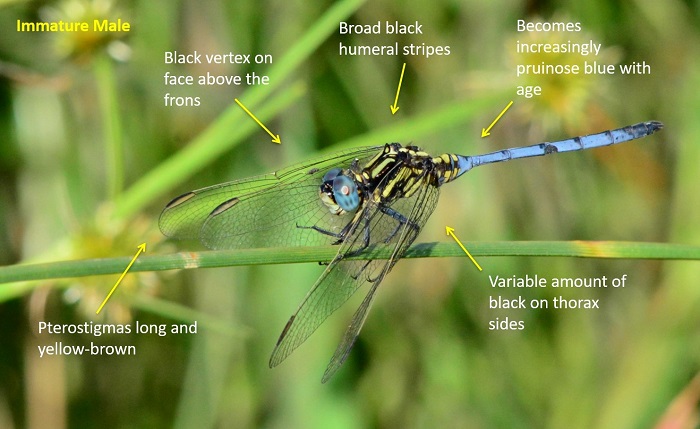
Bold Skimmer Orthetrum stemmale – Immature Male
Near Hluhluwe, KwaZulu-Natal
Photo by Ryan Tippett

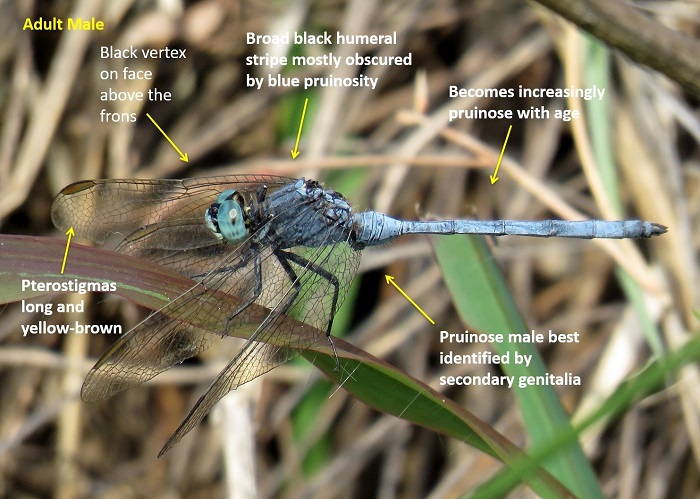
The Bold Skimmer is most similar to Orthetrum julia (Julia Skimmer) and Orthetrum brachiale (Banded Skimmer). The most reliable way to differentiate between the three is by examining the characteristic shapes of the males’ secondary genitalia.

Click here for more details on identification.

Bold Skimmer Orthetrum stemmale – Female
Mkuze Game Reserve, KwaZulu-Natal
Photo by Ryan Tippett

Habitat

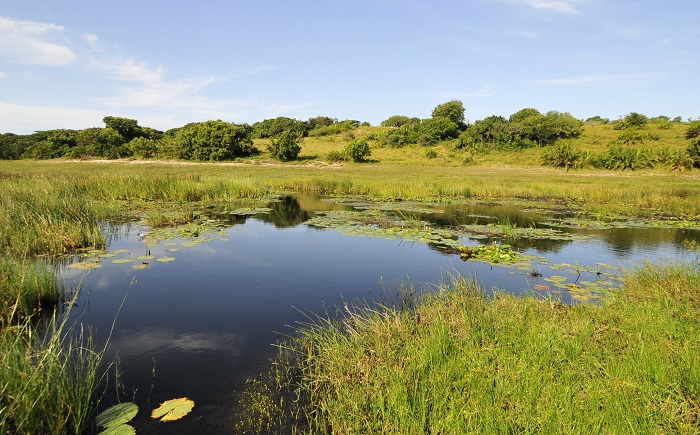
The Bold Skimmer inhabits the grass, reed and bush fringes of rivers, streams, pools, pans, dams, and marshes. It is a species of well-wooded savanna regions. Non-breeding individuals are often found in woodlands away from the water.

Habitat – Ndumo Game Reserve, KwaZulu-Natal
Photo by Ryan Tippett
Habitat – Mkuze Game Reserve, KwaZulu-Natal
Photo by Ryan Tippett

Behaviour

Breeding individuals are found on waterside vegetation, but often found away from water in the surrounding woodlands. The Bold Skimmer perches on exposed twigs among bushes where it hawks insects in rapid flight. Both sexes can be found in the same vicinity.

The Bold Skimmer flies from October to May.

Bold Skimmer Orthetrum stemmale – Male
Ndumo Game Reserve, KwaZulu-Natal
Photo by Ryan Tippett

Status and Conservation

The Bold Skimmer is common in north-eastern KwaZulu-Natal and in the Limpopo and Mpumalanga Lowveld. It is scarce elsewhere. The Bold Skimmer is listed as of Least Concern in the IUCN Red List of Threatened Species.

Bold Skimmer Orthetrum stemmale – Male
Kuleni Game Park, KwaZulu-Natal
Photo by Ryan Tippett

Distribution

The Bold Skimmer is widespread over much of the savanna regions of Sub-Saharan Africa. It occurs in the North and East of South Africa, where it is most numerous in north-eastern KwaZulu-Natal.

Bold Skimmer Orthetrum stemmale – Male
Muzi Pan, KwaZulu-Natal
Photo by Ryan Tippett

Below is a map showing the distribution of records for Bold Skimmer in the OdonataMAP database as at February 2020.

Below is a map showing the distribution of records for Bold Skimmer in the OdonataMAP database as of December 2024.

The next map below is an imputed map, produced by an interpolation algorithm, which attempts to generate a full distribution map from the partial information in the map above. This map will be improved by the submission of records to the OdonataMAP section of the Virtual Museum.

Ultimately, we will produce a series of maps for all the odonata species in the region. The current algorithm is a new algorithm. The objective is mainly to produce “smoothed” maps that could go into a field guide for odonata. This basic version of the algorithm (as mapped above) does not make use of “explanatory variables” (e.g. altitude, terrain roughness, presence of freshwater — we will be producing maps that take these variables into account soon). Currently, it only makes use of the OdonataMAP records for the species being mapped, as well as all the other records of all other species. The basic maps are “optimistic” and will generally show ranges to be larger than what they probably are.

These maps use the data in the OdonataMAP section of the Virtual Museum, and also the database assembled by the previous JRS funded project, which was led by Professor Michael Samways and Dr KD Dijkstra.

Bold Skimmer Orthetrum stemmale – Male
Hluhluwe district, KwaZulu-Natal
Photo by Ryan Tippett

Further Resources

The use of photographs by Alan Manson is acknowledged. All other photographs by Ryan Tippett.

Bold Skimmer Orthetrum stemmale (Burmeister, 1839)

Other common names: Tough Skimmer, Strong Skimmer (Alt. English); Koenieskepper (Afrikaans)

Recommended citation format: Loftie-Eaton M; Navarro R; Tippett RM; Underhill L. 2025. Bold Skimmer Orthetrum stemmale. Biodiversity and Development Institute. Available online at https://thebdi.org/2020/05/13/bold-skimmer-orthetrum-stemmale/

References: Tarboton, M; Tarboton, W. (2019). A Guide to the Dragonflies & Damselflies of South Africa. Struik Nature.

Samways, MJ. (2008). Dragonflies and Damselflies of South Africa. Pensoft

Samways, MJ. (2016). Manual of Freshwater Assessment for South Africa: Dragonfly Biotic Index. Suricata 2. South African National Biodiversity Institute, Pretoria

Martens, A; Suhling, F. (2007). Dragonflies and Damselflies of Namibia. Gamsberg Macmillan.
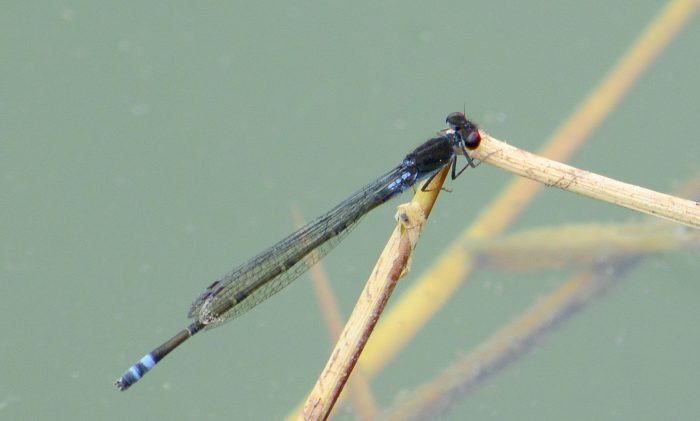
Bold Skimmer Orthetrum stemmale – Male
Mkuze Game Reserve, KwaZulu-Natal
Photo by Ryan Tippett
Bold Skimmer Orthetrum stemmale – Male
False Bay, iSimangaliso Wetland Park, KwaZulu-Natal
Photo by Ryan Tippett

Similar Species

https://thebdi.org/2020/05/18/julia-skimmer-orthetrum-julia/

Long Skimmer (Orthetrum trinacria)

Cover photo by Diana Russell.

Find this species in the FBIS database (Freshwater Biodiversity Information System) here.

Family Libellulidae

Identification

Long Skimmer Orthetrum trinacria – Male
Mpempe Pan, KwaZulu-Natal
Photo by Ryan Tippett

Large size

Length up to 67mm; Wingspan attains 82mm.

The male Long Skimmer is unlikely to be mistaken for another species. The combination of its size, distinctive shape and dark greyish-blue colour render it unmistakable.

Females are also readily identifiable and they have the same distinct shape of the males but are overall pale yellow, boldly marked with black. Females and immature males can resemble those of Orthetrum icteromelas (Spectacled Skimmer) in terms of colouration and patterning. The Spectacled Skimmer is significantly smaller, and there is no size overlap between the two species. The Long Skimmer is similar in size to the Robust Skimmer (Orthetrum robustum), but the two are easily separated on colouration

Click here for more details on identification.

Long Skimmer Orthetrum trinacria – Female
Falsebay, iSimangaliso Wetland Park, KwaZulu-Natal
Photo by Ryan Tippett

Habitat

The Long Skimmer is most often found around the fringes of still, open water habitats like lakes, pools and dams. It is less regular at the margins of rivers and streams, where it favours slower moving sections. The Long Skimmer occurs over a range of habitats throughout South Africa, including the arid and semi-arid regions. Long Skimmers also make use of seasonal wetlands as well as artificial reservoirs and livestock drinking sites in the arid interior.

Habitat – Near Hluhluwe, KwaZulu-Natal
Photo by Ryan Tippett

Behaviour

The Long Skimmer is most often seen perched on vegetation over or near the waters edge. It also regularly sits on bare sand, gravel or rocks. This species hunts from a perch and the flight is swift and typically low over the water. The Long Skimmer is a voracious predator that regularly feeds on large insects like butterflies and other dragonflies.

Orthetrum trinacria is on the wing from October to May, although it is most common in late summer.

Long Skimmer Orthetrum trinacria – Male
Hluhluwe district, KwaZulu-Natal
Photo by Ryan Tippett
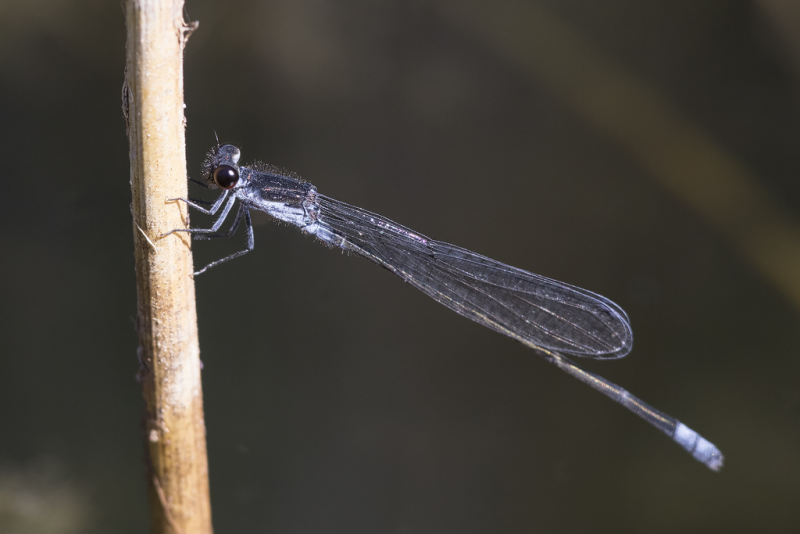
Status and Conservation

The Long Skimmer is common over large areas of southern Africa. It is listed as of Least Concern in the IUCN Red List of Threatened Species.

Long Skimmer Orthetrum trinacria – Male
Near Carnarvon, Northern Cape
Photo by Ryan Tippett

Distribution

The Long Skimmer is a very widespread species, occurring throughout Africa and parts of Southern Europe and the Middle East. Orthetrum trinacria occurs all over South Africa, but it is less numerous in the drier central regions.

Long Skimmer Orthetrum trinacria – Male
Kuleni Game Park, KwaZulu-Natal
Photo by Ryan Tippett
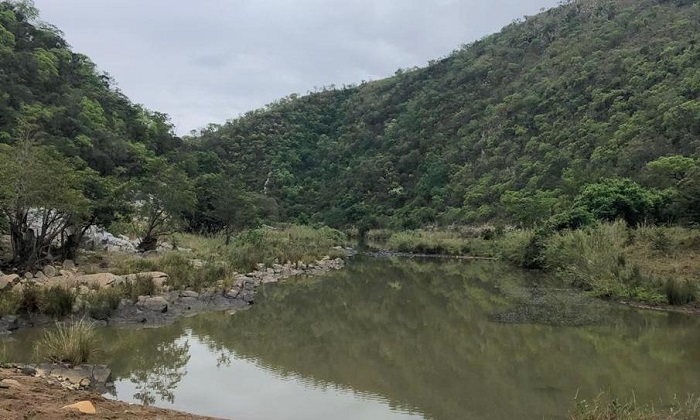
Below is a map showing the distribution of records for Long Skimmer in the OdonataMAP database as at February 2020.

Below is a map showing the distribution of records for Long Skimmer in the OdonataMAP database as of December 2024.

The next map below is an imputed map, produced by an interpolation algorithm, which attempts to generate a full distribution map from the partial information in the map above. This map will be improved by the submission of records to the OdonataMAP section of the Virtual Museum.

Ultimately, we will produce a series of maps for all the odonata species in the region. The current algorithm is a new algorithm. The objective is mainly to produce “smoothed” maps that could go into a field guide for odonata. This basic version of the algorithm (as mapped above) does not make use of “explanatory variables” (e.g. altitude, terrain roughness, presence of freshwater — we will be producing maps that take these variables into account soon). Currently, it only makes use of the OdonataMAP records for the species being mapped, as well as all the other records of all other species. The basic maps are “optimistic” and will generally show ranges to be larger than what they probably are.

These maps use the data in the OdonataMAP section of the Virtual Museum, and also the database assembled by the previous JRS funded project, which was led by Professor Michael Samways and Dr KD Dijkstra.

Long Skimmer Orthetrum trinacria – Female
Mpempe Pan, KwaZulu-Natal
Photo by Ryan Tippett
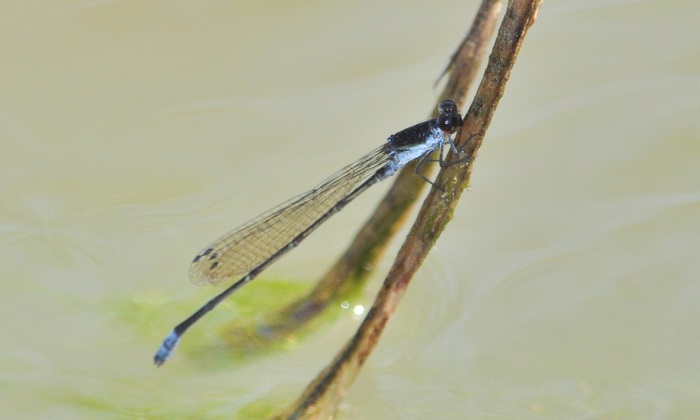
Further Resources

The use of photographs by Diana Russell is acknowledged. All other photographs by Ryan Tippett.

Long Skimmer Orthetrum trinacria (Selys, 1841)

Other common names: Gestrekte Skepper (Afrikaans)

Recommended citation format: Loftie-Eaton M; Navarro R; Tippett RM; Underhill L. 2025. Long Skimmer Orthetrum trinacria. Biodiversity and Development Institute. Available online at https://thebdi.org/2020/05/13/long-skimmer-orthetrum-trinacria/

References: Tarboton, M; Tarboton, W. (2019). A Guide to the Dragonflies & Damselflies of South Africa. Struik Nature.

Samways, MJ. (2008). Dragonflies and Damselflies of South Africa. Pensoft

Samways, MJ. (2016). Manual of Freshwater Assessment for South Africa: Dragonfly Biotic Index.Suricata 2. South African National Biodiversity Institute, Pretoria

Martens, A; Suhling, F. (2007). Dragonflies and Damselflies of Namibia. Gamsberg Macmillan.

Long Skimmer Orthetrum trinacria – Male
Wellington, Western Cape
Photo by Ryan Tippett

Similar Species

Deceptive Widow (Palpopleura deceptor)

Cover photo by Gregg Darling.

Find this species in the FBIS database (Freshwater Biodiversity Information System) here.

Family Libellulidae

Identification

Deceptive Widow Palpopleura deceptor – Male
Near Hluhluwe, KwaZulu-Natal
Photo by Ryan Tippett
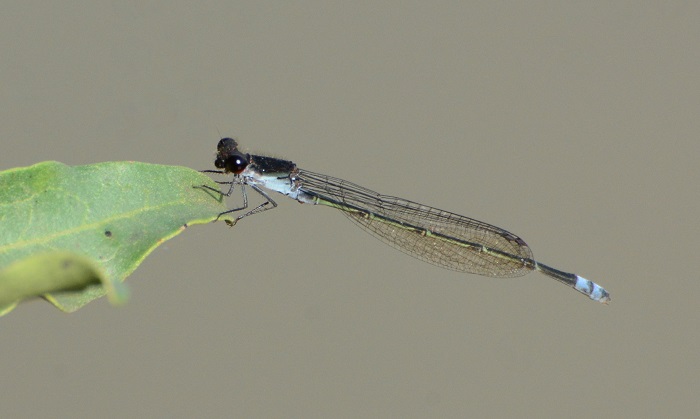
Small size

Length up to 32mm; Wingspan attains 55mm.

Male Deceptive Widows could be confused with African Piedspot (Hemistigma albipunctum) or the Eastern Blacktail (Nesciothemis farinosa). Deceptive Widow males are much smaller and have a different body shape to the aforementioned species. They are best recognised by their striking, neon white abdomens, streaked forewings and bi-coloured pterostigmas.

Females can be mistaken for other Palpopleura females. They can be recognised by the dark markings on their wings being restricted to the leading edges.

Click here for more details on identification.

Deceptive Widow Palpopleura deceptor – Female
Near Hluhluwe, KwaZulu-Natal
Photo by Ryan Tippett
Habitat

The Deceptive Widow is a species of hot bushveld country where it occupies pans, ponds, marshes and dams. The Deceptive Widow inhabits standing water with a rich growth of emergent grass, sedges and other aquatic plants such as waterlilies. It favours clear, shallow water.

Habitat – Near Hluhluwe, KwaZulu-Natal
Photo by Ryan Tippett
Behaviour

Despite their small size, male Deceptive Widows are very conspicuous with their eye-catching neon-white abdomens. Males perch prominently on grass and other plant stems over the water. They make short fast flights to catch prey or to chase off rivals before quickly returning to a perch. Females spend most of their time away from the water and are seldom seen.

Deceptive Widow Palpopleura deceptor – Male
Near Hluhluwe, KwaZulu-Natal
Photo by Ryan Tippett
Status and Conservation

The Deceptive Widow is an uncommon and localised species. It is listed as of Least Concern in the IUCN Red List of Threatened Species. Palpopleura deceptor is moderately sensitive to habitat degradation, but does occur at some man made sites offering suitable habitat.

Deceptive Widow Palpopleura deceptor – Male
Near Hluhluwe, KwaZulu-Natal
Photo by Ryan Tippett
Distribution

Palpopleura deceptor is widely, but sparsely distributed throughout most of Sub-Saharan Africa. In South Africa, the Deceptive Widow is mostly found in the northern Provinces, Limpopo, Mpumalanga, Gauteng, North West, and north-eastern KwaZulu-Natal.

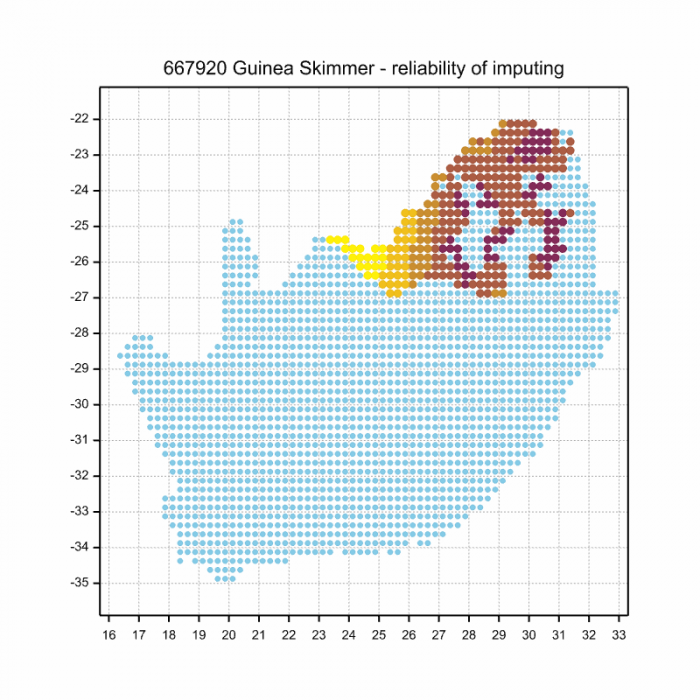
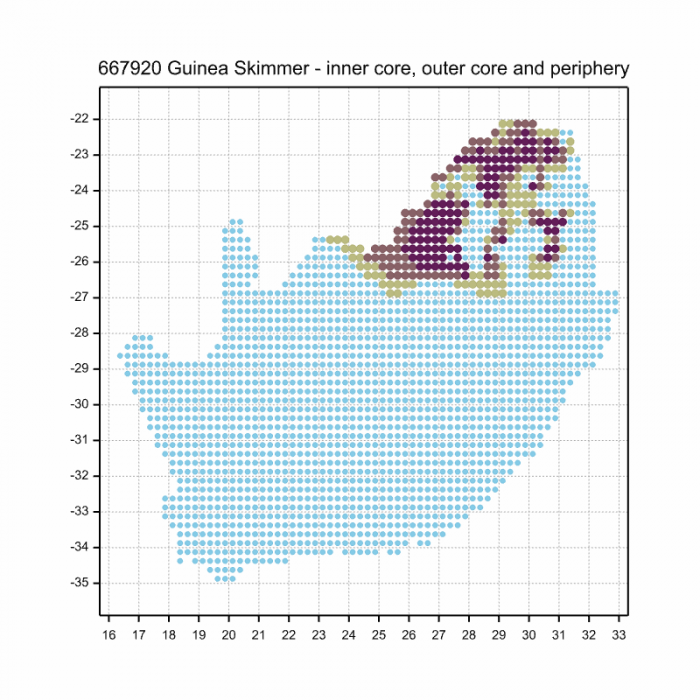
Below is a map showing the distribution of records in South Africa for the Deceptive Widow. Taken from the OdonataMAP database as at February 2020.

Below is a map showing the distribution of records in South Africa for the Deceptive Widow. Taken from the OdonataMAP database as of December 2024.

The next map below is an imputed map, produced by an interpolation algorithm, which attempts to generate a full distribution map from the partial information in the map above. This map will be improved by the submission of records to the OdonataMAP section of the Virtual Museum.

Ultimately, we will produce a series of maps for all the odonata species in the region. The current algorithm is a new algorithm. The objective is mainly to produce “smoothed” maps that could go into a field guide for odonata. This basic version of the algorithm (as mapped above) does not make use of “explanatory variables” (e.g. altitude, terrain roughness, presence of freshwater — we will be producing maps that take these variables into account soon). Currently, it only makes use of the OdonataMAP records for the species being mapped, as well as all the other records of all other species. The basic maps are “optimistic” and will generally show ranges to be larger than what they probably are.

These maps use the data in the OdonataMAP section of the Virtual Museum, and also the database assembled by the previous JRS funded project, which was led by Professor Michael Samways and Dr KD Dijkstra.

Deceptive Widow Palpopleura deceptor – Male
Photo by Gregg Darling

Further Resources

The use of photographs by Gregg Darling is acknowledged. Other photographs by Ryan Tippett.

Deceptive Widow Palpopleura deceptor (Calvert, 1899)

Other common names: Valse Weetjie (Afrikaans)

Recommended citation format: Loftie-Eaton M; Navarro R; Tippett RM; Underhill L. 2025. Deceptive Widow Palpopleura deceptori. Biodiversity and Development Institute. Available online at https://thebdi.org/2020/05/13/deceptive-widow-palpopleura-deceptor/

References: Tarboton, M; Tarboton, W. (2019). A Guide to the Dragonflies & Damselflies of South Africa. Struik Nature.

Samways, MJ. (2008). Dragonflies and Damselflies of South Africa. Pensoft

Samways, MJ. (2016). Manual of Freshwater Assessment for South Africa: Dragonfly Biotic Index. Suricata 2. South African National Biodiversity Institute, Pretoria

Martens, A; Suhling, F. (2007). Dragonflies and Damselflies of Namibia. Gamsberg Macmillan.

Deceptive Widow Palpopleura deceptor – Male
Near Hluhluwe, KwaZulu-Natal
Photo by Ryan Tippett
Similar Species

Yellow-veined Widow (Palpopleura jucunda)

Cover photo by Peter Webb.

Find this species in the FBIS database (Freshwater Biodiversity Information System) here.

Family Libellulidae

Identification

Yellow-veined Widow Palpopleura jucunda – Male
Mkuze River, KwaZulu-Natal
Photo by Ryan Tippett
Very Small

Length up to 27mm; Wingspan reaches 42mm.

Both sexes of the Yellow-veined Widow possess distinctive colouration. This, along with their small size and squat build, renders them unlike any other species in the region. Males and females have richly patterned black, brown, and yellow wings.

Click here for more details on identification.

Yellow-veined Widow Palpopleura jucunda – Female
St. Lucia, KwaZulu-Natal
Photo by Ryan Tippett
Habitat

The Yellow-veined Widow favours the marshy fringes of streams and rivers, but it is also commonly found at seeps and vleis with an abundance of grasses. The Yellow-veined Widow is more common inland than along the coast.

Habitat – Upland marsh with an abundance of grass
Near Himeville, KwaZulu-Natal
Photo by Corné Rautenbach

Behaviour

The Yellow-veined Widow is an inconspicuous species due to its small size and habit of flitting low between grass tufts. Males, however, often perch at the top of a grass stem. The Yellow-veined Widow has a slow fluttering flight on cool days and a faster darting flight when it is hot. They are often gregarious when they occur in good numbers, and both sexes occur in the same vicinity.

Status and Conservation

Palpopleura jucunda is a common but localised species in South Africa. It is listed as of Least Concern in the IUCN Red List of Threatened Species. The Yellow-veined Widow is a fairly tolerant species and occurs widely at both natural and man-made sites.

Yellow-veined Widow Palpopleura jucunda – Female
Seweweekspoort, Western Cape
Photo by Ryan Tippett

Distribution

The Yellow-veined Widow is native to sub-Saharan Africa but is most widespread in eastern, south-central and southern Africa. It occurs from Ethiopia in the north, right down to the southern tip of Africa in the Western Cape.

Below is a map showing the distribution of records for Yellow-veined Widow in the OdonataMAP database as at February 2020.

Below is a map showing the distribution of records for Yellow-veined Widow in the OdonataMAP database as of December 2024.

The next map below is an imputed map, produced by an interpolation algorithm, which attempts to generate a full distribution map from the partial information in the map above. This map will be improved by the submission of records to the OdonataMAP section of the Virtual Museum.

Ultimately, we will produce a series of maps for all the odonata species in the region. The current algorithm is a new algorithm. The objective is mainly to produce “smoothed” maps that could go into a field guide for odonata. This basic version of the algorithm (as mapped above) does not make use of “explanatory variables” (e.g. altitude, terrain roughness, presence of freshwater — we will be producing maps that take these variables into account soon). Currently, it only makes use of the OdonataMAP records for the species being mapped, as well as all the other records of all other species. The basic maps are “optimistic” and will generally show ranges to be larger than what they probably are.

These maps use the data in the OdonataMAP section of the Virtual Museum, and also the database assembled by the previous JRS funded project, which was led by Professor Michael Samways and Dr KD Dijkstra.

Yellow-veined Widow Palpopleura jucunda – Male
Mkuze River, KwaZulu-Natal
Photo by Ryan Tippett
Further Resources

The use of photographs by Corné Rautenbach and Peter Webb is acknowledged. Other photographs by Ryan Tippett.

Yellow-veined Widow Palpopleura jucunda  Rambur, 1842

Other common names: Geelaarweetjie (Afrikaans)

Recommended citation format: Loftie-Eaton M; Navarro R; Tippett RM; Underhill L. 2025. Yellow-veined Widow Palpopleura jucunda. Biodiversity and Development Institute. Available online at https://thebdi.org/2020/05/13/yellow-veined-widow-palpopleura-jucunda/

References: Tarboton, M; Tarboton, W. (2019). A Guide to the Dragonflies & Damselflies of South Africa. Struik Nature.

Samways, MJ. (2008). Dragonflies and Damselflies of South Africa. Pensoft

Samways, MJ. (2016). Manual of Freshwater Assessment for South Africa: Dragonfly Biotic Index. Suricata 2. South African National Biodiversity Institute, Pretoria

Martens, A; Suhling, F. (2007). Dragonflies and Damselflies of Namibia. Gamsberg Macmillan.

Yellow-veined Widow Palpopleura jucunda – Female
Seweweekspoort, Western Cape
Photo by Ryan Tippett
Similar Species