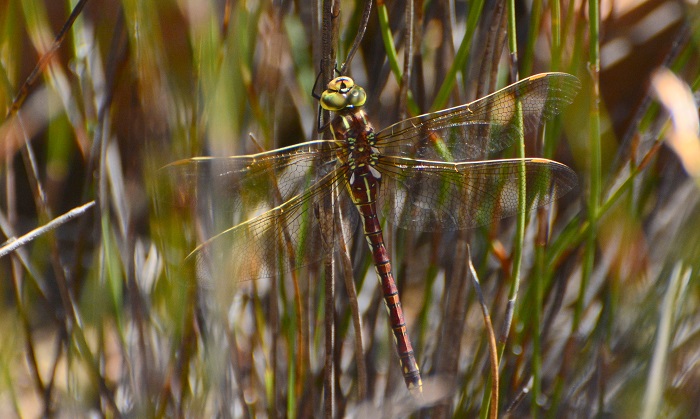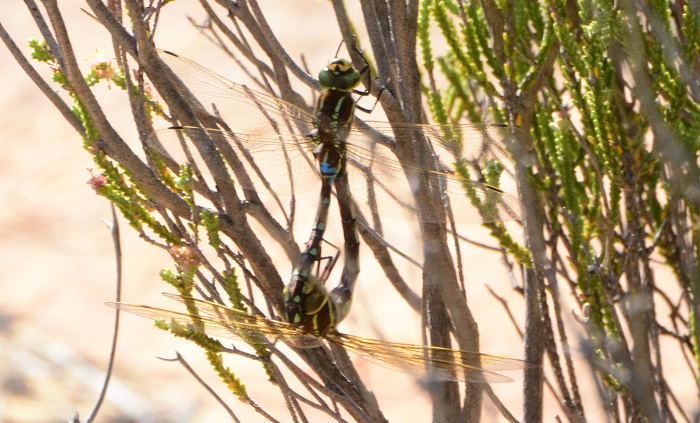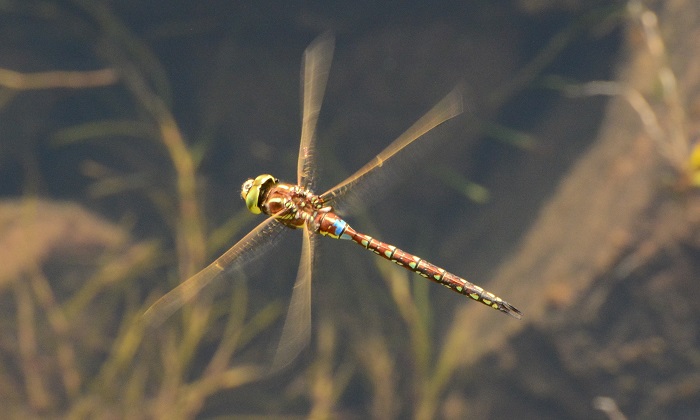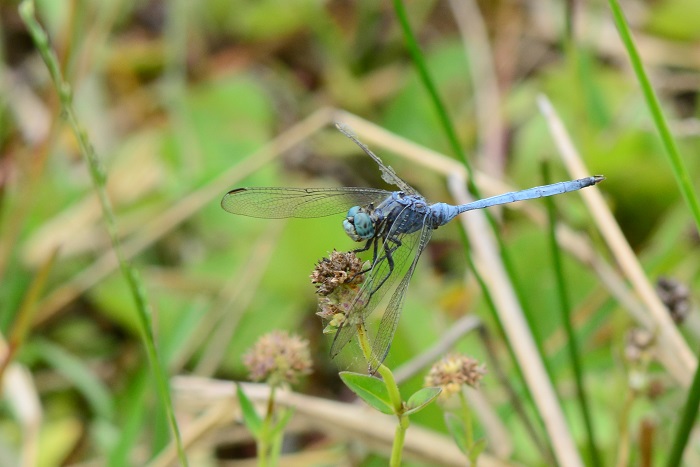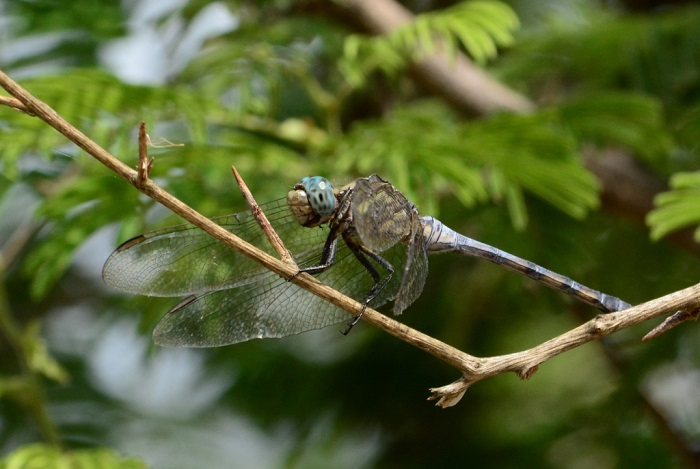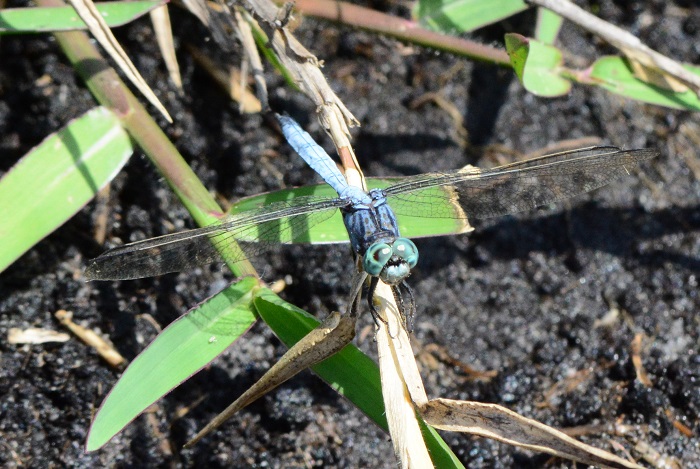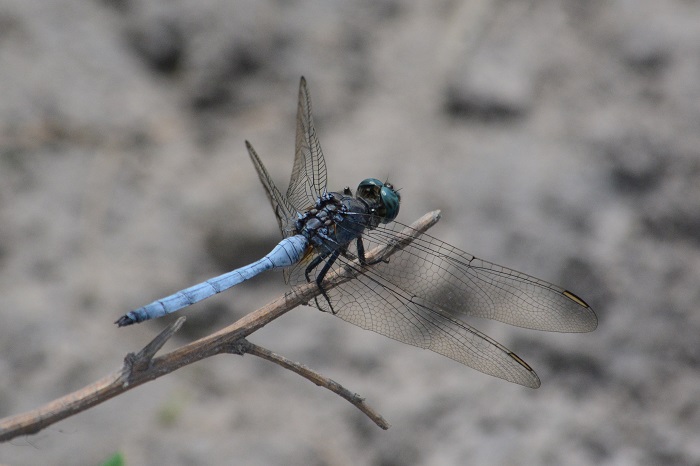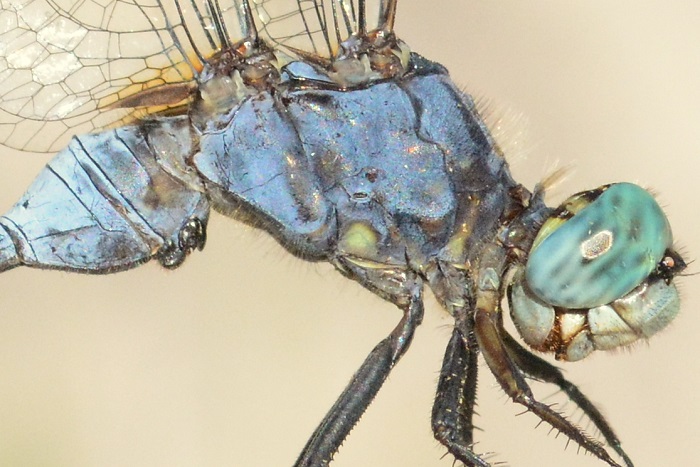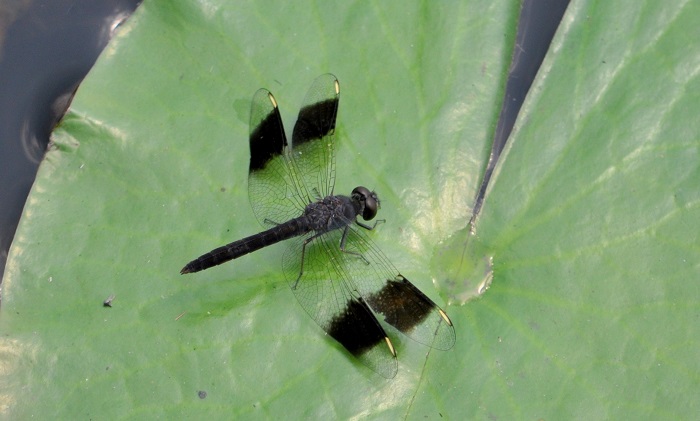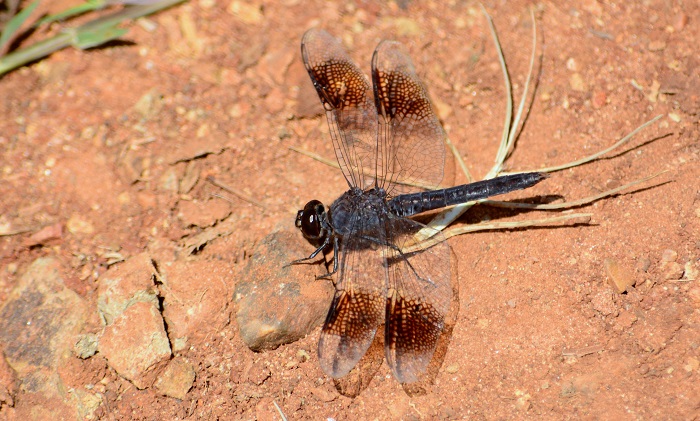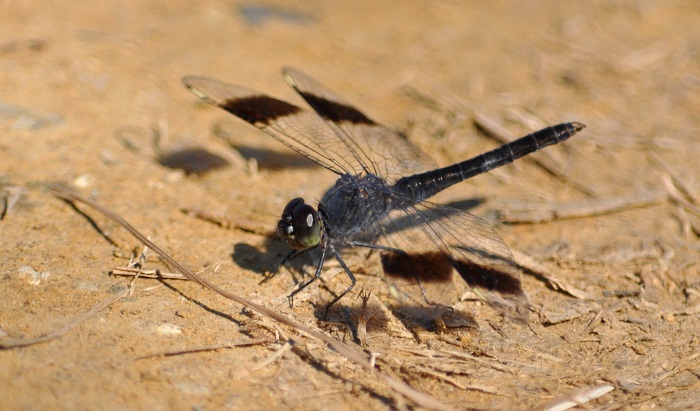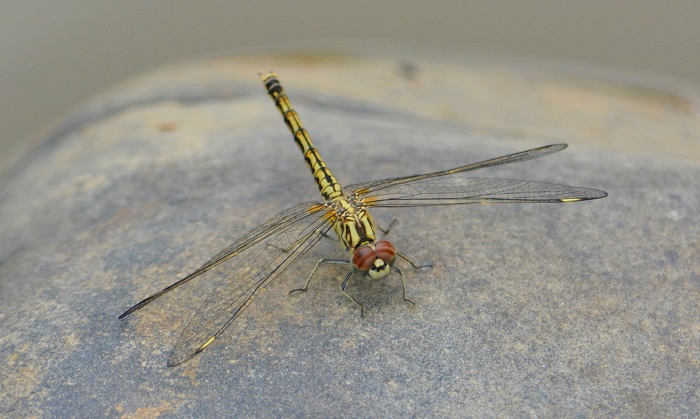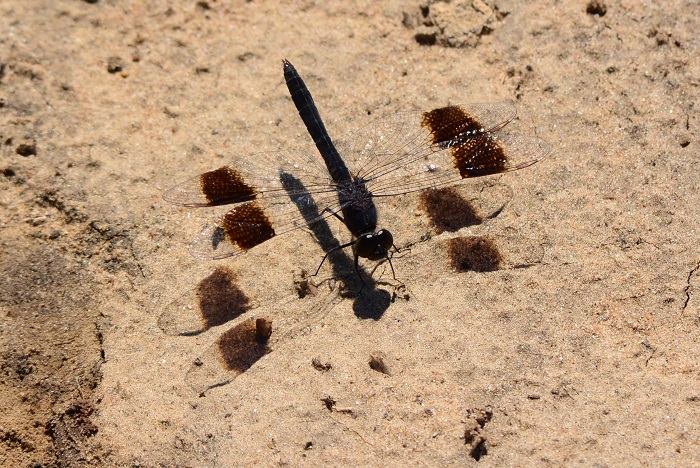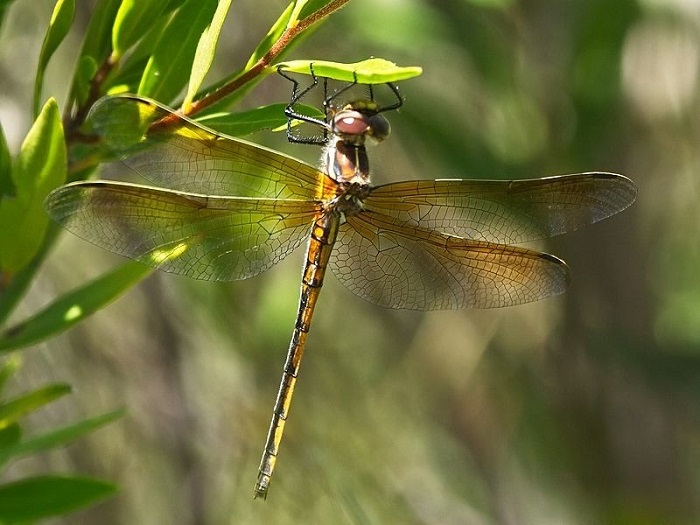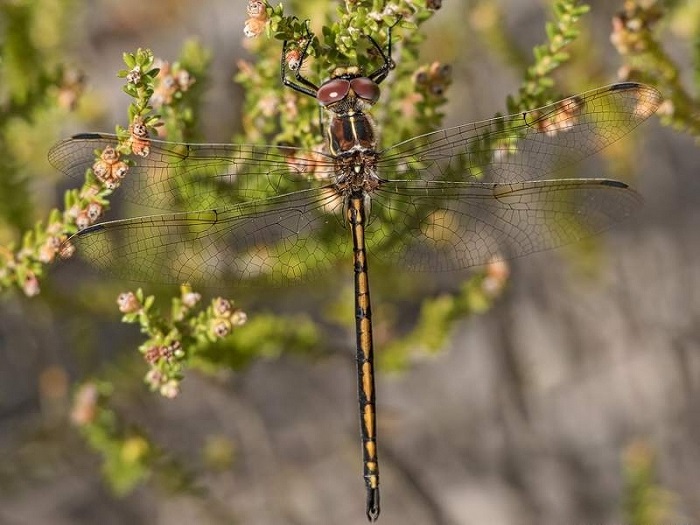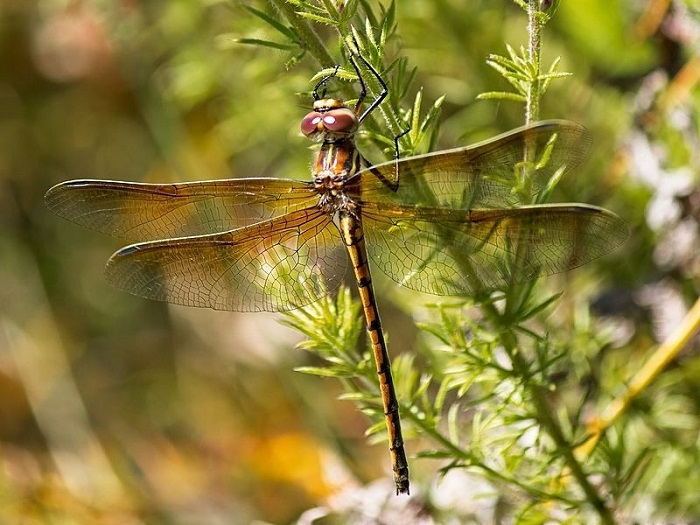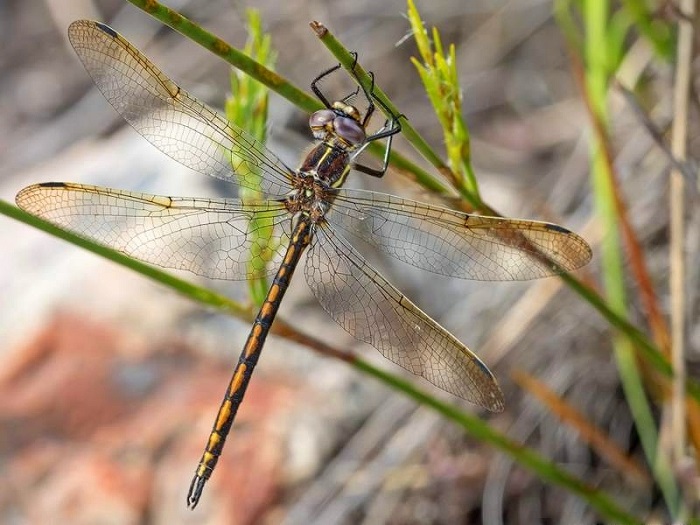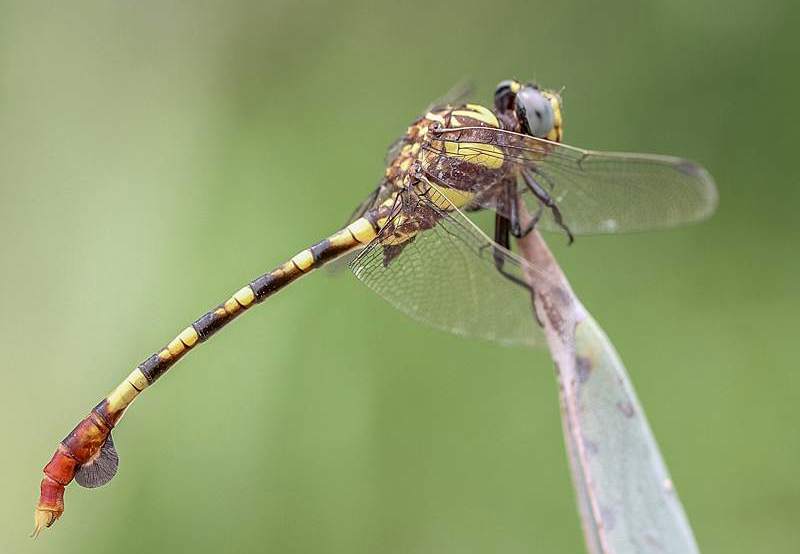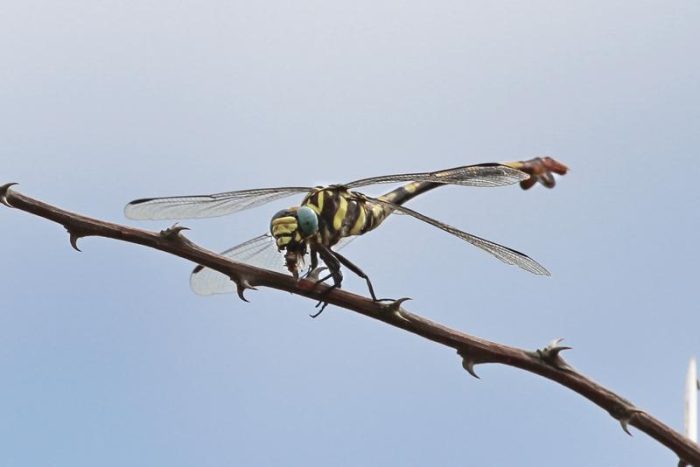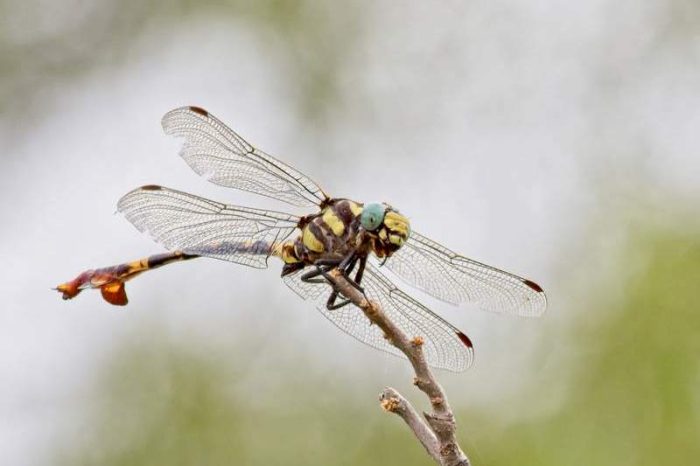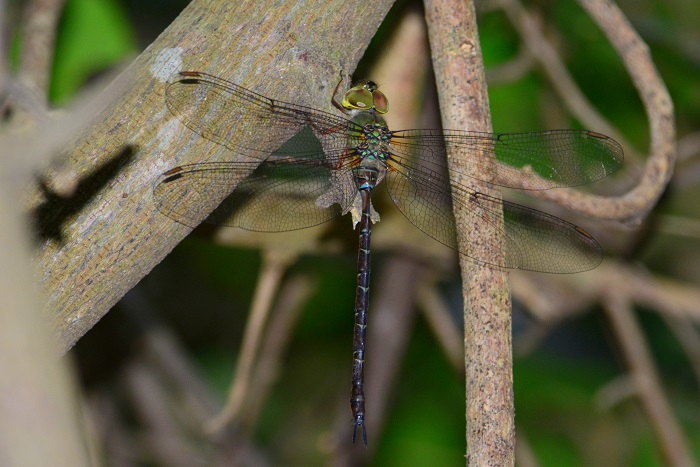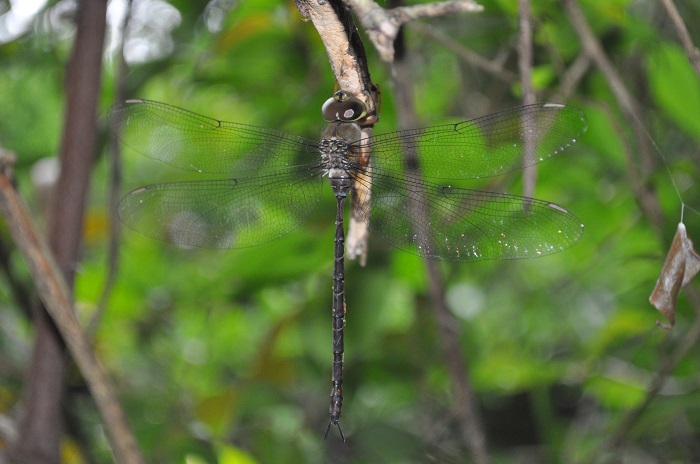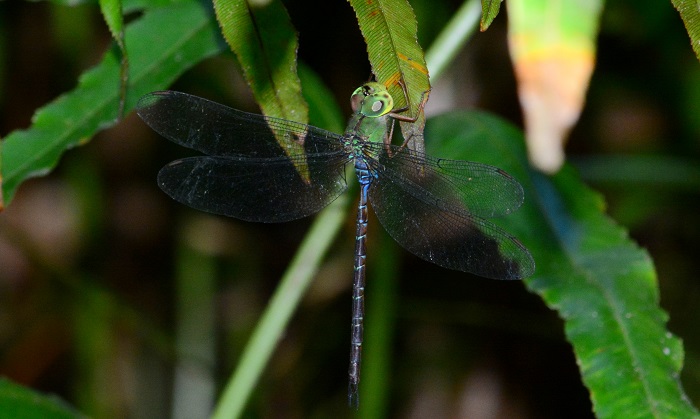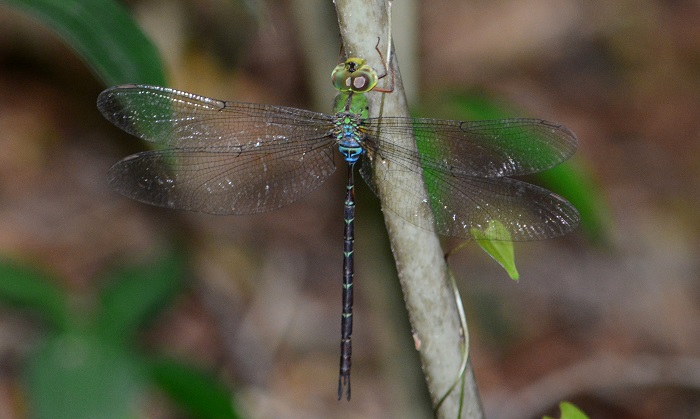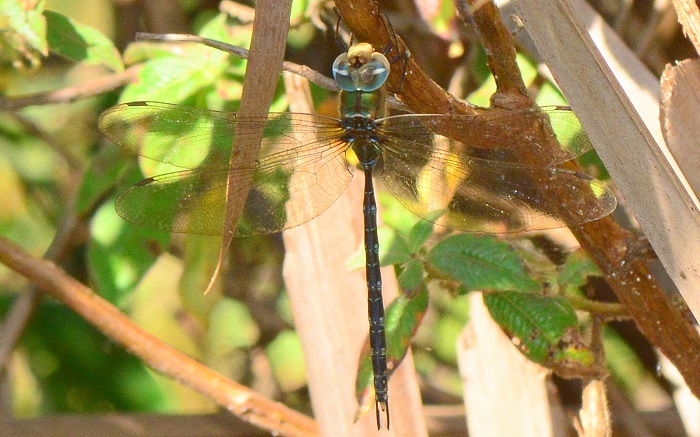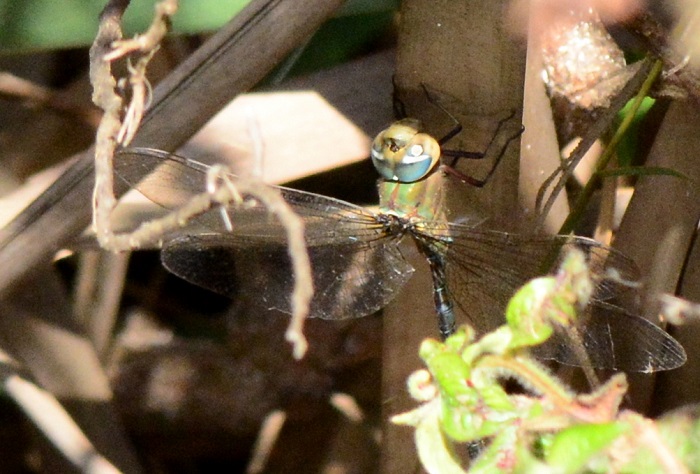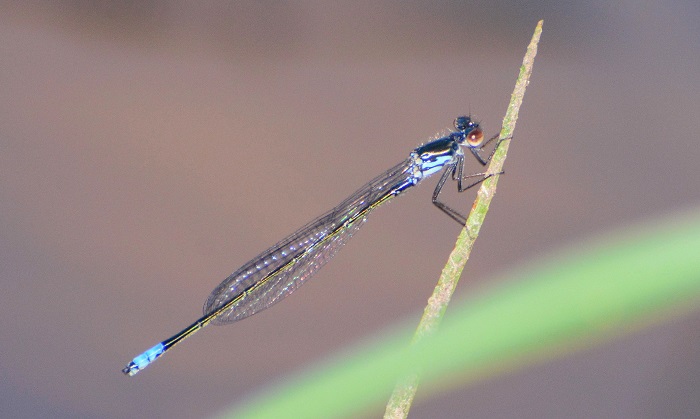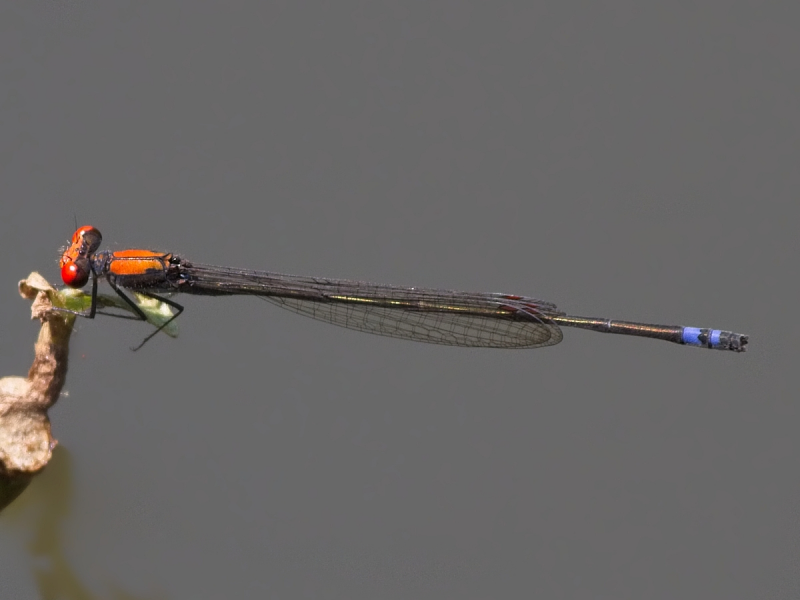
Balinsky’s Sprite (Pseudagrion inopinatum)

Cover photo by Alan Manson.

Find the Balinsky’s Sprite in the FBIS database (Freshwater Biodiversity Information System) here.

Family Coenagrionidae

Identification

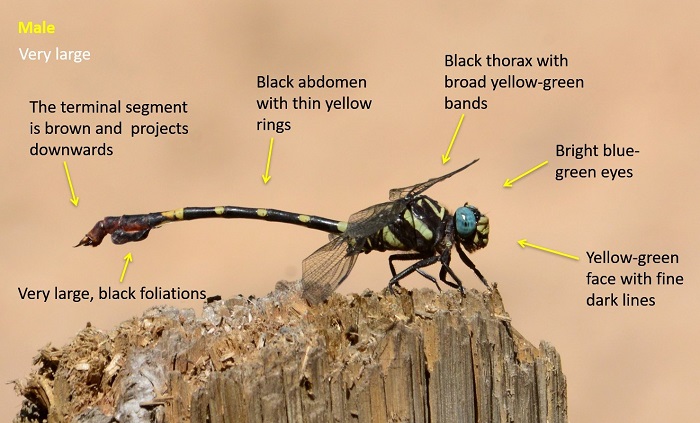
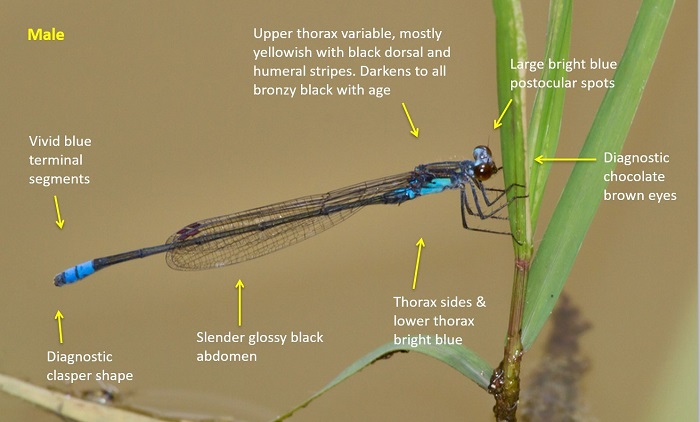
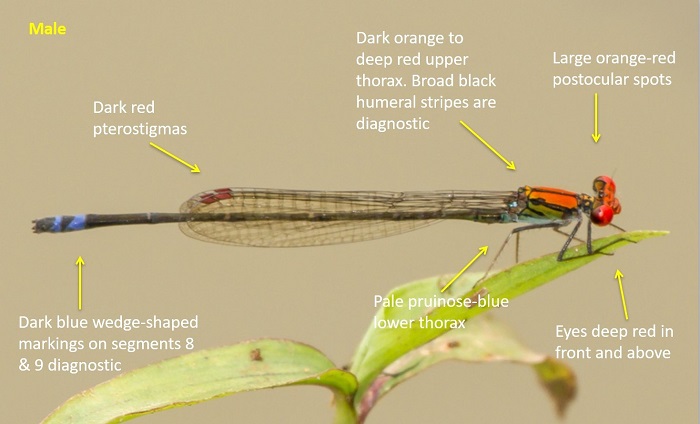
Balinsky’s Sprite Pseudagrion inopinatum – Male
Komati River, Mpumalanga
Photo by Sharon Stanton

Small to medium sized

Length up to 42mm; Wingspan reaches 53mm.

Male Balinsky’s Sprites most resemble Pseudagrion spernatum (Upland Sprite) and Pseudagrion draconis (Mountain Sprite). The three species are similar. Balinsky’s Sprite males are readily differentiated from the Upland and Mountain Sprites as those species lack the purple-mauve terminal segments of Pseudagrion inopinatum.

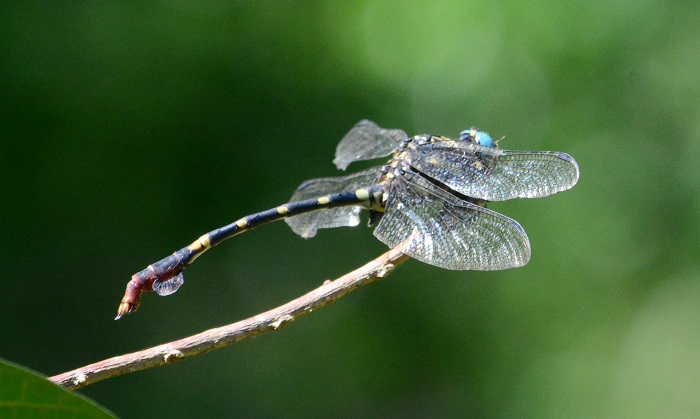
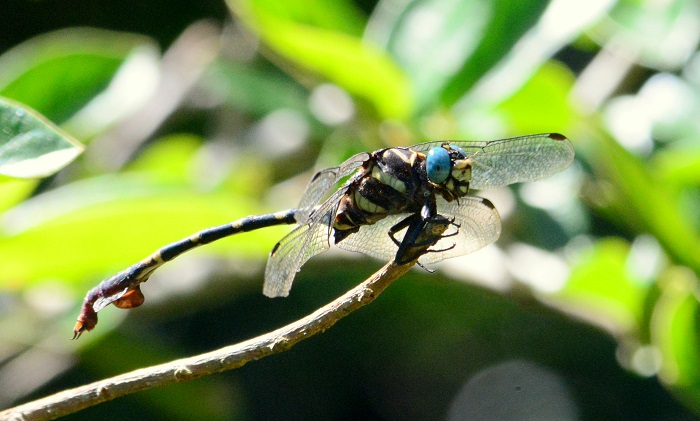
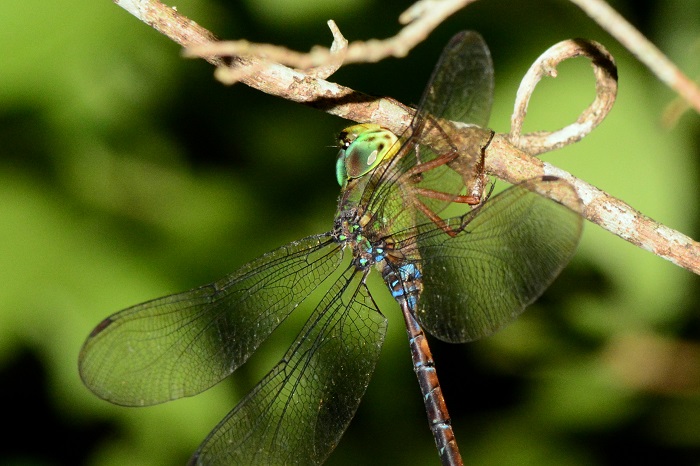
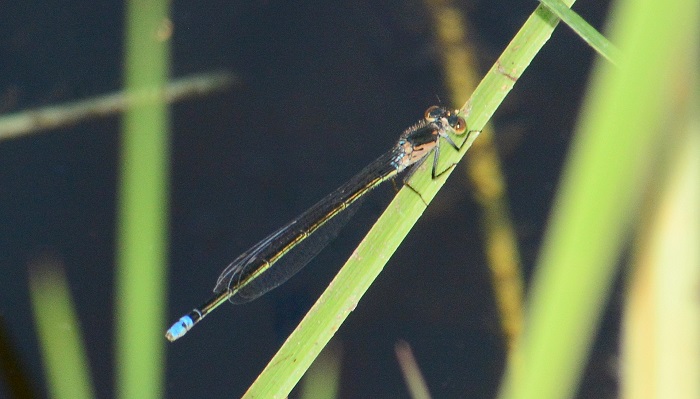
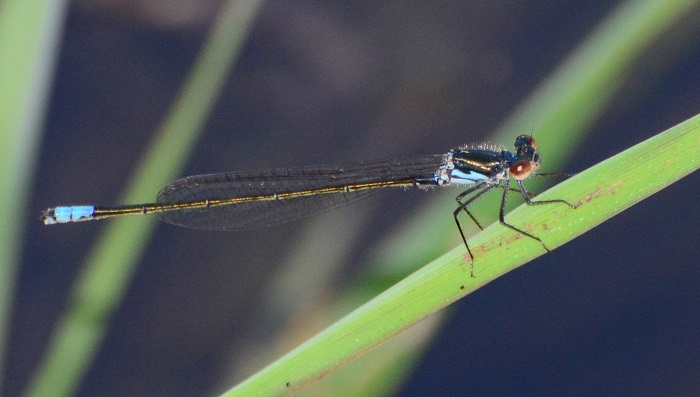
Females are pale greenish-yellow and black. They show light blue postocular spots, a buff forehead and a pale blue labrum, the combination of which is diagnostic.

Click here for more details on identification.

Balinsky’s Sprite Pseudagrion inopinatum – Female
uMkhomazi River, KwaZulu-Natal
Photo by Ryan Tippett

Habitat

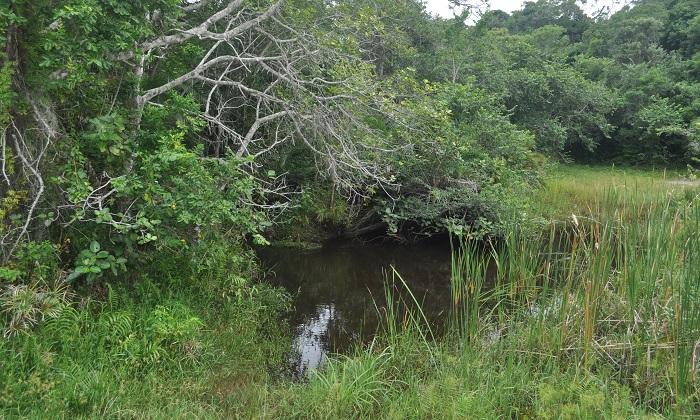
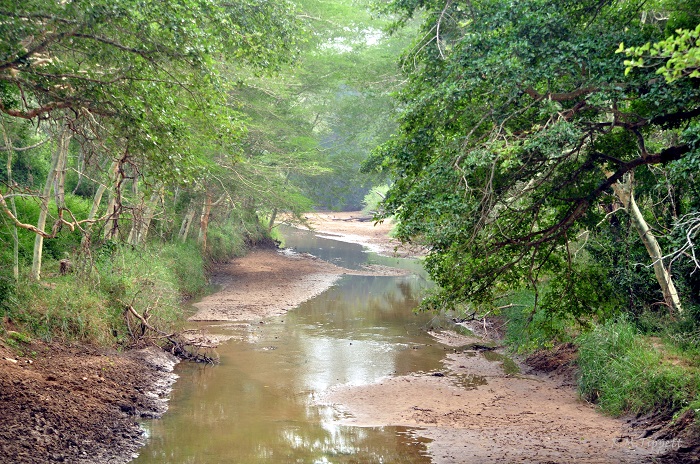
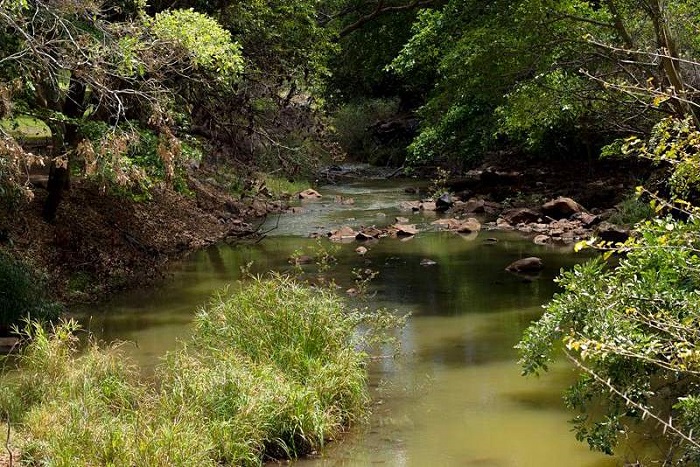
Balinsky’s Sprite inhabits fast-flowing rivers and streams in mid-altitude areas around 1000m above sea level. It prefers rivers with emergent rocks and a rich growth of grasses or sedges along the banks.

Habitat – Komati River, Mpumalanga
Photo by Sharon Stanton

Behaviour

Balinsky’s Sprite perches on emergent and overhanging grass stems near fast-flowing water.

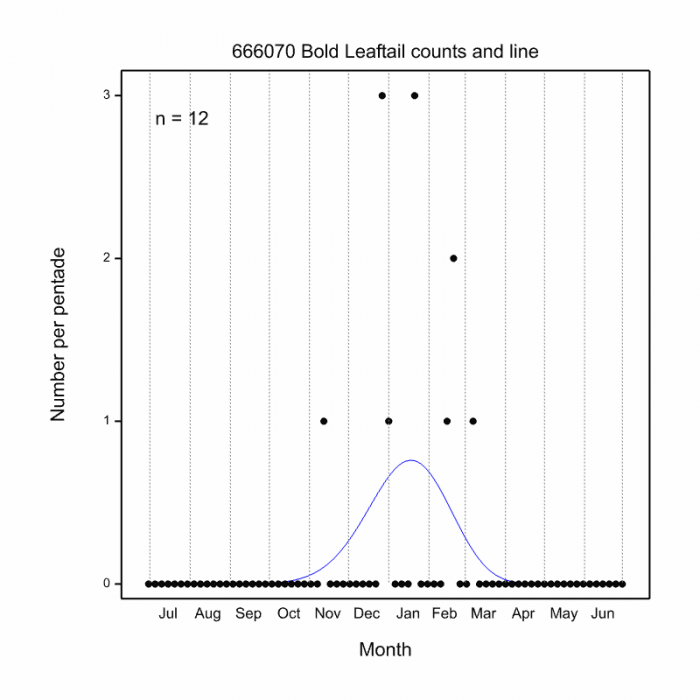
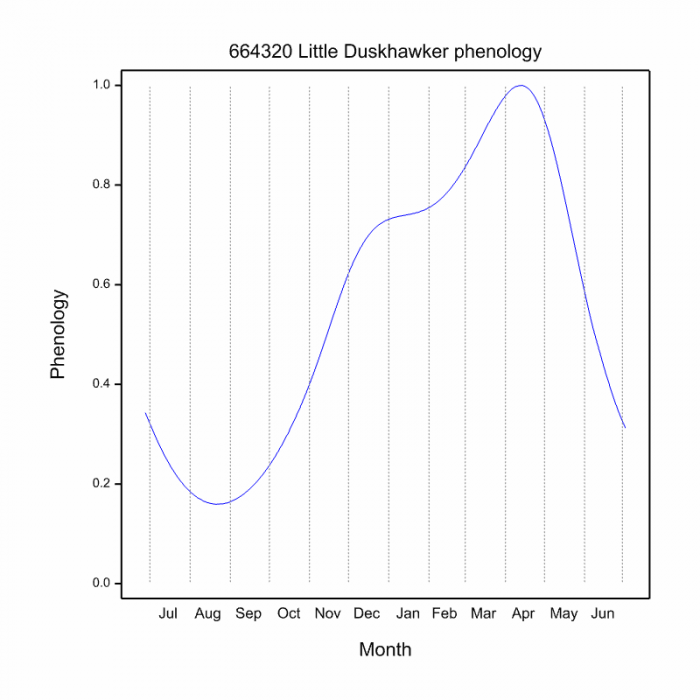
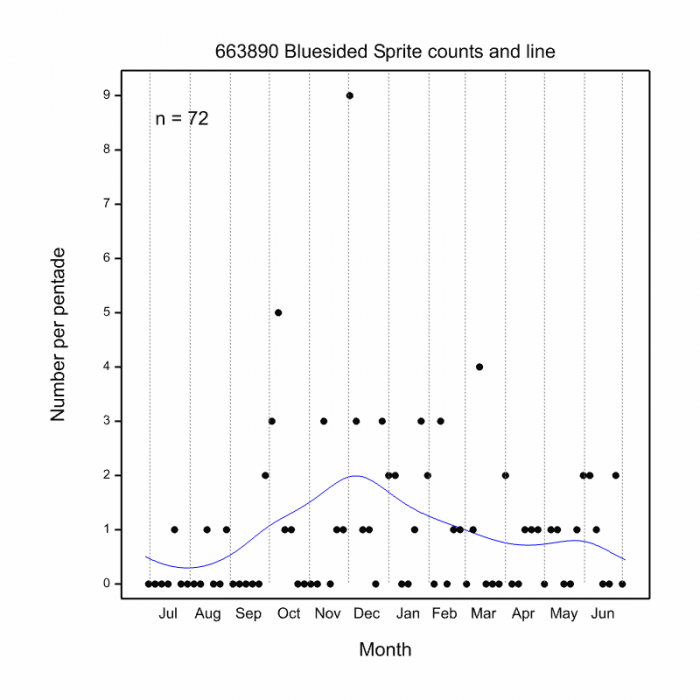
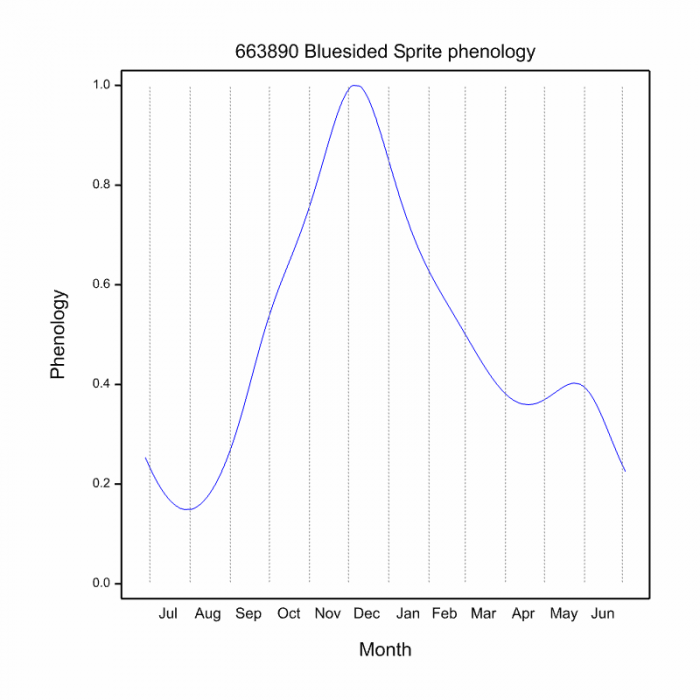
It is most active from early October until late March (see Phenology below).

Status and Conservation

Balinsky’s Sprite is a rare and localised endemic. It is listed as Near Threatened in the IUCN Red List of Threatened Species.

Distribution

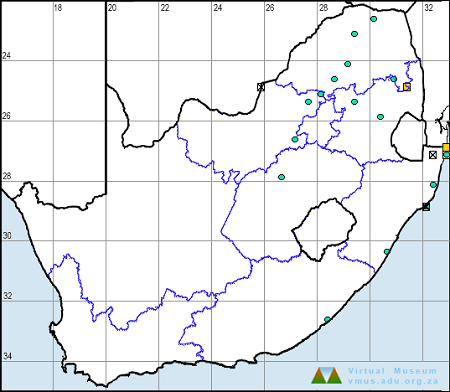
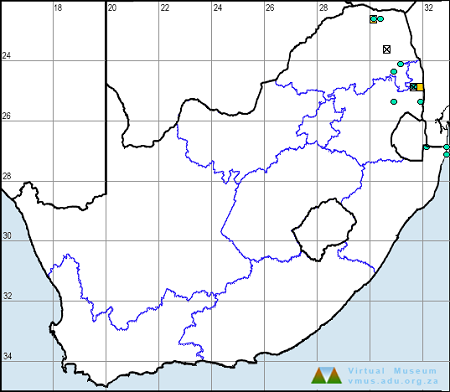
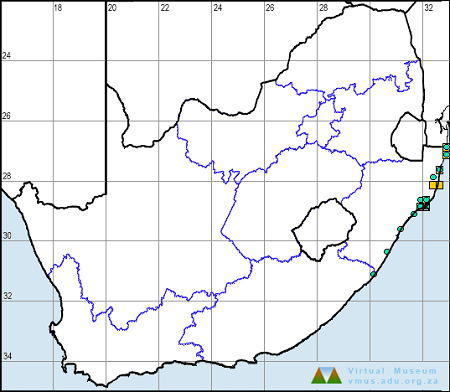
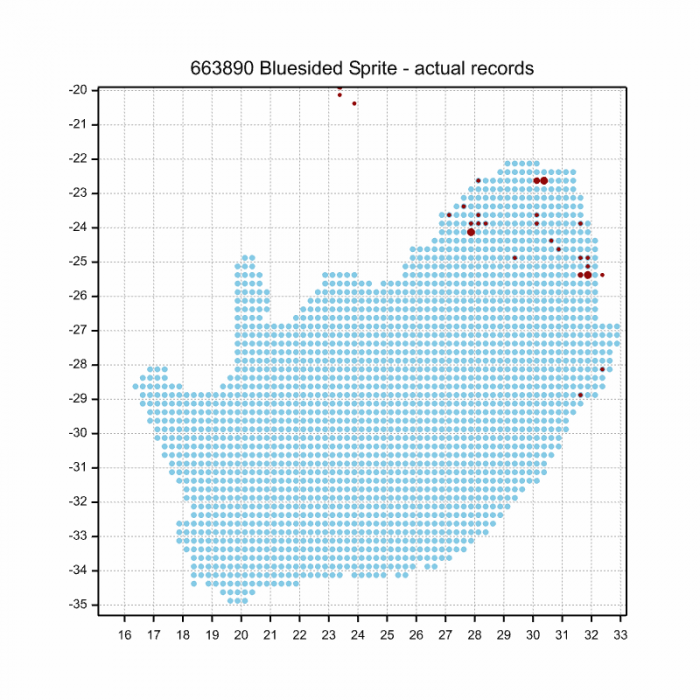
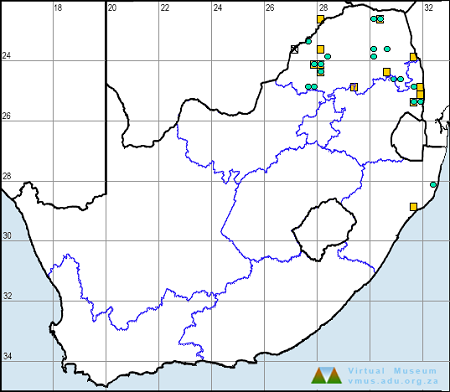
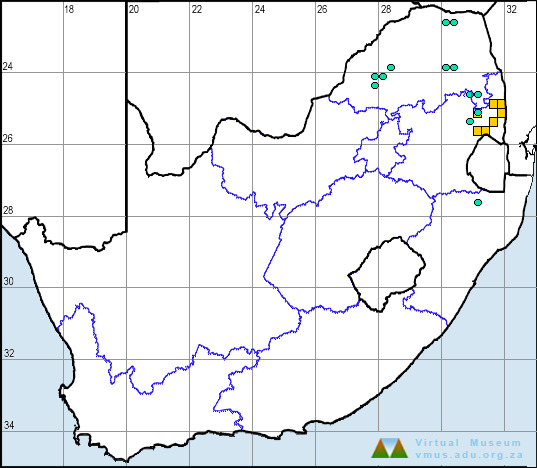
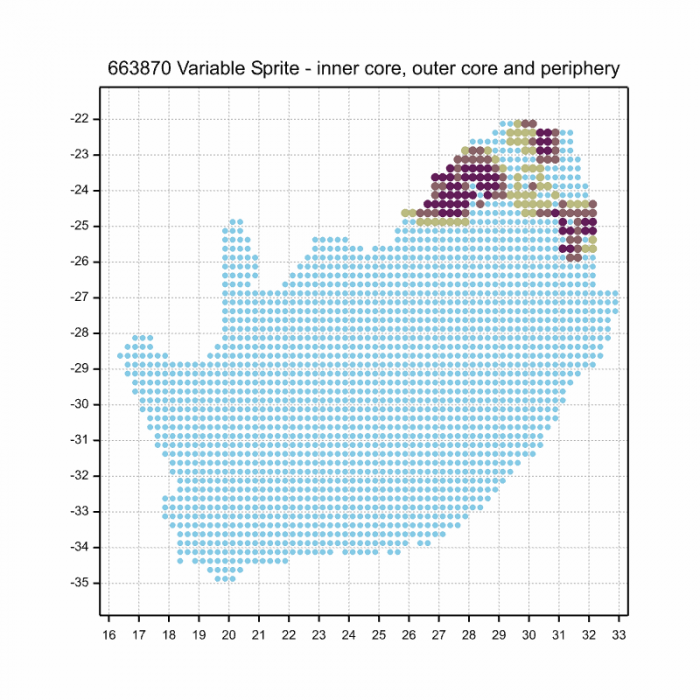
Balinsky’s Sprite is endemic to South Africa, where it is highly localised. It is known from two widely separated areas, one around Badplaas and Machadodorp in Mpumalanga, and the other near Bulwer in the KwaZulu-Natal midlands.

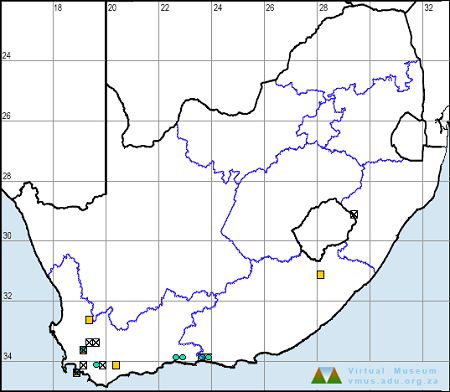
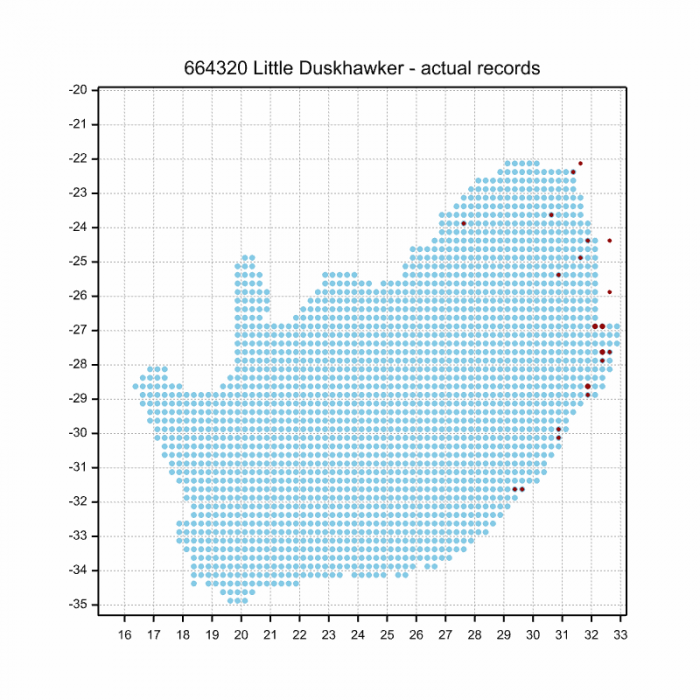
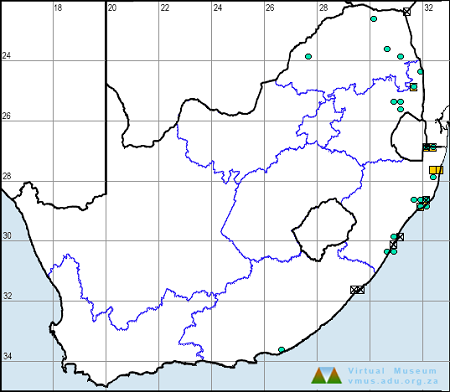
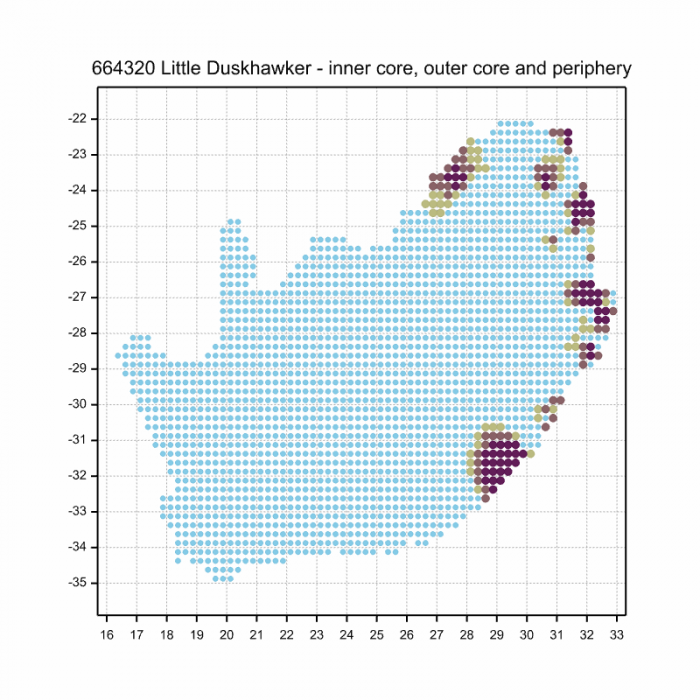
Below is a map showing the distribution of records for Balinsky’s Sprite in the OdonataMAP database as at February 2020.

Below is a map showing the distribution of records for Balinsky’s Sprite in the OdonataMAP database as of December 2024.

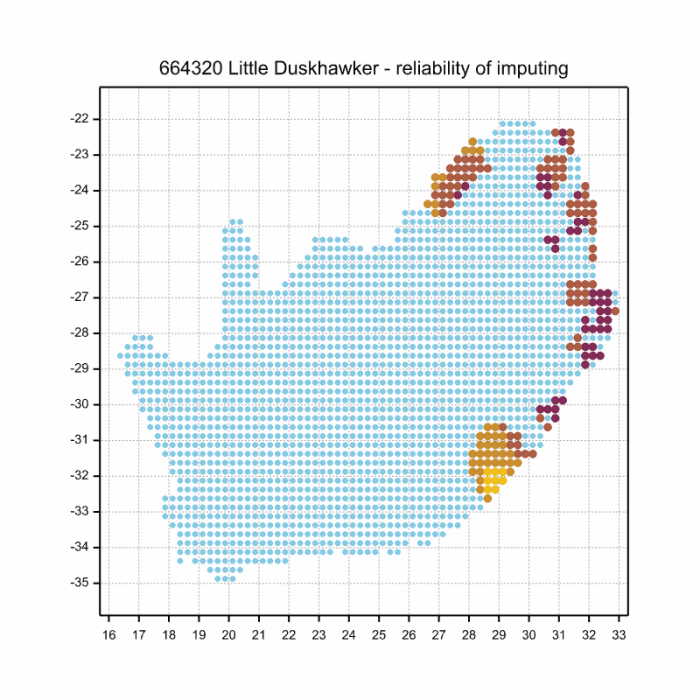
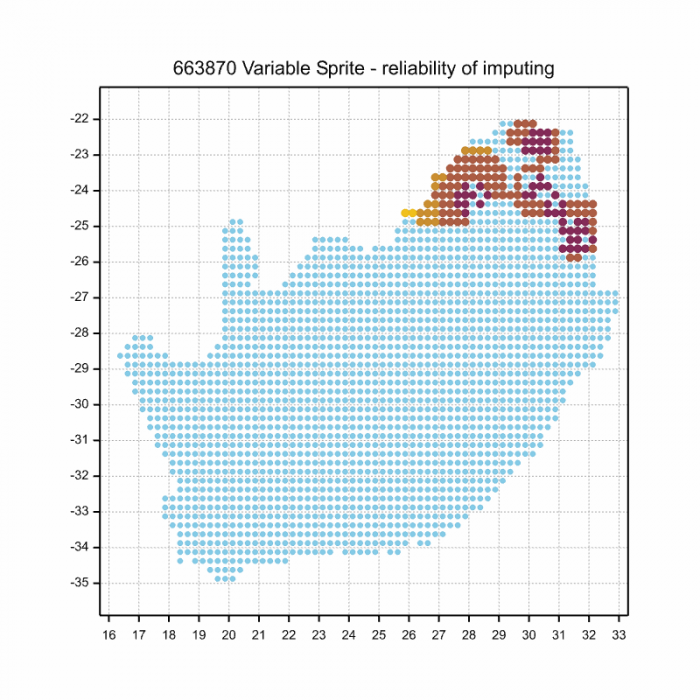
The next map below is an imputed map, produced by an interpolation algorithm, which attempts to generate a full distribution map from the partial information in the map above. This map will be improved by the submission of records to the OdonataMAP section of the Virtual Museum.

Ultimately, we will produce a series of maps for all the odonata species in the region. The current algorithm is a new algorithm. The objective is mainly to produce “smoothed” maps that could go into a field guide for odonata. This basic version of the algorithm (as mapped above) does not make use of “explanatory variables” (e.g. altitude, terrain roughness, presence of freshwater — we will be producing maps that take these variables into account soon). Currently, it only makes use of the OdonataMAP records for the species being mapped, as well as all the other records of all other species. The basic maps are “optimistic” and will generally show ranges to be larger than what they probably are.

These maps use the data in the OdonataMAP section of the Virtual Museum, and also the database assembled by the previous JRS funded project, which was led by Professor Michael Samways and Dr KD Dijkstra.

Phenology

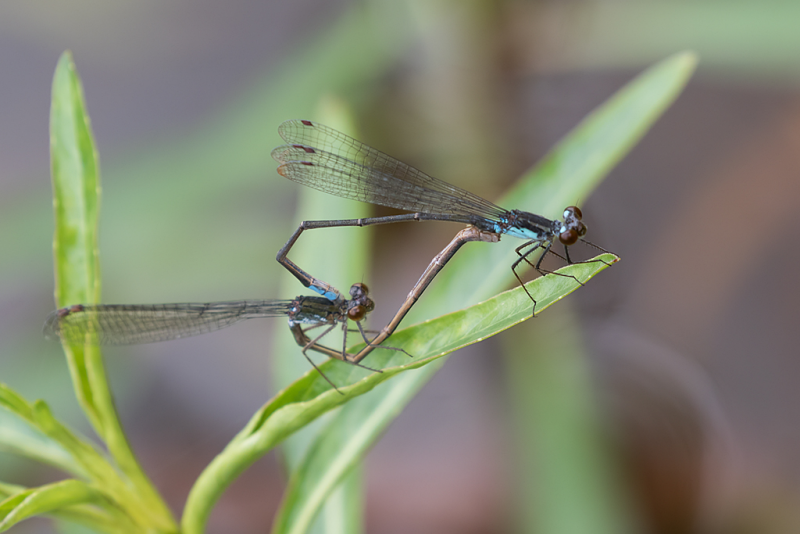
Balinsky’s Sprite Pseudagrion inopinatum – Female
uMkhomazi River, KwaZulu-Natal
Photo by Ryan Tippett

Further Resources

The use of photographs by Alan Manson and Sharon Stanton is acknowledged. Other photographs by Ryan Tippett.

Balinsky’s Sprite Pseudagrion inopinatum Balinsky, 1971

Other common names: Badplaas Sprite (Alt. English); Balinsky-gesie (Afrikaans)

Recommended citation format: Loftie-Eaton M; Navarro R; Tippett RM; Underhill L. 2025. Balinsky’s Sprite Pseudagrion inopinatum. Biodiversity and Development Institute. Available online at https://thebdi.org/2020/05/19/balinskys-sprite-pseudagrion-inopinatum/

References: Tarboton, M; Tarboton, W. (2019). A Guide to the Dragonflies & Damselflies of South Africa. Struik Nature.

Samways, MJ. (2008). Dragonflies and Damselflies of South Africa. Pensoft

Samways, MJ. (2016). Manual of Freshwater Assessment for South Africa: Dragonfly Biotic Index. Suricata 2. South African National Biodiversity Institute, Pretoria

Similar Species

Spectacled Skimmer (Orthetrum icteromelas)

Cover photo by Alan Manson.

Find this species in the FBIS database (Freshwater Biodiversity Information System) here.

Family Libellulidae

Identification

Spectacled Skimmer Orthetrum icteromelas – Male
Kosi Bay, iSimangaliso Wetland Park, KwaZulu-Natal
Photo by Ryan Tippett

Medium sized

Length up to 45mm; Wingspan attains 64mm.

Both sexes are distinctive and easily identified.

Adult males have a darker blue-grey colouration when compared to many other Orthetrum males. Male Spectacled Skimmers also show two diagnostic black rings (spectacles) on the white frons. This trait is also present in immature males and females. Note that the ‘spectacles’ may be less obvious in females. Orthetrum abbotti (Little Skimmer) also has ‘spectacles’ on the frons, but the markings are less distinct and the frons is greyish rather than clear white. Orthetrum abbotti is also noticeably smaller.

Immature males and females are boldly patterned in black and yellow. They also show diagnostic, broad black markings along the top of the abdomen.

Click here for more details on identification.

Spectacled Skimmer Orthetrum icteromelas – Female
Near Himeville, KwaZulu-Natal
Photo by Corné Rautenbach

Habitat

The Spectacled Skimmer inhabits standing waters, especially swamps, marshes and floodplains. It favours sites with shallow water and a rich growth of emergent grasses, sedges and forbs. They can sometimes also be found at man-made dams that provide suitable habitat.

Habitat – Near Kosi Bay, KwaZulu-Natal
Photo by Ryan Tippett

Behaviour

The Spectacled Skimmer perches prominently on grass stems. It takes short flights to hunt prey, often returning to the same perch. Spectacled Skimmers are voracious hunters and frequently take large prey, including other dragonflies as large as themselves. Males and females are usually found in the same vicinity. The Spectacled Skimmer is fairly tame and confiding.

Spectacled Skimmer Orthetrum icteromelas – Male
Linyanti, Botswana
Photo by Ryan Tippett

Status and Conservation

The Spectacled Skimmer is somewhat scarce and localised. It is listed as of Least Concern in the IUCN Red List of Threatened Species. The Spectacled Skimmer has benefited from small man-made impoundments on rivers that offer suitable marshy habitats. Its natural marsh habitat is under threat in some areas due to expanding agriculture.

Spectacled Skimmer Orthetrum icteromelas – Female
Kosi Bay, iSimangaliso Wetland Park, KwaZulu-Natal
Photo by Ryan Tippett

Distribution

The Spectacled Skimmer is found throughout most of sub-Saharan Africa and Madagascar. It is absent only from the arid regions of north-east Africa and the drier parts of southern Africa.

The Spectacled Skimmer has a disjunct distribution in the wetter north-eastern parts of South Africa.

Spectacled Skimmer Orthetrum icteromelas – Male
Okavango Delta, Botswana
Photo by Ryan Tippett

Below is a map showing the distribution of records for Spectacled Skimmer in the OdonataMAP database as at February 2020.

Below is a map showing the distribution of records for Spectacled Skimmer in the OdonataMAP database as of December 2024.

The next map below is an imputed map, produced by an interpolation algorithm, which attempts to generate a full distribution map from the partial information in the map above. This map will be improved by the submission of records to the OdonataMAP section of the Virtual Museum.

Ultimately, we will produce a series of maps for all the odonata species in the region. The current algorithm is a new algorithm. The objective is mainly to produce “smoothed” maps that could go into a field guide for odonata. This basic version of the algorithm (as mapped above) does not make use of “explanatory variables” (e.g. altitude, terrain roughness, presence of freshwater — we will be producing maps that take these variables into account soon). Currently, it only makes use of the OdonataMAP records for the species being mapped, as well as all the other records of all other species. The basic maps are “optimistic” and will generally show ranges to be larger than what they probably are.

These maps use the data in the OdonataMAP section of the Virtual Museum, and also the database assembled by the previous JRS funded project, which was led by Professor Michael Samways and Dr KD Dijkstra.

Spectacled Skimmer Orthetrum icteromelas
Kosi Bay, iSimangaliso Wetland Park, KwaZulu-Natal
Photo by Ryan Tippett

Further Resources

The use of photographs by Alan Manson and Corné Rautenbach is acknowledged. All other photographs by Ryan Tippett.

Spectacled Skimmer Orthetrum icteromelas Ris, 1910

Other common names: Brilskepper (Afrikaans)

Recommended citation format: Loftie-Eaton M; Navarro R; Tippett RM; Underhill L. 2025. Spectacled Skimmer Orthetrum icteromelas. Biodiversity and Development Institute. Available online at https://thebdi.org/2020/05/19/spectacled-skimmer-orthetrum-icteromelas/

References: Tarboton, M; Tarboton, W. (2019). A Guide to the Dragonflies & Damselflies of South Africa. Struik Nature.

Samways, MJ. (2008). Dragonflies and Damselflies of South Africa. Pensoft

Samways, MJ. (2016). Manual of Freshwater Assessment for South Africa: Dragonfly Biotic Index. Suricata 2. South African National Biodiversity Institute, Pretoria

Martens, A; Suhling, F. (2007). Dragonflies and Damselflies of Namibia. Gamsberg Macmillan.

Spectacled Skimmer Orthetrum icteromelas – Immature Male
Kosi Bay, iSimangaliso Wetland Park, KwaZulu-Natal
Photo by Ryan Tippett

Similar Species

Highland Skimmer (Orthetrum machadoi)

Cover photo by Chris Willis.

Find the Highland Skimmer in the FBIS database (Freshwater Biodiversity Information System) here.

Family Libellulidae

Identification

Highland Skimmer Orthetrum machadoi – Male
Near Helpmekaar, KwaZulu-Natal
Photo by Alan Manson

Medium sized

Length up to 44mm; Wingspan attains 66mm.

The Highland Skimmer is most similar to Orthetrum guineense (Guinea Skimmer). The two species were, until recently, thought to be conspecific. Mature males of the two species are problematic to identify in the field. They can only be identified definitively by the respective shapes of their secondary genitalia.

Immature males and females of Orthetrum machadoi can be recognised by the mostly unmarked thorax sides and the pair of truncated lines on the shoulders (diagnostic).

Click here for more details on identification of the Highland Skimmer.

Highland Skimmer Orthetrum machadoi – Female
Pongola River near Jozini, KwaZulu-Natal
Photo by Ryan Tippett

Habitat

The Highland Skimmer inhabits the grass and bush fringes of floodplains, pans, marshes, dams and rivers. It is a mid altitude species in many areas but occurs to sea-level in KwaZulu-Natal.

Habitat – Near Hluhluwe, KwaZulu-Natal
Photo by Ryan Tippett

Behaviour

The Highland Skimmer hunts from a low perch or bare patches on the ground. It is often seen away from water in the surrounding grass and woodland. On the wing from October to April

Highland Skimmer Orthetrum machadoi – Female
Eastern Shores, iSimangaliso Wetland Park, KwaZulu-Natal
Photo by Ryan Tippett

Status and Conservation

The Highland Skimmer is fairly common in South Africa. It is listed as of Least Concern in the IUCN Red List of Threatened Species.

Highland Skimmer Orthetrum machadoi – Teneral male
Kosi Bay, iSimangaliso Wetland Park, KwaZulu-Natal
Photo by Ryan Tippett

Distribution

Orthetrum machadoi is mainly a species of East and Southern Africa, with some scattered records across to northern Angola.

In South Africa, the Highland Skimmer is found primarily in the north and east, occuring as far south as the former Transkei, Eastern Cape. There are also scattered records from the southern parts of the Eastern Cape and the Western Cape, where the Highland Skimmer is scarce.

Highland Skimmer Orthetrum machadoi – Female
Pongola River near Jozini, KwaZulu-Natal
Photo by Ryan Tippett

Below is a map showing the distribution of records for Highland Skimmer in the OdonataMAP database as at February 2020.

Below is a map showing the distribution of records for Highland Skimmer in the OdonataMAP database as at February 2020.

Below is a map showing the distribution of records for Highland Skimmer in the OdonataMAP database as of December 2024.

The next map below is an imputed map, produced by an interpolation algorithm, which attempts to generate a full distribution map from the partial information in the map above. This map will be improved by the submission of records to the OdonataMAP section of the Virtual Museum.

Ultimately, we will produce a series of maps for all the odonata species in the region. The current algorithm is a new algorithm. The objective is mainly to produce “smoothed” maps that could go into a field guide for odonata. This basic version of the algorithm (as mapped above) does not make use of “explanatory variables” (e.g. altitude, terrain roughness, presence of freshwater — we will be producing maps that take these variables into account soon). Currently, it only makes use of the OdonataMAP records for the species being mapped, as well as all the other records of all other species. The basic maps are “optimistic” and will generally show ranges to be larger than what they probably are.

These maps use the data in the OdonataMAP section of the Virtual Museum, and also the database assembled by the previous JRS funded project, which was led by Professor Michael Samways and Dr KD Dijkstra.

Highland Skimmer Orthetrum machadoi – Teneral male
Kosi Bay, iSimangaliso Wetland Park, KwaZulu-Natal
Photo by Ryan Tippett

Further Resources

The use of photographs by Alan Manson and Christopher Willis is acknowledged. All other photographs by Ryan Tippett.

Highland Skimmer Orthetrum machadoi Longfield, 1955

Other common names: Machado’s Skimmer (Alt. English); Hooglandskepper (Afrikaans)

Recommended citation format: Loftie-Eaton M; Navarro R; Tippett RM; Underhill L. 2025. Highland Skimmer Orthetrum machadoi. Biodiversity and Development Institute. Available online at https://thebdi.org/2020/05/19/highland-skimmer-orthetrum-machadoi/

References: Tarboton, M; Tarboton, W. (2019). A Guide to the Dragonflies & Damselflies of South Africa. Struik Nature.

Samways, MJ. (2008). Dragonflies and Damselflies of South Africa. Pensoft

Samways, MJ. (2016). Manual of Freshwater Assessment for South Africa: Dragonfly Biotic Index. Suricata 2. South African National Biodiversity Institute, Pretoria

Martens, A; Suhling, F. (2007). Dragonflies and Damselflies of Namibia. Gamsberg Macmillan.

Similar Species

Black Emperor (Anax tristis)

Cover photo by Niall Perrins.

Find the Black Emperor in the FBIS database (Freshwater Biodiversity Information System) here.

Family Aeshnidae

Identification

Black Emperor Anax tristis – Female
Near Hluhluwe, KwaZulu-Natal
Photo by Ryan Tippett

Very large to huge size

Length up to 116mm; Wingspan attains 133mm.

The Black Emperor is the largest dragonfly species in Africa. The distinctive green, black and yellow colouration added to its huge size render Anax tristis unmistakable.

The sexes are very similar but females have shorter and broader abdomens. Females also have smoky-coloured wings.

Click here for more details on identification.

Black Emperor Anax tristis – Male
Kosi Bay, iSimangaliso Wetland Park, KwaZulu-Natal
Photo by Ryan Tippett

Habitat

The Black Emperor frequents Pans, dams, ponds, and waterholes in savanna and forested areas. It prefers fairly small, open waterbodies, often with minimal vegetation. The Black Emperor is sometimes also found at marshes and rivers.

Habitat – Small savanna pan.
Bonamanzi Game Reserve, KwaZulu-Natal
Photo by Ryan Tippett

Behaviour

The Black Emperor is a highly aerial species and is seldom seen perched. It mainly flies at tree-top level but sometimes also low over the water. The Black Emperor patrols a regular route over a waterbody. This flight route often includes a trip to the surrounding treeline before returning to the water at speed. The flight is very fast and powerful. The Black Emperor is fairly inquisitive and will sometimes pass an observer at close range. If disturbed it flies fast, high, and far. Black Emperors rest by hanging vertically from a perch. Preys on large flying insects, including beetles and other dragonfly species.

Black Emperor Anax tristis – Female laying eggs.
Near Hluhluwe, KwaZulu-Natal
Photo by Ryan Tippett

The Black Emperor is most active from October to April (see Phenology below).

Status and Conservation

The Black Emperor is a scarce and localised species. It is listed as of Least Concern in the IUCN Red List of Threatened Species. The Black Emperor is mostly found in undisturbed areas but does make use of suitable man-made dams and waterholes.

Black Emperor Anax tristis – Male
Near Hluhluwe, KwaZulu-Natal
Photo by Ryan Tippett

Distribution

The Black Emperor is widely but thinly distributed throughout most of sub-Saharan Africa. It is only absent from the driest regions of north-east Africa and the arid regions of Namibia and South Africa. The Black Emperor is sometimes prone to vagrancy as evidenced in the distribution maps below.

Below is a map showing the distribution of records for Black Emperor in the OdonataMAP database as at February 2020.

Below is a map showing the distribution of records for Black Emperor in the OdonataMAP database as of December 2024.
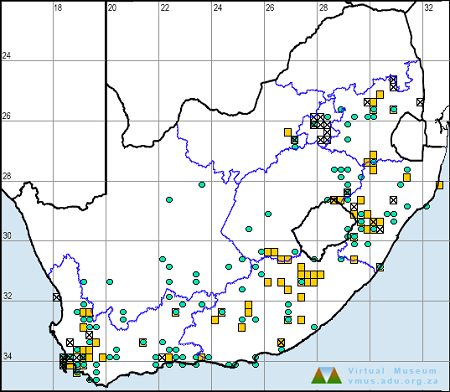
The next map below is an imputed map, produced by an interpolation algorithm, which attempts to generate a full distribution map from the partial information in the map above. This map will be improved by the submission of records to the OdonataMAP section of the Virtual Museum.

Ultimately, we will produce a series of maps for all the odonata species in the region. The current algorithm is a new algorithm. The objective is mainly to produce “smoothed” maps that could go into a field guide for odonata. This basic version of the algorithm (as mapped above) does not make use of “explanatory variables” (e.g. altitude, terrain roughness, presence of freshwater — we will be producing maps that take these variables into account soon). Currently, it only makes use of the OdonataMAP records for the species being mapped, as well as all the other records of all other species. The basic maps are “optimistic” and will generally show ranges to be larger than what they probably are.

These maps use the data in the OdonataMAP section of the Virtual Museum, and also the database assembled by the previous JRS funded project, which was led by Professor Michael Samways and Dr KD Dijkstra.

Phenology

Black Emperor Anax tristis – Female
Carnarvon district, Northern Cape
Photo by Ryan Tippett

Further Resources

The use of photographs by Niall Perrins is acknowledged. All other photographs by Ryan Tippett.

Black Emperor Anax tristis Hagen, 1867

Other common names: Swartkeiser (Afrikaans)

Recommended citation format: Loftie-Eaton M; Navarro R; Tippett RM; Underhill L. 2025. Black Emperor Anax tristis. Biodiversity and Development Institute. Available online at https://thebdi.org/2020/05/18/black-emperor-anax-tristis/

References: Tarboton, M; Tarboton, W. (2019). A Guide to the Dragonflies & Damselflies of South Africa. Struik Nature.

Samways, MJ. (2008). Dragonflies and Damselflies of South Africa. Pensoft

Samways, MJ. (2016). Manual of Freshwater Assessment for South Africa: Dragonfly Biotic Index.Suricata 2. South African National Biodiversity Institute, Pretoria

Martens, A; Suhling, F. (2007). Dragonflies and Damselflies of Namibia. Gamsberg Macmillan.

Black Emperor Anax tristis
Near Hluhluwe, KwaZulu-Natal
Photo by Ryan Tippett

Similar Species

Brown Duskhawker (Gynacantha villosa)

Cover photo by Gary Brown.

Find the Brown Duskhawker in the FBIS database (Freshwater Biodiversity Information System) here.

Family Aeshnidae

Identification

Brown Duskhawker Gynacantha villosa – Male
Chongwe, Zambia
Main photo by Norman Barrett
Inset photo by Gary Brown

Very large

Length up to 77mm; Wingspan attains 114mm.

The sexes are very similar but males are slightly brighter, have a 4-celled anal triangle and a narrower waist.

The Brown Duskhawker is most likely to be confused with the Little Duskhawker (Gynacantha manderica) and the Eastern Duskhawker (Gynacantha usambarica). Gynacantha villosa can be told apart by the double cell row between the R2 and R3 veins in the forewings. The other two species have only a single row of cells. The Brown Duskhawker is also unique among Southern African species in having a black ring around the metastigma on the sides of the thorax, and in males, a four-celled anal triangle.

Click here for more details on identification of the Brown Duskhawker.

Brown Duskhawker Gynacantha villosa – Female
Phalaborwa, Limpopo
Photo by Coen Van den Berg

Habitat

The Brown Duskhawker occupies coastal and especially swamp forests along the northern KwaZulu-Natal coast. It is found in the vicinity of streams and pools, typically in deep shade surrounded by dense vegetation. Further inland, the Brown Duskhawker inhabits riverine forests fringing large savanna rivers.

Habitat – Swamp forest with dense vegetation.
Near Kosi Bay, KwaZulu-Natal
Photo by Ryan Tippett

Behaviour

The Brown Duskhawker is elusive, crepuscular, and seldom seen. It rests by day in dark, shaded undergrowth. It hangs vertically from a perch when at rest. The Brown Duskhawker is most active at dawn and dusk when it emerges to hunt over pools, streams, and clearings. The flight is fast and powerful. The Brown Duskhawker is sometimes attracted to lights in the early evening.

Status and Conservation

The Brown Duskhawker is uncommon to rare and localised in South Africa. It is listed as Vulnerable in the IUCN Red List of Threatened Species. Gynacantha villosa is generally intolerant of habitat degradation and is mostly found at undisturbed sites.

Brown Duskhawker Gynacantha villosa – Male
Kosi Bay, iSimangaliso Wetland Park, KwaZulu-Natal
Photo by Ryan Tippett

Distribution

The Brown Duskhawker is found in East and Southern Africa. Its range extends from Ethiopia in the north down through Uganda, Kenya, and Tanzania to Zambia, Malawi, Mozambique, Zimbabwe, and marginally into South Africa. In South Africa, the Brown Duskhawker is only found in coastal north-eastern KwaZulu-Natal and along some of the larger east-flowing rivers in the Limpopo and Mpumalanga lowveld.

Below is a map showing the distribution of records for Brown Duskhawker in the OdonataMAP database as at February 2020.

Below is a map showing the distribution of records for Brown Duskhawker in the OdonataMAP database as of December 2024.

The next map below is an imputed map, produced by an interpolation algorithm, which attempts to generate a full distribution map from the partial information in the map above. This map will be improved by the submission of records to the OdonataMAP section of the Virtual Museum.

Ultimately, we will produce a series of maps for all the odonata species in the region. The current algorithm is a new algorithm. The objective is mainly to produce “smoothed” maps that could go into a field guide for odonata. This basic version of the algorithm (as mapped above) does not make use of “explanatory variables” (e.g. altitude, terrain roughness, presence of freshwater — we will be producing maps that take these variables into account soon). Currently, it only makes use of the OdonataMAP records for the species being mapped, as well as all the other records of all other species. The basic maps are “optimistic” and will generally show ranges to be larger than what they probably are.

These maps use the data in the OdonataMAP section of the Virtual Museum, and also the database assembled by the previous JRS funded project, which was led by Professor Michael Samways and Dr KD Dijkstra.

Phenology

Brown Duskhawker Gynacantha villosa – Male
Klaserie Game Reserve, Limpopo
Photo by Quintin Paul Josop

Further Resources

The use of photographs by Coen Van den Berg, Gary Brown, Norman Barrett, and Quintin Paul Josop is acknowledged. All other photographs by Ryan Tippett.

Brown Duskhawker Gynacantha villosa Grünberg, 1902

Other Common Names: Bruinskemerventer (Afrikaans).

Recommended citation format: Loftie-Eaton M; Navarro R; Tippett RM; Underhill L. 2025. Brown Duskhawker Gynacantha villosa. Biodiversity and Development Institute. Available online at https://thebdi.org/2020/05/18/brown-duskhawker-gynacantha-villosa/

References: Tarboton, M; Tarboton, W. (2019). A Guide to the Dragonflies & Damselflies of South Africa. Struik Nature.

Samways, MJ. (2008). Dragonflies and Damselflies of South Africa. Pensoft

Samways, MJ. (2016). Manual of Freshwater Assessment for South Africa: Dragonfly Biotic Index.Suricata 2. South African National Biodiversity Institute, Pretoria

Similar Species

Julia Skimmer (Orthetrum julia falsum)

Cover photo by Gerhard Diedericks.

Find this species in the FBIS database (Freshwater Biodiversity Information System) here.

Family Libellulidae

There are two distinct subspecies of the Julia Skimmer. Orthetrum julia falsum (Julia Skimmer) and Orthetrum julia capicola (Cape Skimmer). Some authorities treat them as separate species. The differences between them are clear enough that they are treated separately here.

Identification

Julia Skimmer Orthetrum julia falsum – Young male
False Bay, iSimangaliso Wetland Park, KwaZulu-Natal
Photo by Ryan Tippett

Medium sized

Length up to 57mm; Wingspan attains 74mm.

The Julia Skimmer is most similar to Orthetrum stemmale (Bold Skimmer) and Orthetrum capicola (Cape Skimmer).

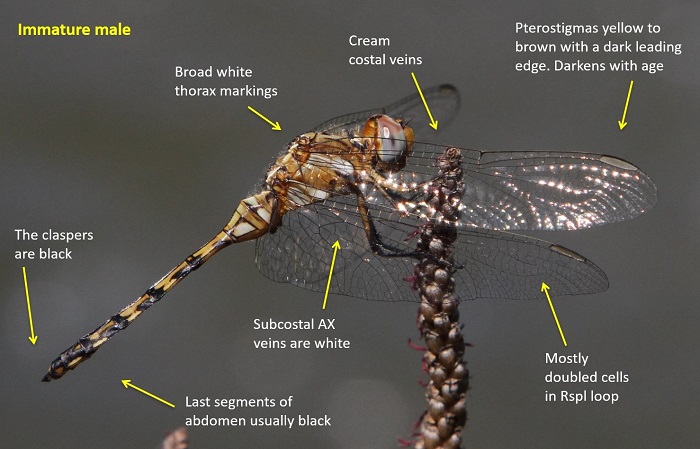
The most reliable way to differentiate between the Julia Skimmer and the Bold Skimmer (Orthetrum stemmale) is by examining the characteristic shapes of the males secondary genitalia. In addition the Julia Skimmer has black, rather than yellowish pterostigmas and all blackish wing venation. The Bold Skimmer has white subcostal Ax-veins. Furthermore Orthetrum julia falsum shows a single cell row in the Rspl loop, whereas Orthetrum stemmale generally has two cell rows in the Rspl loop.

Julia and Cape skimmers (Orthetrum julia capicola) have very similarly shaped secondary genitalia. They can, however, be told apart by other features. Orthetrum julia falsum has blackish pterostigmas and white claspers, while Orthetrum julia capicola shows yellow-brown pterostigmas and dark claspers.

Click here for more details on identification.

Julia Skimmer Orthetrum julia falsum – Old Male
False Bay, iSimangaliso Wetland Park, KwaZulu-Natal
Photo by Ryan Tippett

Habitat

The Julia Skimmer inhabits shaded streams, rivers, pools, and dams in dense forested or wooded areas. It frequents both still and flowing waters, but is regularly found away from water when not breeding.

Habitat – Ngome Forest, KwaZulu-Natal
Photo by Ryan Tippett

Behaviour

Breeding individuals are found on waterside vegetation, but also away from water in the surrounding forest or woodlands. The Julia Skimmer favours shady sites where it sits on exposed twigs in dappled light. It hunts from a perch and often returns to the same spot after each foray.

The Julia Skimmer is on the wing from September to May.

Julia Skimmer Orthetrum julia falsum – Male
False Bay, iSimangaliso Wetland Park, KwaZulu-Natal
Photo by Ryan Tippett

Status and Conservation

The Julia Skimmer is common across its southern African range. It is listed as of Least Concern in the IUCN Red List of Threatened Species. The Julia Skimmer is highly adaptable and inhabits any suitable habitat, natural or man-made.

Julia Skimmer Orthetrum julia falsum – Young male
Hluhluwe district, KwaZulu-Natal
Photo by Ryan Tippett

Distribution

The Julia Skimmer is widespread in higher rainfall regions across Sub-Saharan Africa.

In South Africa, the Julia Skimmer is found in the eastern half, where it is most numerous in KwaZulu-Natal, Mpumalanga, Gauteng, and Limpopo.

Julia Skimmer Orthetrum julia falsum – Young male
Near iXopo, KwaZulu-Natal
Photo by Ryan Tippett

Below is a map showing the combined distribution records for Julia and Cape Skimmers in the OdonataMAP database as of February 2020.

Below is a map showing the combined distribution records for Julia and Cape Skimmers in the OdonataMAP database as of December 2024.

The next map below is an imputed map, produced by an interpolation algorithm, which attempts to generate a full distribution map from the partial information in the map above. This map will be improved by the submission of records to the OdonataMAP section of the Virtual Museum.

Ultimately, we will produce a series of maps for all the odonata species in the region. The current algorithm is a new algorithm. The objective is mainly to produce “smoothed” maps that could go into a field guide for odonata. This basic version of the algorithm (as mapped above) does not make use of “explanatory variables” (e.g. altitude, terrain roughness, presence of freshwater — we will be producing maps that take these variables into account soon). Currently, it only makes use of the OdonataMAP records for the species being mapped, as well as all the other records of all other species. The basic maps are “optimistic” and will generally show ranges to be larger than what they probably are.

These maps use the data in the OdonataMAP section of the Virtual Museum, and also the database assembled by the previous JRS funded project, which was led by Professor Michael Samways and Dr KD Dijkstra.

Julia Skimmer Orthetrum julia falsum – Young male
False Bay, iSimangaliso Wetland Park, KwaZulu-Natal
Photo by Ryan Tippett

Further Resources

The use of photographs by Gerhard Diedericks. Other photographs by Ryan Tippett.

Julia Skimmer Orthetrum julia falsum Longfield, 1955

Other common names: Julia-skepper (Afrikaans)

Recommended citation format: Loftie-Eaton M; Navarro R; Tippett RM; Underhill L. 2025. Julia Skimmer Orthetrum julia falsum. Biodiversity and Development Institute. Available online at https://thebdi.org/2020/05/18/julia-skimmer-orthetrum-julia-falsum/

References: Tarboton, M; Tarboton, W. (2019). A Guide to the Dragonflies & Damselflies of South Africa. Struik Nature.

Samways, MJ. (2008). Dragonflies and Damselflies of South Africa. Pensoft

Samways, MJ. (2016). Manual of Freshwater Assessment for South Africa: Dragonfly Biotic Index. Suricata 2. South African National Biodiversity Institute, Pretoria

Martens, A; Suhling, F. (2007). Dragonflies and Damselflies of Namibia. Gamsberg Macmillan.

Julia Skimmer Orthetrum julia falsum – Young male
Eastern Shores, iSimangaliso Wetland Park, KwaZulu-Natal
Photo by Ryan Tippett

Similar Species

Woodland Skimmer (Orthetrum monardi)

Cover photo by John Wilkinson.

Find this species in the FBIS database (Freshwater Biodiversity Information System) here.

Family Libellulidae

Identification

Woodland Skimmer Orthetrum monardi – Male
Near Hluhluwe, KwaZulu-Natal
Photo by Ryan Tippett

Medium sized

Length reaches 45mm.

Male Woodland Skimmers can be confused with several other Orthetrum species. They are most similar to Orthetrum chrysostigma (Epaulet Skimmer) in terms of size and behaviour, but O. monardi lacks the pale diagonal stripes on the thorax of that species. The Woodland Skimmer is comparable to the Robust Skimmer Orthetrum robustum in terms of general colouration, but that species is significantly larger.

The females resemble males but are generally duller and lack the pruinose blue abdomen.

Click here for more details on identification.

Habitat

The Woodland Skimmer frequents grassy pans and ponds surrounded by woodland or coastal forest. It is also found at clearings in woodland with marshy ground and clumps of tall grass. The Woodland Skimmer is frequently found where there are bare, damp patches of mud or sandy substrate at the waters edge.

Habitat – Near Manguzi, KwaZulu-Natal
Photo by Ryan Tippett

Behaviour

Woodland Skimmers like to perch low down on grass or reed stems near the waters edge. They also often perch on the ground. Woodland Skimmers are usually fairly confiding and reluctant to fly. Once disturbed they seldom fly far before resettling.

Woodland Skimmer Orthetrum monardi – Male
Kosi Bay, iSimangaliso Wetland Park, KwaZulu-Natal
Photo by Ryan Tippett

Status and Conservation

Orthetrum monardi is currently listed as of Least Concern in the IUCN Red List of Threatened Species. The status of this scarce species in South Africa is uncertain. It was first recorded in the country as recently as 2014. This species appears to be fairly sensitive to habitat damage and is mostly found in pristine, undisturbed areas.

Woodland Skimmer Orthetrum monardi – Male
Near Hluhluwe, KwaZulu-Natal
Photo by Ryan Tippett

Distribution

The Woodland Skimmer is widespread, but thinly distributed in sub-Saharan Africa. It occurs from Guinea-Bissau and The Gambia in West Africa across to East Africa and down to South Africa. Most records in South Africa come from the coastal region of NE KwaZulu-Natal, extending as far south as Richards Bay. There are also records from Limpopo, Gauteng, and Mpumalanga.

Below is a map showing the distribution of records for Woodland Skimmer in the OdonataMAP database as at February 2020.

Below is a map showing the distribution of records for Woodland Skimmer in the OdonataMAP database of December 2024.

The next map below is an imputed map, produced by an interpolation algorithm, which attempts to generate a full distribution map from the partial information in the map above. This map will be improved by the submission of records to the OdonataMAP section of the Virtual Museum.

Ultimately, we will produce a series of maps for all the odonata species in the region. The current algorithm is a new algorithm. The objective is mainly to produce “smoothed” maps that could go into a field guide for odonata. This basic version of the algorithm (as mapped above) does not make use of “explanatory variables” (e.g. altitude, terrain roughness, presence of freshwater — we will be producing maps that take these variables into account soon). Currently, it only makes use of the OdonataMAP records for the species being mapped, as well as all the other records of all other species. The basic maps are “optimistic” and will generally show ranges to be larger than what they probably are.

These maps use the data in the OdonataMAP section of the Virtual Museum, and also the database assembled by the previous JRS funded project, which was led by Professor Michael Samways and Dr KD Dijkstra.
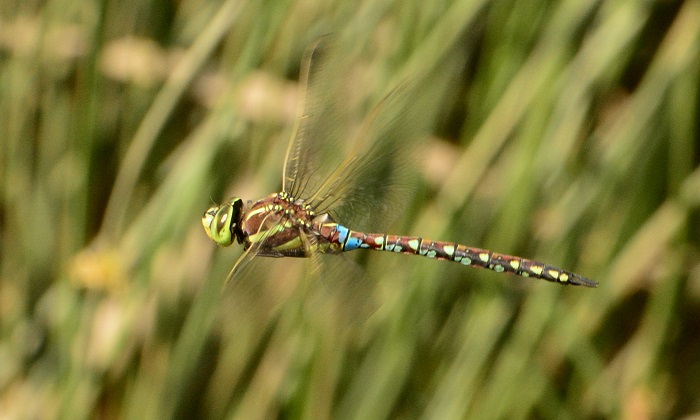
Woodland Skimmer Orthetrum monardi – Male
St. Lucia, KwaZulu-Natal
Photo by Ryan Tippett

Further Resources

The use of photographs by John Wilkinson is acknowledged. All other photographs by Ryan Tippett.

Woodland Skimmer (Orthetrum monardiSchmidt, 1951

Other common names: Bosskepper (Afrikaans)

Recommended citation format: Loftie-Eaton M; Navarro R; Tippett RM; Underhill L. 2025. Woodland Skimmer Orthetrum monardi. Biodiversity and Development Institute. Available online at https://thebdi.org/2020/05/18/woodland-skimmer-orthetrum-monardi/

References: Tarboton, M; Tarboton, W. (2019). A Guide to the Dragonflies & Damselflies of South Africa. Struik Nature.

Samways, MJ. (2008). Dragonflies and Damselflies of South Africa. Pensoft

Samways, MJ. (2016). Manual of Freshwater Assessment for South Africa: Dragonfly Biotic Index. Suricata 2. South African National Biodiversity Institute, Pretoria

Martens, A; Suhling, F. (2007). Dragonflies and Damselflies of Namibia. Gamsberg Macmillan.

Woodland Skimmer Orthetrum monardi – Male
St. Lucia, KwaZulu-Natal
Photo by Ryan Tippett

Similar Species

Robust Skimmer (Orthetrum robustum)

Cover photo by Diana Russell.

Find this species in the FBIS database (Freshwater Biodiversity Information System) here.

Family Libellulidae

Identification

Robust Skimmer Orthetrum robustum – Male
Near Kosi Bay, KwaZulu-Natal
Photo by Ryan Tippett

Large size

Length reaches 58mm; Wingspan attains 86mm.

The Robust Skimmer is the largest Orthetrum species. Key identification features include long yellow pterostigmas, with a dark leading edge and broad dark brown shoulder patches on a paler grey-brown thorax. The abdomen is pale pruinose blue. This pruinosity may spread onto the thorax with age. Fully pruinose males can be identified in the hand by the distinctive shape of the secondary genitalia.

The Robust Skimmer is slightly larger than the Long Skimmer (Orthetrum trinacria), but that species is very dark blue overall and does not have a tapered waist.

Generally similar to most other Orthetrum species, especially the Woodland Skimmer (Orthetrum monardi) in terms of colouration, but can be separated by its considerably larger size and broad dark brown shoulder patches.

Click here for more details on identification.

Habitat

The Robust Skimmer is associated with still-water habitats, particularly marshes, floodplains, and the verges of pans and lakes. It favours marshy ground, rich in grasses and sedge, and often with open patches of muddy or sandy substrate. The Robust Skimmer is regularly found where the waterside grass cover has been grazed short or trampled by large animals such as hippos, cattle, and buffalo. It is less frequent in areas of tall grass.

Habitat – Near Kosi Bay, KwaZulu-Natal
Photo by Ryan Tippett

Behaviour

The Robust Skimmer mostly sits low down over the ground or water. It hunts from a perch and frequently returns to the same spot. The flight is swift and powerful. The Robust Skimmer is fairly confiding, but flies far once disturbed. Non-breeding individuals may be found away from the water in the surrounding woodlands where they hawk insects from bushes and trees. Females are elusive and seldom recorded.

Robust Skimmer Orthetrum robustum – Male
Near Kosi Bay, KwaZulu-Natal
Photo by Ryan Tippett

Status and Conservation

The Robust Skimmer is fairly common, but very localised. It is known to increase in abundance during wet climatic cycles, becoming more widespread locally. During dry periods it retreats to larger, permanent water bodies. The IUCN Red List of Threatened Species, lists the Robust Skimmer as Near Threatened in South Africa, but of Least Concern globally.

The Robust Skimmer is only recorded from high-quality habitats and is likely to be sensitive to habitat degradation. A large part of the South African range of this species is protected within the iSimangaliso Wetland Park.

Robust Skimmer Orthetrum robustum – Male
Linyanti, Botswana
Photo by Ryan Tippett

Distribution

Orthetrum robustum has a highly disjunct distribution in south-central and southern Africa. There appear to be three main distribution centers. These are north-eastern Zambia and the neighbouring Democratic Republic of the Congo. Northern Botswana and Namibia’s Caprivi Strip, and finally the north-eastern coastal plain of KwaZulu-Natal in South Africa, and probably adjacent Southern Mozambique.

In South Africa, the Robust Skimmer is restricted to the coastal plain of north-eastern KwaZulu-Natal, reaching as far south as Richards Bay.

Robust Skimmer Orthetrum robustum – Male
Near Kosi Bay, KwaZulu-Natal
Photo by Ryan Tippett

Below is a map showing the distribution of records for Robust Skimmer in the OdonataMAP database as at February 2020.

Below is a map showing the distribution of records for Robust Skimmer in the OdonataMAP database as of December 2024.

The next map below is an imputed map, produced by an interpolation algorithm, which attempts to generate a full distribution map from the partial information in the map above. This map will be improved by the submission of records to the OdonataMAP section of the Virtual Museum.

Ultimately, we will produce a series of maps for all the odonata species in the region. The current algorithm is a new algorithm. The objective is mainly to produce “smoothed” maps that could go into a field guide for odonata. This basic version of the algorithm (as mapped above) does not make use of “explanatory variables” (e.g. altitude, terrain roughness, presence of freshwater — we will be producing maps that take these variables into account soon). Currently, it only makes use of the OdonataMAP records for the species being mapped, as well as all the other records of all other species. The basic maps are “optimistic” and will generally show ranges to be larger than what they probably are.

These maps use the data in the OdonataMAP section of the Virtual Museum, and also the database assembled by the previous JRS funded project, which was led by Professor Michael Samways and Dr KD Dijkstra.

Robust Skimmer Orthetrum robustum – Male
Okavango Delta, Botswana
Photo by Ryan Tippett

Further Resources

The use of photographs by Diana Russell is acknowledged. All other photographs by Ryan Tippett.

Robust Skimmer Orthetrum robustum Balinsky, 1965

Other common names: Forse Skepper (Afrikaans)

Recommended citation format: Loftie-Eaton M; Navarro R; Tippett RM; Underhill L. 2025. Robust Skimmer Orthetrum robustum. Biodiversity and Development Institute. Available online at https://thebdi.org/2020/05/18/robust-skimmer-orthetrum-robustum/

References: Tarboton, M; Tarboton, W. (2019). A Guide to the Dragonflies & Damselflies of South Africa. Struik Nature.

Samways, MJ. (2008). Dragonflies and Damselflies of South Africa. Pensoft

Samways, MJ. (2016). Manual of Freshwater Assessment for South Africa: Dragonfly Biotic Index. Suricata 2. South African National Biodiversity Institute, Pretoria

Martens, A; Suhling, F. (2007). Dragonflies and Damselflies of Namibia. Gamsberg Macmillan.

Robust Skimmer Orthetrum robustum – Male
Linyanti, Botswana
Photo by Ryan Tippett

Similar Species

Elusive Skimmer (Orthetrum rubens)

Cover photo by Andrew & Heather Hodgson.

Find this species in the FBIS database (Freshwater Biodiversity Information System) here.
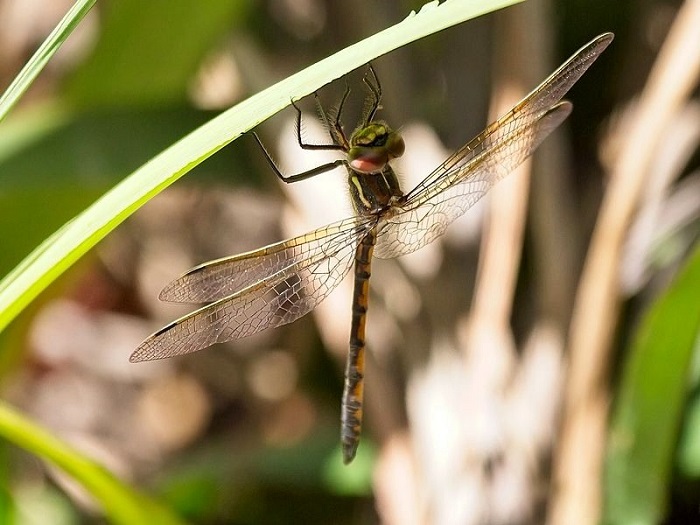
Family Libellulidae

Identification

Elusive Skimmer Orthetrum rubens – Male
Stettynsberg, Western Cape
Photo by Andrew and Heather Hodgson

Medium sized

Length up to 43mm; Wingspan reaches 66mm.

Both sexes of the Elusive Skimmer are highly distinctive and easily recognised. The bright maroon colour on the thorax is diagnostic and unique. Males are most similar to Orthetrum caffrum (Two-striped Skimmer). Both species show a pair of diagonal white stripes on the thorax sides. In Orthetrum rubens the stripes are broad and of uneven width with a black border only along the upper edge. Orthetrum caffrum has narrower stripes that are even in width and with thin black edging along the upper and lower edges. Orthetrum caffrum may also have reddish-brown surfaces on the thorax, but this tends to be dull and more brown than red.

Females are even more distinctive than males and are unlikely to be mistaken for another species. They are predominantly bright yellow and black with distinctive maroon-coloured thorax sides with two diagonal white stripes.

Click here for more details on identification.

Elusive Skimmer Orthetrum rubens – Female
Stettynsberg, Western Cape
Photo by Andrew and Heather Hodgson

Habitat

The Elusive Skimmer inhabits open, high-altitude seeps, bogs, and marshes. It is restricted to the Fynbos Biome and occurs up to 1300m above sea level.

Habitat – Mountain seep
Hawequas Mountains, Western Cape
Photo by Corne Rautenbach

Behaviour

Not much is known about the behaviour of the Elusive Skimmer. They are known to perch on vegetation above boggy ground and seeps. Both sexes can be found in the same general area.

The Elusive Skimmer is on the wing from October to February.

Status and Conservation

The Elusive Skimmer is seemingly rare and highly localised, but may be overlooked due to the inaccessibility of its high mountain habitat. The Elusive Skimmer is listed as Endangered in the IUCN Red List of Threatened Species.

Distribution

The Elusive Skimmer is endemic to South Africa where it is restricted to the high mountainous terrain of the Western Cape.

Below is a map showing the distribution of records for Elusive Skimmer in the OdonataMAP database as at February 2020.

Below is a map showing the distribution of records for Elusive Skimmer in the OdonataMAP database as of December 2024.

The next map below is an imputed map, produced by an interpolation algorithm, which attempts to generate a full distribution map from the partial information in the map above. This map will be improved by the submission of records to the OdonataMAP section of the Virtual Museum.

Ultimately, we will produce a series of maps for all the odonata species in the region. The current algorithm is a new algorithm. The objective is mainly to produce “smoothed” maps that could go into a field guide for odonata. This basic version of the algorithm (as mapped above) does not make use of “explanatory variables” (e.g. altitude, terrain roughness, presence of freshwater — we will be producing maps that take these variables into account soon). Currently, it only makes use of the OdonataMAP records for the species being mapped, as well as all the other records of all other species. The basic maps are “optimistic” and will generally show ranges to be larger than what they probably are.

These maps use the data in the OdonataMAP section of the Virtual Museum, and also the database assembled by the previous JRS funded project, which was led by Professor Michael Samways and Dr KD Dijkstra.

Further Resources

The use of photographs by Andrew & Heather Hodgson is acknowledged.

Elusive Skimmer Orthetrum rubens Barnard, 1937

Other common names: Ruby Skimmer (Alt. English); Mistieke Skepper (Afrikaans).

Recommended citation format: Loftie-Eaton M; Navarro R; Tippett RM; Underhill L. 2025. Elusive Skimmer Orthetrum rubens. Biodiversity and Development Institute. Available online at https://thebdi.org/2020/05/18/elusive-skimmer-orthetrum-rubens/

References: Tarboton, M; Tarboton, W. (2019). A Guide to the Dragonflies & Damselflies of South Africa. Struik Nature.

Samways, MJ. (2008). Dragonflies and Damselflies of South Africa. Pensoft

Samways, MJ. (2016). Manual of Freshwater Assessment for South Africa: Dragonfly Biotic Index.Suricata 2. South African National Biodiversity Institute, Pretoria

Similar Species

Great Sprite (Pseudagrion gamblesi)

Cover photo by Alan Manson.

Find the Great Sprite in the FBIS database (Freshwater Biodiversity Information System) here.

Family Coenagrionidae

Identification

Great Sprite Pseudagrion gamblesi – Male
Umzimkhulu River, near Creighton, KwaZulu-Natal
Photo by Alan Manson

Medium sized

Length up to 50mm; Wingspan reaches 65mm.

The Great Sprite is the largest Sprite in the region, and this alone makes both sexes easily identifiable.

The male Pseudagrion gamblesi is one of three ‘Yellow-faced’ sprite species in the region. The other two being the Yellow-faced Sprite (Pseudagrion citricola) and the Springwater Sprite (Pseudagrion caffrum). The Great Sprite is significantly larger than these two species and has a distinctly striped thorax, large postocular spots, brighter blue terminal segments, and noticeably large claspers.

In terms of colouration, females resemble many others of the genus, but can be safely identified based on their larger size.

Click here for more details on identification.

Habitat

The Great Sprite frequents large, flowing rivers and streams in the mid-altitude, eastern parts of South Africa. It favours rocky river pools flanked by tall grasses, forbs, and reeds.

Habitat – Komati River, Mpumalanga
Photo by Sharon Stanton

Behaviour

The Great Sprite is a fairly sluggish species that spends long periods perched on reed and grass stems over the water.

It is most active from late September to April, but flies all year at some sites (See Phenology below).

Status and Conservation

The Great Sprite is highly localised and generally scarce, but may be fairly common in places. It is listed as of Least Concern in the IUCN Red List of Threatened Species. Pseudagrion gamblesi is fairly sensitive to habitat degradation and occurs mostly along undisturbed stretches of river.

Distribution

The Great Sprite occurs in Southern, South-Central, and East Africa. It has been recorded from South Africa, Zimbabwe, Mozambique, Zambia, Malawi, Tanzania, Kenya, and Ethiopia. In South Africa, it is found primarily in the east in Mpumalanga and KwaZulu-Natal.

Below is a map showing the distribution of records for Great Sprite in the OdonataMAP database as at February 2020.

Below is a map showing the distribution of records for Great Sprite in the OdonataMAP database as of December 2024.

The next map below is an imputed map, produced by an interpolation algorithm, which attempts to generate a full distribution map from the partial information in the map above. This map will be improved by the submission of records to the OdonataMAP section of the Virtual Museum.

Ultimately, we will produce a series of maps for all the odonata species in the region. The current algorithm is a new algorithm. The objective is mainly to produce “smoothed” maps that could go into a field guide for odonata. This basic version of the algorithm (as mapped above) does not make use of “explanatory variables” (e.g. altitude, terrain roughness, presence of freshwater — we will be producing maps that take these variables into account soon). Currently, it only makes use of the OdonataMAP records for the species being mapped, as well as all the other records of all other species. The basic maps are “optimistic” and will generally show ranges to be larger than what they probably are.

These maps use the data in the OdonataMAP section of the Virtual Museum, and also the database assembled by the previous JRS funded project, which was led by Professor Michael Samways and Dr KD Dijkstra.

Phenology

Further Resources

The use of photographs by Alan Manson and Sharon Stanton is acknowledged.

Great Sprite Pseudagrion gamblesi Pinhey, 1978

Other common names: Gamble’s Sprite (Alt. English); Grootgesie (Afrikaans)

Recommended citation format: Loftie-Eaton M; Navarro R; Tippett RM; Underhill L. 2025. Great Sprite Pseudagrion gamblesi. Biodiversity and Development Institute. Available online at https://thebdi.org/2020/05/18/great-sprite-pseudagrion-gamblesi/

References: Tarboton, M; Tarboton, W. (2019). A Guide to the Dragonflies & Damselflies of South Africa. Struik Nature.

Samways, MJ. (2008). Dragonflies and Damselflies of South Africa. Pensoft

Samways, MJ. (2016). Manual of Freshwater Assessment for South Africa: Dragonfly Biotic Index. Suricata 2. South African National Biodiversity Institute, Pretoria

Similar Species