
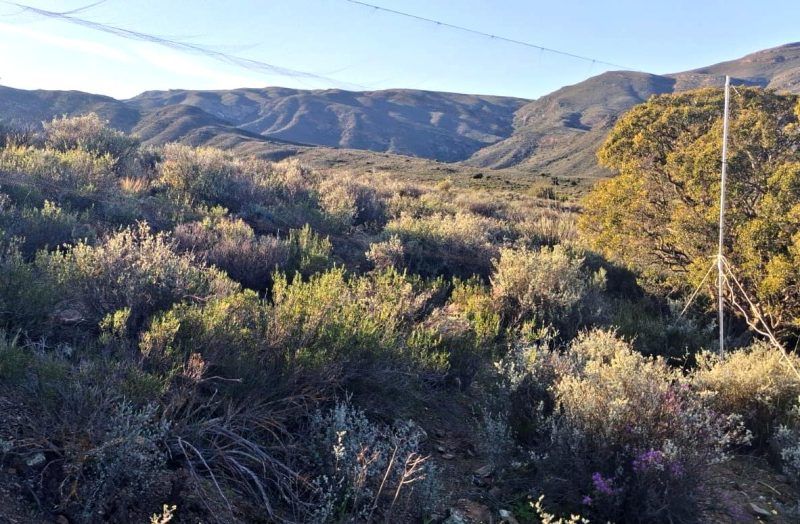
A total of 141 species has been recorded for SABAP2 pentad 3340_2015, the one into which Ouberg Private Nature Reserve falls. That list is based on 29 full protocol checklists. There is one extra species recorded only on an ad hoc protocol checklist, making 142 species. We ringed 45 of these species, including some of the species that are seldom recorded, and have low reporting rates.
The list below is in bird atlas reporting rate order, from smallest to largest. The reporting rate is the percentage of the 29 full protocol SABAP2 checklists for the pentad on which the species was recorded. A full protocol checklist is based on at least two hours of intensive searching for as many species as possible within the pentad, trying to visit as many of the habitats as feasible. We didn’t take a photo of some of the species, especially the ones with the largest reporting rates!
Dates of future ringing events from August to November 2026 are at the very end of this blog.
Yellow-bellied Eremomela (SABAP2 reporting rate 0%)
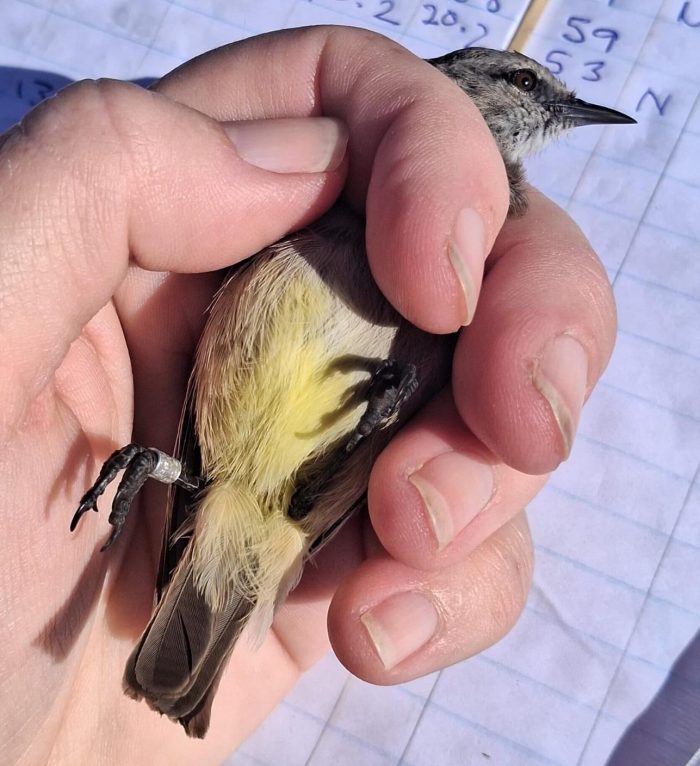
Yellow-bellied Eremomela has been recorded in the pentad for SABAP2, but only on an ad hoc checklist, so it has a reporting rate of zero.
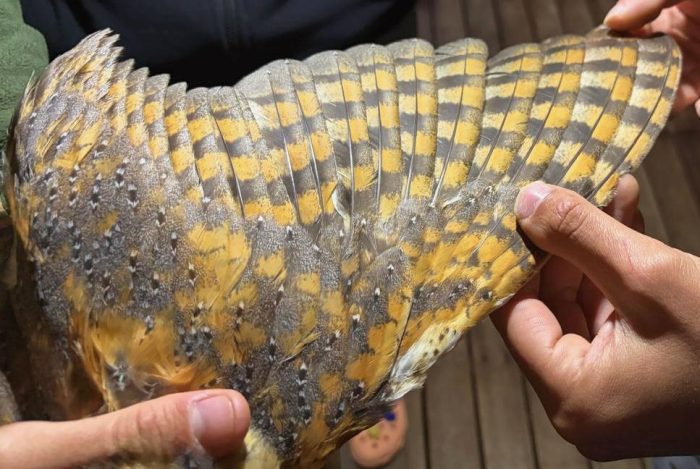
Western Barn Owl (7%)
Greater Honeyguide (10%)
(Species in red like this have structured species texts on the BDI website. Click on the name, and you get taken to a page with lots of photos, an identification guide, the SABAP2 distribution map, and habitat photos. A full list of species with structured texts is here.)
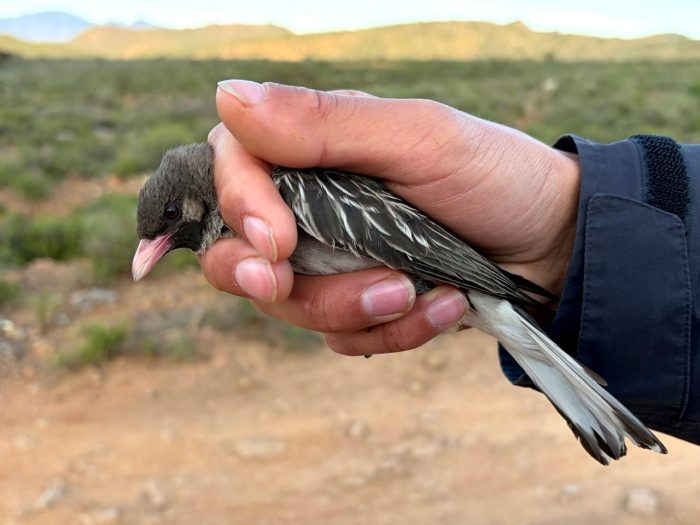
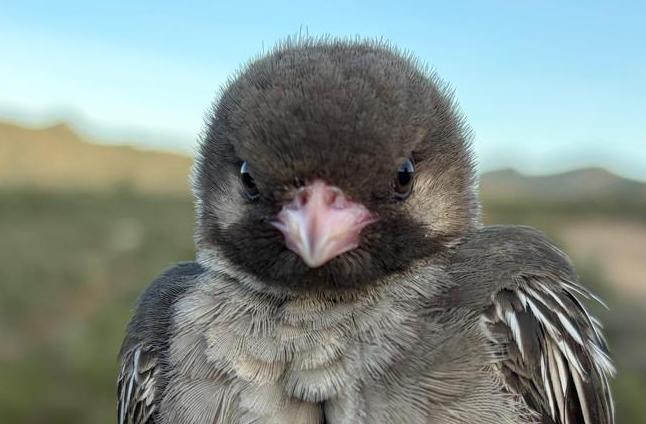
Lesser Honeyguide (17%)
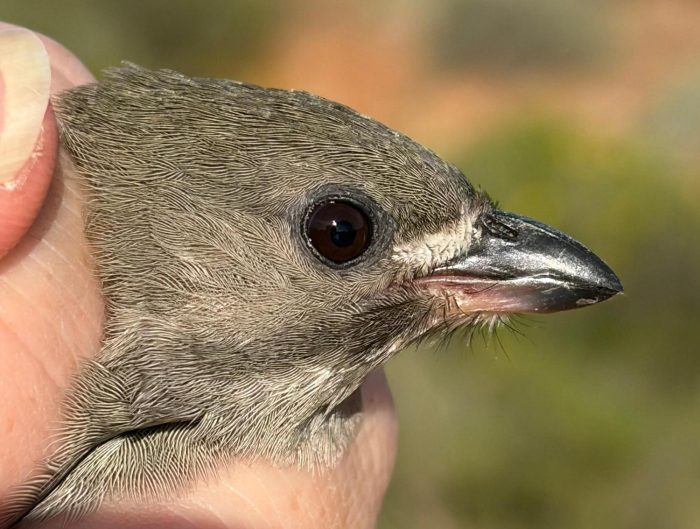
Fiery-necked Nightjar (24%)
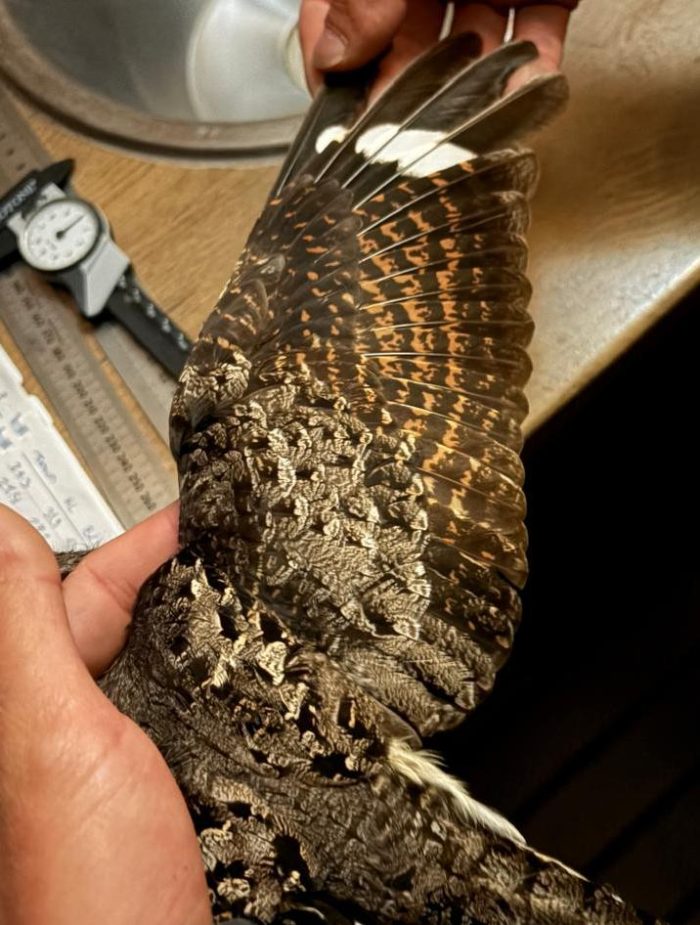
Cape Penduline Tit (24%)
Southern Boubou (31%)
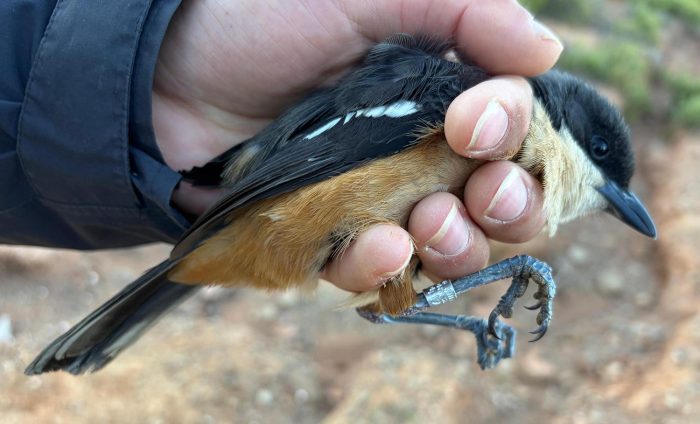
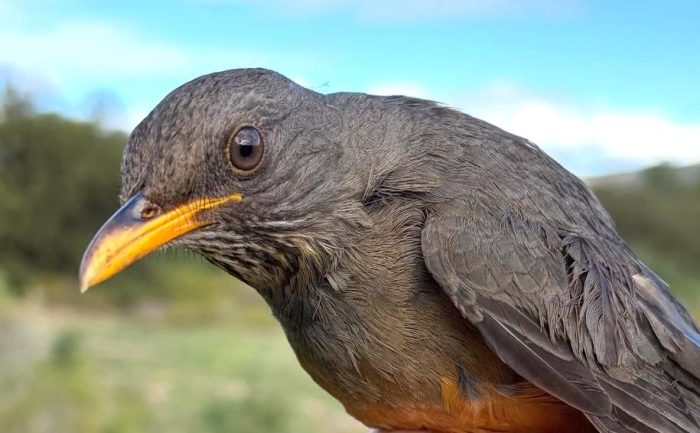
Olive Thrush (31%)
Rufous-eared Warbler (31%)
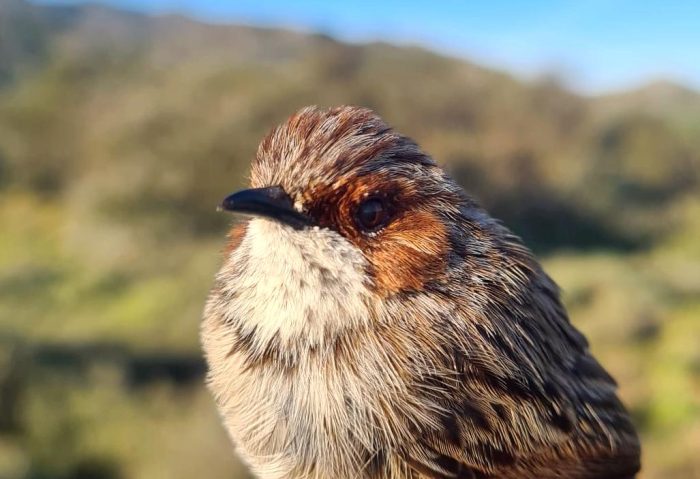
Namaqua Warbler (31%)
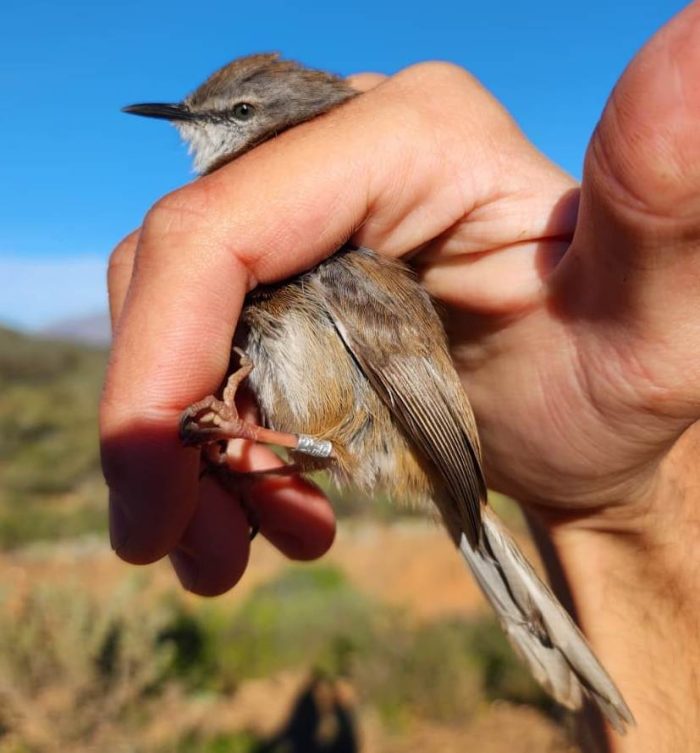
Grey Tit (34%)
Black-headed Canary (38%)
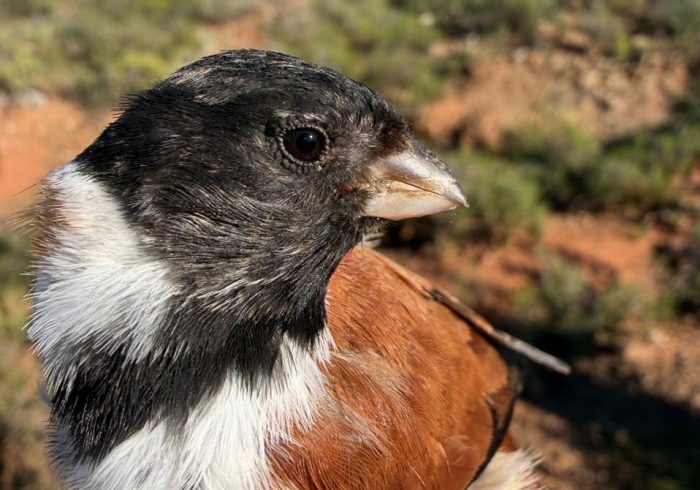
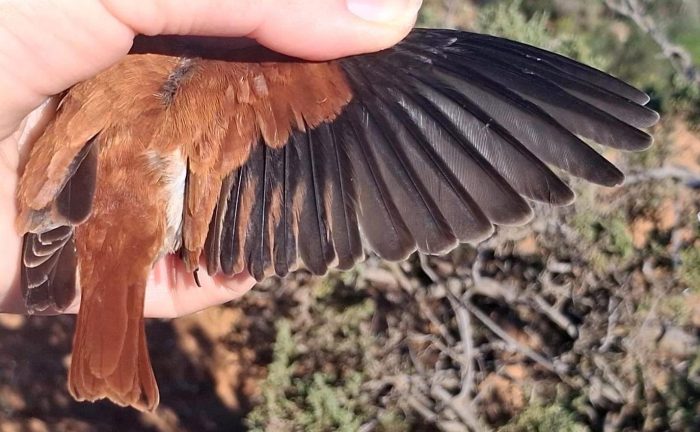
Large-billed Lark (38%)
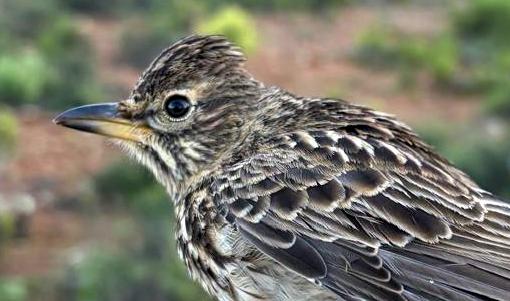
Southern Tchagra (38%)
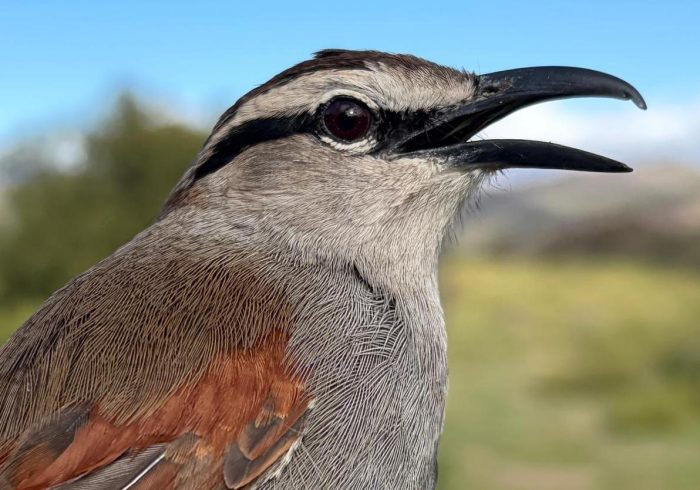
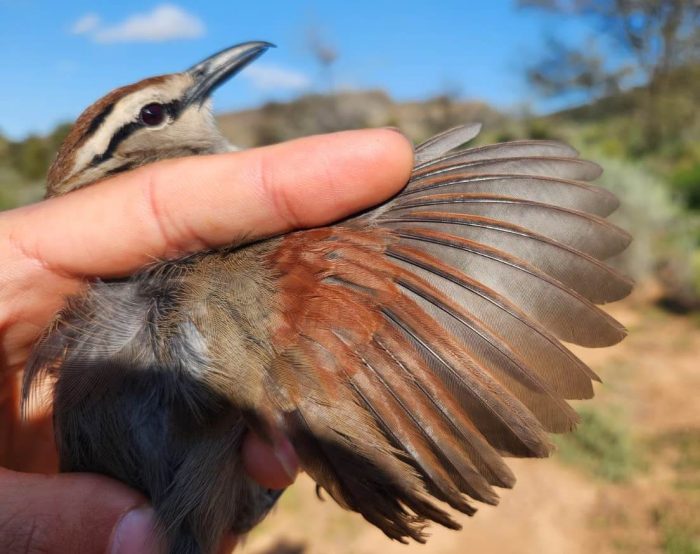
Layard’s Warbler (38%)
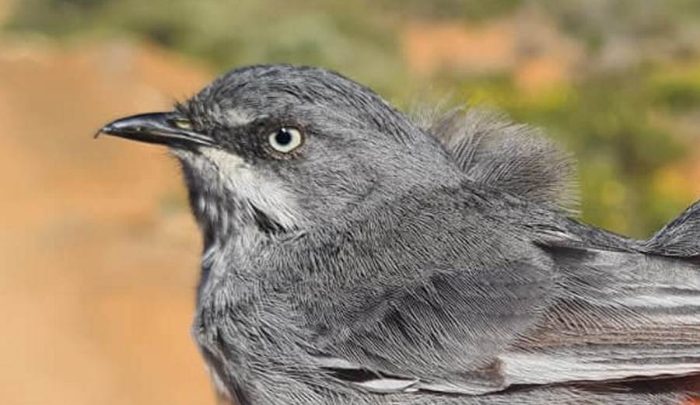
Cape Batis (41%)
Pririt Batis (41%)
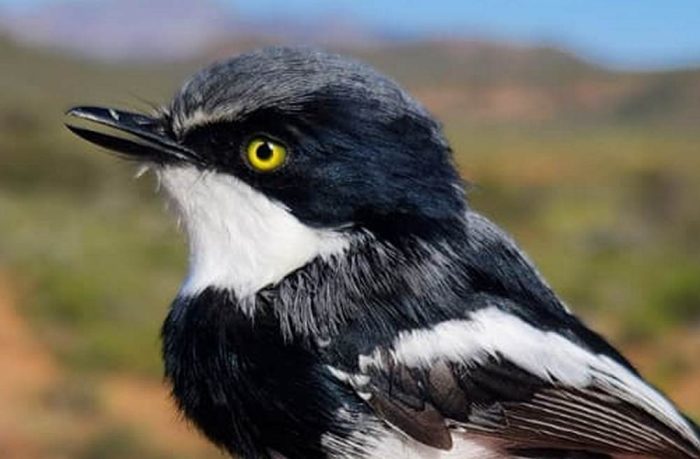
Male Pririt Batis.
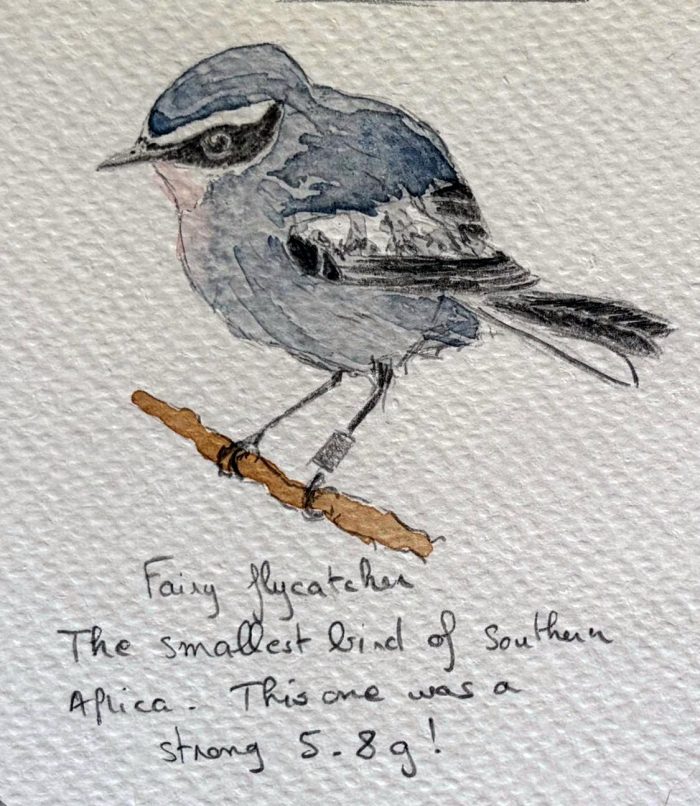
Fairy Flycatcher (58%)
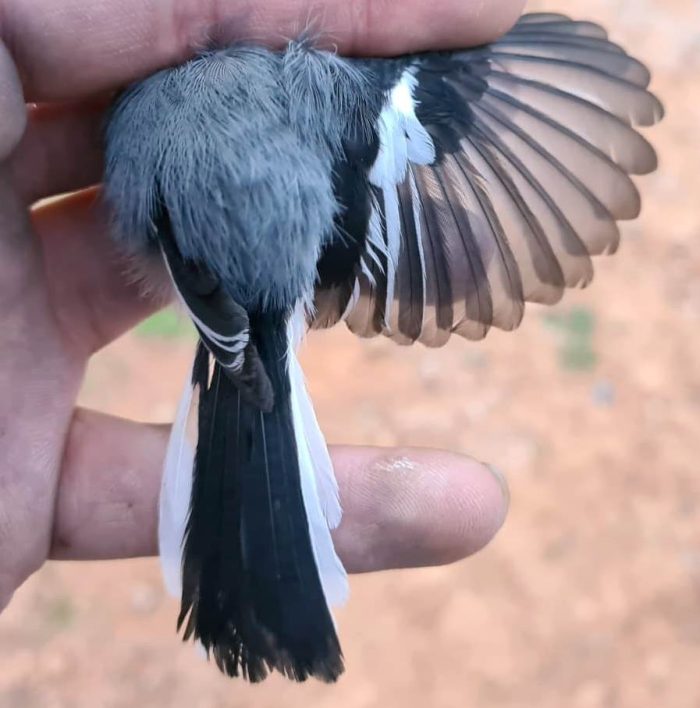
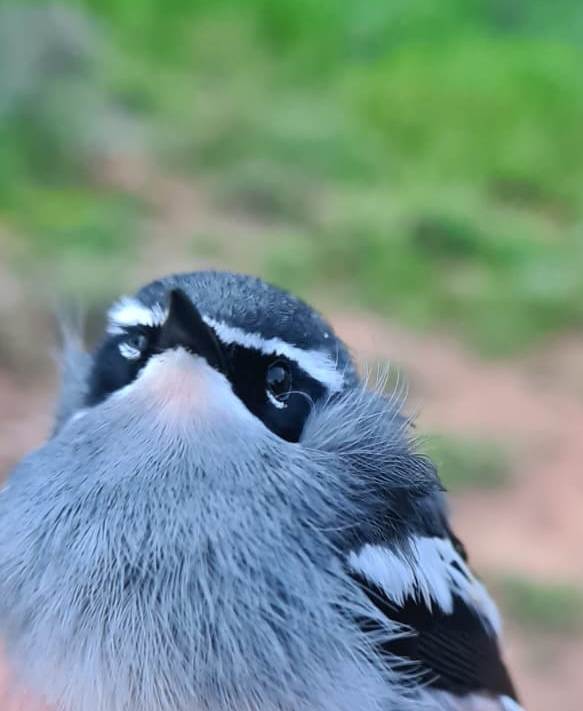
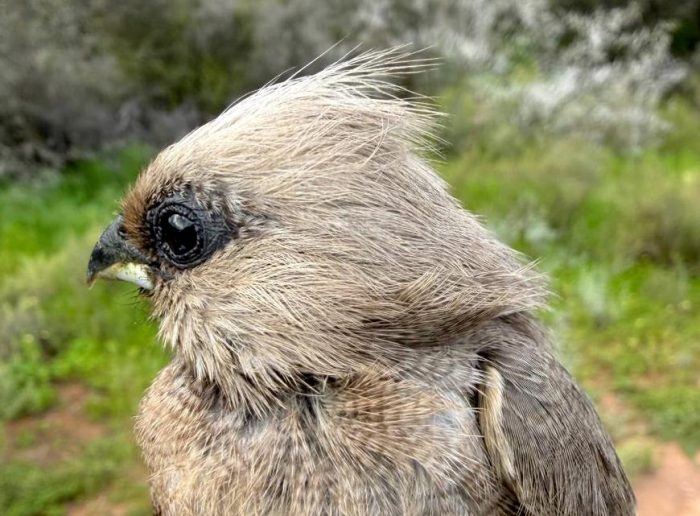
Speckled Mousebird (58%)
Cape Wagtail (62%)
Common Waxbill (62%)
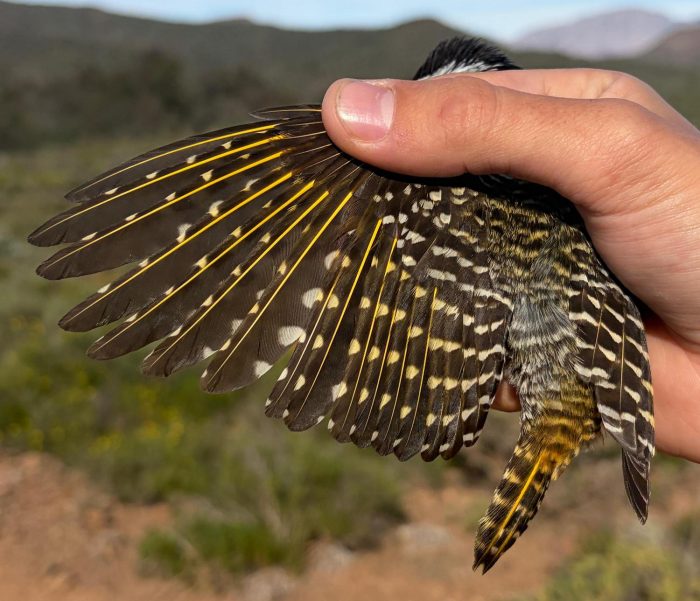
Cardinal Woodpecker (62%)
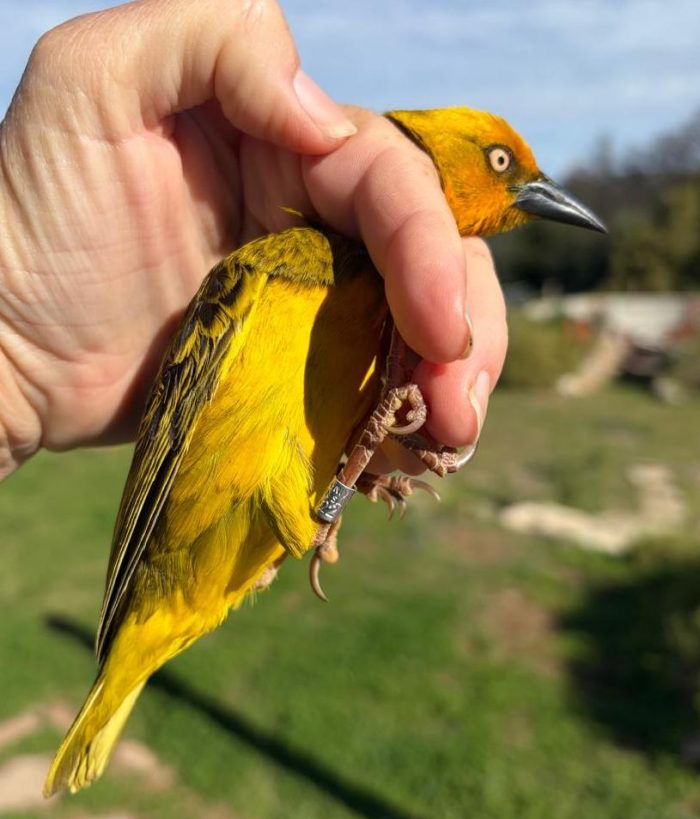
Cape Weaver (62%)
Southern Masked Weaver (69%)
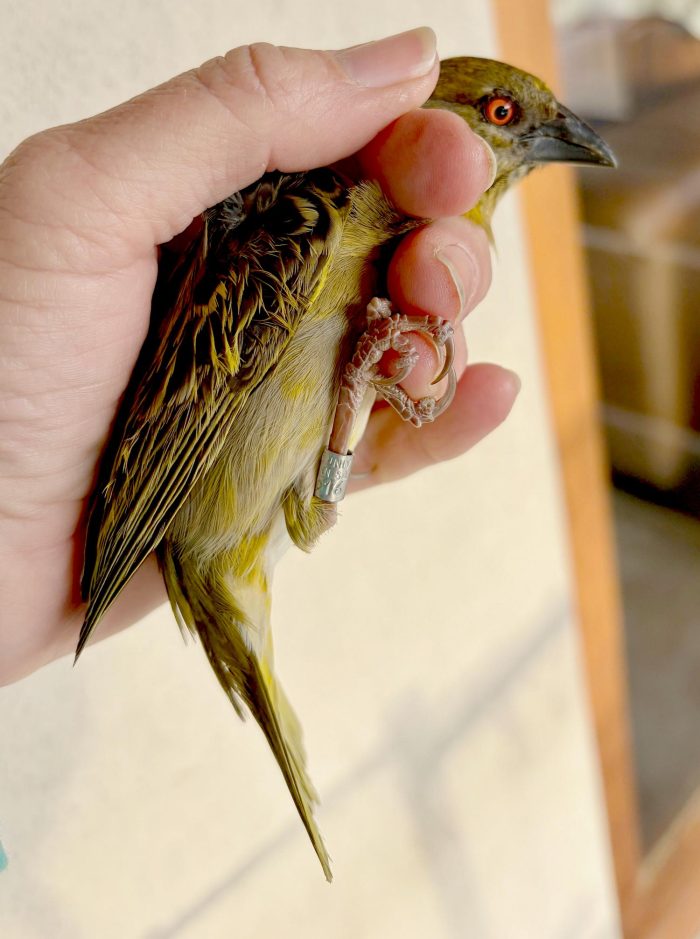
Male Southern Masked Weaver, starting to get his red eye, and bits and pieces of breeding plumage.
Cape White-eye (72%)
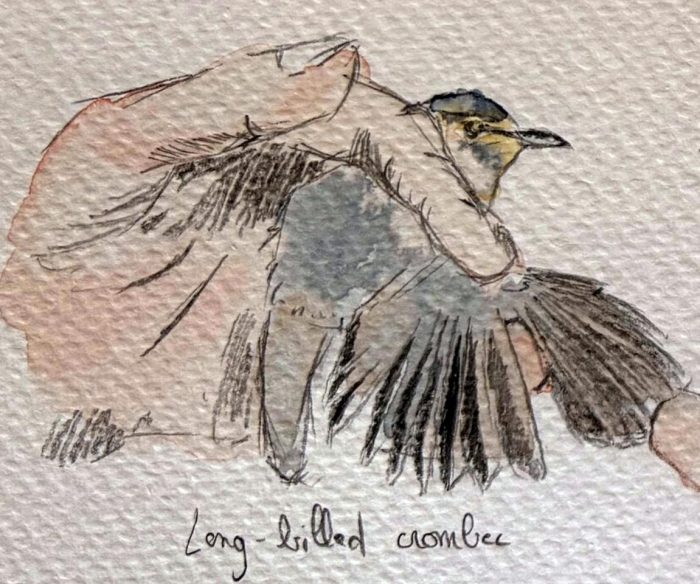
Long-billed Crombec (72%)
Grey-backed Cisticola (76%)
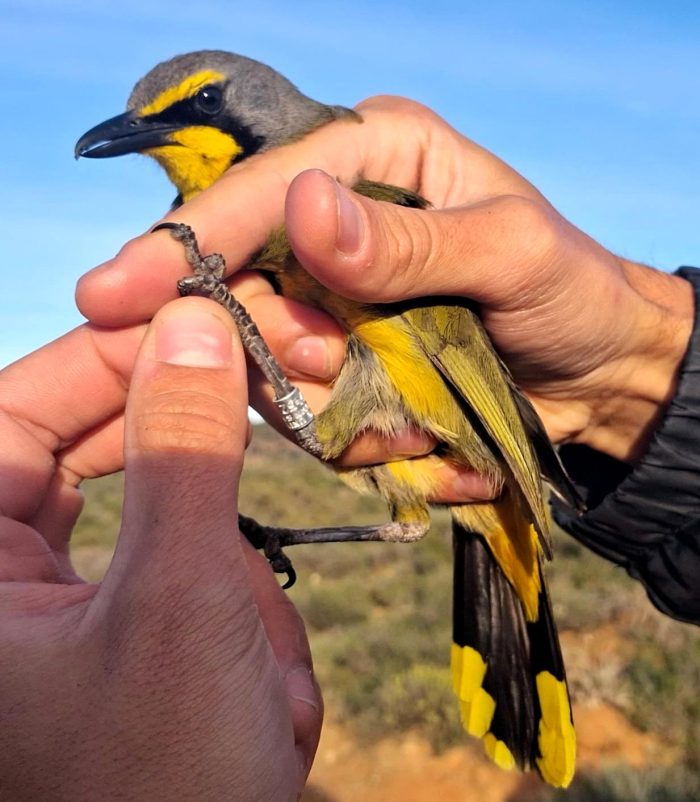
Bokmakierie (86%)
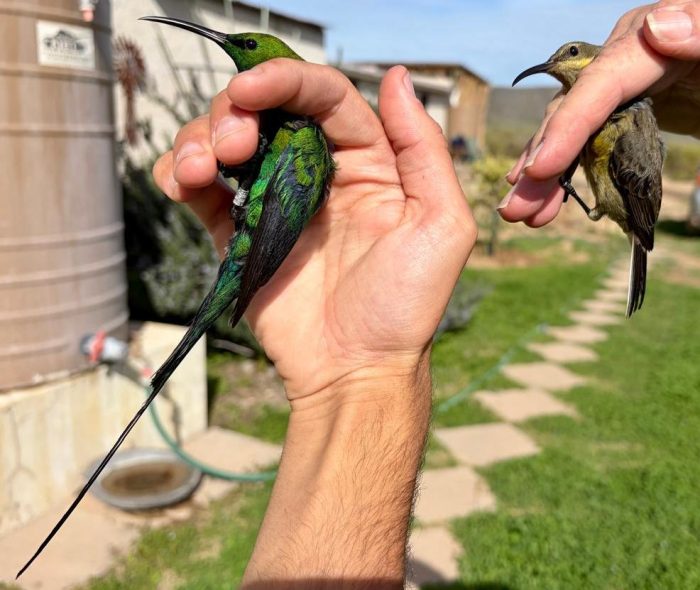
Malachite Sunbird (86%)
Ring-necked Dove (90%)
Large Rock Martin (90%)
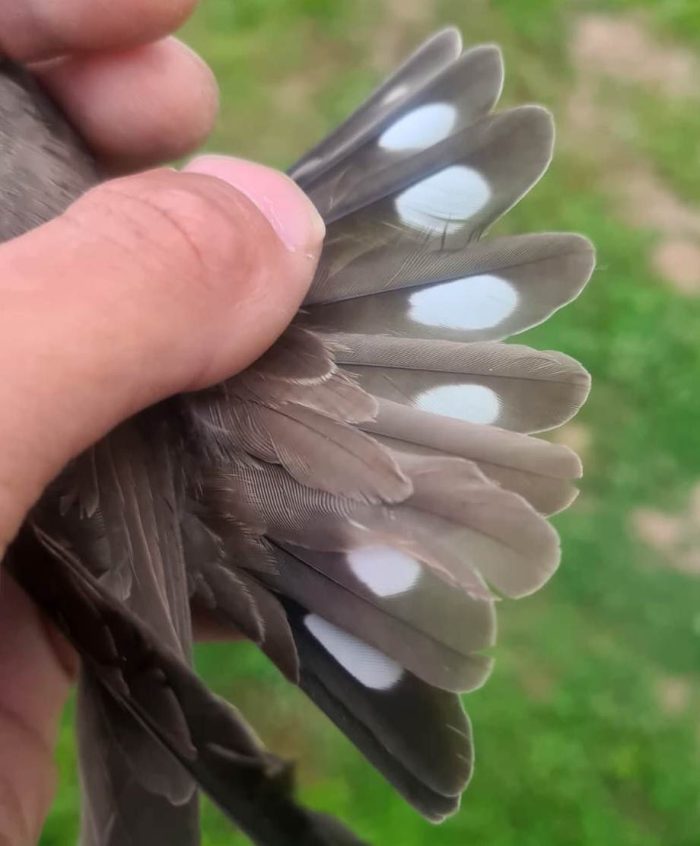
The white tail spots of the Large Rock Martin look like this. They are conspicuous in flight when the bird is flying away from you and banks to make a sharp turn.
White-backed Mousebird (90%)
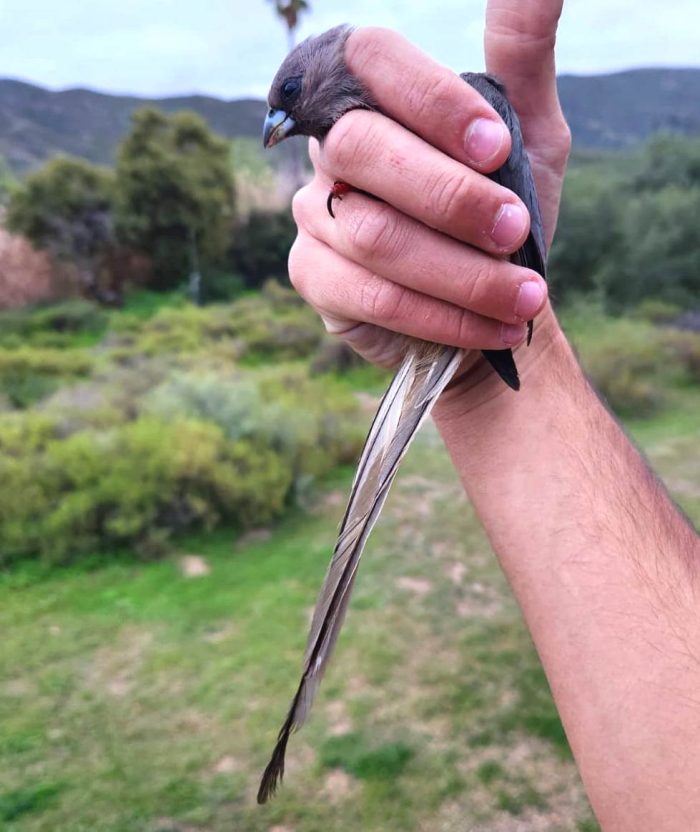
This White-backed Mousebird was the first bird handled on this expedition. Even though the pink-red legs and the white back are not visible, it is a White-backed Mousebird because the base of the bill is blueish white, and the tip is a dark grey-black.
Acacia Pied Barbet (93%)
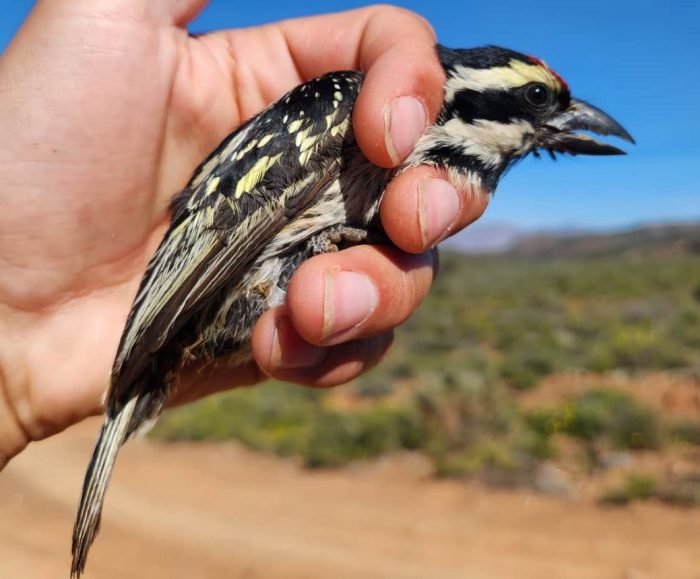
The Acacia Pied Barbet’s reporting rate, 93%, means that it was recorded on 27 out of 29 SABAP2 checklists. This high reporting rate is largely explained by its loud and characteristic “toy-trumpet” call; it is not that abundant. It is dangerous to compare reporting rates between species solely from the perspective of relative abundance. Conspicuousness needs to be factored in as well. Reporting rates can be compared between pentads for a single species, but care needs to be taken doing that as well!
The species listed below all had high reporting rates, but there is only a photo of the Cape Robin-Chat!
Cape Sparrow (93%)
Southern Double-collared Sunbird (93%)
Bar-throated Apalis (97%)
Fiscal Flycatcher (97%)
Karoo Scrub-robin (97%)
Chestnut-vented Warbler (97%)
Familiar Chat (100%)
Karoo Prinia (100%)
Cape Robin-chat (100%)
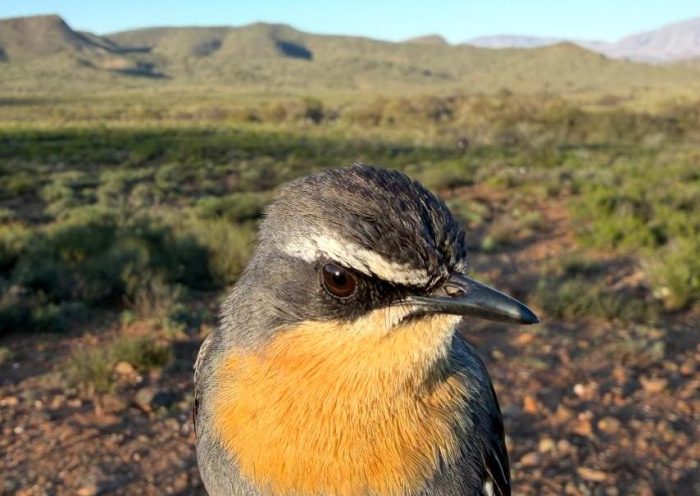
Altogether, we handled 169 birds of 45 species at Ouberg! It is a very special place.
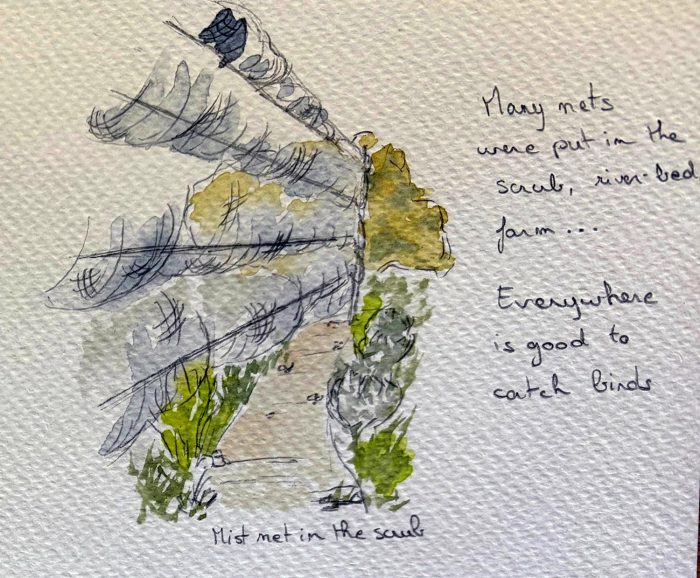
There is a great variety of ringing sites at Ouberg: around the farmhouse, at various points in gaps in the trees and shrubs along the river courses, in the “bee area”, and even out in the open karoo scrubland. This diversity of ringing sites (and associated habitats) is reflected in the number of different species in the table below: 45 species. Only four species reached double figures: Cape Weaver (33), White-backed Mousebird (20), Cape Sparrow (12) and Cape White-eye (10). There were 46 retraps!
| Species | Count |
| Acacia Pied Barbet | 1 |
| Western Barn Owl | 1 |
| Bar-throated Apalis | 5 |
| Black-headed Canary | 1 |
| Bokmakierie | 2 |
| Cape Penduline-Tit | 1 |
| Cape Batis | 3 |
| Cape Bulbul | 2 |
| Cape Robin-Chat | 6 |
| Cape Sparrow | 12 |
| Ring-necked Dove | 1 |
| Cape Wagtail | 1 |
| Cape Weaver | 33 |
| Cape White-eye | 10 |
| Cardinal Woodpecker | 1 |
| Chestnut-vented Warbler | 6 |
| Southern Fiscal | 2 |
| Common Waxbill | 1 |
| Fairy Flycatcher | 2 |
| Familiar Chat | 1 |
| Fiery-necked Nightjar | 1 |
| Fiscal Flycatcher | 1 |
| Greater Honeyguide | 1 |
| Grey Tit | 1 |
| Grey-backed Cisticola | 2 |
| Karoo Prinia | 8 |
| Karoo Scrub-Robin | 6 |
| Large-billed Lark | 1 |
| Layard’s Warbler | 1 |
| Lesser Honeyguide | 2 |
| Long-billed Crombec | 1 |
| Malachite Sunbird | 3 |
| Namaqua Warbler | 1 |
| Olive Thrush | 1 |
| Pririt Batis | 2 |
| Rock Martin | 1 |
| Rufous-eared Warbler | 1 |
| Southern Boubou | 2 |
| Southern Double-collared Sunbird | 2 |
| Southern Masked-Weaver | 9 |
| Southern Tchagra | 3 |
| Speckled Mousebird | 5 |
| White-backed Mousebird | 20 |
| White-throated Canary | 1 |
| Yellow-bellied Eremomela | 1 |
| Totals: Species : 45 | 169 birds |
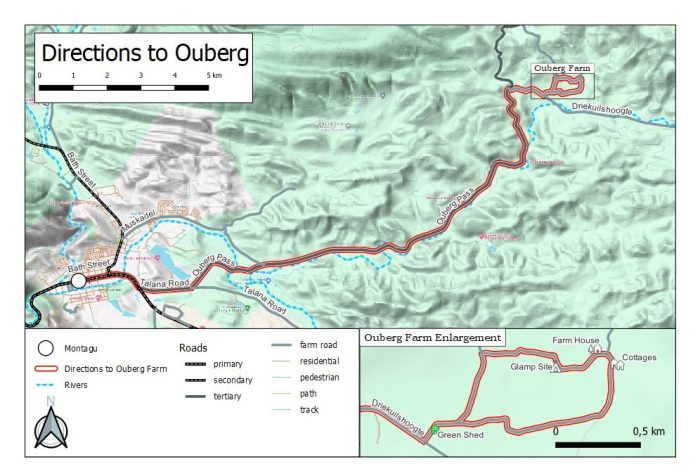
The next two ringing events at Ouberg Private Nature Reserve are from 5 to 10 September and from 18 to 23 October. If you would like to join one (or both!) of these, contact Sue Gie. The Ouberg Private Nature Reserve is about 20 km northeast of the town of Montagu in the Western Cape. See the map below!
There are also other ringing events on the horizon. 15 to 20 August at Nuwejaars Wetlands Special Management Area near Bredasdorp. The next Ouberg ringing trip is 4 to 9 September 2026. There are two Open Days at Grotto Bay Private Nature Reserve, the first is on 12 September and the second is on 3 October. Email ring@thebdi.org for more information.
And most important of all is a Ringers’ Symposium at Nuwejaars Wetlands Special Management Area; the core dates for the symposium, with presentations are 8 to 10 November, with bird ringing events on the two days before and the two days afterwards, so the full symposium period is 6 to 12 November. The extended dates are set up with people who are traveling a long distance in mind.
Dates of events for long-term planning are here.