Long-toed Tree Frog (Leptopelis xenodactylus)

Cover photo by Nick Evans.

Find the Long-toed Tree Frog in the FBIS database (Freshwater Biodiversity Information System) here.

Family Heleophrynidae

Identification

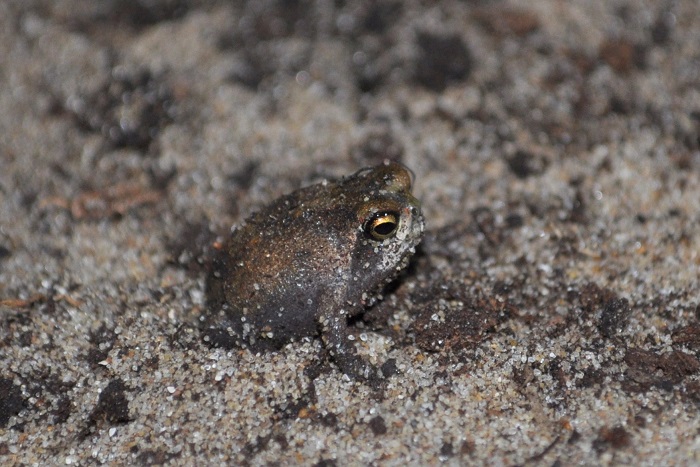
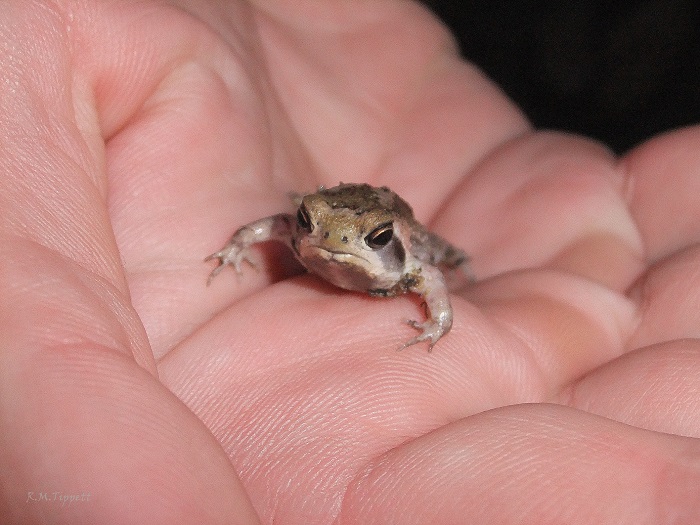
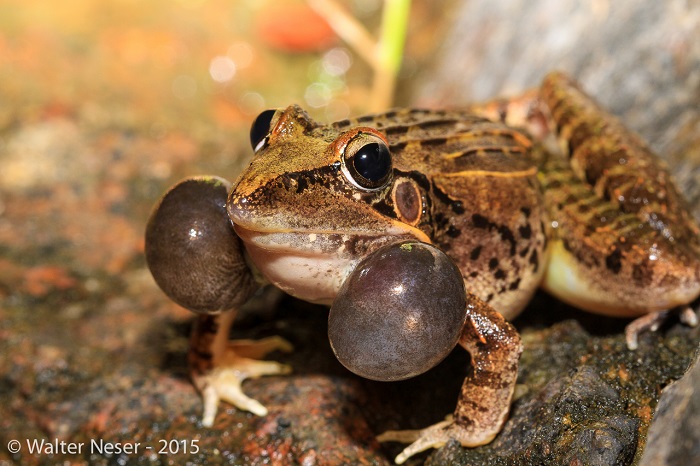
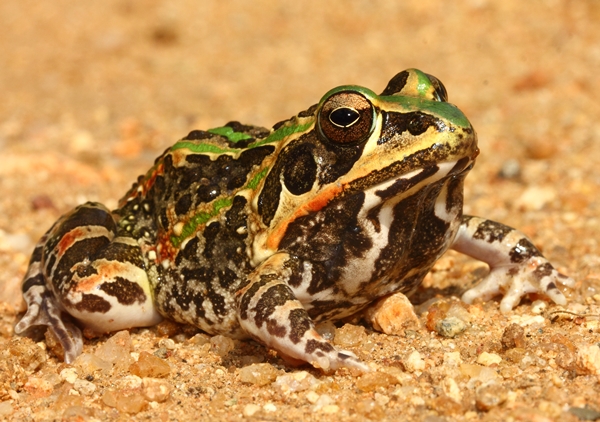
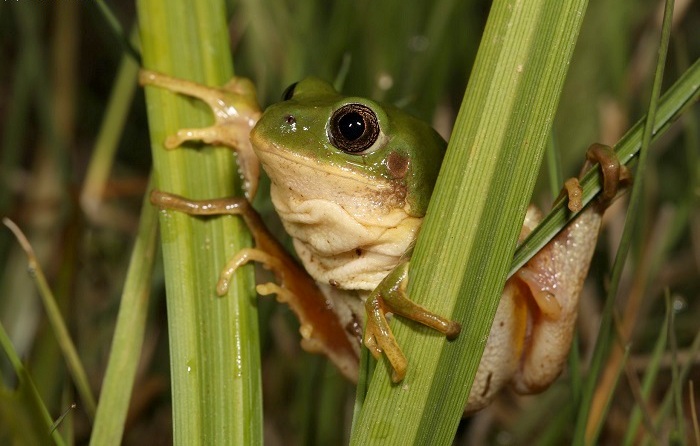
The Long-toed Tree Frog is a large frog, reaching 50 mm in snout–vent length. It has a uniformly green dorsum and a creamy white belly. It lacks the dark mask of L. mossambicus, and the dorsal mottling that is common in L. natalensis. Other characters that distinguish L. xenodactylus from the other two species in the atlas region are its longer toes and fingers with less distinct discs at their tips. The size of the inner metatarsal tubercle and extent of webbing between the toes are intermediate between those of the other two species (Poynton 1963; Van Dijk 1978b; Lambiris 1989a; Passmore and Carruthers 1995). The advertisement call consists of one or two short, pulsed croaks uttered at long intervals. Each croak is 0.1 s in duration, has a dominant frequency of about 1000 Hz, and is sometimes preceded by a soft buzzing (Passmore and Carruthers 1995).

Long-toed Tree Frog Leptopelis xenodactylus
Ntsikeni Nature Reserve, KwaZulu-Natal
Photo by Nick Evans

Habitat

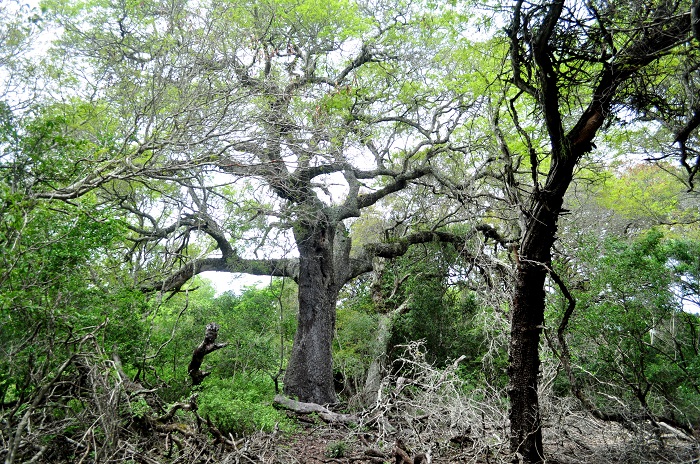
This species occurs in the Grassland Biome, mainly in high altitude Moist Upland Grassland that receives annual summer rainfall of 650–1000 mm. It also inhabits Short Mistbelt Grassland and North-eastern Mountain Grassland (Lambiris 1989a; Harrison et al. 2001). It is predicted to occur in high-rainfall central and western grasslands of KwaZulu-Natal (Armstrong 2001). Most populations occur at altitudes of c.1000 m, but the species is also recorded at 1830 m in the uKhahlamba-Drakensberg Park (Giant’s Castle; Lambiris 1989a).

The Long-toed Reed Frog breeds in grassy wetlands and marshes. At Mpur forestry area (3029BC), the wetland consists of a maze of eroded channels with many small, grass-covered islands.

Behaviour

Calling has been recorded in December and January. At the Mpur forestry area, males call from well-concealed positions in grass tussocks and from burrows (Passmore and Carruthers 1995), but also from the tops of grass-covered islands (pers. obs.). A captive specimen remained buried in the soil during the day, with only its head visible, and emerged and became active at night (Van Dijk 1978b). In the wild, these frogs are known to climb vegetation (Channing 2001), but field observations suggest that they are the least arboreal of the three southern African Leptopelis species.

The biology of this species is still poorly known, and its eggs and tadpoles have not been described.

Leptopelis xenodactylus
Merthley Wetland, KwaZulu-Natal
Photo by D Rollinson

Status and Conservation

Status

Previously listed as Rare (McLachlan 1978), Restricted (Lambiris 1988) and Vulnerable (IUCN 2000), L. xenodactylus is now classified as Endangered (Harrison et al. 2001; this publication). This status was assigned because of the species’ small area of occupancy, severely fragmented distribution, and evidence of continuing decline in the area of occupancy, extent and quality of habitat, and number of locations (Harrison et al. 2001).

The Long-toed Tree Frog occurs in the uKhahlamba-Drakensberg Park (Giant’s Castle and Highmoor sections), Weza Forest Reserve, and the Minerva Private Nature Reserve near Richmond. It is regionally listed as a “species of conservation importance” by the KwaZulu-Natal Nature Conservation Service, and is protected in that province in terms of the KwaZulu-Natal Nature Conservation Ordinance, Number 15 of 1974, as amended.

Threats

The main threat to L. xenodactylus populations is the degradation, fragmentation and loss of habitat caused by afforestation and infestations of alien plants. Of concern too is the lack of information regarding the general biology of the species, that makes it difficult to assess limiting factors and conservation needs.

Recommended conservation actions

Surveys are needed to establish the complete distribution of L. xenodactylus. To this end, Armstrong’s (2001) predictions of its potential distribution provide a useful starting point. Furthermore, the results of surveys would help to determine the predictive power of the model used. Research effort should also be focussed on life history and the identification of limiting factors. A Population and Habitat Viability Assessment (PHVA) is recommended. Known populations should be monitored and protected from further habitat loss or degradation.

It is recommended that the locality at Mpur forestry area be recognized as a site of special importance (Burger and Harrison 2002), and that it be protected and managed accordingly by Singisi Forest Products and Eastern Cape Nature Conservation Department.

Distribution

The Long-toed Tree Frog is endemic to the atlas region, occurring mainly in the southern KwaZulu-Natal highlands, but also marginally in adjacent parts of the Eastern Cape Province. The species was described from a single specimen collected 40 years ago at Underberg (2929CD), and 15 years elapsed before a second specimen was found at Mpur forestry area near Franklin (3029BC; Van Dijk 1978b). Currently, it is known from only nine quarter-degree grid cells, spanning the area from Weza (3029DA, DB) in the south to Giant’s Castle (uKhahlamba-Drakensberg Park; 2929AB) in the north. However, Armstrong (2001) has predicted a substantially larger range for this species. Note that the Franklin (3029AD) record as plotted by Lambiris (1989a) is incorrect. The correct location of this record is Mpur forestry area (3029BC). No records are currently known from the Franklin grid cell.

During the atlas period, L. xenodactylus was recorded at only five localities, three of which represent new distribution records. The Mpur forestry area (3029BC) is of special importance because it currently supports the largest known population of L. xenodactylus (at least 50 males), as well as the Critically Endangered Arthroleptella ngongoniensis (Burger and Harrison 2002; pers. obs.). The atlas data are accurate but incomplete.

Distribution of Leptopelis xenodactylus. Taken from the FrogMAP database, April 2022.

Further Resources

The use of photographs by Dominic Rollinson and Nick Evans is acknowledged.

Long-toed Tree Frog Leptopelis xenodactylus Poynton, 1963

Other Common Names: Langtoonboompadda (Afrikaans)

Recommended citation format: Burger, M; Tippett, RM. (2025). Long-toed Tree Frog Leptopelis xenodactylus. Biodiversity and Development Institute, Cape Town. Available online at https://thebdi.org/2021/11/15/long-toed-tree-frog-leptopelis-xenodactylus/

This species text has been updated and expanded from the text in the
2004 frog atlas:
 Burger, M. (2004). Long-toed Tree Frog Leptopelis xenodactylus. In Minter LR et al 2004.

References: 

Minter, LR; Burger, M; Harrison, JA; Braack, HH; Bishop, PJ; Kloepfer, D. (Editors). (2004). Atlas and Red Data Book of  the Frogs of South Africa, Lesotho and Swaziland. Smithsonian Institution, Washington, and Avian Demography
Unit, Cape Town.

Carruthers, V; du Preez, L. (2017). Frogs of southern Africa: A Complete Guide. Struik Nature, Cape Town.

Channing, A. (2001) Amphibians of Central and Southern Africa. Protea Book House, Pretoria

Claus, B; Claus, R. (2002). Common Amphibians and Reptiles of Botswana. Gamsberg Macmillan, Windhoek.

Similar Species

Whistling Rain Frog (Breviceps sopranus)

Cover photo by M. Douglas.

Find the Whistling Rain Frog in the FBIS database (Freshwater Biodiversity Information System) here.

Family Brevicepitidae

Identification

Male Whistling Rain Frogs range from 22–26.2 mm (N = 14) in body length. Morphologically, the species is difficult to separate from B. mossambicus and B. bagginsi. The Whistling Rain Frog can be easily distinguished from all Breviceps species by its unique advertisement call. Vocalisations consist of a series of long, unpulsed, high-pitched whistles. Each calls varies from 0.6–1.98 s in duration and from 2755–3468 Hz in frequency (N = 20; Minter 2003).

Whistling Rain Frog Breviceps sopranus
Near Hluhluwe, KwaZulu-Natal
Photo by M. Booysens

Habitat

The Whistling Rain Frogs inhabits a variety of vegetation types within the Forest and Savanna biomes. It is found in the dense, herbaceous undercover of the Sand Forest at St Lucia and Dukuduku, Afromontane Forest on the northern slopes of the Lebombo Mountains at Jozini, and the sandy rhyolitic soils of the Lebombo Arid Mountain Bushveld at Mlawula Nature Reserve (Swaziland) and Komatipoort (Minter 1998, 2003).

Sand forest habitat
False Bay, iSimangaliso Wetland Park, KwaZulu-Natal
Photo by Ryan Tippett

At St Lucia, B. sopranus occurs in forest while B. mossambicus occupies the open grassy areas between forest patches. In bushveld habitats, B. sopranus occurs in sympatry with B. adspersus.

Behaviour

The Whistling Rain Frog breeds between early October and early January. Choruses develop at any time of day, during light to heavy rain, but unless this is followed by drizzle or heavy mist, cease immediately afterward. Calling males often take up elevated positions on fallen branches or small plants, or call from the soil surface (Minter 1998, 2003). Amplexus and oviposition have not been observed.

Whistling Rain Frog Breviceps sopranus
Kosi Bay, iSimangaliso Wetland Park, KwaZulu-Natal
Photo by Ryan Tippett

Status and Conservation

Status

The Whistling Rain Frog is a recently described species (Minter 2003). Since the distribution and biology of this species are poorly known, an accurate assessment of its conservation status is not possible at present. It is therefore assigned to the category “Data Deficient”. The species occurs in the Hluhluwe and Mkuze Game Reserves and the Greater St Lucia Wetland National Park in South Africa, and the Mlawula Nature Reserve in Swaziland.

Whistling Rain Frog Breviceps sopranus
Kosi Bay, iSimangaliso Wetland Park, KwaZulu-Natal
Photo by Ryan Tippett
Threats

Outside of these protected areas much of the natural habitat of this species has been destroyed by the farming of crops such as sugarcane, and by deforestation in the Dukuduku forest.

Conservation actions

Distribution, life history and ecological data of the Whistling Rain Frog are urgently needed to adequately address the conservation needs of this species.

Distribution

Distribution of Breviceps sopranus. Taken from the FrogMAP database. April 2022.

The Whistling Rain Frog is known only from the atlas region at present, but may also occur in southern Mozambique. It has been recorded as far south as Mtunzini (2831DD) in KwaZulu-Natal, and it follows the Lebombo Mountains northward along the eastern border of Swaziland to Komatipoort (2531BD) in Mpumalanga (Passmore and Carruthers 1995; Minter 1998, 2003).

The atlas data are accurate but incomplete. The unusual call may easily be mistaken for that of an insect or bird, particularly when heard during the day. This may have contributed to the paucity of distribution data.

Whistling Rain Frog Breviceps sopranus
Kosi Bay, iSimangaliso Wetland Park, KwaZulu-Natal
Photo by Ryan Tippett

Further Resources

The use of photographs by M. Booysens and M. Douglas is acknowledged. Other photographs by Ryan Tippett.

Whistling Rain Frog Breviceps sopranus  Minter, 2003

Other Common Names: Fluitreënpadda (Afrikaans)

Recommended citation format: Minter, LR; Tippett, RM. (2025). Whistling Rain Frog Breviceps sopranus. Biodiversity and Development Institute, Cape Town. Available online at https://thebdi.org/2021/11/15/whistling-rain-frog-breviceps-sopranus/

This species text has been updated and expanded from the text in the
2004 frog atlas:
 Minter, LR. (2004). Whistling Rain Frog Breviceps sopranus. In Minter LR et al 2004.

References: 

Minter, LR; Burger, M; Harrison, JA; Braack, HH; Bishop, PJ; Kloepfer, D. (Editors). (2004). Atlas and Red Data Book of  the Frogs of South Africa, Lesotho and Swaziland. Smithsonian Institution, Washington, and Avian Demography
Unit, Cape Town.

Carruthers, V; du Preez, L. (2017). Frogs of southern Africa: A Complete Guide. Struik Nature, Cape Town.

Channing, A. (2001) Amphibians of Central and Southern Africa. Protea Book House, Pretoria

Claus, B; Claus, R. (2002). Common Amphibians and Reptiles of Botswana. Gamsberg Macmillan, Windhoek.

Similar Species

Marbled Rubber Frog (Phrynomantis annectens)

View the above photo record (by Cornelia Rautenbach) in FrogMAP here.

Find the Marbled Rubber Frog in the FBIS database (Freshwater Biodiversity Information System) here.

Family Microhylidae

MARBLED RUBBER FROG – Phrynomantis annectens

(Werner, 1910)

Identification

Habitat

In the atlas region, P. annectens occurs in the far-northern parts of the Succulent Karoo and Nama Karoo biomes where it is associated with inselbergs and other rock exposures. The pools of rainwater trapped in these outcrops provide breeding habitat. The average annual rainfall in this region is <60 mm, falling mainly in winter in the west (Richtersveld) and in summer in the east (Bushmanland).

Behaviour

Breeding takes place immediately after the first rains of spring or summer. Males call from the edges of small pools formed by the runoff from sheets of rock, or in the deeper rock pools remaining in drainages after the rains. Females lay 80–100 eggs in groups of 2–8 and attach them to submerged rock surfaces or vegetation (Channing 1976, 2001). These develop quickly and free-swimming tadpoles hatch within 18–36 hours. Older tadpoles are large and transparent with flattened heads and conspicuous fins, flecked with silver and gold. They are gregarious, forming schools that hang in the water column and filter out unicellular algae and diatoms (Channing 2001). The tadpole stage lasts at least eight weeks before metamorphosis is completed. During the dry season the adults aestivate in deep rock cracks.

Predators of the adults have not been recorded, but dragonfly nymphs are known to prey on the tadpoles.

Status and Conservation

The distribution of P. annectens is mainly extralimital and it occurs in many protected areas in Namibia and Angola. In South Africa, it occurs in Richtersveld and Augrabies Falls national parks, and is protected by provincial (Northern Cape) conservation regulations. In the atlas region, the habitat occupied by P. annectens is not heavily exploited, hence the species is not classified as threatened. However, quarrying and mining lead to the pollution of surface water by fuels and lubricants used to run and maintain heavy machinery, and this will affect local populations.

Distribution

P. annectens is endemic to the larger Namib region, from Angola southward through western Namibia, reaching South Africa in the extreme northern parts of Northern Cape Province. In the atlas region, it is known from the Augrabies Falls, the Richtersveld around the Vandersterrberg Mountains, and the rocky areas between Aggenys/Pofadder and the Gariep (Orange) River. These areas range from 600 to 1200 m in altitude.

The atlas survey added several new Bushmanland localities for P. annectens. The species probably occurs in other localities with suitable habitat in the Richtersveld and in Bushmanland south of the Gariep (Orange) River. The atlas data are reliable but likely to be incomplete.

Further Resources

Virtual Museum (FrogMAP > Search VM > By Scientific or Common Name)

More common names: Marmerrubberpadda (Afrikaans)

Recommended citation format for this species text:

Channing A, Tippett RM.  Marbled Rubber Frog Phrynomantis annectens. BDI, Cape Town.
Available online at http://thebdi.org/2021/11/11/marbled-rubber-frog-phrynomantis-annectens/

Recommended citation format: 

This species text has been updated and expanded from the text in the
2004 frog atlas. The reference to the text and the book are as follows:

Channing A 2004 Phrynomantis annectens Marbled Rubber Frog. In Minter LR
et al 2004.

Minter LR, Burger M, Harrison JA, Braack HH, Bishop PJ, Kloepfer D (eds)
2004. Atlas and Red Data Book of  the Frogs of South Africa, Lesotho and
Swaziland. Smithsonian Institution, Washington, and Avian Demography
Unit, Cape Town.

African Oystercatchers on Robben Island

Hot off the press! A new paper, published in Wader Study and authored by Itxaso Quintana, Rio Button and Prof Les Underhill, describes a single-year study of the predation of African Oystercatcher Haematopus moquini nests on Robben Island, Cape Town, South Africa.

ABSTRACT

The African Oystercatcher Haematopus moquini is distributed along the coastline of southern Africa. Robben Island, near Cape Town, South Africa, holds about 8% of the global African Oystercatcher population. During the 2019/2020 austral summer (November–March), we monitored the breeding of oystercatchers on Robben Island at target intervals of six days. We counted 550 oystercatchers and we estimated there were 133 breeding pairs. We found a total of 158 clutches, of which 47% produced hatchlings; of a total of 288 eggs laid, 38% hatched. We estimated the earliest incubation start date was 5 November, and 90% of nests started incubation between 17 November and 10 February. The egg-laying activity had five peaks with a median interval of 16 days. Nests were found along the entire shoreline of the island, mainly in three clusters. Of all successful nests, 61% were located along the north side of the island, adjacent to the Kelp Gull Larus dominicanus breeding colony, while 61% of unsuccessful nests were in the southern part of the island, where 18 nests were predated by Mole Snakes Pseudaspis cana. This fieldwork was part of a long-term study that stretches over two decades. We consider how predation pressures have changed through time and concluded that Mole Snakes are now the dominant predator on oystercatcher nests. Hatching success, however, seems stable. The oystercatcher population on Robben Island has increased fourfold and the number of nests has almost doubled since 2001, fueled by the invasion of the Mediterranean Mussel Mytilus provincialis. The timing and the duration of the breeding season have not changed notably over the two decades. We recommend that there is no need to undertake any control of Mole Snake or Kelp Gull populations; however, ongoing monitoring of the breeding of African Oystercatchers on Robben Island is needed.

The full paper is Open Access, and freely accessible here: https://www.waderstudygroup.org/article/15692/

Wader Study is the international journal of shorebird science published by the International Wader Study Group. They publish peer-reviewed papers on the results of shorebird research from all parts of the world – including preliminary studies, descriptive work, methodological studies and completed scientific studies on all aspects of wader biology, ecology and conservation.

You can also read more about birds’ eggs predation in this awesome blog post from Wader Tales by Graham Appleton

Illustrations and maps from the paper in Wader Study on African Oystercatchers

Sharp-nosed Grass Frog (Ptychadena oxyrhynchus)

View the above photo record (by Walter Neser) in FrogMAP here.

Find the Sharp-nosed Grass Frog in the FBIS database (Freshwater Biodiversity Information System) here.

Family Ptychadenidae

SHARP-NOSED GRASS FROG – Ptychadena oxyrhynchus

(Smith, 1849)

Identification

Habitat

P. oxyrhynchus inhabits relatively moist, open savanna and woodland, and is less specific in its choice of breeding site than the other Ptychadena species, using vleis, inundated grassland and sedge pans, as well as temporary pools, such as roadside puddles and pools on rock outcrops (Stewart 1967; Passmore 1978; Poynton and Broadley 1985b). It occurs in most of the bushveld vegetation types in the northeastern parts of the atlas region, from the coast to 850 m a.s.l., which receive 450–>1000 mm of rain p.a. (Jacobsen 1989; Low and Rebelo 1996). When foraging it may enter indigenous forests and plantations of pine and eucalypts (Poynton and Broadley 1985b; Passmore 1978).

Behaviour

P. oxyrhynchus presumably survives dry conditions in the same way as other Ptychadena species, for example, by retreating into deep mud-cracks, although no specific details are recorded in the literature. In summer these frogs forage a considerable distance from their breeding sites (e.g., 600 m; Passmore 1978), and when disturbed, make use of their exceptional leaping ability to escape.

Breeding takes place October–January in KwaZulu-Natal. Males call from the periphery of breeding sites, and most activity takes place within 48 hours of rain. Sporadic calling may occur during the day and early evening, but choruses reach their peak intensity between midnight and 04:00 (Passmore 1978).

Eggs are laid in shallow water. The female raises her cloaca out of the water as the eggs are extruded and the male releases his sperm directly onto them by using his feet to form a funnel between his cloaca and that of the female. In this way, fertilization may be achieved before the eggs reach the water (Passmore 1978). Newly laid eggs float, but the slightest disturbance causes them to sink. A recorded batch totalled 3476 eggs (Channing 2001). The tadpoles hatch within two days and metamorphosis is completed in eight weeks (Pienaar et al. 1976).

Food items include a variety of terrestrial arthropods, mainly Orthoptera and Arachnida (Passmore 1978).

Advertisement Call

Status and Conservation

The occurrence of P. oxyrhynchus in the atlas region is marginal in terms of its global distribution. Jacobsen (1989) noted that it is threatened by extensive habitat destruction and recommended that surveys be undertaken, particularly in conservation areas.

Distribution

This widespread species occupies savanna and woodland from Senegal, through West Africa and southward to Angola, eastern Namibia (Caprivi), northern Botswana, Zimbabwe and Mozambique (Poynton 1964; Poynton and Broadley 1985b; Channing 2001). In the atlas region, P. oxyrhynchus is recorded from only a few scattered localities in Limpopo Province, extending as far west as Bochum (2329AC), but is more common in eastern Mpumalanga, most of Swaziland and KwaZulu-Natal, and the northeastern part of Eastern Cape Province, almost reaching East London in the south (3327BA).

This is a robust species with a distinctive call that can be heard from a considerable distance. It is not as common as P. anchietae or P. mossambica. The atlas data are accurate but incomplete. Further surveys should reveal the presence of additional populations.

Further Resources

Virtual Museum (FrogMAP > Search VM > By Scientific or Common Name)

More common names: Skerpneusgraspadda (Afrikaans)

Recommended citation format for this species text:

Minter LR, Passmore NI, Tippett RM.  Sharp-nosed Grass Frog Ptychadena oxyrhynchus. BDI, Cape Town.
Available online at http://thebdi.org/2021/11/11/sharp-nosed-grass-frog-ptychadena-oxyrhynchus/

Recommended citation format: 

This species text has been updated and expanded from the text in the
2004 frog atlas. The reference to the text and the book are as follows:

Minter LR, Passmore NI 2004 Ptychadena oxyrhynchus Sharp-nosed Grass Frog. In Minter LR
et al 2004.

Minter LR, Burger M, Harrison JA, Braack HH, Bishop PJ, Kloepfer D (eds)
2004. Atlas and Red Data Book of  the Frogs of South Africa, Lesotho and
Swaziland. Smithsonian Institution, Washington, and Avian Demography
Unit, Cape Town.

Ornate Frog (Hildebrandtia ornata)

View the above photo record (by Vaughan Jessnitz) in FrogMAP here.

Find the Ornate Frog in the FBIS database (Freshwater Biodiversity Information System) here.

Family Ptychadenidae

ORNATE FROG – Hildebrandtia ornata

Peters, 1878

Identification

Habitat

In South Africa, the species inhabits a variety of bushveld vegetation types in the Savanna Biome, particularly areas with deep, sandy soils. It breeds in shallow temporary pans in dry, open woodland, often with emergent grass, and has also been recorded calling from pools on top of granite inselbergs (Jacobsen 1989; Lambiris 1989a; Channing 2001).

Behaviour

Due to the fossorial habit of the species, the frogs are rarely seen above ground, except during the rainy season when adults are sometimes seen crossing roads in wet weather, or feeding on alate termites when they emerge en masse. In Kruger National Park, adults have been found under rocks and logs during the dry season, within 50 m of their breeding site (H. Braack pers. comm.).

Breeding usually occurs in early summer but may take place in mid- to late summer if rains are delayed (Amiet 1974; Rödel 2000). H. ornata is an explosive breeder. Strong choruses develop immediately after heavy rain but die away within a relatively short period.

At Hans Merensky Reserve, males started to call at dusk as they approached the breeding site and took up positions c.50 cm from the water’s edge. Amplexus is axillary and may take place early in the evening: two amplexing pairs were observed at 19:00. Several newly laid batches of eggs, found in a grassy pan on the reserve, each consisted of a single layer of eggs forming one large, floating mass. Two batches of eggs laid in captivity numbered 838 and 1171 respectively. The mean diameter of the eggs was 1.96 mm (5.12 mm including jelly capsule, n = 20).Embryos emerged from the capsules after 36 hours (L.R.M. pers. obs.).

H. ornata tadpoles are voracious predators, feeding on the tadpoles of other species. Cannibalism has been reported, although this behaviour may be a laboratory artefact (Lambiris 1989a; Rödel 2000). The tadpoles are also reported to scavenge (Channing 2001).

Much remains to be learned about the behaviour and general biology of this species.

Advertisement Call

Status and Conservation

H. ornata occurs throughout Kruger National Park and in provincial and private nature reserves and protected areas outside the western boundary of the park. It also occurs in nature reserves in Limpopo and KwaZulu-Natal provinces and in Swaziland. H. ornata is not considered threatened, but is never abundant at any one locality. For this reason, surveys of population density and population monitoring are recommended.

Distribution

H. ornata has a wide distribution, from tropical West and East Africa, south as far as central Namibia and east through northern Botswana and Zimbabwe to Mozambique and South Africa (Poynton and Broadley 1985b).

In the atlas region, H. ornata has been recorded as far west as 2426BC (35 km northwest of Dwaalboom) and it follows the Limpopo River eastward through the northern and eastern parts of Limpopo Province. To the south it occurs east of the Great Escarpment, through eastern Mpumalanga and Swaziland to northern KwaZulu-Natal, and as far south as Mkuzi Game Reserve (2732CB).

The atlas data are reliable.

Further Resources

Virtual Museum (FrogMAP > Search VM > By Scientific or Common Name)

More common names: Skilderbontpadda (Afrikaans)

Recommended citation format for this species text:

Theron J, Minter LR, Tippett RM.  Ornate Frog Hildebrandtia ornata. BDI, Cape Town.
Available online at http://thebdi.org/2021/11/11/ornate-frog-hildebrandtia-ornata/

Recommended citation format: 

This species text has been updated and expanded from the text in the
2004 frog atlas. The reference to the text and the book are as follows:

Theron J, Minter LR 2004 Hildebrandtia ornata Ornate Frog. In Minter LR
et al 2004.

Minter LR, Burger M, Harrison JA, Braack HH, Bishop PJ, Kloepfer D (eds)
2004. Atlas and Red Data Book of  the Frogs of South Africa, Lesotho and
Swaziland. Smithsonian Institution, Washington, and Avian Demography
Unit, Cape Town.

Tremolo Sand Frog (Tomopterna cryptotis)

View the above photo record (by John Wilkinson) in FrogMAP here.

Find the Tremolo Sand Frog in the FBIS database (Freshwater Biodiversity Information System) here.

Family Pyxicephalidae

TREMOLO SAND FROG – Tomopterna cryptotis

(Boulenger, 1907)

Habitat

This species inhabits various vegetation types in the Savanna and Grassland biomes. Breeding takes place in shallow, standing water at the edges of dams, pans, and even small bodies of water such as roadside puddles.

Behaviour

Individuals burrow into sandy soils or dry river beds during the dry season and, in the breeding season, may retreat into termite mounds during the day.

Breeding begins after the first spring rains and choruses may be heard throughout the rainy season after showers. Males call from exposed positions near the water’s edge, but are well concealed by their cryptic colouration.

About 2000–3000 eggs are laid singly in shallow water. Tadpoles reach 39 mm in length and larval development takes about five weeks.

Predators of the adults include the Hamerkop Scopus umbretta and Barn Owl Tyto alba (Broadley 1974), while fishing spiders and terrapins prey upon the tadpoles.

Advertisement Call

Status and Conservation

T. cryptotis appears to be widespread and locally abundant, and does not require conservation action. However, its conservation status may have to be revised once new distribution maps, based on more accurate records, have been produced.

Distribution

Historical records indicate a wide distribution in the savannas of subsaharan Africa from Senegal in the west to Somalia in the east, and southward through East Africa to South Africa. However, on the basis of data available to this author, T. cryptotis appears to be distributed from Angola through Zambia to Malawi, and southward through Namibia, Botswana, Zimbabwe and Mozambique to the atlas region. In South Africa and Swaziland, T. cryptotis is known from the inland plateau and the dry interior regions.

There do not seem to be any morphological features that permit one to distinguish between T. cryptotis and the cryptic, tetraploid species T. tandyi. Their calls differ only slightly in pitch (Channing and Bogart 1996), and only a few people who collected atlas data were able to identify these species in the field. Also, relatively few tape recordings of calls of these species were submitted by volunteers for analysis. Nevertheless, M. Burger and H.H. Braack collected sufficient reliable records of T. tandyi, mainly in the southern parts of its range, to warrant the production of a separate distribution map for that species.

In the case of T. cryptotis, fewer reliable records, based on calls, are available. Had the existing data been vetted strictly (i.e., all uncertain records been deleted), the resulting map would have been uninformative. Therefore, in the interest of presenting the reader with a map that illustrates the range of this species at least reasonably well, most of T. cryptotis records (including historical records) were retained, but should be interpreted with caution. The southern limit of the range of T. cryptotis as depicted on the map may be regarded as reasonably accurate.

Further Resources

Virtual Museum (FrogMAP > Search VM > By Scientific or Common Name)

More common names: Trillersandpadda (Afrikaans)

Recommended citation format for this species text:

Channing A, Tippett RM.  Tremolo Sand Frog Tomopterna cryptotis. BDI, Cape Town.
Available online at http://thebdi.org/2021/11/11/tremolo-sand-frog-tomopterna-cryptotis/

Recommended citation format: 

This species text has been updated and expanded from the text in the
2004 frog atlas. The reference to the text and the book are as follows:

Channing A 2004 Tomopterna cryptotis Tremolo Sand Frog. In Minter LR
et al 2004.

Minter LR, Burger M, Harrison JA, Braack HH, Bishop PJ, Kloepfer D (eds)
2004. Atlas and Red Data Book of  the Frogs of South Africa, Lesotho and
Swaziland. Smithsonian Institution, Washington, and Avian Demography
Unit, Cape Town.

Common Platanna (Xenopus laevis)

View the above photo record (by Trevor Hardaker) in FrogMAP here.

Find the Common Platanna in the FBIS database (Freshwater Biodiversity Information System) here.

Family Pipidae

COMMON PLATANNA – Xenopus laevis

(Daudin, 1802)

Identification

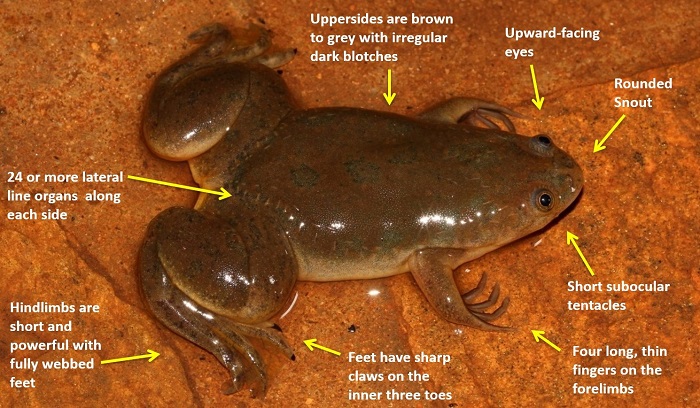
Xenopus laevis
Near Lilongwe, Malawi
Photo by Gary Brown

Habitat

This species inhabits all of the biomes in the atlas region. Prior to the advent of modern agriculture, X. laevis probably occurred in low densities in natural water bodies, such as streams, rivers and their pools. Nowadays, however, the species is also found in a variety of man-made water bodies such as farm dams, ponds, sewage purification works and fish farms. Eutrophic waters seem to produce the highest densities.

There are some studies of native populations (Schoonbee et al. 1992), although the best descriptions of habitat are in respect of feral populations (Tinsley and McCoid 1996; Measey 2001). Breeding and non-breeding habitats appear to be the same, although there are no records of breeding in flowing water.

Behaviour

After heavy rains, X. laevis sometimes leave water bodies en masse, and single individuals are also encountered on the surface in damp weather. These appearances may be associated with movement to and from breeding sites (Du Plessis 1966). Breeding begins at the onset of the rains, thus at different times in the summer and winter rainfall areas (Berk 1938; Kalk 1960). There is a prolonged breeding period throughout the rainy season, and both females and males are able to breed more than once per season (Hey 1949).

Many laboratory studies have documented calling in X. laevis, describing the advertisement call of the male and acceptance or rejection by females. However, such studies have relied on hormonal induction and may not represent natural behaviours (Picker 1980; Kelley 1996; Tobias et al. 1998). Field studies have suggested that males call around the edges of territories, although this may be density dependent (A. Elepfandt pers. comm.). Spawning takes place during the night when couples, in inguinal amplexus, swim around the pond depositing single eggs on any hard substrate (McCoid 1985).

Larvae hatch within two to three days and, after finishing the yolk supply, begin to feed on algae suspended in the water column. Tadpoles display coordinated schooling behaviour, and maintain their position in the water column by means of a characteristic undulating motion of the tail (Wassersug 1996). Time to metamorphosis varies with temperature and the abundance of food. In optimal conditions, metamorphosis is possible within two months (Tinsley et al. 1996).

Adults may move from water bodies after breeding, reducing the incidence of cannibalism (Hey 1949; McCoid and Fritts 1980; Measey 1998b). Adults are generalist predators and scavengers, and can hold food items in their toothed mouths while breaking it apart with their claws using an overhead kick (Avila and Frye 1978). These behaviours can be detected by other adults in the vicinity and sometimes lead to a feeding frenzy (Frye and Avila 1979). Most food items for post-metamorphic X. laevis are benthic macro-invertebrates, such as chironomid larvae. However, a wide variety of food sources are used from all microhabitats in water bodies, including carrion and terrestrial food items (Measey 1998a, b). Even the largest animals take very small prey items, such as zooplankton and ostracods.

Toward the peak of the dry season, X. laevis will either move from drying water bodies or burrow into the wet mud to aestivate. Longevity is unknown for native animals, but in feral populations and in captivity, individuals are known to have lived for more than 15 years (Measey and Tinsley 1998).

X. laevis plays an important role in the ecology of southern African wetlands because it is widespread and abundant, and it is a voracious predator as well as an important prey item for several mammalian, avian and reptilian predators.

Status and Conservation

X. laevis does not seem to be threatened in any part of its range. Montane populations may be genetically distinct (Measey and Channing 2003; Grohovaz et al. 1996) and may warrant management attention. Hybridisation occurs at the northern and southern ends of its range, with X. muelleri and X. gilli, respectively.

X. laevis seems to present a problem to other species because of its invasive tendencies. This is exacerbated by the fact that thousands of these frogs have been exported from South Africa since the 1930s, and still are, because of the popularity of the species as a laboratory animal. There is concern that this trade may also be contributing to the global spread of chytridiomycosis (Weldon 2002).

Distribution

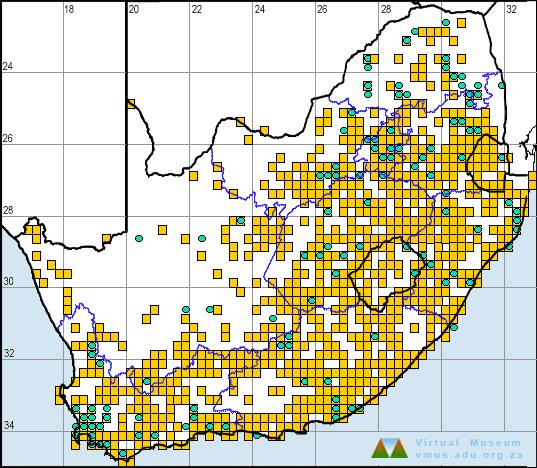
This species is widely distributed in sub-Saharan Africa. Six subspecies are recognised, but parasitological and molecular data indicate that X. laevis laevis is the most divergent of these taxa and should be raised to the species level (Kobel et al. 1996; Kobel et al. 1998; Jackson and Tinsley 1997; Measey and Channing 2003). X. l. laevis occurs throughout southern Africa south of the Zambezi River, and is the only subspecies currently known to occur within the atlas region. However, winter and summer rainfall areas hold genetically distinct groups that may represent different subspecies of X. laevis (Grohovaz et al. 1996; Measey and Channing 2003).

In the atlas region, X. laevis is a common and widespread species, occurring from sea level to nearly 3000 m in Lesotho. In the west, it is apparently absent in areas of extreme aridity, including much of the Kalahari and Bushmanland in Northern Cape Province, although this may be due to inadequate sampling. Its distribution extends eastward as far as the Great Escarpment, where it comes into contact with X. muelleri in the low-lying parts of Limpopo and Mpumalanga provinces (see X. muelleri account).

X. laevis is a highly invasive species, as is evidenced by the feral populations that have become established in many parts of the world. Its present distribution in the atlas region may not represent its ‘natural range’ as this frog is commonly used as live bait by fishermen and may have been inadvertently translocated to areas from which it was previously absent. The proliferation of farm dams and reservoirs over a few hundred years is another factor which may have enabled this species to expand its range.

The atlas data are reliable, but many of the gaps in distribution do not necessarily reflect absence.

Distribution of Xenopus laevis. Taken from the FrogMAP database as at January 2022.

Further Resources

Virtual Museum (FrogMAP > Search VM > By Scientific or Common Name)

More common names: Gewone Platanna (Afrikaans)

Recommended citation format for this species text:

Measey GJ, Tippett RM.  Common Platanna Xenopus laevis. BDI, Cape Town.
Available online at http://thebdi.org/2021/11/08/common-platanna-xenopus-laevis/

Recommended citation format: 

This species text has been updated and expanded from the text in the
2004 frog atlas. The reference to the text and the book are as follows:

Measey GJ 2004 Xenopus laevis Common Platanna. In Minter LR
et al 2004.

Minter LR, Burger M, Harrison JA, Braack HH, Bishop PJ, Kloepfer D (eds)
2004. Atlas and Red Data Book of  the Frogs of South Africa, Lesotho and
Swaziland. Smithsonian Institution, Washington, and Avian Demography
Unit, Cape Town.

Greater Leaf-folding Frog (Afrixalus fornasinii)

View the above photo record (by Courtney Hundermark) in FrogMAP here.

Find the Southern Greater Leaf-folding Frog in the FBIS database (Freshwater Biodiversity Information System) here.

Family Hyperoliidae

GREATER LEAF-FOLDING FROG – Afrixalus fornasinii

(Bianconi, 1849)

Habitat

During the breeding season, A. fornasinii inhabits more-or-less stagnant water bodies containing large stands of saw grass Cyperus immensus and bulrushes Typha latifolia in Coastal Bushveld-Grassland, a mosaic of vegetation types found from sea level to an altitude of 300 m.

Behaviour

In winter they have been found sheltering in the leaf axils of banana, arum lilies and Strelitzia, often a considerable distance from their breeding sites.

Afrixalus fornasinii – Blythedale Beach, KwaZulu-Natal
Photo by Kate Braun

In South Africa, breeding begins in late September, and large choruses have been recorded in December and January (Wager 1965; Bishop 1994). During this period, A. fornasinii may occasionally be found in exposed positions on reeds and sedges near the breeding site in the early morning, but generally retires to denser shade in the heat of the day.

Males call from elevated positions on sturdy, broad-leaved vegetation. Calling begins shortly after sunset and continues until about 23:00, with the chorus reaching a peak at around 21:30 (Bishop 1994). Between 30 and 80 white eggs are deposited in longitudinally folded leaves up to 1 m above the water, and hatch after five days (Wager 1965; Schneichel and Schneider 1988). The tadpoles metamorphose about three months later.

Diet includes the eggs of other anurans, including Chiromantis xerampelina (A. fornasinii penetrate freshly built foam nests and take the eggs before the foam hardens to form an impenetrable crust; Drewes and Altig 1996). Spiders, dipterans, moths and other arthropods are also taken. The tadpoles of A. fornasinii are carnivorous and appear to specialize on mosquito larvae (M.P. pers. obs).

Afrixalus fornasinii – Virginia Bush, KwaZulu-Natal
Photo by Gary Kyle Nicolau

Status and Conservation

A. fornasinii is locally abundant and occurs in a number of coastal and lowland reserves such as those at Kosi Bay, Mkuze, False Bay, St Lucia and Mtunzini. The species does not appear to require conservation attention, although its habitat has undoubtedly shrunk as a result of coastal development.

Distribution

This species occurs from the coast of southern Somalia southward through East Africa to Malawi, Mozambique and eastern Zimbabwe. In the atlas region, A. fornasinii is recorded along the coast of KwaZulu-Natal as far south as Port Edward (3130AB). There are also two records from south of Komatipoort (2531DB) in Mpumalanga.

This relatively large, conspicuous frog is easily distinguished from the sympatric dwarf Afrixalus species, both morphologically and by its loud, distinctive call. The atlas data are reliable and reasonably complete.

Distribution of Afrixalus fornasinii. Taken from the FrogMAP database, April 2022.

Further Resources

Virtual Museum (FrogMAP > Search VM > By Scientific or Common Name)

More common names: Grootblaarvoupadda (Afrikaans)

Recommended citation format for this species text:

Pickersgill M, Bishop PJ, Tippett RM.  Greater Leaf-folding Frog Afrixalus fornasinii. BDI, Cape Town.
Available online at http://thebdi.org/2021/11/08/greater-leaf-folding-frog-afrixalus-fornasinii/

Recommended citation format: 

This species text has been updated and expanded from the text in the
2004 frog atlas. The reference to the text and the book are as follows:

Pickersgill M, Bishop PJ 2004 Afrixalus fornasinii Greater Leaf-folding Frog. In Minter LR
et al 2004.

Minter LR, Burger M, Harrison JA, Braack HH, Bishop PJ, Kloepfer D (eds)
2004. Atlas and Red Data Book of  the Frogs of South Africa, Lesotho and
Swaziland. Smithsonian Institution, Washington, and Avian Demography
Unit, Cape Town.

Snoring Puddle Frog (Phrynobatrachus natalensis)

View the above photo record (by Luke Verburgt) in FrogMAP here.

Find the Tinker Reed Frog in the FBIS database (Freshwater Biodiversity Information System) here.

Family Phrynobatrachidae

SNORING PUDDLE FROG Phrynobatrachus natalensis

(Smith, 1849)

Identification

Habitat

P. natalensis inhabits a variety of vegetation types in the Savanna and Grassland biomes where summer rainfall is >500 mm, although some populations along the western edge of the species’ range are found in drier areas. The polymorphic colour pattern may be a means of protection against predators, and specific patterns have been correlated with particular habitats (Stewart 1974).

Breeding takes place in shallow to fairly deep water in temporary pans and pools, vleis, dams and even small, slow-flowing streams. Wager (1986) recorded the species breeding in brackish pools near the high-water mark at the coast. Breeding sites usually have vegetation or other types of cover along their banks. P. natalensis is tolerant of human disturbance and is often found near human habitation.

Behaviour

In Kruger National Park, P. natalensis has been found sheltering under rocks near breeding sites during the dry season (H. Braack pers. comm.).

Breeding begins in spring after the first rains and continues to late summer. Males usually call from concealed sites and may be heard throughout the day and night in wet weather. Aggressive encounters between males are commonplace (Wager 1965).

Mating pairs swim while depositing the small eggs in a single-layered plate that floats at the surface. Reported clutch sizes from West Africa are 200–1652 eggs (Rödel 2000). Tadpoles reared by Wager (1965) hatched within 3–4 days and took 4–5 weeks to reach metamorphosis, but other authors report considerable variation in the rate of development (Rödel 2000).

Food items recorded north of the atlas region include a variety of insects, especially termites during the rainy season, as well as earthworms, snails and frogs (Inger and Marx 1961). Predators of the species include Black-necked Spitting Cobra Naja nigricollis (Channing 2001) and Herald Snake Crotaphopeltis hotamboeia (H. Braack pers. comm.).

Advertisement Call

Status and Conservation

During recent atlas surveys this species was not found in many parts of Mpumalanga and North West Province, where pre-1996 records exist. This may be due to agricultural and industrial development that has taken place in these areas over the past 20–30 years (H. Braack pers. comm.). Further surveys are recommended to establish whether P. natalensis has become locally extinct in these areas. In other areas, however, this species is abundant and often found near human habitation. It is well established in many national parks and provincial nature reserves and does not need additional conservation action.

Distribution

P. natalensis is widely distributed in the savannas of sub-Saharan Africa, from Senegal in the west to Somalia in the east and southward through East Africa. To the south, it ranges as far as northeastern Namibia, northern Botswana, and Eastern Cape Province of South Africa. The variation in clutch size, tadpole morphology, size of the adult frog and period of activity, suggests that this taxon may comprise more than one species (Rödel 2000).

In the atlas region, this species occurs east of 24°E, from sea level to the inland plateau, but is absent from the Lesotho highlands.

This species has a characteristic call. The atlas data are accurate and comprehensive.

Distribution of Phrynobatrachus natalensis. Taken from the FrogMAP database as at November 2021.

Further Resources

Virtual Museum (FrogMAP > Search VM > By Scientific or Common Name)

More common names: Snorkmodderpadda (Afrikaans)

Recommended citation format for this species text:

Channing A, Tippett RM.  Snoring Puddle Frog Phrynobatrachus natalensis. BDI, Cape Town.
Available online at http://thebdi.org/2021/11/05/snoring-puddle-frog-phrynobatrachus-natalensis/

Recommended citation format: 

This species text has been updated and expanded from the text in the
2004 frog atlas. The reference to the text and the book are as follows:

Channing A 2004 Phrynobatrachus natalensis Snoring Puddle Frog. In Minter LR
et al 2004.

Minter LR, Burger M, Harrison JA, Braack HH, Bishop PJ, Kloepfer D (eds)
2004. Atlas and Red Data Book of  the Frogs of South Africa, Lesotho and
Swaziland. Smithsonian Institution, Washington, and Avian Demography
Unit, Cape Town.