“How do we get people interested in the environment?” “How do people get connected to nature?” This gallery of photos, taken at the Nuwejaars Wetlands this past week, has one of the answers!
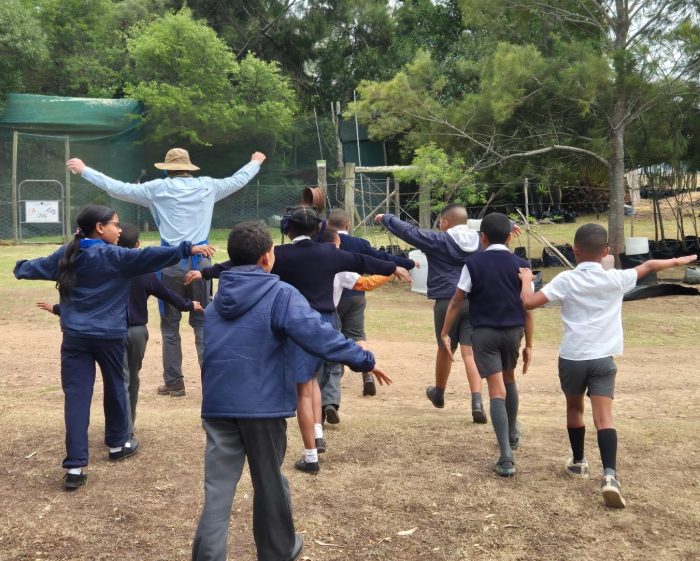
Beware. There is a mist net ahead. One of the poles is an arm’s length to the right of Rocco’s right arm! It took them by surprise.
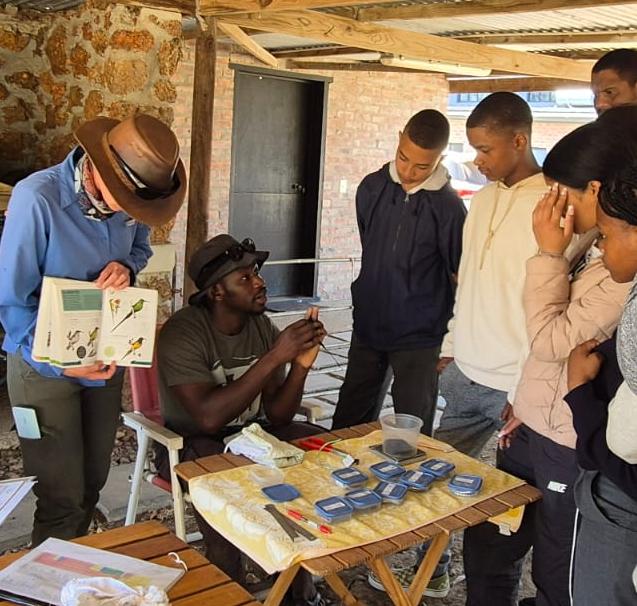
Dembo, from The Gambia, is explaining Malachite Sunbird to Grade 7s. This was the oldest class at Elim Primary School. We had Grade 1 to Grade 7, plus the special needs school, split into 27 groups of about 10 in a group.
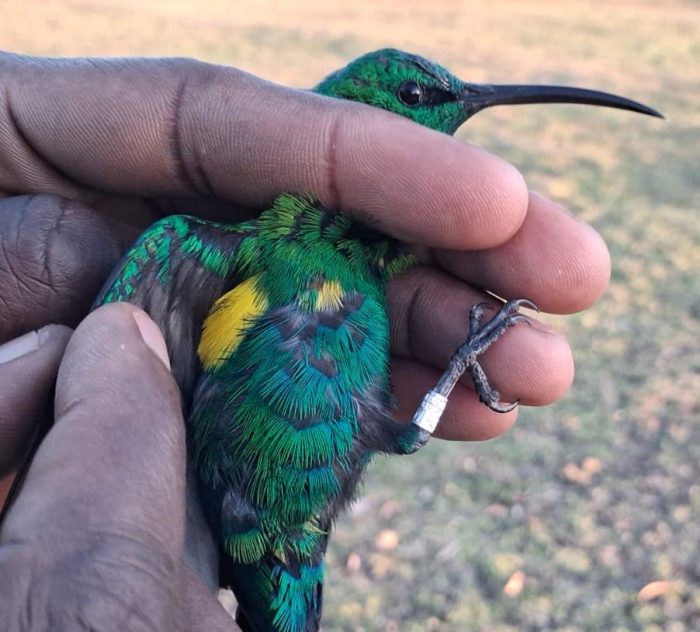
This male Malachite Sunbird has impressive pectoral tufts.
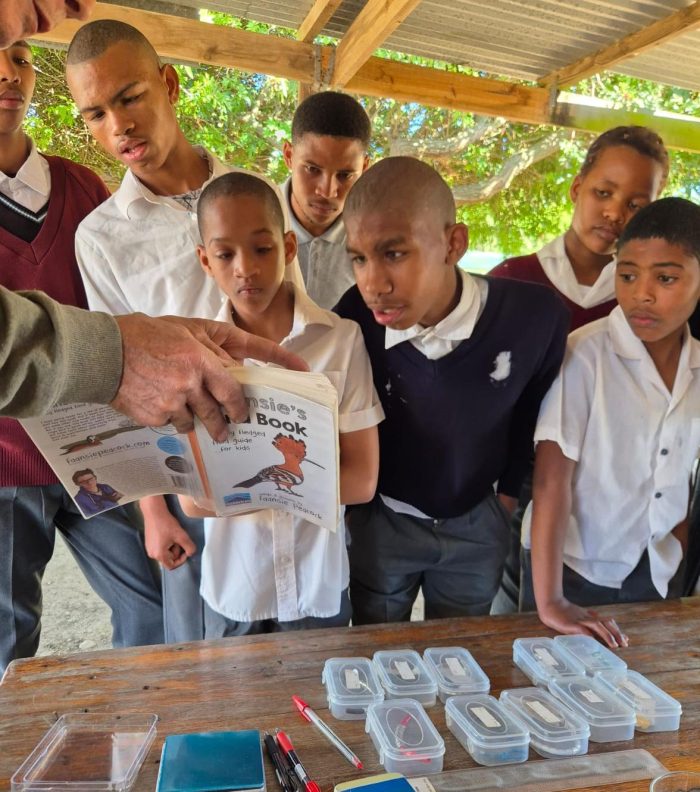
Faansie Peacock’s bird book is a great aid at these kinds of events!
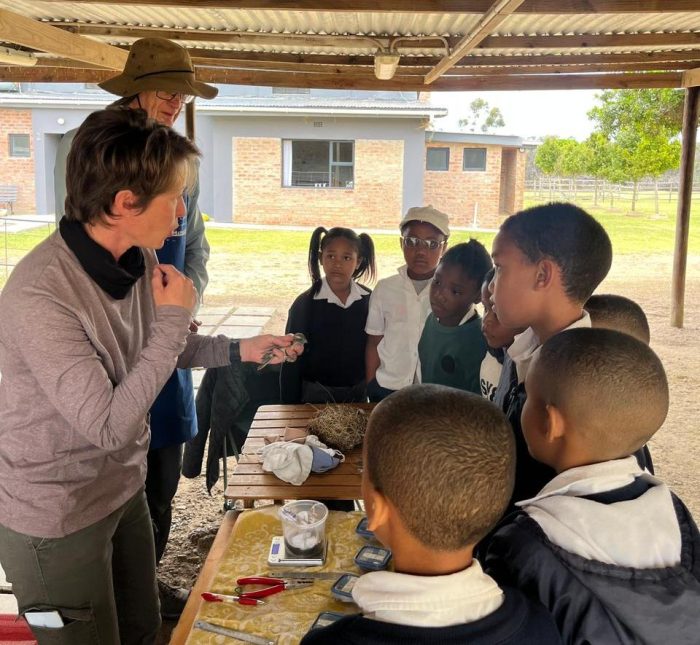
Diane explaining Cape Sparrow to a focused group of learners.
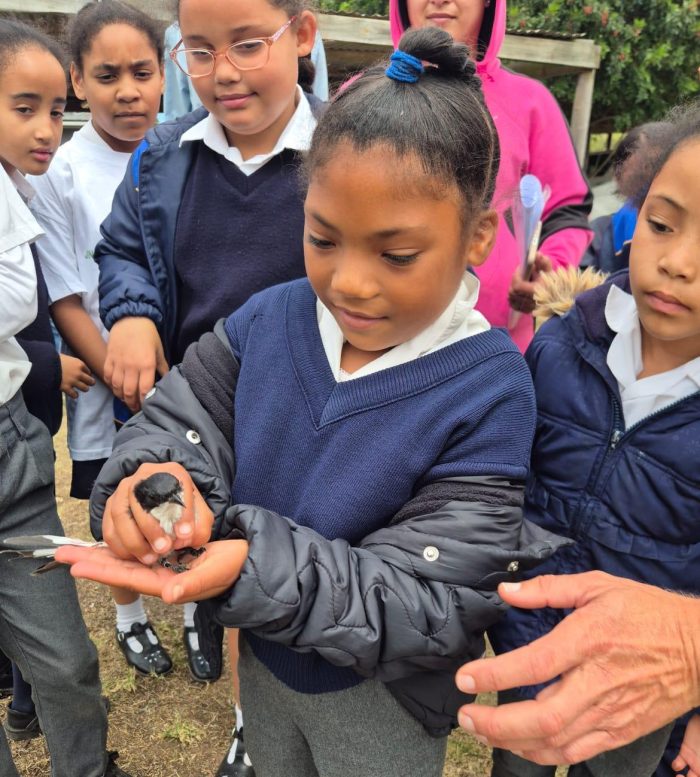
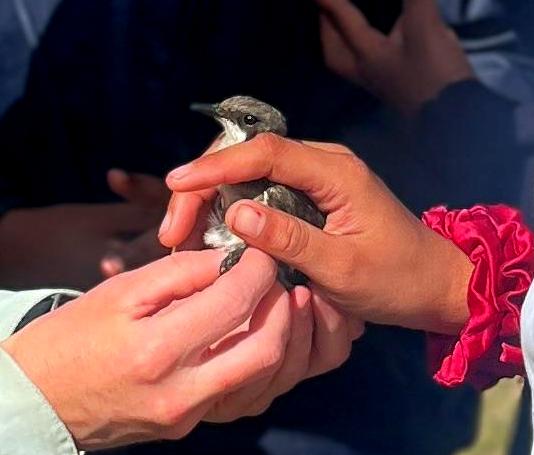
In training as a releaser of Fiscal Flycatcher. Note the correct ringer’s way to hold a bird.
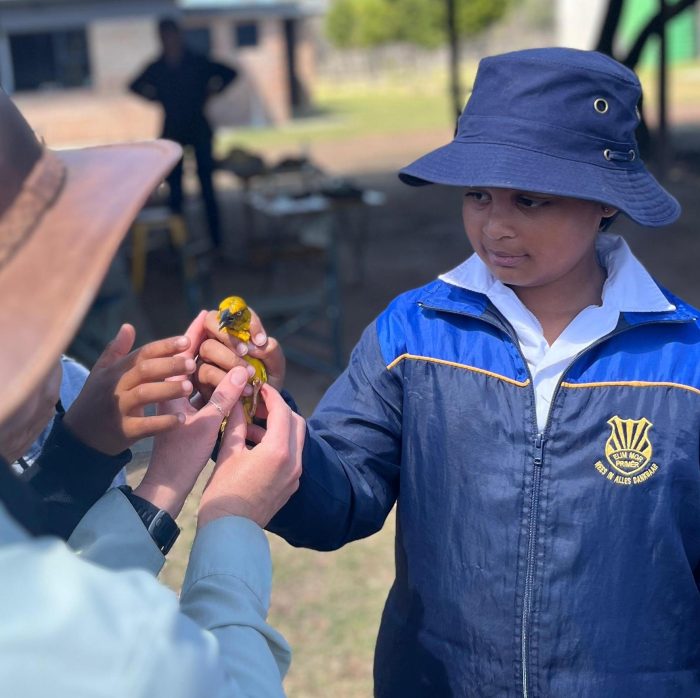
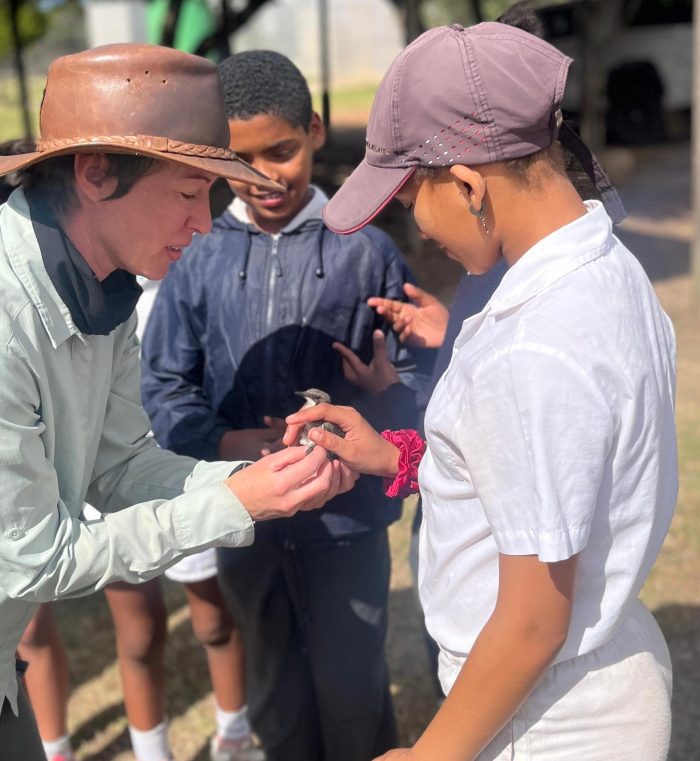
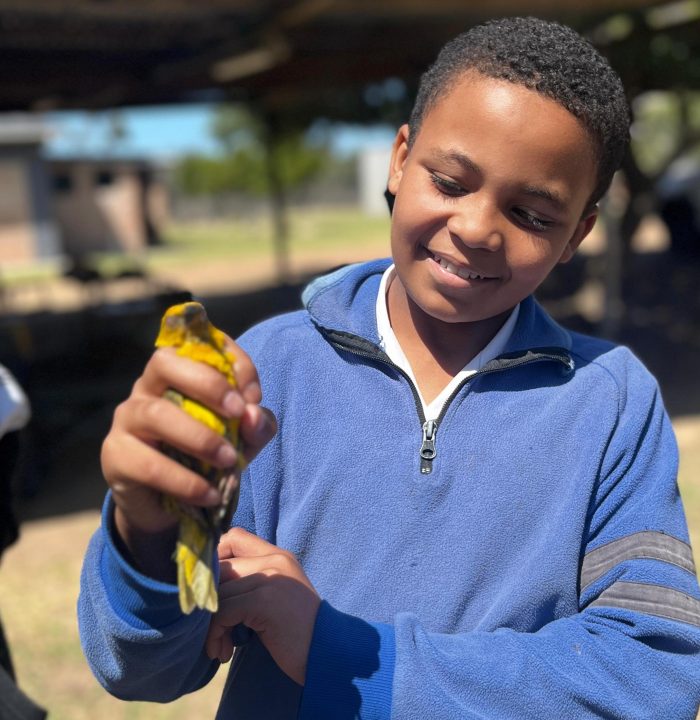
There can be few activities that achieve “connectedness to nature” as well as bird ringing does.
We are grateful to the Nuwejaars Wetlands SMA (Special Management Area) for the opportunity to help with their environmental education programme.
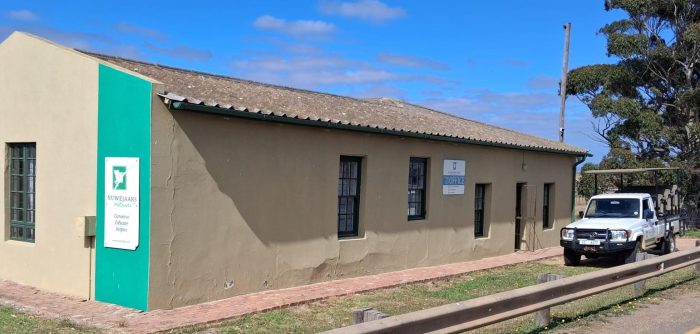
This modest building is the nerve centre of all the activities of the Nuwejaars Wetlands SMA.
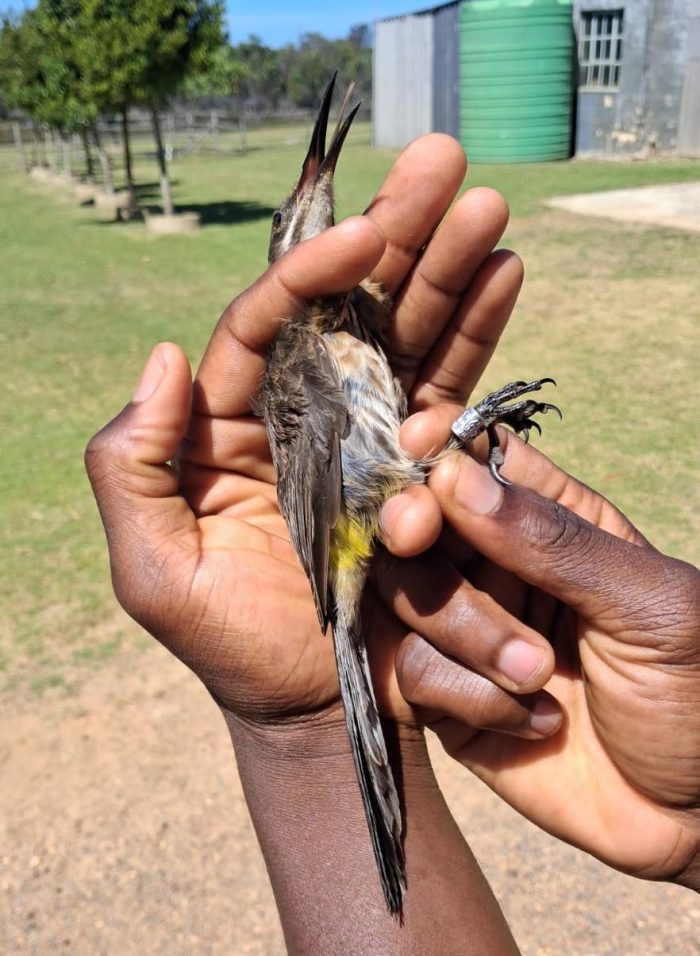
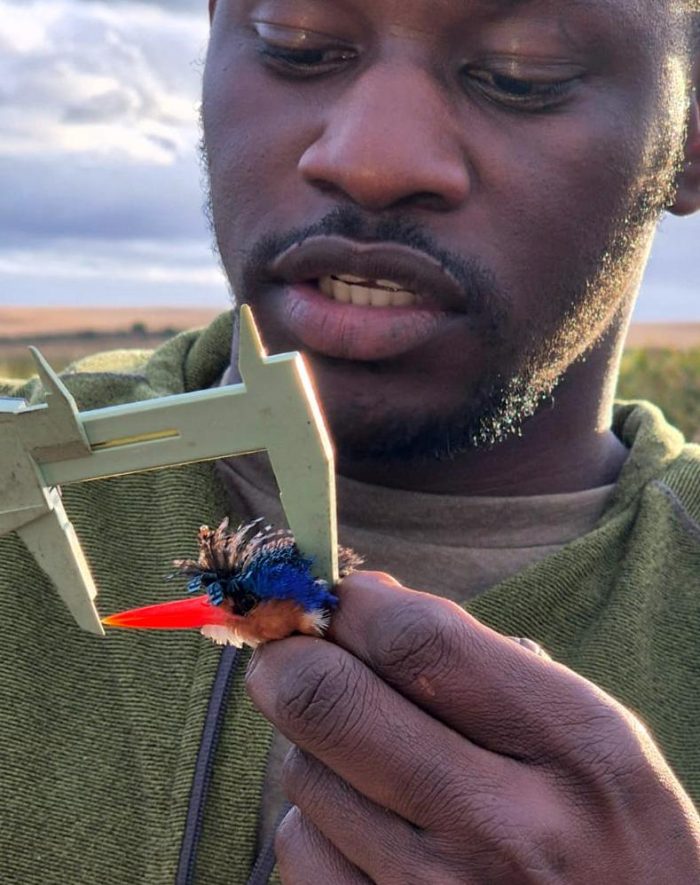
This was our first Cape Sugarbird at Hazevlakte. Our normal stake out for sugarbirds is about 8 km away. In contrast, Malachite Kingfishers are common in the floodplain.
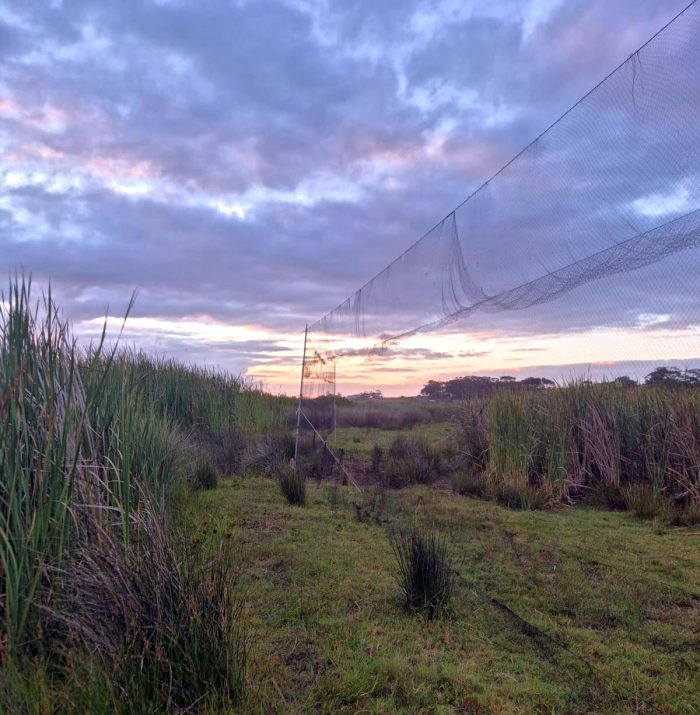
Mist nets in the floodplain.
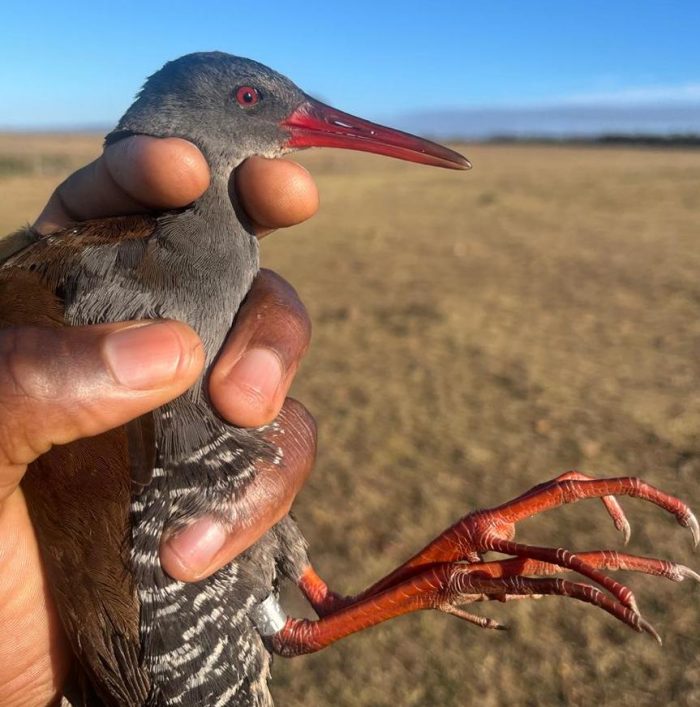
African Rail, a bird species that is not often seen! We handle them quite regularly here!
This was a week when mist netting was not easy. Spike Milligan has a poem called Granny. The poem has three verses, and the second verse goes like this.
All through the night the wind grew worse
It nearly made the vicar curse
The top had fallen of the steeple
Just missing him (and other people)
Our version of it runs like this:
All through the night the wind grew worse
It nearly made the ringers curse
The nets were moving as fast as arrows
Just scaring birds, like all the sparrows
So we spent some time looking at other things …

Raucous Toads Sclerophrys capensis making a new generation of Raucous Toads.
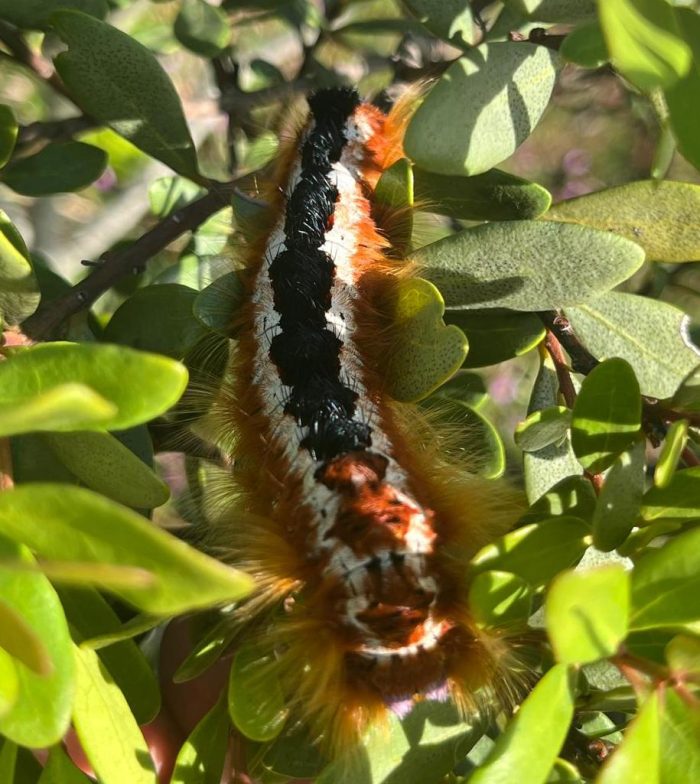
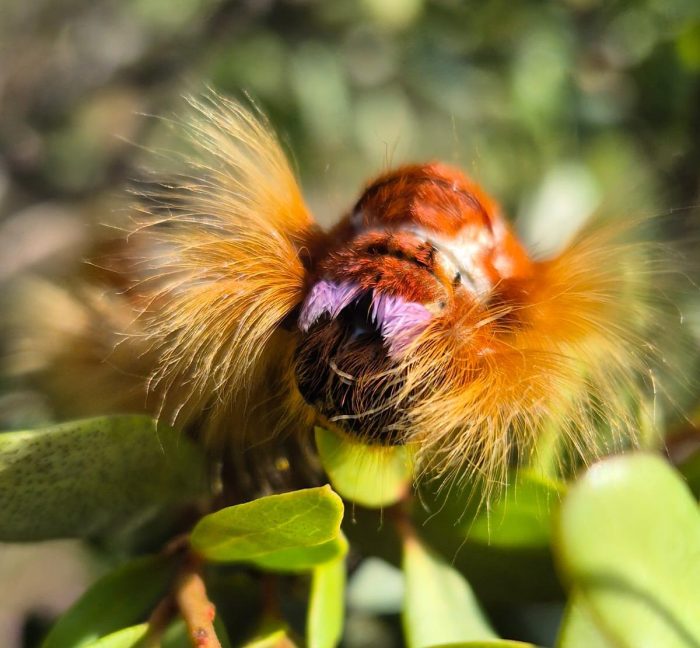
If you get the right angle on the hairy caterpillar of the Cape Lappet Moth Eutricha capensis it is delightfully attractive!
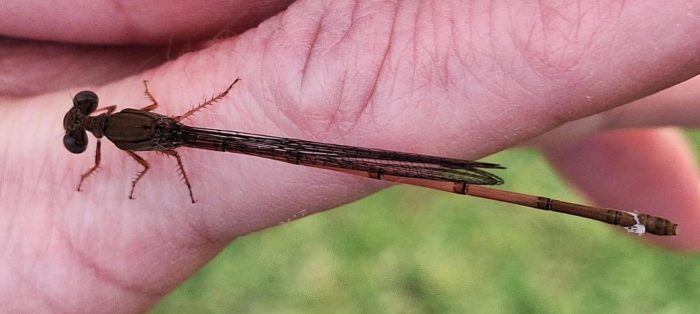
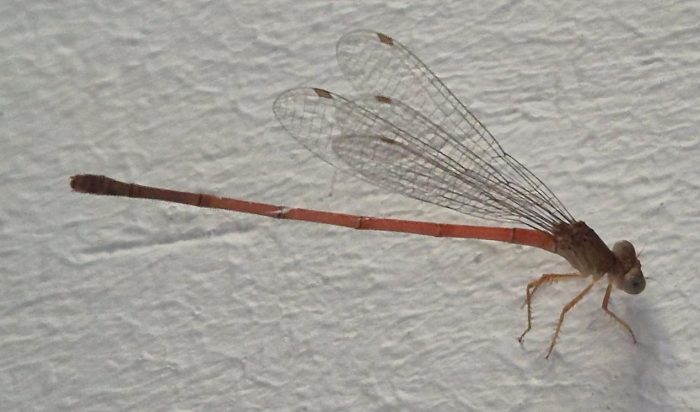
We found two damselflies. Common Threadtail Elattoneura glaca (top) and Common Citril Ceriagrion glabrum (bottom).
And we spent some time eating.

That looks like a good snack for lunch!
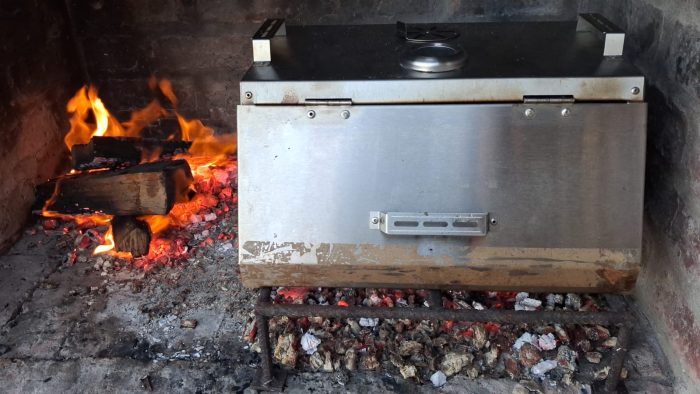
The pizza oven did good service again …
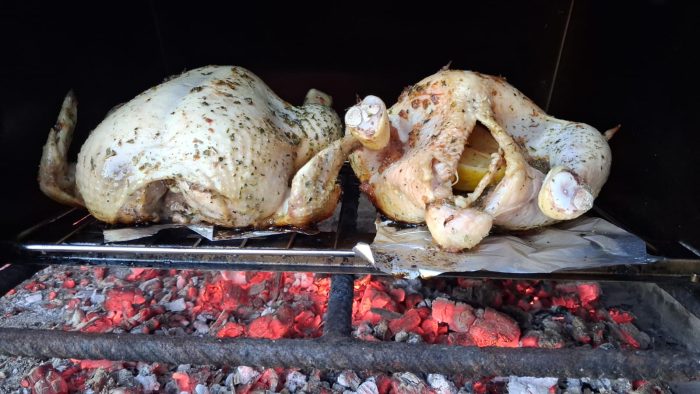
Roasted for an hour.
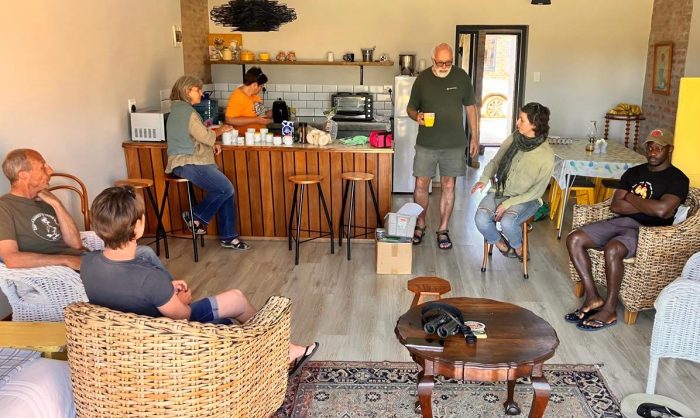
We had lots of time to talk, the Hazevlakte units have lots of comfortable space to do this. We planned a couple of papers for Biodiversity Observtions.
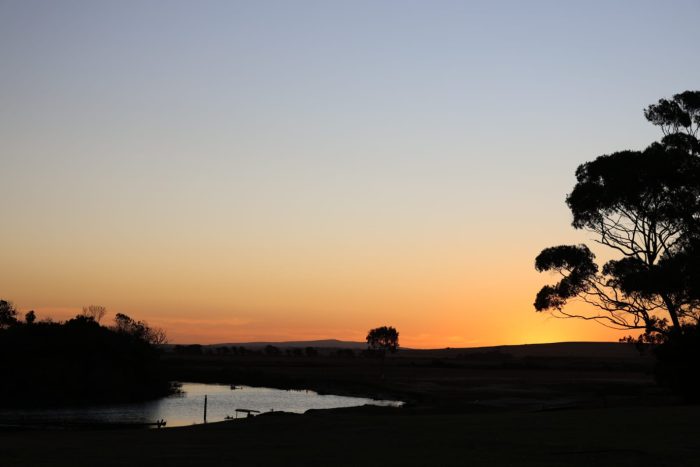
You cannot see the wind in a photograph!
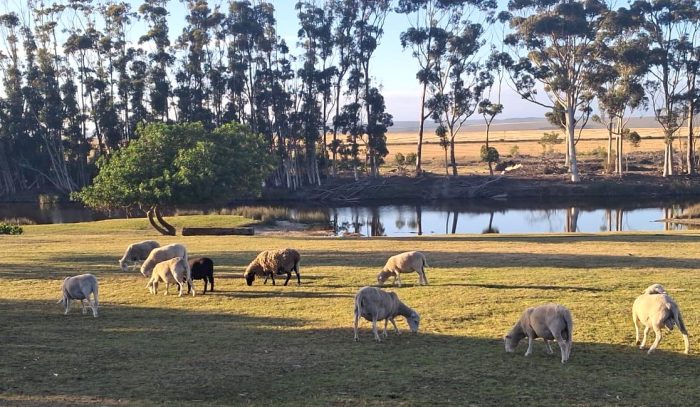
For the first two mornings the wind was calm. The sheep did lawnmower duty, and the eucalypts reflected in the Nuwejaars River.
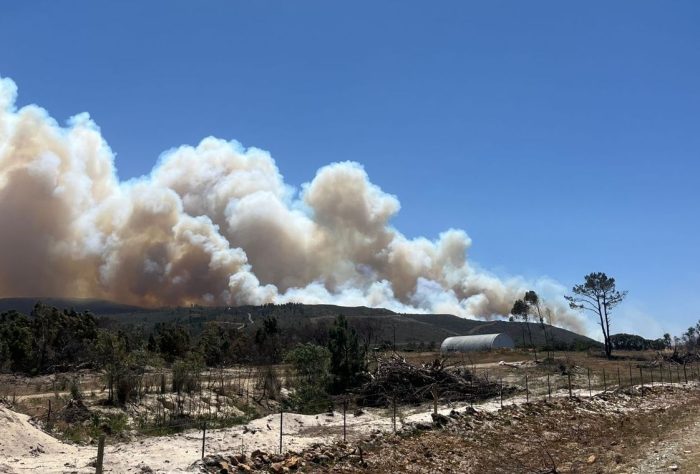
As we left the Agulhas Plain, we saw this fire starting in the outskirts of Bredasdorp.
All through the day the wind grew worse
It really made the fireteams curse
The flames were eating up the trees
and racing through the veld with ease
The fire was still burning along the top of the range of mountains west of Bredasdorp two days later! The choppers try to prevent loss of property.
Thanks, Ross, for the video.
There is a list of all the upcoming BDI events here. Links to reports of previous events are here. There is a blog about the value of bird ringing to research and conservation here. This blog is about the value of bird ringing as a way to develop connectedness to nature.