OdonataMAP is the Atlas of African Odonata and forms part of the Virtual Museum. OdonataMAP was launched in 2010. The first record was uploaded into the database on 22 September 2010. At its starting point the project described itself as a section of the Virtual Museum which aimed (1) “to map the current distribution of the insect Order Odonata, i.e. dragonflies and damselflies, occurring in Africa” and (2) “to serve as a repository of all existing distribution data for this group.”
OdonataMAP provides an atlas of the up-to-date distributions of the dragonflies and damselflies, which is a critical component of addressing their own conservation priorities, and also the conservation of freshwater ecosystems. The project provides a valuable input to the Red List status of each species. Besides the distribution maps, OdonataMAP aims to make a contribution to understanding the seasonal phenology of these species. Documenting and quantifying changes in seasonality are a critical component of understanding the impacts of climate change on biodiversity
Monthly data uploads to OdonataMAP by year. 2019 is represented by the light purple line
Although filled with challenges, like an ongoing drought throughout most parts of South Africa, 2019 was a good year for OdonataMAP. OdonataMAPpers submitted a total of 19,119 records to the Virtual Museum. And thanks to the amazing members of the OdonataMAP expert panel, 99% of the records have been identified already. Below is a map of Africa, and South Africa, showing the locations (grid cells) of the OdonataMAP data submitted during 2019
OdonataMAP data submissions for Africa for 2019 OdonataMAP data submissions for South Africa, Lesotho and Swaziland for 2019
We received records from 26 African countries (Table 1). Apart from South Africa, most of the other records came from Zambia (388), Namibia (369) and Swaziland (278), all three these countries having totals of more than 100 records submitted for the year.
Table 1: OdonataMAP records for 2019 by country
Country
Records
Angola
2
Botswana
78
Cape Verde
4
Chad
66
Congo (DRC)
13
Cote d’Ivoire
3
Eswatini (Swaziland)
6
Gambia
2
Kenya
18
Lesotho
4
Madagascar
7
Malawi
29
Mali
21
Mauritius
35
Mozambique
55
Namibia
369
Nigeria
35
Republic of the Congo
1
Rwanda
3
South Africa
17665
Sudan
2
Swaziland
228
Tanzania
4
Uganda
36
Zambia
392
Zimbabwe
41
Map of Africa with countries for which we received OdonataMAP records highlighted in green
Diana Russell submitted the most records to OdonataMAP for the year, with a great total of 2555 records, followed by Richard Johnstone on 1427 records and Corrie du Toit with 1378 records (Table 2).
Table 2: OdonataMAP Observers with more than 100 records submitted for 2019
Observer
Records
Russell Diana
2555
Johnstone Richard
1427
du Toit Corrie
1378
de Vries Andries Petrus; Joey de Vries
1120
La Grange Pieter
853
Hirons Jean
651
Bensch Gert; Juan-Pierre Antunes
396
Barrett Norman
273
Kleynhans Evert Philippus Jacobus
256
Small Christopher Peter
255
Nuttall Rick
248
Steenkamp Wilna
247
Van Rensburg Maritza
246
Wilkinson John
245
de Vries Andries Petrus; Blyde River OdonataBash
233
Bensch Gert
232
Willis Chris
227
Stanton Sharon
214
Stanton Sharon; Heleen Louw
208
Liebenberg Altha
180
Robinson Lance
177
Cronje Pieter
176
Nieuwoudt Phillip
172
van Dyk Zenobia
164
Hulme Ilse
155
de Vries Andries Petrus; Joey de Vries; Team Swadini Bio-Search
151
Stanton Mark
150
Kleynhans Evert Philippus Jacobus; Cherése Kleynhans
148
Kleynhans DH; Sarieta Kleynhans
147
Tippett Ryan
145
Braun Kate
140
Liptrot Mark
139
Thomson Neil
134
Antunes Juan-pierre Antunes; Gert Bensch
126
Snyman Antoinette
120
Dickinson Robyn
118
Kleynhans Dawie; Sarieta Kleynhans
113
de Vries Andries Petrus; Joey de Vries; Neels Snyman; Antoinette Snyman
106
Darling Desire; Gregg Darling
104
Troskie Eugene Anton; Lerm Rion
102
The two species most often recorded for 2019 were Broad Scarlet Crocothemis erythraea and Red-veined Dropwing Trithemis arteriosa (Table 3).
Find the Conspicuous Malachite in the FBIS database (Freshwater Biodiversity Information System) here.
Family Synlestidae
Identification
Conspicuous MalachiteChlorolestes conspicuus – Male Kareedouw Mountain, Eastern Cape Photo by Jorrie Jordaan
Large size
Length up to 65mm; Wingspan reaches 73mm.
The Conspicuous Malachite is largest species in its genus. It is a fairly dull coloured species but the thorax stripes are relatively broad, bright and noticeable. The thorax and abdomen are metallic-green aging to coppery brown. Males never develop black-banded wings.
The most diagnostic features of the Conspicuous Malachite are the large size, long brownish pterostigmas (not bi-coloured), and the bright yellow lower thorax stripe that is broad and straight.
The Conspicuous Malachite most resembles the un-banded form of Chlorolestes fasciatus (Mountain Malachite) but that species is distinctly smaller, brighter green and has bi-coloured pterostigmas.
The sexes are similar but females are more robustly built.
The Conspicuous Malachite is found near rivers and streams in both open and wooded or forested valleys, particularly in mountainous fynbos areas. It favours sites with tall fringing vegetation such as restios, reeds, ferns, bushes and trees. The Conspicuous Malachite also inhabits seeps and small streams with rich vegetation, on steep mountain slopes.
Habitat – Marloth Nature Reserve, Western Cape Photo by Ryan Tippett
Behaviour
Despite its common name it is not a conspicuous species. The Conspicuous Malachite is most often seen hanging from a perch over the water, with its wings outstretched in full sunshine.
The Conspicuous Malachite is most active from December to May (See Phenology below).
Conspicuous MalachiteChlorolestes conspicuus – Male Swartberg Pass, Western Cape Photo by Ryan Tippett
Status and Conservation
The Conspicuous Malachite is locally common. It is listed as of Least Concern in the IUCN Red List of Threatened Species. The Conspicuous Malachite is confined to natural habitats and is not tolerant of habitat degradation.
Distribution
The Conspicuous Malachite is endemic to south-western South Africa and is restricted to the Western and Eastern Cape provinces.
Conspicuous MalachiteChlorolestes conspicuus – Male Bainskloof Pass, Western Cape Photo by Ryan Tippett
The map below shows the distribution of records for Chlorolestes conspicuus in the OdonataMAP database as at January 2020.
The map below shows the distribution of records for Chlorolestes conspicuus in the OdonataMAP database as of December 2024.
The following map below is an imputed map, produced by an interpolation algorithm, which attempts to generate a full distribution map from the partial information in the map above. This map will be improved by the submission of records to the OdonataMAP section of the Virtual Museum
The following map below shows the imputed distribution which has been adjusted for terrain roughness
Conspicuous MalachiteChlorolestes conspicuus – Teneral male Marloth Nature Reserve, Western Cape Photo by Ryan Tippett
Phenology
The next two graphs shows how the occurrence of Conspicuous Malachites varies within the year, i.e. the phenology. There are 82 records in the database for this species, so these results can be treated as moderately reliable. The first plot shows the number of records in each pentade, five-day periods, which start on 1 July and end on 30 June the following year. The maximum number of records in a pentade is nine, in April. The blue line is generated by a smoother, an algorithm which aims to separate the “signal” from the “noise”, and shows the pattern of seasonality for this species. The second plot shows only the blue line, and it is scaled to lie between zero and one, for easy comparison between species.
This phenology plot suggests that the main flight period of the Conspicuous Malachite is in late summer, with a peak at the end of March/beginning of April. There appears to be a steady build-up to this peak of abundance, starting in December. There is a fairly rapid decrease in abundance from late-April. This species is unusual for a winter-rainfall region endemic to have records in every month of the year except one (September). There are single records in May, June, August and October and four in July. A lot more OdonataMAP records for the Conspicuous Malachite are needed to confirm (or disprove) the patterns shown in this plot.
Conspicuous MalachiteChlorolestes conspicuus – Male Swartberg Pass, Western Cape Photo by Ryan Tippett
Further Resources
The use of photographs by Gregg Darling and Jorrie Jordaan is acknowledged. All other Photographs by Ryan Tippett.
Conspicuous MalachiteChlorolestes conspicuusHagen in Selys, 1862
Other common names: Reusemalagiet (Afrikaans).
Recommended citation format: Loftie-Eaton M; Navarro R; Tippett RM; Underhill L. 2025. Conspicuous Malachite Chlorolestes conspicuus. Biodiversity and Development Institute. Available online at https://thebdi.org/2020/02/04/conspicuous-malachite-chlorolestes-conspicuus/
References: Tarboton, M; Tarboton, W. (2019). A Guide to the Dragonflies & Damselflies of South Africa. Struik Nature.
Samways, MJ. (2008). Dragonflies and Damselflies of South Africa. Pensoft
Samways, MJ. (2016). Manual of Freshwater Assessment for South Africa: Dragonfly Biotic Index.Suricata 2. South African National Biodiversity Institute, Pretoria
The Amatola Malachite is a distinctive and easily recognised species. Apart from the aforementioned size, chlorolestes apricans can be readily identified by its plain, dark yellowish pterostigmas and pruinose blue prothorax and wing bases. Males occur in two forms. One has black and white-banded wings and the other has plain, un-banded wings. Females resemble un-banded males but are less colourful and more robust with broader abdomens.
The Amatola Malachite frequents streams and rivers in hilly areas. It requires clear, flowing water and a rich growth of reeds, grass, and some scattered bushes.
Habitat – Near Stutterheim, Eastern Cape Photo by Corne Rautenbach
Behaviour
The Amatola Malachite is most often observed hanging with wings outstretched, from grass stems in sunny positions over the water. It is fairly confiding and reluctant to fly.
The Amatola Malachite is active from October to April (See Phenology below).
Status and Conservation
Chlorolestes apricans is rare and listed as Endangered on the IUCN Red List of Threatened Species. It only occupies pristine, undamaged habitats and has a very small and restricted distribution. The Amatola Malachite is not tolerant of habitat degradation.
Distribution
The Amatola Malachite is endemic to South Africa, where it has a restricted range in the Eastern Cape Province. Until recently, the Amatola Malachite was only known from a small area in the Amatola-Winterberg mountains in the Eastern Cape, but has subsequently also been discovered in southern KwaZulu-Natal (See distribution maps below).
The map below shows the distribution of records for Anax imperator in the OdonataMAP database, as at January 2020.
The map below shows the distribution of records for Chlorolestes apricans in the OdonataMAP database, as of December 2024.
The following map below is an imputed map, produced by an interpolation algorithm, which attempts to generate a full distribution map from the partial information in the map above. This map will be improved by the submission of records to the OdonataMAP section of the Virtual Museum
The next map below is an imputed map, produced by an interpolation algorithm, which attempts to generate a full distribution map from the partial information in the map above. This map will be improved by the submission of records to the OdonataMAP section of the Virtual Museum.
The map below shows the imputed distribution which has been adjusted for terrain roughness
Ultimately, we will produce a series of maps for all the odonata species in the region. The current algorithm is a new algorithm. The objective is mainly to produce “smoothed” maps that could go into a field guide for odonata. This basic version of the algorithm (as mapped above) does not make use of “explanatory variables” (e.g. altitude, terrain roughness, presence of freshwater — we will be producing maps that take these variables into account soon). Currently, it only makes use of the OdonataMAP records for the species being mapped, as well as all the other records of all other species. The basic maps are “optimistic” and will generally show ranges to be larger than what they probably are.
These maps use the data in the OdonataMAP section of the Virtual Museum, and also the database assembled by the previous JRS funded project, which was led by Professor Michael Samways and Dr KD Dijkstra.
Phenology
The next two graphs shows how the occurrence of Amatola Malachites varies within the year, i.e. the phenology. There are only 28 records in the database for this species, so these results need to be treated as tentative. The first plot shows the number of records in each pentade, five-day periods, which start on 1 July and end on 30 June the following year. The maximum number of records in a pentade is four, in early January. The blue line is generated by a smoother, an algorithm which aims to separate the “signal” from the “noise”, and shows the pattern of seasonality for this species. The second plot shows only the blue line, and it is scaled to lie between zero and one, for easy comparison between species.
Tentatively (because the sample size is only 28), this phenology plot shows that the earliest Amatola Malachites in flight can be anticipated in October, and the last ones in April. Most records are anticipated to be from November to March, and the peak of the flight period appears to be in Mid-December. The peak appears to be quite sharp, but this might be a consequence of the small sample size.
To improve the quality of the phenology, please start fieldwork for this species in October, and continue to April, and submit records of Amatola Malachites to OdonataMAP throughout this period. The ideal would be to have a record from each five-day period in which they are seen and photographed.
Further Resources
The use of photographs by Corne Rautenbach, Desire Darling, and Stewart MacLachlan is acknowledged.
Recommended citation format: Loftie-Eaton M; Navarro R; Tippett RM; Underhill L. 2025. Amatola Malachite Chlorolestes apricans. Biodiversity and Development Institute. Available online at https://thebdi.org/2020/02/03/amatola-malachite-chlorolestes-apricans/
References: Tarboton, M; Tarboton, W. (2019). A Guide to the Dragonflies & Damselflies of South Africa. Struik Nature.
Samways, MJ. (2008). Dragonflies and Damselflies of South Africa. Pensoft
Samways, MJ. (2016). Manual of Freshwater Assessment for South Africa: Dragonfly Biotic Index.Suricata 2. South African National Biodiversity Institute, Pretoria
Department of Zoology & Entomology, Rhodes University, Grahamstown, 6140, South Africa
Patrick E Hulley
Department of Zoology & Entomology, Rhodes University, Grahamstown, 6140, South Africa
Abstract
Since 2007 we have carried out surveys of birds at Fort Fordyce, including mist-netting. To date, 175 species have been recorded, including 9 Red Data species, of which one is a breeding resident, and three others may be breeding in the reserve. There are 56 species typical of montane forest; most are present throughout the year. With > 500 birds ringed and 50 recaptures, the oldest records to date are 8 years for an olive thrush and a black-backed puffback.
Introduction
Forest is a rare habitat in South Africa, covering < 1% of the land surface, and it is currently much fragmented. However, there are very few areas which were covered by extensive tracts of natural forest even before human-induced changes to the original vegetation distribution (Rutherford and Westfall 1986). Many small forest remnants, originally under the control of the Department of Forestry, have subsequently been transferred to state conservation departments.
Fort Fordyce (Figure 1) was previously a hilltop forestry station, with extensive plantations of alien pine and eucalypt trees, while indigenous forest persisted on the steeper slopes. In 1987 it became a nature reserve administered by the Cape Provincial Department of Nature Conservation, and removal of alien vegetation began. Most of the plantations have now been felled, but secondary infestations of black wattle (Acacia mearnsii) cover significant areas, although there is also extensive regeneration of natural vegetation. This protected area covers 2155 hectares, and with the Mpofu Game Reserve (7500 hectares) in the adjacent valley, is currently managed by Eastern Cape Parks; these two reserves form part of the Amatola-Katberg Mountain Important Bird Area (BirdLife South Africa 2015).
Figure 1. Location of Fort Fordyce in South Africa
The plateau at Fort Fordyce (altitude 1400 m) has areas of open grassland where grazing mammals have been introduced (black wildebeest Connochaetes gnou, Burchell’s zebra Equus quagga burchellii, red hartebeest Alcelaphus buselaphus caama). Bushbuck (Tragelaphus sylvaticus) and blue duiker (Philantomba monticola) occur naturally in the forested areas; baboon (Papio ursinus) and vervet monkey (Chlorocebus pygerythrus) are present, but no samango monkeys (Cercopithecus albogularis) have been recorded. Caracal (Caracal caracal) is the largest resident predator. Annual rainfall averages 1125 mm (mean over 15 years); summer maximum temperatures range to 42°C while frost occurs regularly in winter, and snow has been recorded in some years.
Based on surveys of the avifauna since 2007 (Craig 2007, 2012) we have posed the following questions:
Does this patch of Afromontane forest preserve a significant component of forest birds, particularly endemic species, and species of conservation concern?
Are these birds resident throughout the year, or is there evidence for seasonal movements?
Methods
Since May 2007, we have visited Fort Fordyce on 47 occasions, mostly single day visits. On each occasion, at least two observers have followed a regular route within the forest and across the grassland area, recording all birds seen and heard. These data have been submitted to the Southern African Bird Atlas Project (SABAP2). We have also set approximately 100 m of mist nets along a track near the reserve office and chalets (Figure 2).
Figure 2. Mist net line at Fort Fordyce (Photo Magi Nams)
The vegetation here is regenerating scrub-forest, with a small patch of pine trees remaining to the east of the net line. All birds captured have been ringed with standard metal rings issued by SAFRING. Apart from our own data, there are 10 surveys by other observers submitted to SABAP2, and three checklists in the Birds in Reserves Project (BIRP). The reserve straddles two pentads (the 5’ x 5’ minute map units used for SABAP2), including the NW corner of pentad 3240_2630 and the NE sector of pentad 3240_2625 (SABAP2, accessed 13 December 2017). However, virtually all data collection has been within the map unit 3240_2625.
Prior to 2007, we visited the reserve on three occasions (September 1988, April 1989, August 1997) during student field trips lasting 3 days each. Birds were mist-netted, and species lists recorded for each visit; these data are discussed separately. Data are also available from the first bird atlas (SABAP1, Harrison et al. 1997), but the mapping unit at that time was a “quarter degree square” (15’ x 15’), which covers a larger area than the reserve and thus incorporated the valley with dry thornveld vegetation. This is evident from the species list, which includes many taxa which have not been recorded subsequently when surveys were restricted to the forest and grassland areas within the reserve.
Results and Discussion
Avifauna
The SABAP1 list for the quarter degree square (map code 3226CB) incorporating Fort Fordyce Reserve has 211 species, but as noted above some of these are clearly birds of the low thornveld areas at the base of the pass which leads up to the plateau. Nevertheless all 86 species noted by AJFKC and PEH in the years 1988-1997 are included in the SABAP1 tally. The current list for the pentad 3240_2625, based on SABAP2, our surveys and mist-netting records, and the few additional BIRP data, is 175 species (Appendix 1); 18 of these species were not recorded during SABAP1. Three species recorded in the forest/grassland habitats in the period 1988-1997 have not been reported in this sector since then: spotted eagle-owl (Bubo africanus), long-billed pipit (Anthus similis) and golden-breasted bunting (Emberiza flaviventris). Of these, only the owl may be present regularly, since with few overnight stays, nocturnal birds are certainly under-reported; the other two species are likely to be occasional vagrants. For comparison, in three KwaZulu-Natal Afromontane forest reserves, Symes et al. (2002) recorded a total of 136 species, with no more than 110 species at any one site. However, these surveys extended over only 2-4 years at their study sites.
Species of conservation concern
Table 1 lists those species recorded at Fort Fordyce, which feature in the most recent “Red Data Book” for southern Africa (Taylor et al. 2015). The frequency with which these species have been recorded (cf. Appendix 1) suggests that most are only occasional visitors to the reserve. The endangered Cape parrot (Poicephalus robustus) has roosted here occasionally, but the large flocks seen feeding on pecan nuts on farms in the valley at certain seasons fly east in the direction of the Hogsback forests each evening (pers. obs.). Only the Knysna woodpecker (Campethera notata) is a confirmed breeding resident; the African crowned eagle (Stephanoaetus coronatus) probably also nests within the protected area, and the lanner falcon (Falco biarmicus) and bush blackcap (Lioptilus nigricapillus) may do so. There are historical records of southern ground hornbill (Bucorvus leadbeateri) from this site, but none within the past 50 years.
Table 1. Conservation status of Red Data species at Fort Fordyce
Common name
Scientific name
Red data status
Status in reserve
Cape parrot
Poicephalus robustus
Endangered
Occasional visitor
blue crane
Anthropoides paradiseus
Near-threatened
Occasional visitor
Knysna woodpecker
Campethera notata
Near-threatened
Breeding resident
striped flufftail
Sarothrura affinis
Vulnerable
Occasional visitor
Verreaux’s eagle
Aquila verreauxi
Vulnerable
Occasional visitor
African crowned eagle
Stephanoaetus coronatus
Vulnerable
Probable breeding resident
secretarybird
Sagittarius serpentarius
Vulnerable
Occasional visitor
lanner falcon
Falco biarmicus
Vulnerable
Possible breeding resident
bush blackcap
Lioptilus nigricapillus
Vulnerable
Possible breeding resident
Forest birds
The forest bird species in Table 2 are based on Skead (1967), who listed 74 species which occur in forest in the Eastern Cape, including riverine forest. However, of the species on his list, some do not extend as far west as the Kei River (e.g. eastern bronze-naped pigeon Columba delegorguei) or are restricted to coastal forests (e.g. red-capped robin-chat Cossypha natalensis), but we have included Barratt’s warbler (Bradypterus barratti) which he described as found “in scrub adjacent to forests” (Skead 1967 p. 81).
Table 2: Eastern Cape forest birds found at Fort Fordyce 2007-2017. E = endemic to southern Africa
Common name
Scientific name
Status in reserve
long-crested eagle
Lophaetus occipitalis
Resident
African crowned eagle
Stephanoaetus coronatus
Resident
forest buzzard
Buteo trizonatus
E Probable resident
rufous-breasted sparrowhawk
Accipiter rufiventris
Visitor
African goshawk
Accipiter tachiro
Resident
African harrier-hawk
Polyboroides typus
Resident
red-necked spurfowl
Pternistis afer
Resident
buff-spotted flufftail
Sarothrura elegans
Visitor
African olive pigeon
Columba arquatrix
Resident
red-eyed dove
Streptopelia semitorquata
Resident
tambourine dove
Turtur tympanistria
Probable resident
lemon dove
Columba larvata
Resident
Cape parrot
Poicephalus robustus
E Visitor
Knysna turaco
Tauraco corythaix
Resident
red-chested cuckoo
Cuculus solitarius
Summer migrant
black cuckoo
Cuculus clamosus
Summer migrant
emerald cuckoo
Chrysococcyx cupreus
Summer migrant
barn owl
Tyto alba
Visitor?
African wood owl
Strix woodfordii
Probable resident
Narina trogon
Apaloderma narina
Resident
green wood-hoopoe
Phoeniculus purpureus
Probable resident
crowned hornbill
Tockus alboterminatus
Resident
red-fronted tinkerbird
Pogoniulus pusillus
Resident
scaly-throated honeyguide
Indicator variegatus
Probable resident
Knysna woodpecker
Campethera notata
E Resident
olive woodpecker
Dendropicos griseocephalus
Resident
grey cuckooshrike
Coracina caesia
Resident
black-headed oriole
Oriolus larvatus
Resident
bush blackcap
Lioptilus nigricapillus
E Possible resident
terrestrial brownbul
Phyllastrephus terrestris
Resident
sombre greenbul
Andropadus importunus
Resident
olive thrush
Turdus olivaceus
Resident
chorister robin-chat
Cossypha dichroa
E Resident
brown scrub-robin
Cercotrichas signata
E Probable resident
white-starred robin
Pogonocichla stellata
Probable resident
bar-throated apalis
Apalis thoracica
Resident
yellow-breasted apalis
Apalis flavida
Resident
green-backed camaroptera
Camaroptera brachyura
Resident
Barratt’s warbler
Bradypterus barratti
E Resident
yellow-throated woodland warbler
Phylloscopus ruficapilla
Resident
African dusky flycatcher
Muscicapa adusta
Resident
Cape batis
Batis capensis
E Resident
blue-mantled crested-flycatcher
Trochocercus cyanomelas
Resident
African paradise-flycatcher
Terpsiphone viridis
Summer migrant
mountain wagtail
Motacilla clara
Probable resident
southern boubou
Laniarius ferrugineus
E Resident
black-backed puffback
Dryoscopus cubla
Resident
olive bush-shrike
Chlorophoneus olivaceus
Resident
orange-breasted bush-shrike
Chlorophoneus sulfureopectus
Visitor
red-winged starling
Onychognathus morio
Resident
southern double-collared sunbird
Cinnyris chalybeus
E Resident
grey sunbird
Cyanomitra veroxii
Resident
collared sunbird
Anthodiaeta collaris
Resident
Cape white-eye
Zosterops virens
E Resident
dark-backed weaver
Ploceus bicolor
Resident
forest canary
Crithagra scotops
E Resident
Based on current distribution data in “Roberts VII” (Hockey et al. 2005), 66 species could occur in montane forests along the Amathole Mountain chain, and of this total, 56 have been recorded at Fort Fordyce to date. This is a significant proportion of the South African forest avifauna. Symes et al. (2002) found no significant seasonal variation in forest-specific or forest-endemic and near-endemic species during their surveys; 27 of their 33 “forest-specific” species were recorded at Fort Fordyce and none of these showed any seasonal pattern in occurrence.
Seasonal occurence
How effective are visits spread over different months in different years at detecting patterns of seasonal occurrence? This can best be assessed by examining the records of known migrants in our database. Whereas the jackal buzzard (Buteo rufofuscus) has been seen in every month of the year, the steppe buzzard (Buteo vulpinus) has been recorded only from October to February. Four cuckoo species (African emerald Chrysococcyx cupreus, black Cuculus clamosus, Klaas’s Chrysococcyx klaas, and red-chested cuckoo Cuculus solitarius) have all been recorded for each of the months October to February; only Klaas’s cuckoo has been recorded at other times (March and April), and this species is known to overwinter in small numbers. The black saw-wing (Psalidoprocne pristoptera) and white-rumped swift (Apus caffer) have both been recorded in every month from September to March, with no records from April to August. A similar pattern is found in the three swallow species (barn Hirundo rustica, greater striped Cecropis cucullata and lesser striped swallows Cecropis abyssinica), with no winter records for any of them. This suggests that our sampling should be adequate to detect presence/absence of most species. What can we deduce about the forest birds as listed in Table 2?
Apart from the cuckoos mentioned above, only one of these forest species, the African paradise flycatcher (Terpsiphone viridis) (Figure 3), is primarily migratory in our area, and the records seem to reflect this with no reports from May to August – whereas the blue-mantled crested-flycatcher (Trochocercus cyanomelas) has been seen in every month of the year. For some species, however, we currently have too few records to draw any conclusions; these are discussed briefly below.
Figure 3. Male African paradise flycatcher (Photo Magi Nams)
There are < 5 records for the rufous-breasted sparrowhawk (Accipiter rufiventris), buff-spotted flufftail (Sarothrura elegans), Cape parrot, barn owl (Tyto alba), African wood owl (Strix woodfordii), tambourine dove (Turtur tympanistria), green wood-hoopoe (Phoeniculus purpureus), scaly-throated honeyguide (Indicator variegatus), bush blackcap (Figure 4), brown scrub-robin (Cercotrichas signata), mountain wagtail (Motacilla clara) and orange-breasted bush-shrike (Telophorus sulfureopectus).
Figure 4. Bush blackcap (Photo Magi Nams)
Of these species, we would speculate that the African wood owl, scaly-throated honeyguide, bush blackcap, brown scrub-robin and mountain wagtail could be rare residents within the reserve; the others are probably occasional visitors, and may be more common in the valleys below. With both summer and winter records for the forest buzzard (Buteo trizonatus), African goshawk (Accipiter tachiro) and African harrier-hawk (Polyboroides typus), they could be rare residents or merely irregular visitors.
For most of the other species, we have at least 15 records, while the southern boubou (Laniarius ferrugineus) and sombre greenbul (Andropadus importunus) have been recorded on every visit. Vernon (1989) discussed forest birds in the East London region, and mentioned six species with regular altitudinal movements between inland forests and the coast: grey cuckooshrike (Coracina caesia), bush blackcap, Cape robin-chat (Cossypha caffra), white-starred robin (Pogonocichla stellata) (Figure 5), Barratt’s warbler and yellow-throated warbler (Setophaga dominica) (Figure 6).
Figure 5. Immature white-starred robin (Photo Magi Nams)
The question of altitudinal movements has been discussed in more detail elsewhere (Craig and Hulley in press); it will be summarised briefly here. There is a winter record of bush blackcaps from Grahamstown (Craig 1986), while Vernon (1989) noted that a high proportion of his observations of grey cuckooshrike, Cape robin-chat, Barratt’s warbler and yellow-throated warbler at the coast were from the months Apr-Sept. Thus it is surprising that at Fort Fordyce all our records of Barratt’s warbler are from this period (Apr-Sept), with no summer records to date. Vernon (1989), however, commented that in some years birds may not leave the montane forest, and for the white-starred robin, studies elsewhere have suggested that only a part of the population undertakes regular altitudinal movements (Oatley 1982, Dowsett 1985). At Fort Fordyce, we have recorded grey cuckooshrike, Cape robin-chat and yellow-throated warbler throughout the year, while for white-starred robin there are records for 10 months (Appendix 1). Chorister robin-chats (Cossypha dichroa) have been recorded in every month; Vernon (1989) categorised this species as resident, although Johnson and Maclean (1994) listed it among altitudinal migrants in KwaZulu-Natal. A chorister robin-chat ringed in July at Fort Fordyce was caught again in July the following year, confirming that some birds do stay through the winter.
Ringing
During visits up to 1997, 65 birds of 21 species were ringed. Since 2007 we have ringed 510 birds of 56 species (Appendix 2), thus capturing 32% of the species recorded, and 59% of the forest specialists (as listed by Symes et al. 2002, Brown 2006). We have recaptured 50 individuals (almost 10% of the ringed birds) from 17 species, with the oldest records an olive thrush (Turdus olivaceus) and a black-backed puffback (Dryoscopus cubla), both eight years after ringing. A green-backed camaroptera (Camaroptera brachyura), yellow-throated warbler, southern double-collared sunbird (Cinnyris chalybeus) and Cape white-eye (Zosterops virens) have been recaptured after more than six years, and a white-starred robin after four years. Few birds have been handled more than twice (Table 3); apart from the white-starred robin, these are all species for which our observations indicate that some birds, if not the same individuals, are present throughout the year (cf. Appendix 1). It is interesting to compare our ringing results with those of other ringers operating in forest sites in South Africa.
Table 3: Ringed birds captured more than twice at Fort Fordyce
Species
Date ringed
Dates recaptured
black-backed puffback
Sept 2007
Apr 2008, Oct 2015
olive thrush
Dec 2014
Oct 2015, Jul, Oct 2017
chorister robin-chat
Feb 2015
Oct, Nov 2015
white-starred robin
Nov 2010
Oct 2011, Sept 2013, Oct 2014
green-backed camaroptera
Oct 2007
Apr, Jun 2008, Apr 2010
green-backed camaroptera
Sept 2009
Nov 2014, Nov 2015
Cape white-eye
Sept 2007
Apr 2010, Nov 2016
Cape white-eye
Apr 2010
Nov 2010, Oct 2011
Cape white-eye
Feb 2012
May 2012, Oct 2014
yellow-throated warbler
Oct 2007
Dec 2007, Dec 2008, Sept 2013
southern double-collared sunbird
Sept 2007
Oct 2011, Feb 2012
southern double-collared sunbird
May 2011
July 2015, July 2017
Also in Afromontane forest, Symes et al. (2002) ringed 403 birds at two inland forest reserves (Hlabeni and Ngele) in KwaZulu-Natal, capturing about 35% of all the species observed there, but > 50% of the forest-specific species. This paper provided no further details on the individual species ringed, nor information on recaptures. In a coastal forest reserve (Umdoni Park) in KwaZulu-Natal, Brown (2006) ringed 466 individual birds of 44 species, which comprised only 23% of the species recorded at this site, but again > 50% of the forest-specific species. Over a five-year period, Brown (2006) recaptured 8.6% of the birds ringed. His most-ringed species by far were bronze mannikin (Lonchura cucullata) and red-backed mannikin (Lonchura nigriceps) (neither of which occur at Fort Fordyce), followed by red-capped robin-chat and olive sunbird (Cynomitra olivacea) (both restricted to coastal forests in the Eastern Cape), brown scrub-robin and green-backed camaroptera.
Williams (2016) described an eleven-year ringing study in an Afromontane forest patch on the Drakensberg escarpment in Mpumalanga. At this site, 384 birds of 43 species were ringed, and 53 individuals of 10 species recaptured. The most frequently ringed species were Cape robin-chat, black-backed puffback, Knysna turaco (Tauraco corythaix), chorister robin-chat, Cape batis (Batis capensis), green-backed camaroptera, blue-mantled crested flycatcher and terrestrial brownbul (Phyllastrephus terrestris) (all > 20 individuals).
All of these species (except the blue-mantled crested flycatcher) have been captured at Fort Fordyce, and all were found to be present throughout the year. However, whereas Williams (2016) captured only 9 sunbirds of five species, at Fort Fordyce the southern double-collared sunbird was one of our most-ringed birds (> 40 individuals). We also caught far more sombre greenbuls than terrestrial brownbuls (see Appendix 2), the reverse of Williams (2016) capture rates; this could be influenced by net positioning at the two sites.
Conclusions
A significant proportion of the regional forest avifauna is found within the Fort Fordyce reserve, and some individuals of all species appear to be present throughout the year. Ringing to date has produced no evidence of movement between this protected area and other localities. While we currently lack good information on breeding status, and breeding success, of these forest species, it is clear that this reserve constitutes a valuable conservation area for forest birds in the Eastern Cape.
Acknowledgements
We are grateful to Eastern Cape Parks for permission to survey and ring birds at Fort Fordyce. The park managers have always been helpful, and interested in our findings. Travel costs have been covered by research grants from Rhodes University and the National Research Foundation. Many birdclub members, students, and other volunteers have assisted with the surveys and ringing, in particular Daniel Danckwerts, Mark Galpin, Mary Hulley, Isabel Micklem, the late John Moore, Lorraine Mullins, Carlota Fernandez Muniz, Gareth Nuttall-Smith, Diane Smith, Kate Webster, and Milena Wolmarans. Special thanks to Magi Nams for the use of her photographs, taken during two ringing sessions in 2015.
References
Brown, M 2006. Annual and seasonal trends in aivifaunal species richness in a coastal lowlands forest reserve in South Africa. Ostrich 77:58-66.
Craig A 1986. Forest birds on Rhodes University campus. Diaz Diary 155:4-5.
Craig A 2007. Bird research at Fort Fordyce. Diaz Diary 35(4):13-15.
Craig A 2012. Bird research at Fort Fordyce. Bee-eater 63(3):51-54.
Craig AJFK and Hulley PE In press. Montane forest birds in winter: do they regularly move to lower altitudes? Observations from the Eastern Cape. Ostrich.
Dowsett RJ 1985. Site-fidelity and survival rates of some montane forest birds in Malawi, south-central Africa. Biotropica 17:145-154.
Harrison JA, Allan DG, Underhill LG, Herremans M, Tree AJ and Parker V (eds) 1997. The atlas of Southern African birds, vol. 1. BirdLife South Africa, Johannesburg.
Hockey PAR, Dean WRJ and Ryan PG (eds) 2005. Roberts birds of southern Africa. 7th edn. The Trustees of the John Voelcker Bird Book Fund, Cape Town.
Johnson DN and Maclean GL 1994. Altitudinal migration in Natal. Ostrich 65:86-94.
Marnewick MD, Retief EF, Theron NT, Wright DR and Anderson TA 2015. Important Bird and Biodiversity Areas of South Africa. Johannesburg: BirdLife South Africa.
Oatley TB 1982. The Starred Robin in Natal. Part 2: Annual cycles and feeding ecology. Ostrich 53:193-205.
Rutherford MC and Westfall RH 1986. Biomes of southern Africa – an objective categorization. Memoirs of the Botanical Survey of South Africa 54:1-98.
Skead CJ 1967. Ecology of birds in the Eastern Cape Province. Ostrich supplement 7:1-103.
Symes CT, Wirminghaus JO and Downs CT 2002. Species richness and seasonality of forest avifauna in three South African Afromontane forests. Ostrich 73:106-113.
Taylor MR, Peacock F and Wanless RM (eds) 2015. The Eskom Red Data book of birds of South Africa, Lesotho and Swaziland. BirdLife South Africa, Johannesburg.
Vernon CJ 1989. Observations on the forest birds around East London. Ostrich supplement 14:75-84.
Williams DM 2016. Bird population trends in a patch of temperate forest on the Drakensberg escarpment, Mpumalanga. Biodiversity Observations 7.6:1-4. http://bo.adu.org.za/content.php?id=199
Appendices
Appendix 1: Observations (sight and sound) of birds at Fort Fordyce; own records and SABAP2 data
Month
Month
Common name
Scientific name
Records
Present
Not recorded
apalis, bar-throated
Apalis thoracica
48
1-12
apalis, yellow-breasted
Apalis flavida
21
1-3,5-12
4
barbet, black-collared
Lybius torquatus
3
batis, Cape
Batis capensis
53
1-12
batis, chinspot
Batis molitor
2
bishop, yellow
Euplectes capensis
21
2,5-10,12
1,3,4,11
blackcap, bush
Lioptilus nigricapillus
2
bokmakierie
Telophorus zeylonus
5
boubou, southern
Laniarius ferrugineus
59
1-12
brownbul, terrestrial
Phyllastrephus terrestris
39
1-12
bulbul, dark-capped
Pycnonotus tricolor
54
1-12
bush-shrike, orange-breasted
Chlorophoneus sulphureopectus
1
bush-shrike, olive
Chlorophoneus olivaceus
32
1-12
buzzard, forest
Buteo trizonatus
6
buzzard, jackal
Buteo rufofuscus
28
1-12
buzzard, steppe
Buteo vulpinus
18
1,2,10-12
3-9
camaroptera, green-backed
Camaroptera brachyura
49
1-12
canary, brimstone
Crithagra sulphuratus
12
2,6,7,9-12
1,3-5,8
canary, Cape
Serinus canicollis
43
1,2,4-12
3
canary, forest
Crithagra scotops
50
1-12
canary, yellow-fronted
Crithagra mozambicus
25
2-12
1
chat, familiar
Cercolmela familiaris
3
cisticola, grey-backed
Cisticola subruficapilla
2
cisticola, lazy
Cisticola aberrans
41
1-12
cisticola, Levaillant’s
Cisticola tinniens
8
cisticola, wailing
Cisticola lais
12
2,4,7,9-12
1,3,5,6,8
cliff-chat, mocking
Thamnolaea cinnamomeiventris
1
cormorant, reed
Phalacrocorax africanus
2
cormorant, white-breasted
Phalacrocorax carbo
1
coucal, Burchell’s
Centropus burchelli
1
crane, blue
Anthropoides paradiseus
3
crested-flycatcher, blue-mantled
Trochocercus cyanomelas
27
1-12
crombec, long-billed
Sylvietta rufescens
1
crow, Cape
Corvus capensis
54
1-12
crow, Pied
Corvus albus
4
cuckoo, African emerald
Chrysococcyx cupreus
11
1,2,10-12
3-9
cuckoo, black
Cuculus clamosus
17
1,2,10-12
3-9
cuckoo, diderick
Chrysococcyx caprius
2
cuckoo, Klaas’s
Chrysococcyx klaas
16
1,3,4,10-12
2,5-9
cuckoo, red-chested
Cuculus solitarius
17
1,2,10-12
3-9
cuckoo-shrike, black
Campephaga flava
2
cuckoo-shrike, grey
Coracina caesia
22
1,2,4-12
3
dove, laughing
Streptopelia senegalensis
2
dove, lemon
Aplopelia larvata
13
1-12
dove, red-eyed
Streptopelia semitorquata
33
1-12
dove, rock
Columba livia
1
dove, tambourine
Turtur tympanistria
4
drongo, fork-tailed
Dicrurus adsimilis
35
1-12
duck, yellow-billed
Anas undulata
2
eagle, African crowned
Stephanoaetus coronatus
19
1,2,4-9,11,12
3,10
eagle, booted
Aquila pennatus
6
eagle, long-crested
Lophaetus occipitalis
19
2-8,10-12
1,9
eagle, Verreaux’s
Aquila verreauxii
2
falcon, lanner
Falco biarmicus
3
falcon, peregrine
Falco peregrinus
1
firefinch, African
Lagonosticta rubricata
15
1-6,8-10,12
7,11
fiscal, common
Lanius collaris
37
2-12
1
flufftail, buff-spotted
Sarothrura elegans
1
flufftail, striped
Sarothrura affinis
3
flycatcher, African dusky
Muscicapa adusta
38
1-4,7-12
5,6
flycatcher, fiscal
Sigelus silens
1
flycatcher, spotted
Muscicapa striata
2
francolin, grey-winged
Scleroptila afra
2
goose, Egyptian
Alopochen aegyptiacus
2
goshawk, African
Accipiter tachiro
8
goshawk, gabar
Melierax gabar
2
goshawk, southern pale chanting
Melierax canorus
1
grassbird, Cape
Sphenoeacus afer
13
2,3,5,8-10,12
1,4,6,7,11
greenbul, sombre
Andropadus importunus
59
1-12
guineafowl, helmeted
Numida meleagris
3
hamerkop
Scopus umbretta
1
harrier, black
Circus maurus
1
harrier-hawk, African
Polyboroides typus
12
1,2,4,8,9,12
3,5-7,10,12
heron, black-headed
Ardea melanocephala
2
heron, grey
Ardea cinerea
1
honeybird, brown-backed
Prodotiscus regulus
1
honeyguide, greater
Indicator indicator
1
honeyguide, lesser
Indicator minor
5
honeyguide, scaly-throated
Indicator variegatus
1
hoopoe, African
Upupa africana
3
hornbill, crowned
Tockus alboterminatus
16
3-11
1,2,12
house-martin, common
Delichon urbicum
2
ibis, African sacred
Threskiornis aethiopicus
1
ibis, hadeda
Bostrychia hagedash
38
1-5,7-12
6
indigobird, dusky
Vidua funerea
2
kestrel, rock
Falco rupicolus
1
kingfisher, brown-hooded
Halcyon albiventris
1
kite, black-shouldered
Elanus caeruleus
6
kite, yellow-billed
Milvus aegyptius
1
lapwing, black-winged
Vanellus melanopterus
1
lapwing, blacksmith
Vanellus armatus
1
lapwing, crowned
Vanellus coronatus
1
longclaw, Cape
Macronyx capensis
8
martin, rock
Hirundo fuligula
12
2,6,9-12
1,3-5,7,8
moorhen, common
Gallinula chloropus
2
mousebird, red-faced
Urocolius indicus
7
mousebird, speckled
Colius striatus
32
1-12
neddicky
Cisticola fulvicapilla
16
1-3,6-12
4,5
nightjar, fiery-necked
Caprimulgus rufigena
1
olive-pigeon, African
Columba arquatrix
32
1-12
oriole, black-headed
Oriolus larvatus
51
1-12
owl, barn
Tyto alba
1
paradise-flycatcher, African
Terpsiphone viridis
13
1,4,9-12
2,3,5-8
parrot, Cape
Poicephalus robustus
1
petronia, yellow-throated
Petronia superciliaris
2
pigeon, speckled
Columba guinea
4
pipit, African
Anthus cinnamomeus
10
pipit, plain-backed
Anthus leucophrys
2
prinia, Karoo
Prinia maculosa
30
1-12
prinia, tawny-flanked
Prinia subflava
5
puffback, black-backed
Dryoscopus cubla
55
1-12
quail, common
Coturnix coturnix
2
raven, white-necked
Corvus albicollis
19
1-5,7-12
6
robin, white-starred
Pogonocichla stellata
21
3-12
1,2
robin-chat, Cape
Cossypha caffra
48
1-12
robin-chat, chorister
Cossypha dichroa
40
1-12
rock-thrush, Cape
Monticola rupestris
1
saw-wing, black
Psalidoprocne holomelaena
18
1-3,9-12
4-8
scrub-robin, brown
Cercotrichas signata
2
scrub-robin, white-browed
Cercotrichas leucophrys
2
secretarybird
Sagittarius serpentarius
4
seedeater, streaky-headed
Crithagra gularis
5
shrike, red-backed
Lanius collurio
3
sparrowhawk, rufous-breasted
Accipiter rufiventris
1
spurfowl, red-necked
Pternistis afer
40
1-12
starling, Cape glossy
Lamprotornis nitens
12
4,7,8,11,12
1-3,5,6,9,10
starling, common
Sturnus vulgaris
2
starling, pied
Lamprotornis bicolor
1
starling, red-winged
Onychognathus morio
55
1-12
stonechat, African
Saxicola torquatus
32
2-12
1
stork, white
Ciconia ciconia
1
sunbird, amethyst
Chalcomitra amethystina
31
1-5,7-12
6
sunbird, collared
Hedydipna collaris
31
1-12
sunbird, greater double-collared
Cinnyris afer
30
1-12
sunbird, grey
Cyanomitra veroxii
17
1,5,7-12
2-4,6
sunbird, malachite
Nectarinia famosa
6
sunbird, southern double-collared
Cinnyris chalybeus
45
1-12
swallow, barn
Hirundo rustica
13
1-3,10-12
4-9
swallow, greater striped
Hirundo cucullata
15
1-4,9,11,12
5-8,10
swallow, lesser striped
Hirundo abyssinica
24
1-3,9-12
4-8
swallow, white-throated
Hirundo albigularis
6
swift, African black
Apus barbatus
13
2,3,7,9-12
1,4-6,8
swift, alpine
Tachymarptis melba
8
swift, horus
Apus horus
1
swift, little
Apus affinis
3
swift, white-rumped
Apus caffer
18
1-3,9-12
4-8
tchagra, southern
Tchagra tchagra
13
2,3,5-12
1,4
thick-knee, spotted
Burhinus capensis
4
thrush, olive
Turdus olivaceus
39
1-12
tinkerbird, red-fronted
Pogoniulus pusillus
32
1-12
tit, southern black
Parus niger
17
1-3,5-11
4,12
trogon, Narina
Apaloderma narina
13
6,7,9-12
1-5,8
turaco, Knysna
Tauraco corythaix
46
1-12
Turtle-dove, Cape
Streptopelia capicola
30
1-12
wagtail, Cape
Motacilla capensis
41
2-12
1
wagtail, mountain
Motacilla clara
2
warbler, Barratt’s
Bradypterus barratti
20
4-10
1-3,11,12
warbler, willow
Phylloscopus trochilus
3
waxbill, common
Estrilda astrild
9
waxbill, swee
Coccopygia melanotis
19
1-4,6,9-12
5,7,8
weaver, Cape
Ploceus capensis
4
weaver, dark-backed
Ploceus bicolor
35
1-12
weaver, spectacled
Ploceus ocularis
1
weaver, thick-billed
Amblyospiza albifrons
2
weaver, village
Ploceus cucullatus
1
white-eye, Cape
Zosterops virens
56
1-12
whydah, pin-tailed
Vidua macroura
3
widowbird, red-collared
Euplectes ardens
1
wood-dove, emerald-spotted
Turtur chalcospilos
7
wood-hoopoe, green
Phoeniculus purpureus
3
wood-owl, African
Strix woodfordii
3
warbler, yellow-throated
Phylloscopus ruficapilla
32
2-12
1
woodpecker, cardinal
Dectropicos fuscescens
1
woodpecker, Knysna
Campethera notata
29
woodpecker, olive
Dendropicos griseocephalus
25
1-10,12
11
Appendix 2: Records of birds ringed at Fort Fordyce
Find the Blue Emperor in the FBIS database (Freshwater Biodiversity Information System) here.
Family Aeshnidae
Identification
Blue EmperorAnax imperator – Male Mabibi, iSimangaliso Wetland Park, KwaZulu-Natal Photo by Ryan Tippett
Very large
Length up to 79mm; Wingspan attains 110mm.
Both sexes of the Blue Emperor are distinctive and unmistakable in Southern Africa. In males, the combination of large size, apple-green thorax, blue eyes, and blue abdomen is diagnostic. Females are similar but have dark brown and pale blueish-green, mottled abdomens and green eyes.
Blue EmperorAnax imperator – Female Near Hluhluwe, KwaZulu-Natal Photo by Ryan Tippett
Habitat
Habitat – Gamka River, near Calitzdorp, Western Cape Photo by Ryan Tippett
The Blue Emperor inhabits a very wide range of habitat types and can be found virtually anywhere in South Africa. Anax imperator is a highly adaptable and successful species and will breed opportunistically at virtually any freshwater habitat, including cement reservoirs. It is most often seen near water and it has a preference for still habitats with plentiful water plants such as dams, ponds, marshes, pans, and slow-moving river stretches. The Blue Emperor is also regularly encountered far from water, even in very arid regions like the Karoo and the Kalahari. The Blue Emperor can quickly colonise seasonal wetlands after rain.
Habitat – Umgeni River, KwaZulu-Natal Photo by Alex Briggs
Behaviour
The Blue Emperor is a powerful and fast flyer and spends most of its time on the wing. At water, males tend to pick a general flight path that they follow back and forth, deviating only to chase down prey or a rival male. Females are most often seen when they visit the water to lay their eggs; otherwise, they are inconspicuous. When at rest, all Anax species hang vertically. The Blue Emperor is frequently active at dusk on humid evenings and regularly joins mixed-species feeding swarms at this time.
Blue EmperorAnax imperator – Male This species is an aggressive predator and often preys on other dragonflies. This one is feeding on a Broad ScarletCrocothemis erythraea. Near Hluhluwe, KwaZulu-Natal Photo by Ryan Tippett
Status and Conservation
The Blue Emperor is a common, adaptable and widespread species. It has a high resistance to habitat degradation and can occur at virtually any water body, man-made or natural, including stagnant and somewhat polluted waters. It is listed as of Least Concern in the IUCN Red List of Threatened Species.
Blue EmperorAnax imperator – Male Near Wellington, Western Cape Photo by Ryan Tippett
Distribution
The Blue Emperor has a vast distribution and is found virtually throughout Africa. It also occurs throughout most of Europe and Central Asia and south into parts of the Arabian peninsula and Southern India. The Blue Emperor is found across South Africa, including the arid regions.
Blue EmperorAnax imperator – Exuvia Lake Naverone, KwaZulu-Natal Photo by Ryan Tippett
The map below shows the distribution of records for Anax imperator in the OdonataMAP database, as at January 2020.
The map below shows the distribution of records for Anax imperator in the OdonataMAP database, as of December 2024.
The map below shows the imputed distribution which has been adjusted for terrain roughness
Blue EmperorAnax imperator – Male Photo by Christian Fry
Phenology
Blue EmperorAnax imperator – Male Feeding on a Lucia WidowPalpopleura lucia. Ehlatini Bush Camp, KwaZulu-Natal Photo by Ryan Tippett
Further Resources
The use of photographs by Christian Fry and Corrie du Toit is acknowledged. All other photographs by Ryan Tippett.
Blue EmperorAnax imperatorLeach, 1815
Other common names: Bloukeiser (Afrikaans)
Recommended citation format: Loftie-Eaton M; Navarro R; Tippett RM; Underhill L. 2025. Blue Emperor Anax imperator. Biodiversity and Development Institute. Available online at https://thebdi.org/2020/01/30/blue-emperor-anax-imperator/
References: Tarboton, M; Tarboton, W. (2019). A Guide to the Dragonflies & Damselflies of South Africa. Struik Nature.
Samways, MJ. (2008). Dragonflies and Damselflies of South Africa. Pensoft
Samways, MJ. (2016). Manual of Freshwater Assessment for South Africa: Dragonfly Biotic Index. Suricata 2. South African National Biodiversity Institute, Pretoria
Martens, A; Suhling, F. (2007). Dragonflies and Damselflies of Namibia. Gamsberg Macmillan.
Blue EmperorAnax imperator – Male Carnarvon district, Northern Cape Photo by Ryan Tippett
Not many gardens boast Karoo specials like European Bee-eater, Namaqua Warbler, and Lark-like Bunting. All these were ringed in a long weekend, as well as many other special species, by Dieter, Salome, Les, Karis and Itxaso.
Top numbers ringed by species were Cape Weaver, Cape Sparrow and Southern Masked-Weaver, birds that breed in the garden. A Namaqua Warbler pair also breed in the garden, and daily they were heard calling their pleasant and unique call.
Namaqua Warbler
European Bee-eaters perched on the telephone wires, and a fine net was put high – this net failed to catch any, but it did catch a Rock Martin and other birds. Unexpectedly, another net caught 10 European Bee-eaters – three adults and seven juveniles. Karoo Scrub-Robins were only caught in spring-traps.
Karoo Scrub-Robin
The total birds caught was 229 birds (215 ringed) of 26 species. Recaptures were relatively low at 14, indicating a large number of birds present overall. As to be expected at this time of year, many birds were in primary moult.
Happy New Year and Century! We hope you all had a lovely festive season and that 2020 will be a fantastic year. Why not kick-start the year by joining us at our Citizen Science Conference in the Karoo in February? It is an event not to miss!Come and join the Biodiversity and Development Institute at New Holme Guest Farm (Karoo Gariep Nature Reserve) for our Citizen Science Conference. The core period is Friday evening, 14 February, to lunch time on Sunday, 16 February 2020. We encourage you to stay a few nights extra before and/or after the event too. The extra nights will also be at a discount rate. The theme for the conference is “Citizen Scientists: Ambassadors for Awareness”
The Karoo Gariep Nature Reserve is half way between Cape Town and Johannesburg on the N1 between Colesberg and Hanover. It truly is a wonderful place in the heart of the Karoo.
We will kick-start the conference on Friday evening with some awesome presentations. The early morning programme will consist of BioMAPping and bird ringing. This will be followed by brunch and then the programme of presentations and discussions until mid afternoon on the Saturday and until midday on the Sunday. And lots of free time too to enjoy the serenity of the Karoo.
Free night drives to go look for the illusive Shy Five (Aardwolf, Aardvark, Black-footed Cat, Porcupine and Bat-eared Fox) — only 9 spots available for the night drives each night so make sure to book your spot! We encourage you to stay an extra night to not miss out on this special opportunity.
Conference fee: R250 pp (excluding accommodation)
Accommodation options (PLEASE NOTEall rates include breakfast and dinner):
1) Luxury rooms (R660 pp per night during the core weekend period and R600 pp per night for week days before/after core conference period)
2) Tented rooms (R525 pp per night during the core weekend period and R480 pp per night for week days before/after core conference period)
3) Self-camping (R395 pp per night during the core weekend period and R360 pp per night for week days before/after core conference period)
Please book your dates and accommodation with Megan Loftie-Eaton at megan@thebdi.org
African Black Oystercatcher Monitoring
Is the timing of the breeding season of African Black Oystercatchers changing through time? Is this climate change related? Careful monitoring of the breeding of the oystercatchers on Robben Island started in the breeding season of 2001/02, and has been done in most subsequent summers. There’s a team of three people doing the monitoring this summer, and two of us hike the 10 km round the island every six days. The sixth trip was done on 28 December, and the number of nests discovered so far is 85!
Here is Itxaso measuring an egg. From the measurements we can reconstruct the fresh weight. An egg loses about 17% of its mass during incubation, so from the weight at the time we find the nest, we can estimate how many days it has been incubated for. This enables us to do pretty accurate statistics on the timing of breeding each year. The answers to the questions at the start of the first paragraph are both “Yes”, but the details are still in progress.
We are grateful for the support of the Robben Island Museum. The research is done with the appropriate permits.
Virtual Museum
The Virtual Museum reached a wonderful milestone for 2019, with 100,000 records on African biodiversity submitted through the VM website portal. We also reached the amazing total of more than half a million records submitted via the VM. Thank you to all the awesome citizen scientists out there for your continued efforts and enthusiasm.
OdonataMAP
For the Christmas Shoot The Dragons Week OdonataMAPpers snapped and mapped an incredible 1999 dragonflies and damselflies from nine African countries (Botswana, Democratic Republic of Congo, Madagascar, Mozambique, Namibia, Nigeria, South Africa, Swaziland and Zimbabwe). The species most often recorded over the holiday season was the Red-veined Dropwing Trithemis arteriosa with 116 records submitted to OdonataMAP. There were also lots of records for many others including Tropical Bluetails, Broad Scarlets and Common Citrils.
Diana Russell was the Dragon Mapping Queen for the Week with an amazing 239 records! Followed by Pieter La Grange on 159 and Gert Bensch and Juan-Pierre Antunes with 141.
The fifth Shoot The Dragons Week ran from 11 to 19 January 2020. OdonataMAPpers managed to snap and map 870 dragonflies and damselflies from five countries (Ivory Coast, Namibia, Nigeria, South Africa and Zambia), like this stunning Bluebolt Cyanothemis simpsoni (below) mapped by Russell Tate in San Pedro, Ivory Coast: http://vmus.adu.org.za/?vm=OdonataMAP-83936
Bluebolt Cyanothemis simpsoni
Andries and Joey de Vries mapped the most dragonflies and damselflies with 79 records, followed by Corrie du Toit (68 records) and Jean Hirons (63 records). Absolutely fantastic!
Thank you to each and everyone of you that uploaded records to OdonataMAP over the Christmas and New Years Shoot The Dragons Weeks. You are awesome!
BirdPix
The BirdPix section of the Virtual Museum is taking on an unexpected importance. We are using the data to do “species distribution modelling”, i.e. the application of statistical methods to try to model the “full distribution” of each species from the somewhat scattered records generated by the Virtual Museum. We are trying to find methods which replicate the “true” distributions which are obtained by the bird atlas. If we can get it right for birds, we can then we can use these methods to generate “full distributions” for dragonflies, butterflies, frogs, reptiles, etc, from the Virtual Museum records.
Right now, we are working hard to boost the size of the BirdPix database. BirdPixers have added 30,000 records in 2019. At current submission rates, the database is about three weeks away from 100,000 records.
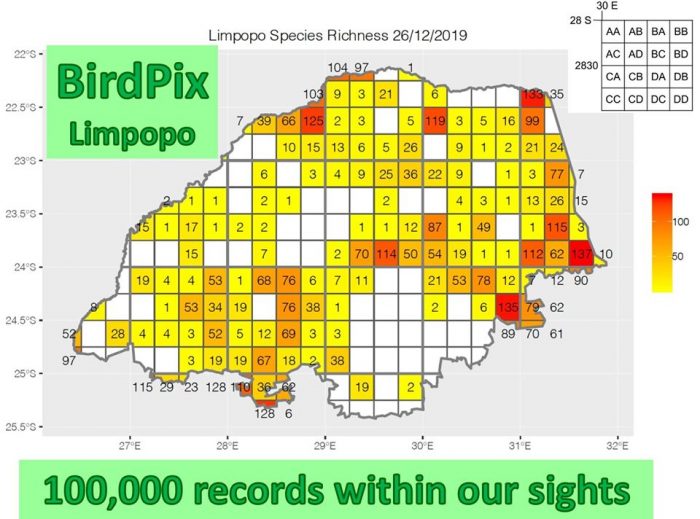
This is the BirdPix coverage map for Limpopo. The number in each quarter degree grid cell is the species richness for that grid cell. Please help boost these numbers. Every grid cell here must be home to at least 100 species. Many grid cells in Limpopo ought to have more than 200 species. Opportunities abound almost everywhere.
It is not difficult to find the code for a specific quarter degree grid cell. The degree squares are outlined with thicker lines. Go the top-left corner (north-west!) of the degree square to find the digits for the degree square. The first two digits are in the left hand margin of the map the the third and fourth digits are at the bottom. There are then 16 quarter degree grid cells in the degree square, and each one is given two letters according to the pattern in the insert.
The grid cell with the most species in Limpopo has 137 species. It is the bright red grid cell on the eastern edge in the Kruger National Park. This grid cell is in the 2331 degree square. It is in the fourth row and third column, the DC position in the little diagram, so its six-digit code is 2331DC. To get the species list, and to see a map of the grid cell, go to http://vmus.adu.org.za/vm_locus_map.php?vm=birdpix&locus=2331DC. It includes the Letaba Rest Camp. To find the list and the map for for any other grid cell, all you need to do is to change the code for the “locus=” at the end of the URL.
Please upload your photos of birds to the BirdPix section of the Virtual Museum, and help us get way beyond 100,000 records as fast as possible!
Bird Ringing
Following a successful 10 day BDI bird ringing expedition earlier in 2019, another was held at Fynbos Estate in December. It was hot and windy but the days were long, and the birds plentiful!
Cape Sugarbird Promerops cafer
The top species was Cape Weaver, followed by Southern Red Bishop and Southern Masked Weaver. The large numbers caught were due to large numbers of juveniles foraging in flocks. These were usually caught in small flocks of 20-30 birds at a time. Most of the weavers had completed breeding, but for the Southern Masked Weaver two nests were found with chicks large enough to ring.
The adult weavers had started primary moult, and males were moulting into non-breeding plumage. Recent juveniles had not started moult, while some older juveniles were starting their post-juvenile moult.
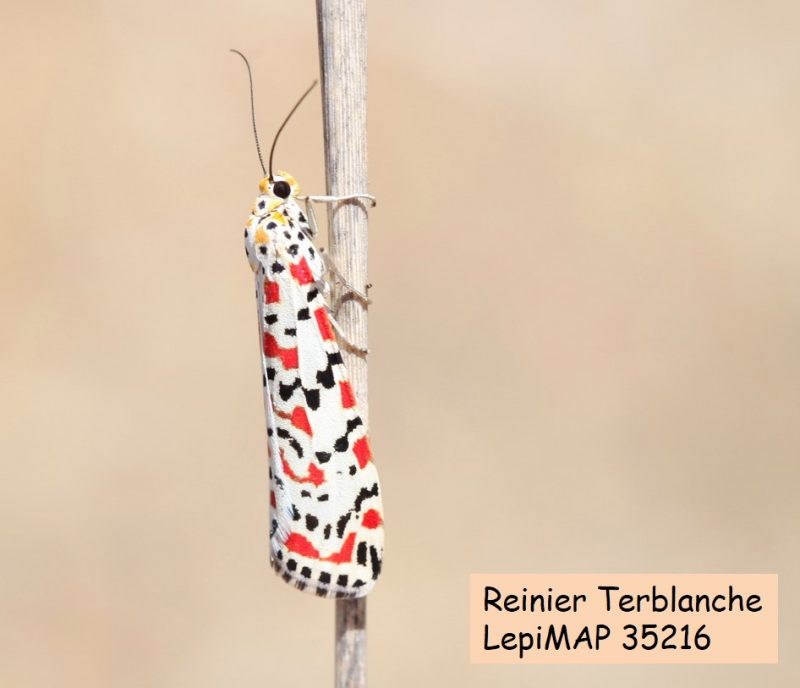
Crimson-speckled Footman Utetheisa pulchella is a day-flying moth. It is therefore said to be diurnal. Here is the link to the LepiMAP record which contains the photograph above of the Crimson-speckled Footman.
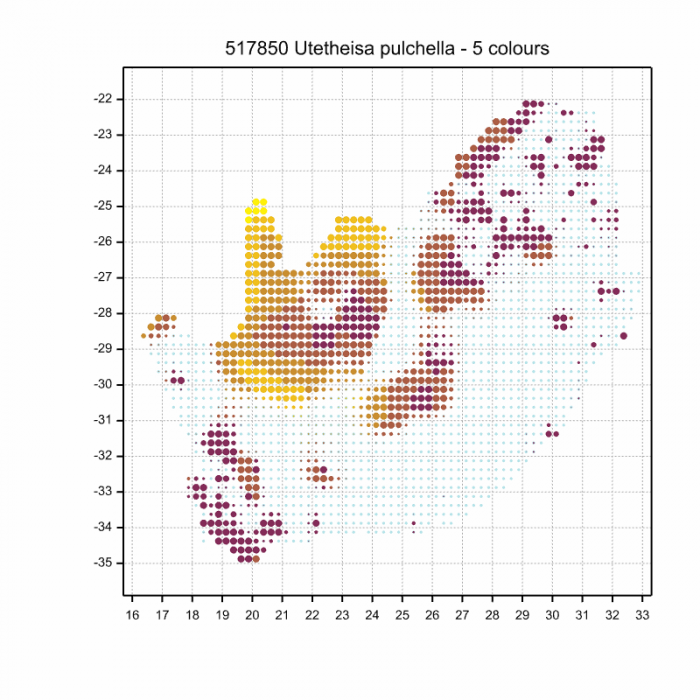
The map below shows the distribution of records for Utetheisa pulchella in the LepiMAP section of the Virtual Museum, as at January 2020.
Plaza de Magallanes, Portal 5, Bajo Izquierda, Santa Cruz de Tenerife, Spain
Patricia Ruiz Teixidor
Calle San Miguel 72, 38001, Santa Cruz de Tenerife, Spain
Carnivory in the common hippopotamus Hippopotamus amphibius (‘hippo’) was observed in Masuma Dam by Dudley (1993) and by de Castro (2015 and 2016). More recently Dudley et al. (2016) has compiled several observed incidents of carnivory in central, east and southern Africa.
Dudley et al. (2016) argue about the importance of carnivory and particularly the observed cannibalism in the transmission of anthrax among hippo populations.
In 2018-19 Zimbabwe had the lowest rainfall in nearly four decades (The Herald, 2019) and Hwange National Park was no exception, receiving much less than its 576mm yearly average,
During a visit in mid September 2019 the park was very dry and several of the pans were drying or already dry. This situation was also severely affecting some of the dams that require pumped water to keep an acceptable water level. Both Nyamandhlovu and Masuma Dams’ water levels were very low despite efforts to pump water day and night.
Large numbers of animals such as elephants, buffalo, greater kudu and impala were coming to drink daily and water levels were seen declining slowly but steadily on a daily basis, more than previously seen.
The hippo population normally observed at Masuma Dam was estimated at about 16 individuals (de Castro 2015b) and only one was seen at the dam part of the time, apparently commuting between Masuma and Mandavu reservoir, a much larger water body situated 15km away.
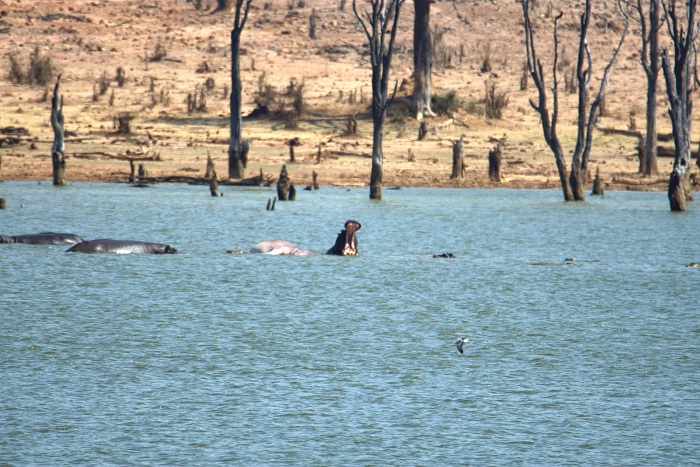
While spending an afternoon at Mandavu we noted a dead hippo floating close to the shore opposite to the picnic site. There were a number of crocodiles and a couple of hippos feeding on it (Figs 1 & 2).
Figure 1. Hippos and crocodiles around the dead hippo carcass. Credit: Julio A. de Castro.
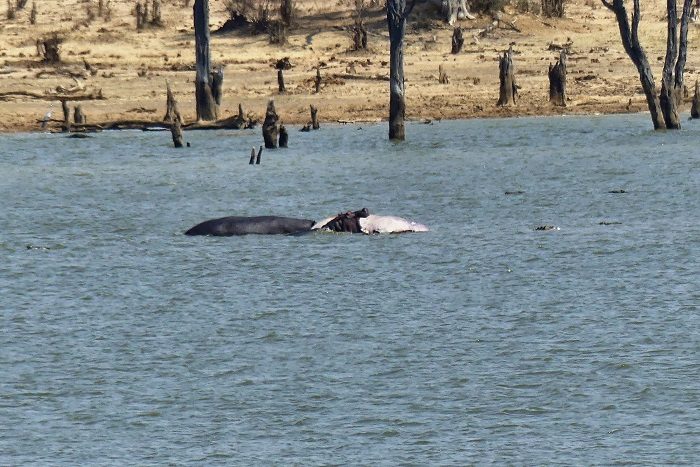
It is believed (Dudley, 2018) that hippos are not able to open up a carcass and that they depend on natural fermentation or on other carnivores to do so in order for them to feed. It is likely that the crocodiles had eaten part of the carcass so the hippos were able to feed on it. The hippos were seen pushing the carcass and submerging. They would later emerge chewing and swallowing.
Figure 2. Hippo feeding on the carcass. Credit: Julio J. de Castro.
After about one hour the wind started blowing the carcass towards the centre of the lake and the hippos did not pursue it, staying at the opposite shore with their pod. Hippo cannibalism has been reported earlier (Dorward, 2015; Dudley et al., 2016) and the present observation adds Mandavu reservoir to other areas in Africa where this phenomenon has been reported.
Dorward LJ 2015. New record of cannibalism in the common hippo, Hippopotamus amphibius (Linnaeus, 1758). African Journal of Ecology 53: 385-387.
Dudley JP 1996. Record of carnivory, scavenging and predation for Hippopotamus amphibius in Hwange National Park, Zimbabwe. Mammalia 60(3): 486-490.
Dudley JP 2018. Personal communication.
Dudley JP, Hang’Ombe BM, Leendertz FH, Dorward LJ, de Castro J, Subalusky AL, and Clauss M. 2016, Carnivory in the common hippopotamus Hippopotamus amphibius: implications for the ecology and epidemiology of anthrax in African landscapes. Mammal Review 46: 191-203.
Elegant/Sandwich tern hybrid – Cape Recife, Port Elizabeth (The French Connection)
Brendan O’Connell
Abstract
Researchers studying global migrants, such as the elegant tern (Thalasseus elegans) and Sandwich tern (Thalasseus sandvicensis), are dependent on feedback. This can be as result of recapture by a fellow ringer or the public reporting on dead birds. This case is an example of how colour-ringing methods have the potential to provide a research team with additional information during the life-span of the bird, whilst providing opportunity for birders globally to contribute as Citizen Scientists. These ‘Sea Swallows’, as they cross continents, provide a vital link for us, and illustrate the need for us to work together by highlighting our global inter-connectivity.
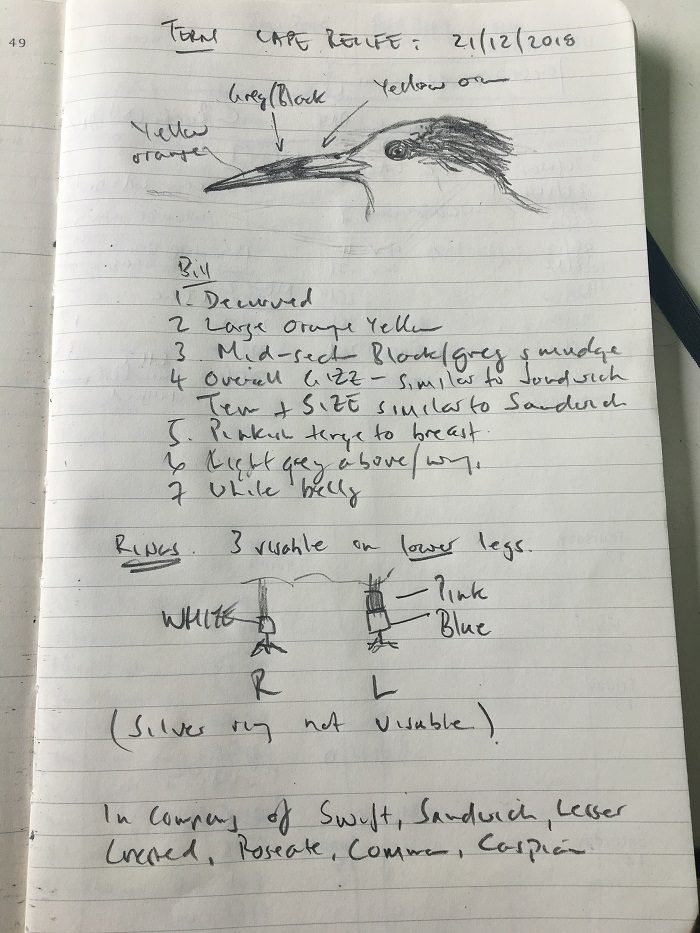
On the 21st December 2018, whilst observing a group of terns at Cape Recife, Port Elizabeth, South Africa, I noticed that one of the Sandwich terns (Thalasseus sandvicensis) had a large down-curved bill, predominantly yellow in colour with a mid-section of both upper and lower mandibles showing a dark blackish/grey smudge.
The “Mystery Tern” had joined a group of terns at low tide in the intertidal zone in front of Cape Recife Lighthouse (34.028979°S, 25.700626°E) comprising of a mix of Sandwich, roseate (Sterna dougalli), swift (greater crested) (Thalasseus bergii) and common (Sterna hirundo) terns and as I watched them, my focus shifted to another tern – with an all yellow bill – as it slowly frog-marched to the front of the group. The bird was almost half the size of its swift tern neighbours and I quickly concluded that this tern could be a lesser crested tern (Thalasseus bengalensis) – uncommon for this part of the Eastern Cape but far less interesting in comparison to its travel companion – the mystery tern.
With my focus firmly back on the mystery bird, I noticed that the bird had a white ring on the lower right leg and two rings on the lower left leg – comprising a red ring on top of a blue ring. I concluded this must be someone’s project – leaving me some hope of finding the real identity of my mystery tern.
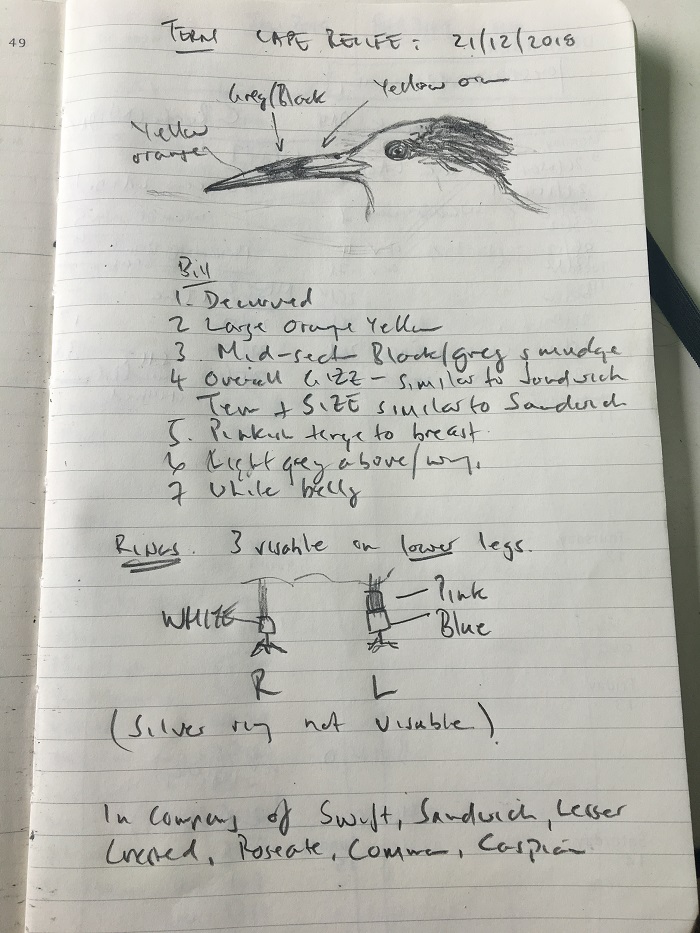
I shot off some cell phone shots, but these were inconclusive owing to the lack of clarity on the zoom mode. Fortunately, despite the lack of good photographic evidence, I made sure I had detailed field notes (Fig 1) – describing key features such as the bill, the GIZZ of the bird, with comparisons with the other species of terns with it, and most importantly, the correct colour-ring configuration. Armed with these I started my quest for identity (the birds, not mine) and turned to SAFRING who indicated that one needs the inscription on the silver ring to be sure of a bird’s ID. To my dismay, I realised that I had not observed a silver ring, which I discovered almost disqualifies the bird, as it points to an amateur ringer.
Figure 1. Field notes – elegant/Sandwich tern hybrid?
And so I turned to the mighty solver of all riddles – namely the internet and started searching – fortunately Ryan (2017) mentions that elegant tern hybrids can have dark markings on their otherwise orange/yellow bill? Following this lead, I started to find pictures of birds thought to be elegant/Sandwich hybrids from America that compared closely with what I had seen. I also remembered hearing of an elegant tern that had been seen recently in the Western Cape and on investigating this, was excited to see a similar methodology of colour ringing used – although with a different colour configuration.
I eventually found a site that lists much of the bird ringing details and research programmes of various European countries – known as EURING. Although there were no details of any elegant terns ringed, there were many Sandwich tern projects. A search through these, revealed a French-based team that used the same ringing methodology. In hope, I sent them (and many others) the details of the bird and the field-notes that I had made.
My summer break was punctuated by daily trips to Cape Recife in search of my mystery bird, which sometimes involved checking hundreds of Sandwich terns – bills and legs – and often a few times in one morning as the tern roost would do their frequent shuffling of the pack! Despite intensive searching on many wind-swept days, the bird did not re-appear!
On getting back to work, good news awaited me, a reply e-mail from France (Fig 2), from Julien Gernigon doing research on elegant/Sandwich tern hybrids off the coast of France – Julien had intimate knowledge of the bird and had ringed it in 2015. He sent a life history and even knew the father of the bird who had also visited the Western Cape, South Africa.
Fig 2. Researcher communication and ring history of elegant/Sandwich tern hybrid
The ringer identified the bird by the ring configuration (and I would assume the bill colour) and added that there was indeed a silver ring but on the upper right leg of the bird, above the knee, a practise that eludes me as been considered a field characteristic, when one takes into consideration the relative size of the bird’s legs and its habits of sitting in wet sand and shallow water and with part of the upper leg covered by leg feathering. But this at least solved the mystery of the “lacking” silver ring.
According to the life history from Julien (Table 1), the bird was ringed off the coast of France on Banc d’Arguin – a permanent island/sand bar, off Tete-de-Buch on 16 June 2015. Later that year on 31 August 2015, the bird was seen in Spain off Palmones, Los-Barrios, and now four years later, on the southern coast of the African Continent in South Africa!
Table 1. Ring history of elegant/Sandwich tern hybrid, ring number M63272.
Date
Age
Latitude
Longitude
Locality
Country
Observer
16/06/2015
Pullus
44.582674
-1.23963
Reserve Naturelle du Banc d’Arguin
France
Julien Gernigon
31/08/2015
Juvenile
36.173114
-5.430284
Palmones
Spain
Alex Colorado
21/12/2018
Adult
-34.028979
25.700626
Cape Recife
South Africa
Brendan O’Connell
The simplicity of the ringing method used led to the positive ID of the tern and also provides the average birder with a way to make a contribution to the field of birding that they enjoy. Nowadays, with better technology and digital cameras there is much potential for good data to be received almost instantaneously by those conducting research and forums such as the Euring color-ringing database provide an essential link between birder and researcher.
Social media appears to be playing an increasing role in research, with users that are essentially demand-driven and expecting instant feedback. This can be achieved, and a good example of this is that during my search for the identity of the tern, I requested and kindly received assistance from fellow members of the Eastern Cape birding Facebook forum and from experts further afield in South Africa. One of the members, following the thread, then posted a picture of a Sandwich tern with a lime colour-ring and with 3 black letters clearly inscribed on it. Within hours the social network had linked him with the ringer in Israel, and they had exchanged pictures and the full details of the bird – with a map highlighting the bird’s probable journey from Israel to South Africa!
My “discovery” of a ringing system that is user friendly has greatly enhanced my bird watching experience and my hope is that more programmes will adopt the same methodology.
On the 19th of January 2019 I was sitting looking at a large group of mixed terns – with probably close to a thousand birds – resting on the Cape Recife wave-cut platform. It was early evening and I found myself doing my now habitual look for rings. Suddenly, I recognised the “tri-color socks” (red white and blue rings!) and sure enough as the bird stopped preening itself – there was that wonderful banana-shaped bill with the distinctive dark smudge in the mid-section – this time no longer a mystery bird. I took the liberty to call out a good South African “howzit Monseur Jules” – eliciting a few nervous stares from the blushing roseate terns nearest to me!
Hockey PAR, Dean WRJ, Ryan PG (eds) 2005. Roberts VII Multimedia, Birds of Southern Africa. Guy Gibbon. John Voelcker Bird Book Fund, Cape Town.
Ryan P 2017 Guide to Seabirds of Southern Africa (Penguin/Random House).
Editor’s note
For further reading on this topic, the researcher, Julien Gernigon (mentioned above), was co-author on a paper touching on this topic (Dufour et al. 2017) and contributed to an article discussing the topic of elegant terns, their extralimital occurrence, and their possible hybridisation with other species (Dufour et al. 2016).
Dufour P, Jones J & Crochet P-A. 2016. Occurrence of multiple Elegant Terns confirmed in Western Europe. Bird Guides. (https://www.birdguides.com/articles/occurrence-of-multiple-elegant-terns-confirmed-in-western-europe/)
Dufour P, Pons J-M, Collinson JM, Gernigon J, Dies JI, Sourrouille P, Crochet P-A. 2017. Multilocus barcoding confirms the occurrence of Elegant Terns in Western Europe. Journal of Ornithology 158: 351. https://doi.org/10.1007/s10336-016-1380-0

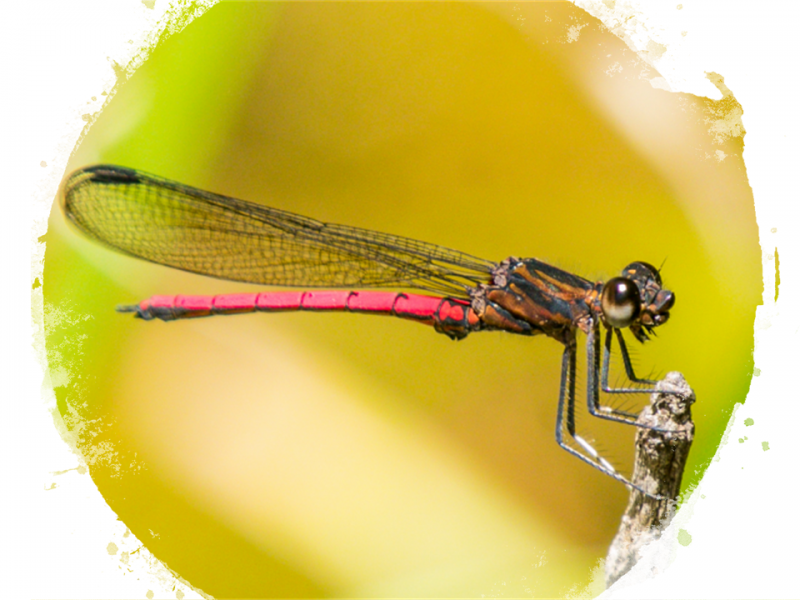
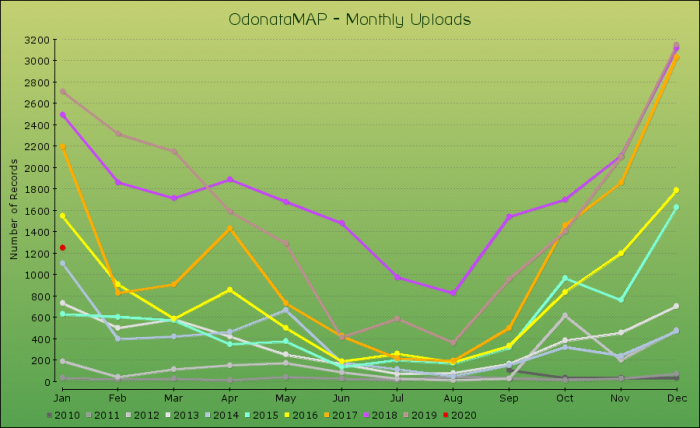
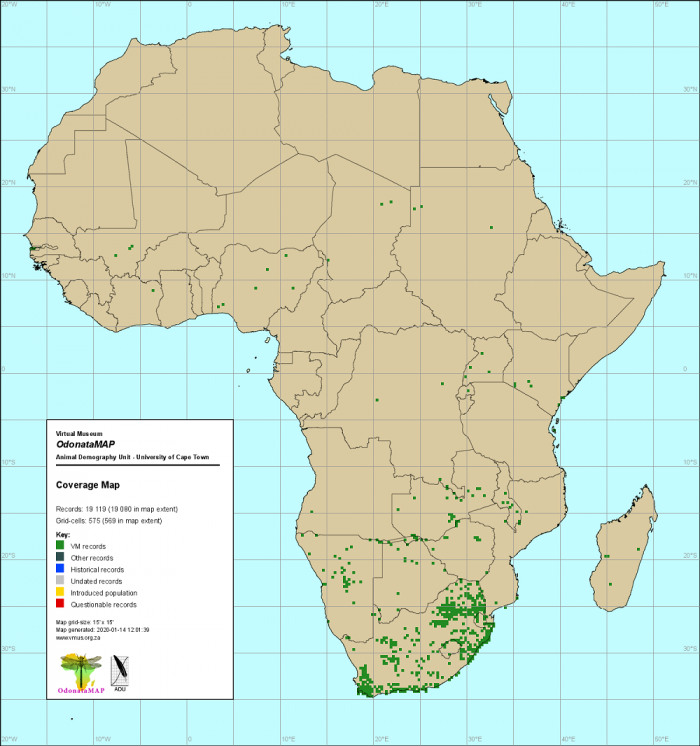
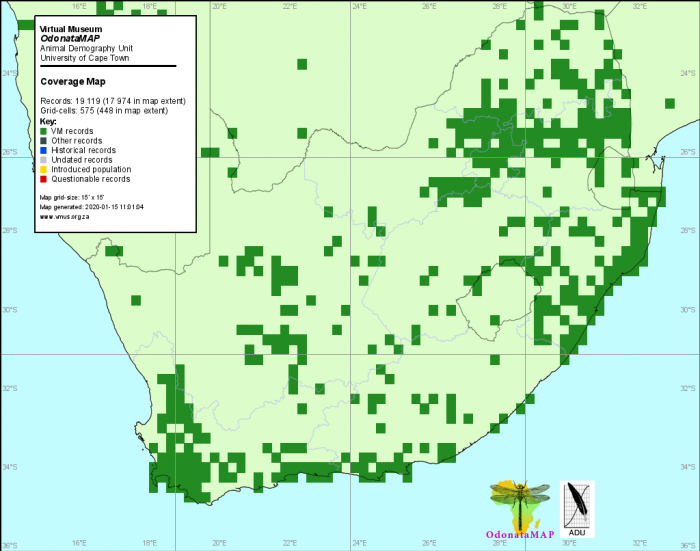
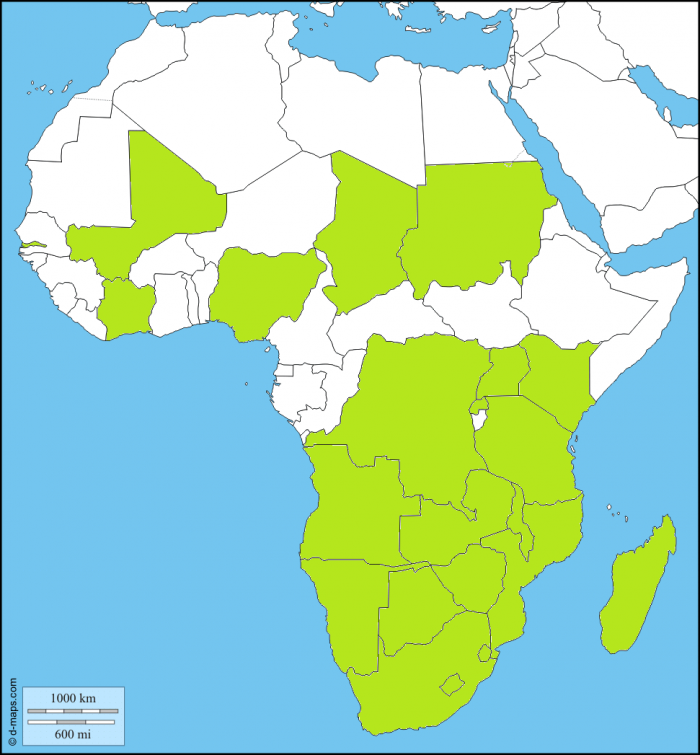
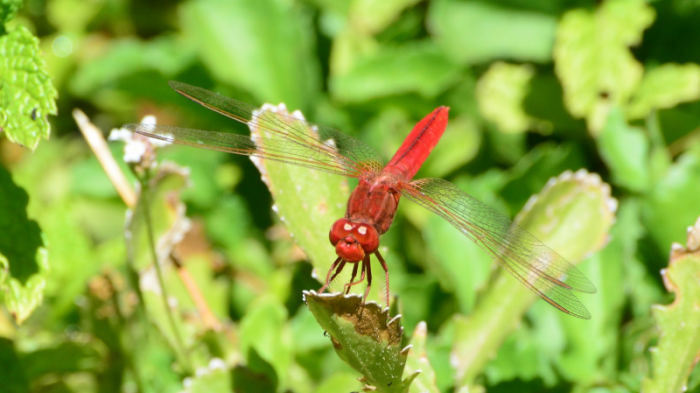


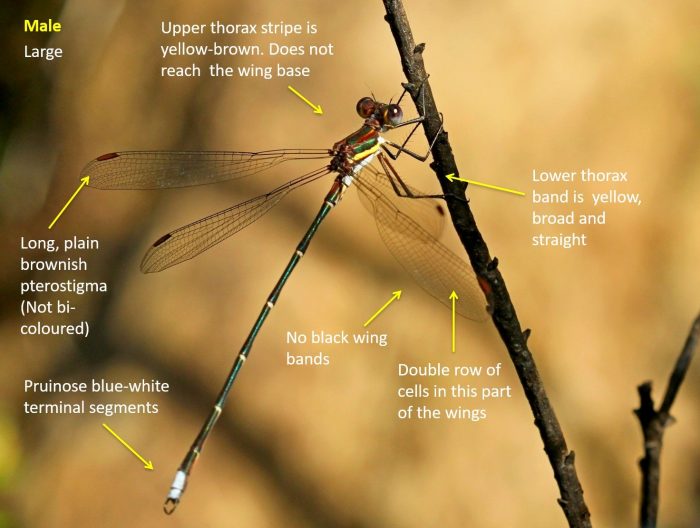
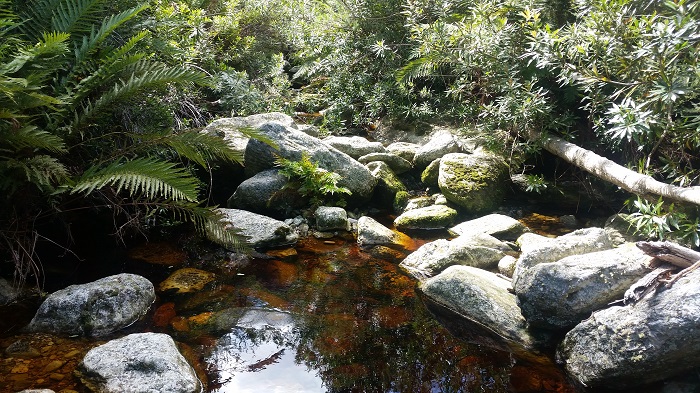
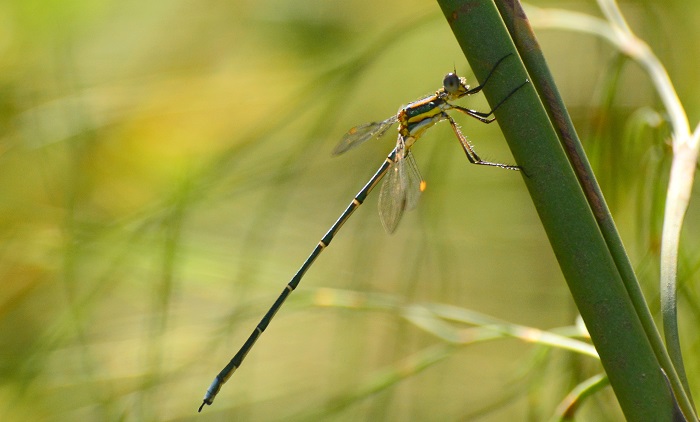
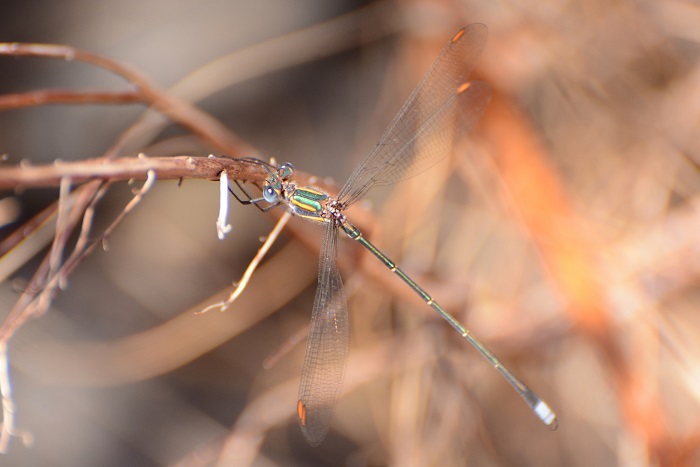
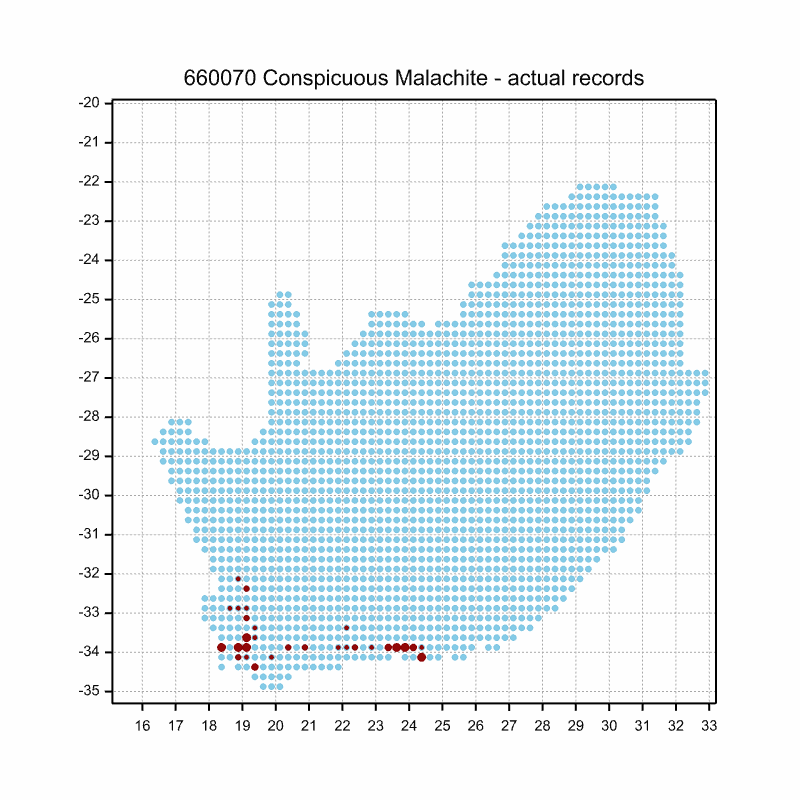
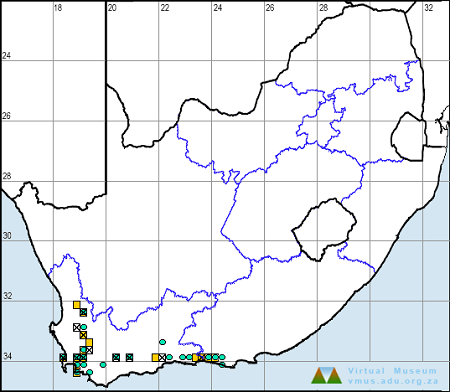


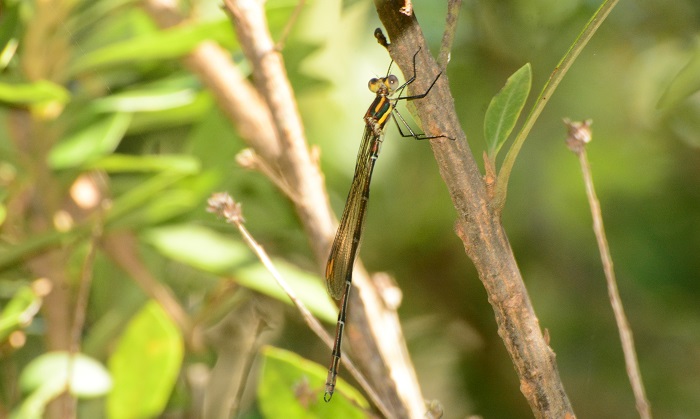


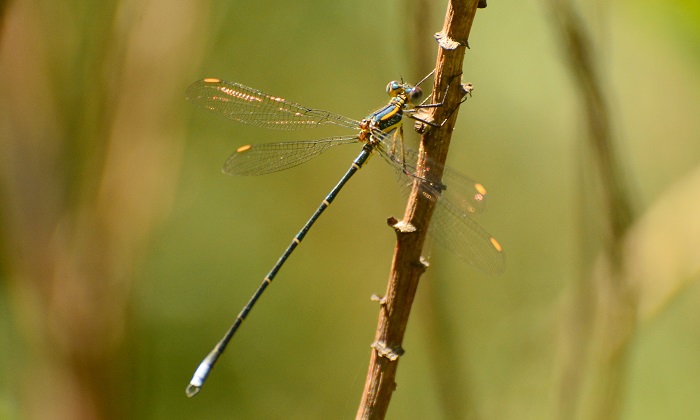
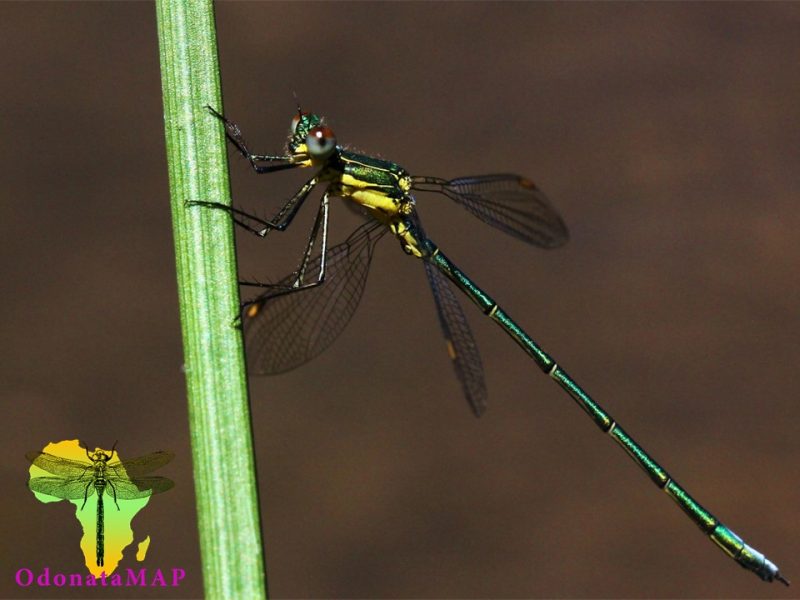
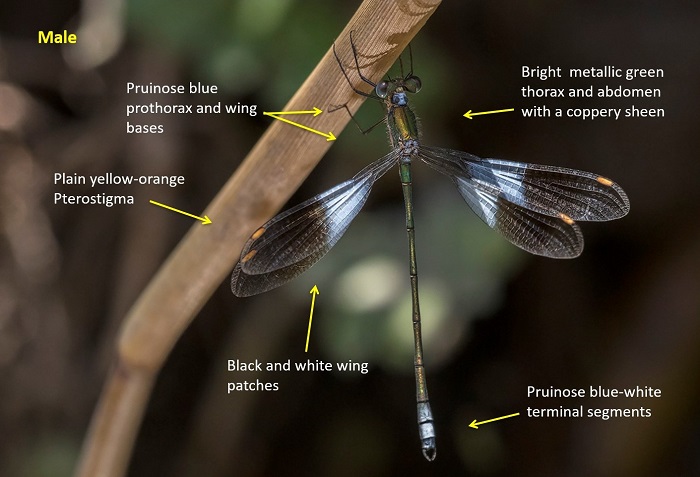
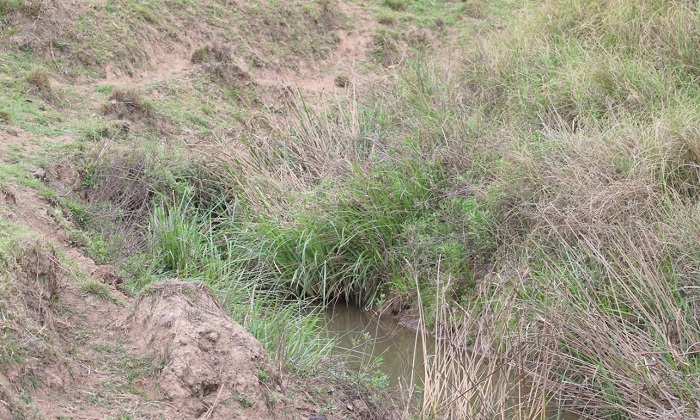
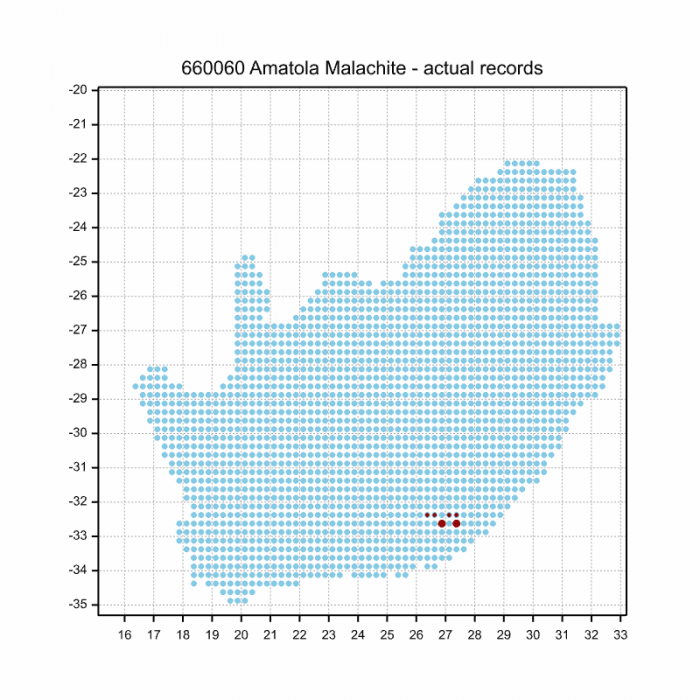
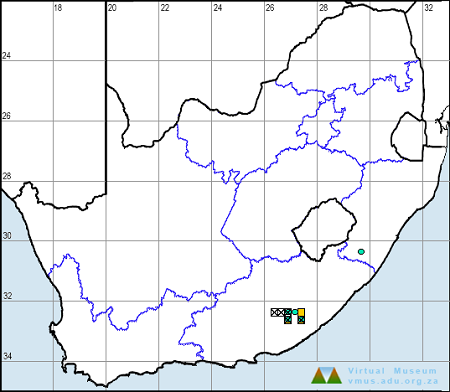

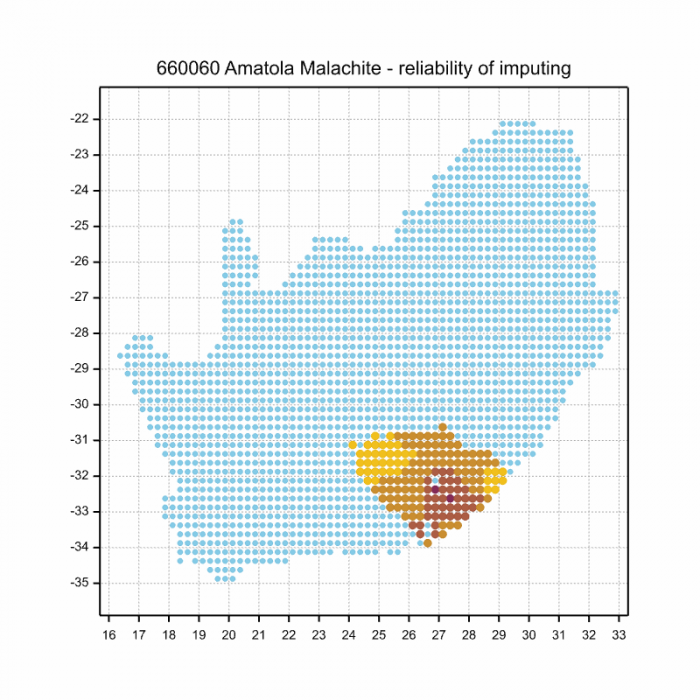


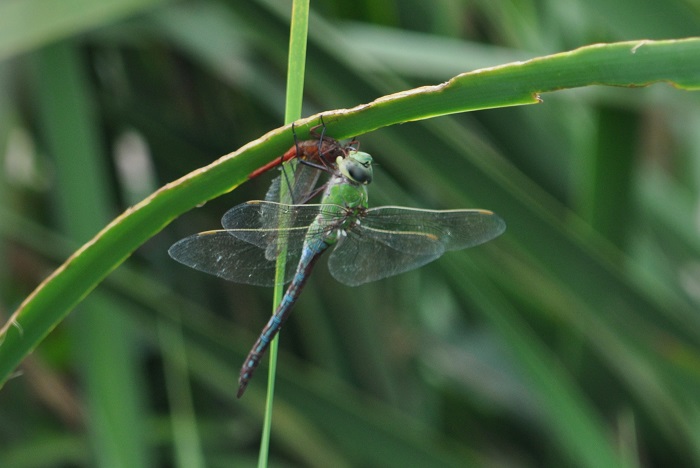
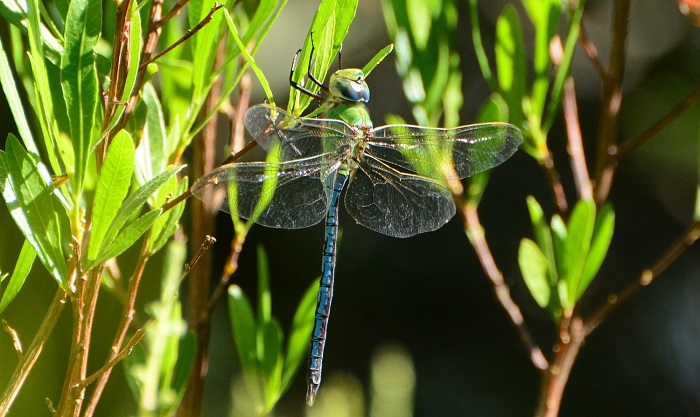
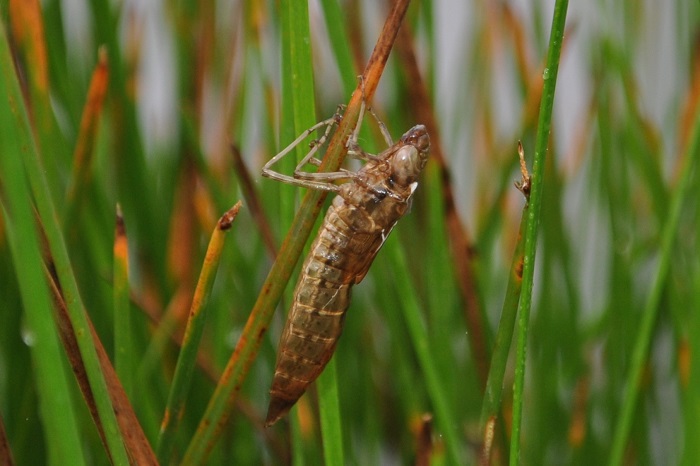

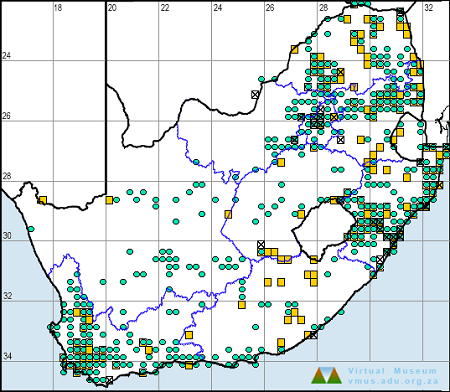


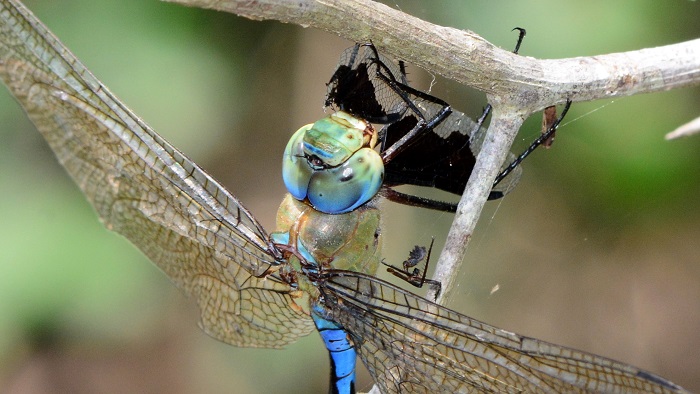
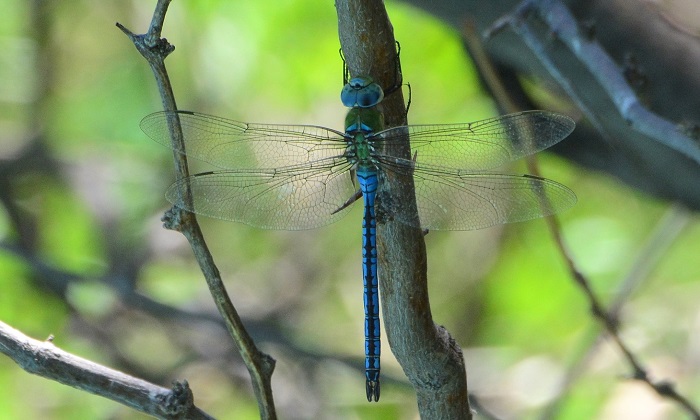

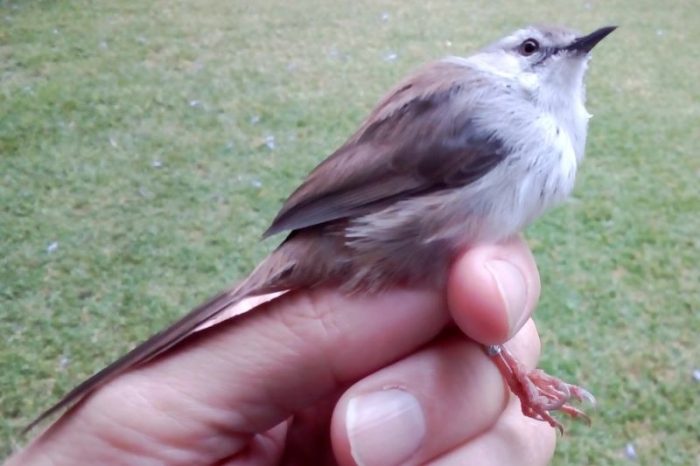
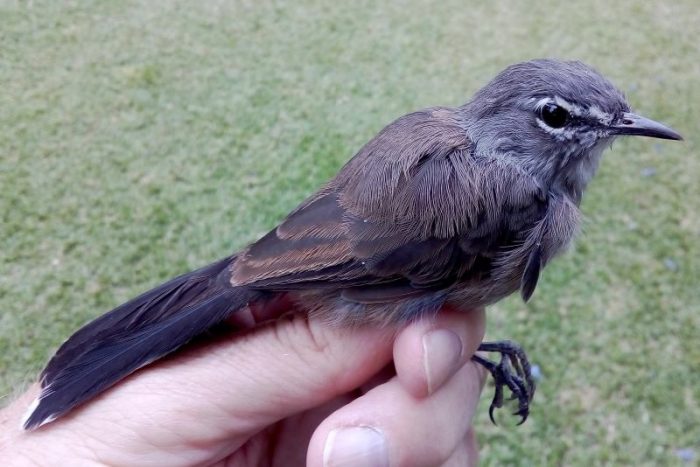

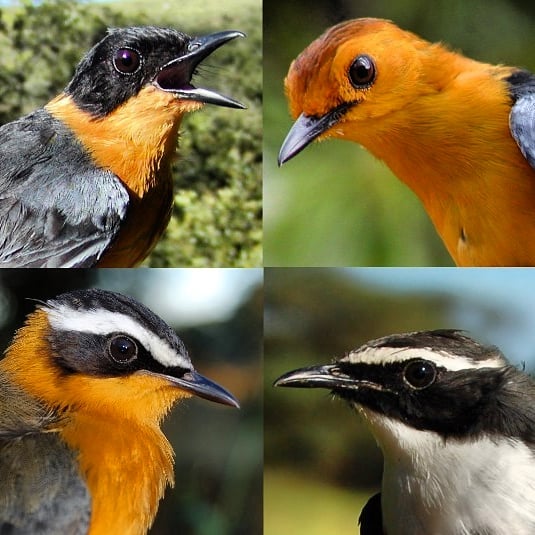
 Come and join the Biodiversity and Development Institute at
 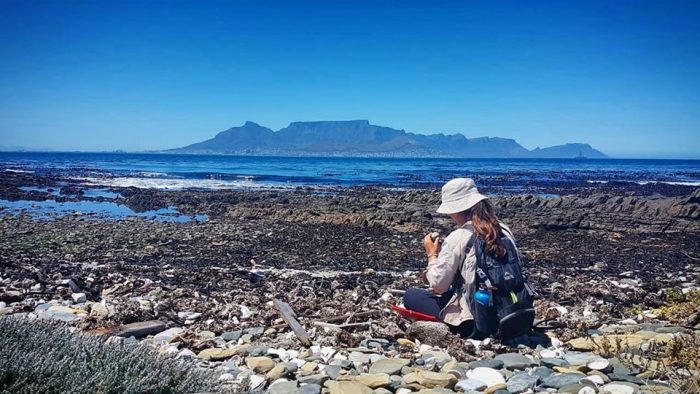 Here is Itxaso measuring an egg. From the measurements we can reconstruct the fresh weight. An egg loses about 17% of its mass during incubation, so from the weight at the time we find the nest, we can estimate how many days it has been incubated for. This enables us to do pretty accurate statistics on the timing of breeding each year. The answers to the questions at the start of the first paragraph are both “Yes”, but the details are still in progress.