
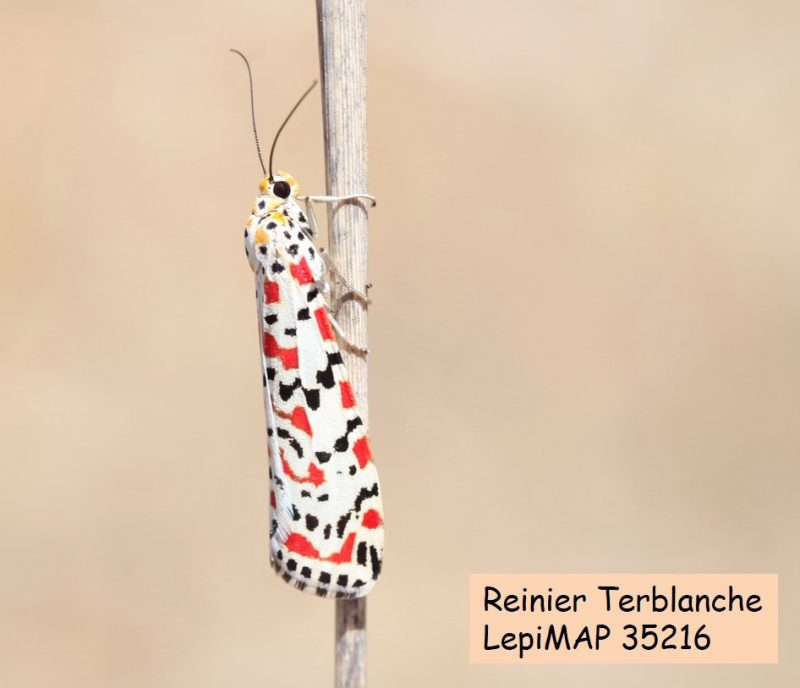
Utetheisa pulchella Crimson-speckled footman
Crimson-speckled Footman Utetheisa pulchella is a day-flying moth. It is therefore said to be diurnal. Here is the link to the LepiMAP record which contains the photograph above of the Crimson-speckled Footman.
The map below shows the distribution of records for Utetheisa pulchella in the LepiMAP section of the Virtual Museum, as at January 2020.

Use this link to embed this map of distribution records in LepiMAP: http://thebdi.org/wp-content/uploads/2020/01/517850-Utetheisa-pulchella-actual-records-700×700.png
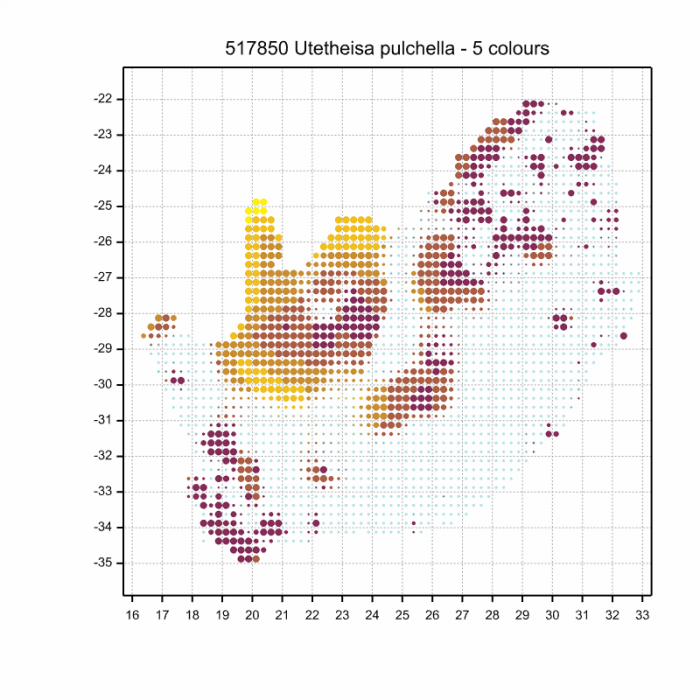
The map below is an imputed map, produced by an interpolation algorithm, which attempts to generate a full distribution map from the partial information in the map above. This map will be improved by the submission of records to the LepiMAP section of the Virtual Museum. Use this link to embed this imputed distribution map: http://thebdi.org/wp-content/uploads/2020/01/517850-Utetheisa-pulchella-5-colours-700×700.png.


Good day
If you have a look at LepiMAP # 615421 recorded 12 Feb 2017, which I think is a Crimson-speckled footman, the record has not as yet been identified by the panel. If it is a footman it may help a wee bit to the distribution map of the species.
Kind regards
Rob
Hi Rob, thank you, will take a look 🙂