Find the Ndumo Rain Frog in the FBIS database (Freshwater Biodiversity Information System) here.
Family Brevicepitidae
Identification
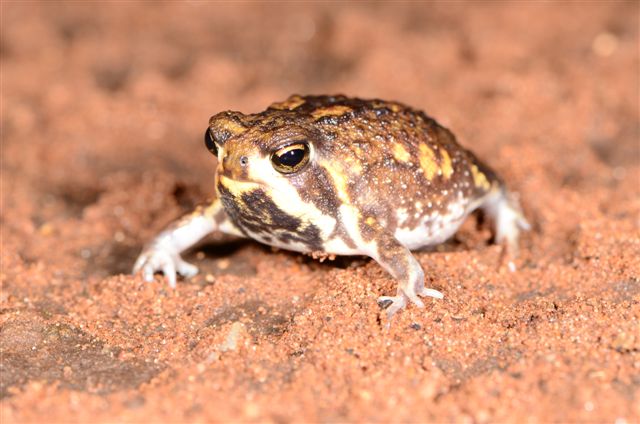
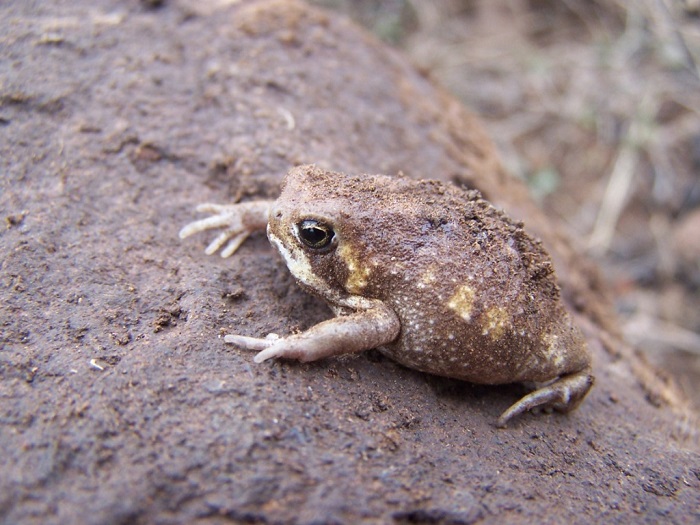
The Ndumo Rain Frog is stout with short legs and a short head. Females attain 59mm in length. Males are smaller and reach 39mm in length. The uppersides are mottled brown with large, pale, and irregular paravertebral blotches. A pale bar between the eyes is usually also present. The undersides are smooth and plain white.
Ndumo Rain FrogBreviceps passmorei Near Magudu, KwaZulu-Natal Photo by Alan Williams
Habitat
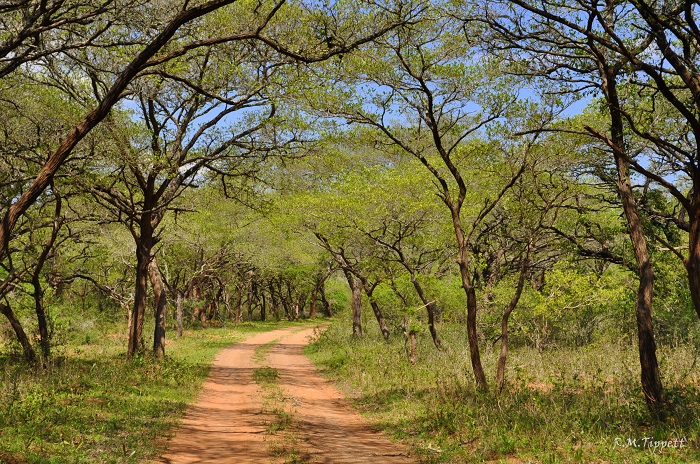
The Ndumo Rain Frog occupies woodlands or wooded grasslands on well-drained sandy-loam soils.
Habitat in Ndumo Game Reserve, KwaZulu-Natal Photo by Ryan Tippett
Behaviour
Not much is known about the Ndumo Rain Frog. Its life history is likely to be similar to other Breviceps species. They spend most of their time underground but are active on the surface after the emergence of termite alates.
Status and Conservation
The Ndumo Rain Frog is not considered threatened. It is known to occur in several conservation areas.
Distribution
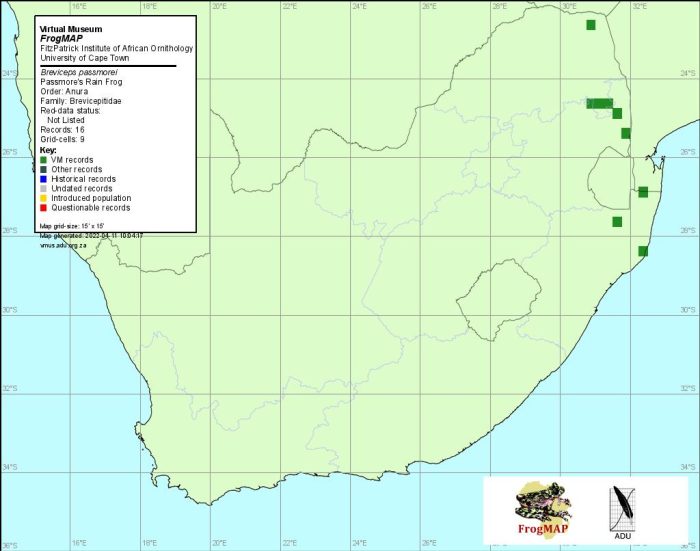
Distribution of Breviceps passmorei. Taken from the FrogMAP database. April 2022.
Further Resources
The use of photographs by Alan Williams and P. Webb is acknowledged. Other photographs by Ryan Tippett.
Ndumo Rain FrogBreviceps passmoreiMinter, Netherlands & Du Preez, 2017
Other Common Names: Ndumo-reënpadda (Afrikaans)
Recommended citation format: Tippett, RM. (2025). Ndumo Rain Frog Breviceps passmorei. Biodiversity and Development Institute, Cape Town. Available online at https://thebdi.org/2022/04/04/ndumo-rain-frog-breviceps-passmorei/
References:
Minter, LR; Burger, M; Harrison, JA; Braack, HH; Bishop, PJ; Kloepfer, D. (Editors). (2004). Atlas and Red Data Book of the Frogs of South Africa, Lesotho and Swaziland. Smithsonian Institution, Washington, and Avian Demography Unit, Cape Town.
Carruthers, V; du Preez, L. (2017). Frogs of southern Africa: A Complete Guide. Struik Nature, Cape Town.
Channing, A. (2001) Amphibians of Central and Southern Africa. Protea Book House, Pretoria
Claus, B; Claus, R. (2002). Common Amphibians and Reptiles of Botswana. Gamsberg Macmillan, Windhoek.
31 March – 04 April 2023: Autumn Atlas Bash – Khoisan Karoo Conservancy
The Virtual Museum
The first question asked when the conservation status of a species is considered is: “Where does the species currently occur?” So up to date distribution maps are a priority. This is the objective of the Virtual Museum.
In March 2022, more records were submitted than in any previous March. The final dot on the RED line is therefore BestMarch, by a margin of 657 records. The 12,236 records for March is the fourth best month ever!
Already in April 1,184 records have been submitted. The target for BestApril is 10,348.
Thanks, Team Virtual Museum, for your ongoing contributions. Don’t hesitate to submit common species for well covered grid cells. All species in all grid cells need to be “refreshed” regularly. This prevents the distribution maps from going out of date.
BDI Bird Ringing Course
The BDI will be hosting a bird ringing course from 31 October to 6 November 2022 at New Holme Guest Farm inside the Khoisan Karoo Conservancy, near Hanover in the Northern Cape.
The course will be led by Dieter Oschadleus. Dieter was Bird Ringing Coordinator at SAFRING for 20 years and has tons of bird ringing knowledge and experience. This course is the perfect opportunity for both trainees and registered ringers. You don’t want to miss out on this awesome chance to ring birds in the Karoo wilderness!
The photo collage was made by Melisa Bel and all these birds were ringed at New Holme! For more information on the course please send an email to Megan Loftie-Eaton at megan@thebdi.org
Garden Birds of Cape Town
We will be launching the Bird Feeder Project soon! Watch this space. In the meantime, here is a species feature for you. The Bronze Mannikin.
View the above photo record (by Steve Woodhall) in FrogMAPhere.
Find the Painted Reed Frog in the FBIS database (Freshwater Biodiversity Information System) here.
Family Hyperoliidae
PAINTED REED FROG – Hyperolius marmoratus
Rapp, 1842
Habitat
H. marmoratus inhabits a variety of vegetation types within the Savanna, Grassland and Forest biomes, and occurs marginally in the Fynbos Biome. It is a widespread and abundant species along the coast and at low altitudes east of the Great Escarpment in Limpopo Province, Mpumalanga and Swaziland. However, large breeding populations are also recorded at higher elevations, e.g., 1300 m at Ixopo (3030AA) in the KwaZulu-Natal Midlands, and 1400 m at Haenertsburg (2329DD) in Limpopo Province. Jacobsen (1989) recorded this species in montane grassland at 1600 m.
H. marmoratus utilizes a wide variety of breeding sites, ranging from temporary ponds, pans and vleis, to permanent bodies of water such as dams, marshes, reedbeds, sluggish rivers and streams (Pienaar et al. 1976; Poynton and Broadley 1987; Lambiris 1989a; Channing 2001).
Behaviour
The adults aestivate during the dry season, and have been found sheltering some distance from their breeding sites in vegetation or under logs and stones. During this time they often take up residence inside houses, where they conceal themselves behind cupboards, pelmets, pictures and in toilet cisterns. The breeding behaviour of this species is arguably the best documented for any African frog, with more than 15 papers and numerous theses relating to the subject published within the last decade.
Although males will call after rain at any time of the year, breeding normally takes place October–February. At low altitudes male calling behaviour is inhibited by temperatures <16°C, while at higher altitudes breeding has been observed at temperatures <10°C (pers. obs.).
Hyperolius marmoratus – Calling male Palmiet Nature Reserve, KawZulu-Natal Photo by Nick Evans
Before dawn, breeding adults usually move into the canopy of surrounding trees or bask in the sun on emergent vegetation at the edge of the breeding site (pers. obs.). At dusk they descend to the water body where males take up specific call sites (to which they return on consecutive nights) and call consistently from dusk to just after midnight. Males occasionally call from their resting places in tree canopies in the late afternoon. Where present, tall emergent plants such as reeds and sedges (e.g., Eleocharis limosa, Cyperus papyrus and Typha capensis) are favoured as call sites, but males will also call from trees, grasses, bushes, floating vegetation or even bare soil at the water’s edge (L.R. Minter pers. comm.; pers. obs.).
On average, males call for only a few nights in a row, returning to the breeding chorus after a period of about 10 days (Dyson et al. 1992). Gravid females enter the pond shortly after dusk and usually select a mate within a few hours. After several hours in axillary amplexus, the eggs are laid in water. Females have been observed to lay more than one clutch of eggs per season with a month-long interval between layings (pers. obs.). From 150 to 650 eggs are laid in flattened clumps of c.20, on the surface of submerged leaves, stalks or stones, or amongst the roots of aquatic plants (Pienaar et al. 1976; Channing 2001). Tadpoles hatch within five days and metamorphosis takes 6–8 weeks (Pienaar et al. 1967). Males reach sexual maturity at approximately one year (A. Turner pers. comm.)
Predators include various birds, snakes, young crocodiles, terrapins, spiders and other frogs, while prey consists mainly of insects (Channing 2001; pers. obs.).
Status and Conservation
The major threat to this species is habitat loss through drainage of wetlands and afforestation. In several areas in KwaZulu-Natal, the establishment of exotic Eucalyptus plantations has lowered the water table to such a degree that many pans within the coastal dune forest have completely disappeared (pers. obs.).
H. marmoratus is widespread and locally abundant, and populations often consist of hundreds or even thousands of individuals. Atlas data indicate that the range of the species may be expanding. The species occurs in several national parks and numerous provincial nature reserves and therefore does not require additional conservation attention.
This species forms part of a large complex of geographical variants (subspecies), distributed across most of sub-Saharan Africa, which are distinguished from one another by differences in dorsal colour patterns. However, adjacent populations with different colour patterns often intergrade to a greater or lesser extent, while within populations themselves, there is variation in the colour and markings of juveniles and adult males. These factors, combined with a scarcity of behavioural and other data, have resulted in a confused and unresolved taxonomy (Poynton 1964, 1985; Schiøtz 1971, 1975, 1999; Pienaar et al. 1976; Poynton and Broadley 1987; Lambiris 1989a; Passmore and Carruthers 1995; Channing 2001). Ongoing investigation of the ecology, advertisement call structure and genetics of populations from different parts of Africa has already revealed the presence of cryptic species, and is gradually unravelling the systematics and stabilising the taxonomy of this complex (Channing 2001).
Schiøtz (1971, 1999) and Pienaar et al. (1976) assigned H. marmoratus to the superspecies H. viridiflavus, but other authors (Poynton 1985; Poynton and Broadley 1987; Lambiris 1989a; Passmore and Carruthers 1995) continue to recognise H. marmoratus as a separate species composed of a number of subspecies, or a species complex including several subspecies (Channing 2001). The latter approach is adopted here, pending a more thorough taxonomic and systematic revision of the complex.
Channing (2001) listed 13 subspecies of H. marmoratus distributed through sub-Saharan Africa, of which three occur in the atlas region. H. m. taeniatus is distributed from Limpopo Province, Mpumalanga and Swaziland, southward to about St Lucia (2832AD), where it intergrades with H. m. marmoratus (Lambiris 1989a). The latter occurs from St Lucia southward to west of Port Edward (3130AA), while H. m. verrucosus is recorded from the south coast of KwaZulu-Natal, southward along the Eastern Cape coast to Tsitsikamma (3323DD) in the Western Cape (Lambiris 1989a; Passmore and Carruthers 1995). There is currently no evidence to suggest that cryptic species are represented within these subspecies of H. marmoratus.
In recent years, several populations of H. marmoratus have been recorded further west of Tsitsikamma, through Swellendam (3420AB), to the Cape Peninsula (3418AB). While these new records may reflect a natural range extension, it is more likely that they have resulted from accidental or deliberate human-assisted translocations. Also, some of the westerly records in Limpopo, Gauteng and Mpumalanga provinces may be the result of translocations. For example, specimens of H. m.taeniatus have been encountered in consignments of bananas arriving in Cape Town from KwaZulu-Natal or Mpumalanga (A. de Villiers pers. comm.) and have been found in Pretoria on nursery plants originating from KwaZulu-Natal. A well-established population in Tokai on the Cape Peninsula (3418AB) is likely to have originated from such translocated animals.
This species has a loud, distinctive call and forms large choruses that are active for an extended period during the breeding season. The atlas data are reasonably complete and reliable.
Distribution ofHyperolius marmoratus. Taken from the FrogMAP database, April 2022.
Further Resources
Virtual Museum (FrogMAP > Search VM > By Scientific or Common Name)
More common names: Marbled Reed Frog (Alternative English Name); Geverfde Rietpadda, Gestreepte Rietpadda (Afrikaans)
Recommended citation format for this species text:
Bishop PJ, Tippett RM. Painted Reed Frog Hyperolius marmoratus. BDI, Cape Town. Available online at http://thebdi.org/2022/04/04/painted-reed-frog-hyperolius-marmoratus/
Recommended citation format:
This species text has been updated and expanded from the text in the 2004 frog atlas. The reference to the text and the book are as follows:
Bishop PJ 2004 Hyperolius marmoratus Painted Reed Frog. In Minter LR et al 2004.
Minter LR, Burger M, Harrison JA, Braack HH, Bishop PJ, Kloepfer D (eds) 2004. Atlas and Red Data Book of the Frogs of South Africa, Lesotho and Swaziland. Smithsonian Institution, Washington, and Avian Demography Unit, Cape Town.
Cover photo of Cape Bulbul by Gregg & Desire Darling.
Identification
The Cape Bulbul is easily identified by its white eye-rings, black bill, and bright yellow feathers under its tail. Overall, its colouration is a dull blackish brown. It has a small crest on its head and black legs and feet. Males and females look alike.
Adult Cape Bulbul: Gregg & Desire Darling, St Francis Bay, Eastern Cape, 17 May 2014.
It occurs in coastal bush, open forest, fynbos and garden habitats. It generally prefers thickly vegetated fynbos, succulent Karoo, and gardens or parks with trees and bushes.
Cape Bulbuls in their natural habitats. Photo left: Melisa Bal, Kirstenbosch Botanical Garden, Western Cape, 04 March 2022. Top right: Corrie du Toit, Franskraal, Western Cape, 16 June 2020.
Distribution
The Cape Bulbul is Endemic to South Africa. It is very common across much of the Western Cape, with its range extending along the coast to the Northern and Eastern Cape Provinces. The blue and green squares in the map below, which displays distribution data as captured by the second Southern African Bird Atlas Project (SABAP2), shows the core of the Cape Bulbul’s range. These are the squares where reporting rates for Cape Bulbul are highest.
SABAP2 distribution map for Cape Bulbul, downloaded on 30 March 2022. Details on how to interpret the map can be found here.
Behaviour
It is a locally common and conspicuous bird. They tend to perch at the top of a bushes making themselves easy to spot. Cape Bulbuls are active and noisy, and usually seen in pairs or small groups while foraging for fruit, nectar, and insects.
Food items of Cape Bulbuls. Top left: Felicity Ellmore, Wilderness, Western Cape, 01 June 2021. Bottom left: Gerald Wingate, Bellville, Western Cape, 22 January 2021. Right: Andre & Bets Kok, George, Western Cape, 09 September 2012.
Cape Bulbul pair (left): Gregg Darling, St Francis Bay, Eastern Cape, 09 July 2016. Adult with young (right): Dave Kennedy, Sedgefield, Western Cape, 16 November 2009.
During the breeding season (September to December) the female builds the nest which consists of a sturdy but messy cup of twigs, grass stems and rootlets. The nest is typically placed on a horizontal branch near the edge of a bush’s or tree’s foliage. Cape Bulbuls lay 2-5 eggs, which are incubated solely by the female for about 11-13 days. Both parents feed the chicks, who remain dependent on their parents for food for a period of about 50 days from hatching.
Species Text from the first Southern African Bird Atlas Project (SABAP1), 1997
Virtual Museum (BirdPix > Search VM > By Scientific or Common Name)
Other common names: Kaapse Tiptol (Afrikaans); Kapbülbül (German); Tuta do Cabo (Portuguese); Bulbul du Cap (French).
List of bird species in this format is available here.
Recommended citation format: Loftie-Eaton M and Daniel KA 2022. Cape Bulbul Pycnonotus capensis. Bird Feeder Project. Biodiversity and Development Institute. Available online at http://thebdi.org/2022/03/30/cape-bulbul-pycnonotus-capensis/
The Spotted Eagle-Owl is a medium-sized, grey-brown owl with conspicuous ear-tufts and beautiful yellow eyes. The facial disk is off white to pale ochre in colour with a black outer edge. The upper body is dusky brown in colour with dark splotches on the breast while the lower parts are off-white with brown barring. Females and males are alike in colour and size.
Main photo: BirdPix 56614 – Zenobia van Dyk, Graafwater, Western Cape, 11 June 2016. Inset photo: BirdPix 18419 – Vaughan Jessnitz, Namoobspruit, Limpopo, 15 April 2015.
The juvenile birds resemble the adults, but their ear tufts are less distinct and they often still have some visible fluffy down feathers.
The call of Spotted Eagle-Owls is a mellow hoot. The males usually give a double hoot, ‘hoo-hooooee’, which the female answers with a softer triple hoot, ‘hoo-hoo-hooee’. Owls call to find partners, to tell their partners where they are and to proclaim their territories.
The Spotted Eagle-Owl can be confused with the Cape Eagle-Owl Bubo capensis. In general, Cape Eagle-Owls are more rufous-brown in colour rather than grey and they have orange eyes rather than yellow, but this is not always so obvious. The surest way to tell the two apart is by looking at the patterning on the breast. The Spotted Eagle-Owl has fine barring and greyish-brown splotches, while the Cape Eagle-Owl has black and chestnut blotching.
Habitat
Spotted Eagle-Owls occur in various habitats including woodlands, savannas and grasslands, shrublands, semi-deserts and rocky hills. They have adapted to living with people and are found in towns and cities, as long as there are gardens and parks where they can hunt at night and roost, undisturbed, during the day. They nest on or in buildings, on window ledges, or in owl boxes provided by people, and use streetlights and telephone poles as perches.
Left: BirdPix 7287 – S Shearer, Greyton, Western Cape, 18 October 2012. Top right: BirdPix 28042 – D du Plessis, Bloemfontein, Free State, 02 July 2016. Bottom right: BirdPix 24035 – Kyle Finn, Pretoria, Gauteng, 28 March 2014.
Distribution
Spotted Eagle-Owls are one of the most common owl species in southern Africa. They are often seen in Kirstenbosch National Botanical Garden in Cape Town. Its range extends across sub-Equatorial Africa to southern Arabia.
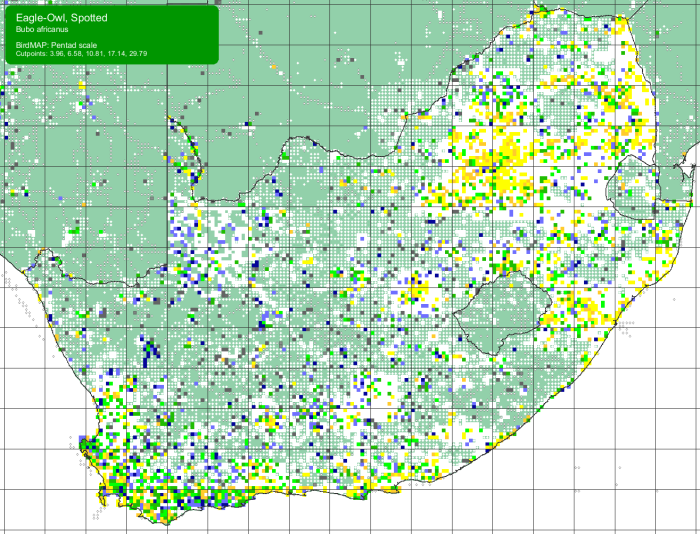
Data from the second Southern African Bird Atlas Project (SABAP2) shows that the Spotted Eagle-Owl occurs right across South Africa. There are lots of gaps in this distribution map because the citizen scientists who do the fieldwork for the atlas project are active by day, whereas the Spotted Eagle-Owls are active at night!
SABAP2 distribution map for Spotted Eagle-Owl, downloaded on 29 March 2022. Details on how to interpret the map can be found here.
Behaviour
The Spotted Eagle Owl is mostly active at night and before sunset. During the day it roosts in trees, or sheltered sites along cliff ledges, under bushes, abandoned buildings, or in burrows of other animals. When roosting in trees, it will usually sit close to the trunk with its feathers compressed, eyes closed, and ear-tufts erect. Breeding pairs will sometimes roost together, engaging in billing and allopreening.
They nest in many different places, most commonly on the ground, among rocks, under shrubs, in trees, tree hollows, cliff ledges, quarries, man-made structures, or eroded banks of a donga or river.
Chicks in the nest: BirdPix 21233 – Gregg Darling, St Francis Bay, Eastern Cape, 17 October 2015. Adult on its nest on the edge of a cliff: BirdPix 59624 – PR Kleinman, Underberg, KwaZulu-Natal, 31 August 2018.
They mate for life and usually lay two to three white eggs at intervals of between one to four days. The female incubates the eggs, while the male provides food. Chicks hatch blind and begin to open their distinct yellow eyes after seven days. The young start leaving the nest and exploring at about four to six weeks. The parents continue to care for the young for a another five or six weeks after they fledge.
Spotted Eagle-Owls have a varied diet. What they eat depends a lot on their habitat and what is available. They hunt at dusk and at night. They prey on insects such as crickets and large beetles, small mammals such as shrews, mice, rats, and squirrels, and birds up to the size of a Laughing Dove. They will also hunt and eat amphibians and reptiles.
Spotted Eagle-Owl resting on the ground: BirdPix 194078 – Sossusvlei, Namibia, 18 June 2012.
Further Resources
Species Text from the first Southern African Bird Atlas Project (SABAP1), 1997
Virtual Museum (BirdPix > Search VM > By Scientific or Common Name)
Other common names: Gevlekte Ooruil (Afrikaans); Isihulu-hulu (Xhosa); isiKhovampondo (Zulu); Grand-duc Africain (French); Afrikaanse Oehoe (Dutch).
A list of bird species in this format is available here.
Recommended citation format: Loftie-Eaton M, Damiel KA 2022. Spotted Eagle-Owl Bubo africanus. Bird Feeder Project. Biodiversity and Development Institute. Available online at https://thebdi.org/2022/03/29/spotted-eagle-owl-bubo-africanus/
Find the Carruthers’ Rain Frog in the FBIS database (Freshwater Biodiversity Information System) here.
Family Brevicepitidae
Identification
Carruthers’ Rain Frog is stout with short legs and a short head. Females attain 59mm in length. Males are smaller and reach 39mm in length. The uppersides are mottled brown with large, pale, and irregular paravertebral blotches. There are also often 3 yellowish patches along the flanks. A pale bar between the eyes is usually also present. The undersides are smooth and plain white with the occasional dark spot.
Carruthers’ Rain FrogBreviceps carruthersi Mkhuze Game Reserve, KwaZulu-Natal Photo by Alan Manson
Habitat
Carruthers’ Rain Frog inhabits sand forest, dense bushveld and open grassy woodlands on well-drained sandy soils.
Behaviour
Adults emerge from their burrows after good summer rains. Males form choruses where they call from concealed positions beneath vegetation. Not much is currently known about this species.
Carruthers’ Rain FrogBreviceps carruthersi Thanda Private Game Reserve, KwaZulu-Natal Photo by Ryan Tippett
Status and Conservation
Data deficient. Carruthers’ Rain Frog is present in a number of conservation areas within its limited distribution.
Carruthers’ Rain Frog Breviceps carruthersi Near Mkuze, KwaZulu-Natal Photo by Bernard Wouda
Distribution
Distribution of Breviceps carruthersi. Taken from the FrogMAP database. April 2022.
Further Resources
The use of photographs by Alan Manson and Bernard Wouda is acknowledged.
Carruthers’ Rain FrogBreviceps carruthersiMinter, Netherlands & Du Preez, 2017
Other Common Names: Phinda Rain Frog (Alt. English); Phinda-reënpadda (Afrikaans)
Recommended citation format: Tippett, RM. (2025). Carruthers’ Rain Frog Breviceps carruthersi. Biodiversity and Development Institute, Cape Town. Available online at https://thebdi.org/2022/03/28/carruthers-rain-frog-breviceps-carruthersi/
References:
Minter, LR; Burger, M; Harrison, JA; Braack, HH; Bishop, PJ; Kloepfer, D. (Editors). (2004). Atlas and Red Data Book of the Frogs of South Africa, Lesotho and Swaziland. Smithsonian Institution, Washington, and Avian Demography Unit, Cape Town.
Carruthers, V; du Preez, L. (2017). Frogs of southern Africa: A Complete Guide. Struik Nature, Cape Town.
Channing, A. (2001) Amphibians of Central and Southern Africa. Protea Book House, Pretoria
Claus, B; Claus, R. (2002). Common Amphibians and Reptiles of Botswana. Gamsberg Macmillan, Windhoek.
Find the Northern Moss Frog in the FBIS database (Freshwater Biodiversity Information System) here.
Family Breviceptidae
NORTHERN MOSS FROG – Arthroleptella subvoce
Turner, De Villiers, Dawood & Channing, 2004
Habitat
The Northern Moss Frog occurs in montane fynbos where it inhabits densely vegetated mountain seeps. Especially in places where restios are abundant.
Behaviour
Not much is known about the life history of A. subvoce. Males are known to call from dense seep vegetation where they are well concealed. Eggs and gravid females have been found during August and September. 6 to 12 eggs are laid in a single mass in well vegetated seeps.
Status and Conservation
Arthroleptella subvoce is considered to be Critically endangered due to its very limited distribution.
Distribution
A. subvoce is restricted to the Groot Winterhoek mountains of the Western Cape.
There is currently no map available.
Further Resources
Virtual Museum (FrogMAP > Search VM > By Scientific or Common Name)
More common names: Noordelike Mospadda (Afrikaans)
Recommended citation format for this species text:
Tippett RM. Northern Moss Frog Arthroleptella subvoce. BDI, Cape Town. Available online at http://thebdi.org/2022/03/28/northern-moss-frog-arthroleptella-subvoce/
Find the Rough Moss Frog in the FBIS database (Freshwater Biodiversity Information System) here.
Family Breviceptidae
ROUGH MOSS FROG – Arthroleptella rugosa
Turner & Channing, 2008
Habitat
The Rough Moss Frog occurs in montane fynbos where it inhabits densely vegetated and permanently moist seeps. Especially in places where restios are abundant.
Behaviour
Not much is known about the life history of this species. Males call in the morning after rain. Call sites are well concealed in the dense seep vegetation. Breeds during mid to late winter.
There is no aquatic tadpole stage. The tadpoles develop in a nest on the damp substrate.
Status and Conservation
Arthroleptella subvoce is Critically endangered due to its extremely limited distribution.
Distribution
Arthroleptella rugosa has a tiny, restricted distribution. It is entirely confined to the slopes of the Swartberg near Caledon, Western Cape.
No maps are currently available for this species.
Further Resources
Virtual Museum (FrogMAP > Search VM > By Scientific or Common Name)
More common names: Skurwe Mospadda (Afrikaans)
Recommended citation format for this species text:
Tippett RM. Rough Moss Frog Arthroleptella rugosa. BDI, Cape Town. Available online at http://thebdi.org/2022/03/28/northern-moss-frog-arthroleptella-subvoce/
View the above photo record (by John Davies) in FrogMAPhere.
Find the Maluti River Frog in the FBIS database (Freshwater Biodiversity Information System) here.
Family Pyxicephalidae
MALUTI RIVER FROG – Amietia vertebralis
(Hewitt, 1927)
Habitat
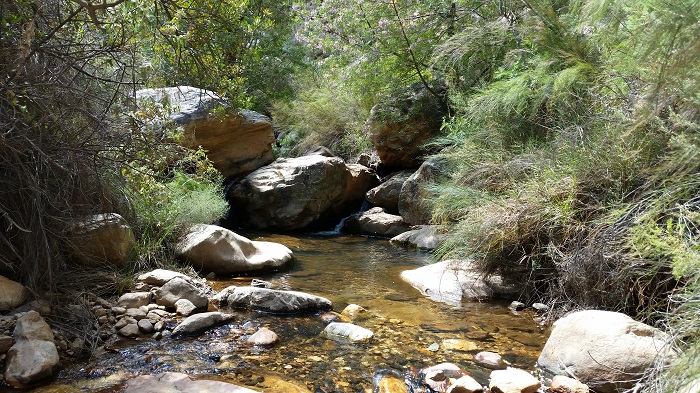
This species inhabits Afro Montane Grassland and Alti Mountain Grassland of the Grassland Biome, usually at altitudes of 1750–3282 m. It has also been recorded at lower elevations of 1646 m in the Mzimkulu River (2929CB) in Drakensberg Gardens (Bush 1952), and 1540 m at Fort Hook (3027DA) in the Witteberg range (Poynton 1964). These frogs occur in cold, clear streams and associated pools with rocky substrates, in mountainous areas, including most major rivers and their tributaries in Lesotho.
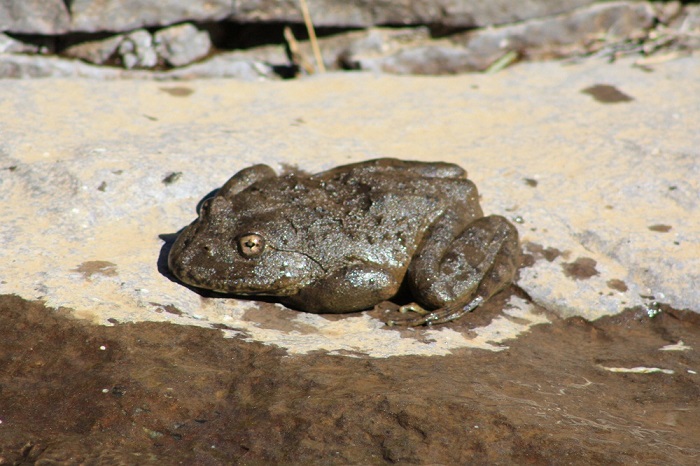
Typical habitat – Bokong Nature Reserve, Lesotho Photo by Michael Cunningham
Behaviour
A. vertebralis is largely aquatic, but may be found on rocks and under stones or amongst vegetation at the water’s edge. Wager (1986) also found adults, up to 75 mm in length, sheltering under stones or water plants in swampy areas on mountain slopes. Adults can apparently remain submerged for a few days at a time (Bush 1952) because they are able to breathe efficiently through their skin, whereas juveniles spend more time foraging at the edge of the water (Lambiris 1988b). Both adults and tadpoles have been observed moving about under ice during winter and are intolerant of high temperatures (Rose 1950; Lambiris 1987, 1989a). Mass mortalities of this species in the Drakensberg (O’Grady 1998) may have been caused by a rise in water temperature in stagnant streams during drought conditions.
Breeding occurs from mid-September to February (Lambiris 1988b). Males usually call while almost completely submerged, with only the head protruding from the water, but occasionally they call from exposed rocks (Channing 1979).
The eggs are attached to submerged vegetation in shallow, gently-flowing streams or associated pools with sandy or stony substrates (Lambiris 1988b, 1989a). Van Dijk (1996) observed eggs in shallow, slow-flowing water in September and late November in central Lesotho. The eggs, c.1.8 mm in diameter, formed a single layer on the substrate and were part of a fairly coherent mass c.30 cm across. Bourquin and Channing (1980) observed egg masses in January, while FitzSimons (1948) collected an egg mass in November that was “attached to vegetable matter in a small backwater, away from the running stream”, and contained larvae “almost ready to emerge”.
Development of tadpoles takes several months or may even exceed a year in the wild (Van Dijk 1996). According to Lambiris (1988b), development in captivity took almost two years.
Tadpoles were found in February in shallow water or along the margins of fast-flowing rivers with rocky substrates (Van Dijk 1996). The tadpole is adapted to life in fast-flowing water in having a wide, flat body, a heavy but narrowly-webbed tail, and a large sucker-like mouth for obtaining a firm grip on smooth rocks. Tadpoles initially prey on infusoria, and later scavenge on detritus (Lambiris 1988b).
Adults prey on invertebrates such as gastropods and crabs, but also consume smaller frogs (Channing 1979). Captive specimens located and devoured small crabs (carapace 30 mm wide) while underwater (Channing 1979), and also ate mice (Rose 1962).
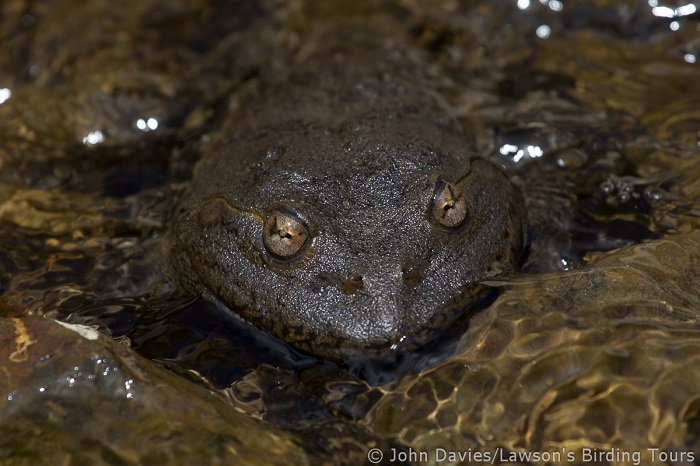
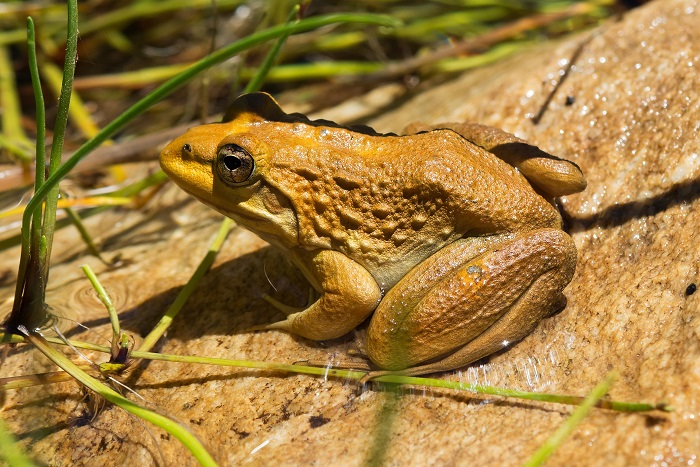
Amietia vertebralis – Lesotho Photo by Cornelia Rautenbach
Status and Conservation
A. vertebralis was previously classified Restricted (Branch 1988). It was subsequently discovered at a number of additional localities, especially in the highlands of Lesotho (Bates 2002), and it appears to be abundant in many parts of its range (e.g. Lambiris 1988b). The species was assessed for this publication and assigned to the category Least Concern because its extent of occurrence and area of occupancy are in excess of the relevant thresholds and, although there are known localized threats to the species, there is no evidence that these are likely to cause a major long-term decline of the species.
The remoteness of this frog’s habitat will undoubtedly protect it from human impacts in most parts of its range. However, A. vertebralis appears to be threatened in areas affected by the Lesotho Highlands Water Project. The filling of the Katse Dam in Lesotho may have isolated some populations (Van Dijk 1996), while filling of the Mohale Dam will result in separation or extinction of populations in the Jorodane, Senqunyane and Bokong rivers (Mouton 1996). If the Mohale Dam causes large-scale migration of people and their livestock to areas further up the river catchment, increased erosion and water pollution will result. This may pose a problem as the species appears to occur only in pristine habitat. These frogs are not known to move overland, thus re-colonization will be prevented by the dam which will act as a barrier to dispersal (Mouton 1996). Littering of stream banks was also identified as a negative factor by Lambiris (1988b), but G. Kopij observed this species in streams polluted by the washing of laundry (Ambrose 1999).
In 1998, the mass mortality of a species assumed to be Amietia vertebralis was reported by hikers at an upland site in the Drakensberg escarpment (O’Grady 1998). The cause of death was undetermined, but at the time the river had been reduced to a series of isolated stagnant pools owing to an exceptionally dry year. The causative organism of chytridiomycosis has been identified in museum specimens of Ametia vertebralis (Speare 2000; Weldon 2002). Although this does not prove that the chytrid fungus was responsible for the deaths reported in 1998, this seems a plausible explanation as chytridiomycosis epidemics often occur during periods of drought, and affect high-altitude species (Berger et al. 1998; Pounds et al. 1999; Berger et al. 2000).
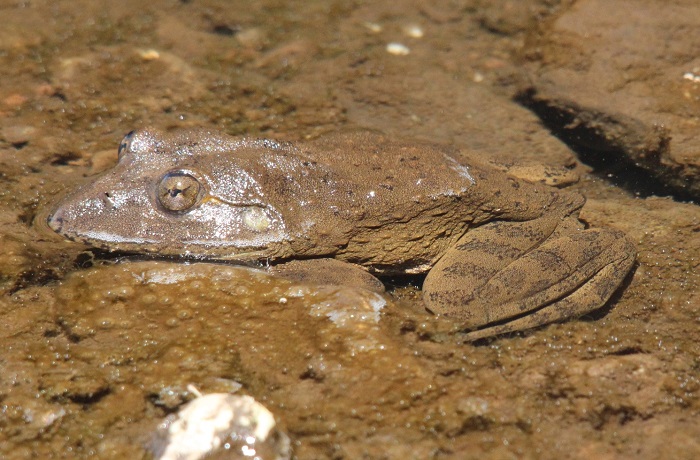
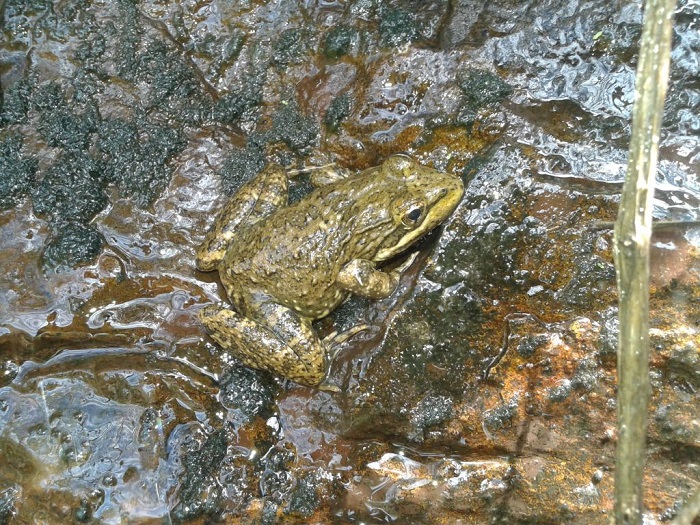
Amietia vertebralis – Photo by Felicity Grundlingh
In an opinion survey of local people in the highlands of central Lesotho, it was found that A. vertebralis is probably not threatened by local use as a source of food or medicine. Less than 1% of respondents reported that frogs (as a group) were eaten, while 12% said that they were used for medicine: for example, the fat is used to treat burns (Mouton 1996).
A. vertebralis is protected in Sehlabathebe National Park in Lesotho, Ukhahlamba Drakensberg Mountain Park (World Heritage Site) and by Cape Provincial nature conservation legislation (Nature Conservation Ordinance No. 19 of 1974).
Distribution
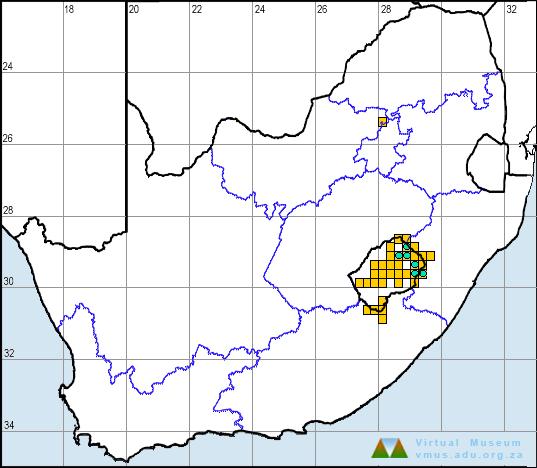
A. vertebralis is found at high altitudes in Lesotho and adjacent mountain ranges in KwaZulu-Natal, Free State and Eastern Cape Province, including the Witteberg range (Bates 2002).
Hewitt’s (1927) original description of Rana (now Amietia) vertebralis was based on juvenile frogs. Bush (1952) later distinguished Rana umbraculata from R.vertebralis based on the former’s larger size, relatively wider head and dissimilar sternal apparatus. However, Poynton (1964) presented evidence indicating that R.umbraculata simply represented the adult form of R.vertebralis. Van Dijk (1966) noted morphological differences in tadpole populations that suggested two taxa were represented. He provisionally assigned the tadpoles to R. vertebralis and R. umbraculata. Lambiris (1991) found differences in laryngeal morphology and tadpole mouthparts and also felt that R. vertebralis comprised more than one species.
At the present time only one species of Amietia is recognized, pending further taxonomic research. All atlas distribution data have therefore been referred to A.vertebralis. Bearing in mind the taxonomic uncertainty outlined above, the atlas data may be considered reliable but incomplete.
Distribution of Amietia vertebralis. Taken from the FrogMAP database as at March 2022.
Further Resources
Virtual Museum (FrogMAP > Search VM > By Scientific or Common Name)
More common names: Aquatic River Frog, Water Rana, Umbraculate Frog, (Alternative English Names); Grootbekrivierpadda (Afrikaans)
Recommended citation format for this species text:
Bates MF, Tippett RM. Maluti River Frog Amietia vertebralis. BDI, Cape Town. Available online at http://thebdi.org/2022/03/28/maluti-river-frog-amietia-vertebralis/
Recommended citation format:
This species text has been updated and expanded from the text in the 2004 frog atlas. The reference to the text and the book are as follows:
Bates MF 2004 Amietia vertebralis Maluti River Frog. In Minter LR et al 2004.
Minter LR, Burger M, Harrison JA, Braack HH, Bishop PJ, Kloepfer D (eds) 2004. Atlas and Red Data Book of the Frogs of South Africa, Lesotho and Swaziland. Smithsonian Institution, Washington, and Avian Demography Unit, Cape Town.
View the above photo record (by Andre Marais) in FrogMAPhere.
Find Van Dijk’s River Frog in the FBIS database (Freshwater Biodiversity Information System) here.
Family Pyxicephalidae
VAN DIJK’S RIVER FROG – Amieta vandijki
(Visser & Channing, 1997)
Identification
This species reaches a body length of 54 mm in males and 56 mm in females. A. vandijki is superficially similar to the sympatric A. fuscigula, and the two species are known to breed in the same pools. This should be borne in mind when identifying specimens from areas in which the species coexist. A. vandijki may be distinguished from A. fuscigula by the presence of a large pale mark in the middle of the back, and a prominent skin fold running from the back of the eye to the arm, obscuring the upper or entire tympanum. In A. vandijki, 2–3 phalanges of the fourth toe are free of webbing, whereas in A. fuscigula only half to one phalanx is free of webbing (Visser and Channing 1997).
The call is biphasic, consisting of a series of 10–15 clicks uttered within 0.8 s, followed by a harsh, pulsed croak about 0.25 s in duration (Channing 2001).
The tadpoles reach about 55 mm in length. They are dark brown or velvety black with deep, dark fins and a paddle-like tail. The tadpoles are easily distinguished from those of A. fuscigula, which have only a small amount of pigment in their tails (Channing 2001).
Habitat
This species inhabits Mountain Fynbos that receives annual rainfall of 300–800 mm, mainly in winter. The frog is associated with rocky streams on steep, well-vegetated slopes and forested gorges (Visser and Channing 1997). Breeding habitat includes pools on the sides of streams, and deeper, slow-flowing water.
Habitat – Seweweekspoort, Western Cape Photo by Ryan Tippett
Behaviour
This species is active throughout the year. Breeding takes place October–December, after good rain. Little is known of the species’ breeding biology. Predators and food items have not been recorded.
Amieta vandijki – Swartberg, Western Cape Photo by Paul Bester
Status and Conservation
Status
A. vandijki is classified Data Deficient (Harrison et al. 2001; this publication). It is known to occur in Grootvadersbos Nature Reserve, Boosmansbos Wilderness Area, Swartberg Nature Reserve and Garcia State Forest (Harrison et al. 2001).
Threats
Present and predicted threats include damming of streams, wildfires and loss of habitat to invasive alien plants (Harrison et al. 2001).
Recommended conservation actions
Fieldwork is needed to collect additional distribution data and details of the life history of A. vandijki. The degree of genetic differentiation between the Swartberg and Langeberg subpopulations needs to be established. Habitat should be managed to ameliorate existing and predicted threats (Harrison et al. 2001).
Amietia vandijki – Seweweekspoort, Western Cape Photo by Ryan Tippett
Distribution
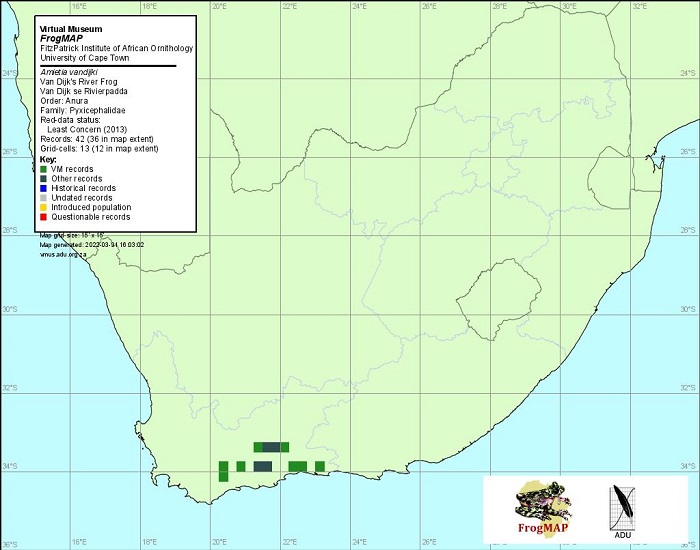
A. vandijki occurs at medium to high altitudes in the Swartberg and Langeberg mountain ranges in the east of the Western Cape Province. Despite the addition of a number of new atlas records, the distribution of this recently described endemic species is not well known. The atlas data are accurate but incomplete.
Distribution of Amieta vandijki. Taken from the FrogMAP database, March 2022.
Further Resources
Virtual Museum (FrogMAP > Search VM > By Scientific or Common Name)
More common names: Van Dijk se rivierpadda (Afrikaans)
Recommended citation format for this species text:
Channing A, Tippett RM. Van Dijk’s River Frog Amietia vandijki. BDI, Cape Town. Available online at http://thebdi.org/2022/03/28/van-dijks-river-frog-amietia-vandijki/
Recommended citation format:
This species text has been updated and expanded from the text in the 2004 frog atlas. The reference to the text and the book are as follows:
Channing A 2004 Amietia vandijki Van Dijk’s River Frog. In Minter LR et al 2004.
Minter LR, Burger M, Harrison JA, Braack HH, Bishop PJ, Kloepfer D (eds) 2004. Atlas and Red Data Book of the Frogs of South Africa, Lesotho and Swaziland. Smithsonian Institution, Washington, and Avian Demography Unit, Cape Town.