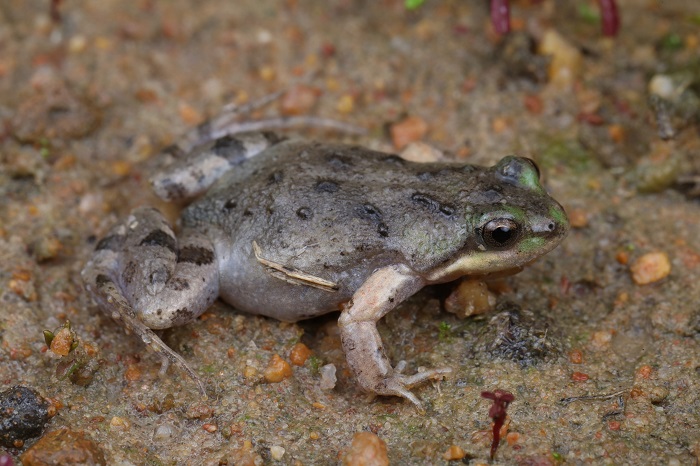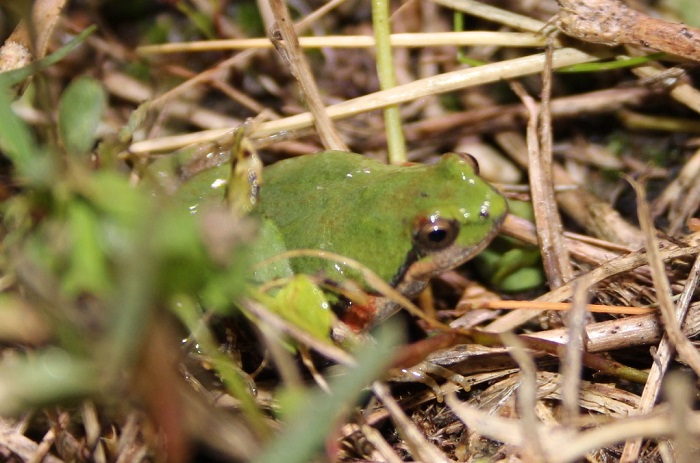
Southern Caco (Cacosternum australis)

Cover photo by Jorrie Jordaan.

Find the Southern Caco in the FBIS database (Freshwater Biodiversity Information System) here.

Family Pyxicephalidae

Identification

The Southern Caco is a small species that attains 18mm in length. It is a graceful frog with a narrow head and a wide body. The upper parts are pale brown with scattered dark markings. A broad paler band is sometimes present, running from the snout down the length of the back. A dark band extends from around the eye to the forearm, and there is a broad white band on the upper lip. The underside is smooth with numerous small black spots and brown markings.

Southern Caco Cacosternum australis
Nuwejaars Wetlands Special Management Area, Western Cape
Photo by E. Brink

Habitat

The Southern Caco frequents temporary rain-filled pools in sandy coastal areas and in rocky places further inland. 

Behaviour

Very little is known about the life history of C. australis. The advertisement call of this species has been likened to the sound of a bouncing marble. The ecology of the Southern Caco is likely similar to other Cacosternum species.

Status and Conservation

Data deficient. The Southern Caco was only described in 2013.

Distribution

The Southern Caco C. australis is endemic to South Africa and is restricted to the southern Cape and Little Karoo.
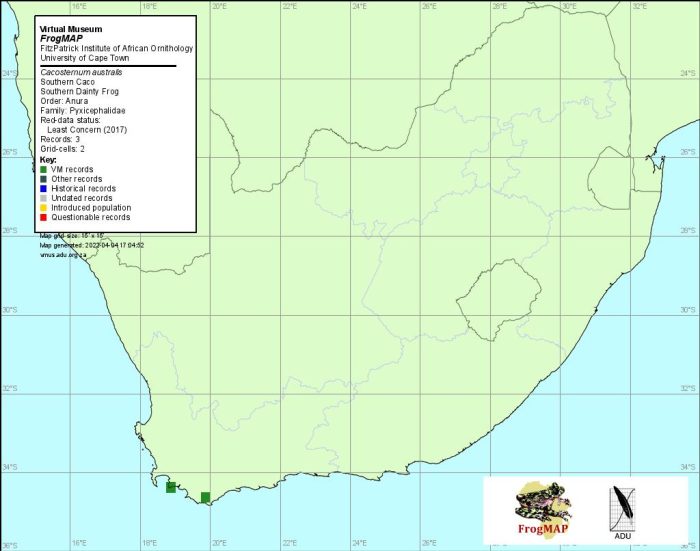
Distribution of Cacosternum australis. Taken from the FrogMap database, April 2022.

Further Resources

The use of photographs by E. Brink and Jorrie Jordaan is acknowledged.

Southern Caco Cacosternum australis  Channing et al., 2013

Other Common Names: Suidelike Blikslanertjie (Afrikaans)

Recommended citation format: Tippett, RM. (2025). Southern Caco Cacosternum australis. Biodiversity and Development Institute, Cape Town. Available online at https://thebdi.org/2022/04/04/southern-caco-cacosternum-australis/

References: 

Minter, LR; Burger, M; Harrison, JA; Braack, HH; Bishop, PJ; Kloepfer, D. (Editors). (2004). Atlas and Red Data Book of  the Frogs of South Africa, Lesotho and Swaziland. Smithsonian Institution, Washington, and Avian Demography
Unit, Cape Town.

Carruthers, V; du Preez, L. (2017). Frogs of southern Africa: A Complete Guide. Struik Nature, Cape Town.

Channing, A. (2001) Amphibians of Central and Southern Africa. Protea Book House, Pretoria

Similar Species

Branch’s Rain Frog (Breviceps branchi)

There are currently no photographs or maps available for this species.

Find Branch’s Rain Frog in the FBIS database (Freshwater Biodiversity Information System) here.

Family Brevicepitidae

Identification

Branch’s Rain Frog measures up to 41mm in length. This species is stout with short legs, large, bulging eyes and a pale coloured iris. The dorsal surface is yellowish-brown with large dark brown markings. It has a series of yellowish paravertebral patches down the back and a yellowish bar between the eyes. There are also numerous small white glandular warts on the skin, which are most prevalent along the sides. The facial mask is dark brown and extends from the eye to the armpit. The undersides are covered in tiny white asperities, and there is a translucent patch of skin in the belly region.

Branch’s Rain Frog is most similar to the Namaqua Rain Frog (Breviceps namaquensis), and both occur in the same general vicinity. Branch’s Rain Frog differs in the facial mask reaching to the armpit (extending only halfway to the armpit in B. namaquensis), and by the many small granules under the fourth finger (lacking in B. namaquensis).

Habitat

Branch’s Rain Frog is found on red sands with sparse vegetation in the Richtersveld Duneveld, Northern Cape.

Behaviour

Virtually nothing is known about this species. It is known from just a single specimen.

Status and Conservation

Data deficient. More information is required for this species.

Distribution

B. branchi is so far only known from the far Northern Cape near the Holgat river.

Further Resources

Branch’s Rain Frog Breviceps branchi Channing, 2012

Other Common Names: Branch se Blaasoppadda (Afrikaans)

Recommended citation format: Tippett, RM. (2025). Branch’s Rain Frog Breviceps branchi. BDI, Cape Town.
Available online at http://thebdi.org/2022/04/04/branchs-rain-frog-breviceps-branchi/

References: 

Carruthers, V; du Preez, L. (2017). Frogs of southern Africa: A Complete Guide. Struik Nature, Cape Town.

Similar Species

Power’s Long Reed Frog (Hyperolius poweri)

View the above photo record (by Jean-Paul Brouard) in FrogMAP here.

Find the Power’s Long Reed Frog in the FBIS database (Freshwater Biodiversity Information System) here.

Family Hyperoliidae

POWER’S LONG REED FROG – Hyperolius poweri

Loveridge, 1938

Habitat

This species inhabits the Savanna and Grassland biomes. In South Africa it occurs at or near sea level in Coastal Bushveld-Grassland. It breeds in shallow coastal pans, vleis and inundated grassland with dense, emergent and/or littoral vegetation – in particular, the sedges Eleocharis limosa and Cyperus papyrus (Poynton 1964; Lambiris 1989a; Passmore and Carruthers 1995; pers. obs.). In Malawi it has been found in dense, emergent vegetation associated with marshes, ponds and streams in open and wooded country, and on the edge of forest, from the lakeshore at an altitude of 475 m, up to 2286 m on the Nyika Plateau (Stewart 1967; A. Turner pers. obs.). In Zimbabwe it has been found breeding in pans and flooded grassland (A. Turner pers. comm.).

Behaviour

Very little is known about the behavioural ecology of this species during the non-breeding season. Breeding takes place in the wet season (Stewart 1967). During the day, adults sit in exposed positions on emergent vegetation, parallel to the stem or leaf blade, but dive into the water when disturbed. In the afternoon, and at night, males call from elevated positions, near the tops of sedges and reeds, and frequently engage in territorial disputes (Wager 1965; Stewart 1967; Razetti and Msuya 2002; A. Turner pers. comm.).

Females deposit 60–292 eggs, in groups of 2–20, on submerged leaves or roots. Tadpoles leave the egg capsule about five days later (Wager 1965).

Predators include various birds, snakes, terrapins, spiders and other frogs, while prey consists mainly of flying insects (pers. obs.).

Hyperolius poweri – Oribi Gorge Nature Reserve, KwaZulu-Natal
Photo by Jean-Paul Brouard

Status and Conservation

A major threat to H. acuticeps is habitat loss through the drainage of wetlands for agricultural and urban development. In several areas in KwaZulu-Natal, Eucalyptus plantations have lowered the water table to such a degree that many coastal pans have completely disappeared; as a result, the species’ range has been considerably diminished during the past c.15 years. With the exception of populations within nature reserves, the species is now encountered only rarely; in the past, it was much more common and widespread.

This species occurs in several established provincial reserves and protected areas and does not appear to require any further conservation action. However, because of recent declines, it is recommended that protected populations be monitored.

Hyperolius poweri – Umlalazi Nature Reserve, KwaZulu-Natal
Photo by Ryan van Huysteen

Distribution

H.poweri occurs in a narrow band down the east coast. It ranges from southern Mozambique and down the length of the KwaZulu-Natal coast, extending marginally into the Eastern Cape.

Distribution of Hyperolius poweri. Taken from the FrogMAP database, April 2022.

Further Resources

Virtual Museum (FrogMAP > Search VM > By Scientific or Common Name)

More common names: Sharp-nosed Reed Frog, Long Reed Freog (Alternative English Names); Power se Skerpneusrietpadda (Afrikaans)

Recommended citation format for this species text:

Bishop PJ, Tippett RM.  Power’s Long Reed Frog Hyperolius poweri. BDI, Cape Town.
Available online at http://thebdi.org/2022/04/04/powers-long-reed-frog-hyperolius-poweri/

Recommended citation format: 

This species text has been updated and expanded from the text in the
2004 frog atlas. The reference to the text and the book are as follows:

Bishop PJ 2004 Hyperolius acuticeps Sharp-nosed Reed Frog. In Minter LR
et al 2004.

Minter LR, Burger M, Harrison JA, Braack HH, Bishop PJ, Kloepfer D (eds)
2004. Atlas and Red Data Book of  the Frogs of South Africa, Lesotho and
Swaziland. Smithsonian Institution, Washington, and Avian Demography
Unit, Cape Town.

Hyperolius poweri – Trafalgar, KwaZulu-Natal
Photo by Joan Young

Cederberg Ghost Frog (Heleophryne depressa)

There are currently no photographs or maps available for this species.

Find the Cederberg Ghost Frog in the FBIS database (Freshwater Biodiversity Information System) here.

Family Heleophrynidae

Identification

The upper parts of the Cedarberg Ghost Frog are light to dark olive with large, irregular maroon coloured blotches. There may be scattered whitish spots on the limbs and back. The back is granular and covered in flattened warts, each with a conical asperity. The eyes have a dark cross-like marking caused by the horizontal pupil.

The undersides are creamy white to yellowish and granular.

The sexes are similar but females are larger. During the breeding season males develop swollen forearms and spines on the chest and inner fingers.

Habitat

The Cedarberg Ghost Frog inhabits clear mountain streams in the Fynbos biome.

Behaviour

The Cedarberg Ghost Frog is often found motionless and well camouflaged among river-bed stones.

Status and Conservation

The Cedarberg Ghost Frog is not threatened. Most of its range falls within protected areas.

Distribution

The Cedarberg Ghost Frog is restricted to the Cedarberg Mountain range, to the north and west of the Breede and Berg Rivers.

Further Resources

Cedarberg Ghost Frog Heleophryne depressa FitzSimons, 1946

Other Common Names: Sederberg-spookpadda (Afrikaans).

Recommended citation format: Tippett, RM. (2025). Cedarberg Ghost Frog Heleophryne depressa. Biodiversity and Development Institute, Cape Town. Available online at https://thebdi.org/2022/04/04/cederberg-ghost-frog-heleophryne-depressa/

References: 

Minter, LR; Burger, M; Harrison, JA; Braack, HH; Bishop, PJ; Kloepfer, D. (Editors). (2004). Atlas and Red Data Book of  the Frogs of South Africa, Lesotho and Swaziland. Smithsonian Institution, Washington, and Avian Demography
Unit, Cape Town.

Carruthers, V; du Preez, L. (2017). Frogs of southern Africa: A Complete Guide. Struik Nature, Cape Town.

Channing, A. (2001) Amphibians of Central and Southern Africa. Protea Book House, Pretoria

Claus, B; Claus, R. (2002). Common Amphibians and Reptiles of Botswana. Gamsberg Macmillan, Windhoek.

Similar Species

Moonlight Mountain Toadlet (Capensibufo selenophos)

There is currently no photograph available for this species.

Find the Moonlight Mountain Toadlet in the FBIS database (Freshwater Biodiversity Information System) here.

Family Bufonidae

Identification

The Moonlight Mountain Toadlet is a small Bufonid that attains a maximum size of 23.5mm. It has a toad-like appearance, but unlike true toads, it has soft, smooth skin with blister-like ridges and warts, and the body is somewhat elongated.

The upper parts are greyish-brown with an orange vertebral stripe surrounded by pale brown. A number of dorsal spots are also present, each with incomplete black rings with a thin white margin. The parotid glands are reddish-brown and elongated. There is a pale whitish area that extends from around the eye to the lip and down to the upper arm. The tympanum is not visible. The underside is dark with scattered white spots.

Habitat

The Moonlight Mountain Toadlet inhabits pristine mountain fynbos. It is known only from Akkedis Mountain, the Kleinrivier Mountains, and Kogelberg, Western Cape.

Behaviour

Not much is known of the life history of C. selenophos. The behaviour is likely to be similar to that of other Capensibufo species.

Status and Conservation

Unknown and data deficient. Capensibufo selenophos is likely to be threatened due to its restricted distribution.

Distribution

The Moonlight Mountain Toadlet is endemic to South Africa and is confined to a few mountain ranges in the Western Cape.

No maps are available for this species.

Further Resources

Moonlight Mountain Toadlet Capensibufo selenophos Channing et al., 2017

Other Common Names: Maanskynbergskurwepadda (Afrikaans)

Recommended citation format: Tippett, RM. (2025). Moonlight Mountain Toadlet Capensibufo selenophos. Biodiversity and Development Institute, Cape Town. Available online at https://thebdi.org/2022/04/04/moonlight-mountain-toadlet-capensibufo-selenophos/

References: 

Minter, LR; Burger, M; Harrison, JA; Braack, HH; Bishop, PJ; Kloepfer, D. (Editors). (2004). Atlas and Red Data Book of  the Frogs of South Africa, Lesotho and Swaziland. Smithsonian Institution, Washington, and Avian Demography
Unit, Cape Town.

Carruthers, V; du Preez, L. (2017). Frogs of southern Africa: A Complete Guide. Struik Nature, Cape Town.

Channing, A. (2001) Amphibians of Central and Southern Africa. Protea Book House, Pretoria

Similar Species

Landdroskop Mountain Toadlet (Capensibufo magistratus)

There is currently no photograph available for this species.

Find the Landdroskop Mountain Toadlet in the FBIS database (Freshwater Biodiversity Information System) here.

Family Bufonidae

Identification

The Landdroskop Mountain Toadlet is a small Bufonid that attains a maximum size of 26mm. It has a distinct toad-like appearance, but unlike true toads, it has smooth skin with blister-like ridges and warts, and the body is somewhat elongated.

The dorsal surface is variably marked in grey and light brown with numerous blackish flecks. The vertebral band is broad, and the warts are dark brown with incomplete black edges. The parotid glands are red-brown and conspicuous. The tympanum is absent, and the underside is granular.

Habitat

The Landdroskop Mountain Toadlet inhabits pristine mountain fynbos in the Hawequas, Riviersonderend and Hottentots Holland Mountains.

Behaviour

Very little is known about the life history of C. magistratus. The behaviour is probably similar to that of other Capensibufo species.

Status and Conservation

Unknown and data deficient. Capensibufo magistratus is likely to be threatened due to its restricted distribution.

Distribution

The Landdroskop Mountain Toadlet is endemic to South Africa and is confined to a few mountain ranges in the Western Cape.

No maps are available for this species.

Further Resources

Landdroskop Mountain Toadlet Capensibufo magistratus Channing et al., 2017

Other Common Names: Landdroskop-bergskurwepadda (Afrikaans)

Recommended citation format: Tippett, RM. (2025). Landdroskop Mountain Toadlet Capensibufo magistratus . Biodiversity and Development Institute, Cape Town. Available online at https://thebdi.org/2022/04/04/landdroskop-mountain-toadlet-capensibufo-magistratus/

References: 

Minter, LR; Burger, M; Harrison, JA; Braack, HH; Bishop, PJ; Kloepfer, D. (Editors). (2004). Atlas and Red Data Book of  the Frogs of South Africa, Lesotho and Swaziland. Smithsonian Institution, Washington, and Avian Demography
Unit, Cape Town.

Carruthers, V; du Preez, L. (2017). Frogs of southern Africa: A Complete Guide. Struik Nature, Cape Town.

Channing, A. (2001) Amphibians of Central and Southern Africa. Protea Book House, Pretoria

Similar Species

Deception Peak Mountain Toadlet (Capensibufo deceptus)

There are currently no photographs available for this species.

Find the Deception Peak Mountain Toadlet in the FBIS database (Freshwater Biodiversity Information System) here.

Family Bufonidae

Identification

The Deception Peak Mountain Toadlet is a small Bufonid that attains a maximum size of 38mm. It has a toad-like appearance, but unlike true toads, it has smooth skin with blister-like ridges and warts, and the body is somewhat elongated.

The dorsal surface is dark reddish-brown with a thin white vertebral stripe surrounded by a broad pale-brown band. The parotid glands are dark orange and conspicuous. There is a pale whitish area that extends from around the eye to the lip and down to the upper arm. The tympanum is visible and is smaller than the eye. The underside is pale and plain to lightly speckled.

Habitat

The Deception Peak Mountain Toadlet inhabits pristine mountain fynbos along the Du Toitskloof Mountains.

Behaviour

Very little is known about the life history of the Deception Peak Mountain Toadlet. It’s behaviour is probably similar to that of other Capensibufo species.

Status and Conservation

Unknown and data deficient. Capensibufo deceptus is likely to be threatened due to its restricted distribution.

Distribution

The Deception Peak Mountain Toadlet is endemic to South Africa and is confined to the Du Toitskloof Mountains, Western Cape. It may also occur in the Kogelberg Nature Reserve.

No maps are currently available for this species.

Further Resources

Deception Peak Mountain Toadlet Capensibufo deceptus Channing et al., 2017

Other Common Names: Du Toit se bergskurwepadda (Afrikaans)

Recommended citation format: Tippett, RM. (2025). Deception Peak Mountain Toadlet Capensibufo deceptus. Biodiversity and Development Institute, Cape Town. Available online at https://thebdi.org/2022/04/04/deception-peak-mountain-toadlet-capensibufo-deceptus/

References: 

Minter, LR; Burger, M; Harrison, JA; Braack, HH; Bishop, PJ; Kloepfer, D. (Editors). (2004). Atlas and Red Data Book of  the Frogs of South Africa, Lesotho and Swaziland. Smithsonian Institution, Washington, and Avian Demography
Unit, Cape Town.

Carruthers, V; du Preez, L. (2017). Frogs of southern Africa: A Complete Guide. Struik Nature, Cape Town.

Channing, A. (2001) Amphibians of Central and Southern Africa. Protea Book House, Pretoria

Similar Species

Hogsback Caco (Cacosternum thorini)

Cover photo by Luke Kemp.

Find the Hogsback Caco in the FBIS database (Freshwater Biodiversity Information System) here.

Family Pyxicephalidae

Identification

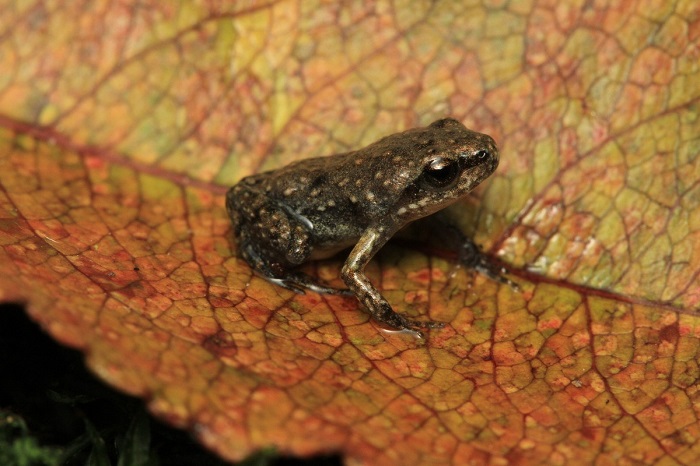
The Hogsback Caco is a small species that reaches a maximum size of 15.6mm. The body is slender and widest in the belly region. The limbs are relatively long and slender. The upperparts are grey to brown or green, often with small, indistinct, pale blotches, and the skin is smooth. A pale vertebral line is sometimes also visible. The undersides are smooth and whiteish with fine mottling.

Hogsback Caco Cacosternum thorini
Hogsback Nature Reserve, Eastern Cape
Photo by Luke Kemp

Habitat

The Hogsback Caco inhabits montane grasslands where it frequents wetlands with well-vegetated pools.

Behaviour

Little is known about the life history of C. thorini. Its habits are expected to be similar to that of others in the genus. The advertisement call of this species consists of chirps and creaks given from concealed positions in damp grass.

Status and Conservation

Data deficient. Very little is known about the Hogsback Caco as it was only described in 2014.

Distribution

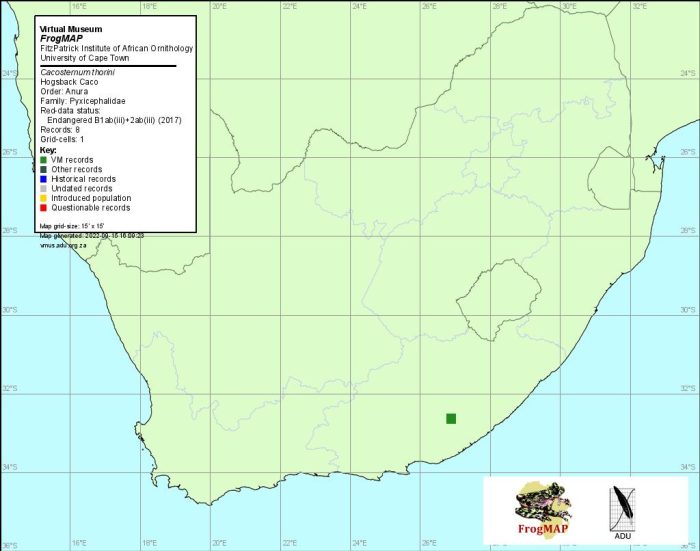
The Hogsback Caco is endemic to South Africa and is restricted to the Hogsback and Amatola Mountains in the Eastern Cape.

Distribution of Cacosternum thorini. Taken from the FrogMap database, April 2022.

Further Resources

The use of photographs by Luke Kemp is acknowledged.

Hogsback Caco Cacosternum thorini  Conradie, 2014

Other Common Names: Hogsback-Blikslanertjie (Afrikaans)

Recommended citation format: Tippett, RM. (2025). Hogsback Caco Cacosternum thorini. Biodiversity and Development Institute, Cape Town. Available online at https://thebdi.org/2022/04/04/hogsback-caco-cacosternum-thorini/

References: 

Minter, LR; Burger, M; Harrison, JA; Braack, HH; Bishop, PJ; Kloepfer, D. (Editors). (2004). Atlas and Red Data Book of  the Frogs of South Africa, Lesotho and Swaziland. Smithsonian Institution, Washington, and Avian Demography
Unit, Cape Town.

Carruthers, V; du Preez, L. (2017). Frogs of southern Africa: A Complete Guide. Struik Nature, Cape Town.

Channing, A. (2001) Amphibians of Central and Southern Africa. Protea Book House, Pretoria
Similar Species

KwaZulu Caco (Cacosternum nanogularum)

There are currently no photographs available for this species.

Find the KwaZulu Caco in the FBIS database (Freshwater Biodiversity Information System) here.

Family Pyxicephalidae

Identification

The KwaZulu Caco is a small frog that attains a maximum size of 28mm. It is, however, more robustly built than other Cacosternum species. The dorsal surface is smooth to finely granular and varies from dark brown to grey. There is often a pale brown vertebral stripe with black edges and a dark, backwards-pointing bar between the eyes. A dark facial mask runs from the snout, through the eye, to the base of the fore arm. A pale skin ridge is found below the facial mask, extending from the corner of the mouth to the base of the forearm.

The undersides are pale with conspicuous, fused black blotches, and the throat area is dark and densely mottled.

The eyes are bulging and visible from below. The tympanum is visible.

The KwaZulu Caco is most likely to be mistaken for the Bronze Caco Cacosternum nanum (see Similar Species below).

Habitat

The KwaZulu Caco frequents marshes, streams, pools and flooded grass in savanna woodlands.

Behaviour

The KwaZulu Caco was described in 2013, so very little is known of its life history. The advertisement call consists of repeated pulsating chirps as well as some slower clicks.

Status and Conservation

Data deficient. The KwaZulu Caco is not considered threatened.

Distribution

The KwaZulu Caco is endemic to South Africa and is restricted to a few scattered localities in central Kwa-Zulu-Natal.

There is currently no map available for this species.

Further Resources

KwaZulu Caco Cacosternum nanogularum Channing et al., 2013

Other Common Names: KwaZulu-Blikslanertjie (Afrikaans)

Recommended citation format: Tippett, RM. (2025). KwaZulu Caco Cacosternum nanogularum. Biodiversity and Development Institute, Cape Town. Available online at https://thebdi.org/2022/04/04/kwazulu-caco-cacosternum-nanogularum/

References: 

Minter, LR; Burger, M; Harrison, JA; Braack, HH; Bishop, PJ; Kloepfer, D. (Editors). (2004). Atlas and Red Data Book of  the Frogs of South Africa, Lesotho and Swaziland. Smithsonian Institution, Washington, and Avian Demography
Unit, Cape Town.

Carruthers, V; du Preez, L. (2017). Frogs of southern Africa: A Complete Guide. Struik Nature, Cape Town.

Channing, A. (2001) Amphibians of Central and Southern Africa. Protea Book House, Pretoria
Similar Species

Klipheuwel Caco (Cacosternum aggestum)

Cover photo by Luke Kemp.

Find the Klipheuwel Caco in the FBIS database (Freshwater Biodiversity Information System) here.

Family Pyxicephalidae

Identification

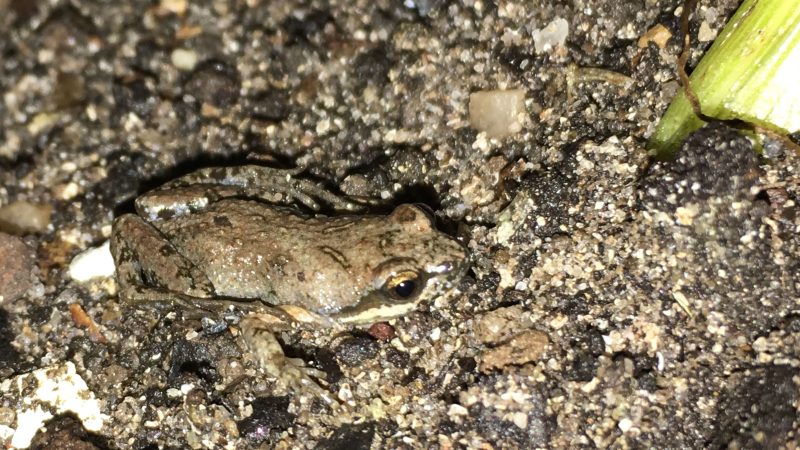
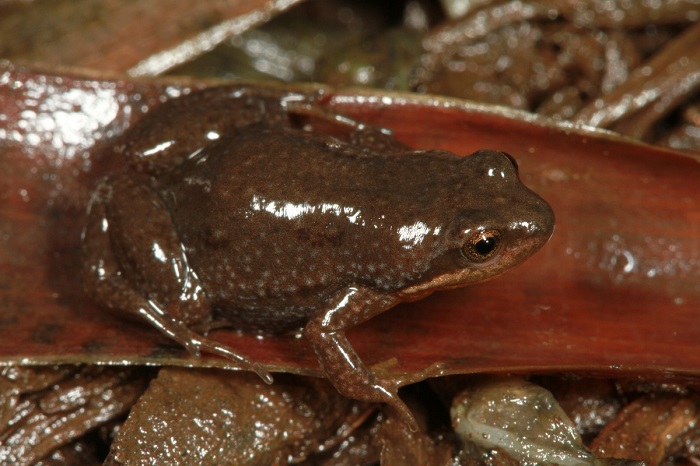
The Klipheuwel Caco is a small species that reaches 20mm in length. It has a narrow head and a somewhat elongate body that is broadest in the middle. the limbs are relatively long and slender. The dorsal colouration varies from greyish-brown to green with irregular darker brown blotches. The undersides are smooth with around 10 pale brown blotches.

Within its restricted distribution, the Klipheuwel Caco is only likely to be mistaken for the Flat Caco Cacosternum platys, but is differentiated by its smooth undersides with pale brown blotches, and by the 5 small tubercles on the palm.

Klipheuwel Caco Cacosternum aggestum
Near Malmesbury, Western Cape
Photo by Cornelia Rautenbach

Habitat

The Klipheuwel Caco is only known from pools in flooded wheat fields.

Behaviour

Very little is known of the life history of C. aggestum. The advertisement call of this species has been likened to the sound of a bouncing marble.

Status and Conservation

Data deficient. Not enough is known about the Klipheuwel Caco.

Distribution

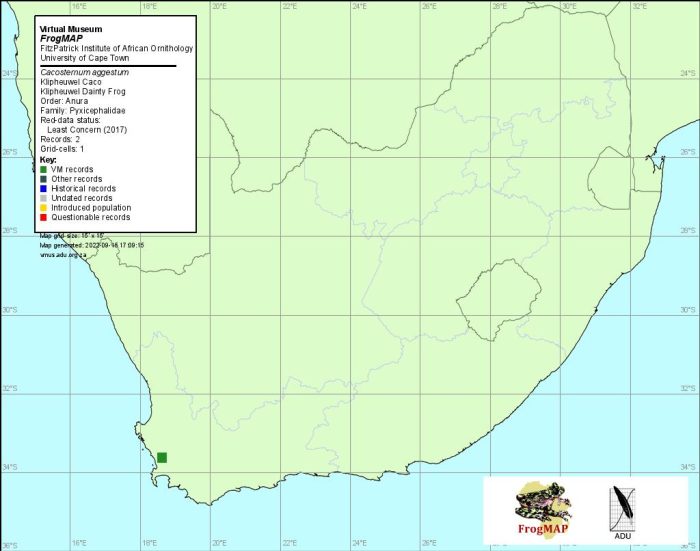
The Klipheuwel Caco is endemic to South Africa and is restricted to the south-western Cape in the vicinity of Vissershok and Klipheuwel.

Distribution of Cacosternum aggestum. Taken from the FrogMap database, April 2022.

Further Resources

The use of photographs by Jean-Paul Brouard is acknowledged. Other images by Ryan Tippett.

Klipheuwel Caco Cacosternum aggestum  Channing et al., 2013

Other Common Names: Klipheuwel-Blikslanertjie (Afrikaans)

Recommended citation format: Tippett, RM. (2025). Klipheuwel Caco Cacosternum aggestum. Biodiversity and Development Institute, Cape Town. Available online at https://thebdi.org/2022/04/04/klipheuwel-caco-cacosternum-aggestum/

References: 

Minter, LR; Burger, M; Harrison, JA; Braack, HH; Bishop, PJ; Kloepfer, D. (Editors). (2004). Atlas and Red Data Book of  the Frogs of South Africa, Lesotho and Swaziland. Smithsonian Institution, Washington, and Avian Demography
Unit, Cape Town.

Carruthers, V; du Preez, L. (2017). Frogs of southern Africa: A Complete Guide. Struik Nature, Cape Town.

Channing, A. (2001) Amphibians of Central and Southern Africa. Protea Book House, Pretoria
Similar Species