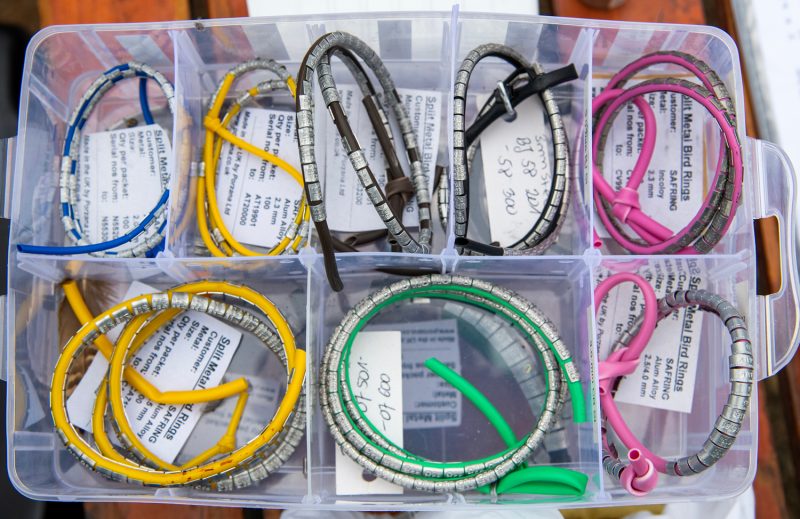
We made only two ringing visits to Ouberg Private Nature Reserve last year: 14 to 17 February 2025, and 21 to 24 October 2025.
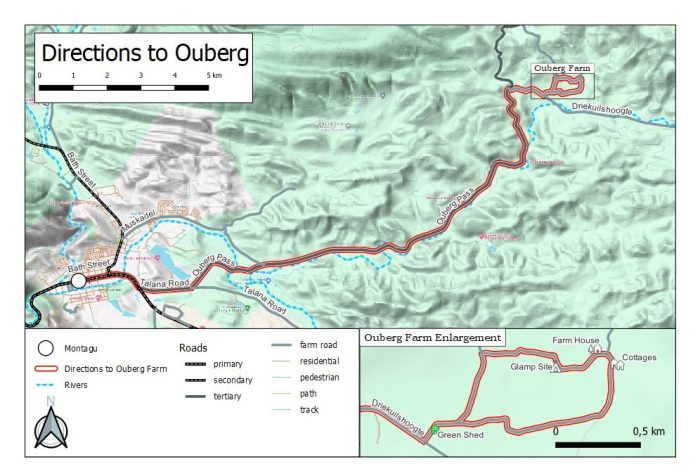
We were delighted to be back at ringing at Ouberg from 30 May and 4 June 2026! This is in the mountains about 20 km northeast of the Little Karoo town of Montagu. There is a map at the bottom of this blog.
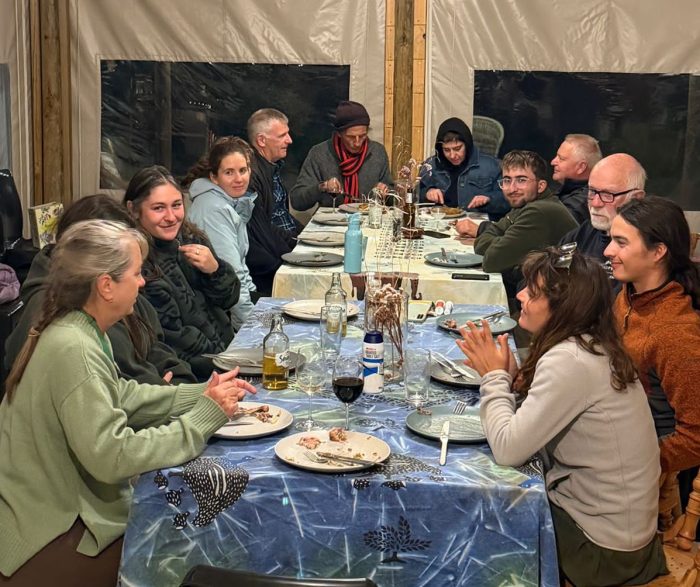
Our first supper together, in the big all-purpose meeting room at the De Kuilen Campsite at Ouberg Private Nature Reserve. This is a great venue!
| Species | Ringed | Retraps | Total |
| Acacia Pied Barbet | 2 | 2 | |
| Bar-throated Apalis | 6 | 4 | 10 |
| Bokmakierie | 1 | 1 | 2 |
| Cape Bulbul | 6 | 6 | |
| Cape Bunting | 2 | 2 | |
| Cape Robin-Chat | 3 | 3 | 6 |
| Cape Sparrow | 13 | 5 | 18 |
| Cape Weaver | 3 | 2 | 5 |
| Cape White-eye | 4 | 4 | |
| Cardinal Woodpecker | 1 | 1 | |
| Chestnut-vented Warbler | 5 | 3 | 8 |
| Common Waxbill | 3 | 1 | 4 |
| Fairy Flycatcher | 1 | 1 | |
| Familiar Chat | 2 | 2 | |
| Fiscal Flycatcher | 1 | 1 | |
| Grey-backed Cisticola | 1 | 1 | |
| Karoo Prinia | 12 | 1 | 13 |
| Karoo Scrub-Robin | 2 | 3 | 5 |
| Long-billed Crombec | 2 | 2 | |
| Malachite Sunbird | 4 | 4 | |
| Olive Thrush | 2 | 2 | |
| Ring-necked Dove | 1 | 1 | |
| Sombre Greenbul | 1 | 1 | |
| Southern Double-collared Sunbird | 4 | 4 | |
| Southern Fiscal | 2 | 1 | 3 |
| Southern Masked-Weaver | 8 | 1 | 9 |
| Southern Tchagra | 1 | 1 | |
| Streaky-headed Seedeater | 4 | 4 | |
| White-backed Mousebird | 11 | 2 | 13 |
| White-throated Canary | 4 | 4 | |
| Grand Total (30 Species) | 106 | 33 | 139 |
The weather was not especially kind, and the total of 139 birds of 30 species handled was pretty good in the conditions. What was impressive was that 24% of the birds handled were retraps; 33 retraps of 139 birds. It is encouraging to know that within a few years we will start to be able to estimate survival rates for some of the more frequently retrapped species.
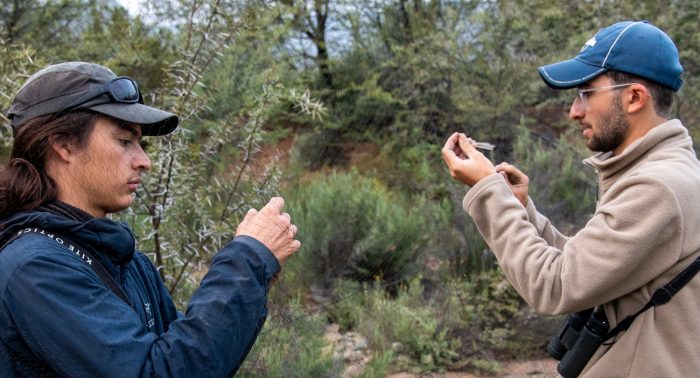
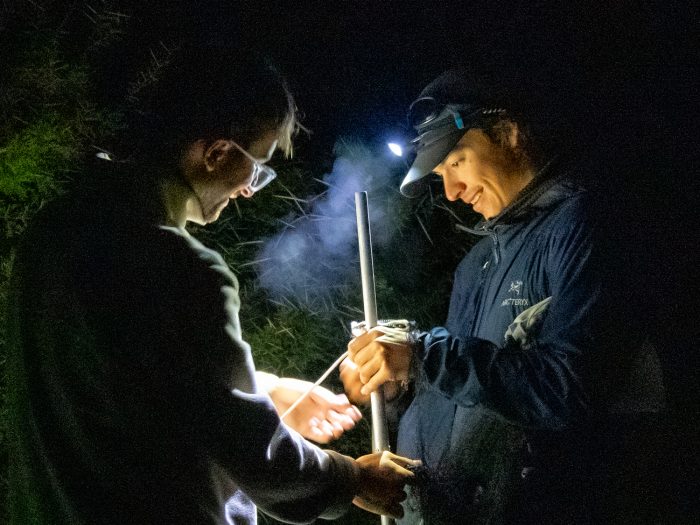
Joël and Achot are each taking a bird out of a mist net. What is not obvious is that they are on opposite sides of the net. This only becomes clear when you zoom in on Joël …
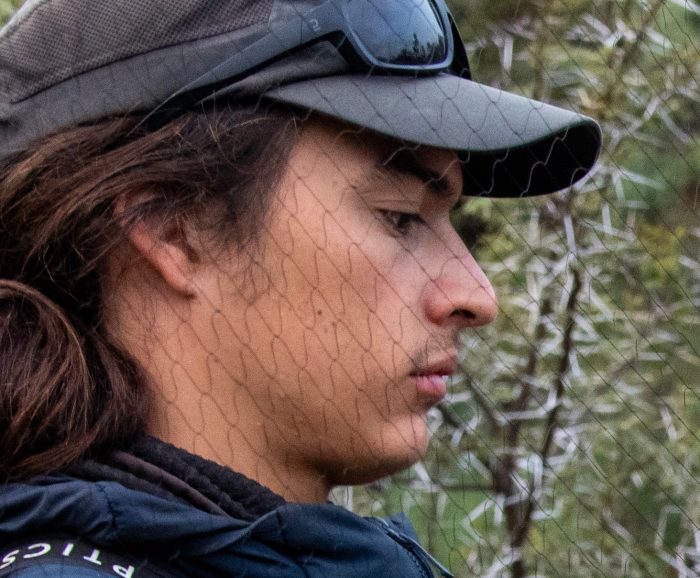
… this is why mist nets are effective at catching birds.
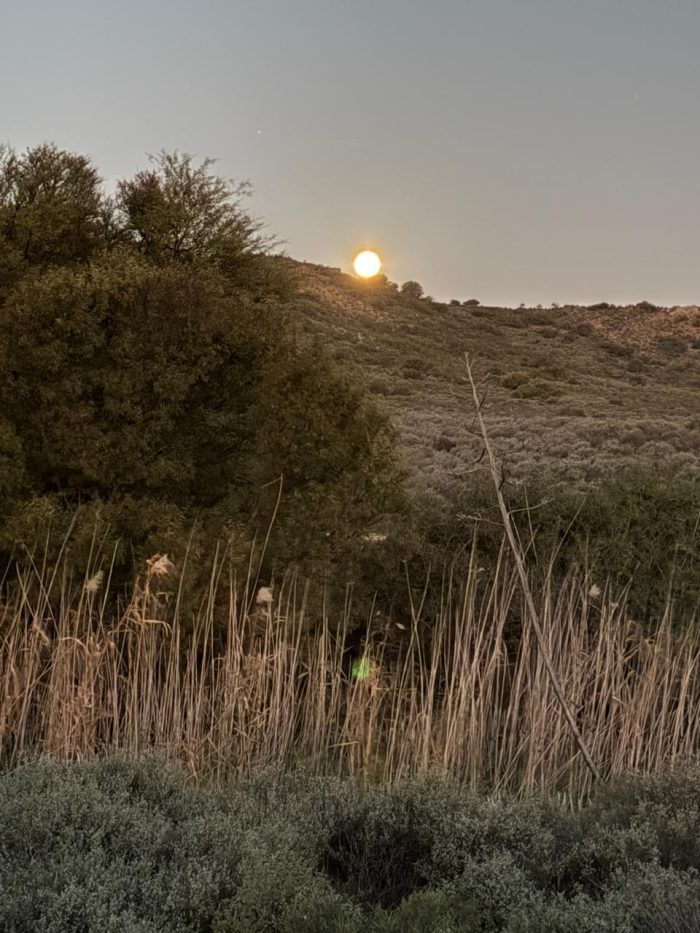
We had a Blue Moon during the expedition. This was the second full moon in May, and this is moonrise on the evening of 31 May. The first full moon of the calendar month had been on 1 May, and the second was on 31 May. The last time there was a Blue Moon was in August 2023, so they don’t happen often!
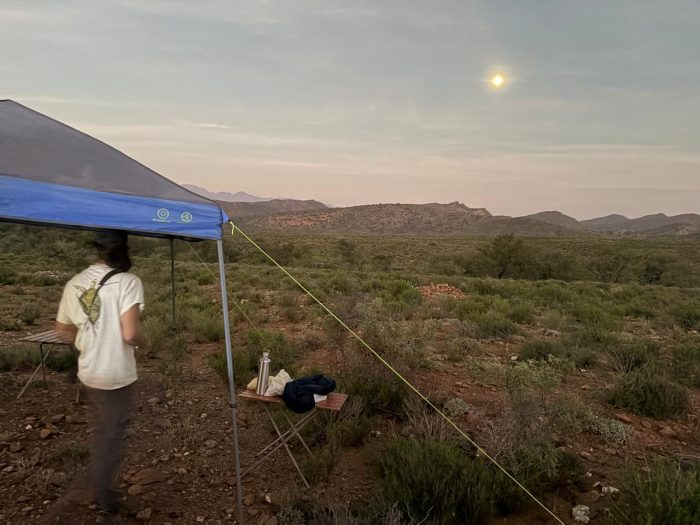
And here is moonset the following morning, 1 June. Astronomically, the moon is past full, and the actual full moon in June 2026 is on the last day of the month!
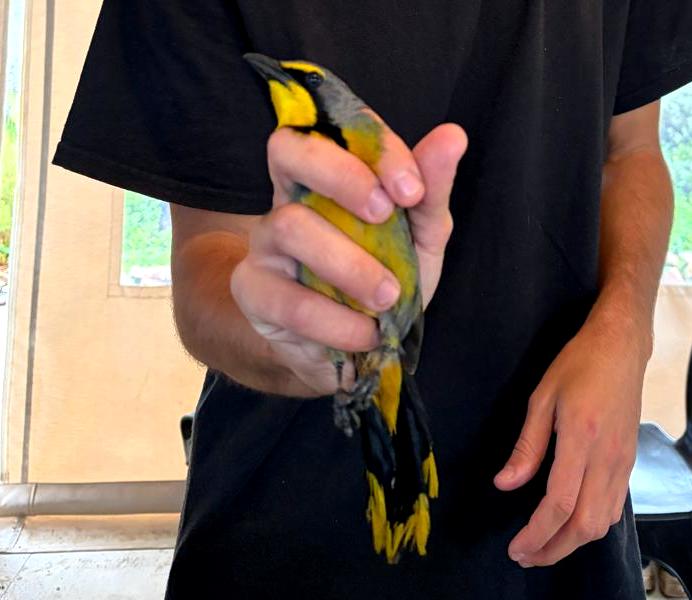
The bright colours of the Bokmakierie against the black tee-shirt are impressive!
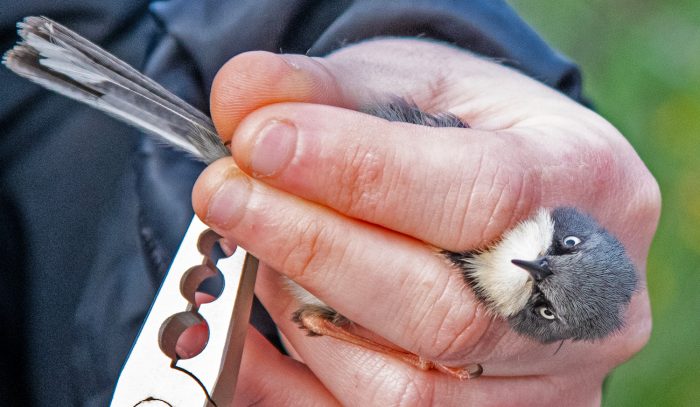
We handled a total of 10 Bar-throated Apalis. of which four were retraps. One, with ring AS53820, was ringed on 21 October 2022, and then retrapped in 2023 on 15 February and 11 May, and we trapped it on 30 May 2026. So it is at least 3.5 years old.
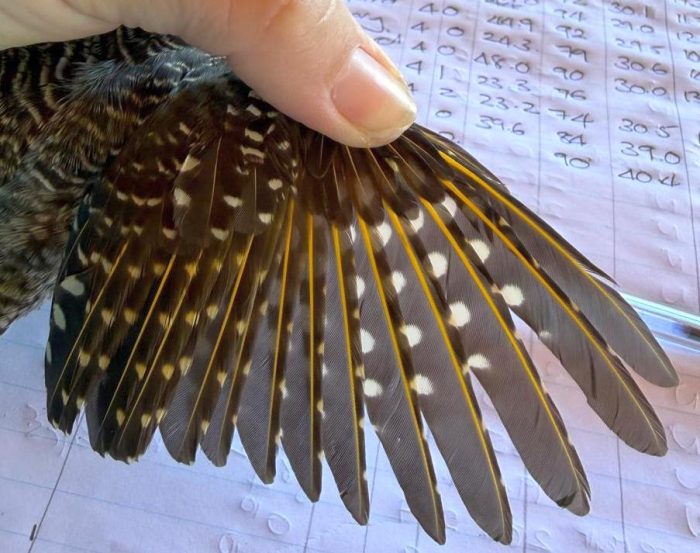
With just the wing to go on, not everyone will instantly know this as a woodpecker. It is actually a …
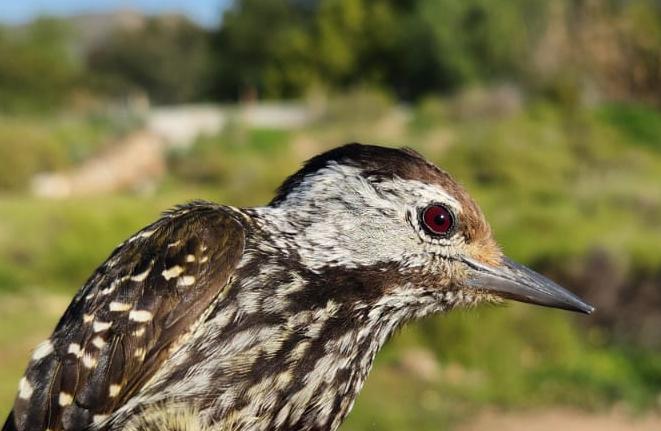
… female Cardinal Woodpecker. She was a retrap, having been ringed on 17 February 2023.
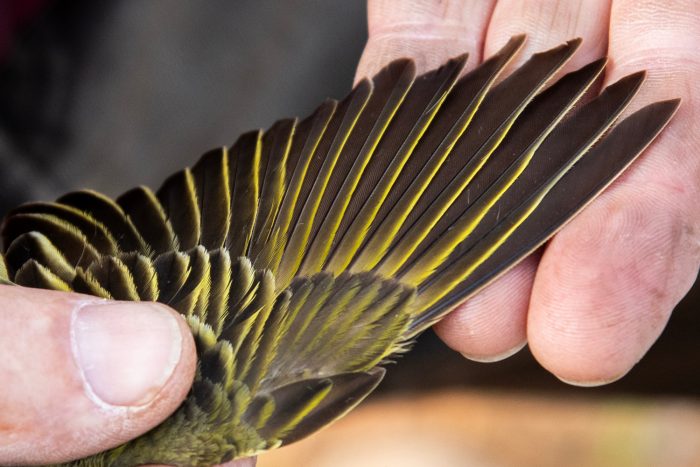
The Cape Weaver has nine primaries, the main flight feathers of the wing. The outer primaries of the bird above have smooth and unworn tips. As you work inwards, the inner primaries are starting to show traces of wear. Moult of the primary feathers of the Cape Weaver takes place of a period of three months, starting on average in late November and finishing in late February. The outer primaries are thus about four months old, whereas the inner primaries have experienced a further three months of wear and tear.
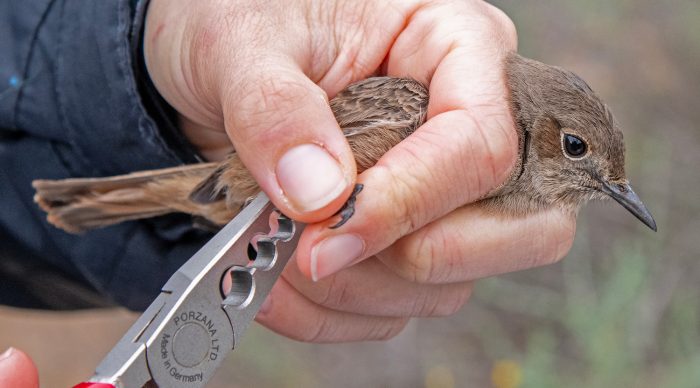
Familiar Chat being ringed.
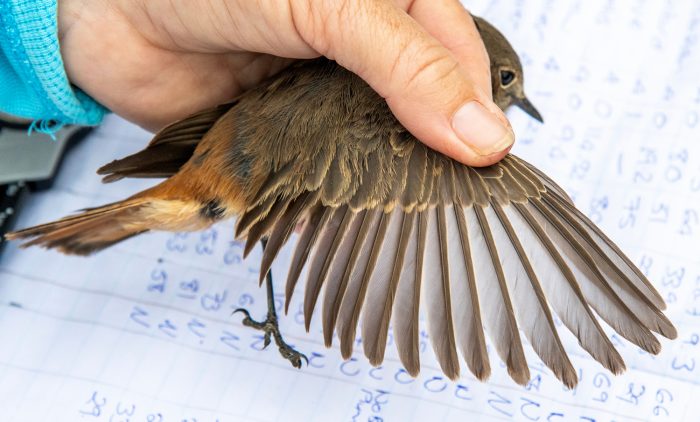
Familiar Chat. The light brown tips of the coverts, the feathers that partially cover the primaries and the secondaries have light brown tips. That pattern tells us this is a young bird, that fledged after the most recent breeding season, probably spring last year.
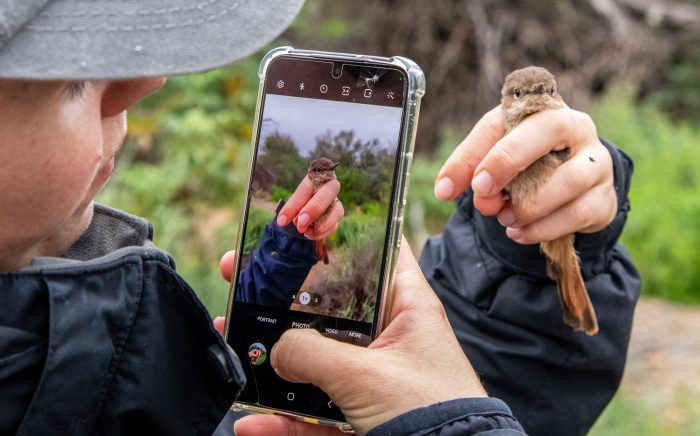
Familiar Chat. We take lots of photos of plumage, because when we retrap it, we can see how rapidly a young bird loses that the last of its juvenile plumage, and is indistinguishable from the adults.
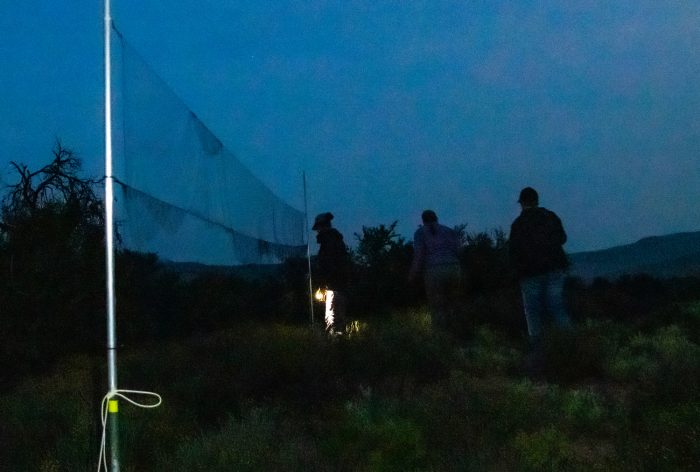
Mist nets set up in the early evening in the hope of catching a nightjar.
Taking the nets down. No nightjar successes!
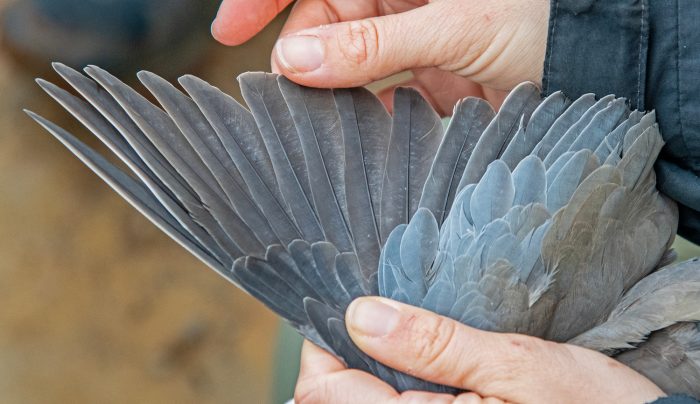
Ring-necked Dove. No primary feathers in moult.
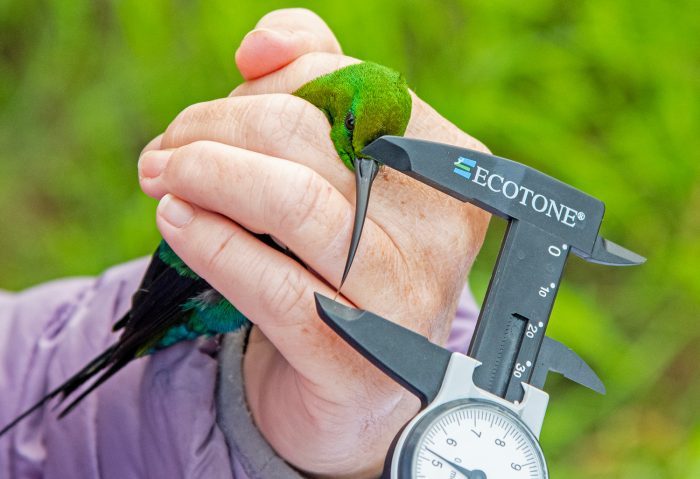
Male Malachite Sunbird. Measuring the bill with dial callipers.
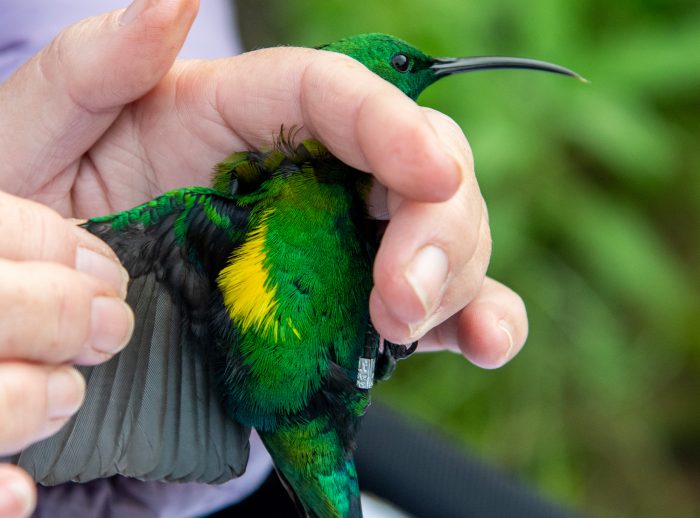
… and this is what he is concealing under his wing.
… and here is the Malachite Sunbird being released in slow motion
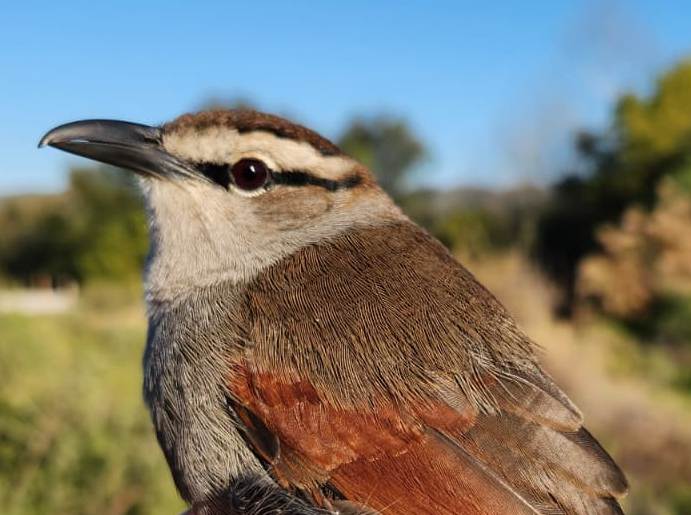
This is the first Southern Tchagra to be ringed at Ouberg, and only the third record here!
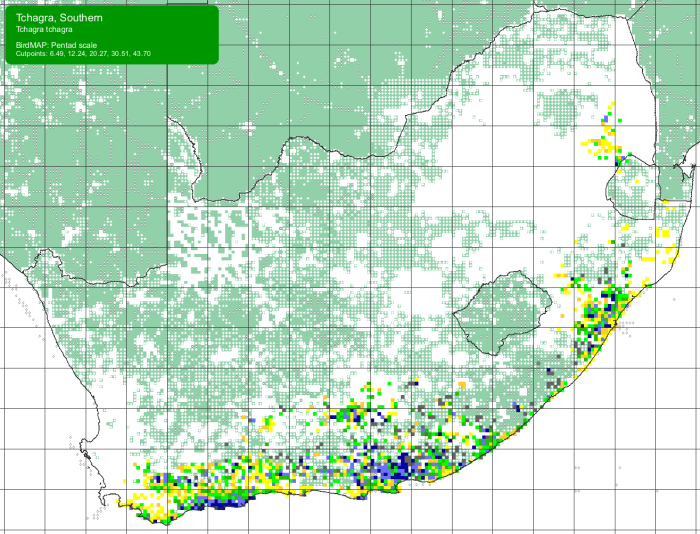
The SABAP2 map shows that Ouberg is close to the western edge of the usual range of the Southern Tchagra. Ouberg is almost due north of Cape Agulhas, the southern tip of Africa. In the map, the blue grid cells show the core of the range. In the yellow grid cells, it occurs irregularly. This is a shy species, and not easily spotted. This distribution map shows the entire range of this species, endemic to southern Africa
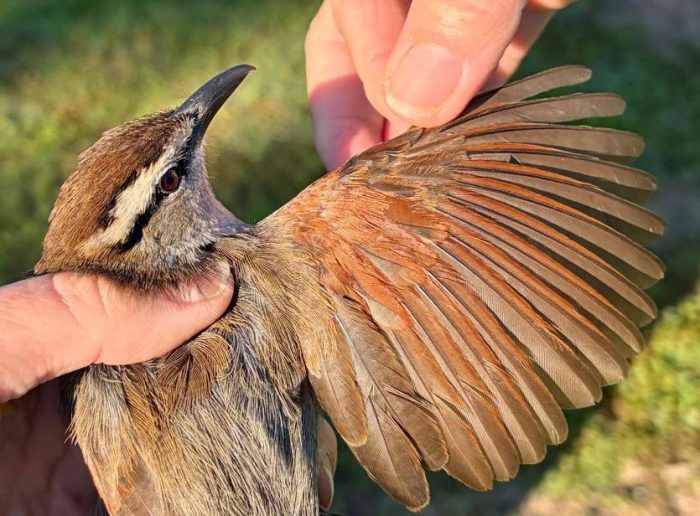
The tchagra is also not in moult. But that is what we expect. It’s winter!!
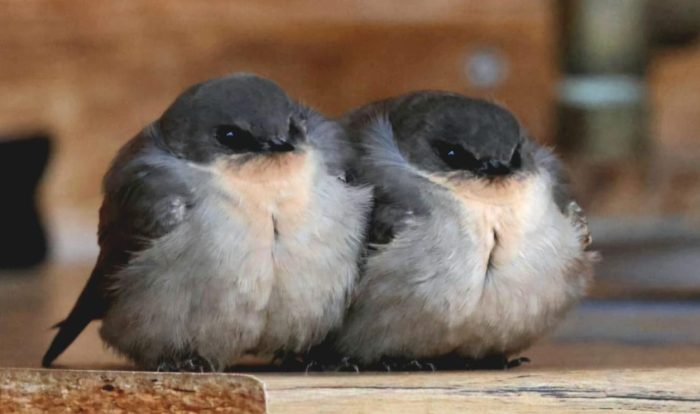
Rock Martin, huddling together, and keeping a watchful eye on proceedings.
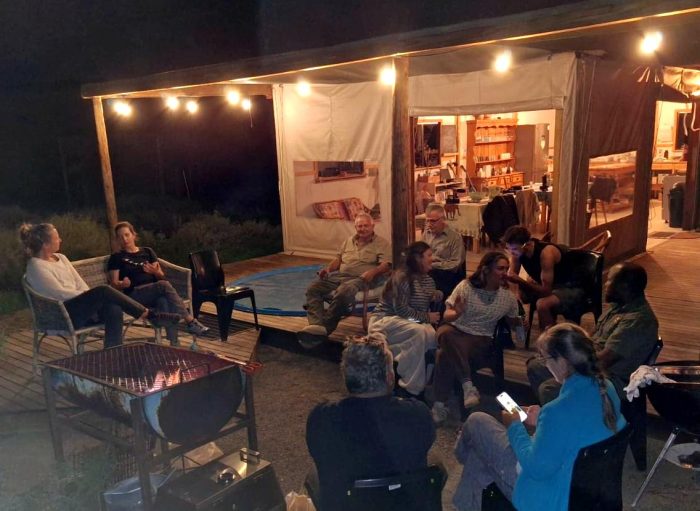
Pretty much the middle of winter, but it is not too chilly to have a blether outside!
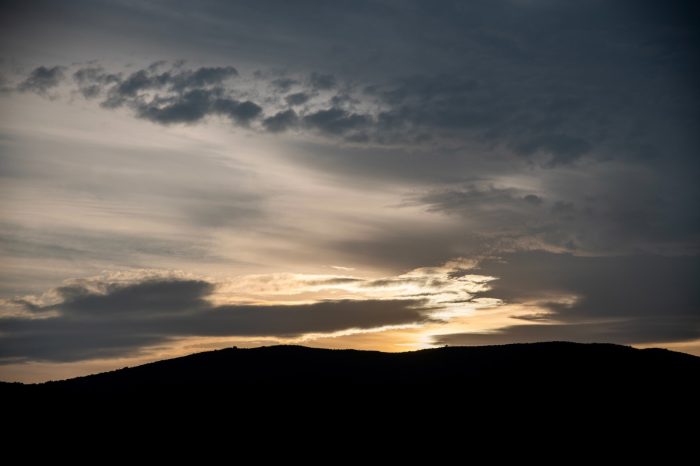
Sunset at Ouberg. This is a beautiful spot in its own right, independent of the birds!
Future BDI bird ringing opportunities are listed here.
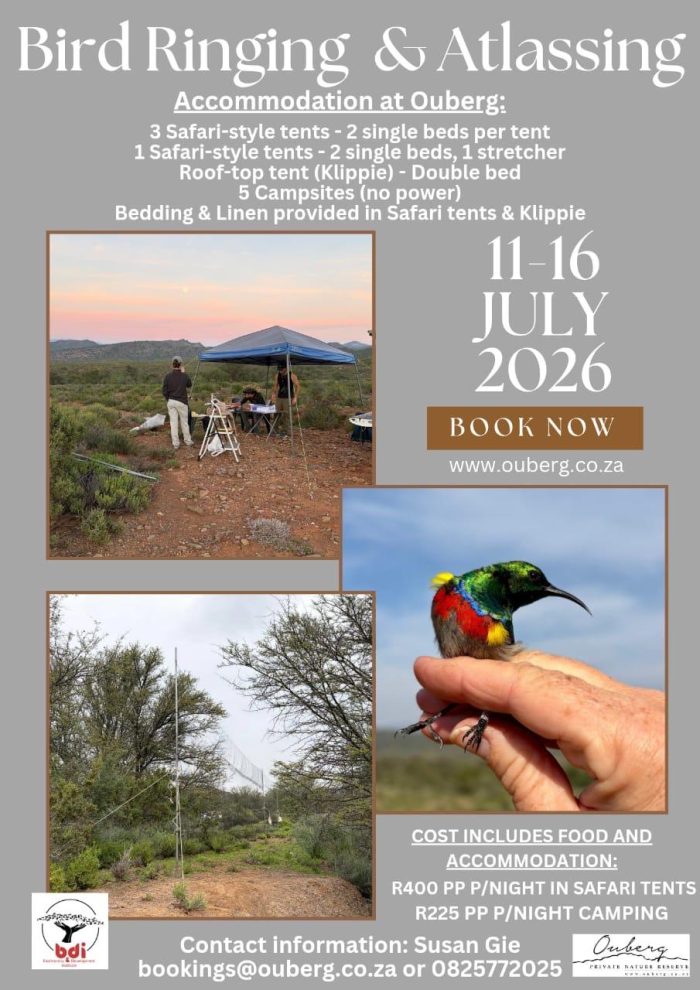
The next expedition to Ouberg is from Saturday 11 July to Thursday 16 July 2026. You can attend for as many days as you are able. To book, or to ask questions, contact Sue Gie (bookings@ouberg.co.za).
There is a list of all expeditions with blog reports like this here. Note especially that there is a Ringers’ Symposium planned for November at Nuwejaars Wetlands SMA. The dates for ringing at 6 to 12 November, with the three days 8 to 10 November being the core period, with presentations, starting around 10h30, so we can do some ringing in the morning! Contact Sue Gie (sue@gie.co.za) for more details.
Here is the map that shows the route from the town of Montagu to Ouberg Private Nature Reserve.