
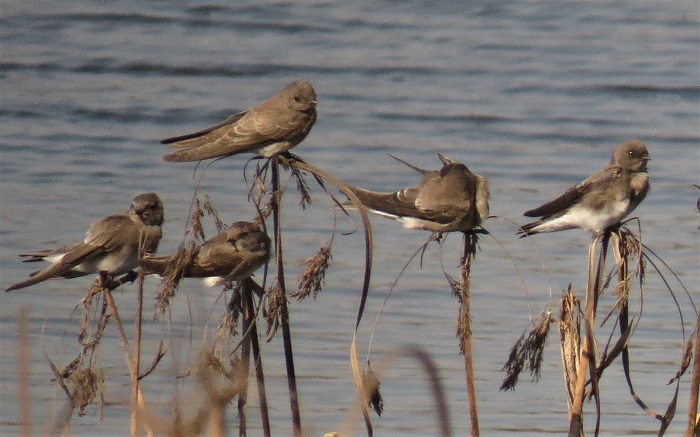
Cover image of Brown-throated Martin by Pamela Kleiman – Ukhahlamba Drakensberg Park, KwaZulu-Natal
The Brown-throated Martin belongs to the family HIRUNDINIDAE, a group that includes Swallows, Martins, and Saw-wings. They are small to medium-sized passerine birds, noted for their streamlined bodies, long, pointed wings, and square or forked tails, often with very long outer rectrices. Their bills are small and flattened with a wide gape, and their legs are very short and weak. All are highly adapted to aerial feeding, and most are gregarious, at least when not breeding. This family has a global distribution and comprises around 90 species, with the greatest diversity being found in Africa. 21 species have been recorded from southern Africa.
Identification
The Brown-throated Martin is a small swallow attaining a length of 12cm and a weight of 12.5 grams. The sexes are alike.
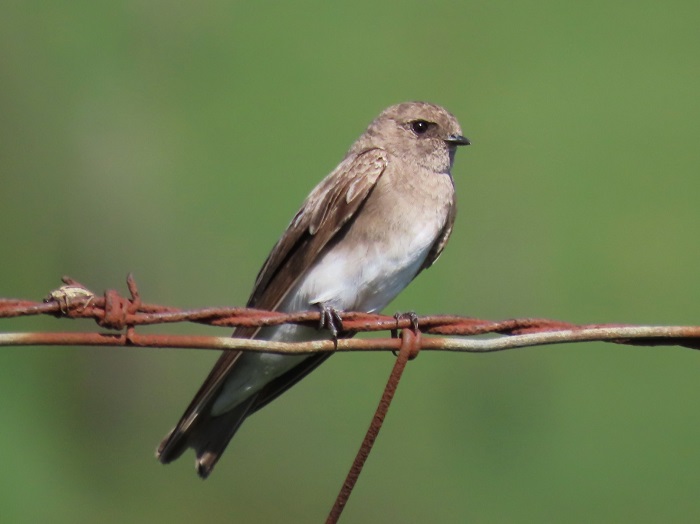
Midmar Nature Reserve, KwaZulu-Natal
Photo by Malcolm Robinson
It is found in 2 colour morphs. Adults of the more common pale morph are overall brown to greyish-brown, except for the belly and undertail coverts, which are white. The extent of white on the belly is variable. The uncommon brown morph is the same but has a brown belly and undertail coverts. At rest, the folded wing tips extend beyond the tail. Juveniles resemble the adults of their respective morph, but the feathers of the upper parts, especially wing coverts and rump, have buffy tips, and the underparts are washed rufous-buff.
The Brown-throated Martin is readily identifiable. However, the Sand Martin (Riparia riparia) is similar, but has a white throat and a brown breast band. The larger Banded Martin (Riparia cincta) has a distinct white supercilium and white (not brown) underwing coverts. The Rock Martin (Ptyonoprogne fuligula) is also larger, with contrastingly pale brown underwing coverts and white spots in the tail.
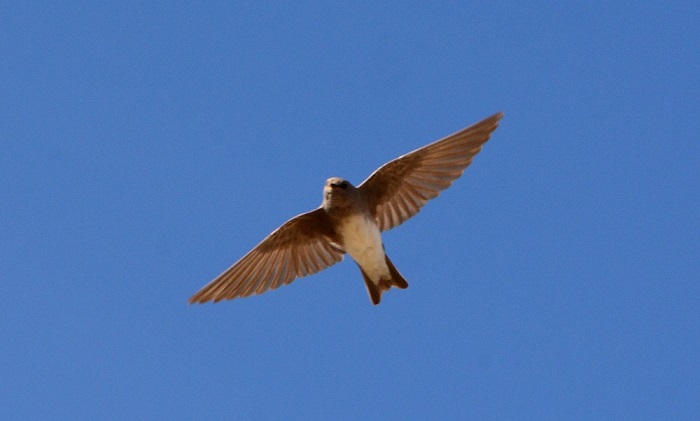
Carnarvon district, Northern Cape
Photo by Ryan Tippett
Status and Distribution
The Brown-throated Martin is locally common in southern Africa where it is widespread, especially in the moister northern, eastern and southern parts. It is sparse throughout Namibia (except the Caprivi Strip), and is largely absent from the Kalahari Basin. In arid areas, it is concentrated along large rivers, most notably the Orange River in the Northern Cape. This species has an extensive breeding range throughout Africa and Madagascar, through southern Asia and as far east as Taiwan and the Philippines.
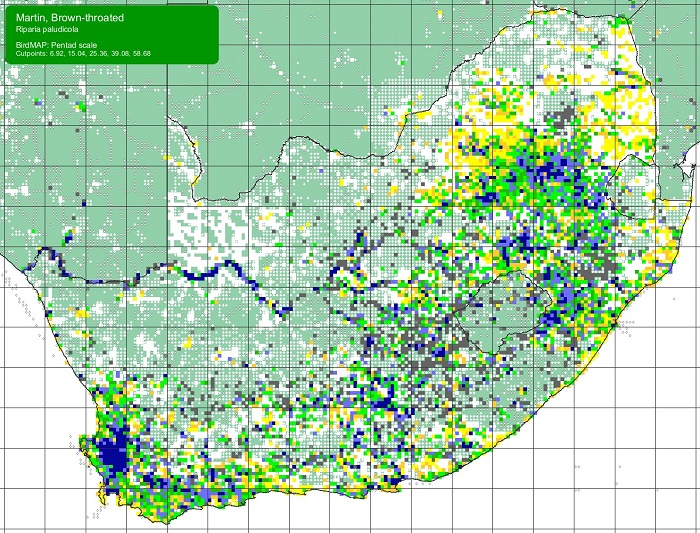
Details for map interpretation can be found here.
The Brown-throated Martin is not threatened. It has probably benefitted from erosion, road cuttings, sandpits and drainage pipes that may have increased nest site availability. The widespread manipulation of natural wetlands by humans is likely to have had significant effects. Artificial impoundments, wetland drainage, and the regulation of river flow are all likely to have had substantial positive or negative impacts on local populations.
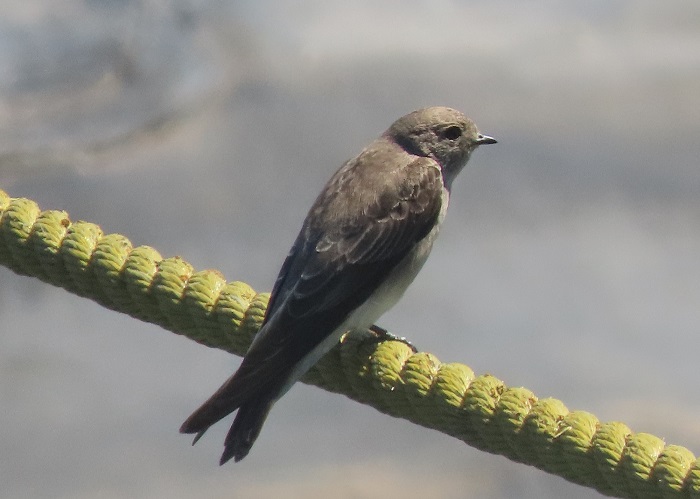
Vanryhnsdorp, Western Cape
Photo by Les Underhill
Habitat
The Brown-throated Martin is usually associated with water, occurring near streams, rivers, dams, open wetlands, estuaries, pans, and sewage works. It appears to prefer wetlands in relatively open habitats. It regularly forages far from water over dry land, occasionally even desert scrub. The Brown-throated Martin is found in all biomes in southern Africa. It is most common in the fynbos, Grassland, Succulent, and Nama biomes. The Brown-throated Martin is less common and more patchy in woodland environments.
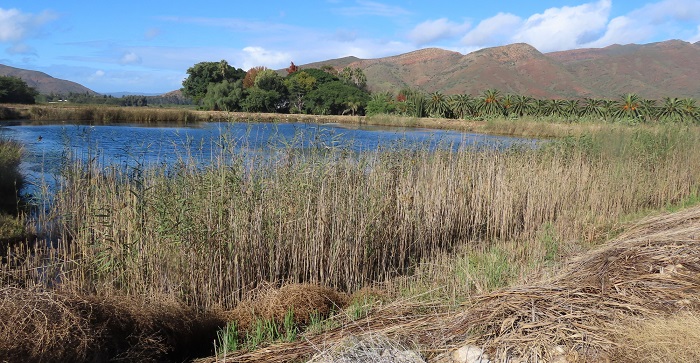
Near Worcester, Western Cape
Photo by Les Underhill
Behaviour
The Brown-throated Martin is a resident, nomad, and short-distance migrant. It is present throughout its range at all times of the year, but its local occurrence depends on the availability of suitable wetland habitats and nesting sites.
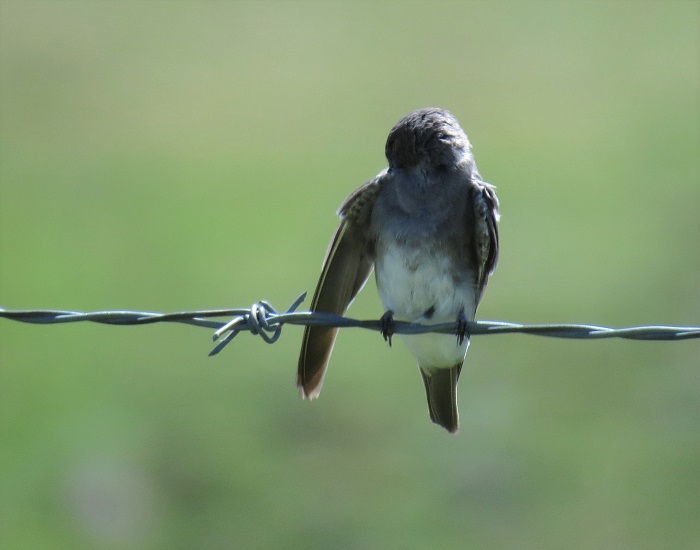
Near Himeville, KwaZulu-Natal
Photo by Pamela Kleiman
The Brown-throated Martin is usually gregarious. Groups are most often seen foraging over water or nearby open areas. Their flight is rather fluttering and less dashing than the flight of larger swallows. May also be seen perched on shoreline vegetation like reeds, tall grass, bushes or overhanging trees, as well as fences. They sometimes also sit on the ground, especially during windy or inclement weather. When not breeding, roosts communally at night on reeds, huddled together in small groups.
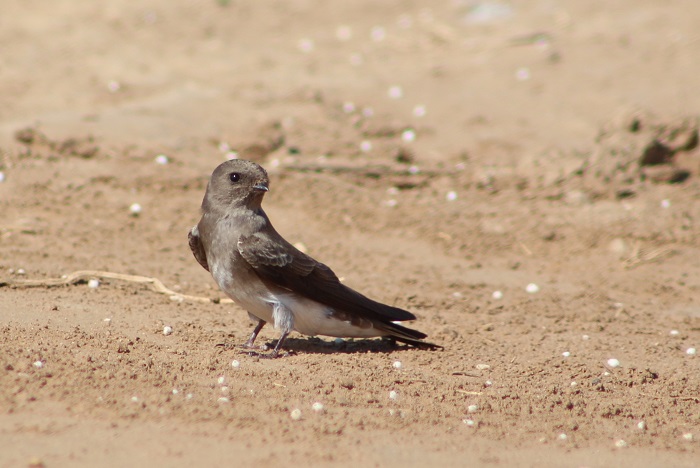
Near Bethlehem, Free State
Photo by Janet du Plooy
The Brown-throated Martin is primarily diurnal, but forages until after sunset, especially at aquatic insect or termite alate emergences. Frequently forages with other swallows and swifts over water, adjacent marshes and grassland, skimming insects from water surface or snapping them up in flight. During calm weather, the Brown-throated Martin typically forages within 3 m of the water surface. They also regularly forage away from water over nearby dryland habitats.
The diet of the Brown-throated Martin consists mostly of flying insects, including mosquitoes, flies, midges, ant and termite alates, small beetles, grasshoppers, and small dragonflies.
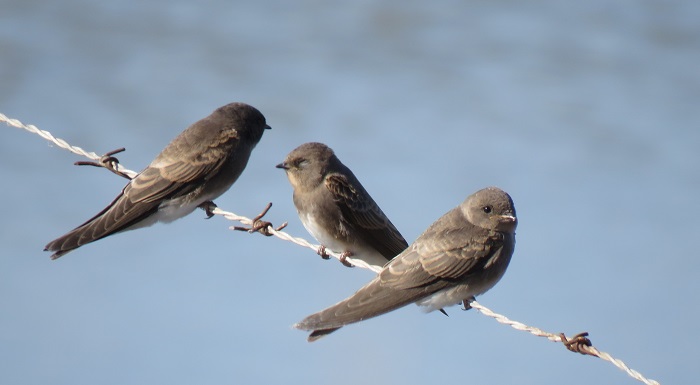
Riversdale district, Western Cape
Photo by Terry Terblanche
The breeding season varies regionally, probably depending on a combination of rainfall, abundance of food, and availability of nesting sites. In the Western Cape, most breeding takes place between September and December, although there are records from most months of the year. Further north and east, the Brown-throated Martin is recorded to breed over a longer period, with more records in the drier winter and spring.
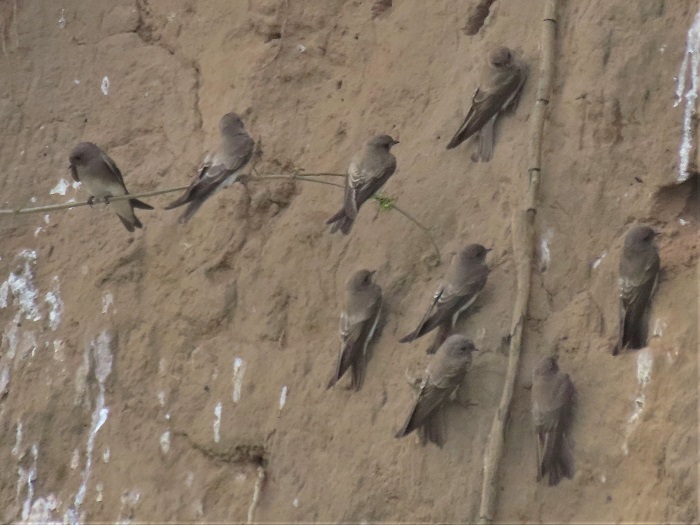
Msunduze River, KwaZulu-Natal
Photo by Malcolm Robinson
The Brown-throated Martin nests in self-excavated burrows in sandy soil in vertical sandbanks along rivers, road cuttings or quarries. They may sometimes also use old, abandoned, or incomplete burrows of other bird species, including bee-eaters and Pied Starlings. They are mostly colonial nesters, but pairs are monogamous. The nest burrow is up to 90cm long and ends in a nest chamber. The nest itself is a pad of grass and other fine plant material with feathers. 2 to 4 plain white eggs are laid per clutch. Incubation is done mostly by the female and lasts up to 12 days. The nestling period takes a further 25 days or so, during which time the young are fed by both parents.
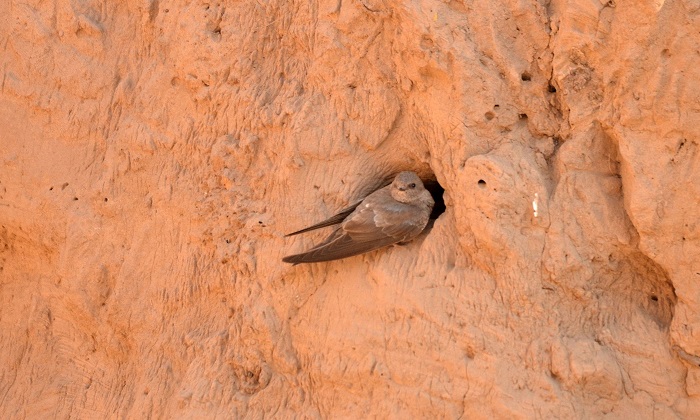
Richtersveld National Park, Northern Cape
Photo by John Todd
Further Resources
This species text is adapted from the first Southern African Bird Atlas Project (SABAP1), 1997.
The use of photographs by Janet du Plooy, John Todd, Les Underhill, Malcolm Robinson, Pamela Kleiman, Phillip Nieuwoudt , Ryan Tippett, and Terry Terblanche is acknowledged.
Other common names: Plain Martin, Brown-throated Sand-Martin (Alt. English); Afrikaanse oewerswael (Afrikaans); Hirondelle paludicole (French); Vale Oeverzwaluw (Dutch); Braunkehl-Uferschwalbe, Afrikanische Uferschwalbe (German); Andorinha-das-barreiras-africana (Portuguese).
Recommended citation format: Tippett RM. 2026. Brown-throated Martin Riparia paludicola. Biodiversity and Development Institute. Available online at https://thebdi.org/2026/05/26/brown-throated-martin-riparia-paludicola/
List of bird species in this format is available here.
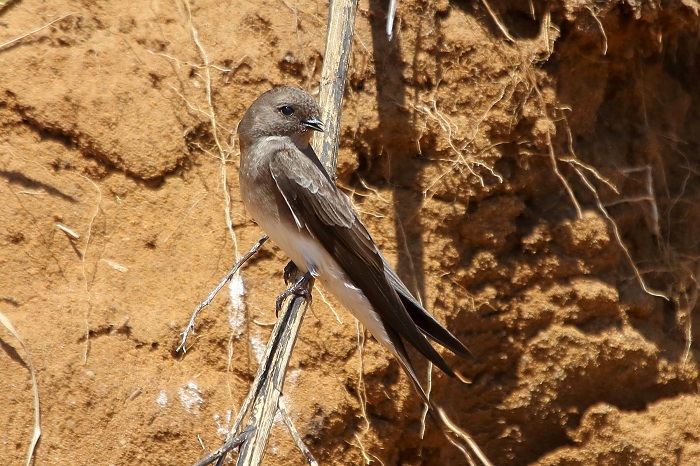
Near Magaliesberg, North West
Photo by Phillip Nieuwoudt
