
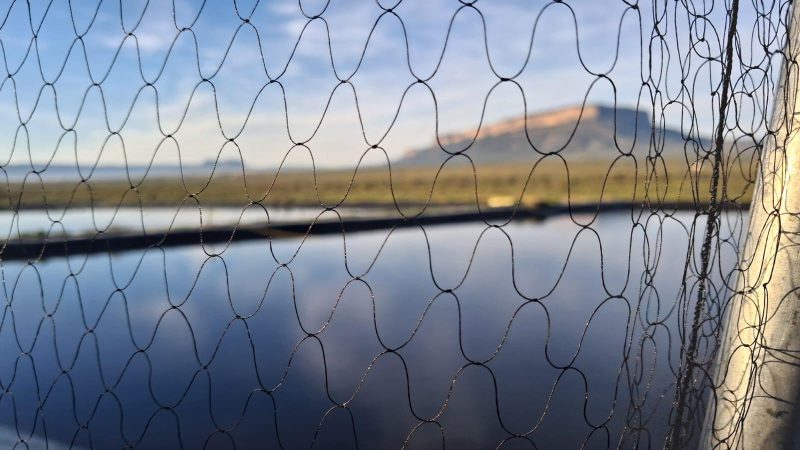
We were bird ringing near the Maskam Mountain, Vanrhynsdorp, from 3 to 7 July. We were based at Botuin Cottages. We ringed in the Botuin garden, the Lark Site close to the Maskam, and at the Vanrhynsdorp Sewage Works.
Friday 3 July
There was no wind from lunchtime. when we arrived at Botuin, until we went to bed.
In the afternoon, we had mist nets dotted around the Botuin garden, including in the olive grove …
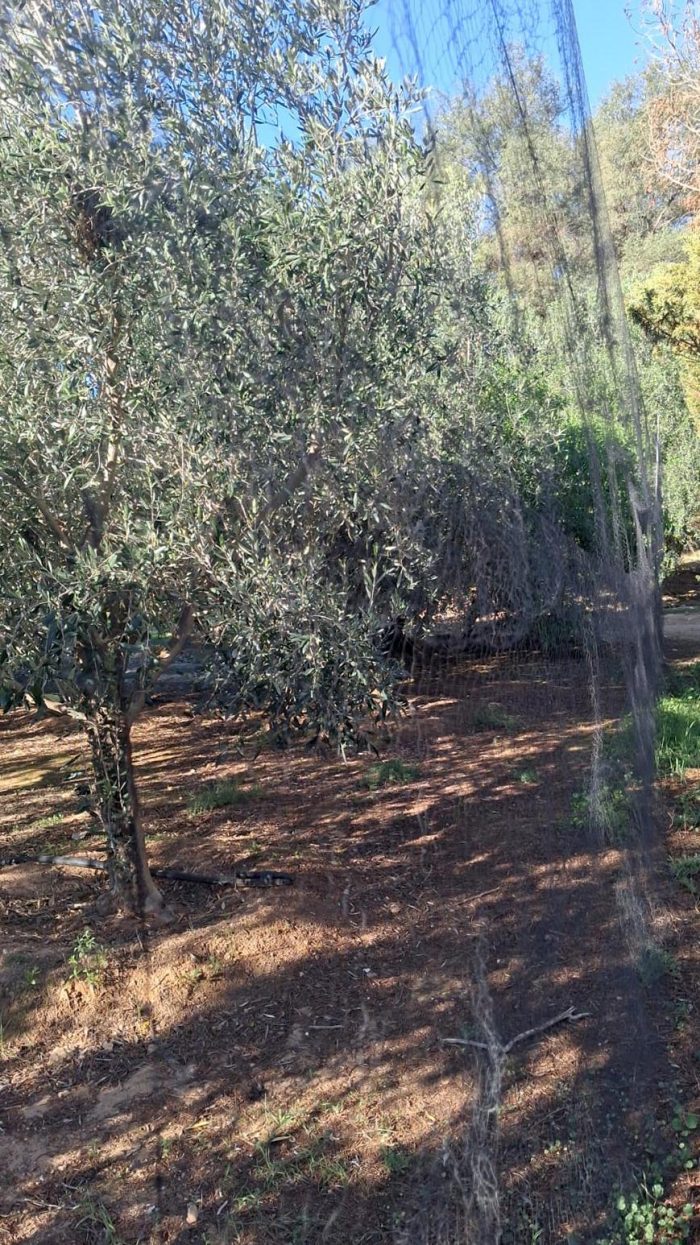
We handled a total of 26 birds of 11 species:
| Species | Count |
| Cape Sparrow | 7 |
| Karoo Prinia | 1 |
| Southern Masked Weaver | 2 |
| White-backed Mousebird | 1 |
| Chestnut-vented Warbler | 2 |
| Cape Weaver | 2 |
| Namaqua Warbler | 2 |
| Southern Fiscal | 2 |
| Laughing Dove | 1 |
| African Red-eyed Bulbul | 1 |
| Namaqua Dove | 5 |
| Totals – 11 Species | 26 |
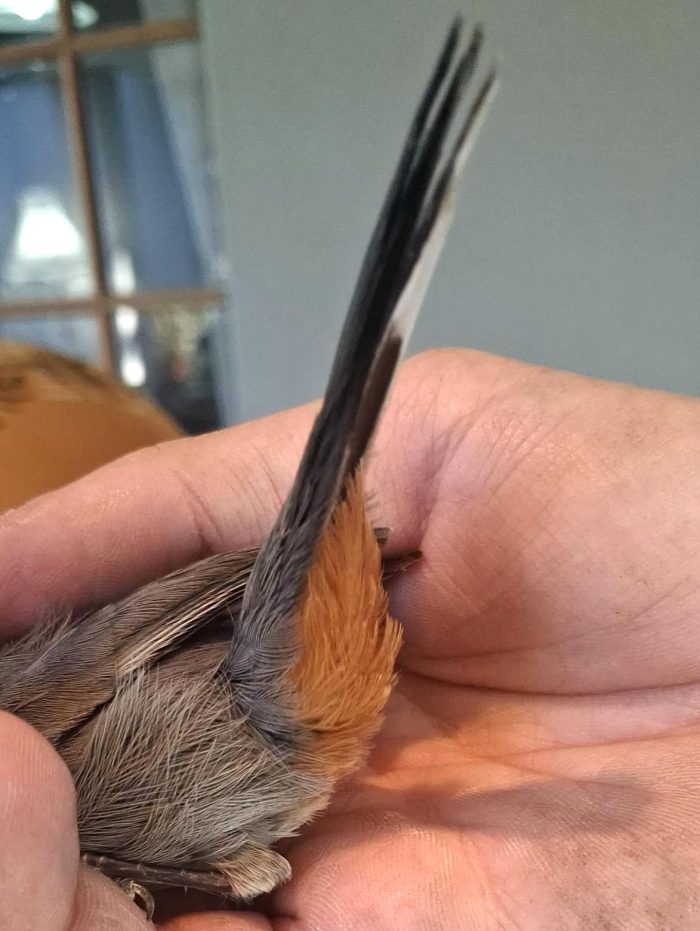
Here is the chestnut vent of the Chestnut-vented Warbler. It is a good name.
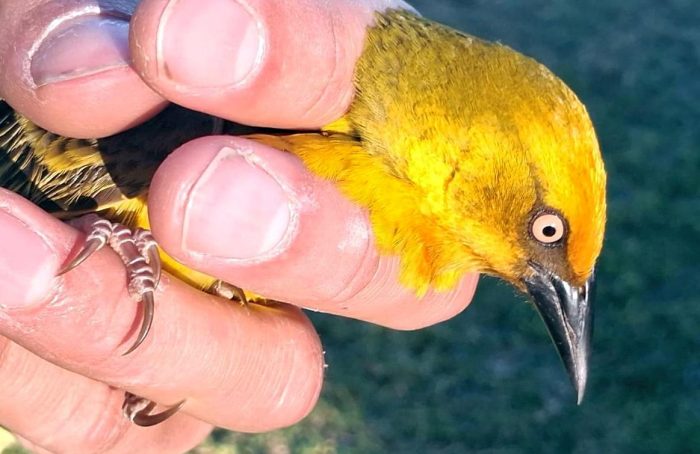
Male Cape Weaver.
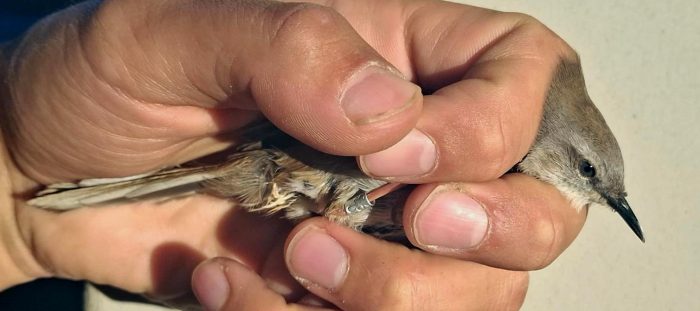
Both Namaqua Warblers we handled were retraps.
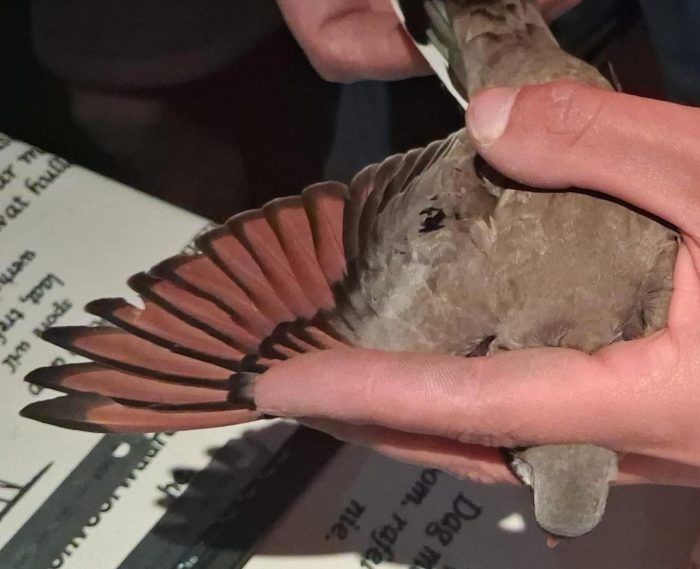
We caught five Namaqua Doves. In the hand these are especially attractive birds.
Saturday 4 July
There was no wind from before sunrise until after sunset.
We furled the nets in the garden overnight, and opened them early on the Saturday morning.
Six of the 13 species we handled on Saturday were new for the trip, bring the total number of species handled to 17.
| Species | Count |
| Cape Sparrow | 3 |
| Southern Masked Weaver | 1 |
| Cape Robin-chat | 1 |
| Southern Fiscal | 2 |
| Cape Weaver | 1 |
| Cape White-eye | 2 |
| Karoo Thrush | 2 |
| Chestnut-vented Warbler | 1 |
| Karoo Prinia | 1 |
| Lesser Honeyguide | 1 |
| Namaqua Warbler | 1 |
| Zitting Cisticola | 1 |
| Common Waxbill | 2 |
| Totals – 13 Species | 19 |
| Cumulative – 17 Species | 45 |
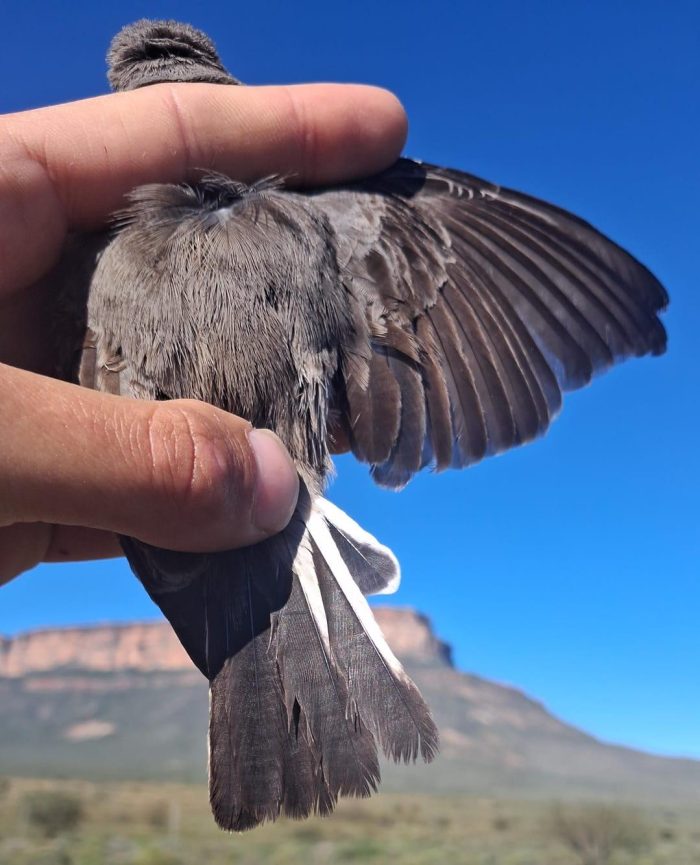
Pride of place goes to the Lesser Honeyguide. This is a species not only ringed here for the first time, it is also the first bird atlas record of the species in SABAP2 pentad 3135_1845 which has 264 full protocol checklists, and 182 species recorded to date.
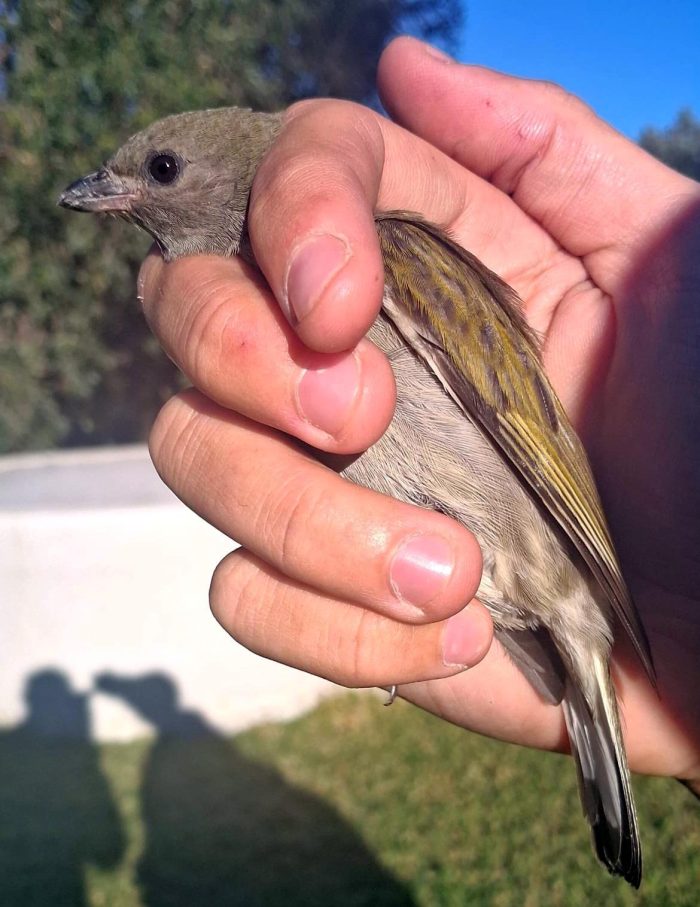
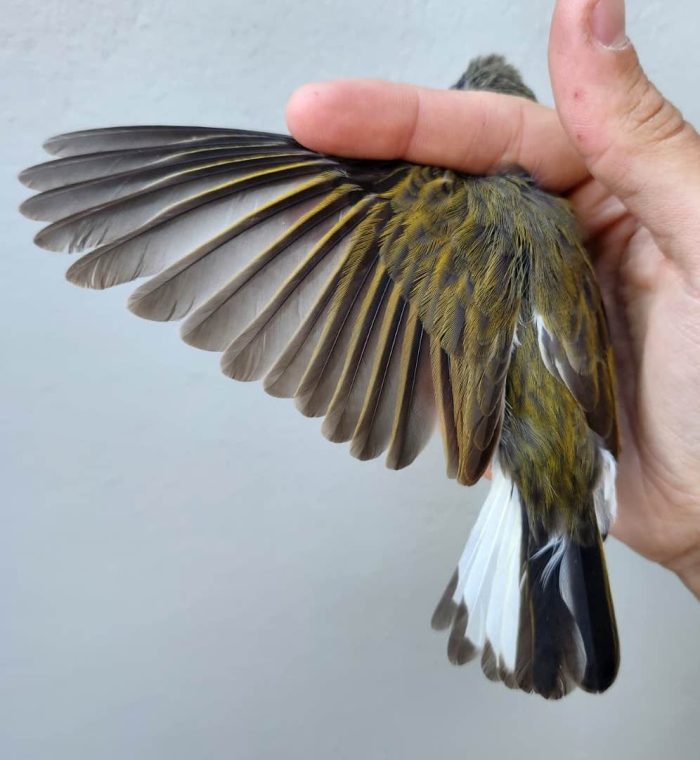
The photo below shows one of the diagnostic features of the Lesser Honeyguide: the white feathers in the tail.
Just before lunchtime, we did a recce to the Lark Site!
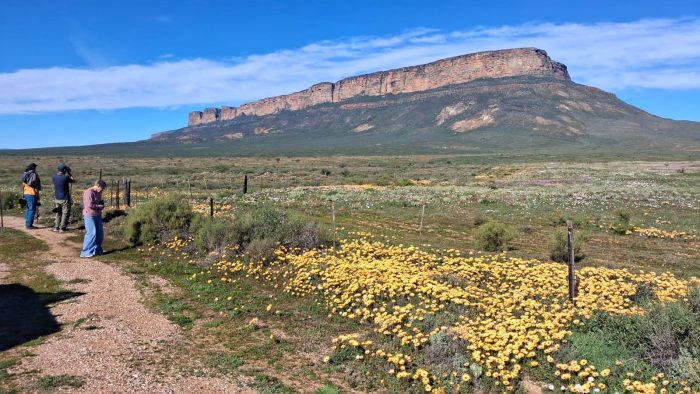
It turned out not only to be a mist netting recce. The important take-home message which we discovered is this: “IF YOU WANT TO SEE THE WILDFLOWERS THIS YEAR, GO SOON!!” There is still some accommodation available at Botuin. Book today.
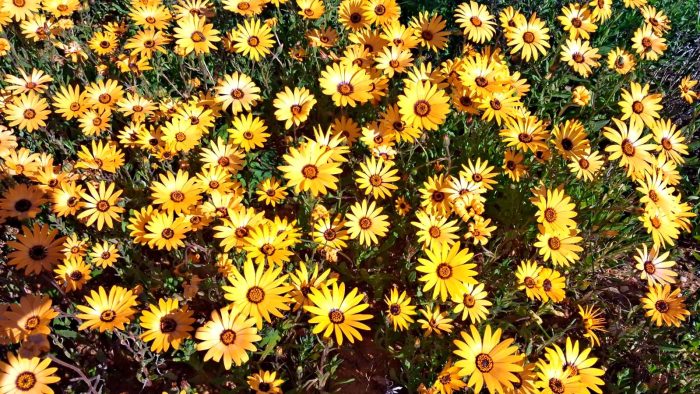
The Namaqua Daisies were stunning.
Sunday 5 July
Another day without wind.
We were at the Lark Site before first light, and had mist nets in place well before sunrise. A 07h13, the cliffs of the Maskam Mountain glow in the dawn light.
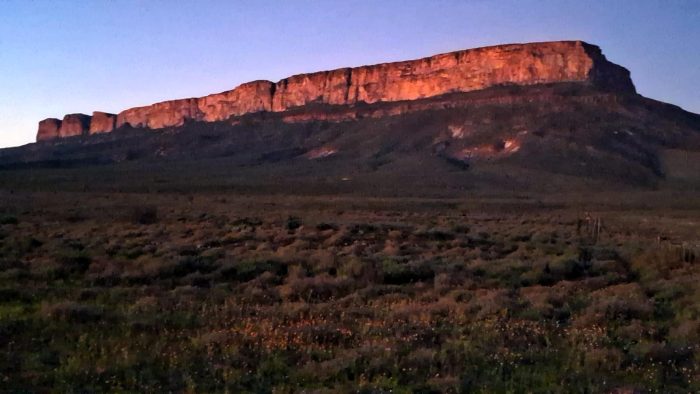
The Cape Clapper Larks were already displaying vigorously. But it will be another 30 minutes before the rays of the sun reach the cliffs.
The line of mist nets in the middle distance is still hard to spot. It is close to the fence line on the right hand side of the photo.
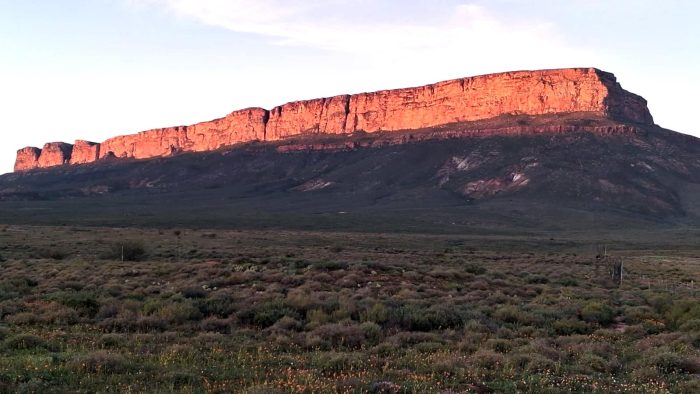
07h49. There is now real sun on the cliffs. but not yet on the slopes. This is a place with awe-inspiring presence.
The mist nets are more or less visible, directly below the right edge of the sunlit cliff.
From the perspective of numbers, we hit the jackpot. Just after sunrise, there was a big movement of Southern Red Bishops. and we handled 50! We handled 78 birds of 12 species. The seven species in bold face type in the list below were new, so the species total for the trip grew to 24:
| Species | Count |
| Cape Clapper Lark | 1 |
| Wattled Starling | 1 |
| African Red-eyed Bulbul | 1 |
| Rufous-eared Warbler | 3 |
| Karoo Prinia | 1 |
| Grey-backed Cisticola | 1 |
| Karoo Scrub-robin | 1 |
| African Pipit | 1 |
| Cape Weaver | 2 |
| Southern Masked Weaver | 15 |
| Southern Red Bishop | 50 |
| Totals – 12 Species | 78 |
| Cumulative – 24 Species | 123 |
In spite of this spot being called the Lark Site, we only caught a single lark: Cape Clapper Lark. It was our first bird, mistnetted before the sun was up.
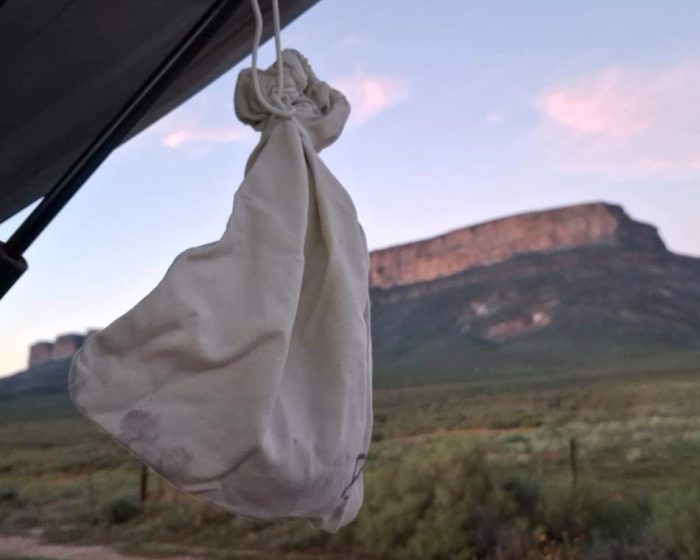
Cape Clapper Lark
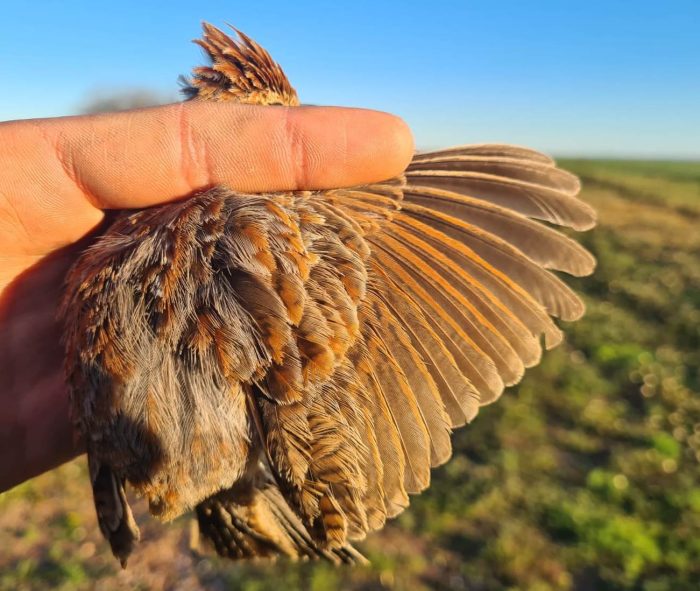
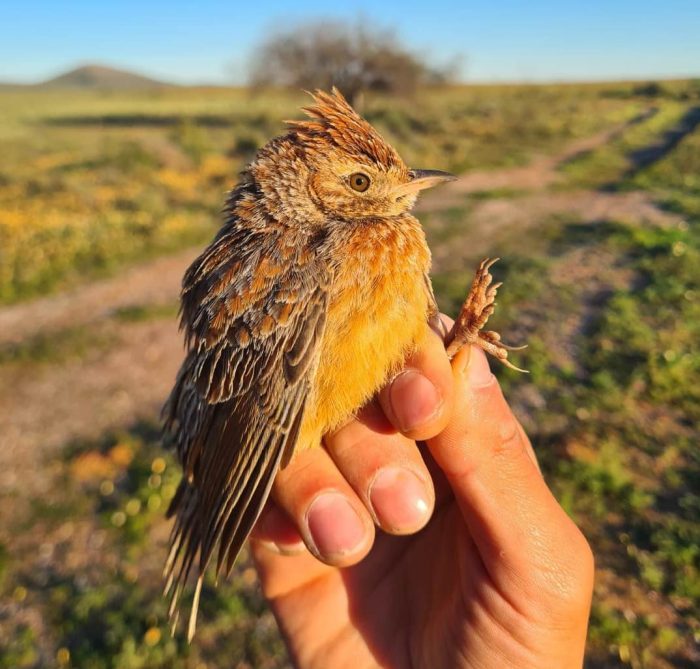
There is rather little SAFRING data for the Cape Clapper Lark. According to the SAFRING website, there are only five previous ringing records. So this is the sixth!
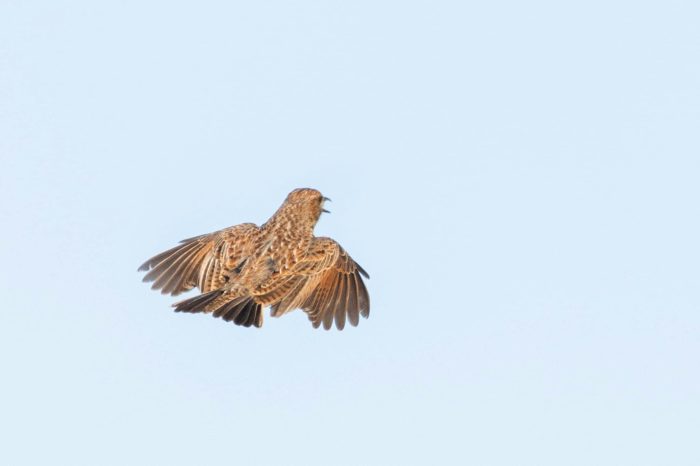
Achot took this photo of a Cape Clapper Lark in mid-display!
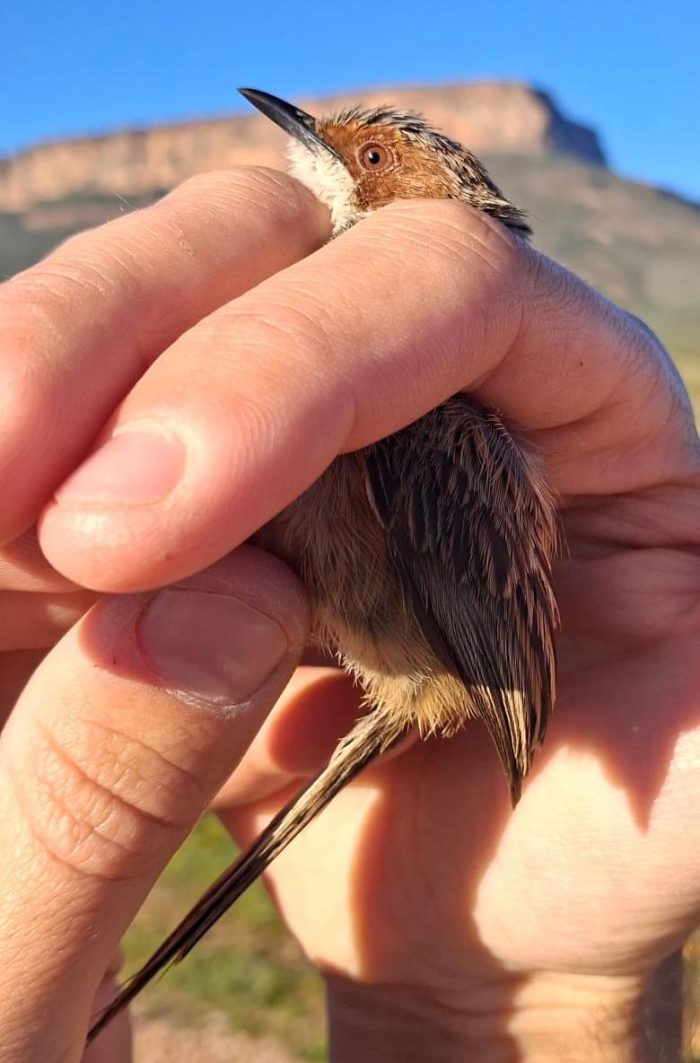
Rufous-eared Warbler
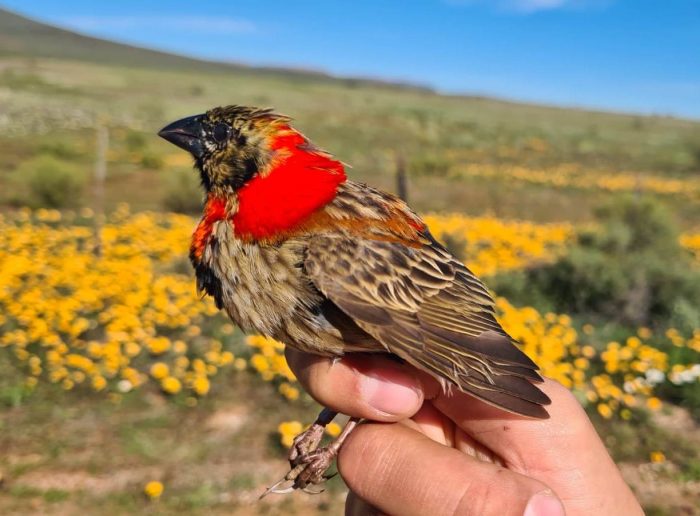
The urgency of coming to see the flowers is underlined by this male Southern Red Bishop. It is already coming into its red and black breeding plumage.
There is doucmentary about the Maskam, made for “people in cities who drive through this region” and see it as an inconvenient waste of time as they travel to their destination. The link to the 29-minute video is here. Salome is interviewed and Botuin Guesthouse gets a special mention. A good starting point is this article in the Daily Maverick: Exploring Maskam: A documentary about love, culture, and the mountain that unites.
Monday 6 July
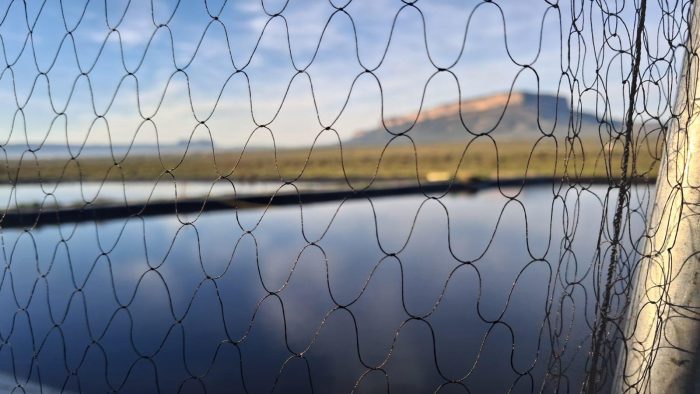
Today it was the turn of the Vanrhynsdorp Sewage Works for a visit. The reflections of the clouds in the settling pond indicates that there is no wind again today.
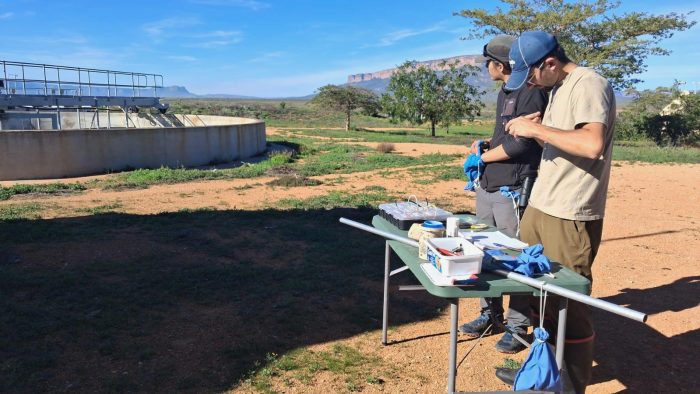
It might be sunny but it is not as warm as Achot makes it look. The Maskam is a landmark that keeps a watchful eye on us.
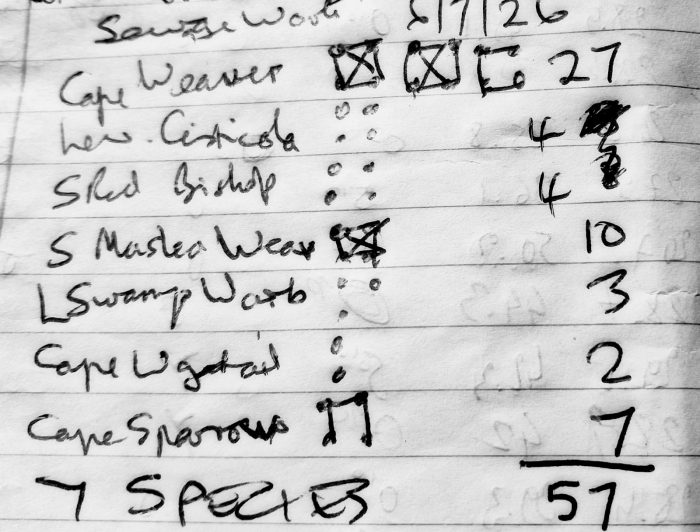
We handled 57 birds of seven species. Levaillant’s Cisticola, Lesser Swamp Warbler and Cape Wagtail brought the total number of species to 27.
In the afternoon we went back to the Lark Site, set up mist nets in the afternoon for a couple of hours, and then furled them overnight. This is a different spot, 500m or so east of where we were a couple of days ago:
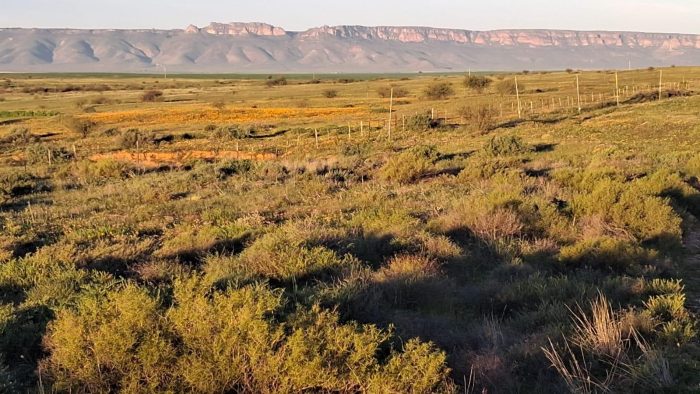
It’s late afternoon, and the daisies have packed up for the day. They will open again tomorrow morning, once the temperature is warm enough.
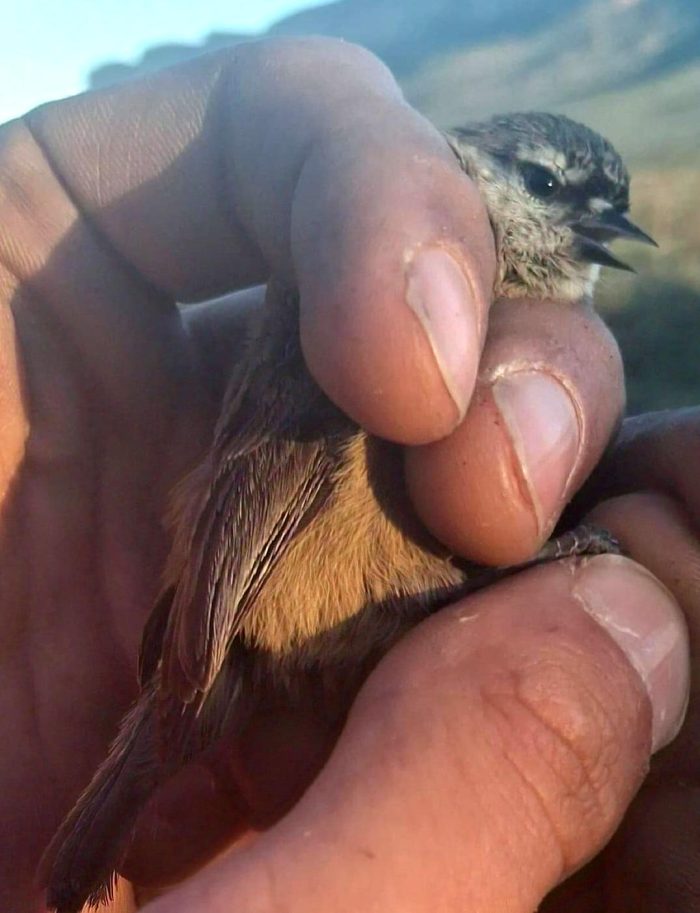
Species of the afternoon was Cape Penduline Tit. It weighed in at 7.9g.
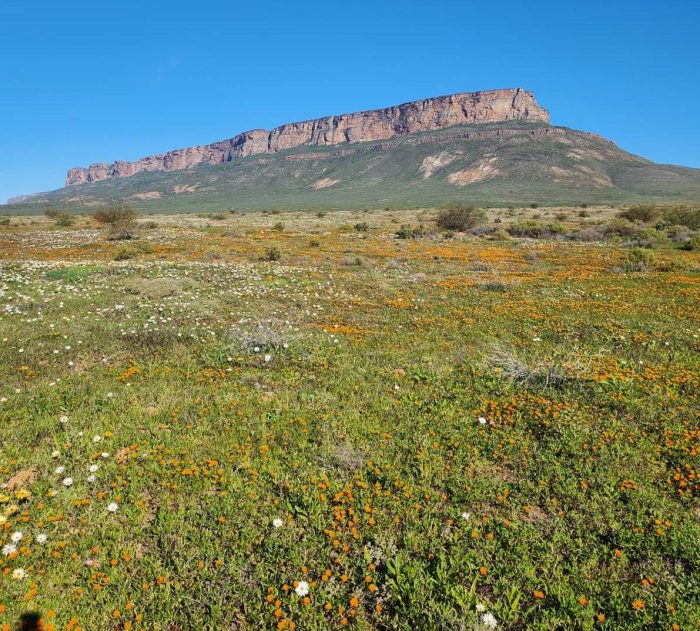
Maskam Mountain late on Monday afternoon.
The ringing total for the afternoon was eight birds: two Southern Red Bishops, two Cape Weavers, one Southern Masked Weaver, one Grey-backed Cisticola, one White-throated Canary and one Cape Penduline Tit. Species total 29.
Tuesday 7 July
… and we were back at Maskam Mountain early on Tuesday morning …
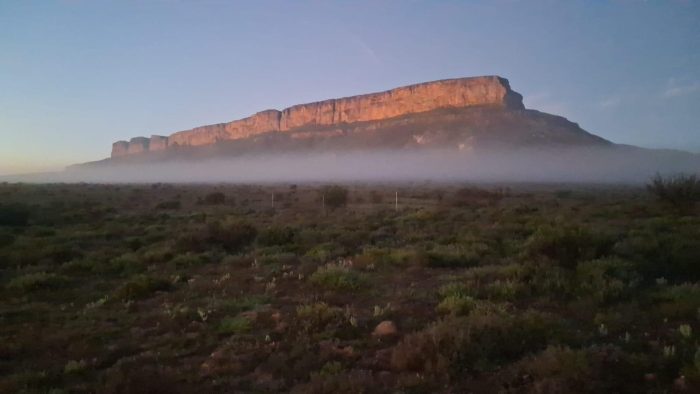
The morning was misty, and it was absolutely calm from the time we started until we left Botuin at noon. What a privilege to have five windless days in a row!
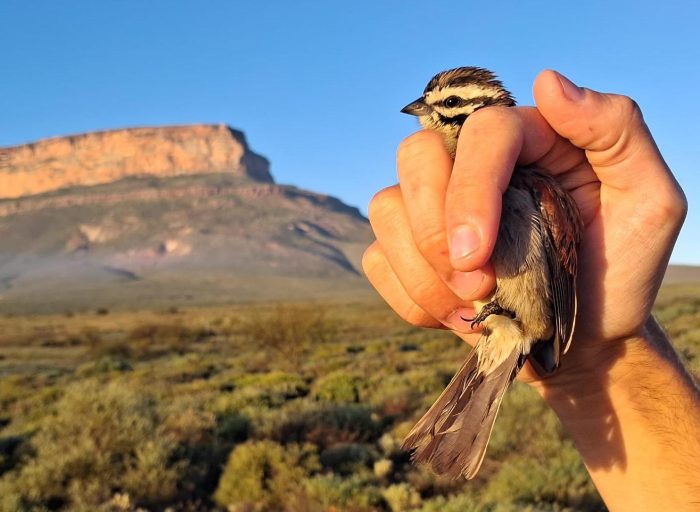
We caught our first and only Cape Bunting.
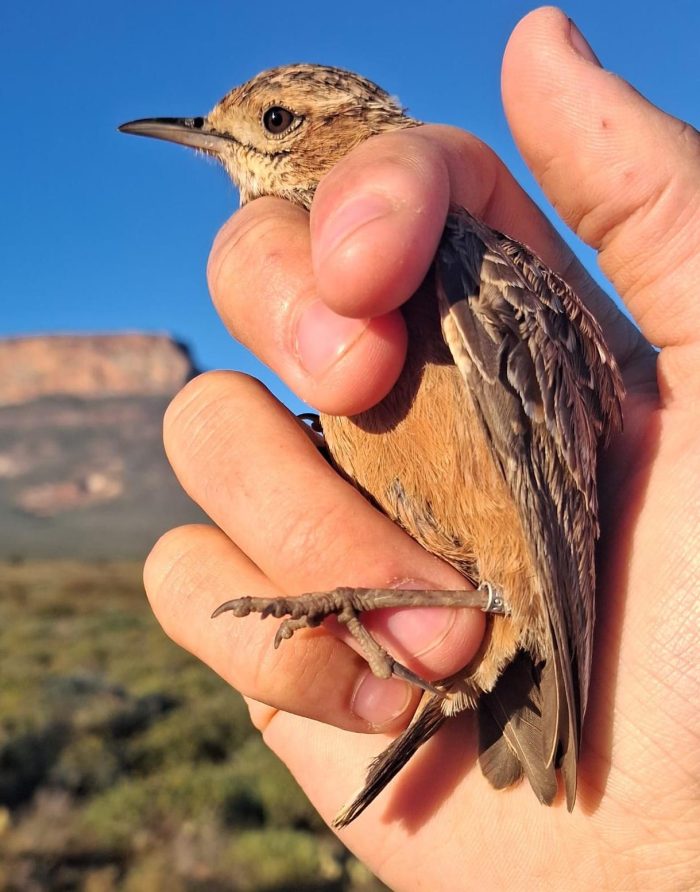
The long back claw gives this lark its common name: Spike-heeled Lark.
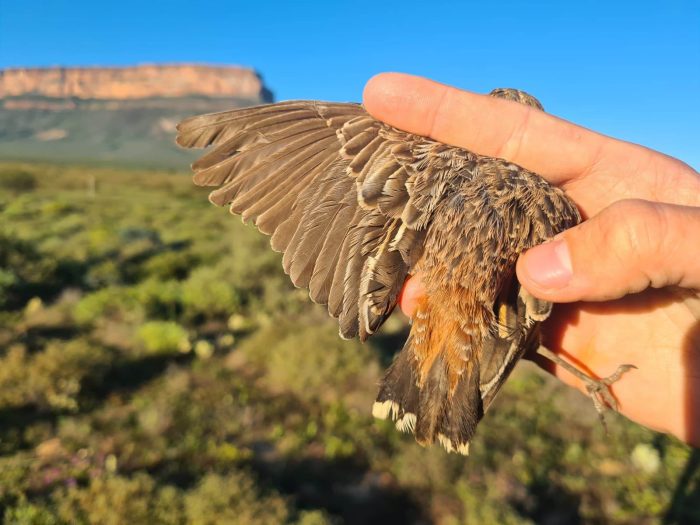
The white tail tips are conspicuous in flight. The scalloped patterning of many of the feathers, especially the coverts on the wing and tail, suggest that this is a young Spike-heeled Lark, most likely from last year’s breeding season.
Our final new species for the trip was this Karoo Lark. We handled 18 birds in a couple of hours, of 12 species. Three species were new, and that brought the species total to 32.
| Species | Count |
| Southern Masked Weaver | 2 |
| Southern Red Bishop | 4 |
| Cape Bunting | 1 |
| Cape Weaver | 2 |
| White-throated Canary | 1 |
| Southern Fiscal | 1 |
| Common Waxbill | 2 |
| Cape Sparrow | 1 |
| Karoo Prinia | 1 |
| Rufous-eared Warbler | 1 |
| Karoo Chat | 1 |
| Spike-heeled Lark | 1 |
| Totals – 12 Species | 18 |
So the final total was 206 birds handled of 32 species.
… and to finish, here are a few of Achot’s photos of other good things which we were lucky to observe:
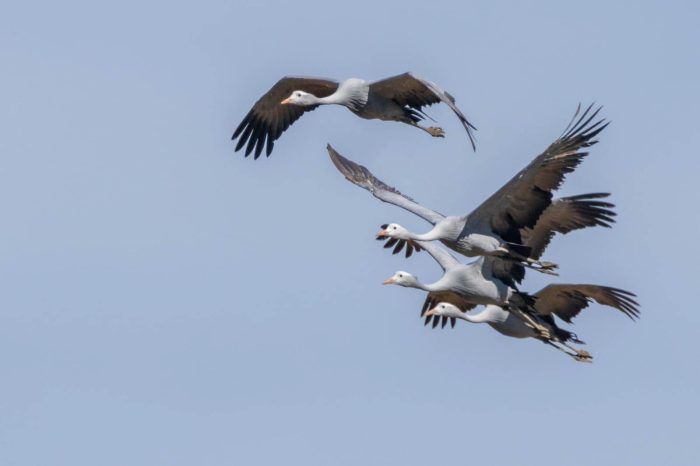
Blue Cranes are a newish arrival in the Vanrhynsdorp district. Numbers have been increasing over the past two decades. In the early years of SABAP2, which started in 2007, observations of Blue Cranes generated “Out of Range Forms”.
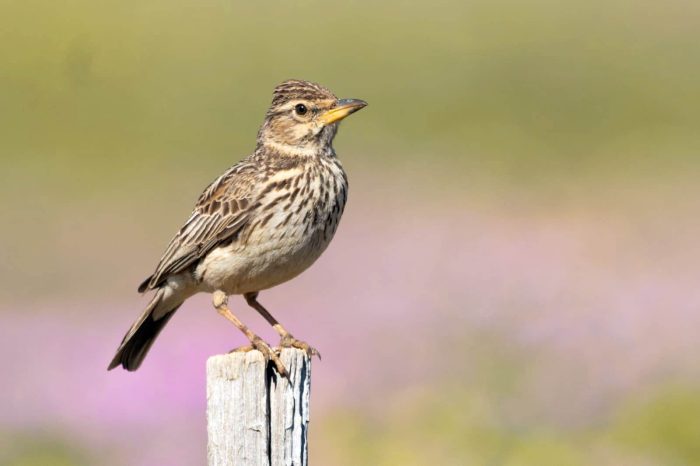
On this trip, we caught only two larks in total at the Lark Site! One of the species we missed out on was this Large-billed Lark.
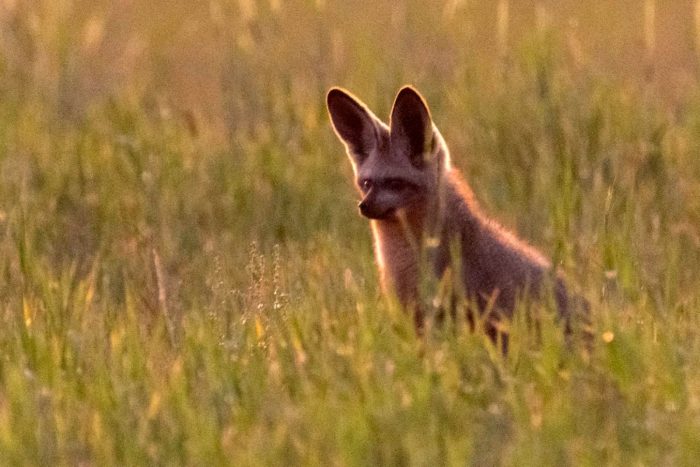
This was one of a group of Bat-eared Foxes regularly seen along the road to the Lark Site.
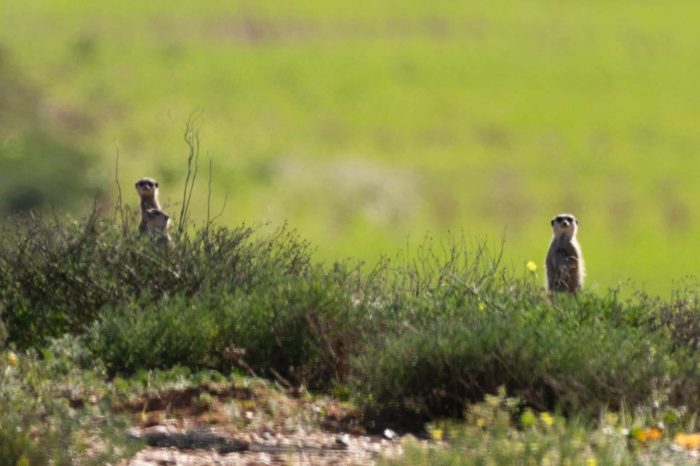
These suricates have den in the Lark Site.
With the Maskam Mountains conspicuously dominating the background to so many of the photos above, now is the time to watch the video. It is in Afrikaans, with excellent English subtitles.
Our next visit to Botuin is soon! It is from Tuesday 21 July to Sunday 26 July. There is still some accommodation available. Contact Les for further information.