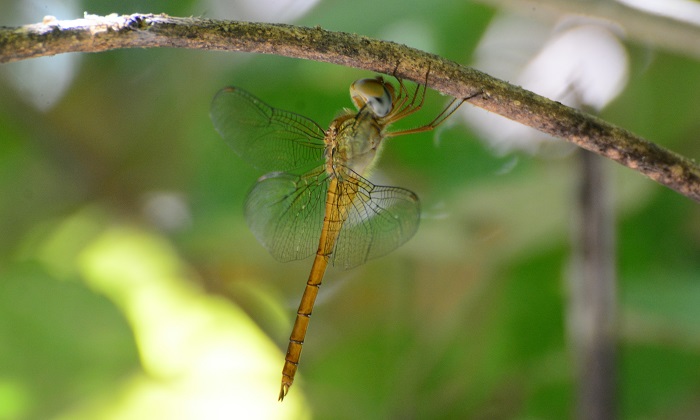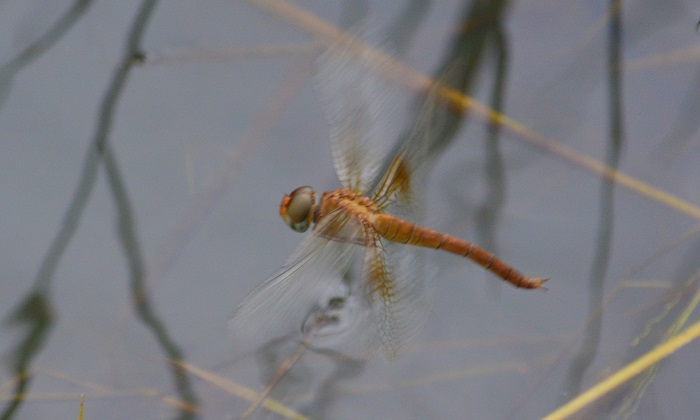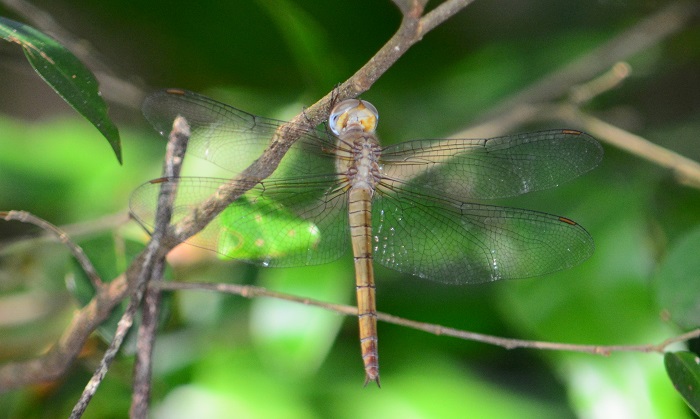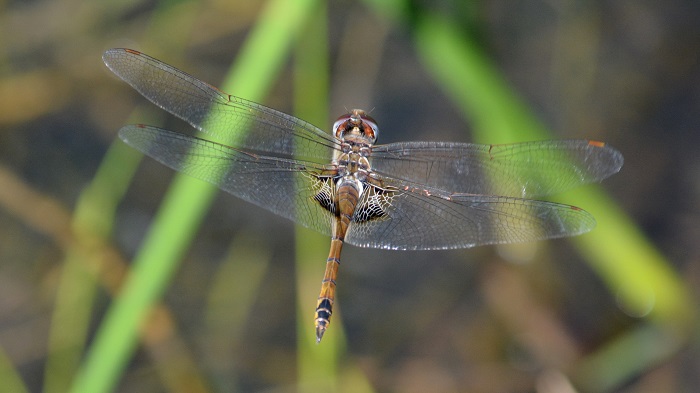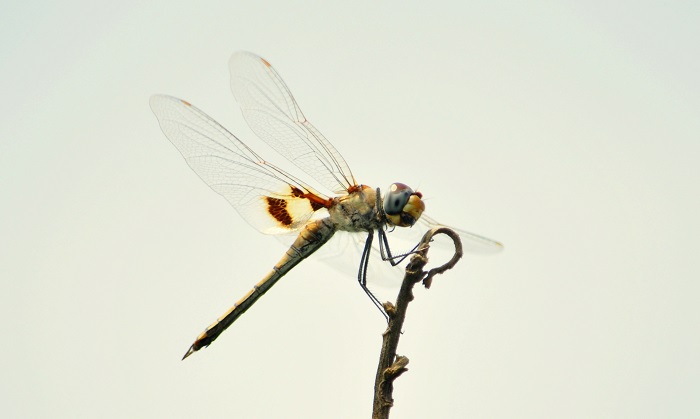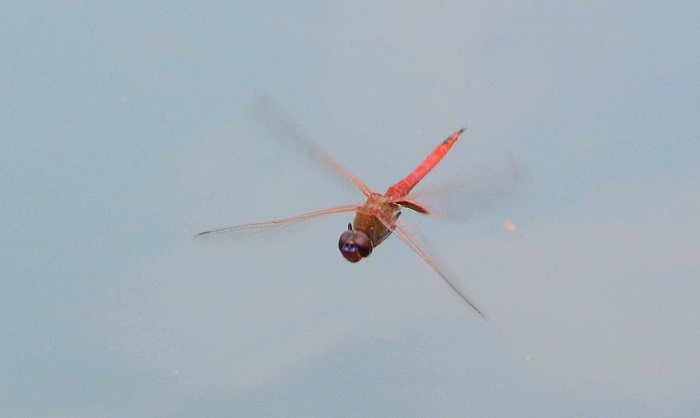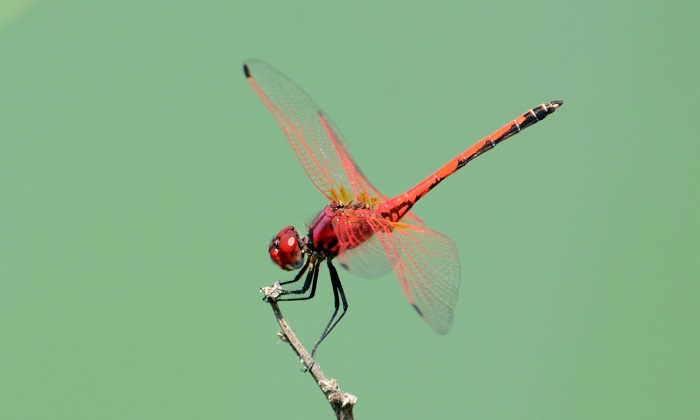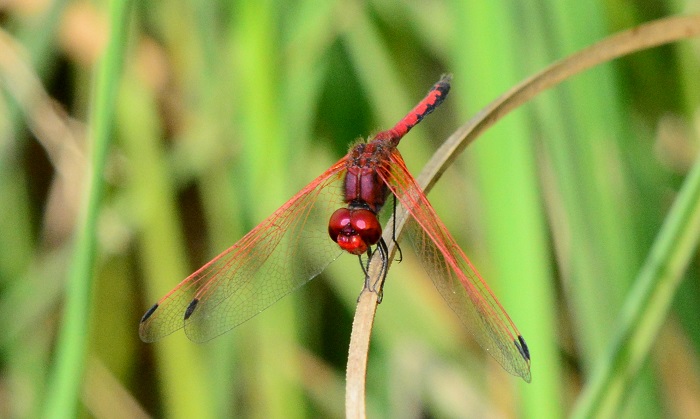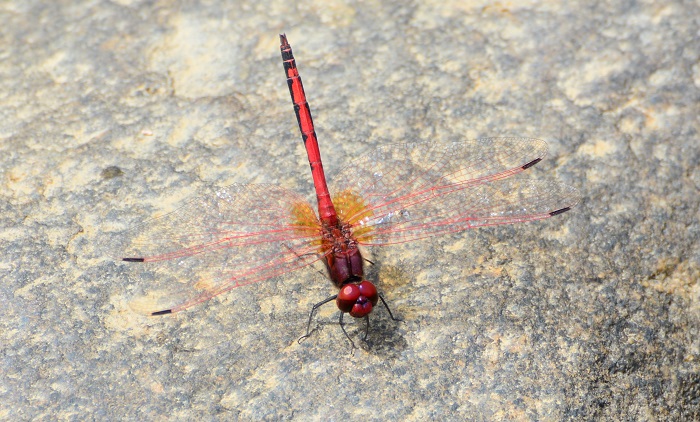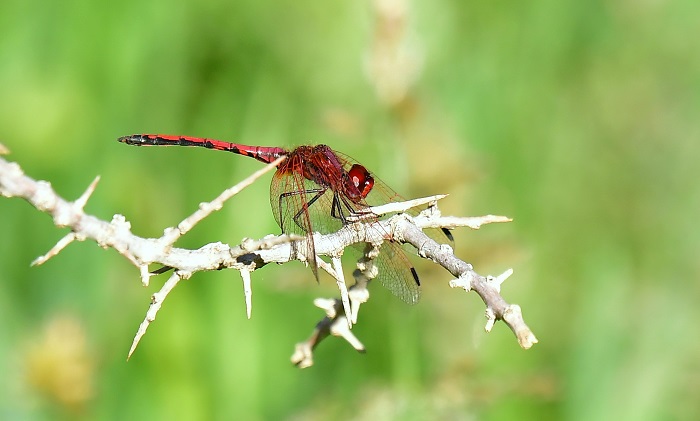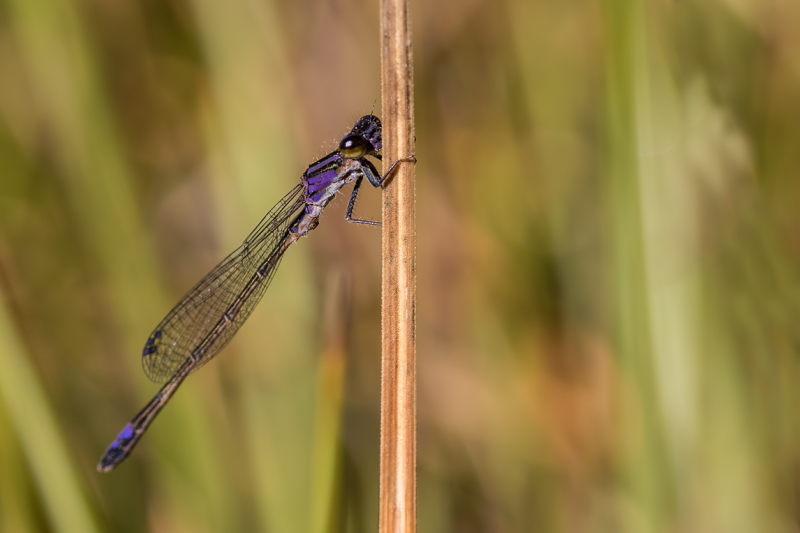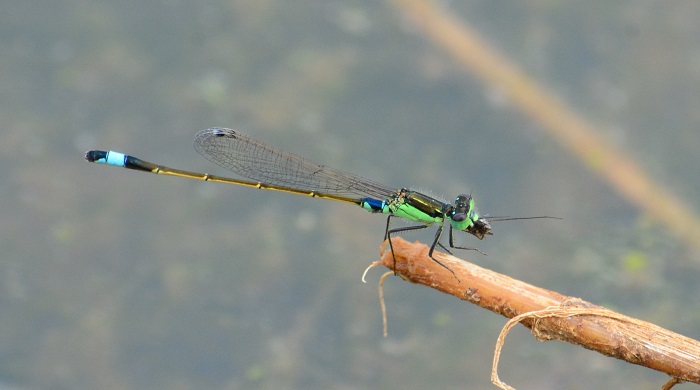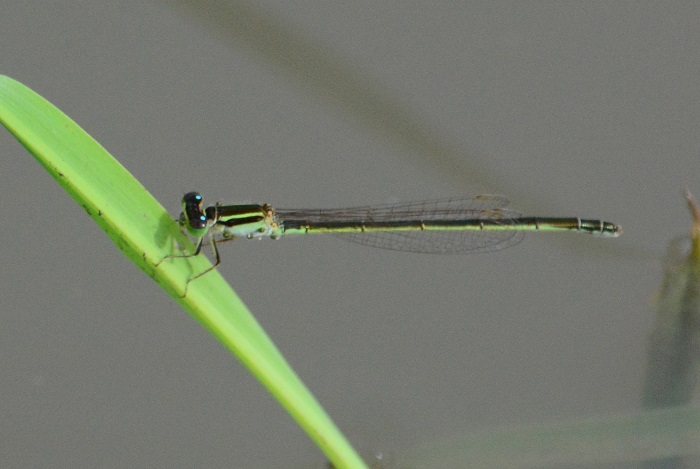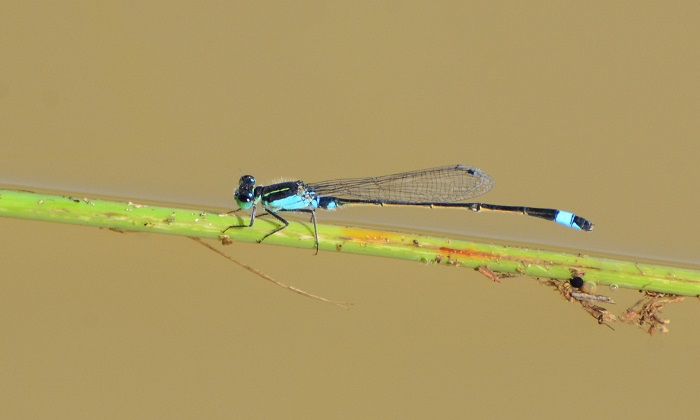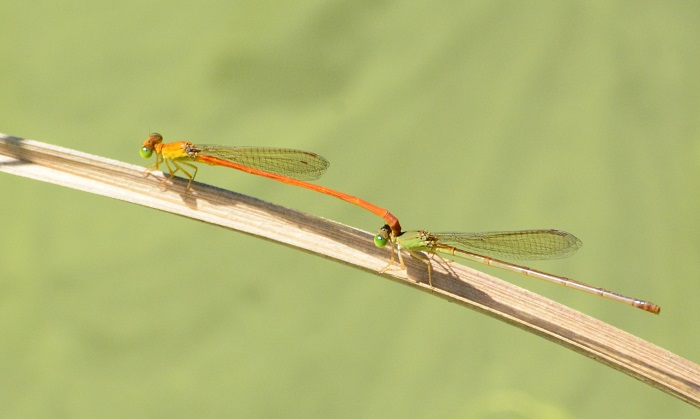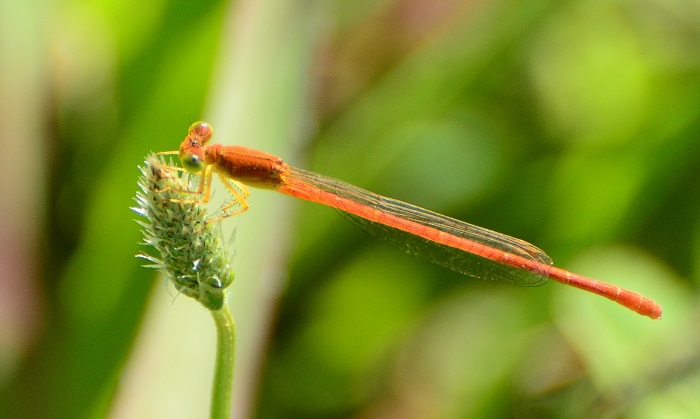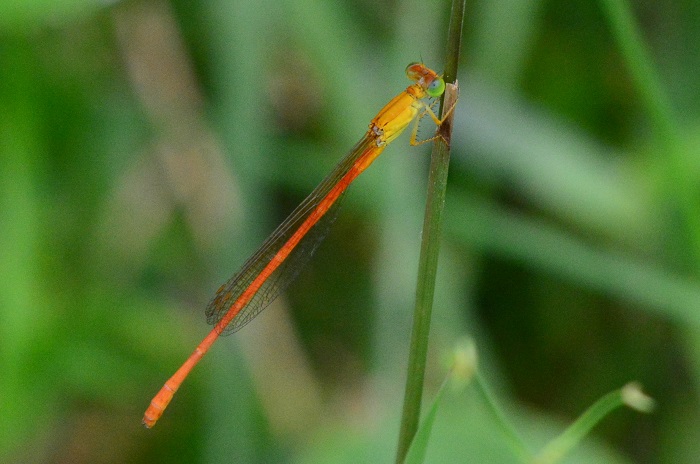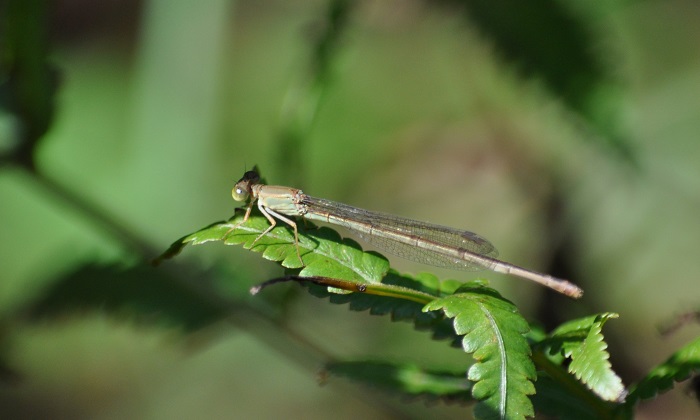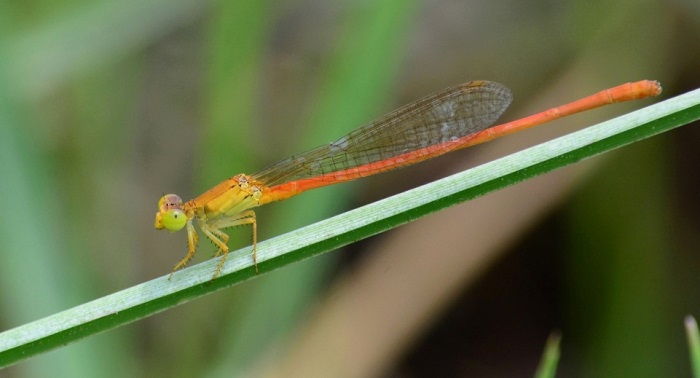
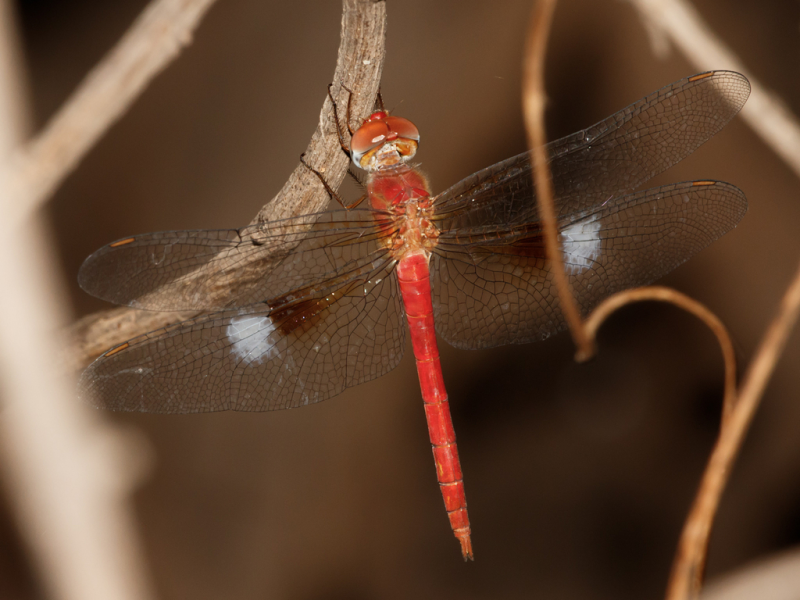
Keyhole Glider (Tramea basilaris)

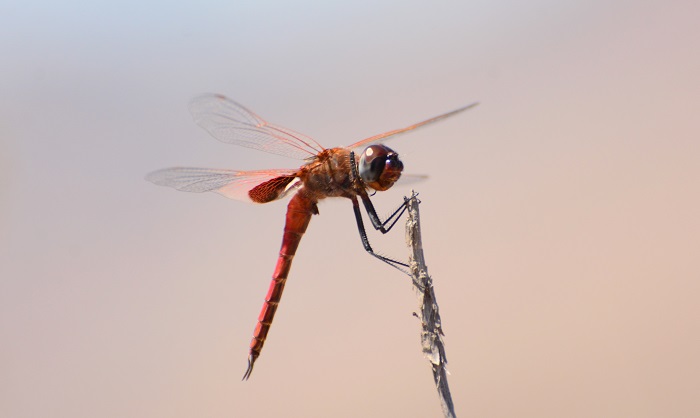
Cover photo by Gerhard Diedericks.

Find the Keyhole Glider in the FBIS database (Freshwater Biodiversity Information System) here.

Family Libellulidae

Identification
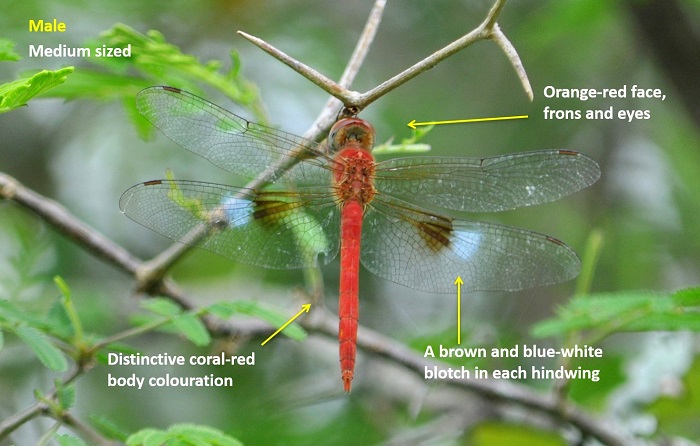
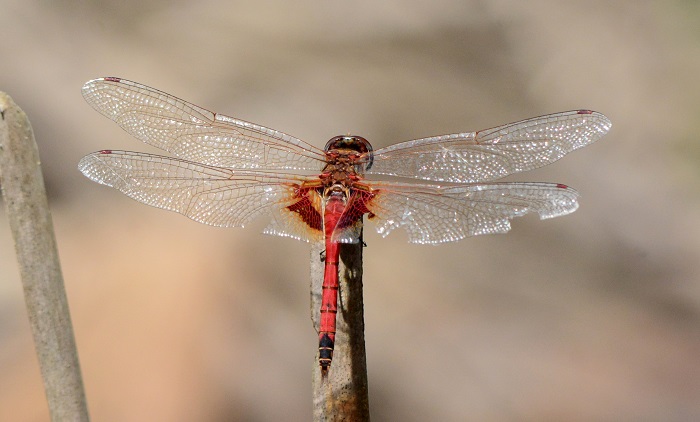
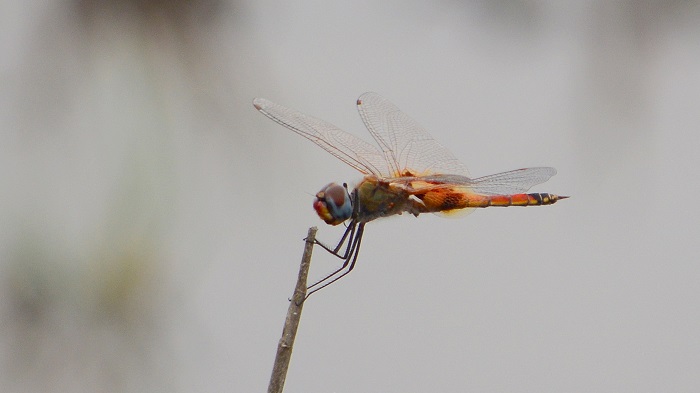
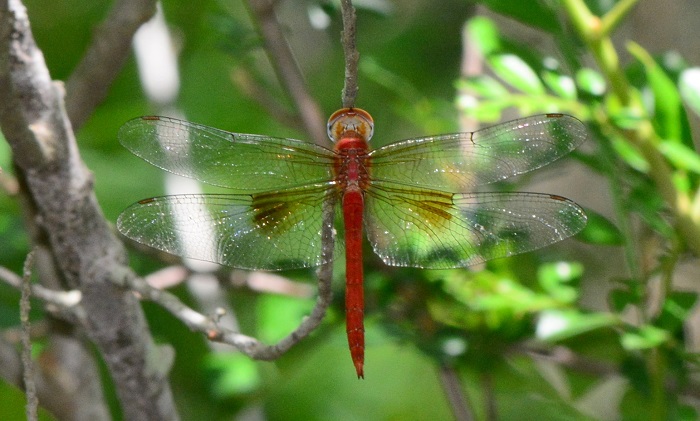
Keyhole Glider Tramea basilaris – Male
Mpempe Pan, KwaZulu-Natal
Photo by Ryan Tippett

Medium sized

Length up to 50mm; Wingspan attains 93mm.

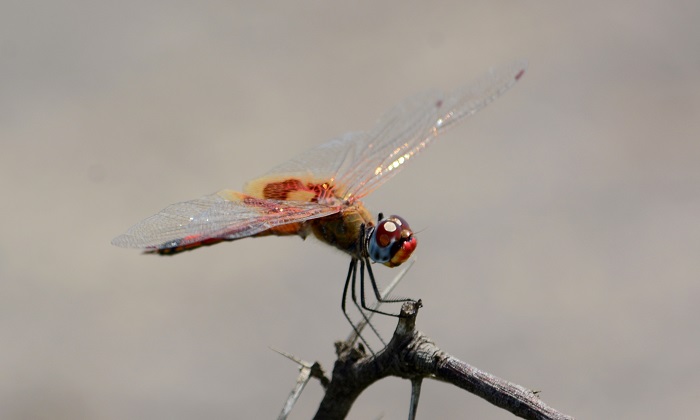
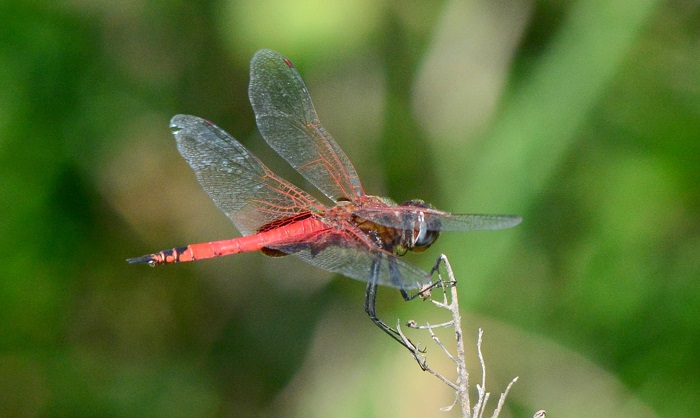
The Keyhole Glider most resembles Tramea limbata (Ferruginous Glider). That species is similar in both size and shape but has narrower, darker markings at the base of the hind wings and a dark brown face. Tramea basilaris has a red face with a variable amount of yellow.

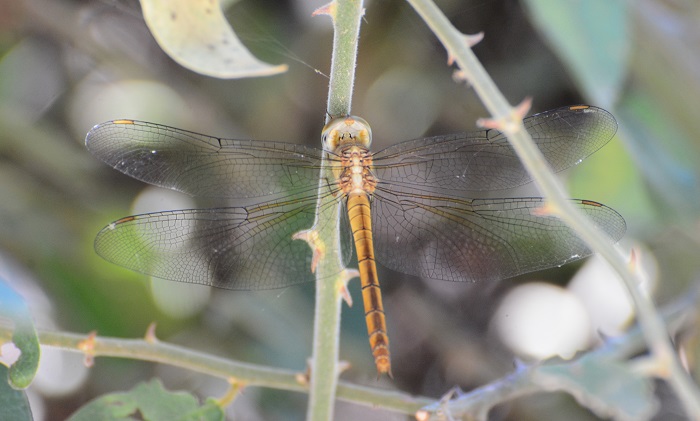
Females are similar to males but are yellowish-brown in colouration.

Click here for more details on identification of the Keyhole Glider.

Keyhole Glider Tramea basilaris – Female
Hluhluwe district, KwaZulu-Natal
Photo by Ryan Tippett

Habitat

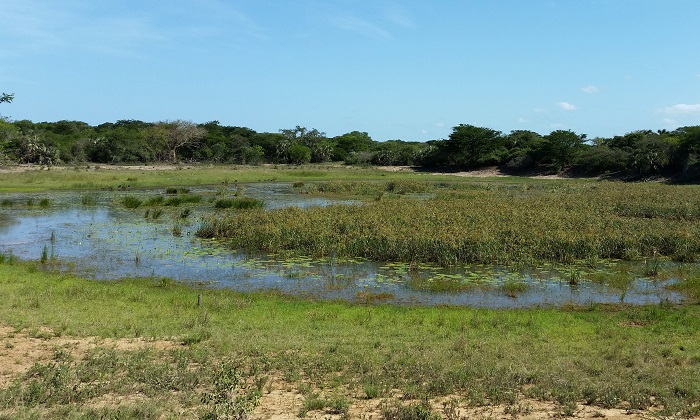
The Keyhole Glider inhabits a wide range of freshwater environments, but favours the still, ephemeral waters of pans, pools, and marshes. It is regularly found away from water especially in open, grassy areas with scattered bushes and trees.

Habitat – Mkuze Game Reserve, KwaZulu-Natal
Photo by Ryan Tippett

Behaviour

The Keyhole Glider is more often seen in flight than it is perched. Tramea basilaris has a smooth, gliding flight as it patrols back and forth along an irregular route. It sometimes hovers for a few seconds before continuing on its way. The Keyhole Glider perches on top of bushes, trees, and reeds. It is often found singly but is likely to be gregarious at favourable sites. The Keyhole Glider is a highly nomadic species that moves about in response to rainfall.

The Keyhole Glider is active from November to May.

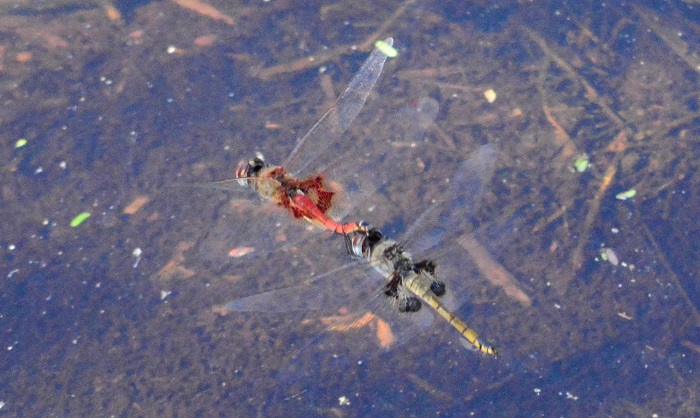
Keyhole Glider Tramea basilaris – Pair
Ehlatini Bush Camp, KwaZulu-Natal
Photo by Ryan Tippett

Status and Conservation

The Keyhole Glider is common but highly nomadic and erratic in its occurence. It may be abundant at certain sites. The Keyhole Glider is listed as of Least Concern in the IUCN Red List of Threatened Species.

Keyhole Glider Tramea basilaris – Female
Hluhluwe district, KwaZulu-Natal
Photo by Ryan Tippett

Distribution

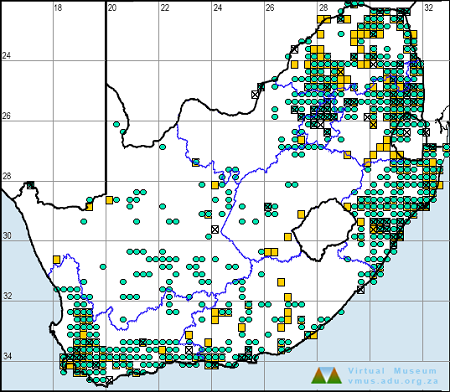
Tramea basilaris is widespread throughout Sub-Saharan Africa. It is liable to be encountered almost anywhere but is most common in the savanna regions. It’s range extends beyond Africa into parts of the Middle East and Asia. The Keyhole Glider also occurs on Madagascar and many of the Indian Ocean Islands.

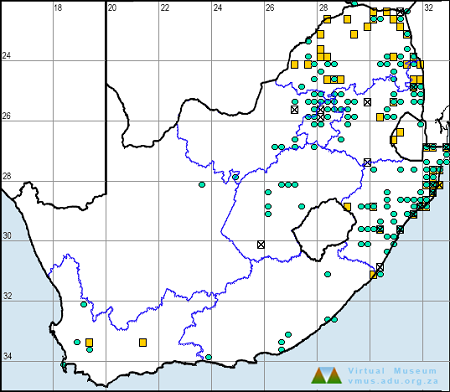
In South Africa it is mostly found in the north and east but vagrants can turn up almost anywhere.

Keyhole Glider Tramea basilaris – Male
Kosi Bay, iSimangaliso Wetland Park, KwaZulu-Natal
Photo by Ryan Tippett

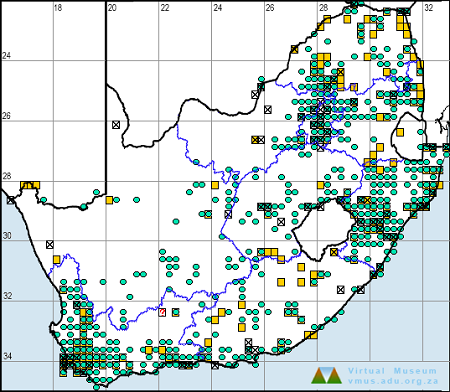
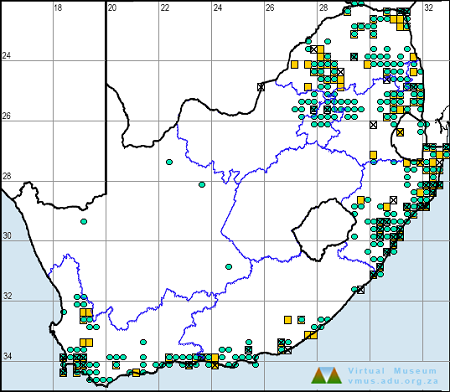
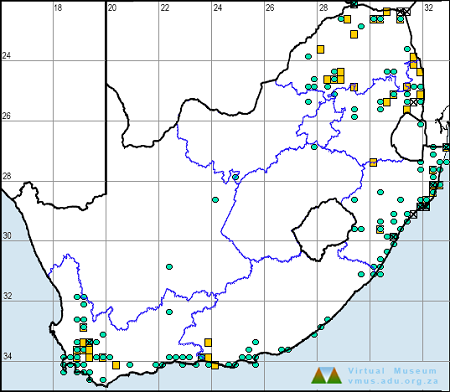
Below is a map showing the distribution of records for Keyhole Glider in the OdonataMAP database as at February 2020.

Below is a map showing the distribution of records for Keyhole Glider in the OdonataMAP database as of December 2024.

The next map below is an imputed map, produced by an interpolation algorithm, which attempts to generate a full distribution map from the partial information in the map above. This map will be improved by the submission of records to the OdonataMAP section of the Virtual Museum.

Ultimately, we will produce a series of maps for all the odonata species in the region. The current algorithm is a new algorithm. The objective is mainly to produce “smoothed” maps that could go into a field guide for odonata. This basic version of the algorithm (as mapped above) does not make use of “explanatory variables” (e.g. altitude, terrain roughness, presence of freshwater — we will be producing maps that take these variables into account soon). Currently, it only makes use of the OdonataMAP records for the species being mapped, as well as all the other records of all other species. The basic maps are “optimistic” and will generally show ranges to be larger than what they probably are.

These maps use the data in the OdonataMAP section of the Virtual Museum, and also the database assembled by the previous JRS funded project, which was led by Professor Michael Samways and Dr KD Dijkstra.

Keyhole Glider Tramea basilaris – Male
Charters Creek, iSimangaliso Wetland Park, KwaZulu-Natal
Photo by Ryan Tippett

Further Resources

The use of photographs by Gerhard Diedericks is acknowledged. All other photographs by Ryan Tippett.

Keyhole Glider Tramea basilaris (Palisot de Beauvois, 1807)

Other common names: Loerswewer (Afrikaans)

Recommended citation format: Loftie-Eaton M; Navarro R; Tippett RM; Underhill L. 2025. Keyhole Glider Tramea basilaris. Biodiversity and Development Institute. Available online at https://thebdi.org/2020/05/12/keyhole-glider-tramea-basilaris/

References: Tarboton, M; Tarboton, W. (2019). A Guide to the Dragonflies & Damselflies of South Africa. Struik Nature.

Samways, MJ. (2008). Dragonflies and Damselflies of South Africa. Pensoft

Samways, MJ. (2016). Manual of Freshwater Assessment for South Africa: Dragonfly Biotic Index. Suricata 2. South African National Biodiversity Institute, Pretoria

Martens, A; Suhling, F. (2007). Dragonflies and Damselflies of Namibia. Gamsberg Macmillan.

Keyhole Glider Tramea basilaris – Male
Nibela Peninsular, KwaZulu-Natal
Photo by Ryan Tippett

Similar Species

Ferruginous Glider (Tramea limbata)

Cover photo by Georg Jacobs.

Find the Ferruginous Glider in the FBIS database (Freshwater Biodiversity Information System) here.

Family Libellulidae

Identification

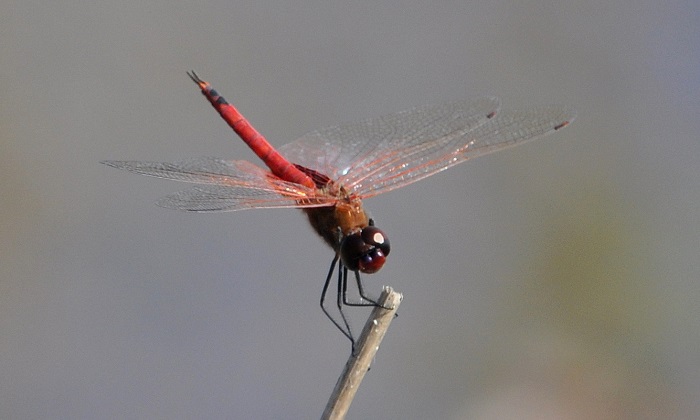
Ferruginous Glider Tramea limbata – Male
Kruger National Park, Mpumalanga
Photo by Gerhard Diedericks

Medium sized

Length up to 52mm; Wingspan up to 94mm.

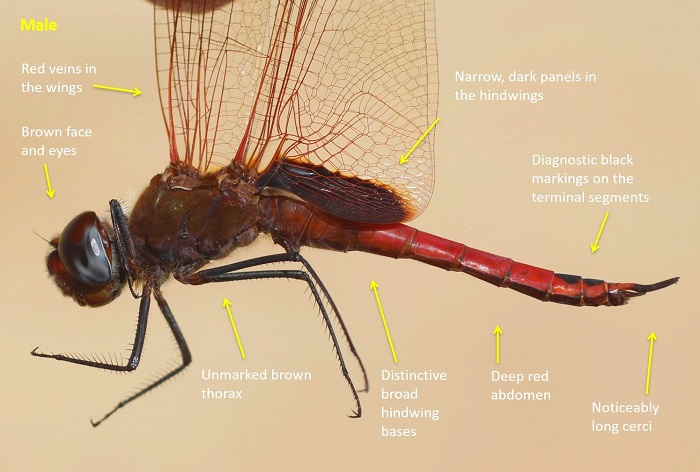
The Ferruginous Glider most resembles Tramea basilaris (Keyhole Glider). That species is similar in both size and shape but has more extensive and differently shaped markings at the base of the hind wings. Tramea limbata has a deep red rather than orange-red abdomen and a brown face and eyes. Tramea basilaris has a red face with variable amounts of yellow and dark red eyes.

Females closely resemble the males but have broader abdomens and their dark wing panels are rounder and slightly wider.

Click here for more details on identification of the Ferruginous Glider.

Habitat

The favoured breeding habitat of the Ferruginous Glider is open, shallow water bodies such as pans, lakes, dams, and marshes. The Ferruginous Glider prefers ephemeral wetlands. Non-breeding adults are regularly found in a variety of other habitats away from water.

Habitat – Near Hluhluwe KwaZulu-Natal
Photo by Ryan Tippett

Behaviour

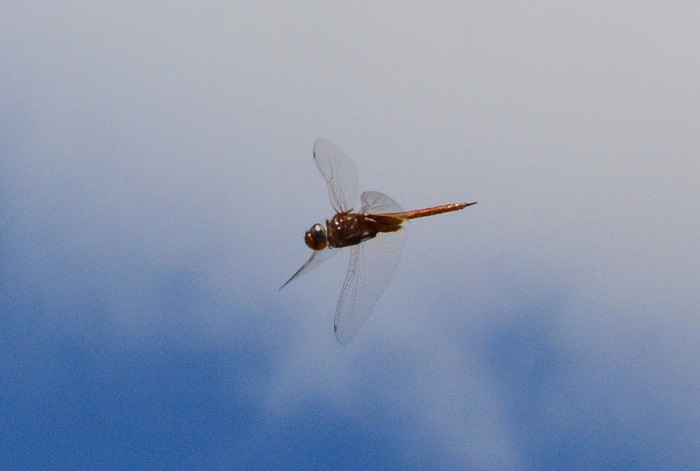
The Ferruginous Glider is a powerful, smooth flyer that spends much of its time on the wing. It mostly hunts in bush country away from the water. The Ferruginous Glider periodically perches on the tops of bushes, reeds, or trees. It is often gregarious and both sexes occur in the same vicinity. Tramea limbata is nomadic with erratic movements linked to rainfall.

The Ferruginous Glider is on the wing from November to May

Ferruginous Glider Tramea limbata
Hluhluwe district, KwaZulu-Natal
Photo by Ryan Tippett

Status and Conservation

The Ferruginous Glider is common and is listed as of Least Concern in the IUCN Red List of Threatened Species. This is a hardy and adaptable species that readily utilises temporary, degraded, and man-made water bodies.

Ferruginous Glider Tramea limbata – Male
Mpempe Pan, KwaZulu-Natal
Photo by Ryan Tippett

Distribution

Tramea limbata has a very wide distribution. It is erratically distributed throughout sub-Saharan Africa and is also found on Madagascar and many of the Indian Ocean islands. Populations also occur in parts of the Middle East and Western Asia.

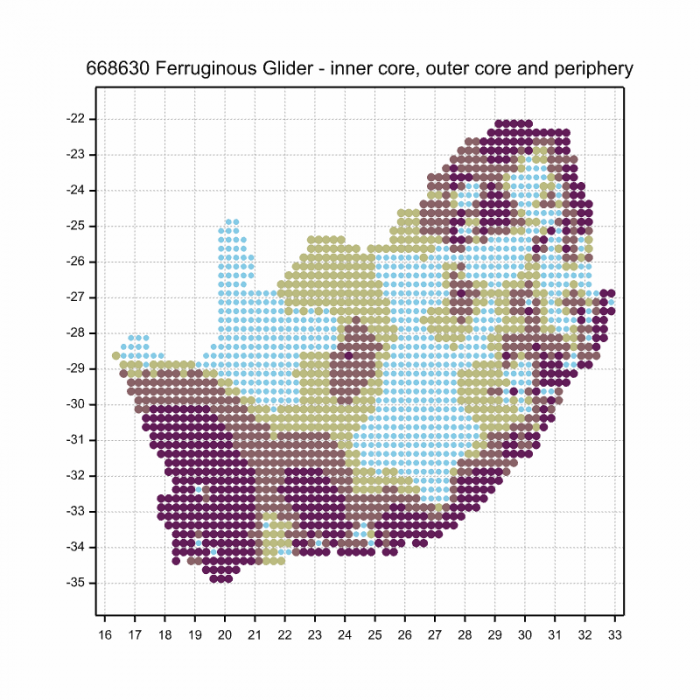
In South Africa, the Ferruginous Glider is found primarily in the north, east and south of the country. It largely avoids the more arid central interior, although vagrants may appear almost anywhere. It is most abundant in KwaZulu-Natal and the Western Cape. The Ferruginous Glider also occurs widely in Mpumalanga, Gauteng, North-West, and Limpopo.

Ferruginous Glider Tramea limbata – Male
Montagu, Western Cape
Photo by Ryan Tippett

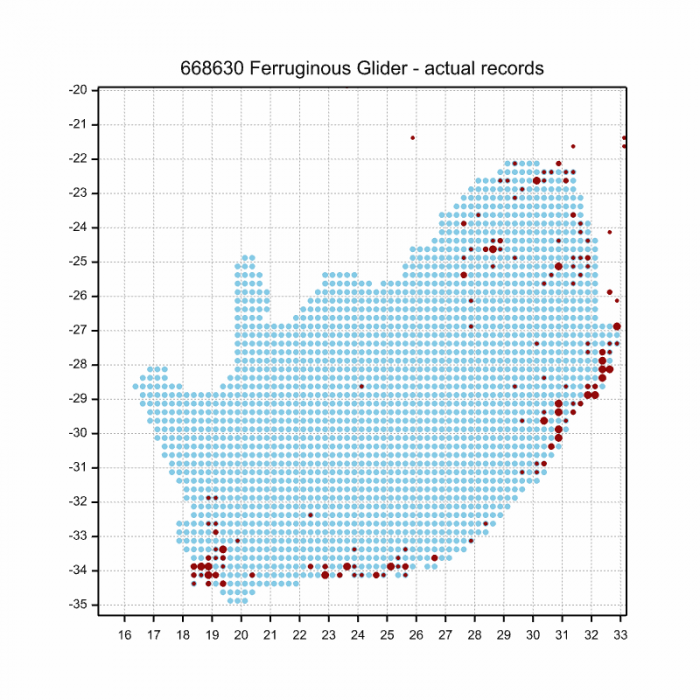
Below is a map showing the distribution of records for Ferruginous Glider in the OdonataMAP database as at February 2020.

Below is a map showing the distribution of records for Ferruginous Glider in the OdonataMAP database as of December 2024.

The next map below is an imputed map, produced by an interpolation algorithm, which attempts to generate a full distribution map from the partial information in the map above. This map will be improved by the submission of records to the OdonataMAP section of the Virtual Museum.

Ultimately, we will produce a series of maps for all the odonata species in the region. The current algorithm is a new algorithm. The objective is mainly to produce “smoothed” maps that could go into a field guide for odonata. This basic version of the algorithm (as mapped above) does not make use of “explanatory variables” (e.g. altitude, terrain roughness, presence of freshwater — we will be producing maps that take these variables into account soon). Currently, it only makes use of the OdonataMAP records for the species being mapped, as well as all the other records of all other species. The basic maps are “optimistic” and will generally show ranges to be larger than what they probably are.

These maps use the data in the OdonataMAP section of the Virtual Museum, and also the database assembled by the previous JRS funded project, which was led by Professor Michael Samways and Dr KD Dijkstra.

Ferruginous Glider Tramea limbata – Male
Ehlatini Bush Camp, KwaZulu-Natal
Photo by Ryan Tippett

Further Resources

The use of photographs by Georg Jacobs and Gerhard Diedericks is acknowledged. All other photographs by Ryan Tippett.

Ferruginous Glider Tramea limbata (Desjardins, 1832)

Other common names: Voyaging Glider (Alternative English Name); Enkelbandswewer (Afrikaans)

Recommended citation format: Loftie-Eaton M; Navarro R; Tippett RM; Underhill L. 2025. Ferruginous Glider Tramea limbata. Biodiversity and Development Institute. Available online at https://thebdi.org/2020/05/12/ferruginous-glider-tramea-limbata/

References: Tarboton, M; Tarboton, W. (2019). A Guide to the Dragonflies & Damselflies of South Africa. Struik Nature.

Samways, MJ. (2008). Dragonflies and Damselflies of South Africa. Pensoft

Samways, MJ. (2016). Manual of Freshwater Assessment for South Africa: Dragonfly Biotic Index. Suricata 2. South African National Biodiversity Institute, Pretoria

Martens, A; Suhling, F. (2007). Dragonflies and Damselflies of Namibia. Gamsberg Macmillan.

Ferruginous Glider Tramea limbata
Paardenberg, Western Cape
Photo by Ryan Tippett

Similar Species

Red-veined Dropwing (Trithemis arteriosa)

Cover photo by Jaco Botes.

Find this species in the FBIS database (Freshwater Biodiversity Information System) here.

Family Libellulidae

Identification

Red-veined Dropwing Trithemis arteriosa – Male
Mkuze River, KwaZulu-Natal
Photo by Ryan Tippett

Small size

Length up to 38mm; Wingspan reaches 60mm.

Male Red-veined Dropwings are readily identified in the field but may be confused with other small red or purplish dragonflies. It is most similar to the Russet Dropwing (Trithemis pluvialis) but that species is orange-red in colouration as opposed to bright red with a purple wash on the thorax.

Females are similar in appearance to several other small dragonfly females. However, they are easily identified by the distinctive black patterning on the abdomen.

Click here for more details on identification.
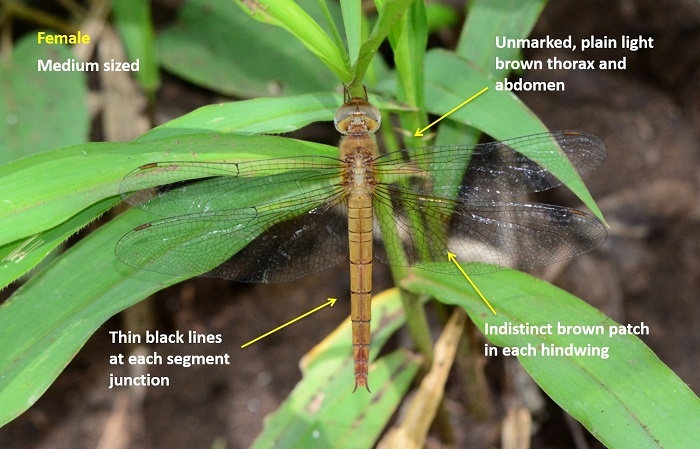
Red-veined Dropwing Trithemis arteriosa – Female
Ndumo Game Reserve, KwaZulu-Natal
Photo by Ryan Tippett

Habitat

The Red-veined Dropwing inhabits a wide range of natural and man-made water bodies, including rivers, streams, lakes, pans, dams, concrete reservoirs, swimming pools and animal drinking troughs. They prefer, but are not limited to, vegetated habitats and can be found at both still and running water. The Red-veined Dropwing also makes use of temporary water bodies and is present at a wide range of altitudes.

Habitat – Ngonweni, KwaZulu-Natal
Photo by Alex Briggs

Behaviour

Males are conspicuous at most water bodies, as they sit prominently on exposed perches over or near the water. They will often also perch on the ground. The Red-veined Dropwing is a very active and restless species. It hunts from a perch and frequently returns to the same site after each foray to catch prey or to chase off rivals. Males and females usually both occur in the same vicinity.

Red-veined Dropwings are on the wing year round in most areas. However, they are found in lower numbers during the cooler months. This species is most numerous from October to January.

Red-veined Dropwing Trithemis arteriosa – Male
Near Hluhluwe, KwaZulu-Natal
Photo by Ryan Tippett

Status and Conservation

The Red-veined Dropwing is very common and is probably the most frequently encountered dragonfly species in the region. It is listed as of Least Concern in the IUCN Red List of Threatened Species. Trithemis arteriosa is a very adaptable species that readily makes use of degraded and man-made habitats.

Red-veined Dropwing Trithemis arteriosa – Male
Kuleni Game Park, KwaZulu-Natal
Photo by Ryan Tippett

Distribution

The Red-veined Dropwing is very widespread and is found virtually throughout Africa, including some of the driest regions. It also occurs around the Mediterranean Sea and in parts of the Middle East. The Red-veined Dropwing is found throughout southern Africa.

Below is a map showing the distribution of records for Red-veined Dropwing in the OdonataMAP database as at February 2020.

Below is a map showing the distribution of records for Red-veined Dropwing in the OdonataMAP database as of December 2024.

The next map below is an imputed map, produced by an interpolation algorithm, which attempts to generate a full distribution map from the partial information in the map above. This map will be improved by the submission of records to the OdonataMAP section of the Virtual Museum.

Ultimately, we will produce a series of maps for all the odonata species in the region. The current algorithm is a new algorithm. The objective is mainly to produce “smoothed” maps that could go into a field guide for odonata. This basic version of the algorithm (as mapped above) does not make use of “explanatory variables” (e.g. altitude, terrain roughness, presence of freshwater — we will be producing maps that take these variables into account soon). Currently, it only makes use of the OdonataMAP records for the species being mapped, as well as all the other records of all other species. The basic maps are “optimistic” and will generally show ranges to be larger than what they probably are.

These maps use the data in the OdonataMAP section of the Virtual Museum, and also the database assembled by the previous JRS funded project, which was led by Professor Michael Samways and Dr KD Dijkstra.

Red-veined Dropwing Trithemis arteriosa – Male
Amakhosi Game Reserve, KwaZulu-Natal
Photo by Ryan Tippett

Further Resources

The use of photographs by Alex Briggs and Jaco Botes is acknowledged. All other photographs by Ryan Tippett.

Red-veined Dropwing Trithemis arteriosa (Burmeister, 1839)

Other common names: Rooinerfie (Afrikaans)

Recommended citation format: Loftie-Eaton M; Navarro R; Tippett RM; Underhill L. 2025. Red-veined Dropwing Trithemis arteriosa. Biodiversity and Development Institute. Available online at https://thebdi.org/2020/05/12/red-veined-dropwing-trithemis-arteriosa/

References: Tarboton, M; Tarboton, W. (2019). A Guide to the Dragonflies & Damselflies of South Africa. Struik Nature.

Samways, MJ. (2008). Dragonflies and Damselflies of South Africa. Pensoft

Samways, MJ. (2016). Manual of Freshwater Assessment for South Africa: Dragonfly Biotic Index. Suricata 2. South African National Biodiversity Institute, Pretoria

Martens, A; Suhling, F. (2007). Dragonflies and Damselflies of Namibia. Gamsberg Macmillan.

Red-veined Dropwing Trithemis arteriosa – Male
Carnarvon district, Northern Cape
Photo by Ryan Tippett

Similar Species

Halfshade Dropwing (Trithemis aconita)

Cover photo by Desire Darling.

Find the Halfshade Dropwing in the FBIS database (Freshwater Biodiversity Information System) here.

Family Libellulidae

Identification

Halfshade Dropwing Trithemis aconita – Male
Mkuze River, KwaZulu-Natal
Photo by Ryan Tippett

Small size

Length up to 41mm; Wingspan attains 67mm.

The overall appearance of the Halfshade Dropwing is of a small, slender, and entirely dark blue species. It is one of a handful of small, dark blue species in the region. Trithemis aconita can be told apart from other similar species by its noticeably slender abdomen and its shady riverine habitat.

Males most resemble the Silhouette Dropwing (Trithemis hecate). The Halfshade Dropwing can be differentiated by its thin black abdomen with yellow streaks. This abdomen pattern seldom becomes obscured with pruinosity, unlike the Silhouette Dropwing. Young male Silhouette Dropwings (Trithemis hecate), also have thin abdomens with yellow streaks. However, this pattern becomes obscured with dark blue pruinosity once mature. The two species also differ markedly in their behaviour and habitat choices.

Females are easily confused with other Trithemis species. They are best identified by their association with the males.

Halfshade Dropwing Trithemis aconita – Immature Male
Kosi Bay, iSimangaliso Wetland Park, KwaZulu-Natal
Photo by Ryan Tippett

Click here for more details on identification of the Halfshade Dropwing.

Habitat

The Halfshade Dropwing frequents shaded rivers and streams in riverine, swamp, and coastal forests, as well as dense woodland. It favours areas with leafy trees overhanging the river, often where there is running water with rocks or shaded pools.

Typical habitat – Nwanedi, Limpopo
Photo by John Wilkinson

Behaviour

The Halfshade Dropwing is a shade loving species, often perching on shaded twigs over the water. It also sits in dappled light and sunspots near the water but is seldom found far from shade. The Halfshade Dropwing is shy and weary and flies into the treetops at the slightest sign of disturbance. It usually perches under the overhanging canopy of trees, often fairly high up but sometimes also low down, close to the water on rocks and exposed tree roots.

The Halfshade Dropwing flies from November to April.

Halfshade Dropwing Trithemis aconita – Male
Mkuze River, KwaZulu-Natal
Photo by Ryan Tippett

Status and Conservation

The Halfshade Dropwing is uncommon and very localised in South Africa. It is listed as of Least Concern in the IUCN Red List of Threatened Species. This species is intolerant of damage to its riverine home and is only found in high-quality habitats.

Halfshade Dropwing Trithemis aconita – Male
Amakhosi Game Reserve, KwaZulu-Natal
Photo by Ryan Tippett

Distribution

The Halfshade Dropwing is erratically distributed throughout most of sub-Saharan Africa. It is largely absent from the dry arid parts of Namibia, Botswana, and South Africa. Its South African range is confined to low altitudes along the perennial savanna rivers of the Limpopo and Mpumalanga provinces and the forested rivers of coastal Kwa-Zulu-Natal.

Below is a map showing the distribution of records for Halfshade Dropwing in the OdonataMAP database as at February 2020.

Below is a map showing the distribution of records for Halfshade Dropwing in the OdonataMAP database as at December 2024.

The next map below is an imputed map, produced by an interpolation algorithm, which attempts to generate a full distribution map from the partial information in the map above. This map will be improved by the submission of records to the OdonataMAP section of the Virtual Museum.

Ultimately, we will produce a series of maps for all the odonata species in the region. The current algorithm is a new algorithm. The objective is mainly to produce “smoothed” maps that could go into a field guide for odonata. This basic version of the algorithm (as mapped above) does not make use of “explanatory variables” (e.g. altitude, terrain roughness, presence of freshwater — we will be producing maps that take these variables into account soon). Currently, it only makes use of the OdonataMAP records for the species being mapped, as well as all the other records of all other species. The basic maps are “optimistic” and will generally show ranges to be larger than what they probably are.

These maps use the data in the OdonataMAP section of the Virtual Museum, and also the database assembled by the previous JRS funded project, which was led by Professor Michael Samways and Dr KD Dijkstra.

Halfshade Dropwing Trithemis aconita – Male
Mkuze River, KwaZulu-Natal
Photo by Ryan Tippett

Further Resources

The use of photographs by John Wilkinson, and Sharon Stanton is acknowledged.

Halfshade Dropwing Trithemis aconita (Lieftinck, 1969)

Other common names: Monk’s Hood Dropwing (Alt. English); Skaduvalvlerkie (Afrikaans).

Recommended citation format: Loftie-Eaton M; Navarro R; Tippett RM; Underhill L. 2025. Halfshade Dropwing Trithemis aconita. Biodiversity and Development Institute. Available online at https://thebdi.org/2020/05/12/halfshade-dropwing-trithemis-aconita/

References: Tarboton, M; Tarboton, W. (2019). A Guide to the Dragonflies & Damselflies of South Africa. Struik Nature.

Samways, MJ. (2008). Dragonflies and Damselflies of South Africa. Pensoft

Samways, MJ. (2016). Manual of Freshwater Assessment for South Africa: Dragonfly Biotic Index. Suricata 2. South African National Biodiversity Institute, Pretoria

Martens, A; Suhling, F. (2007). Dragonflies and Damselflies of Namibia. Gamsberg Macmillan.

Halfshade Dropwing Trithemis aconita – Male
Mkuze River, KwaZulu-Natal
Photo by Ryan Tippett

Similar Species

Mauve Bluet (Proischnura polychromatica)

Cover photo by Gregg Darling.

Find the Mauve Bluet in the FBIS database (Freshwater Biodiversity Information System) here.

Family Coenagrionidae

Identification

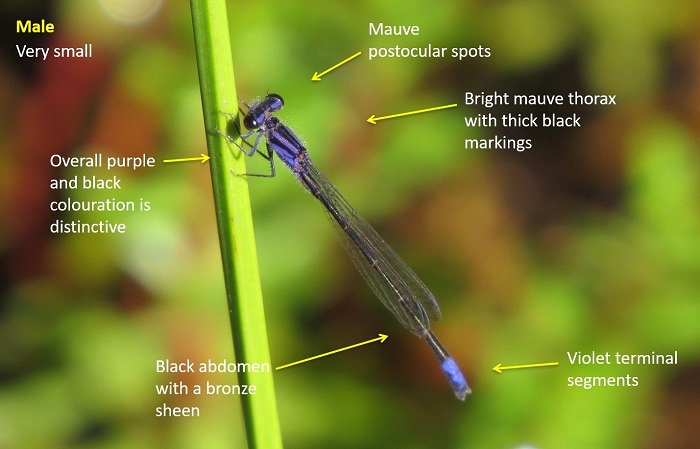
Very small

Length up to 23mm; Wingspan reaches 34mm.

The adult male is highly distinctive, being bright mauve/violet and black. The black parts have a bronze-green gloss.

The female is mainly pale brown with darker markings.

Male Mauve Bluets are most likely to be mistaken for the Male Spesbona (Spesbona angusta). Both show violet and black colouration, but the Spesbona is larger and more robust. The head of the Spesbona is violet with black postocular markings, while the head of the Mauve Bluet is black with purple postocular markings.

Female Mauve Bluets could easily be mistaken for those of the Swamp Bluet (Africallagma glaucum) and are best identified by their association with the males.

Click here for more details on identification.

Mauve Bluet Proischnura polychromatica – Male
Theewaterskloof, Western Cape
Photo by Felicity Grundlingh

Habitat

The preferred habitat of the Mauve Bluet is transient pools in stream beds with floating vegetation and dense reeds and sedges.

Behaviour

The Mauve Bluet is a rather inconspicuous species that sits low down among dense waterside vegetation. It is usually only spotted once it flits away after being disturbed.

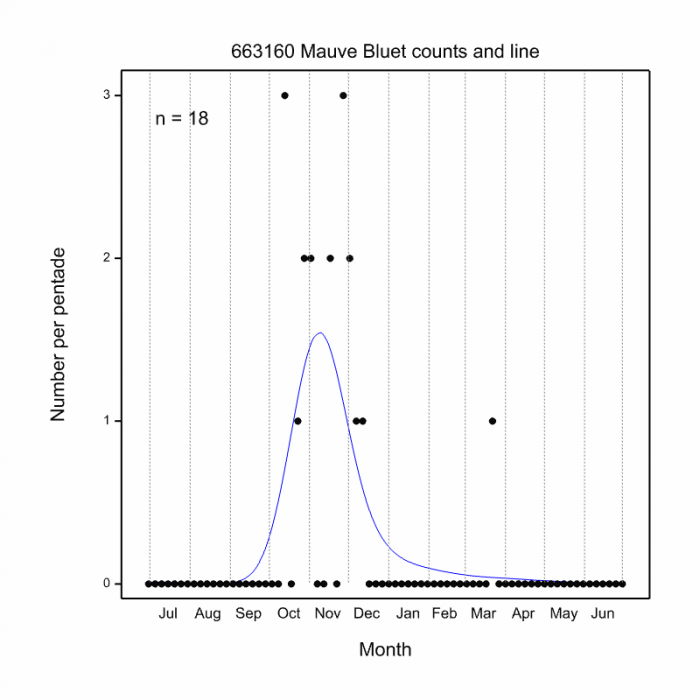
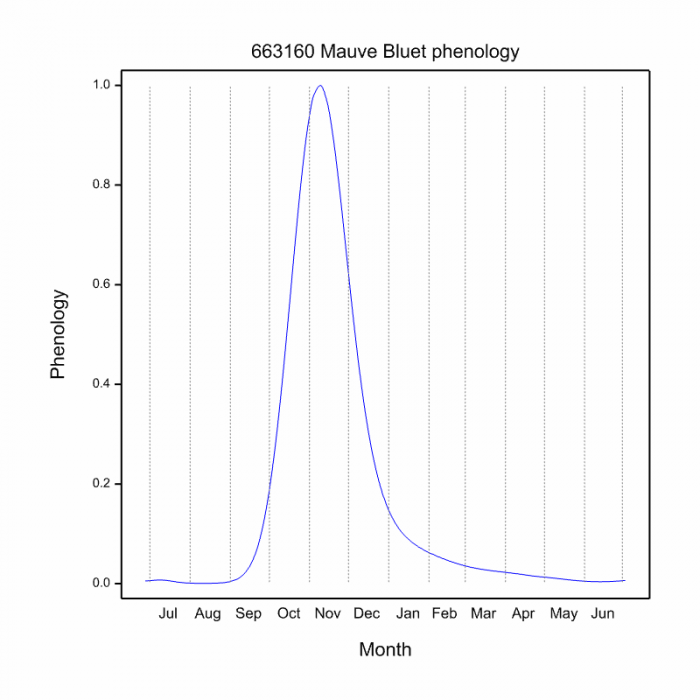
The Mauve Bluet is most active from October to December (see Phenology below).

Status and Conservation

The Mauve Bluet is rare and highly localised. It’s habitat is threatened by the encroachment of cattle and the loss of suitable habitat. For these reasons, the International Union for Conservation of Nature (IUCN) has listed it as endangered.

Distribution

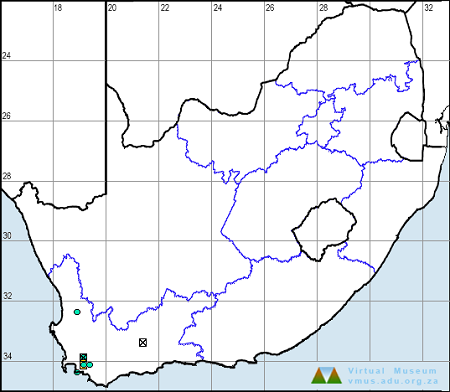
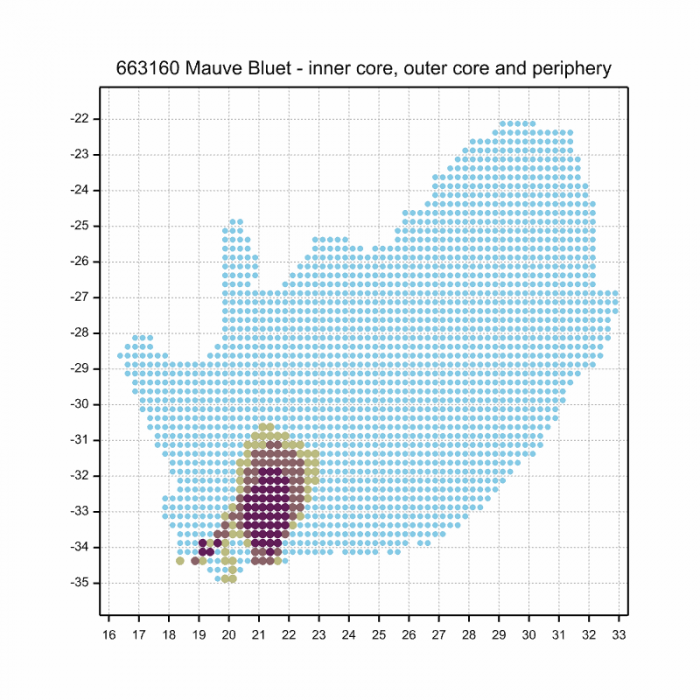
The Mauve Bluet is endemic to a few small, seemingly isolated areas of the Western Cape Province in South Africa. However, due to its cryptic behaviour and small size, the Mauve Bluet is probably under-recorded and is likely to occur at other sites.

Below is a map showing the distribution of records for Mauve Bluet in the OdonataMAP database as at February 2020.

Below is a map showing the distribution of records for Mauve Bluet in the OdonataMAP database as of December 2024.

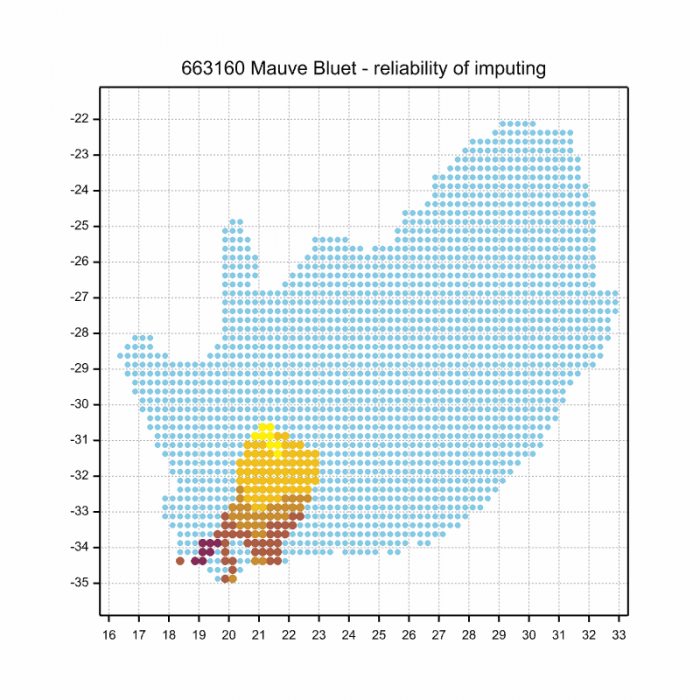
The next map below is an imputed map, produced by an interpolation algorithm, which attempts to generate a full distribution map from the partial information in the map above. This map will be improved by the submission of records to the OdonataMAP section of the Virtual Museum.

Ultimately, we will produce a series of maps for all the odonata species in the region. The current algorithm is a new algorithm. The objective is mainly to produce “smoothed” maps that could go into a field guide for odonata. This basic version of the algorithm (as mapped above) does not make use of “explanatory variables” (e.g. altitude, terrain roughness, presence of freshwater — we will be producing maps that take these variables into account soon). Currently, it only makes use of the OdonataMAP records for the species being mapped, as well as all the other records of all other species. The basic maps are “optimistic” and will generally show ranges to be larger than what they probably are.

These maps use the data in the OdonataMAP section of the Virtual Museum, and also the database assembled by the previous JRS funded project, which was led by Professor Michael Samways and Dr KD Dijkstra.

Phenology

Further Resources

The use of photographs by Gregg Darling and Felicity Grundlingh is acknowledged.

Mauve Bluet Proischnura polychromatica (Barnard, 1937)

Other common names: Persbloutjie (Afrikaans)

Recommended citation format: Loftie-Eaton M; Navarro R; Tippett RM; Underhill L. 2025. Mauve Bluet Proischnura polychromatica. Biodiversity and Development Institute. Available online at https://thebdi.org/2020/05/12/mauve-bluet-proischnura-polychromatica/

References: Tarboton, M; Tarboton, W. (2019). A Guide to the Dragonflies & Damselflies of South Africa. Struik Nature.

Samways, MJ. (2008). Dragonflies and Damselflies of South Africa. Pensoft

Samways, MJ. (2016). Manual of Freshwater Assessment for South Africa: Dragonfly Biotic Index. Suricata 2. South African National Biodiversity Institute, Pretoria

Similar Species

Tropical Bluetail (Ischnura senegalensis)

Cover photo by Andrew & Heather Hodgson.

Find the Tropical Bluetail in the FBIS database (Freshwater Biodiversity Information System) here.

Family Coenagrionidae

Identification

Tropical Bluetail Ischnura senegalensis – Male
Amatikulu Nature Reserve, KwaZulu-Natal
Photo by Ryan Tippett

Very small size

Length up to 31mm; Wingspan reaches 40mm.

The Tropical Bluetail is a small, variable damselfly. It is most easily mistaken for a Sprite (Pseudagrion) or Bluet (Africallagma; Azuragrion). In males, the most diagnostic features are the bicoloured pterostigmas, distinctively shaped blue marking on segments 8 and 9, and the dark metallic blue patch on segment 2. Note that the sides of the thorax may be green or sometimes blue.

Females are very variable and can be dull greenish, brown, or orange. The side of the thorax is brown or greenish-brown in aged females. Mature females have green thorax sides while immature females exhibit bright orange sides. Orange females could be mistaken for a female Palmiet Sprite (Pseudagrion furcigerum), but are smaller and have thicker black markings on the thorax

Click here for more details on identification.

Tropical Bluetail Ischnura senegalensis – Immature Female
Near Hluhluwe, KwaZulu-Natal
Photo by Ryan Tippett

Habitat

The Tropical Bluetail is able to utilise virtually any still-water habitat, from lakes and pans to dams, ponds, and marshes. It also inhabits slow-flowing sections of rivers and streams. The Tropical Bluetail occupies both perennial and temporary waterbodies. In addition, Ischnura senegalensis is tolerant of high salinities and polluted waters. It normally sits amongst aquatic vegetation like sedges, Reeds, grasses, and waterlilies, and is frequently found on mats of floating algae.

Habitat – Mkuze Game Reserve, KwaZulu-Natal
Photo by Ryan Tippett

Behaviour

Mature males sit close to the water on vegetation. Females are found in the same areas as the males. Female and immature Tropical Bluetails are often found in long grass and rank growth further from the water.

Most active from September to April, but recorded throughout the year. See Phenology below.

Tropical Bluetail Ischnura senegalensis – Male
Hluhluwe district, KwaZulu-Natal
Photo by Ryan Tippett
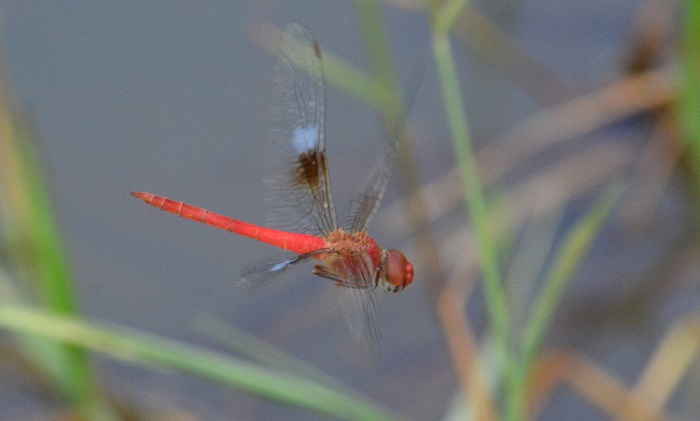
Status and Conservation

The Tropical Bluetail is very common and widespread. It is listed as of Least Concern in the IUCN Red List of Threatened Species. Ischnura senegalensis is a very hardy and adaptable species. It is often the most common species in degraded or marginal habitats.

Tropical Bluetail Ischnura senegalensis – Female
Linyanti, Botswana
Photo by Ryan Tippett

Distribution

The Tropical Bluetail has a very wide distribution. It is found throughout most of Africa, Madagascar, the Middle East, Central, Southern, and South East Asia, Indonesia, and on to Papua New Guinea. It is also found in parts of China and Japan.

In South Africa it occurs throughout, including arid areas provided there is suitable habitat.

Tropical Bluetail Ischnura senegalensis – Male
Amakhosi Game Reserve, KwaZulu-Natal
Photo by Ryan Tippett

Below is a map showing the distribution of records for Tropical Bluetail in the OdonataMAP database as of February 2020.

Below is a map showing the distribution of records for Tropical Bluetail in the OdonataMAP database as of December 2024.

The next map below is an imputed map, produced by an interpolation algorithm, which attempts to generate a full distribution map from the partial information in the map above. This map will be improved by the submission of records to the OdonataMAP section of the Virtual Museum.

Ultimately, we will produce a series of maps for all the odonata species in the region. The current algorithm is a new algorithm. The objective is mainly to produce “smoothed” maps that could go into a field guide for odonata. This basic version of the algorithm (as mapped above) does not make use of “explanatory variables” (e.g. altitude, terrain roughness, presence of freshwater — we will be producing maps that take these variables into account soon). Currently, it only makes use of the OdonataMAP records for the species being mapped, as well as all the other records of all other species. The basic maps are “optimistic” and will generally show ranges to be larger than what they probably are.

These maps use the data in the OdonataMAP section of the Virtual Museum, and also the database assembled by the previous JRS funded project, which was led by Professor Michael Samways and Dr KD Dijkstra.

Tropical Bluetail Ischnura senegalensis – Male
Carnarvon district, Northern Cape
Photo by Ryan Tippett

Phenology

Tropical Bluetail Ischnura senegalensis – Male
Hluhluwe district, KwaZulu-Natal
Photo by Ryan Tippett

Further Resources

The use of photographs by Andrew & Heather Hodgson is acknowledged. All other photographs by Ryan Tippett.

Tropical Bluetail Ischnura senegalensis (Rambur, 1842)

Other common names: Hemelstertjie (Afrikaans)

Recommended citation format: Loftie-Eaton M; Navarro R; Tippett RM; Underhill L. 2025. Tropical Bluetail Ischnura senegalensis. Biodiversity and Development Institute. Available online at https://thebdi.org/2020/05/12/tropical-bluetail-ischnura-senegalensis/

References: Tarboton, M; Tarboton, W. (2019). A Guide to the Dragonflies & Damselflies of South Africa. Struik Nature.

Samways, MJ. (2008). Dragonflies and Damselflies of South Africa. Pensoft

Samways, MJ. (2016). Manual of Freshwater Assessment for South Africa: Dragonfly Biotic Index. Suricata 2. South African National Biodiversity Institute, Pretoria

Martens, A; Suhling, F. (2007). Dragonflies and Damselflies of Namibia. Gamsberg Macmillan.

Tropical Bluetail Ischnura senegalensis – Male
Hluhluwe district, KwaZulu-Natal
Photo by Ryan Tippett

Similar Species

Suave Citril (Ceriagrion suave)

Cover photo by Gary Brown.

Find the Suave Citril in the FBIS database (Freshwater Biodiversity Information System) here.

Family Coenagrionidae

Identification

Suave Citril Ceriagrion suave – Male
Marloth Park, Mpumalanga
Photo by Juan-Pierre Antunes

Small size

Length up to 41mm; Wingspan reaches 48mm.

The Suave Citril is a small all-orange damselfly. It closely resembles Ceriagrion glabrum (Common Citril). The Suave Citril is best told apart by lacking the small teeth on the hind margin of segment 10 and by its distinctive clasper shape. In Ceriagrion suave the upper and lower claspers are of equal length. In Ceriagrion glabrum the lower clasper extends out beyond the upper clasper.

Colouration is not a reliable means of identification due to variability relating to age.

Females are similar to the males but are duller and slightly more robust.

Click here for more details on identification.

Habitat

The Suave Citril’s natural habitats are pans, pools, marshes, and streams in subtropical or tropical savanna and shrubland. It favours shallowly flooded habitats and sites with rich emergent sedges and grasses.

Behaviour

The Suave Citril perches on grass and sedge stems over shallow water. The Suave Citril is inconspicuous despite its bright colouration.

This species is on the wing from September to April (see Phenology below).

Suave Citril Ceriagrion suave – Male
Linyanti, Botswana
Photo by Ryan Tippett

Status and Conservation

In South Africa Ceriagrion suave is uncommon to rare and erratic in its occurence. It is listed globally as of Least Concern in the IUCN Red List of Threatened Species, but in South Africa, the Suave Citril is regarded as Endangered

Suave Citril Ceriagrion suave – Male
Okavango Delta, Botswana
Photo by Ryan Tippett

Distribution

The Suave Citril is widespread in sub-Saharan Africa, particularly in the wetter regions. Its range in South Africa is marginal and has only been recorded from a few locations in the extreme North-East from Pafuri in the Northern Kruger National Park to Kosi Bay in north-eastern KwaZulu-Natal.

Below is a map showing the distribution of records for Suave Citril in the OdonataMAP database as at February 2020.
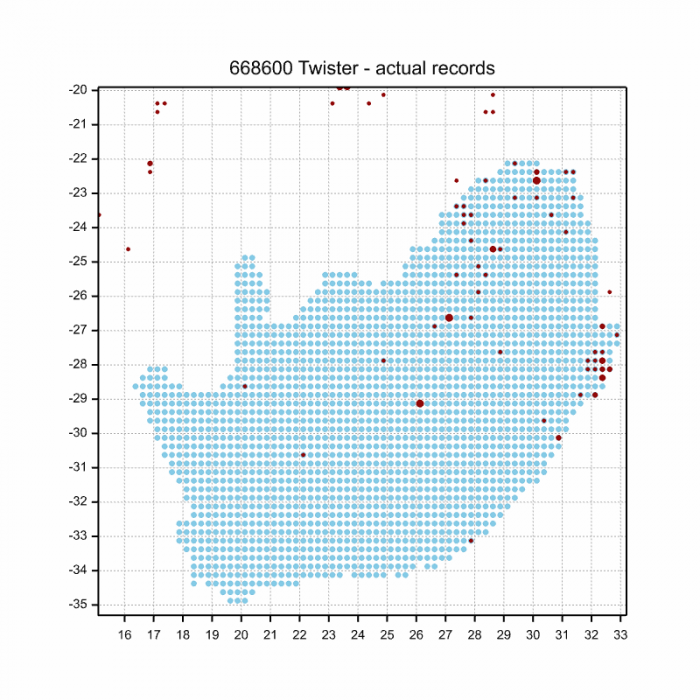
Below is a map showing the distribution of records for Suave Citril in the OdonataMAP database as of December 2024.
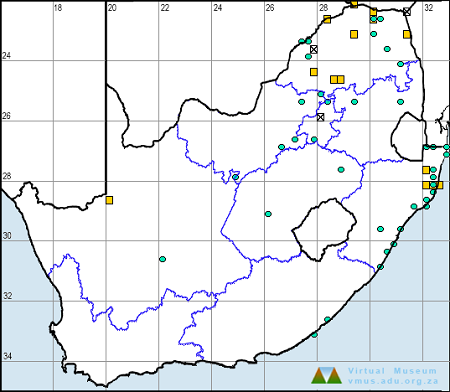
The next map below is an imputed map, produced by an interpolation algorithm, which attempts to generate a full distribution map from the partial information in the map above. This map will be improved by the submission of records to the OdonataMAP section of the Virtual Museum.
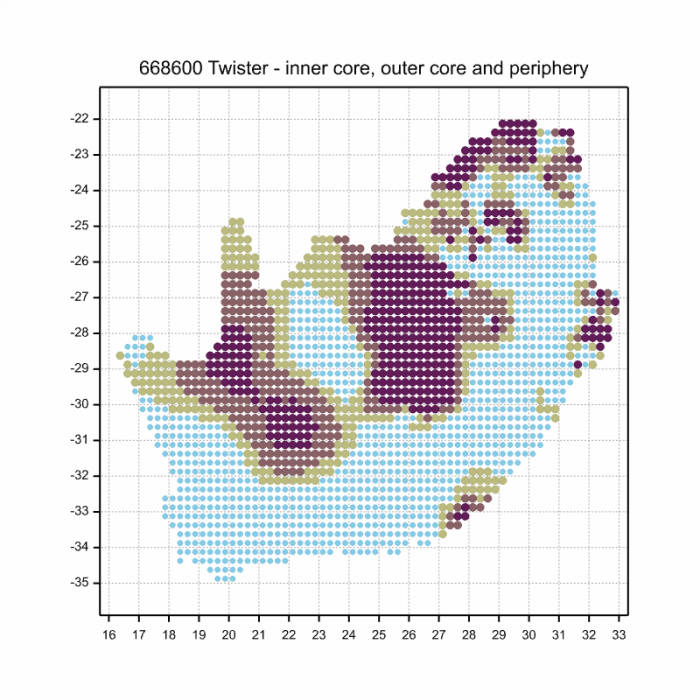
Ultimately, we will produce a series of maps for all the odonata species in the region. The current algorithm is a new algorithm. The objective is mainly to produce “smoothed” maps that could go into a field guide for odonata. This basic version of the algorithm (as mapped above) does not make use of “explanatory variables” (e.g. altitude, terrain roughness, presence of freshwater — we will be producing maps that take these variables into account soon). Currently, it only makes use of the OdonataMAP records for the species being mapped, as well as all the other records of all other species. The basic maps are “optimistic” and will generally show ranges to be larger than what they probably are.

These maps use the data in the OdonataMAP section of the Virtual Museum, and also the database assembled by the previous JRS funded project, which was led by Professor Michael Samways and Dr KD Dijkstra.

Phenology

Further Resources

The use of photographs by Gary Brown and Juan-Pierre Antunes is acknowledged. All other photographs by Ryan Tippett.

Suave Citril Ceriagrion suave Ris, 1921

Other common names: Snoepie-aljander (Afrikaans)

Recommended citation format: Loftie-Eaton M; Navarro R; Tippett RM; Underhill L. 2025. Suave Citril Ceriagrion suave. Biodiversity and Development Institute. Available online at https://thebdi.org/2020/05/12/suave-citril-ceriagrion-suave/

References: Tarboton, M; Tarboton, W. (2019). A Guide to the Dragonflies & Damselflies of South Africa. Struik Nature.

Samways, MJ. (2008). Dragonflies and Damselflies of South Africa. Pensoft

Samways, MJ. (2016). Manual of Freshwater Assessment for South Africa: Dragonfly Biotic Index.Suricata 2. South African National Biodiversity Institute, Pretoria

Martens, A; Suhling, F. (2007). Dragonflies and Damselflies of Namibia. Gamsberg Macmillan.

Similar Species

Makabusi Sprite (Pseudagrion makabusiense)

Cover photo by Desire Darling.

Find the Makabusi Sprite in the FBIS database (Freshwater Biodiversity Information System) here.

Family Coenagrionidae

Identification

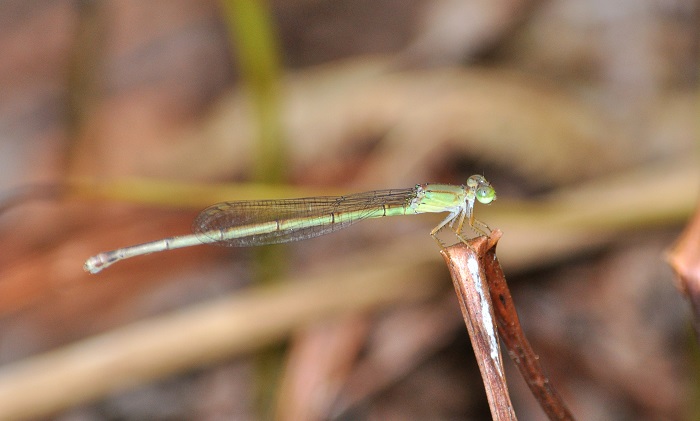
Makabusi Sprite Pseudagrion makabusiense – Male
Mpumalanga
Photo by Desire Darling

Small size

Length reaches 36mm; Wingspan up to 41mm.

Within the region, the Makabusi Sprite is unmistakable and unlike any other damselfly species.

In males, the mauve colouration on the terminal segments, postocular spots, and face is diagnostic.

Females are yellowish to pale brown and similar to those of many other sprite species. They are best told by their association with the males.

Click here for more details on identification.

Habitat

The Makabusi Sprite inhabits streams and rivers in hilly savanna regions. It favours slow-moving stretches with tall grasses, sedges, and bushes along the banks.

Behaviour

Perches on grass or reed stems, low down near the water. The Makabusi Sprite is a rather inconspicuous species.

Most active from September to May (see Phenology below).

Status and Conservation

The Makabusi Sprite is common but very localised in South Africa. It is listed as Vulnerable in the IUCN Red List of Threatened Species. The Makabusi Sprite prefers undisturbed habitats.

Distribution

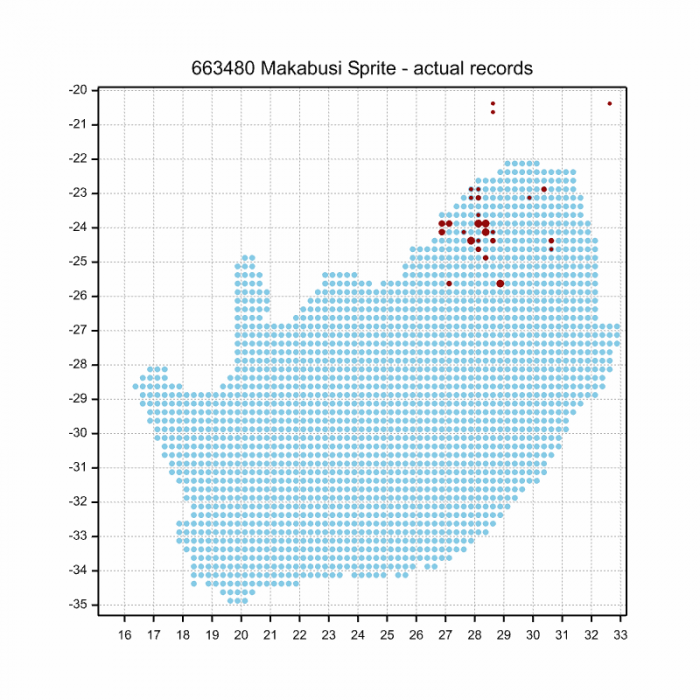
The range of the Makabusi Sprite extends from South Africa (Limpopo, Gauteng and North-West provinces), up through Zimbabwe to northern Zambia. It also occurs marginally in southern DRC, eastern Angola, and Mozambique.

Below is a map showing the distribution of records for Makabusi Sprite in the OdonataMAP database as at February 2020.

Below is a map showing the distribution of records for Makabusi Sprite in the OdonataMAP database as of December 2024.

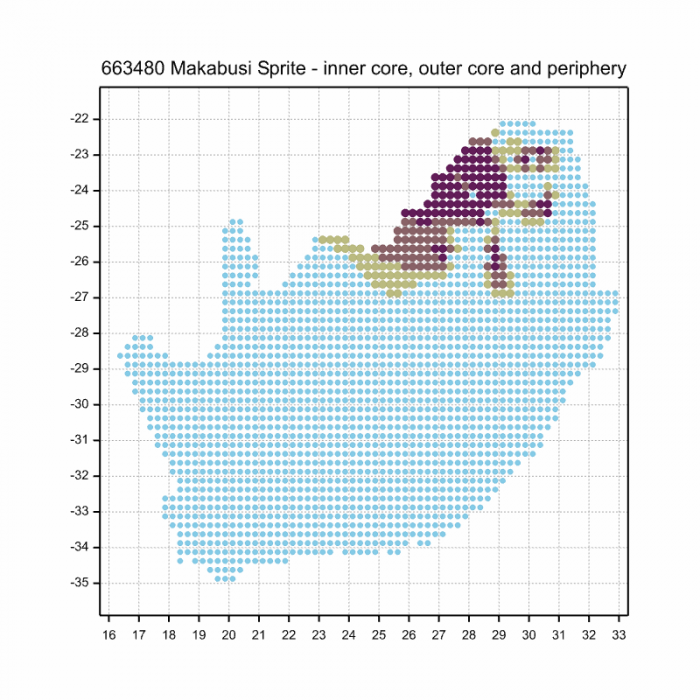
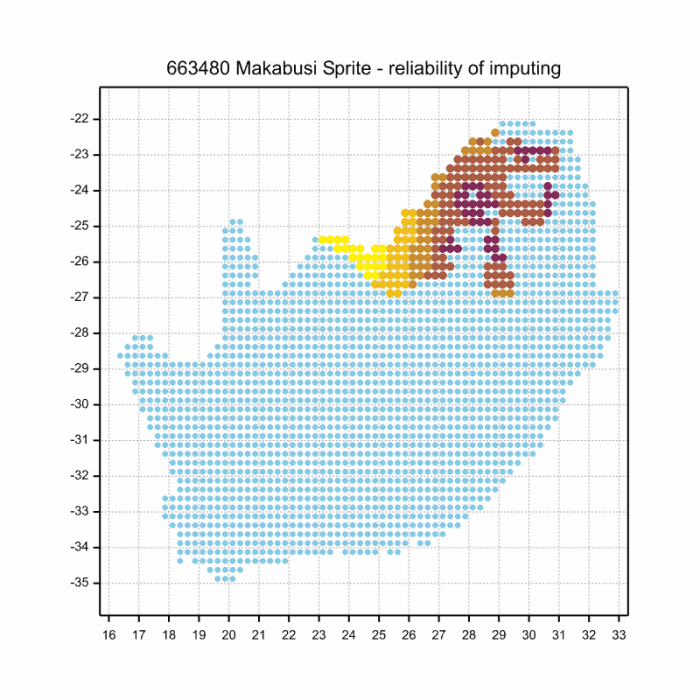
The next map below is an imputed map, produced by an interpolation algorithm, which attempts to generate a full distribution map from the partial information in the map above. This map will be improved by the submission of records to the OdonataMAP section of the Virtual Museum.

Ultimately, we will produce a series of maps for all the odonata species in the region. The current algorithm is a new algorithm. The objective is mainly to produce “smoothed” maps that could go into a field guide for odonata. This basic version of the algorithm (as mapped above) does not make use of “explanatory variables” (e.g. altitude, terrain roughness, presence of freshwater — we will be producing maps that take these variables into account soon). Currently, it only makes use of the OdonataMAP records for the species being mapped, as well as all the other records of all other species. The basic maps are “optimistic” and will generally show ranges to be larger than what they probably are.

These maps use the data in the OdonataMAP section of the Virtual Museum, and also the database assembled by the previous JRS funded project, which was led by Professor Michael Samways and Dr KD Dijkstra.
Phenology

Further Resources

The use of photographs by Richard Johnstone is acknowledged. All other photographs by Ryan Tippett.

Makabusi Sprite Pseudagrion makabusiense Pinhey, 1950

Other common names: Makabusigesie (Afrikaans)

Recommended citation format: Loftie-Eaton M; Navarro R; Tippett RM; Underhill L. 2025. Makabusi Sprite Pseudagrion makabusiense. Biodiversity and Development Institute. Available online at https://thebdi.org/2020/05/11/makabusi-sprite-pseudagrion-makabusiense/

References: Tarboton, M; Tarboton, W. (2019). A Guide to the Dragonflies & Damselflies of South Africa. Struik Nature.

Samways, MJ. (2008). Dragonflies and Damselflies of South Africa. Pensoft

Samways, MJ. (2016). Manual of Freshwater Assessment for South Africa: Dragonfly Biotic Index. Suricata 2. South African National Biodiversity Institute, Pretoria

Common Citril (Ceriagrion glabrum)

Cover photo by Diana Russell.

Find the Common Citril in the FBIS database (Freshwater Biodiversity Information System) here.

Family Coenagrionidae

Identification

Common Citril Ceriagrion glabrum – Male
Near Hluhluwe, KwaZulu-Natal
Photo by Ryan Tippett

Small size

Length up to 46mm; Wingspan reaches 53mm.

Over most of its South African range The Common Citril Ceriagrion glabrum is easily recognised by virtue of it being the only small, all-orange damselfy at any given site. However, in the Lowveld and far north-eastern KwaZulu-Natal there is another similar, albeit much rarer species, the Suave Citril Ceriagrion suave. These two species can be easily confused.

They are best told apart in the hand, by examining the hind-margin of the last abdominal segment (S10). Ceriagrion glabrum has small teeth on the upper hind margin, while Ceriagrion suave lacks these teeth.

Females are overall plain greenish to yellow-brown and become progressively orange with age. They are best identified by association with the males.

Cluck here for more details on identification.

Common Citril Ceriagrion glabrum – Female
Kuleni Game Park, KwaZulu-Natal
Photo by Ryan Tippett

Habitat

The Common Citril occupies a wide range of still-water habitats, including marshes, ponds, dams, pans and the quiet backwaters of rivers and streams. It favours sites that are rich in reeds, grasses and sedges.

Habitat – Near Hluhluwe, KwaZulu-Natal.
Photo by Ryan Tippett

Behaviour

The Common Citril sits and flies low down among the stems of reeds, grasses and sedges. It is mostly found at water but may often be found some distance away in patches of dry grass or bush. Both sexes are often seen together at the same sites.

The Common Citril is most active from October to May. It is on the wing all year round in some places (See Phenology below).

Common Citril Ceriagrion glabrum – Pair
Near Hluhluwe, KwaZulu-Natal
Photo by Ryan Tippett

Status and Conservation

Ceriagrion glabrum is a common to abundant species. It is listed as of Least Concern in the IUCN Red List of Threatened Species. The Common Citril is an adaptable species that readily occupies suitable man-made habitats.

Common Citril Ceriagrion glabrum – Male
Near Wellington, Western Cape
Photo by Ryan Tippett

Distribution

The Common Citril is found virtually throughout sub-Saharan Africa. It also occurs on Madagascar and many of the Indian Ocean islands.

In South Africa the Common Citril is mainly found in the savanna regions but extends down into the Western Cape along the lower lying coastal plain.

Below is a map showing the distribution of records for Common Citril in the OdonataMAP database as at February 2020.

Below is a map showing the distribution of records for Common Citril in the OdonataMAP database as of December 2024.

The next map below is an imputed map, produced by an interpolation algorithm, which attempts to generate a full distribution map from the partial information in the map above. This map will be improved by the submission of records to the OdonataMAP section of the Virtual Museum.

Ultimately, we will produce a series of maps for all the odonata species in the region. The current algorithm is a new algorithm. The objective is mainly to produce “smoothed” maps that could go into a field guide for odonata. This basic version of the algorithm (as mapped above) does not make use of “explanatory variables” (e.g. altitude, terrain roughness, presence of freshwater — we will be producing maps that take these variables into account soon). Currently, it only makes use of the OdonataMAP records for the species being mapped, as well as all the other records of all other species. The basic maps are “optimistic” and will generally show ranges to be larger than what they probably are.

These maps use the data in the OdonataMAP section of the Virtual Museum, and also the database assembled by the previous JRS funded project, which was led by Professor Michael Samways and Dr KD Dijkstra.

Common Citril Ceriagrion glabrum – Male
Kosi Bay, iSimangaliso Wetland Park, KwaZulu-Natal
Photo by Ryan Tippett

Phenology

Common Citril Ceriagrion glabrum – Male
False Bay, iSimangaliso Wetland Park, KwaZulu-Natal
Photo by Ryan Tippett

Further Resources

The use of photographs by Diana Russell is acknowledged. All other photographs by Ryan Tippett.

Common Citril Ceriagrion glabrum (Burmeister, 1839)

Other common names: Gewone Aljander (Afrikaans)

Recommended citation format: Loftie-Eaton M; Navarro R; Tippett RM; Underhill L. 2025. Common Citril Ceriagrion glabrum. Biodiversity and Development Institute. Available online at https://thebdi.org/2020/05/11/common-citril-ceriagrion-glabrum/

References: Tarboton, M; Tarboton, W. (2019). A Guide to the Dragonflies & Damselflies of South Africa. Struik Nature.

Samways, MJ. (2008). Dragonflies and Damselflies of South Africa. Pensoft

Samways, MJ. (2016). Manual of Freshwater Assessment for South Africa: Dragonfly Biotic Index. Suricata 2. South African National Biodiversity Institute, Pretoria

Martens, A; Suhling, F. (2007). Dragonflies and Damselflies of Namibia. Gamsberg Macmillan.
Common Citril Ceriagrion glabrum – Male
Okavango Delta, Botswana
Photo by Ryan Tippett

Similar Species

Phantom Flutterer (Rhyothemis semihyalina)

Cover photo by Phillip Nieuwoudt.

Find the Phantom Flutterer in the FBIS database (Freshwater Biodiversity Information System) here.

Family Libellulidae

Identification

Phantom Flutterer Rhyothemis semihyalina – Male
Ehlatini Bush Camp, KwaZulu-Natal
Photo by Ryan Tippett

Small to medium sized

Length up to 36mm; Wingspan attains 70mm.

The Phantom Flutterer is a highly distinctive and recognisable species. It is unlikely to be confused with any other dragonfly. The broad, metallic purple panel in each hindwing is distinctive. The sexes are alike.

It is perhaps most similar to the Keyhole Glider (Tramea Basilaris), but that species had a rufous (not black) abdomen and smaller reddish-brown and amber patches in the hind wings.

Click here for more details on identification of the Phantom Flutterer.

Phantom Flutterer Rhyothemis semihyalina – Female
Ehlatini Bush Camp, KwaZulu-Natal
Photo by Ryan Tippett

Habitat

The Phantom Flutterer inhabits still-water habitats like marshes, floodplains, pans, and slow-moving rivers. It prefers sites that are rich in emergent reeds, grasses, sedges, and water lilies. The Phantom Flutterer utilises both permanent and ephemeral waterbodies and is mostly confined to the warmer regions.

It occurs up to 1000m above sea level but is most numerous at lower altitudes.

Habitat – Near Kosi Bay, KwaZulu-Natal
Photo by Ryan Tippett

Behaviour

The Phantom Flutterer is usually seen perched on a plant stem at a sunny site over the water. It most often sits with the abdomen pointed downwards at a 45 degree angle. The Phantom Flutterer has a fast butterfly-like flight. Non-breeding individuals can sometimes be seen in the tree-tops away from water in the surrounding woodlands. The Phantom Flutterer is sometimes gregarious, hovering above clouds of tiny swarming insects, in woodland clearings or over the water. Both sexes occur in the same vicinity.

Rhyothemis semihyalina is mostly on the wing from October to April.

Phantom Flutterer Rhyothemis semihyalina – Part of a larger group feeding on small swarming insects.
Linyanti Swamps, Botswana
Photo by Ryan Tippett

Status and Conservation

The Phantom Flutterer is often localised but is generally common where it occurs. It is listed as of Least Concern in the IUCN Red List of Threatened Species. The Phantom Flutterer is fairly resistant to habitat degradation and frequently makes use of suitable man-made habitats such as ornamental ponds and farm dams. It is showing signs of increasing in abundance in the Eastern and Western Cape, and possibly also the central regions of South Africa.

Phantom Flutterer Rhyothemis semihyalina – Male
Hluhluwe River Floodplain, KwaZulu-Natal
Photo by Ryan Tippett
Distribution

Rhyothemis semihyalina is widely distributed throughout Sub-Saharan Africa, from West Africa to southern Africa. It also occurs in parts of the Middle East, as well as Madagascar and many of the Indian Ocean islands. In South Africa, the Phantom Flutterer occurs mostly in the hot savanna regions of the northern and eastern provinces, and along the eastern coastal strip where it reaches the Western Cape.

Phantom Flutterer Rhyothemis semihyalina – Female
Carnarvon district, Northern Cape
Photo by Ryan Tippett
Below is a map showing the distribution of records for Phantom Flutterer in the OdonataMAP database as at February 2020.

Below is a map showing the distribution of records for Phantom Flutterer in the OdonataMAP database as of December 2024.

The next map below is an imputed map, produced by an interpolation algorithm, which attempts to generate a full distribution map from the partial information in the map above. This map will be improved by the submission of records to the OdonataMAP section of the Virtual Museum.

Ultimately, we will produce a series of maps for all the odonata species in the region. The current algorithm is a new algorithm. The objective is mainly to produce “smoothed” maps that could go into a field guide for odonata. This basic version of the algorithm (as mapped above) does not make use of “explanatory variables” (e.g. altitude, terrain roughness, presence of freshwater — we will be producing maps that take these variables into account soon). Currently, it only makes use of the OdonataMAP records for the species being mapped, as well as all the other records of all other species. The basic maps are “optimistic” and will generally show ranges to be larger than what they probably are.

These maps use the data in the OdonataMAP section of the Virtual Museum, and also the database assembled by the previous JRS funded project, which was led by Professor Michael Samways and Dr KD Dijkstra.

Phantom Flutterer Rhyothemis semihyalina – Male
Muzi Pan, KwaZulu-Natal
Photo by Ryan Tippett
Further Resources

The use of photographs by Phillip Nieuwoudt is acknowledged. Other photographs by Ryan Tippett.

Phantom Flutterer Rhyothemis semihyalina (Desjardins, 1832)

Other common names: Fladdergesie (Afrikaans)

Recommended citation format: Loftie-Eaton M; Navarro R; Tippett RM; Underhill L. 2025. Phantom Flutterer Rhyothemis semihyalina. Biodiversity and Development Institute. Available online at https://thebdi.org/2020/05/11/phantom-flutterer-rhyothemis-semihyalina/

References: Tarboton, M; Tarboton, W. (2019). A Guide to the Dragonflies & Damselflies of South Africa. Struik Nature.

Samways, MJ. (2008). Dragonflies and Damselflies of South Africa. Pensoft

Samways, MJ. (2016). Manual of Freshwater Assessment for South Africa: Dragonfly Biotic Index. Suricata 2. South African National Biodiversity Institute, Pretoria

Martens, A; Suhling, F. (2007). Dragonflies and Damselflies of Namibia. Gamsberg Macmillan.

Phantom Flutterer Rhyothemis semihyalina – Male
Ndumo Game Reserve, KwaZulu-Natal
Photo by Ryan Tippett
Similar Species