Skip to content
BDI
  • Home
  • Departments
    • Research Training
      • Introduction
      • Research Themes
      • Study Sites
      • Logistics
    • Bird Ringing
      • Introduction
      • Ringing history
      • The Value of Bird Ringing
    • Science and Ecology Specialist Consulting
    • Citizen Science – Biodiversity Conservation & Research
    • Biodiversity Observations
  • About
    • What we do
    • Who we are
    • Contact us
  • News
    • Archive
    • BDI Research
    • BDI Bridge
    • BDInsight
  • Upcoming BDI events
  • Biodiversity Projects
    • Bird Feeder Project
    • Atlas of Frogs & Toads
    • Atlas of African Neuroptera and Megaloptera
    • Atlas of Dragonflies & Damselflies
    • Atlas of Butterflies & Moths
  • Karoo Research Centre

Tag: Bird identification

Archive/Bird Feeder Project/Bird identification/Birding/Birds

Pied Crow (Corvus albus)

Posted on 08/11/2022 by Bird Feeder Project: Karis Daniel & Megan Loftie-Eaton

Cover image: Pied Crow by Trevor Hardaker – BirdPix 16860 Identification The Pied Crow is an unmistakable, vocal and conspicuous species, unlikely to be o...

Bird Feeder Project/Bird identification/Birding/Birds/Citizen Science

Red-eyed Dove (Streptopelia semitorquata)

Posted on 18/08/2022 by Bird Feeder Project: Karis Daniel & Megan Loftie-Eaton

Cover photo – Red-eyed Dove by Anthony Archer. Identification The Red-eyed dove is common in many areas of southern Africa, and has adapted well to living...

Bird Feeder Project/Bird identification/Birding/Birds

Southern Fiscal (Lanius collaris)

Posted on 28/07/2022 by Bird Feeder Project: Karis Daniel & Megan Loftie-Eaton

Cover photo: Southern Fiscal BirdPix 8316 – Desire Darling Identification The Southern Fiscal can be identified by its distinct black and white colouration and ...

Archive/Bird Feeder Project/Bird identification/Birding/BirdPix/Birds

Cape Bulbul (Pycnonotus capensis)

Posted on 30/03/2022 by Bird Feeder Project: Karis Daniel & Megan Loftie-Eaton

The Cape Bulbul is Endemic to South Africa. It is very common across much of the Western Cape, with its range extending along the coast to the Northern and East...
Archive/Bird Feeder Project/Bird identification/Birding/BirdPix/Birds

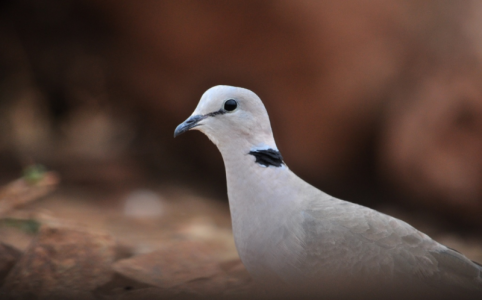
Ring-necked Dove (Streptopelia capicola)

Posted on 08/03/2022 by Bird Feeder Project: Karis Daniel & Megan Loftie-Eaton

Identification The Ring-necked Dove, also known as the Cape Turtle Dove, is a very common bird species that occurs all over South Africa. It can be identified b...
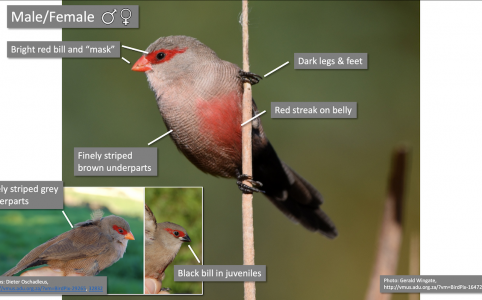
Identification guide for Common Waxbill (Estrilda astrild)
Archive/Bird Feeder Project/Bird identification/Birding/BirdPix/Birds

Common Waxbill (Estrilda astrild)

Posted on 04/03/2022 by Karis Daniel

Identification Common Waxbills are small greyish-brown birds. This species is not sexually dimorphic; males females look the same. Overall, the Common Waxbill i...

Archive/Bird Feeder Project/Bird identification/Birding/BirdPix/Birds

Cape Canary (Serinus canicollis)

Posted on 04/03/2022 by Karis Daniel

Cape Canaries are small, brightly-coloured birds. Males and females can be difficult to tell apart; you must look closely!

Archive/Bird Feeder Project/Bird identification/Birding/BirdPix/Birds

Cape White-eye (Zosterops virens)

Posted on 04/03/2022 by Karis Daniel

The Cape White-eye is a very small, fast-moving bird. Males and females look alike but show geographic variation. This term means that one species can look diff...

Archive/Bird Feeder Project/Bird identification/Birding/BirdPix/Birds

Pin-tailed Whydah (Vidua macroura)

Posted on 04/03/2022 by Karis Daniel

Identification The Pin-tailed Whydah is a small sexually dimorphic species. Males and females differ dramatically when breeding, and appear similar outside of t...

Archive/Bird Feeder Project/Bird identification/Birding/BirdPix/Birds

Cape Weaver (Ploceus capensis)

Posted on 04/03/2022 by Bird Feeder Project: Karis Daniel & Megan Loftie-Eaton

Identification The Cape Weaver is a medium-sized, brightly coloured bird. Males and females look similar but are not quite alike. Males also differ slightly in ...

Posts navigation

« Previous 1 … 3 4 5 Next »
  • Home
  • Departments
    • Research Training
      • Introduction
      • Research Themes
      • Study Sites
      • Logistics
    • Bird Ringing
      • Introduction
      • Ringing history
      • The Value of Bird Ringing
    • Science and Ecology Specialist Consulting
    • Citizen Science – Biodiversity Conservation & Research
    • Biodiversity Observations
  • About
    • What we do
    • Who we are
    • Contact us
  • News
    • Archive
    • BDI Research
    • BDI Bridge
    • BDInsight
  • Upcoming BDI events
  • Biodiversity Projects
    • Bird Feeder Project
    • Atlas of Frogs & Toads
    • Atlas of African Neuroptera and Megaloptera
    • Atlas of Dragonflies & Damselflies
    • Atlas of Butterflies & Moths
  • Karoo Research Centre

Recent posts

  • Indian PeafowlIndian Peafowl (Pavo cristatus)
    Cover image of Indian Peafowl. Photograph […]
  • Chukar Partridge (Alectoris chukar)
    Cover image of Chukar Partridge. Photograph […]
  • Long-billed Crombec (Sylvietta rufescens)
    Cover image of Long-billed […]
  • Southern Tchagra (Tchagra tchagra)
    Cover image of Southern Tchagra by Attie van […]
  • Counting African Oystercatchers on Robben Isl…
    The survey of the African Oystercatchers on […]
The Biodiversity & Development Institute is a non-profit company registered with the Companies and Intellectual Property Commission of South Africa (CIPC), Reg. No. 2015/136344/08.
Registration in terms of the Non-Profit Organisations Act: 302-671 NPO.


Directors:
Prof Les Underhill, Ms Sue Gie, Jorn Das
les@thebdi.org
072 062 1140


Address:
Old Farm Road, Rondebosch, 7700, Western Cape, South Africa
© 2026 BDI
Powered by WordPress | Theme: Graphy by Themegraphy