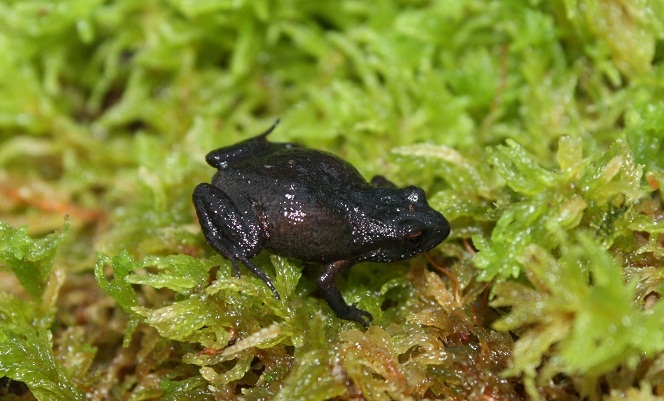
View the above photo record (by Felicity Grundlingh) in FrogMAPhere.
Find the Bainskloof Moss Frog in the FBIS database (Freshwater Biodiversity Information System) here.
Family Pyxicephalidae
BAINSKLOOF MOSS FROG – Arthroleptella bicolor
Hewitt, 1926
Habitat
This frog is associated with moss and matted vegetation found in seepages and along heavily vegetated streams, often on steep slopes. It is known from montane fynbos where the winter rainfall exceeds 750 mm.
Behaviour
Breeding commences during the winter rains, and continues until the seeps dry up in midsummer. Clutches of 8–10 eggs are laid in moss or similar vegetation in seepages (Channing 2001). Males may guard the eggs as they call from oviposition sites. The eggs develop directly into 4-mm froglets. Prey consists of small arthropods.
Status and Conservation
A. bicolor is relatively widespread, occurs in several large protected areas and is in no need of special conservation action. The full extent of its distribution is not yet known.
Distribution
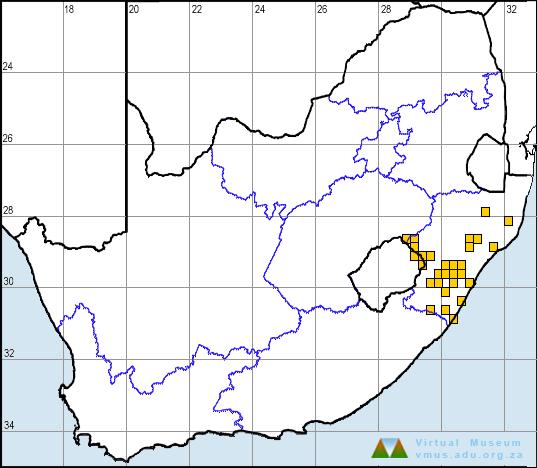
A. bicolor is endemic to the Riviersonderend, Du Toitsberg, Elandskloof and Limietberg mountains. It has been recorded at altitudes of 300–2000 m. The atlas records are regarded as reliable but incomplete because of the difficulties in surveying mountainous areas.
Distribution of Arthroleptella bicolor. Taken from the FrogMAP database as at February 2022.
Further Resources
Virtual Museum (FrogMAP > Search VM > By Scientific or Common Name)
More common names: Bainskloof Chirping Frog (Alternative English Name); Bainskloof-mospaddatjie (Afrikaans)
Recommended citation format for this species text:
Channing A, Tippett RM. Bainskloof Moss Frog Arthroleptella bicolor. BDI, Cape Town. Available online at http://thebdi.org/2022/02/09/bainskloof-moss-frog-arthroleptella-bicolor/
Recommended citation format:
This species text has been updated and expanded from the text in the 2004 frog atlas. The reference to the text and the book are as follows:
Channing A 2004 Arthroleptella bicolor Bainskloof Moss Frog. In Minter LR et al 2004.
Minter LR, Burger M, Harrison JA, Braack HH, Bishop PJ, Kloepfer D (eds) 2004. Atlas and Red Data Book of the Frogs of South Africa, Lesotho and Swaziland. Smithsonian Institution, Washington, and Avian Demography Unit, Cape Town.
View the above photo record (by Luke Kemp) in FrogMAPhere.
Find the Hogsback Frog in the FBIS database (Freshwater Biodiversity Information System) here.
Family Pyxicephalidae
HOGSBACK FROG – Anhydrophryne rattrayi
Hewitt, 1919
Identification
This is one of southern Africa’s smallest frog species with females attaining a body length of 22 mm. The snouts of males are calloused, slightly flattened, usually whitish and presumed to be adapted for excavating nests. Body colour and pattern are variable: the dorsum varies from light grey to dark brown or copper-coloured. Irregular dark mottling and a thin, light vertebral line are sometimes present. A dark mask extends across the eyes from nostrils to armpits. The white ventrum is marbled with dark blotches that do not extend onto the throat (Wager 1963, 1986; Passmore and Carruthers 1995; Channing 2001). (See genus account for further distinguishing characters.)
The advertisement call has been described as a melodious “ping, ping, ping”, repeated rapidly or slowly in bouts of 7–15 notes, or sometimes emitted as single notes (Wager 1986). The notes are 0.05 s in duration with an emphasized frequency of 3500 Hz (Channing 2001). Passmore and Carruthers (1995) recorded a call rate of 4 notes/s, emitted at an emphasized frequency of 3000 Hz.
Habitat
The species inhabits Afromontane Forest at altitudes generally >1100 m. It breeds in moist leaf litter on the forest floor, often near streams and waterfalls. It appears to flourish in the grassland/forest ecotone and also occurs in short grass in small open patches of wetland within forests. Adults are found in wet situations (e.g. near waterfalls), but the eggs are laid in areas where waterlogging is unlikely to occur (Wager 1986; Lambiris 1988a; Passmore and Carruthers 1995; Channing 2001).
Behaviour
Although it has a restricted distribution, A. rattrayi occurs in large numbers at some localities. For example, Lambiris (1988a) counted >70 individuals within c.25 m2 in a grassland/forest ecotone. Under favourable conditions, that is, mist or rainy weather, hundreds of males may be heard calling throughout the night and sometimes during the day. Calling has been recorded in summer, October–February (Wager 1986; Channing 2001).
The species reproduces by direct development. Eggs are laid in small holes excavated in the clay soil beneath leaf litter on the forest floor. Wager (1986) recorded a spherical egg chamber, 21 mm in diameter, with a smooth shiny wall and a 9-mm entrance hole in the 3-mm thick roof. The chamber is, apparently, excavated by males. Additional information on nest building and other aspects of reproductive biology is needed.
The pearly white eggs are large, nearly 2.6 mm in diameter, and encased in a 6-mm gelatine capsule. Clutches of 11–20 eggs are laid in a single layer on the floor of the nest and adhere to each other. Larval development and metamorphosis are completed in about four weeks. The newly metamorphosed froglets measure only 4 mm from snout to vent (Wager 1986).
The diet of A. rattrayi includes small leaf-litter crustaceans such as amphipods and isopods (Wager 1986). Collembola appear to form a large proportion of the diet (Lambiris 1988a).
Status and Conservation
Status
A. rattrayi is here classified as Endangered owing to its limited and severely fragmented distribution. It was previously listed as Restricted (Lambiris 1988a) and Near Threatened (Harrison et al. 2001; IUCN 2000).
A. rattrayi is known from Stutterheim Nature Reserve and state forests between Keiskammahoek and Hogsback, including Hogsback Indigenous Forest and Katberg Forest.
Threats
The primary threats to A. rattrayi are habitat loss and fragmentation resulting from the farming of alien trees. Loss and deterioration of habitat, although occurring relatively slowly (estimated rate of <20% in 30 years), are cause for concern in view of the species’ limited areas of occurrence and occupancy. The fact that the frogs are restricted to small, severely fragmented and relatively isolated sub-populations (sensu IUCN criteria) increases the likelihood of extinction of these sub-populations, and reduces the probability of recolonization.
Recommended conservation actions
Although several of the known sub-populations occur in state forests and nature reserves, it is recommended that additional localities be set aside for long-term protection.
The species was infrequently recorded during the atlas period and additional surveys are needed to gain a better understanding of the species’ distribution and conservation status. Limiting-factor research would aid conservation management planning for this species. Habitat management and monitoring of known populations are also recommended (Harrison et al. 2001).
Forestry companies operating in this area, with indigenous forest under their control, should be informed of the conservation status of A. rattrayi and be advised on how to ameliorate the negative impacts of their activities.
Distribution
A. rattrayi is endemic to the Eastern Cape Province where it has a restricted distribution centred in the Amatola Mountains. The species was originally discovered at Hogsback Mountain and was subsequently recorded from forests at Katberg, Stutterheim, Keiskammahoek and Peddie mountains (Wager 1963, 1986; Lambiris 1988a; Castley 1997), although the last-mentioned locality may be incorrect. No new locality records were obtained during the atlas project, and only two of five quarter-degree grid cells, in which the species has been recorded, were confirmed during the atlas period. The species was recorded near Patensie (3324DB) by Visser (1979d), based on a specimen he collected in 1961. This record represents a considerable range extension to the southwest, but could not be confirmed during the atlas period or at any time since the initial observation. Nevertheless, the record is believed to be valid (J.D. Visser pers. comm.). The record at 3327AA (Lambiris 1988a) is apparently an error.
The atlas data give a fairly comprehensive representation of the species’ distribution, but there are few recent (post-1996) records.
Distribution of Anhydrophryne rattrayi. Taken from the FrogMAP database as at February 2022.
Further Resources
Virtual Museum (FrogMAP > Search VM > By Scientific or Common Name)
More common names: Hogsback Chirping Frog, Rattray’s Frog, Rattray’s Forest Frog (Alternative English Names); Hogsback Padda (Afrikaans)
Recommended citation format for this species text:
Burger M, Tippett RM. Hogsback Frog Anhydrophryne rattrayi. BDI, Cape Town. Available online at http://thebdi.org/2022/02/08/hogsback-frog-anhydrophryne-rattrayi/
Recommended citation format:
This species text has been updated and expanded from the text in the 2004 frog atlas. The reference to the text and the book are as follows:
Burger M 2004 Anhydrophryne rattrayi Hogsback Frog. In Minter LR et al 2004.
Minter LR, Burger M, Harrison JA, Braack HH, Bishop PJ, Kloepfer D (eds) 2004. Atlas and Red Data Book of the Frogs of South Africa, Lesotho and Swaziland. Smithsonian Institution, Washington, and Avian Demography Unit, Cape Town.
Find the Hewitt’s Moss Frog in the FBIS database (Freshwater Biodiversity Information System) here.
Family Pyxicephalidae
HEWITT’S MOSS FROG – Anhydrophryne hewitti
(FitzSimons, 1947)
Habitat
A. hewitti inhabits pockets of forest and dense natural vegetation alongside streams in ravines and valleys in mountainous terrain. It may be found amongst the leaf litter on the forest floor, in wet mossy embankments near waterfalls and rapids, or in small pools on the walls of rocky kloofs (Lambiris 1989a). Annual rainfall is >750 mm over most of its range.
Behaviour
Breeding takes place during spring and summer (October–January). Males call from concealed positions under vegetation. The female deposits 14–40 eggs in a shallow depression in soft, wet mud under a rock, fern, moss or leaf litter. Development is direct and metamorphosis takes place within three weeks (Wager 1965, 1986). Prey includes amphipod and isopod crustaceans (Wager 1965). Predators have not been recorded.
Status and Conservation
A. hewitti has a relatively wide extent of occurrence in KwaZulu-Natal. Much of its range at higher altitudes is protected. Presently, it does not appear to require any special conservation action.
Distribution
A. hewitti is endemic to KwaZulu-Natal, where it is fairly widely distributed in suitable habitats in the midlands and on the lower slopes of the Drakensberg mountains up to 2700 m a.s.l. (Lambiris 1989a). The atlas distribution map is rather patchy, reflecting, to some extent, the distribution of the preferred habitat of this species. The scarcity of recent records is probably due to inadequate sampling rather than the disappearance of the species at localities from which it was previously known. This species is easily identified by its appearance and its call, and the atlas records are therefore reliable.
Distribution of Anhydrophryne hewitti. Taken from the FrogMAP database as at February 2022.
Further Resources
Virtual Museum (FrogMAP > Search VM > By Scientific or Common Name)
More common names: Natal Moss Frog,Natal Chirping Frog (Alternative English Names); Natalse Kwetterpadda, Hewitt se Mospaddatjie (Afrikaans)
Recommended citation format for this species text:
Channing A, Tippett RM. Hewitt’s Moss Frog Anhydrophryne hewitti. BDI, Cape Town. Available online at http://thebdi.org/2022/02/08/hewitts-moss-frog-anhydrophryne-hewitti/
Recommended citation format:
This species text has been updated and expanded from the text in the 2004 frog atlas. The reference to the text and the book are as follows:
Channing A 2004 Anhydrophryne hewitti Hewitt’s Moss Frog. In Minter LR et al 2004.
Minter LR, Burger M, Harrison JA, Braack HH, Bishop PJ, Kloepfer D (eds) 2004. Atlas and Red Data Book of the Frogs of South Africa, Lesotho and Swaziland. Smithsonian Institution, Washington, and Avian Demography Unit, Cape Town.
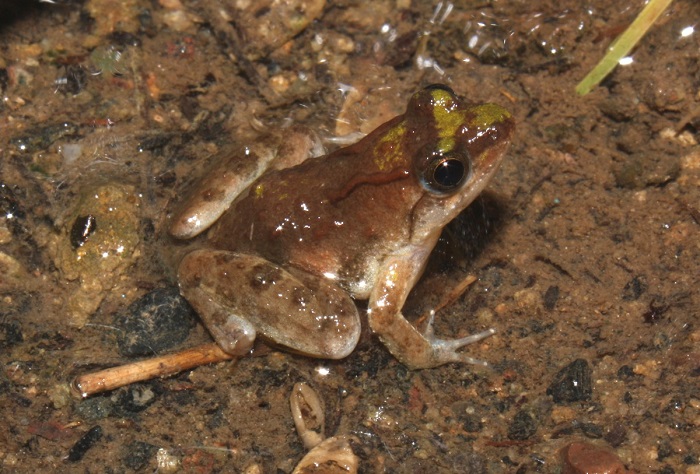
View the above photo record (by Alan Manson) in FrogMAPhere.
Find the Tropical Platanna in the FBIS database (Freshwater Biodiversity Information System) here.
Family Pipidae
TROPICAL PLATANNA – Xenopus muelleri
(Peters, 1844)
Habitat
X. muelleri inhabits all types of water bodies, including lowland rivers, lagoons, dams and pans (Poynton and Broadley 1985a), mainly in the Grassland and Savanna biomes. It is seldom found in pristine forest habitats, but readily moves into deforested areas (Tinsley et al. 1996).
X. muelleri and X. laevis do not appear to differ with regard to water-quality preferences or requirements. The apparent difference in temperature tolerance does not seem to apply in southern Namibia, where X. laevis occurs at temperatures at least as high as those from which it is apparently excluded in the east (Tinsley et al. 1996). A possible explanation is that X. laevis uses cool refugia within high temperature water bodies. This has been observed in extralimital populations of X. laevis (pers. obs.). Absence of such refugia from some sites would explain the observations of Lambiris (1989a) and Poynton and Broadley (1985a) that the two species are rarely found at the same site.
Behaviour
Little is known specifically about the life history of X.muelleri, although much can be inferred from the characteristics of the rest of the genus. Like other Xenopus, they are known to move en masse, even under dry conditions (Tinsley et al. 1996). Loveridge (1953a) found them aestivating in the mud of a dried pond.
Prey items include beetles, beetle larvae and frogs’ eggs (Barbour and Loveridge 1928), while predators include Hammerkop Scopus umbretta (Loveridge 1953a), Green Water-snake Philothamnus irregularis (Sweeney 1961) and Barbel Clarias gariepinus. X. muelleri has been observed leaving the water to escape barbel (L.R. Minter pers. comm.)
Status and Conservation
X. muelleri is not threatened, and does not warrant conservation action.
Distribution
The distribution of X. muelleri in sub-Saharan Africa is divided into two distinct areas containing animals that are morphologically similar but probably represent allopatric sibling species (Kobel et al. 1996). One of these forms, X. muelleri-East, extends from southeastern Kenya to South Africa, and is the only form in the atlas region. This form includes the type material (from Mozambique), and hence is hereafter referred to as X. muelleri.
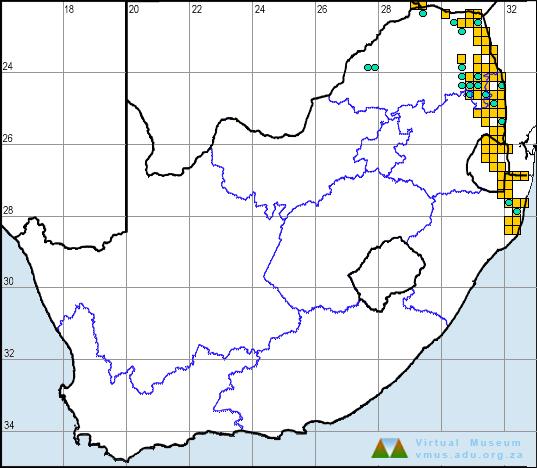
Within the atlas region, this species is confined to low-lying areas in northern and eastern Limpopo Province, eastern Mpumalanga and Swaziland, and northeastern KwaZulu-Natal, which form the western and southern limits of the Mozambique plain. Although Fischer et al. (2000) recorded mixed populations and hybridization between X. muelleri and laevis in Mpumalanga (2430BD), the two species are largely allopatric.
The ranges of X. muelleri and laevis are separated by the 18°C mean July isotherm, with muelleri part of a tropical faunal assemblage north and east of this climatic boundary, and laevis part of a non-tropical assemblage distributed to the south and west of the isotherm (Poynton 1964; Poynton and Broadley 1991). It is possible that the distribution of the species reflects differences in temperature tolerance: X. laevis appears to be able to tolerate a wider range of environmental temperatures than X.muelleri, which is more tolerant of high temperatures (Tinsley et al. 1996; see discussion under Habitat).
The atlas data can be regarded as reliable as X. muelleri can be easily distinguished, morphologically, from X. laevis.
Distribution of Xenopus muelleri. Taken from the FrogMAP database as at February 2022.
Further Resources
Virtual Museum (FrogMAP > Search VM > By Scientific or Common Name)
More common names: Müller’s Platanna, Müller’s Clawed Toad (Alternative English Names); Müller se Platanna, Tropiese Platanna (Afrikaans)
Recommended citation format for this species text:
Measey GJ, Tippett RM. Tropical Platanna Xenopus muelleri. BDI, Cape Town. Available online at http://thebdi.org/2022/02/08/tropical-platanna-xenopus-muelleri/
Recommended citation format:
This species text has been updated and expanded from the text in the 2004 frog atlas. The reference to the text and the book are as follows:
Measey GJ 2004 Xenopus muelleri Tropical Platanna. In Minter LR et al 2004.
Minter LR, Burger M, Harrison JA, Braack HH, Bishop PJ, Kloepfer D (eds) 2004. Atlas and Red Data Book of the Frogs of South Africa, Lesotho and Swaziland. Smithsonian Institution, Washington, and Avian Demography Unit, Cape Town.
View the above photo record (by Timo Paasikunnas) in FrogMAPhere.
Find the Striped Grass Frog in the FBIS database (Freshwater Biodiversity Information System) here.
Family Ptychadenidae
STRIPED GRASS FROG – Ptychadena porosissima
(Steindachner, 1867)
Habitat
P. porosissima has adapted to a wider range of habitats than the other Ptychadena species in the atlas region: from the sub-tropical coastal environment of KwaZulu-Natal, to temperate grassland along the crest of the great escarpment and the highveld and, occasionally, wooded grassland (Passmore 1978; Jacobsen 1989). It is also widely distributed at high elevations in Malawi and other parts of Africa (Stewart 1967).
In the atlas region, this species inhabits a variety of vegetation types in the Grassland Biome (Jacobsen 1989). In these habitats the altitude ranges from sea level to 2300 m.
The breeding habitat includes vleis, inundated grassland and sedge pans.
Behaviour
Adults have been recorded throughout the year in moist depressions and seepage areas, and occasionally along streams, but may move as far as 500 m from water (Stewart 1967; Jacobsen 1989). They probably survive dry conditions in the same way as other Ptychadena species, for example, by retreating into deep mud-cracks, although no specific instances are recorded in the literature.
Males usually call from concealed positions amongst emergent vegetation within the water, supporting themselves on emergent plants, with the hind third of their bodies submerged (Passmore 1978). Calling peaks between 23:00 and 02:30, at which time temperatures are usually substantially lower; this may represent a pre-adaptation that has allowed this species to invade temperate habitats (Passmore 1978).
Less intense calling continues throughout sporadic dry periods in summer, that is, calling is not dependent on rain, perhaps due to an association with relatively permanent bodies of water (Passmore 1978). In wet weather, choruses may develop during the day (Stewart 1967).
Eggs are laid in shallow water with silty or sandy substrates, and float at the surface (Lambiris 1989a; Channing 2001).
Adults feed opportunistically on terrestrial arthropods (Inger and Marx 1961), as well as earthworms, snails and other frogs (Channing 2001).
Status and Conservation
Although P. porosissima is widespread and occurs in a few protected areas, its distribution is patchy and its conservation status is uncertain. Surveys of populations in conservation areas are needed (Jacobsen 1989).
Distribution
P. porosissima is distributed from Ethiopia, southern Zaire and Angola, southward throughout East Africa to Zambia, Zimbabwe and southern Mozambique (Stewart 1967; Poynton and Broadley 1985b; Channing 2001). In the atlas region it is recorded from a few scattered localities in Limpopo and Gauteng provinces, but is more widely distributed in Mpumalanga, western Swaziland, KwaZulu-Natal, and the northeastern part of Eastern Cape Province, almost reaching East London in the south (3227DD).
Poynton (1964) suggested that P. poyntoni Guibé 1960 from Inhluzane, KwaZulu-Natal, was based on a hybrid population of P. uzungwensis and P. porosissima, and placed P. poyntoni in the synonymy of P.porosissima. Jacobsen (1989) was of the opinion that the Inhluzane population probably reflected the range in variation within P. porosissima, rather than a hybrid population involving P. uzungwensis.
The atlas data are reliable as this species is easily identified by its call and by diagnostic morphological characters. The distribution range shown in the map is reasonably accurate although the coverage is incomplete. More intensive surveys are required in order to clearly demarcate the distribution pattern of this species.
Distribution of Ptychadena porosissima. Taken from the FrogMAP database as at January 2022.
Further Resources
Virtual Museum (FrogMAP > Search VM > By Scientific or Common Name)
More common names: Grassland Ridged Frog (Alternative English Name); Gestreepte Graspadda (Afrikaans)
Recommended citation format for this species text:
Minter LR, Passmore NI, Tippett RM. Striped Grass Frog Ptychadena porosissima. BDI, Cape Town. Available online at http://thebdi.org/2022/02/07/striped-grass-frog-ptychadena-porosissima/
Recommended citation format:
This species text has been updated and expanded from the text in the 2004 frog atlas. The reference to the text and the book are as follows:
Minter LR, Passmore NI 2004 Ptychadena porosissima Striped Grass Frog. In Minter LR et al 2004.
Minter LR, Burger M, Harrison JA, Braack HH, Bishop PJ, Kloepfer D (eds) 2004. Atlas and Red Data Book of the Frogs of South Africa, Lesotho and Swaziland. Smithsonian Institution, Washington, and Avian Demography Unit, Cape Town.
View the above photo record (by Ryan van Huysteen) in FrogMAPhere.
Find the Plain Grass Frog in the FBIS database (Freshwater Biodiversity Information System) here.
Family Ptychadenidae
PLAIN GRASS FROG – Ptychadena anchietae
(Bocage, 1867)
Habitat
P. anchietae is a widespread inhabitant of the savanna biome in the northeastern part of the atlas region, between 20 and 1450 m a.s.l. It occurs in relatively moist, coastal bushveld vegetation types with a minimum annual rainfall in excess of 600 mm, as well as in more arid habitats such as Mixed Bushveld, which experiences a minimum annual rainfall of 350 mm (Low and Rebelo 1996). Individuals are often found sheltering amongst grass and plant debris on the edges of their breeding sites, which include temporary pans, shallow pools in riverbeds, borrow pits, waterholes, as well as more permanent vleis and dams (Stewart 1967; Jacobsen 1989).
Behaviour
These frogs are active on the surface throughout the year in areas where standing water is present or the soil is damp. They are able to survive lengthy periods of hot, dry weather by taking shelter to avoid desiccation.
In late winter to early spring, adults begin to congregate around permanent water bodies. At this time, vocalization is restricted to infrequent, quiet, low trills, which differ from the advertisement call (L.R.M. pers. obs.). Breeding choruses develop after the first spring rains, through to late summer or autumn (October–February at Hans Merensky Nature Reserve: L.R.M. pers. obs.). In wet weather, sporadic calling may be heard during the day, but normally commences in the early evening, peaking between 21:00 and 02:00 (Passmore 1978).
Males call from bare or sparsely vegetated areas of the shoreline, usually within 20 cm of the water’s edge. The average distance between calling males is about 80 cm; a distance of less than 20 cm usually elicits a territorial call that results in one of the males moving away from the other (Passmore 1978).
Eggs are laid in shallow water in floating clumps of up to 300, which adhere to vegetation or sink if disturbed. The tadpoles break out of the jelly capsule after 24 hours and develop rapidly (Stewart 1967), undergoing metamorphosis and leaving the water three weeks later (L.R.M. unpubl. data).
The diet includes grasshoppers, crickets, beetles and other insects (Barbour and Loveridge 1928).
Status and Conservation
P. anchietae does not appear to be at risk as much of its habitat is used for game and cattle farming and is relatively undisturbed. The species occurs in a number of provincial nature reserves and national parks.
Distribution
P. anchietae occurs in savanna habitat in all sub-Saharan countries from Angola to Ethiopia in the north, southward to eastern Namibia (Caprivi), eastern Botswana, Zimbabwe and Mozambique (Poynton and Broadley 1985b). In the atlas region, it occurs in the eastern half of North West Province, northern Gauteng, throughout Limpopo Province, northern and eastern Mpumalanga, central and eastern Swaziland and northern and eastern KwaZulu-Natal. It has been recorded as far west as Barberspan (2625DA) and as far south as Gingindlovo (2931BA). There is one atlas record in the northern Free State (2726AD).
This common species has an extended breeding period and is easily detected by its call. The atlas data are relatively complete and reliable.
Distribution of Ptychadena anchietae. Taken from the FrogMAP database as at January 2022.
Further Resources
Virtual Museum (FrogMAP > Search VM > By Scientific or Common Name)
More common names: Anchieta’s Ridged Frog (Alternative English Name); Rooirug-graspadda (Afrikaans)
Recommended citation format for this species text:
Minter LR, Passmore NI, Tippett RM. Plain Grass Frog Ptychadena anchietae. BDI, Cape Town. Available online at http://thebdi.org/2022/02/07/plain-grass-frog-ptychadena-anchietae/
Recommended citation format:
This species text has been updated and expanded from the text in the 2004 frog atlas. The reference to the text and the book are as follows:
Minter LR, Passmore NI 2004 Ptychadena anchietae Plain Grass Frog. In Minter LR et al 2004.
Minter LR, Burger M, Harrison JA, Braack HH, Bishop PJ, Kloepfer D (eds) 2004. Atlas and Red Data Book of the Frogs of South Africa, Lesotho and Swaziland. Smithsonian Institution, Washington, and Avian Demography Unit, Cape Town.
View the above photo record (by Luke Verburgt) in FrogMAPhere.
Find the East African Puddle Frog in the FBIS database (Freshwater Biodiversity Information System) here.
Family Phrynobatrachidae
EAST AFRICAN PUDDLE FROG – Phrynobatrachus acridoides
(Cope, 1867)
Habitat
P. acridoides inhabits forest and wooded savanna, breeding in pans, ditches and flooded grassy depressions, often in sandy areas (Stewart 1967). It has been found at altitudes below 200 m on the northern coastal plain of KwaZulu-Natal. This area receives annual rainfall of 750–1000 mm.
Behaviour
Little is known of the life history of this frog. Breeding takes place in summer (January–May in Malawi). The males call from shallow water or damp mud, often concealed under vegetation. The eggs are small and dark and form a small mat just below the surface of the water (Channing 2001).
In East Africa, beetles form an important part of this species’ diet (Barbour and Loveridge 1928), while predators include the sand snake Psammophis s. sibilans and Oates’ Savanna Vine Snake Thelotornis capensis oatesii (Loveridge 1953a).
Status and Conservation
Although rare in the atlas region, this species is widespread further north and in no need of any special conservation action. However, because of the importance of protecting the full spectrum of biodiversity in our region, additional surveys should be undertaken in the northeast to determine the actual status and distribution of this frog within the atlas region.
Distribution
P. acridoides is widespread in eastern and southern Africa, ranging from southern Ethiopia and Somalia southward through eastern Kenya, Tanzania, Zambia, Malawi, Mozambique and eastern Zimbabwe, just reaching the northeastern parts of South Africa. Within the atlas region, there are several historical records from the coastal plain of KwaZulu-Natal near the Mozambique border. The call of this species is similar to that of P. natalensis, and recordings should be made for sonagraphic analysis to confirm identifications based on vocalizations.
No confirmed records were obtained during the atlas period. A record from Tzaneen (2330CC) requires confirmation and is not shown on the distribution map. Although pre-atlas data plotted on the map are reliable, the true extent of this species’ distribution in the atlas region is not known.
Distribution of Phrynobatrachus acridoides. Taken from the FrogMAP database as at January 2022.
Further Resources
Virtual Museum (FrogMAP > Search VM > By Scientific or Common Name)
More common names: Oostelike Modderpadda (Afrikaans)
Recommended citation format for this species text:
Channing A, Tippett RM. East African Puddle Frog Phrynobatrachus acridoides. BDI, Cape Town. Available online at http://thebdi.org/2022/02/05/east-african-puddle-frog-phrynobatrachus-acridoides/
Recommended citation format:
This species text has been updated and expanded from the text in the 2004 frog atlas. The reference to the text and the book are as follows:
Channing A 2004 Phrynobatrachus acridoides East African Puddle Frog. In Minter LR et al 2004.
Minter LR, Burger M, Harrison JA, Braack HH, Bishop PJ, Kloepfer D (eds) 2004. Atlas and Red Data Book of the Frogs of South Africa, Lesotho and Swaziland. Smithsonian Institution, Washington, and Avian Demography Unit, Cape Town.
View the above photo record (by Geoff Prosser) in FrogMAPhere.
Find the Yellow-striped Reed Frog in the FBIS database (Freshwater Biodiversity Information System) here.
Family Hyperoliidae
YELLOW-STRIPED REED FROG – Hyperolius semidiscus
Hewitt, 1927
Habitat
H. semidiscus inhabits a variety of vegetation types in the Savanna Biome, usually in low-lying areas. It breeds in moderately deep rivers, pans and dams that are surrounded by dense reed beds and other emergent vegetation (Lambiris 1989a; Alexander 1990; Channing 2001).
During the non-breeding season (winter), these frogs can be found several kilometres away from their breeding sites. The breeding season extends through spring and summer, starting after the first substantial spring rains. In Durban (2931CC), males call during December and January from reeds over water, or from floating vegetation (Alexander 1987). In water bodies infested with Water Hyacinth Eichhornia crassipes, males use these plants as both call sites and as retreats while inactive; in some cases, the presence of Water Hyacinth appears to facilitate larger choruses. In dams surrounded by exotic trees, males have been seen calling in pine trees at a height >2 m (P.J. Bishop pers. comm.).
About 200 eggs are laid in clusters of c.30, loosely attached to vegetation just below the surface of the water (Wager 1986).
Although H. semidiscus is found in several established conservation areas, its restricted distribution makes it vulnerable to environmental change and it may require additional conservation measures for long-term survival. Because of the paucity of existing information, monitoring of selected populations along with a detailed study of the distribution and life history of this species, are recommended.
H. semisdiscus is endemic to the atlas region, although its distribution suggests that it may also occur in southern Mozambique, and it should be looked for there. It is distributed along the coast of Eastern Cape Province from Port Elizabeth (3325DC, DD) northward through KwaZulu-Natal to northeastern Swaziland (2632AA), and inland as far as Nelspruit (2530BD). The Baviaanskloof record (3324CB) is based on a photo (L. Creig) and further surveying is required to assess populations in that area.
H. semidiscus and H. argus are morphologically similar, although slight differences in snout width and markings have been noted (Poynton 1964; Passmore and Carruthers 1995). The two species may be easily distinguished, however, by clear differences in their advertisement calls (Passmore and Carruthers 1995). The atlas data are reasonably reliable but incomplete; the gaps in the mapped distribution probably reflect inadequate sampling rather than actual discontinuities.
Distribution of Hyperolius semidiscus. Taken from the FrogMAP database. April 2022.
Further Resources
Virtual Museum (FrogMAP > Search VM > By Scientific or Common Name)
More common names: Geelstreep-rietpadda (Afrikaans)
Recommended citation format for this species text:
Alexander GJ, Tippett RM. Yellow-striped Reed Frog Hyperolius semidiscus. BDI, Cape Town. Available online at http://thebdi.org/2022/02/04/yellow-striped-reed-frog-hyperolius-semidiscus/
Recommended citation format:
This species text has been updated and expanded from the text in the 2004 frog atlas. The reference to the text and the book are as follows:
Alexander GJ 2004 Hyperolius semidiscus Yellow-striped Reed Frog. In Minter LR et al 2004.
Minter LR, Burger M, Harrison JA, Braack HH, Bishop PJ, Kloepfer D (eds) 2004. Atlas and Red Data Book of the Frogs of South Africa, Lesotho and Swaziland. Smithsonian Institution, Washington, and Avian Demography Unit, Cape Town.
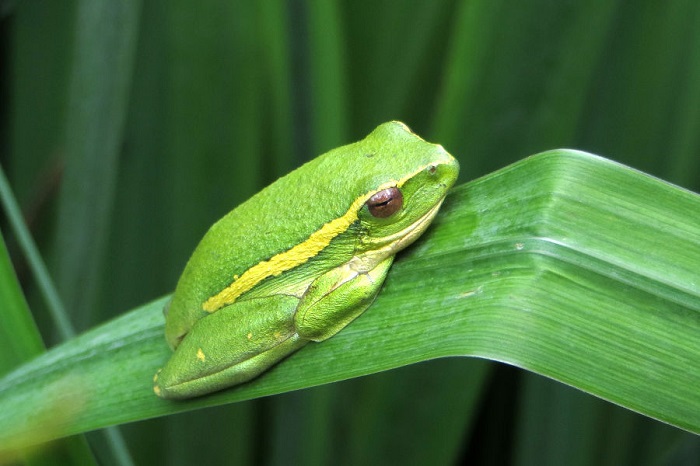
View the above photo record (by John Wilkinson) in FrogMAPhere.
Find the Argus Reed Frog in the FBIS database (Freshwater Biodiversity Information System) here.
Family Hyperoliidae
ARGUS REED FROG – Hyperolius argus
Peters, 1854
Habitat
Within the atlas region, this lowland species occurs in Coastal Bushveld-Grassland, a mosaic of vegetation types found from sea level to an altitude of 300 m, along the coast of northern KwaZulu-Natal. It breeds in shallow, often temporary, pans, vleis and marshes, where floating and emergent peripheral plants such as Phragmites spp., Nymphea spp., Cyperus papyrus and Typha latifolia provide call sites for males (Lambiris 1989a; Passmore and Carruthers 1995; Channing 2001; pers. obs.).
Habitat – Kosi Bay, KwaZulu-Natal Photo by Ryan Tippett
Behaviour
Nothing appears to be known of the non-breeding habits and habitat of this species. Breeding begins after the first rains have fallen in spring, and continues throughout summer. During the day, frogs may be found hiding amongst vegetation at the breeding site, especially in Pistia stratiotes and Nymphea spp., and occasionally under logs or stones in the vicinity. At night, males form fairly large choruses and call from slightly elevated positions on emergent or floating vegetation. Amplexus is axillary, and c.200 eggs are laid in clusters of c.30, attached to submerged or emergent vegetation (Channing 2001; pers. obs.).
Hyperolius argus – Durban, KwaZulu-Natal Photo by Trevor Hardaker
Predators include various fish, birds, snakes, terrapins, spiders and other frogs, while prey consists mainly of insects.
Status and Conservation
A major threat to H. argus is habitat loss through urbanization, water drainage and afforestation (Lambiris 1989a; pers. obs.). In several parts of KwaZulu-Natal, plantings of exotic Eucalyptus have lowered the water table to such a degree that many pans within the coastal dune forest have completely disappeared (pers. obs.). At the southernmost limits of the species’ distribution, populations are threatened by rapid urban expansion, resulting in range contractions. An additional threat is the introduction of exotic predatory fish, such as the bass Micropterus salmoides, which are avid predators of both tadpoles and adult frogs.
In areas not affected by human activities, H. argus is locally abundant and populations often consist of hundreds of individuals. The species occurs in several private and provincial nature reserves in KwaZulu-Natal and therefore does not appear to warrant additional conservation action at present.
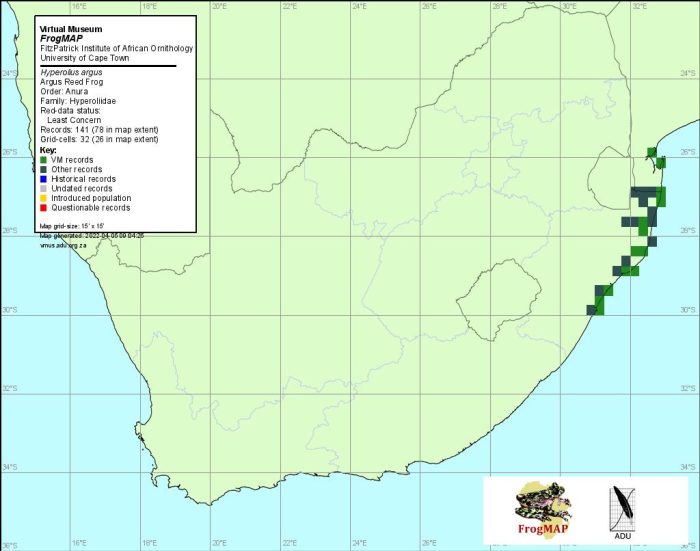
H. argus is distributed from the coastal lowlands of southern Somalia, southward through Kenya, Tanzania, Malawi, eastern Zimbabwe and Mozambique (Poynton and Broadley 1987). In the atlas region it is restricted to the coastal plain of KwaZulu-Natal, occurring as far south as Durban (2930DD). Earlier records in southern Africa were incorrectly referred to H. puncticulatus (Poynton 1964; Wager 1965) owing to the close morphological similarity of the two species. However, the species are ecologically separated, with H. puncticulatus occurring only in forest habitat in Malawi and on the coast of Tanzania and Kenya (Poynton 1986; Poynton and Broadley 1987).
The atlas records are reliable but incomplete; more thorough sampling will undoubtedly fill many of the present gaps in the known range of this species.
Distribution of Hyperolius argus. Taken from the FrogMAP database, April 2022.
Further Resources
Virtual Museum (FrogMAP > Search VM > By Scientific or Common Name)
More common names: Argus Sedge Frog, Yellow Spotted Reed Frog, Golden Sedge Frog (Alternative English Names); Argusrietpadda (Afrikaans)
Recommended citation format for this species text:
Bishop PJ, Tippett RM. Argus Reed Frog Hyperolius argus. BDI, Cape Town. Available online at http://thebdi.org/2022/02/04/argus-reed-frog-hyperolius-argus/
Recommended citation format:
This species text has been updated and expanded from the text in the 2004 frog atlas. The reference to the text and the book are as follows:
Bishop PJ 2004 Hyperolius argus Argus Reed Frog. In Minter LR et al 2004.
Minter LR, Burger M, Harrison JA, Braack HH, Bishop PJ, Kloepfer D (eds) 2004. Atlas and Red Data Book of the Frogs of South Africa, Lesotho and Swaziland. Smithsonian Institution, Washington, and Avian Demography Unit, Cape Town.
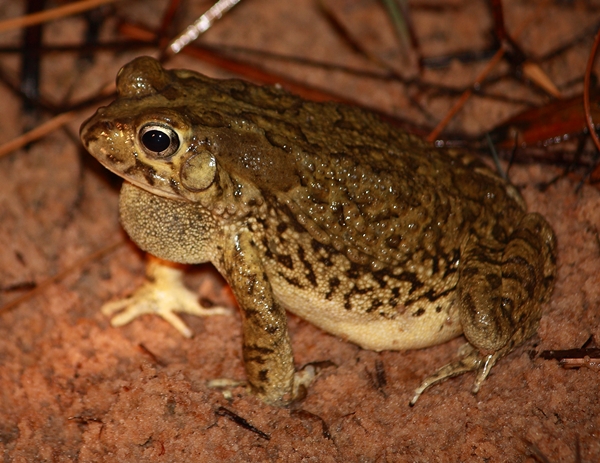
View the above photo record (by Vaughah Jessnitz) in FrogMAPhere.
Find the Western Olive Toad in the FBIS database (Freshwater Biodiversity Information System) here.
Family Bufonidae
WESTERN OLIVE TOAD – Sclerophrys poweri
(Hewitt, 1935)
Habitat
This species inhabits thornveld and open savanna in lower-rainfall areas of the Savanna Biome, including river valleys on Kalahari sand. Activity patterns and movements require further study, but these toads are probably inactive for substantial periods, especially in drier areas, as they take shelter under logs, grass tussocks or in rock crannies, and emerge opportunistically after rain or on humid nights. Like most toads, foraging individuals probably roam widely and are often encountered on roads. Juvenile S. poweri have been recorded sheltering in termitaria (Channing 2001).
Breeding occurs in pans, dams and marshes.
Behaviour
Breeding begins early in the season, usually in mid-September, following the first spring rains, but this varies among years and locations. Choruses of calling males form on mud banks and in open, shallow water. Around 23 000 eggs are laid in double strands that are attached to submerged and floating vegetation (Channing 2001). Eggs hatch within 24 hours. Aspects of the life history such as larval period and age distribution of breeding adults, are unknown and require study.
Predators are unrecorded. Prey includes beetles (Channing 2001).
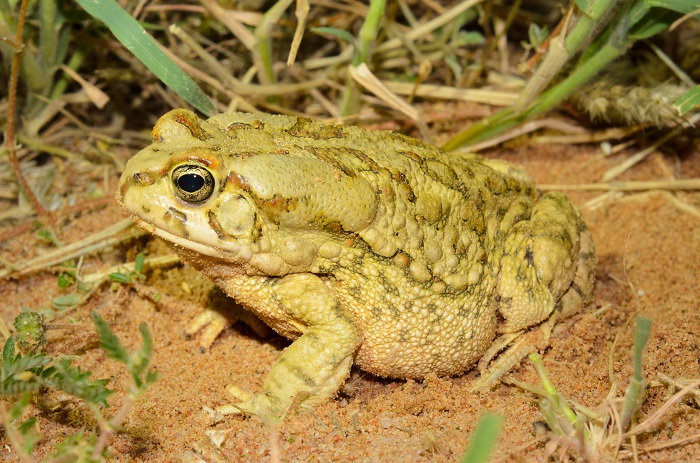
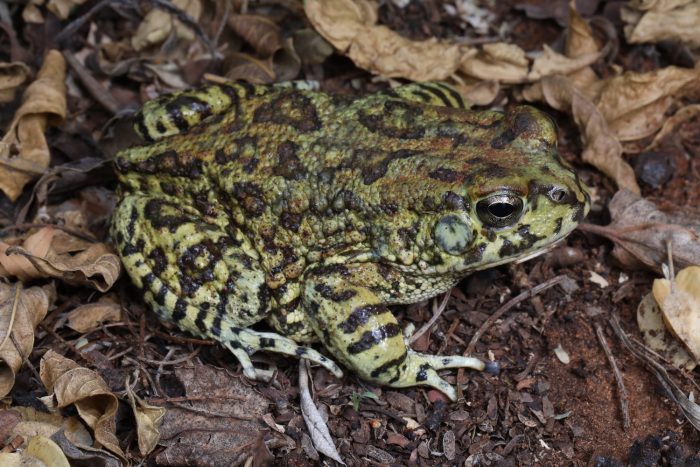
Sclerophrys poweri– Tswalu Kalahari Reserve, Northern Cape Photo by Kyle Finn
Status and Conservation
S. poweri is common and often locally abundant, and has been recorded from a number of statutory conservation areas including Augrabies Falls, Vaalbos and Pilanesberg national parks, Kgalagadi Transfrontier Park, and Sandveld and Botsalano nature reserves. Much of its habitat occurs in cattle- and game-farming regions, and is well protected.
Further research is needed to investigate the taxonomic status of the species and its relationship to S.garmani. This research should include genetic, morphological and call analyses, based on extensive field work around the transition area, and should identify locations where distinct eastern and western forms co-occur and potentially interbreed (Channing 1991; Cunningham and Cherry 2000).
At present, S. poweri is a poorly defined species that, in the view of some authors, represents nothing more than a geographical variant of S. garmani (Poynton 1995; Cunningham and Cherry 2000). Nevertheless, populations from arid southwestern Africa, including Namibia, Botswana, western Zimbabwe and western South Africa have been assigned to S. poweri (Tandy 1972; Poynton and Broadley 1988; Passmore and Carruthers 1995; Channing 1991, 2001), while populations in the eastern parts of the atlas region are currently assigned to S. garmani.
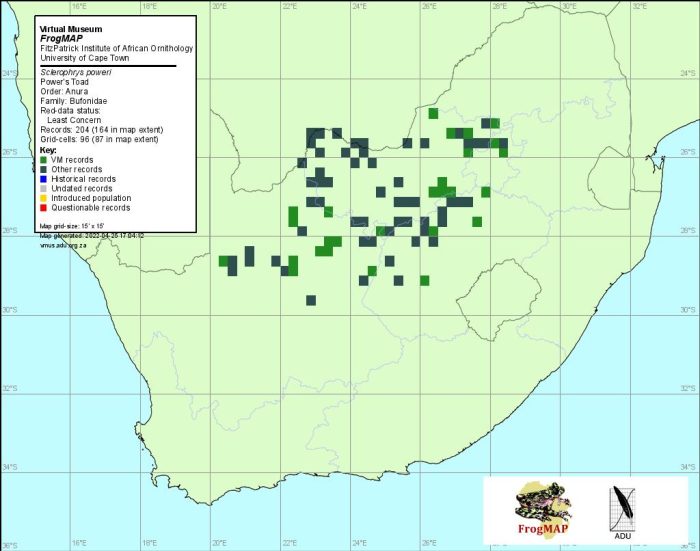
The type locality of S. poweri is Kimberley. Within the atlas region, the species has been recorded north of 30°S in the Northern Cape Province, and in adjoining areas in the western and northwestern Free State, localities throughout North West Province and the area west of 29°E in Gauteng and Limpopo provinces. The most easterly record of S. poweri in the atlas region is from Naboomspruit (Passmore 1972). However, the extent to which the ranges of the western (poweri) and eastern (garmani) forms overlap is unclear (Channing 1991; Passmore and Carruthers 1995).
It is difficult to distinguish S. poweri from the morphologically similar S. garmani, and identifications based on calls require sonagraphic analysis (see S.garmani account). More intensive distribution surveys, based on recorded calls, are required to determine the limits of distribution of these species.
Distribution of Sclerophrys poweri. Taken from the FrogMAP database, April 2022.
Further Resources
Virtual Museum (FrogMAP > Search VM > By Scientific or Common Name)
More common names: Power’s Toad (Alternative English Name); Power se Skurwepadda (Afrikaans)
Recommended citation format for this species text:
du Preez LH, Cunningham M, Turner A, Tippett RM. Power’s Toad Sclerophrys poweri. BDI, Cape Town. Available online at http://thebdi.org/2022/02/03/powers-toad-sclerophrys-poweri/
Recommended citation format:
This species text has been updated and expanded from the text in the 2004 frog atlas. The reference to the text and the book are as follows:
du Preez LH, Cunningham M, Turner A 2004 Sclerophrys poweri Power’s Toad. In Minter LR et al 2004.
Minter LR, Burger M, Harrison JA, Braack HH, Bishop PJ, Kloepfer D (eds) 2004. Atlas and Red Data Book of the Frogs of South Africa, Lesotho and Swaziland. Smithsonian Institution, Washington, and Avian Demography Unit, Cape Town.