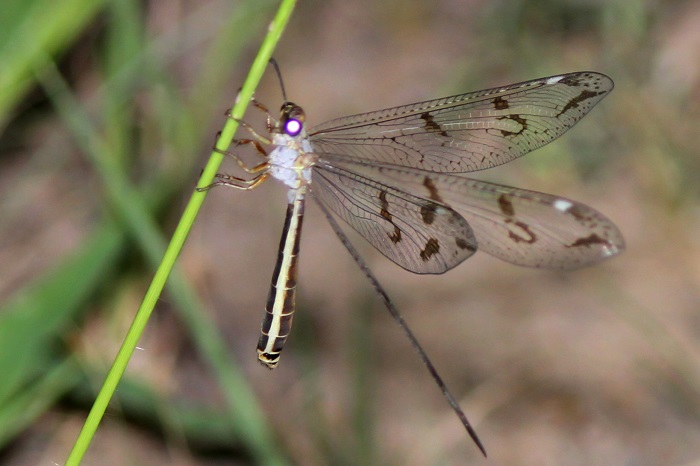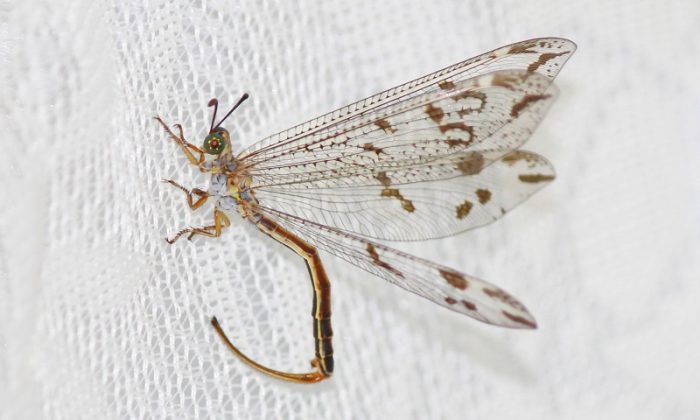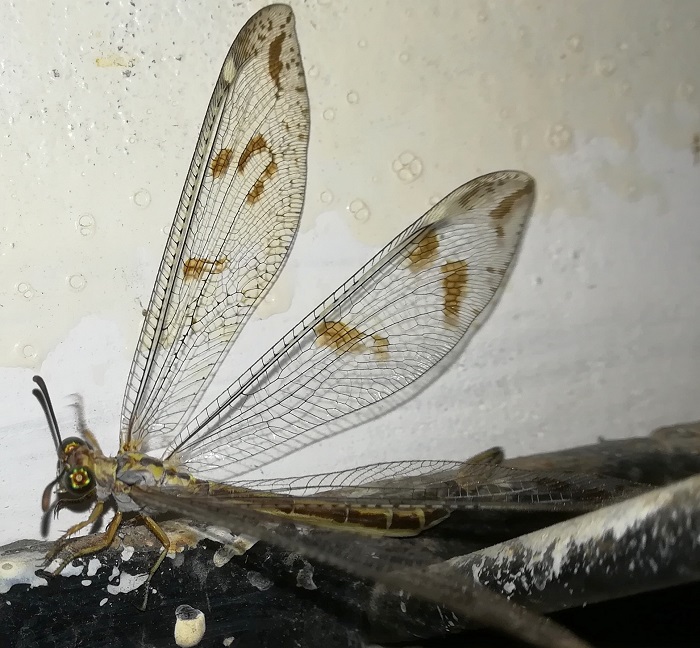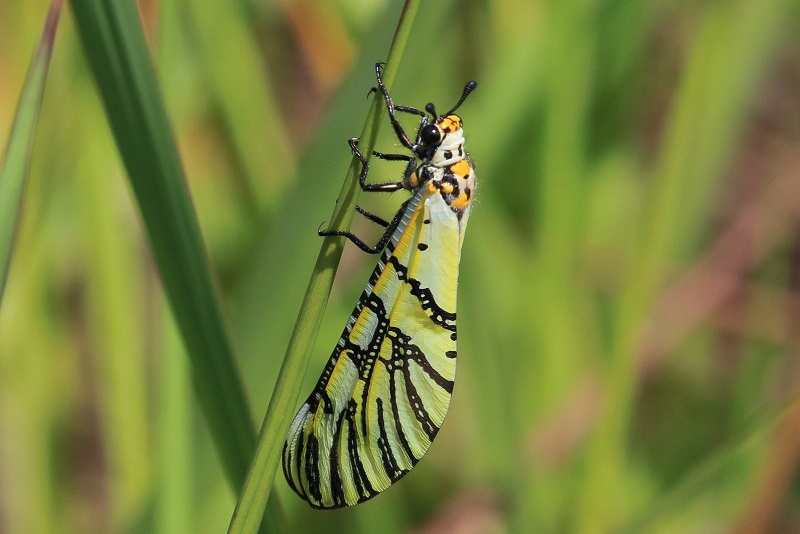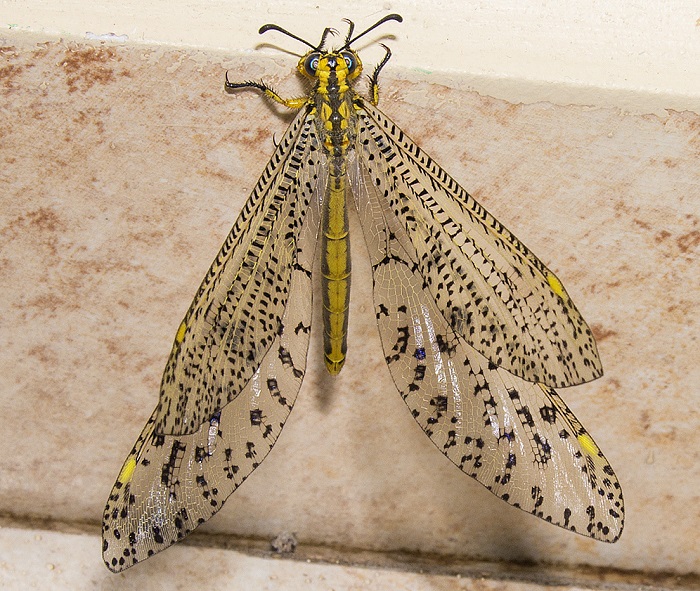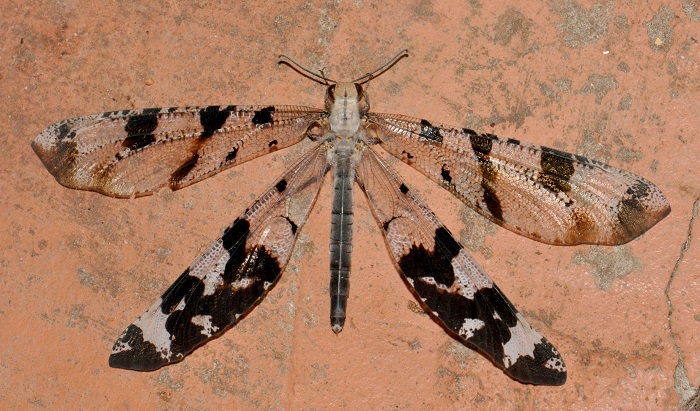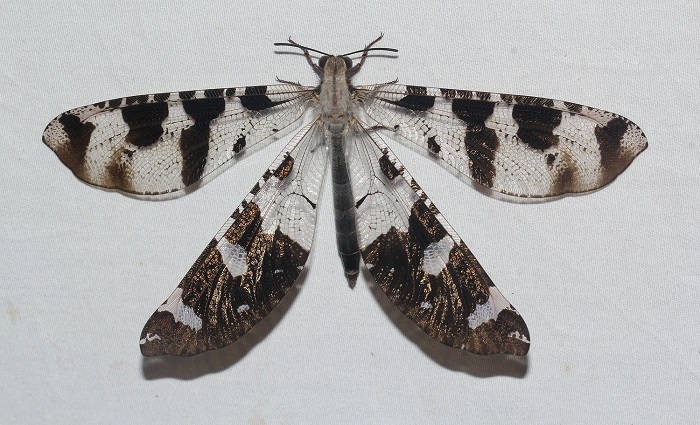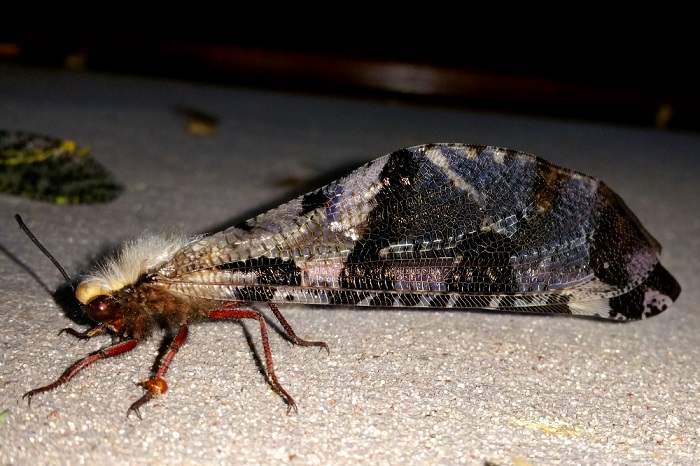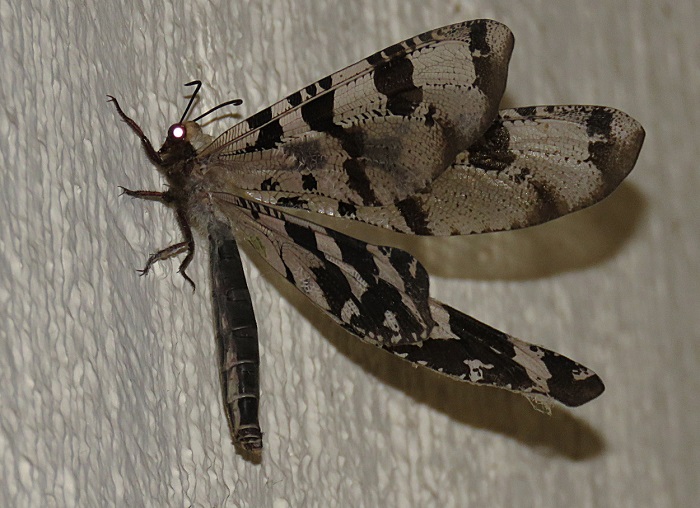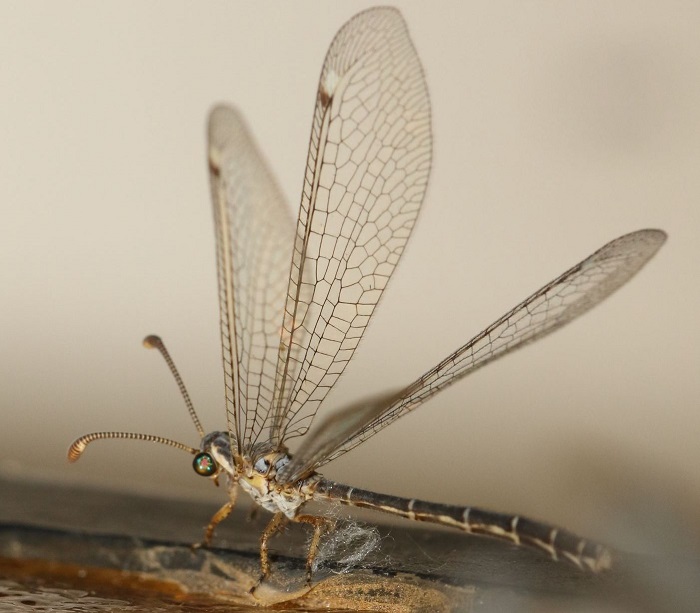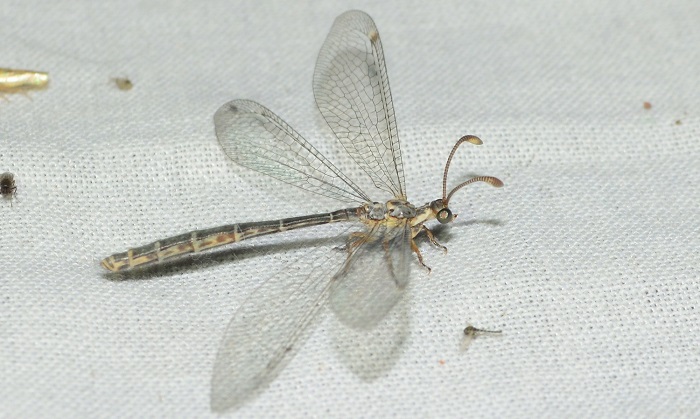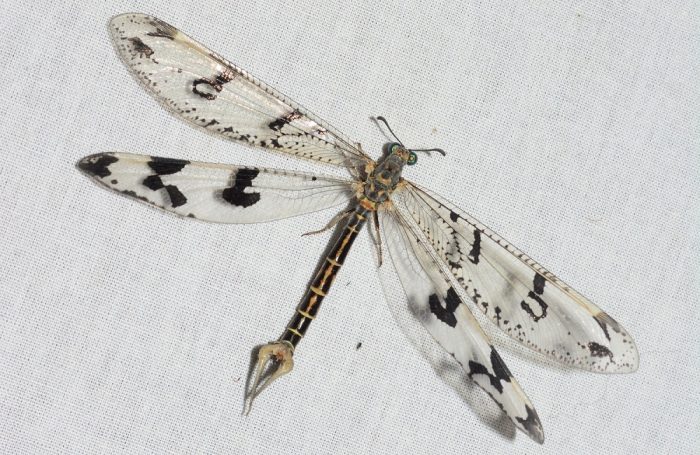
Palpares elegantulus

View the above photo record (by Ryan Tippett) in LacewingMAP here.

Palpares elegantulus

Peringuey, 1910

Identification

Size: Large (Wingspan at least 100mm)

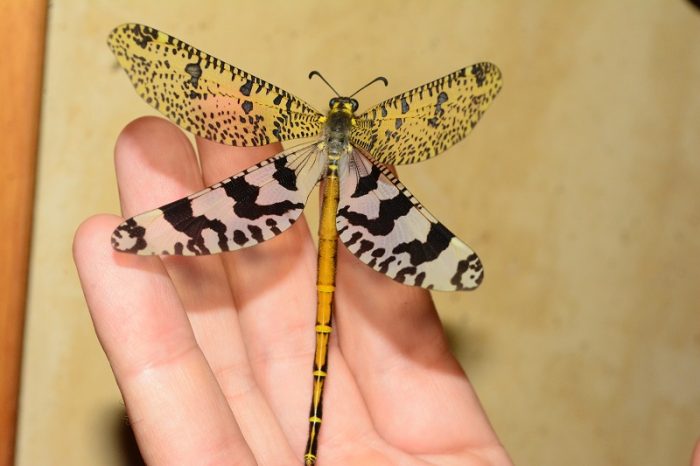
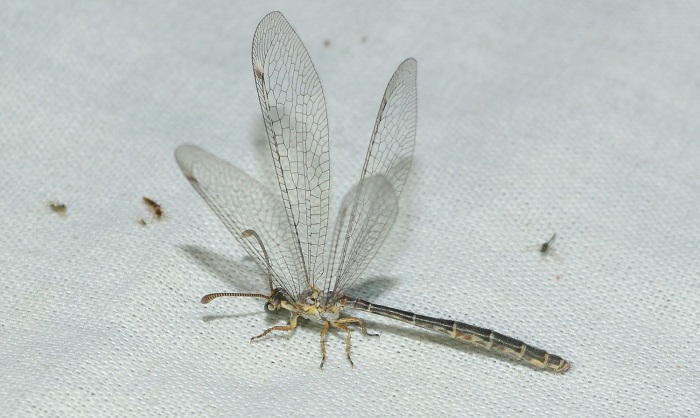
Palpares elegantulus is characterized by the extremely long labial palps that distinguish the species from the other Palparinae.

Larvae: The larvae are unknown.

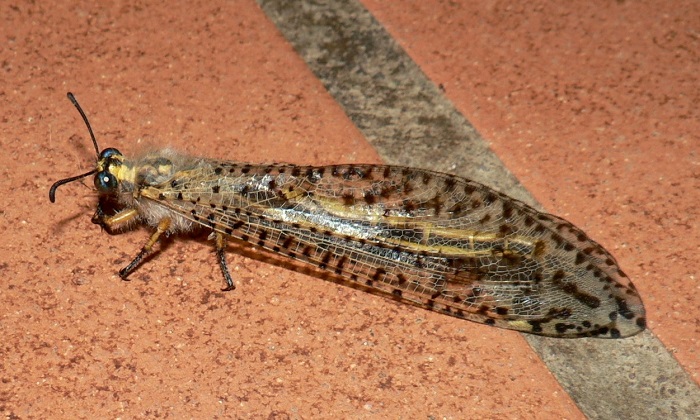
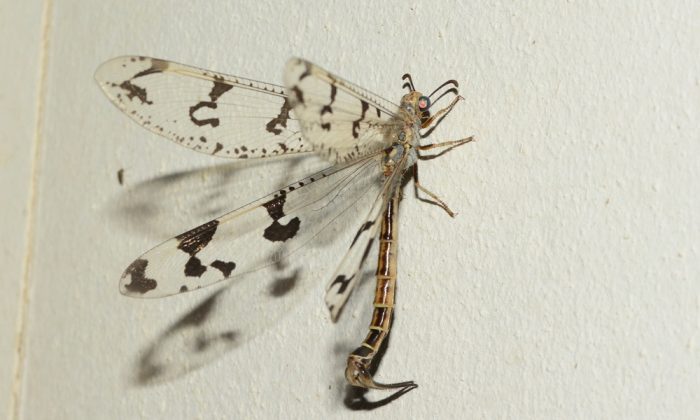
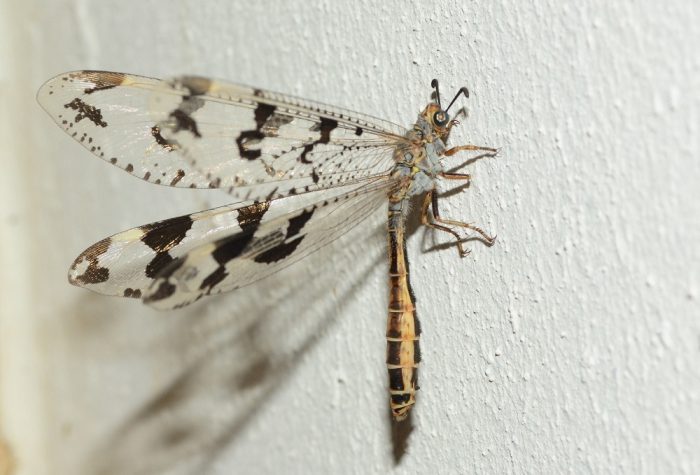
Palpares elegantulus – Near Maltahohe, Namibia
Photo by Alex Dreyer
Palpares elegantulus – Near Upington, Northern Cape
Photo by Cornelia Rautenbach

Habitat

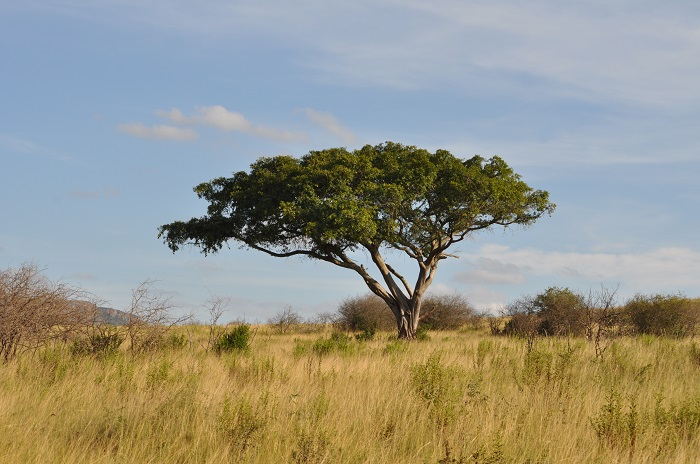
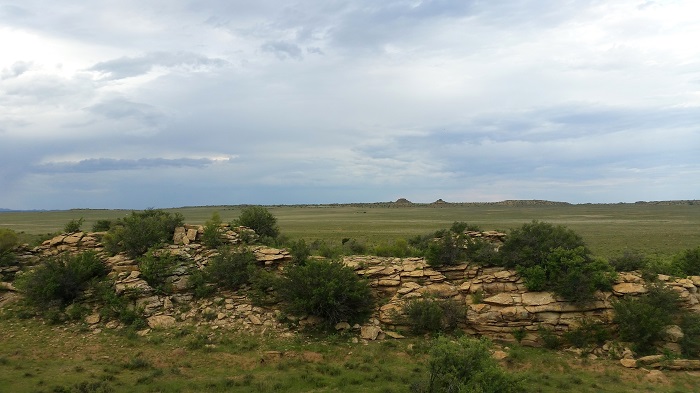
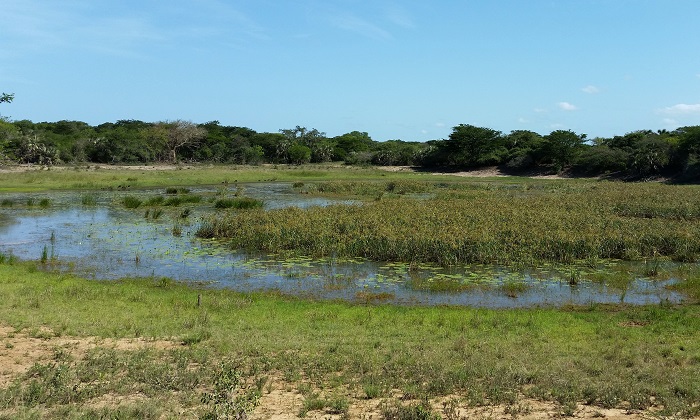
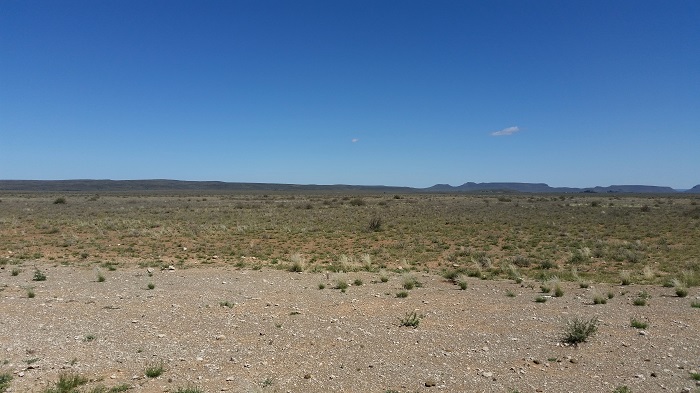
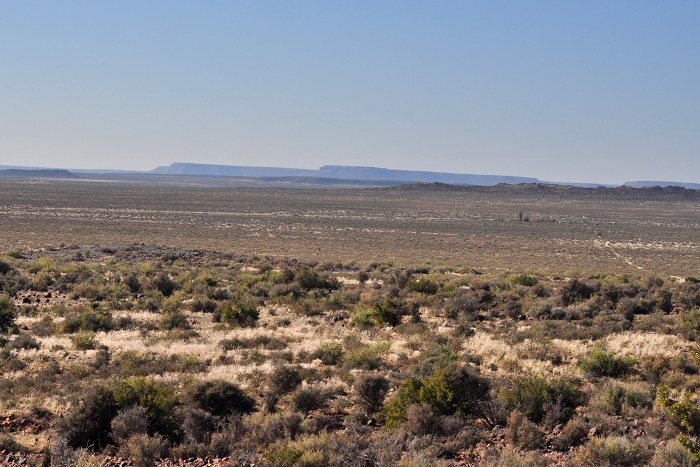
P. elegantulus inhabits the open, arid shrublands of the Nama Karoo in flat or hilly terrain.
Habitat – Near Carnarvon, Northern Cape
Photo by Ryan Tippett

Behaviour

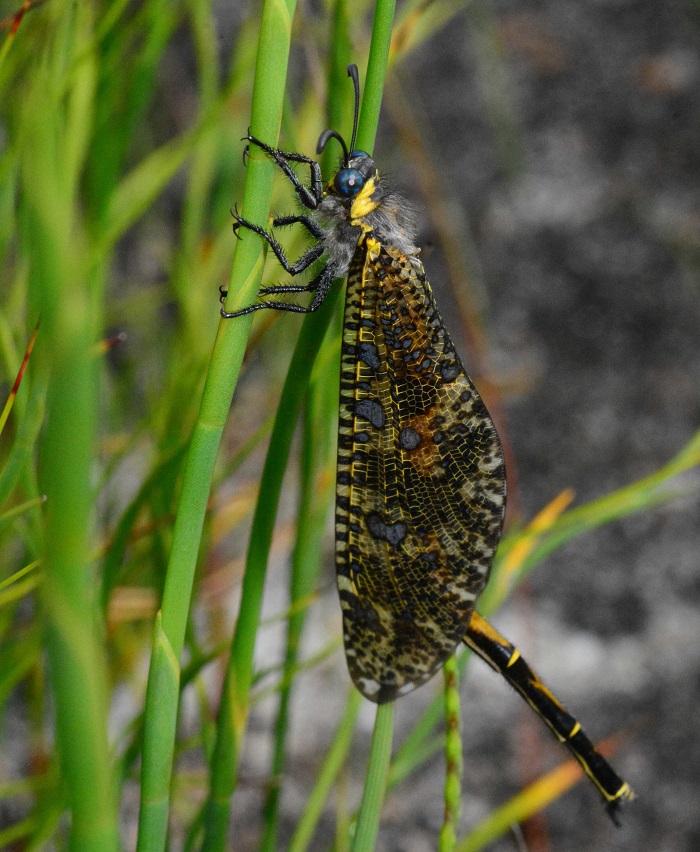
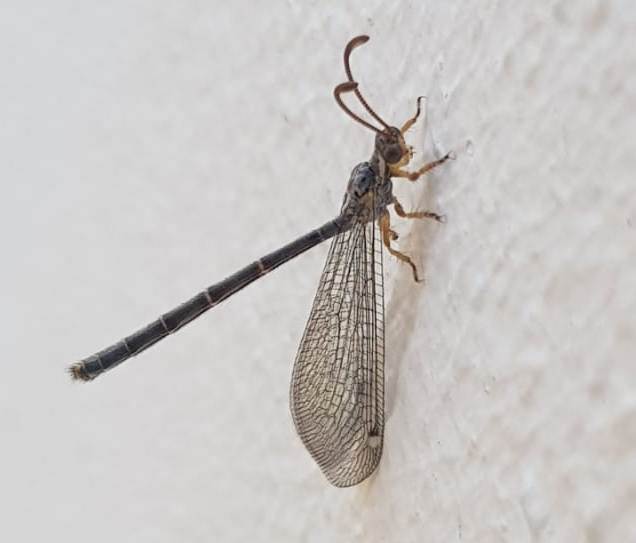
Adults are nocturnal and often rest in a hanging position among the protective branches of Karoo bushes. They are regularly attracted to lights.

Adults are active during late summer and have been recorded from December to April.

Nothing is known about the larvae of this species, it is likely to be similar to those of other Palpares spp.

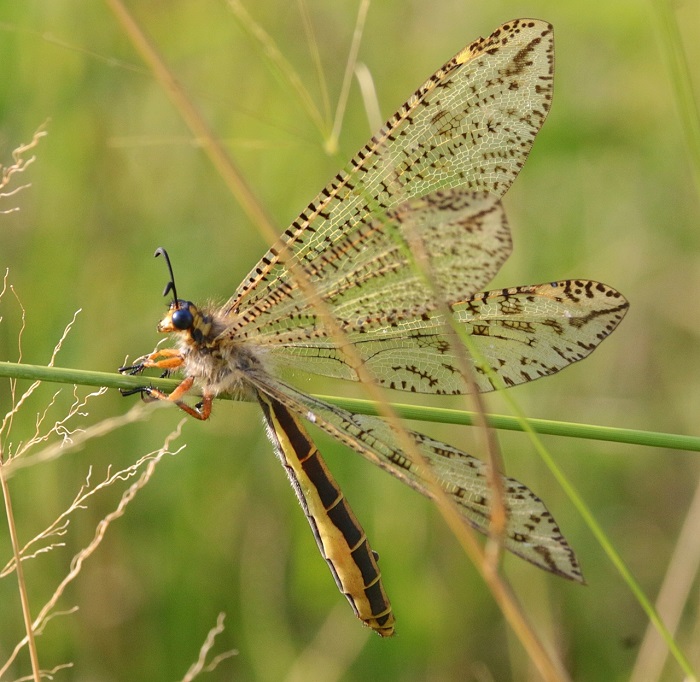
Palpares elegantulus – Near Carnarvon, Northern Cape
Photo by Ryan Tippett

Status and Distribution

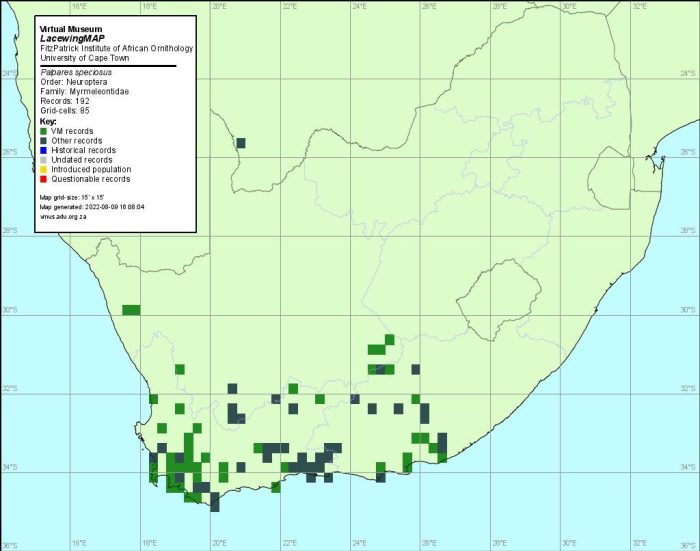
Palpares elegantulus is fairly common and widespread in the drier western areas. In South Africa, this species is confined to the Northern and Western Cape provinces. It is widespread throughout Namibia, extending up into Angola.

Distribution of Palpares elegantulus. Taken from the LacewingMAP database, July 2022.

Taxonomy

Order: Neuroptera Family: Myrmeleontidae Subfamily: Palparinae Tribe: Palparini Genus: Palpares Species: elegantulus

Further Resources

Virtual Museum (LacewingMAP > Search VM > By Scientific or Common Name)

Acknowledgements:

The use of photographs by Alex Dreyer, Cornelia Rautenbach and Katharina Reddig is acknowledged. This species text has benefited enormously from comments made by Mervyn Mansell on records he has identified in LacewingMAP. We acknowledge his important contribution.

Recommended citation format for this species text:

Tippett RM 2022. Palpares elegantulus. Biodiversity and Development Institute, Cape Town.
Available online at http://thebdi.org/2022/08/17/palpares-elegantulus/

Palpares elegantulus – Near Hardap, Namibia
Photo by Katharina Reddig

Palparidius concinnus

View the above photo record (by John Wilkinson) in LacewingMAP here.

Palparidius concinnus – Hook-tailed Antlion

Peringuey, 1910

Identification

Size: Medium-large (Wingspan around 90mm)

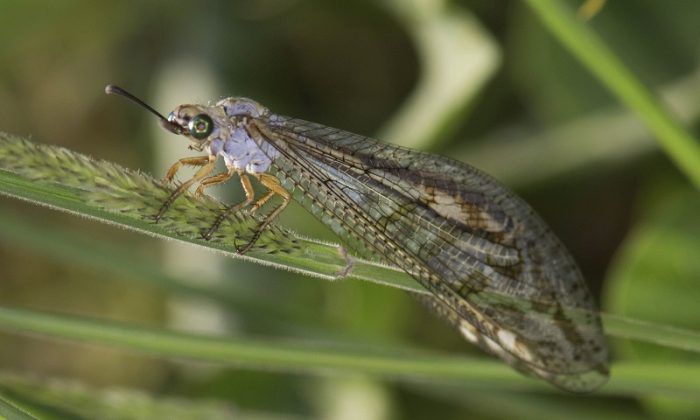
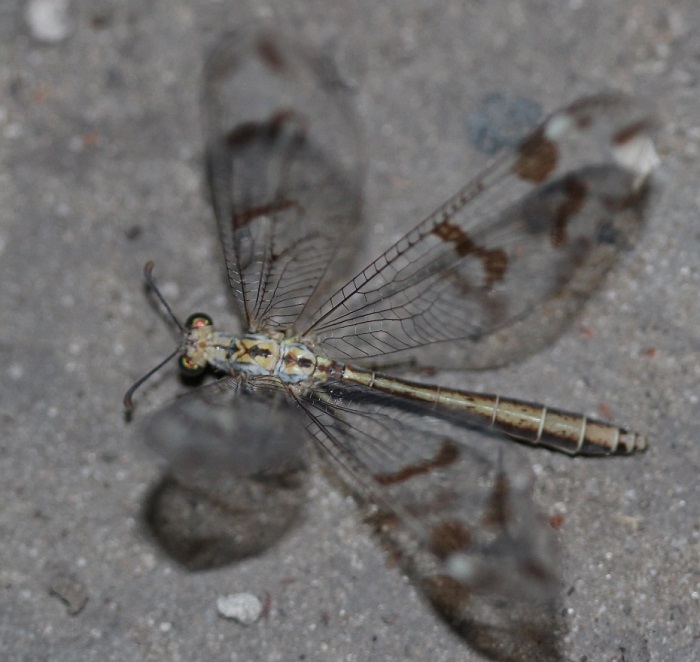
Palparidius concinnus is readily identified by the single brown horseshoe-shaped marking in each forewing. The males are easily recognised by their very elongated ectoprocts (claspers).

Palparidius concinnus Male – Near Tshipise, Limpopo
Photo by John Wilkinson
Palparidius concinnus Female – Near Gabatsoal, Botswana
Photo by Dewalt du Plessis

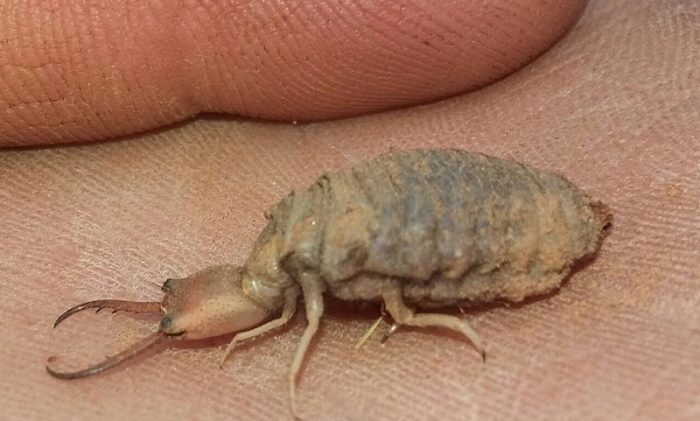
Larvae: The larvae of P. concinnus are fairly large and rufous coloured.

Palparidius concinnus Larvae – Near Lephalale, Limpopo
Photo by Ross Hawkins

Habitat

Palparidius concinnus inhabits dry savanna woodlands.

Behaviour

Adults are active during late summer. They are on the wing from January to April.

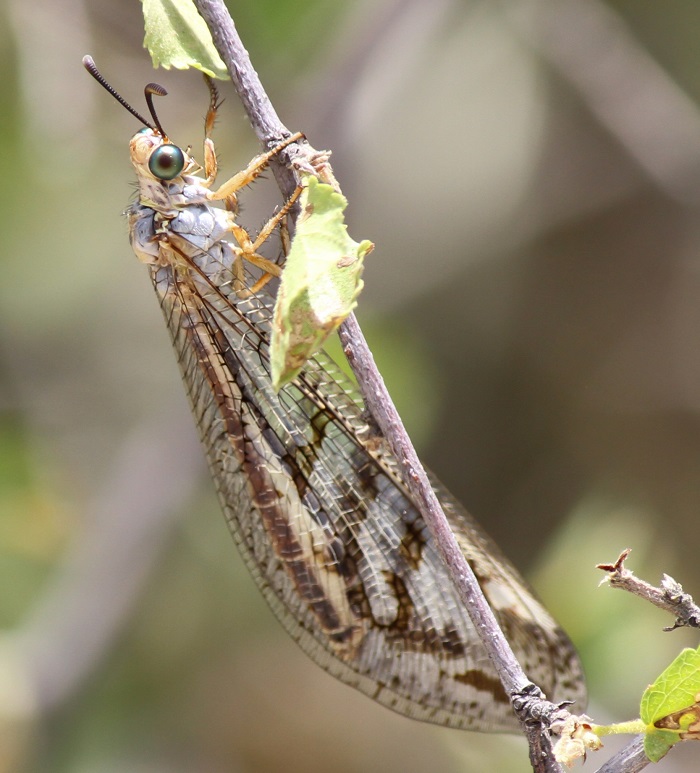
Like most antlions Palparidius concinnus is nocturnal. Adults often rest in a hanging position among the protective branches of larger bushes. They are regularly attracted to lights. Not much is known of its biology.

The larvae are thought to live in deep soil. They are voracious predators and one individual was recorded feeding on a small scorpion.

Palparidius concinnus – Near Vivo, Limpopo
Photo by Steve Woodhall

Status and Distribution

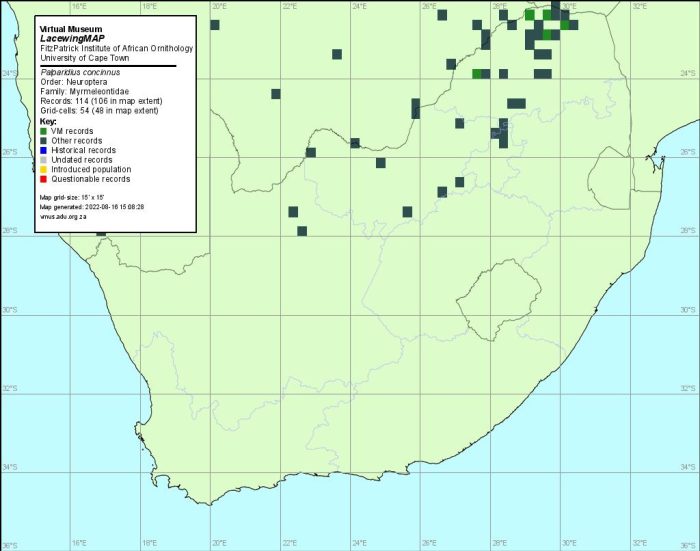
Palparidius concinnus is fairly common in the northern parts of South Africa. It is known from Free State, Gauteng, Limpopo, North West and the Northern Cape. It is also widespread in Namibia and Botswana.

Distribution of Palparidius concinnus. Taken from the LacewingMAP database, July 2022.

Taxonomy

Order: Neuroptera Family: Myrmeleontidae Subfamily: Palparinae Tribe: Palparini Genus: Palparidius Species: concinnus

Palparidius concinnus – Central Kalahari Game Reserve, Botswana
Photo by Cornelia Rautenbach

Further Resources

Virtual Museum (LacewingMAP > Search VM > By Scientific or Common Name)

Acknowledgements:

The use of photographs by Cornelia Rautenbach, Dewald du Plessis, John Wilkinson, Ross Hawkins and Steve Woodhall is acknowledged. This species text has benefited enormously from comments made by Mervyn Mansell on records he has identified in LacewingMAP. We acknowledge his important contribution.

Recommended citation format for this species text:

Tippett RM 2022. Palparidius concinnus. Biodiversity and Development Institute, Cape Town.
Available online at http://thebdi.org/2022/08/16/palparidius-concinnus/

Palparidius concinnus – Near Tshipise, Limpopo
Photo by John Wilkinson

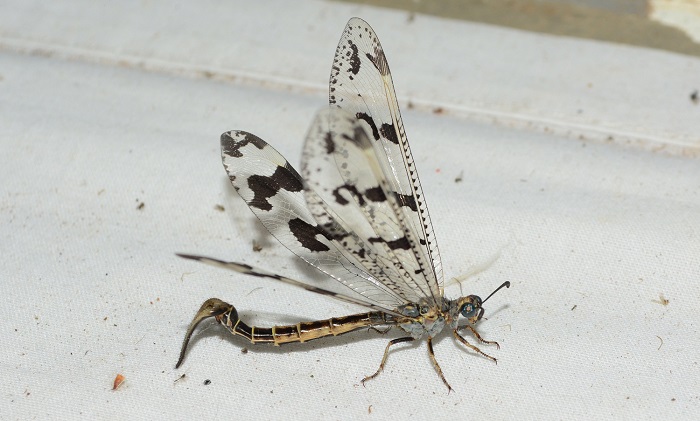
Pamexis contaminatus

View the above photo record (by Christopher Willis) in LacewingMAP here.

Pamexis contaminatus – Butterfly Antlion

Hagen, 1887

Identification

Size: Medium (Wingspan up to 60mm)

P. contaminatus has an overall yellow and black colouration. Forewings are bright yellow, richly adorned with black spots. The hindwings are creamy white to pale yellow with distinctive, broad black patterning. The abdomen is black with pale yellow sides and fine yellow lines above.

This species is very similar to Pamexis karoo.

Larvae: Unknown.

Pamexis contaminatus – Near Calvinia, Northern Cape
Photo by Christopher Willis
Pamexis contaminatus – Near Calvinia, Northern Cape
Photo by Christopher Willis

Habitat

Inhabits dry fynbos, succulent karoo and the southern Nama Karoo in areas with sparse, low vegetation. P. contaminatus appears to favour areas of flat open veld with bare patches, and is not associated with rocks or lichen as in other species in the genus.

Behaviour

Adults Adults emerge between October and January.

Pamexis contaminatus – Near Calvinia, Northern Cape
Photo by Christopher Willis

Often found on sparse, open patches of ground between vegetation. Flies rapidly when disturbed and usually resettles on a low shrub. Unlike most antlions Pamexis contaminatus is not attracted to lights.

Nothing is known about the larvae of this species.

Pamexis contaminatus – Near Calvinia, Northern Cape
Photo by Christopher Willis

Status and Distribution

Pamexis contaminatus is fairly rare and is endemic to South Africa. Its range is centred around the Calvinia, Clanwilliam and Vanrhynsdorp area, extending from Keisie Pass to Graafwater, Hondeklipbaai and Vanrhynsdorp.

Pamexis contaminatus has been recorded from the Western and Northern Cape provinces.

Distribution of Pamexis contaminatus. Taken from the LacewingMAP database, July 2022.

Taxonomy

Order: Neuroptera Family: Myrmeleontidae Subfamily: Palparinae Tribe: Palparini Genus: Pamexis Species: contaminatus

Pamexis contaminatus – Near Nieuwoudtville, Northern Cape
Photo by Christopher Willis

Further Resources

Virtual Museum (LacewingMAP > Search VM > By Scientific or Common Name)

Acknowledgements:

The use of photographs by Christopher Willis is acknowledged. This species text has benefited enormously from comments made by Mervyn Mansell on records he has identified in LacewingMAP. We acknowledge his important contribution.

Recommended citation format for this species text:

Tippett RM 2022. Pamexis contaminatus. Biodiversity and Development Institute, Cape Town.
Available online at http://thebdi.org/2022/08/13/pamexis-contaminatus/

Tomatares citrinus

View the above photo record (by Marius van Zyl) in LacewingMAP here.

Tomatares citrinus – Painted Grassland Antlion

(Hagen, 1853)

Identification

Size: Medium-Large (Wingspan up to 100mm)

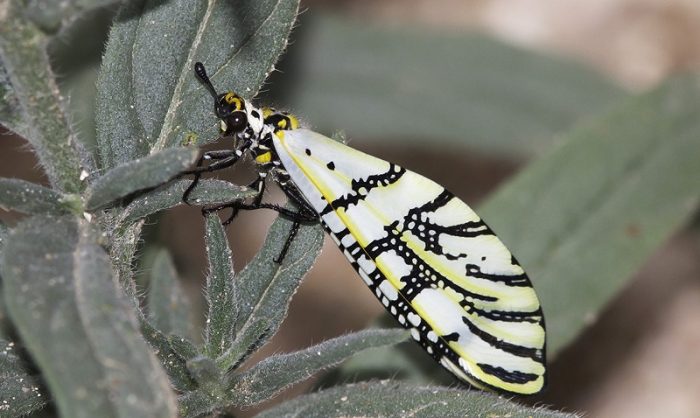
Tomatares citrinus – Near Lephalale, Limpopo
Photo by Justin Bode

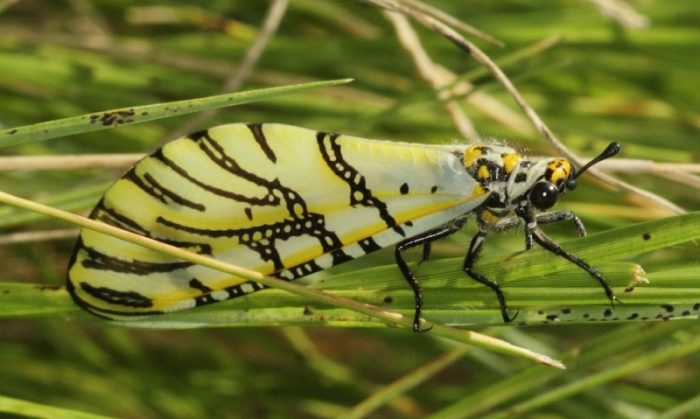
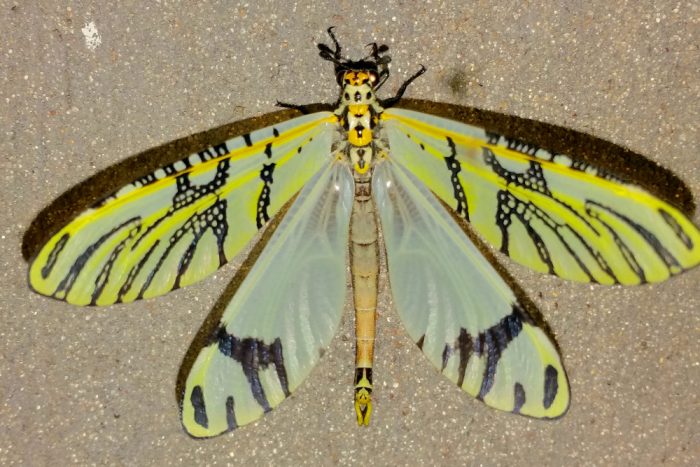
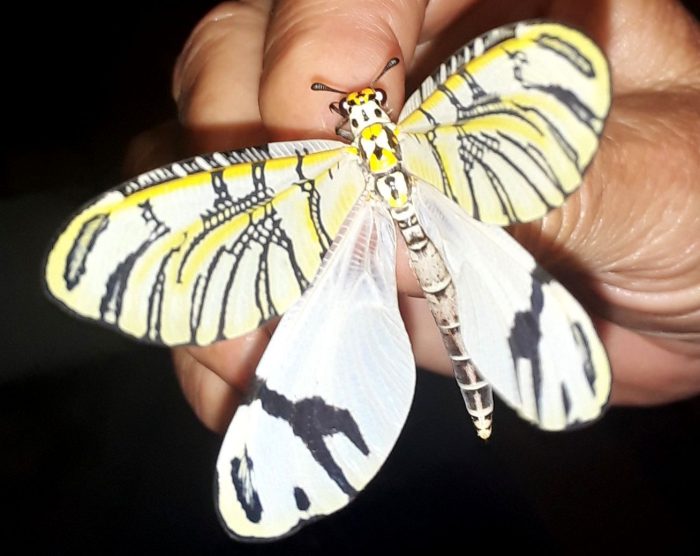
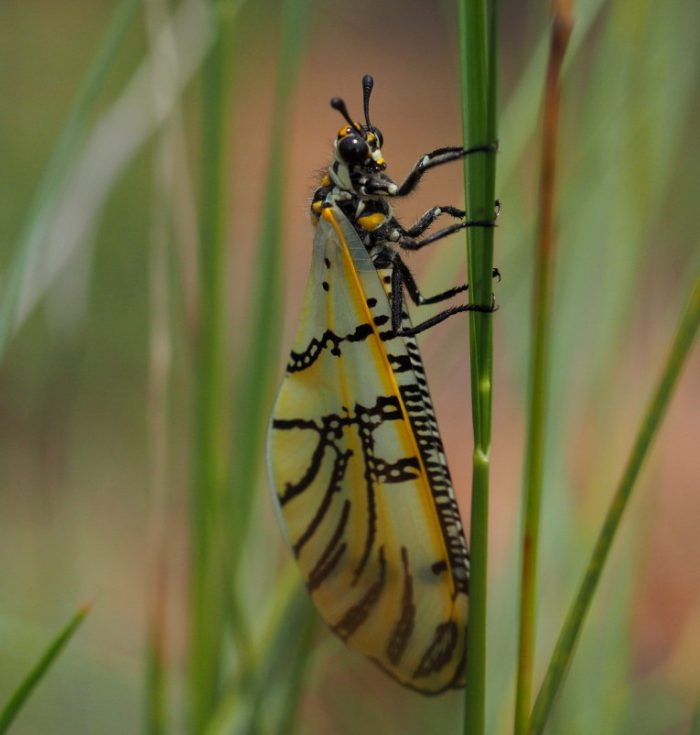
Tomatares citrinus is one of the regions most beautiful and brightly coloured antlion species. The body is black, white and yellow. The opaque wings are primarily white with bold black lines and bright yellow accents. The Antennae are noticeably short and stout.

Tomatares citrinus  Sebe-Sebe Lodge, Limpopo
Photo by Riaan Robbeson

Habitat

T. citrinus is a typical savanna-grassland species. Favours places with fairly tall, dense grass.

Behaviour

Tomatares citrinus  Near Osire, Namibia
Photo by Neil Thomson

This species is easily detected when flushed from its resting place in thick grass. Tomatares citrinus is unusual in that it is a diurnal species.

Adults are active during late summer from December to April.

The larvae are known to live freely in soil among grass tussocks. They are voracious predators feeding mainly on other arthropods. The larvae are seldom encountered.

Status and Distribution

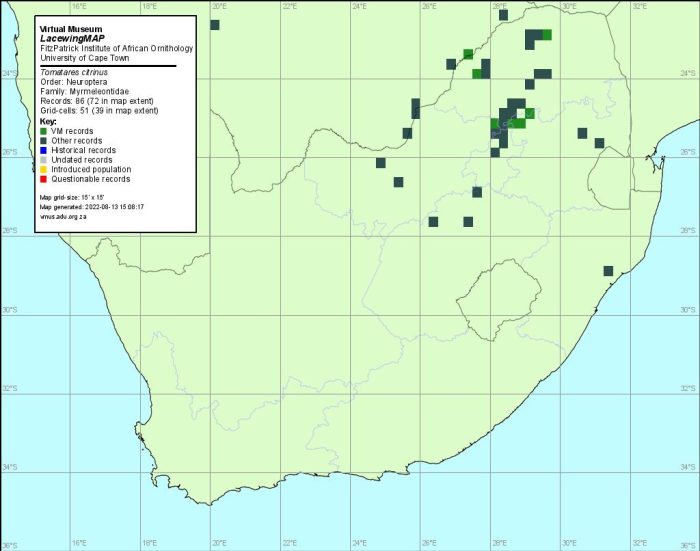
Tomatares citrinus is fairly widespread in the northern parts of South Africa. Despite its wide distribution, T. citrinus is an uncommon species. In South Africa T. citrinus is known from KwaZulu-Natal, FreeState, North-West, Gauteng, Mpumalanga and Limpopo. It has also been recorded from Namibia, Botswana, Zimbabwe and Mozambique.

Distribution of Tomatares citrinus. Taken from the LacewingMAP database, July 2022.

Taxonomy

Order: Neuroptera Family: Myrmeleontidae Subfamily: Palparinae Tribe: Palparini Genus: Tomatares Species: citrinus

Tomatares citrinus  Near Waterpoort, Limpopo
Photo by Steve Woodhall

Further Resources

Virtual Museum (LacewingMAP > Search VM > By Scientific or Common Name)

Acknowledgements:

The use of photographs by Justin Bode, Marius Van Zyl, Neil Thomson, Riaan Robbeson, Stephen Ball and Steve Woodhall is acknowledged. This species text has benefited enormously from comments made by Mervyn Mansell on records he has identified in LacewingMAP. We acknowledge his important contribution.

Recommended citation format for this species text:

Tippett RM 2022. Tomatares citrinus. Biodiversity and Development Institute, Cape Town.
Available online at http://thebdi.org/2022/08/13/tomatares-citrinus/

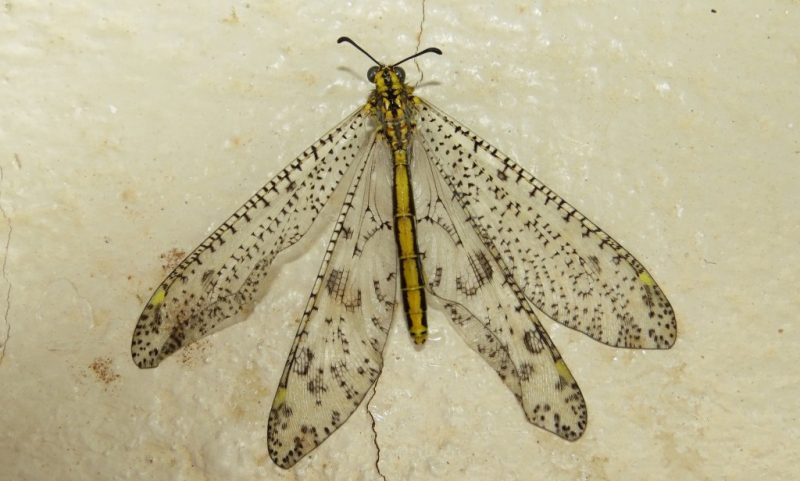
Tomatares citrinus – Near Loding, Mpumalanga
Photo by Stephen Ball

Speckled Mousebird (Colius striatus)

Cover photo: BirdPix 110 – Lia Steen Speckled Mousebird

Identification

The Speckled Mousebird has sandy brown to ashy brown plumage feathers along its head and back and warmer brown feathers along its belly. It has long brown tail feathers and dark eyes and its bill is black on top and whitish underneath.

The northern sub-species has whitish ear coverts, pale eyes, and pinkish to red legs.

Identification guide to Speckled Mousebird
Adult Speckled Mousebird – Main photo: BirdPix 8322 – Gregg & Darling Desire, Addo Elephant National Park, Eastern Cape, 14 June 2014. Northern Subspecies – Photo inset: BirdPix 39085 – Dieter Oschadleus, Entebbe, Uganda, 15 July 2017.

Speckled Mousebirds are quite vocal. They make a warbling tsu-tsu call while in flight, and are known for their tisk-tisk alarm call.


There are two other species of mousebird in southern Africa, the Red-faced Mousebird and the White-backed Mousebird.

Distribution

The Speckled Mousebird is the most widely distributed mousebird in Africa. It occurs from Cameroon to Ethiopia, through southern Democratic Republic of Congo, Tanzania, northern Zambia and northern Angola to southern Africa. Within southern Africa it is common in eastern Zimbabwe, Mozambique and South Africa, largely excluding the arid Northern Cape Province. It is very adaptable, occurring in forest edges, thickets, gardens, orchards, strandveld, riverine woodland, and alien tree plantations.

SABAP2 distribution map, Speckled Mousebird
SABAP2 distribution map for Speckled Mousebird, downloaded on 04 August 2022. Details for map interpretation can be found here.

Habitat

The Speckled Mousebird prefers open bushveld habitats. It is widespread in savanna and open woodlands, as well as areas with tangled thickets. It is a common “backyard bird,” often seen in urban gardens and orchards.

Speckled Mousebird in gardent
Speckled Mousebird perched in a garden tree – BirdPix 215697: Lia Steen, Shellybeach, KwaZulu-Natal, 08 April 2022.

Behaviour

It feeds on a wide variety of plant matter, especially fruit, but also flowers, nectar, leaves, buds and bark. It usually forages in the mid to upper tree canopy, often in groups of 5-20 birds. 

Speckled Mousebirds can be monogamous or polygamous, meaning that the male can have one ore multiple mates. They are also a cooperative breeders, with 2-6 juvenile helpers, some of which are not related to the breeding couple. Courtship is fairly elaborate, with preening, bouncing up and down on a perch and exchanging of food.

Colius striatus at a bird feeder
Enjoying the fruit at the bird feeder – BirdPix 196917: C. Wilson, Howick, KwaZulu-Natal, 20 January 2021.

The nest is a small, shallow bowl made of grass and herb stems, lined with soft material. It is typically placed 1-7 metres above ground in a tree or bush. The nestlings start to explore the branches surrounding the nest at about 10-11 days old, after which they start to preen each other. They stay in the nest for about 15-20 days, after which they become independent.

Colius striatus looking for food
Speckled Mousebird looking for food – BirdPix 213867: Lia Steen, Shellybeach, KwaZulu-Natal Province, 25 March 2022.

Further resources

Species text from the first Southern African Bird Atlas Project (SABAP1), 1997.

Virtual Museum (BirdPix > Search VM > By Scientific or Common Name).

More common names: Gevlekte muisvoël (Afrikaans); Indlazi (Xhosa); Fariki (South Sotho); Tshivhovo (Tsonga); Coliou rayé (French); Braunflügel-mausvogel (German).

Recommended citation format: Loftie-Eaton M, Daniel KA 2022. Speckled Mousebird Colius striatus. Bird Feeder Project. Biodiversity and Development Institute. Available online at http://thebdi.org/2022/08/08/speckled-mousebird-colius-striatus/

Palpares sobrinus

View the above photo record (by Joseph Heymans) in LacewingMAP here.

Palpares sobrinus

Péringuey, 1911

Identification

Size: Large (Wingspan up to 108mm)

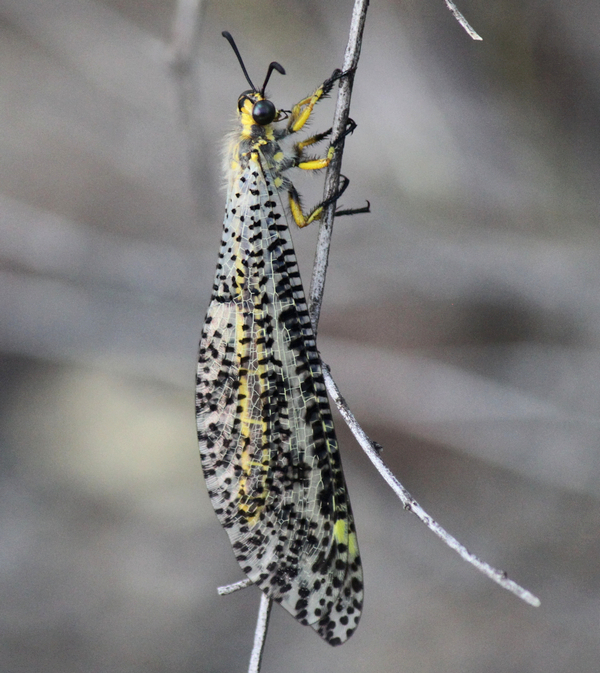
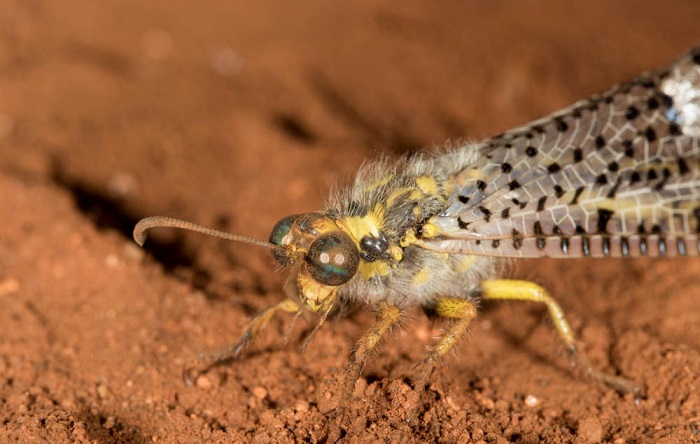
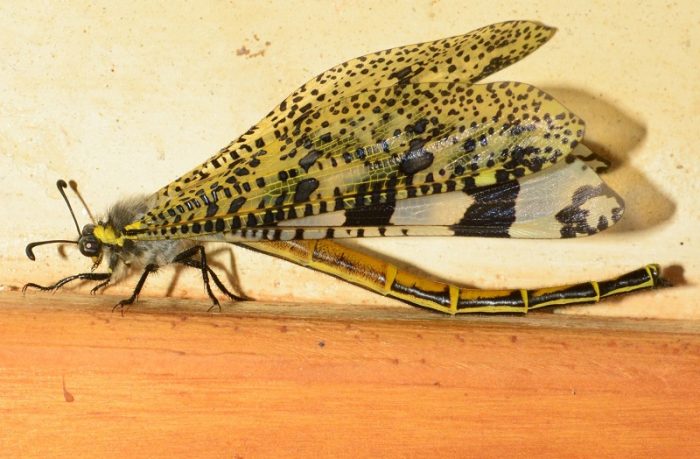
A striking yellow and black antlion. Palpares sobrinus is distinguished from other Palpares by the dense, evenly spaced black speckling on all four wings.

Larvae: The larvae of this species are unknown.

Palpares sobrinus – Welgevonden Game Reserve, Limpopo
Photo by Marita Beneke
Palpares sobrinus – Hela Hela, KwaZulu-Natal
Photo by Cornelia Rautenbach

Habitat

They inhabit grassland and savanna in the north and east of South Africa.

Habitat – Ithala Game Reserve, KwaZulu-Natal
Photo by Ryan Tippett

Behaviour

P. sobrinus is readily attracted to light.

Nothing is known about the larvae of this species.

Adults are recorded during the summer months and are on the wing from September to May, although it is most numerous from January to April.

Palpares sobrinus – Mooketsi, Limpopo
Photo by Alice Altenroxel

Status and Distribution

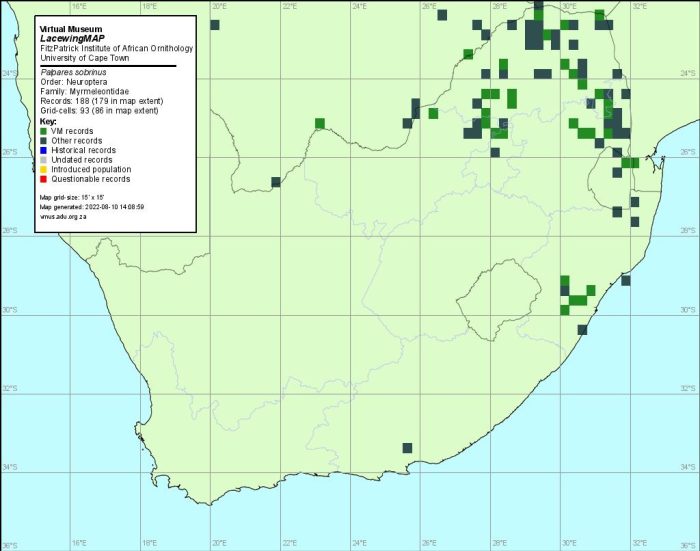
Palpares sobrinus is a fairly common and widespread species. It is found in the eastern parts of South Africa from KwaZulu-Natal northwards into Zimbabwe. P. sobrinus is part of a species complex that extends into central and eastern Africa.

Distribution of Palpares sobrinus. Taken from the LacewingMAP database, July 2022.

Taxonomy

Order: Neuroptera Family: Myrmeleontidae Subfamily: Palparinae Tribe: Palparini Genus: Palpares Species: sobrinus

Palpares sobrinus – Near Tshipise, Limpopo
Photo by John Wilkinson

Further Resources

Virtual Museum (LacewingMAP > Search VM > By Scientific or Common Name)

Acknowledgements:

The use of photographs by Alice Altenroxel, Cornelia Rautenbach, John Wilkinson, Joseph Heymans, Marita Beneke and Vaughan Jessnitz is acknowledged. This species text has benefited enormously from comments made by Mervyn Mansell on records he has identified in LacewingMAP. We acknowledge his important contribution.

Recommended citation format for this species text:

Tippett RM 2022. Palpares sobrinus. Biodiversity and Development Institute, Cape Town.
Available online at http://thebdi.org/2022/08/10/palpares-sobrinus/

Palpares sobrinus – Near Gravellotte, Limpopo
Photo by Vaughan Jessnitz

Palpares speciosus

View the above photo record (by Daryl de Beer) in LacewingMAP here.

Palpares speciosus

Linnaeus, 1758

Identification

Size: Large (Wingspan up to 112mm)

P. speciosus is an overall yellow with dense black markings. The thorax is yellow and black and partially covered in thick grey setae. The abdomen is dark yellow with variable, broad black lines along the sides.

The fore wings show conspicuous yellow veining with black spotting. There are two distinctive lead-grey blotches near the middle of each fore wing. The hind wings are whiteish with four evenly spaced black patches and scattered smaller black spots.

Superficially resembles Palpares caffer. That species differs in showing three irregularly spaced black patches on the hindwing.

Larvae: The larvae are large and black.

Palpares speciosus – Karoo-Gariep Nature Reserve, Northern Cape
Photo by Ryan Tippett
Palpares speciosus Leeupoort, Northern Cape
Photo by Kathy Majoor

Habitat

Palpares speciosus inhabits the fynbos and Karoo biomes, especially in areas with tall grass.

Habitat – Karoo-Gariep Nature Reserve, Northern Cape
Photo by Ryan Tippett

Behaviour

Adults are often found at rest in long grass. They flush and fly off easily but will quickly settle again. Palpares speciosus is often attracted to lights.

Adults are active during the spring and summer months. The winged adults of P. speciosus are recorded from August to May but most records come from November to April.

The larvae live freely in soil among grass tussocks. They are voracious predators feeding mainly on other arthropods. The larvae are seldom encountered.

Palpares speciosus – Karoo-Gariep Nature Reserve, Northern Cape
Photo by Ryan Tippett

Status and Distribution

Palpares speciosus is a fairly common South African endemic. It is widespread in the Western Cape and parts of the Northern and Eastern Cape Provinces. Ranges as far north and east as Hanover and Grahamstown. It is replaced to the north by its sister-species, Palpares caffer.

Distribution of Palpares speciosus. Taken from the LacewingMAP database, July 2022.

Taxonomy

Order: Neuroptera Family: Myrmeleontidae Subfamily: Palparinae Tribe: Palparini Genus: Palpares Species: speciosus

Palpares speciosus – Simons Town, Western Cape
Photo by Andrew Hodgson

Further Resources

Virtual Museum (LacewingMAP > Search VM > By Scientific or Common Name)

Acknowledgements:

The use of photographs by Christeen Grant, Geoff Prosser, Len de Beer, Marita Beneke, Stephen Ball and Walter Neser is acknowledged. This species text has benefited enormously from comments made by Mervyn Mansell on records he has identified in LacewingMAP. We acknowledge his important contribution.

Recommended citation format for this species text:

Tippett RM 2022. Palpares speciosus. Biodiversity and Development Institute, Cape Town.
Available online at http://thebdi.org/2022/08/09/palpares-speciosus/

Palpares speciosus – Near Strand, Western Cape
Photo by Marita Beneke

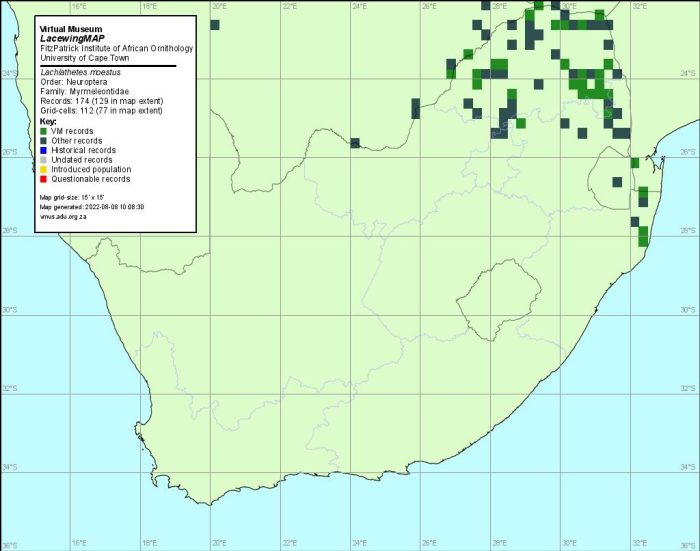
Lachlathetes moestus

View the above photo record (by Rick Nuttall) in LacewingMAP here.

Lachlathetes moestus

(Hagen, 1953)

Identification

Size: Very Large (Wingspan 160mm)

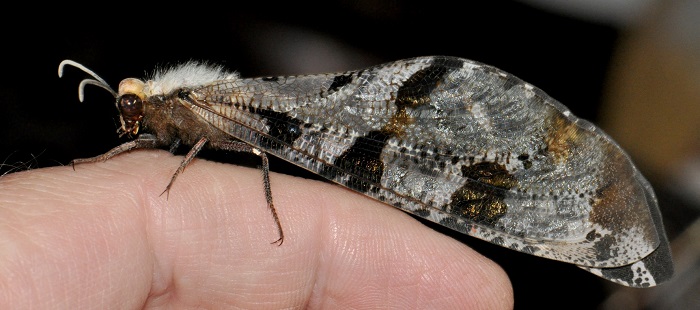
Lachlathetes moestus is one of southern Africa’s most spectacular antlions. The adults have long, broad-tipped wings. The thorax is grey and very hairy, paler above than along the sides. The abdomen is dark grey. The legs are a dull to bright reddish-pink colouration. It is one of the largest species of antlions known anywhere in the world.

Larvae: The larvae are large and black.

Lachlathetes moestus– Gorongosa National Park, Mozambique
Photo by Bart Wursten
Lachlathetes moestusSebe-Sebe Lodge, Limpopo
Photo by Riaan Robbeson

Habitat

Lachlathetes moestus is a tropical savanna species that favours hot, humid regions. Adults can often found around the edges of wetlands where they rest up in tall, rank grass.

Habitat – Near Hluhluwe, KwaZulu-Natal
Photo by Ryan Tippett

Behaviour

Adults are nocturnal and spend the day resting among tall grass. They are frequently attracted to light.

Adults are on the wing very late in Summer from March to April.

The larvae are very large and are voracious predators. Larvae inhabit deep sand/soil. They ambush their prey and do not construct pit-fall traps.

Lachlathetes moestusSabi Sands Game Reserve, Mpumalanga
Photo by David Kennedy

Status and Distribution

Lachlathetes moestus is fairly common and widespread in the northern provinces of South Africa, including KwaZulu-Natal, Limpopo, Mpumalanga and North West. This species occurs widely across south-east Africa including Mozambique, Zimbabwe, Malawi, Tanzania, Swaziland and Zambia. 

Distribution of Lachlathetes moestus. Taken from the LacewingMAP database, July 2022.

Taxonomy:

Order: Neuroptera Family: Myrmeleontidae Subfamily: Palparinae Tribe: Palparini Genus: Lachlathetes Species: moestus

Lachlathetes moestusVaalwater, Limpopo
Photo by Rick Nuttall

Further Resources

Virtual Museum (LacewingMAP > Search VM > By Scientific or Common Name)

Acknowledgements:

The use of photographs by Bart Wursten, David Kennedy, Riaan Robbeson and Rick Nuttall is acknowledged. This species text has benefited enormously from comments made by Mervyn Mansell on records he has identified in LacewingMAP. We acknowledge his important contribution.

Recommended citation format for this species text:

Tippett RM 2022. Lachlathetes moestus. Biodiversity and Development Institute, Cape Town.
Available online at http://thebdi.org/2022/08/08/lachlathetes-moestus/

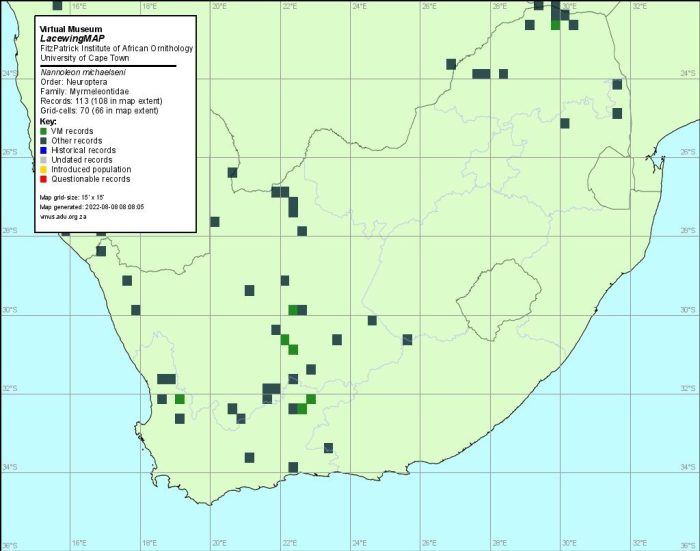
Nannoleon michaelseni

View the above photo record (by Alan Manson) in LacewingMAP here.

Nannoleon michaelseni

Esben-Petersen, 1928

Identification

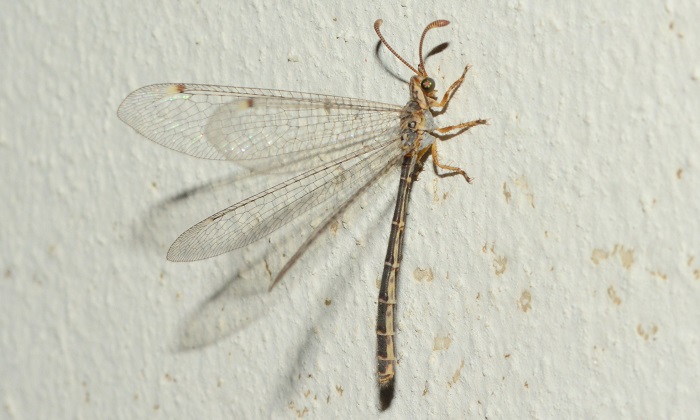
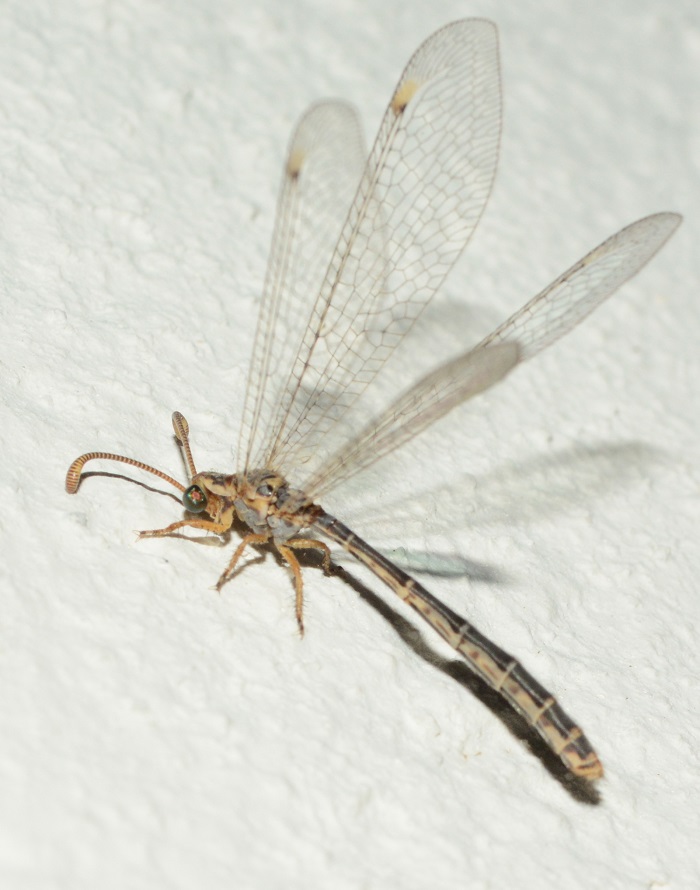
Size: Small (Wingspan around 35mm)

It is characterized by the broad clear wings and their distinctive, long clavate antennae.

Larvae: Nothing is known about the larvae of this species.

Nannoleon michaelseni – Near Carnarvon, Northern Cape
Photo by Ryan Tippett
Nannoleon michaelseni – Near Carnarvon, Northern Cape
Photo by Ryan Tippett

Habitat

Nannoleon michaelseni inhabits the open, arid shrublands of the Nama Karoo in flat or hilly terrain. It is also known from dry savanna woodlands of Mpumalanga and Limpopo.

Habitat – Near Carnarvon, Northern Cape
Photo by Ryan Tippett

Behaviour

Adults are nocturnal and they are regularly attracted to lights. Nothing else is known about the biology of this species.

Adults are active during late summer and have been recorded from December to April,

Nannoleon michaelseni Bushmanskloof, Western Cape
Photo by Zenobia van Dyk

Status and Distribution

This species is widespread in South Africa and Namibia, and is fairly common in the drier western parts of the sub-region.

Distribution of Nannoleon michaelseni. Taken from the LacewingMAP database, July 2022.

Taxonomy

Order: Neuroptera Family: Myrmeleontidae Subfamily: Dendroleontinae Tribe: Dendroleontini Genus: Nannoleon Species: michaelseni

Nannoleon michaelseni – Near Carnarvon, Northern Cape
Photo by Ryan Tippett

Further Resources

Virtual Museum (LacewingMAP > Search VM > By Scientific or Common Name)

Acknowledgements:

The use of photographs by Alan Manson and Zenobia van Dyk is acknowledged. This species text has benefited enormously from comments made by Mervyn Mansell on records he has identified in LacewingMAP. We acknowledge his important contribution.

Recommended citation format for this species text:

Tippett RM 2022. Nannoleon michaelseni. Biodiversity and Development Institute, Cape Town.
Available online at http://thebdi.org/2022/08/08/nannoleon-michaelseni/

Nannoleon michaelseni – Near Carnarvon, Northern Cape
Photo by Ryan Tippett

Palparidius capicola

View the above photo record (by Ryan Tippett) in LacewingMAP here.

Palparidius capicola

Peringuey, 1910

Identification

Size: Medium-large (Wingspan around 90mm)

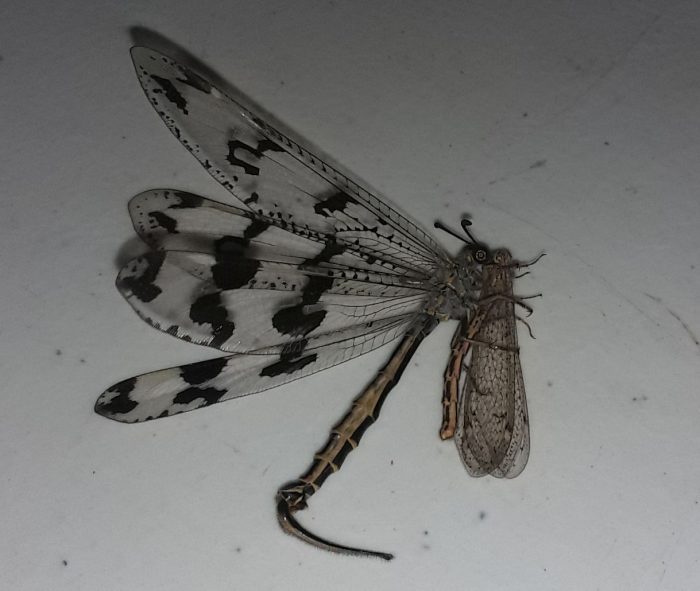
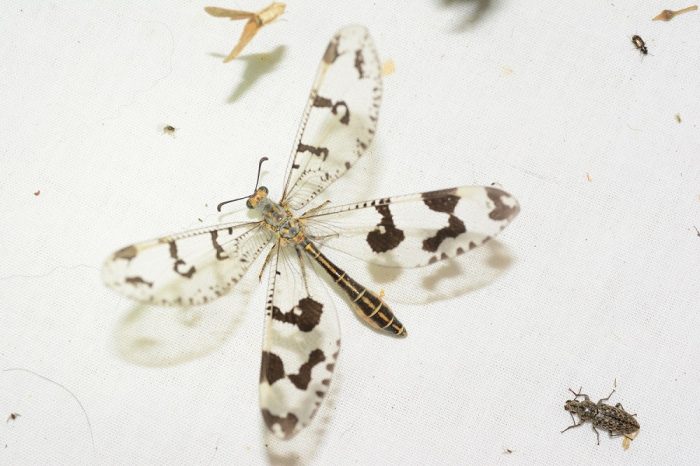
Palparidius capicola is readily identified by the diagnostic horseshoe-shaped markings in the forewings. The males are easily recognised due to their elongated ectoprocts (claspers).

Larvae: Not much is known about the larvae of this species.

Palparidius capicola – Near Carnarvon, Northern Cape
Photo by Ryan Tippett
Palparidius capicola maleNear Carnarvon, Northern Cape
Photo by Ryan Tippett
Palparidius capicola FemaleNear Carnarvon, Northern Cape
Photo by Ryan Tippett

Habitat

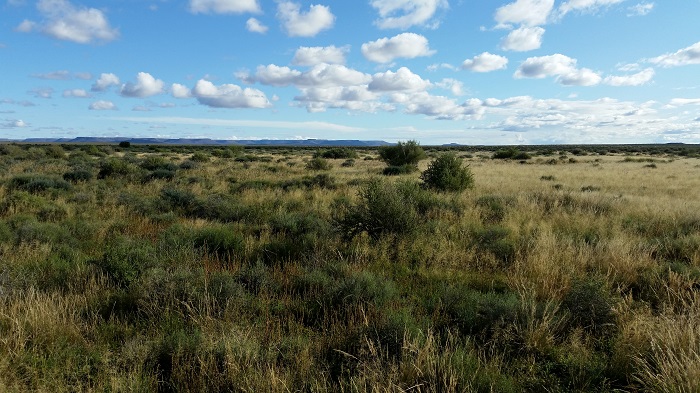
Palparidius capicola inhabits the open, arid shrublands of the Nama Karoo in flat or hilly terrain.

Habitat – Near Carnarvon, Northern Cape
Photo by Ryan Tippett

Behaviour

Like most antlions Palparidius capicola is nocturnal. Adults often rest in a hanging position among the protective branches of larger bushes. They are regularly attracted to lights. Not much is known of its biology. The larvae are thought to live in deep soil.

Adults are active during the summer months. Most numerous from January to April but records exist from September to April.

Palparidius capicola Wildheim Kalahari Lodge, Namibia
Photo by Neil Thomson

Status and Distribution

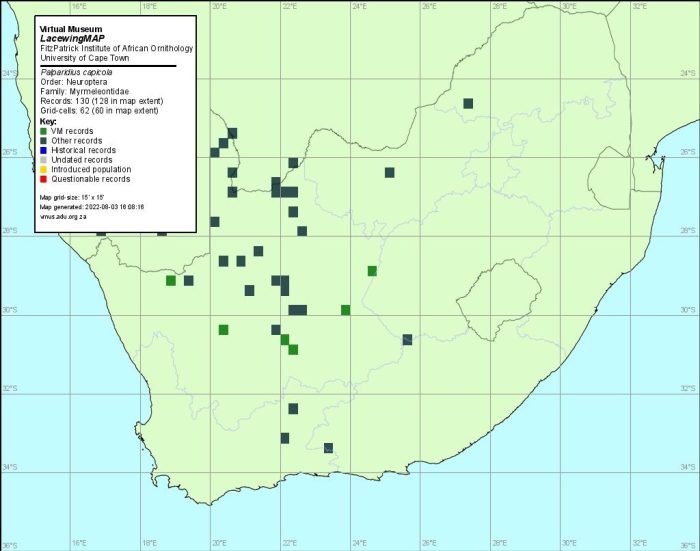
Fairly common and widespread in the drier western parts of South Africa. It is also known from Namibia and Botswana.

Distribution of Palparidius capicola. Taken from the LacewingMAP database, July 2022.

Taxonomy

Order: Neuroptera Family: Myrmeleontidae Subfamily: Palparinae Tribe: Palparini Genus: Palparidius Species: capicola

Palparidius capicola Near Carnarvon, Northern Cape
Photo by Ryan Tippett

Further Resources

Virtual Museum (LacewingMAP > Search VM > By Scientific or Common Name)

Acknowledgements:

The use of photographs by Neil Thomson is acknowledged. This species text has benefited enormously from comments made by Mervyn Mansell on records he has identified in LacewingMAP. We acknowledge his important contribution.

Recommended citation format for this species text:

Tippett RM 2022. Palparidius capicola. Biodiversity and Development Institute, Cape Town.
Available online at http://thebdi.org/2022/08/03/palparidius-capicola/

Palparidius capicola – Near Carnarvon, Northern Cape
Photo by Ryan Tippett