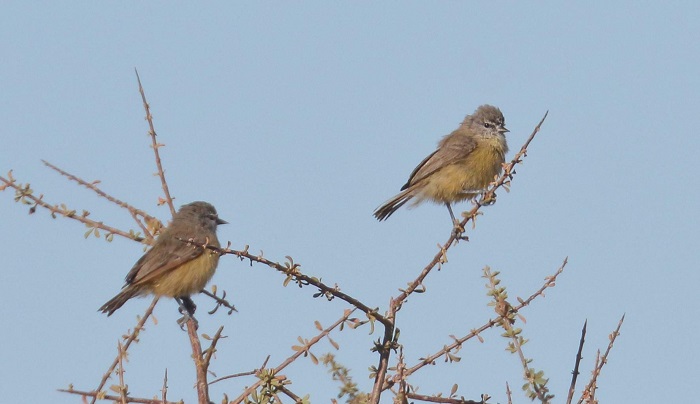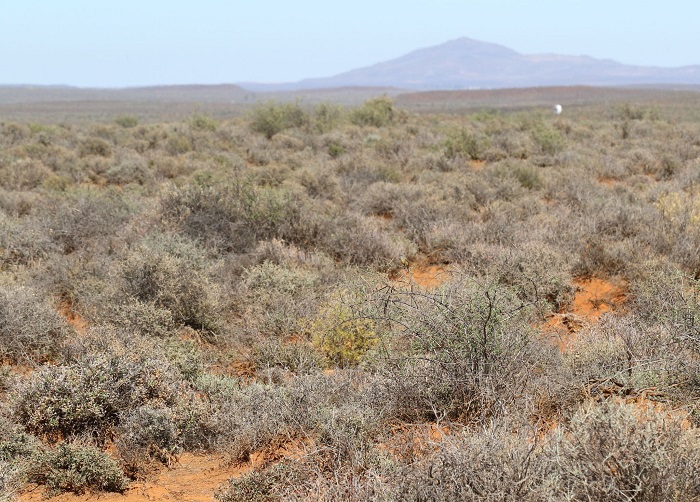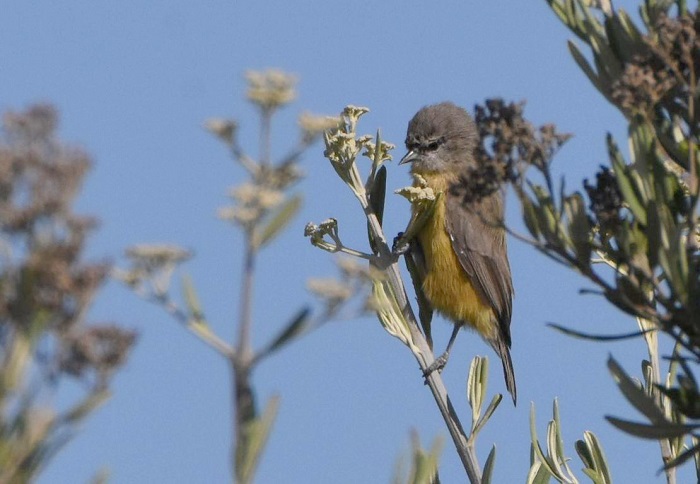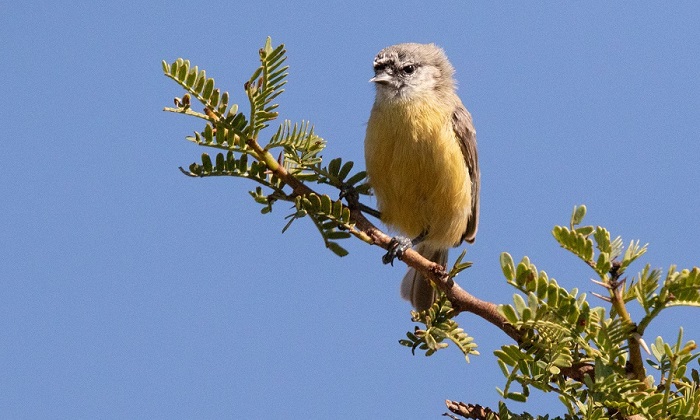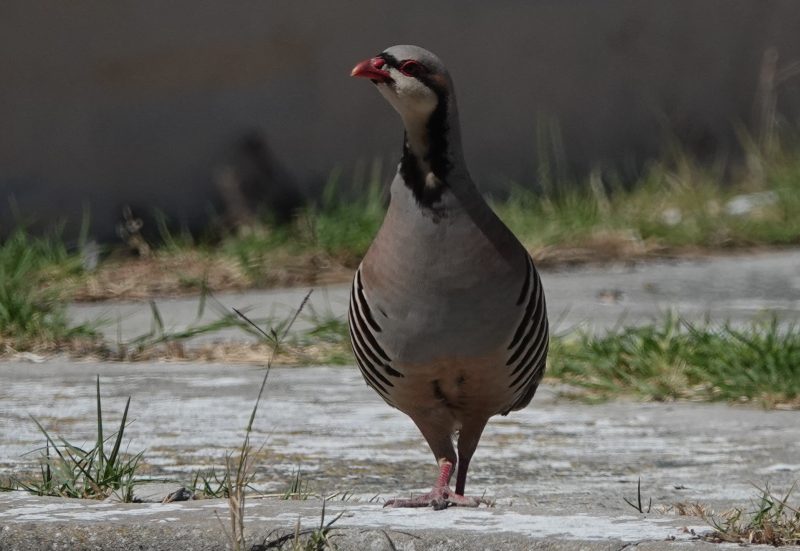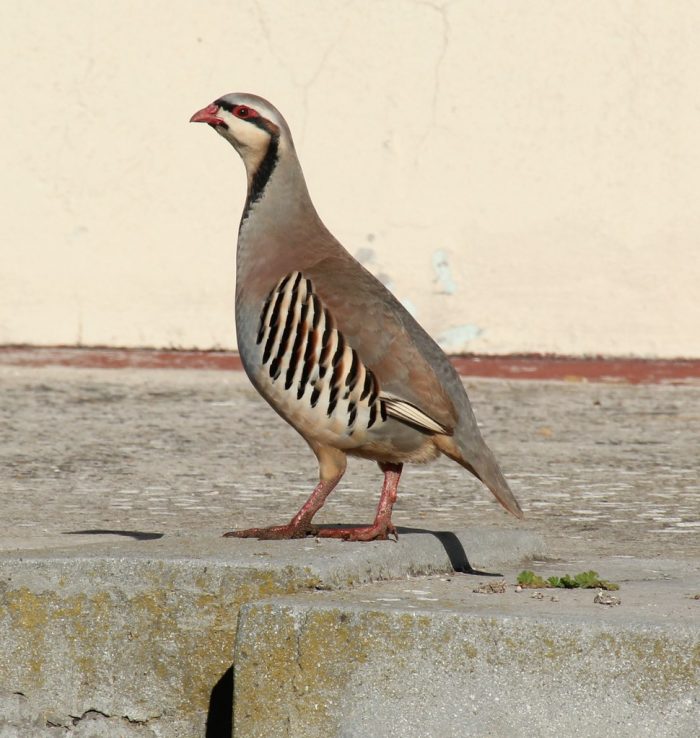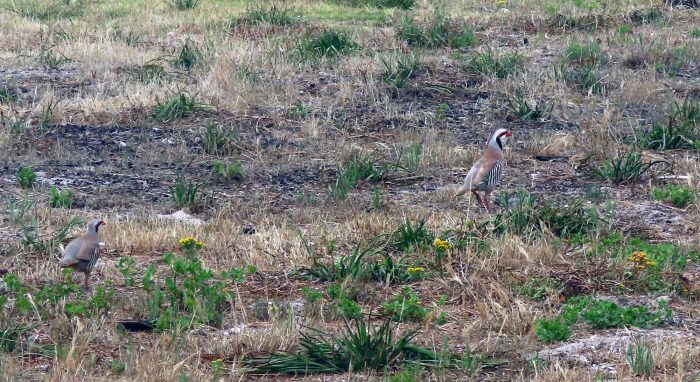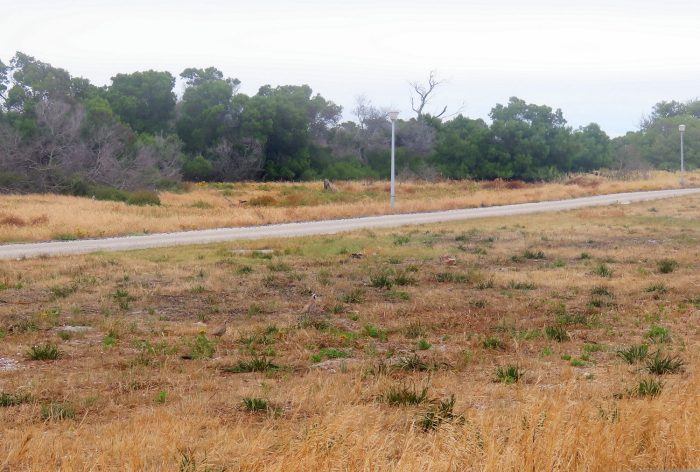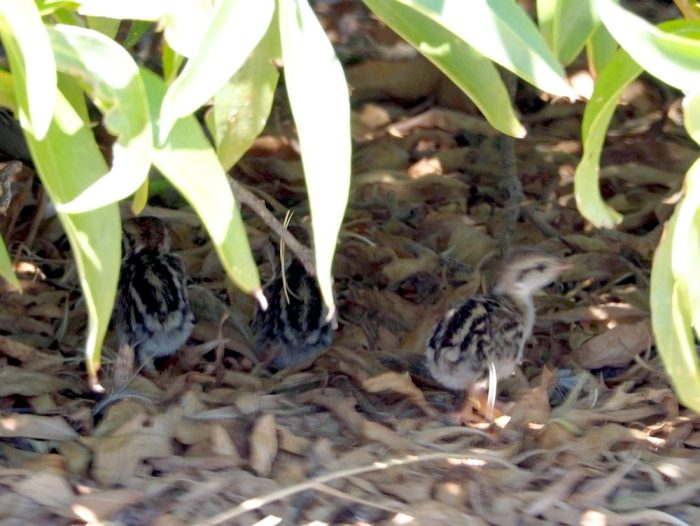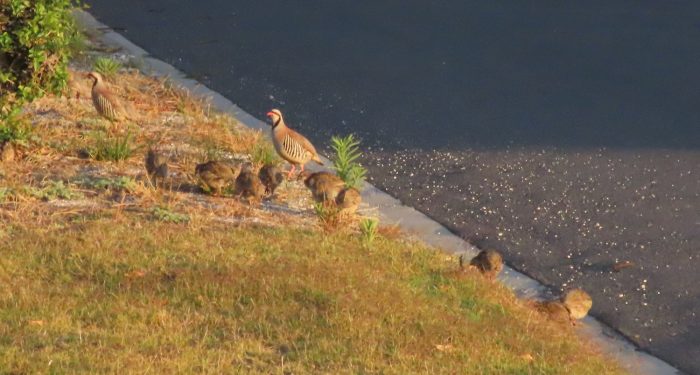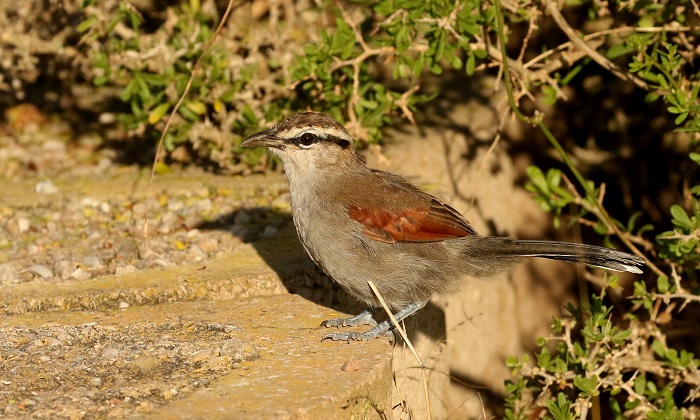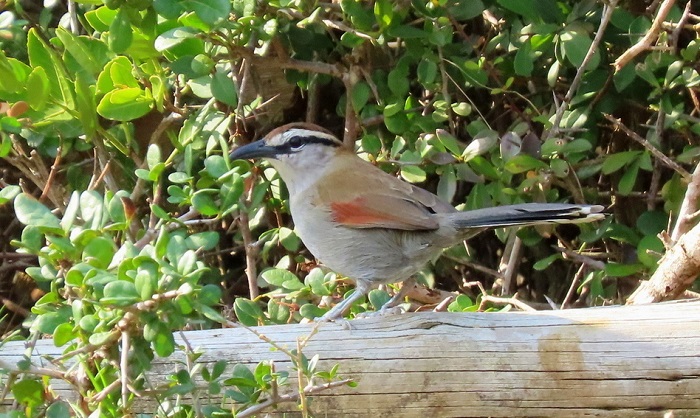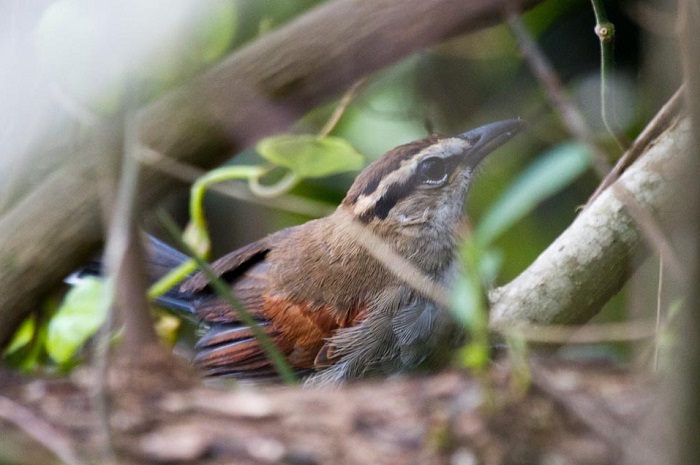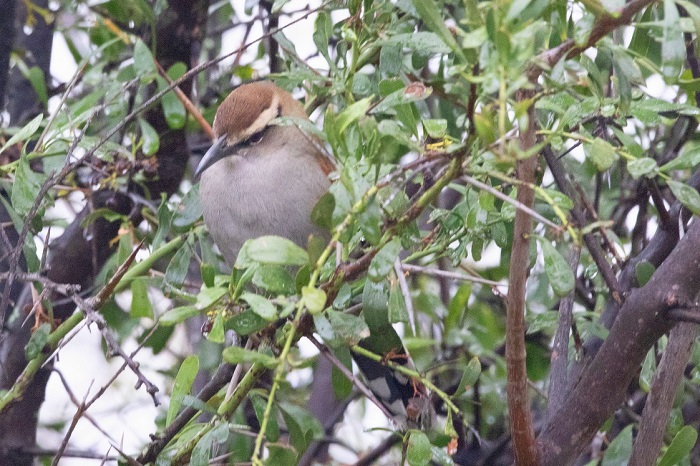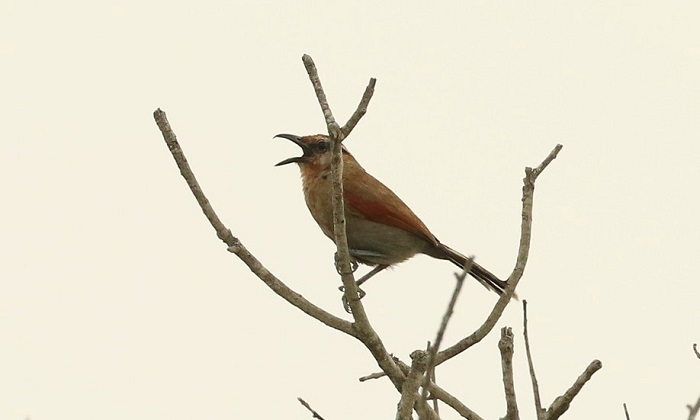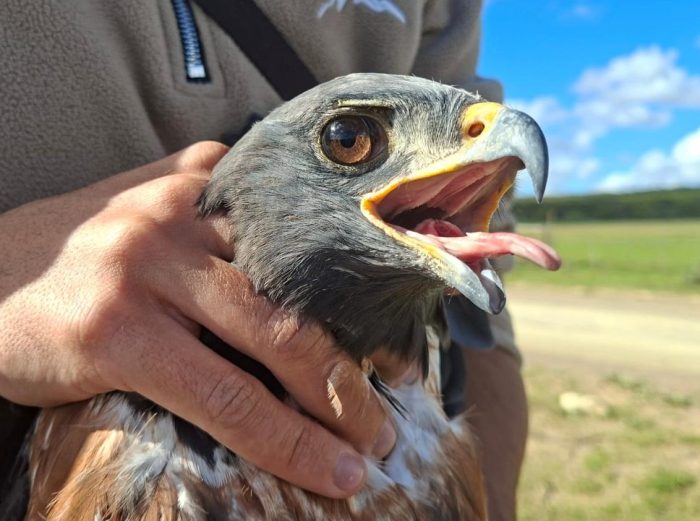
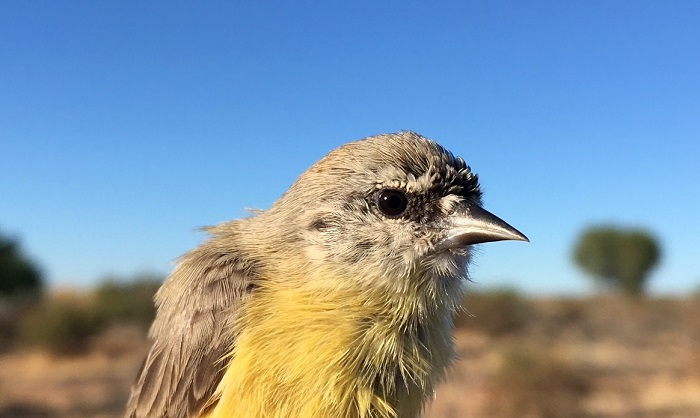
Grey-winged Francolin (Scleroptila afra)

Cover image of Grey-winged Francolin by Kate Webster – Mountain Zebra National Park, Eastern Cape

Francolins belong to the Family: PHASIANIDAE (Pheasants, Grouse, and allies). Other southern African representatives of this family include Spurfowls and Quails. They are generally plump, heavy-bodied gamebirds, with broad, relatively short wings and powerful legs. Many have a spur on each leg, while some, have reduced spurs or none at all. The bill is short and compact. Phasianids inhabit almost all terrestrial habitats, from Arctic and alpine tundra to grasslands, deserts, and savannas, to humid tropical rainforest. Most African species are cryptically patterned but many Asian and Australasian species are among the most spectacularly plumaged of all birds. The Phasianidae comprise 187 species from 54 Genera. 15 species are native to southern Africa.

Identification

The Grey-winged Francolin is a cryptically plumaged species, yet the feathers are beautifully and intricately patterned in black, white, brown and rufous. The sexes are alike in colouration, but males are larger than females.

Grey-winged Francolin Scleroptila afra
Near Hartenbos, Western Cape
Photo by Johan Heyns

In adults, the upper parts are grey-brown, with white feather shafts and with white or buff transverse barring. The head is warm brownish-buff, with dark speckling. The crown is streaked buff and blackish grey, and the ear coverts are brown. The nape and hind neck are dark grey, spotted white, and the pattern extends to the sides of the lower neck. The lower foreneck is pale cinnamon, and the feathers have distinct rufous patches. The underparts are paler and finely but irregularly barred black and off-white. Rufous primary coverts and primary bases are visible in flight. The bill is grey and heavy at the base, and noticeably decurved. The eyes are dark brown, and the legs and feet are dull greyish yellow. Males are equipped with sharp, robust leg spurs.

Grey-winged Francolin Scleroptila afra
Swellendam district, Western Cape
Photo by Johan van Rooyen

Immature and juvenile birds resemble adults, but carry duller plumage and white throat.

The Grey-winged Francolin is genetically closely allied to the Orange River Francolin (Scleroptila gutturalis), Red-winged Francolin (Scleroptila levaillantii), and Shelley’s Francolin (Scleroptila shelleyi), and it replaces these species in high altitude grasslands. The Grey-winged Francolin differs from other Scleroptila francolins in having more grey than red on the wings (red confined to the outer wing), and a grey-freckled, not white, or buff, throat. It differs from Shelley’s Francolin in having narrow barring on the underparts.

Status and Distribution

The Grey-winged Francolin is locally common. It is endemic to South Africa and Lesotho.

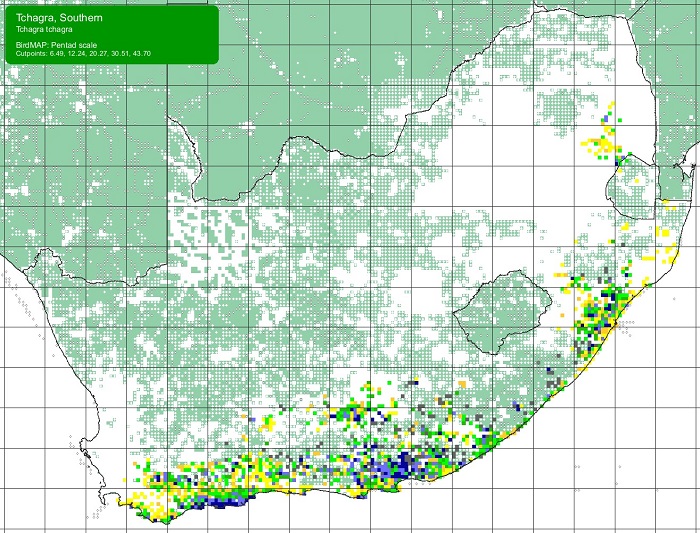
SABAP2 distribution map for Grey-winged Francolin Scleroptila afra – December 2024. Details for map interpretation can be found here.

The Grey-winged Francolin ranges from Mpumalanga, through the KwaZulu-Natal Drakensberg, Lesotho, the eastern Free State, and the highlands of the Eastern Cape westwards through the southern half of the Northern Cape to the southern Western Cape. The conspicuous gap in its distribution in the Great Karoo is probably due to sparse vegetation cover in that region. The Grey-winged Francolin is most common in the highland grasslands in the Drakensberg region. It is less numerous in the Northern and Western Cape.

The Grey-winged Francolin is partially sympatric with the Red-winged Francolin (Scleroptila levaillantii), but is generally found at higher altitudes. It occurs alongside the Cape Spurfowl (Pternistes capensis) in the succulent Karoo and fynbos areas of the W Cape.

Grey-winged Francolin Scleroptila afra
Golden Gate Highlands National Park, Free State
Photo by Terry Terblanche

The Grey-winged Francolin is not threatened. The historical distribution was probably similar to the current distribution. It is known to benefit from habitat modification due to moderate stock farming. Veld burning during early summer has the most detrimental influence on Grey-winged Francolins.

The Grey-winged Francolin is the only southern African francolin sufficiently abundant to sustain commercial wing-shooting. It has been hunted for recreation and commercially in the Eastern Cape for at least the past 120 years. This hunting is known to be both biologically sustainable and economically viable. Additionally, it provides landowners with an incentive to conserve grassland habitats. Hunted populations breed earlier than those that are not hunted, and are more outbred because of increased local movements following hunting.

Grey-winged Francolin Scleroptila afra
Carnarvon district, Northern Cape
Photo by Ryan Tippett

.

Habitat

The Grey-winged Francolin is typically found in mountainous areas in the Grassland, Nama Karoo, Succulent Karoo, and Fynbos biomes. It prefers ridge tops and shelves to steep slopes and valley bottoms. The Grey-winged Francolin is most numerous in montane grasslands, usually above 1800m. In the Succulent and Nama Karoo, it inhabits hilly and mountainous areas with sufficient grass and scrub cover. In the Fynbos biome, it occurs in grassy places in short fynbos, renosterbos, and strandveld down to sea level.

Montane grassland habitat.
Golden Gate Highlands National Park, Free State
Photo by Ryan Tippett
Mountainous habitat in the Nama Karoo with sufficient grass and scrub cover.
Carnarvon district, Northern Cape
Photo by Ryan Tippett

Behaviour

The Grey-winged Francolin is resident with no evidence of seasonal movements. Breeding birds remain in the same general locations throughout their lives. However, young birds move between coveys often enough to ensure genetic interchange. Fluctuations in reporting rates reflect variations in conspicuousness linked to the breeding cycle.

Grey-winged Francolin Scleroptila afra
Gamkaberg Nature Reserve, Western Cape
Photo by John Todd

The presence of Grey-winged Francolins is usually revealed by territorial advertisement calls or when flushed. They are otherwise inconspicuous birds. The Grey-winged Francolin often warms up in the early morning on open ground, such as at road verges. Flushed birds fly fast and strongly, typically taking advantage of wind and steep ground to aid escape. Apart from this, they seldom take flight. The Grey-winged Francolin is most likely to run if disturbed (when vegetation is sparse), otherwise sits tight, flushing at the last moment. Birds roost on open ground, huddled together.

Orange River Francolin Scleroptila gutturalis
West Coast National Park, Western Cape
Photo by Felicity Ellmore

The diet of the Grey-winged Francolin varies seasonally. It mostly eats underground bulbs and corms of a range of small geophytes that it digs out with its bill. Invertebrates dominate the diet during the summer breeding season.

Grey-winged Francolin Scleroptila afra
Carnarvon district, Northern Cape
Photo by Ryan Tippett

The Grey-winged Francolin breeds during spring and summer throughout its range, with peak egg-laying between August and November. The breeding season is shorter in the winter rainfall Western Cape. The Grey-winged Francolin is monogamous. Pairs nest solitarily and they are probably territorial.

The nest is a scrape in the ground hidden under a grass tuft. It is lined with grass and occasionally feathers. 4 to 8 eggs are laid per clutch. The eggs are yellowish-brown with some brown and dark grey speckling. Incubation starts after the full clutch has been laid and last for up to 23 days. Incubation is performed soley by the female and she is guarded by the male.

Grey-winged Francolin Scleroptila afra
Middelburg district, Eastern Cape
Photo by Tino Herselman

The chicks are precocial, running and feeding almost immediately after hatching. Chicks stay with their parents throughout the breeding season. Breeding failures are mostly due to predation, primarily by small mammalian carnivores, crows and snakes. Other causes of nest failure include fires, human disturbance and trampling by sheep.

Grey-winged Francolin Scleroptila afra
Near Bethal, Mpumalanga
Photo by Vaino Prinsloo

Further Resources

Species text adapted from the first Southern African Bird Atlas Project (SABAP1), 1997.

The use of photographs by Felicity Ellmore, Johan Heyns, Johan van Rooyen, John Todd, Kate Webster, Keir Lynch, Ryan Tippett, Terry Terblanche, Tino Herselman, and Vaino Prinsloo is acknowledged.

Other common names: Greywing Francolin (Alt. English); Bergpatrys (Afrikaans); iNtendele (Zulu); Isakhwatsha (Xhosa); Khoale (South Sotho); Francolin à ailes grises (French); Grauflügelfrankolin (German); Francolim-d’asa-cinzenta (Portuguese); Grijsvleugel-frankolijn (Dutch).

A list of bird species in this format is available here.
Recommended citation format: Tippett RM. 2026. Grey-winged Francolin Scleroptila afra. Biodiversity and Development Institute. Available online at https://thebdi.org/2026/05/11/grey-winged-francolin-scleroptila-afra/

Bird identificationbirding

Grey-winged Francolin Scleroptila afra
Near Barrydale, Western Cape
Photo by Keir Lynch

Similar Species

Bird ringing at Frogmore Estate/Zandvlei : 9 May 2026

Frogmore Estate is a suburb of Cape Town, a few kilometres north of Muizenberg, and bordering on Zandvlei. The Zandvlei Trust plays a key role in the conservation of this large wetland system. The fact that this a good bird ringing site is a tribute to their success.

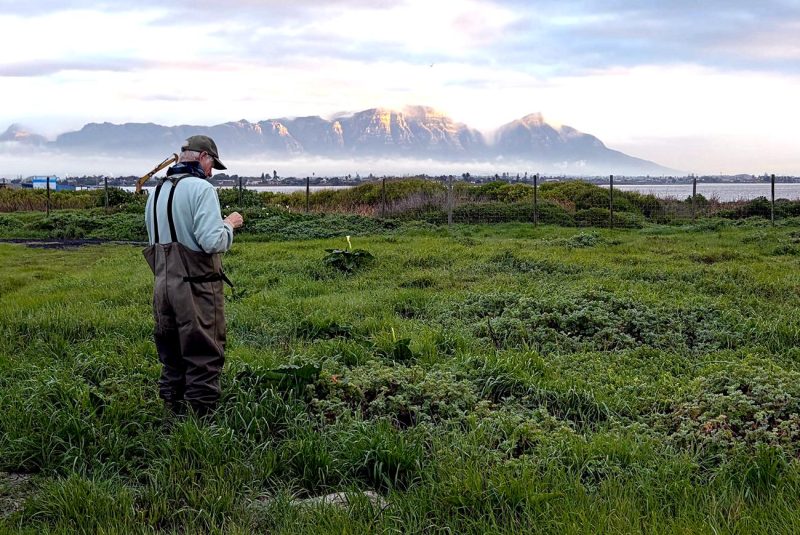
On 9 May 2026, we had a line of five mist nets along a track through the reedbeds, and one mist net set over a bridge on the Keysers River. There was not the slightest breeze, so the nets hung like curtains. Ideal conditions.

Photo: Les Underhill

The clouds behind the mountain were the first sign of a big cold front due to arrive in about 15 hours, bringing heavy rain to the Western Cape. with severe weather warnings of floods, 100 km/h winds and dangerous waves at sea!

The list of birds we handled is below. There were 36 birds of 13 species, with none reaching double figures! (The species in red have a structured species account on the BDI website; there’s a full list of these species here.)

Common nameCount
Red-knobbed Coot3
White-backed Mousebird2
Malachite Kingfisher2
Cape Bulbul3
Cape Robin-chat1
Lesser Swamp Warbler5
Little Rush Warbler2
Levaillant’s Cisticola3
Southern Double-collared Sunbird3
Cape Sparrow2
Cape Weaver2
Southern Masked Weaver6
Yellow Bishop2
Totals : 13 species36 birds

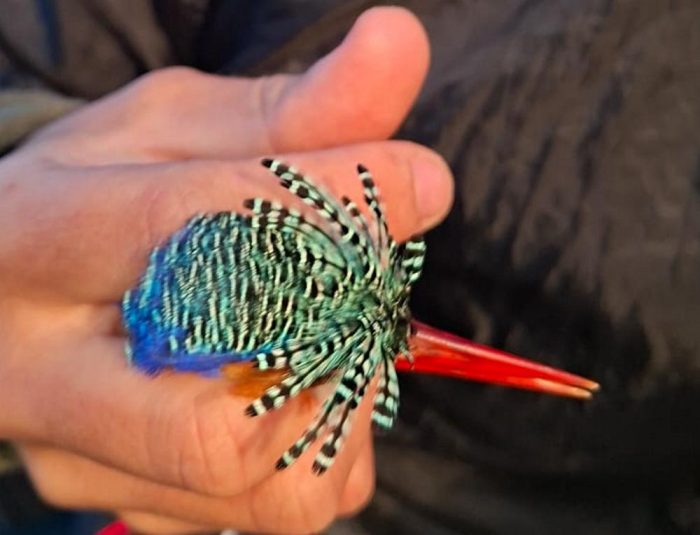
There were three retraps from previous ringing events at this site. We only have photographs of one of them, the Malachite Kingfisher below. One of the Levaillant’s Cisticolas had been ringed on 15 March last year, a little over a year ago. One of the Southern Double-collared Sunbird, a male, had been ringed as an adult on 23 March 2019. That’s a bit more than seven years since ringing, and because it was an adult already when ringed, it must be at least eight years old.

The two Malachite Kingfishers were in the hand at the same time. One was a retrap from 20 December last year, the day we held or end-of-year ringing event, for which there is a blog!

Photo: Achot Ginosian

The privilege of ringers is to see birds really close up.

Photo: Achot Ginosian

The bill of the Southern Marked Weaver looks a less formidable weapon that that of the Cape Weaver (see the photo below). This bird’s eye is turning red, so it is a male.

Photo: Achot Ginosian

Male Cape Weaver, with marie biscuit-coloured eye, and a longer bill than the Southern Masked Weaver.

Photo: Achot Ginosian

By May, primary moult has been complete for several months. Count the nine primaries of this Cape Weaver; it’s easiest to count from the outside in. The innermost was replaced first, and the outermost last. The process takes about four months to complete. The nine primaries of this bird still look new; they are not starting to fray at the tips. These feathers will have to do a lot of work before they get replaced just after the end of the upcoming breeding season, in spring. By then they will look worn out at the tips.

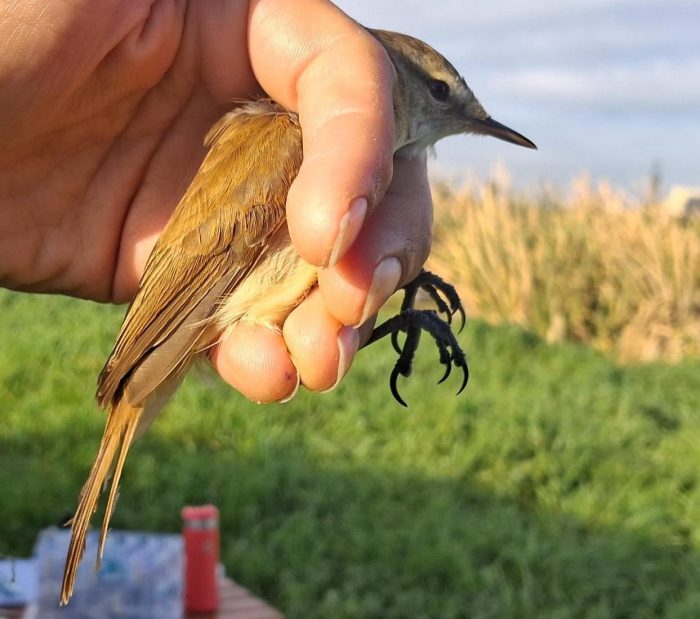
Lesser Swamp Warbler, in the mist net, and a few seconds later, in the hand in the ringer’s grip, with the head and neck held gently between the index finger and the middle finger, and with the bird’s body fitting snugly into the palm of the hand.

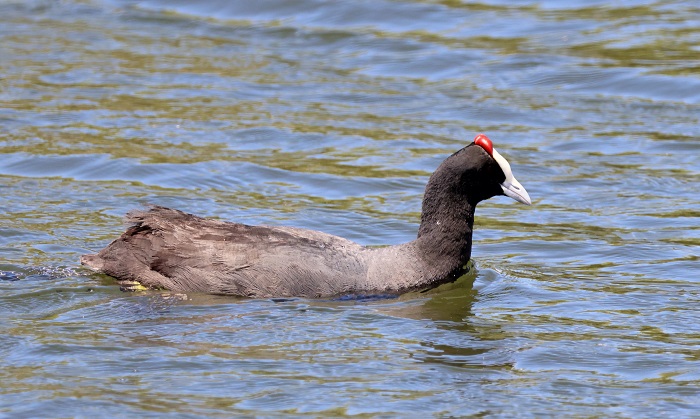
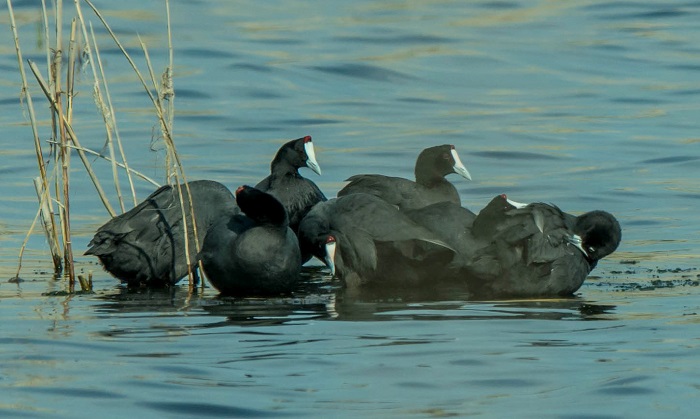
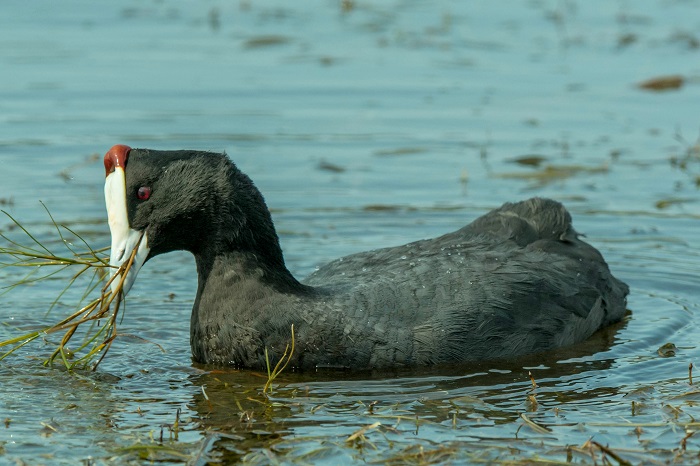
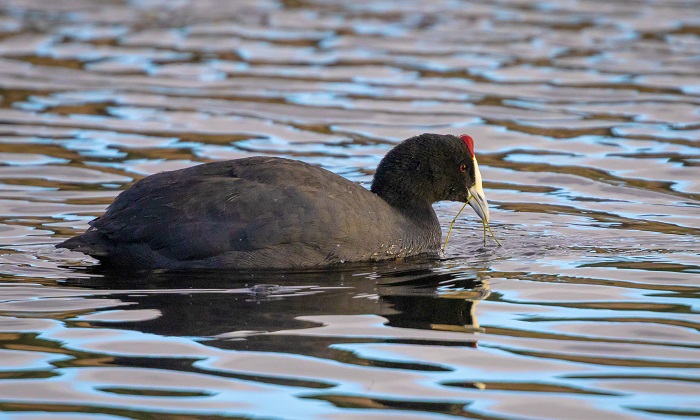
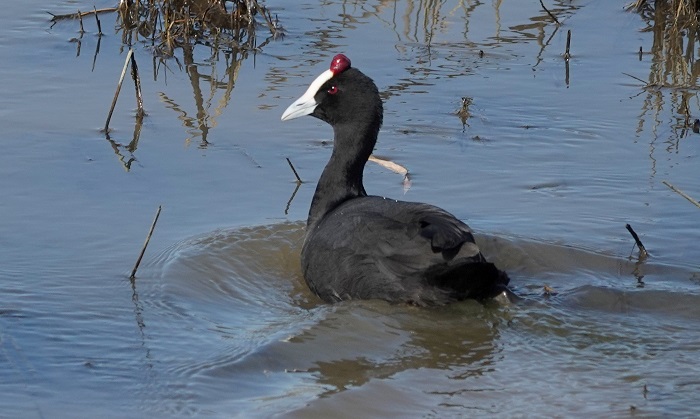
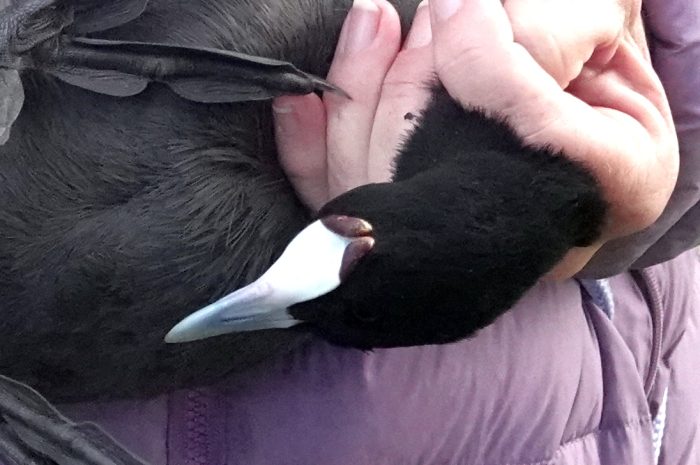
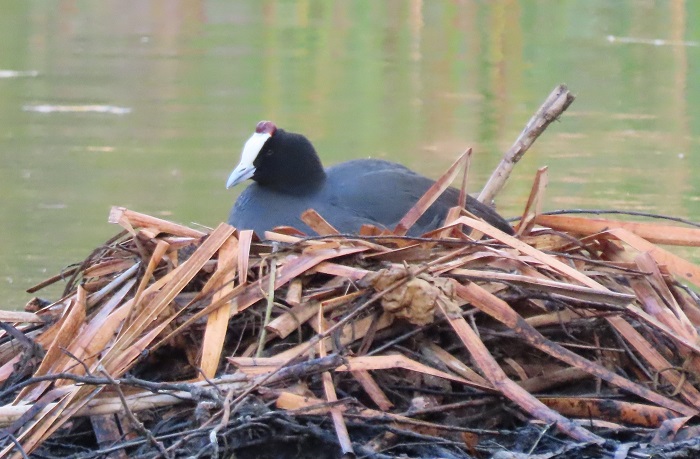
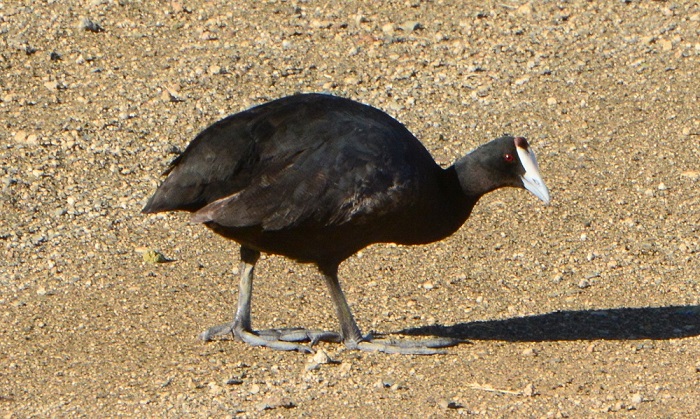
The mist net set over the Keysers River caught three Red-knobbed Coots.

Photo: Achot Ginosian

The red knobs, up close!

Photo: Achot Ginosian

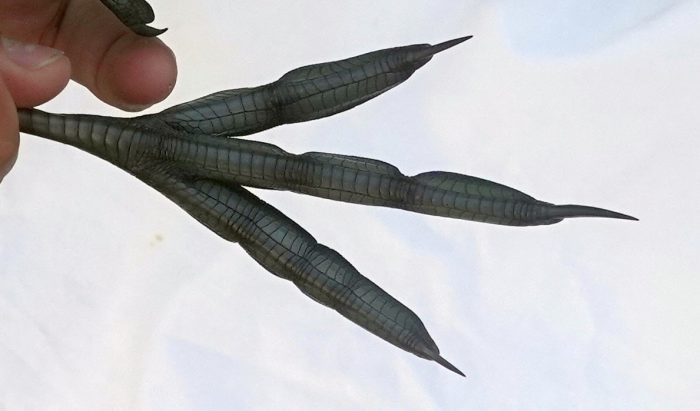
Unlike most waterbirds, coots don’t have webbed feet.

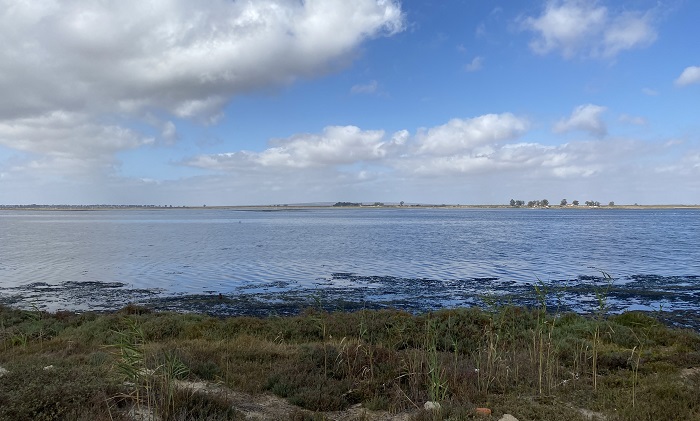
The Keysers River is the largest waterway feeding into Zandvle. It drains a large area, from the watershed along the top ridge of the Constantiaberg, and the mountainside to the east of this. Then it collects all the stormwater from suburbs such as Tokai, Kirstenhof, Constantia and parts of Bergvliet and Retreat. It is likely to prove an important corridor for bird movement, especially of waterbirds.

Photo: Les Underhill

A list of dates for future ringing events is here.

There is a list of ringing expeditions that have blog reports similar to this here.

Orange River Francolin (Scleroptila gutturalis)

Cover image of Orange River Francolin by Lia Steen – Near Devon, Gauteng

Francolins belong to the Family: PHASIANIDAE (Pheasants, Grouse, and allies). Other southern African representatives of this family include Spurfowls and Quails. They are generally plump, heavy-bodied gamebirds, with broad, relatively short wings and powerful legs. Many have a spur on each leg, while some, have reduced spurs or none at all. The bill is short and compact. Phasianids inhabit almost all terrestrial habitats, from Arctic and alpine tundra to grasslands, deserts, and savannas, to humid tropical rainforest. Most African species are cryptically patterned but many Asian and Australasian species are among the most spectacularly plumaged of all birds. The Phasianidae comprise 187 species from 54 Genera. 15 species are native to southern Africa.

Identification

The Orange River Francolin is cryptically coloured with intricately patterned plumage. The sexes are alike in plumage coloration, but males are larger than females.

Orange River Francolin Scleroptila gutturalis
Sasolburg, Free State
Photo by Dawie Kleynhans

Adults are overall greyish-brown on the upper parts with white feather shafts, and pale buff central stripes and transverse bars. A narrow black-and-white band runs down the sides of the neck from behind eye. It ends on the sides of the lower neck and does not form a necklace. A black moustachial stripe extends as a second black-and-white band that does join as a necklace around white throat. The upper breast and flank feathers are buff-coloured, with large red-brown blotches. The belly feathers are also buff-coloured, with indistinct black-and-white barring that varies between races. In flight, the outer secondaries, primaries, and primary coverts are extensively rufous. The bill is strong, decurved, and grey, with a yellow base to the lower mandible. The eyes are brown, and the legs and feet are yellow. Male are equipped with sharp tarsal spurs.

Orange River Francolin Scleroptila gutturalis
Near Balfour, Mpumalanga
Photo by William Price

Immature and juvenile birds resemble the adults, but the black-and-white bands on the head and neck are less well defined, and their underparts are irregularly barred black and buff.

The Orange River Francolin is genetically closely allied to the Grey-winged Francolin (Scleroptila afra), Red-winged Francolin (Scleroptila levaillantii), and Shelley’s Francolin (Scleroptila shelleyi), and it replaces these species in arid grasslands. It is most likely to be confused with Shelley’s Francolin and Red-winged Francolin. The face pattern is most similar to that of Shelley’s Francolin, but in the latter, both dark facial stripes meet on the foreneck. The Orange River Francolin also lacks the black belly markings of Shelley’s Francolin and has a faster and higher-pitched call. The Red-winged Francolin lacks the black-and-white stripe behind the eye of the Orange River Francolin.

Orange River Francolin Scleroptila gutturalis
Olienhout Game Reserve, Northern Cape
Photo by Ryan Tippett

Status and Distribution

The Orange River Francolin is locally common in southern Africa. It has a curious and discontinuous distribution in north-east and southern Africa with several disjunct populations between Ethiopia, northern Kenya, and Uganda. It also has an anomalous southern African range, extending from the dry grasslands of central South Africa diagonally north-west through the sparse woodlands of the central Kalahari in Botswana, to northern Namibia and beyond into south-western Angola. In South Africa, the Orange River Francolin occurs in the north-eastern parts of the Northern Cape, much of the North West Province and Free State, and the extreme north-eastern parts of the Eastern Cape and across to the highveld of Gauteng and western Mpumalanga.

SABAP2 distribution map for Orange River Francolin Scleroptila gutturalis – December 2024. Details for map interpretation can be found here.

Overall, the Orange River Francolin is not threatened. However, it was apparently previously abundant and widespread throughout the Northern Cape. Since the 1930s, the Orange River Francolin has all but disappeared west of 22°E. The evidence and reasoning for this, though, are unclear. 2957 wild-shot birds were sold at the Kimberley market in 1906, but it is thought unlikely that this hunting pressure is the cause of consistently low numbers.

Reports from the early 1900s indicate that populations in South Africa were limited by annual grass burning just before the breeding season and again during the breeding season, by burning of any previously unburned patches. The Orange River Francolin is susceptible to habitat manipulation, particularly where poorly managed grazing results in degraded grasslands. Possible reasons for population decrease include the loss of habitat to agriculture and overgrazing. A few consecutive years of overgrazing, even on well-managed nature reserves, can lead to local extinctions.

Orange River Francolin Scleroptila gutturalis
Suikerbosrand Nature Reserve, Gauteng
Photo by William Price

.

Habitat

Dry grassland habitat.
Near Petrusville, Northern Cape
Photo by Ryan Tippett

The Orange River Francolin inhabits relatively arid grassland in either open or lightly wooded regions, typically on sandy or gravelly soils. In South Africa, it inhabits open grassland in the eastern and southern parts of its range, and wooded and bushy grasslands in the north and west. The Orange River Francolin prefers relatively flat or rolling terrain in South Africa, but favours hilly and mountainous terrain in Namibia. In Botswana, it typically prefers fossil river valleys. The Orange River Francolin is partial to short, sparse grasslands dominated by Themeda, Digitaria, Aristida, and Eragrostis species. It also forages at the edges of cultivated lands and fallow fields adjacent to its natural habitat.

Sparse, arid grassland in the southern Kalahari.
Olienhout Game Reserve, Northern Cape
Photo by Ryan Tippett

Behaviour

The Orange River Francolin is resident with no evidence of seasonal migration. However, they undertake considerable local movements during droughts and in response to habitat deterioration.

Orange River Francolin Scleroptila gutturalis
Near Balfour, Mpumalanga
Photo by William Price

The Orange River Francolin is usually found in pairs or small coveys of 3 to 5 birds, and occasionally in groups of up to 8. When approached, they tend to sit tight before scuttling away into thicker cover. If flushed, they gain considerable height before peeling off over trees, often increasing speed by flying downwind. They spend most of the day foraging or resting, and are constantly alert. Coveys regularly dustbathe around midday. Roost sites are invariably located in flat, open patches and are seldom used for more than two nights in a row.

Orange River Francolin Scleroptila gutturalis
Near Balfour, Mpumalanga
Photo by William Price

The Orange River Francolin forages by digging up underground food using its bill. Their diet comprises corms, bulbs (including Oxalis and Moraea spp), berries, seeds, flowers, fallen grain and some green shoots. They also consume a variety of insects, including bugs, beetles, ants, termites, grasshoppers and locust nymphs. Their diet is more plant-based in winter and supplemented with insects in summer.

Orange River Francolin Scleroptila gutturalis
Suikerbosrand Nature Reserve, Gauteng
Photo by William Price

The Orange River Francolin is recorded breeding during all months but mainly after early and late summer rains. It is a monogamous breeder and pairs nest solitarily. They are likely to be territorial. The nest is built entirely by the female. It is a simple scrape in the ground, usually hidden in dense grass, and lined with dry grass. Nearby vegetation is sometimes pulled over the nest to form a canopy.

Laying dates are variable, according to rainfall. 3 to 8 eggs are laid per clutch. The eggs range in colour from pale brownish to yellowish, sometimes with light brown speckles. Incubation starts after clutch completion and eggs hatch synchronously. The incubation period lasts up to 21 days and all incubating is done by the female. Newly hatched young are precocial and the young are cared for by both parents. They are brooded by the female at night until they are around 40 days old.

Orange River Francolin Scleroptila gutturalis
Olienhout Game Reserve, Northern Cape
Photo by Ryan Tippett

Further Resources

Species text adapted from the first Southern African Bird Atlas Project (SABAP1), 1997.

The use of photographs by Dawie Kleynhans, Lia Steen, Ryan Tippett, and William Price is acknowledged.

Other common names: Kalaharipatrys (Afrikaans); Francolin d’Archer (French); Rebhuhnfrankolin (German); Francolim-dourado (Portuguese); Archer-frankolijn (Dutch).

A list of bird species in this format is available here.

Recommended citation format: Tippett RM. 2026. Orange River Francolin Scleroptila gutturalis. Biodiversity and Development Institute. Available online at https://thebdi.org/2026/04/30/orange-river-francolin-scleroptila-gutturalis/

Bird identificationbirding

Similar Species

Black Harrier (Circus maurus)

Cover image of Black Harrier by Attie van Aarde – Near Riversdale, Western Cape

The Black Harrier belongs to the family ACCIPITRIDAE (Hawks, Eagles, Vultures, and Kites). Accipitridae is a family of small to very large large birds of prey (Raptors) with strongly hooked bills and variable morphology based on diet. They feed on a range of prey items from insects to medium-sized mammals, with a number feeding on carrion and others feeding on fruit. The Accipitridae have a global distribution, being found on all the world’s continents (except Antarctica) and many oceanic island groups. Some species are migratory. The family contains 250 species from 74 genera.

Identification

The Black Harrier is a striking and distinctive raptor. The sexes are very similar in plumage coloration; females have a brownish sheen on their contour feathers, while males have more grey in their primaries.

Black Harrier Circus maurus – Adult
Modder Rivier, Western Cape
Photo by Philna de Villiers

Adult birds are mostly black overall with a white rump and bold black and white banded tails. The rump and tail banding are conspicuous in flight. Some birds have a few white markings on the undersides. The underwing is strongly contrasting black and white; black coverts and white flight feathers with a black trailing edge to the wing. The face is owl-like with piercing yellow eyes. The bill is dark grey, and the cere, legs, and feet are yellow.

Black Harrier Circus maurus – Adult
Near Koeberg, Western Cape
Photo by Lance Robinson

Immature birds resemble adults, but the black feathering is suffused with brown, and the belly is paler and brownish. The juvenile is dark brown above with buff markings on the wing coverts, cheeks, and eyebrows, and with white mottling on the nape. The underparts are buff-coloured with bold dark brown markings on the chest and flanks. In flight, as in adults, the broad white rump and boldly banded tail are characteristic. Unlike other juvenile harriers, it has yellow eyes.

Black Harrier Circus maurus – Juvenile
Near Loxton, Northern Cape
Photo by Ryan Tippett

Adults are unlikely to be confused with any other harriers because of their bold black and white plumage. Very rare melanistic forms of both Montagu’s Harrier (Circus pygargus) and Western Marsh Harrier (Circus aeruginosus) occur but differ from the Black Harrier in having no tail barring or white rump.

Status and Distribution

The Black Harrier is an uncommon southern African endemic. It has the most restricted range of the world’s 13 harrier species, with the core of its range located in the Fynbos Biome of south-western South Africa. In South Africa, it occurs from the Western Cape up through much of the Eastern Cape, Northern Cape, Free State, Lesotho, and the interior of KwaZulu-Natal to Central Mpumalanga, Gauteng, and North West Province. It is widespread but sparse in Namibia, reaching the Hoanib and Uniab River Floodplains in north-western Namibia. The Black Harrier is a vagrant to eSwatini (Swaziland) and Botswana, as far north as Lake Ngami. The Black Harrier’s population is most concentrated in the Western Cape and high-altitude grasslands of the Eastern Cape and Free State. It is far less numerous and is often irruptive into other parts of its range.

The breeding stronghold of the Black Harrier is in the Western Cape, but breeding has been recorded as far north as Port Nolloth in the Northern Cape, and as far east as the KwaZulu-Natal Drakensberg. There is also a small breeding population in north-western Namibia.

SABAP2 distribution map for Black Harrier Circus maurus – downloaded in December 2024. Details for map interpretation can be found here.

The Black Harrier is listed as Endangered on the Global IUCN Red List. This is due to its restricted range and very small population (fewer than 500 breeding pairs in South Africa). Direct threats include fynbos and grassland fires, habitat loss, and pesticide residues. The Black Harrier is thought to have lost up to 50% of its core breeding habitat in the last century, owing to extensive land transformation by agriculture (particularly in the Overberg), invasive alien vegetation, and urbanisation within the Fynbos Biome.

Black Harrier Circus maurus – Adult
Near Lamberts Bay, Western Cape
Photo by Zenobia van Dyk

Habitat

Strandveld habitat.
West Coast National Park, Western Cape
Photo by Karis Daniel

The Black Harrier inhabits fynbos, grasslands, Karoo scrub, and agricultural fields. In the Western Cape, it is primarily found in fynbos, especially strandveld and mountain fynbos. It is less common in dry restios and renosterveld remnants. The Black Harrier also frequents Karoo scrub in both the summer and winter rainfall regions of the Karoo. Elsewhere, it occurs in dry and moist grasslands, including high-altitude areas of the Eastern Cape and KwaZulu-Natal, sometimes more than 3000 m above sea level. The Black Harrier avoids habitats following fires and typically does not return for several years after.

Semi-arid scrub in the Nama Karoo
Carnarvon district, Northern Cape
Photo by Ryan Tippett

Black Harriers are found in the Fynbos, Succulent Karoo, Nama Karoo, and Grassland Biomes. It marginally enters the Savanna Biome in the more open parts of the southern Kalahari.

Dry grassland habitat
Near Philipolis, Free State
Photo by Ryan Tippett

Behaviour

Black harriers are migratory birds. Most migration is from the winter-rainfall regions of the Western Cape. However, not all of the population migrates, as evidence shows there is little variation in reporting rates between seasons in the core areas of their range. Migration occurs after the breeding season from March to June. It is believed that they migrate to cope with food shortages, although there is great individual variability. Those that do migrate either head north into the semi-desert Karoo scrub of the Northern Cape and Namibia, or eastwards into the grasslands of the Eastern Cape, Free State, Lesotho, and western KwaZulu-Natal. Interestingly, pair members do not travel together, nor do they use the same non-breeding areas.

Black Harrier Circus maurus – Adult and Juvenile
Near Loxton, Northern Cape
Photo by Ryan Tippett

In some years, the Black Harrier is irruptive into the drier parts of the Grassland biome and the Succulent and Nama Karoo biomes. This is a likely response to food availability, leading to a season of abundance sometimes followed by a complete absence in the following years. This coincides with fluctuating rodent populations in drier regions, which tend to explode after seasons of above-average rainfall. In some years, under ideal conditions, these irruptive birds may remain long enough to breed.

Black Harrier Circus maurus – Adult
Near Caledon, Western Cape
Photo by Gerald Wingate

The Black Harrier is usually encountered solitarily or sometimes in pairs. They are most often seen in flight but also perch prominently on termite mounds, fence posts, or similar vantage points. They sometimes also sit on open bare ground when elevated perches are unavailable. Black Harriers sometimes soar, but seldom to great heights. They actively seek out shade on hot days and may sleep for short periods while perched on the ground. The Black Harrier drinks and bathes when water is available.

Black Harrier Circus maurus – Adult
Vanrhynsdorp, Western Cape
Photo by Salome Willemse

Black Harriers hunt in typical buoyant, harrier flight, usually 1 to 3 m above the vegetation. Quartering flight is sometimes interspersed with bouts of hovering. They forage most actively on windy days. On seeing or hearing prey among the vegetation, they check suddenly before dropping onto prey with legs extended. Prey is hit hard and possibly killed on impact. Occasionally hunts from a perch or pursues prey in flight. Prey is mostly eaten on the ground.

Black Harrier Circus maurus – Adult
Near Heidelberg, Western Cape
Photo by Johan van Rooyen

The Black Harrier is a specialist predator of rodents and birds. They capture a variety of rodent species. Vlei Rats (Otomys spp), Whistling Rats (Paratomys spp.), and Sloggett’s Rat (Myotomys sloggetti) are important prey items in different parts of their range. They also consume a variety of small birds, up to 350g, particularly Common Quail (Coturnix coturnix). The rest of the diet is made up of amphibians, lizards, large insects like grasshoppers and locusts, also eggs, and occasionally carrion.

Black Harrier Circus maurus – Juvenile
West Coast National Park, Western Cape
Photo by John Todd

The Black Harrier has been recorded breeding from June to December with an egg-laying peak in September. They are mainly monogamous, although a small percentage of males are polygynous (breeding with 2 females simultaneously). They are generally solitary nesters but are sometimes semi-colonial in the Western Cape, where nests are frequently as close as 50 to 100 m apart.

The nest is a small, untidy structure or pad of dry grasses, stems, and small twigs up to 450 mm in diameter. The nest is placed on or just above ground and is well concealed in rank marsh grasses, or near fynbos bushes or sedges. Nests are either built on the ground in drier terrain or slightly raised on a base of stems, reeds, and weeds in wetter sites. Nests are rebuilt in the same general area over successive years.

Black Harrier Circus maurus – Adult
Bitter Rivier, Northern Cape
Photo by Johan van Rooyen

1 to 5 (usually 3) blueish-white eggs are laid per clutch. Eggs are laid at 1 to 2 day intervals. Incubation begins once the first egg has been laid and lasts up to 34 days. Incubation is performed entirely by the female, who is fed during this time by the male. The eggs hatch asynchronously, sometimes resulting in large size differences between chicks. The nestling period lasts for a further 36 to 41 days. During the nestling period, the male provides most of the food for the female and young. Fledglings are fed for at least 2 weeks after leaving the nest. The fledglings are aggressively defended by the adults who persistently mob potential predators, especially other raptors. Black Harriers are single-brooded, and research shows that breeding success is relatively high.

Black Harrier Circus maurus – Adult
Near Bloemfontein, Free State
Photo by Dawie de Swardt

Further Resources

Species text adapted from the first Southern African Bird Atlas Project (SABAP1), 1997.

The use of photographs by Attie van Aarde, Dawie de Swardt, Gerald Wingate, Johan van Rooyen, John Todd, Karis Daniel, Lance Robinson, Philna de Villiers, Ryan Tippett, Salome Willemse, and Zenobia van Dyk is acknowledged.

Other common names: Witkruisvleivalk (Afrikaans); Busard maure (French); Mohrenweihe (German); Zwarte Kiekendief (Dutch); Tartaranhão-preto (Portuguese)

Recommended citation format: Tippett RM. 2026. Black Harrier Circus maurus. Biodiversity and Development Institute. Available online at https://thebdi.org/2026/04/30/black-harrier-circus-maurus/

Bird identificationbirding

Black Harrier Circus maurus – Adult
Mavuya, Eastern Cape
Photo by Lance Robinson

Bird ringing at Nuwejaars Wetlands SMA : 12 to 16 April 2026

This was our 12th bird ringing expedition to the Nuwejaars Wetlands Special Management Area. We arrived into a wet and windy few days at the end of what had been an exceptionally dry and hot summer. Not the most conducive weather for bird ringing. The table shows we caught a total of 80 birds of 23 species. Click on the species in red to see the structured texts for them on the BDI website. A full list of the species with these texts is found here. 11 of the species are are illustrated below using photos taken during the expedition; the Malachite Sunbird got two.

The photos are chosen to show aspects of the bird which are often best seen with the bird-in-the-hand. This is the privilege of being a ringer.

Photo 1

Spotted Eagle Owl - Bird ringing at Nuwejaars April 2026
Les Underhill

Spotted Eagle Owl. This is our first at the Nuwejaars Wetlands. The cumulative effort of the community of bird ringers has helped document the patterns of movement and survival of this owl.

Photo 2

Agulhas Long-billed Lark - Bird ringing at Nuwejaars April 2026
Achot Ginosian

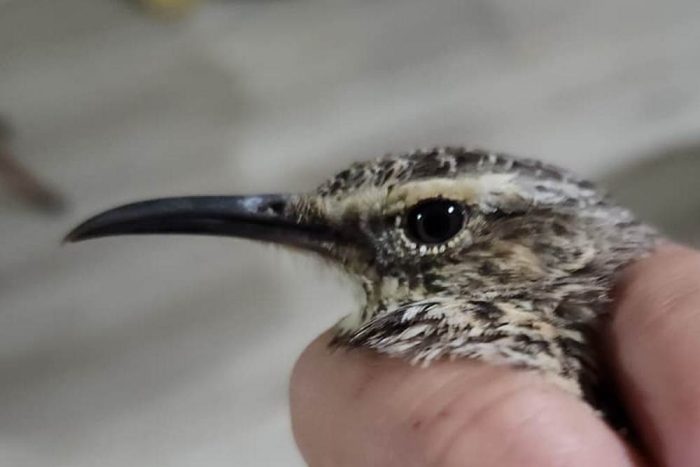
Agulhas Long-billed Lark, now treated as a subspecies of the Cape Long-billed Lark.

Photo 3

Forked tail of Fork-tailed Drongo
Achot Ginosian

The forked tail of the Fork-tailed Drongo

Photo 4

Capped Wheatear - Bird ringing at Nuwejaars April 2026
Achot Ginosian

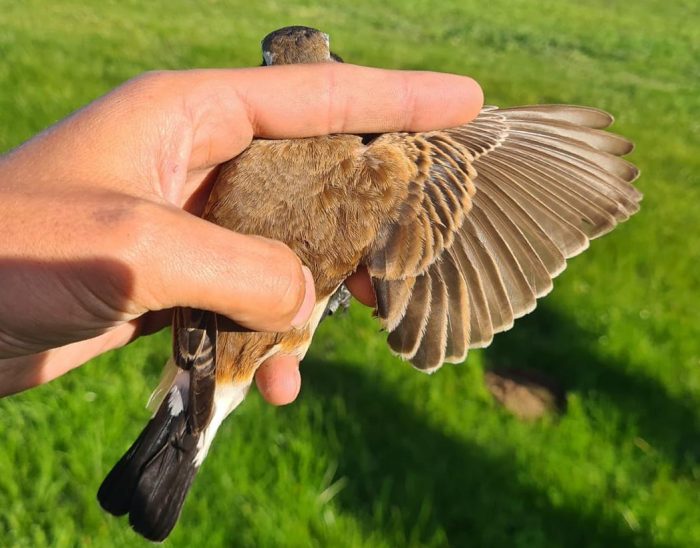
Capped Wheatear, the view that insects fear.

Photo 5

Little Rush Warbler
Joël Daniel-Roux

Little Rush Warbler

Photo 6

Cape Batis - Bird ringing at Nuwejaars April 2026
Joël Daniel-Roux

Cape Batis. This bird is a juvenile. Look at the light-brown edgings of the tertials alongside the ringer’s thumb. They get less conspicuous as you move outwards on the wing. They have been worn away. There are similar patterns in the coverts, in front of the ringer’s index finger.

Photo 7

Southern Fiscal - Bird ringing at Nuwejaars April 2026
Achot Ginosian

Southern Fiscal. That beak is sharp and powerful.

Photo 8

Cape Sugarbird - Bird ringing at Nuwejaars April 2026
Dieter Oschadleus

Male Cape Sugarbird. The whole of the tail is visible in the shadow!

Photos 9 and 10

Malachite Sunbird bill -Bird ringing at Nuwejaars April 2026
Achot Ginosian

Malachite Sunbirds have a long down-curved bill.

Malachite Sunbird pectoral tufts
Joël Daniel-Roux

The bright yellow pectoral tufts of the Malachite Sunbird are usually tucked away and are not often visible outside the breeding season. They are used for mate attraction displays.

Photo 11

Male Cape Weaver
Achot Ginosian

Cape Weaver, an adult male with eyes the colour of marie biscuits. This is the bill that accomplishes the daunting task of weaving a nest out of grass.

Photo 12

Southern Grey-headed Sparrow
Joël Daniel-Roux

Southern Grey-headed Sparrow

Next ringing expedition to Nuwejaars Wetlands is from 9 to 14 May 2026. Up-to-date list of plans for future events is here.

There is a list of ringing expeditions that have blog reports similar to this here.

Little Rush Warbler (Bradypterus baboecala)

Cover image of Little Rush Warbler by Malcolm Robinson – Pietermaritzburg, KwaZulu-Natal

The Little Rush Warbler belongs to the Family LOCUSTELLIDAE (Grassbirds and allies). Locustellidae is a recently recognised family of small insectivorous songbirds. These birds occur mainly in Eurasia, Africa, and Australasia. They inhabit a variety of habitats with dense undergrowth, including forest, marshes, swampland, and seasonally arid grasslands. Most are drab, brownish or buff-coloured warblers with fine bills, lightly proportioned bodies, and relatively long graduated tails. The family is made up of 67 species from 11 genera.

Identification

The Little Rush Warbler is a small, dark warbler and the sexes are alike

Little Rush Warbler Bradypterus baboecala
Bushmanskloof, Western Cape
Photo by Zenobia van Dyk

Adult birds have dark greyish-brown upperparts with a rufous tinge towards the rump. The underparts are greyish white, with variable, indistinct dark streaks on the throat and upper breast. The flanks and undertail coverts are dull rufous. They have a buff-white supercilium, blackish lores, and buffy-brown ear coverts and cheeks with inconspicuous white streaks. The tail is dark brown, and relatively long and broad, giving a heavy-looking appearance. The bill is blackish-brown with a yellowish or pinkish base. The eyes are dark brown and the legs and feet are brownish-pink. Juveniles resemble the adults but have yellow-tinged underparts.

Little Rush Warbler Bradypterus baboecala
Somerset West, Western Cape
Photo by Corrie du Toit

The Little Rush Warbler could easily be mistaken for a host of other wetland warbler species. It can be separated from Acrocephalus reed warblers by its light streaking on the breast, and heavy, dark tail.The Little Rush Warbler is most similar to the Fan-tailed Grassbird (Schoenicola brevirostris), but that species is paler brown above, with greyish-white (not dull rufous) undertail coverts. The Little Rush Warbler has a loud and distinctive call that is a useful aid in identification.

Status and Distribution

The Little Rush Warbler is common and is widespread but patchily distributed throughout sub-Saharan Africa. It ranges from Ghana in the west, Ethiopia in the north, and down to South Africa. The Little Rush Warbler is widespread in southern Africa, but absent from the arid parts of Namibia, Botswana, and South Africa, including the Kalahari Basin and most of the Karoo.

SABAP2 distribution map for Little Rush Warbler Bradypterus baboecala – December 2024.
Details for map interpretation can be found here.

The Little Rush Warbler is not threatened. There is no evidence to suggest that the current distribution differs from the historical range. It has probably benefited from man-made wetlands and the silting up of rivers, which promotes the growth of aquatic vegetation.

Little Rush Warbler Bradypterus baboecala
Philadelphia, Western Cape
Photo by Gerald Wingate

Habitat

The Little Rush Warbler occurs in reedbeds and other wetland vegetation, especially papyrus and sedges (Cyperus sp.) and Bulrushes (Typha sp.). It inhabits marshes, lagoons, and estuaries, streams, rivers, dams, sewage ponds, and flooded rank grassland. The Little Rush Warbler is found in all biomes where suitable habitat exists.

Typical Habitat
Near Worcester, Western Cape
Photo by Les Underhill

Behaviour

The Little Rush Warbler is a resident and largely sedentary species, but is known to make local seasonal movements in response to changing water levels.

Little Rush Warbler Bradypterus baboecala
Matshavhawe, Limpopo
Photo by Marius Meiring

It is usually encountered solitarily or in pairs. The Little Rush Warbler is a shy, skulking species and can be hard to see clearly. It spends much time low down in marshy vegetation, but sometimes perches prominently during the early morning. It is easily overlooked unless calling. The Little Rush Warbler is reluctant to fly, flying only short distances, with whirring wings and the broad tail conspicuously spread.

Lesser Swamp Warbler Acrocephalus gracilirostris
Near Caledon, Western Cape
Photo by Karis Daniel

Not much is known of the Little Rush Warbler’s diet and feeding behaviour. It forages low down in vegetation, mostly over water or mud in sedges and reeds. It is known to eat small insects and their eggs.

Lesser Swamp Warbler Acrocephalus gracilirostris
Pietermaritzburg, KwaZulu-Natal
Photo by Malcolm Robinson

The Little Rush Warbler breeds from August to January in the Western Cape, and from September to March further north. It is a monogamous and territorial species. The nest is a relatively large, deep and untidy cup made from reeds and coarse grass. The interior is lined with fine grass and rootlets. The nest is usually situated about 50cm above the ground or water.

2 to 3 eggs are laid per clutch. The incubation period takes 12 to 14 days, and the nestling period lasts a further 12 to 13 days. The young are known to be fed by both parents. The Little Rush Warbler is sometimes parasitised by the Diderick Cuckoo (Chrysococcyx caprius).

Little Rush Warbler Bradypterus baboecala
Somerset West, Western Cape
Photo by Corrie du Toit

Further Resources

This species text is adapted from the first Southern African Bird Atlas Project (SABAP1), 1997.

The use of photographs by Corrie du Toit, Gerald Wingate, Karis Daniel, Les Underhill, Malcolm Robinson, Marius Meiring, and Zenobia van Dyk is acknowledged. Additional photographs by Ryan Tippett.

Other common names: African Sedge Warbler (Alt. English); Kaapse vleisanger (Afrikaans); Unomakhwane (Xhosa); Bouscarle caqueteuse (French); Moeras-struikzanger (Dutch); Sumpfbuschsänger (German); Felosa-dos-juncos-africana (Portuguese).

Recommended citation format: Tippett RM. 2026. Little Rush Warbler Bradypterus baboecala. Biodiversity and Development Institute. Available online at https://thebdi.org/2026/04/17/little-rush-warbler-bradypterus-baboecala/

List of bird species in this format is available here.

Bird identificationbirding

Little Rush Warbler Bradypterus baboecala
Philadelphia, Western Cape
Photo by Gerald Wingate

Similar Species

Layard’s Warbler (Sylvia layardii)

Cover image of Layard’s Warbler by Rick Nuttall – Addo Elephant National Park, Eastern Cape

Layard’s Warbler is a member of the family SYLVIIDAE (Sylvia and Curruca Warblers). These small passerine birds are found throughout Africa, Europe, and much of Asia, as far as north-central China and parts of Siberia. These warblers are usually birds of dense, shrubby habitats, but some also occur in more forested environments. Sylviidae comprises 32 species from 2 genera.

Identification

Layard’s Warbler Sylvia layardii
Carnarvon District, Northern Cape
Photo by Ryan Tippett

In the Layard’s Warbler, the sexes differ slightly in plumage coloration, but this is difficult to see in the field. The adult male is predominantly slate grey in overall appearance. The upper parts are slightly darker than the undersides. The chin, throat, and upper breast are off-white, and the throat carries fine, black streaks. The lower breast is pale grey, palest in the middle, and the flanks are washed darker grey. The Undertail Coverts are white (diagnostic). The tail itself is black, edged, and tipped white. The eye is white (diagnostic in both sexes), and the bill, legs, and feet are black.

Layard’s Warbler Sylvia layardii
Middelburg district, Eastern Cape
Photo by Tino Herselman

Adult females are usually slightly browner overall than males, and the streaking on the throat and upper breast is less well pronounced. The flanks and undertail coverts are buffy-white. Juveniles resemble the adults, but the chin and throat are greyish, without streaking. The underparts are buffy grey. They also differ in having greyish-yellow (not white) eyes.

Layard’s Warbler is only likely to be mistaken for the closely related Chestnut-vented Tit-Babbler (Sylvia subcaerulea), which is slightly darker and has chestnut (not white) undertail coverts. In more arid areas, the two species frequently co-occur, but differ in their preferred habitat.

Layard’s Warbler Sylvia layardii – Juvenile
Carnarvon District, Northern Cape
Photo by Ryan Tippett

Status and Distribution

Layard’s Warbler is fairly common to common. It is endemic to southern Africa, from western and southern Namibia south to the Western Cape and west across the Karoo to Free State, Lesotho, and marginally into western KwaZulu-Natal.

SABAP2 distribution map for Layard’s Warbler Sylvia layardii – downloaded in December 2024. Details for map interpretation can be found here.

Layard’s Warbler is not threatened. The distribution is not known to have differed from the present. However, it has probably been negatively impacted by coastal development along the west coast of the Western Cape.

Layard’s Warbler Sylvia layardii
Bushmanskloof, Western Cape
Photo by Zenobia van Dyk

Habitat

Layard’s Warbler typically inhabits short scrub on rocky slopes. It occurs in semi-arid to arid Karroid scrub in both the summer and winter rainfall regions, where it appears to be most numerous. Also occurs in coastal fynbos, Alpine scrub, and taller montane fynbos. Layard’s Warbler is found from sea level along the West Coast to over 2400 m above sea level in the Drakensberg.

Habitat – Hilly terrain with rocky outcrops and scrub in the Nama Karoo.
Carnarvon District, Northern Cape
Photo by Ryan Tippett

Behaviour

Layard’s Warbler is mostly resident. In the Karoo, it may move from hillside habitats to lower-lying drainage lines during winter; it also moves to lower altitudes in the Drakensberg during winter.

Layard’s Warbler Sylvia layardii
Near Klawer, Western Cape
Photo by Gerald Wingate

Layard’s Warbler is usually encountered singly or in pairs. They are not easily flushed and tend to remain hidden in the undergrowth. They are inquisitive and respond readily to tape playback or spishing. Conspicuous and vocal in the breeding season but easily overlooked when not calling. Sometimes snaps wings in flight from bush to bush and seldom flies in a straight line.

Layard’s Warbler Sylvia layardii
Kasteelberg, Western Cape
Photo by Fiona Hellmann

Layard’s Warbler forages low down in bushes and shrubs, gleaning food from leaves and stems. Eats invertebrates, including grasshoppers, termites, bugs, beetles, caterpillars, and ants. They also consume small fruits and seeds.

Layard’s Warbler Sylvia layardii
Worcester, Western Cape
Photo by Gregg Darling

Layard’s Warbler is a monogamous, solitary nester. They are probably strongly territorial as breeding pairs are widely spaced. Sings from a perch or makes short display flights in territorial defence.

The nest is a thin-walled cup of grass, silky plant fibres, and spider web placed in a fork of a bush. It is usually found low down and is often fairly exposed. 2 to 3 eggs are laid per clutch. The incubation period is unknown. Adults feeding the young at the nest are very wary and frequently dive behind boulders and into concealing vegetation, usually emerging unseen. The nestling period is not more than 15days.

Layard’s Warbler Sylvia layardii
Cypherfontein, Free State
Photo by Phillip Nieuwoudt

Further Resources

Species text adapted from the first Southern African Bird Atlas Project (SABAP1), 1997.

The use of photographs by Dawie de Swardt, Fiona Hellmann, Gerald Wingate, Gregg Darling, Phillip Nieuwoudt, Rick Nuttall, Ryan Tippett, Tino Herselman, and Zenobia van Dyk is acknowledged.

Other common names: Parisoma layardi (Alt. Scientific); Layard’s Titbabbler; Layard’s Tit-Babbler (Alt. English); Grystjeriktik (Afrikaans); Parisome de Layard (French); Layards Meisensänger (German); Layards Meeszanger (Dutch); Felosa-chapim de Layard (Portuguese)

Recommended citation format: Tippett RM. 2026. Layard’s Warbler Sylvia layardii. Biodiversity and Development Institute. Available online at https://thebdi.org/2026/04/14/layards-warbler-sylvia-layardii/

Bird identificationbirding

Layard’s Warbler Sylvia layardii
Bloemfontein, Free State
Photo by Dawie de Swardt

Black-faced Waxbill (Estrilda erythronotos)

Image of Black-faced Waxbill by Rick Nuttall – Dealesville, Free State

Waxbills belong to the Family ESTRILDIDAE. This family also includes the Firefinches, Twinspots, Mannikins, Pytilias, etc. They are small, seed-eating passerines with short conical bills. They are all similar in structure and habits, but vary widely in plumage colours and patterns. Most species are very colourful. They are usually gregarious and often colonial. Their nests are generally a ball of grass with a side entrance and are either placed in a tree or on or close to the ground. The family contains 138 species from 39 genera. They are restricted to the Old World and are found throughout sub-Saharan Africa and Madagascar, as well as southern Asia and Australasia.

Identification

The Black-faced Waxbill is a distinct and unmistakable bird in southern Africa.

Black-faced Waxbill Estrilda erythronotos
Near Christiana, Free State
Photo by Tino Herselman

The sexes are similar, but females are overall paler and duller.

In males, the forehead is pale grey, and the mantle, upper back, and scapulars are greyish-brown with very fine, dark barring and a pinkish wash. They have a conspicuous black facial mask. The lower back, rump, and upper tail coverts are deep red. The tail is black and is relatively long and graduated. The folded wings are grey with neat black barring. The throat is pale greyish pink and very faintly barred. The lower breast is reddish pink, and the flanks are reddish pink to deep crimson. The centre of the belly and undertail coverts are black. The short, conical bill is black with a bluish-grey base. The legs and feet are black, and the eyes are dark red.

Juveniles resemble adult females, but with more extensive faint barring, and the upper tail coverts and rump are dark orange-red.

Black-faced Waxbill Estrilda erythronotos
Kgalagadi Transfrontier Park, Northern Cape
Photo by Maans Booysen

Status and Distribution

The Black-faced Waxbill is a common but localised resident. It is found in two oddly disjunct populations; one in East Africa (Tanzania, Kenya & Uganda), and one in southern Africa. The southern population extends from southern Angola and south-western Zambia through north-central Namibia, Botswana, southern and western Zimbabwe to South Africa. In South Africa, it occurs in central and western Limpopo, North West province, central and western Free State, and the north-eastern parts of the Northern Cape.

SABAP2 distribution map for Black-faced Waxbill Estrilda erythronotos – December 2024.
Details for map interpretation can be found here.

The Black-faced Waxbill is not threatened. The clearing of savannas for urbanisation and agriculture impact locally on its population. The Black-faced Waxbill is not abundant in most places, and its trapping for the cage-bird trade should be closely monitored.

Black-faced Waxbill Estrilda erythronotos
Mokala National Park, Northern Cape
Photo by Sybrand Venter

Habitat

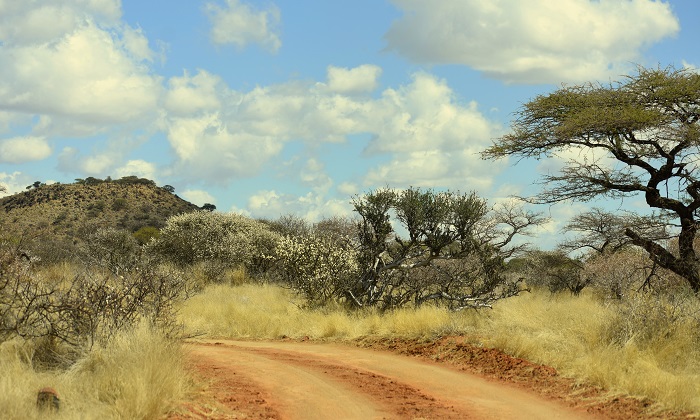
The Black-faced Waxbill inhabits arid and semi-arid thornveld savanna and riverine thornbush. It is dependent on permanent surface water. The Black-faced Waxbill also requires tree cover and is reportedly more arboreal than others in its family. This probably explains its absence from the Karoo and drier parts of the Kalahari.

Dry woodland dominated by thorn trees.
Mokala National Park, Northern Cape
Photo by Karis Daniel

Behaviour

The Black-faced Waxbill is resident and sedentary, but is subject to some local movements in the dry season. It is known to disappear from an area for long periods before suddenly reappearing. Flocks move into the drier parts of the Kalahari during the wet season, particularly in years of high rainfall.

Black-faced Waxbill Estrilda erythronotos
Near Klerksdorp, North West
Photo by Tony Archer
The Black-faced Waxbill is usually found in pairs or small groups. They sometimes gather in larger flocks of up to 18 birds when not breeding, often where food is abundant. The Black-faced Waxbill is somewhat secretive, but can be easily located by its fairly loud contact calls.
Black-faced Waxbill Estrilda erythronotos
Mokala National Park, Northern Cape
Photo by Terry Terblanche

Birds foraging on the ground or low down in vegetation fly into nearby bushes when disturbed. The Black-faced Waxbill sometimes roosts at night in old weaver nests, with up to 30 birds in 1 nest. They are dependent on water and drink regularly. After drinking and bathing, birds sit in dense foliage and preen for extended periods. They regularly allopreen and are often seen huddled together.
Black-faced Waxbill Estrilda erythronotos
Thabazimbi district, Limpopo
Photo by Roelof van der Breggen

The Black-faced Waxbill is most active during the morning and late afternoon, often in loose association with other small seed-eating birds. They forage on bare ground or among leaf litter, searching for seeds. They will also take seeds directly from grass plants, often by perching on a grass stem and forcing the seed head to the ground before removing seeds. Small flying insects may be hawked from a perch or gleaned from vegetation. The Black-faced Waxbill’s diet consists mainly of grass seeds and is supplemented by insects such as termites, beetles, and small caterpillars. Some nectar is also consumed when available. They will also eat small, fleshy fruits and suitably-sized seeds from various trees and shrubs.
Black-faced Waxbill Estrilda erythronotos
Otjozondjupa, Namibia
Photo by Zenobia van Dyk

The Black-faced Waxbill is monogamous, and pair bonds appear to be strong. They are solitary nesters and are probably territorial. In courtship display, the singing male perches beside the female and holds 1 end of a grass inflorescence in his bill while throwing his head backwards and forwards, while his body bobs up and down.

Black-faced Waxbill Estrilda erythronotos
Khomas, Namibia
Photo by Norman Barrett

Black-faced Waxbills mostly breed from December to May, but will breed opportunistically at other times in drier areas. The nest is built by both sexes with material collected by the male. The nest is round and bulky with a long, downward-pointing entrance. Some nests incorporate a cup-shaped false nest on top, which probably serves as a decoy to lure predators away from the true entrance. The nest is lined with soft, fine grass inflorescences and sometimes also feathers. The nest is usually placed 4 or 5 meters above the ground in dense, thorny vegetation.
2 to 6 white to cream eggs are laid per clutch. The incubation period lasts around 12 days and duties are shared by both sexes. The nestling period lasts up to 22 days. Broods may, on rare occasions, be parasitised by the Shaft-tailed Whydah (Vidua paradisaea)

Black-faced Waxbill Estrilda erythronotos
Vaalkop Dam, North West
Photo by Lance Robinson

Further Resources

This species text is adapted from the first Southern African Bird Atlas Project (SABAP1), 1997.

The use of photographs by Dawie de Swardt, Karis Daniel, Lance Robinson, Maans Booysen, Norman Barrett, Rick Nuttall, Roelof van der Breggen, Sybrand Venter, Terry Terblanche, Tino Herselman, Tony Archer, and Zenobia van Dyk is acknowledged.

Other names: Black-cheeked Waxbill (Alt. English); Swartwangsysie (Afrikaans); Astrild à moustaches (French); Elfenastrild (Dutch); Elfenastrild (German); Bico-de-lacre-de-faces-pretas (Portuguese).

Recommended citation format: Tippett RM. 2026. Black-faced Waxbill Estrilda erythronotos. Biodiversity and Development Institute. Available online at https://thebdi.org/2026/03/31/black-faced-waxbill-estrilda-erythronotos/

List of bird species in this format is available here.

Bird identificationbirding

Black-faced Waxbill Estrilda erythronotos
Near Hoopstad, Free State
Photo by Dawie de Swardt

Scaly-feathered Finch (Sporopipes squamifrons)

Cover image of Scaly-feathered Finch by Kyle Finn – Kuruman River, Northern Cape

The Scaly-feathered Finch is a member of the Family PLOCEIDAE (Weavers and Allies). Other members of Ploceidae include the Weavers, Bishops, Widowbirds, & Malimbes. Birds in this family are small passerines. These birds have short to medium, conical, pointed bills, adapted for seed-eating. They also have relatively strong legs and feet. Most are gregarious and are known for their intricately woven nests. They are distributed throughout sub-Saharan Africa, Madagascar, the southern edge of the arabian peninsula, and into tropical Asia. The family Ploceidae contains 123 species from 16 genera. Most species are found in Africa.

Identification

The Scaly-feathered Finch is distinct and unmistakable, and the sexes are alike.

Scaly-feathered Finch Sporopipes squamifrons
Mapungubwe National Park, Limpopo
Photo by Joanne Putter

The white-tipped black feathers on the crown, forehead, and wings, together with the black malar stripes and rose-pink bill are diagnostic. The remainder of the upper sides are brownish-grey. The undersides, from the throat to the vent, are white. The tail is black with white edges, and the legs and feet are pink.

Immature or juvenile birds resemble adults but lack the scaly-feathering on the forehead and crown, and they also have greyish-yellow (not pink) bills.

Scaly-feathered Finch Sporopipes squamifrons
Khomas, Namibia
Photo by Norman Barrett

Status and Distribution

The Scaly-feathered Finch is a locally Common near-endemic to southern Africa. Beyond the region, its range extends only into south-western Angola. In southern Africa, it occurs throughout Namibia (except the coastal desert) and Botswana, where it has a stronghold in the central and southern Kalahari. It is also found in central and western Zimbabwe. Its South African range includes western Limpopo Province and north-western Mpumalanga, south and west to the Northern Cape, with a seemingly isolated population in the Eastern Cape interior and adjoining Western Cape.

SABAP2 distribution map for Scaly-feathered Finch Sporopipes squamifrons – December 2024.
Details for map interpretation can be found here.

The Scaly Feathered Finch is not threatened, and its historical range is not known to differ from that of the present. It has benefited from thornbush encroachment due to overgrazing and is well represented in protected areas.

Scaly-feathered Finch Sporopipes squamifrons
Near Carnarvon, Northern Cape
Photo by Ryan Tippett

Habitat

The Scaly-feathered Finch prefers dry, open woodland dominated by thorn trees (Vachellia & Senegalia) and favours areas with small trees and patches of grass. In more arid, open areas like the Nama Karoo and southern Kalahari, it inhabits shrubs and thickets along drainage lines. The Scaly-feathered Finch also frequents farmyards and gardens.

Dry woodland dominated by thorn trees.
Mokala National Park, Northern Cape
Photo by Karis Daniel

Behaviour

The Scaly-feathered Finch is resident but becomes locally nomadic during dry periods. They occur in small groups of up to 20 birds throughout the year, but flock size often increases in winter and during droughts.

Scaly-feathered Finch Sporopipes squamifrons
Near Pofadder, Northern Cape
Photo by Zenobia van Dyk

The Scaly-feathered Finch drinks water regularly when available. However, it is well adapted to arid environments and can survive without water for extended periods. It is an active species that forages on the ground. Groups hop about restlessly in their search for food. The diet consists mostly of grass seeds and is supplemented by termites.

Scaly-feathered Finch Sporopipes squamifrons
Mokala National Park, Northern Cape
Photo by Terry Terblanche

At night, groups of Scaly-feathered Finches roost in thin-walled roosting nests; if disturbed, they burst through the roof of the nest before scattering. When available, they also roost in Sociable Weaver nests. The Scaly-feathered Finch is often tame and confiding.

Scaly-feathered Finch Sporopipes squamifrons
Kgalagadi Transfrontier Park, Northern Cape
Photo by Andre Kok

The Scaly-feathered Finch is monogamous. They are possibly facultative cooperative breeders, where individuals (often young from previous years) help raise the young. However, this assistance is not essential for the species’ reproductive success. The Scaly-feathered Finch is known to breed opportunistically throughout the year in drier regions, but mostly during spring and summer in the more mesic eastern parts of its range. They are not colonial breeders, but nests may sometimes be clustered within a small area.

Scaly-feathered Finch Sporopipes squamifrons
Danielskuil, Northern Cape
Photo by Aletta Liebenberg

The nest is a scruffy, hollow ball of pale dry grass stems and inflorescences, with a spout-like side entrance tunnel. The aromatic green stems of Pentzia spp shrubs are often incorporated into the structure and may serve as a fumigant to repel ectoparasites. It is then lined with fine grass flowers. The nest is situated up to 4m (usually lower) above the ground in the thin branches of a thorn bush or tree. 2 to 7 eggs are laid per clutch. The incubation period takes up to 12 days to complete. Thereafter, the nestling period takes. Scaly-feathered Finch broods suffer a fairly high predation rate. One study found that up to 30% of broods fail due to predation.

Scaly-feathered Finch Sporopipes squamifrons
Near Boshof, Free State
Photo by Dawie de Swardt

Further Resources

This species text is adapted from the first Southern African Bird Atlas Project (SABAP1), 1997.

The use of photographs by Aletta Liebenberg, Andre Kok, Dawie de Swardt, Joanne Putter, Karis Daniel, Kyle Finn, Norman Barrett, Ryan Tippett, Sybrand Venter, Terry Terblanche, and Zenobia van Dyk is acknowledged.

Other names: Scaly-feathered Weaver (Alt. English); Baardmannetjie (Afrikaans); Sporopipe squameux (French); Baardmanwever (Dutch); Schnurrbärtchen (German); Tecelão-de-testa-malhada (Portuguese).

Recommended citation format: Tippett RM. 2026. Scaly-feathered Finch Sporopipes squamifrons. Biodiversity and Development Institute. Available online at https://thebdi.org/2026/03/18/scaly-feathered-finch-sporopipes-squamifrons/

List of bird species in this format is available here.

Bird identificationbirding

Scaly-feathered Finch Sporopipes squamifrons
Mokala National Park, Northern Cape
Photo by Sybrand Venter

Lanner Falcon (Falco biarmicus)

Cover image of Lanner Falcon by Ryan Tippett – Carnarvon district, Northern Cape

The Lanner Falcon belongs to the family FALCONIDAE (Falcons, Kestrels & Caracaras). Falconidae has traditionally been grouped with the family Accipitridae; however, morphological and DNA analyses suggest the two families are not closely related.  Members of this family are small to medium-sized birds of prey. They have strongly hooked bills, sharply curved talons, and excellent eyesight. They can be found in most terrestrial habitats around the world, but the greatest diversity is found in South America and Africa. All are capable hunters that can take a variety of prey, including insects, birds, mammals, reptiles, and carrion. Most are solitary and territorial, though a few species are colonial or semi-colonial. There are 65 species in the family from 10 genera. 16 species are known from southern Africa.

Identification

The Lanner is a fairly large falcon and is the largest falcon species in southern Africa.

Lanner Falcon Falco biarmicus – Adult
Near Pofadder, Northern Cape
Photo by Cobus Elstadt

It has bluish-grey or brownish-grey upperparts and pale underparts varying from mostly unmarked whitish to whitish with a pink or buff-coloured wash. There are usually fine dark spots on the breast and belly, and dark bars and spots on the flanks and thighs. The forehead is pale buff, and the forecrown is dark greyish blue. The crown and nape are rufous to light buff. The underside of the tail has 8–12 narrow dark bars. The sexes are alike, but the female is often darker than the male and is significantly larger (20%). The bill is grey, with a blackish tip The eye ring, cere, legs and feet are dark yellow. The eyes are dark brown.

Lanner Falcon Falco biarmicus – Pair (male on the left and larger female on the right)
Near Richmond, KwaZulu-Natal
Photo by Malcolm Robinson

In juveniles, the upper parts are predominantly greyish-brown and the crown and nape are whitish to pale rufous. Underparts are buff coloured with heavy, smudged brown streaks. The flight feathers have whitish edges. The cere, eye ring, legs, and feet are greyish-blue. Young birds between the ages of 6 to 18 months show plumage features that are intermediate between juveniles and adults.

Lanner Falcon Falco biarmicus – Juvenile
Kruger National Park, Limpopo
Photo by Lance Robinson

The Lanner Falcon is most often mistaken for the Peregrine Falcon (Falco peregrinus). The Peregrine is more compact and, although smaller, is more heavily built than the Lanner. The Peregrine also has more pointed wings and a shorter tail. Adult Peregrines have dark blackish (not rufous) crowns, broader malar stripes, and darker grey upper parts. Their underparts are densely barred and spotted black. Juvenile Peregrine Falcons have a dark brownish crown and finer, less bold streaking on the undersides.

Status and Distribution

The Lanner Falcon is fairly common in southern Africa. It has a wide distribution across Africa, the Middle East, and southern Europe. It occurs throughout most of Africa, avoiding only the equatorial rainforests, and is patchily distributed in the Sahara and North Africa. The Lanner Falcon ranges throughout southern Africa, with a stronghold in Lesotho and south-eastern South Africa.

SABAP2 distribution map for Lanner Falcon Falco biarmicus – downloaded in December 2024. Details for map interpretation can be found here.

Due to its wide distribution, the Lanner Falcon is not globally threatened (least concern). However, it is listed as Near-threatened in South Africa. Despite this, the species has experienced a drastic decline in Europe and parts of the Middle East. Local declines are also known in parts of North and sub-Saharan Africa. In South Africa, evidence of decreasing numbers from the central areas of the grassland biome suggests the Lanner Falcon is prone to pesticide contamination. The localised application of poisons to control locusts and Red-billed Queleas (Quelea quelea) may cause direct mortalities.

Fortunately, in South Africa, the Lanner Falcon has probably increased in numbers and extended its range into treeless areas by breeding on crow nests on utility pylons and poles. In many parts of southern Africa, the Lanner Falcon has benefited from preying on abundant free-range domestic chickens. It has also benefited from the clearing of savannas, creating more favourable open habitat.

Lanner Falcon Falco biarmicus – Adult
Kgalagadi Transfrontier Park, Northern Cape
Photo by Pamela Kleiman

Habitat

The Lanner Falcon is generally a cliff-nester, and its breeding distribution is closely associated with habitats where cliffs are available. However, they are also able to breed on lower rock-faces, trees, electricity pylons, buildings, and often in the old nests of other birds, especially crows.

For hunting, the Lanner Falcon prefers open habitats, including grassland, arid woodland, Karoo shrublands, and agricultural areas. However, the Lanner Falcon is known to exploit a very wide range of habitats, including well-wooded and forested areas where cliffs occur. It essentially hunts in any terrestrial habitat in southern Africa, except forest interiors. The Lanner Falcon is recorded from all biomes in southern Africa.

Arid woodland habitat.
Between Aus and Keetmanshoop, Namibia
Photo by Les Underhill

Behaviour

Lanners often perch conspicuously on a cliff, dead tree, telephone pole, or fence post. They also soar for prolonged periods. The flight is buoyant, with fairly deep wing-beats.

Lanner Falcon Falco biarmicus
Kgalagadi Transfrontier Park, Northern Cape
Photo by John Todd

The Lanner Falcon is usually encountered singly or in pairs. Aggregations can occur, especially in the drier western areas, and are mostly composed of juveniles with the occasional adult. The Lanner Falcon is a facultative migrant, meaning they choose to migrate or stay based on immediate environmental conditions. Immature birds are more mobile than adults, and the extent of migration varies depending on rainfall patterns and their effects on prey abundance. Much of these annual movements are from breeding areas on the eastern escarpment to flatter, drier regions in the west and south-west, especially the Karoo, Kalahari, and Western Cape.

Lanner Falcon Falco biarmicus
Kgalagadi Transfrontier Park, Northern Cape
Photo by Johan van Rooyen

The Lanner Falcon hunts from a prominent perch or from the air. They primarily use speed to surprise and capture prey, and are known to use obstructive cover to hide their approach. They may attack directly in a spectacular stoop dive or in level, fast flight, low over the ground, striking at prey as it flushes. Lanners may also dive from a perch onto ground-dwelling prey and have even been seen to catch insects while walking on the ground. Prey is seized both in mid-air and close to or on the ground. Pairs often hunt as a cooperative unit, particularly in strikes at large or evasive prey. The Lanner Falcon is opportunistic and often hunts at water holes, where prey congregates to drink, and sometimes also attacks birds flushed by vehicles or injured by hunters.

Lanner Falcon Falco biarmicus
Near Brits, North West
Photo by Andrew Keys

The Lanner Falcon feeds mostly on small to medium-sized birds, but can take prey up to the size of guineafowl. Important bird prey includes pigeons, doves, francolins, sandgrouse, plovers, mousebirds, small granivores, and domestic chickens. Poultry makes up to 40% of its diet in some areas. Also eats small mammals (including bats), reptiles, and insects. The Lanner Falcon occasionally also feeds on carrion.

Lanner Falcon Falco biarmicus – Adult with rodent prey
Near Near Oudtshoorn, Western Cape
Photo by Cobus Elstadt

Lanner Falcons are monogamous and form long-term pair bonds. They are solitary nesters and strongly territorial. Lanners do not construct true nests of their own, but rather use a simple scrape on a cliff ledge or tall building. They also readily use the old platform nests of crows, ravens, herons, or other raptors, either on a cliff, in a tree, or on a power pylon. They may, on occasion, also usurp active nests of birds as large as Verreaux’s Eagle (Aquila verreauxii).

The Lanner Falcon breeds from July to December in southern Africa, with breeding starting later in the south of its range. 1 to 5 eggs are laid per clutch, and eggs are laid at 2 or 3-day intervals. Incubation usually starts after the last egg is laid, and most of the incubation is done by the female. Hatching is generally synchronous. The female generally remains at the nest while the male does most of the hunting. The fully fledged young remain dependent on their parents for food for up to 3 months.

Lanner Falcon Falco biarmicus
Kgalagadi Transfrontier Park, Northern Cape
Photo by Phillip Nieuwoudt

Further Resources

Species text adapted from the first Southern African Bird Atlas Project (SABAP1), 1997.

The use of photographs by Andrew Keys, Cobus Elstadt, Craig Peter, Johan van Rooyen, John Todd, Lance Robinson, Les Underhill, Malcolm Robinson, Norman Barrett, Pamela Kleiman, Phillip Nieuwoudt, and Ryan Tippett is acknowledged.

Other common names: Edelvalk (Afrikaans); uHeshe (Zulu); Ukhetshe (Xhosa); Faucon lanier (French); Lannerfalke (German); Lannervalk (Dutch); Falcão-alfaneque (Portuguese)

Recommended citation format: Tippett RM. 2026. Lanner Falcon Falco biarmicus. Biodiversity and Development Institute. Available online at https://thebdi.org/2026/03/14/lanner-falcon-falco-biarmicus/

Bird identificationbirding

Lanner Falcon Falco biarmicus – Adult
Lower Zambezi, Zambia
Photo by Norman Barrett