Skip to content
BDI
  • Home
  • Departments
    • Bird Ringing
      • Introduction
      • Ringing history
      • The Value of Bird Ringing
    • Biodiversity Observations
    • Research Training
      • Introduction
      • Research Themes
      • Study Sites
      • Logistics
    • Science and Ecology Specialist Consulting
    • Citizen Science – Biodiversity Conservation & Research
  • About
    • What we do
    • Who we are
    • Contact us
  • News
    • Archive
    • BDI Research
  • Upcoming BDI events
  • Biodiversity Projects
    • Bird species
    • Atlas of Frogs & Toads
    • Atlas of Dragonflies & Damselflies
    • Atlas of Butterflies & Moths
    • Atlas of African Neuroptera and Megaloptera
    • Bird Feeder Project

Author: Les Underhill

Prof Les Underhill was Director of the Animal Demography Unit (ADU) at the University of Cape Town from its start in 1991 until he retired. Although citizen science in biology is Les’s passion, his academic background is in mathematical statistics. He was awarded his PhD in abstract multivariate analyses in 1973 at UCT and what he likes to say about his PhD is that he solved a problem that no one has ever had. He soon grasped that this was not the field to which he wanted to devote his life, so he retrained himself as an applied statistician, solving real-world problems.
Biodiversity/Citizen Science/Virtual Museum

The town in South Africa with the most Virtual Museum records per inhabitant is Daniëlskuil

Posted on 12/01/2019 by Les Underhill

We asked citizen scientist Altha Liebenberg to select a few of the Virtual Museum records which had given her the greatest pleasure in submitting during 2018. A...

Citizen Science/Virtual Museum

Marvelous moths are a massive challenge: a selection from the Virtual Museum in 2018

Posted on 08/01/2019 by Les Underhill

Birds are simple. So are dragonflies. If you are looking for one of life’s tougher challenges then volunteer to help with the identification of the moths ...

Citizen Science/Virtual Museum

BestYear by 21%: There were 93,482 Virtual Museum records in 2018

Posted on 06/01/2019 by Les Underhill

The Virtual Museum had its BestYear ever in 2018, by a margin of 21%. The total for 2018 was 93,482 records. The totals for 2017 and 2016 were 75,408 and 73,104...

Archive/Biodiversity/Citizen Science/ReptileMAP/Virtual Museum

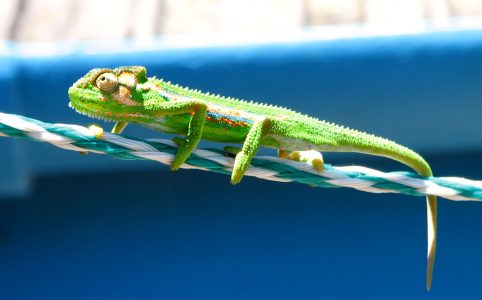
Cape Dwarf Chameleon: A poor documentation of a local extinction

Posted on 04/01/2019 by Les Underhill

Note added on 4 October 2026 to a blog written on 4 January 2019 In the seven years since this blog was written, I have not found a Cape Dwarf Chameleon in this...

Biodiversity/Citizen Science

Do lots of Citizen Science in 2019

Posted on 01/01/2019 by Les Underhill

15 Citizen Science ideas for 2019 Keep your favourite camera handy! Grab all the opportunities which present themselves to take photos for the Virtual Museum. D...

Archive/Biodiversity/Birding/Birds/Citizen Science

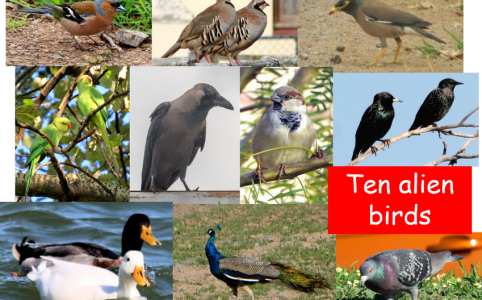
Alien opportunities: 10 bird species with feral populations in South Africa

Posted on 23/12/2018 by Les Underhill

Research opportunities on alien birds Although alien species are widely (and rightly) regarded as a “bad thing”, they offer special opportunities for research! ...

Archive/Biodiversity/Birding/Birds/Citizen Science/Trip report/Virtual Museum

Calvinia BioBash: Citizen Science in the Hantam

Posted on 16/12/2018 by Les Underhill

The Hantam is the general area north of Calvinia in the Northern Cape province of South Africa. It’s an arid area, and poorly covered in biodiversity surveys. C...

Citizen Science

What’s the value of a photo?

Posted on 02/11/2018 by Les Underhill

The take home message has to be that the value of photographic records to biodiversity mapping at the species level, as done by the Virtual Museum, is massive.

Archive/BirdPix/Birds/Industrial biodiversity

Industrial biodiversity 1 : Epping Industria I

Posted on 20/10/2018 by Les Underhill

What motivates this blog on industrial biodiversity? Well, the BDI took occupation of its unit in Epping Industria I on Monday this past week. Director Pete Lav...

Bird ringing/Citizen Science

Why studying African birds’ varied migration patterns is so important

Posted on 15/05/2018 by Les Underhill

A white-throated swallow, one of several intra-African migratory birds. Photo credit: MartinMaritz/Shutterstock -oo0oo- Les Underhill recently published this pi...

Posts navigation

« Previous 1 … 10 11 12 Next »
  • Home
  • Departments
    • Bird Ringing
      • Introduction
      • Ringing history
      • The Value of Bird Ringing
    • Biodiversity Observations
    • Research Training
      • Introduction
      • Research Themes
      • Study Sites
      • Logistics
    • Science and Ecology Specialist Consulting
    • Citizen Science – Biodiversity Conservation & Research
  • About
    • What we do
    • Who we are
    • Contact us
  • News
    • Archive
    • BDI Research
  • Upcoming BDI events
  • Biodiversity Projects
    • Bird species
    • Atlas of Frogs & Toads
    • Atlas of Dragonflies & Damselflies
    • Atlas of Butterflies & Moths
    • Atlas of African Neuroptera and Megaloptera
    • Bird Feeder Project

Recent posts

  • African Black Duck (Anas sparsa)
    Cover image of African Black […]
  • Yellow-billed Duck (Anas undulata)
    Cover image of Yellow-billed […]
  • Cape Teal (Anas capensis)
    Cover image of Cape Teal by Gerald […]
  • Ringers’ Symposium : 6 to 12 November 2…
    The Biodiversity and Development Institute […]
  • Cinnamon-breasted Bunting (Emberiza tahapisi)
    Cover image of Cinnamon-breasted Bunting […]
The Biodiversity & Development Institute is a non-profit company registered with the Companies and Intellectual Property Commission of South Africa (CIPC), Reg. No. 2015/136344/08.
Registration in terms of the Non-Profit Organisations Act: 302-671 NPO.


Directors:
Prof Les Underhill, Ms Sue Gie, Jorn Das
les@thebdi.org
072 062 1140


Address:
Old Farm Road, Rondebosch, 7700, Western Cape, South Africa
© 2026 BDI
Powered by WordPress | Theme: Graphy by Themegraphy