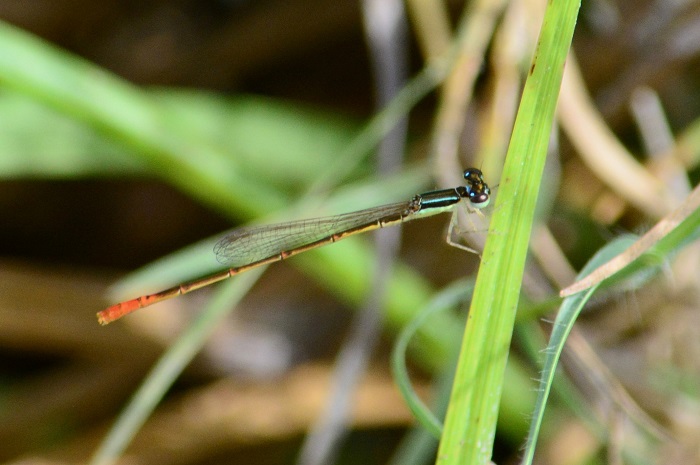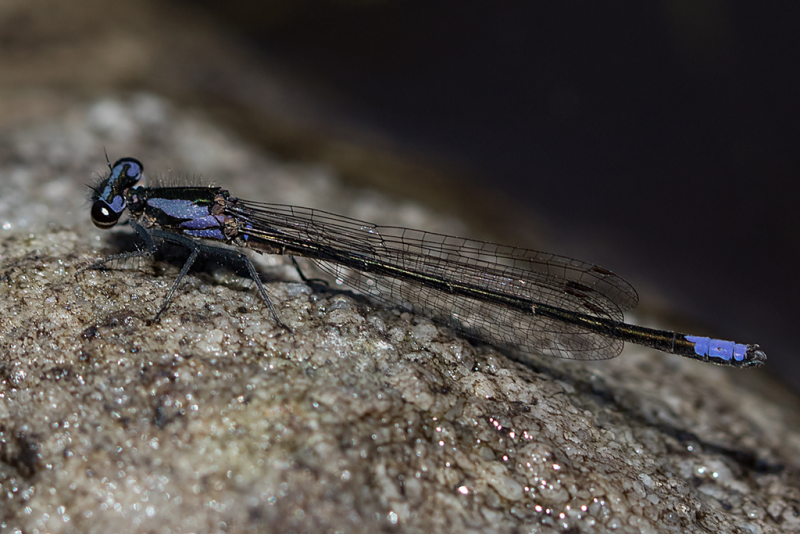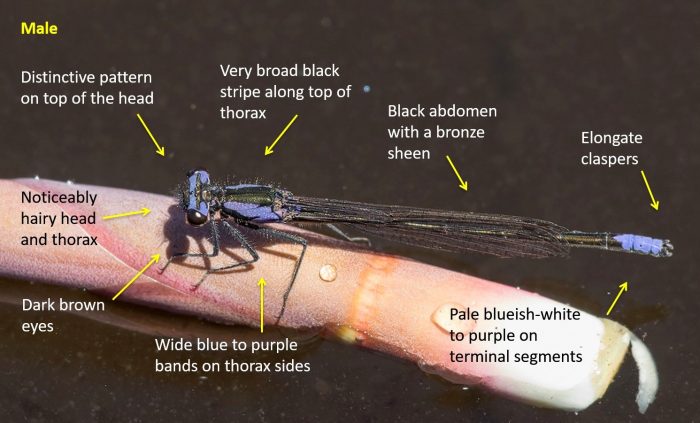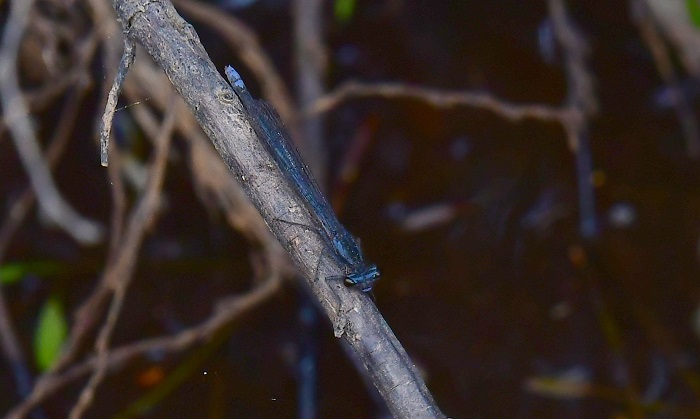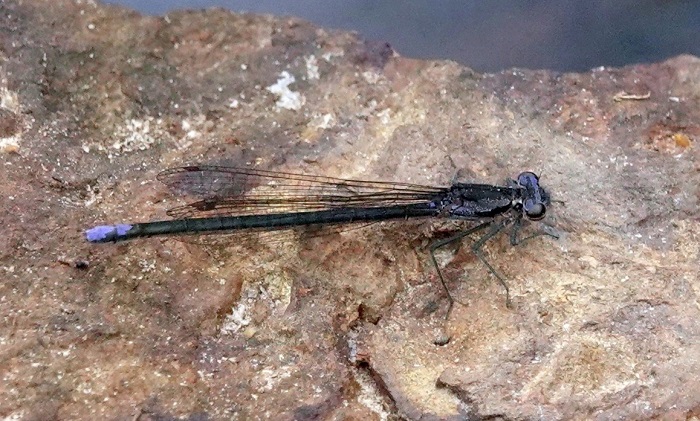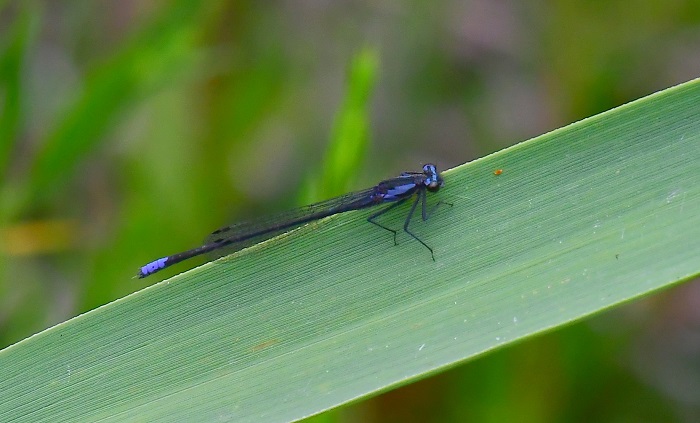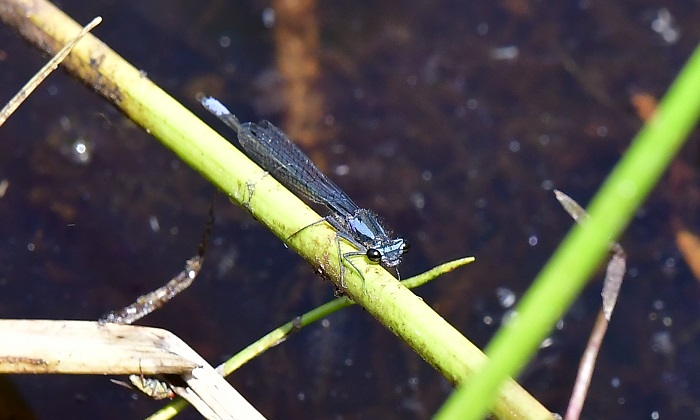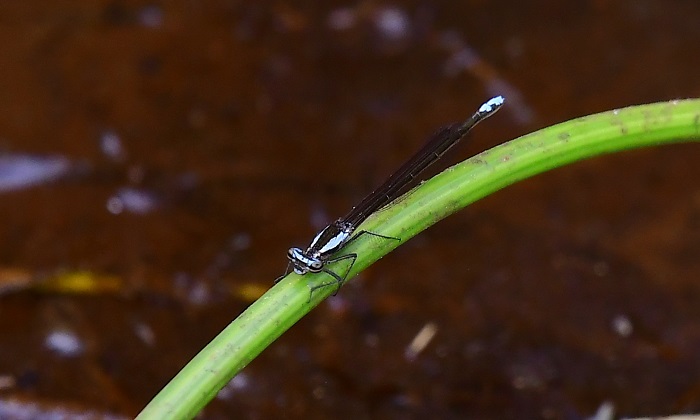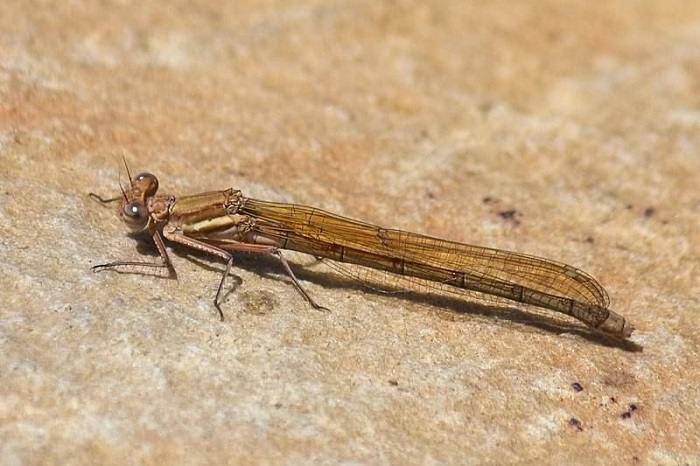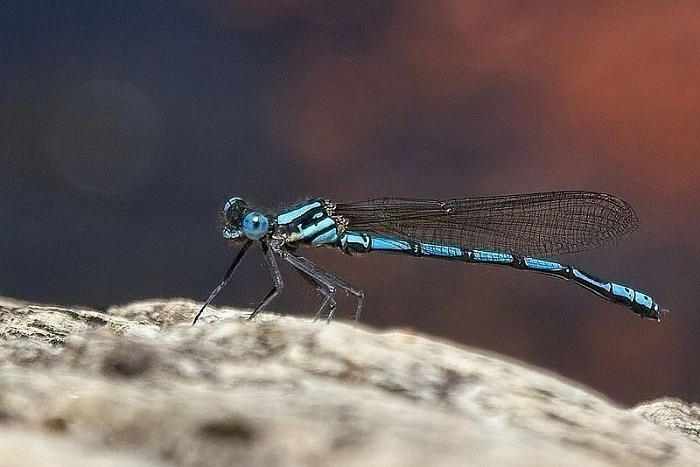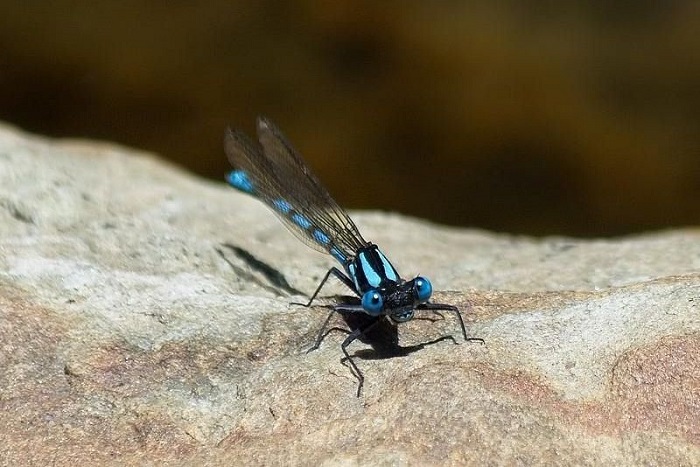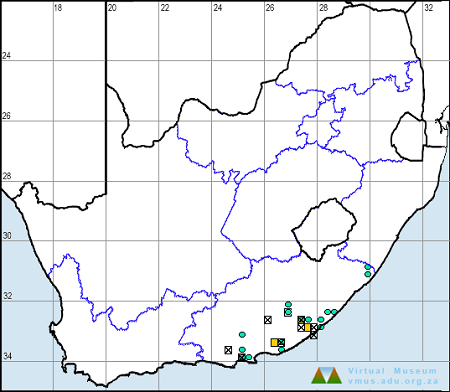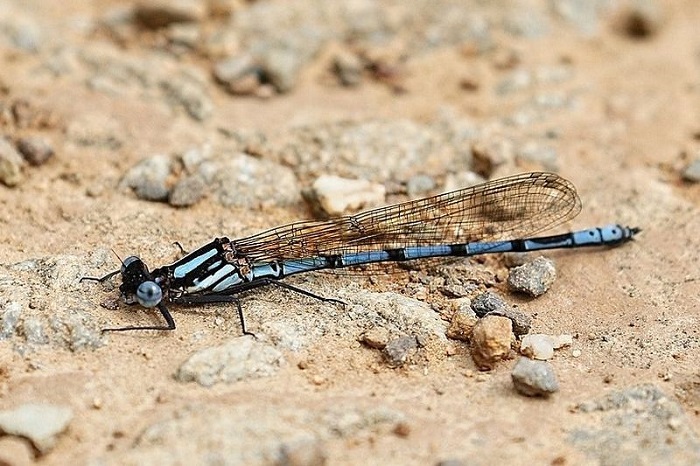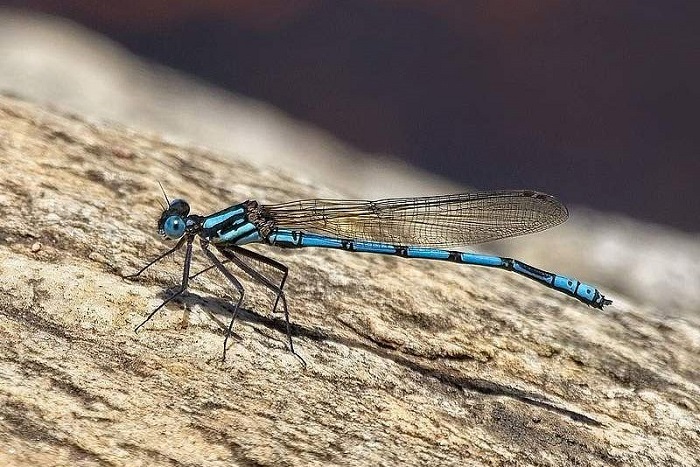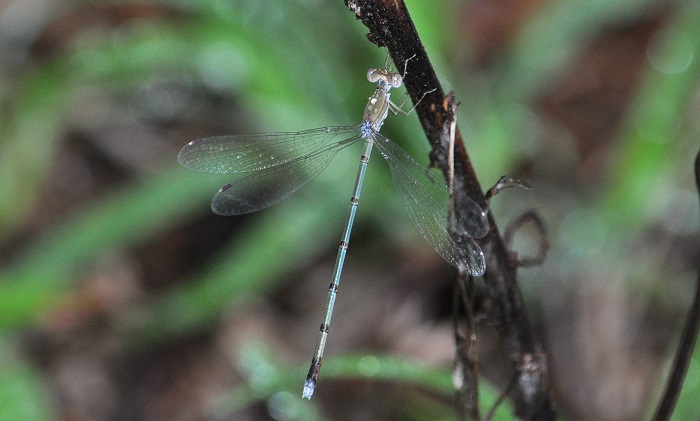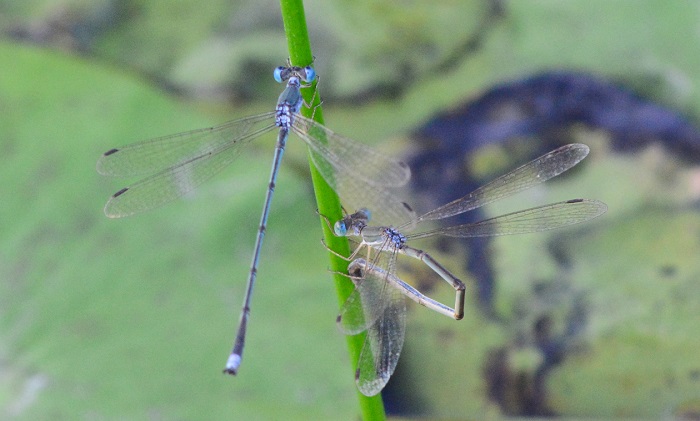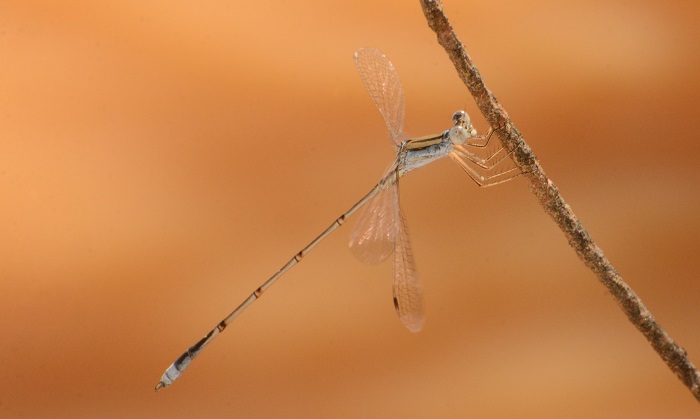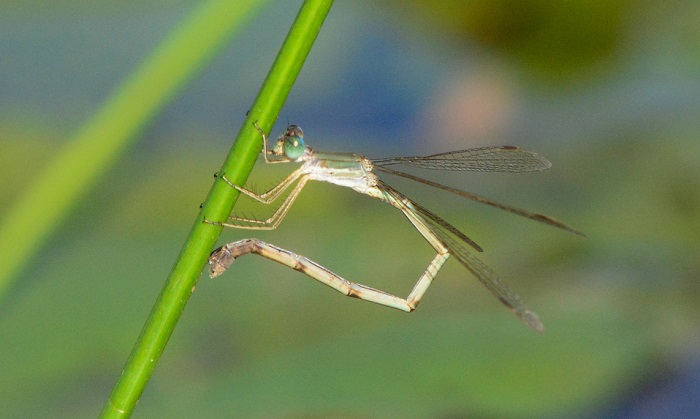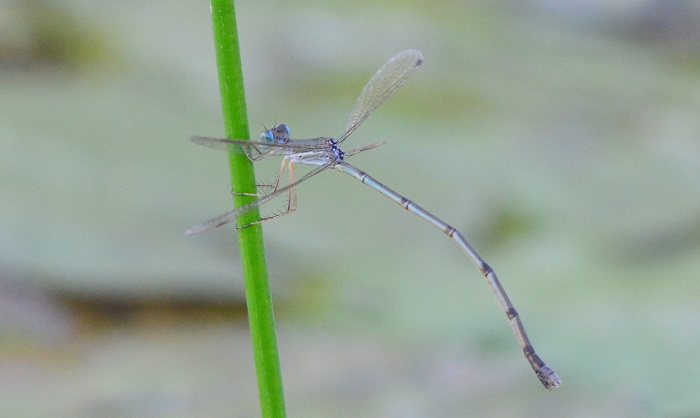
Little Wisp (Agriocnemis exilis)

Cover photo by John Wilkinson.

Find the Little Wisp in the FBIS database (Freshwater Biodiversity Information System) here.

Family Coenagrionidae

Identification
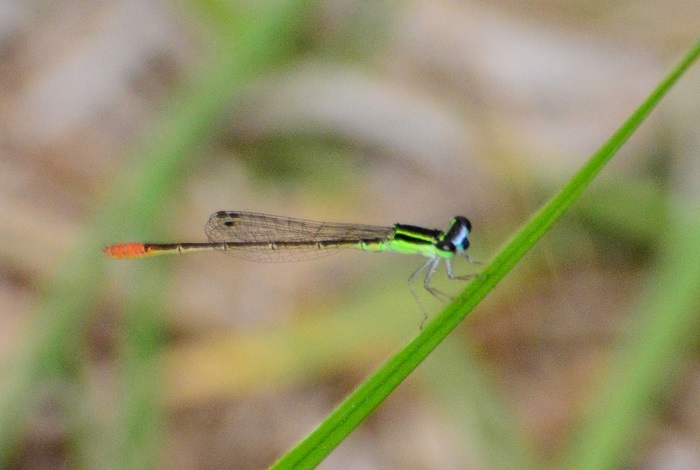
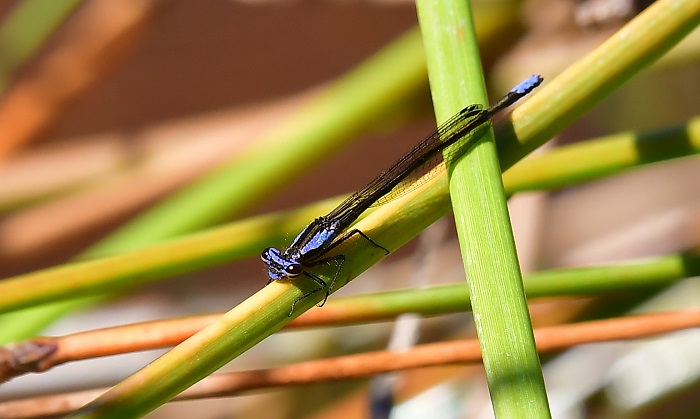
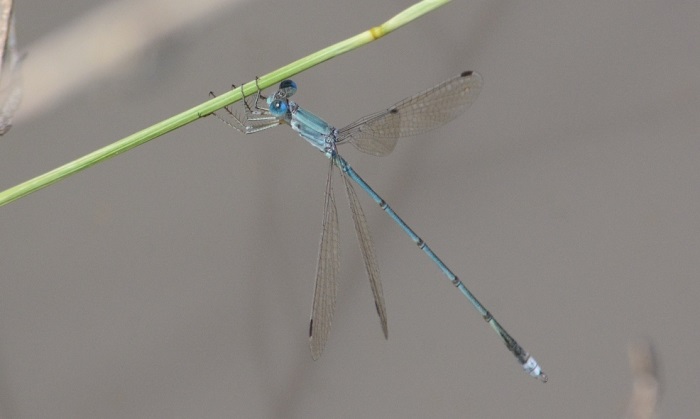
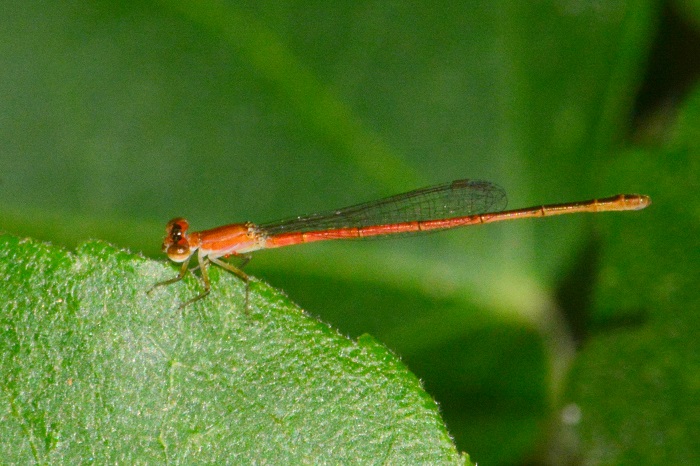
Little Wisp Agriocnemis exilis – Male
Selinda, Botswana
Photo by Ryan Tippett

Very small size

Length up to 20mm; Wingspan attains 27mm.

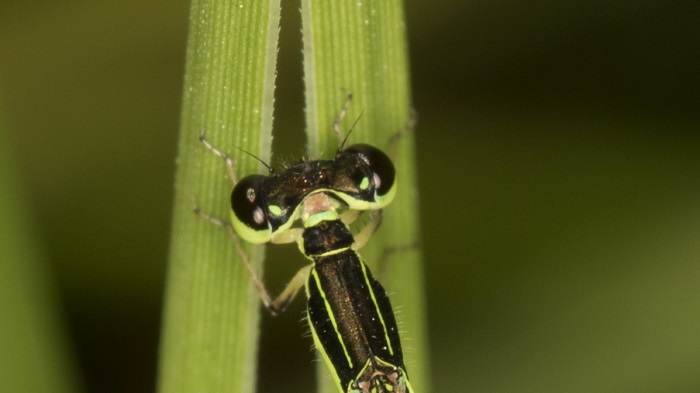
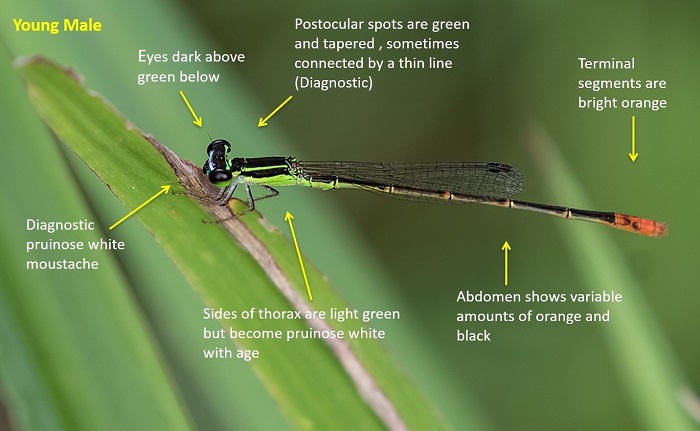
The Little Wisp is most like Agriocnemis pinheyi (Pinhey’s Wisp). They are similar in size and are, in fact the two smallest damselflies in the region. Pinhey’s Wisp has an unbroken green line across the face and an incomplete green line across the prothorax. The Little Wisp shows the exact opposite, having a broken green moustache and an unbroken green line on the prothorax.

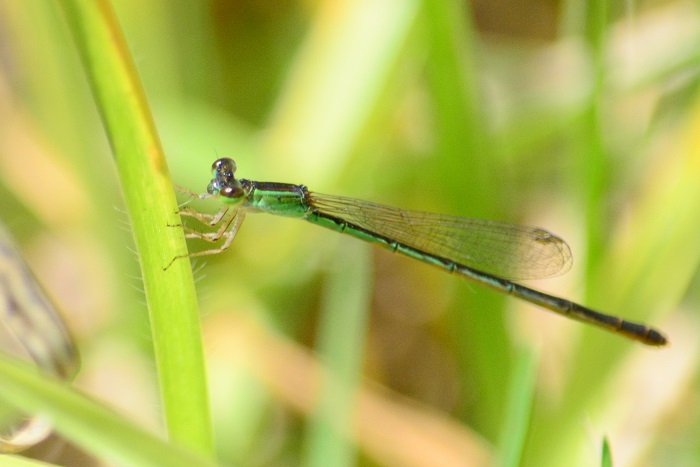
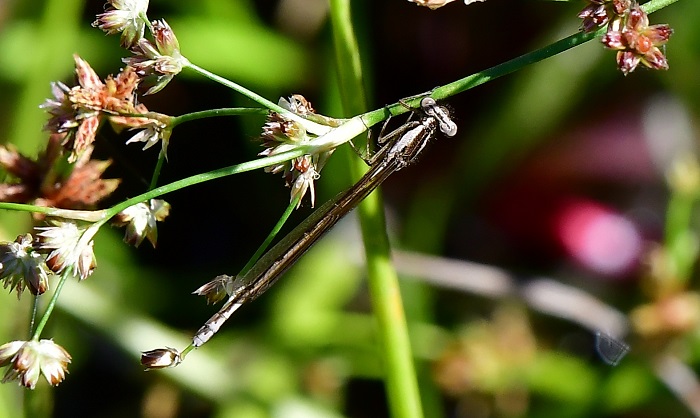
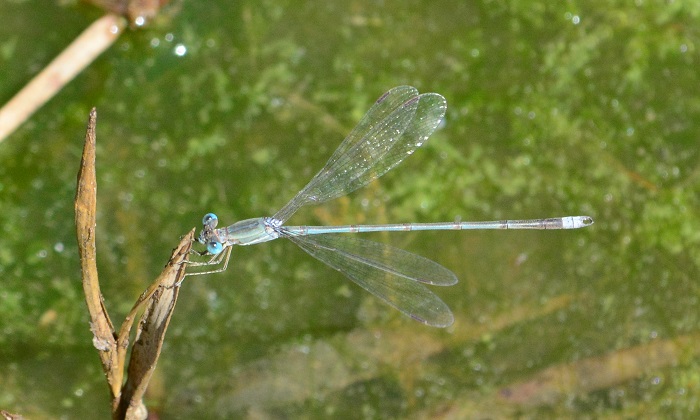
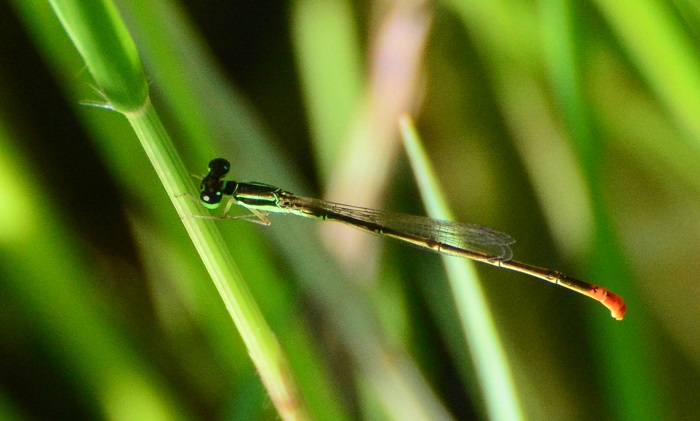
Females are variable and best told by their association with the males.

Click here for more details on identification.
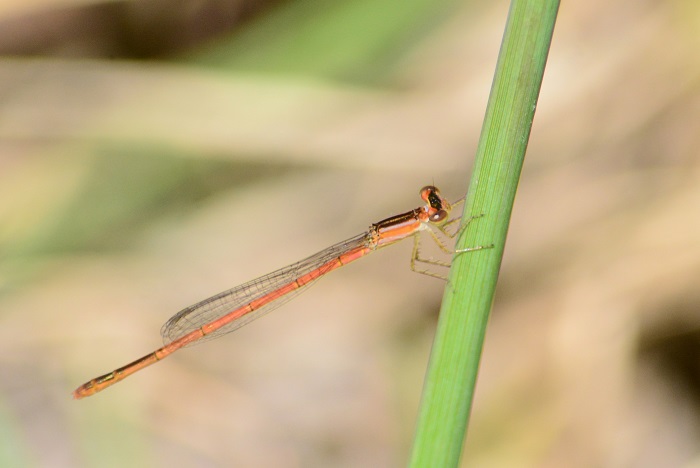
Little Wisp Agriocnemis exilis – Female
Linyanti, Botswana
Photo by Ryan Tippett

Habitat

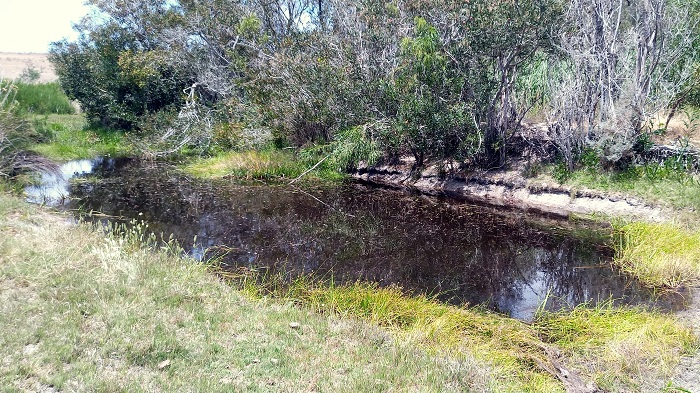
The Little Wisp inhabits the dense grass and sedge margins of pools, dams, marshes, and floodplains, as well as the fringes of slow-moving streams. Little Wisp is generally found at lower altitudes than Agriocnemis pinheyi.

Habitat – Near Kosi Bay, KwaZulu-Natal
Photo by Ryan Tippett

Behaviour

Little Wisps usually perch vertically on a sedge or grass stem, typically low down near the water. UDue to their small size, they are unobtrusive and easily overlooked.

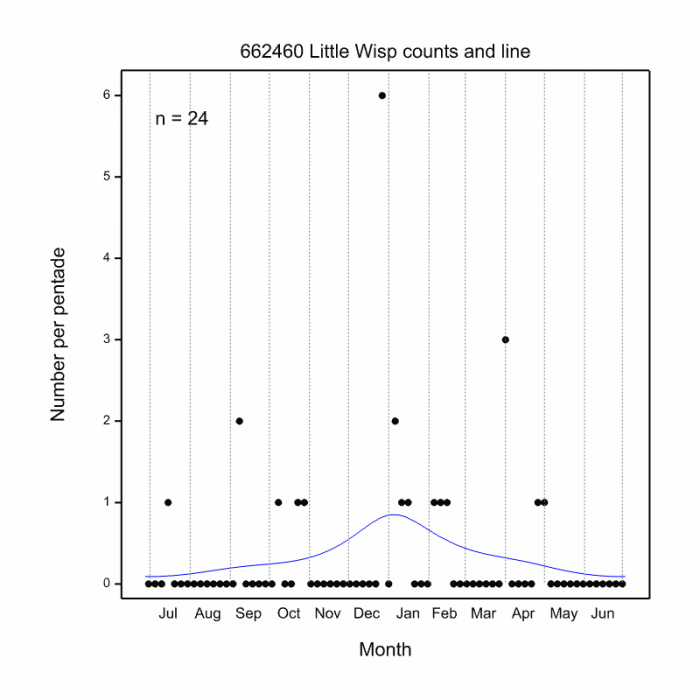
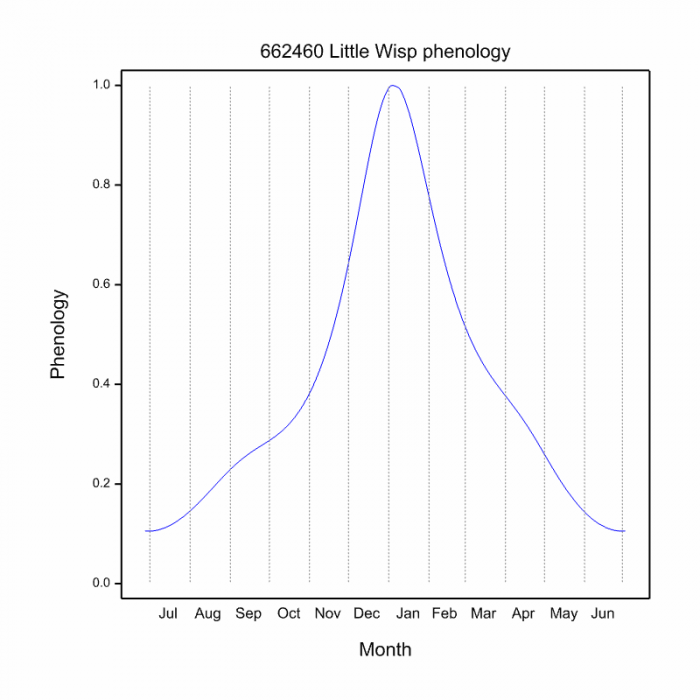
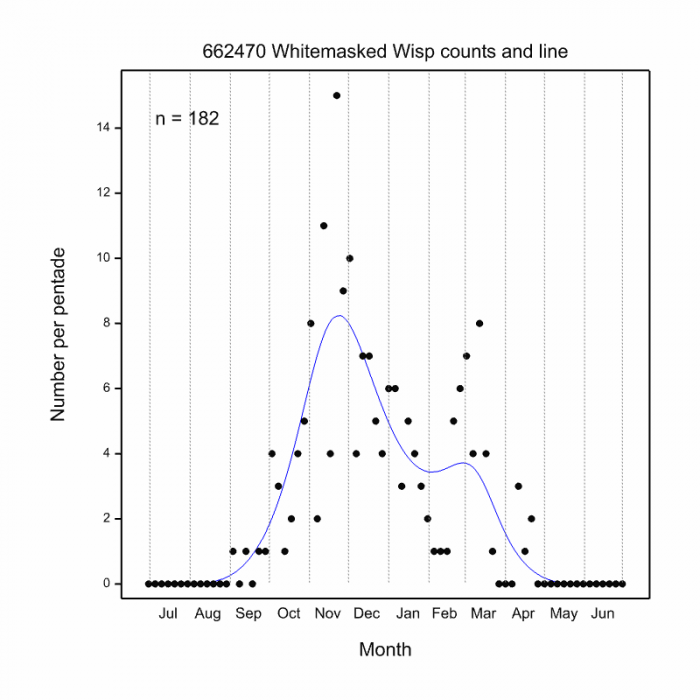
The Little Wisp is on the wing from November to March (see Phenology below).

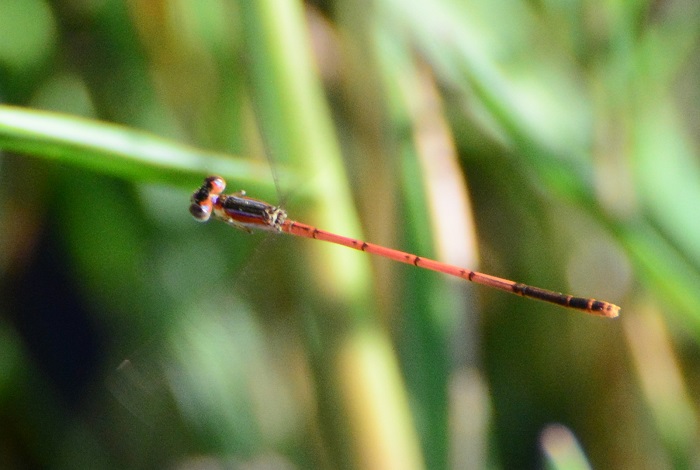
Little Wisp Agriocnemis exilis – Male
Selinda, Botswana
Photo by Ryan Tippett

Status and Conservation

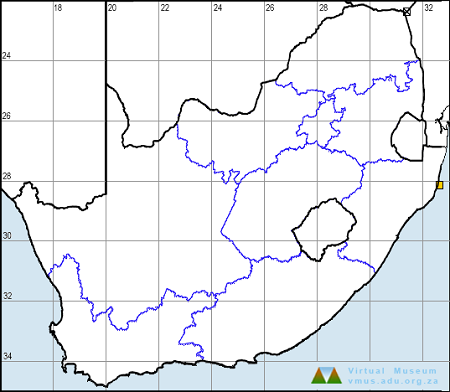
Agriocnemis exilis is fairly common but localised in South Africa. It is listed as of Least Concern in the IUCN Red List of Threatened Species.

Distribution

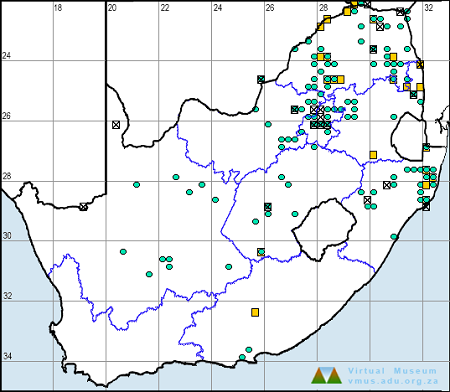
The Little Wisp is widespread throughout most of Sub-Saharan Africa.

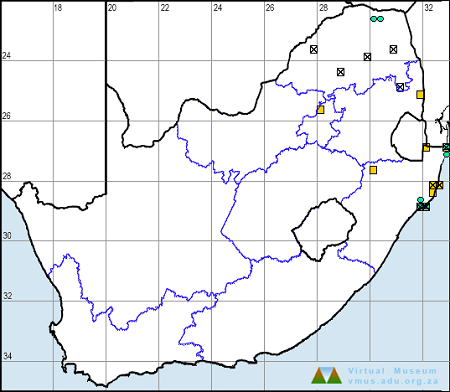
In South Africa, the Little Wisp is restricted to the north-east, where it ranges from Limpopo down to north-eastern KwaZulu-Natal.

Little Wisp Agriocnemis exilis – Female
Selinda, Botswana
Photo by Ryan Tippett

Below is a map showing the distribution of records for Little Wisp in the OdonataMAP database as at February 2020.
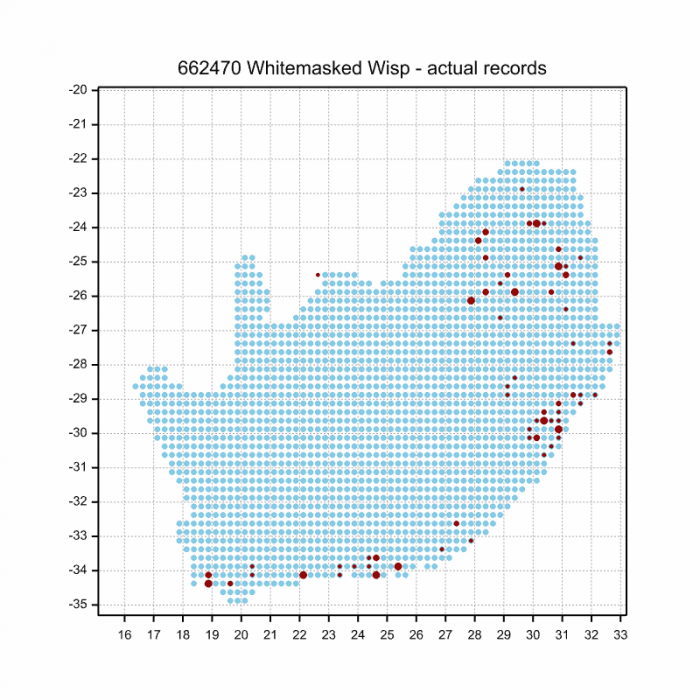
Below is a map showing the distribution of records for Little Wisp in the OdonataMAP database as of December 2024.
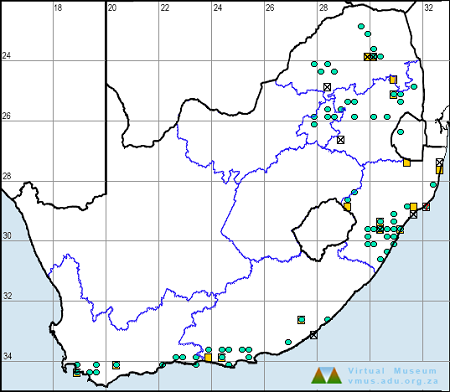
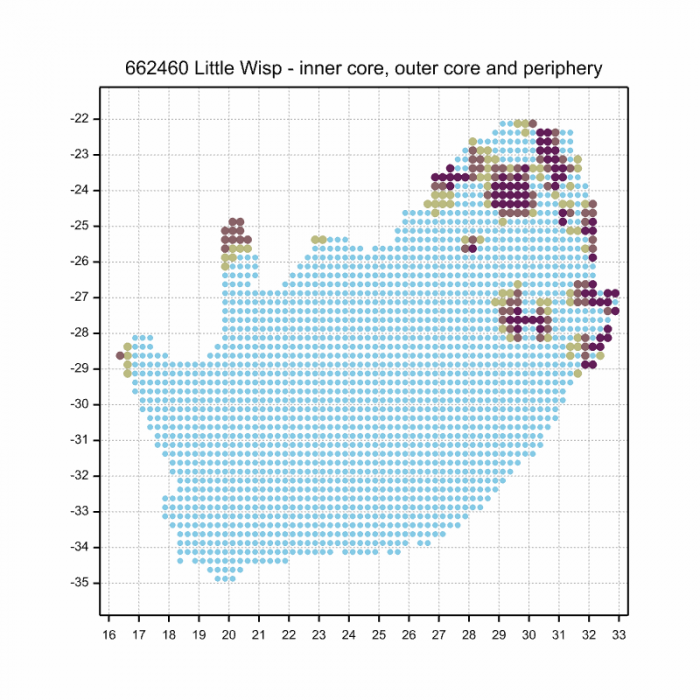
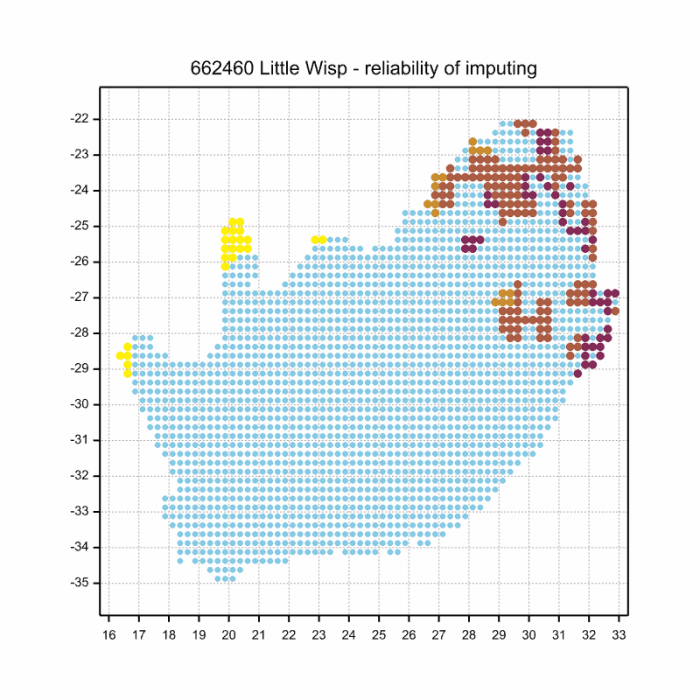
The next map below is an imputed map, produced by an interpolation algorithm, which attempts to generate a full distribution map from the partial information in the map above. This map will be improved by the submission of records to the OdonataMAP section of the Virtual Museum.

Ultimately, we will produce a series of maps for all the odonata species in the region. The current algorithm is a new algorithm. The objective is mainly to produce “smoothed” maps that could go into a field guide for odonata. This basic version of the algorithm (as mapped above) does not make use of “explanatory variables” (e.g. altitude, terrain roughness, presence of freshwater — we will be producing maps that take these variables into account soon). Currently, it only makes use of the OdonataMAP records for the species being mapped, as well as all the other records of all other species. The basic maps are “optimistic” and will generally show ranges to be larger than what they probably are.

These maps use the data in the OdonataMAP section of the Virtual Museum, and also the database assembled by the previous JRS funded project, which was led by Professor Michael Samways and Dr KD Dijkstra.

Phenology

Little Wisp Agriocnemis exilis – Male
Linyanti, Botswana
Photo by Ryan Tippett

Further Resources

The use of photographs by John Wilkinson is acknowledged. Other photographs by Ryan Tippett.

Little Wisp Agriocnemis exilis Selys, 1872

Other common names: Kleinsoetjie (Afrikaans)

Recommended citation format: Loftie-Eaton M; Navarro R; Tippett RM; Underhill L. 2025. Little Wisp Agriocnemis exilis. Biodiversity and Development Institute. Available online at https://thebdi.org/2020/04/22/little-wisp-agriocnemis-exilis/

References: Tarboton, M; Tarboton, W. (2019). A Guide to the Dragonflies & Damselflies of South Africa. Struik Nature.

Samways, MJ. (2008). Dragonflies and Damselflies of South Africa. Pensoft

Samways, MJ. (2016). Manual of Freshwater Assessment for South Africa: Dragonfly Biotic Index. Suricata 2. South African National Biodiversity Institute, Pretoria

Martens, A; Suhling, F. (2007). Dragonflies and Damselflies of Namibia. Gamsberg Macmillan.

Little Wisp Agriocnemis exilis – Male
Okavango Delta, Botswana
Photo by Ryan Tippett

Similar Species

Swamp Bluet (Africallagma glaucum)

Cover photo by Neels Jackson.

Find the Swamp Bluet in the FBIS database (Freshwater Biodiversity Information System) here.

Family Coenagrionidae

Identification

Swamp Bluet Africallagma glaucum – Male
Near Ixopo, KwaZulu-Natal
Photo by Ryan Tippett

Very Small

Length up to 31mm; Wingspan attains 40mm.

The Swamp Bluet most resembles the Slender Bluet Africallagma fractum, but is smaller and less elongate. Africallagma fractum also differs in having large, round postocular spots and a unique keyhole shaped marking at the top of the abdomen on segment 7.

Females are tawny and nondescript. They are best identified by their association with the males.

Click here for more details on identification.

Swamp Bluet Africallagma glaucum – Mating pair
Carnarvon district, Northern Cape
Photo by Ryan Tippett

Habitat

The Swamp Bluet inhabits marshes, seeps and the fringes of ponds, lakes, dams and slow-moving rivers or streams. It favours still water environments with fringing and emergent grass, sedge or reeds. The Swamp Bluet is recorded from all biomes in southern Africa.

Habitat – Bainskloof, Western Cape
Photo by Sharon Stanton

Behaviour

The Swamp Bluet is fairly conspicuous despite its small size. It perches on plant stems close to the water and is often gregarious. Both sexes are usually found in the same vicinity, although females can also be found away from water in tall grass.

Most active from September to May, but flies year round in some places. See Phenology below.

Swamp Bluet Africallagma glaucum – Male
Near Hluhluwe, KwaZulu-Natal
Photo by Ryan Tippett

Status and Conservation

The Swamp Bluet is very common throughout southern Africa and is the most frequently recorded Bluet in the region. It is listed as of Least Concern in the IUCN Red List of Species. The Swamp Bluet is a hardy and adaptable species. This has enabled it to use man-made waterholes and animal watering points, allowing it to spread into arid areas.

Swamp Bluet Africallagma glaucum – Male
Amakhosi Game Reserve, KwaZulu-Natal
Photo by Ryan Tippett

Distribution

The Swamp Bluet occurs widely in Southern, central, and East Africa. It is found throughout southern Africa, including arid areas.

Swamp Bluet Africallagma glaucum – Male
Near Hluhluwe, KwaZulu-Natal
Photo by Ryan Tippett

Below is a map showing the distribution of records for Swamp Bluet in the OdonataMAP database as at February 2020.

Below is a map showing the distribution of records for Swamp Bluet in the OdonataMAP database as of December 2024.

The next map below is an imputed map, produced by an interpolation algorithm, which attempts to generate a full distribution map from the partial information in the map above. This map will be improved by the submission of records to the OdonataMAP section of the Virtual Museum.

Ultimately, we will produce a series of maps for all the odonata species in the region. The current algorithm is a new algorithm. The objective is mainly to produce “smoothed” maps that could go into a field guide for odonata. This basic version of the algorithm (as mapped above) does not make use of “explanatory variables” (e.g. altitude, terrain roughness, presence of freshwater — we will be producing maps that take these variables into account soon). Currently, it only makes use of the OdonataMAP records for the species being mapped, as well as all the other records of all other species. The basic maps are “optimistic” and will generally show ranges to be larger than what they probably are.

These maps use the data in the OdonataMAP section of the Virtual Museum, and also the database assembled by the previous JRS funded project, which was led by Professor Michael Samways and Dr KD Dijkstra.

Swamp Bluet Africallagma glaucum – Male
Near Hluhluwe, KwaZulu-Natal
Photo by Ryan Tippett

Phenology

Swamp Bluet Africallagma glaucum – Male
Mkuze River, KwaZulu-Natal
Photo by Ryan Tippett

Further Resources

The use of photographs by Neels Jackson is acknowledged. All other photographs by Ryan Tippett.

Swamp Bluet Africallagma glaucum (Burmeister, 1839)

Other common names: Vleibloutjie (Afrikaans)

Recommended citation format: Loftie-Eaton M; Navarro R; Tippett RM; Underhill L. 2025. Swamp Bluet Africallagma glaucum. Biodiversity and Development Institute. Available online at https://thebdi.org/2020/04/21/swamp-bluet-africallagma-glaucum/

References: Tarboton, M; Tarboton, W. (2019). A Guide to the Dragonflies & Damselflies of South Africa. Struik Nature.

Samways, MJ. (2008). Dragonflies and Damselflies of South Africa. Pensoft

Samways, MJ. (2016). Manual of Freshwater Assessment for South Africa: Dragonfly Biotic Index. Suricata 2. South African National Biodiversity Institute, Pretoria

Martens, A; Suhling, F. (2007). Dragonflies and Damselflies of Namibia. Gamsberg Macmillan.

Swamp Bluet Africallagma glaucum – Male
Near Hluhluwe, KwaZulu-Natal
Photo by Ryan Tippett

Similar Species

Slender Bluet (Africallagma fractum)

Cover photo by Alan Manson.

Find the Slender Bluet in the FBIS database (Freshwater Biodiversity Information System) here.

Family Coenagrionidae

Identification

Slender Bluet Africallagma fractum – Male
Hilton, KwaZulu-Natal
Photo by Geoff Prosser

Small size

Length up to 32mm; Wingspan reaches 39mm.

The Slender Bluet is most like Africallagma glaucum (Swamp Bluet). The Slender Bluet is distinguishable from that species by its conspicuous, large, and connected postocular spots, and by the unique black notch-shaped marking on the top of segment seven.

Click here for more details on identification.

Habitat

The Slender Bluet frequents the fringes of streams, pools, and dams where there is a thick growth of tall grasses and forbs. It is usually found in fairly well-wooded areas.

The Slender Bluet is a mid-altitude species. It is generally found between 600 and 1200m above sea level.

Behaviour

The Slender Bluet perches near the top of grass stems over the water, where it is fairly conspicuous.

On the wing mainly from September to April, but may fly all year in places. See Phenology below.

Status and Conservation

The Slender Bluet is scarce and localised in South Africa. It is listed as of Least Concern in the IUCN Red List of Threatened Species.

Distribution

The Slender Bluet has been found in Angola, the southern Democratic Republic of Congo, Zambia, Malawi, Mozambique, Zimbabwe, and eastern South Africa.

Below is a map showing the distribution of records for Slender Bluet in the OdonataMAP database as at February 2020.

Below is a map showing the distribution of records for Slender Bluet in the OdonataMAP database as of December 2024.

The next map below is an imputed map, produced by an interpolation algorithm, which attempts to generate a full distribution map from the partial information in the map above. This map will be improved by the submission of records to the OdonataMAP section of the Virtual Museum.

Ultimately, we will produce a series of maps for all the odonata species in the region. The current algorithm is a new algorithm. The objective is mainly to produce “smoothed” maps that could go into a field guide for odonata. This basic version of the algorithm (as mapped above) does not make use of “explanatory variables” (e.g. altitude, terrain roughness, presence of freshwater — we will be producing maps that take these variables into account soon). Currently, it only makes use of the OdonataMAP records for the species being mapped, as well as all the other records of all other species. The basic maps are “optimistic” and will generally show ranges to be larger than what they probably are.

These maps use the data in the OdonataMAP section of the Virtual Museum, and also the database assembled by the previous JRS funded project, which was led by Professor Michael Samways and Dr KD Dijkstra.

Phenology
Further Resources

The use of photographs by Alan Manson and Geoff Prosser is acknowledged.

Slender Bluet Africallagma fractum (Ris, 1921)

Other common names: Slanke Bloutjie (Afrikaans)

Recommended citation format: Loftie-Eaton M; Navarro R; Tippett RM; Underhill L. 2025. Slender Bluet Africallagma fractum. Biodiversity and Development Institute. Available online at https://thebdi.org/2020/04/21/slender-bluet-africallagma-fractum/

References: Tarboton, M; Tarboton, W. (2019). A Guide to the Dragonflies & Damselflies of South Africa. Struik Nature.

Samways, MJ. (2008). Dragonflies and Damselflies of South Africa. Pensoft

Samways, MJ. (2016). Manual of Freshwater Assessment for South Africa: Dragonfly Biotic Index. Suricata 2. South African National Biodiversity Institute, Pretoria

Similar Species

Opal Slim (Aciagrion dondoense)

Find the Opal Slim in the FBIS database (Freshwater Biodiversity Information System) here.

Family Coenagrionidae

Identification

There are currently no photographs of this species in the OdonataMAP database.

Aciagrion dondoense is a small, elongate, and slender damselfly with a small head. Males are bright greenish-blue on the upper thorax. The sides of the thorax are bright blue. The long, slender abdomen is black above and brownish below. The terminal segments are bright blue, as are the postocular spots.

The Opal Slim is most similar to the Graceful Slim (Aciagrion gracile), which occurs in the same areas. The two species are best differentiated in the hand by the shape of the male claspers.

Habitat

The Opal Slim is found in coastal grassland and forest mosaic, where it inhabits flooded, marshy areas and the grassy fringes of pans.

Habitat – Cape Vidal, iSimangaliso Wetland Park, KwaZulu-Natal
Photo by Ryan Tippett

Behaviour

The Opal Slim is found low down, close to the water, where it moves about among the grass stems. It is also recorded away from the water in the shade of fringing bush and forest.

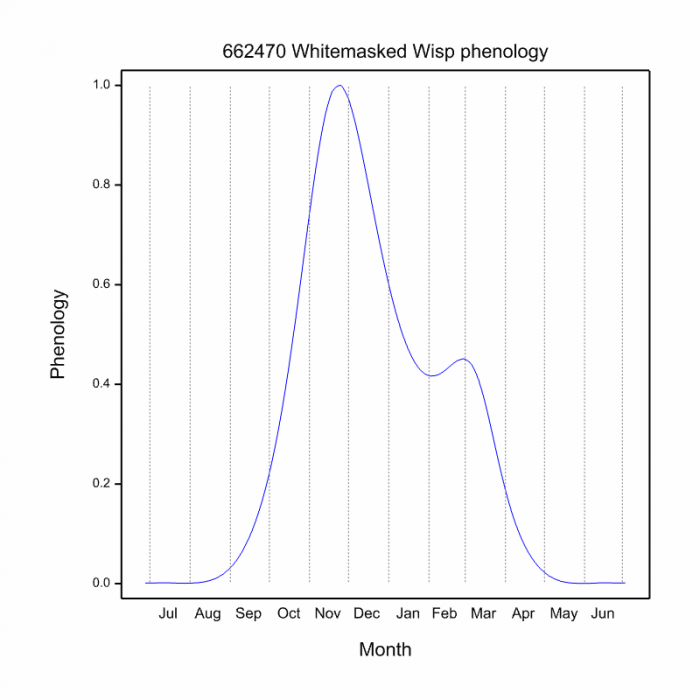
In South Africa, the Opal Slim has thus far only been recorded in February (See Phenology below).

Status and Conservation

Very little is currently known about the Opal Slim. It is seemingly rare and erratic in occurrence. The Opal Slim is listed as Vulnerable in the IUCN Red List of Threatened Species.

Distribution

Aciagrion dondoense is only known from central and southern Mozambique, southern Zimbabwe, and north-eastern KwaZulu-Natal in South Africa.

In South Africa, the Opal Slim has only been recorded from Cape Vidal in the iSimangaliso Wetland Park. Records show that it was abundant there following strong cyclonic weather in the early 2000’s. The Opal Slim has not been recorded in South Africa since.

Below is a map showing the distribution of records for Opal Slim in the OdonataMAP database as at February 2020.

Below is a map showing the distribution of records for Opal Slim in the OdonataMAP database as of December 2024.

The next map below is an imputed map, produced by an interpolation algorithm, which attempts to generate a full distribution map from the partial information in the map above. This map will be improved by the submission of records to the OdonataMAP section of the Virtual Museum.

Ultimately, we will produce a series of maps for all the odonata species in the region. The current algorithm is a new algorithm. The objective is mainly to produce “smoothed” maps that could go into a field guide for odonata. This basic version of the algorithm (as mapped above) does not make use of “explanatory variables” (e.g. altitude, terrain roughness, presence of freshwater — we will be producing maps that take these variables into account soon). Currently, it only makes use of the OdonataMAP records for the species being mapped, as well as all the other records of all other species. The basic maps are “optimistic” and will generally show ranges to be larger than what they probably are.

These maps use the data in the OdonataMAP section of the Virtual Museum, and also the database assembled by the previous JRS funded project, which was led by Professor Michael Samways and Dr KD Dijkstra.

Phenology
Further Resources

Opal Slim Aciagrion dondoense Dijkstra, 2007

Other common names: Opaalskraaltjie (Afrikaans)

Recommended citation format: Loftie-Eaton M; Navarro R; Tippett RM; Underhill L. 2025. Opal Slim Aciagrion dondoense. Biodiversity and Development Institute. Available online at https://thebdi.org/2020/04/21/opal-slim-aciagrion-dondoense/

References: Tarboton, M; Tarboton, W. (2019). A Guide to the Dragonflies & Damselflies of South Africa. Struik Nature.

Samways, MJ. (2008). Dragonflies and Damselflies of South Africa. Pensoft

Samways, MJ. (2016). Manual of Freshwater Assessment for South Africa: Dragonfly Biotic Index. Suricata 2. South African National Biodiversity Institute, Pretoria

Similar Species

Spesbona (Spesbona angusta)

Cover photo of Spesbona by Gregg Darling.

Find the Ceres Streamjack in the FBIS database (Freshwater Biodiversity Information System) here.

Family Platycnemididae

Identification

Spesbona
Spesbona Spesbona angusta – Male
Theewaterskloof, Western Cape
Photo by Desire Darling

Very Small Size

Length up to 30mm; Wingspan reaches 38mm.

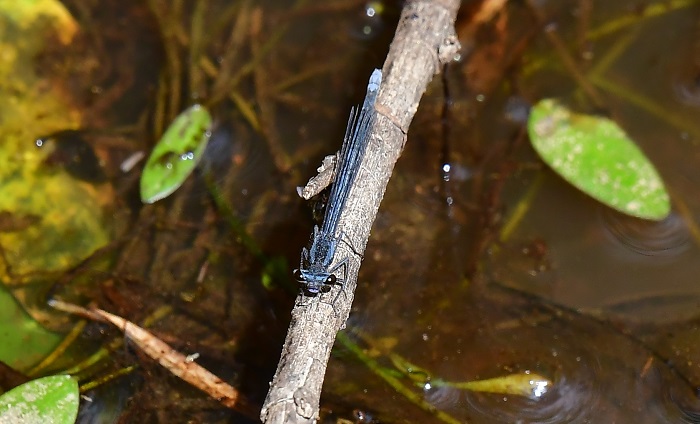
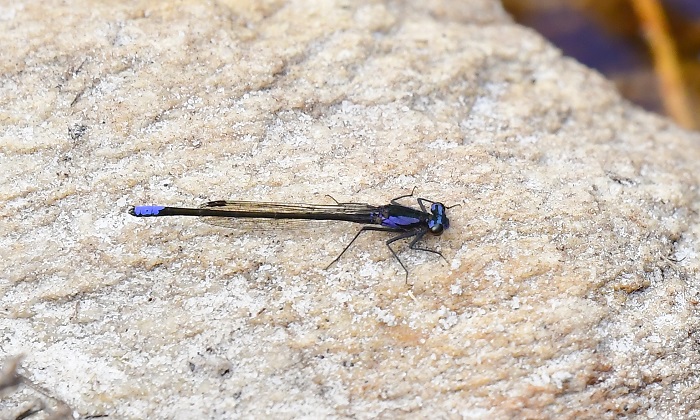
Spesbona angusta is the only member of its genus. The Spesbona is unique in that both sexes are photochromatic. This means that their colour and saturation change in response to light exposure and the resultant increase in body temperature.

Spesbona Spesbona angusta – Female
Kouerivier, Western Cape
Photo by Ryan Tippett

The postocular markings on the head, the broad black band on top of the thorax, and most of the abdomen (except the last 3 abdominal segments) are always black. The rest of the head, thorax sides and the terminal segments of the abdomen vary in colour, shifting from blackish to pale grey, then blue, and finally vivid mauve or purple when in full sun.

Spesbona Spesbona angusta – Female
Janswartskraal River, Western Cape
Photo by Ryan Tippett

The sexes are similar in general size and appearance. Females are more robust and less colourful than males and have browner eyes and slightly smoky wings. Males have elongate claspers on segment 10, which females lack.

Spesbona Spesbona angusta – Male
Kouerivier, Western Cape
Photo by Ryan Tippett

Male Spesbonas are most likely to be mistaken for the Male Mauve Bluet (Proischnura polychromatica). Both show violet and black colouration, but the Spesbona is larger and more robust. The head of the Spesbona is violet with black postocular markings, while the head of the Mauve Bluet is black with purple postocular markings.

Click here for more details on identification.

Habitat

Spesbona habitat
Habitat – A marshy, well-vegetated pool adjoining a stream.
Theewaterskloof, Western Cape
Photo by Sharon Stanton

The Spesbona inhabits small, still-water pools and marshy places connected to streams and meandering rivers. It is sometimes also found along shallow, slow-moving sections of streams. The Spesbona favours sites with an abundance of overhanging grasses or sedge, and with fynbos plants along the banks. It is partial to pools with emergent and floating vegetation, especially Common Waterblommetjie (Aponogeton distachyos) and sometimes also waterlilies Nymphaea and/or Nymphoides spp.

Habitat – A quiet backwater pool with floating Aponogeton distachyos and sedge-lined banks.
Kouerivier, Western Cape
Photo by Ryan Tippett

The Spesbona is found mainly at altitudes of around 60 to 400m above sea level.

Behaviour

The Spesbona typically sits lengthwise along a grass or reed stem, usually low down close to the water. They may also perch on a low rock or on floating leaves. The Spesbona is relatively confiding and often reluctant to move. When disturbed, they fly low over the water to a new perch. Males and females are frequently found together, and non-breeding individuals can be found in dry grass a short distance from the water.

Spesbona
Spesbona Spesbona angusta – Female
Nuwejaars Wetland, Western Cape
Photo by Les Underhill

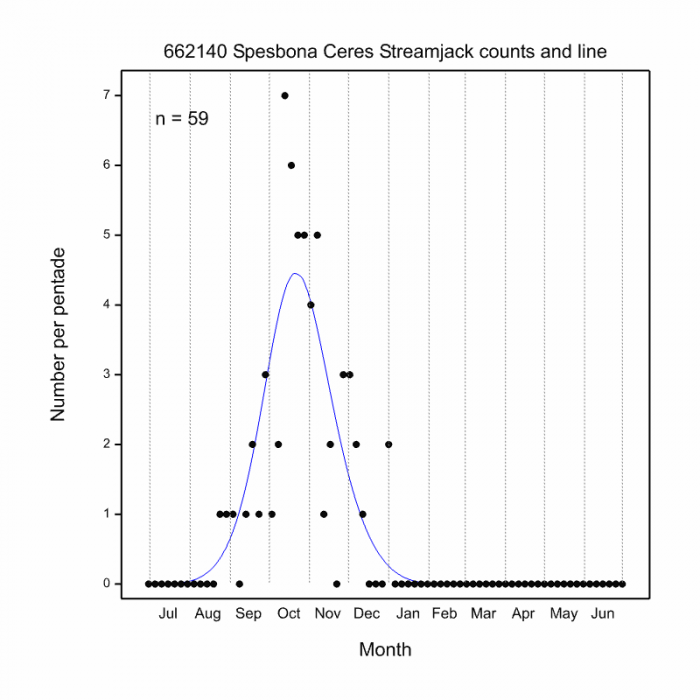
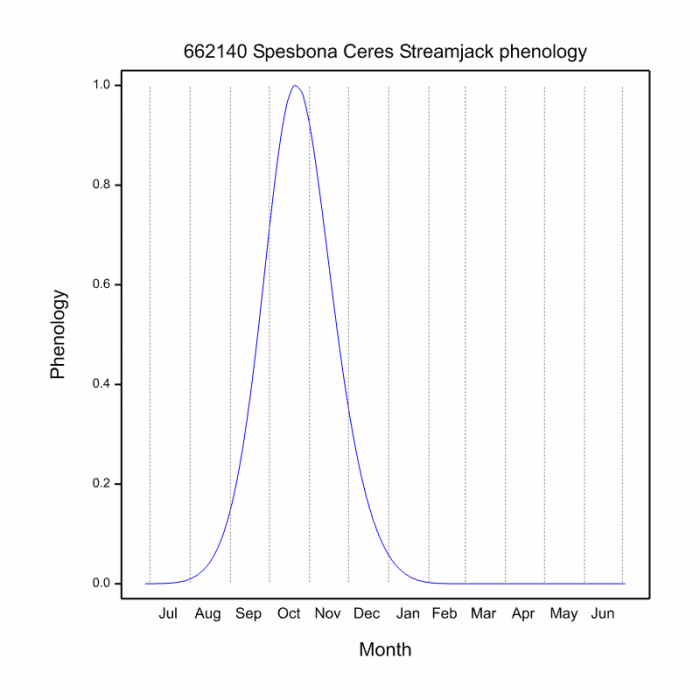
The Spesbona is on the wing from late August until the end of December. It is mainly an early-season species (see Phenology below).

Spesbona Spesbona angusta – Male
Janswartskraal River, Western Cape
Photo by Ryan Tippett

Status and Conservation

The Spesbona is rare and very localised. It is currently listed as Endangered in the IUCN Red List of Threatened Species. It was previously assessed as data deficient in 1996 and vulnerable in 2007 and 2010.

The species was first described in 1886 and, for a time, was thought to be possibly extinct until its rediscovery in 2003. The Spesbona is no longer present at the type locality in Ceres, probably due to over-extraction of water for the fruit industry. Spesbona angusta is threatened by the construction of dams, invasive plants such as Acacia mearnsii, and several invasive fish species.

Spesbona Spesbona angusta – Female
Janswartskraal River, Western Cape
Photo by Ryan Tippett

Distribution

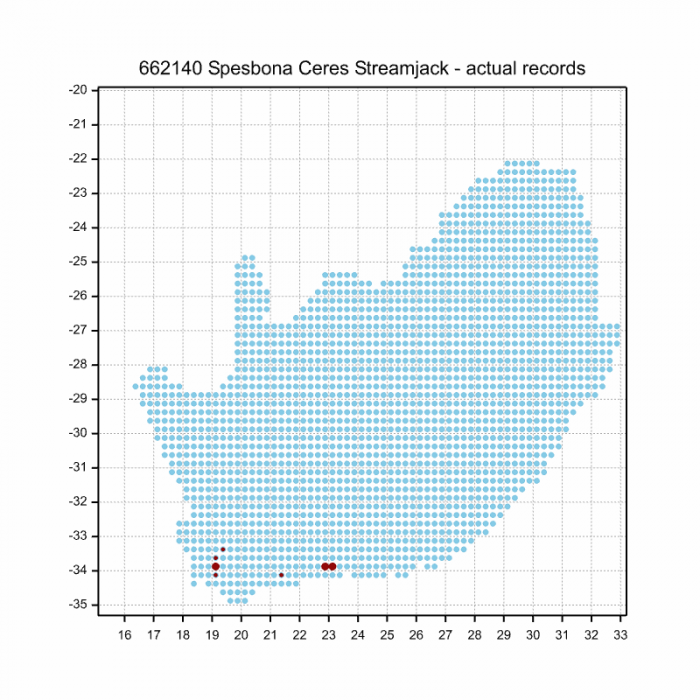
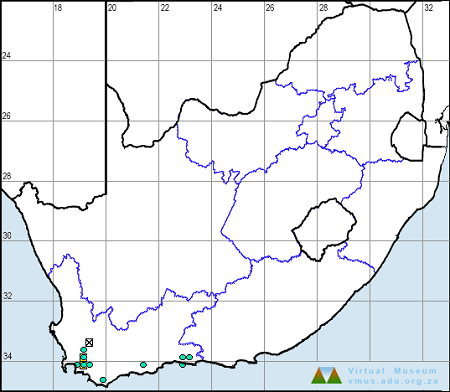
Spesbona angusta is endemic to the Western Cape, South Africa. Originally, the species was only known from near Ceres south to Franschhoek. However, additional populations have now been found to occur near Riversdale and in the Overberg between Bredasdorp and Elim, and in the Sedgefield/Knysna area. The Spesbona is likely to be more widespread than current records show.

Spesbona Spesbona angusta – Female
Kouerivier, Western Cape
Photo by Ryan Tippett

Below is a map showing the distribution of records for Ceres Streamjack in the OdonataMAP database as at February 2020.

Distribution map of Spesbona 2020

Below is a map showing the distribution of records for Ceres Streamjack in the OdonataMAP database as of December 2024.

Distribution map 2024

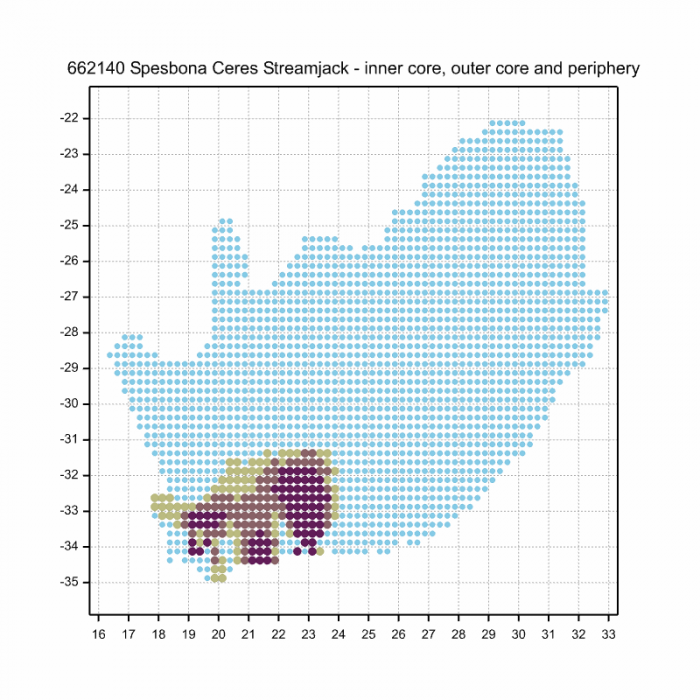
The next map below is an imputed map, produced by an interpolation algorithm, which attempts to generate a full distribution map from the partial information in the map above. This map will be improved by the submission of records to the OdonataMAP section of the Virtual Museum.

Imputed distribution of Spesbona
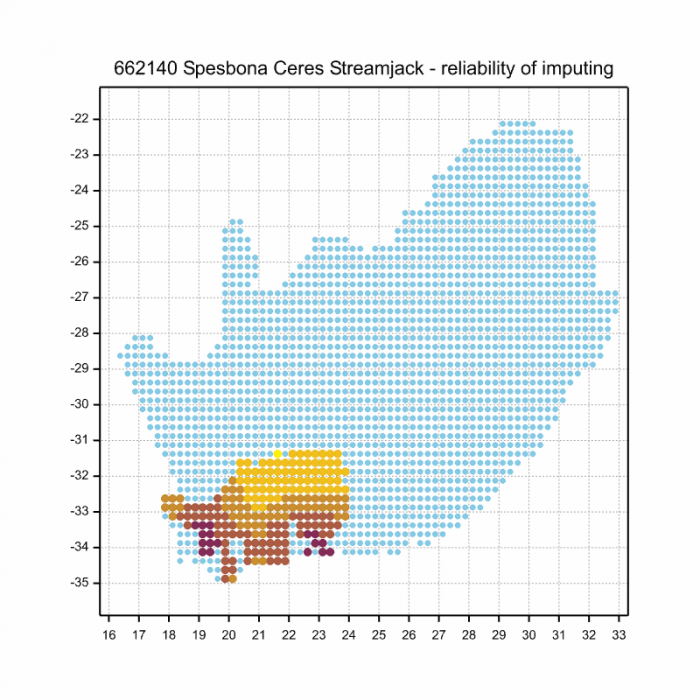
quality of imputed distribution

Ultimately, we will produce a series of maps for all the Odonata species in the region. The current algorithm is a new algorithm. The objective is mainly to produce “smoothed” maps that could go into a field guide for Odonata. This basic version of the algorithm (as mapped above) does not make use of “explanatory variables” (e.g. altitude, terrain roughness, presence of freshwater — we will be producing maps that take these variables into account soon). Currently, it only makes use of the OdonataMAP records for the species being mapped, as well as all the other records of all other species. The basic maps are “optimistic” and will generally show ranges to be larger than what they probably are.

These maps use the data in the OdonataMAP section of the Virtual Museum, and also the database assembled by the previous JRS funded project, which was led by Professor Michael Samways and Dr KD Dijkstra.

Spesbona Spesbona angusta – Female
Kouerivier, Western Cape
Photo by Ryan Tippett

Phenology

Spesbona Spesbona angusta – Male
Kouerivier, Western Cape
Photo by Ryan Tippett

Further Resources

The use of photographs by Desire Darling and Gregg Darling is acknowledged. All other photographs by Ryan Tippett.

Spesbona Spesbona angusta (Selys, 1863). This species was moved from the genus Metacnemis in 2013.

Other common names: Ceres Streamjack, Ceres featherlegs, Ceres stream-damsel (Alt. English); Spesbona (Afrikaans)

Recommended citation format: Loftie-Eaton M; Navarro R; Tippett RM; Underhill L. 2025. Spesbona Spesbona angusta. Biodiversity and Development Institute. Available online at https://thebdi.org/2020/04/21/ceres-streamjack-spesbona-angusta/

References: Tarboton, M; Tarboton, W. (2019). A Guide to the Dragonflies & Damselflies of South Africa. Struik Nature.

Samways, MJ. (2008). Dragonflies and Damselflies of South Africa. Pensoft

Samways, MJ. (2016). Manual of Freshwater Assessment for South Africa: Dragonfly Biotic Index. Suricata 2. South African National Biodiversity Institute, Pretoria

Similar Species

Blue Riverjack (Metacnemis valida)

Cover photo by Stewart Bruce MacLachlan.

Find the Blue Riverjack in the FBIS database (Freshwater Biodiversity Information System) here.

Family Platycnemididae

Identification

Blue Riverjack Metacnemis valida – Male
Near Port Elizabeth, Eastern Cape
Photo by Andre Marais

Medium sized with a robust build.

Length reaches 41mm; Wingspan attains 56mm.

The Blue Riverjack is unlike any other South African species. Males are strikingly coloured in bright blue and black bands and stripes. Males are distinctive and easily identified.

Females are similar to those of Mesocnemis singularis (Savanna Riverjack), but that species lacks the pale diagonal band on the sides of the thorax. The two species are not known to co-occur.

Click here for more details on identification.

Blue Riverjack Metacnemis valida – Female
Photo by Hesmarie Els

Habitat

The Blue Riverjack has a preference for rocky, fast-flowing rivers and streams. It requires clean, clear and shallow water with an abundance of rocks.

Behaviour

The Blue Riverjack perches on rocks, close to the waters edge in exposed sunny locations. Perches less often on overhanging or emergent plant stems. The Blue Riverjack often sits in the midstream and females are frequently found alongside the males. It flies low and fast over the water when disturbed.

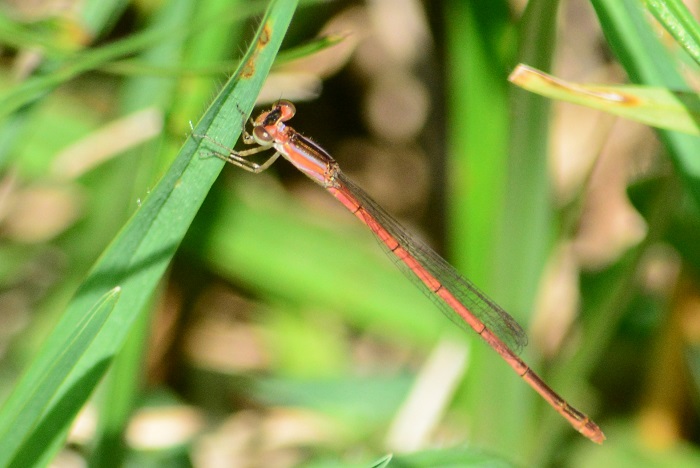
Most active from November to March (See Phenology below).

Blue Riverjack Metacnemis valida – Male
Photo by John Wilkinson

Status and Conservation

The Blue Riverjack is rare and localised. It is listed as Endangered in the IUCN Red List of Threatened Species. Metacnemis valida is not tolerant towards habitat degradation and is severely threatened by habitat loss within its restricted distribution. Negative impacts on its habitat include turbid water from soil erosion and copses of alien trees along the river banks that shade out rivers.

Blue Riverjack Metacnemis valida – Male
Photo by Hesmarie Els

Distribution

The Blue Riverjack is endemic to the Eastern Cape province of South Africa. It ranges from near Humansdorp in the South to Bizana in the north.

Below is a map showing the distribution of records for Blue Riverjack in the OdonataMAP database as at February 2020.

Below is a map showing the distribution of records for Blue Riverjack in the OdonataMAP database as of December 2024.

The next map below is an imputed map, produced by an interpolation algorithm, which attempts to generate a full distribution map from the partial information in the map above. This map will be improved by the submission of records to the OdonataMAP section of the Virtual Museum.

Ultimately, we will produce a series of maps for all the odonata species in the region. The current algorithm is a new algorithm. The objective is mainly to produce “smoothed” maps that could go into a field guide for odonata. This basic version of the algorithm (as mapped above) does not make use of “explanatory variables” (e.g. altitude, terrain roughness, presence of freshwater — we will be producing maps that take these variables into account soon). Currently, it only makes use of the OdonataMAP records for the species being mapped, as well as all the other records of all other species. The basic maps are “optimistic” and will generally show ranges to be larger than what they probably are.

These maps use the data in the OdonataMAP section of the Virtual Museum, and also the database assembled by the previous JRS funded project, which was led by Professor Michael Samways and Dr KD Dijkstra.

Phenology
Blue Riverjack Metacnemis valida – Male
Photo by Cornelia Rautenbach

Further Resources

The use of photographs by Andre Marais, Cornelia Rautenbach, Hesmarie Els, John Wilkinson, and Stewart Bruce MacLachlan is acknowledged.

Blue Riverjack Metacnemis valida Hagen in Sélys, 1863

Other common names: Kibusi Streamjack (Alternative English Name); Blourivierjuffer (Afrikaans)

Recommended citation format: Loftie-Eaton M; Navarro R; Tippett RM; Underhill L. 2025. Blue Riverjack Metacnemis valida. Biodiversity and Development Institute. Available online at https://thebdi.org/2020/04/20/blue-riverjack-metacnemis-valida/

References: Tarboton, M; Tarboton, W. (2019). A Guide to the Dragonflies & Damselflies of South Africa. Struik Nature.

Samways, MJ. (2008). Dragonflies and Damselflies of South Africa. Pensoft

Samways, MJ. (2016). Manual of Freshwater Assessment for South Africa: Dragonfly Biotic Index. Suricata 2. South African National Biodiversity Institute, Pretoria
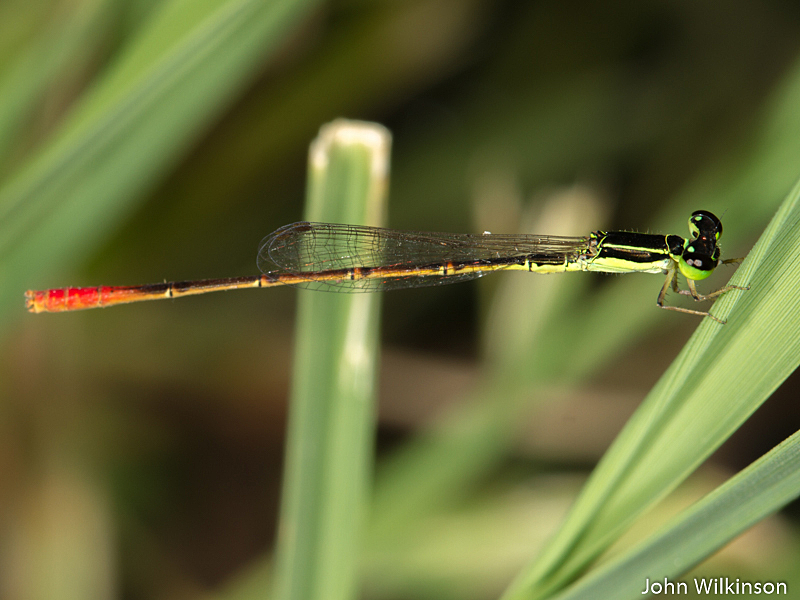
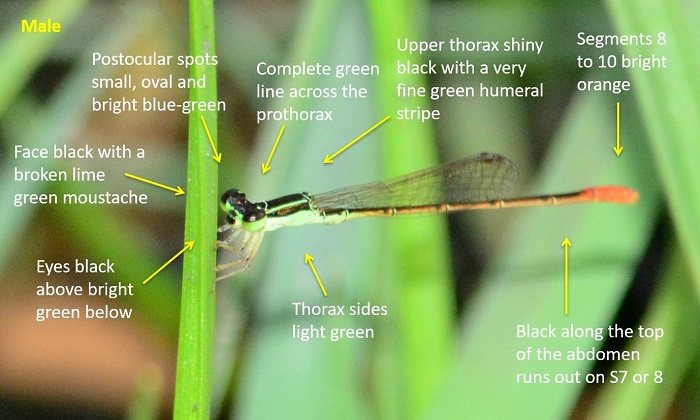
Blue Riverjack Metacnemis valida – Male
Photo by John Wilkinson

Similar Species

Glistening Demoiselle (Phaon iridipennis)

Cover photo by Andries de Vries.

Find the Glistening Demoiselle in the FBIS database (Freshwater Biodiversity Information System) here.

Family Calopterygidae

Identification

Glistening Demoiselle Phaon iridipennis
Kosi Bay, KwaZulu-Natal
Photo by Ryan Tippett

Very large. This is the largest species of damselfly in Southern Africa.

Length reaches 75mm; Wingspan attains 87mm

The Glistening Demoiselle is an unmistakable species in South Africa. The overall colouration of males is dark glossy green, often with a coppery tinge. Females are slightly browner and less colourful than the males. Both sexes show iridescent purple-blue sparkles in the wings, when seen in the right light. The Glistening Demoiselle is easily identified by its large size, cryptic colouration, and forest-floor habitat.

Click here for more details on identification.

Glistening Demoiselle Phaon iridipennis – Female
Mabibi, iSimangaliso Wetland Park, KwaZulu-Natal
Photo by Ryan Tippett

Habitat

The Glistening Demoiselle is a species of forests and dense woodland. Along the East coast of South Africa, it occupies coastal, dune, and swamp forests. Further inland it inhabits riverine/gallery forest and woodlands along savanna rivers, as well as the forested verges of pans and marshes. The Glistening Demoiselle is shade-dependent and is seldom seen away from cover. In South Africa it is found up to 800m above sea level.

Typical habitat – Gallery woodland along the Pongola River, KwaZulu-Natal
Photo by Ryan Tippett
Habitat – Forest lined pan in Savanna.
Mkhuze Game Reserve, KwaZulu-Natal
Photo by Ryan Tippett

Behaviour

The Glistening Demoiselle is typically found low down in dense, shady undergrowth, mostly within about two meters of the ground. It frequently perches on sticks and logs among the leaf litter. The wings are folded at rest and held at a 45 degree angle while the abdomen is slightly raised. It is very cryptic when perched, but conspicuous in flight due to its iridescent wings and large size. At the water’s edge it perches low down on rocks and overhanging sticks. The Glistening Demoiselle is frequently found far from water in forest undergrowth and along pathways, particularly after breeding.

The Glistening Demoiselle has been recorded all year round in the warmer regions. It is most active from October to March with a peak during late November (See Phenology below).

Glistening Demoiselle Phaon iridipennis
Hluhluwe District, KwaZulu-Natal
Photo by Ryan Tippett

Status and Conservation

Phaon iridipennis is locally common. It is listed as of least concern in the IUCN Red List of Threatened Species. The Glistening Demoiselle is fairly resistant to habitat degradation, including water turbidity and it is tolerant of at least some alien plant growth.

Glistening Demoiselle Phaon iridipennis
Kosi Bay, KwaZulu-Natal
Photo by Ryan Tippett

Distribution

The Glistening Demoiselle is widespread across tropical Africa. It extends from the Eastern Cape in the South, up through the Eastern parts of Southern Africa, and throughout most of East, Central, and West Africa. It is also found in Madagascar.

Below is a map showing the distribution of records for Glistening Demoiselle in the OdonataMAP database as at February 2020.

Below is a map showing the distribution of records for Glistening Demoiselle in the OdonataMAP database as of December 2024.

The next map below is an imputed map, produced by an interpolation algorithm, which attempts to generate a full distribution map from the partial information in the map above. This map will be improved by the submission of records to the OdonataMAP section of the Virtual Museum.

Ultimately, we will produce a series of maps for all the odonata species in the region. The current algorithm is a new algorithm. The objective is mainly to produce “smoothed” maps that could go into a field guide for odonata. This basic version of the algorithm (as mapped above) does not make use of “explanatory variables” (e.g. altitude, terrain roughness, presence of freshwater — we will be producing maps that take these variables into account soon). Currently, it only makes use of the OdonataMAP records for the species being mapped, as well as all the other records of all other species. The basic maps are “optimistic” and will generally show ranges to be larger than what they probably are.

These maps use the data in the OdonataMAP section of the Virtual Museum, and also the database assembled by the previous JRS funded project, which was led by Professor Michael Samways and Dr KD Dijkstra.

Phenology

Glistening Demoiselle Phaon iridipennis
Mkuze River, KwaZulu-Natal
Photo by Ryan Tippett

Further Resources

The use of photographs by Andries de Vries is acknowledged.

Glistening Demoiselle Phaon iridipennis (Burmeister, 1838)

Other common names: Glinsterjuffertjie (Afrikaans).

Recommended citation format: Loftie-Eaton M; Navarro R; Tippett RM; Underhill L. 2025. Glistening Demoiselle Phaon iridipennis.  Biodiversity and Development Institute. Available online at https://thebdi.org/2020/04/20/glistening-demoiselle-phaon-iridipennis/

References: Tarboton, M; Tarboton, W. (2019). A Guide to the Dragonflies & Damselflies of South Africa. Struik Nature.

Samways, MJ. (2008). Dragonflies and Damselflies of South Africa. Pensoft

Samways, MJ. (2016). Manual of Freshwater Assessment for South Africa: Dragonfly Biotic Index. Suricata 2. South African National Biodiversity Institute, Pretoria
Martens, A; Suhling, F. (2007). Dragonflies and Damselflies of Namibia. Gamsberg Macmillan.

Glistening Demoiselle Phaon iridipennis
Amakhosi Game Reserve, KwaZulu-Natal
Photo by Ryan Tippett

Pallid Spreadwing (Lestes pallidus)

Cover photo by Alan Manson.

Find the Pallid Spreadwing in the FBIS database (Freshwater Biodiversity Information System) here.

Family Lestidae

Identification

Pallid Spreadwing Lestes pallidus – Male
Mpempe Pan, KwaZulu-Natal
Photo by Ryan Tippett

Small size

Length up to 44mm; Wingspan attains 48mm.

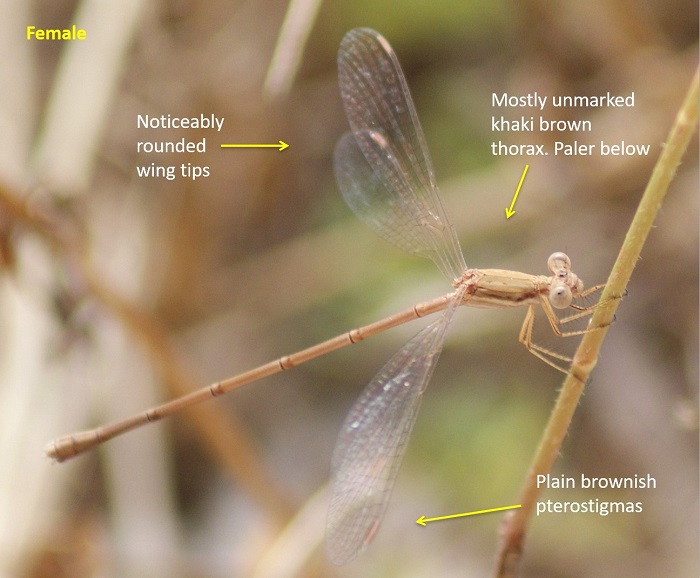
The Pallid Spreadwing exhibits highly variable colouration. The khaki brown form of Lestes pallidus is very similar to Lestes ictericus (Tawny Spreadwing), but that species has noticeably rounded wing tips, plain brown pterostigmas and differently shaped claspers.

Click here for more details on identification.

Pallid Spreadwing Lestes pallidus – Female
Hluhluwe district, KwaZulu-Natal
Photo by Ryan Tippett

Habitat

The Pallid Spreadwing favours ephemeral habitats, particularly rain-filled water bodies. It inhabits pools, pans, and marshy areas with an abundance of grass. The Pallid Spreadwing is mostly found in seasonally dry savanna regions.

Habitat – Near Hluhluwe, KwaZulu-Natal
Photo by Ryan Tippett

Behaviour

The Pallid Spreadwing is able to rapidly colonise seasonal waterbodies after rain, even sites that have been dry for several years. It spends long periods perched on grass stems with its wings outstretched. The Pallid Spreadwing is often gregarious and both sexes are found in the same vicinity.

The Pallid Spreadwing is most active from September to May, but flies all year at some sites (See Phenology below).

Pallid Spreadwing Lestes pallidus – Pair
Ehlatini Bush Camp, KwaZulu-Natal
Photo by Ryan Tippett

Status and Conservation

The Pallid Spreadwing is localised, but common to abundant where it occurs. It is listed as of Least Concern in the IUCN Red List of Threatened Species.

Pallid Spreadwing Lestes pallidus – Male
Carnarvon district, Northern Cape
Photo by Ryan Tippett

Distribution

The Pallid Spreadwing is native to Sub-Saharan Africa, where it is widespread but patchily distributed.

In South Africa, the Pallid Spreadwing is widespread in the north, becoming less common in the south where it is far more localised.

Pallid Spreadwing Lestes pallidus – Male
Linyanti, Botswana
Photo by Ryan Tippett

Below is a map showing the distribution of records for Pallid Spreadwing in the OdonataMAP database as at February 2020.

Below is a map showing the distribution of records for Pallid Spreadwing in the OdonataMAP database as of December 2024.

The next map below is an imputed map, produced by an interpolation algorithm, which attempts to generate a full distribution map from the partial information in the map above. This map will be improved by the submission of records to the OdonataMAP section of the Virtual Museum.

Ultimately, we will produce a series of maps for all the odonata species in the region. The current algorithm is a new algorithm. The objective is mainly to produce “smoothed” maps that could go into a field guide for odonata. This basic version of the algorithm (as mapped above) does not make use of “explanatory variables” (e.g. altitude, terrain roughness, presence of freshwater — we will be producing maps that take these variables into account soon). Currently, it only makes use of the OdonataMAP records for the species being mapped, as well as all the other records of all other species. The basic maps are “optimistic” and will generally show ranges to be larger than what they probably are.

These maps use the data in the OdonataMAP section of the Virtual Museum, and also the database assembled by the previous JRS funded project, which was led by Professor Michael Samways and Dr KD Dijkstra.

Pallid Spreadwing Lestes pallidus – Male
Hluhluwe district, KwaZulu-Natal
Photo by Ryan Tippett

Phenology

Pallid Spreadwing Lestes pallidus – Female
Hluhluwe district, KwaZulu-Natal
Photo by Ryan Tippett

Further Resources

The use of photographs by Alan Manson is acknowledged. All other photographs by Ryan Tippett.

Pallid Spreadwing Lestes pallidus Rambur, 1842

Other common names: Pale Spreadwing (Alt. English); Bleekspanvlerkie (Afrikaans)

Recommended citation format: Loftie-Eaton M; Navarro R; Tippett RM; Underhill L. 2025. Pallid Spreadwing Lestes pallidus. Biodiversity and Development Institute. Available online at https://thebdi.org/2020/04/20/pallid-spreadwing-lestes-pallidus/

References: Tarboton, M; Tarboton, W. (2019). A Guide to the Dragonflies & Damselflies of South Africa. Struik Nature.

Samways, MJ. (2008). Dragonflies and Damselflies of South Africa. Pensoft

Samways, MJ. (2016). Manual of Freshwater Assessment for South Africa: Dragonfly Biotic Index. Suricata 2. South African National Biodiversity Institute, Pretoria

Martens, A; Suhling, F. (2007). Dragonflies and Damselflies of Namibia. Gamsberg Macmillan.

Pallid Spreadwing Lestes pallidus – Female
Ehlatini Bush Camp, KwaZulu-Natal
Photo by Ryan Tippett

Similar Species

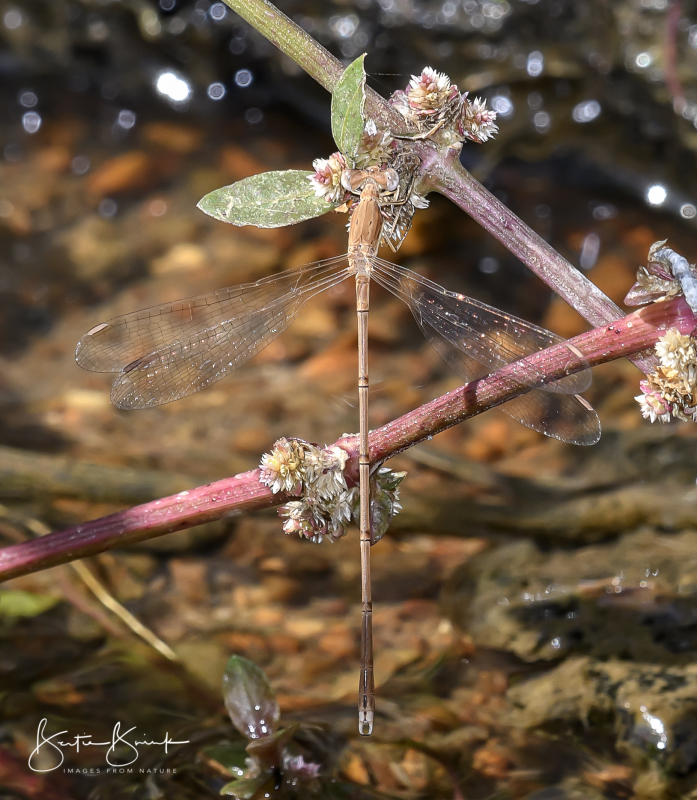
Tawny Spreadwing (Lestes ictericus)

Cover photo by Bertie Brink.

Find the Tawny Spreadwing in the FBIS database (Freshwater Biodiversity Information System) here.

Family Lestidae

Identification

Tawny Spreadwing Lestes ictericus
Lusaka Province, Zambia
Photo by Norman Barrett

Small size

Length up to 38mm.

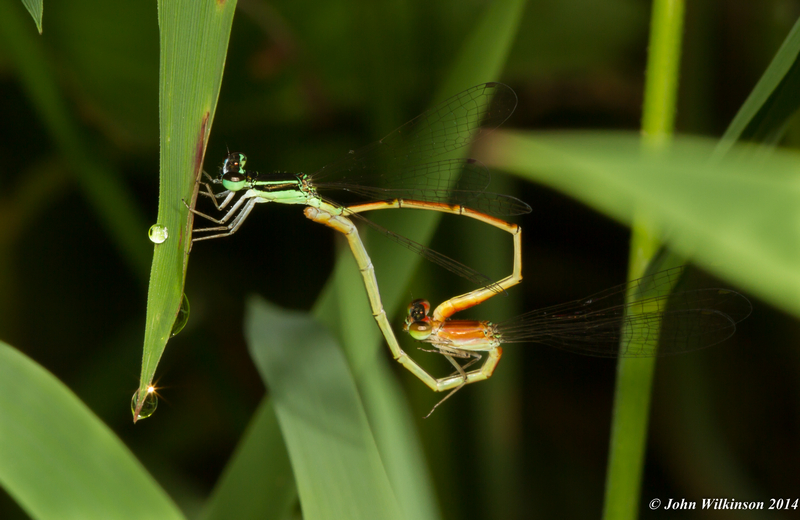
The Tawny Spreadwing is an elongate, drab coloured damselfly with few distinguishing features. It is very similar to the common pale brown form of the Pallid Spreadwing (Lestes pallidus). The Tawny Spreadwing is told apart by having broad, rounded wing tips, plain brownish (not bicoloured) pterostigmas, and in males by the differently shaped claspers that lack inner teeth.

Females closely resemble the males but lack the distinctive claspers.

Click here for more details on identification.

Habitat

The Tawny Spreadwing is a tropical savanna species. It lives near seasonal pools and pans, especially where there is shallowly flooded grass. It occupies similar habitats to Lestes pallidus but seems to prefer more humid savanna regions.

Behaviour

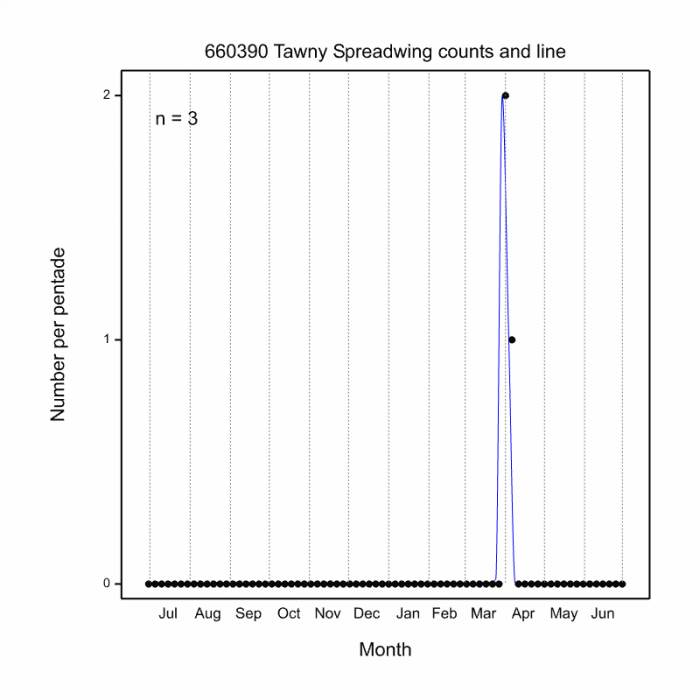
The Tawny Spreadwing is usually found at water where it sits on emergent grass stems with wings outstretched. In South Africa it has been recorded during March and April. See Phenology below.

Status and Conservation

The Tawny Spreadwing is rare in South Africa. It is listed as Vulnerable in the IUCN Red List of Threatened Species.

Distribution

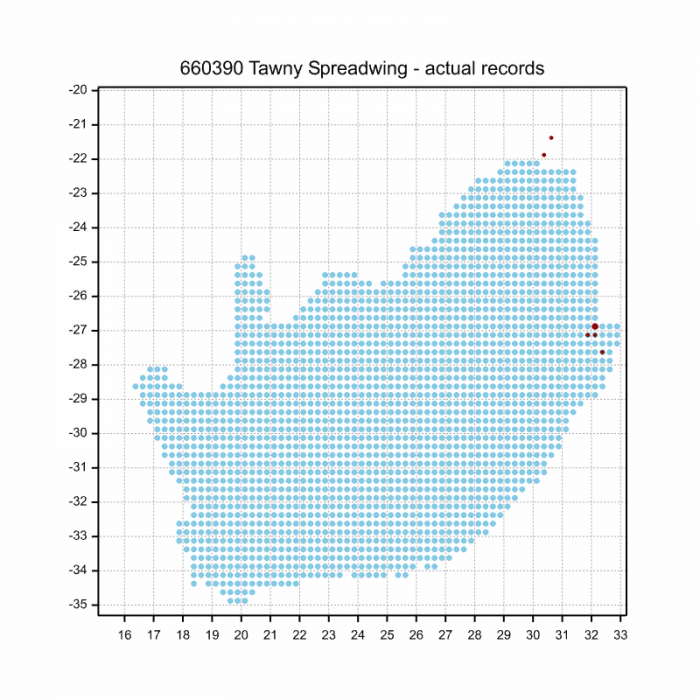
The Tawny Spreadwing is native to the wetter savanna regions of Sub-Saharan Africa. Lestes ictericus is marginal in South Africa where it is only recorded from extreme north-eastern KwaZulu-Natal.

Below is a map showing the distribution of records for Tawny Spreadwing in the OdonataMAP database as at February 2020.

The next map below is an imputed map, produced by an interpolation algorithm, which attempts to generate a full distribution map from the partial information in the map above. This map will be improved by the submission of records to the OdonataMAP section of the Virtual Museum.

Ultimately, we will produce a series of maps for all the odonata species in the region. The current algorithm is a new algorithm. The objective is mainly to produce “smoothed” maps that could go into a field guide for odonata. This basic version of the algorithm (as mapped above) does not make use of “explanatory variables” (e.g. altitude, terrain roughness, presence of freshwater — we will be producing maps that take these variables into account soon). Currently, it only makes use of the OdonataMAP records for the species being mapped, as well as all the other records of all other species. The basic maps are “optimistic” and will generally show ranges to be larger than what they probably are.

These maps use the data in the OdonataMAP section of the Virtual Museum, and also the database assembled by the previous JRS funded project, which was led by Professor Michael Samways and Dr KD Dijkstra.

Phenology

Further Resources

The use of photographs by Bertie Brink and Norman Barrett is acknowledged.

Tawny Spreadwing Lestes ictericus Gerstäcker, 1869

Other Common Names: Yellow Spreadwing (Alt. English); Geelbruinspanvlerkie (Afrikaans).

Recommended citation format: Loftie-Eaton M; Navarro R; Tippett RM; Underhill L. 2025. Tawny Spreadwing Lestes ictericus. Biodiversity and Development Institute. Available online at https://thebdi.org/2020/04/20/tawny-spreadwing-lestes-ictericus/

References: Tarboton, M; Tarboton, W. (2019). A Guide to the Dragonflies & Damselflies of South Africa. Struik Nature.

Samways, MJ. (2008). Dragonflies and Damselflies of South Africa. Pensoft

Samways, MJ. (2016). Manual of Freshwater Assessment for South Africa: Dragonfly Biotic Index. Suricata 2. South African National Biodiversity Institute, Pretoria
Similar Species

Sickle Spreadwing (Lestes uncifer)

Cover photo by John Wilkinson.

Find the Sickle Spreadwing in the FBIS database (Freshwater Biodiversity Information System) here.

Family Lestidae

Identification

Sickle Spreadwing Lestes uncifer – Male
Near Hluhluwe, KwaZulu-Natal
Photo by Ryan Tippett

Medium-large size

Length up to 48mm; Wingspan reaches 51mm.

The Sickle Spreadwing is easily recognised and unlike any other spreadwing in the region. Its large size and green, turquoise and brown colouration is distinctive. In males the obviously hooked, white claspers are diagnostic.

Females are similar to males but are duller and lack the distinctive white, hooked claspers.

Click here for more details on identification.

Sickle Spreadwing Lestes uncifer – Pair
Near Hluhluwe, KwaZulu-Natal
Photo by Ryan Tippett

Habitat

The Sickle Spreadwing inhabits ponds, pools, and marshes. It prefers habitats with tall grass and sedges surrounded by dense bush. Lestes uncifer is restricted to low altitudes, mostly in humid, and well-wooded, or forested areas.

Habitat – Near Hluhluwe, KwaZulu-Natal
Photo by Ryan Tippett

Behaviour

The Sickle Spreadwing spends long periods hanging vertically from tall emergent plant stems. It is well camouflaged and is a shy and weary species that retreats into thick vegetation when disturbed. Females occur in the same vicinity as the males. The Sickle Spreadwing takes relatively large prey, including other damselfly species.

Sickle Spreadwing Lestes uncifer – Feeding on a Spotted Spreadwing Lestes tridens.
Near Hluhluwe, KwaZulu-Natal
Photo by Ryan Tippett

The Sickle Spreadwing is most active from late November to June, possibly all year at some sites. See Phenology below.

Status and Conservation

The Sickle Spreadwing is an uncommon and highly localised species. In South Africa, it is listed as Vulnerable in the IUCN Red List of Threatened Species. This is due to its scarcity and marginal occurrence in the country. The Sickle Spreadwing has a wider distribution in tropical Africa and is considered of Least Concern over the rest of its range. The Sickle Spreadwing is fairly sensitive to habitat degradation and is mostly found in undisturbed places. In some areas it will make use of small man-made ponds and dams, provided they offer good quality habitat.

Sickle Spreadwing Lestes uncifer – Male
Near Hluhluwe, KwaZulu-Natal
Photo by Ryan Tippett

Distribution

The Sickle Spreadwing is native to much of the southern and eastern parts of Africa, where it is widespread. It ranges from South Africa northwards to Kenya and Uganda. In South Africa, the Sickle Spreadwing is found in the lowveld regions of Limpopo and Mpumalanga, and the sub-tropical north-eastern parts of KwaZulu-Natal.

Below is a map showing the distribution of records for Sickle Spreadwing in the OdonataMAP database as at February 2020.

Below is a map showing the distribution of records for Sickle Spreadwing in the OdonataMAP database as of December 2024.

The next map below is an imputed map, produced by an interpolation algorithm, which attempts to generate a full distribution map from the partial information in the map above. This map will be improved by the submission of records to the OdonataMAP section of the Virtual Museum.

Ultimately, we will produce a series of maps for all the odonata species in the region. The current algorithm is a new algorithm. The objective is mainly to produce “smoothed” maps that could go into a field guide for odonata. This basic version of the algorithm (as mapped above) does not make use of “explanatory variables” (e.g. altitude, terrain roughness, presence of freshwater — we will be producing maps that take these variables into account soon). Currently, it only makes use of the OdonataMAP records for the species being mapped, as well as all the other records of all other species. The basic maps are “optimistic” and will generally show ranges to be larger than what they probably are.

These maps use the data in the OdonataMAP section of the Virtual Museum, and also the database assembled by the previous JRS funded project, which was led by Professor Michael Samways and Dr KD Dijkstra.

Phenology

Sickle Spreadwing Lestes uncifer – Male
Near Hluhluwe, KwaZulu-Natal
Photo by Ryan Tippett

Further Resources

The use of photographs by John Wilkinson is acknowledged. All other photographs by Ryan Tippett.

Sickle Spreadwing Lestes uncifer Karsch, 1899

Other common names: Sekelspanvlerkie (Afrikaans)

Recommended citation format: Loftie-Eaton M; Navarro R; Tippett RM; Underhill L. 2025. Sickle Spreadwing Lestes uncifer. Biodiversity and Development Institute. Available online at https://thebdi.org/2020/04/20/sickle-spreadwing-lestes-uncifer/

References: Tarboton, M; Tarboton, W. (2019). A Guide to the Dragonflies & Damselflies of South Africa. Struik Nature.

Samways, MJ. (2008). Dragonflies and Damselflies of South Africa. Pensoft

Samways, MJ. (2016). Manual of Freshwater Assessment for South Africa: Dragonfly Biotic Index. Suricata 2. South African National Biodiversity Institute, Pretoria
Sickle Spreadwing Lestes uncifer – Pair
Near Hluhluwe, KwaZulu-Natal
Photo by Ryan Tippett