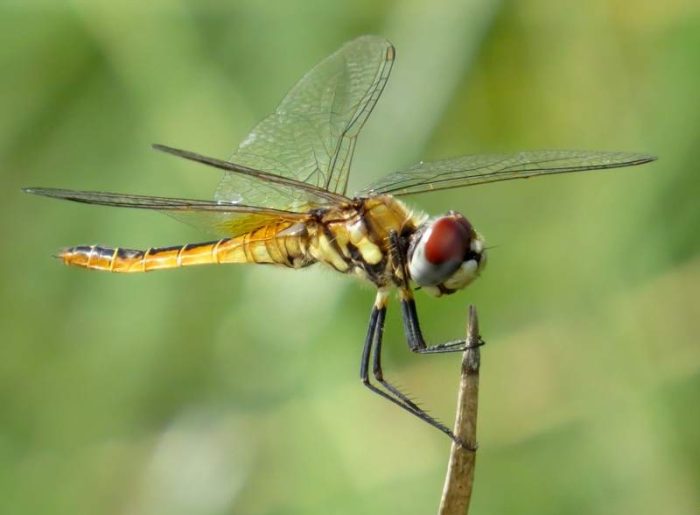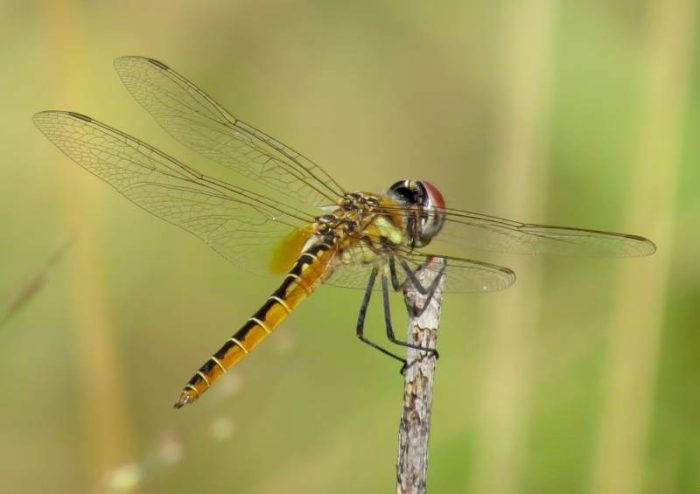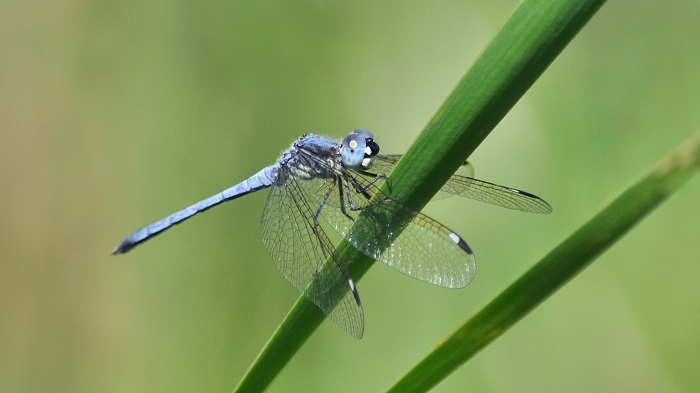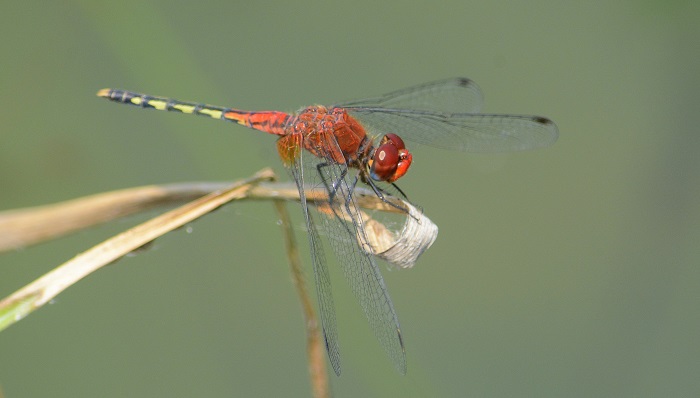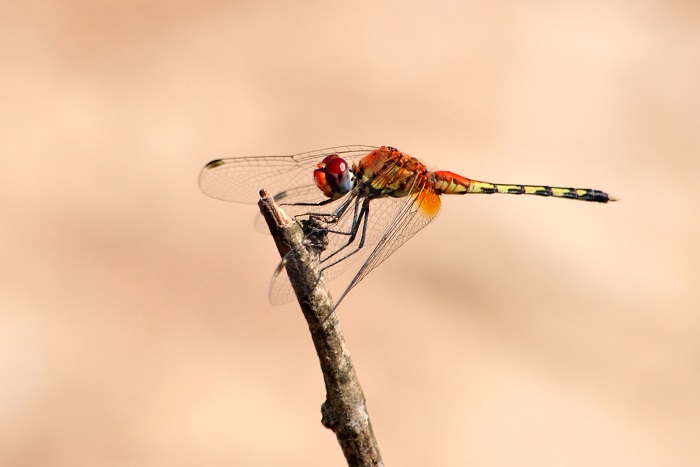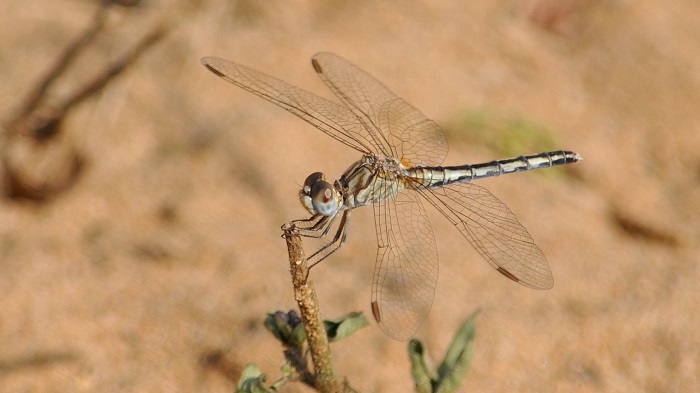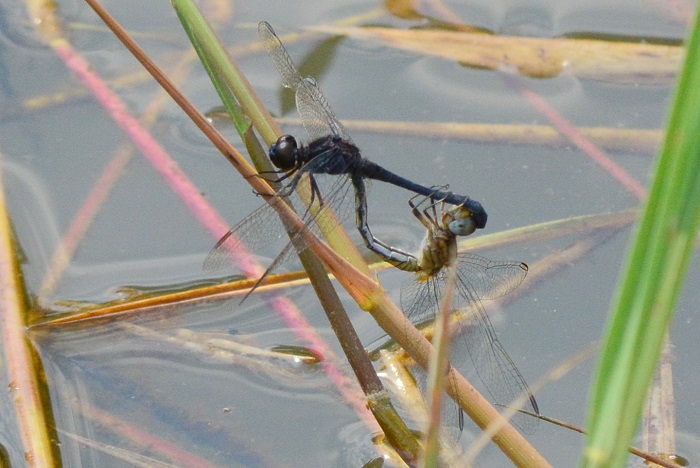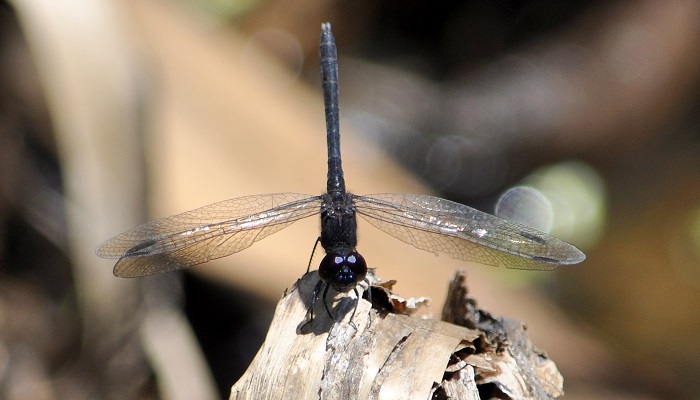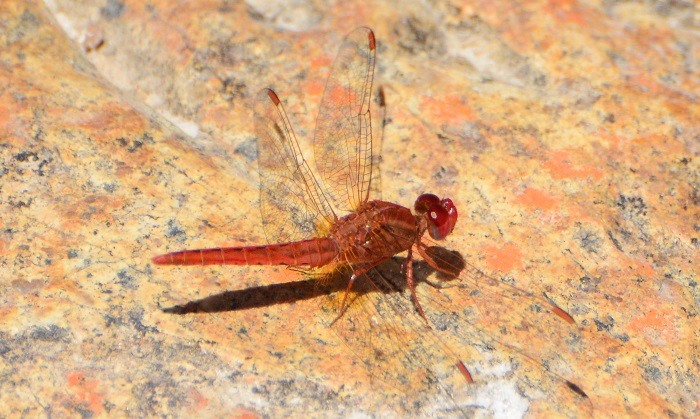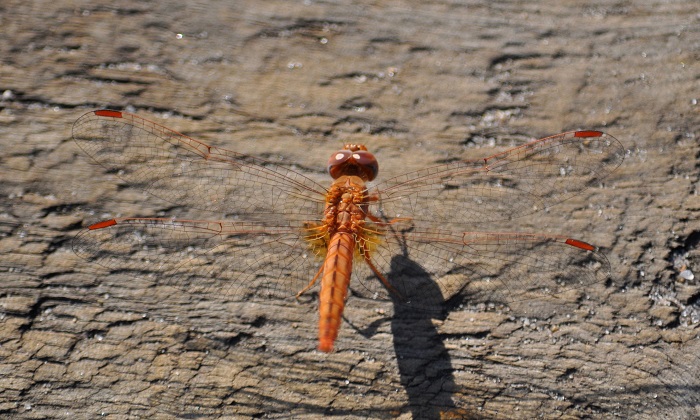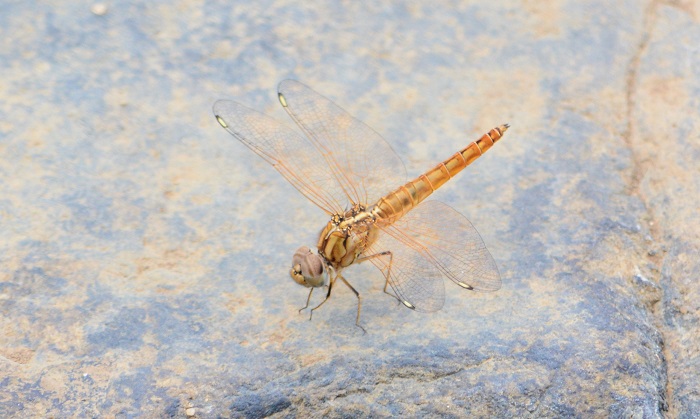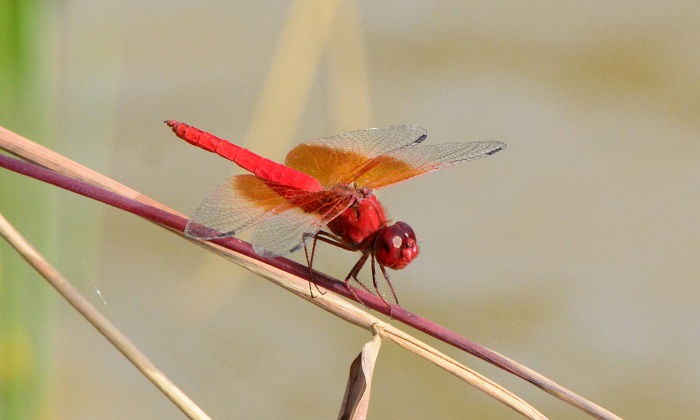
Eastern Forestwatcher (Notiothemis jonesi)

Cover photo by John Wilkinson.

Find this species in the FBIS database (Freshwater Biodiversity Information System) here.

Family Libellulidae

Identification

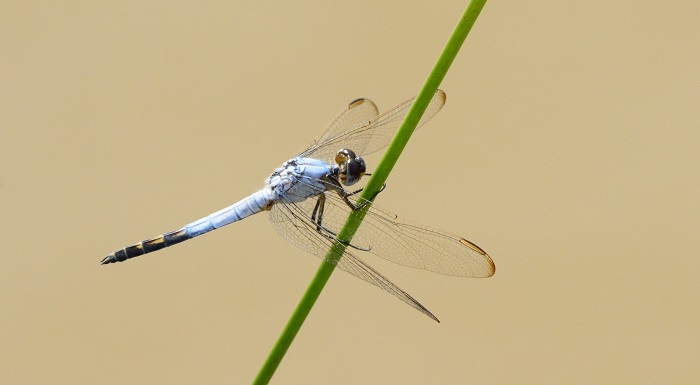
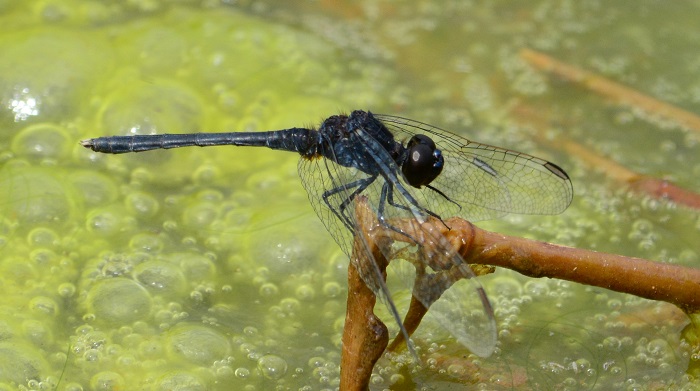
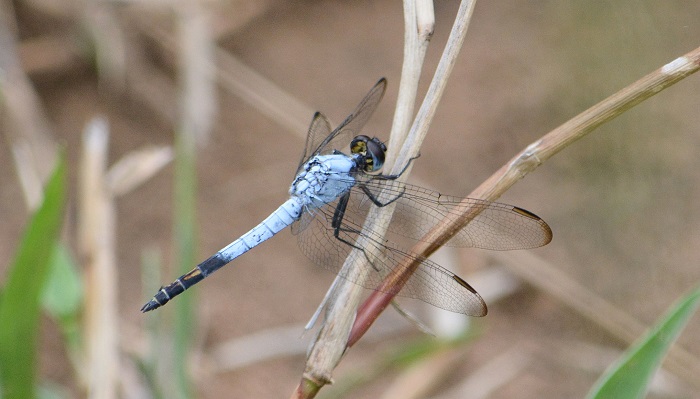
Eastern Forestwatcher Notiothemis jonesi – Male
Amanzimtoti, KwaZulu-Natal
Photo by Christopher Peter Small

Small size

Length up to 33mm; Wingspan attains 51mm.

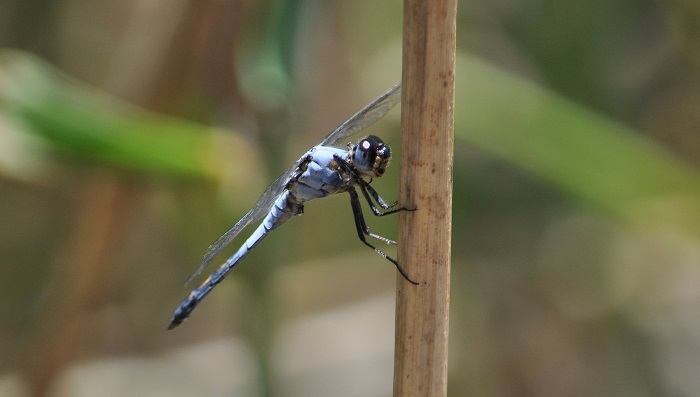
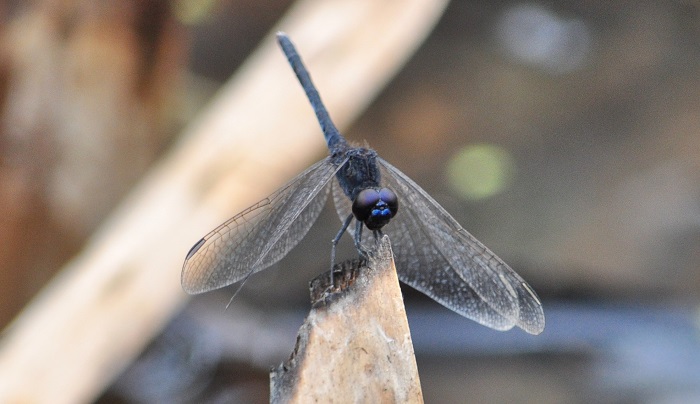
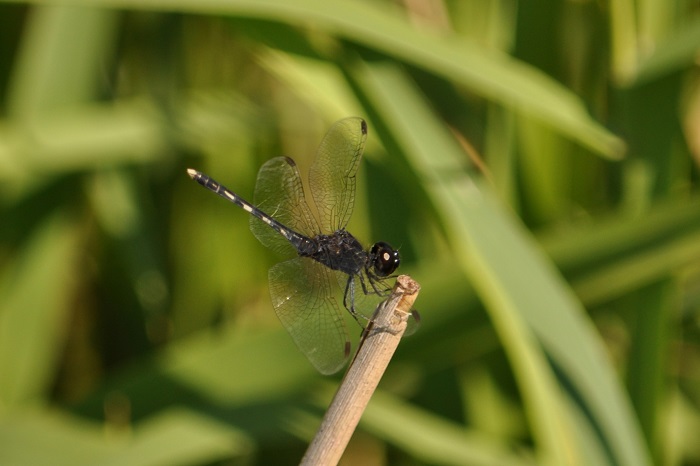
The males of this species are unmistakable within the sub-region. The combination of mottled black and blue-green colouration, bright turquoise eyes and pale band on the S7 are diagnostic.

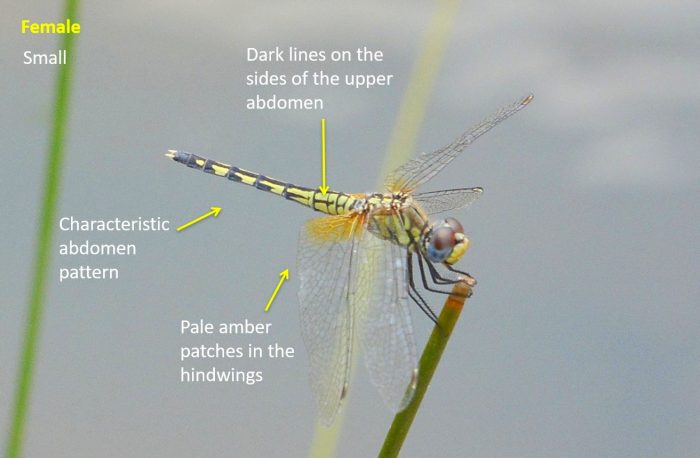
Female Eastern Forestwatchers are easily confused with those of the Black-splashed Elf (Tetrathemis polleni). The two species differ in the shape of the discoidal cell (DC) in the fore wings. Notiothemis jonesi has a triangular DC, while Tetrathemis polleni has a four-sided DC.

There is another closely related species, Notiothemis robertsi, found in the tropical forests of East, Central and West Africa.

Habitat

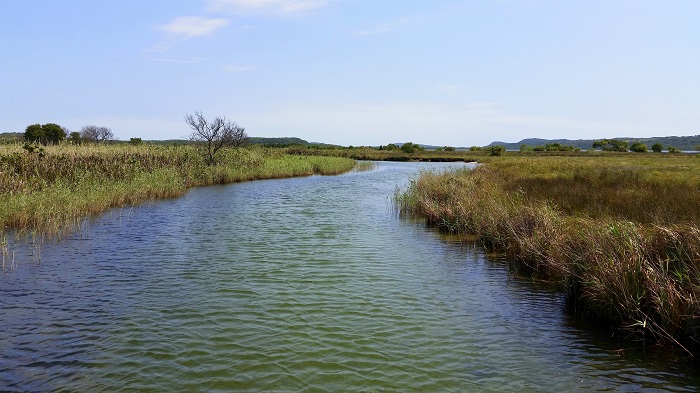
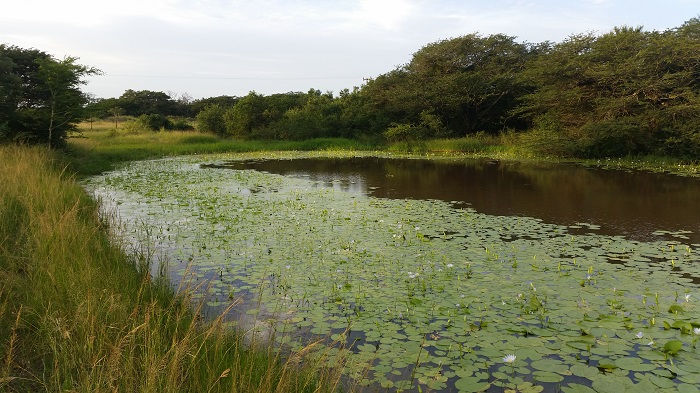
The Eastern Forestwatcher frequents shady, slow moving stretches of forested streams and pools. It occurs in coastal, riverine, and swamp forests in South Africa.
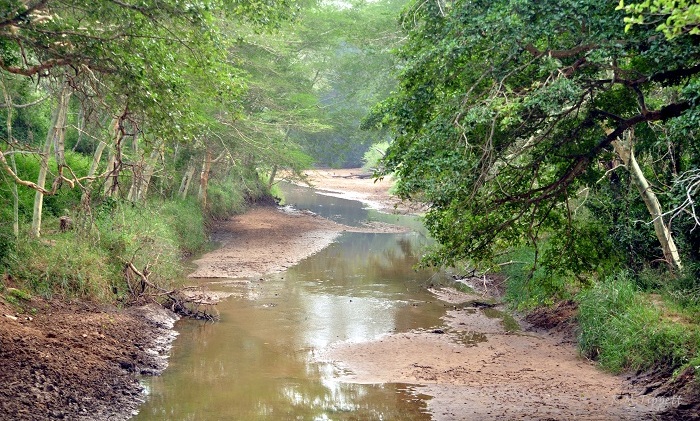
Riverine forest habitat
Mkuze Game Reserve, KwaZulu-Natal
Photo by Ryan Tippett

Behaviour

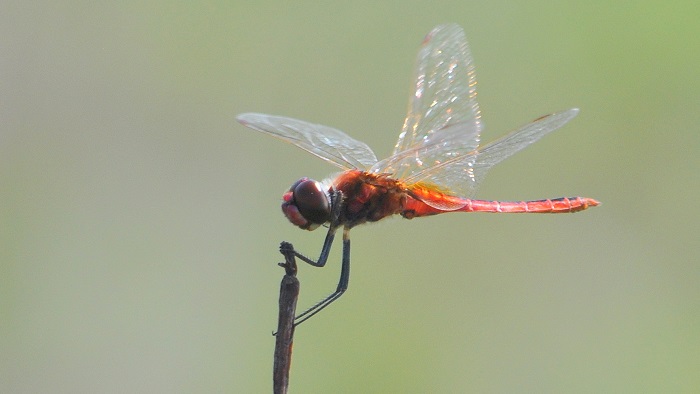
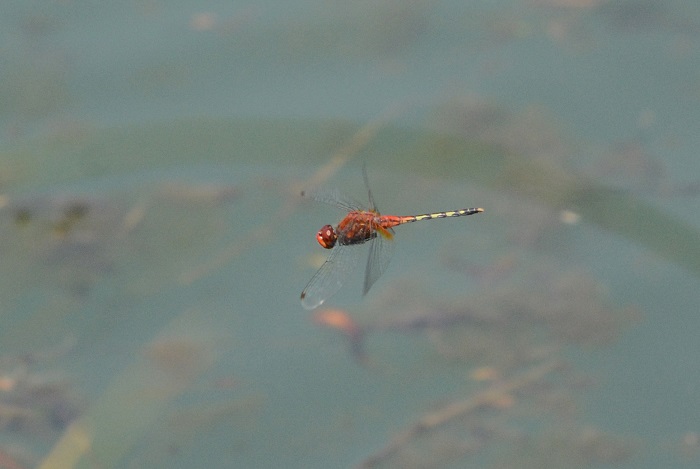
The Eastern Forest Watcher perches on twigs or vegetation over the water. It is usually found in areas of dappled light. The Eastern Forestwatcher is very alert and wary, heading into the canopy at the first sign of disturbance. Females are seldom encountered.
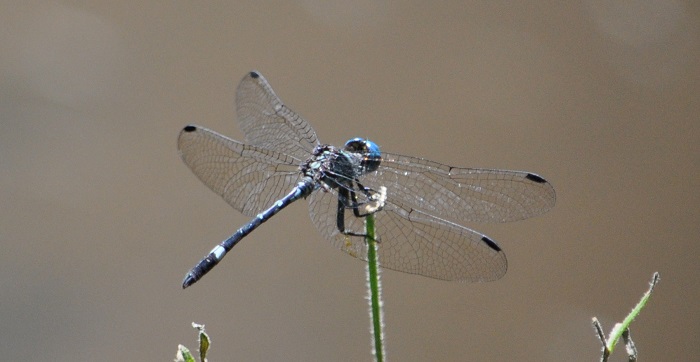
Eastern Forestwatcher Notiothemis jonesi – Male
Pietermaritzburg, KwaZulu-Natal
Photo by Ryan Tippett

Status and Conservation

The Eastern Forestwatcher is uncommon and very localised in occurence. It is listed as of Least Concern in the IUCN Red List of Threatened Species. The Eastern Forestwatcher is mostly found in undisturbed habitats but does sometimes inhabit suitable man-made habitats like ornamental ponds and small, forested dams.

Distribution

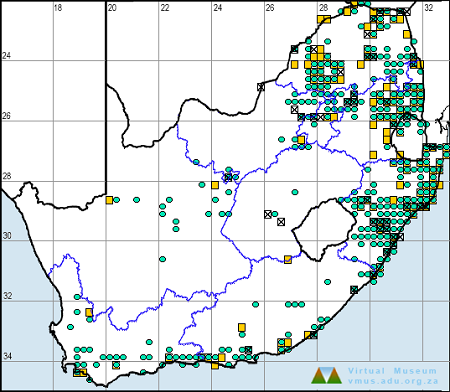
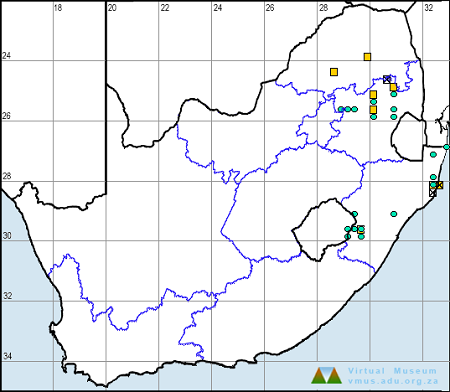
Notiothemis jonesi is found in the tropical and subtropical parts of eastern and southern Africa. It occurs from Kenya to South Africa and has also been recorded in Swaziland, Mozambique, Zambia, Malawi, Tanzania, and Uganda.

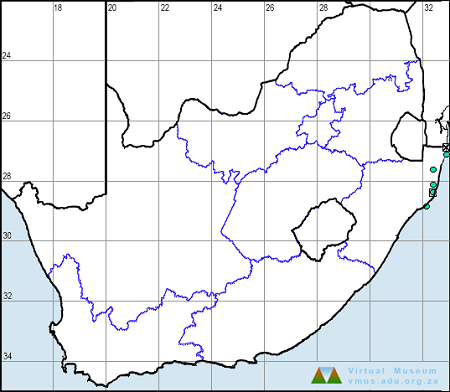
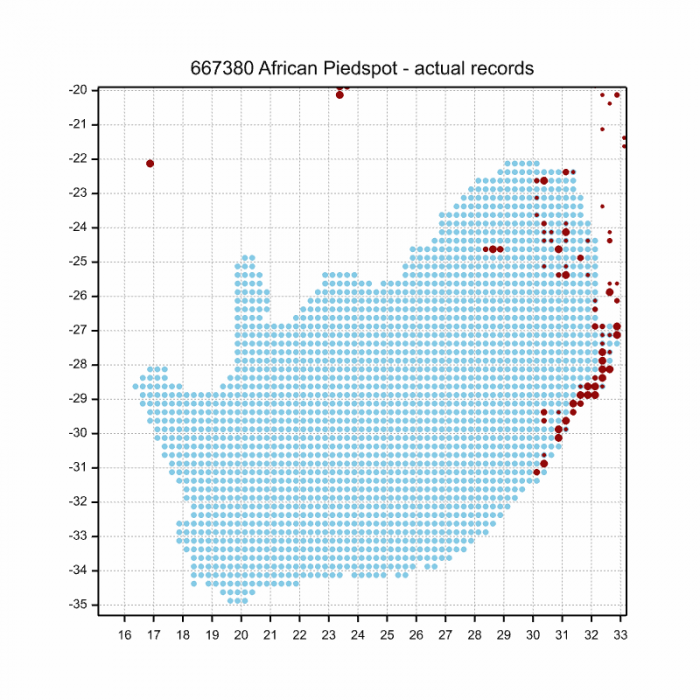
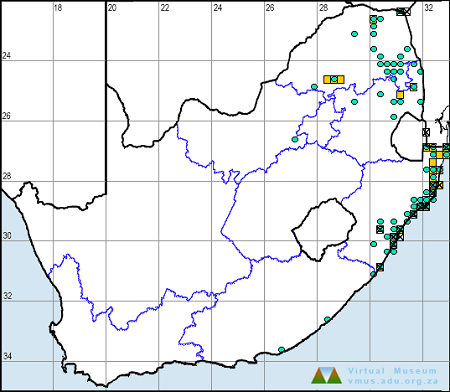
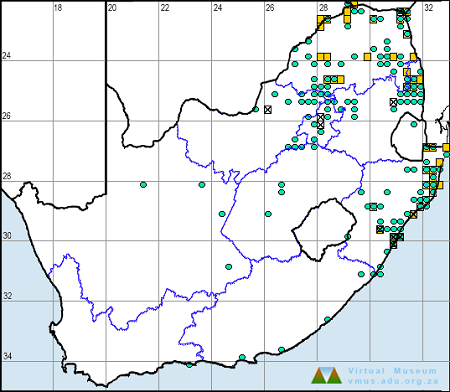
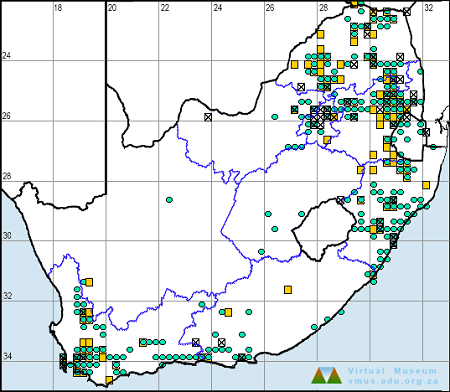
Below is a map showing the distribution of records for Eastern Forestwatcher in the OdonataMAP database as at February 2020.

Below is a map showing the distribution of records for Eastern Forestwatcher in the OdonataMAP database as of December 2024.
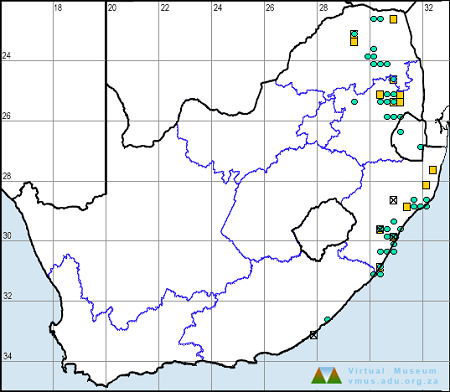
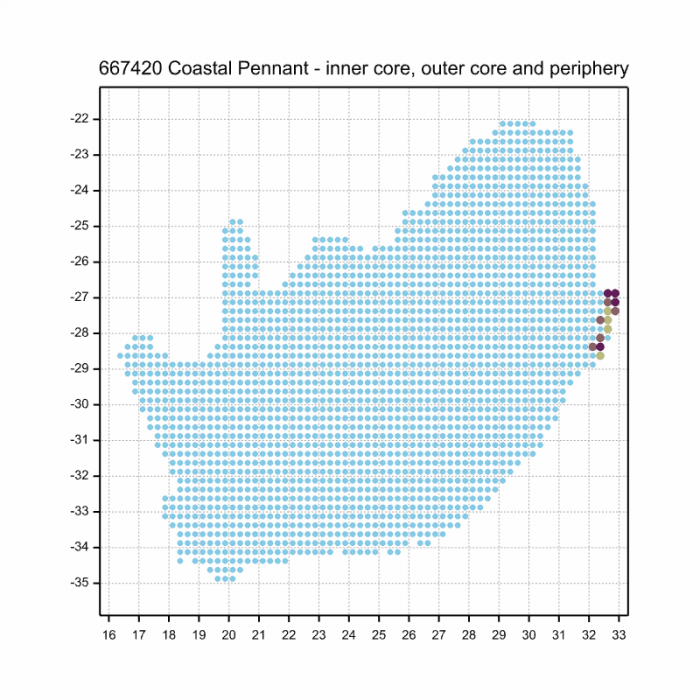
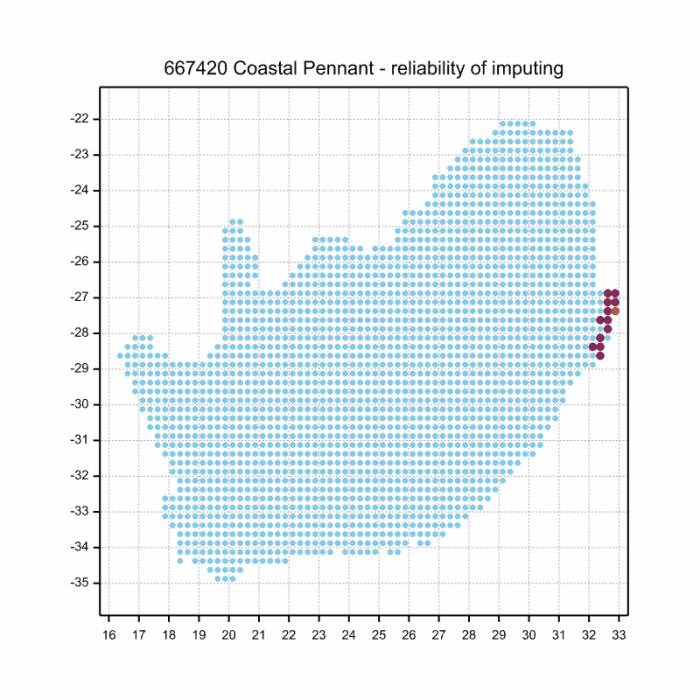
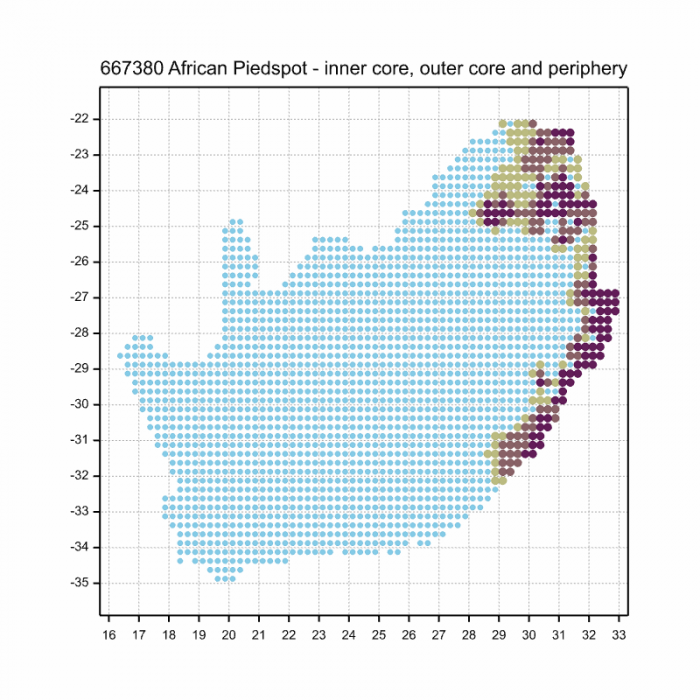
The next map below is an imputed map, produced by an interpolation algorithm, which attempts to generate a full distribution map from the partial information in the map above. This map will be improved by the submission of records to the OdonataMAP section of the Virtual Museum.

Ultimately, we will produce a series of maps for all the odonata species in the region. The current algorithm is a new algorithm. The objective is mainly to produce “smoothed” maps that could go into a field guide for odonata. This basic version of the algorithm (as mapped above) does not make use of “explanatory variables” (e.g. altitude, terrain roughness, presence of freshwater — we will be producing maps that take these variables into account soon). Currently, it only makes use of the OdonataMAP records for the species being mapped, as well as all the other records of all other species. The basic maps are “optimistic” and will generally show ranges to be larger than what they probably are.

These maps use the data in the OdonataMAP section of the Virtual Museum, and also the database assembled by the previous JRS funded project, which was led by Professor Michael Samways and Dr KD Dijkstra.

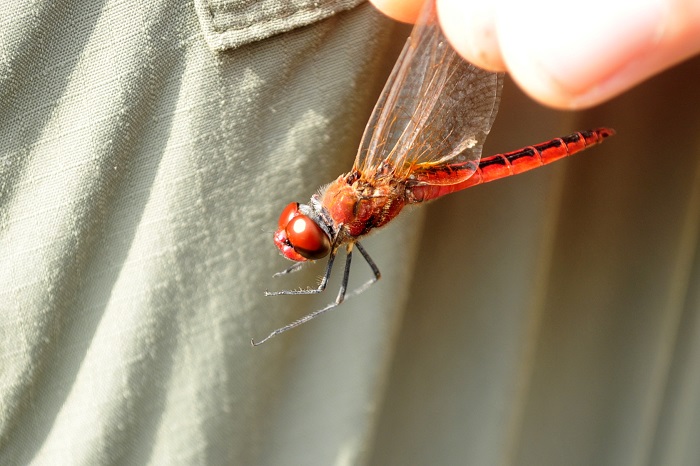
Eastern Forestwatcher Notiothemis jonesi – Male
Pietermaritzburg, KwaZulu-Natal
Photo by Ryan Tippett

Further Resources

The use of photographs by Christopher Peter Small and John Wilkinson is acknowledged. Other images by Ryan Tippett.

Eastern Forestwatcher Notiothemis jonesi Ris, 1919

Other common names: Jones’s Forestwatcher (Alt. English); Boswagter (Afrikaans)

Recommended citation format: Loftie-Eaton M; Navarro R; Tippett RM; Underhill L. 2025. Eastern Forestwatcher Notiothemis jonesi. Biodiversity and Development Institute. Available online at https://thebdi.org/2020/06/19/eastern-forestwatcher-notiothemis-jonesi/

References: Tarboton, M; Tarboton, W. (2019). A Guide to the Dragonflies & Damselflies of South Africa. Struik Nature.

Samways, MJ. (2008). Dragonflies and Damselflies of South Africa. Pensoft

Samways, MJ. (2016). Manual of Freshwater Assessment for South Africa: Dragonfly Biotic Index. Suricata 2. South African National Biodiversity Institute, Pretoria

Similar Species

Eastern Blacktail (Nesciothemis farinosa)

Cover photo by Celeste Eastwood.

Find this species in the FBIS database (Freshwater Biodiversity Information System) here.

Family Libellulidae

Identification

Eastern Blacktail Nesciothemis farinosa – Mature Male
Mkuze River, KwaZulu-Natal
Photo by Ryan Tiuppett

Medium sized

Length up to 45mm; Wingspan attains 74mm.

Males are distinctive and easily recognisable with their white-blue bodies and black-tipped abdomens. Females are less distinctive, but the yellowish stripe that runs from behind the head down between the wings is diagnostic.

Eastern Blacktail Nesciothemis farinosa – Young Male
Mkuze Town, KwaZulu-Natal
Photo by Ryan Tippett

Males most resemble Palpopleura deceptor, but that species has a darker thorax and is much smaller. In addition Palpopleura deceptor has dark streaking in the fore-wings with bi-coloured pterostigmas.

Female Eastern Blacktails are also readily identified by the diagnostic cream stripe along the top of the thorax and between the wings.

Click here for more details on identification.

Eastern Blacktail Nesciothemis farinosa – Female
Enseleni Nature Reserve, KwaZulu-Natal
Photo by Ryan Tippett

Habitat

The Eastern Blacktail inhabits a wide range of freshwater habitats, including both still and running waters. It frequents rivers, streams, pans, dams, and marshes. The Eastern Blacktail usually occupies sites that are fringed by grass, sedge, or reeds.

Habitat – Orange River, Near Upington, Northern Cape
Photo by Ryan Tippett

Behaviour

The Eastern Blacktail is conspicuous, especially the eye-catching males, as they sit in the open on emergent plant stems. The Eastern Blacktail hunts from a perch, and the flight is relatively slow and flapping. Both sexes are found in the same vicinity.

Eastern Blacktail Nesciothemis farinosa – Young male
Near iXopo, KwaZulu-Natal
Photo by Ryan Tiuppett

Status and Conservation

Nesciothemis farinosa is common and is listed as of Least Concern in the IUCN Red List of Threatened Species. The Eastern Blacktail is fairly resistant towards habitat degradation and commonly occupies man-made habitats.

Eastern Blacktail Nesciothemis farinosa – Female
Kosi Bay, iSimangaliso Wetland Park, KwaZulu-Natal
Photo by Ryan Tiuppett

Distribution

The Eastern Blacktail is widespread throughout most of Southern, Central, and East Africa. The distribution also extends along the Nile Valley into Egypt and parts of the Middle East. It is widespread in South Africa where it is only absent from much of the Karoo, although it does occur along the Orange River.

Eastern Blacktail Nesciothemis farinosa – Mature Male
Hlabisa district, KwaZulu-Natal
Photo by Ryan Tiuppett

Below is a map showing the distribution of records for Eastern Blacktail in the OdonataMAP database as at February 2020.

Below is a map showing the distribution of records for Eastern Blacktail in the OdonataMAP database as of December 2024.

The next map below is an imputed map, produced by an interpolation algorithm, which attempts to generate a full distribution map from the partial information in the map above. This map will be improved by the submission of records to the OdonataMAP section of the Virtual Museum.

Ultimately, we will produce a series of maps for all the odonata species in the region. The current algorithm is a new algorithm. The objective is mainly to produce “smoothed” maps that could go into a field guide for odonata. This basic version of the algorithm (as mapped above) does not make use of “explanatory variables” (e.g. altitude, terrain roughness, presence of freshwater — we will be producing maps that take these variables into account soon). Currently, it only makes use of the OdonataMAP records for the species being mapped, as well as all the other records of all other species. The basic maps are “optimistic” and will generally show ranges to be larger than what they probably are.

These maps use the data in the OdonataMAP section of the Virtual Museum, and also the database assembled by the previous JRS funded project, which was led by Professor Michael Samways and Dr KD Dijkstra.
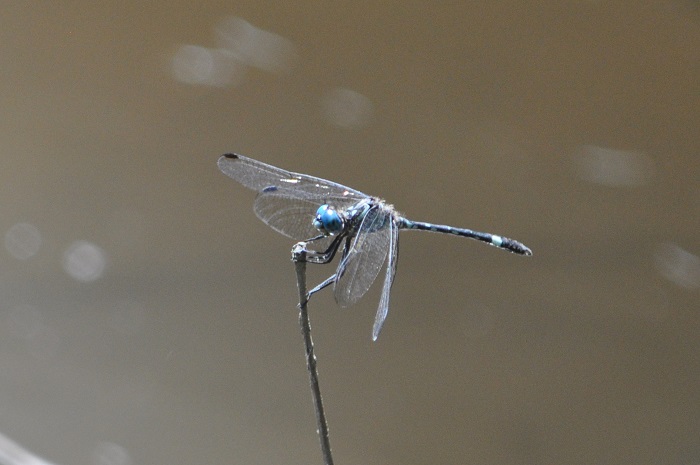
Eastern Blacktail Nesciothemis farinosa – Male
Amakhosi Game Reserve, KwaZulu-Natal
Photo by Ryan Tiuppett

Further Resources

The use of photographs by Celeste Eastwood is acknowledged. All other photographs by Ryan Tippett.

Eastern Blacktail Nesciothemis farinosa (Förster, 1898)

Other common names: Black-tailed Skimmer, Black-faced Dancing Skimmer (Alt. English); Swartstertskepper (Afrikaans)

Recommended citation format: Loftie-Eaton M; Navarro R; Tippett RM; Underhill L. 2025. Eastern Blacktail Nesciothemis farinosa. Biodiversity and Development Institute. Available online at https://thebdi.org/2020/06/19/eastern-blacktail-nesciothemis-farinosa/

References: Tarboton, M; Tarboton, W. (2019). A Guide to the Dragonflies & Damselflies of South Africa. Struik Nature.

Samways, MJ. (2008). Dragonflies and Damselflies of South Africa. Pensoft

Samways, MJ. (2016). Manual of Freshwater Assessment for South Africa: Dragonfly Biotic Index. Suricata 2. South African National Biodiversity Institute, Pretoria

Martens, A; Suhling, F. (2007). Dragonflies and Damselflies of Namibia. Gamsberg Macmillan.

Eastern Blacktail Nesciothemis farinosa – Male
Mkuze Dam, KwaZulu-Natal
Photo by Ryan Tiuppett

Similar Species

Coastal Pennant (Macrodiplax cora)

Cover photo by Wil Leurs.

Find the Coastal Pennant in the FBIS database (Freshwater Biodiversity Information System) here.

Family Libellulidae

Identification

Coastal Pennant Macrodiplax cora – Male
Eastern Shores, iSimangaliso Wetland Park
Photo by Wil Leurs

Medium sized

Length up to 44mm; Wingspan attains 71mm.

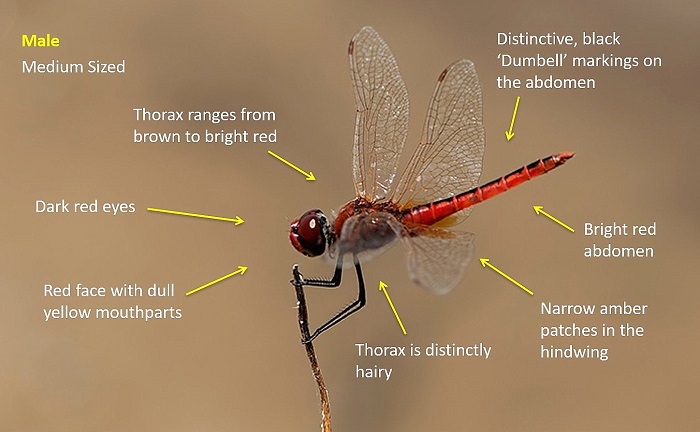
The adult male Coastal Pennant is a medium-sized dragonfly (length 45mm, wingspan 75mm) with a red abdomen, dorsally marked with distinctive ‘dumbell’-shaped markings along the top of the abdomen (diagnostic in both sexes). The females abdomen is less brightly coloured. The thorax is a brownish colour and often hairy. The wings are clear except for a small amber patch at the base of each hind wing. 

Macrodiplax cora males are most likely to be mistaken for the Nomad/Red-veined Darter (Sympetrum fonscolombii), Red Basker (Urothemis assignata), and the Pygmy Basker (Aethriamanta rezia).

Females can be confused with female Red-veined Darters/Nomad (Sympetrum fonscolombii). Both are yellow with 2 pale diagonal panels on the sides of the thorax. However, they are easily told apart by the patterning on the dorsal surface of the abdomen.

Click here for more details on identification of the Coastal Pennant.

Coastal Pennant Macrodiplax cora – Male
Kosi Bay, iSimangaliso Wetland Park
Photo by Felicity Grundlingh

Habitat

This species is strictly coastal in South Africa. The Coastal Pennant is well adapted to brackish water and high salinity levels. It inhabits the grass and sedge fringes of estuaries, marshes and pans. Individuals may occasionally also be found away from water in coastal grasslands and bush.

Habitat – Kosi Bay, KwaZulu-Natal
Photo by Ryan Tippett

Behaviour

The Coastal Pennant is conspicuous and perches prominently on top of exposed perches like reeds or bare twigs. It hunts from a perch and has a fast, powerful flight, often returning to the same vantage point. The Coastal Pennant is resident or partly nomadic in South Africa but is migratory in some other parts of its range.

Coastal Pennant Macrodiplax cora – Male
Kosi Bay, iSimangaliso Wetland Park
Photo by Ryan Tippett

Status and Conservation

In South Africa Macrodiplax cora is scarce and erratic in occurence. The coastal Pennant is listed locally and globally as of Least Concern in the IUCN Red List of Threatened Species. Almost the entirety of its South African range is protected within the iSimangaliso wetland Park. In South Africa it has only been recorded in undamaged habitats.

Coastal Pennant Macrodiplax cora – Male
Mpempe Pan, KwaZulu-Natal
Photo by Ryan Tippett

Distribution

Macrodiplax cora is predominantly an Asian species and is widespread in tropical Asia and Australasia. The species also occurs on a number of Indian and Pacific Ocean Islands.

The occurence of this species in Africa is very interesting. The species has established a small resident population in coastal north-eastern KwaZulu-Natal. Its South African distribution ranges from St. Lucia up to Kosi Bay, and is also likely to occur in the neighbouring part of southern Mozambique. In other parts of Africa, it has only been recorded in coastal Somalia and on the island of Socotra.

Below is a map showing the distribution of records for Coastal Pennant in the OdonataMAP database as at February 2020.

Below is a map showing the distribution of records for Coastal Pennant in the OdonataMAP database as of December 2024.

The next map below is an imputed map, produced by an interpolation algorithm, which attempts to generate a full distribution map from the partial information in the map above. This map will be improved by the submission of records to the OdonataMAP section of the Virtual Museum.

Ultimately, we will produce a series of maps for all the odonata species in the region. The current algorithm is a new algorithm. The objective is mainly to produce “smoothed” maps that could go into a field guide for odonata. This basic version of the algorithm (as mapped above) does not make use of “explanatory variables” (e.g. altitude, terrain roughness, presence of freshwater — we will be producing maps that take these variables into account soon). Currently, it only makes use of the OdonataMAP records for the species being mapped, as well as all the other records of all other species. The basic maps are “optimistic” and will generally show ranges to be larger than what they probably are.

These maps use the data in the OdonataMAP section of the Virtual Museum, and also the database assembled by the previous JRS funded project, which was led by Professor Michael Samways and Dr KD Dijkstra.

Coastal Pennant Macrodiplax cora – Immature male
Kosi Bay, iSimangaliso Wetland Park
Photo by Felicity Grundlingh

Further Resources

The use of photographs by Felicity Grundlingh and Wil Leurs is acknowledged. All other photographs by Ryan Tippett.

Coastal Pennant Macrodiplax cora (Brauer, 1867)

Other common names: Cora’s Pennant, Coastal Glider, Wandering Pennant (Alternative English names); Kuswimpel (Afrikaans)

Recommended citation format: Loftie Eaton. M; Hofmeyr S; Tippett RM; Underhill L. Coastal Pennant Macrodiplax cora. Biodiversity and Development Institute. Available online at http://thebdi.org/2020/06/19/coastal-pennant-macrodiplax-cora/

References: Tarboton, M; Tarboton, W. (2019). A Guide to the Dragonflies & Damselflies of South Africa. Struik Nature.

Samways, MJ. (2008). Dragonflies and Damselflies of South Africa. Pensoft

Samways, MJ. (2016). Manual of Freshwater Assessment for South Africa: Dragonfly Biotic Index.Suricata 2. South African National Biodiversity Institute, Pretoria

Similar Species

African Piedspot (Hemistigma albipunctum)

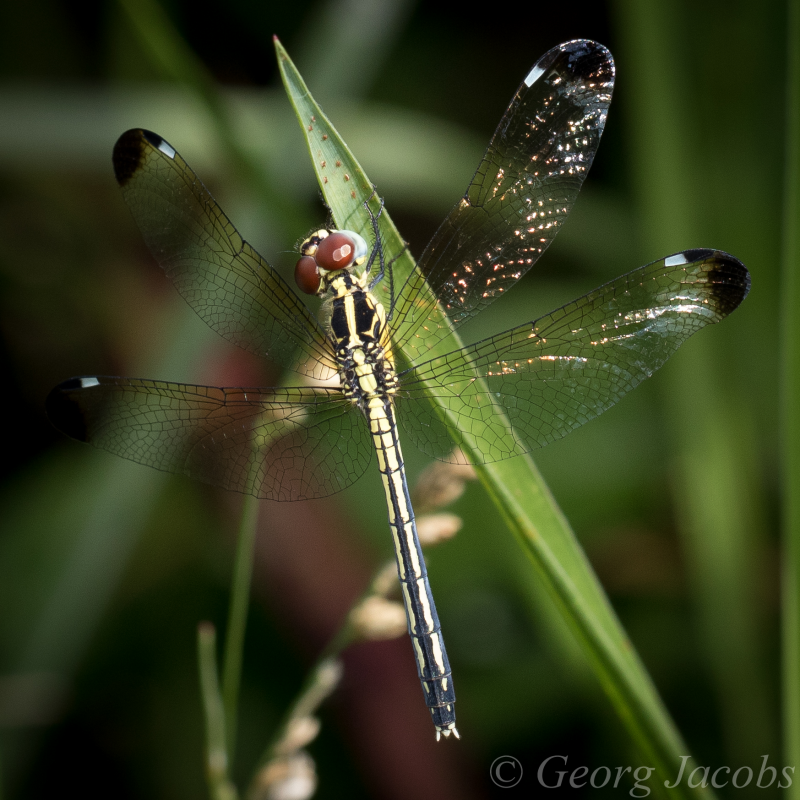
Cover photo by Georg Jacobs.

Find this species in the FBIS database (Freshwater Biodiversity Information System) here.

Family Libellulidae

Identification

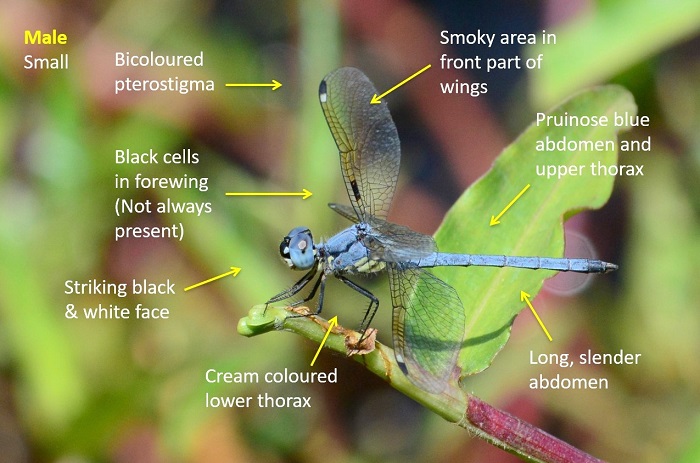
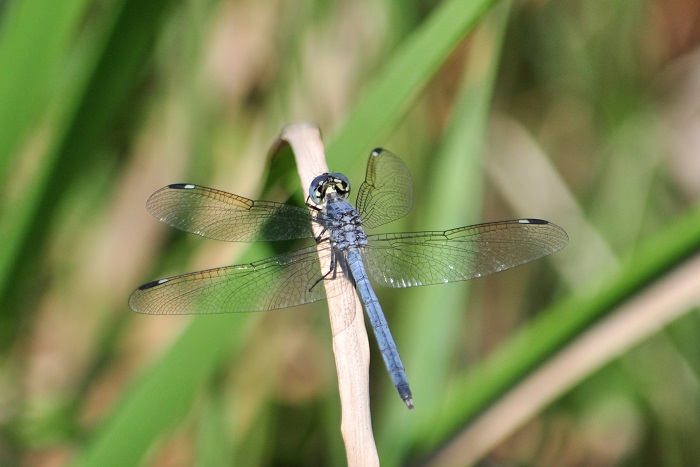
African Piedspot Hemistigma albipunctum – Male
Near Hluhluwe, KwaZulu-Natal
Photo by Ryan Tippett

Small Size

Length up to 38mm; Wingspan reaches 63mm.

Male African Piedspots are distinctive, but can be mistaken for an Orthetrum species or Chalcostephia flavifrons (Inspector).

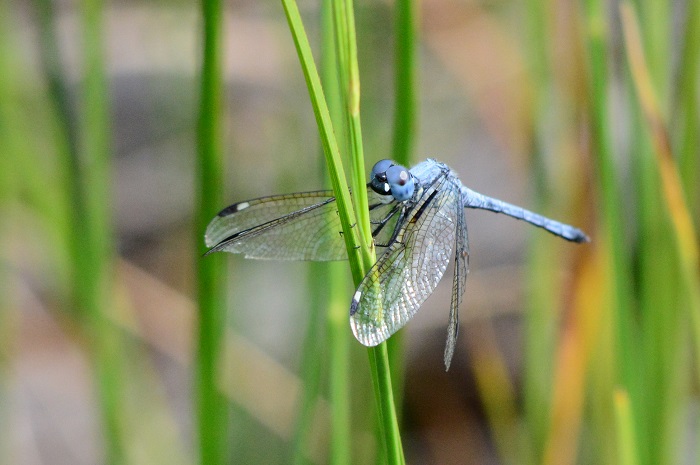
Males are recognised by their bi-coloured pterostigmas and the smoky streaks in the forewings. The slender abdomen and black and white face are also helpful identification features.

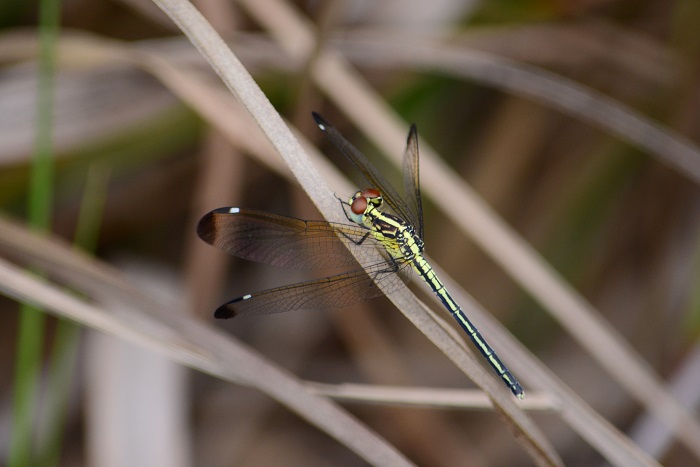
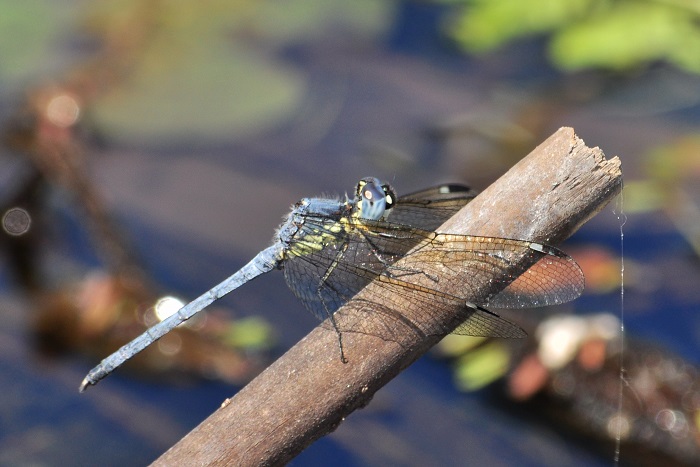
Females are identified by the bi-coloured pterostigmas and black-tipped wings. The cream-coloured stripe running from behind the eyes to the start of the abdomen is distinctive.

Click here for more details on identification.

African Piedspot Hemistigma albipunctum – Female
Isimangaliso Wetland Park, KwaZulu-Natal
Photo by Ryan Tippett

Habitat

The African Piedspot frequents the still or slow-moving reaches of marshes, floodplains, pans, dams, and rivers. It favours sites with an abundant growth of sedge, grasses, and reeds in shallow water. The African Piedspot occurs mostly in the warmer coastal and savanna regions.

Habitat – Grass and sedge filled pan
Near Hluhluwe, KwaZulu-Natal
Photo by Ryan Tippett

Behaviour

The African Piedspot perches on plant stems over the water. It hunts from a perch and usually resettles at a different spot. The African Piedspot is often fairly confiding when approached.

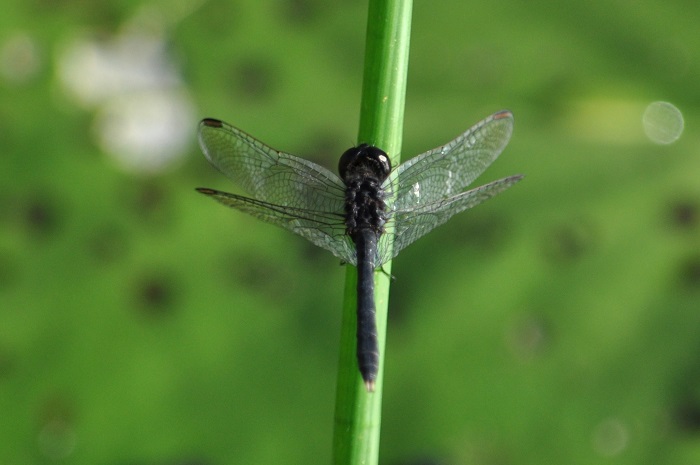
African Piedspot Hemistigma albipunctum – Male
Kosi Bay, iSimangaliso Wetland Park, KwaZulu-Natal
Photo by Ryan Tippett

Status and Conservation

Hemistigma albipunctum is locally common in South Africa. It is listed as of Least Concern in the IUCN Red List of Threatened Species. The African Piedspot readily utilises suitable man-made habitats.

African Piedspot Hemistigma albipunctum – Female
Near Hluhluwe, KwaZulu-Natal
Photo by Ryan Tippett

Distribution

The African Piedspot is widespread across Sub-Saharan Africa, occuring in West, Central, East and Southern Africa. Hemistigma albipunctum is confined to the north-east of South Africa. It is found in the Limpopo, Mpumalanga, and KwaZulu-Natal provinces. The African Piedspot is most common in coastal KwaZulu-Natal.

African Piedspot Hemistigma albipunctum – Male
Near Hluhluwe, KwaZulu-Natal
Photo by Ryan Tippett

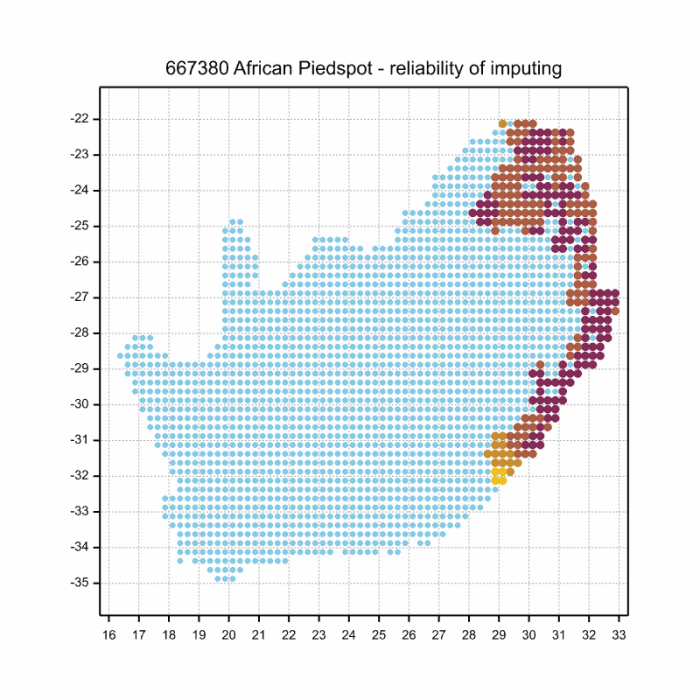
Below is a map showing the distribution of records for African Piedspot in the OdonataMAP database as at February 2020.

Below is a map showing the distribution of records for African Piedspot in the OdonataMAP database as of December 2024.

The map below is an imputed map, produced by an interpolation algorithm. It attempts to generate a full distribution map from the partial information in the map above. This map will be improved by the submission of records to the OdonataMAP section of the Virtual Museum.

Ultimately, we will produce a series of maps for all the odonata species in the region. The current algorithm is a new algorithm. The objective is mainly to produce “smoothed” maps that could go into a field guide for odonata. This basic version of the algorithm (as mapped above) does not make use of “explanatory variables” (e.g. altitude, terrain roughness, presence of freshwater — we will be producing maps that take these variables into account soon). Currently, it only makes use of the OdonataMAP records for the species being mapped, as well as all the other records of all other species. The basic maps are “optimistic” and will generally show ranges to be larger than what they probably are.

These maps use the data in the OdonataMAP section of the Virtual Museum, and the database assembled by the previous JRS funded project, which was led by Professor Michael Samways and Dr KD Dijkstra.

African Piedspot Hemistigma albipunctum – Male
Near Hluhluwe, KwaZulu-Natal
Photo by Ryan Tippett

Further Resources

The use of photographs by Georg Jacobs is acknowledged. All other photos by Ryan Tippett.

African Piedspot Hemistigma albipunctum (Rambur, 1842)

Other common names: Piedspot (Alt. English); Bontkolletjjie (Afrikaans)

Recommended citation format: Loftie-Eaton M; Navarro R; Tippett RM; Underhill L. 2025. African Piedspot Hemistigma albipunctum. Biodiversity and Development Institute. Available online at https://thebdi.org/2020/06/18/african-piedspot-hemistigma-albipunctum/

References: Tarboton, M; Tarboton, W. (2019). A Guide to the Dragonflies & Damselflies of South Africa. Struik Nature.

Samways, MJ. (2008). Dragonflies and Damselflies of South Africa. Pensoft

Samways, MJ. (2016). Manual of Freshwater Assessment for South Africa: Dragonfly Biotic Index. Suricata 2. South African National Biodiversity Institute, Pretoria

Martens, A; Suhling, F. (2007). Dragonflies and Damselflies of Namibia. Gamsberg Macmillan.

African Piedspot Hemistigma albipunctum – Male
Near Hluhluwe, KwaZulu-Natal
Photo by Ryan Tippett

Similar Species

Dwarf Percher (Diplacodes pumila)

Cover photo by Alan Manson.

Find this species in the FBIS database (Freshwater Biodiversity Information System) here.

Family Libellulidae

Identification

Dwarf Percher Diplacodes pumila – Mature Male
Near Himeville, KwaZulu-Natal
Photo by Alan Manson

Very Small size

Length up to 25mm; Wingspan attains 46mm.

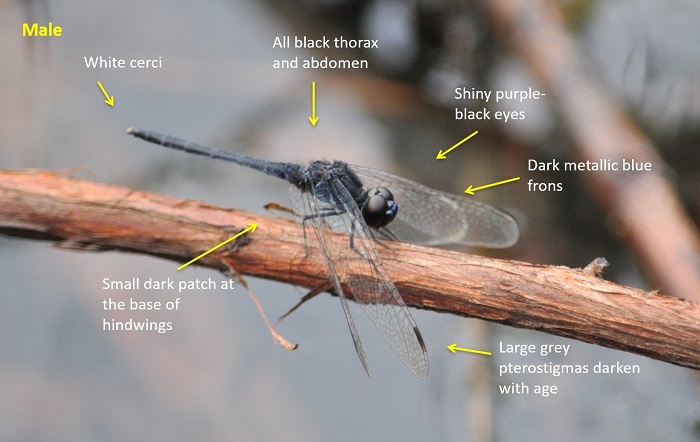
Confusion with the Dwarf Percher is only likely with Diplacodes lefebvrii (Black Percher). Mature males of the two are very similar, being an overall black colour with blackish eyes and a dark metallic blue frons. The Black Percher is the larger species with little to no size overlap between them. Additionally mature male Black Perchers have white cerci and small dark amber patches at the base of the hindwings. These are mostly absent in the Dwarf Percher. Diplacodes pumila also has a ‘large headed’ appearance

Immature males of D. lefebvrii and D. pumila are easily told apart. The upper thorax of D. lefebvrii is yellow-brown with fine black etching. The upper thorax of D. pumila is rusty red-brown and diagnostic. Diplacodes pumila has a very broad black stripe that extends down the length of the abdomen. This stripe is noticeably thinner in D. lefebvrii.

Dwarf Percher females are similar to the young males. They are identified by the diagnostic, rusty red-brown upper thorax and the broad black stripe that extends down the top of the abdomen.

Click here for more details on identification.

Dwarf Percher Diplacodes pumila – Immature Male
Near Himeville, KwaZulu-Natal
Photo by Alan Manson

Habitat

The Dwarf Percher inhabits shallow marshes, seeps and floodplains. It prefers sites with tall emergent grass, sedges, and reeds. In South Africa, the Dwarf Percher is most often found at fairly high altitudes in upland grasslands, from 1000 to 2100m above sea level, but is found along the coast in north-eastern KwaZulu-Natal.

Habitat – Near Kosi Bay, KwaZulu-Natal
Photo by Ryan Tippett

Behaviour

The Dwarf Percher is an inconspicuous species that likes to sit low down among the emergent vegetation. Males and females occur in the same areas.

Status and Conservation

The Dwarf Percher is uncommon and localised in South Africa. It is listed as Endangered in the IUCN Red List of Threatened Species. The Dwarf Percher is mostly reliant on high quality natural habitats, but is known to utilise suitable marshy habitats fringing man-made dams.

Dwarf Percher Diplacodes pumila – Mature Male
Hluhluwe district, KwaZulu-Natal
Photo by Ryan Tippett

Distribution

The distribution of Diplacodes pumila is widely scattered across south-central Africa from central Angola to northern Zambia, and marginally into neighboring DRC and Tanzania. The Dwarf Percher also occurs in parts of Zimbabwe and South Africa.

The South African range of the Dwarf Percher is disjunct, occurring in coastal north-eastern KwaZulu-Natal as well as at various upland sites in KwaZulu-Natal, Mpumalanga and Limpopo.

Below is a map showing the distribution of records for Dwarf Percher in the OdonataMAP database as at February 2020.

Below is a map showing the distribution of records for Dwarf Percher in the OdonataMAP database as of December 2024.

The next map below is an imputed map, produced by an interpolation algorithm, which attempts to generate a full distribution map from the partial information in the map above. This map will be improved by the submission of records to the OdonataMAP section of the Virtual Museum.

Ultimately, we will produce a series of maps for all the odonata species in the region. The current algorithm is a new algorithm. The objective is mainly to produce “smoothed” maps that could go into a field guide for odonata. This basic version of the algorithm (as mapped above) does not make use of “explanatory variables” (e.g. altitude, terrain roughness, presence of freshwater — we will be producing maps that take these variables into account soon). Currently, it only makes use of the OdonataMAP records for the species being mapped, as well as all the other records of all other species. The basic maps are “optimistic” and will generally show ranges to be larger than what they probably are.

These maps use the data in the OdonataMAP section of the Virtual Museum, and also the database assembled by the previous JRS funded project, which was led by Professor Michael Samways and Dr KD Dijkstra.

Further Resources

The use of photographs by Alan Manson is acknowledged. Other photographs by Ryan Tippett.

Dwarf Percher Diplacodes pumila Dijkstra, 2006

Other common names: Dwergsittertjie (Afrikaans)

Recommended citation format: Loftie-Eaton M; Navarro R; Tippett RM; Underhill L. 2025. Dwarf Percher Diplacodes pumila. Biodiversity and Development Institute. Available online at https://thebdi.org/2020/06/18/dwarf-percher-diplacodes-pumila/

References: Tarboton, M; Tarboton, W. (2019). A Guide to the Dragonflies & Damselflies of South Africa. Struik Nature.

Samways, MJ. (2008). Dragonflies and Damselflies of South Africa. Pensoft

Samways, MJ. (2016). Manual of Freshwater Assessment for South Africa: Dragonfly Biotic Index. Suricata 2. South African National Biodiversity Institute, Pretoria

Similar Species

Barbet Percher (Diplacodes luminans)

Cover photo by John Wilkinson.

Find this species in the FBIS database (Freshwater Biodiversity Information System) here.

Family Libellulidae

Identification

Barbet Percher Diplacodes luminans – Male
Near Hluhluwe, KwaZulu-Natal
Photo by Ryan Tippett

Small size

Length up to 40mm; Wingspan reaches 66mm.

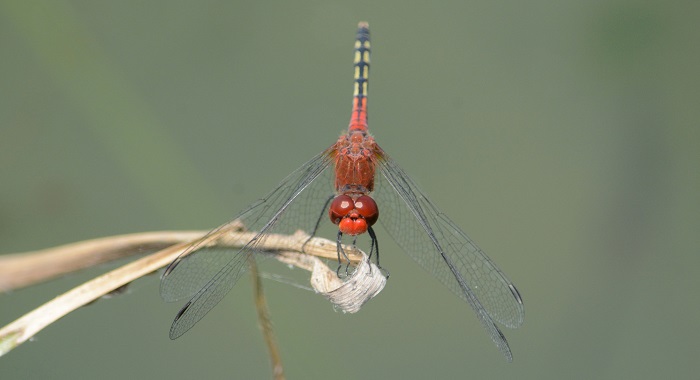
Male Barbet Perchers are unmistakable with their distinctive bright red, yellow, and black colouration.

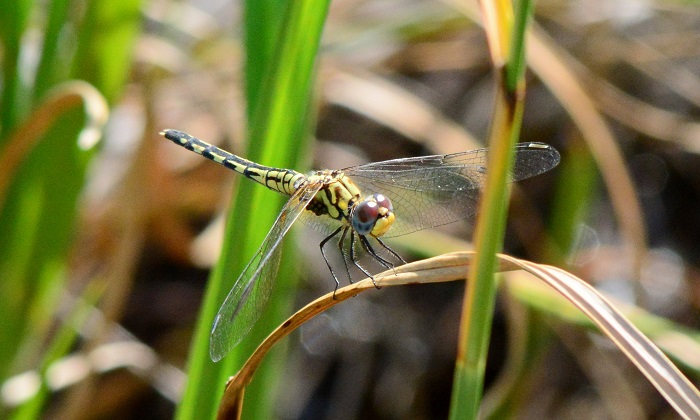
Females are very similar to Diplacodes lefebvrii (Black Percher) females, but can be distinguished by having horizontal stripes along the sides at the base of the abdomen.

Click here for more details on identification.

Barbet Percher Diplacodes luminans – Female
Mkuze River, KwaZulu-Natal
Photo by Ryan Tippett

Habitat

The Barbet Percher inhabits a variety of still-water environments especially floodplains and marshes with well-vegetated pools. It also occurs at grass and sedge-lined pans, lakes, and dams. The Barbet Percher can on occasion also be found along the marshy fringes of rivers.

Habitat – Near Hluhluwe, KwaZulu-Natal
Photo by Ryan Tippett

Behaviour

Male Barbet Perchers sit conspicuously at the tips of reeds and sedges over the water. Their flight is fast and darting and they quickly return to a perch. Females can be found in the same vicinity as the males but they are more common a short distance from the water among trees and bushes.

Barbet Percher Diplacodes luminans – Male
Near Hluhluwe, KwaZulu-Natal
Photo by Ryan Tippett

Status and Conservation

In southern Africa, the Barbet Percher is a common, but localised dragonfly. It is listed as of Least Concern in the IUCN Red List of Threatened Species. The Barbet Percher is adaptable and fairly resistant to habitat degradation. It occurs commonly at well-vegetated man-made habitats.

Barbet Percher Diplacodes luminans – Male
Near Hluhluwe, KwaZulu-Natal
Photo by Ryan Tippett

Distribution

The Barbet Percher is widely distributed across sub-Saharan Africa, avoiding only the most arid regions. In South Africa, the Barbet Percher is mostly restricted to the warmer and wetter north and east.

Barbet Percher Diplacodes luminans – Male
Kuleni Game Park, KwaZulu-Natal
Photo by Ryan Tippett

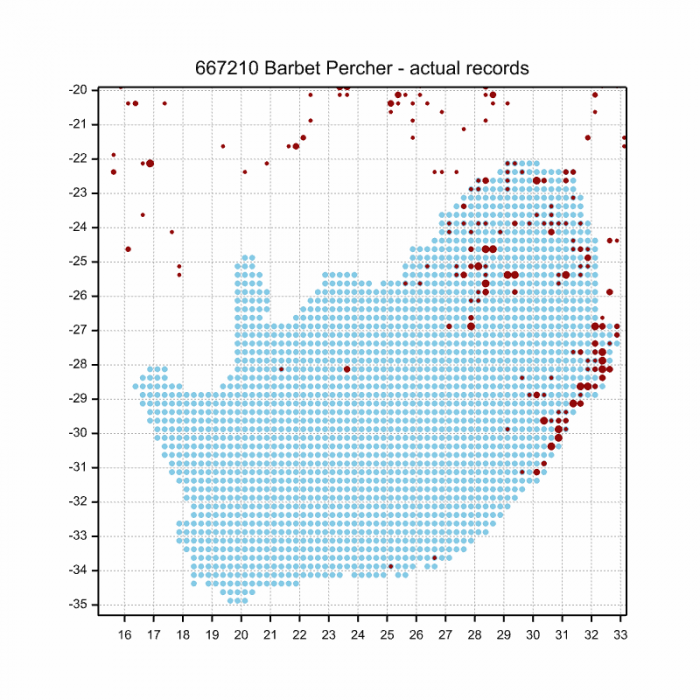
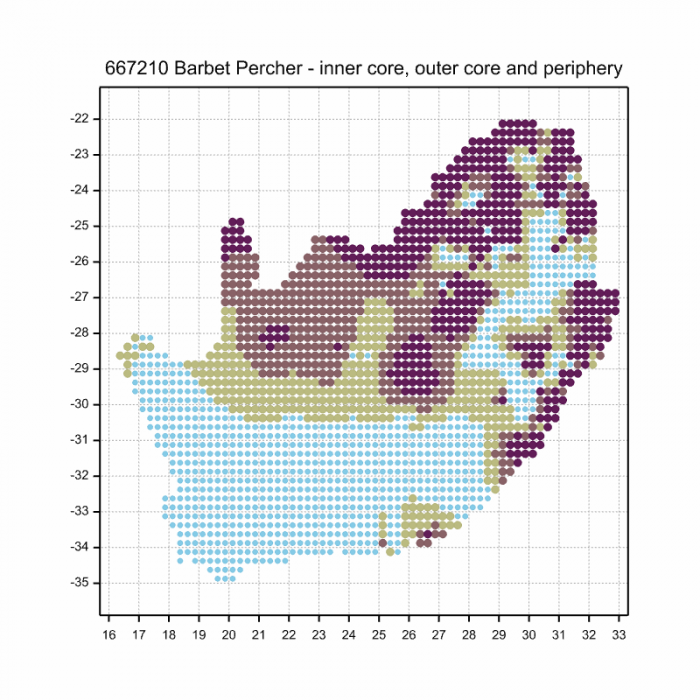
Below is a map showing the distribution of records for Barbet Percher in the OdonataMAP database as at February 2020.

Below is a map showing the distribution of records for Barbet Percher in the OdonataMAP database as of December 2025

The next map below is an imputed map, produced by an interpolation algorithm, which attempts to generate a full distribution map from the partial information in the map above. This map will be improved by the submission of records to the OdonataMAP section of the Virtual Museum.

Ultimately, we will produce a series of maps for all the odonata species in the region. The current algorithm is a new algorithm. The objective is mainly to produce “smoothed” maps that could go into a field guide for odonata. This basic version of the algorithm (as mapped above) does not make use of “explanatory variables” (e.g. altitude, terrain roughness, presence of freshwater — we will be producing maps that take these variables into account soon). Currently, it only makes use of the OdonataMAP records for the species being mapped, as well as all the other records of all other species. The basic maps are “optimistic” and will generally show ranges to be larger than what they probably are.

These maps use the data in the OdonataMAP section of the Virtual Museum, and also the database assembled by the previous JRS funded project, which was led by Professor Michael Samways and Dr KD Dijkstra.

Barbet Percher Diplacodes luminans – Female
Kosi Bay, iSimangaliso Wetland Park, KwaZulu-Natal
Photo by Ryan Tippett

Further Resources

The use of photographs by Richard Johnstone is acknowledged. All other photographs by Ryan Tippett.

Barbet Percher Diplacodes luminans (Karsch, 1893)

Other common names: Baardmannetjie (Afrikaans)

Recommended citation format: Loftie-Eaton M; Navarro R; Tippett RM; Underhill L. 2025. Barbet Percher Diplacodes luminans. Biodiversity and Development Institute. Available online at https://thebdi.org/2020/06/17/barbet-percher-diplacodes-luminans/

References: Tarboton, M; Tarboton, W. (2019). A Guide to the Dragonflies & Damselflies of South Africa. Struik Nature.

Samways, MJ. (2008). Dragonflies and Damselflies of South Africa. Pensoft

Samways, MJ. (2016). Manual of Freshwater Assessment for South Africa: Dragonfly Biotic Index. Suricata 2. South African National Biodiversity Institute, Pretoria

Martens, A; Suhling, F. (2007). Dragonflies and Damselflies of Namibia. Gamsberg Macmillan.

Barbet Percher Diplacodes luminans – Male
Near Hluhluwe, KwaZulu-Natal
Photo by Ryan Tippett

Black Percher (Diplacodes lefebvrii)

Cover photo by Richard Johnstone.

Find this species in the FBIS database (Freshwater Biodiversity Information System) here.

Family Libellulidae

Identification

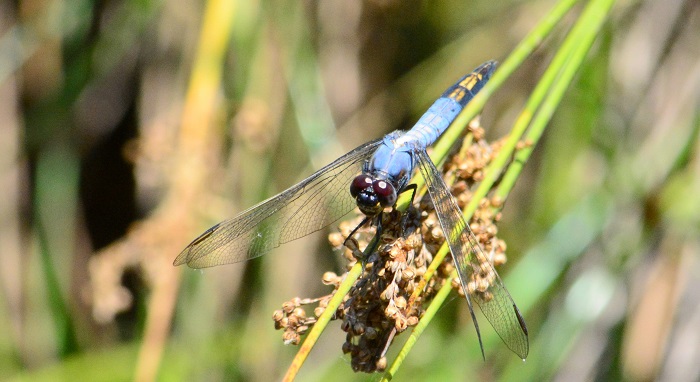
Black Percher Diplacodes lefebvrii – Male
Near Hluhluwe, KwaZulu-Natal
Photo by Ryan Tippett

Small size

Length up to 32mm; Wingspan reaches 54mm.

In South Africa, the Black Percher is only likely to be confused with the rare Diplacodes pumila (Dwarf Percher). Mature males of the two are very similar, being an overall black colour with blackish eyes and a dark metallic blue frons. The Black Percher is the larger species with little to no size overlap between them. Additionally, mature male Black Perchers have white cerci and small dark amber patches at the base of the hindwings. These are largely absent in the Dwarf Percher.

Immature males of D. lefebvrii and D. pumila are easily told apart. The upper thorax of D. lefebvrii is yellowish with fine black etching. The upper thorax of D. pumila is rusty red-brown and diagnostic. The abdomen pattern of the two also differs. D. pumila has a broad black line that extends all the way down the top of the abdomen. In D. lefebvrii this line is noticeably thinner. Traces of the immature abdomen pattern may persist into maturity (see the photo above).

Black Percher females are identifiable by their yellow and black abdomen pattern and grey pterostigmas.

Click here for more details on identification.

Black Percher Diplacodes lefebvrii – Female
Kuleni Game Park, KwaZulu-Natal
Photo by Ryan Tippett

Habitat

The Black Percher inhabits a variety of still-water habitats, especially floodplains and marshes with well-vegetated pools. It also occurs at grass and sedge-lined pans, lakes, and dams. The Black Percher can sometimes also be found at the marshy fringes of rivers and streams. In arid areas, it can sometimes be found at seasonally flooded grassy pans.

The Black Percher occurs at a wide range of altitudes up to 1800m above sea level.

Habitat – Near Hluhluwe, KwaZulu-Natal
Photo by Ryan Tippett

Behaviour

Male Black Perchers tend to sit conspicuously at the tips of reeds and sedges over the water. The flight is fast and darting and they quickly return to a perch. Females can be found in the same areas as the males but they are more common further from the water among trees and bushes. Their behaviour is similar to that of other Diplacodes species.

The Black Percher is on the wing throughout the year in warmer areas but is less numerous in winter. In cooler regions, the Black Percher flies mainly from November to May.

Status and Conservation

The Black Percher is a common and widespread species. It is listed as of Least Concern in the IUCN Red List of Threatened Species. It is adaptable and fairly resistant to habitat degradation. The Black Percher occurs commonly in well-vegetated man-made habitats.

Black Percher Diplacodes lefebvrii – Male
Near Hluhluwe, KwaZulu-Natal
Photo by Ryan Tippett

Distribution

The Black Percher is widespread throughout much of Africa including parts of North Africa, from Egypt across to Morocco. Diplacodes lefebvrii also occurs in parts of Southern Europe and the Middle East.

The Black Percher occurs over most of South Africa but is less numerous in the arid Karoo and Kalahari regions. The Black Percher appears most common in north-eastern KwaZulu-Natal.

Black Percher Diplacodes lefebvrii – Male
Kosi Bay, iSimangaliso Wetland Park, KwaZulu-Natal
Photo by Ryan Tippett

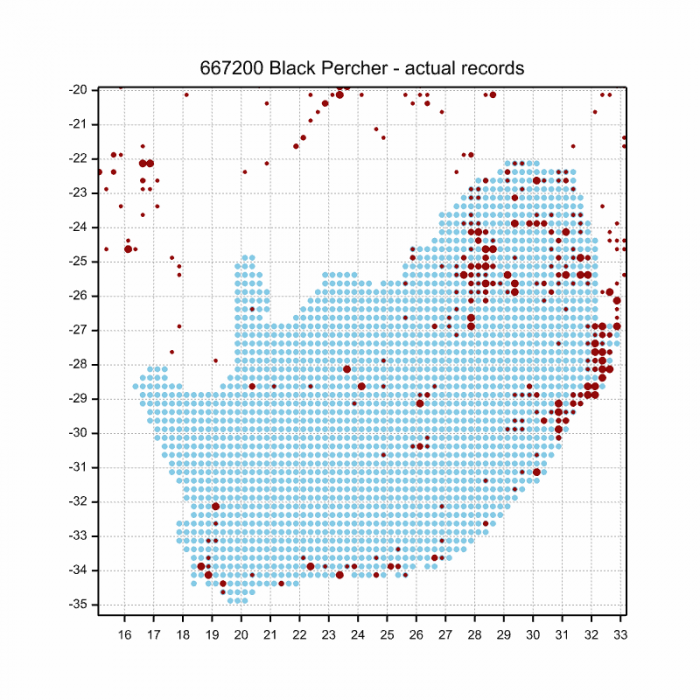
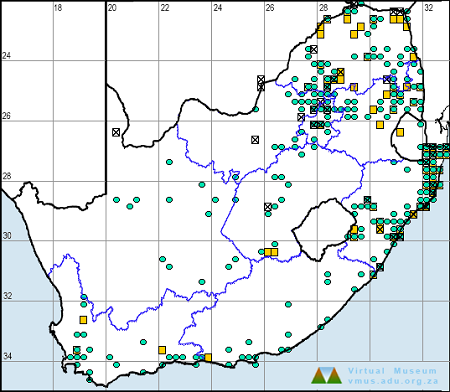
Below is a map showing the distribution of records for Black Percher in the OdonataMAP database as at February 2020.

Below is a map showing the distribution of records for Black Percher in the OdonataMAP database as of December 2024.

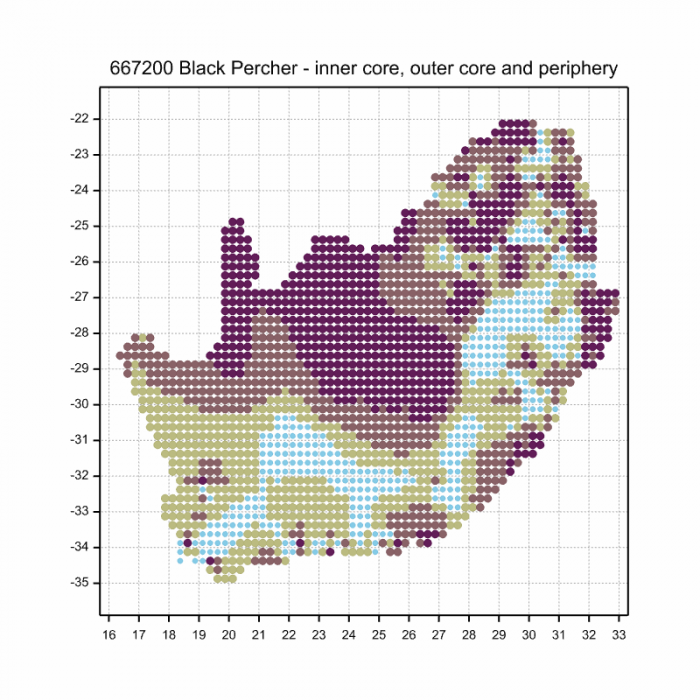
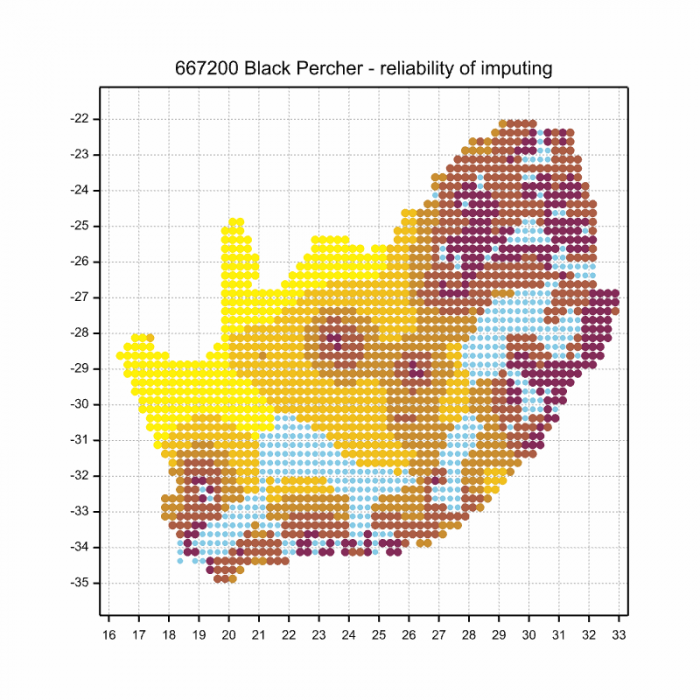
The next map below is an imputed map, produced by an interpolation algorithm, which attempts to generate a full distribution map from the partial information in the map above. This map will be improved by the submission of records to the OdonataMAP section of the Virtual Museum.

Ultimately, we will produce a series of maps for all the odonata species in the region. The current algorithm is a new algorithm. The objective is mainly to produce “smoothed” maps that could go into a field guide for odonata. This basic version of the algorithm (as mapped above) does not make use of “explanatory variables” (e.g. altitude, terrain roughness, presence of freshwater — we will be producing maps that take these variables into account soon). Currently, it only makes use of the OdonataMAP records for the species being mapped, as well as all the other records of all other species. The basic maps are “optimistic” and will generally show ranges to be larger than what they probably are.

These maps use the data in the OdonataMAP section of the Virtual Museum, and also the database assembled by the previous JRS funded project, which was led by Professor Michael Samways and Dr KD Dijkstra.

Black Percher Diplacodes lefebvrii – Male
Near Hluhluwe, KwaZulu-Natal
Photo by Ryan Tippett

Further Resources

The use of photographs by Richard Johnstone is acknowledged. All other photographs by Ryan Tippett.

Black Percher Diplacodes lefebvrii (Rambur, 1842)

Other common names: Swartsittertjie (Afrikaans)

Recommended citation format: Loftie-Eaton M; Navarro R; Tippett RM; Underhill L. 2025. Black Percher Diplacodes lefebvrii. Biodiversity and Development Institute. Available online at https://thebdi.org/2020/06/17/black-percher-diplacodes-lefebvrii/

References: Tarboton, M; Tarboton, W. (2019). A Guide to the Dragonflies & Damselflies of South Africa. Struik Nature.

Samways, MJ. (2008). Dragonflies and Damselflies of South Africa. Pensoft

Samways, MJ. (2016). Manual of Freshwater Assessment for South Africa: Dragonfly Biotic Index. Suricata 2. South African National Biodiversity Institute, Pretoria
Martens, A; Suhling, F. (2007). Dragonflies and Damselflies of Namibia. Gamsberg Macmillan.

Black Percher Diplacodes lefebvrii – Male
Near Hluhluwe, KwaZulu-Natal
Photo by Ryan Tippett

Similar Species

Little Scarlet (Crocothemis sanguinolenta)

Cover photo by Sharon Stanton.

Find this species in the FBIS database (Freshwater Biodiversity Information System) here.

Family Libellulidae

Identification

Little Scarlet Crocothemis sanguinolenta – Old Male
Mkuze River, KwaZulu-Natal
Photo by Ryan Tippett

Small Size

Length up to 38mm; Wingspan reaches 63mm.

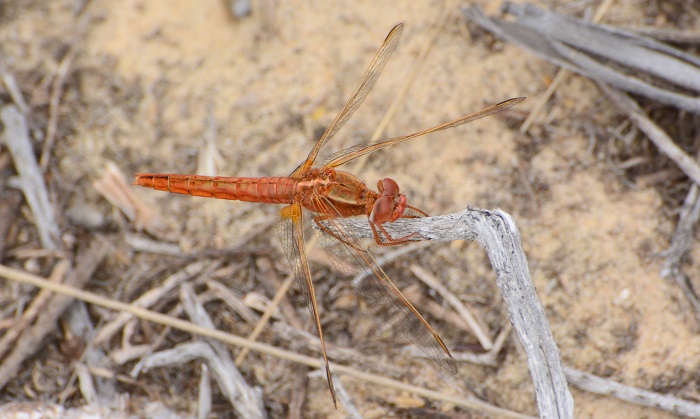
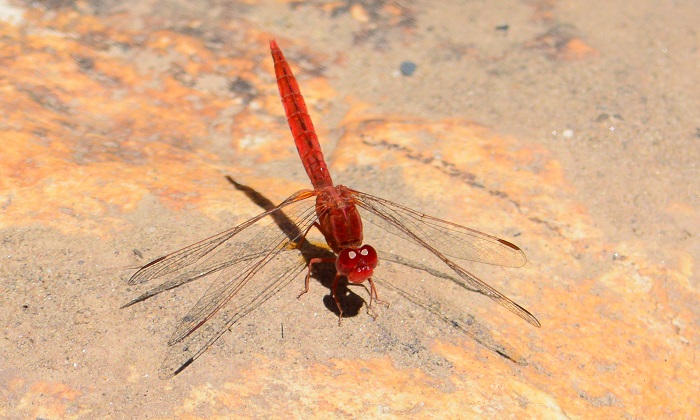
Male Little Scarlets are best identified by their overall red to pinkish colouration, stout, pointed abdomens with feint black lateral spots, and pale red pterostigmas. The intensity of the red colouration is variable and ranges from washed-out pink-red to shiny, vivid red. Non-breeding males that spend periods away from water become less brightly coloured in washed-out red to pink.

Little Scarlet Crocothemis sanguinolenta – Young Male
Limpopo
Photo by John Wilkinson

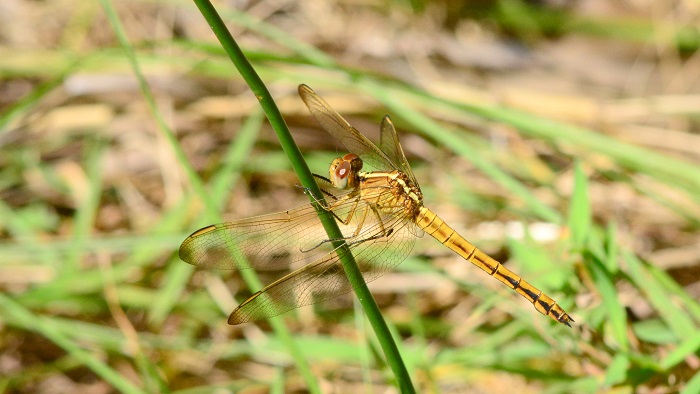
Females are duller than males. The colouration of females is also variable, ranging from yellowish-brown to pink-brown to red.

Little Scarlet Crocothemis sanguinolenta – Female
Mkuze River, KwaZulu-Natal
Photo by Ryan Tippett

This species is most similar to the Broad Scarlet (Crocothemis erythraea), but that species is larger and has a broader abdomen lacking lateral black spots. Crocothemis erythraea also has longer yellowish, as opposed to reddish pterostigmas.

Within a limited area of overlap, it may also be mistaken for the Rock Scarlet (Crocothemis divisa). The Rock Scarlet differs by completely lacking any amber at the wing bases, and by having a bright pink-red abdomen, very long red pterostigmas and a mostly brown thorax with a red wash above.

Click here for more details on identification.

Little Scarlet Crocothemis sanguinolenta – Female
Klein Cedarberg Private Nature Reserve, Western Cape
Photo by Ryan Tippett

Habitat

The Little Scarlet is mostly associated with flowing water at streams and rivers in a variety of surrounding habitats. It generally prefers more open sites with abundant rocks and gravelly substrate. The Little Scarlet also frequents rocky ponds in mountainous areas. Non-breeding individuals are often found away from water, perched on rocks and pathways, etc. The Little Scarlet occurs at altitudes ranging from sea-level to 1800m.

Habitat – Oribi Gorge Nature Reserve, KwaZulu-Natal
Photo by Ryan Tippett

Behaviour

The Little Scarlet mostly perches on bare ground or on rocks and ocasionally perches on stream side vegetation. Flies off from a perch to capture prey, usually returning to the same site or another perch nearby. Feeds on small aerial insects. The Little Scarlet is on the wing from November to May but may fly throughout the year in some places.

Little Scarlet Crocothemis sanguinolenta – Male
Seweweekspoort, Western Cape
Photo by Ryan Tippett

Status and Conservation

Crocothemis sanguinolenta is a common species and is listed as of Least Concern in the IUCN Red List of Threatened Species. Its reliance on flowing river and stream environments means it does not readily adapt to man-made habitats.

Little Scarlet Crocothemis sanguinolenta – Male
Paardeberg, Western Cape
Photo by Ryan Tippett

Distribution

The Little Scarlet is found virtually throughout Sub-Saharan Africa. It also occurs in northern Madagascar and parts of the Middle East. In South Africa, the Little Scarlet is widespread and has been recorded from all nine provinces but is scarce in the drier central and western regions.

Below is a map showing the distribution of records for Little Scarlet in the OdonataMAP database as at February 2020.

Below is a map showing the distribution of records for Little Scarlet in the OdonataMAP database as at December 2024.

The next map below is an imputed map, produced by an interpolation algorithm, which attempts to generate a full distribution map from the partial information in the map above. This map will be improved by the submission of records to the OdonataMAP section of the Virtual Museum.

Ultimately, we will produce a series of maps for all the odonata species in the region. The current algorithm is a new algorithm. The objective is mainly to produce “smoothed” maps that could go into a field guide for odonata. This basic version of the algorithm (as mapped above) does not make use of “explanatory variables” (e.g. altitude, terrain roughness, presence of freshwater — we will be producing maps that take these variables into account soon). Currently, it only makes use of the OdonataMAP records for the species being mapped, as well as all the other records of all other species. The basic maps are “optimistic” and will generally show ranges to be larger than what they probably are.

These maps use the data in the OdonataMAP section of the Virtual Museum, and also the database assembled by the previous JRS funded project, which was led by Professor Michael Samways and Dr KD Dijkstra.

Further Resources

The use of photographs by John Wilkinson, and Sharon Stanton is acknowledged.

Little Scarlet Crocothemis sanguinolenta (Burmeister, 1839)

Other common names: Small Scarlet (Alt. English); Kleinblosie (Afrikaans)

Recommended citation format: Loftie-Eaton M; Navarro R; Tippett RM; Underhill L. 2025. Little Scarlet Crocothemis sanguinolenta.  Biodiversity and Development Institute. Available online at https://thebdi.org/2020/06/17/little-scarlet-crocothemis-sanguinolenta/

References: Tarboton, M; Tarboton, W. (2019). A Guide to the Dragonflies & Damselflies of South Africa. Struik Nature.

Samways, MJ. (2008). Dragonflies and Damselflies of South Africa. Pensoft

Samways, MJ. (2016). Manual of Freshwater Assessment for South Africa: Dragonfly Biotic Index. Suricata 2. South African National Biodiversity Institute, Pretoria
Martens, A; Suhling, F. (2007). Dragonflies and Damselflies of Namibia. Gamsberg Macmillan.

Little Scarlet Crocothemis sanguinolenta
Mtunzini, KwaZulu-Natal
Photo by Ryan Tippett

Similar Species

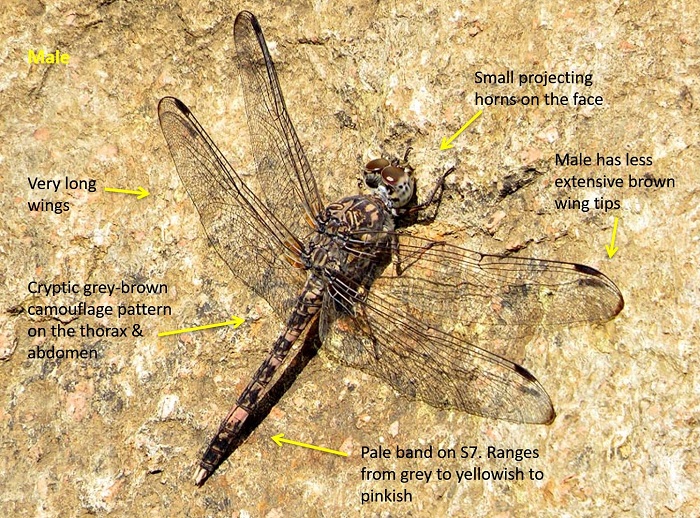
Horned Rockdweller (Bradinopyga cornuta)

Cover photo by Ronelle White.

Find this species in the FBIS database (Freshwater Biodiversity Information System) here.

Family Libellulidae

Identification

Horned Rockdweller Bradinipyga cornuta – Male
Mlawula Nature Reserve, Eswatini
Photo by Kate Braun

Medium sized

Length up to 45mm; Wingspan attains 79mm.

A unique and distinctive species. Unlikely to be confused with any other dragonfly in the sub-region. The habitat and behaviour alone is often enough to identify it.

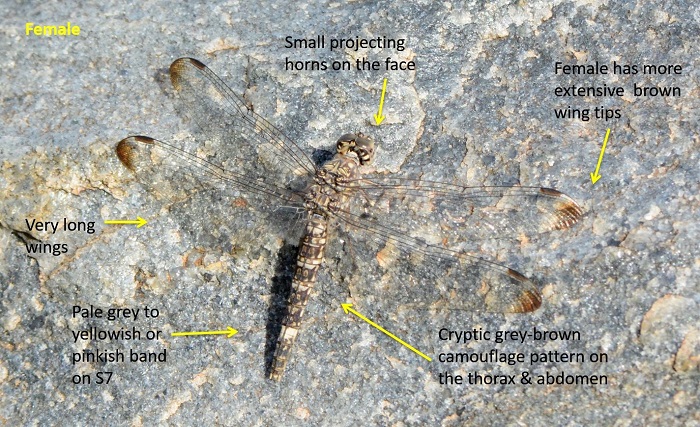
The sexes are similar but females have more extensive brown wing tips and broader abdomens than males. Both sexes bear small ‘horns’ on the face and head, although these are better developed and more noticeable in the males.

The Horned Rockdweller could be mistaken for a female Southern Banded Groundling (Brachythemis leucosticta) but that species has yellowish (not black) pterostigmas and yellowish markings on the thorax and abdomen.

Click here for more details on identification.

Horned Rockdweller Bradinopyga cornuta – Female
Mkuze River, KwaZulu-Natal
Photo by Ryan Tippett

Habitat

The Horned Rockdweller has very specific habitat requirements. It frequents savanna rivers and streams where there are large, exposed rock formations along the riverbanks. The Horned Rockdweller breeds in rain or flood water-filled potholes that are left behind after the waters recede. It favours granite over all other rock types.

Habitat (in foreground) – Mkuze River, KwaZulu-Natal Photo by Ryan Tippett

Behaviour

The behaviour of the Horned Rockdweller is distinctive. It sits on exposed rock faces where it is very well camouflaged. Individuals often cling to vertical rock faces and move to shaded sections when it gets too hot.

The Horned Rockdweller is a very alert species. It flushes at the slightest disturbance, but mostly returns to the same spot. The flight is fast and powerful. The Horned Rockdweller is often gregarious in good habitat.

On the wing throughout the year, but more numerous during the warmer months.

Status and Conservation

The Horned Rockdweller is locally common but highly localised. It is listed as of least Concern in the IUCN Red List of Threatened Species.

Distribution

The Horned Rockdweller is widely distributed in eastern and southern Africa. It ranges from Kenya and Uganda in the north down to South Africa. Bradinopyga cornuta is also found across to Zambia, Southern DRC and on to parts of Namibia.

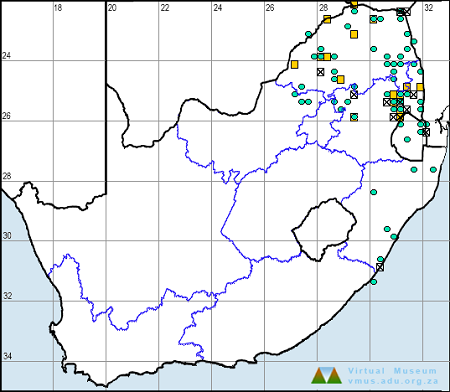
In South Africa it is found in the north and east and is most widespread in Limpopo and Mpumalanga. The Horned Rockdweller is likely to be more widely distributed in KwaZulu-Natal than current records show. It also occurs marginally in North West, Gauteng and the Eastern Cape.

Below is a map showing the distribution of records for Horned Rockdweller in the OdonataMAP database as at February 2020.

Below is a map showing the distribution of records for Horned Rockdweller in the OdonataMAP database as of December 2024.

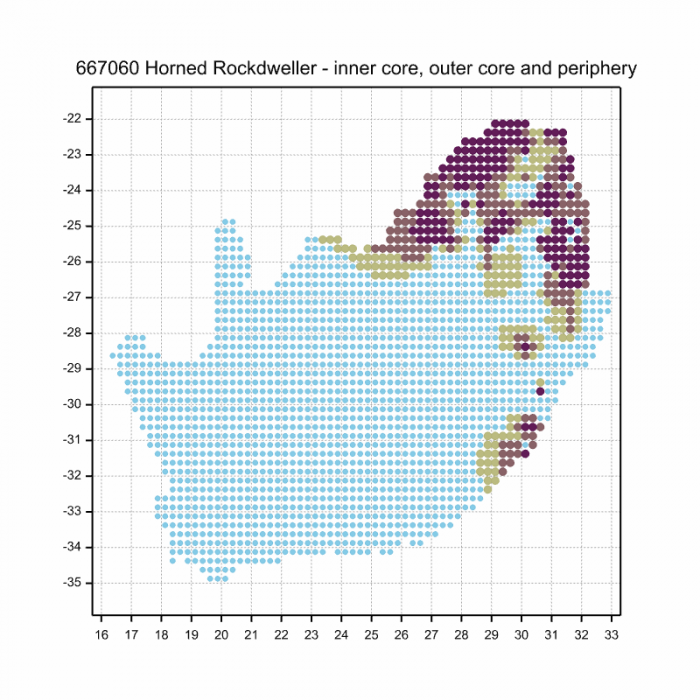
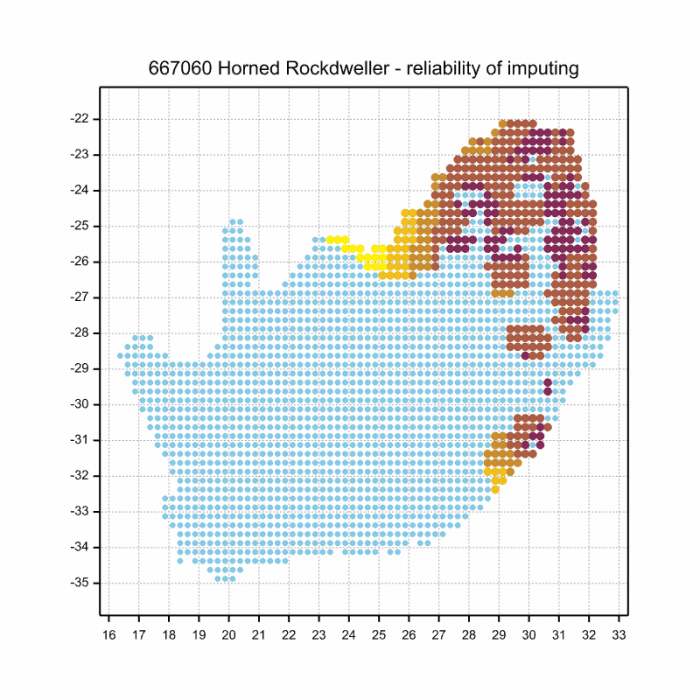
The next map below is an imputed map, produced by an interpolation algorithm, which attempts to generate a full distribution map from the partial information in the map above. This map will be improved by the submission of records to the OdonataMAP section of the Virtual Museum.

Ultimately, we will produce a series of maps for all the odonata species in the region. The current algorithm is a new algorithm. The objective is mainly to produce “smoothed” maps that could go into a field guide for odonata. This basic version of the algorithm (as mapped above) does not make use of “explanatory variables” (e.g. altitude, terrain roughness, presence of freshwater — we will be producing maps that take these variables into account soon). Currently, it only makes use of the OdonataMAP records for the species being mapped, as well as all the other records of all other species. The basic maps are “optimistic” and will generally show ranges to be larger than what they probably are.

These maps use the data in the OdonataMAP section of the Virtual Museum, and also the database assembled by the previous JRS funded project, which was led by Professor Michael Samways and Dr KD Dijkstra.

Further Resources

The use of photographs by Kate Braun and Ronelle White is acknowledged. Other images by Ryan Tippett.

Horned Rockdweller Bradinopyga cornuta Ris, 1911

Other common names: Wegkruipertjie (Afrikaans)

Recommended citation format: Loftie-Eaton M; Navarro R; Tippett RM; Underhill L. 2025. Horned Rockdweller Bradinopyga cornuta. Biodiversity and Development Institute. Available online at https://thebdi.org/2020/06/15/horned-rockdweller-bradinopyga-cornuta/

References: Tarboton, M; Tarboton, W. (2019). A Guide to the Dragonflies & Damselflies of South Africa. Struik Nature.

Samways, MJ. (2008). Dragonflies and Damselflies of South Africa. Pensoft

Samways, MJ. (2016). Manual of Freshwater Assessment for South Africa: Dragonfly Biotic Index. Suricata 2. South African National Biodiversity Institute, Pretoria
Martens, A; Suhling, F. (2007). Dragonflies and Damselflies of Namibia. Gamsberg Macmillan.

Similar Species

Red Groundling (Brachythemis lacustris)

Cover photo by Rob Dickinson.

Find this species in the FBIS database (Freshwater Biodiversity Information System) here.

Family Libellulidae

Identification

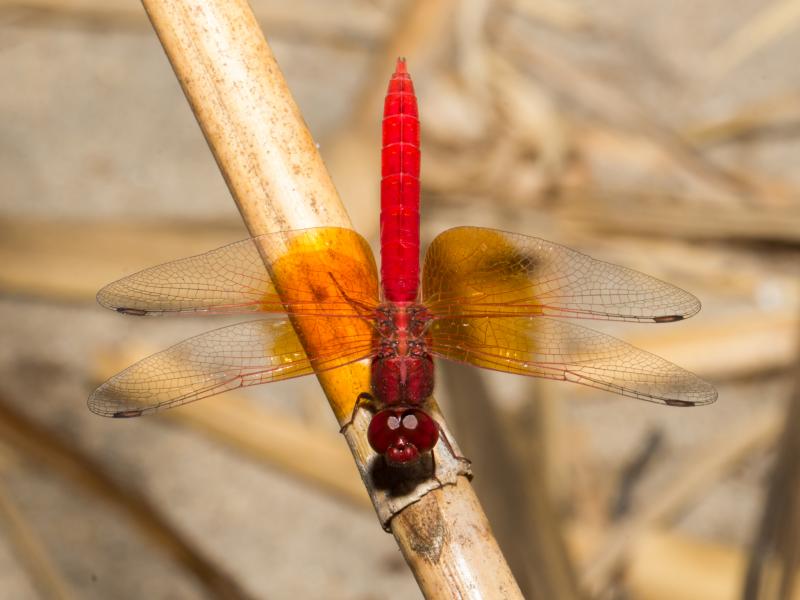
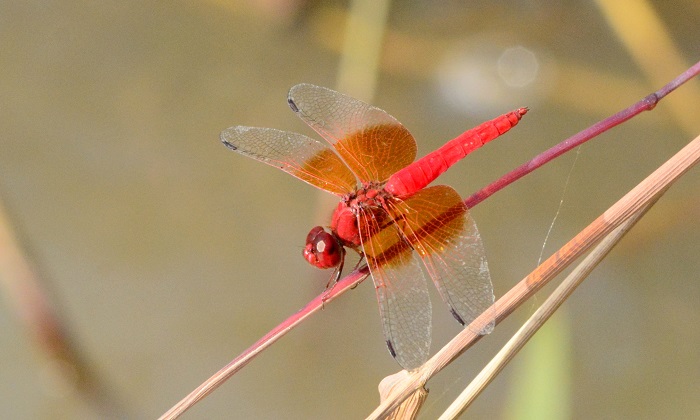
Red Groundling Brachythemis lacustris – Male
Mkuze River, KwaZulu-Natal
Photo by Ryan Tippett

Very small size

Length up to 27mm; Wingspan reaches 49mm.

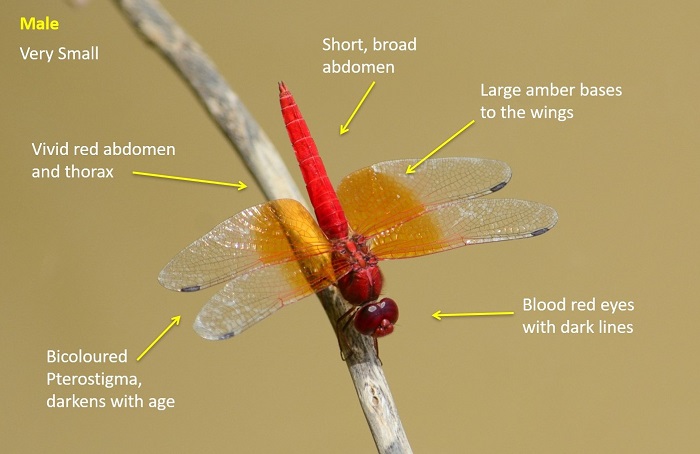
Male Red Groundlings are most similar to the Orange-winged Dropwing (Trithemis kirbyi). Both species are bright red with amber wing panels. Brachythemis lacustris differs in having a squat build, with shorter, broader abdomens and an un-tapered waist. In addition Brachythemis lacustris has bi-coloured pterostigmas and deep red-brown eyes with dark lateral lines.

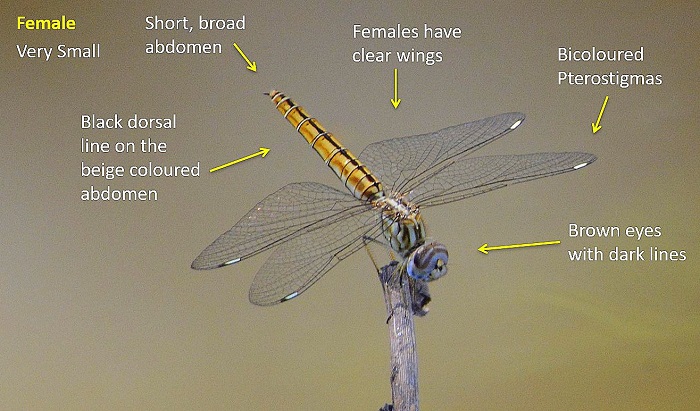
Females also differ from Trithemis kirbyi by having a squat build, bi-coloured pterostigmas, different abdomen patterns and eyes with dark lateral lines.

Click here for more details on identification.

Red Groundling Brachythemis lacustris – Female
Ndumo Game Reserve, KwaZulu-Natal
Photp by Ryan Tippett

Habitat

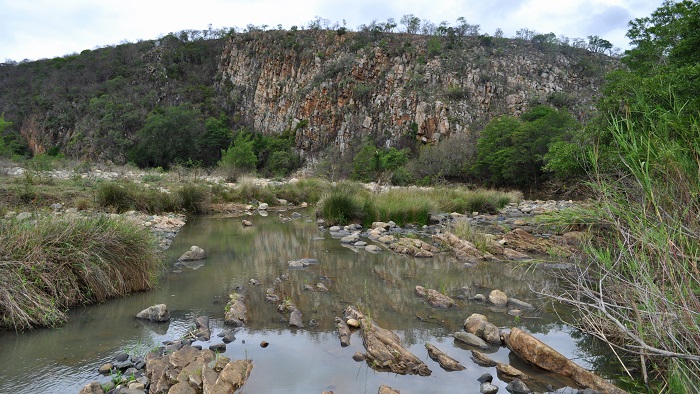
The Red Groundling inhabits rivers and streams with an abundance of bank side reeds, sedges, trees, grass and other vegetation. It often frequents backwaters and small, meandering channels where the water flow is weaker. The Red Groundling occurs mainly in the warmer and wetter parts of the Savanna biome.

Habitat – Mkuze River, KwaZulu-Natal
Photo by Ryan Tippett

Behaviour

The Red Groundling is a gregarious species. Many individuals of both sexes and of varying ages, may be found on the same overhanging reed. It is rather inconspicuous, despite the males bright colouration, as they tend to sit low down along the inside of river channels. The Red Groundling is fairly confiding and reluctant to fly. It hunts small flying insect in short, darting flights before quickly returning to a perch.

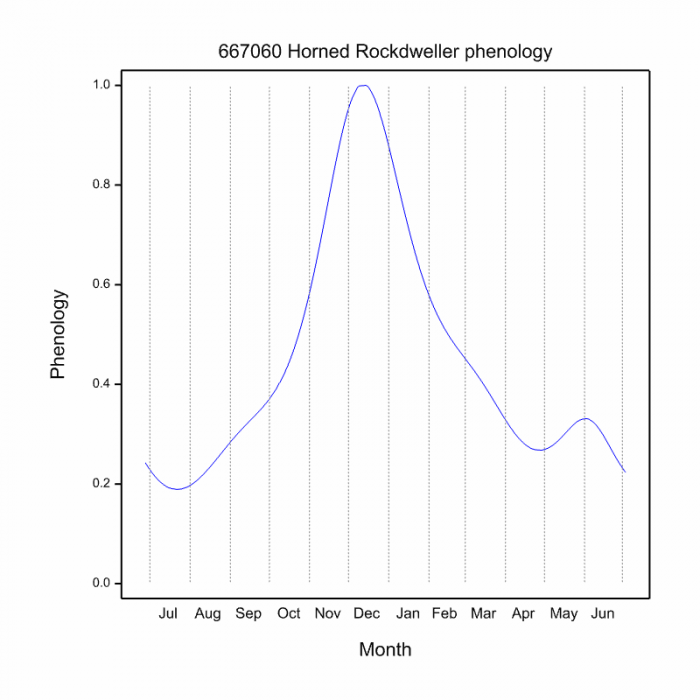
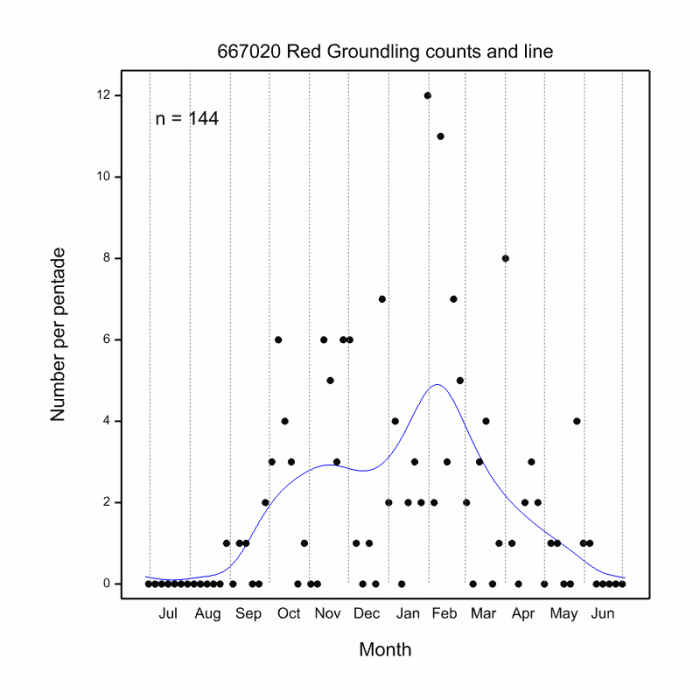
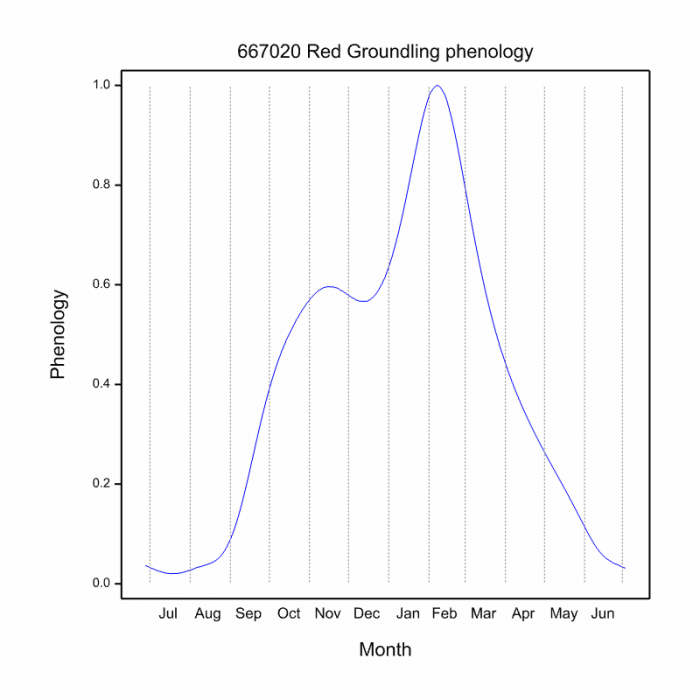
The Red Groundling is most active from late September to May (see Phenology below)

Red Groundling Brachythemis lacustris
Mkuze River, KwaZulu-Natal
Photo by Ryan Tippett

Status and Conservation

Brachythemis lacustris is fairly common but highly localised. It is listed as of Least Concern in the IUCN Red List of Threatened Species. It is fairly sensitive to habitat disturbance and is found primarily in undisturbed habitats.

Red Groundling Brachythemis lacustris – Male
Amakhosi Game Reserve, KwaZulu-Natal
Photo by Ryan Tippett

Distribution

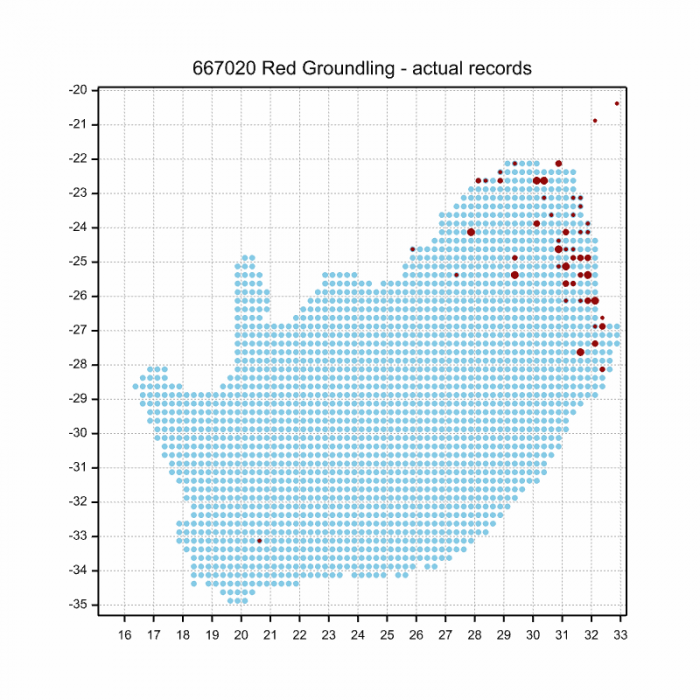
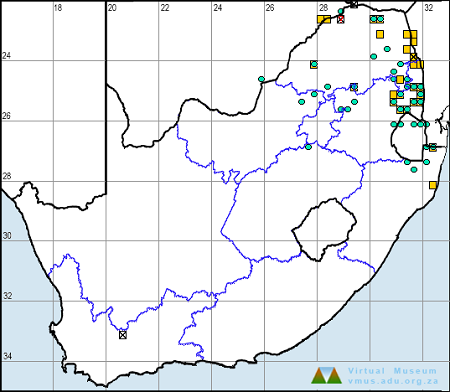
The Red Groundling is widely distributed over most of sub-Saharan Africa. In Southern Africa it is absent from the arid Kalahari, Namib and Karoo regions, as well as the more temperate Eastern and Western Cape provinces.

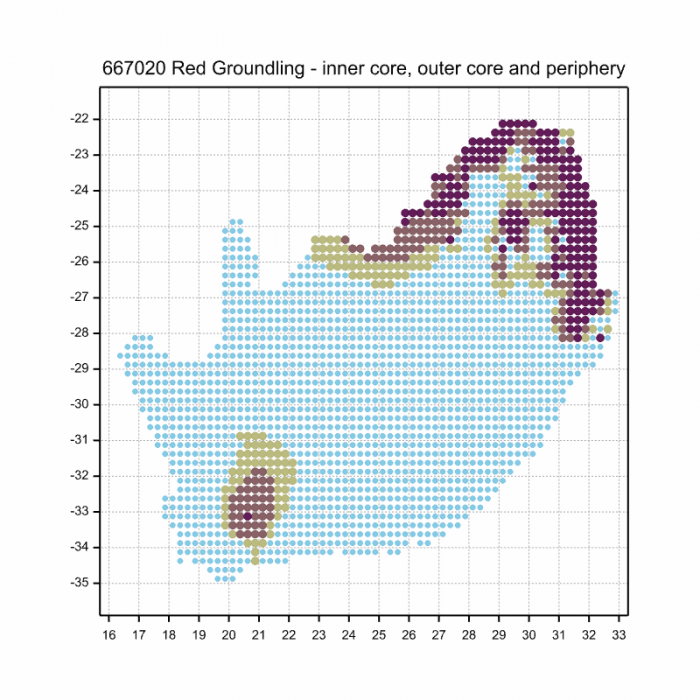
Below is a map showing the distribution of records for Red Groundling in the OdonataMAP database as at February 2020.

Below is a map showing the distribution of records for Red Groundling in the OdonataMAP database as of December 2024.

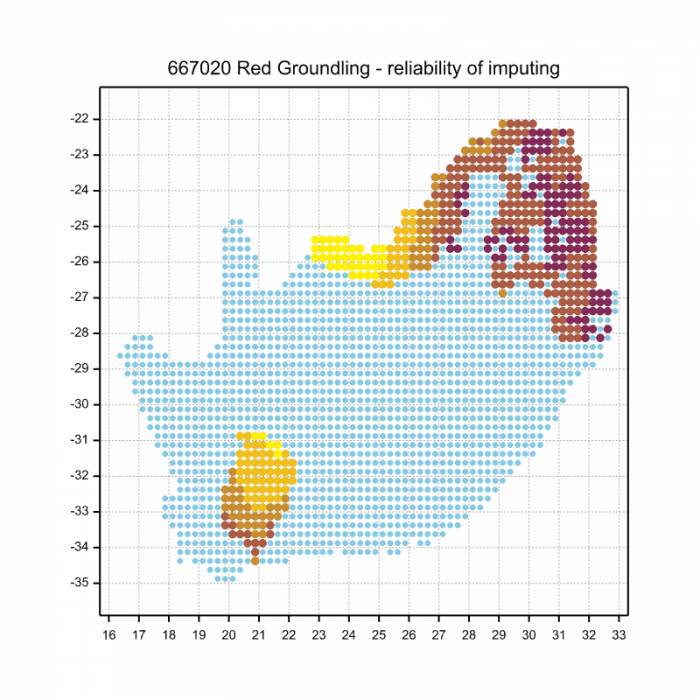
The next map below is an imputed map, produced by an interpolation algorithm, which attempts to generate a full distribution map from the partial information in the map above. This map will be improved by the submission of records to the OdonataMAP section of the Virtual Museum.

Ultimately, we will produce a series of maps for all the odonata species in the region. The current algorithm is a new algorithm. The objective is mainly to produce “smoothed” maps that could go into a field guide for odonata. This basic version of the algorithm (as mapped above) does not make use of “explanatory variables” (e.g. altitude, terrain roughness, presence of freshwater — we will be producing maps that take these variables into account soon). Currently, it only makes use of the OdonataMAP records for the species being mapped, as well as all the other records of all other species. The basic maps are “optimistic” and will generally show ranges to be larger than what they probably are.

These maps use the data in the OdonataMAP section of the Virtual Museum, and also the database assembled by the previous JRS funded project, which was led by Professor Michael Samways and Dr KD Dijkstra.

Red Groundling Brachythemis lacustris – Immature male
Mkuze River, KwaZulu-Natal
Photo by Ryan Tippett

Phenology

Red Groundling Brachythemis lacustris – Female
Mkuze River, KwaZulu-Natal
Photo by Ryan Tippett

Further Resources

The use of photographs by Rob Dickinson is acknowledged. All other photographs by Ryan Tippett.

Red Groundling Brachythemis lacustris (Kirby, 1889)

Other common names: Rooigrondwagtertjie (Afrikaans)

Recommended citation format: Loftie-Eaton M; Navarro R; Tippett RM; Underhill L. 2025. Red Groundling Brachythemis lacustris. Biodiversity and Development Institute. Available online at https://thebdi.org/2020/06/12/red-groundling-brachythemis-lacustris/

References: Tarboton, M; Tarboton, W. (2019). A Guide to the Dragonflies & Damselflies of South Africa. Struik Nature.

Samways, MJ. (2008). Dragonflies and Damselflies of South Africa. Pensoft

Samways, MJ. (2016). Manual of Freshwater Assessment for South Africa: Dragonfly Biotic Index. Suricata 2. South African National Biodiversity Institute, Pretoria

Martens, A; Suhling, F. (2007). Dragonflies and Damselflies of Namibia. Gamsberg Macmillan.

Red Groundling Brachythemis lacustris – Male
Amakhosi Game Reserve, KwaZulu-Natal
Photo by Ryan Tippett

Similar Species