
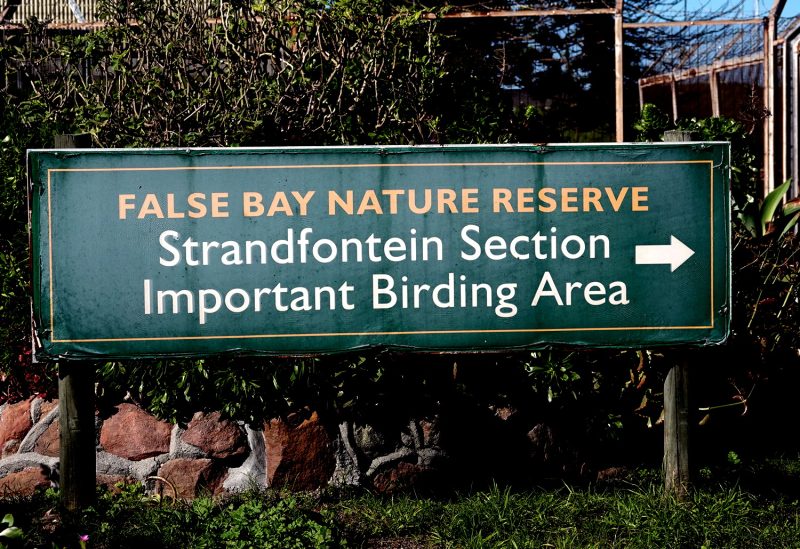
We grabbed the opportunity presented by a calm Saturday morning to do bird ringing at the Strandfontein Sewage Works (relevant permissions having been obtained).

We were there well before sunrise to put up the mist nets.
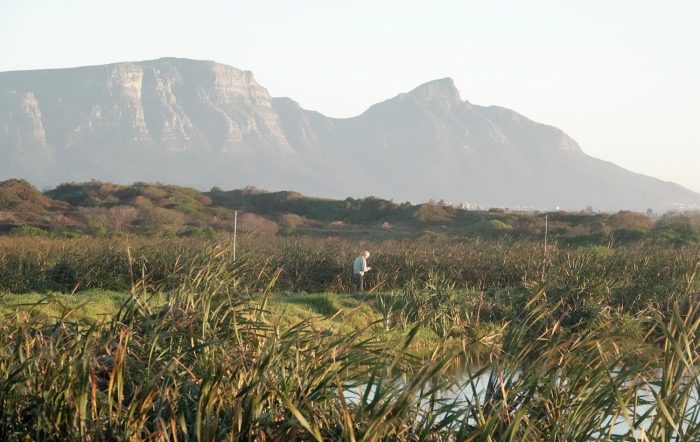
The mist net poles are visible, but the net is not. Dieter is extracting a bird
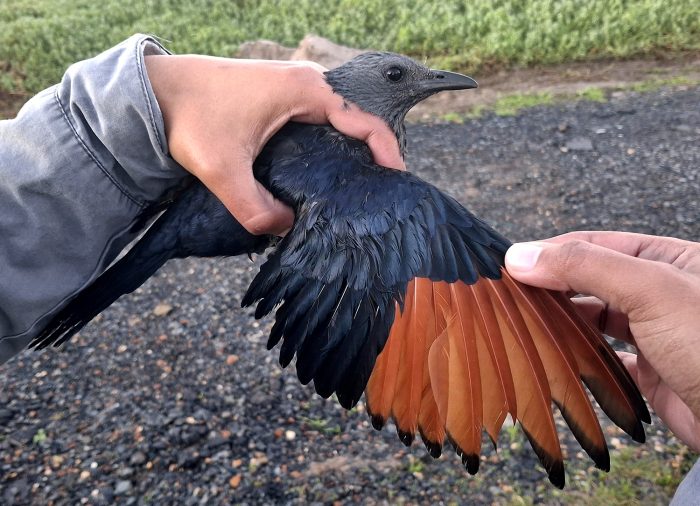
The contrast between the primaries and secondaries of this Red-winged Starling make doing the moult score easier than it is for most species. The secondaries primaries are black and the primaries are “red” (that is not really “red”, that is “reddish brown”). It’s a female, because of the grey head. Compared with the pointed wings of long-distance migrants, the wings are quite rounded. The nine primaries that can be seen in the photograph are similar in size. There is a 10th primary on the outside of the wing (not visible here) which is about half as long as the ninth. In most passerines the 10th primary is tiny.
Red-winged Starlings moult in summer. So at some time during the past few months this bird has been through some kind of trauma, possibly a fight with another starling, and the tip of the fifth primary has been broken off. This damage won’t be patched up until the next moult, and meanwhile the aerodynamics are a bit compromised.
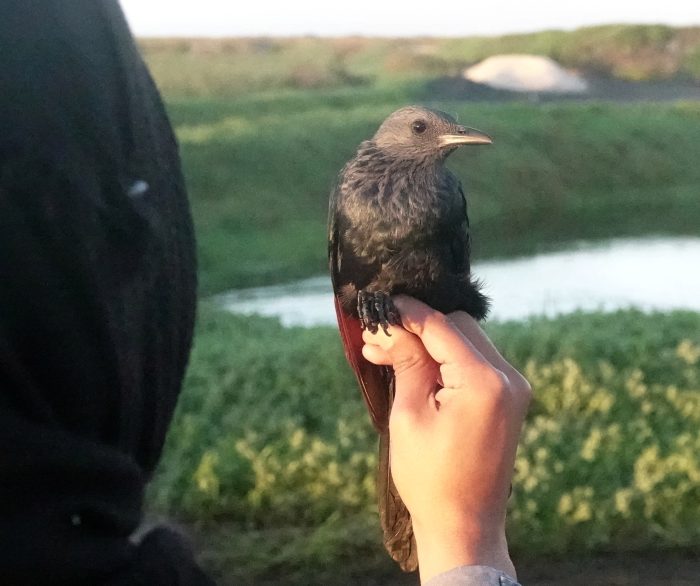
The bird was chill, and posed for photos before it was released.
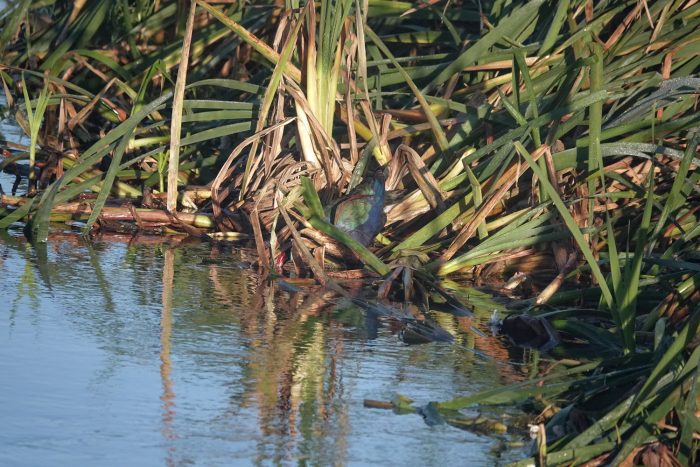
Even an African Swamphen, out in bright sunlight on the edge of a reedbed, can be inconspicuous
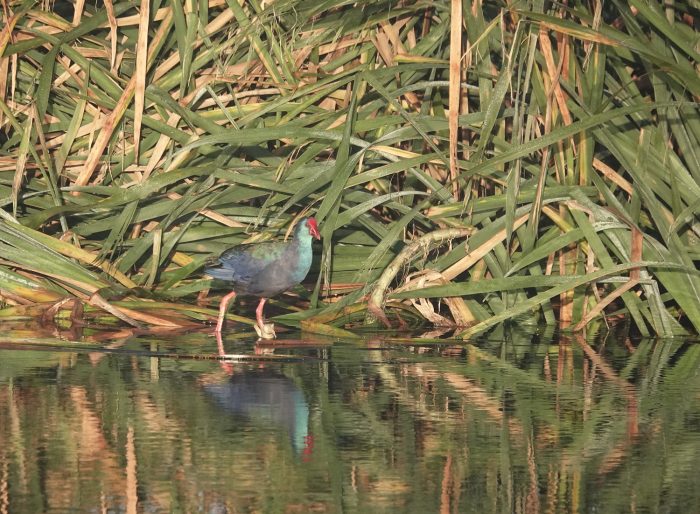
We worked quite hard trying to catch this bird, both with a spring trap and with mist nets.
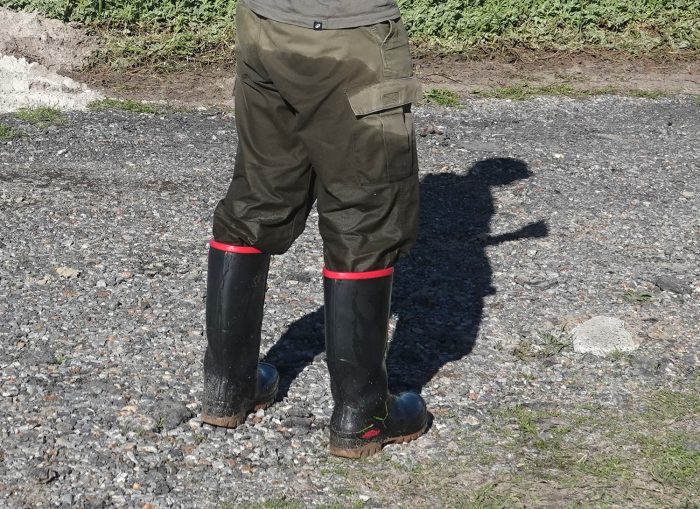
But alas, in spite of serious efforts, the final score was: Ringers 0 – Swamphen 1
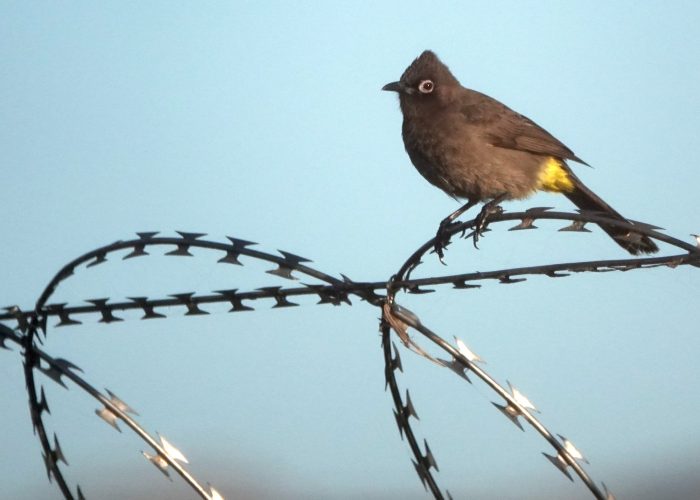
Be careful with your feet, Cape Bulbul!

We ringed 25 birds of seven species. listed in the table below:
| Species | Count |
| Lesser Swamp Warbler | 9 |
| Little Rush Warbler | 2 |
| Red-winged Starling | 1 |
| Southern Double-collared Sunbird | 1 |
| Cape Weaver | 1 |
| Southern Masked Weaver | 8 |
| Southern Red Bishop | 3 |
| Totals: 7 species | 25 birds |
There were lots of birds flying over. The ringer looks at them and asks the question: “Are they moulting?”
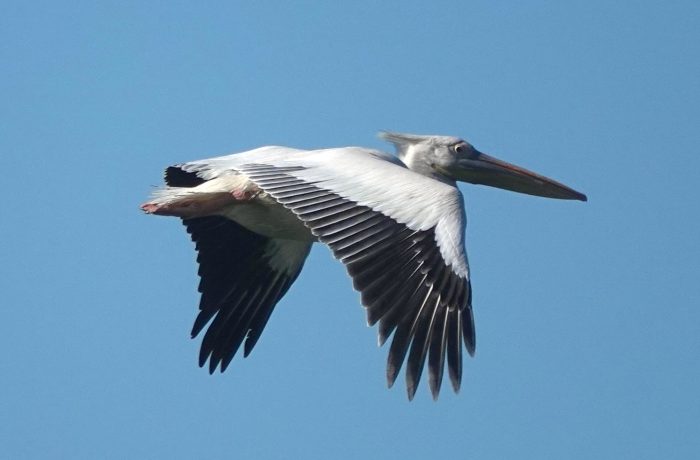
Look at the fifth primary of this Great White Pelican. That’s counting from the inside (the sixth counting from the outside). It is a bit shorter than its neighbours. It must be in moult. And the 10th primary, the outermost, looks like it is also in growth. Large birds, like pelicans, have complex moult patterns, and mostly do not moult all their primaries every year.
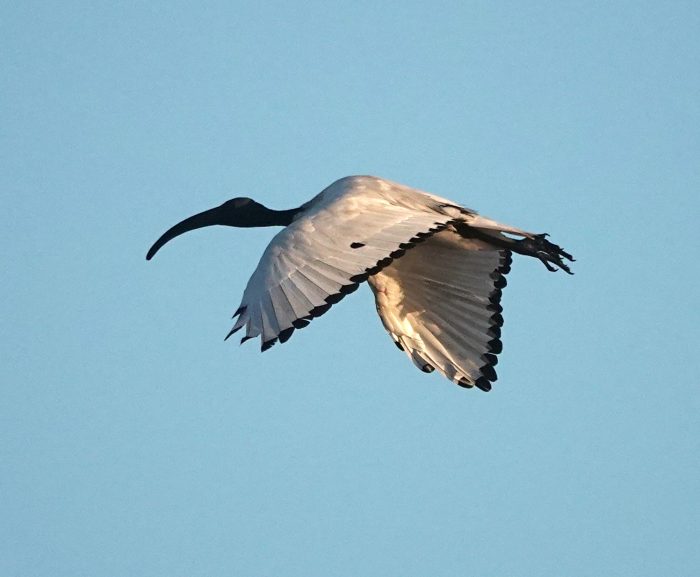
Looking at the right wing, the final three primaries of this African Sacred Ibis are in moult.
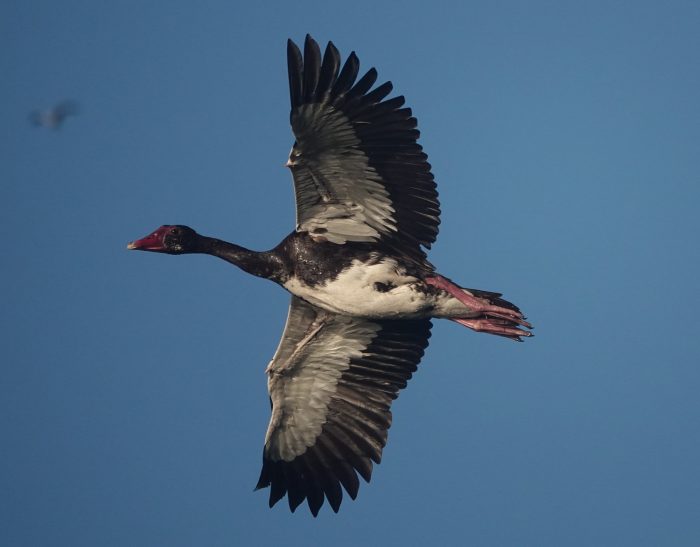
You will never see a Spur-winged Goose with growing primaries. Ducks, swans and geese do a catastrophic moult. The drop all their flight feathers simultaneously and become flightless (and vulnerable to predation). They regrow the feathers over a period of a few weeks. Coots, grebes, rails, and some other waterbirds also become flightless through their catastrophic moult. Most waterbirds can do at least some feeding during their moult. All penguin species do a catastrophic moult. But they cannot feed at all during moult because they lose their waterproofing, and therefore their insulation from the cold. They fatten up beforehand, come ashore for between two and four weeks and use their reserves to live, and to replace their feathers.
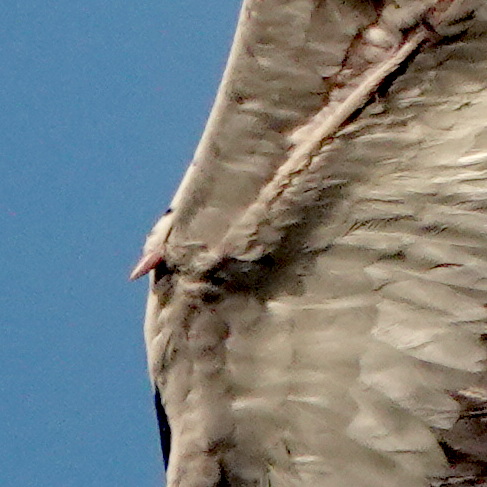
This is a close up of the bend in the wing of the Spur-winged Goose in the photo above. That’s the spur that gives the species its English common name.