
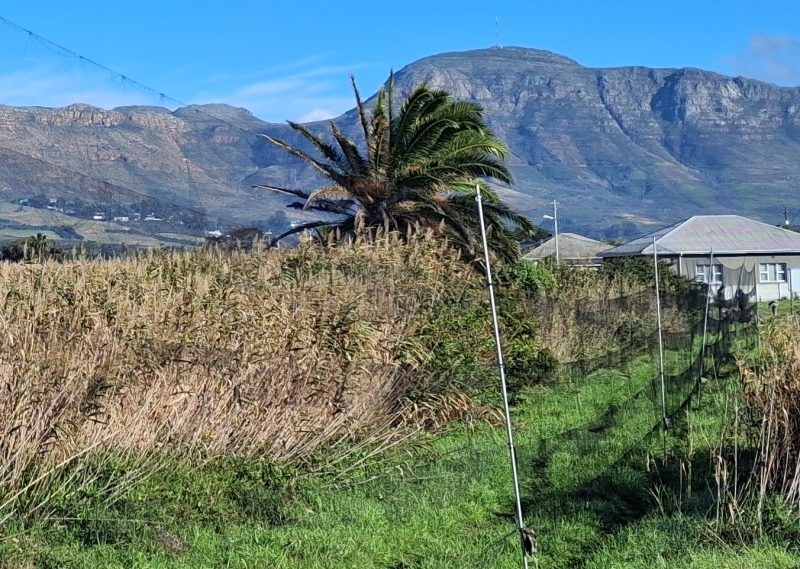
Frogmore Estate is a suburb of Cape Town, a few kilometres north of Muizenberg, and bordering on Zandvlei. The Zandvlei Trust plays a key role in the conservation of this large wetland system. The fact that this a good bird ringing site is a tribute to their success.
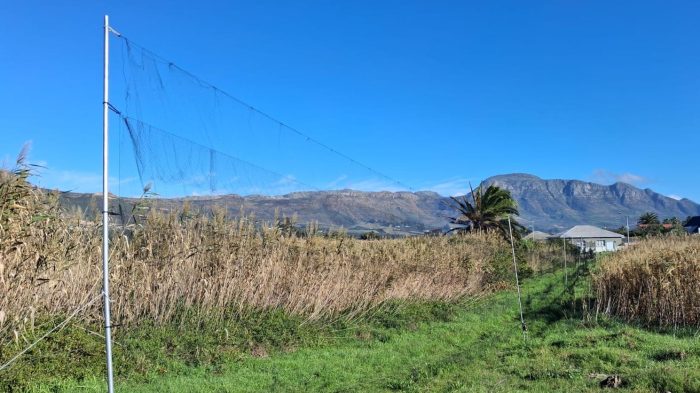
On 9 May 2026, we had a line of five mist nets along a track through the reedbeds, and one mist net set over a bridge on the Keysers River. There was not the slightest breeze, so the nets hung like curtains. Ideal conditions.
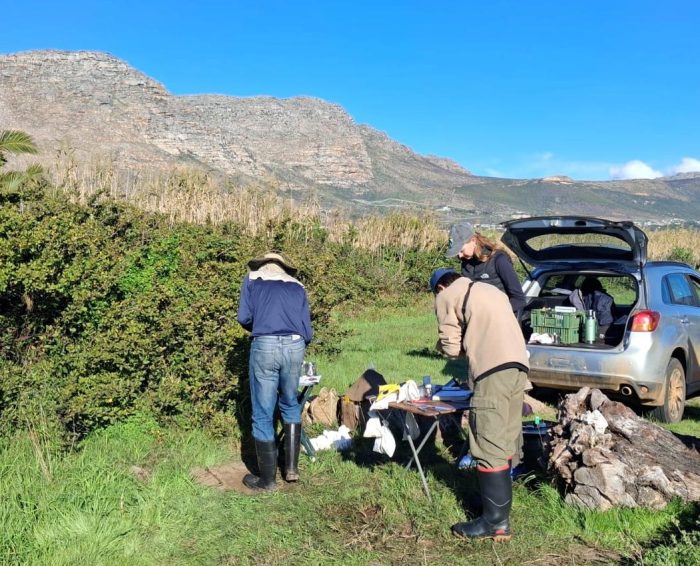
The clouds behind the mountain were the first sign of a big cold front due to arrive in about 15 hours, bringing heavy rain to the Western Cape. with severe weather warnings of floods, 100 km/h winds and dangerous waves at sea!
The list of birds we handled is below. There were 36 birds of 13 species, with none reaching double figures! (The species in red have a structured species text on the BDI website; there’s a full list of these species here.)
There were three retraps from previous ringing events at this site. We only have photographs of one of them, the Malachite Kingfisher below. One of the Levaillant’s Cisticolas had been ringed on 15 March last year, a little over a year ago. One of the Southern Double-collared Sunbird, a male, had been ringed as an adult on 23 March 2019. That’s a bit more than seven years since ringing, and because it was an adult already when ringed, it must be at least eight years old.
The two Malachite Kingfishers were in the hand at the same time. One was a retrap from 20 December last year, the day we held or end-of-year ringing event, for which there is a blog!
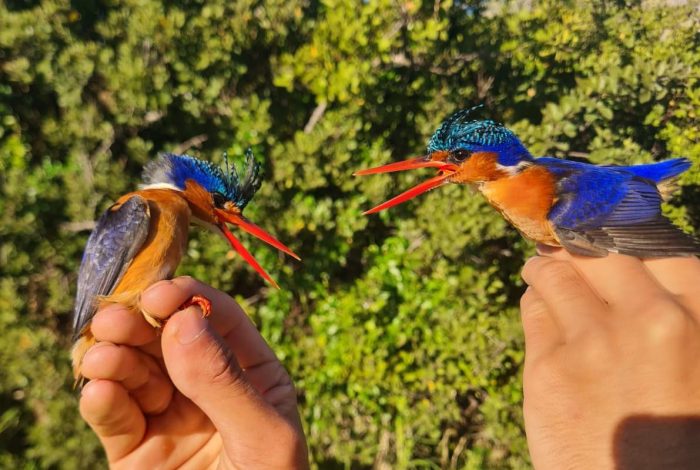
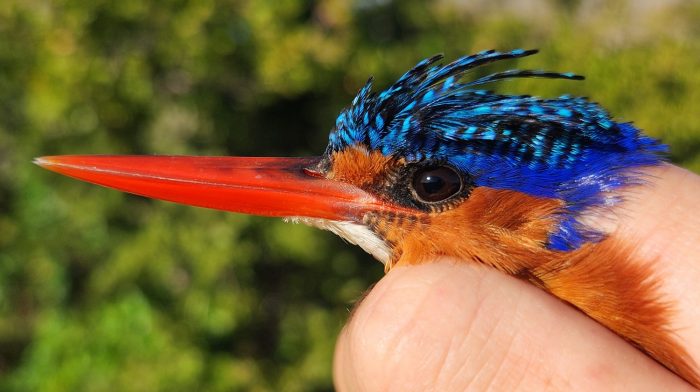
The privilege of ringers is to see birds really close up.
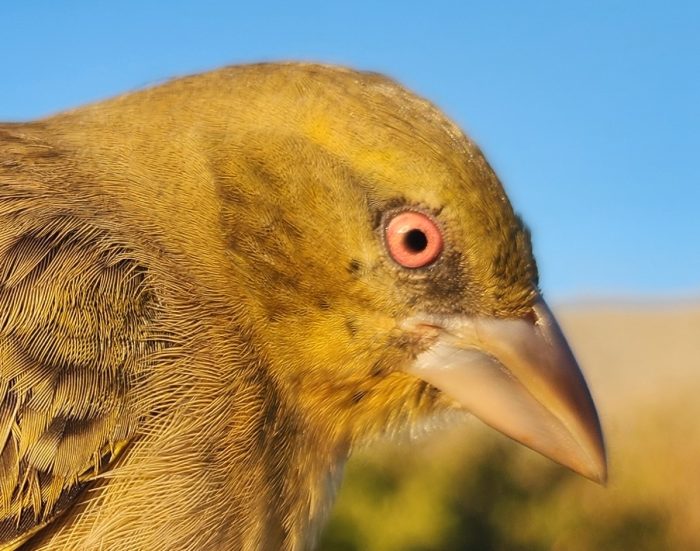
The bill of the Southern Marked Weaver looks a less formidable weapon that that of the Cape Weaver (see the photo below). This bird’s eye is turning red, so it is a male.
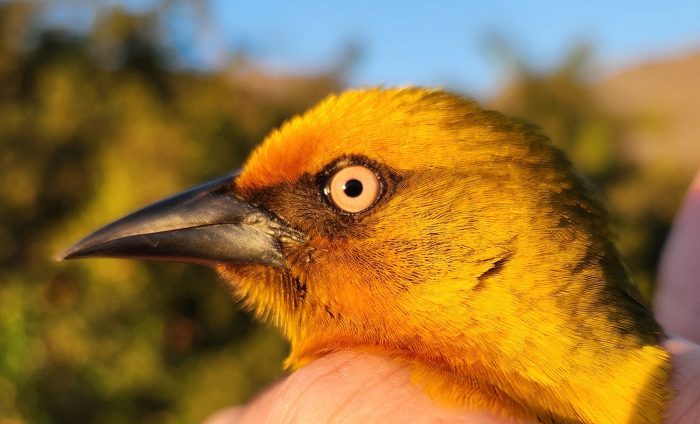
Male Cape Weaver, with marie biscuit-coloured eye, and a longer bill than the Southern Masked Weaver.
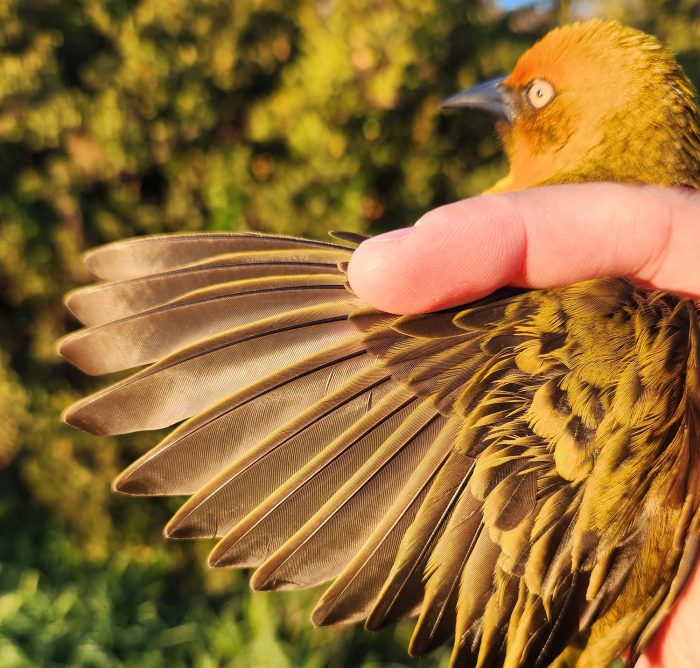
By May, primary moult has been complete for several months. Count the nine primaries of this Cape Weaver; it’s easiest to count from the outside in. The innermost was replaced first, and the outermost last. The process takes about four months to complete. The nine primaries of this bird still look new; they are not starting to fray at the tips. These feathers will have to do a lot of work before they get replaced just after the end of the upcoming breeding season, in spring. By then they will look worn out at the tips.
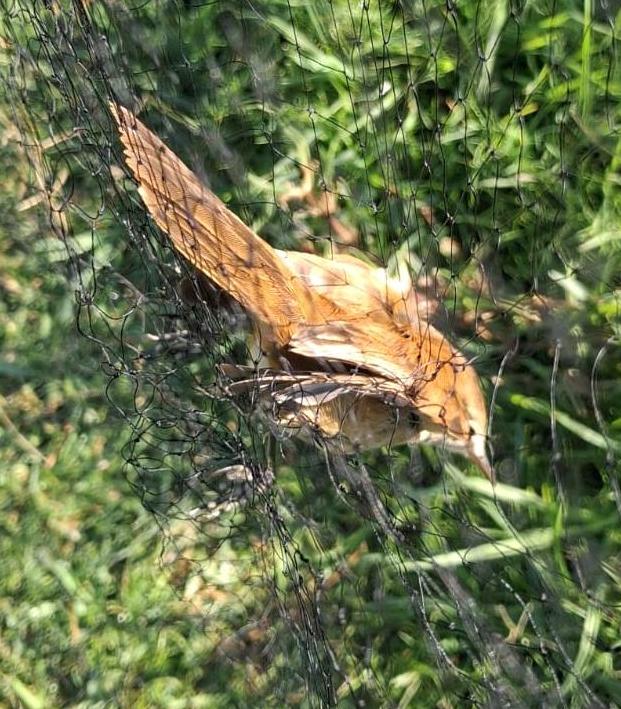
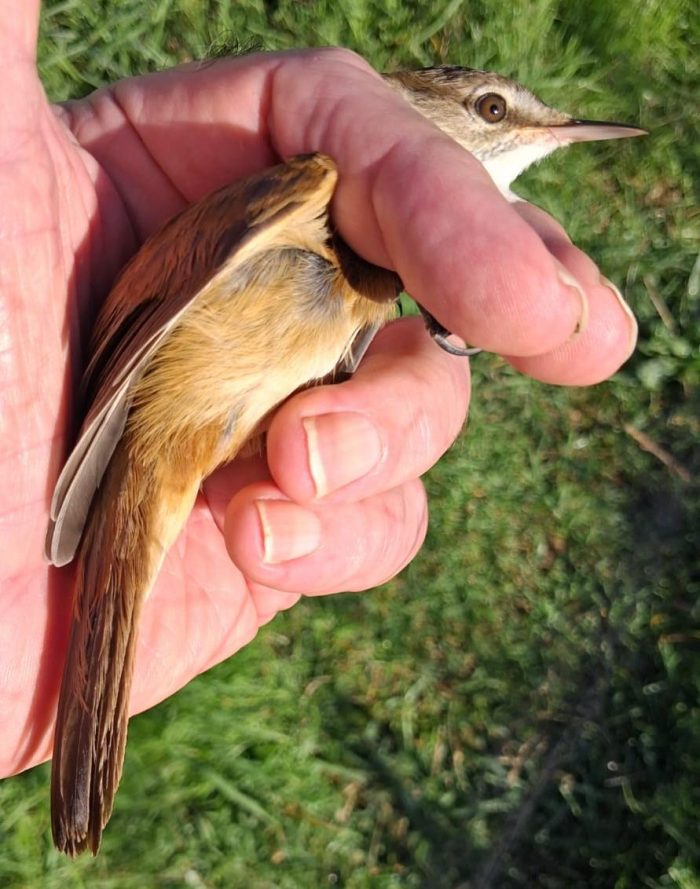
Lesser Swamp Warbler, in the mist net, and a few seconds later, in the hand in the ringer’s grip, with the head and neck held gently between the index finger and the middle finger, and with the bird’s body fitting snugly into the palm of the hand.
The mist net set over the Keysers River caught three Red-knobbed Coots.
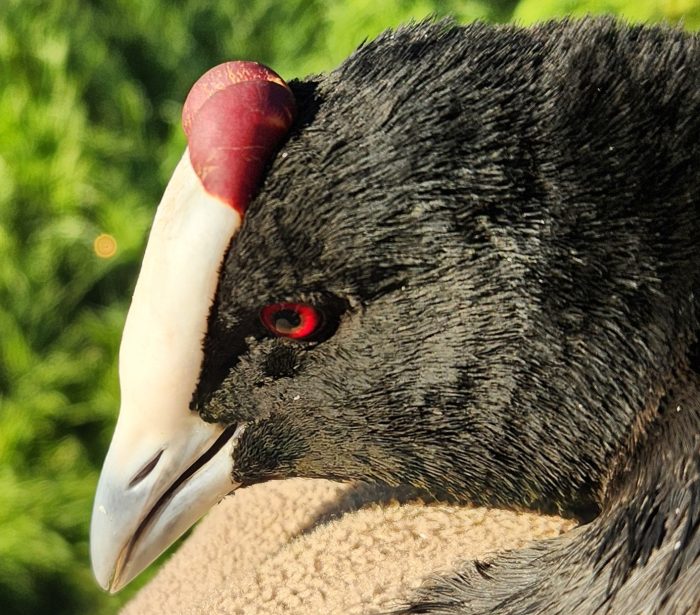
The red knobs, up close!
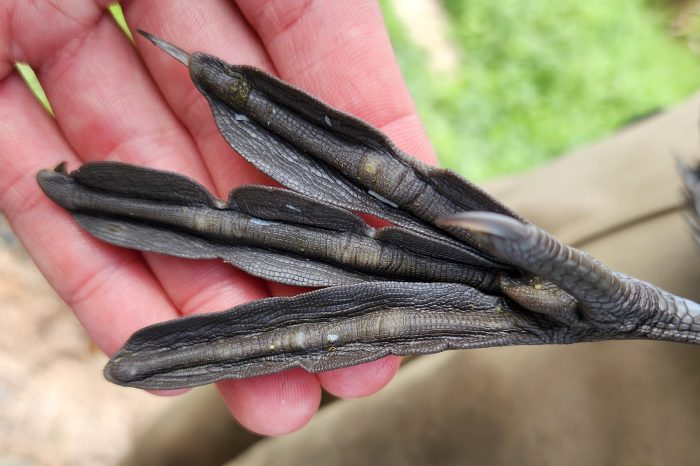
Unlike most waterbirds, coots don’t have webbed feet.
The Keysers River is the largest waterway feeding into Zandvle. It drains a large area, from the watershed along the top ridge of the Constantiaberg, and the mountainside to the east of this. Then it collects all the stormwater from suburbs such as Tokai, Kirstenhof, Constantia and parts of Bergvliet and Retreat. It is likely to prove an important corridor for bird movement, especially of waterbirds.
A list of dates for future ringing events is here.
There is a list of ringing expeditions that have blog reports similar to this here.