
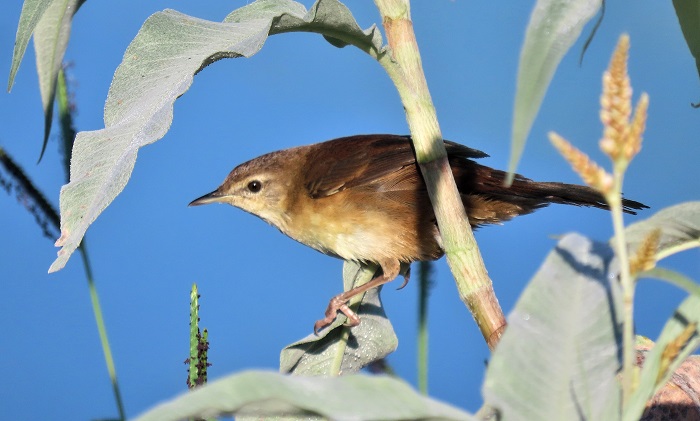
Cover image of Little Rush Warbler by Malcolm Robinson – Pietermaritzburg, KwaZulu-Natal
The Little Rush Warbler belongs to the Family LOCUSTELLIDAE (Grassbirds and allies). Locustellidae is a recently recognised family of small insectivorous songbirds. These birds occur mainly in Eurasia, Africa, and Australasia. They inhabit a variety of habitats with dense undergrowth, including forest, marshes, swampland, and seasonally arid grasslands. Most are drab, brownish or buff-coloured warblers with fine bills, lightly proportioned bodies, and relatively long graduated tails. The family is made up of 67 species from 11 genera.
Identification
The Little Rush Warbler is a small, dark warbler and the sexes are alike
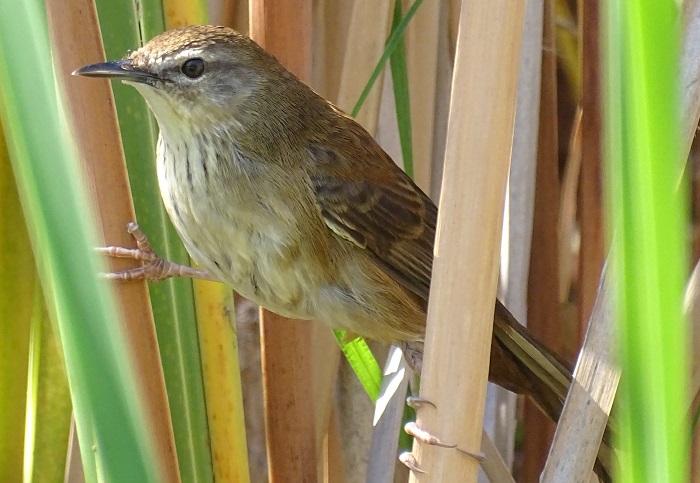
Bushmanskloof, Western Cape
Photo by Zenobia van Dyk
Adult birds have dark greyish-brown upperparts with a rufous tinge towards the rump. The underparts are greyish white, with variable, indistinct dark streaks on the throat and upper breast. The flanks and undertail coverts are dull rufous. They have a buff-white supercilium, blackish lores, and buffy-brown ear coverts and cheeks with inconspicuous white streaks. The tail is dark brown, and relatively long and broad, giving a heavy-looking appearance. The bill is blackish-brown with a yellowish or pinkish base. The eyes are dark brown and the legs and feet are brownish-pink. Juveniles resemble the adults but have yellow-tinged underparts.
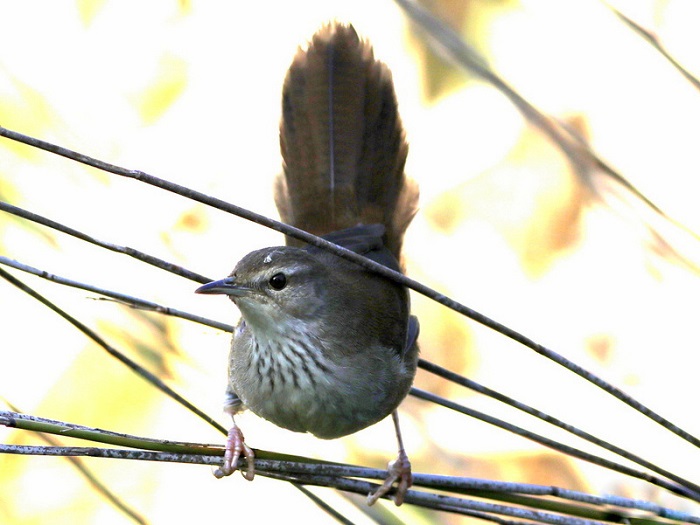
Somerset West, Western Cape
Photo by Corrie du Toit
The Little Rush Warbler could easily be mistaken for a host of other wetland warbler species. It can be separated from Acrocephalus reed warblers by its light streaking on the breast, and heavy, dark tail.The Little Rush Warbler is most similar to the Fan-tailed Grassbird (Schoenicola brevirostris), but that species is paler brown above, with greyish-white (not dull rufous) undertail coverts. The Little Rush Warbler has a loud and distinctive call that is a useful aid in identification.
Status and Distribution
The Little Rush Warbler is common and is widespread but patchily distributed throughout sub-Saharan Africa. It ranges from Ghana in the west, Ethiopia in the north, and down to South Africa. The Little Rush Warbler is widespread in southern Africa, but absent from the arid parts of Namibia, Botswana, and South Africa, including the Kalahari Basin and most of the Karoo.
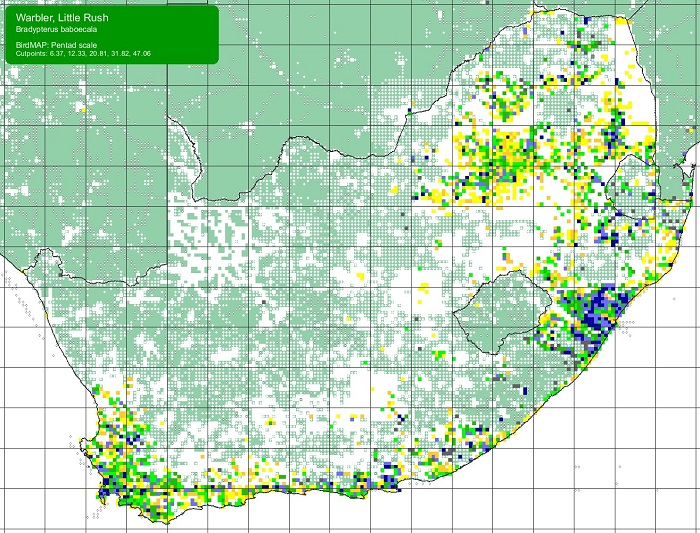
Details for map interpretation can be found here.
The Little Rush Warbler is not threatened. There is no evidence to suggest that the current distribution differs from the historical range. It has probably benefited from man-made wetlands and the silting up of rivers, which promotes the growth of aquatic vegetation.
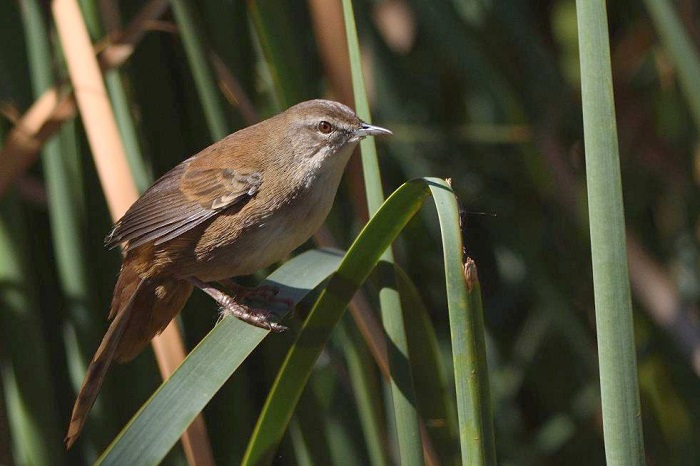
Philadelphia, Western Cape
Photo by Gerald Wingate
Habitat
The Little Rush Warbler occurs in reedbeds and other wetland vegetation, especially papyrus and sedges (Cyperus sp.) and Bulrushes (Typha sp.). It inhabits marshes, lagoons, and estuaries, streams, rivers, dams, sewage ponds, and flooded rank grassland. The Little Rush Warbler is found in all biomes where suitable habitat exists.
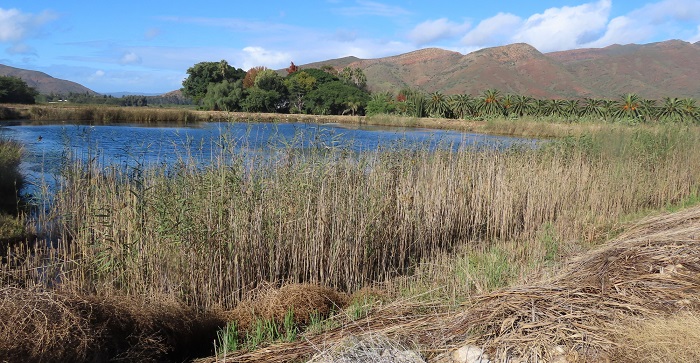
Near Worcester, Western Cape
Photo by Les Underhill
Behaviour
The Little Rush Warbler is a resident and largely sedentary species, but is known to make local seasonal movements in response to changing water levels.
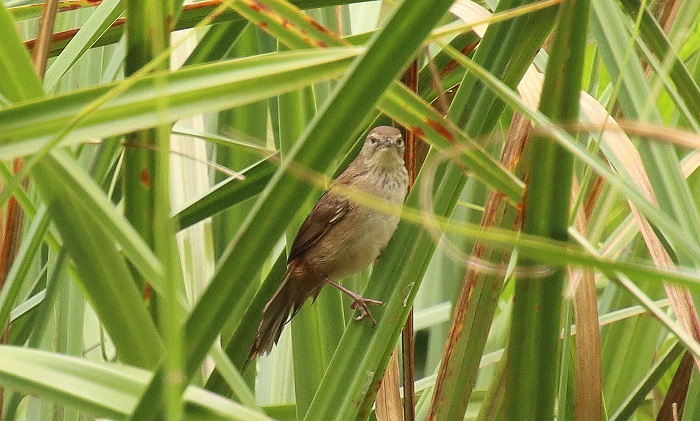
Matshavhawe, Limpopo
Photo by Marius Meiring
It is usually encountered solitarily or in pairs. The Little Rush Warbler is a shy, skulking species and can be hard to see clearly. It spends much time low down in marshy vegetation, but sometimes perches prominently during the early morning. It is easily overlooked unless calling. The Little Rush Warbler is reluctant to fly, flying only short distances, with whirring wings and the broad tail conspicuously spread.
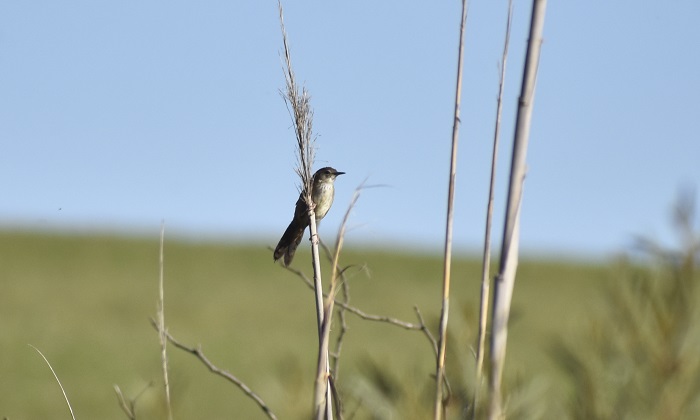
Near Caledon, Western Cape
Photo by Karis Daniel
Not much is known of the Little Rush Warbler’s diet and feeding behaviour. It forages low down in vegetation, mostly over water or mud in sedges and reeds. It is known to eat small insects and their eggs.
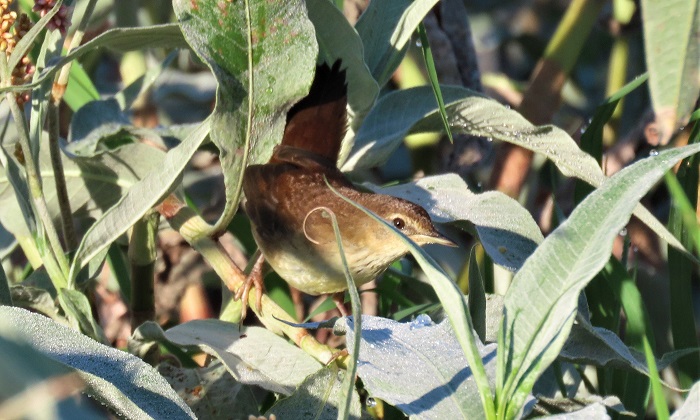
Pietermaritzburg, KwaZulu-Natal
Photo by Malcolm Robinson
The Little Rush Warbler breeds from August to January in the Western Cape, and from September to March further north. It is a monogamous and territorial species. The nest is a relatively large, deep and untidy cup made from reeds and coarse grass. The interior is lined with fine grass and rootlets. The nest is usually situated about 50cm above the ground or water.
2 to 3 eggs are laid per clutch. The incubation period takes 12 to 14 days, and the nestling period lasts a further 12 to 13 days. The young are known to be fed by both parents. The Little Rush Warbler is sometimes parasitised by the Diderick Cuckoo (Chrysococcyx caprius).
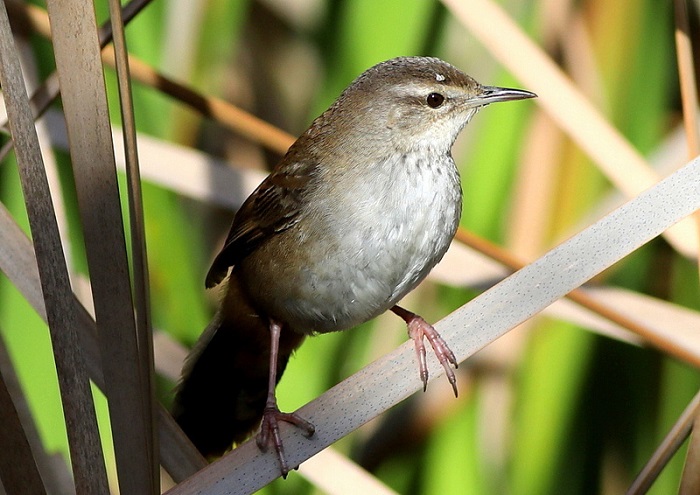
Somerset West, Western Cape
Photo by Corrie du Toit
Further Resources
This species text is adapted from the first Southern African Bird Atlas Project (SABAP1), 1997.
The use of photographs by Corrie du Toit, Gerald Wingate, Karis Daniel, Les Underhill, Malcolm Robinson, Marius Meiring, and Zenobia van Dyk is acknowledged. Additional photographs by Ryan Tippett.
Other common names: African Sedge Warbler (Alt. English); Kaapse vleisanger (Afrikaans); Unomakhwane (Xhosa); Bouscarle caqueteuse (French); Moeras-struikzanger (Dutch); Sumpfbuschsänger (German); Felosa-dos-juncos-africana (Portuguese).
Recommended citation format: Tippett RM. 2026. Little Rush Warbler Bradypterus baboecala. Biodiversity and Development Institute. Available online at https://thebdi.org/2026/04/17/little-rush-warbler-bradypterus-baboecala/
List of bird species in this format is available here.
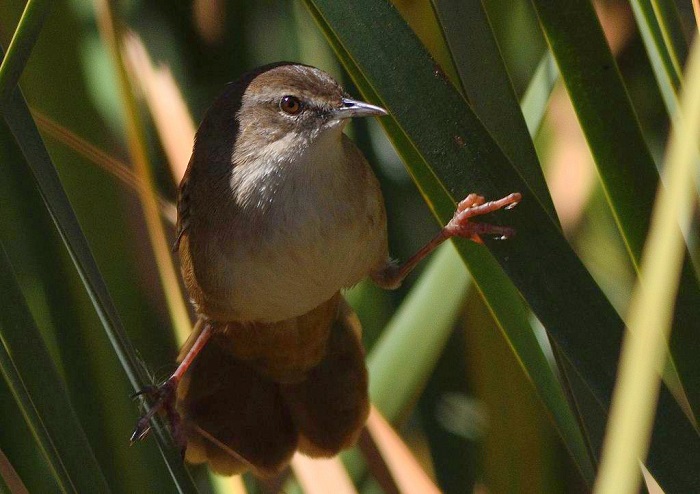
Philadelphia, Western Cape
Photo by Gerald Wingate
