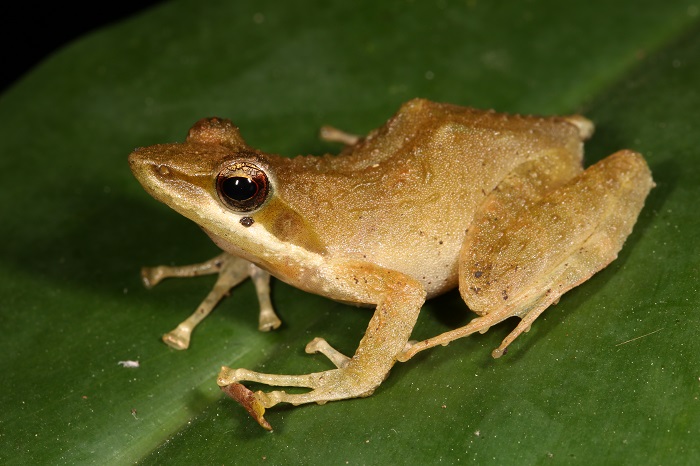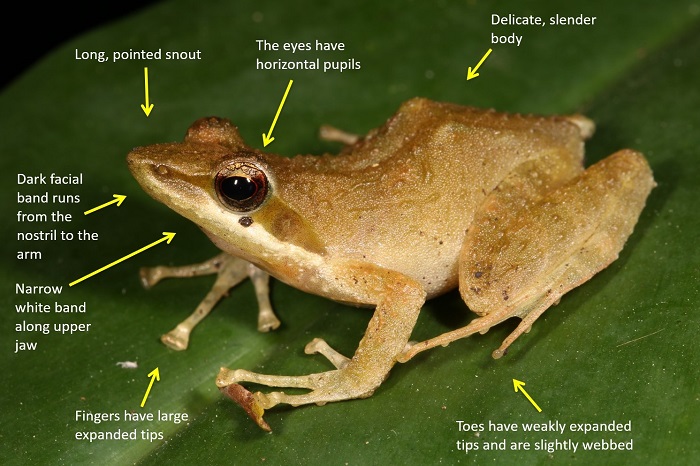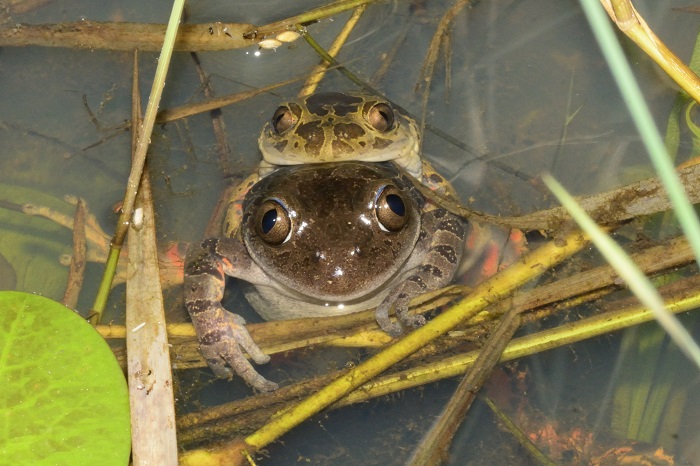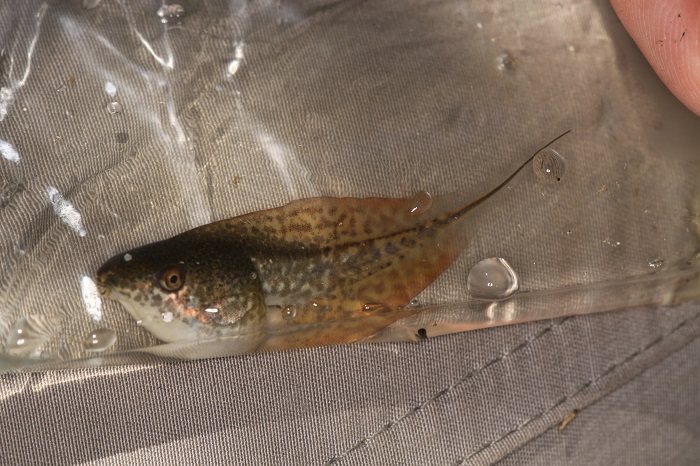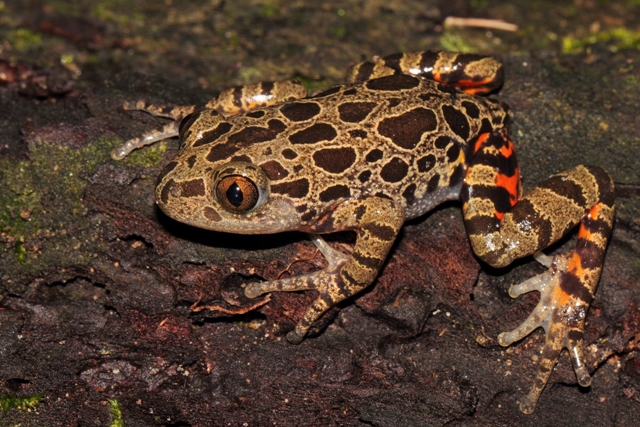
Common Platanna (Xenopus laevis)

View the above photo record (by Trevor Hardaker) in FrogMAP here.

Find the Common Platanna in the FBIS database (Freshwater Biodiversity Information System) here.

Family Pipidae

COMMON PLATANNA – Xenopus laevis

(Daudin, 1802)

Identification
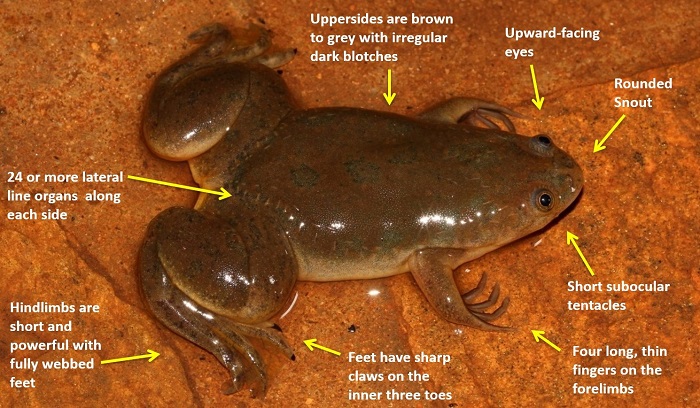
Xenopus laevis
Near Lilongwe, Malawi
Photo by Gary Brown

Habitat

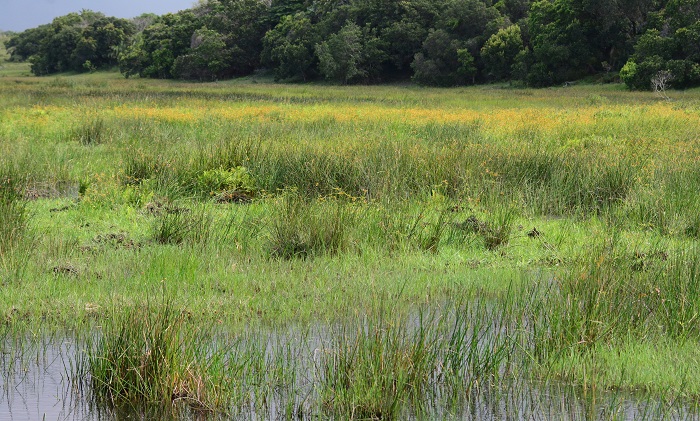
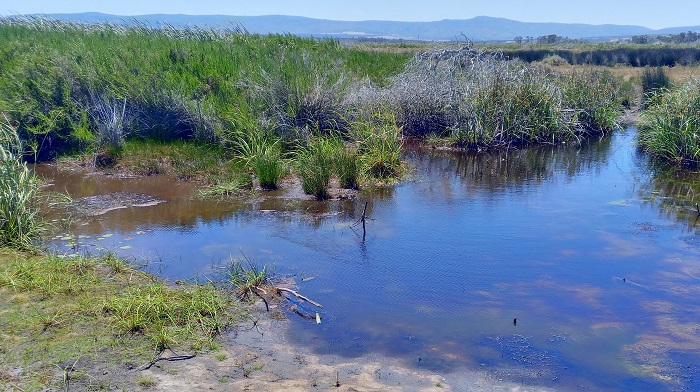
This species inhabits all of the biomes in the atlas region. Prior to the advent of modern agriculture, X. laevis probably occurred in low densities in natural water bodies, such as streams, rivers and their pools. Nowadays, however, the species is also found in a variety of man-made water bodies such as farm dams, ponds, sewage purification works and fish farms. Eutrophic waters seem to produce the highest densities.

There are some studies of native populations (Schoonbee et al. 1992), although the best descriptions of habitat are in respect of feral populations (Tinsley and McCoid 1996; Measey 2001). Breeding and non-breeding habitats appear to be the same, although there are no records of breeding in flowing water.

Behaviour

After heavy rains, X. laevis sometimes leave water bodies en masse, and single individuals are also encountered on the surface in damp weather. These appearances may be associated with movement to and from breeding sites (Du Plessis 1966). Breeding begins at the onset of the rains, thus at different times in the summer and winter rainfall areas (Berk 1938; Kalk 1960). There is a prolonged breeding period throughout the rainy season, and both females and males are able to breed more than once per season (Hey 1949).

Many laboratory studies have documented calling in X. laevis, describing the advertisement call of the male and acceptance or rejection by females. However, such studies have relied on hormonal induction and may not represent natural behaviours (Picker 1980; Kelley 1996; Tobias et al. 1998). Field studies have suggested that males call around the edges of territories, although this may be density dependent (A. Elepfandt pers. comm.). Spawning takes place during the night when couples, in inguinal amplexus, swim around the pond depositing single eggs on any hard substrate (McCoid 1985).

Larvae hatch within two to three days and, after finishing the yolk supply, begin to feed on algae suspended in the water column. Tadpoles display coordinated schooling behaviour, and maintain their position in the water column by means of a characteristic undulating motion of the tail (Wassersug 1996). Time to metamorphosis varies with temperature and the abundance of food. In optimal conditions, metamorphosis is possible within two months (Tinsley et al. 1996).

Adults may move from water bodies after breeding, reducing the incidence of cannibalism (Hey 1949; McCoid and Fritts 1980; Measey 1998b). Adults are generalist predators and scavengers, and can hold food items in their toothed mouths while breaking it apart with their claws using an overhead kick (Avila and Frye 1978). These behaviours can be detected by other adults in the vicinity and sometimes lead to a feeding frenzy (Frye and Avila 1979). Most food items for post-metamorphic X. laevis are benthic macro-invertebrates, such as chironomid larvae. However, a wide variety of food sources are used from all microhabitats in water bodies, including carrion and terrestrial food items (Measey 1998a, b). Even the largest animals take very small prey items, such as zooplankton and ostracods.

Toward the peak of the dry season, X. laevis will either move from drying water bodies or burrow into the wet mud to aestivate. Longevity is unknown for native animals, but in feral populations and in captivity, individuals are known to have lived for more than 15 years (Measey and Tinsley 1998).

X. laevis plays an important role in the ecology of southern African wetlands because it is widespread and abundant, and it is a voracious predator as well as an important prey item for several mammalian, avian and reptilian predators.

Status and Conservation

X. laevis does not seem to be threatened in any part of its range. Montane populations may be genetically distinct (Measey and Channing 2003; Grohovaz et al. 1996) and may warrant management attention. Hybridisation occurs at the northern and southern ends of its range, with X. muelleri and X. gilli, respectively.

X. laevis seems to present a problem to other species because of its invasive tendencies. This is exacerbated by the fact that thousands of these frogs have been exported from South Africa since the 1930s, and still are, because of the popularity of the species as a laboratory animal. There is concern that this trade may also be contributing to the global spread of chytridiomycosis (Weldon 2002).

Distribution

This species is widely distributed in sub-Saharan Africa. Six subspecies are recognised, but parasitological and molecular data indicate that X. laevis laevis is the most divergent of these taxa and should be raised to the species level (Kobel et al. 1996; Kobel et al. 1998; Jackson and Tinsley 1997; Measey and Channing 2003). X. l. laevis occurs throughout southern Africa south of the Zambezi River, and is the only subspecies currently known to occur within the atlas region. However, winter and summer rainfall areas hold genetically distinct groups that may represent different subspecies of X. laevis (Grohovaz et al. 1996; Measey and Channing 2003).

In the atlas region, X. laevis is a common and widespread species, occurring from sea level to nearly 3000 m in Lesotho. In the west, it is apparently absent in areas of extreme aridity, including much of the Kalahari and Bushmanland in Northern Cape Province, although this may be due to inadequate sampling. Its distribution extends eastward as far as the Great Escarpment, where it comes into contact with X. muelleri in the low-lying parts of Limpopo and Mpumalanga provinces (see X. muelleri account).

X. laevis is a highly invasive species, as is evidenced by the feral populations that have become established in many parts of the world. Its present distribution in the atlas region may not represent its ‘natural range’ as this frog is commonly used as live bait by fishermen and may have been inadvertently translocated to areas from which it was previously absent. The proliferation of farm dams and reservoirs over a few hundred years is another factor which may have enabled this species to expand its range.

The atlas data are reliable, but many of the gaps in distribution do not necessarily reflect absence.
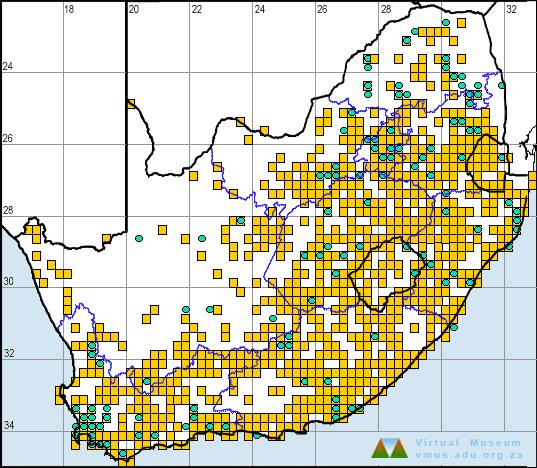
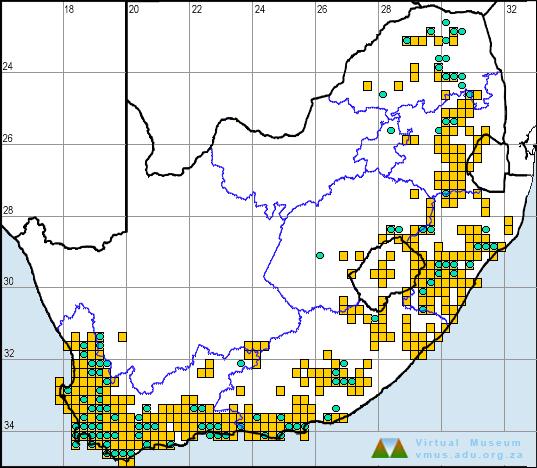
Distribution of Xenopus laevis. Taken from the FrogMAP database as at January 2022.

Further Resources

Virtual Museum (FrogMAP > Search VM > By Scientific or Common Name)

More common names: Gewone Platanna (Afrikaans)

Recommended citation format for this species text:

Measey GJ, Tippett RM.  Common Platanna Xenopus laevis. BDI, Cape Town.
Available online at http://thebdi.org/2021/11/08/common-platanna-xenopus-laevis/

Recommended citation format: 

This species text has been updated and expanded from the text in the
2004 frog atlas. The reference to the text and the book are as follows:

Measey GJ 2004 Xenopus laevis Common Platanna. In Minter LR
et al 2004.

Minter LR, Burger M, Harrison JA, Braack HH, Bishop PJ, Kloepfer D (eds)
2004. Atlas and Red Data Book of  the Frogs of South Africa, Lesotho and
Swaziland. Smithsonian Institution, Washington, and Avian Demography
Unit, Cape Town.

Greater Leaf-folding Frog (Afrixalus fornasinii)

View the above photo record (by Courtney Hundermark) in FrogMAP here.

Find the Southern Greater Leaf-folding Frog in the FBIS database (Freshwater Biodiversity Information System) here.

Family Hyperoliidae

GREATER LEAF-FOLDING FROG – Afrixalus fornasinii

(Bianconi, 1849)

Habitat

During the breeding season, A. fornasinii inhabits more-or-less stagnant water bodies containing large stands of saw grass Cyperus immensus and bulrushes Typha latifolia in Coastal Bushveld-Grassland, a mosaic of vegetation types found from sea level to an altitude of 300 m.

Behaviour

In winter they have been found sheltering in the leaf axils of banana, arum lilies and Strelitzia, often a considerable distance from their breeding sites.

Afrixalus fornasinii – Blythedale Beach, KwaZulu-Natal
Photo by Kate Braun

In South Africa, breeding begins in late September, and large choruses have been recorded in December and January (Wager 1965; Bishop 1994). During this period, A. fornasinii may occasionally be found in exposed positions on reeds and sedges near the breeding site in the early morning, but generally retires to denser shade in the heat of the day.

Males call from elevated positions on sturdy, broad-leaved vegetation. Calling begins shortly after sunset and continues until about 23:00, with the chorus reaching a peak at around 21:30 (Bishop 1994). Between 30 and 80 white eggs are deposited in longitudinally folded leaves up to 1 m above the water, and hatch after five days (Wager 1965; Schneichel and Schneider 1988). The tadpoles metamorphose about three months later.

Diet includes the eggs of other anurans, including Chiromantis xerampelina (A. fornasinii penetrate freshly built foam nests and take the eggs before the foam hardens to form an impenetrable crust; Drewes and Altig 1996). Spiders, dipterans, moths and other arthropods are also taken. The tadpoles of A. fornasinii are carnivorous and appear to specialize on mosquito larvae (M.P. pers. obs).

Afrixalus fornasinii – Virginia Bush, KwaZulu-Natal
Photo by Gary Kyle Nicolau

Status and Conservation

A. fornasinii is locally abundant and occurs in a number of coastal and lowland reserves such as those at Kosi Bay, Mkuze, False Bay, St Lucia and Mtunzini. The species does not appear to require conservation attention, although its habitat has undoubtedly shrunk as a result of coastal development.

Distribution

This species occurs from the coast of southern Somalia southward through East Africa to Malawi, Mozambique and eastern Zimbabwe. In the atlas region, A. fornasinii is recorded along the coast of KwaZulu-Natal as far south as Port Edward (3130AB). There are also two records from south of Komatipoort (2531DB) in Mpumalanga.

This relatively large, conspicuous frog is easily distinguished from the sympatric dwarf Afrixalus species, both morphologically and by its loud, distinctive call. The atlas data are reliable and reasonably complete.

Distribution of Afrixalus fornasinii. Taken from the FrogMAP database, April 2022.

Further Resources

Virtual Museum (FrogMAP > Search VM > By Scientific or Common Name)

More common names: Grootblaarvoupadda (Afrikaans)

Recommended citation format for this species text:

Pickersgill M, Bishop PJ, Tippett RM.  Greater Leaf-folding Frog Afrixalus fornasinii. BDI, Cape Town.
Available online at http://thebdi.org/2021/11/08/greater-leaf-folding-frog-afrixalus-fornasinii/

Recommended citation format: 

This species text has been updated and expanded from the text in the
2004 frog atlas. The reference to the text and the book are as follows:

Pickersgill M, Bishop PJ 2004 Afrixalus fornasinii Greater Leaf-folding Frog. In Minter LR
et al 2004.

Minter LR, Burger M, Harrison JA, Braack HH, Bishop PJ, Kloepfer D (eds)
2004. Atlas and Red Data Book of  the Frogs of South Africa, Lesotho and
Swaziland. Smithsonian Institution, Washington, and Avian Demography
Unit, Cape Town.

Snoring Puddle Frog (Phrynobatrachus natalensis)

View the above photo record (by Luke Verburgt) in FrogMAP here.

Find the Tinker Reed Frog in the FBIS database (Freshwater Biodiversity Information System) here.

Family Phrynobatrachidae

SNORING PUDDLE FROG Phrynobatrachus natalensis

(Smith, 1849)

Identification

Habitat

P. natalensis inhabits a variety of vegetation types in the Savanna and Grassland biomes where summer rainfall is >500 mm, although some populations along the western edge of the species’ range are found in drier areas. The polymorphic colour pattern may be a means of protection against predators, and specific patterns have been correlated with particular habitats (Stewart 1974).

Breeding takes place in shallow to fairly deep water in temporary pans and pools, vleis, dams and even small, slow-flowing streams. Wager (1986) recorded the species breeding in brackish pools near the high-water mark at the coast. Breeding sites usually have vegetation or other types of cover along their banks. P. natalensis is tolerant of human disturbance and is often found near human habitation.

Behaviour

In Kruger National Park, P. natalensis has been found sheltering under rocks near breeding sites during the dry season (H. Braack pers. comm.).

Breeding begins in spring after the first rains and continues to late summer. Males usually call from concealed sites and may be heard throughout the day and night in wet weather. Aggressive encounters between males are commonplace (Wager 1965).

Mating pairs swim while depositing the small eggs in a single-layered plate that floats at the surface. Reported clutch sizes from West Africa are 200–1652 eggs (Rödel 2000). Tadpoles reared by Wager (1965) hatched within 3–4 days and took 4–5 weeks to reach metamorphosis, but other authors report considerable variation in the rate of development (Rödel 2000).

Food items recorded north of the atlas region include a variety of insects, especially termites during the rainy season, as well as earthworms, snails and frogs (Inger and Marx 1961). Predators of the species include Black-necked Spitting Cobra Naja nigricollis (Channing 2001) and Herald Snake Crotaphopeltis hotamboeia (H. Braack pers. comm.).

Advertisement Call

Status and Conservation

During recent atlas surveys this species was not found in many parts of Mpumalanga and North West Province, where pre-1996 records exist. This may be due to agricultural and industrial development that has taken place in these areas over the past 20–30 years (H. Braack pers. comm.). Further surveys are recommended to establish whether P. natalensis has become locally extinct in these areas. In other areas, however, this species is abundant and often found near human habitation. It is well established in many national parks and provincial nature reserves and does not need additional conservation action.

Distribution

P. natalensis is widely distributed in the savannas of sub-Saharan Africa, from Senegal in the west to Somalia in the east and southward through East Africa. To the south, it ranges as far as northeastern Namibia, northern Botswana, and Eastern Cape Province of South Africa. The variation in clutch size, tadpole morphology, size of the adult frog and period of activity, suggests that this taxon may comprise more than one species (Rödel 2000).

In the atlas region, this species occurs east of 24°E, from sea level to the inland plateau, but is absent from the Lesotho highlands.

This species has a characteristic call. The atlas data are accurate and comprehensive.

Distribution of Phrynobatrachus natalensis. Taken from the FrogMAP database as at November 2021.

Further Resources

Virtual Museum (FrogMAP > Search VM > By Scientific or Common Name)

More common names: Snorkmodderpadda (Afrikaans)

Recommended citation format for this species text:

Channing A, Tippett RM.  Snoring Puddle Frog Phrynobatrachus natalensis. BDI, Cape Town.
Available online at http://thebdi.org/2021/11/05/snoring-puddle-frog-phrynobatrachus-natalensis/

Recommended citation format: 

This species text has been updated and expanded from the text in the
2004 frog atlas. The reference to the text and the book are as follows:

Channing A 2004 Phrynobatrachus natalensis Snoring Puddle Frog. In Minter LR
et al 2004.

Minter LR, Burger M, Harrison JA, Braack HH, Bishop PJ, Kloepfer D (eds)
2004. Atlas and Red Data Book of  the Frogs of South Africa, Lesotho and
Swaziland. Smithsonian Institution, Washington, and Avian Demography
Unit, Cape Town.

Spotted Shovel-nosed Frog (Hemisus guttatus)

View the above photo record (by Allison Sharp) in FrogMAP here.

Find the Spotted Shovel-nosed Frog in the FBIS database (Freshwater Biodiversity Information System) here.

Family Hemisotidae

SPOTTED SHOVEL-NOSED FROG Hemisus guttatus

Rapp, 1842

Identification

This striking species is quite unmistakable. The largest of its genus, H. guttatus reaches 80 mm in body length. The dorsum is uniform olive to dark brown with scattered, small yellow spots; the ventrum is white (Lambiris 1989a). It resembles other Hemisus species in having a small head, small eyes and a pointed snout with a hard tip. Other adaptations to its burrowing lifestyle include a lack of webbing between the toes, muscular legs and arms, and thick, strong fingers.

The advertisement call is a cricket-like trill, approximately 2 s in duration, with an emphasized frequency of just over 2 kHz. By contrast, the call of H. marmoratus is twice as long and has a frequency of about 3.5 kHz (Passmore and Carruthers 1995; L.R. Minter pers. comm).

Hemisus guttatus – Crestholme, KwaZulu-Natal
Photo by Rob Dickinson

Habitat

Along the coast, H. guttatus inhabits Coastal Bushveld/Grassland, while in the interior it occurs in North-eastern Mountain Grassland and Natal Central Bushveld. It has also been collected in pitfall traps in the Dukuduku Forest Reserve (T. Bodbijl pers. comm.).

It breeds on the edges of pans or swampy areas, and along rivers, especially where the gradient is slight and alluvial deposits are present (Alexander 1990; Passmore and Carruthers 1995). More adequate data may show that this species is restricted to particular river catchments.

Behaviour

Males call October–December during rain or light drizzle (Alexander 1987). Calling males are notoriously difficult to find. Calling may initially take place underground, with males emerging onto the surface as the chorus intensity increases, as is the case in H. marmoratus. A calling H. guttatus male was unearthed at the onset of a heavy downpour, in its burrow on the edge of a grassy pan (L.R. Minter pers. comm.).

Hemisus guttatus – Red Hill, KwaZulu-Natal
Photo by Nick Evans

As is usual for Hemisus, amplexus appears to be initiated on the surface and the female then burrows down to form the brood chamber. The female remains with the eggs during their development. Wager (1986) reported that females lay c.2000 eggs (cf. Channing 2001: 200 eggs), which form a circular compact mass c.63 mm in diameter and 18 mm deep. The nest cavity is located c.200 mm below the surface and has a diameter of c.75 mm.

Data on breeding imply a similar sequence of maternal care as has been recorded for H. marmoratus (Kaminsky et al. 1999). However, the postulation that females escort tadpoles to water needs verification (Van Dijk 1997), as direct observations of this behaviour have not been published.

Hemisus guttatus – Crestholme, KwaZulu-Natal
Photo by Rob Dickinson

Status and Conservation

Status

H. guttatus was not listed in earlier South African Red Data books (McLachlan 1978; Branch 1988). However, in view of its small area of occupancy (501–2000 km), severely fragmented distribution, the rate of habitat loss (>20% in the past 50 years), a decrease in the quality of habitat and predicted population decline (rate unknown), it was accorded Near Threatened status (Harrison et al. 2001), subsequently changed to Vulnerable (this publication).

This species is known to occur in the Greater St Lucia Wetland Park (World Heritage Site), Umlalazi and Bluff nature reserves, Hluhluwe-Umfolozi Park and Bonamanzi Private Nature Reserve. Of concern is the fact that breeding populations appear to be relatively small, with <10 individuals heard calling at any one site during the atlas survey.

Threats

The long-term survival of H. guttatus is threatened by rapid and extensive urban development, forestry and other agricultural practices, particularly along the KwaZulu-Natal north coast. These activities result in the continuing loss, fragmentation and alteration of its habitat through the draining, impoundment and eutrophication of wetlands in the vicinity of residential areas and agricultural lands. Impounded wetlands are often stocked with alien fish species, which may result in the local extinction of frog populations, while plantations of exotic trees reduce the availability of surface water and lead to the disappearance of natural pans.

Recommended conservation actions

There is an urgent need for baseline studies to measure sizes of populations and to determine the extent of occurrence and area of occupancy so that this species’ conservation status can be properly assessed (Harrison et al. 2001). In particular, the presence of H. guttatus in protected areas needs to be documented and monitored. The basic biology of this species, its life history and limiting factors, also await description.

This little-known and charismatic species should be brought to the attention of the public, and private landowners should be encouraged to participate in its protection.

Hemisus guttatus – Monzi, KwaZulu-Natal
Photo by Courtney Hundermark

Distribution

H.guttatus is endemic to the atlas region, occurring in southern Mpumalanga and central and eastern KwaZulu-Natal. Along the coast it has been recorded from Hluhluwe (2832BA) in the north, to Durban (2930DD, 2931CC) in the south. It also occurs as far inland as Dundee (2830AA, AB), Newcastle (2729DB) and Piet Retief (2630DD). In 1993, this species was unexpectedly discovered on the summit of the Lebombo Mountains (2732AA; W.R. Branch pers. comm.).

Although H. guttatus may be locally abundant, its fossorial habitat ensures that it is rarely observed and few locality records exist. The apparently patchy distribution may be the result of an inadequate data set rather than an indication of a fragmented population. The atlas data are accurate but incomplete and inadequate for a reliable description of the distribution range.

Distribution of Hemisus guttatus. Taken from the FrogMAP database, April 2022.

Further Resources

Virtual Museum (FrogMAP > Search VM > By Scientific or Common Name)

More common names: Gespikkelde graafneuspadda (Afrikaans)

Recommended citation format for this species text:

Alexander GJ, Tippett RM.  Spotted Shovel-nosed Frog Hemisus guttatus. BDI, Cape Town.
Available online at http://thebdi.org/2021/11/04/spotted-shovel-nosed-frog-hemisus-guttatus/

Recommended citation format: 

This species text has been updated and expanded from the text in the
2004 frog atlas. The reference to the text and the book are as follows:

Alexander GJ 2004 Hemisus guttatus Spotted Shovel-nosed Frog. In Minter LR
et al 2004.

Minter LR, Burger M, Harrison JA, Braack HH, Bishop PJ, Kloepfer D (eds)
2004. Atlas and Red Data Book of  the Frogs of South Africa, Lesotho and
Swaziland. Smithsonian Institution, Washington, and Avian Demography
Unit, Cape Town.

Kloof Frog (Natalobatrachus bonebergi)

View the above photo record (by Nick Evans) in FrogMAP here.

Find the Kloof Frog in the FBIS database (Freshwater Biodiversity Information System) here.

Family Pyxicephalidae

KLOOF FROG Natalobatrachus bonebergi

Hewitt & Methuen, 1912

Identification

N. bonebergi is a small- to medium-sizedfrog, females reaching 37 mm and males 25 mm in length. They are usually brown, but may be light to greenish brown. The snout is pointed, projecting markedly over the lower jaw. The fingers and toes are long with large, truncated, terminal discs, and the toes are slightly webbed. The back has elongated skin ridges, and a light vertebral stripe is often present. A distinct black stripe runs from the tip of the snout, through the lower part of the eye to the arm.

Natalobatrachus bonebergi
Springside Nature Reserve, Kwazulu-Natal
Photo by Nick Evans

Habitat

N. bonebergi is always associated with forest streams and pools with rocky beds especially, but not exclusively, in ravines (Harrison et al. 2001). Typically, the frogs inhabit streams with short, fast-flowing sections alternating with longer sections of slow-flowing water and pools of varying size and depth. Eggs are deposited on vegetation or rock surfaces overhanging water.

Behaviour

These frogs are strong jumpers and can be difficult to catch. They take readily to water, swim well, and usually dive to the bottom where they hide in rotting plant material.

Breeding takes place October–May, along shallow streams with overhanging vegetation. Males select perches c.1–2 m above the water, from which they utter their faint advertisement calls. Amplexus is axillary with the fingers of the male placed below or sometimes above the base of the female’s arms. Transparent masses of 75–95 eggs are attached to leaves, twigs, tree trunks, or rock surfaces overhanging pools. The diameter of the egg mass is 75–108 mm, and the diameter of eggs is 1.5–2 mm, in 4-mm jelly capsules. Clutches may be placed in positions from just above water level to >2 m above the water, with a reported mean of 580 mm (Kok and Seaman 1989). Egg clutches are vulnerable to desiccation; in dry conditions the female moistens the clutch with liquid from her cloaca (pers. obs.).

After six days, the tadpoles are ready to wriggle out of the egg mass that becomes more liquid and sags downward. On hatching, tadpoles drop into the water to complete their development. Tadpoles are benthic and can complete metamorphosis in 60 days.

Advertisement Call

Status and Conservation

Status

N. bonebergi was not listed in previous Red Data books. In view of its restricted distribution (area of occupancy = 11–500 km2) and rate of habitat loss (>50% in the past 100 years), it has been accorded Endangered status (Harrison et al. 2001; this publication).

N. bonebergi occurs in Vernon Crookes, Oribi Gorge, Krantzkloof, Umtamvuna, Dwesa and Cwebe nature reserves.

Threats

Threats include the loss of habitat resulting from urbanization along the south coast of KwaZulu-Natal, wood-cutting in gallery forests, and crop agriculture in the form of sugar cane and tree plantations. Cooper (1988) estimated that 90% of the Coastal Forest of KwaZulu-Natal had been destroyed for the cultivation of sugar cane. Pollution and siltation of streams are factors that degrade habitat. Kok and Seaman (1989) identified three major threats to this species: the destruction of water courses and wetlands in unprotected areas, forest denudation by firewood collectors, and pollution.

Recommended conservation actions

Surveys are required to identify new populations, and known populations should be monitored: anyone walking through indigenous forest in the rainy season should be on the lookout for this interesting frog and its egg masses.

There is an urgent need to protect and manage the remaining habitat of this unique endemic species. Research into limiting factors is needed. Where remnants of gallery forest exist on private land, landowners should be informed about this species and its habitat requirements.

Distribution

N. bonebergi is endemic to the atlas region and restricted to the coastal forests of southern KwaZulu-Natal and northern Eastern Cape provinces, at altitudes below 900 m. The species is known from 18 quarter-degree grid cells, but was found in only five during the atlas period. The southernmost records are from Dwesa Nature Reserve (3228BB).

The atlas data are reliable but incomplete, especially with regard to recent records from the northern parts of the species’ range.

Further Resources

Virtual Museum (FrogMAP > Search VM > By Scientific or Common Name)

More common names: Boneberg’s Frog (Alternative English Name); Kloofpadda (Afrikaans)

Recommended citation format for this species text:

du Preez LH, Tippett RM.  Kloof Frog Natalobatrachus bonebergi. BDI, Cape Town.
Available online at http://thebdi.org/2021/10/12/banded-rubber-frog-phrynomantis-bifasciatus/

Recommended citation format: 

This species text has been updated and expanded from the text in the
2004 frog atlas. The reference to the text and the book are as follows:

du Preez LH 2004 Natalobatrachus bonebergi Banded Rubber Frog. In Minter LR
et al 2004.

Minter LR, Burger M, Harrison JA, Braack HH, Bishop PJ, Kloepfer D (eds)
2004. Atlas and Red Data Book of  the Frogs of South Africa, Lesotho and
Swaziland. Smithsonian Institution, Washington, and Avian Demography
Unit, Cape Town.

Clicking Stream Frog (Strongylopus grayii)

View the above photo record (by Felicity Grundlingh) in FrogMAP here.

Find the Clicking Stream Frog in the FBIS database (Freshwater Biodiversity Information System) here.

Family Pyxicephalidae

CLICKING STREAM FROGStrongylopus grayii

(Smith, 1849)

Identification

Strongylopus grayii – Golden Gate Highlands National Park, Freestate
Photo by Ryan Tippett

Habitat

S. grayii is found in the winter-rainfall region of Western Cape Province, and in the summer-rainfall region to the north. Annual rainfall is 250–2000 mm in the winter-rainfall region, and 500–1000 mm in the summer-rainfall region. The species inhabits the entire Fynbos Biome as well as parts of the Succulent Karoo, Nama Karoo, Savanna, Grassland, Thicket and Forest biomes. Outside the relatively temperate, southwestern parts of its range, S. grayii is largely restricted to uplands.

Breeding habitat includes small dams, ponds, pools, ditches and shallow seeps. The species exhibits a wide tolerance to water quality, breeding, for example, in brackish pools along the coast within the spray zone and in flooded refuse pits.

Behaviour

This is one of the few frog species that breeds in the winter in the winter-rainfall region, and in summer in the summer-rainfall region. Males call throughout the day and night in the rainy season. The call site is often well concealed by vegetation or leaf litter at the water’s edge and the males are cryptic and difficult to locate.

About 250–350 eggs are laid, usually out of the water, up to 30 cm from its edge. They are deposited singly or in groups, in a single layer, in moss, under leaves, on mud or in crevices under rocks (Wager 1965; Channing 2001). In wet weather, tadpoles emerge from the egg capsules after 5 days and enter the water, but in dry weather they can survive in the capsules for as long as 63 days (Hewitt 1937). Development takes place over a period of 3–6 months (Wager 1965; Du Preez 1996).

The Yellow-billed Egret Egretta intermedia has been observed preying on these frogs in the southwest (J.A. Harrison pers. comm.)

Status and Conservation

This widespread and abundant species is not threatened or in need of specific conservation action.

Distribution

S. grayii is endemic to the atlas region where it is widely distributed. Its distribution extends from Western Cape Province, eastward through Eastern Cape Province and Lesotho to KwaZulu-Natal, and northward through Swaziland and Mpumalanga to Limpopo Province. The species has a marginal distribution in the Northern Cape Province and the Free State. S. grayii occurs from sea level to 1800 m in the mountains of Lesotho and Swaziland.

The atlas data are accurate but incomplete in the high-lying, northern parts of its range. In the southwest it is one of the most common and frequently recorded species in lowlands.

Distribution of Strongylopus grayii. Taken from the FrogMAP database as at January 2022.

Further Resources

Virtual Museum (FrogMAP > Search VM > By Scientific or Common Name)

More common names: Kliklangtoonpadda (Afrikaans)

Recommended citation format for this species text:

Channing A, Tippett RM.  Clicking Stream Frog Strongylopus grayii. BDI, Cape Town.
Available online at http://thebdi.org/2021/11/02/clicking-stream-frog-strongylopus-grayii/

Recommended citation format: 

This species text has been updated and expanded from the text in the
2004 frog atlas. The reference to the text and the book are as follows:

Channing A 2004 Strongylopus grayii Clicking Stream Frog. In Minter LR
et al 2004.

Minter LR, Burger M, Harrison JA, Braack HH, Bishop PJ, Kloepfer D (eds)
2004. Atlas and Red Data Book of  the Frogs of South Africa, Lesotho and
Swaziland. Smithsonian Institution, Washington, and Avian Demography
Unit, Cape Town.

Red-legged Kassina (Hylambates maculatus)

View the above photo record (by Nick Evans) in FrogMAP here.

Find the Red-legged Kassina in the FBIS database (Freshwater Biodiversity Information System) here.

Family Hyperoliidae

RED-LEGGED KASSINA – Hylambates maculatus

Duméril, 1853

Habitat

This species inhabits a wide variety of bushveld vegetation types, predominantly Mixed and Sweet Lowveld Bushveld, and Coastal Bushveld-Grassland, in the Savanna Biome. The breeding habitat consists of well-vegetated pans, vleis, marshes and dams.

Habitat – Near Kosi Bay, KwaZulu-Natal
Photo by Ryan Tippett

Behaviour

Outside of the breeding season, during the dry winter months, H. maculatus has been found in cavities excavated in the damp mud at the bottom of empty pans (Pienaar et al. 1976), or under moist debris (Loveridge 1953a).

Hylambates maculatus – Near Hluhluwe, KwaZulu-Natal
Photo by Andrew & Heather Hodgson

The breeding season usually begins in early November and continues until the end of February, depending on weather conditions (Bishop 1994). During the day, the frogs are rarely seen, remaining well hidden in clumps of dense vegetation (particularly Eleocharis limosaCyperus immensus and C. papyrus), and occasionally under logs or in the axils of banana leaves. Choruses develop in the late afternoon or early evening, before dusk. Males move closer to the water where they call from the water, well concealed under overhanging vegetation. Later they may be found calling from elevated positions, up to 50 cm above the water, in clumps of emergent vegetation (Bishop 1994). The males appear to have two distinct calling periods, one in the early evening (16:30–20:00) and another in the early morning, peaking between 02:00 and 03:00 (Bishop 1994). The advertisement call is a loud, short ‘quack’ repeated at intervals.

The eggs are laid singly or in lines of four or five, attached to submerged vegetation. The tadpoles are large and fish-like, similar to, but larger than those of K. senegalensis. They are up to 130 mm long with deep keel-like tails that arise from the top of the head.

Hylambates maculatus – Shewula Nature Reserve, eSwatini
Photo by Timo Paasikunas

H. maculatus is a voracious predator of invertebrates and also eats small frogs, such as Hyperolius marmoratus and Afrixalus aureus (Wager 1965; Channing 2001). K. maculata produces a characteristic odour when handled and is quite unpalatable, due to the production of defensive amines and peptides, such as caerulein and kassinin, by glands in the skin (Roseghini et al. 1988). In spite of these defences, there are records of predation on this species by the Yellowbilled Egret Egretta intermedia and the Vine Snake Thelotornis capensis (Channing 2001).

Status and Conservation

H. maculatus is locally abundant and occurs in a number of protected areas, including Kruger National Park. However, a major threat to this species is habitat loss through water drainage and afforestation. In several areas in KwaZulu-Natal, exotic Eucalyptus plantations have lowered the water table to such a degree that many pans in the coastal mosaic of forest, thicket and grassland, have completely disappeared. Nevertheless, the species does not appear to require special conservation action at present.

Hylambates maculatus – iSimangaliso Wetland Park, KwaZulu-Natal
Photo by Alison Sharp

Distribution

H. maculatus is essentially a lowland species, although there is an unusual record of specimens from the Vumba Mountains (Zimbabwe) at an altitude of 1400 m (Poynton 1964). North of the atlas region, the species occurs throughout Mozambique and the eastern lowlands of Zimbabwe, Malawi, Tanzania and Kenya. In the atlas region, H. maculatus ranges from Pafuri (2231AD) in northeastern Limpopo Province, through eastern Mpumalanga and eastern Swaziland to the coastal lowlands of KwaZulu-Natal, and south to Shakaskraal (2931AC).

Although seldom seen, these frogs can be easily identified by their characteristic call that carries a considerable distance. The atlas data are reliable and reasonably complete. Gaps in distribution in Mpumalanga and Limpopo provinces do not reflect an absence of the species.

Distribution of Hylambates maculatus. Taken from the FrogMAP database. April 2021.

Further Resources

Virtual Museum (FrogMAP > Search VM > By Scientific or Common Name)

More common names: Rooibeenvleipadda (Afrikaans)

Recommended citation format for this species text:

Bishop PJ, Tippett RM.  Red-legged Kassina Hylambates maculatus. BDI, Cape Town.
Available online at http://thebdi.org/2021/10/30/red-legged-kassina-hylambates-maculatus/

Recommended citation format: 

This species text has been updated and expanded from the text in the
2004 frog atlas. The reference to the text and the book are as follows:

Bishop PJ 2004 Hylambates maculatus Red-legged Kassina. In Minter LR
et al 2004.

Minter LR, Burger M, Harrison JA, Braack HH, Bishop PJ, Kloepfer D (eds)
2004. Atlas and Red Data Book of  the Frogs of South Africa, Lesotho and
Swaziland. Smithsonian Institution, Washington, and Avian Demography
Unit, Cape Town.

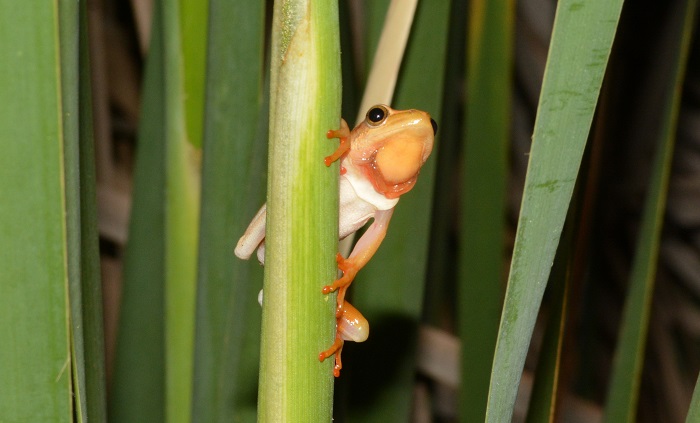
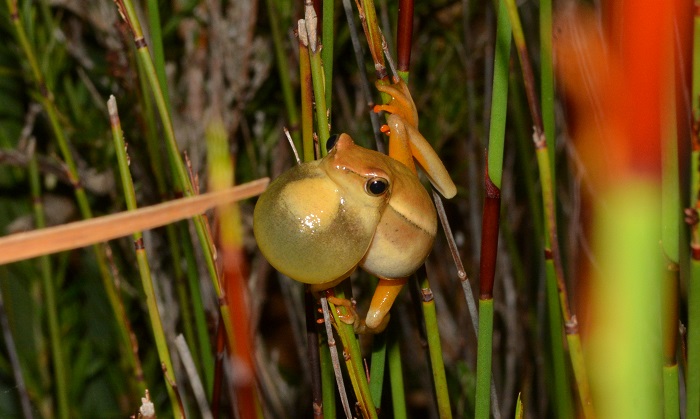
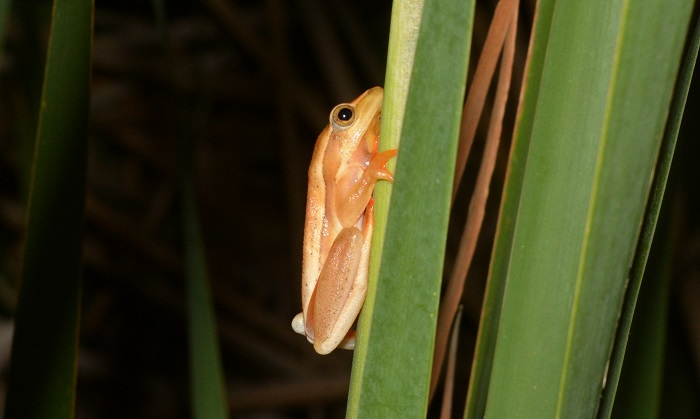
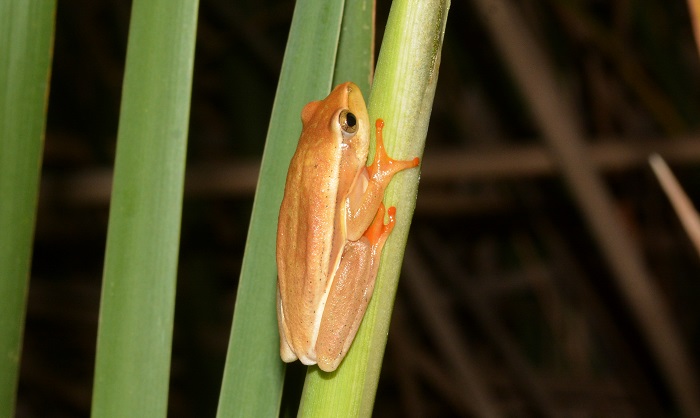
Arum Lily Frog (Hyperolius horstockii)

Cover photo by Luke Kemp.

Find the Arum Lily Frog in the FBIS database (Freshwater Biodiversity Information System) here.

Family Hyperoliidae

Identification

The Arum Lily Frog attains 43mm in length. The dorsal colour ranges from pale creamy-yellow to light brown. A broad, pale band and a fine dark line run from the nostril, through the eye and down the flanks. A series of very small black speckles may accompany these lines. Additional small dark spots are usually present on the back. The undersides are off-white with granular skin.

The hidden inner parts of the legs are red, and the webbing and discs on the feet are bright orange-red. The sexes are similar, but the throat of the breeding male is bright orange.

Arum Lily Frog Hyperolius horstockii
Kleinmond, Western Cape
Photo by Magriet Brink

Habitat

The Arum Lily Frog inhabits coastal vegetation types in the Fynbos Biome. As implied by its common name, it is often associated with Arum Lilies Zantedeschia aethiopica, frequently taking shelter within these flowers during the day. However, this is not necessarily its only, or even its preferred habitat. Arum Lilies are common along the southern and southwestern seaboard, occurring wherever there is sufficient moisture. A thorough investigation is needed to establish whether the association of H. horstockii with Arum Lilies can be attributed to choice or to chance.

Habitat at the Nuwejaars Wetland Special Management Area, Western Cape
Photo by Ryan Tippett

Breeding habitat includes large or small pans, dams, marshes and even slow-flowing, quiet streams where there is sufficient emergent vegetation such as sedges, bulrushes and reeds. The water bodies may be slightly brackish, apparently without affecting the population density of the Arum Lily frog, but they appear to avoid deep water. Calling males have been found at sites densely infested with alien acacias (J.A. Harrison pers. comm.). During dry and non-breeding periods, individuals have been found in exposed positions far removed from the nearest breeding sites (Rose 1950; Wager 1986; pers obs.).

Behaviour

Arum Lily Frog Hyperolius horstockii
Nuwejaars River, Western Cape
Photo by Ryan Tippett

The following life history information is based on Rose (1950), Passmore and Carruthers (1995), Channing (2001), and personal observations.

Although the Arum Lily Frog occurs mostly in a winter-rainfall region, breeding takes place during spring and summer (September–January). Males usually call from elevated positions above water, generally on sedges, reeds, shrubs and grasses, but may also call from water-lily pads at water level. Less frequently, they call from elevated positions some metres from water, especially in dense stands of reeds. The advertisement call is sometimes interspersed with territorial calls. Calling usually begins soon after dark, but sporadic calling may sometimes be heard in the late afternoon on overcast, rainy days. Non-calling males are sometimes found on the perimeter of breeding groups.

Arum Lily Frog Hyperolius horstockii
Noordhoek, Western Cape
Photo by Melanie Cornelius

Spawning has been recorded during October and November, with clutches of 10–30 eggs attached to the roots and stems of plants below water level. Eggs have a diameter of 2 mm within 4-mm jelly capsules, and are a whitish-cream colour with a brown hemisphere.

The Arum Lily Frog is known to feed on a variety of small flying insects. Predators include the Whiskered Tern Chlidonias hybridus (Steyn 1966; Craig 1974), Water Mongoose Atilax paludinosus, and the Cape River Frog Afrana fuscigula.

Advertisement Call

The call of the Arum Lily Frog has been described as a long, harsh bleat and is given from floating or emergent vegetation.

Arum Lily Frog Hyperolius horstockii
Nuwejaars River, Western Cape
Photo by Ryan Tippett

Status and Conservation

The Arum Lily Frog has been recorded in a number of protected areas, including Tsitsikamma, Wilderness, Cape Peninsula and Agulhas national parks, De Hoop and Goukamma provincial nature reserves, and Buffalo Hills Private Nature Reserve. The species is protected against collection by provincial nature conservation regulations.

Although several localities at which H. horstockii was recorded in the late 1970s have disappeared under agricultural and urban development (e.g., Plettenberg Bay), it appears to be maintaining healthy population levels at the remaining localities. It may even be increasing its range in certain areas, although the new records may be due to inadequate surveying in the past. The species does not seem to be under any immediate threat, but population monitoring in conservation areas is recommended.

Arum Lily Frog Hyperolius horstockii
Nuwejaars River, Western Cape
Photo by Ryan Tippett

Distribution

The Arum Lily Frog is endemic to the Western Cape Province of South Africa, occurring along the southern seaboard from Cape Town (3418AB) in the west, to the Humansdorp district (3424BB) in the east. Previously, the eastern limit was thought to be at the Tsitsikamma National Park, but a specimen in the Port Elizabeth Museum was collected from Humansdorp in 1965, and a population near Cape St Francis was recently discovered (T. Hardaker pers. comm.). For many years, this species was thought to be divided into eastern and western sub-populations. However, the atlas survey has shown that its distribution is virtually continuous across its range. Recent atlas records have extended the range of this species inland as far as Swellendam and environs (3420AA, AB), where several adults and juveniles have been found (N.I. Passmore pers. comm.).

Distribution of Hyperolius horstockii. Taken from the FrogMAP database. April 2022.

The range of H. horstockii is at a southerly extreme, lying in the area between the coast and the southern mountain ranges. Most of the range has winter rainfall, but toward the east, rainfall is transitional between a summer and winter pattern, with rainfall at any time of year.

The Water Lily Frog is an unmistakable species that does not occur with any similar congeners. The atlas records are reliable, but the gaps in distribution probably indicate a need for more thorough surveys in those areas.

Further Resources

The use of photographs by Luke Kemp, Magriet Brink, and Melanie Cornelius is acknowledged. Other images by Ryan Tippett.

Arum Lily Frog Hyperolius horstockii (Schlegal, 1837)

Other Common Names: Arum Lily Reed Frog; Horstock’s Reed Frog (Alternative English Name); Aronskelkrietpadda (Afrikaans)

Recommended citation format: Braack, HH; Tippett, RM. (2025). Arum Lily Frog Hyperolius horstockii. Biodiversity and Development Institute, Cape Town. Available online at https://thebdi.org/2021/10/30/arum-lily-frog-hyperolius-horstockii/

This species text has been updated and expanded from the text in the
2004 frog atlas:
 Braack, HH. (2004). Arum Lily Frog Hyperolius horstockii. In Minter LR et al 2004.

References: 

Minter, LR; Burger, M; Harrison, JA; Braack, HH; Bishop, PJ; Kloepfer, D. (Editors). (2004). Atlas and Red Data Book of  the Frogs of South Africa, Lesotho and Swaziland. Smithsonian Institution, Washington, and Avian Demography
Unit, Cape Town.

Carruthers, V; du Preez, L. (2017). Frogs of southern Africa: A Complete Guide. Struik Nature, Cape Town.

Channing, A. (2001) Amphibians of Central and Southern Africa. Protea Book House, Pretoria

Similar Species

Tinker Reed Frog (Hyperolius tuberilinguis)

View the above photo record (by Nick Evans) in FrogMAP here.

Find the Tinker Reed Frog in the FBIS database (Freshwater Biodiversity Information System) here.

Family Hyperoliidae

TINKER REED FROG – Hyperolius tuberilinguis

A. Smith, 1849

Identification

Hyperolius tuberilinguis – Near Hluhluwe, KwaZulu-Natal
Photo by Ryan Tippett

Habitat

This species inhabits a variety of bushveld vegetation types in the Savanna Biome, particularly Coastal Bushveld-Grassland. It breeds in reed beds on the periphery of swamps or rivers (Alexander 1990), or dense vegetation surrounding inundated pans, and is often the most numerous frog in multi-species choruses. In Malawi it occurs in coastal, lakeshore or riverine marshes at elevations up to 488 m in open country (Stewart 1967).

Behaviour

In the dry season, adults aestivate in secluded places, often entering houses. In summer, they breed over a prolonged period, forming dense choruses (Pallet and Passmore 1988).

In Durban (2931CC), calling starts at the beginning of September and continues to the middle of April (Alexander 1987). Males call from perches in dense stands of emergent vegetation c.50 cm above the water, and are difficult to locate. Spacing of calling males is maintained by vocal aggression and physical combat (Pallet and Passmore 1988). Males leave breeding choruses in the early hours of the morning and ascend into trees surrounding the breeding site, returning to the breeding site the following evening (Passmore and Carruthers 1995). Telford (1982) noted that males exhibit high call-site fidelity, returning to the same site on successive nights unless disturbed by predators or displaced by competitors.

Hyperolius tuberilinguis – Mount Moreland, KwaZulu-Natal
Photo by Michael Wright

Even though males defend call sites from conspecific males, the call site is not used as the oviposition site (Telford 1982). The eggs are enclosed in a gelatinous cake, which is attached to reed or grass stems above the waterline (Poynton 1964); the tadpoles drop into the water as they hatch. The white eggs and their jelly capsules are 1.5 mm and 4 mm in diameter, respectively (Wager 1965).

The call consists of a series of between two and six clicking or tapping sounds. With variable intervening periods of silence. Males also produce a creaking aggression call when rival males get too close.

Status and Conservation

Stable populations of H. tuberilinguis occur in relatively altered environments such as golf courses and parks. This species is also easily translocated: a breeding population was established in Pigeon Valley in Durban by transferring several adults from Bluff Nature Reserve (Alexander 1990). The species is abundant and occurs in several established conservation areas, and therefore does not require additional protection.

Hyperolius tuberilinguis – St. Lucia, KwaZulu-Natal
Photo by Luke Kemp

Distribution

H. tuberilinguis is widely distributed north of the atlas region, extending through eastern Zimbabwe, Mozambique, Malawi and Tanzania to Kenya (Poynton and Broadley 1987). It is restricted to the eastern parts of the atlas region, the southern limit just entering Eastern Cape Province in the region of Port Edward (3130AA, AB). In northern KwaZulu-Natal, Swaziland and Mpumalanga, it extends inland as far as Nelspruit (2530BD).

This is an easily recognisable species with an unmistakable call. The atlas data are reliable and relatively complete.

Distribution of Hyperolius tuberilinguis. Taken from the FrogMAP database. April 2022.

Further Resources

Virtual Museum (FrogMAP > Search VM > By Scientific or Common Name)

More common names: Groenrietpadda (Afrikaans)

Recommended citation format for this species text:

Alexander GJ, Tippett RM.  Tinker Reed Frog Hyperolius tuberilinguis. BDI, Cape Town.
Available online at http://thebdi.org/2021/10/30/tinker-reed-frog-hyperolius-tuberilinguis/

Recommended citation format: 

This species text has been updated and expanded from the text in the
2004 frog atlas. The reference to the text and the book are as follows:

Alexander GJ 2004 Hyperolius tuberilinguis Tinker Reed Frog. In Minter LR
et al 2004.

Minter LR, Burger M, Harrison JA, Braack HH, Bishop PJ, Kloepfer D (eds)
2004. Atlas and Red Data Book of  the Frogs of South Africa, Lesotho and
Swaziland. Smithsonian Institution, Washington, and Avian Demography
Unit, Cape Town.

PHunting Season has begun!

PHunting season is here. No critter is safe. Citizen scientists are out and about, armed with their cameras, ready to Photo Hunt!

Well done to each and everyone of you that went out there camera-slinging for biodiversity conservation! The need for up to date species distribution maps is now more critical than ever in light of climate change and global environmental challenges. The future of nature conservation and healthy ecosystems are in our hands. We are all in this together. Citizen science can and does make a major difference for species conservation and to spread awareness of conservation and environmental issues. Engagement with nature is important not just for our well being, but for our very survival.

Round One of PHunting Season kicked off on Saturday, 16 October 2021, and ended on midnight of the following Sunday, 24 October 2021. In total, 78 biomappers were scouring their local parks, gardens, towns and streets for all things crawling, flying, swimming, running, and perching. The amazing total of 2,992 phunting trophies were uploaded to the Virtual Museum. Below is a table summarizing the numbers of records received, by project, in the Virtual Museum for PHunting Round One. The table is organized by most to least amount of records received.

VM ProjectRecords
BirdPix1503
OdonataMAP610
LepiMAP554
MammalMAP97
ReptileMAP71
SpiderMAP39
PHOWN28
OrchidMAP24
FrogMAP13
MushroomMAP10
LacewingMAP9
TreeMAP9
DungBeetleMAP8
FishMAP8
EchinoMAP5
BOP2
ScorpionMAP2

For BirdPix, the bulk of the records came from South Africa (1182 records), followed by Kenya (176) and Zambia (119). We also received records from Angola, Namibia and Swaziland.

The bird species most recorded? The Pied Crow Corvus albus (26 records) took first place with Egyptian Geese Alopochen aegyptiacus and Cape Sparrows Passer melanurus tied for second place with 24 records each. All in all 370 different bird species were phunted! This number reflects only the records that have been identified by the expert panel thus far, but our experts make quick work of getting identifications verified.

Pied Crow Corvus albus – BirdPixxed by Mark Stanton

Eight observers submitted more than 100 records on African biodiversity. The Top Ten PHunters for Round One are listed in the table below:

 Observer NameTotal
1Nico Vromant301
2Pieter Cronje220
3Marius Meiring176
4Ryan Tippett173
5Lance Robinson129
6Zenobia van Dyk120
7Karis Daniel113
8Andries and Joey de Vries109
9Lia Steen99
10Kate Braun94

Well done biomappers! Thank you for being ambassadors for biodiversity.

Broad Scarlet Crocothemis erythraea – OdonataMAPped by Irene and Lappies Labuschagne

OdonataMAP, the Atlas of African Dragonflies and Damselflies, received records from Angola, Kenya, Namibia, Nigeria, South Africa, Swaziland and Zambia. From the records that have been identified to date, 86 different species were recorded.

The Broad Scarlet Crocothemis erythraea was most frequently recorded during this first round of phunting with 37 records, followed by Red-veined Dropwing Trithemis arteriosa (32) and Tropical Bluetail Ischnura senegalensis (29). Andries and Joey de Vries were the top OdonataMAPpers, managing to submit 83 records in total for PHunting Round One. Corrie du Toit was close on their heels with 62 records.

African Grass Blue Zizeeria knysna knysna (Duwweltjie Bloutjie) – LepiMAPped by Thomas Drinkwater

LepiMAPpers also made a special effort during this first round of photo hunting, snapping and mapping a total of 554 butterflies and moths. Phunting trophies from all over Africa were uploaded to the LepiMAP section of the Virtual Museum. For South Africa, most of the records came from KwaZulu-Natal Province (83), followed by the Western Cape (68) and Gauteng on 59.

From the 554 records submitted, the expert panel has identified 221 different species thus far! The little African Grass Blue Zizeeria knysna knysna ended up being the most photogenic with 15 records. Next in line were the Black-haired Bush Browns Bicyclus safitza safitza and African Cape Whites Belenois creona severina both with 9 records.

Black-haired Bush Brown Bicyclus safitza safitza (Swart Bosbruintjie) – LepiMAPped by Megan Smith

There are many other sections of the Virtual Museum and we encourage you to keep an eye out for these critters too. We are mapping everything from scorpions to frogs to mammals. So what are you waiting for? Grab your camera (or cellphone) and get snapping and mapping!

PHunting Round Two starts on Saturday 13 November 2021 🙂