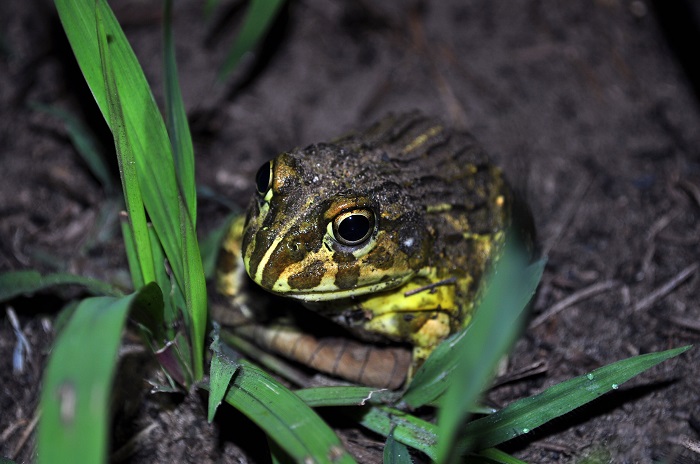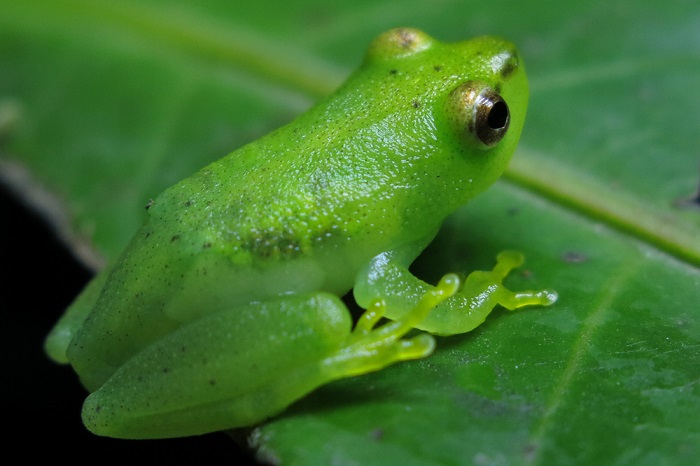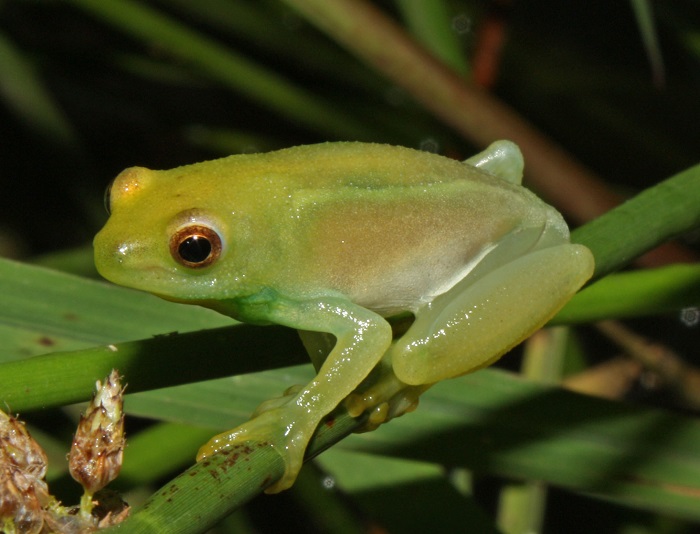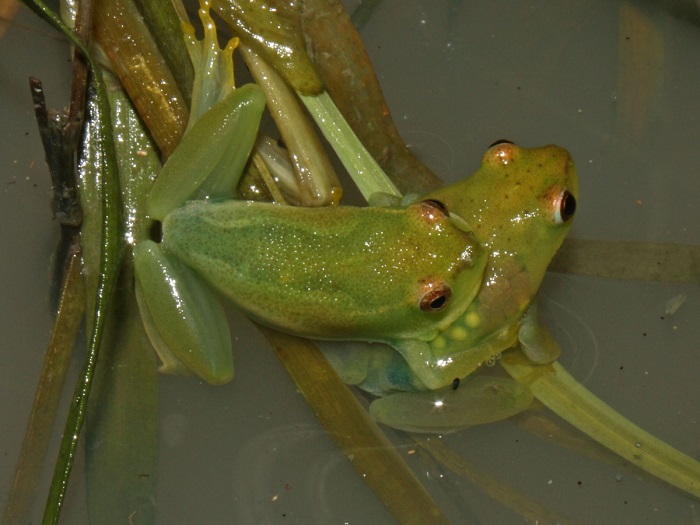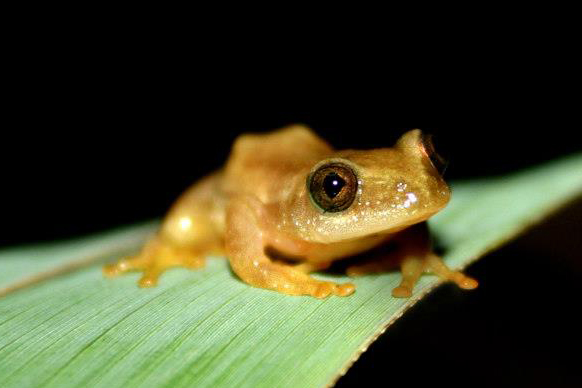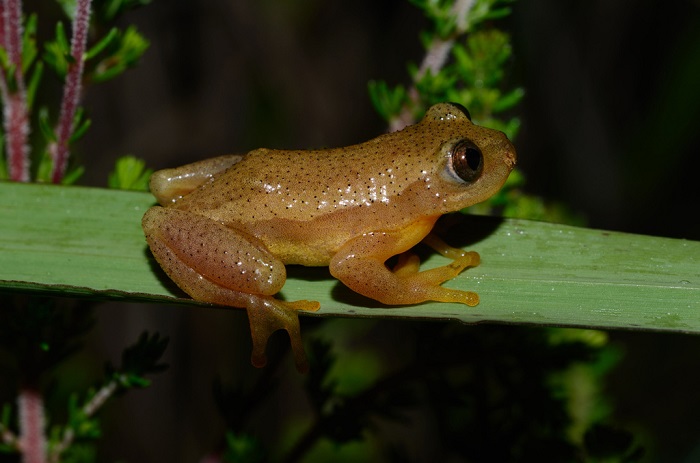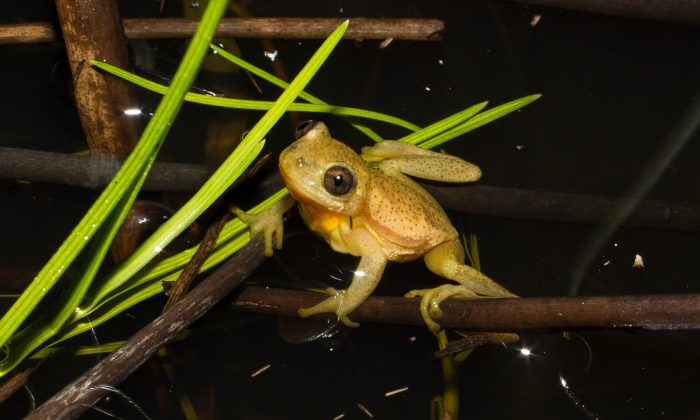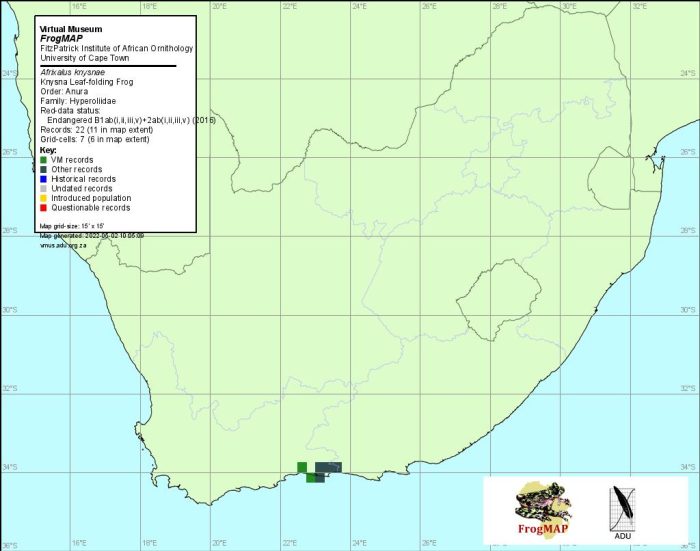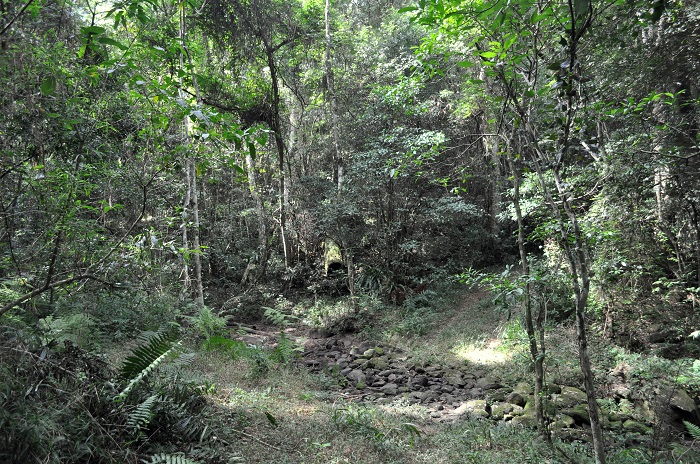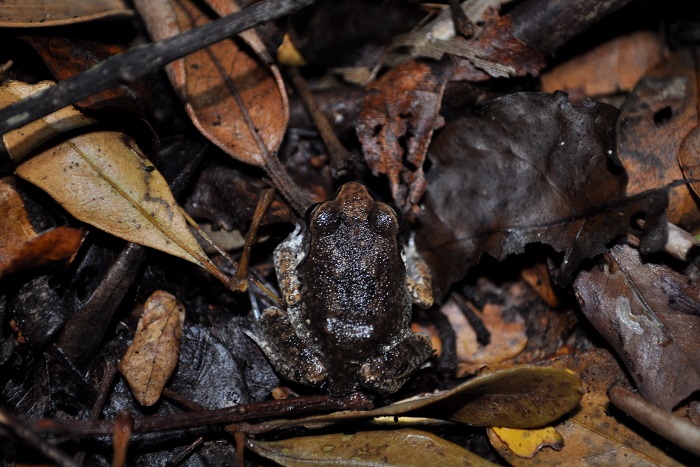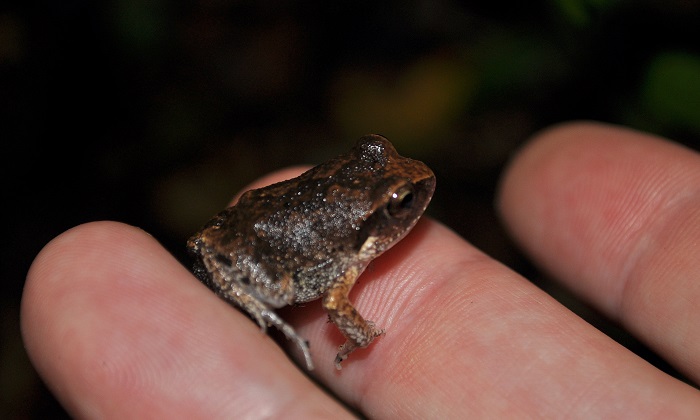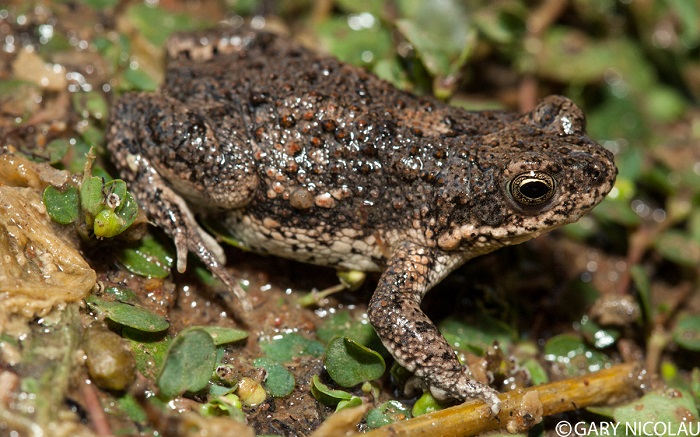
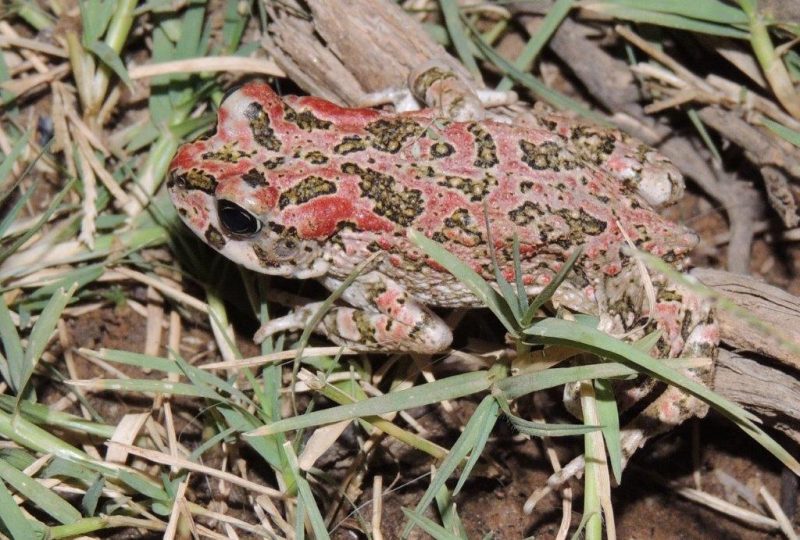
Paradise Toad (Vandijkophrynus robinsoni)

View the above photo record (by Itxaso Quintana) in FrogMAP here.

Find the Paradise Toad in the FBIS database (Freshwater Biodiversity Information System) here.

Family Bufonidae

PARADISE TOAD – Vandijkophrynus robinsoni

Branch and Braack, 1996

Habitat

V. robinsoni occurs widely in winter-rainfall Namaqualand and Richtersveld, within the Succulent Karoo and Fynbos (specifically renosterveld) biomes, but also extends eastward into the summer-rainfall Nama Karoo, where it appears to be restricted to inselbergs in Bushmanland.

The species is generally found in or near rocky, sometimes mountainous, areas that offer numerous refugia in rock cracks and holes. Water bodies used for breeding may be temporary or permanent and are usually small, shallow seepages, springs, vleis, seasonal streams and rivers, rain-filled depressions, or man-made dams. In streams, breeding takes place in side-pools or slow-moving backwaters. Large perennial rivers, such as the Gariep and Olifants, are apparently avoided.

Behaviour

V. robinsoni is a terrestrial, partially rupicolous species that shelters in rock cracks and holes in rocky areas close to permanent or seasonal water sources. It may be locally abundant, and it shares water resources with other Namaqualand endemics, for example, Strongylopus springbokensis and Cacosternum namaquense, as well as with Tomopterna delalandii and Amietia fuscigula.

Vandijkophrynus robinsoni – Near Springbok, Northern Cape
Photo by Luke Kemp

Vocalization has been recorded from March to October, usually following good rains, indicating that breeding occurs mainly during winter and spring. Males call from the bank or while “seated” in the water, from protected or exposed situations. Grappling with other males for position occurs frequently, and male aggression calls (a variant of the “meeuwing” advertisement call) are often heard. Vocalization (advertisement calls) and amplexus have been observed on several occasions in the presence of metamorphosing tadpoles, indicating that the breeding season is prolonged, or, at least, that it does not consist of a single “explosive” event.

Amplexus is axillary and, as with other bufonids, breeding males develop a black nuptial pad on the thumb. Single males have not been observed attempting to displace amplectant males and this, together with the larger female size, suggests a reproductive strategy involving selection by females.

Some 2000 eggs are laid in strings in water, attached loosely to vegetation or other objects. Tadpoles are typical of those of most southern African bufonids and development is rapid. Apparent schooling behaviour by tadpoles is caused by rapidly drying ponds; under favourable conditions the tadpoles are not gregarious. Mortality amongst eggs and tadpoles is often high because of the rapid drying of pools, or as a result of flash floods. Growth of froglets in captivity is rapid.

The diet, based on the dissection of the stomach contents of four adults, consists mainly of beetles (at least five species), with occasional termites and solpugids. An adult male was seen to feed on a male Cacosternum namaquense. Captive adults readily accepted mealworms and crickets. Predators of V. robinsoni have not been recorded.

Vandijkophrynus robinsoni – Near Springbok, Northern Cape
Photo by Alison Sharp

Status and Conservation

Branch and Braack (1995) considered V. robinsoni to be restricted to small, spring-fed pools in rocky, arid mountains of the Vandersterrberg in the Richtersveld. Owing to its very localized distribution, threats of habitat destruction and water extraction for livestock farming, and increasing needs of human populations in the region, the species was considered to be “very vulnerable”. However, additional records collected during the early phases of the atlas project indicated that V. robinsoni might have a much wider distribution. Harrison et al. (2001) therefore listed the species as Data Deficient, and its conservation status remained unresolved. Subsequently, during more extensive fieldwork associated with the atlas project, the known range of V. robinsoni has increased considerably. At present, the species is not considered to be threatened and it has been assigned the status of Least Concern (this publication).

V. robinsoni has been recorded in the Richtersveld Contractual National Park and the Goegap Nature Reserve. It is protected in terms of the Western Cape Nature Conservation Ordinance (Ordinance 19 of 1974, as amended), and by the Northern Cape Provincial Ordinance of 2000.

Although the species does not appear to be unduly threatened at present, population monitoring in conservation and other identified areas is recommended. Clarification of the taxonomic status of this species is needed (see above).

Vandijkophrynus robinsoni – Koeelfontein Guest House, Western Cape
Photo by Alison Sharp

Distribution

V. robinsoni is currently known from the Richtersveld, Bushmanland and Namaqualand regions of the Northern and Western Cape provinces of South Africa. Originally thought to occur only in isolated, rocky pools within the northern mountain desert region, recent atlas surveys have extended the known range as far south as the Vanrhynsdorp area (3118BC, BD), and eastward to Ghaamsberg in the Aggeneys area (2919AC). Additional discoveries are likely from springs and gorges in the rocky granite inselbergs of Bushmanland and other inaccessible areas. It is probable that V. robinsoni will be found in southern Namibia in areas adjacent to the Richtersveld (Branch and Braack 1995), and that current gaps in its seemingly disjunct distribution will be filled by further surveys. A photograph (M. Griffin) of a specimen from Rosh Pinah, southern Namibia (2716DD), has similar colouration and habitat to V. robinsoni and may be referable to this species.

V. robinsoni occurs in sympatry with V. gariepensis, and they are closely related (Cunningham and Cherry 2000). In Namaqualand, V. robinsoni lacks the bright colouration typical in the rocky Richtersveld and Ghaamsberg areas, and has a drab colour and pattern similar to that of V. gariepensis. Conversely, juvenile V. gariepensis in rocky habitats frequently show the bright colour patterns characteristic of V. robinsoni. However, V. robinsoni is distinguished from V. gariepensis by its characteristic vocalization and various morphological features, including: poorly developed parotoid glands, weakly developed tarsal fold, small tympanum, relatively smooth skin, and large eyes.

Historical records of V. robinsoni and V. gariepensis in Namaqualand are confused in that a number of observations of tadpoles and non-calling adult specimens were automatically attributed to V. gariepensis on the assumption that V. robinsoni was restricted to the Richtersveld. However, atlas data used for the distribution map of V. robinsoni are based on the calls of males (which are strikingly different to those of V. gariepensis), and these records are reliable, although not comprehensive.

Occurrence of the two Vandijkophrynus taxa in the Namaqualand region was confirmed by morphology and vocalization (Branch and Braack 1995). These authors conservatively maintained common taxonomic usage (e.g. Poynton 1964), and assigned the juvenile types of V. gariepensis to the olive-coloured, strongly tuberculate toad commonly associated with plains and valley bottoms throughout the Karoo region. This action, whilst recognizing the existence of an additional taxon restricted to the rocky areas of the Richtersveld, maintained nomenclatural stability of the widespread karroid taxon.

However, the discovery that the rock-associated taxon (V. robinsoni) is more widely distributed through Namaqualand, and is more common there than the karroid form, may necessitate a nomenclatural re-adjustment. If Smith’s juvenile types are (as now seems possible) more likely referable to the rock-living taxon, then Vandijkophrynus gariepensis A. Smith 1848 is the correct name for this taxon and V. robinsoni becomes a junior synonym. V. gariepensis will then have a more restricted distribution than currently accepted and a replacement name will be required for the more widespread Karoo taxon. In such an eventuality V. tuberculosus Bocage, 1896 (type locality: Linokana, Western Transvaal and Bechuanaland) or V. granti Boulenger, 1903 (type locality: Deelfontein, near Richmond, Cape Province) are available. Resolution of this problem may be possible if DNA-sequence data can be obtained from Smith’s juvenile types of B. gariepensis, currently housed in the Natural History Museum, London.

Distribution of Vandijkophrynus robinsoni. Taken from the FrogMAP database, April 2022.

Further Resources

Virtual Museum (FrogMAP > Search VM > By Scientific or Common Name)

More common names: Paradyskloof-skurwepadda (Afrikaans)

Recommended citation format for this species text:

Branch WR, Braack HH, Tippett RM.  Paradise Toad Vandijkophrynus robinsoni. BDI, Cape Town.
Available online at http://thebdi.org/2021/11/19/paradise-toad-vandijkophrynus-robinsoni/

Recommended citation format: 

This species text has been updated and expanded from the text in the
2004 frog atlas. The reference to the text and the book are as follows:

Branch WR, Braack HH 2004 Vandijkophrynus robinsoni Paradise Toad. In Minter LR
et al 2004.

Minter LR, Burger M, Harrison JA, Braack HH, Bishop PJ, Kloepfer D (eds)
2004. Atlas and Red Data Book of  the Frogs of South Africa, Lesotho and
Swaziland. Smithsonian Institution, Washington, and Avian Demography
Unit, Cape Town.
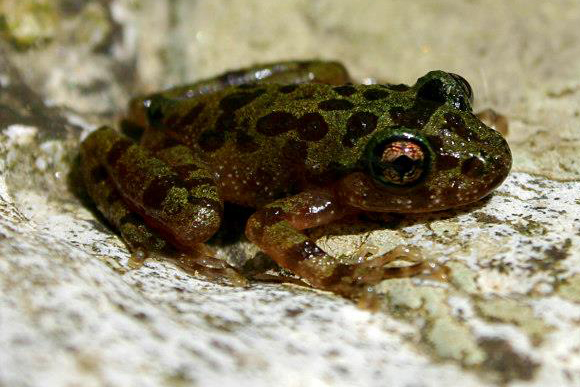
Southern Ghost Frog (Heleophryne regis)

Cover photo by Faansie Peacock.

Find the Southern Ghost Frog in the FBIS database (Freshwater Biodiversity Information System) here.

Family Heleophrynidae

Identification

The Southern Ghost Frog female attains 49mm in length whilst males are a little smaller, reaching 43mm in length. The dorsal colour varies from yellowish-brown to bright green with reddish-brown blotching. Externally, this species is distinguishable from the Cape Ghost Frog (Heleophryne purcelli) only by the males advertisement call.

Habitat

The Southern Ghost Frog occurs in clear, slow to swift-flowing streams in forested, high-rainfall areas that receive 900–1200 mm p.a. (Boycott 1982). The vegetation in these areas is described as Wet Mountain Fynbos with Afromontane Forest communities (Moll et al. 1984), but this species appears to be restricted to the forests.

In the closed-canopy forests the stream gradient is sometimes low. The water is dark brown owing to the presence of humic compounds, and meanders slowly between moss-covered boulders. The habitat resembles that of H. orientalis in this respect.

Behaviour

In August, an adult female with small developing eggs in the reproductive tract was found dead on the road in Outeniqua Mountain Pass. It had been raining earlier in the day. On another occasion in August, an adult female was collected from a soil pit, in a pine plantation, 600 m from the nearest river in the Outeniqua Mountains (P.J. Lourens pers. comm.). These observations indicate considerable movements away from breeding habitat in the non-breeding season.

Southern Ghost Frog Heleophryne regis
Montagu Pass, Western Cape
Photo by Luke Kemp

Although breeding activity has been observed November–February, H. regis exhibits peak breeding in mid-summer (December–January) when river and stream flow is reduced (Boycott 1982). Adult males call from positions close to waterfalls and cascades, but also from beneath rocks in slower flowing sections of streams. At waterfalls and cascades, rock cracks, crevices and caves are formed and these are prime calling sites. Calling males have also been recorded from wet rock faces, under spongy moss and in overhanging vegetation, such as tree fern branches, directly above small waterfalls and cascades. During the day, adults have been seen out in the open at the bottom of pools. Males sometimes take up positions close to each other. Two or more calling males have been seen, only centimetres apart, under small stones in a streambed (pers. obs.). FitzSimons (1946) recorded six specimens under a single rock at Deepwalls near Knysna. The formation of breeding aggregations is also exhibited by H. orientalis.

The eggs and oviposition sites of H. regis are described here for the first time. As with H. purcelliH. orientalis and H. hewitti, the eggs of H. regis are large-yolked and yellow. They are laid under rocks at the edges of quiet pools or under large flat rocks lying across streams (pers. obs.). Once, at around midday in the Outeniqua Mountains, a large rock lying across a slow flowing section of the Perdeberg River was lifted, revealing a pair and a partially laid clutch of eggs. Several eggs were attached to one another by a jelly-like substance protruding from the female’s cloaca. A total of 36 eggs had been laid and later another 47 eggs were released, making up a clutch of 83 eggs. Visser (1990) gave clutch size, derived from dissected females, as 114–197 eggs. However, from six clutches found either in the field, or released in captivity by gravid females, it was apparent that smaller clutches are laid by smaller females. Clutches ranged from 78 to 171 eggs (pers. obs.).

Southern Ghost Frog Heleophryne regis
George Botanical Gardens, Western Cape
Photo by Joseph Heymans

In early January, a clutch of 137 eggs was collected when a large rock (c.30 × 40 cm) at the edge of a shady pool (10 × 2 m) was overturned. The eggs appeared to be freshly laid as no development could be seen with a small hand lens. In the laboratory, the eggs were placed on stream gravel in shallow trays, with fresh water that was changed daily from a nearby stream. After four days, the tadpoles hatched with a large amount of yolk. They remained fairly still on the gravel, twitching now and then, and stayed this way for three or four days until most of the yolk had been absorbed, after which they started swimming actively. On another occasion, fertilized eggs collected at the time of laying (mid-December), hatched after 16 days. On this occasion, the eggs were kept in a plastic bag in a coolbox for the duration of a one-week fieldtrip, and this may have affected their development. After one week, the eggs showed clear development with a recognizable head and the body of the tadpole curving around the yolk.

Tadpoles are found beneath submerged and partly submerged rocks in streams and rocky pools. They are preyed upon by dragonfly nymphs (A. Turner pers. comm.). Metamorphs leave the water November–January, after c.12 months in the larval stage (Boycott 1982).

Status and Conservation

The Southern Ghost Frog is secure at present. The species’ habitat is relatively well protected in several private and public protected areas.

Southern Ghost Frog Heleophryne regis
Near Stormsriver, Eastern Cape
Photo by Joseph Heymans

Distribution

Distribution of Heleophryne regis. Taken from the FrogMAP database, April 2022.

The Southern Ghost Frog is endemic to the coastal mountain ranges of the Eastern and Western Cape provinces of South Africa. It occurs from the Huis and Perdeberg rivers in the Outeniqua Mountains in the west (3322CC), eastward along the Tsitsikamma and Kareedouw mountain ranges, to Jack-se-bos in the Krom River Forest Reserve (3424AB) in the east (Boycott 1982). Recorded altitude for the species is 230–790 m.

The atlas data are reliable and reasonably complete.

Further Resources

The use of photographs by Faansie Peacock, Joseph Heymans, and Luke Kemp is acknowledged.

Southern Ghost Frog Heleophryne regis Hewitt, 1909

Other Common Names: Royal Ghost Frog (Alt. English); Suidelike spookpadda (Afrikaans).

Recommended citation format: Boycott, RC; Tippett, RM. (2025). Southern Ghost Frog Heleophryne regis. Biodiversity and Development Institute, Cape Town. Available online at https://thebdi.org/2021/11/19/southern-ghost-frog-heleophryne-regis/

This species text has been updated and expanded from the text in the
2004 frog atlas:
 Boycott, RC. (2004). Southern Ghost Frog Heleophryne regis. In Minter LR
et al 2004.

References: 

Minter, LR; Burger, M; Harrison, JA; Braack, HH; Bishop, PJ; Kloepfer, D. (Editors). (2004). Atlas and Red Data Book of  the Frogs of South Africa, Lesotho and Swaziland. Smithsonian Institution, Washington, and Avian Demography
Unit, Cape Town.

Carruthers, V; du Preez, L. (2017). Frogs of southern Africa: A Complete Guide. Struik Nature, Cape Town.

Channing, A. (2001) Amphibians of Central and Southern Africa. Protea Book House, Pretoria

Claus, B; Claus, R. (2002). Common Amphibians and Reptiles of Botswana. Gamsberg Macmillan, Windhoek.

Similar Species

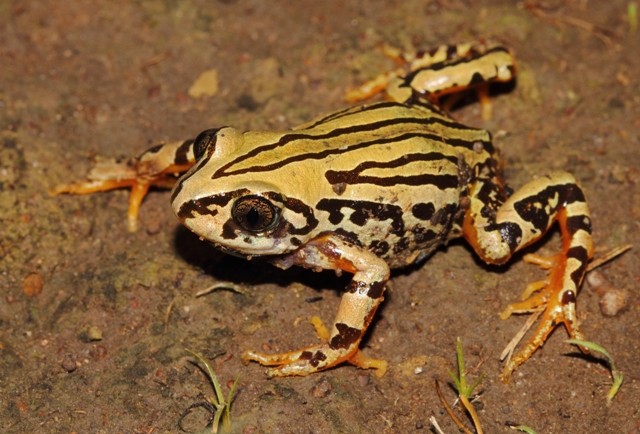
Rattling Frog (Semnodactylus wealii)

Cover photo by Alison Sharp.

Find the Rattling Frog in the FBIS database (Freshwater Biodiversity Information System) here.

Family Hyperoliidae

Identification

The Rattling frog attains a length of 44mm. The dorsal surface is smooth, and the markings on the back consist of 3 black longitudinal stripes, each split along its length, on a yellowish-brown to grey background. The undersides are pale cream and granular, often with fine dark mottling between the granules. The male’s throat disk is dark. The limbs are long and slender with bright yellow feet.

Habitat

The Rattling Frog inhabits the Grassland Biome over most of its range, but is also found in Fynbos in the Western Cape Province. In disturbed areas, it also occurs in pasture, clearings in forested areas (e.g., Tsitsikamma) and the grassy corridors between plantations of exotic trees. It occurs at altitudes ranging from near sea level to 1700 m.

Breeding habitats include pans, ponds, dams, and marshes in open grassland or grassy fynbos. During daytime in the breeding season, these frogs may be found under loose stones or tufts of grass near water (Wager 1986).

Behaviour

During the non-breeding season, this frog is terrestrial, hibernating in holes made by other animals or under logs or rocks. De Waal (1978) reported that individuals of this species are often found hibernating deep in the burrows of the Giant Girdled Lizard Cordylus giganteus. Rose (1962) obtained numerous specimens from amongst the roots of decaying Restionaceae reeds.

Breeding begins with the first good spring rains and extends into February. Male Rattling Frogs often call from concealed positions in or under grass tufts where they sit upright to allow full movement of the large, inflated vocal sac. On dark, warm, still evenings, they tend to be less shy, and males have been observed calling 300 mm above the ground, clinging to grass stems or bulrushes. They are agile, climbing from one grass stem to the next with the greatest of ease. As is the case with Kassina senegalensisS. wealii seldom hops or jumps, but walks with a few quick paces, pausing intermittently.

Male Rattling Frogs call from the water’s edge or several meters from the water. Pairs will often enter amplexus some distance from the water, and then make their way to the oviposition site, where the female will lay her eggs in shallow water. The eggs are 1.7 mm in diameter, surrounded by capsules of 2.4 mm diameter, and are attached to vegetation and other objects underwater. The clutch contains 100–500 eggs (Wager 1965; Channing 2001). Tadpoles develop slowly, and metamorphosis is completed after about eight weeks (Wager 1965).

When threatened, these frogs often sham death by lying on their backs with feet tucked in. A few moments after being released they quickly turn over and walk away. The skin contains small amounts of toxic peptides that can cause severe physiological reactions if eaten by a predator (Roseghini et al. 1988).

Status and Conservation

Although the Rattling Frog is not abundant throughout its range, large breeding populations were encountered at several places during the atlas period, for example, at Dullstroom, Mpumalanga Province, and Boesmansberge, Eastern Cape Province. S. wealii occurs in several provincial nature reserves and national parks, and is not threatened.

Distribution

The Rattling Frog is endemic to the atlas region. In the Western Cape Province, it is distributed along the coastal plain to the east of Cape Town. In the Eastern Cape Province, the distribution broadens north-eastward into southern KwaZulu-Natal Province and northward into the eastern and northern parts of the Free State Province. A single recent record exists from Lesotho (2927DC), but the species probably occurs more widely in that country. In the interior, the distribution extends north-eastward through Gauteng, north-western KwaZulu-Natal, central Mpumalanga and western Swaziland. The most northerly record was from 2430DD. The two historical records from the Richards Bay area (2832AB, AD) are disjunct from the main distribution.

The atlas data are accurate and comprehensive, but incomplete in places such as Lesotho.

Further Resources

The use of photographs by Alison Sharp is acknowledged.

Rattling Frog Semnodactylus wealii (Boulenger, 1882)

Other Common Names: Weale’s Long-toed Frog; Running Frog (Alternative Common Names); Ratelpadda (Afrikaans)

Recommended citation format: du Preez, LH; Tippett, RM. (2025). Rattling Frog Semnodactylus wealii. Biodiversity and Development Institute, Cape Town. Available online at https://thebdi.org/2021/11/18/rattling-frog-semnodactylus-wealii/

This species text has been updated and expanded from the text in the
2004 frog atlas:
 du Preez, LH. (2004). Rattling Frog Semnodactylus wealii. In Minter LR et al 2004.

References: 

Minter, LR; Burger, M; Harrison, JA; Braack, HH; Bishop, PJ; Kloepfer, D. (Editors). (2004). Atlas and Red Data Book of  the Frogs of South Africa, Lesotho and Swaziland. Smithsonian Institution, Washington, and Avian Demography
Unit, Cape Town.

Carruthers, V; du Preez, L. (2017). Frogs of southern Africa: A Complete Guide. Struik Nature, Cape Town.

Channing, A. (2001) Amphibians of Central and Southern Africa. Protea Book House, Pretoria

Similar Species

Amatola Toad (Vandijkophrynus amatolicus)

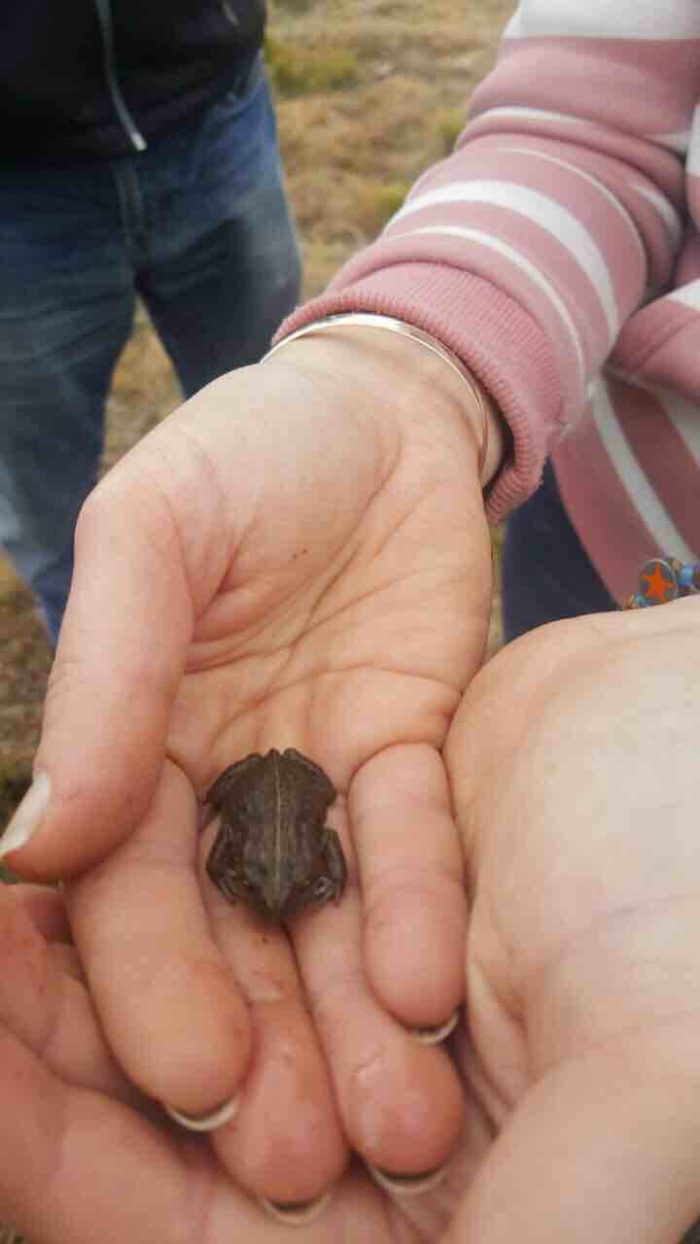
View the above photo record (by Luke Kemp) in FrogMAP here.

Find the Amatola Toad in the FBIS database (Freshwater Biodiversity Information System) here.

Family Bufonidae

AMATOLA TOAD – Vandijkophrynus amatolicus

Hewitt, 1925

Identification

Vandijkophrynus amatolicus is a small toad, with females reaching a maximum snout–vent length of 37 mm. The dorsum is usually uniform dark grey or olive-brown with a distinct, pale, vertebral stripe. Well developed parotoid glands and numerous small, flattened warts are present on the dorsal surface. This species was originally described as a subspecies of V. angusticeps, which is restricted to the Western Cape, but the latter is larger, reaching 58 mm in body length, and has dark, irregular dorsal patches on either side of a thin vertebral line (Boycott 1988d). Also, a fringe of webbing around the fingers and toes of V. angusticeps is absent in V. amatolicus. Differences in advertisement call structure distinguish V. amatolicus from B. angusticeps (Passmore and Carruthers 1995; Channing 2001). Both species possess a pupillary umbraculum, a structure absent in V. gariepensis.

Vandijkophrynus amatolicus – Elandsberg, Eastern Cape
Photo by Jeanne Tarrant

Habitat

This species inhabits high-altitude Moist Upland Grassland, but is absent from adjacent indigenous forest and plantation areas. Specimens may be found sheltering under rocks and logs in grassland and also in areas where forest has been cleared, such as the settlement of Hobbiton-on-Hogsback and at Hogsback Inn (Boycott 1988d).

The breeding habitat is shallow temporary pools, and seeps on mountain slopes.

Behaviour

Breeding has been recorded from October to December (Channing 2001). After heavy rains, the males congregate in large numbers at breeding sites, where they call from concealed positions under grass. The advertisement call is a brief nasal squawk, with long intervals between calls (Passmore and Carruthers 1995).

Single strings of eggs are deposited in shallow water, with single clutches estimated to contain several hundred eggs. These may be difficult to spot against the background of vegetation or muddy substrate (Wager 1986; Channing 2001). The tadpoles are brown in colour and benthic in habit.

Vandijkophrynus amatolicus – Elandsberg, Eastern Cape
Photo by Jeanne Tarrant

Status and Conservation

Status

Despite its limited range, V. amatolicus is locally abundant, and congregates in large numbers to breed (Wager 1986; Boycott 1988d; Channing 2001). It is known from the following protected areas: State Forests between Keiskammahoek and Hogsback, SAFCOL Forestry areas, Kubisi Indigenous Forest, and the Hogsback Indigenous Forest. It is a protected species in terms of the Cape Nature Conservation Ordinance (Ordinance 19 of 1974, as amended for the Eastern Cape Province), and the National Forests Act 19408 of 1998, section 7.

V. amatolicus was previously listed as Restricted (Branch 1988), Vulnerable (IUCN 2000) and Near Threatened (Harrison et al. 2001). Reassessment for this publication found this species to be Endangered in view of its restricted extent of occurrence and area of occupancy, fragmented range, and ongoing threats to populations.

Threats

The grassland habitat of V. amatolicus is threatened by overgrazing (cattle), silviculture, and the associated altered fire regimes and depletion of available surface water. Silviculture poses the single greatest threat as it results in a totally altered vegetation structure and causes fragmentation of the grassland habitat. It is estimated that some 20% of the habitat of Vandijkophrynus amatolicus has been lost in this way over the past 20 years (Harrison et al. 2001).

Recommended conservation actions

None of the protected areas in which V. amatolicus occurs (listed above) has statutory status. It is recommended that at least one population of V. amatolicus be given formal protection by the proclamation of a statutory provincial nature reserve, and that this population be monitored by the relevant authority. Within this reserve, limiting factor (e.g., encroachment of alien vegetation) management, as well as population monitoring and life history research, should be undertaken. As can be seen from the brief description of its life history, little is known about this species.

The taxonomic and genetic status of a small Vandijkophrynus species that occurs on the Kammanasie Mountains, and closely resembles V. amatolicus, requires clarification (see V. angusticeps account).

Hogsback and its surrounds are a well-known tourist destination. Education of the public regarding this frog and its habitat should arouse interest and may result in greater protection.

Distribution

V. amatolicus is endemic to the Eastern Cape Province, where it has a restricted range in the Winterberg and Amatola mountains, between Katberg and Keiskammahoek (Boycott 1988d). Recorded altitudes for the species are 1400–1800 m.

V. amatolicus was originally recorded from a single grid cell near Hogsback (Poynton 1964) and later from six localities (Katberg, Katberg Pass, Gaika’s Kop, Hogsback Mountain, Hogsback settlement and Keiskammahoek), in four grid cells (Boycott 1988d). During the atlas project the species was recorded from only one grid cell, namely 3226DB.

The atlas data are reliable but incomplete. Further surveys in optimum breeding conditions may reveal additional populations.

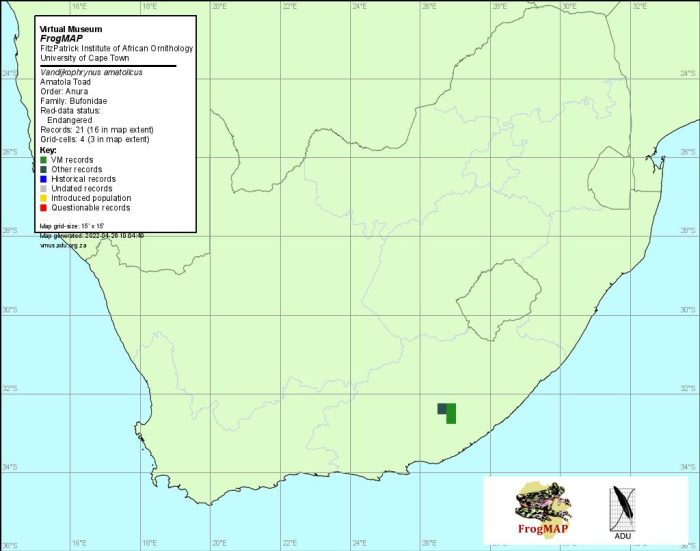
Distribution of Vandijkophrynus amatolicus. Taken from the FrogMAP database, April 2022.

Further Resources

Virtual Museum (FrogMAP > Search VM > By Scientific or Common Name)

More common names: Amatola-skurwepadda (Afrikaans)

Recommended citation format for this species text:

Boycott RC, Tippett RM.  Amatola Toad Vandijkophrynus amatolicus. BDI, Cape Town.
Available online at http://thebdi.org/2021/11/17/amatola-toad-vandijkophrynus-amatolicus/

Recommended citation format: 

This species text has been updated and expanded from the text in the
2004 frog atlas. The reference to the text and the book are as follows:

Boycott RC 2004 Vandijkophrynus amatolicus Amatola Toad. In Minter LR
et al 2004.

Minter LR, Burger M, Harrison JA, Braack HH, Bishop PJ, Kloepfer D (eds)
2004. Atlas and Red Data Book of  the Frogs of South Africa, Lesotho and
Swaziland. Smithsonian Institution, Washington, and Avian Demography
Unit, Cape Town.

Nile Grass Frog (Ptychadena nilotica)

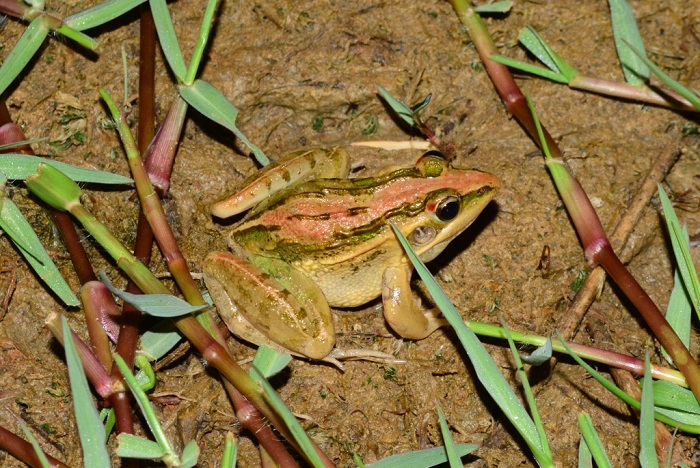
View the above photo record (by Nick Evans) in FrogMAP here.

Find the Nile Grass Frog in the FBIS database (Freshwater Biodiversity Information System) here.

Family Ptychadenidae

NILE GRASS FROG – Ptychadena nilotica

(Seetzen, 1855)

Habitat

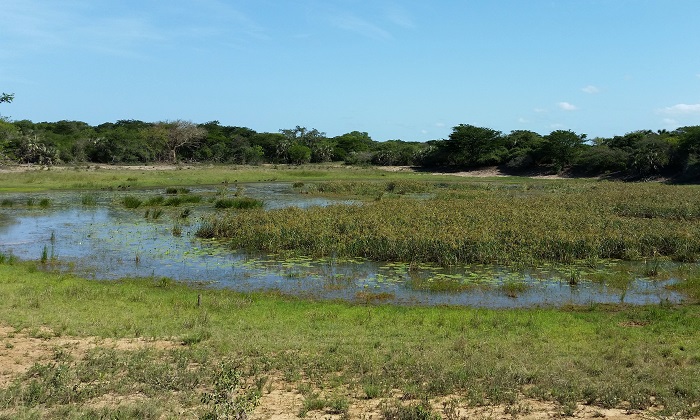
In Malawi, P. nilotica is recorded from swamps, marshes and pans in open, lowland savanna (Stewart 1967). In South Africa it seems to prefer permanent and semi-permanent pans and pools (Passmore 1978) but has also been recorded from brackish coastal pools (Lambiris 1989a). In the atlas region it inhabits Mixed Lowveld Bushveld, Sweet Lowveld Bushveld, Subhumid Lowveld Bushveld, and Coastal Lowveld Grassland, at altitudes up to 300 m. Annual rainfall in these habitats is 500–>1000 mm. During the day, adults conceal themselves in grass at the edges of pools, often sitting in shallow water (Stewart 1967).

Habitat – Near Kosi By, KwaZulu-Natal
Photo by Ryan Tippett

Behaviour

Because these frogs occur at or near permanent bodies of water, they are probably active throughout the year. They feed on terrestrial beetles, bugs, spiders, earthworms and snails, as well as aquatic and semi-aquatic organisms such as tadpoles and froglets (Stewart 1967; Channing 2001). When disturbed, they leap into or away from the water, simultaneously expelling a jet of water from the bladder (Stewart 1967; Passmore and Carruthers 1995). When captured they adopt a rigid posture, and sometimes produce a foamy skin secretion and emit a moaning sound (Channing 2001).

Breeding takes place in the wet season from spring to autumn (Stewart 1967). Males call from concealed positions at the edges of shallow pans or pools in open grassy wetlands or open woodland marshes, and have also been observed calling from roadside ditches and a quarry (Jacobsen 1989; Lambiris 1989a; Passmore and Carruthers 1995). In addition to the advertisement call, several other call types are produced in different social contexts (Passmore 1978).

Aside from the record of small black and white eggs laid in shallow water at the edge of Lake Chilwa (Channing 2001), there appears to be no further information on the eggs or tadpoles of this species.

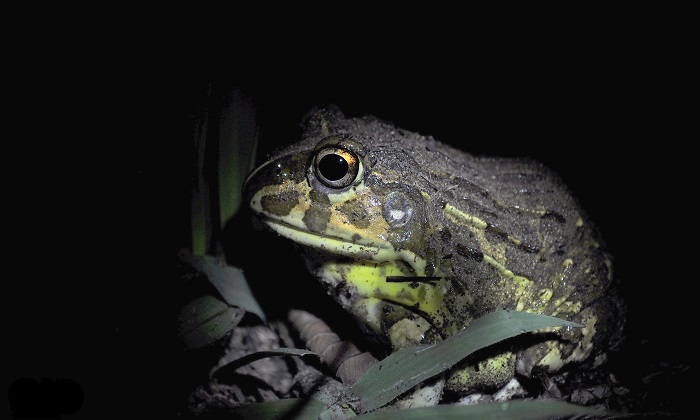
Ptychadena nilotica – Near Hluhluwe, KwaZulu-Natal
Photo by Ryan Tippett

Status and Conservation

Although P. nilotica is widely distributed in Africa, it has a marginal distribution in the atlas region and, from a national perspective, may warrant conservation action. A survey is necessary to locate breeding populations possibly missed during the atlas project. At present, not enough information is available to comment on the conservation status of this species within the atlas region.

Distribution

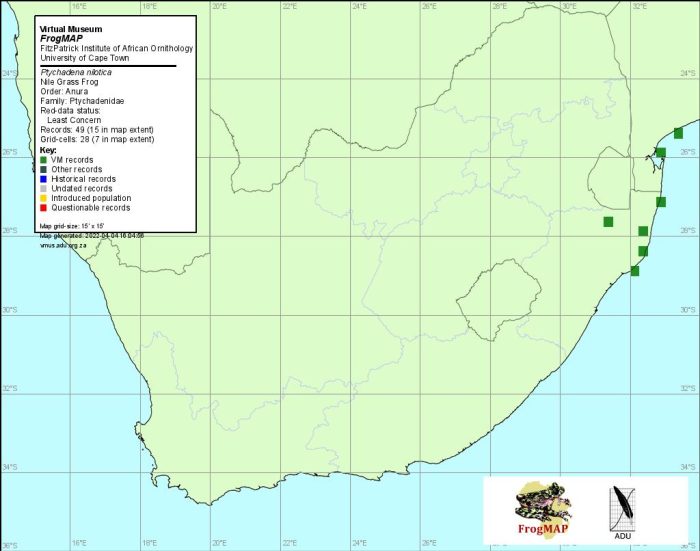
P. nilotica is widespread in savannas from Sierra Leone eastward through West Africa, and northward to Egypt. Its range extends southward to Angola, northern Namibia, northern Botswana and southern Mozambique. The species is also recorded from Madagascar, Seychelles and the Mascarene Islands, although it is possible that these populations represent a different taxon (Poynton 1964; Poynton and Broadley 1985b; Glaw and Vences 1994). In the atlas region, P. nilotica is uncommon and marginal in its distribution. It is recorded from the southeastern border of Mpumalanga to the coastal plain of northern KwaZulu-Natal, as far south as Shaka’s Kraal (2931AC).

Few records were collected during the atlas survey but the distribution range reflected in the map is regarded as reasonably accurate. The gaps within this range are probably the result of inadequate collecting rather than a real absence of the species.

Distribution of Ptychadena nilotica. Taken from the FrogMAP database, April 2022.

Further Resources

Virtual Museum (FrogMAP > Search VM > By Scientific or Common Name)

More common names: Mascarene Grass Frog (Alternative English Name); Nylgraspadda, Maskareense graspadda (Afrikaans)

Recommended citation format for this species text:

Minter LR, Passmore NI, Tippett RM.  Nile Grass Frog Ptychadena nilotica. BDI, Cape Town.
Available online at http://thebdi.org/2021/11/17/nile-grass-frog-ptychadena-nilotica/

Recommended citation format: 

This species text has been updated and expanded from the text in the
2004 frog atlas. The reference to the text and the book are as follows:

Minter LR, Passmore NI 2004 Ptychadena nilotica Nile Grass Frog. In Minter LR
et al 2004.

Minter LR, Burger M, Harrison JA, Braack HH, Bishop PJ, Kloepfer D (eds)
2004. Atlas and Red Data Book of  the Frogs of South Africa, Lesotho and
Swaziland. Smithsonian Institution, Washington, and Avian Demography
Unit, Cape Town.
African Bullfrog (Pyxicephalus edulis)

Cover photo by Andrew Hankey.

Find the African Bullfrog Frog in the FBIS database (Freshwater Biodiversity Information System) here.

Family Pyxicephalidae

Identification

The African Bullfrog is a large and robust species reaching a length of 120mm. The dorsal surface is light brown with greyish to brown patches and long dorsal ridges. A pale yellowish to green vertebral stripe is often present. The head is broad but the snout is more pointed than that of the Giant Bullfrog. The upper jaw carries irregular vertical bars that help to distinguish it from the Giant Bullfrog which lacks similar markings. The African Bullfrog also has a white crescent-shaped marking on the tympanum (diagnostic). The ventral surface is smooth and white to creamy yellow. The throat is sometimes mottled. The sexes are similar but breeding males are often bright green and males are larger than females.

African Bullfrog Pyxicephalus edulis
Hluhluwe district, KwaZulu-Natal
Photo by Ryan Tippett

At present there appear to be no reliable, diagnostic, morphological characters that allow one to distinguish P. edulis from small individuals of P. adspersus (Channing et al. 1994a). For this reason, museum specimens and literature records, unless accompanied by call or other relevant behavioural data, have to be treated with circumspection.

Habitat

The African Bullfrog inhabits flat, low-lying areas in open, grassy woodland, that becomes flooded after heavy rain. Prime breeding habitat includes shallow, grassy pans that can support large breeding populations (e.g., in Kruger National Park, Naboomspruit, Vivo, Soekmekaar and Giyani districts). Smaller breeding aggregations form in artificial impoundments such as roadside furrows, borrow pits, waterholes, ponds and dams (Jacobsen 1989; L.R.M. pers. obs). Channing et al. (1994a) found this species breeding in rice paddies in Mozambique.

Within the atlas region, the African Bullfrog inhabits several woodland vegetation types in the north-eastern parts of the Savanna Biome, from sea level to an altitude of about 1500 m (Jacobsen 1989).

Ideal breeding habitat
Bonamanzi Game Reserve, KwaZulu-Natal
Photo by Ryan Tippett

Behaviour

The African Bullfrog spends up to 10 months of the year in a dormant state beneath the soil surface (Mitchell 1946). The production of a cocoon to prevent desiccation has not been observed, but Stewart (1967) noted that “when hibernating during the dry season, eyes are closed and depressed to the level of the head”.

Breeding takes place at night (cf. P. adspersus) after heavy rain. No aggressive behaviour was observed in a breeding population near Beira (Channing et al. 1994a), but in Kruger National Park, males calling at distances of 0.5–1.5 m from each other in shallow, flooded grassland were seen charging one another (L.R.M. pers. obs.). However, this species does not appear to display the same level of aggressive behaviour as  the Giant Bullfrog P. adspersus. Males call from the water, with only the head and vocal sac projecting above the surface. Guarding of tadpole swarms and channel construction by males were observed in a breeding population of P. edulis near Jock of the Bushveld Rest Camp in the Kruger National Park (H. Braack pers. comm.).

Food items include a variety of invertebrates and small vertebrates, including frogs. Several bird species, Nile Monitors Varanus niloticus and humans are known to prey on this species (Peters 1882; Stewart 1967; Channing 2001).

African Bullfrog Pyxicephalus edulis
Hluhluwe district, KwaZulu-Natal
Photo by Ryan Tippett

Status and Conservation

The occurrence of the African Bullfrog in the atlas region is marginal in terms of its global distribution. Within this area it is relatively common and does not appear to be at risk. Large populations are known to occur in private and provincial nature reserves and national parks, such as the Kruger National Park.

The effect of human predation outside protected areas should be evaluated. More detailed studies of habitat requirements, breeding biology, duration of the larval stage and development are recommended for this species.

Distribution

The African Bullfrog was formerly synonymized with P. adspersus (Poynton 1964) and later treated as a subspecies of P. adspersus (Parry 1982; Poynton and Broadley 1985b; Lambiris 1989a). This taxon was again recognised as a full species by Channing et al. (1994a) on the basis of clear differences in advertisement call and breeding behaviour.

Outside of the atlas region, P. edulis occurs in Mozambique (Channing et al. 1994a) and extends into Kenya (Channing 2001). The species is probably also widespread in Central and East Africa. Its presence along the north-eastern border of South Africa indicates that P. edulis is also likely to occur in Botswana and Zimbabwe.

In the atlas region, records based on calls were collected in the north-eastern parts of North West Province, Limpopo Province, eastern Mpumalanga Province, northern and eastern Swaziland and north-eastern KwaZulu-Natal as far south as Empangeni (2831DD).

Fieldwork involving the collection of advertisement calls and knowledge of intra- and inter-specific variation in the morphology of adults, juveniles and tadpoles, is required before the distribution of this species can be accurately mapped (Channing et al. 1994a; Channing 2001).

The atlas data are reasonably reliable given the problems outlined above, but are not comprehensive.

Further Resources

The use of photographs by Andrew Hankey is acknowledged. Other images by Ryan Tippett.

African Bullfrog Pyxicephalus edulis Peters, 1854

Other Common Names: Edible Bullfrog, Lesser Bullfrog (Alt. English); Kleinbrulpadda (Afrikaans).

Recommended citation format: Cook, CL; Minter, LR; Tippett, RM. African Bullfrog Pyxicephalus edulis. BDI, Cape Town. Available online at http://thebdi.org/2021/11/17/african-bullfrog-pyxicephalus-edulis/

This species text has been updated and expanded from the text in the
2004 frog atlas:
 Du Preez, LH; Cook CL. (2004). African Bullfrog Pyxicephalus edulis. In Minter LR
et al 2004.

References: 

Minter, LR; Burger, M; Harrison, JA; Braack, HH; Bishop, PJ; Kloepfer, D. (Editors). (2004). Atlas and Red Data Book of  the Frogs of South Africa, Lesotho and
Swaziland
. Smithsonian Institution, Washington, and Avian Demography
Unit, Cape Town.

Carruthers, V; du Preez, L. (2017). Frogs of southern Africa: A Complete Guide. Struik Nature, Cape Town.

Channing, A. (2001) Amphibians of Central and Southern Africa. Protea Book House, Pretoria

Claus, B; Claus, R. (2002). Common Amphibians and Reptiles of Botswana. Gamsberg Macmillan, Windhoek.

Similar Species

Water Lily Frog (Hyperolius pusillus)

View the above photo record (by Ryan van Huysteen) in FrogMAP here.

Find the Water Lily Frog in the FBIS database (Freshwater Biodiversity Information System) here.

Family Hyperoliidae

WATER LILY FROG – Hyperolius pusillus

Cope, 1862

Habitat

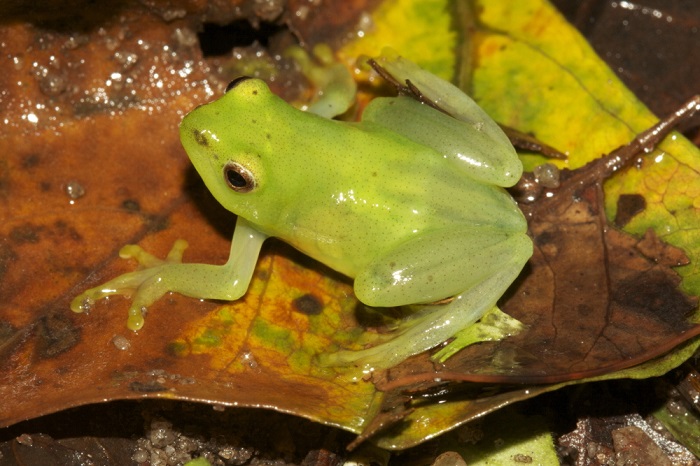
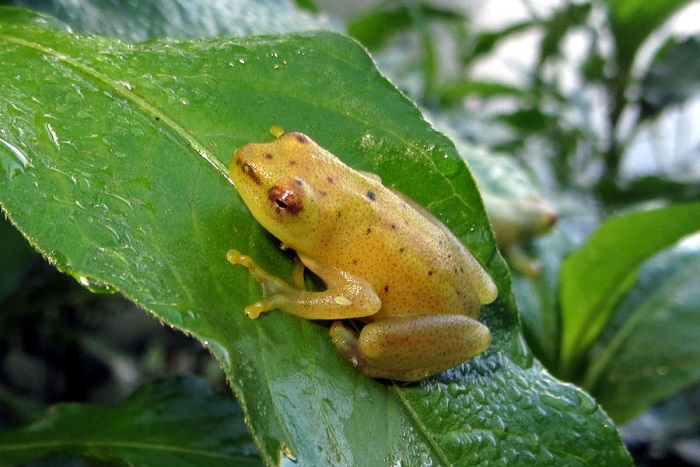
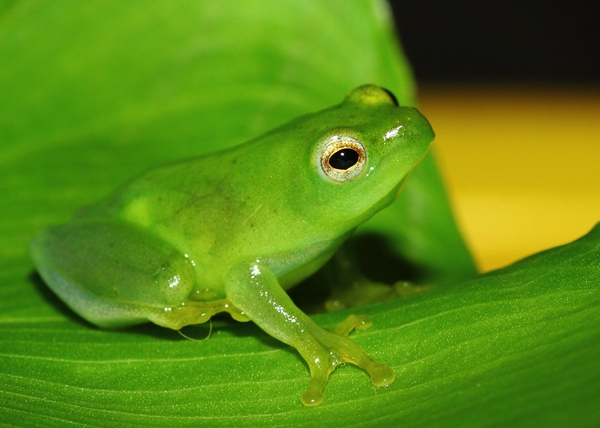
H. pusillus inhabits open savanna and grassland, breeding in shallow pans, ponds, vleis and dams with water lilies Nymphaea sp., or at least some form of floating vegetation. In the atlas region it occurs in a variety of bushveld vegetation types, from Coastal Bushveld-Grassland along the coast of the Eastern Cape and KwaZulu-Natal, to Mixed Lowveld Bushveld in the low-lying areas of Limpopo Province, east of the Great Escarpment. During the atlas survey, breeding populations were also found in ponds in plantations of pine and Eucalyptus, south of Piet Retief (2730BA, 2730BC).

Hyperolius pusillus – Mariepskop, Limpopo
Photo by Luke Verburgt

Behaviour

Very little is known about the non-breeding behaviour of H. pusillus. In Durban (2931CC), breeding takes place from the beginning of October to the end of March (Alexander 1987). Males form dense choruses on floating vegetation and leave the breeding site only in the early hours of the morning to ascend into surrounding trees (Passmore and Carruthers 1995). On occasions, males have even been found calling from the tree canopy at the start of the chorus in the early evening, apparently stimulated to call from these atypical sites by the chorus at the breeding site.

Hyperolius pusillus – Mariepskop, Limpopo
Photo by Luke Verburgt

Choruses are characterised by high levels of aggressive behaviour between males, especially in the early evening when calling is at its peak. At such times, a minimum distance of 25 cm is maintained between calling males by means of the advertisement call, an encounter call, and physical contact between calling males (Cleminson 1991). During territorial disputes, males often butt one another with their vocal sacs (Passmore and Carruthers 1995).

About 500 light green eggs are laid in groups of 20–120, in a single layer between the overlapping margins of lily leaves, with the jelly surrounding the eggs acting as a glue to keep the leaves together (Wager 1965). While this specialized oviposition site reduces predation, it may also be a limiting factor at sites where population densities are high (Telford 1982).

H. pusillus adults feed on ants and flying termites, and are preyed upon by the Yellowbilled Egret Egretta intermedia (Channing 2001). The call sites favoured by this species make it particularly vulnerable to predation by pisaurid spiders (L.R. Minter and A. Turner pers. obs.).

Hyperolius pusillus – Oribi Gorge Nature Reserve, KwaZulu-Natal
Photo by Jean-Paul Brouard

Status and Conservation

H. pusillus is a relatively abundant species, often occurring in large numbers at breeding sites. Populations in developed and managed areas, such as golf courses and parks, appear to be stable, and some have been observed to re-establish themselves following serious disturbance. In Durban, several individuals translocated from Bluff Nature Reserve to Pigeon Valley established a new breeding population (Alexander 1990).

This species is protected in a number of established national and provincial conservation areas, and seems to require no additional conservation action at present. It is protected from collection by provincial conservation ordinances in the relevant provinces.

Hyperolius pusillus – Pietermaritzburg, KwaZulu-Natal
Photo by Geoff Prosser

Distribution

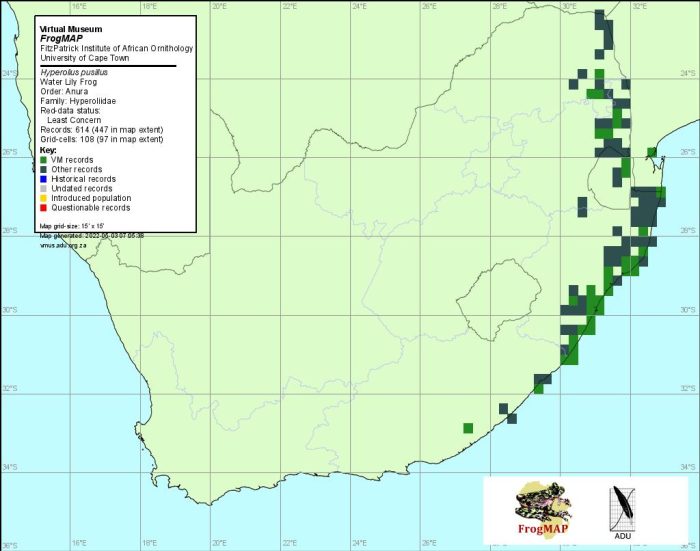
H. pusillus is distributed from southern Somalia, southward through East Africa to Mozambique, eastern Zimbabwe and Swaziland (Poynton and Broadley 1987; Channing 2001). Within the atlas region it occurs as far south as Cebe (3228DA) in the Eastern Cape. The species usually occurs in low-lying coastal areas but, further inland in the northern parts of the atlas region, it is found at higher altitudes, as in Malawi and northwestern Botswana (Channing 2001).

This species has an unmistakable call, and the atlas data are reasonably complete and reliable.

Distribution of Hyperolius pusillus. Taken from the FrogMAP database, April 2022.

Further Resources

Virtual Museum (FrogMAP > Search VM > By Scientific or Common Name)

More common names: Waterleliepadda (Afrikaans)

Recommended citation format for this species text:

Alexander GJ, Tippett RM.  Water Lily Frog Hyperolius pusillus. BDI, Cape Town.
Available online at http://thebdi.org/2021/11/16/water-lily-frog-hyperolius-pusillus/

Recommended citation format: 

This species text has been updated and expanded from the text in the
2004 frog atlas. The reference to the text and the book are as follows:

Alexander GJ 2004 Hyperolius pusillus Water Lily Frog. In Minter LR
et al 2004.

Minter LR, Burger M, Harrison JA, Braack HH, Bishop PJ, Kloepfer D (eds)
2004. Atlas and Red Data Book of  the Frogs of South Africa, Lesotho and
Swaziland. Smithsonian Institution, Washington, and Avian Demography
Unit, Cape Town.
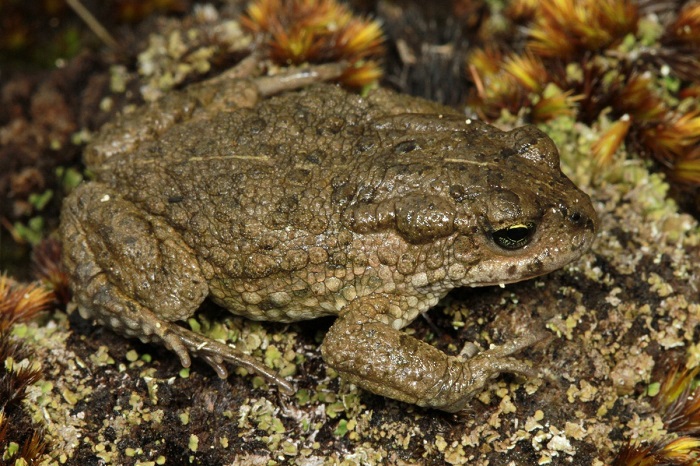
Hyperolius pusillus – Near Hoedspruit, Limpopo
Photo by Vaughan Jessnitz

Knysna Leaf-folding Frog (Afrixalus knysnae)

View the above photo record (by Faansie Peacock) in FrogMAP here.

Find the Knysna Leaf-folding Frog in the FBIS database (Freshwater Biodiversity Information System) here.

Family Hyperoliidae

KNYSNA LEAF-FOLDING FROG – Afrixalus knysnae

(Loveridge, 1954)

Identification

The presence of a vertical pupil and minute asperities (spines), distributed uniformly over the dorsal, and posterior ventral skin of the body, and the dorsal skin of the limbs, distinguish A. knysnae from the morphologically similar, and sympatric, Hyperolius marmoratus and H. horstockii. The asperities are more conspicuous in males than in females. Body length is 22–25.2 mm (Pickersgill 1996).

A. knysnae does not occur in sympatry with any other Afrixalus species. A. spinifrons has a shorter body (16.4–22.6 mm; Pickersgill 1996). In A. knysnae the snout is not noticeably swollen or bulbous, nor is there a concentration of tubercular asperities in this region, as is the case in most male A. s. spinifrons (but not A. s. intermedius). The gular disc is smaller and transversely oval to round in A. knysnae whereas, in both subspecies of A. spinifrons, the disc covers most of the gular surface (Pickersgill 1996).

The following description of the advertisement call is based on calls recorded at Covie on 17 September 2002 at 15–20°C (H. Braack and M. Burger unpubl. data). These calls consisted of two parts: a short “zip” and a longer “trill”, as in A. delicatus and A. spinifrons. The duration of 13 trills from three individuals was 0.16–2.64 s; the pulse rate was 24–29 pulses/s; and the emphasized frequency was 2.9–3.6 kHz. Three zip calls from one individual had a duration of 0.06–0.09 s; a pulse rate of 209–230 pulses/s; and an emphasized frequency of 3.2–3.3 kHz.

Larger samples of advertisement calls from single populations, recorded during moderate- to high-intensity choruses, and adjusted to a common air temperature and body mass, are needed to differentiate more clearly between the calls of A. knysnae, A. delicatus and A. spinifrons.

Afrixalus knysnae – Saasveld, Western Cape
Photo by Rian Stander

Habitat

A. knysnae inhabits a coastal mosaic of Mountain Fynbos and Afromontane Forest in the Outeniqua District centre of endemism of the Coastal Mountain biogeographical province (Branch and Hanekom 1987). FitzSimons (1946) recorded specimens in glades, clearings and roadside pools at Diepwalle (= Deepwalls; 3323CA), while Pickersgill (2000) collected juveniles from “arum blooms on boggy ground near an irrigation dam at Barrington” (3322DD). A few of the known localities are situated in pristine habitat but the remainder have been subjected to varying degrees of habitat alteration and usually contain a high proportion of alien plant species.

Behaviour

The biology of A. knysnae is poorly known. Breeding activity has been recorded October–December at Covie, Groenvlei and Diepwalle, and in late February in the De Vasselot Nature Reserve west of Covie. Juveniles were collected in early October at Covie, hence breeding activity probably starts in September at this locality (FitzSimons 1946; Branch and Hanekom 1987; H. Braack unpubl. data). A female, collected at Diepwalle in early December, contained well-developed ovarian eggs (Pickersgill 1996, 2000).

During the breeding season, males were seen calling from fallen branches and emergent vegetation just above the surface of small pools along the roadside and in forest clearings (FitzSimons 1946), while juveniles were collected from restio stems along the edges of small pans in fynbos (Branch and Hanekom 1987). During the day, adults were found on vegetation surrounding these pans. Tadpoles collected at Grootkop, Knysna, were similar in morphology to those of A. s. spinifrons from Port St Johns (Inger 1989).

Afrixalus knysnae – Saasveld, Western Cape
Photo by Armin Du Preez

Status and Conservation

Status

A. knysnae was classified as Data Deficient (Harrison et al. 2001), but additional data and reassessment have placed it in the Endangered category on the basis of an extent of occurrence <5000 km2, an area of occupancy <500 km2, a severely fragmented range, and a perceived continuing decline in the area of occupancy, numbers of individuals and locations, as well as a decrease in the area and quality of its habitat (this publication).

Threats

The long-term survival of this species is threatened by habitat loss and alteration as a result of extensive coastal urban and recreational development, forestry and other agriculture. An important factor linked to the development of the area is rapid growth of the tourism industry. Development has resulted in the draining, impoundment and eutrophication of wetlands near residential areas and agricultural lands, and encroachment of invasive alien vegetation. Impounded wetlands are often stocked with alien fish species and this may also have resulted in local extinction of A. knysnae populations.

The breeding site at Covie, a small seasonal pan, now lies within a pasture and most of the emergent vegetation has been destroyed by cattle grazing and trampling. Groenvlei is gradually becoming more brackish (R. Hiseman pers. comm.; monitored by the Department of Water Affairs and Forestry). These threats are continuing and are likely to lead to further population declines, possibly by as much as 20% or more in the next 30 years.

Recommended conservation actions

A. knysnae is currently protected within the Tsitsikamma National Park (Carruthers and Robinson 1977; Branch and Hanekom 1987) and the Goukamma Nature Reserve (including Groenvlei). Some sections of the Diepwalle forestry area may offer sanctuary, but the species was not recorded from these historical localities during atlas surveys in 2000 and 2001. The collection and trade of specimens are unlikely to be important threats; legislation should rather endeavour to protect the species’ habitat.

The plight of A. knysnae should be highlighted so that future environmental impact assessments (EIAs) within its range can attempt to prevent further loss of habitat. Private landowners should be encouraged to participate in its protection.

Conservation authorities should carry out surveys to find and quantify breeding populations of A. knysnae. All known localities should be assessed and afforded protection accordingly. It is strongly recommended that long-term monitoring be conducted at selected sites to track population fluctuations and identify limiting factors.

Distribution

Not all workers are in agreement about the extent of occurrence of A. knysnae. The maps of Poynton (1964), Passmore and Carruthers (1995) and Channing (2001), for example, include the central to northern Eastern Cape coastal belt as part of this species’ range. A. knysnae is difficult to distinguish from A. spinifrons, and further surveys and field studies are required to confirm the distributions of these two taxa. For the purposes of this atlas we have followed the assessment of Pickersgill (1996, 2000). As such, A. knysnae is endemic to the Western Cape Province. It occurs from Groenvlei (3422BB) in the west to Covie (3323DC) in the east, and is confined to the coastal region by the Outeniqua and Tsitsikamma mountains. A. knysnae is separated from the nearest A. s. spinifrons populations at Kei Road (3227DA) and Cintsa Bay (3228CC) by about 400 km, including at least 250 km of unsuitable habitat.

The atlas data are reliable but more intensive surveys are necessary to comprehensively map the distribution of this species.

Distribution of Afrixalus knysnae. Taken from the FrogMAP dsatabase, April 2022.

Further Resources

Virtual Museum (FrogMAP > Search VM > By Scientific or Common Name)

More common names: Knysna-blaarvoupadda (Afrikaans)

Recommended citation format for this species text:

Braack HH, Minter LR, Tippett RM. Knysna Leaf-folding Frog Afrixalus knysnae. BDI, Cape Town.
Available online at http://thebdi.org/2021/11/16/knysna-leaf-folding-frog-afrixalus-knysnae/

Recommended citation format: 

This species text has been updated and expanded from the text in the
2004 frog atlas. The reference to the text and the book are as follows:

Braack HH, Minter LR 2004 Afrixalus knysnae Knysna Leaf-folding Frog. In Minter LR
et al 2004.

Minter LR, Burger M, Harrison JA, Braack HH, Bishop PJ, Kloepfer D (eds)
2004. Atlas and Red Data Book of  the Frogs of South Africa, Lesotho and
Swaziland. Smithsonian Institution, Washington, and Avian Demography
Unit, Cape Town.

Bush Squeaker (Arthroleptis wahlbergi)

Cover photo by M. Douglas.

Find the Bush Squeaker in the FBIS database (Freshwater Biodiversity Information System) here.

Family Arthroleptidae

Identification

The Bush Squeaker is a small species attaining a length of 25mm in females and 22mm in males. The colour pattern is variable, consisting mostly of different shades of brown. An hourglass pattern is commonly, but not always, visible on the back, and a pale vertebral stripe is sometimes also present. In contrast to the Shovel-footed Squeaker, the inner metatarsal tubercle is inconspicuous, rounded, and less than half the size of the inner toe.

Bush Squeaker Arthroleptis wahlbergi
Dlinza Forest, KwaZulu-Natal
Photo by Mark Liptrot

Habitat

The Bush Squeaker is a forest species, but it is also found in adjacent thickets and grassland with dense cover and accumulated leaf litter. These frogs are common where they occur and are frequently resident in gardens and in alien tree plantations. Annual rainfall within the distribution range is 500–750 mm, and falls in summer.

Typical habitat in Ngoye Forest, KwaZulu-Natal
Photo by Ryan Tippett

Behaviour

Breeding takes place during spring and summer, with calling commencing immediately after rain (Channing 2001). In wet weather, males may be heard calling throughout the day and night from concealed positions in leaf litter. Clutches of 11–30 eggs are laid in damp leaf litter and develop directly into froglets which hatch and leave the nest after approximately four weeks (Wager 1986).

Bush Squeaker Arthroleptis wahlbergi
Durban, KwaZulu-Natal
Photo by Tyrone Ping

Food items consumed by the Bush Squeaker include woodlice and other crustaceans, beetles, and, probably, other small insects that live in the leaf litter (Wager 1986). Predators of A. wahlbergi have not been recorded.

Status and Conservation

Although the Bush Squeaker is not classified as threatened, in places its habitat is under pressure from housing development and the clearing of bush for agriculture. More detailed distribution information is needed to evaluate the species’ local conservation status. Where only small-scale disturbances occur, these frogs can recolonise gardens and similar areas of lush vegetation.

Bush Squeaker Arthroleptis wahlbergi
Mabibi, iSimangaliso Wetland Park, KwaZulu-Natal
Photo by Ryan Tippett

Distribution

The Bush Squeaker is endemic to the east coast of South Africa, from just south of Port St Johns (3129CD) northward to the Mozambique border (2632DD). In KwaZulu-Natal, its range extends inland to altitudes of c.1000 m in the mist belt, where it is particularly common.

Distribution of Arthroleptis wahlbergi. Taken from the FrogMAP database, April 2022.

Although adults are difficult to find, the distinctive, loud advertisement call is a reliable means of identification, and the atlas distribution data are therefore reasonably comprehensive and reliable.

Bush Squeaker Arthroleptis wahlbergi
Mabibi, iSimangaliso Wetland Park, KwaZulu-Natal
Photo by Ryan Tippett

Further Resources

The use of photographs by M. Douglas, Mark Liptrot, and Tyrone Ping is acknowledged. Other photographs by Ryan Tippett.

Bush Squeaker Arthroleptis wahlbergi Smith, 1849

Other Common Names: Boskikker (Afrikaans).

Recommended citation format: Channing, A; Tippett, RM. (2025). Bush Squeaker Arthroleptis wahlbergi . Biodiversity and Development Institute, Cape Town. Available online at https://thebdi.org/2021/11/15/bush-squeaker-arthroleptis-wahlbergi/

This species text has been updated and expanded from the text in the
2004 frog atlas:
 Channing, A. (2004). Bush Squeaker Arthroleptis wahlbergi. In Minter LR
et al 2004.

References: 

Minter, LR; Burger, M; Harrison, JA; Braack, HH; Bishop, PJ; Kloepfer, D. (Editors). (2004). Atlas and Red Data Book of  the Frogs of South Africa, Lesotho and Swaziland. Smithsonian Institution, Washington, and Avian Demography
Unit, Cape Town.
Carruthers, V; du Preez, L. (2017). Frogs of southern Africa: A Complete Guide. Struik Nature, Cape Town.

Channing, A. (2001) Amphibians of Central and Southern Africa. Protea Book House, Pretoria

Claus, B; Claus, R. (2002). Common Amphibians and Reptiles of Botswana. Gamsberg Macmillan, Windhoek.

Similar Species

Northern Pygmy Toad (Poyntonophrynus fenoulheti)

View the above photo record (by Vaughan Jessnitz) in FrogMAP here.

Find the Northern Pygmy Toad in the FBIS database (Freshwater Biodiversity Information System) here.

Family Bufonidae

NORTHERN PYGMY TOAD – Poyntonophrynus fenoulheti

Hewitt and Methuen, 1913

Habitat

B. fenoulheti inhabits a variety of bushveld vegetation types in the Savanna Biome and is occasionally found in adjacent grassland. Its distribution lies within the summer-rainfall region.

Although occasionally found in sandy areas, these frogs usually occupy rocky outcrops, taking refuge between rocks or on soil under stones. In these situations they occur singly or in small groups of 5–6 (or as many as nine) individuals, often together with scorpions and lizards (Jacobsen 1989). In Zimbabwe, they have also been found sheltering under shallow, loose, matted layers of sand and roots overlying rocks (Lambiris 1989b). Breeding usually takes place in temporary pools, such as those on flat rocky outcrops or shallow rain ponds, sometimes in barren areas.

Behaviour

Breeding occurs October–February in the Kruger National Park, but only after heavy rain (H. Braack pers. obs.). During the breeding season, males have bright yellow throats and call from exposed positions near the edges of rain pools or while partly submerged near the edge (Lambiris 1989a; Passmore and Carruthers 1995). Jacobsen (1989) noted that several frogs appeared on the day after an afternoon rain shower, and some of them were found in amplexus after being placed in bottles. He observed that strings of eggs were abundant at the edge of rain-filled depressions and hatched after about 24 hours.

Poyntonophrynus fenoulheti – Magaliesberg, North West
Photo by Ryan van Huysteen

The following observations refer to a population of B. fenoulheti from Lobatse, Botswana (Power 1927b). The species breeds from late November to late January, at which time the males congregate in shallow rock pools. An axillary clasp is used during amplexus. Females produce strings of 2000 eggs that are entwined among stones and vegetation. Tadpoles feed on algae on the bottom and sides of the pools and take c.19 days to complete their development and undergo metamorphosis. According to Channing (2001), strings of eggs are 200 mm long and one clutch consisted of only 245 eggs.

Adults feed on soft-bodied arthropods taken on largely sand-free rock surfaces. Frogs kept in sandy terraria often die after ingesting sand particles which apparently cause internal injury (Lambiris 1989a).

Predators of this species in Kruger National Park include the Snouted Night Adder Causus defilippii and Herald Snake Crotaphopeltis hotamboeia (Pienaar et al. 1976).

Status and Conservation

B. fenoulheti occurs in several provincial and private nature reserves in Limpopo, Mpumalanga and KwaZulu-Natal provinces, as well as in Kruger National Park. The species is widespread and common within its range and is not considered to be at risk because its habitat is generally well protected.

Poyntonophrynus fenoulheti – Near Mookgopong, Limpopo
Photo by Gary Nicolau

Distribution

B. fenoulheti occurs from Zeerust (2526CA) in North West Province, eastward through Limpopo Province and northern Gauteng to northern and eastern Mpumalanga, and extends southward through the northeastern parts of Swaziland and KwaZulu-Natal to St Lucia (2832AD). It also occurs north of the atlas region in Zimbabwe and adjacent parts of eastern Botswana, southern Zambia and Namibia’s Caprivi Strip, as well as the higher-lying parts of southern Mozambique (Channing 2001). A population on the western Chimanimani Mountains of Zimbabwe is treated as a distinct subspecies: B. fenoulheti grindleyi Poynton 1963. B. fenoulheti occurs at altitudes ranging from sea level to about 1700 m.

B. fenoulheti was treated as a subspecies of B. vertebralis by Poynton (1964), but was later elevated to full species on the basis of differences in its advertisement call (Poynton and Broadley 1988). Although previously considered to be allopatric, the ranges of these two species are now known to overlap in the North West and extreme western Limpopo provinces (Bates 1995; Jacobsen 1989; this atlas). A recent study of the mitochondrial DNA of bufonids confirmed the species status of B. fenoulheti (Cunningham and Cherry 2000).

The atlas data are reliable, but there are large gaps in the coverage of this species’ distribution. It is something of a mystery why this species should have been so poorly recorded in large parts of its range; further surveys are recommended.

Distribution of Poyntonophrynus fenoulheti. Taken from the FrogMap database, April 2022

Further Resources

Virtual Museum (FrogMAP > Search VM > By Scientific or Common Name)

More common names: Noordelike dwergskurwepadda (Afrikaans)

Recommended citation format for this species text:

Bates MF, Tippett RM.  Northern Pygmy Toad Poyntonophrynus fenoulheti. BDI, Cape Town.
Available online at http://thebdi.org/2021/11/15/northern-pygmy-toad-poyntonophrynus-fenoulheti/

Recommended citation format: 

This species text has been updated and expanded from the text in the
2004 frog atlas. The reference to the text and the book are as follows:

Bates MF 2004 Poyntonophrynus fenoulheti Northern Pygmy Toad. In Minter LR
et al 2004.

Minter LR, Burger M, Harrison JA, Braack HH, Bishop PJ, Kloepfer D (eds)
2004. Atlas and Red Data Book of  the Frogs of South Africa, Lesotho and
Swaziland. Smithsonian Institution, Washington, and Avian Demography
Unit, Cape Town.
Poyntonophrynus fenoulheti – Near Lephalale, Limpopo
Photo by A. Coetzer