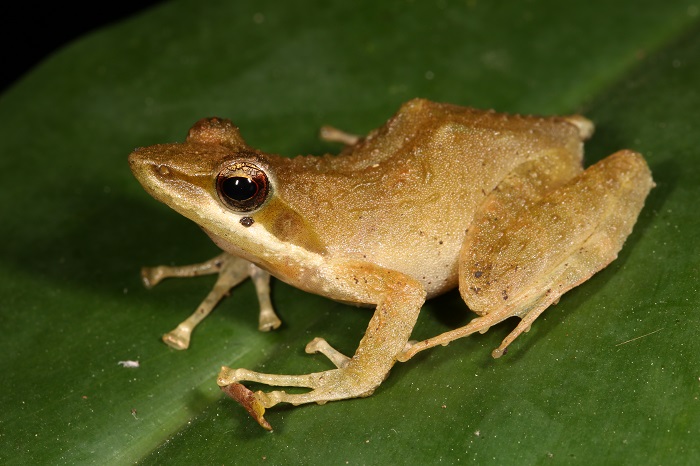
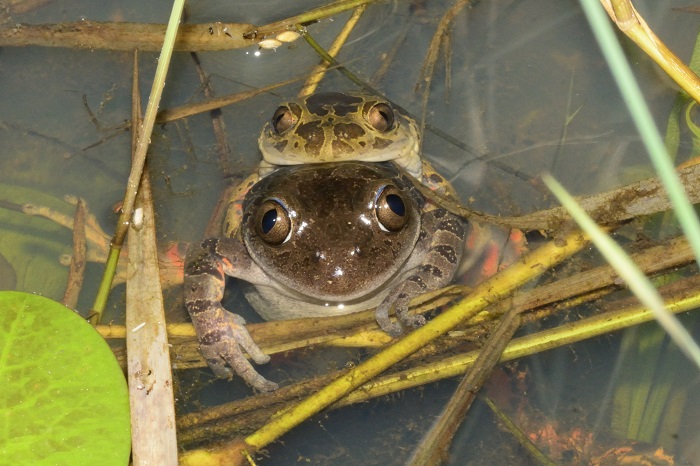
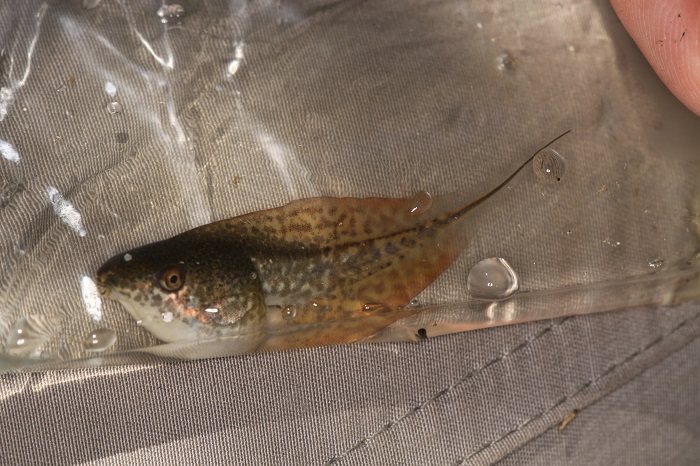
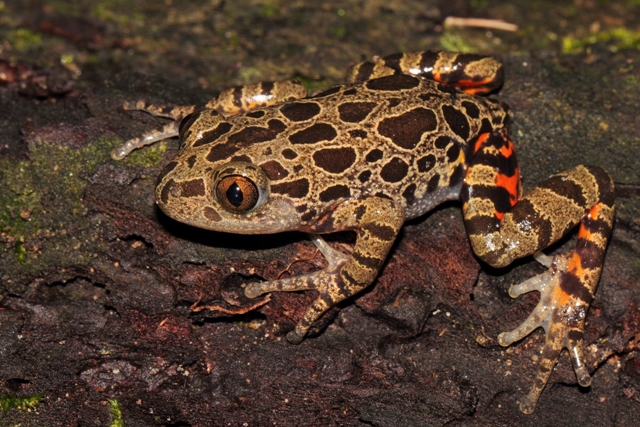
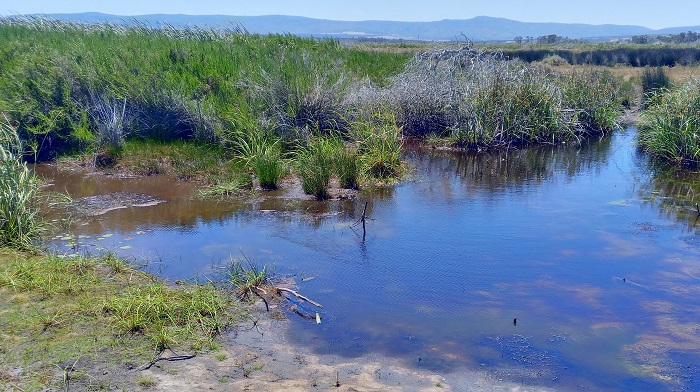
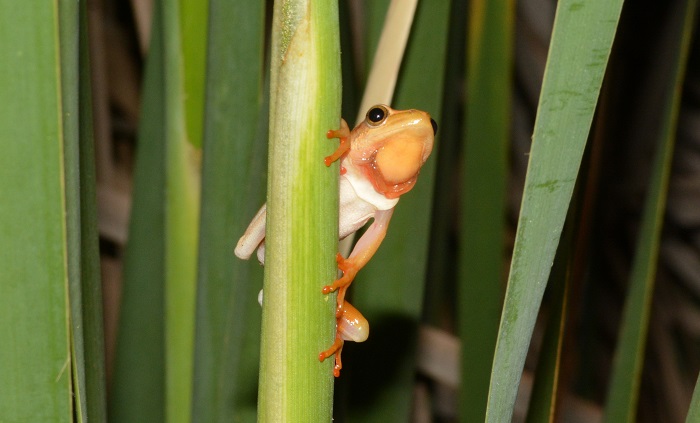
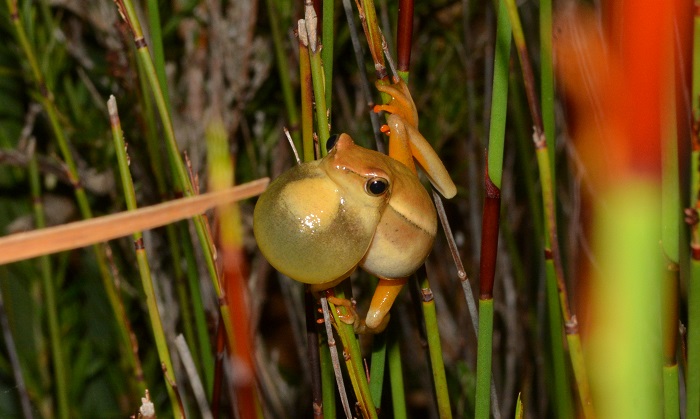
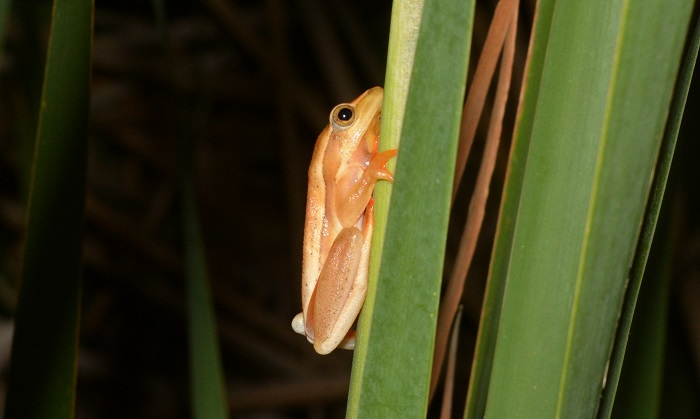
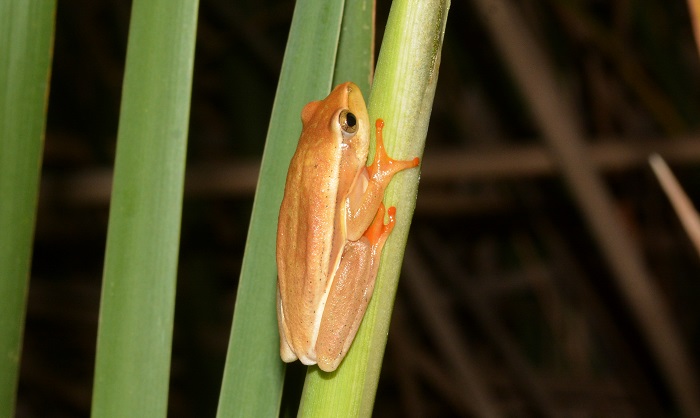
View the above photo record (by Nick Evans) in FrogMAPhere.
Find the Kloof Frog in the FBIS database (Freshwater Biodiversity Information System) here.
Family Pyxicephalidae
KLOOF FROG –Natalobatrachus bonebergi
Hewitt & Methuen, 1912
Identification
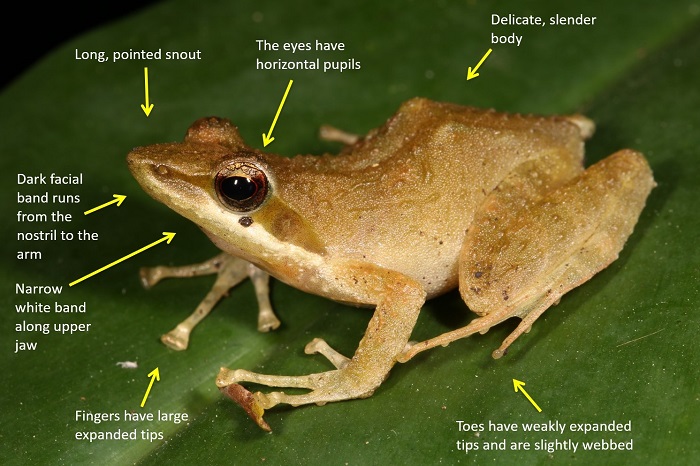
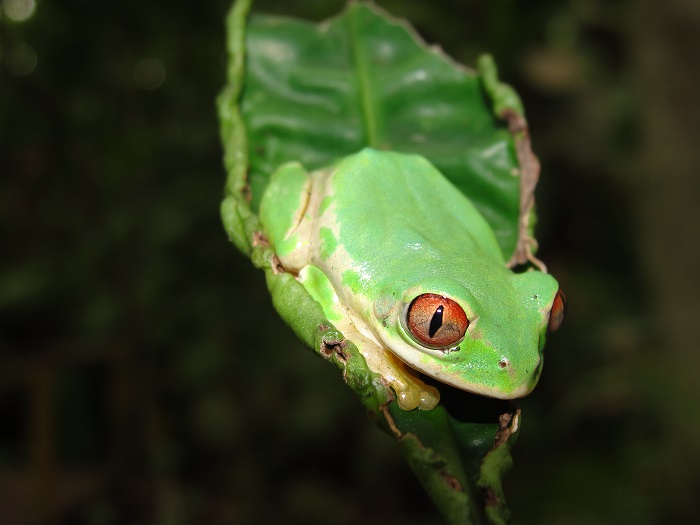
N. bonebergi is a small- to medium-sizedfrog, females reaching 37 mm and males 25 mm in length. They are usually brown, but may be light to greenish brown. The snout is pointed, projecting markedly over the lower jaw. The fingers and toes are long with large, truncated, terminal discs, and the toes are slightly webbed. The back has elongated skin ridges, and a light vertebral stripe is often present. A distinct black stripe runs from the tip of the snout, through the lower part of the eye to the arm.
N. bonebergi is always associated with forest streams and pools with rocky beds especially, but not exclusively, in ravines (Harrison et al. 2001). Typically, the frogs inhabit streams with short, fast-flowing sections alternating with longer sections of slow-flowing water and pools of varying size and depth. Eggs are deposited on vegetation or rock surfaces overhanging water.
Behaviour
These frogs are strong jumpers and can be difficult to catch. They take readily to water, swim well, and usually dive to the bottom where they hide in rotting plant material.
Breeding takes place October–May, along shallow streams with overhanging vegetation. Males select perches c.1–2 m above the water, from which they utter their faint advertisement calls. Amplexus is axillary with the fingers of the male placed below or sometimes above the base of the female’s arms. Transparent masses of 75–95 eggs are attached to leaves, twigs, tree trunks, or rock surfaces overhanging pools. The diameter of the egg mass is 75–108 mm, and the diameter of eggs is 1.5–2 mm, in 4-mm jelly capsules. Clutches may be placed in positions from just above water level to >2 m above the water, with a reported mean of 580 mm (Kok and Seaman 1989). Egg clutches are vulnerable to desiccation; in dry conditions the female moistens the clutch with liquid from her cloaca (pers. obs.).
After six days, the tadpoles are ready to wriggle out of the egg mass that becomes more liquid and sags downward. On hatching, tadpoles drop into the water to complete their development. Tadpoles are benthic and can complete metamorphosis in 60 days.
Advertisement Call
Status and Conservation
Status
N. bonebergi was not listed in previous Red Data books. In view of its restricted distribution (area of occupancy = 11–500 km2) and rate of habitat loss (>50% in the past 100 years), it has been accorded Endangered status (Harrison et al. 2001; this publication).
N. bonebergi occurs in Vernon Crookes, Oribi Gorge, Krantzkloof, Umtamvuna, Dwesa and Cwebe nature reserves.
Threats
Threats include the loss of habitat resulting from urbanization along the south coast of KwaZulu-Natal, wood-cutting in gallery forests, and crop agriculture in the form of sugar cane and tree plantations. Cooper (1988) estimated that 90% of the Coastal Forest of KwaZulu-Natal had been destroyed for the cultivation of sugar cane. Pollution and siltation of streams are factors that degrade habitat. Kok and Seaman (1989) identified three major threats to this species: the destruction of water courses and wetlands in unprotected areas, forest denudation by firewood collectors, and pollution.
Recommended conservation actions
Surveys are required to identify new populations, and known populations should be monitored: anyone walking through indigenous forest in the rainy season should be on the lookout for this interesting frog and its egg masses.
There is an urgent need to protect and manage the remaining habitat of this unique endemic species. Research into limiting factors is needed. Where remnants of gallery forest exist on private land, landowners should be informed about this species and its habitat requirements.
Distribution
N. bonebergi is endemic to the atlas region and restricted to the coastal forests of southern KwaZulu-Natal and northern Eastern Cape provinces, at altitudes below 900 m. The species is known from 18 quarter-degree grid cells, but was found in only five during the atlas period. The southernmost records are from Dwesa Nature Reserve (3228BB).
The atlas data are reliable but incomplete, especially with regard to recent records from the northern parts of the species’ range.
Further Resources
Virtual Museum (FrogMAP > Search VM > By Scientific or Common Name)
More common names: Boneberg’s Frog (Alternative English Name); Kloofpadda (Afrikaans)
Recommended citation format for this species text:
du Preez LH, Tippett RM. Kloof Frog Natalobatrachus bonebergi. BDI, Cape Town. Available online at http://thebdi.org/2021/10/12/banded-rubber-frog-phrynomantis-bifasciatus/
Recommended citation format:
This species text has been updated and expanded from the text in the 2004 frog atlas. The reference to the text and the book are as follows:
du Preez LH 2004 Natalobatrachus bonebergi Banded Rubber Frog. In Minter LR et al 2004.
Minter LR, Burger M, Harrison JA, Braack HH, Bishop PJ, Kloepfer D (eds) 2004. Atlas and Red Data Book of the Frogs of South Africa, Lesotho and Swaziland. Smithsonian Institution, Washington, and Avian Demography Unit, Cape Town.
View the above photo record (by Felicity Grundlingh) in FrogMAPhere.
Find the Clicking Stream Frog in the FBIS database (Freshwater Biodiversity Information System) here.
Family Pyxicephalidae
CLICKING STREAM FROG – Strongylopus grayii
(Smith, 1849)
Identification
Strongylopus grayii – Golden Gate Highlands National Park, Freestate Photo by Ryan Tippett
Habitat
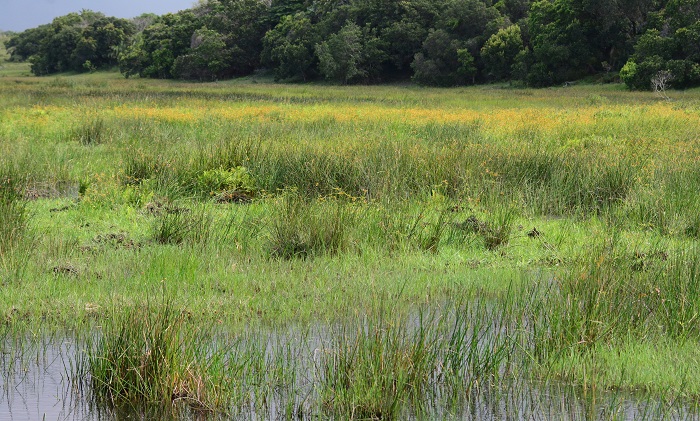
S. grayii is found in the winter-rainfall region of Western Cape Province, and in the summer-rainfall region to the north. Annual rainfall is 250–2000 mm in the winter-rainfall region, and 500–1000 mm in the summer-rainfall region. The species inhabits the entire Fynbos Biome as well as parts of the Succulent Karoo, Nama Karoo, Savanna, Grassland, Thicket and Forest biomes. Outside the relatively temperate, southwestern parts of its range, S. grayii is largely restricted to uplands.
Breeding habitat includes small dams, ponds, pools, ditches and shallow seeps. The species exhibits a wide tolerance to water quality, breeding, for example, in brackish pools along the coast within the spray zone and in flooded refuse pits.
Behaviour
This is one of the few frog species that breeds in the winter in the winter-rainfall region, and in summer in the summer-rainfall region. Males call throughout the day and night in the rainy season. The call site is often well concealed by vegetation or leaf litter at the water’s edge and the males are cryptic and difficult to locate.
About 250–350 eggs are laid, usually out of the water, up to 30 cm from its edge. They are deposited singly or in groups, in a single layer, in moss, under leaves, on mud or in crevices under rocks (Wager 1965; Channing 2001). In wet weather, tadpoles emerge from the egg capsules after 5 days and enter the water, but in dry weather they can survive in the capsules for as long as 63 days (Hewitt 1937). Development takes place over a period of 3–6 months (Wager 1965; Du Preez 1996).
The Yellow-billed Egret Egretta intermedia has been observed preying on these frogs in the southwest (J.A. Harrison pers. comm.)
Status and Conservation
This widespread and abundant species is not threatened or in need of specific conservation action.
Distribution
S. grayii is endemic to the atlas region where it is widely distributed. Its distribution extends from Western Cape Province, eastward through Eastern Cape Province and Lesotho to KwaZulu-Natal, and northward through Swaziland and Mpumalanga to Limpopo Province. The species has a marginal distribution in the Northern Cape Province and the Free State. S. grayii occurs from sea level to 1800 m in the mountains of Lesotho and Swaziland.
The atlas data are accurate but incomplete in the high-lying, northern parts of its range. In the southwest it is one of the most common and frequently recorded species in lowlands.
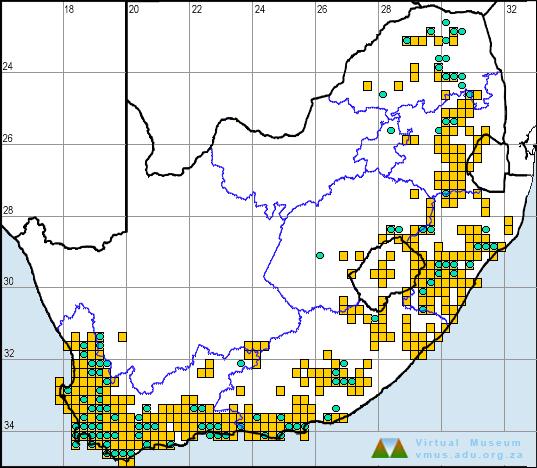
Distribution of Strongylopus grayii. Taken from the FrogMAP database as at January 2022.
Further Resources
Virtual Museum (FrogMAP > Search VM > By Scientific or Common Name)
More common names: Kliklangtoonpadda (Afrikaans)
Recommended citation format for this species text:
Channing A, Tippett RM. Clicking Stream Frog Strongylopus grayii. BDI, Cape Town. Available online at http://thebdi.org/2021/11/02/clicking-stream-frog-strongylopus-grayii/
Recommended citation format:
This species text has been updated and expanded from the text in the 2004 frog atlas. The reference to the text and the book are as follows:
Channing A 2004 Strongylopus grayii Clicking Stream Frog. In Minter LR et al 2004.
Minter LR, Burger M, Harrison JA, Braack HH, Bishop PJ, Kloepfer D (eds) 2004. Atlas and Red Data Book of the Frogs of South Africa, Lesotho and Swaziland. Smithsonian Institution, Washington, and Avian Demography Unit, Cape Town.
View the above photo record (by Nick Evans) in FrogMAPhere.
Find the Red-legged Kassina in the FBIS database (Freshwater Biodiversity Information System) here.
Family Hyperoliidae
RED-LEGGED KASSINA – Hylambates maculatus
Duméril, 1853
Habitat
This species inhabits a wide variety of bushveld vegetation types, predominantly Mixed and Sweet Lowveld Bushveld, and Coastal Bushveld-Grassland, in the Savanna Biome. The breeding habitat consists of well-vegetated pans, vleis, marshes and dams.
Habitat – Near Kosi Bay, KwaZulu-Natal Photo by Ryan Tippett
Behaviour
Outside of the breeding season, during the dry winter months, H. maculatus has been found in cavities excavated in the damp mud at the bottom of empty pans (Pienaar et al. 1976), or under moist debris (Loveridge 1953a).
Hylambates maculatus – Near Hluhluwe, KwaZulu-Natal Photo by Andrew & Heather Hodgson
The breeding season usually begins in early November and continues until the end of February, depending on weather conditions (Bishop 1994). During the day, the frogs are rarely seen, remaining well hidden in clumps of dense vegetation (particularly Eleocharis limosa, Cyperus immensus and C. papyrus), and occasionally under logs or in the axils of banana leaves. Choruses develop in the late afternoon or early evening, before dusk. Males move closer to the water where they call from the water, well concealed under overhanging vegetation. Later they may be found calling from elevated positions, up to 50 cm above the water, in clumps of emergent vegetation (Bishop 1994). The males appear to have two distinct calling periods, one in the early evening (16:30–20:00) and another in the early morning, peaking between 02:00 and 03:00 (Bishop 1994). The advertisement call is a loud, short ‘quack’ repeated at intervals.
The eggs are laid singly or in lines of four or five, attached to submerged vegetation. The tadpoles are large and fish-like, similar to, but larger than those of K. senegalensis. They are up to 130 mm long with deep keel-like tails that arise from the top of the head.
Hylambates maculatus – Shewula Nature Reserve, eSwatini Photo by Timo Paasikunas
H. maculatus is a voracious predator of invertebrates and also eats small frogs, such as Hyperolius marmoratus and Afrixalus aureus (Wager 1965; Channing 2001). K.maculata produces a characteristic odour when handled and is quite unpalatable, due to the production of defensive amines and peptides, such as caerulein and kassinin, by glands in the skin (Roseghini et al. 1988). In spite of these defences, there are records of predation on this species by the Yellowbilled Egret Egrettaintermedia and the Vine Snake Thelotornis capensis (Channing 2001).
Status and Conservation
H. maculatus is locally abundant and occurs in a number of protected areas, including Kruger National Park. However, a major threat to this species is habitat loss through water drainage and afforestation. In several areas in KwaZulu-Natal, exotic Eucalyptus plantations have lowered the water table to such a degree that many pans in the coastal mosaic of forest, thicket and grassland, have completely disappeared. Nevertheless, the species does not appear to require special conservation action at present.
Hylambates maculatus– iSimangaliso Wetland Park, KwaZulu-Natal Photo by Alison Sharp
Distribution
H. maculatus is essentially a lowland species, although there is an unusual record of specimens from the Vumba Mountains (Zimbabwe) at an altitude of 1400 m (Poynton 1964). North of the atlas region, the species occurs throughout Mozambique and the eastern lowlands of Zimbabwe, Malawi, Tanzania and Kenya. In the atlas region, H. maculatus ranges from Pafuri (2231AD) in northeastern Limpopo Province, through eastern Mpumalanga and eastern Swaziland to the coastal lowlands of KwaZulu-Natal, and south to Shakaskraal (2931AC).
Although seldom seen, these frogs can be easily identified by their characteristic call that carries a considerable distance. The atlas data are reliable and reasonably complete. Gaps in distribution in Mpumalanga and Limpopo provinces do not reflect an absence of the species.
Distribution of Hylambates maculatus. Taken from the FrogMAP database. April 2021.
Further Resources
Virtual Museum (FrogMAP > Search VM > By Scientific or Common Name)
More common names: Rooibeenvleipadda (Afrikaans)
Recommended citation format for this species text:
Bishop PJ, Tippett RM. Red-legged Kassina Hylambates maculatus. BDI, Cape Town. Available online at http://thebdi.org/2021/10/30/red-legged-kassina-hylambates-maculatus/
Recommended citation format:
This species text has been updated and expanded from the text in the 2004 frog atlas. The reference to the text and the book are as follows:
Bishop PJ 2004 Hylambates maculatus Red-legged Kassina. In Minter LR et al 2004.
Minter LR, Burger M, Harrison JA, Braack HH, Bishop PJ, Kloepfer D (eds) 2004. Atlas and Red Data Book of the Frogs of South Africa, Lesotho and Swaziland. Smithsonian Institution, Washington, and Avian Demography Unit, Cape Town.
Find the Arum Lily Frog in the FBIS database (Freshwater Biodiversity Information System) here.
Family Hyperoliidae
Identification
The Arum Lily Frog attains 43mm in length. The dorsal colour ranges from pale creamy-yellow to light brown. A broad, pale band and a fine dark line run from the nostril, through the eye and down the flanks. A series of very small black speckles may accompany these lines. Additional small dark spots are usually present on the back. The undersides are off-white with granular skin.
The hidden inner parts of the legs are red, and the webbing and discs on the feet are bright orange-red. The sexes are similar, but the throat of the breeding male is bright orange.
Arum Lily FrogHyperolius horstockii Kleinmond, Western Cape Photo by Magriet Brink
Habitat
The Arum Lily Frog inhabits coastal vegetation types in the Fynbos Biome. As implied by its common name, it is often associated with Arum Lilies Zantedeschia aethiopica, frequently taking shelter within these flowers during the day. However, this is not necessarily its only, or even its preferred habitat. Arum Lilies are common along the southern and southwestern seaboard, occurring wherever there is sufficient moisture. A thorough investigation is needed to establish whether the association of H. horstockii with Arum Lilies can be attributed to choice or to chance.
Habitat at the Nuwejaars Wetland Special Management Area, Western Cape Photo by Ryan Tippett
Breeding habitat includes large or small pans, dams, marshes and even slow-flowing, quiet streams where there is sufficient emergent vegetation such as sedges, bulrushes and reeds. The water bodies may be slightly brackish, apparently without affecting the population density of the Arum Lily frog, but they appear to avoid deep water. Calling males have been found at sites densely infested with alien acacias (J.A. Harrison pers. comm.). During dry and non-breeding periods, individuals have been found in exposed positions far removed from the nearest breeding sites (Rose 1950; Wager 1986; pers obs.).
Behaviour
Arum Lily FrogHyperolius horstockii Nuwejaars River, Western Cape Photo by Ryan Tippett
The following life history information is based on Rose (1950), Passmore and Carruthers (1995), Channing (2001), and personal observations.
Although the Arum Lily Frog occurs mostly in a winter-rainfall region, breeding takes place during spring and summer (September–January). Males usually call from elevated positions above water, generally on sedges, reeds, shrubs and grasses, but may also call from water-lily pads at water level. Less frequently, they call from elevated positions some metres from water, especially in dense stands of reeds. The advertisement call is sometimes interspersed with territorial calls. Calling usually begins soon after dark, but sporadic calling may sometimes be heard in the late afternoon on overcast, rainy days. Non-calling males are sometimes found on the perimeter of breeding groups.
Arum Lily FrogHyperolius horstockii Noordhoek, Western Cape Photo by Melanie Cornelius
Spawning has been recorded during October and November, with clutches of 10–30 eggs attached to the roots and stems of plants below water level. Eggs have a diameter of 2 mm within 4-mm jelly capsules, and are a whitish-cream colour with a brown hemisphere.
The Arum Lily Frog is known to feed on a variety of small flying insects. Predators include the Whiskered Tern Chlidonias hybridus (Steyn 1966; Craig 1974), Water Mongoose Atilax paludinosus, and the Cape River Frog Afrana fuscigula.
Advertisement Call
The call of the Arum Lily Frog has been described as a long, harsh bleat and is given from floating or emergent vegetation.
Arum Lily FrogHyperolius horstockii Nuwejaars River, Western Cape Photo by Ryan Tippett
Status and Conservation
The Arum Lily Frog has been recorded in a number of protected areas, including Tsitsikamma, Wilderness, Cape Peninsula and Agulhas national parks, De Hoop and Goukamma provincial nature reserves, and Buffalo Hills Private Nature Reserve. The species is protected against collection by provincial nature conservation regulations.
Although several localities at which H. horstockii was recorded in the late 1970s have disappeared under agricultural and urban development (e.g., Plettenberg Bay), it appears to be maintaining healthy population levels at the remaining localities. It may even be increasing its range in certain areas, although the new records may be due to inadequate surveying in the past. The species does not seem to be under any immediate threat, but population monitoring in conservation areas is recommended.
Arum Lily FrogHyperolius horstockii Nuwejaars River, Western Cape Photo by Ryan Tippett
Distribution
The Arum Lily Frog is endemic to the Western Cape Province of South Africa, occurring along the southern seaboard from Cape Town (3418AB) in the west, to the Humansdorp district (3424BB) in the east. Previously, the eastern limit was thought to be at the Tsitsikamma National Park, but a specimen in the Port Elizabeth Museum was collected from Humansdorp in 1965, and a population near Cape St Francis was recently discovered (T. Hardaker pers. comm.). For many years, this species was thought to be divided into eastern and western sub-populations. However, the atlas survey has shown that its distribution is virtually continuous across its range. Recent atlas records have extended the range of this species inland as far as Swellendam and environs (3420AA, AB), where several adults and juveniles have been found (N.I. Passmore pers. comm.).
Distribution of Hyperolius horstockii. Taken from the FrogMAP database. April 2022.
The range of H. horstockii is at a southerly extreme, lying in the area between the coast and the southern mountain ranges. Most of the range has winter rainfall, but toward the east, rainfall is transitional between a summer and winter pattern, with rainfall at any time of year.
The Water Lily Frog is an unmistakable species that does not occur with any similar congeners. The atlas records are reliable, but the gaps in distribution probably indicate a need for more thorough surveys in those areas.
Further Resources
The use of photographs by Luke Kemp, Magriet Brink, and Melanie Cornelius is acknowledged. Other images by Ryan Tippett.
Other Common Names: Arum Lily Reed Frog; Horstock’s Reed Frog (Alternative English Name); Aronskelkrietpadda (Afrikaans)
Recommended citation format: Braack, HH; Tippett, RM. (2025). Arum Lily Frog Hyperolius horstockii. Biodiversity and Development Institute, Cape Town. Available online at https://thebdi.org/2021/10/30/arum-lily-frog-hyperolius-horstockii/
This species text has been updated and expanded from the text in the 2004 frog atlas: Braack, HH. (2004). Arum Lily Frog Hyperolius horstockii. In Minter LR et al 2004.
References:
Minter, LR; Burger, M; Harrison, JA; Braack, HH; Bishop, PJ; Kloepfer, D. (Editors). (2004). Atlas and Red Data Book of the Frogs of South Africa, Lesotho and Swaziland. Smithsonian Institution, Washington, and Avian Demography Unit, Cape Town.
Carruthers, V; du Preez, L. (2017). Frogs of southern Africa: A Complete Guide. Struik Nature, Cape Town.
Channing, A. (2001) Amphibians of Central and Southern Africa. Protea Book House, Pretoria
This species inhabits a variety of bushveld vegetation types in the Savanna Biome, particularly Coastal Bushveld-Grassland. It breeds in reed beds on the periphery of swamps or rivers (Alexander 1990), or dense vegetation surrounding inundated pans, and is often the most numerous frog in multi-species choruses. In Malawi it occurs in coastal, lakeshore or riverine marshes at elevations up to 488 m in open country (Stewart 1967).
Behaviour
In the dry season, adults aestivate in secluded places, often entering houses. In summer, they breed over a prolonged period, forming dense choruses (Pallet and Passmore 1988).
In Durban (2931CC), calling starts at the beginning of September and continues to the middle of April (Alexander 1987). Males call from perches in dense stands of emergent vegetation c.50 cm above the water, and are difficult to locate. Spacing of calling males is maintained by vocal aggression and physical combat (Pallet and Passmore 1988). Males leave breeding choruses in the early hours of the morning and ascend into trees surrounding the breeding site, returning to the breeding site the following evening (Passmore and Carruthers 1995). Telford (1982) noted that males exhibit high call-site fidelity, returning to the same site on successive nights unless disturbed by predators or displaced by competitors.
Even though males defend call sites from conspecific males, the call site is not used as the oviposition site (Telford 1982). The eggs are enclosed in a gelatinous cake, which is attached to reed or grass stems above the waterline (Poynton 1964); the tadpoles drop into the water as they hatch. The white eggs and their jelly capsules are 1.5 mm and 4 mm in diameter, respectively (Wager 1965).
The call consists of a series of between two and six clicking or tapping sounds. With variable intervening periods of silence. Males also produce a creaking aggression call when rival males get too close.
Status and Conservation
Stable populations of H. tuberilinguis occur in relatively altered environments such as golf courses and parks. This species is also easily translocated: a breeding population was established in Pigeon Valley in Durban by transferring several adults from Bluff Nature Reserve (Alexander 1990). The species is abundant and occurs in several established conservation areas, and therefore does not require additional protection.
H. tuberilinguis is widely distributed north of the atlas region, extending through eastern Zimbabwe, Mozambique, Malawi and Tanzania to Kenya (Poynton and Broadley 1987). It is restricted to the eastern parts of the atlas region, the southern limit just entering Eastern Cape Province in the region of Port Edward (3130AA, AB). In northern KwaZulu-Natal, Swaziland and Mpumalanga, it extends inland as far as Nelspruit (2530BD).
This is an easily recognisable species with an unmistakable call. The atlas data are reliable and relatively complete.
Distribution of Hyperolius tuberilinguis. Taken from the FrogMAP database. April 2022.
Further Resources
Virtual Museum (FrogMAP > Search VM > By Scientific or Common Name)
More common names: Groenrietpadda (Afrikaans)
Recommended citation format for this species text:
Alexander GJ, Tippett RM. Tinker Reed Frog Hyperolius tuberilinguis. BDI, Cape Town. Available online at http://thebdi.org/2021/10/30/tinker-reed-frog-hyperolius-tuberilinguis/
Recommended citation format:
This species text has been updated and expanded from the text in the 2004 frog atlas. The reference to the text and the book are as follows:
Alexander GJ 2004 Hyperolius tuberilinguis Tinker Reed Frog. In Minter LR et al 2004.
Minter LR, Burger M, Harrison JA, Braack HH, Bishop PJ, Kloepfer D (eds) 2004. Atlas and Red Data Book of the Frogs of South Africa, Lesotho and Swaziland. Smithsonian Institution, Washington, and Avian Demography Unit, Cape Town.
PHunting season is here. No critter is safe. Citizen scientists are out and about, armed with their cameras, ready to Photo Hunt!
Well done to each and everyone of you that went out there camera-slinging for biodiversity conservation! The need for up to date species distribution maps is now more critical than ever in light of climate change and global environmental challenges. The future of nature conservation and healthy ecosystems are in our hands. We are all in this together. Citizen science can and does make a major difference for species conservation and to spread awareness of conservation and environmental issues. Engagement with nature is important not just for our well being, but for our very survival.
Round One of PHunting Season kicked off on Saturday, 16 October 2021, and ended on midnight of the following Sunday, 24 October 2021. In total, 78 biomappers were scouring their local parks, gardens, towns and streets for all things crawling, flying, swimming, running, and perching. The amazing total of 2,992 phunting trophies were uploaded to the Virtual Museum. Below is a table summarizing the numbers of records received, by project, in the Virtual Museum for PHunting Round One. The table is organized by most to least amount of records received.
VM Project
Records
BirdPix
1503
OdonataMAP
610
LepiMAP
554
MammalMAP
97
ReptileMAP
71
SpiderMAP
39
PHOWN
28
OrchidMAP
24
FrogMAP
13
MushroomMAP
10
LacewingMAP
9
TreeMAP
9
DungBeetleMAP
8
FishMAP
8
EchinoMAP
5
BOP
2
ScorpionMAP
2
For BirdPix, the bulk of the records came from South Africa (1182 records), followed by Kenya (176) and Zambia (119). We also received records from Angola, Namibia and Swaziland.
The bird species most recorded? The Pied Crow Corvus albus (26 records) took first place with Egyptian Geese Alopochen aegyptiacus and Cape Sparrows Passer melanurus tied for second place with 24 records each. All in all 370 different bird species were phunted! This number reflects only the records that have been identified by the expert panel thus far, but our experts make quick work of getting identifications verified.
Pied Crow Corvus albus – BirdPixxed by Mark Stanton
Eight observers submitted more than 100 records on African biodiversity. The Top Ten PHunters for Round One are listed in the table below:
Observer Name
Total
1
Nico Vromant
301
2
Pieter Cronje
220
3
Marius Meiring
176
4
Ryan Tippett
173
5
Lance Robinson
129
6
Zenobia van Dyk
120
7
Karis Daniel
113
8
Andries and Joey de Vries
109
9
Lia Steen
99
10
Kate Braun
94
Well done biomappers! Thank you for being ambassadors for biodiversity.
Broad Scarlet Crocothemis erythraea – OdonataMAPped by Irene and Lappies Labuschagne
OdonataMAP, the Atlas of African Dragonflies and Damselflies, received records from Angola, Kenya, Namibia, Nigeria, South Africa, Swaziland and Zambia. From the records that have been identified to date, 86 different species were recorded.
African Grass Blue Zizeeria knysna knysna (Duwweltjie Bloutjie) – LepiMAPped by Thomas Drinkwater
LepiMAPpers also made a special effort during this first round of photo hunting, snapping and mapping a total of 554 butterflies and moths. Phunting trophies from all over Africa were uploaded to the LepiMAP section of the Virtual Museum. For South Africa, most of the records came from KwaZulu-Natal Province (83), followed by the Western Cape (68) and Gauteng on 59.
From the 554 records submitted, the expert panel has identified 221 different species thus far! The little African Grass Blue Zizeeria knysna knysna ended up being the most photogenic with 15 records. Next in line were the Black-haired Bush Browns Bicyclus safitza safitza and African Cape Whites Belenois creona severina both with 9 records.
Black-haired Bush Brown Bicyclus safitza safitza (Swart Bosbruintjie) – LepiMAPped by Megan Smith
There are many other sections of the Virtual Museum and we encourage you to keep an eye out for these critters too. We are mapping everything from scorpions to frogs to mammals. So what are you waiting for? Grab your camera (or cellphone) and get snapping and mapping!
PHunting Round Two starts on Saturday 13 November 2021 🙂
Find the Giant Bullfrog in the FBIS database (Freshwater Biodiversity Information System) here.
Family Pyxicephalidae
Identification
Giant BullfrogPyxicephalus adspersus – Adult male Krokodilspruit, Gauteng Photo by Allison Sharp
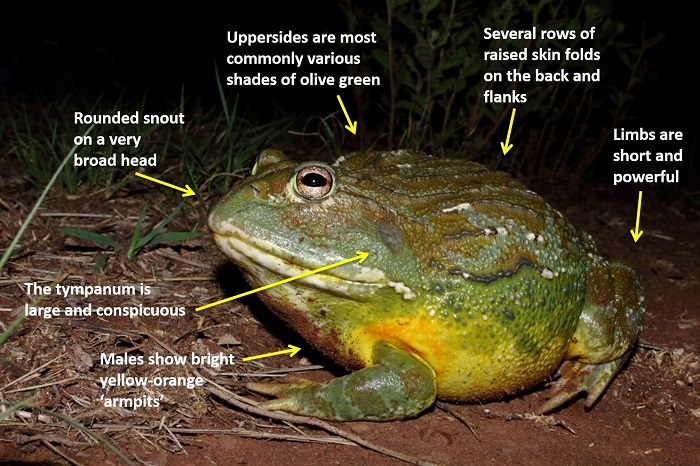
The Giant Bullfrog Pyxicephalus adspersus is the largest amphibian in southern Africa and the second largest frog species in the world. In Gauteng, males reach a snout-vent length of 245 mm and a mass of 1.4 kg (C.C. unpubl. data.), but in the Eastern Cape and Free State provinces, they seldom exceed 140 mm (Du Preez 1996).
In contrast to most other frogs, males are larger than females. The head is very broad. Two large bony spines, separated by a smaller spine, project upwards from the lower jaw. Several prominent, interrupted skin ridges are present on the back. Spade-like inner metatarsal tubercles are present on the heels, and are used for digging.
In adults, the uppersides are dark olive-green, but may vary from brown to grey and even blueish. Short sections of the longitudinal skin ridges may be white or cream.
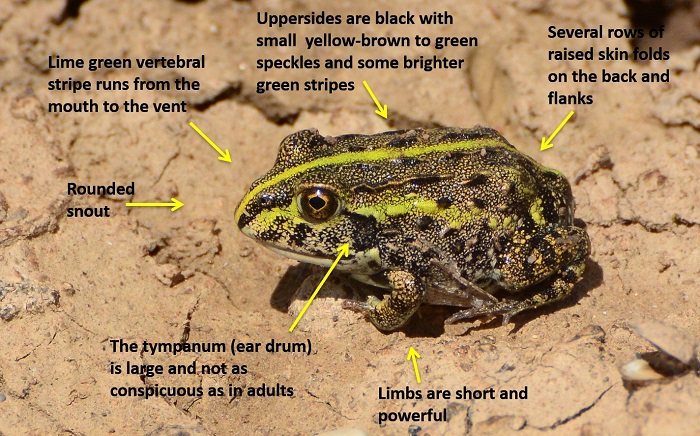
In juveniles, a pale vertebral stripe is often present, contrasting sharply with the bright green ground colour. The undersides are white to creamy-yellow, except in the region of the forelimbs where it is bright yellow in breeding males. Dark mottling may be present in the gular region of males (Du Preez 1996).
Giant BullfrogPyxicephalus adspersus – Juvenile Near Vanwyksvlei, Northern Cape Photo by Ryan Tippett
Habitat
The Giant Bullfrog inhabits a variety of vegetation types in the Grassland, Savanna, Nama Karoo and Thicket biomes. It typically breeds in seasonal, shallow, grassy pans in flat, open areas. The Giant Bullfrog also frequents seasonal marshes and shallow water along the margins of waterholes and dams. Although the Giant Bullfrog sometimes inhabit clay soils, they prefer sandy substrates.
Habitat – Shallow rain-filled pan Near Carnarvon, Northern Cape Photo by Ryan Tippett
Behaviour
The adults are fossorial (adapted for burrowing), emerging from their burrows only during the breeding season. After heavy rains, Giant Bullfrogs congregate in large numbers at breeding sites. Successful breeding depends on the establishment of ephemeral pools large enough to hold water for at least 30 days. Continuous light rain during Spring does not seem to prompt an emergence, but when a downpour of at least 30 mm follows within a few days they emerge and move to their breeding sites (L.du P. pers. obs.).
The Giant Bullfrog is an explosive breeder, finding a mate and laying eggs within 48 hours. Spawning takes place during daylight, usually the morning after a heavy rainstorm. Adult males exhibit three size-related mating strategies, namely territorial, non-territorial (breeding arena) and satellite behaviour (Cook 1996).
Giant BullfrogPyxicephalus adspersus Carnarvon district, Northern Cape Photo by Ryan Tippett
Territorial males are larger than non-territorial males, and are site faithful, vigorously defending their territories against intruding males. Males jump at each other with open mouths, and when a male takes hold of the leg or arm of another he will often flip the opponent into the air. One battle, in which a male tried to flip another onto its back, continued for more than 40 minutes. Males often bear battle scars, sometimes even losing an eye (L. du P. pers.obs.) or dying from punctured lungs (C.L.C. pers. obs.).
Non-territorial males gather in a breeding arena or lek where males fight amongst themselves for favourable positions in the centre of the lek (Channing et al. 1994a). On one occasion, 20 calling males were observed within an area no more than 4 m2 (L. du P. pers. obs.). Females maintain a low profile as they approach the arena, with barely more than their eyes projecting above the water’s surface. The moment a female is spotted, she is intercepted by the closest male. Sometimes an approaching female dives while she is some distance from the arena and surfaces amongst the males where she is clasped by one of the larger males. Amplexus displacement, in which a second male displaces an amplexing male, is frequently observed in groups of non-territorial males.
The smaller satellite males are unable to defend a territory or fight for a place in the non-territorial breeding arena; instead they remain in close proximity to a territorial male, attempting to intercept females attracted to the territorial male (Cook 1996).
Giant BullfrogPyxicephalus adspersus Carnarvon district, Northern Cape Photo by Ryan Tippett
Amplexus takes place in water 2–4 cm deep and lasts for an average of 15 minutes. Oviposition usually occurs between 08:00am and 12:00pm, but may continue until 18:00pm. When spawning, the male pushes the female’s head underwater and she raises her cloaca above the water; thus the eggs are fertilized before entering the water (L. du P. pers. obs.). A spent female prompts the male to release her by shaking her head from side to side, and then moves away into deeper water.
Eggs numbering 3000–4000 are scattered in shallow water. Eggs are 1.1–1.3 mm in diameter, inside 4-mm capsules (Channing 2001). Small black tadpoles emerge from the capsules after 36 hours, and gather in schools. Over the next two days, schools fuse, creating larger schools until all the tadpoles form a single school. The tadpoles tend to congregate in shallow, warm water where they feed on algae, and complete metamorphosis 18–33 days later (Channing 2001).
Pyxicephalus adspersus tadpoles congregating in shallow water. Near Hanover, Northern Cape Photo by Ryan Tippett
Territorial males actively defend their offspring for the duration of their larval development. They scare off intruders by assuming an aggressive posture and even jump and snap in their direction. If a school of tadpoles becomes isolated in a shrinking pool, the male will dig a channel through the mud to open water, thereby saving the tadpoles from desiccation (Kok et al. 1989). The channels average 3 m, but may reach 18.7 m in length (Cook 1996).
Adults spend dry periods in burrows, usually at depths of 0.5–1 m, depending on the type and humidity of the soil. For example, one male was found at a depth of 10 cm in clay (L. du P. pers. obs.), while others in sandy soil were found at a depth of 1.2 m. Adults sometimes modify old crab holes to form their burrows (C.C. pers. obs.). After excavating a burrow, the frog sheds several layers of skin to form a cocoon that insulates it from the external environment, with which contact is maintained via the nostrils.
The Giant Bullfrog feeds on a variety of prey items including small birds, rats, snakes, lizards, insects, scorpions, crabs, slugs and other frogs. Branch (1976) reported that two adult bullfrogs had ingested no less than 17 newly born Rinkhals Hemachatushaemachatus, a venomous snake species. They have been observed attacking drinking birds such as Laughing Doves and Blacksmith Plovers (C.C. pers. obs.). The Giant Bullfrog often exhibits cannibalism in the adult, juvenile and even tadpole stages.
Birds are the major predators of bullfrogs. Records of bird predators include various raptors, for example, the African Marsh Harrier, as well as Marsh Owl, Saddlebill Stork, pelicans and egrets. Tadpoles are preyed upon by various predators, such as terrapins, the Nile Monitor Varanus niloticus, Rinkhals Hemachatus haemachatus, and several fish species, including Barbel Clariasgariepinus and Vlei Tilapia Tilapiasparmanii (in an artificial dam; C.C. pers. obs.).
The maximum longevity of a captive specimen of P. adspersus was estimated at 45 years (Channing 2001).
Advertisement Call
The advertisement call of the Giant Bullfrog is a long, low frequency “whoop”, 1–2 s in duration and with an emphasized frequency of 200–250 Hz. By contrast, the call of The African Bullfrog Pyxicephalusedulis is much shorter (0.19–0.22 s in duration) with a modulated frequency that begins at c. 250 Hz and rises to 450–600 Hz in the middle of the call (Passmore and Carruthers 1995; Channing 2001).
Status and Conservation
Jacobsen (1982) reported that Giant Bullfrog numbers were declining in Gauteng, North West, Limpopo and Mpumalanga provinces which, at that time, constituted the Transvaal Province. Boycott (2001) declared the species to be extinct in Swaziland. Harrison et al. (2001) estimated that the area of its habitat and population sizes had declined by more than 50% over the past 100 years, particularly in regions subjected to extensive crop agriculture and/or urban and industrial development, including Gauteng, Free State and North West provinces.
Giant BullfrogPyxicephalus adspersus – Juvenile Carnarvon district, Northern Cape Photo by Ryan Tippett
In terms of its global distribution, P. adspersus does not appear to warrant threatened status. However, at the sub-regional level, the species has undergone severe population declines in certain areas, for example, >80% in the last 20 years in parts of Gauteng, and was therefore classified Near Threatened in the atlas region (Harrison et al. 2001; this publication).
The Giant Bullfrog is known to occur in the following protected areas: Karoo, Kalahari Gemsbok, Mokala and Camdeboo National Parks, and Soetdoring, Koppiesdam, Borokolalo, S.A. Lombard and Oviston Nature Reserves, and Willem Pretorius Game Reserve (Harrison et al. 2001).
Threats
Habitat loss due to crop agriculture and urbanisation poses a major threat to this species. Adults migrating to, and juveniles dispersing from, breeding sites are often killed on roads. The use of insecticides and herbicides may also have a negative impact on breeding success, but requires further investigation (Harrison et al. 2001). The illegal collection of adults and juveniles for the local and international pet industries has contributed to population declines in urban areas.
The Giant Bullfrog forms part of the traditional diet of people living in certain parts of Limpopo Province where the species is now being commercially exploited. Large numbers of frogs are being indiscriminately and illegally collected at breeding sites and sold at butcheries (L.R. Minter pers. comm.).
Recommended conservation actions
Surveys to establish the location of additional breeding sites are needed, and long-term monitoring of at least some sites is imperative (Harrison et al. 2001). Research into limiting factors and the effects of herbicides and insecticides on aestivating adults and foraging tadpoles is recommended (Harrison et al. 2001).
Giant BullfrogPyxicephalus adspersus – Juveniles Near Vanwyksvlei, Northern Cape Photo by Ryan Tippett
In areas where P.adspersus is being sold as food, steps should be taken to ensure sustainable use and the enforcement of relevant conservation laws.
The longevity and slow development of individuals clearly indicate a need for sustained conservation strategies to preserve the natural structure of populations. Successful conservation of P.adspersus depends on long-term protection of suitable breeding sites along with sufficient surrounding habitat to maintain adult populations. Where long-term survival of a population is unlikely in the face of land transformations, translocation of tadpoles or newly-emerged juveniles to neighbouring localities may be attempted, but only as a last resort (Harrison et al. 2001).
This spectacular species certainly qualifies as one of the “Big Five” herptiles of the region. Conservation agencies should consider the ecotourism potential of the Giant Bullfrog.
Distribution
The Giant Bullfrog is widely distributed in the atlas region, mainly at higher elevations. It occurs in the north-eastern part of the Western Cape, central and southern Eastern Cape, northern, central and eastern parts of Northern Cape, northern KwaZulu-Natal (except the low-lying parts), Free State, North West, Gauteng and Limpopo provinces, and at only a few localities in Mpumalanga Province. North of the atlas region, its range extends to central Namibia, central and northern Botswana and across the highveld of Zimbabwe (Poynton and Broadley 1985b).
Distribution of Pyxicephalus adspersus. Taken from the FrogMAP database as at February 2022.
P.adspersus and P.edulis are easy to distinguish from one another in the field by differences in their calls and reproductive behaviour. However, many of the morphological characters used to separate them in the past have proven to be too variable to be of diagnostic value (Channing et al. 1994a). While specimens with a snout-vent length exceeding 140 mm may be assigned to P. adspersus with some confidence, smaller individuals cannot be distinguished easily from P.edulis. Therefore, much of the historical data derived from museum and literature records had to be vetted conservatively. For example, records from northern KwaZulu-Natal were omitted from the species distribution map but retained in the genus map. Better knowledge of intra- and inter-specific variation is required before the distribution of these species in the atlas region can be accurately determined (Channing et al. 1994a; Channing 2001).
The atlas data is reasonably reliable, but not comprehensive given the problems outlined above.
Giant BullfrogPyxicephalus adspersus – Juvenile Carnarvon district, Northern Cape Photo by Ryan Tippett
Further Resources
The use of photographs by Allison Sharp is acknowledged. Other images by Ryan Tippett.
Giant BullfrogPyxicephalus adspersusTschudi, 1838
Other Common Names: Highveld Bullfrog, Giant Pyxi (Alt. English); Grootbrulpadda (Afrikaans); Letlametlu (Northern Sotho); Lentsoeta (Sesotho).
Recommended citation format: Du Preez LH; Cook CL; Tippett RM. (2025). Giant Bullfrog Pyxicephalus adspersus. Biodiversity and Development Institute. Available online at https://thebdi.org/2021/10/13/giant-bullfrog-pyxicephalus-adspersus/
This species text has been updated and expanded from the text in the 2004 frog atlas: Du Preez, LH; Cook CL. (2004). Giant Bullfrog Pyxicephalus adspersus. In Minter LR et al 2004.
References:
Minter, LR; Burger, M; Harrison, JA; Braack, HH; Bishop, PJ; Kloepfer, D. (Editors). (2004). Atlas and Red Data Book of the Frogs of South Africa, Lesotho and Swaziland. Smithsonian Institution, Washington, and Avian Demography Unit, Cape Town.
Carruthers, V; du Preez, L. (2017). Frogs of southern Africa: A Complete Guide. Struik Nature, Cape Town.
Channing, A. (2001) Amphibians of Central and Southern Africa. Protea Book House, Pretoria
Claus, B; Claus, R. (2002). Common Amphibians and Reptiles of Botswana. Gamsberg Macmillan, Windhoek.
The body of Phrynomantis bifasciatus is somewhat elongate and flattened. The neck is relatively long and the head is narrow with a blunt snout.
Fore and hind legs are long and slender. The fingers and toes possess small, slightly expanded terminal discs. Webbing on the hands and feet is almost absent.
The skin is shiny and smooth and has a rubbery appearance. The colouration above is black, often with a dark golden sheen, and with broad bright red to cream bands and blotches. There are two widely spaced, parallel bands that run from the snout, over the eyes and down to the flanks. Another red band is present on the lower back. The sides and legs show smaller red to cream blotches.
Undersides are dark grey-black with white spots and blotches.
The eyes are black with dark bronzy mottling and the pupils are roughly circular.
The sexes are closely similar but males have darker throats.
Tadpole:
Size: length up to 37mm.
The tadpoles have a minnow-like appearance. The head is broad and flattened and the eyes are located laterally. The tail extends past the fins and tapers to a thin pointed tip.
The Banded Rubber Froginhabits a variety of bushveld vegetation types in the Savanna Biome, at altitudes of 50–1450 m. It appears to be adapted to living in hot, semi-arid environments. Breeding takes place in temporary pans and pools, flooded grassland and small, shallow dams (Wager 1965; Jacobsen 1989; Lambiris 1989a).
Breeding habitat – Bonamanzi Game Reserve, KwaZulu-Natal Photo by Ryan Tippett
Behaviour
This frog seldom jumps, but walks or runs. When disturbed, it inflates and arches its body, tucking its head in and raising its rump to accentuate the aposematic colours and markings. These frogs may be handled without ill effects, but if unduly alarmed or hurt, they produce copious skin secretions with an unpleasant odour. The secretions are a toxic irritant and lethal to other frogs confined in the same container. They are cardiotoxic, affecting the potassium channels in the membranes of human heart cells, and cause cell death within a short time (Van der Walt et al. 1992). In humans, prolonged skin contact, or assimilation of the toxin via cuts or scratches on the hands, can cause extremely painful swelling and other symptoms such as nausea, headache, respiratory distress and an increased pulse rate.
During the dry season, P. bifasciatus takes shelter under rocks or logs, in holes excavated by other animals, in termitaria, in holes in trees or under loose bark, in the axils of banana leaves and in drain pipes (Pienaar et al. 1976; Wager 1986; Lambiris 1989a). It often shelters with other frogs, lizards, scorpions and whip scorpions (Jacobsen 1989). Although this species is not a true climber, the expanded digits enable it to climb rock surfaces and tree trunks with ease.
P. bifasciatus breeds during spring and summer, after sufficient rain has fallen to produce shallow pools and pans. These frogs are opportunistic in that they will breed in the smallest bodies of water. For example, tadpoles have been seen in the water-filled prints of animals such as elephants (Channing 2001).
The eggs are light brown at one pole, 1.3–1.5 mm in diameter, and are surrounded by a jelly capsule that expands from 4 to 7 mm in diameter (Stewart 1967). Clutches of 300–1500 eggs are laid in a mass of jelly, c.75 mm across, that is attached to vegetation or sinks to the bottom of the pool. Tadpoles hatch after four days (Power 1927a).
The tadpoles are gregarious. They resemble Xenopus tadpoles, but lack tentacles and have deeper, pigmented fins (black or red). They are filter-feeders, maintaining their position in the water column by means of a rapidly undulating tail tip. Tadpoles usually reach metamorphosis after about a month, depending on the availability of food (Wager 1986), but may take 90 days in captivity (Power 1926a).
The adults feed mainly on ants, but also consume other Hymenoptera, termites, grasshoppers and spiders (Jacobsen 1982). The HamerkopScopus umbretta is reported to prey on this species (Channing 2001).
Advertisement Call
The call is a drawn-out trill, lasting around three seconds. The call is high pitched and melodic. Males usually call from concealed positions under vegetation or rocks, in holes in trees, the ventilation shafts of termitaria, or from the hoofprints of cattle (pers. obs.), but also from more exposed sites. Males begin to call when they are some distance from the water’s edge, but as the intensity of the chorus increases they move closer to the water, calling from exposed sites at the water’s edge or from emergent or flooded vegetation (L.R. Minter pers. comm).
Status and Conservation
Due to its striking colouration and appearance, P.bifasciatus is well known in the pet trade It was imported into Germany before 1931 (Channing 2001) and is presently offered for sale on the internet. Nevertheless, the species is common throughout its range and occurs in a number of national parks and provincial nature reserves. It is not threatened and no additional conservation measures are needed.
Distribution
This widespread species is distributed from the Democratic Republic of Congo, eastern Ethiopia and Somalia, south through East Africa to northeastern South Africa. Its range extends westward through northern Botswana and northern Namibia to southern Angola.
In the atlas region, P. bifasciatus is recorded from northern KwaZulu-Natal (north of 29°S), Swaziland, eastern Mpumalanga, Limpopo Province, northern Gauteng and the central and northern parts of North West Province (north of 27°S and east of 24°E). Historical records from Durban (2930DD) and Kimberley (2824DB) may have been based on accidentally translocated individuals. No further records were obtained from these areas in the course of the atlas surveys, and the historical records have therefore been omitted from the atlas distribution map.
The atlas distribution data are accurate, but incomplete in some areas such as the Northern Cape and North West Province.
Distribution of Phrynomantis bifasciatus. Taken from the FrogMAP database as at February 2022.
Further Resources
Virtual Museum (FrogMAP > Search VM > By Scientific or Common Name)
More common names: Gebande Rubberpadda (Afrikaans)
Recommended citation format for this species text:
du Preez LH, Tippett RM. Banded Rubber Frog Phrynomantis bifasciatus. BDI, Cape Town. Available online at http://thebdi.org/2021/10/12/banded-rubber-frog-phrynomantis-bifasciatus/
Recommended citation format:
This species text has been updated and expanded from the text in the 2004 frog atlas. The reference to the text and the book are as follows:
Bates MF 2004 Phrynomantis bifasciatus Banded Rubber Frog. In Minter LR et al 2004.
Minter LR, Burger M, Harrison JA, Braack HH, Bishop PJ, Kloepfer D (eds) 2004. Atlas and Red Data Book of the Frogs of South Africa, Lesotho and Swaziland. Smithsonian Institution, Washington, and Avian Demography Unit, Cape Town.
Find the Forest Tree Frog in the FBIS database (Freshwater Biodiversity Information System) here.
Family Heleophrynidae
Identification
Forest Tree FrogLeptopelis natalensis – Green colour form Near Kosi Bay, KwaZulu-Natal Photo by Ryan Tippett
Adult:
Size: Attains 65mm.
Leptopelis natalensis has large, bulging, orange-red eyes with vertical pupils and a blunt, rounded snout. The tympanum (ear drum) is conspicuous.
The colouration and patterning varies. They are often plain lime green above but may also be pale brownish with emerald green bands and blotches. The emerald green markings have fine black outlines. Plain, pale brown specimens can also be found. The underparts are off-white, while the underside of the legs are yellowish.
The skin is slightly rough above and more granular below.
They have elongate arms and legs. The hands and feet are well developed. Fingers and toes are long and equiped with large terminal discs to enhance their climbing ability. The fingers on the forelimbs are unwebbed while the toes on the hindlimbs have ample webbing.
There is no clear sexual dimorphism but males are slightly smaller than females.
Tadpole:
Size: Up to 50mm.
Tadpoles of Leptopelis natalensis are elongate and slender with a somewhat flattened appearance. The overall colouration is brown with variable beige mottling. The tail is roughly twice as long as the body and the upper and lower fins are almost of equal length.
Habitat
The breeding and non-breeding habitats of the Forest Tree Frog are Coastal Forest, Sand Forest, and Coastal Bushveld/Grassland. It is found in the Forest and Savanna biomes. L.natalensis is usually found near swamps or pans in fairly dense, indigenous forest, although it occasionally occurs in habitats similar to those inhabited by Hyperoliuspickersgilli, such as stagnant water marshes.
Habitat – Coastal forest at Mtunzini, KwaZulu-Natal Photo by Ryan Tippett
Behaviour
Most breeding activity takes place in summer once the rainy season is well underway. Males usually begin calling at dusk from exposed positions up to 3 m above the ground in the foliage of trees and bushes close to, or overhanging, water. The females are usually much larger than males. Amplexus is axillary. Amplexing pairs move down to the ground where the female excavates a shallow burrow near the water’s edge in which c.200 light-yellow eggs are laid. The female fills the burrow, disguising its location with leaves and twigs (pers. obs). About 13 days later, the tadpoles leave the egg capsules and move towards the water with jumping and wriggling movements (Wager 1965). The remainder of larval development takes place in the usual way.
Predators are thought to include birds, snakes and terrapins, while prey usually consists of large flying insects such as noctuid moths.
Forest Tree FrogLeptopelis natalensis – Mottled colour form Pietermaritzburg, KwaZulu-Natal Photo by Geoff Prosser
Advertisement Call
The Natal Tree Frog has a loud and unmistakable call that consists of buzzing and quacking noises. Vocalising males are hard to locate.
Status and Conservation
The major threat to the Forest Tree Frog is habitat loss resulting from water drainage, invasions of alien plants, and afforestation. In several areas in KwaZulu-Natal, Eucalyptus plantations have lowered the water table to such a degree that many pans adjacent to coastal dune forest have completely disappeared.
L. natalensis occurs in several protected areas, for example, Krantzkloof Nature Reserve, Mkuze Game Reserve, Greater St Lucia Wetland Park, and Twinstreams-Mtunzini Natural Heritage Site. It is fairly common within its range, but local populations are probably quite small. The species does not appear to require any special conservation action at present.
Distribution
Distribution of Leptopelis natalensis. Taken from the FrogMAP database, April 2022.
Leptopelis natalensis is endemic to KwaZulu-Natal and the northeastern part of Eastern Cape Province of South Africa. It occurs along the northeastern coast from Sodwana Bay (2732DA) in the north to Manubi (3228BB) in the south. The atlas data is accurate and reasonably complete.
Further Resources
The use of photographs by A. Coetzer and Geoff Prosser is acknowledged. Other photographs by Ryan Tippett.
Forest Tree FrogLeptopelis natalensis(Smith, 1894)
Other Common Names: Natal Tree Frog (Alternative Common Name); Natalse Boompadda (Afrikaans)
Recommended citation format: Bishop, PJ; Tippett, RM. (2025). Forest Tree Frog Leptopelis natalensis. Biodiversity and Development Institute, Cape Town. Available online at https://thebdi.org/2021/09/27/forest-tree-frog-leptopelis-natalensis/
This species text has been updated and expanded from the text in the 2004 frog atlas: Bishop, PJ. (2004). Forest Tree FrogLeptopelis natalensis. In Minter LR et al 2004.
References:
Minter, LR; Burger, M; Harrison, JA; Braack, HH; Bishop, PJ; Kloepfer, D. (Editors). (2004). Atlas and Red Data Book of the Frogs of South Africa, Lesotho and Swaziland. Smithsonian Institution, Washington, and Avian Demography Unit, Cape Town.
Carruthers, V; du Preez, L. (2017). Frogs of southern Africa: A Complete Guide. Struik Nature, Cape Town.
Channing, A. (2001) Amphibians of Central and Southern Africa. Protea Book House, Pretoria
Claus, B; Claus, R. (2002). Common Amphibians and Reptiles of Botswana. Gamsberg Macmillan, Windhoek.
View the above photo record (by Ryan Tippett) in FrogMAPhere.
Find the Southern Pygmy Toad in the FBIS database (Freshwater Biodiversity Information System) here.
Family Bufonidae
SOUTHERN PYGMY TOAD – Poyntonophrynus vertebralis
A. Smith, 1848
Identification
Adult:
Size:Females up to 36mm long. Males are distinctly smaller.
A small squat species with an overall light brown or grey colouration. The skin is leathery and consistently granular or warty. The upper sides are fairly plain or may show irregular dark patterning. A thin vertebral line may sometimes be present.
A pale scapular patch is often present between the shoulders and is variable in size.
The tympanum (ear drum) is inconspicuous and partly concealed by glandular warts. The parotoid glands on the neck are indistinct and somewhat flattened.
The undersides are noticeably pale with variable, bold black markings. The skin is leathery and quite granular, especially near the hind legs. The skin on the throat is fairly smooth and may be white or yellowish.
Tadpoles of Poyntonophrynus vertebralis have deep, oval-shaped bodies. Their tails are moderately developed and not as deep as the body. Additionally, the tail is slightly longer than the body and the upper and lower fins are of roughly equal length. The mouth is small and located ventrally near the front of the head. The eyes are situated to the sides on the upper front part of the head.
The overall colouration is dark with many fine golden speckles or spots.
Habitat
Poyntonophrynus vertebralis inhabits primarily the Nama Karoo Biome but is also found in parts of the Savanna and Grassland biomes. The species is largely restricted to summer-rainfall areas, but has been recorded in some parts of the Nama Karoo that are transitional between summer and winter rainfall.
It occurs on a variety of substrates, from brackish soils to gravels, in open sandy and grassy areas and in Karoo scrub. It takes refuge under rocks and logs, in mud cracks, deep leaf litter, and occasionally in the abandoned mounds of Trinervitermes termites, sometimes far from open water (De Waal 1980; H. Braack pers. comm.).
Breeding habitat in the Karoo includes temporary shallow pans, pools or depressions containing rain-water, and occasionally culverts and rocky pools in seasonal water courses (new atlas data). In the Free State, tadpoles have been found in roadside pools, small dams, quarries and rock pools along rivers (new atlas data).
Breeding habitat – Rain filled pool in the Nama Karoo Near Carnarvon, Northern Cape Photo by Ryan Tippett
Behaviour
Breeding choruses of P. vertebralis develop from October to March. It is an explosive breeder, congregating in large numbers at temporary pools after heavy spring or summer rains (H. Braack pers. comm.). Visser (1979b) recorded thousands of specimens crossing the national road at Victoria West after rain. The call carries a great distance and a chorus produces a deafening sound (Du Preez 1996).
Males usually call from concealed sites near the water’s edge, but they will call from exposed positions when there is insufficient cover. In large breeding aggregations, males clasp other individuals indiscriminately, regardless of gender. Satellite behaviour, in which silent males intercept and clasp females that are approaching calling males, was observed at both Beaufort West and Middelburg (H. Braack pers. comm.).
Wager (1965, 1986) collected eggs at the beginning of March; this suggests that breeding occurs after mid-summer rains. The eggs measured <1 mm in diameter and were laid in double strands 2.5 mm thick. They were entangled amongst stones and grass 2–4 cm beneath the surface. Although Wager’s aquarium tadpoles completed metamorphosis after about one month, Power (1927a) recorded a developmental period of only 16 days. When feeding, Wager’s tadpoles showed a preference for the stems of aquatic plants rather than algae, whereas Power (1927b) observed tadpoles feeding on algae and mud at the bottom of a natural pool.
Adult frogs prey on termites, ants, aphids, fly and beetle larvae, adult beetles, and mites (Bates and Irish 2002). During large-scale emergences of P. vertebralis in the breeding season, many are killed by road traffic, and Suricates Suricata suricatta and Black Crows Corvuscapensis have been observed feeding on the remains. Captive Suricates and Polecats Ictonyxstriatus have also been observed feeding on these toads (H. Braack pers. comm.).
The Southern Pygmy Toad is not threatened. It is listed as of Least Concern in the IUCN Red List of Threatened Species.
In the Free State, P. vertebralis occurs in Soetdoring, Krugersdift Dam, and Koppies Dam nature reserves (Bates 1997). It has also been collected at Oviston Nature Reserve and Mountain Zebra National Park in Eastern Cape Province. The species enjoys varying degrees of protection under provincial conservation legislation. It may have been negatively impacted by crop agriculture in Grassland-Biome portions of its range, whereas it is probably not threatened in karoid areas where land is used primarily for grazing. However, the Karoo is renowned for periodic outbreaks of the Brown Locust Locustana pardalina, and over-zealous use of insecticides could affect local frog populations. Monitoring of populations of P. vertebralis in protected areas is recommended. Additional information on the breeding biology of this endemic species is needed.
Poyntonophrynus vertebralis is endemic to the atlas region, although recent records from North West Province suggest that it may also occur in southern Botswana. Its distribution follows that of the Nama Karoo Biome in the Northern, Eastern and Western Cape provinces and the southern Free State, but it also occurs in grassland and savanna at Kimberley, north of Christiana, and in the Free State. It occurs as far east as Maseru (2927BC) and near Masite (2927CB) in western Lesotho. Recent atlas records have extended the known western limits of the species as far as the Brandvlei district (3020AD) of Northern Cape Province.
Further north, the species has been recorded in two apparently isolated populations, namely, the Koppies area (2727BA) of the northern Free State (Bates 1995), and on the border between Limpopo and North West provinces (recent atlas data) where it appears to occur in sympatry with P. fenoulheti. The confirmed presence of P. vertebralis, based on advertisement calls (atlas data), supports Jacobsen’s (1989) identification of specimens from grid cells 2428AC and 2528CA. The latter identifications were previously considered dubious because these areas were far north of the known range (Jacobsen 1989).
With regard to the apparently disjunct distribution of P. vertebralis in the Free State, Bates (1995) reported the existence of two museum specimens from “Adonasfontein, Winburg”, a locality that cannot be traced. If the latter locality is in the vicinity of Winburg (2827CA), it will bridge the large gap between southern and northern populations in the Free State.
The taxonomy of the “vertebralis group” (Poynton 1964; Poynton and Broadley 1988) requires revision to determine the exact ranges of the various species. An attempt should be made to identify morphological differences between P. vertebralis and P. fenoulheti in areas of sympatry, to assist in the identification of specimens from these areas.
The atlas data is accurate but incomplete.
Distribution of Poyntonophrynus vertebralis. Taken from the FrogMAP database, April 2022.
Further Resources
Virtual Museum (FrogMAP > Search VM > By Scientific or Common Name)
More common names: Suidelike dwergskurwepadda (Afrikaans)
Recommended citation format for this species text:
Bates MF, Tippett RM. Southern Pygmy Toad Poyntonophrynus vertebralis. BDI, Cape Town. Available online at http://thebdi.org/2021/09/19/southern-pygmy-toad-poyntonophrynus-vertebralis/
Recommended citation format:
This species text has been updated and expanded from the text in the 2004 frog atlas. The reference to the text and the book are as follows:
Bates MF 2004 Poyntonophrynus vertebralis Southern Pygmy Toad. In Minter LR et al 2004.
Minter LR, Burger M, Harrison JA, Braack HH, Bishop PJ, Kloepfer D (eds) 2004. Atlas and Red Data Book of the Frogs of South Africa, Lesotho and Swaziland. Smithsonian Institution, Washington, and Avian Demography Unit, Cape Town.