
This was our 12th bird ringing expedition to the Nuwejaars Wetlands Special Management Area. We arrived into a wet and windy few days at the end of what had been an exceptionally dry and hot summer. Not the most conducive weather for bird ringing. The table shows we caught a total of 80 birds of 23 species. Click on the species in red to see the structured species texts for them on the BDI website. A full list of the species with these texts is found here. 11 of the species are are illustrated below using photos taken during the expedition; the Malachite Sunbird got two.
| English | Count | Photo |
| Spotted Eagle Owl | 1 | 1 |
| Large-billed Lark | 1 | |
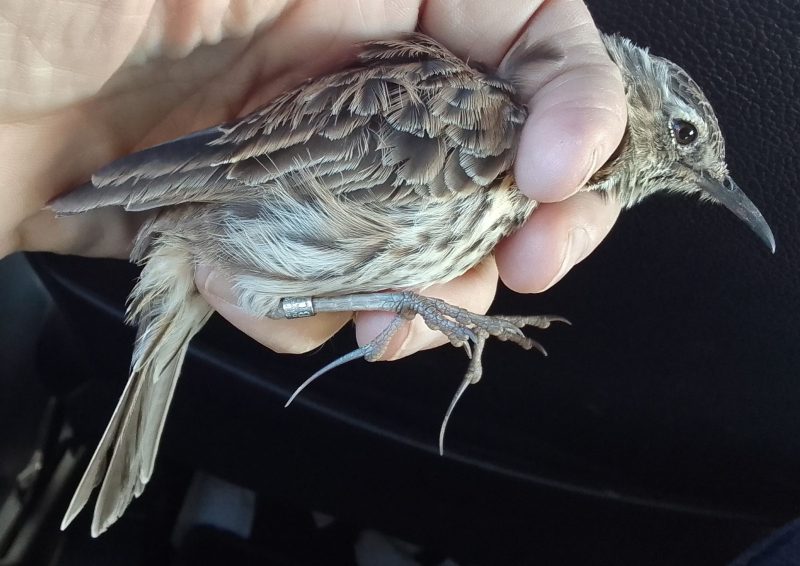
| Agulhas Long-billed Lark | 1 | 2 |
| Fork-tailed Drongo | 2 | 3 |
| Cape Bulbul | 15 | |
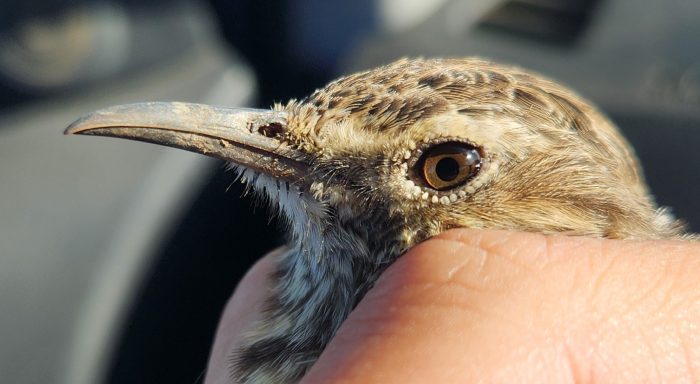
| Capped Wheatear | 3 | 4 |
| African Stonechat | 1 | |
| Cape Robin-chat | 1 | |
| Lesser Swamp Warbler | 2 | |
| Little Rush Warbler | 3 | 5 |
| Grey-backed Cisticola | 1 | |
| Levaillant’s Cisticola | 3 | |
| Fiscal Flycatcher | 2 | |
| Cape Batis | 1 | 6 |
| Cape Wagtail | 2 | |
| Southern Fiscal | 4 | 7 |
| Cape Sugarbird | 1 | 8 |
| Malachite Sunbird | 7 | 9 and 10 |
| Southern Double-collared Sunbird | 2 | |
| Cape Weaver | 14 | 11 |
| Southern Masked Weaver | 2 | |
| Cape White-eye | 10 | |
| Southern Grey-headed Sparrow | 1 | 12 |
| 23 Species | 80 birds |
The photos are chosen to show aspects of the bird which are often best seen with the bird-in-the-hand. This is the privilege of being a ringer.
Photo 1
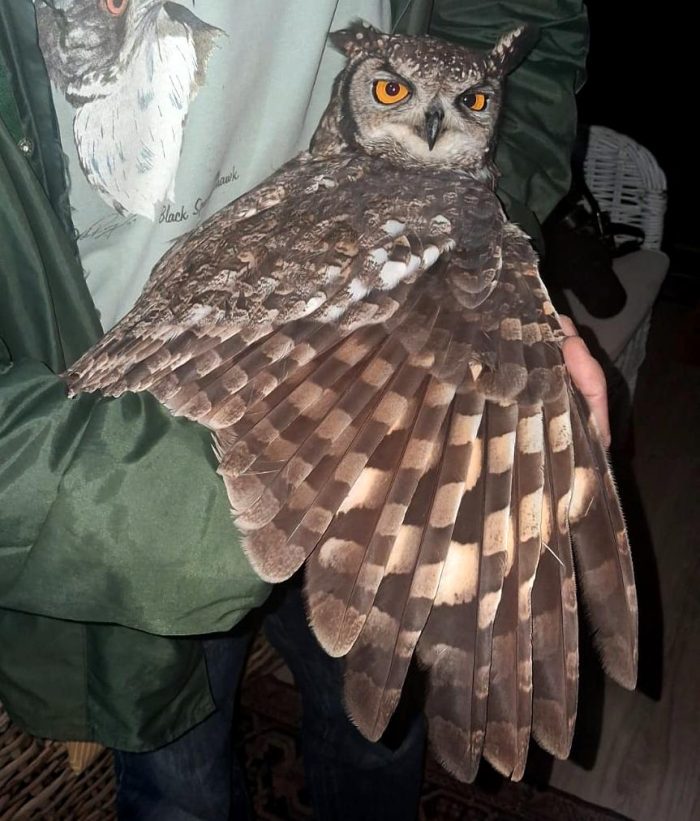
Spotted Eagle Owl. This is our first at the Nuwejaars Wetlands. The cumulative effort of the community of bird ringers has helped document the patterns of movement and survival of this owl.
Photo 2
Agulhas Long-billed Lark, now treated as a subspecies of the Cape Long-billed Lark.
Photo 3
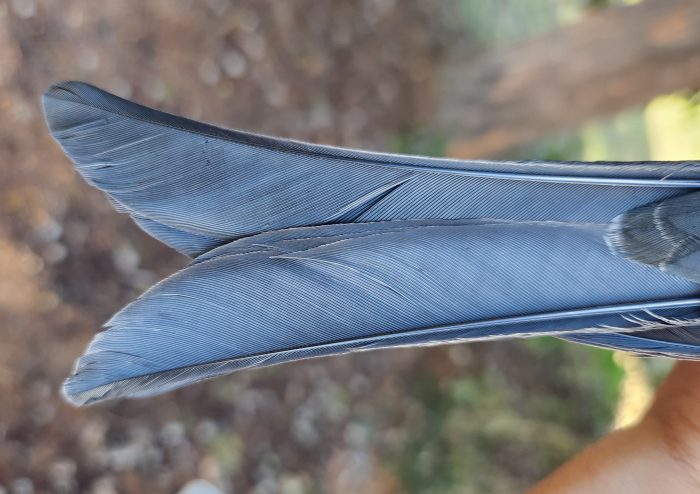
The forked tail of the Fork-tailed Drongo
Photo 4
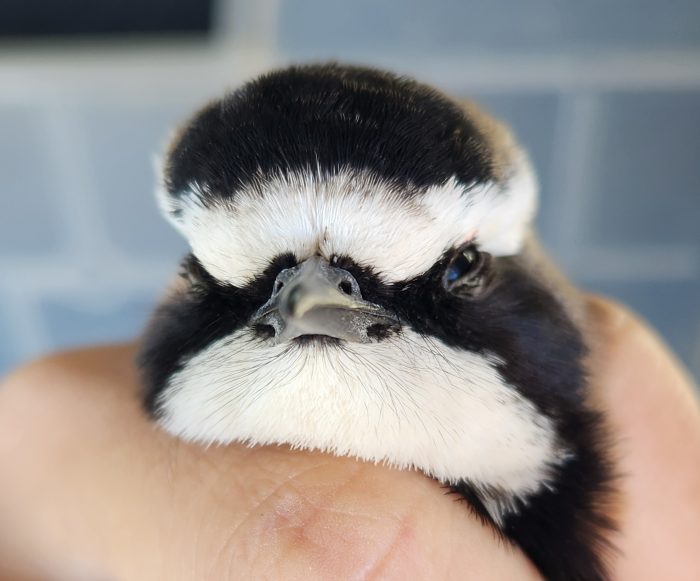
Capped Wheatear, the view that insects fear.
Photo 5
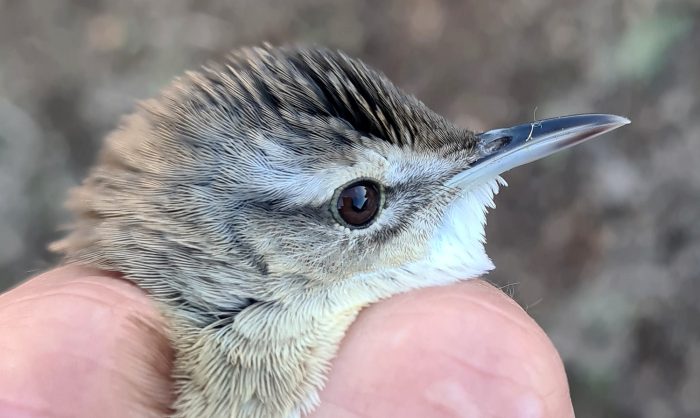
Little Rush Warbler
Photo 6
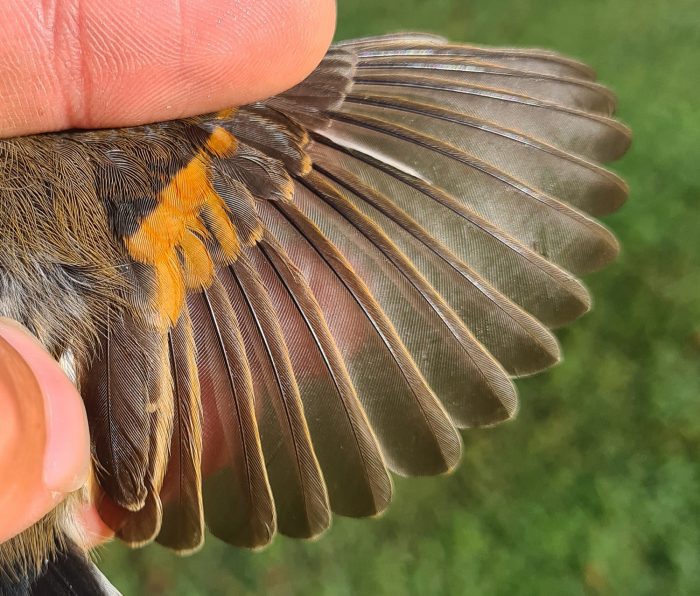
Cape Batis. This bird is a juvenile. Look at the light-brown edgings of the tertials alongside the ringer’s thumb. They get less conspicuous as you move outwards on the wing. They have been worn away. There are similar patterns in the coverts, in front of the ringer’s index finger.
Photo 7
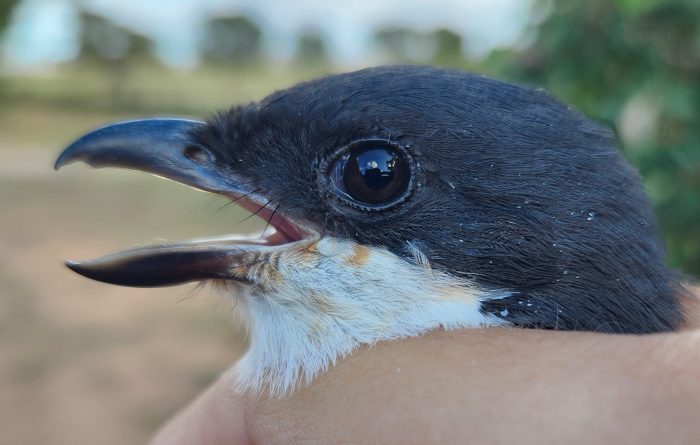
Southern Fiscal. That beak is sharp and powerful.
Photo 8
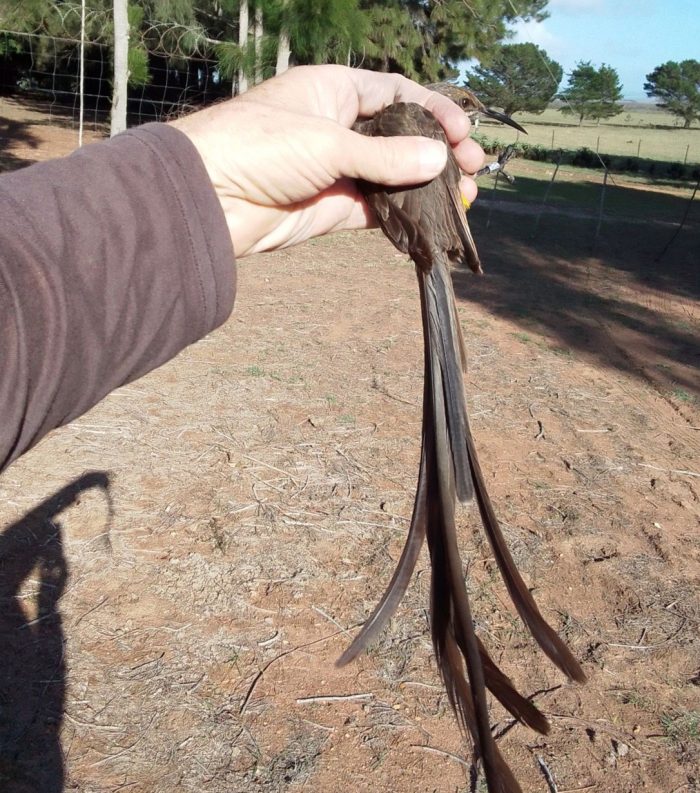
Male Cape Sugarbird. The whole of the tail is visible in the shadow!
Photos 9 and 10
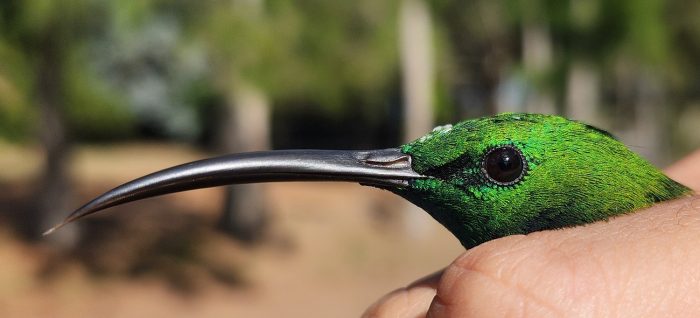
Malachite Sunbirds have a long down-curved bill.
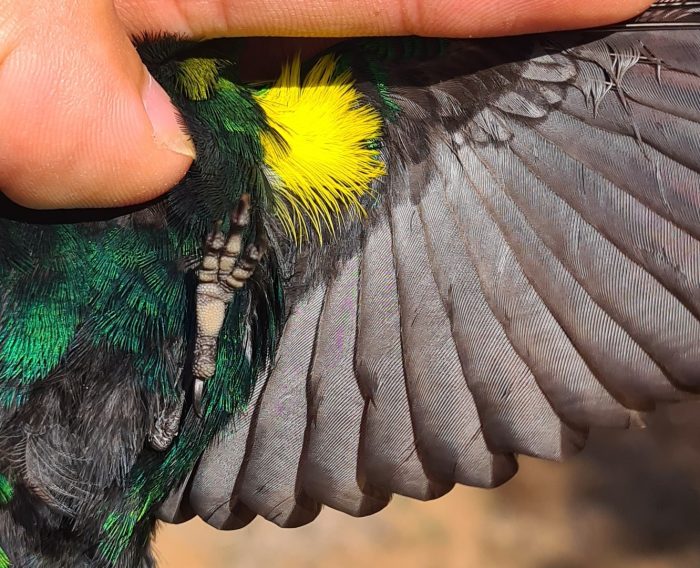
The bright yellow pectoral tufts of the Malachite Sunbird are usually tucked away and are not often visible outside the breeding season. They are used for mate attraction displays.
Photo 11
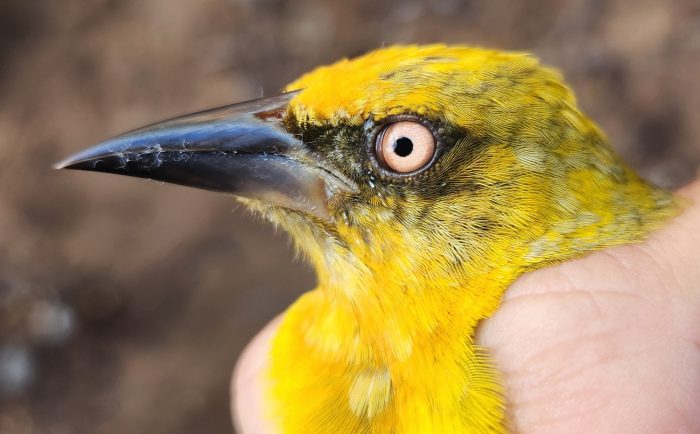
Cape Weaver, an adult male with eyes the colour of marie biscuits. This is the bill that accomplishes the daunting task of weaving a nest out of grass.
Photo 12
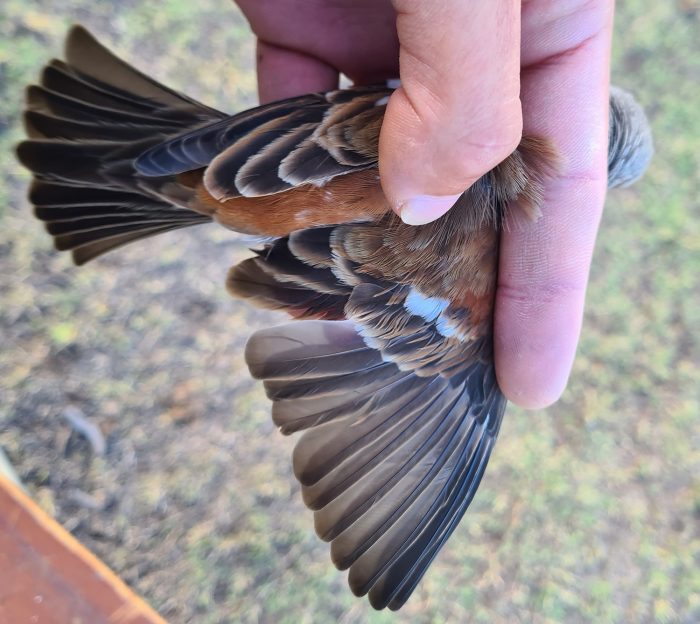
Southern Grey-headed Sparrow
Next ringing expedition to Nuwejaars Wetlands is from 9 to 14 May 2026. Up-to-date list of plans for future events is here.
There is a list of ringing expeditions that have blog reports similar to this here.