

There is no pollution from city light. We are deep in the countryside. There is no moon. The night is dark. Above our heads, the Southern Cross and The Pointers remind us that we are in the southern hemisphere. To be precise, we are at Ouberg Private Nature Reserve, deep in the mountains behind Montagu …

Too soon, the night gives way to dawn, the ringers are up early, …
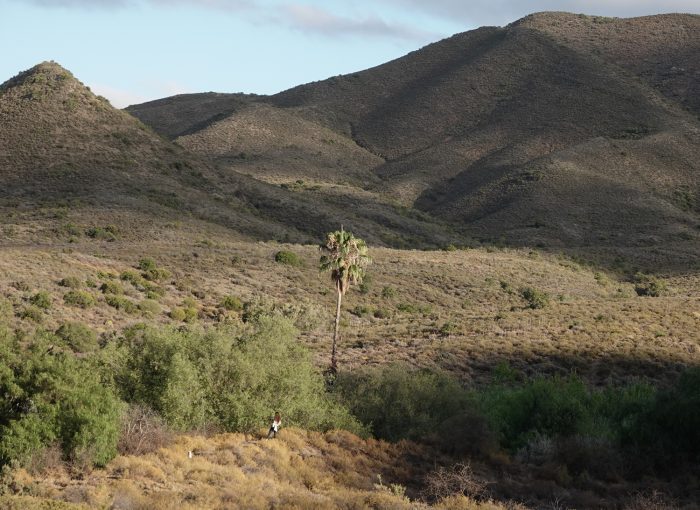
… checking the mist nets which were opened at first light …
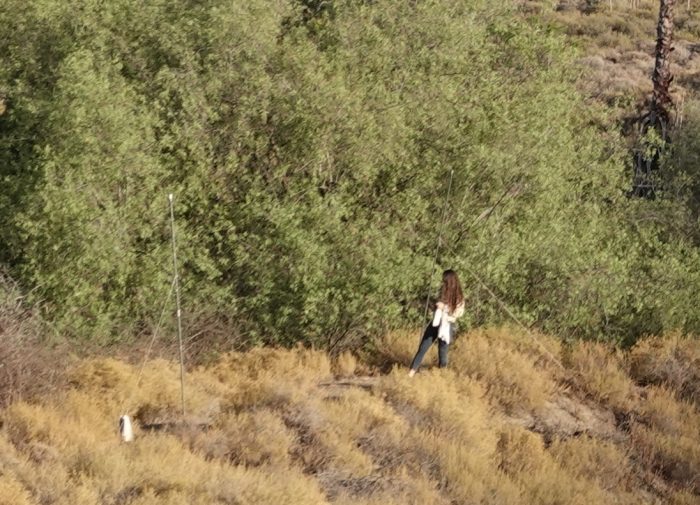
… and which are essentially invisible against the background of vegetation.
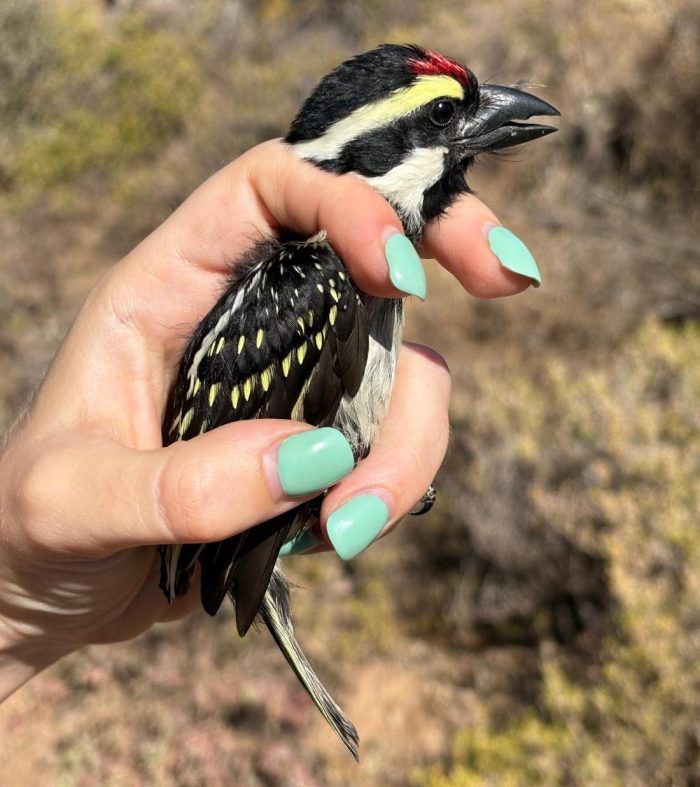
This Acacia Pied Barbet is being held with its head between the first and second fingers, and then the back fits snugly into the palm of the hand. That beak is powerful and sharp! If you don’t hold a barbet correctly in the ringers’ grip, the head swivels round on the flexible neck, and the ringer’s blood starts to flow.
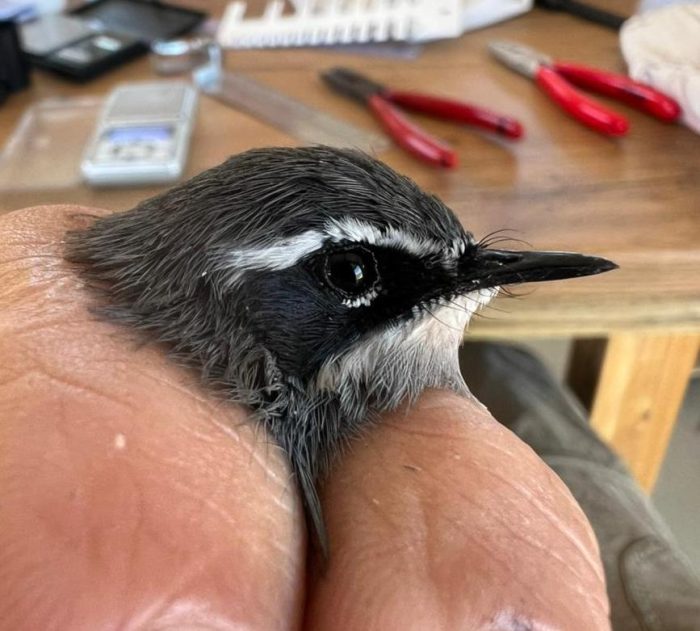
With an average mass of 6 g, the Fairy Flycatcher is the lightest (and smallest) bird species in southern Africa.
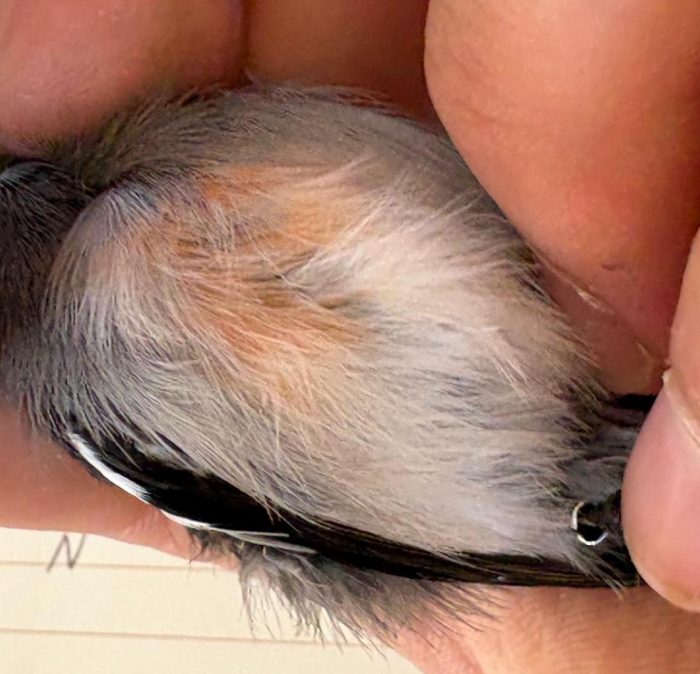
It is ringers who are privileged to see the delicate shade of peach on the underparts.
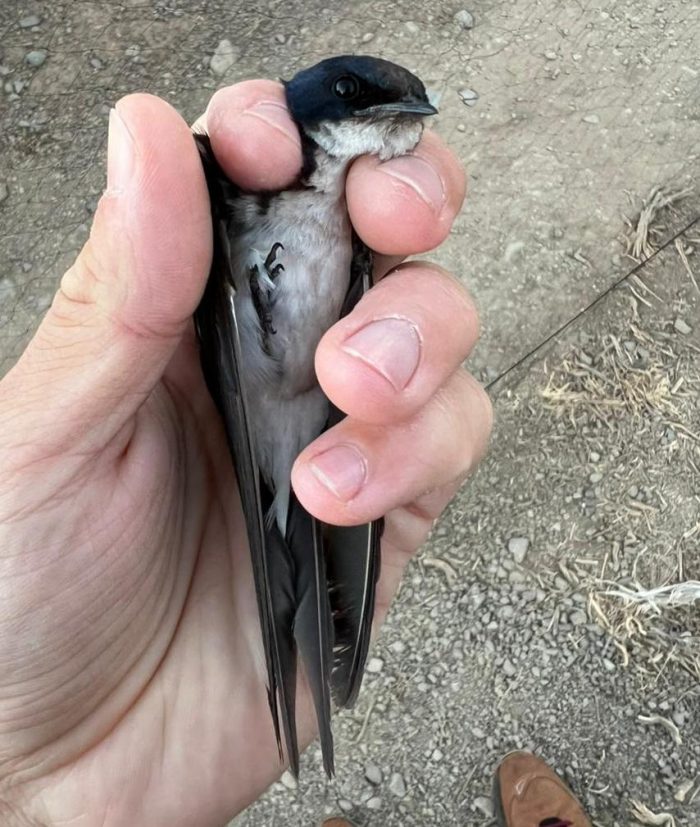
Pearl-breasted Swallow.
This is a list of species handled, and the numbers of each species. Those in red have links to structured species descriptions on the BDI website:
| Species | Number |
| Ring-necked Dove | 3 |
| Speckled Mousebird | 2 |
| White-backed Mousebird | 2 |
| Red-faced Mousebird | 6 |
| Malachite Kingfisher | 1 |
| Acacia Pied Barbet | 6 |
| Pearl-breasted Swallow | 6 |
| Rock Martin | 2 |
| Cape Bulbul | 14 |
| Sombre Greenbul | 1 |
| Familiar Chat | 1 |
| Cape Robin-chat | 8 |
| African Reed Warbler | 7 |
| Long-billed Crombec | 2 |
| Bar-throated Apalis | 2 |
| Fiscal Flycatcher | 1 |
| Fairy Flycatcher | 2 |
| Red-winged Starling | 2 |
| Cape Sparrow | 3 |
| Cape Weaver | 6 |
| Southern Masked Weaver | 19 |
| Common Waxbill | 1 |
| White-throated Canary | 2 |
| Cape Bunting | 1 |
| Olive Thrush | 1 |
| Cape White-eye | 1 |
| Karoo Prinia | 3 |
| Totals: 27 Species | 105 |
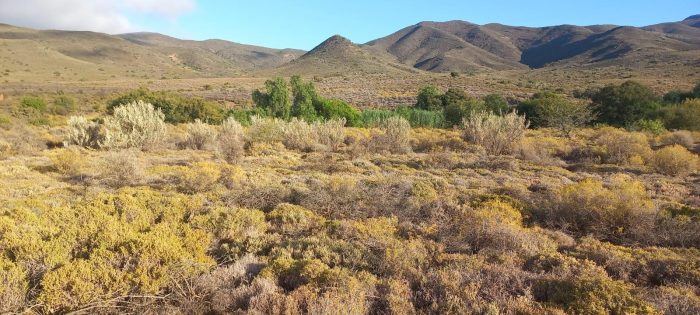
To what extent do birds in a habitat like this make use of the drainage lines as highways? That is a question that interests us!
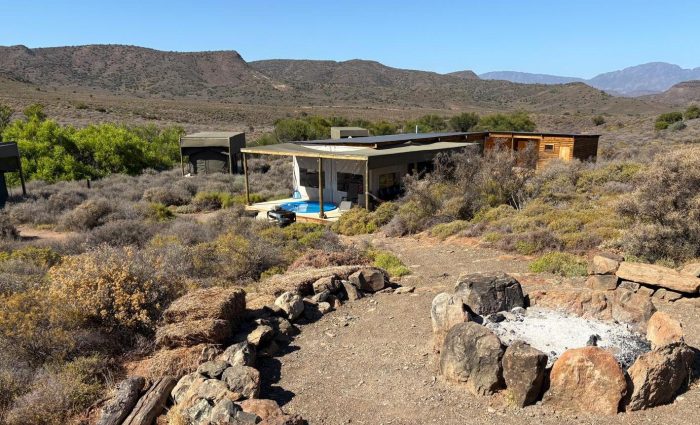
This is the communal area at the campsite (glamping and bring-your-own-tent) at the Ouberg Private Nature Reserve. It is ideal for our needs.
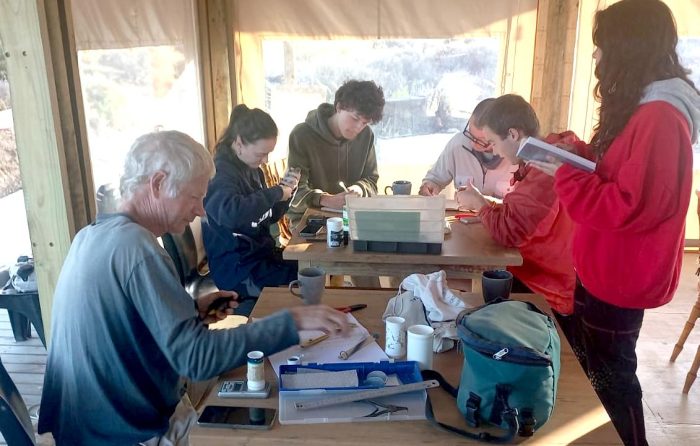
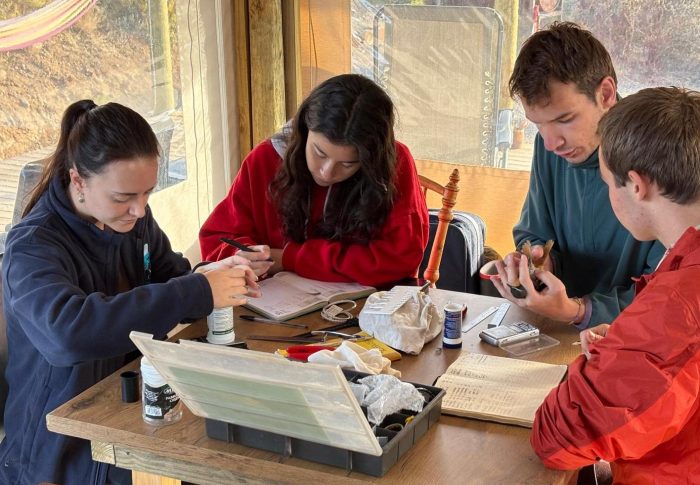
One corner of the communal area at Ouberg Private Nature Reserve turned into ringing office!
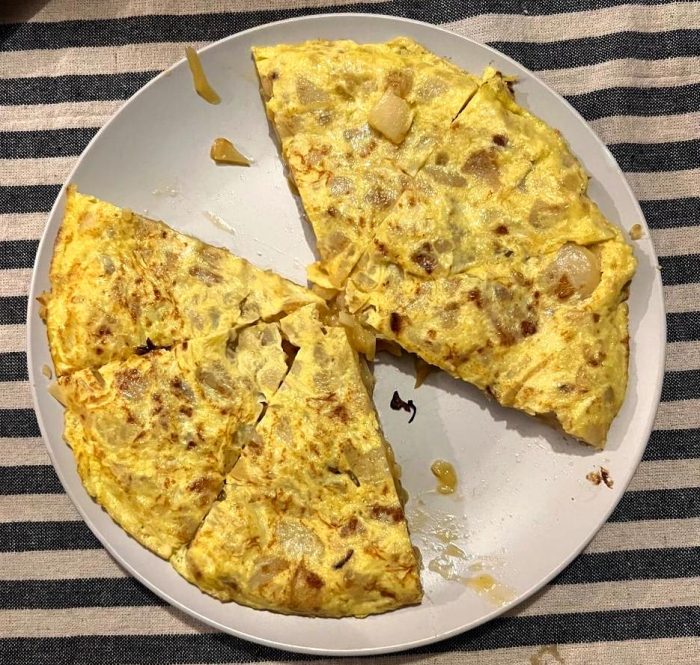
These ringing blogs often lapse into a focus on food. This one is no exception. Two interns from the Basque Country in Spain, Ana and Iñaki, treated us to tortilla de patatas, aka, Spanish omelette.
You can get links to all our reports on events like this on this website. There is a list of future events here.
There is a description of the value of bird ringing to research and conservation here.