
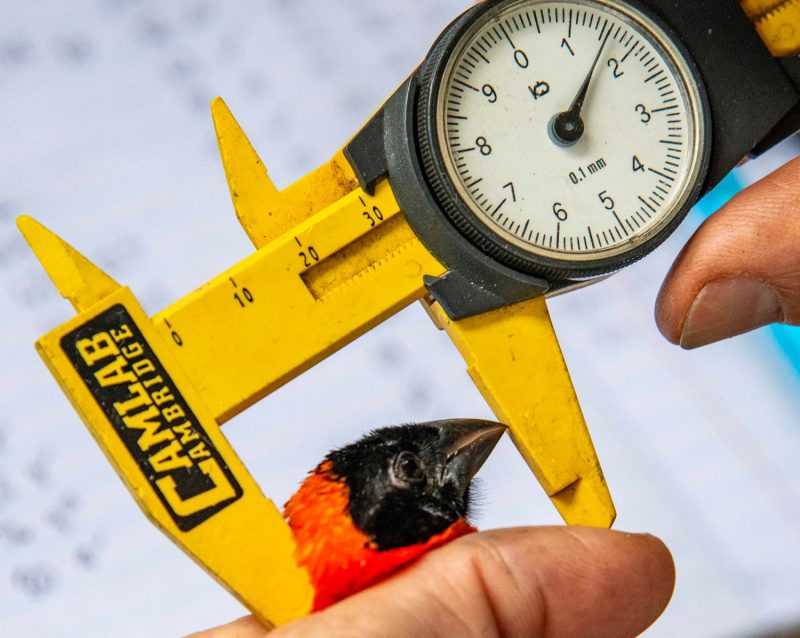
We are reporting on our eighth bird ringing expedition to the Nuwejaars Wetlands. We were here from Friday 19 to Tuesday 23 September 2025, four nights. As with the previous visits here we are still exploring new sites and new options. Some are winners, and some are less successful. But it is all part of the learning process.
Saturday morning was spent at the northern side of the Nuwejaars River floodplain at Moddervlei. We didn’t get the mistnets in good places and a stiff breeze started early. We could have done better here. On Sunday morning we put the mistnets up near the hide on the African Marsh Harrier Trail. This is now our best site in the area! On Monday morning we ringed around the werf at Hazevlakte, around our accommodation, and that yielded a steady stream of birds, lots of them retraps. On Monday afternoon we reccied a spot with easy access to the Nuwejaars River close to the farm Heuningrug. Definitely worth a bigger exploration. On Tuesday morning we operated near the protea patch at Zandvlakte. This is a regular spot, and the place where we hope to get samples of sunbirds and sugarbirds.
As the days pass by around the spring equinox, the rate of change of sunrise is fastest. and in the wrong direction! So, for the next couple of months, the ringing day starts a minute of two earlier every day.
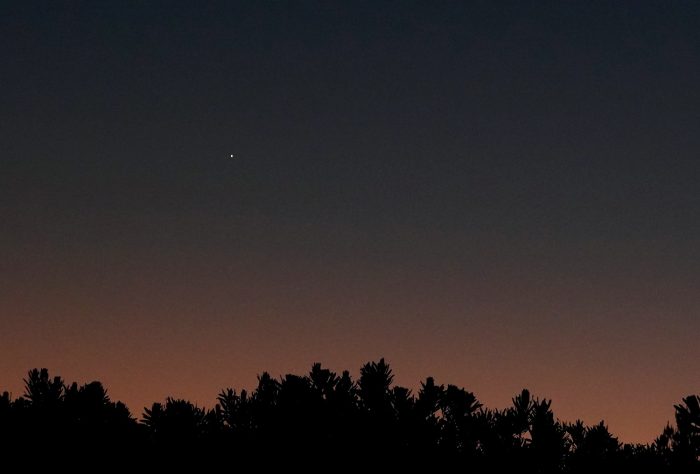
06h02 in the Zandvlakte protea patch. Time to get the mist nets up, watched by the “morning star”, in this case, Venus.
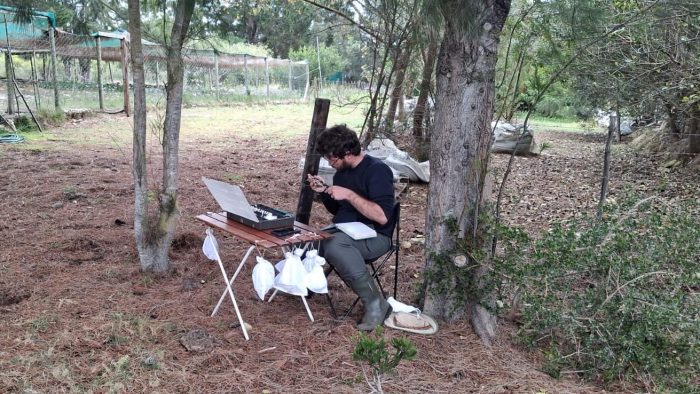
Central to every bird ringing day is the table where the ringing gets done. It’s chosen to be out of the sun if possible (otherwise we need to take the lapa for shade). It mustn’t be too far from the mist nets, and it must not be too close either. The global bird ringing standard is to keep birds in bags from capture to processing. And we keep the bags in order so it is a FIFO system. FIFO = First In, First Out. Most of the time the designated ringer doesn’t know what is in the next bag until he takes the bird out.
Bag 1
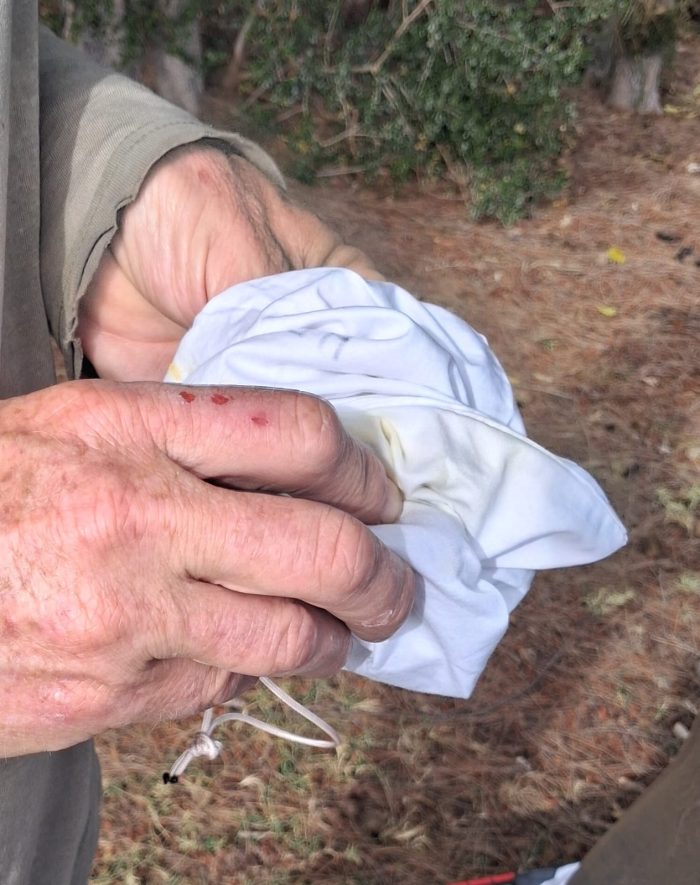
What’s in the bag? It’s a …
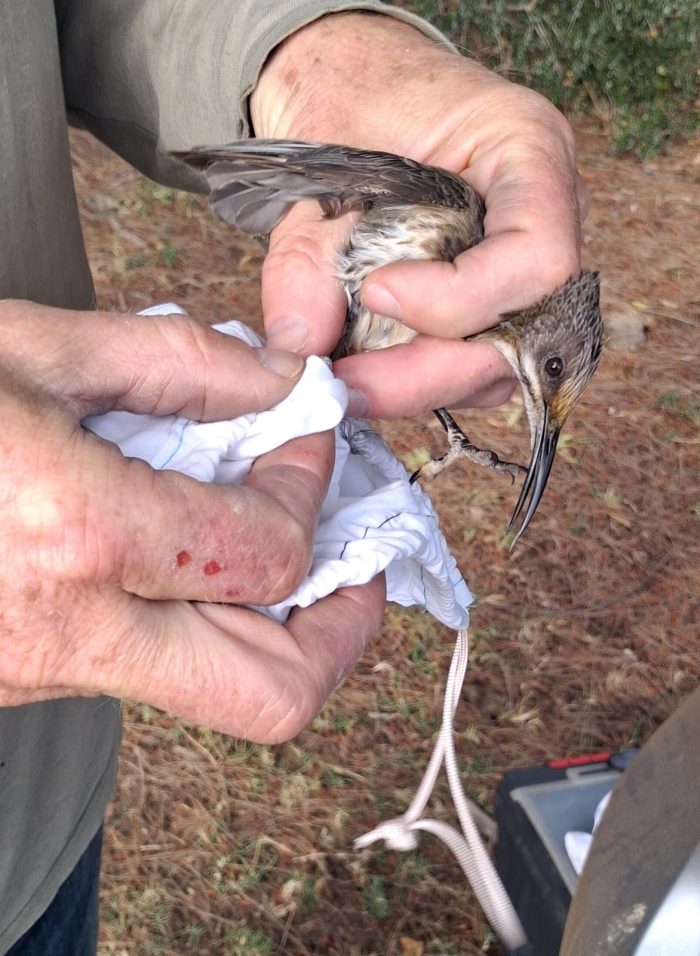
… Cape Sugarbird. The first of seven that we ringed at Zandvlakte, in the protea patch. That brings the total number of sugarbirds ringed at Zandvlakte to 14.
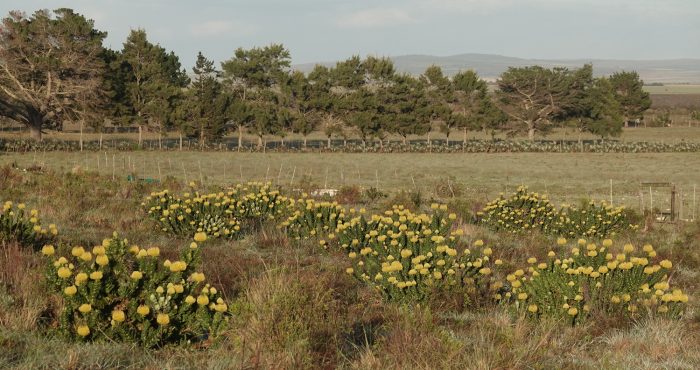
Part of the Zandvlakte protea patch. These are cultivated proteas, planted in rows, but clearly many (in reality, most) of the plants didn’t survive.
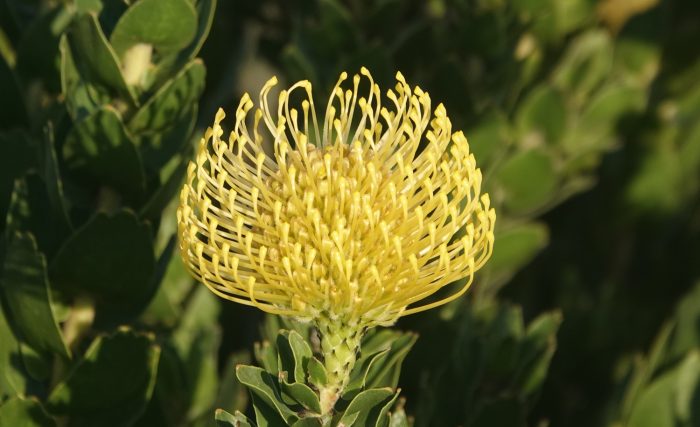
Even though it is a cultivar, a horticultural variety of pincushion protea …
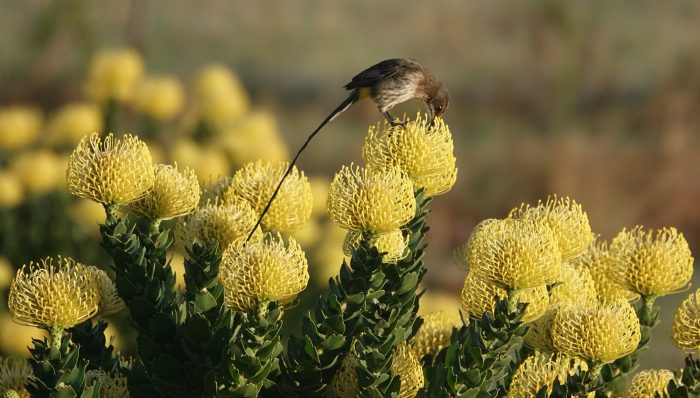
… it still produces nectar for the sugarbirds.
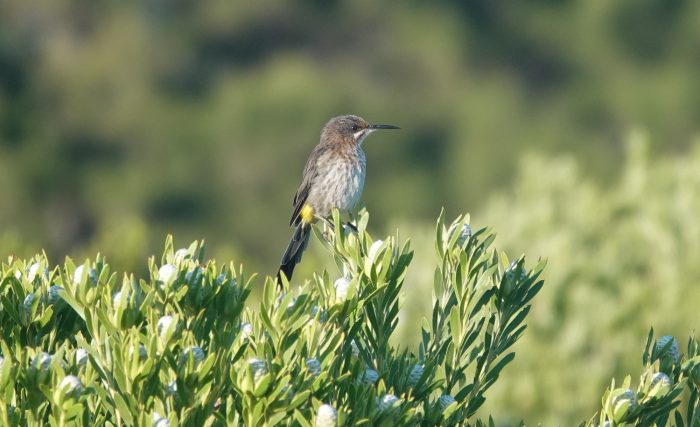
The sugarbirds make excursions into the cultivated patch of proteas from the neighbouring hillside, which is covered by a remnant of natural fynbos.
Bag 2
Here is another bag with a bird in it …
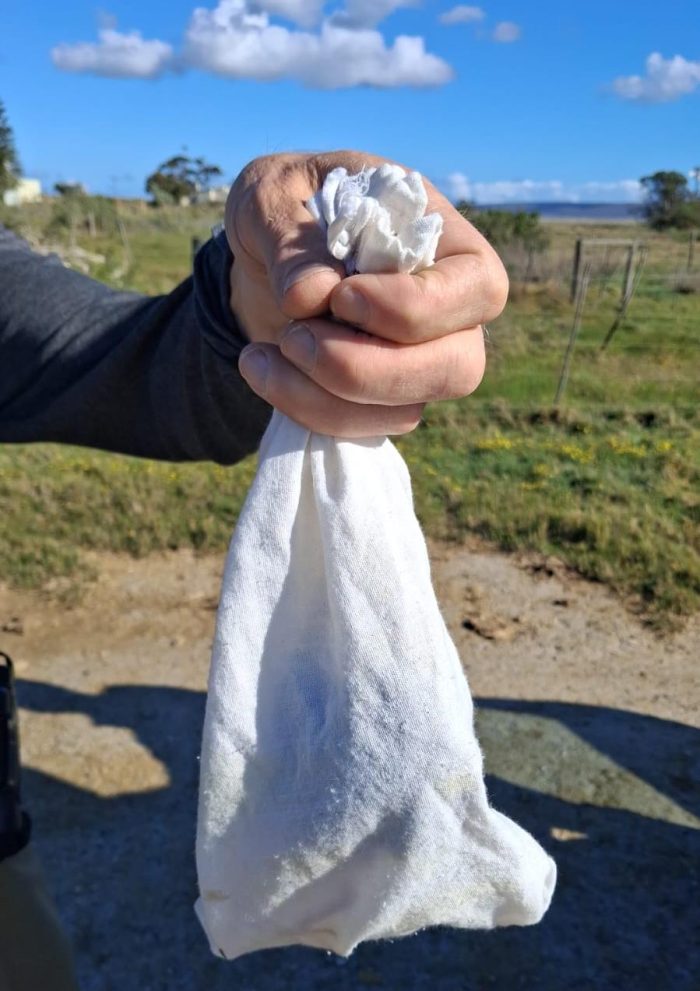
This bag comes from the recce trip to the Nuwejaars River on Monday afternoon …
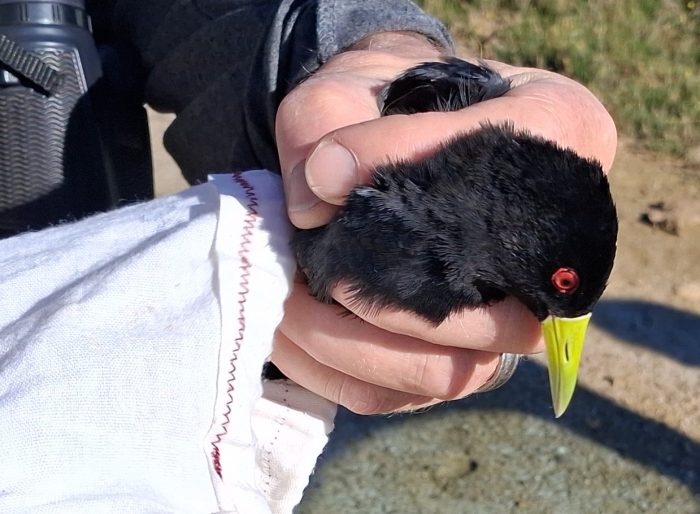
… and the bird in the bag is a Black Crake, our third for the trip! The floodplain of the Nuwejaars River has a large population …
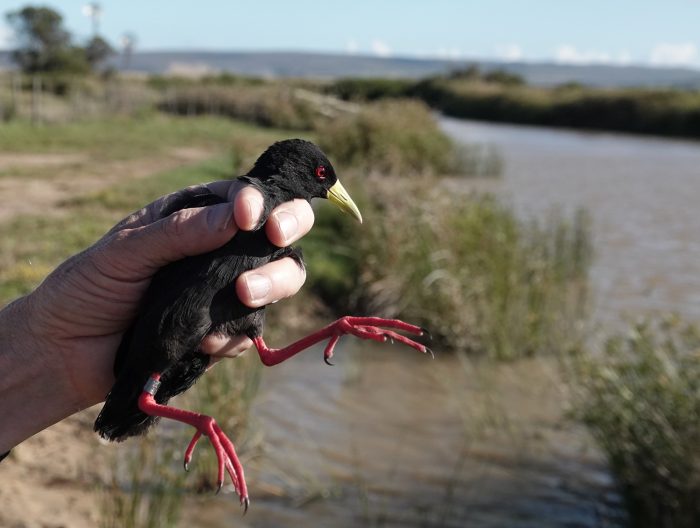
… and here, just before release here is the crake with its habitat in the background. To see the colours of the eyes, bill and legs with the bird-in-the-hand is an awesome privilege.
More privileges …
This is the southernmost Diederik Cuckoo ever ringed …
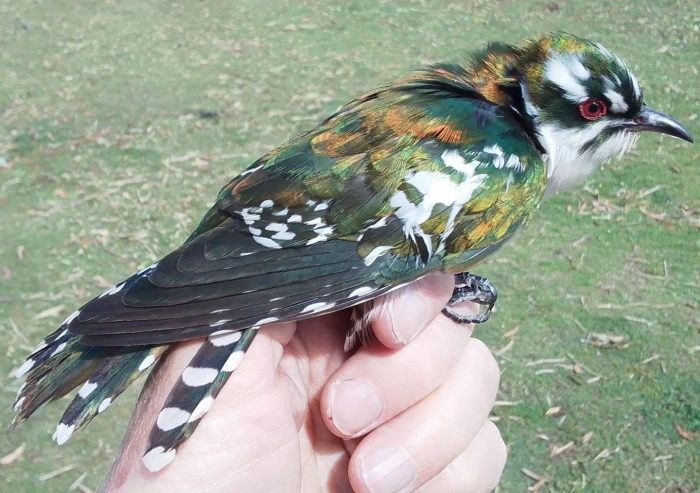
It’s a male, diagnosed by the red eye-ring
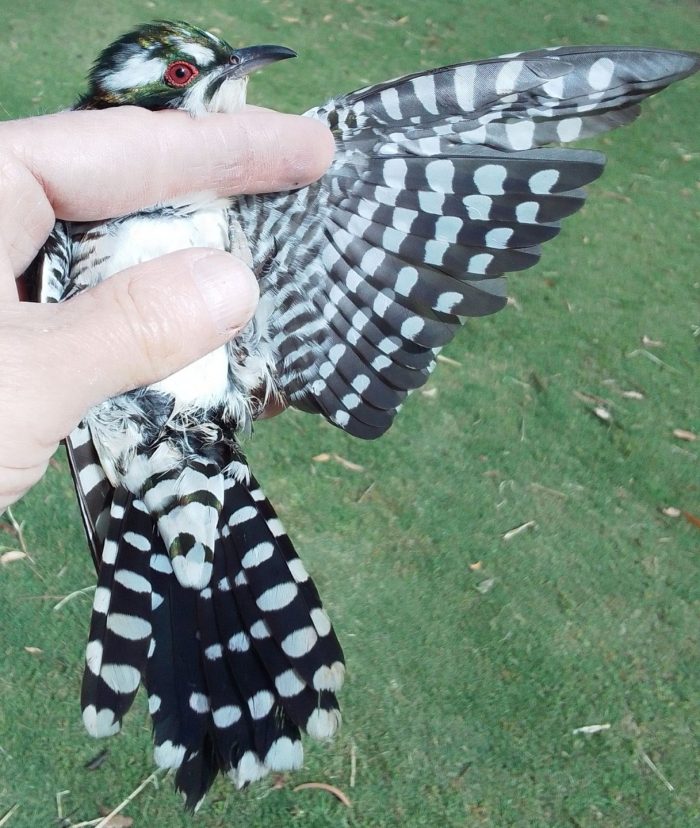
It is only ringers who really get to see birds close-up!
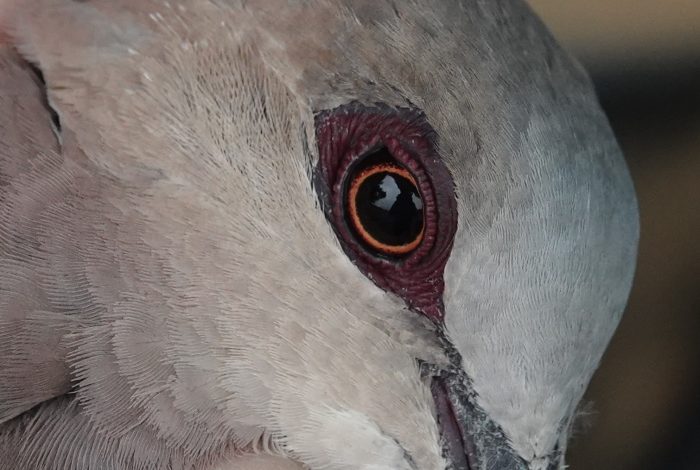
Here is the eye of the Red-eyed Dove.
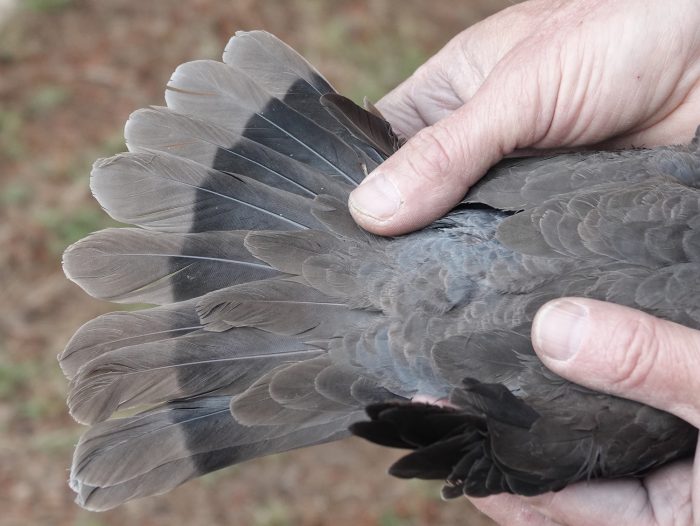
This is the tail pattern, which you can compare with the tail pattern of the Ring-necked Dove ….
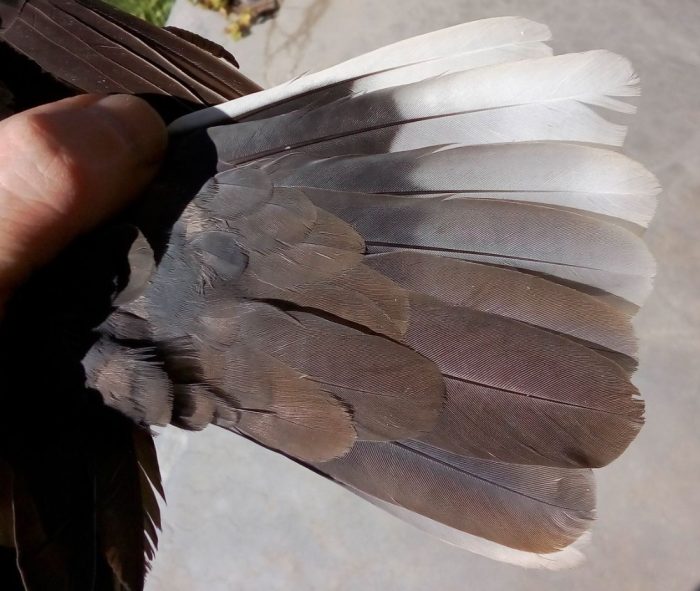
… in which the outer three tail feathers are white, but which can be hidden away when the tail is in the natural position.
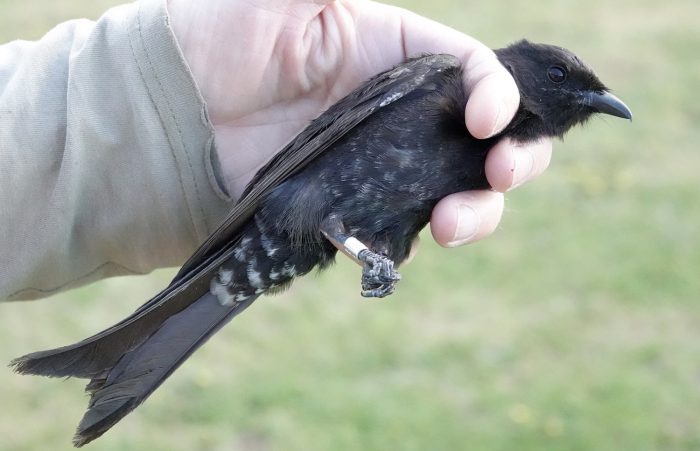
… this is a young Fork-tailed Drongo. The white pattern of the underparts, and the dark eye (red in adults) are diagnostic of this being a juvenile.
Summary table
Dieter Oschadleus produced this summary of the bird ringing at Nuwejaars Wetlands in September 2025.
| English | Count |
| Black Crake | 3 |
| Red-eyed Dove | 2 |
| Ring-necked Dove | 1 |
| Diederik Cuckoo | 1 |
| Red-capped Lark | 1 |
| Fork-tailed Drongo | 1 |
| Cape Bulbul | 2 |
| Cape Robin-chat | 6 |
| Lesser Swamp Warbler | 4 |
| Little Rush Warbler | 2 |
| Cape Grassbird | 1 |
| Levaillant’s Cisticola | 3 |
| Fiscal Flycatcher | 1 |
| Cape Batis | 3 |
| Southern Fiscal | 1 |
| Common Starling | 3 |
| Cape Sugarbird | 7 |
| Malachite Sunbird | 1 |
| Southern Double-collared Sunbird | 3 |
| House Sparrow | 2 |
| Cape Sparrow | 2 |
| Cape Weaver | 34 |
| Southern Masked Weaver | 3 |
| Southern Red Bishop | 14 |
| Yellow Bishop | 13 |
| Common Waxbill | 4 |
| Cape White-eye | 3 |
| Karoo Prinia | 1 |
| Totals : 28 species | 122 |
Other things that fly …
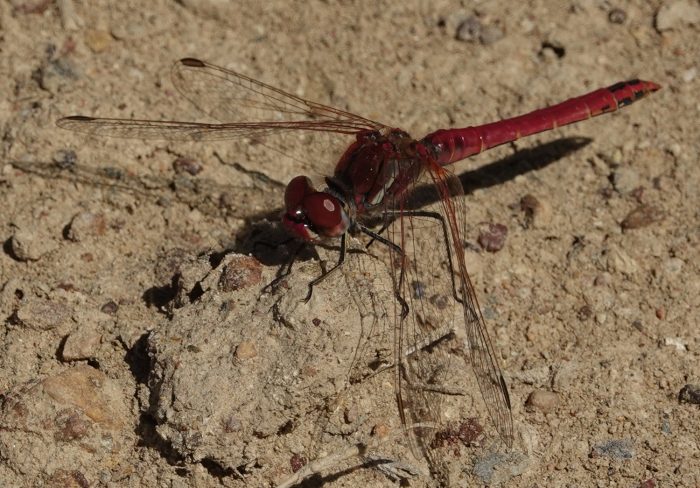
It is still a bit early in spring for dragonflies. This is the commonest species in the Agulhas Plain, the Red-veined Darter. This is often one of the first species to be on the wing in summer. Its range covers almost all of Africa, southern Europe, and on into Asia.
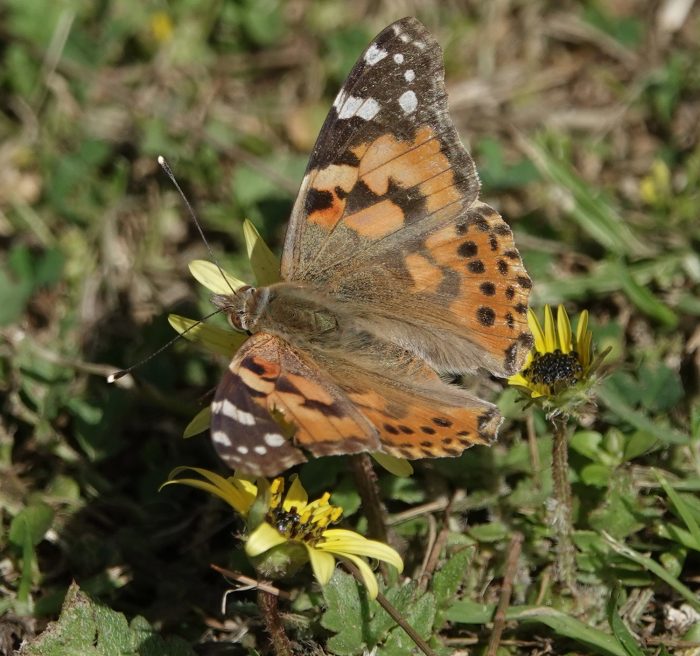
The Painted Lady has the largest distribution of any species of butterfly. Here is the evidence that it extends to the southern tip of Africa. It some parts of the world it is a migrant, for example from Africa to Europe.
Thank you
We are grateful for the support of the team at the Nuwejaars Wetlands Special Management Area, Ross Kettles and Erica Brink. Thanks to Karen and Con Neethling for the warm welcome, once again, to the accommodation on the farm Hazevlakte. Thanks to Con, Liohan Giliomee, Dirkie Swart and Diko Swart for permission to ring on their farms.
Annual report: Nuwejaars Wetlands Special Management Area
To understand what we are involed with, you can study the 2024/25 annual report of the Nuwejaars Wetlands SMA is available. Read it here.
… and finally …
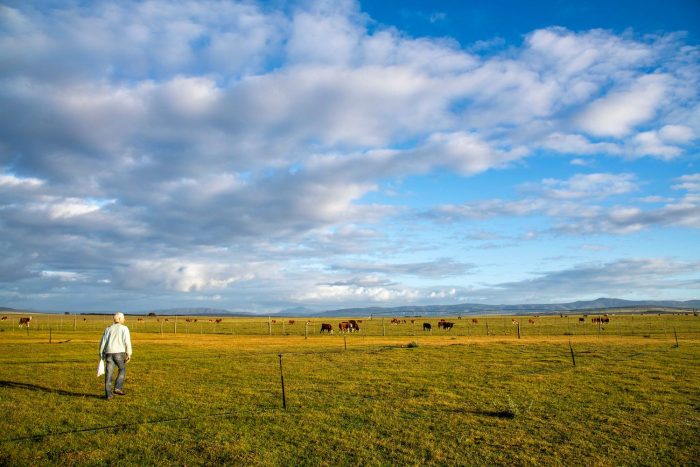
… even if we were at the Nuwejaars Wetlands for with the sole purpose of being outdoors, it would be valuable therapy for mind and body!
Future BDI events are listed here.