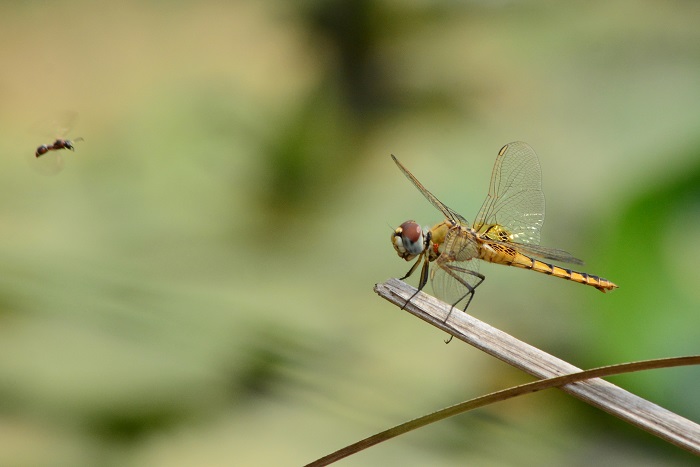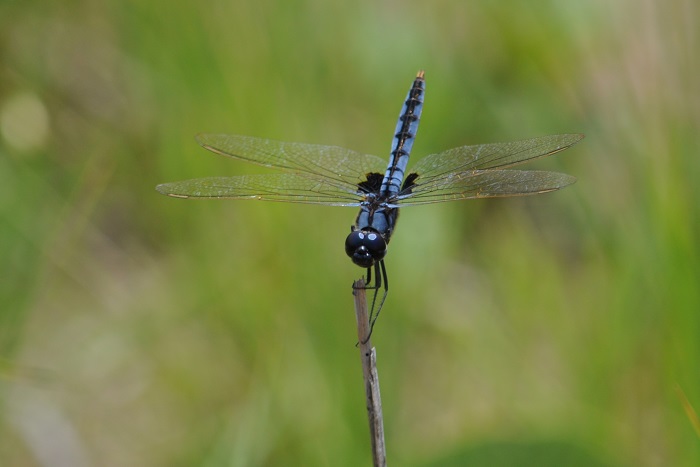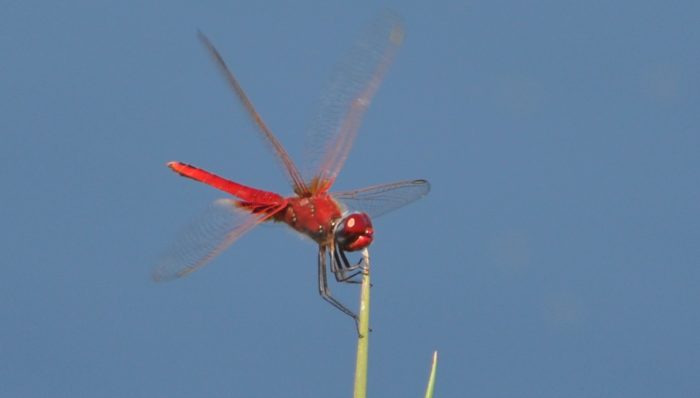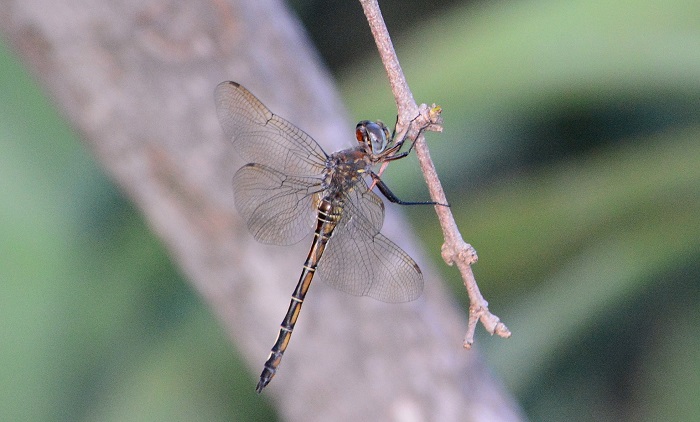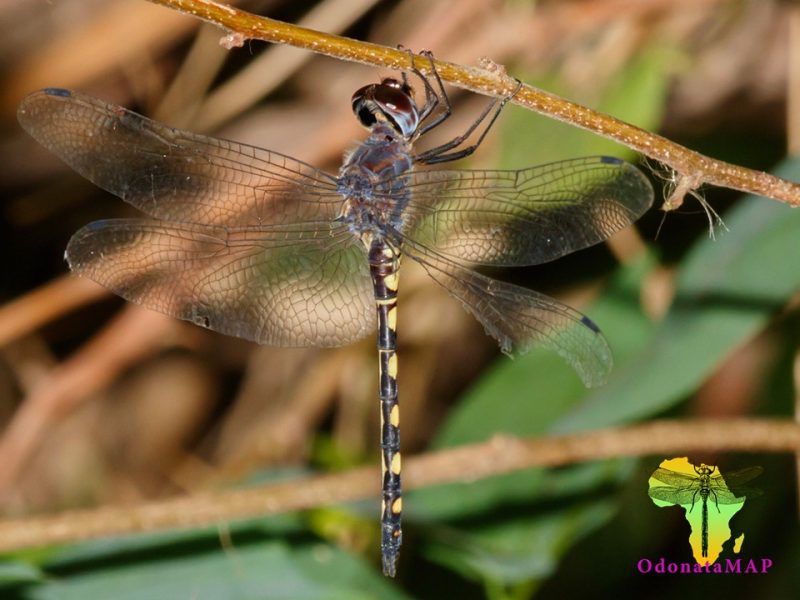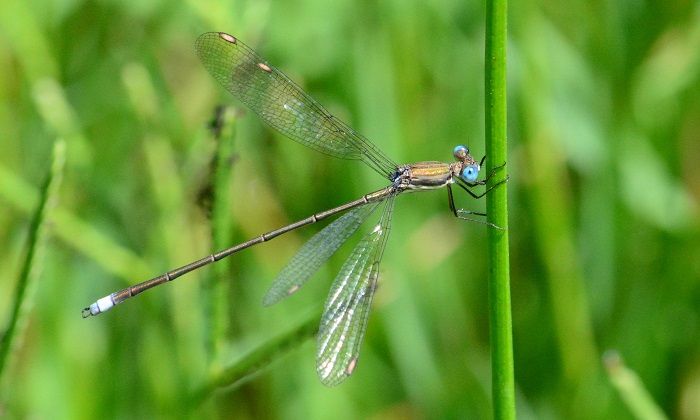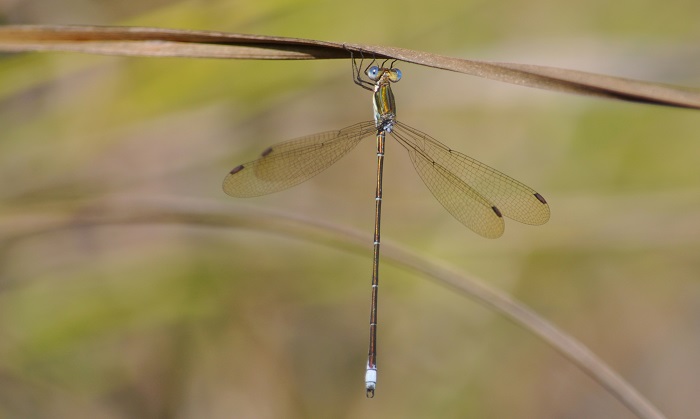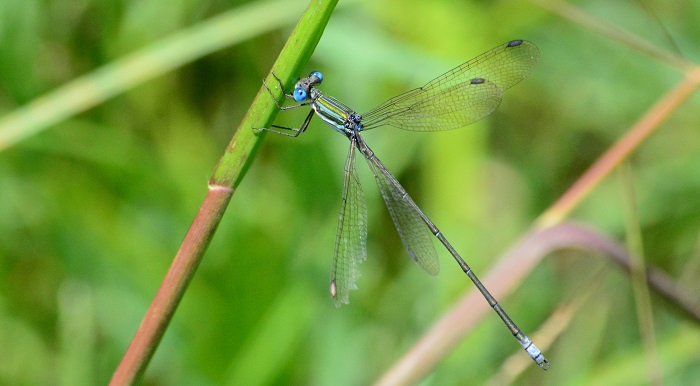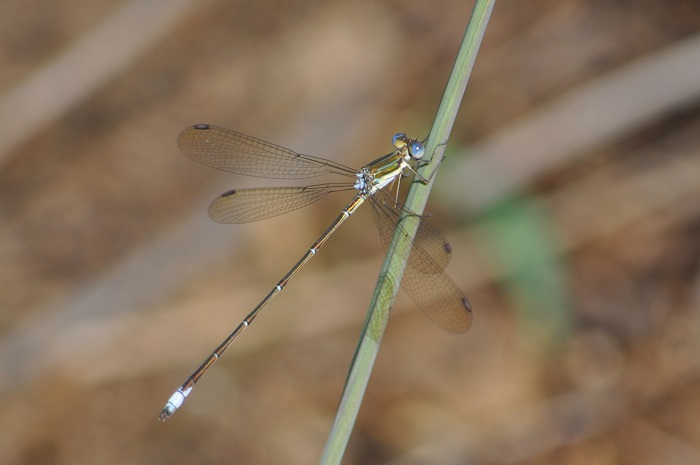
Blue Basker (Urothemis edwardsii)

Cover photo by Christian Fry.

Find the Blue Basker in the FBIS database (Freshwater Biodiversity Information System) here.

Family Libellulidae

Identification

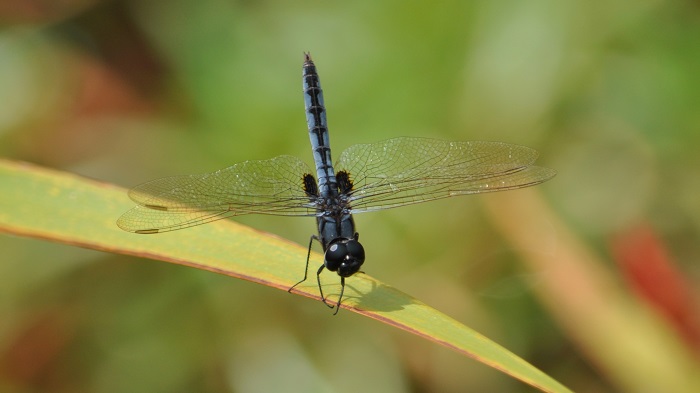
Blue Basker Urothemis edwardsii – Male
Enseleni Nature Reserve, KwaZulu-Natal
Photo by Ryan Tippett

Medium sized

Length up to 44mm; Wingspan reaches 80mm

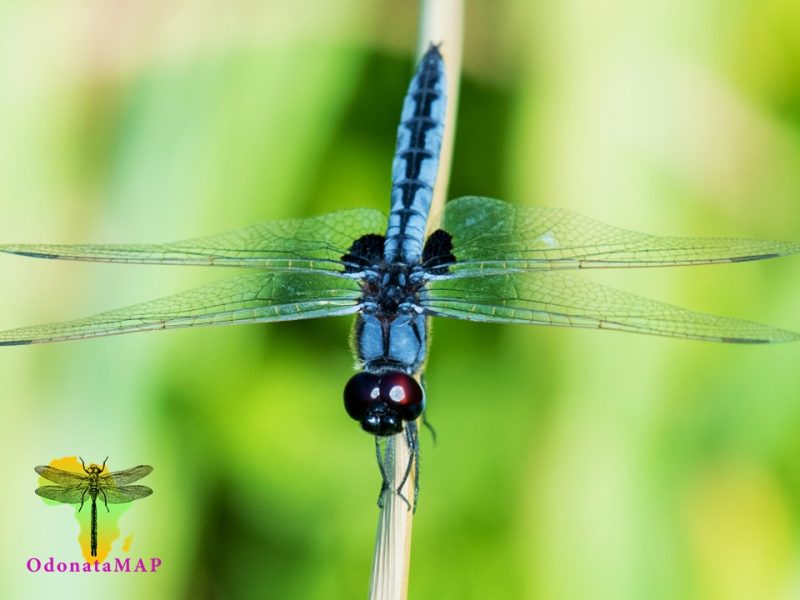
Male Blue Baskers are readily identified and unlike any other species in the region. The combination of the matt, dark blue body and black hind wing panels is diagnostic.

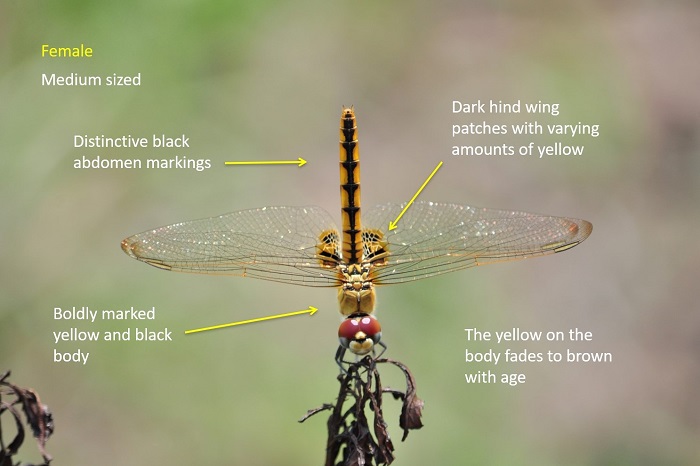
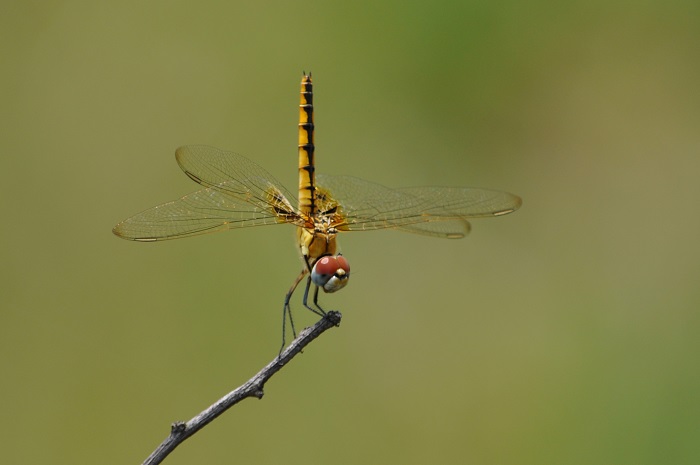
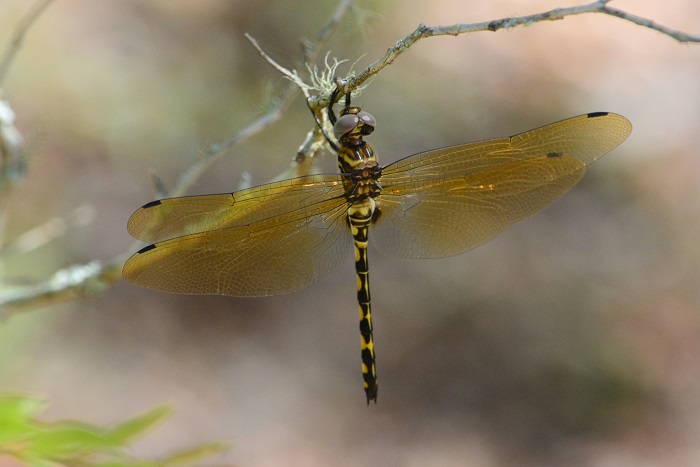
Females are overall yellowish with brown accents. They show bold black patterning down the length of the upper abdomen and dark brownish panels at the hind wing bases.

Females resemble those of Urothemis assignata (Red Basker). In that species the body colouration is more rufous than yellowish. The two species can be further differentiated by the patterning on the upper surface of the abdomen and by their slightly different hind wing markings.

Click here for more details on identification of the Blue Basker.

Blue Basker Urothemis edwardsii – Female
Enseleni Nature Reserve, KwaZulu-Natal
Photo by Ryan Tippett

Habitat

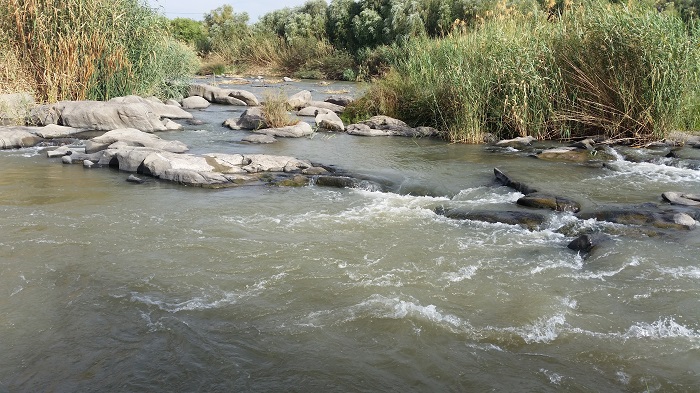
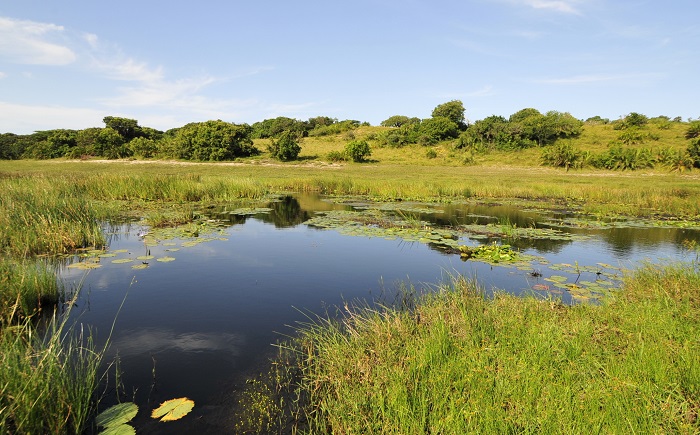
The Blue Basker inhabits freshwater lakes, pans, dams, marshes, and slow flowing sections of rivers. It prefers still-water habitats with abundant plant growth like reeds and sedges. Non-breeding individuals can often be found in open grassy areas away from water.

Typical habitat – Near Kosi Bay, KwaZulu-Natal
Photo by Ryan Tippett

Behaviour

Blue Baskers are perch hunters and spend as much time perched as they do darting off to intercept prey, or to chase off a rival. They like to sit in open, sunny positions. During the heat of the day they can often be seen in the obelisk position, pointing the abdomens at the sun to reduce the amount of direct sunlight on their bodies (see image below). Males and females both occur in the same areas.

The Blue Basker is on the wing from November to April.

Blue Basker Urothemis edwardsii – Female
Enseleni Nature Reserve, KwaZulu-Natal
Photo by Ryan Tippett

Status and Conservation

Urothemis edwardsii is a common species in South Africa. It is listed as of Least Concern in the IUCN Red List of Threatened Species. The Blue Basker is fairly resistant to habitat degradation and commonly occupies man-made habitats, provided there is enough vegetation to meet its habitat requirements.

Blue Basker Urothemis edwardsii – Male
Near Hluhluwe, KwaZulu-Natal
Photo by Ryan Tippett

Distribution

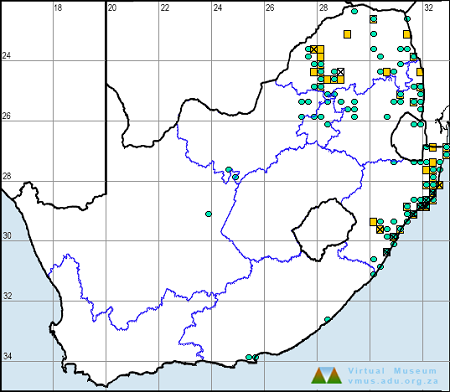
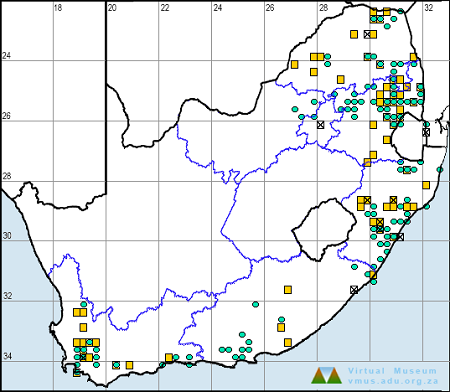
The Blue Basker is widespread and occurs virtually throughout Africa south of the Sahara, including parts of Madagascar and Mayotte in the Comoros archipelago. Isolated or relict populations are also found in Algeria and Oman. In South Africa, the Blue Basker is found mainly in the warmer and wetter north and east of the country.

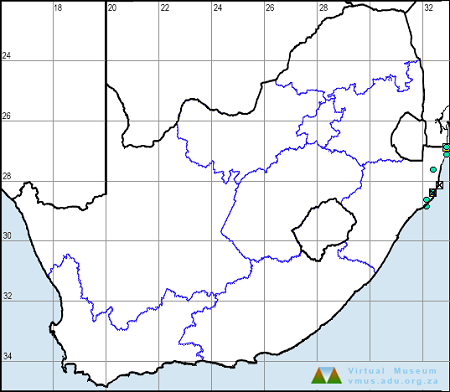
Below is a map showing the distribution of records for Blue Basker in the OdonataMAP database as at February 2020.

Below is a map showing the distribution of records for Blue Basker in the OdonataMAP database as of December 2024.

The next map below is an imputed map, produced by an interpolation algorithm, which attempts to generate a full distribution map from the partial information in the map above. This map will be improved by the submission of records to the OdonataMAP section of the Virtual Museum.

Blue Basker Urothemis edwardsii – Female
Ehlatini Bush Camp, KwaZulu-Natal
Photo by Ryan Tippett

Further Resources

The use of photographs by Christian Fry is acknowledged. All other photographs by Ryan Tippett.

Blue Basker Urothemis edwardsii (Selys, 1849)

Other common names: Blousonvangertjie (Afrikaans)

Recommended citation format: Loftie-Eaton M; Navarro R; Tippett RM; Underhill L. 2025. Blue Basker Urothemis edwardsii. Biodiversity and Development Institute. Available online at https://thebdi.org/2020/02/25/blue-basker-urothemis-edwardsii/

References: Tarboton, M; Tarboton, W. (2019). A Guide to the Dragonflies & Damselflies of South Africa. Struik Nature.

Samways, MJ. (2008). Dragonflies and Damselflies of South Africa. Pensoft

Samways, MJ. (2016). Manual of Freshwater Assessment for South Africa: Dragonfly Biotic Index. Suricata 2. South African National Biodiversity Institute, Pretoria

Martens, A; Suhling, F. (2007). Dragonflies and Damselflies of Namibia. Gamsberg Macmillan.

Blue Basker Urothemis edwardsii – Male
Enseleni Nature Reserve, KwaZulu-Natal
Photo by Ryan Tippett

Similar Species

St Lucia Basker (Urothemis luciana)

Cover photo by Diana Russell.

Find the St. Lucia Basker in the FBIS database (Freshwater Biodiversity Information System) here.

Family Libellulidae

Identification

St. Lucia Basker Urothemis luciana – Male
Richards Bay, KwaZulu-Natal
Photo by Richard Johnstone

Medium-large size and robust

Length attains 46mm; Wingspan reaches 84mm.

The St. Lucia Basker is a deep red species with extensive dark amber panels at the base of the wings.

It is easily confused with the Red Basker (Urothemis assignata), but is larger and has extensive amber patches at the base of the forewings. These are much reduced or absent in Urothemis assignata. Both sexes of Urothemis luciana have 8 or 9 Ax veins in the forewing. (Urothemis assignata has 7 Ax veins in the forewing).

Click here for more details on identification of the St. Lucia Basker.

Habitat

The St. Lucia Basker inhabits the subtropical wetlands of coastal north-eastern KwaZulu-Natal. It is found in the vicinity of both perennial and seasonal marshes, swamps and pans. This species favours wetland/forest mosaic where trees, bushes and grassland are found in close proximity to wetlands.

Habitat – Cape Vidal, iSimangaliso Wetland Park, KwaZulu-Natal
Photo by Ryan Tippett

Behaviour

The St. Lucia Basker is far more aerial than other Urothemis species and spends less time perched at the waters edge. It is most often seen on and around trees and bushes, with an abundance of long grass and water nearby. The St. Lucia Basker perches conspicuously on top of trees, bushes and reeds etc. The flight is fast and powerful. It’s movements and life history are not yet fully understood.

St. Lucia Basker Urothemis lucianaa
Kosi Bay, iSimangaliso Wetland Park, KwaZulu-Natal
Photo by Ryan Tippett

Status and Conservation

Urothemis luciana is an uncommon to rare species with an erratic occurence. This species is not present at the same sites every year and appears to vanish during prolonged dry years, only to re-appear again after good rains. The St. Lucia Basker is listed as Near Threatened in the IUCN Red List of Threatened Species. A significant portion of its South African range is protected within the iSimangaliso Wetland Park. The St. Lucia Basker is not known to occur at artificial habitats and is sensitive to habitat degredation.

Distribution

The St. Lucia Basker is endemic to north-eastern KwaZulu-Natal and southern Mozambique. It occurs as far South as Richards Bay.

Below is a map showing the distribution of records for St Lucia Basker in the OdonataMAP database as at February 2020.

Below is a map showing the distribution of records for St Lucia Basker in the OdonataMAP database as of December 2024.

The next map below is an imputed map, produced by an interpolation algorithm, which attempts to generate a full distribution map from the partial information in the map above. This map will be improved by the submission of records to the OdonataMAP section of the Virtual Museum.

Further Resources

The use of photographs by Diana Russell and Richard Johnstone is acknowledged. All other photographs by Ryan Tippett.

St. Lucia Basker Urothemis luciana Balinsky, 1961

Other common names: St. Lucia-sonvangertjie (Afrikaans)

Recommended citation format: Loftie-Eaton M; Navarro R; Tippett RM; Underhill L. 2025. St. Lucia Basker Urothemis luciana. Biodiversity and Development Institute. Available online at https://thebdi.org/2020/02/25/st-lucia-basker-urothemis-luciana/

References: Tarboton, M; Tarboton, W. (2019). A Guide to the Dragonflies & Damselflies of South Africa. Struik Nature.

Samways, MJ. (2008). Dragonflies and Damselflies of South Africa. Pensoft

Samways, MJ. (2016). Manual of Freshwater Assessment for South Africa: Dragonfly Biotic Index. Suricata 2. South African National Biodiversity Institute, Pretoria

Similar Species

Southern Riverking (Zygonoides fuelleborni)

Cover Photo by Gary Brown.

Find the Ringed Cascader in the FBIS database (Freshwater Biodiversity Information System) here.

Family Libellulidae

Identification

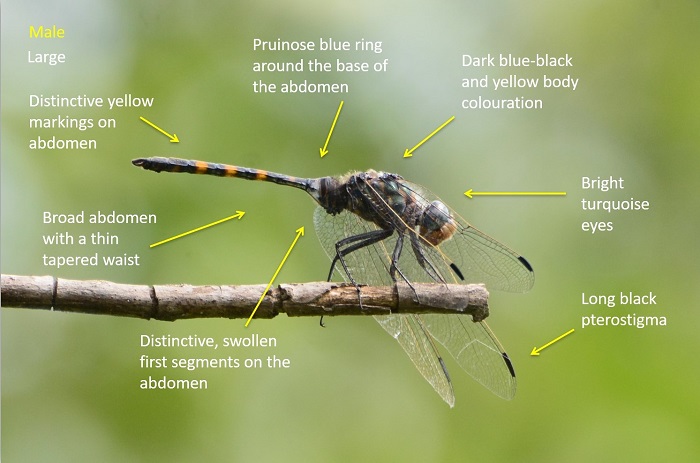
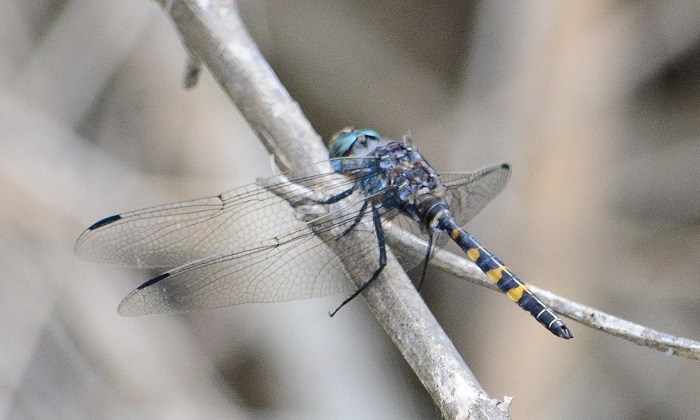
Southern River King Zygonoides fuelleborni – Male
Mkuze River, KwaZulu-Natal
Photo by Ryan Tippett

Medium-large to large size.

Length attains 56mm. The wingspan can reach 90mm.

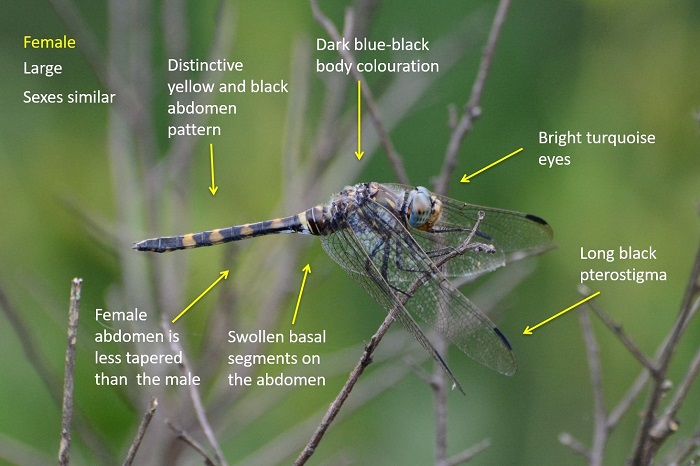
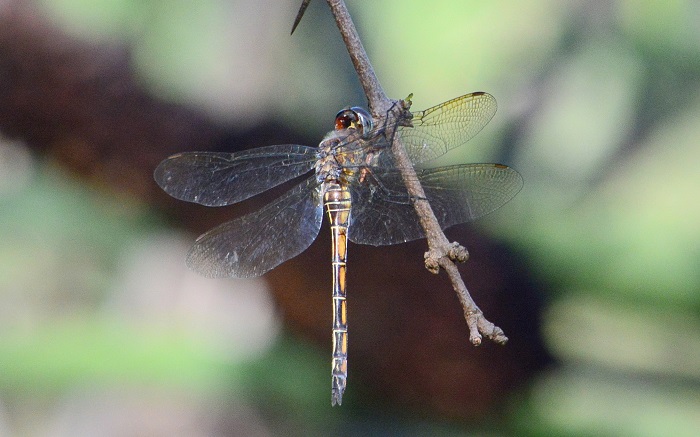
Both sexes are similar in appearance. The most distinguishing feature of Southern Riverking is the swollen basal segments on the abdomen. This is most noticeable in the male.

Most likely to be mistaken for Olpogastra lugubris (Bottletail) or Zygonyx torridus (Ringed Cascader). The Southern Riverking and the Bottletail show similar patterning but are easily separated by their very different abdomen shapes. Zygonoides fuelleborni has a broad abdomen and a noticeably tapered waist. Olpogastra lugubris has a diagnostic, thin, and elongate abdomen. The abdomen of the Ringed Cascader is also broad but lacks the tapered waist. Zygonoides fuelleborni can be further separated from Zygonyx torridus by its bright blue-green eyes as opposed to the black-brown eyes of the latter.

Click here for more details on identification of the Southern Riverking.

Southern Riverking Zygonoides fuelleborni – Female
Mkuze River, KwaZulu-Natal
Photo by Ryan Tippett

Habitat

The preferred habitat of the Southern Riverking is large, strong-flowing savanna rivers with wooded or reed-lined banks. The Southern Riverking especially likes faster-flowing sections of rivers with white water, such as rapids and falls. It requires exposed rocks or overhanging trees for perching on.

Habitat – Mkuze River, KwaZulu-Natal
Photo by Ryan Tippett

Behaviour

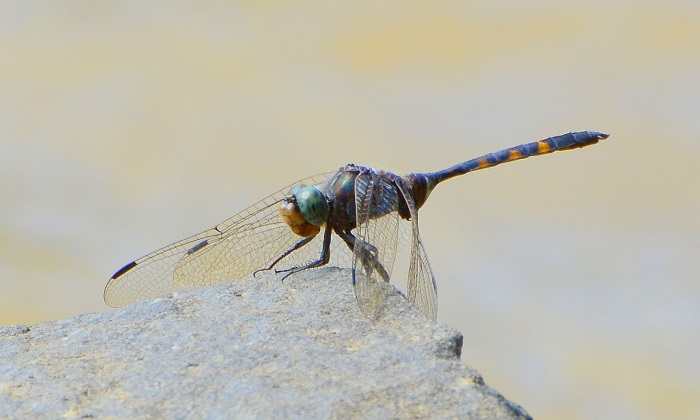
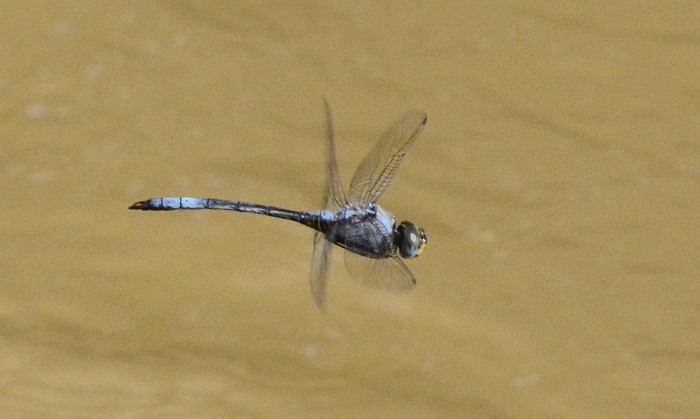
The Southern Riverking is a busy and active species with a swift, powerful flight. It perches regularly between flights, but seldom for very long. It often perches on overhanging reeds, trees or bushes and frequently sits on rocks close to the water. The Southern Riverking frequently joins mixed-species hunting swarms at dusk. Zygonoides fuelleborni is on the wing from November to May.

Southern River King Zygonoides fuelleborni – Male
Amakhosi Game Reserve, KwaZulu-Natal
Photo by Ryan Tippett

Status and Conservation

The Southern Riverking is uncommon in South Africa. It is localised and thinly distributed in South Africa. It occurs primarily in undisturbed habitats, although it is often found near weirs and dams on rivers that create rapid-like conditions. It is listed as of Least Concern in the IUCN Red List of Threatened Species.

Southern River King Zygonoides fuelleborni – Male
Mkuze River, KwaZulu-Natal
Photo by Ryan Tippett

Distribution

Zygonoides fuelleborni is found in Eastern and Southern Africa, from Kenya down to central KwaZulu-Natal in South Africa.

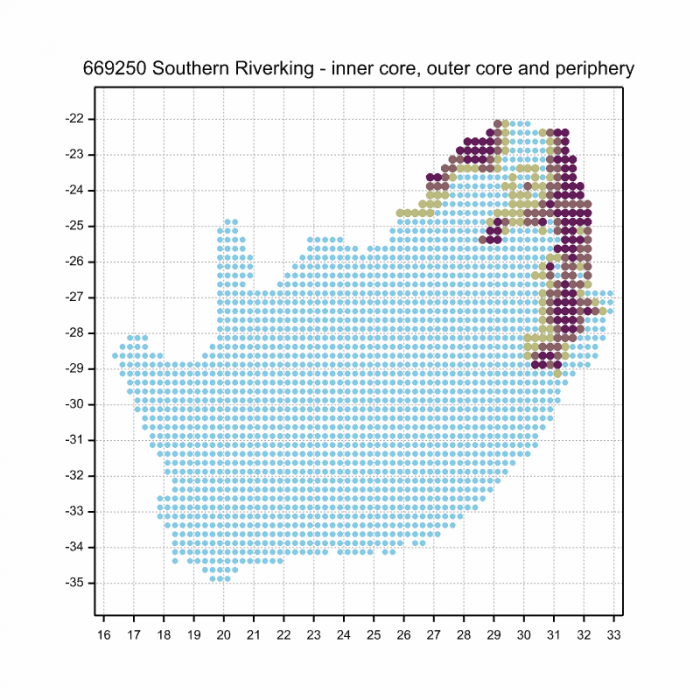
Below is a map showing the distribution of records in South Africa for the Southern Riverking. Taken from the OdonataMAP database as at February 2020.

Below is a map showing the distribution of records in South Africa for the Southern Riverking. Taken from the OdonataMAP database as of December 2024.

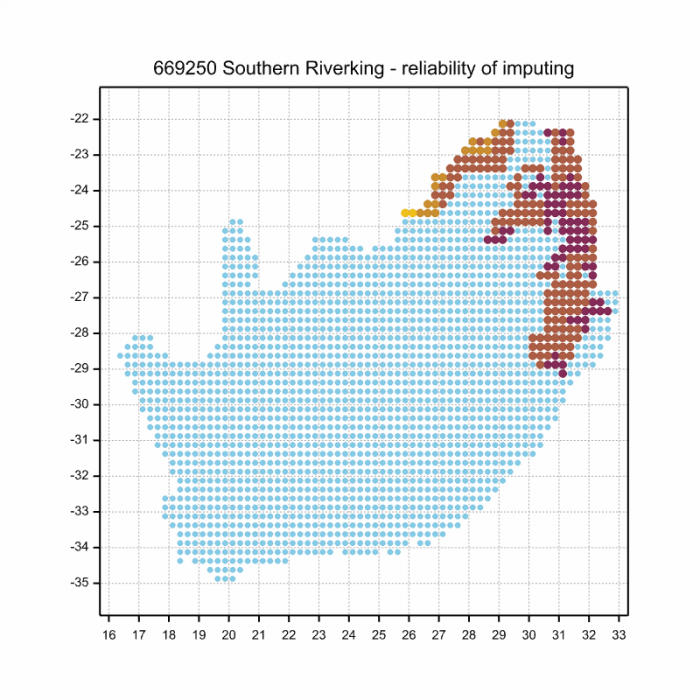
The next map below is an imputed map, produced by an interpolation algorithm, which attempts to generate a full distribution map from the partial information in the map above. This map will be improved by the submission of records to the OdonataMAP section of the Virtual Museum.

Ultimately we will produce a series of maps for all the odonata species in the region. The current algorithm is a new algorithm. The objective is mainly to produce “smoothed” maps that could go into a field guide for odonata. This basic version of the algorithm (as mapped above) does not make use of “explanatory variables” (e.g. altitude, terrain roughness, presence of freshwater — we will be producing maps that take these variables into account soon). Currently, it only makes use of the OdonataMAP records for the species being mapped, as well as all the other records of all other species. The basic maps are “optimistic” and will generally show ranges to be larger than what they probably are.

These maps use the data in the OdonataMAP section of the Virtual Museum, and also the database assembled by the previous JRS funded project, which was led by Professor Michael Samways and Dr KD Dijkstra.

Southern River King Zygonoides fuelleborni – Male
Mkuze River, KwaZulu-Natal
Photo by Ryan Tippett

Further Resources

The use of photographs by Niall Perrins is acknowledged. All other photographs by Ryan Tippett.

Southern River King Zygonoides fuelleborni (Grünberg, 1902)

Other common names: Robust Riverking ; Fuelleborn’s Spectacular (Alt. English); Krasse Bottelstert (Afrikaans)

Recommended citation format: Loftie-Eaton M; Navarro R; Tippett RM; Underhill L. 2025. Southern River King Zygonoides fuelleborni. Biodiversity and Development Institute. Available online at https://thebdi.org/2020/02/21/southern-riverking-zygonoides-fuelleborni/

References: Tarboton, M; Tarboton, W. (2019). A Guide to the Dragonflies & Damselflies of South Africa. Struik Nature.

Samways, MJ. (2008). Dragonflies and Damselflies of South Africa. Pensoft

Samways, MJ. (2016). Manual of Freshwater Assessment for South Africa: Dragonfly Biotic Index. Suricata 2. South African National Biodiversity Institute, Pretoria

Martens, A; Suhling, F. (2007). Dragonflies and Damselflies of Namibia. Gamsberg Macmillan.

Southern River King Zygonoides fuelleborni – Male
Amakhosi Game Reserve, KwaZulu-Natal
Photo by Ryan Tippett

Similar Species

Blue Cascader (Zygonyx natalensis)

Cover photo by Jean Hirons.

Find the Blue Cascader in the FBIS database (Freshwater Biodiversity Information System) here.

Family Libellulidae

Identification

Blue Cascader Zygonyx natalensis – Male
Mkuze River, KwaZulu-Natal
Photo by Ryan Tippett

Large size

Length up to 54mm; Wingspan reaches 86mm.

The Blue Cascader is most likely to be mistaken for one of the blue skimmers (Orthetrum spp.), which it resembles in general size, shape, and colour. Zygonyx natalensis can be easily differentiated by the distinct gap in pruinosity along its abdomen and by its metallic blue frons. In addition, the Blue Cascader demonstrates very different behaviour to all of the skimmers.

Females most resemble both sexes of Zygonyx torridus (Ringed Cascader). They differ mostly in the size and shape of the yellow markings along the abdomen. Female Blue Cascaders show smaller, thinner yellow markings.

Click here for more details on identification.

Blue Cascader Zygonyx natalensis – Female
Shayamoya Game Lodge, KwaZulu-Natal
Photo by Ryan Tippett

Habitat

The Blue Cascader inhabits rocky, fast-flowing streams and rivers. It is particularly fond of river stretches with ‘white water’ where there are rapids, cascades, and waterfalls. Females can sometimes be found some distance away from water in a variety of vegetation types. The Blue Cascader occupies rivers in the savanna, grassland, and fynbos regions.

Habitat – Kogelberg Nature Reserve, Western Cape
Photo by Sharon Stanton

Behaviour

Blue Cascader males are frequently seen patrolling a stretch of water or hovering low down over rapids and waterfalls. They regularly return to hover at a favourite site after inspecting a length of river. The Blue Cascader can sometimes be found away from water, hunting over surrounding habitats. The flight is swift and powerful. The Blue Cascader hunts on the wing and is not often seen perched. Females are seldom seen and spend most of their time away from water.

Blue Cascader Zygonyx natalensis – Male
Mkuze River, KwaZulu-Natal
Photo by Ryan Tippett

Status and Conservation

The Blue Cascader is locally common in South Africa. It is listed as of Least Concern in the IUCN Red List of Threatened Species. This species makes little use of man-made habitats other than artificial weirs that may simulate natural rapids and waterfalls. The Blue Cascader is reliant on healthy, flowing river systems.

Distribution

The Blue Cascader can be found over much of Sub-Saharan Africa, but is mostly recorded from Eastern and Southern Africa, ranging from Ethiopia to the Western Cape in South Africa.

Zygonyx natalensis is widespread in the northern and eastern parts of South Africa, where it is most numerous. Its range continues south to the Eastern and Western Cape, where it is more localised.

Blue Cascader Zygonyx natalensis – Female
Shayamoya Game Lodge, KwaZulu-Natal
Photo by Ryan Tippett

Below is a map showing the distribution of records for Blue Cascader in the OdonataMAP database as at February 2020.

Below is a map showing the distribution of records for Blue Cascader in the OdonataMAP database as of December 2024.

The next map below is an imputed map, produced by an interpolation algorithm, which attempts to generate a full distribution map from the partial information in the map above. This map will be improved by the submission of records to the OdonataMAP section of the Virtual Museum.

Ultimately we will produce a series of maps for all the odonata species in the region. The current algorithm is a new algorithm. The objective is mainly to produce “smoothed” maps that could go into a field guide for odonata. This basic version of the algorithm (as mapped above) does not make use of “explanatory variables” (e.g. altitude, terrain roughness, presence of freshwater — we will be producing maps that take these variables into account soon). Currently, it only makes use of the OdonataMAP records for the species being mapped, as well as all the other records of all other species. The basic maps are “optimistic” and will generally show ranges to be larger than what they probably are.

These maps use the data in the OdonataMAP section of the Virtual Museum, and also the database assembled by the previous JRS funded project, which was led by Professor Michael Samways and Dr KD Dijkstra.

Blue Cascader Zygonyx natalensis – Male
Mkuze River, KwaZulu-Natal
Photo by Marita Beneke

Further Resources

The use of photographs by Jean Hirons and Marita Beneke is acknowledged. All other photographs by Ryan Tippett.

Blue Cascader Zygonyx natalensis (Martin, 1900)

Other common names: Blouklatertjie (Afrikaans)

Recommended citation format: Loftie-Eaton M; Navarro R; Tippett RM; Underhill L. 2025. Blue Cascader Zygonyx natalensis. Biodiversity and Development Institute. Available online at https://thebdi.org/2020/02/20/blue-cascader-zygonyx-natalensis/

References: Tarboton, M; Tarboton, W. (2019). A Guide to the Dragonflies & Damselflies of South Africa. Struik Nature.

Samways, MJ. (2008). Dragonflies and Damselflies of South Africa. Pensoft

Samways, MJ. (2016). Manual of Freshwater Assessment for South Africa: Dragonfly Biotic Index. Suricata 2. South African National Biodiversity Institute, Pretoria

Martens, A; Suhling, F. (2007). Dragonflies and Damselflies of Namibia. Gamsberg Macmillan.

Similar Species

Ringed Cascader (Zygonyx torridus)

Cover photo by John Wilkinson.

Find the Ringed Cascader in the FBIS database (Freshwater Biodiversity Information System) here.

Family Libellulidae

Identification

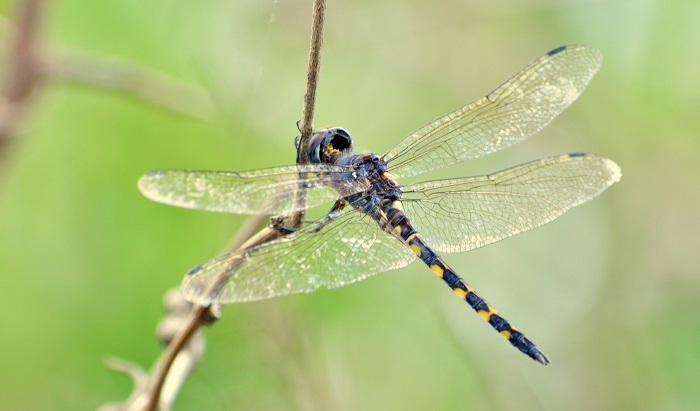
Ringed Cascader Zygonyx torridus – Male
Tswaing Nature Reserve, Gauteng
Photo by Gerhard Diedericks

Large size

Length up to 61mm; Wingspan attains 102mm.

The sexes are alike.

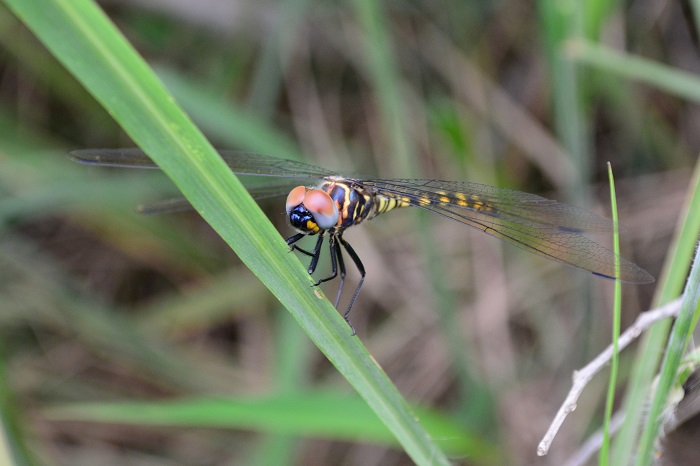
The Ringed Cascader is most similar to Zygonoides fuelleborni, the Southern Riverking. The two have similarly coloured and patterned abdomens. However, Zygonoides fuelleborni has blue rather than black eyes and a bulbous basal segment on the abdomen. The two species also display very different behaviour, making them easy to separate.

The Ringed Cascader could also be mistaken for a female Blue Cascader Zygonyx natalensis but that species shows far less yellow on the abdomen.

Click here for more details on identification.

Ringed Cascader Zygonyx torridus – Female
Kosi Bay, iSimangaliso Wetland Park, KwaZulu-Natal
Photo by Ryan Tippett

Habitat

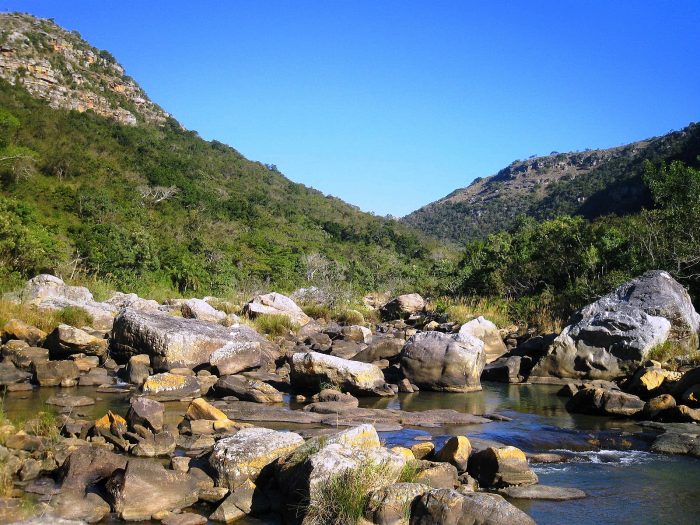
Their preferred habitat is that of rivers and streams in both open and wooded landscapes. The Ringed Cascader favours fast-flowing waters but also hunts over nearby still sections. The Ringed Cascader is most regular along rocky stretches of river, but is not limited by this. Individuals may sometimes be found far from water in the surrounding habitat.

Habitat – Oribi Gorge Nature Reserve, KwaZulu-Natal
Photo by Ryan Tippett

Behaviour

The Ringed Cascader is a strongly aerial species that spends long periods in flight, coursing up and down a chosen route. They are occasionally seen perched, hanging vertically with the wings outstretched. The Ringed Cascader can often be seen hovering over white water and has a great change of speed as it darts off to snatch prey or to chase off a rival. Females and immatures are regularly found away from water in the surrounding woodlands.

The Ringed Cascader is on the wing from September to May.

Ringed Cascader Zygonyx torridus – Male
Mseleni River, KwaZulu-Natal
Photo by Ryan Tippett

Status and Conservation

The Ringed Cascader is locally common. It is listed as of Least Concern in the IUCN Red List of Threatened Species. Zygonyx torridus makes little use of man-made habitats as it is reliant on flowing rivers. It is, however, a fairly hardy species that can inhabit somewhat degraded rivers provided its habitat requirements are met.

Ringed Cascader Zygonyx torridus – Male
Mkuze Game Reserve, KwaZulu-Natal
Photo by Ryan Tippett

Distribution

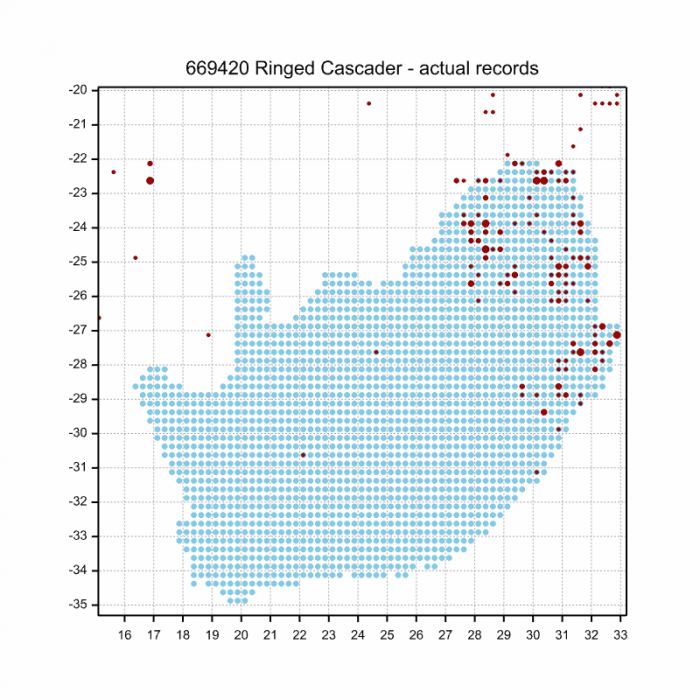
The Ringed Cascader is a very widespread species. Zygonyx torridus is found throughout most of Sub-Saharan Africa and also occurs in southern Europe, parts of the Middle East and western Asia.

In Africa it is only absent from the arid and semi-arid regions that lack perennial, flowing rivers and streams.

The South African distribution is mostly confined to the North and East where it is widespread.

Ringed Cascader Zygonyx torridus – Immature male
Amakhosi Game Reserve, KwaZulu-Natal
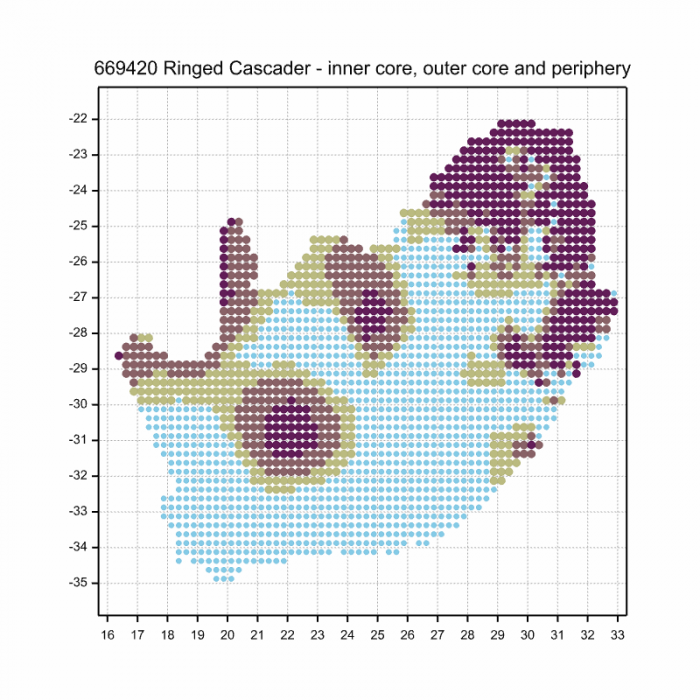
Photo by Ryan Tippett

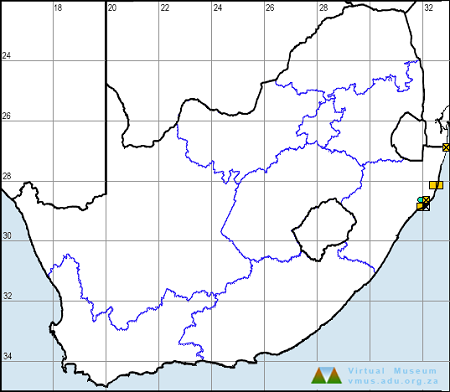
Below is a map showing the distribution of records for Ringed Cascader in the OdonataMAP database as at February 2020.

Below is a map showing the distribution of records for Ringed Cascader in the OdonataMAP database as of December 2024.

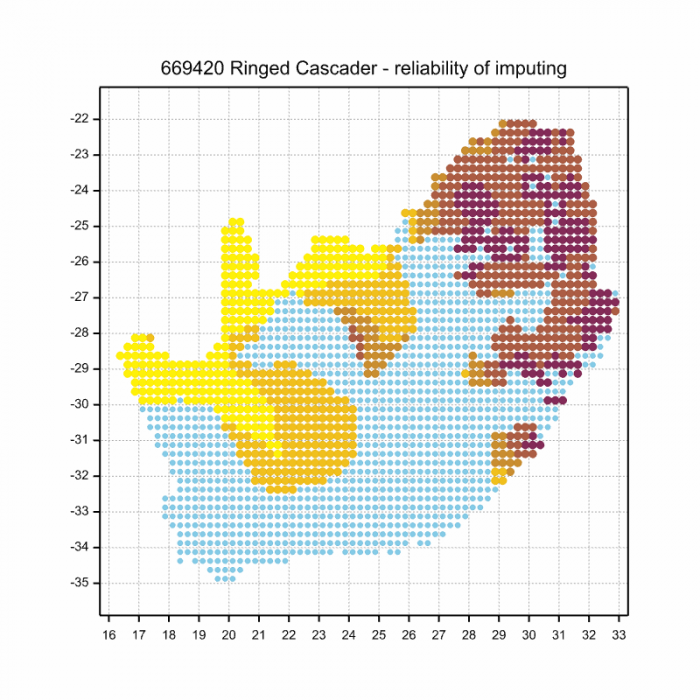
The next map below is an imputed map, produced by an interpolation algorithm, which attempts to generate a full distribution map from the partial information in the map above. This map will be improved by the submission of records to the OdonataMAP section of the Virtual Museum.

Ultimately we will produce a series of maps for all the odonata species in the region. The current algorithm is a new algorithm. The objective is mainly to produce “smoothed” maps that could go into a field guide for odonata. This basic version of the algorithm (as mapped above) does not make use of “explanatory variables” (e.g. altitude, terrain roughness, presence of freshwater — we will be producing maps that take these variables into account soon). Currently, it only makes use of the OdonataMAP records for the species being mapped, as well as all the other records of all other species. The basic maps are “optimistic” and will generally show ranges to be larger than what they probably are.

These maps use the data in the OdonataMAP section of the Virtual Museum, and also the database assembled by the previous JRS funded project, which was led by Professor Michael Samways and Dr KD Dijkstra.

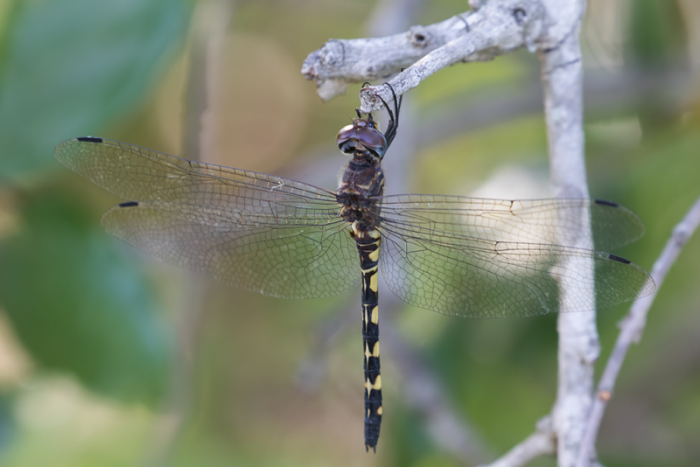
Ringed Cascader Zygonyx torridus – Male
Photo by Gregg Darling

Further Resources

The use of photographs by Gerhard Diedericks, Gregg Darling, and John Wilkinson is acknowledged. All other photographs by Ryan Tippett.

Ringed Cascader Zygonyx torridus (Kirby, 1889)

Other common names: Kringklatertjie (Afrikaans)

Recommended citation format: Loftie-Eaton M; Navarro R; Tippett RM; Underhill L. 2025. Ringed Cascader Zygonyx torridus. Biodiversity and Development Institute. Available online at https://thebdi.org/2020/02/19/ringed-cascader-zygonyx-torridus/

References: Tarboton, M; Tarboton, W. (2019). A Guide to the Dragonflies & Damselflies of South Africa. Struik Nature.

Samways, MJ. (2008). Dragonflies and Damselflies of South Africa. Pensoft

Samways, MJ. (2016). Manual of Freshwater Assessment for South Africa: Dragonfly Biotic Index. Suricata 2. South African National Biodiversity Institute, Pretoria

Martens, A; Suhling, F. (2007). Dragonflies and Damselflies of Namibia. Gamsberg Macmillan.

Ringed Cascader Zygonyx torridus – Larval shedding
Kosi Bay, iSimangaliso Wetland Park, KwaZulu-Natal
Photo by Ryan Tippett

Similar Species

Smoky Duskdarter (Zyxomma atlanticum)

Cover photo by Richard Johnstone.

Find the Smoky Duskdarter in the FBIS database (Freshwater Biodiversity Information System) here.

Family Libellulidae

Identification

Smoky Duskdarter Zyxomma atlanticum – Male
Enseleni Nature Reserve, KwaZulu-Natal
Photo by Diana Russell
Inset images by Kate Braun

Medium sized

Length up tp 47mm; Wingspan attains 72mm.

The Smoky Duskdarter most closely resembles Gynacantha usambarica (Eastern Duskhawker). The Smoky Duskdarter is easily told apart by its far smaller size, different wing venation and by its large green eyes that have three rows of thin brown across the top.

Click here for more details on identification of the Smoky Duskdarter.

Habitat

The Smoky Duskdarter inhabits subtropical or tropical moist lowland forests and shrub-dominated wetlands. In South Africa it occurs mainly in lush swamp forests along the northern KwaZulu-Natal coast.

Typical habitat –
Kosi Bay, iSimangaliso Wetland Park, KwaZulu-Natal
Photo by Lauren Arnold

Behaviour

The Smoky Duskdarter is Crepuscular, being most active at dusk but is also active during humid, overcast conditions. It hunts by coursing low over tree-covered water bodies.The Smoky Duskdarter rests by day in the deep shade of dense undergrowth. It hangs vertically when perched.

The Smoky Duskdarter is on the wing from December to April.

Status and Conservation

Zyxomma atlanticum is scarce and highly localised in South Africa. It is listed as of Least Concern in the IUCN Red List of Threatened Species.

Distribution

The Smoky Duskdarter is most widespread in the forested regions of West and Central Africa. It also occurrs locally along the south-east African coast in southern Mozambique and far north-eastern South Africa, where it ranges from Kosi Bay down to Richards Bay.

Below is a map showing the distribution of records for Smoky Duskdarter in the OdonataMAP database as at February 2020.

Below is a map showing the distribution of records for Smoky Duskdarter in the OdonataMAP database as of December 2024.

The next map below is an imputed map, produced by an interpolation algorithm, which attempts to generate a full distribution map from the partial information in the map above. This map will be improved by the submission of records to the OdonataMAP section of the Virtual Museum.

Ultimately we will produce a series of maps for all the odonata species in the region. The current algorithm is a new algorithm. The objective is mainly to produce “smoothed” maps that could go into a field guide for odonata. This basic version of the algorithm (as mapped above) does not make use of “explanatory variables” (e.g. altitude, terrain roughness, presence of freshwater — we will be producing maps that take these variables into account soon). Currently, it only makes use of the OdonataMAP records for the species being mapped, as well as all the other records of all other species. The basic maps are “optimistic” and will generally show ranges to be larger than what they probably are.

These maps use the data in the OdonataMAP section of the Virtual Museum, and also the database assembled by the previous JRS funded project, which was led by Professor Michael Samways and Dr KD Dijkstra.

Smoky Duskdarter Zyxomma atlanticum
Photo by Kate Braun

Further Resources

The use of photographs by Diana Russell, Lauren Arnold, and Richard Johnstone is acknowledged.

Smoky Duskdarter Zyxomma atlanticum Selys, 1889

Other Common Names: Donkerskemerwerper (Afrikaans).

Recommended citation format: Loftie-Eaton M; Navarro R; Tippett RM; Underhill L. 2025. Smoky Duskdarter Zyxomma atlanticum. Biodiversity and Development Institute. Available online at https://thebdi.org/2020/02/18/smoky-duskdarter-zyxomma-atlanticum/

References: Tarboton, M; Tarboton, W. (2019). A Guide to the Dragonflies & Damselflies of South Africa. Struik Nature.

Samways, MJ. (2008). Dragonflies and Damselflies of South Africa. Pensoft

Samways, MJ. (2016). Manual of Freshwater Assessment for South Africa: Dragonfly Biotic Index. Suricata 2. South African National Biodiversity Institute, Pretoria

Similar Species

Smoky Spreadwing (Lestes virgatus)

Cover photo by Rob Dickinson.

Find the Smoky Spreadwing in the FBIS (Freshwater Biodiversity Information System) here.

Family Lestidae

Identification

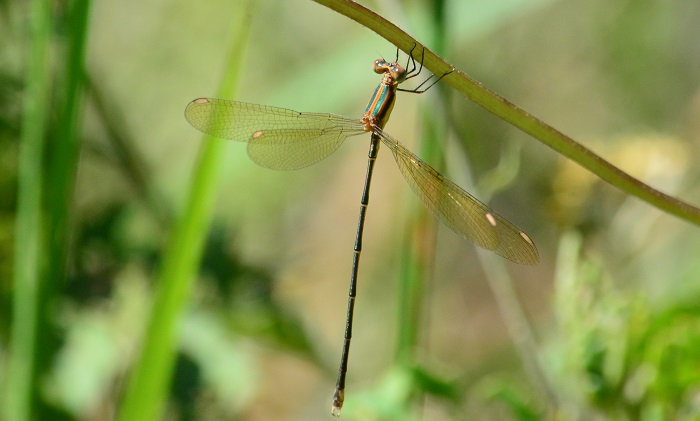
Smoky Spreadwing Lestes virgatus – Male
False Bay, iSimangaliso Wetland Park, KwaZulu-Natal
Photo by Ryan Tippett

Medium sized

Length up to 49mm; Wingspan attains 58mm.

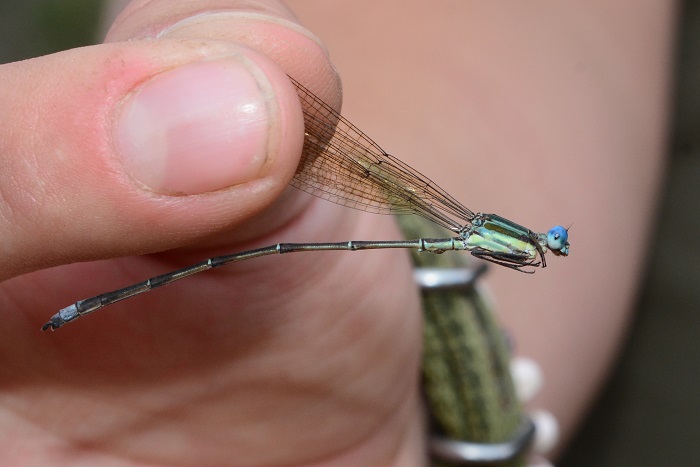
The Smoky Spreadwing most resembles Lestes plagiatus (Highland Spreadwing). The Smoky Spreadwing can be differentiated from other Spreadwings by the bronze-green thorax stripes, swollen pterostigmas with dark outlines, and smoky yellow wings. Older individuals become progressively darker and develop a bronzy colouration.

Females are similar but are duller. They have more robust abdomens than the males, and lack the pruinose terminal segments and the distinctive claspers.

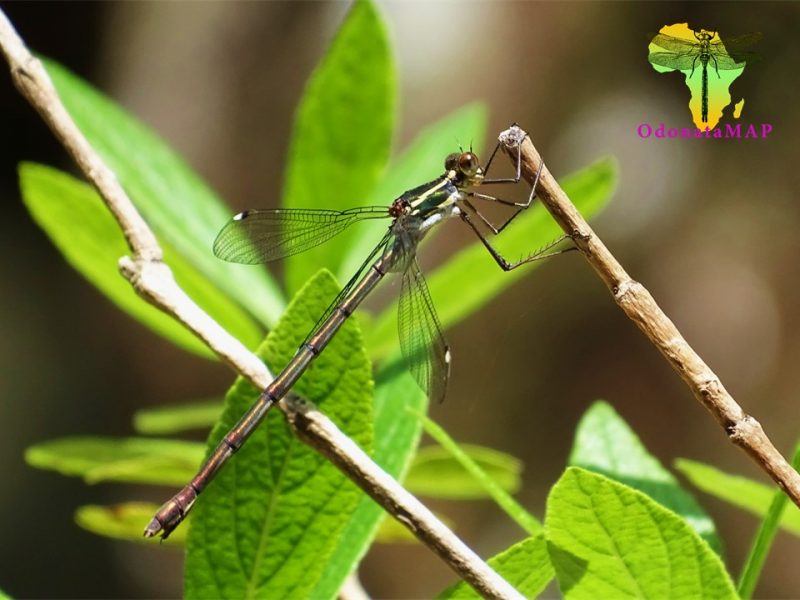
The Smoky Spreadwing could also be confused with a Malachite (Chlorolestes spp.), but can be immediately recognised by its Blue eyes (Malachites have green or brownish eyes), and pale-centered pterostigmas.

Click here for more details on identification.

Smoky Spreadwing Lestes virgatus – Male
Near Ixopo, KwaZulu-Natal
Photo by Ryan Tippett

Habitat

The Smoky Spreadwing occurs at well-vegetated pans, pools, and marshes with forested or wooded fringes and emergent plant growth. It favours ponds with rich vegetation, particularly tall grasses, and forbs. The Smoky Spreadwing frequents areas of high rainfall above 700mm per year. It is found up to 1600m above sea level.

Habitat – Well vegetated pond with well wooded fringes.
Near Hluhluwe, KwaZulu-Natal
Photo by Ryan Tippett

Behaviour

The Smoky Spreadwing hangs vertically from a grass or reed stem when at rest. It spends long periods perched and is generally sluggish and unwilling to fly. The females can be found alongside the males.

The Smoky Spreadwing is most active from late September to May, but flies all year at some sites (See Phenology below).

Smoky Spreadwing Lestes virgatus – Male
Ehlatini Bush Camp, KwaZulu-Natal
Photo by Ryan Tippett

Status and Conservation

Lestes virgatus is locally common over most of its range. It is listed as of Least Concern in the IUCN Red List of Threatened Species. The Smoky Spreadwing is moderately sensitive to habitat degradation and commonly occurs at suitable man-made habitats.

Smoky Spreadwing Lestes virgatus – Male
Near Ixopo, KwaZulu-Natal
Photo by Ryan Tippett

Distribution

The Smoky Spreadwing is native to much of Southern and Eastern Africa, where it is widespread. It extends from Ethiopia in the north down South Africa. There is also a seemingly isolated population in Nigeria. In South Africa, the Smoky Spreadwing occurs in the northern and eastern parts, as well as along the coast where it is warmer.

Smoky Spreadwing Lestes virgatus – Male
Ehlatini Bush Camp, KwaZulu-Natal
Photo by Ryan Tippett

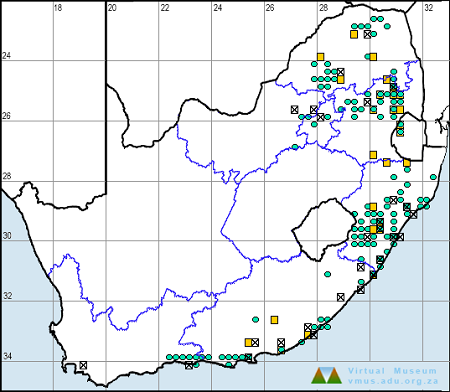
Below is a map showing the distribution of records for Smoky Spreadwing in the OdonataMAP database as at February 2020.

Below is a map showing the distribution of records for Smoky Spreadwing in the OdonataMAP database as of December 2024.

The next map below is an imputed map, produced by an interpolation algorithm, which attempts to generate a full distribution map from the partial information in the map above. This map will be improved by the submission of records to the OdonataMAP section of the Virtual Museum.

Ultimately we will produce a series of maps for all the odonata species in the region. The current algorithm is a new algorithm. The objective is mainly to produce “smoothed” maps that could go into a field guide for odonata. This basic version of the algorithm (as mapped above) does not make use of “explanatory variables” (e.g. altitude, terrain roughness, presence of freshwater — we will be producing maps that take these variables into account soon). Currently, it only makes use of the OdonataMAP records for the species being mapped, as well as all the other records of all other species. The basic maps are “optimistic” and will generally show ranges to be larger than what they probably are.

These maps use the data in the OdonataMAP section of the Virtual Museum, and also the database assembled by the previous JRS funded project, which was led by Professor Michael Samways and Dr KD Dijkstra.

Smoky Spreadwing Lestes virgatus – Male
Photo by Jean Hirons

Phenology

Smoky Spreadwing Lestes virgatus – Young male
Mtunzini, KwaZulu-Natal
Photo by Ryan Tippett

Further Resources

The use of photographs by Jean Hirons and Rob Dickinson is acknowledged. All other photographs by Ryan Tippett.

Smoky Spreadwing Lestes virgatus (Burmeister, 1839)

Other common names: Rookspanvlerkie (Afrikaans)

Recommended citation format: Loftie-Eaton M; Navarro R; Tippett RM; Underhill L. 2025. Smoky Spreadwing Lestes virgatus. Biodiversity and Development Institute. Available online at https://thebdi.org/2020/02/13/smoky-spreadwing-lestes-virgatus/

References: Tarboton, M; Tarboton, W. (2019). A Guide to the Dragonflies & Damselflies of South Africa. Struik Nature.

Samways, MJ. (2008). Dragonflies and Damselflies of South Africa. Pensoft

Samways, MJ. (2016). Manual of Freshwater Assessment for South Africa: Dragonfly Biotic Index. Suricata 2. South African National Biodiversity Institute, Pretoria

Martens, A; Suhling, F. (2007). Dragonflies and Damselflies of Namibia. Gamsberg Macmillan.

Smoky Spreadwing Lestes virgatus – Male
Hluhluwe district, KwaZulu-Natal
Photo by Ryan Tippett

Similar Species

Drakensberg Malachite (Chlorolestes draconicus)

Cover photo by Riëtte Griesel.

Find the Drakensberg Malachite in the FBIS database (Freshwater Biodiversity Information System) here.

Family Synlestidae

Identification

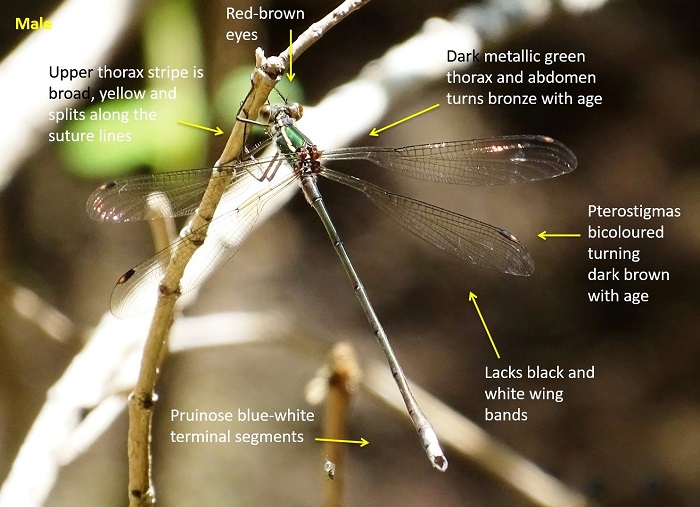
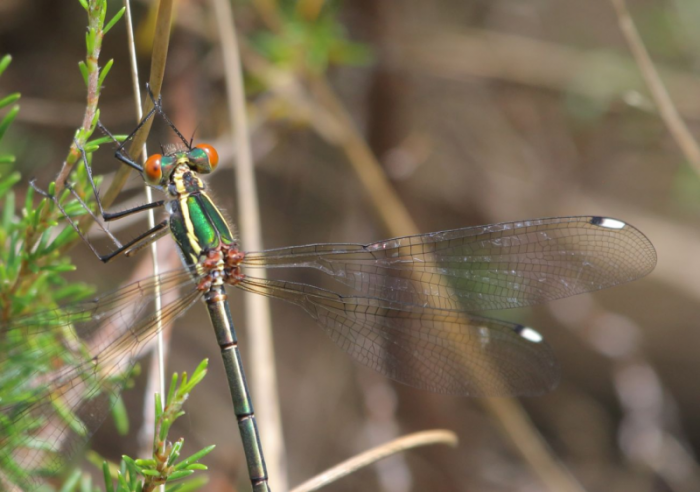
Drakensberg Malachite Chlorolestes draconicus – Male
Royal Natal National Park, KwaZulu-Natal
Photo by Riëtte Griesel

Large size

Length up to 59mm; Wingspan attains 76mm.

Within its restricted range Chlorolestes draconicus can only be mistaken for Chlorolestes fasciatus (Mountain Malachite). However, the Drakensberg Malachite is larger and there is virtually no size overlap between the two species. The two can be further differentiated by the yellow stripes on the upper thorax. This stripe is narrow in the Mountain Malachite and does not reach the wing bases. The stripes are broad and extend to the wing bases in the Drakensberg Malachite. In addition the Drakensberg Malachite does not have a form with black and white banded wings.

Click here for more details on identification.

Habitat

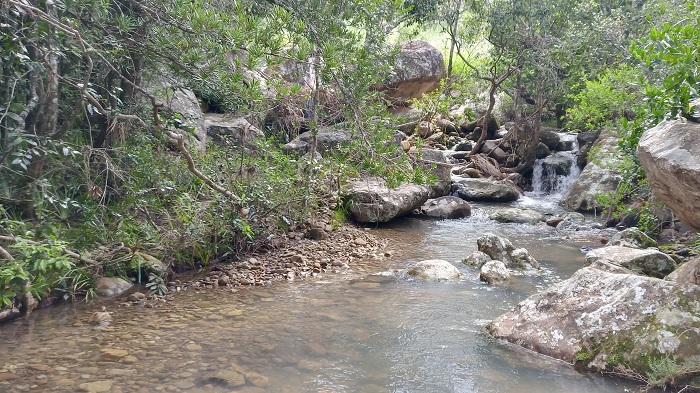
The Drakensberg Malachite frequents rocky streams with pools in high mountainous areas. The streams they inhabit are fringed by boulders, sedges, tall grass, and bushes. The Drakensberg Malachite also occurs along forested streams in protected ravines. The Drakensberg Malachite is only found above 1700m above sea level and is likely to occur to over 3000m.

Habitat at Royal Natal National Park, KwaZulu-Natal
Photo by Ryan Tippett

Behaviour

The Drakensberg Malachite is most often seen sitting on vegetation over the water, typically with wings outstretched. Also regularly perches on rocks in the stream. The Drakensberg Malachite spends much of its time perched but occasionally takes flight to capture prey or to find another perch. The Drakensberg Malachite feeds on small flying insects.

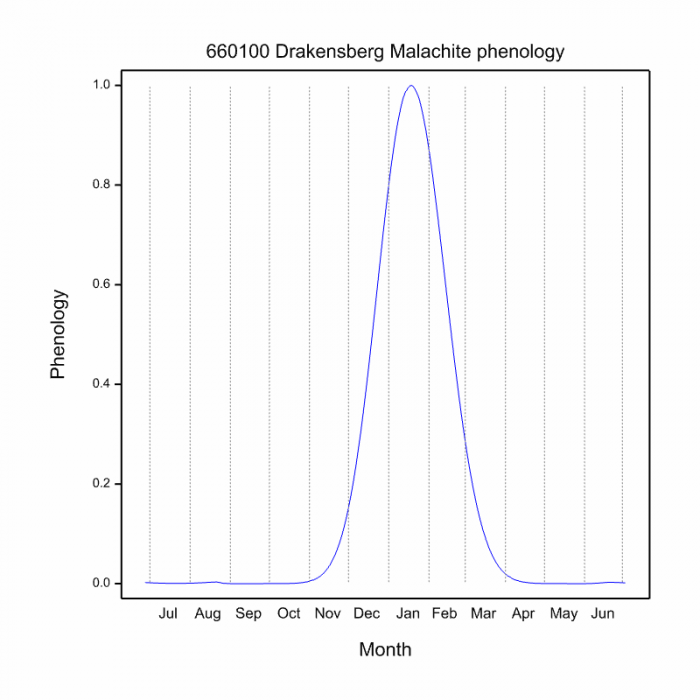
The Drakensberg Malachite is on the wing from December to March (See Phenology below).

Status and Conservation

The Drakensberg Malachite is uncommon and localised. Much of its range is protected within the uKhahlamba / Drakensberg Park. As a result the Drakensberg Malachite’s conservation status has been assessed as Least Concern in the IUCN Red List of Threatened Species.

Distribution

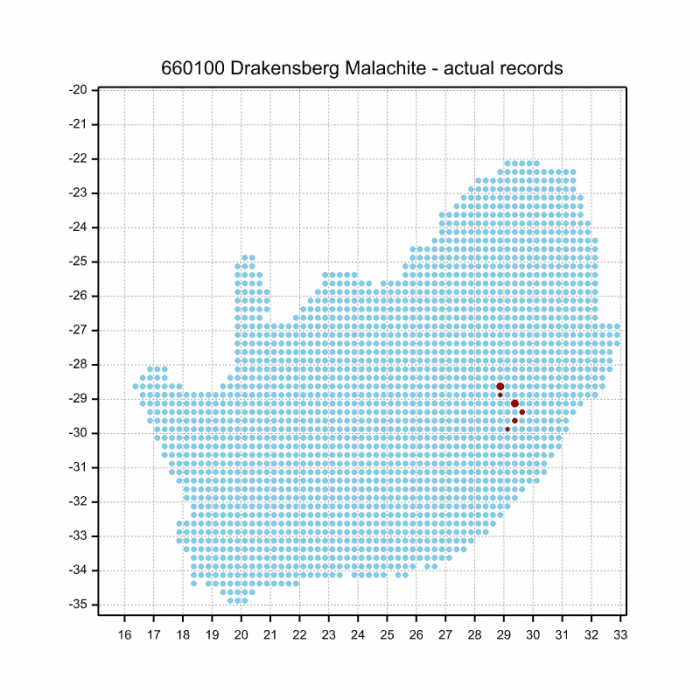
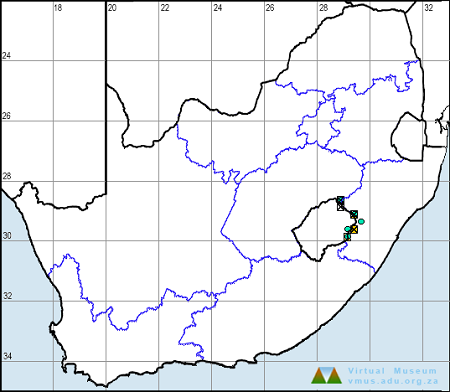
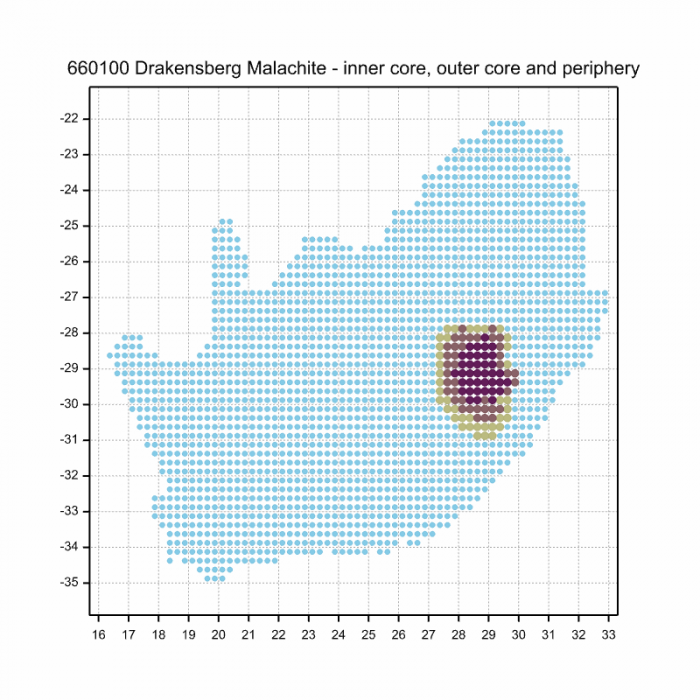
The Drakensberg Malachite is endemic to South Africa and Lesotho. This species has a restricted range in the Drakensberg Mountains.

Below is a map showing the distribution of records for Drakensberg Malachite in the OdonataMAP database as at February 2020.

Below is a map showing the distribution of records for Drakensberg Malachite in the OdonataMAP database as of December 2024.

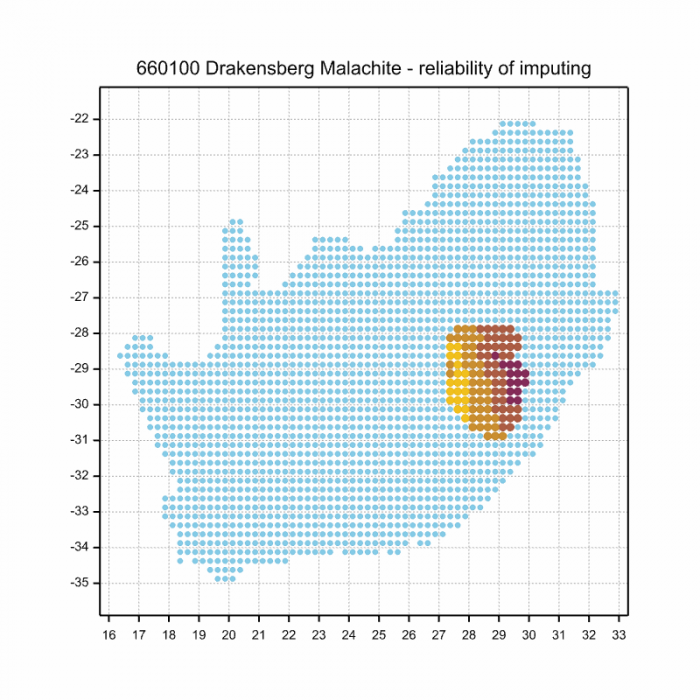
The next map below is an imputed map, produced by an interpolation algorithm, which attempts to generate a full distribution map from the partial information in the map above. This map will be improved by the submission of records to the OdonataMAP section of the Virtual Museum.

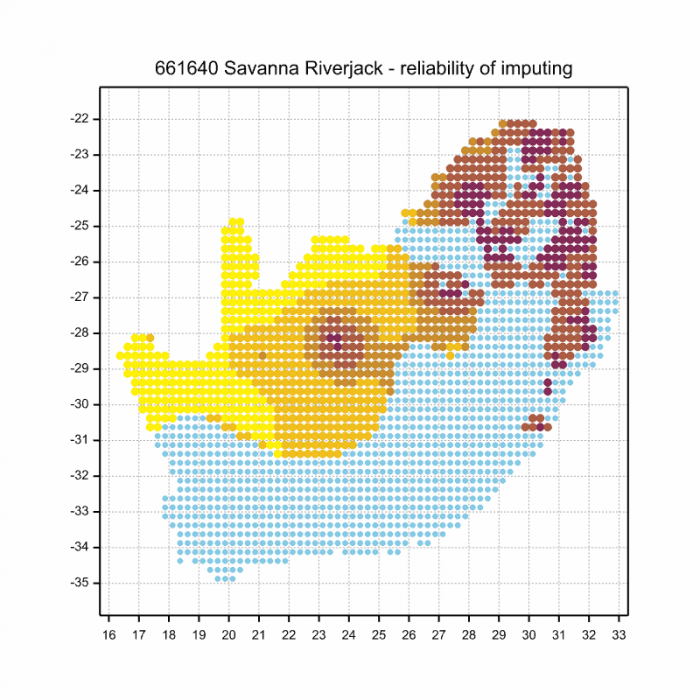
Ultimately we will produce a series of maps for all the odonata species in the region. The current algorithm is a new algorithm. The objective is mainly to produce “smoothed” maps that could go into a field guide for odonata. This basic version of the algorithm (as mapped above) does not make use of “explanatory variables” (e.g. altitude, terrain roughness, presence of freshwater — we will be producing maps that take these variables into account soon). Currently, it only makes use of the OdonataMAP records for the species being mapped, as well as all the other records of all other species. The basic maps are “optimistic” and will generally show ranges to be larger than what they probably are.

These maps use the data in the OdonataMAP section of the Virtual Museum, and also the database assembled by the previous JRS funded project, which was led by Professor Michael Samways and Dr KD Dijkstra.

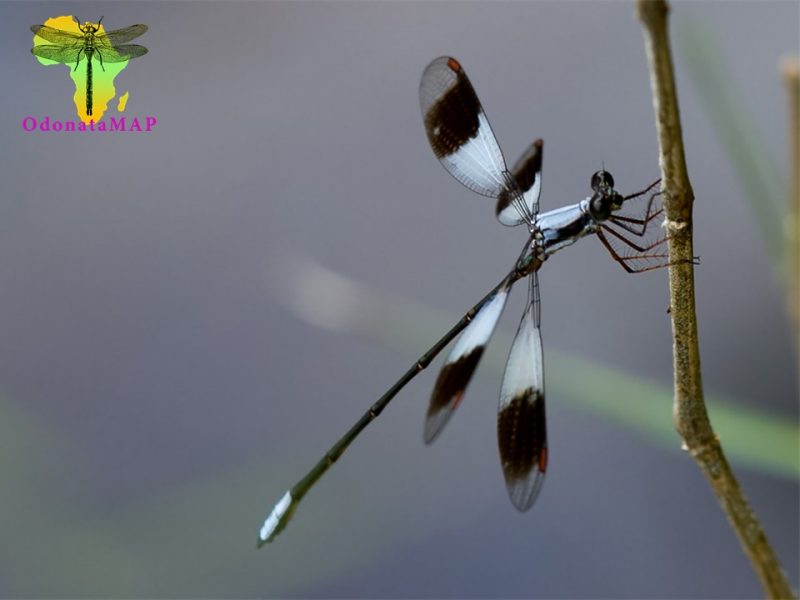
Drakensberg Malachite Chlorolestes draconicus
Photo by Alan Manson

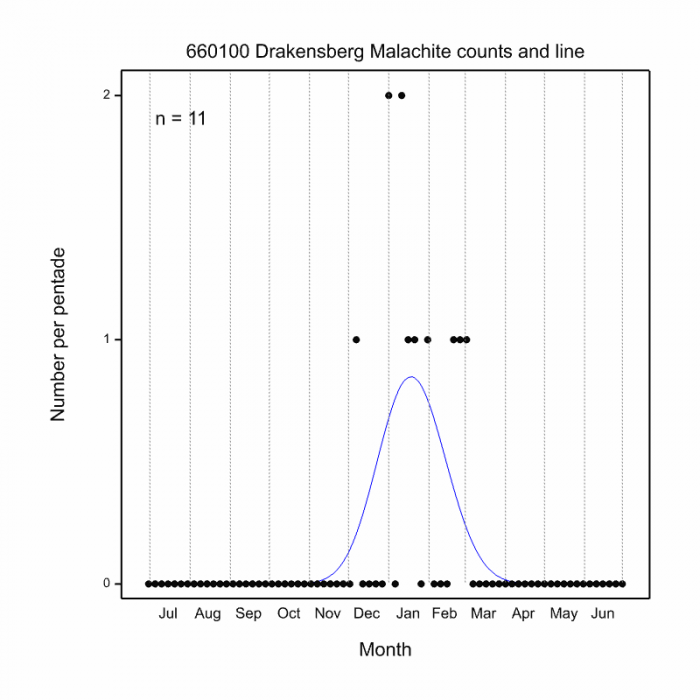
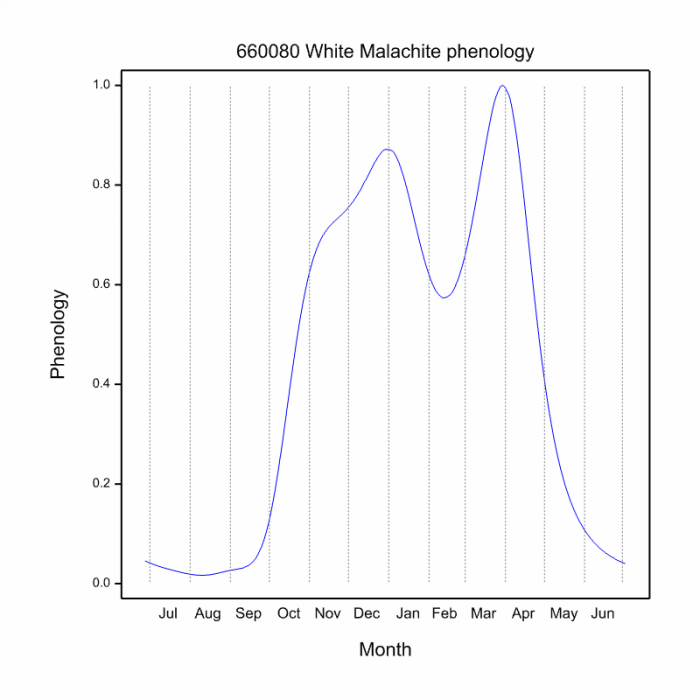
The next two graphs shows how the occurrence of Drakensberg Malachites varies within the year, i.e. the phenology. There are only 11 records in the database for this species, so these results need to be treated cautiosly. The first plot shows the number of records in each pentade, five-day periods, which start on 1 July and end on 30 June the following year. There are two pentades with two records, in December-Janaury. The blue line is generated by a smoother, an algorithm which aims to separate the “signal” from the “noise”, and shows the pattern of seasonality for this species. The second plot shows only the blue line, and it is scaled to lie between zero and one, for easy comparison between species.

Phenology

This phenology plot for the Drakensberg Malachite is tentative (because the sample size is extremely small, only 11 records. It suggests a flight period from December to March. This is a species for which the quality of the phenology plot would be greatly improved by obtaining more OdonataMAP records.

Further Resources

The use of photographs by Alan Manson and Riëtte Griesel is acknowledged.

Drakensberg Malachite Chlorolestes draconicus Balinsky, 1956

Other common names: Drakensbergmalagiet (Afrikaans).

Recommended citation format: Loftie-Eaton M; Navarro R; Tippett RM; Underhill L. 2025. Drakensberg Malachite Chlorolestes draconicus. Biodiversity and Development Institute. Available online at https://thebdi.org/2020/02/12/drakensberg-malachite-chlorolestes-draconicus/

References: Tarboton, M; Tarboton, W. (2019). A Guide to the Dragonflies & Damselflies of South Africa. Struik Nature.

Samways, MJ. (2008). Dragonflies and Damselflies of South Africa. Pensoft

Samways, MJ. (2016). Manual of Freshwater Assessment for South Africa: Dragonfly Biotic Index.Suricata 2. South African National Biodiversity Institute, Pretoria

Similar Species

White Malachite (Chlorolestes umbratus)

Cover photo by Desire Darling.

Find the White Malachite in the FBIS database (Freshwater Biodiversity Information System) here.

Family Synlestidae

Identification

White Malachite Chlorolestes umbratus – Male
Nature’s Valley, Western Cape
Photo by Andre Marais

Medium Sized

Length reaches 47 mm; Wingspan can attain 52 mm

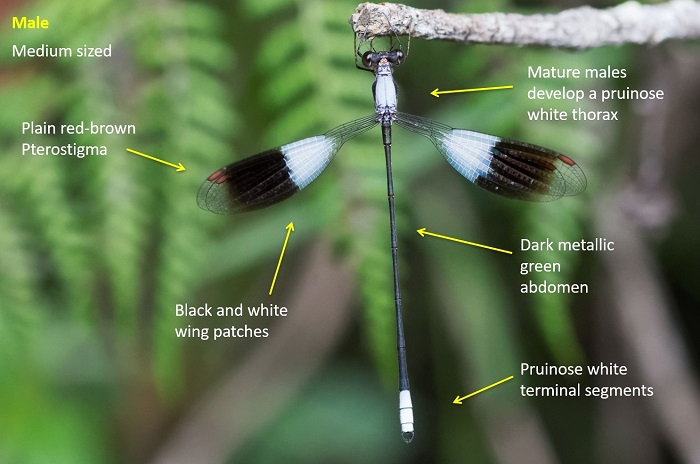
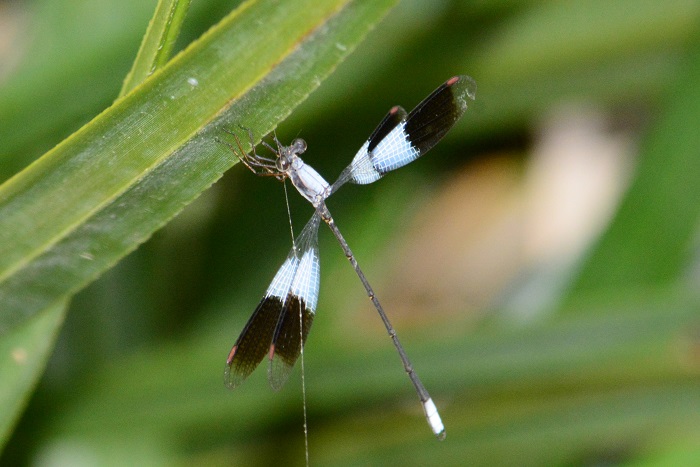
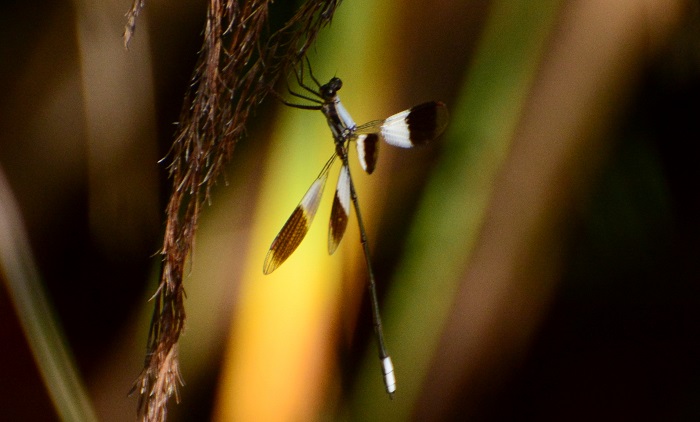
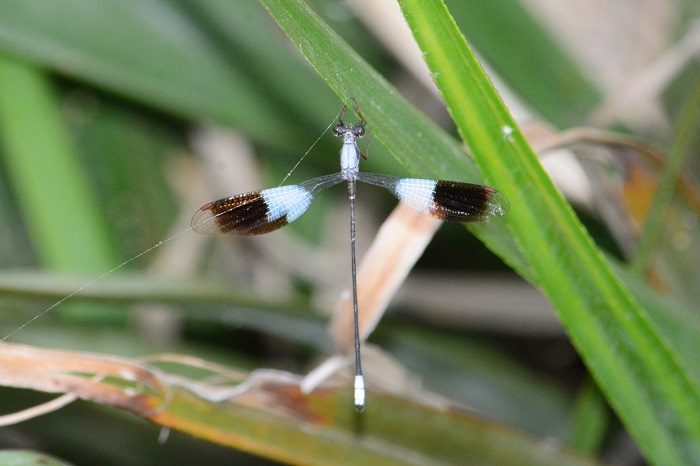
The mature male White Malachite develops a whitish pruinose bloom on the upper thorax. They also possess smoky-black and white wing bands. Non-pruinose males and females have a metallic-green or brown thorax and abdomen. The thorax sides have yellow antehumeral stripes. These individuals are perhaps most similar to Chlorolestes conspicuus, but that species is much larger, and there is no overlap in size.

Both sexes are distinguished from other Chlorolestes by their small size, uniformly coloured pterostigmas and wing venation.

Click here for more details on identification.

Habitat

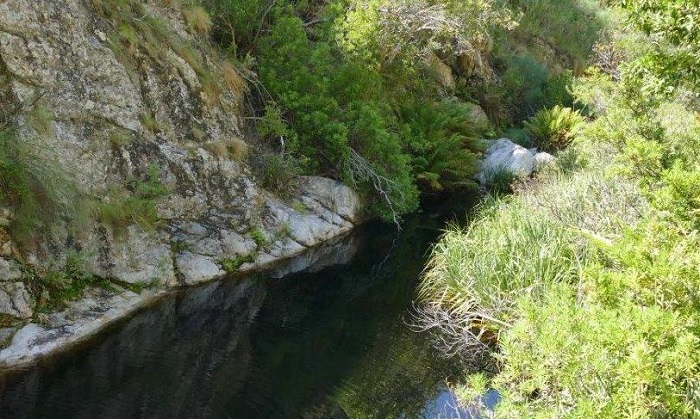
The White Malachite is common along forested streams and rivers. It favours areas of shade and dappled light. It also occurs at well-vegetated streams in fynbos environments. The White Malachite is usually seen perched over pools and calm sections of water.

Habitat – Vogelgat, Western Cape
Photo by Sharon Stanton

Behaviour

The White Malachite is an attractive species, mostly seen hanging from plants over the water. Mature males are conspicuous in the dappled forest light. The White Malachite is seldom seen away from water. Females are found in the same vicinity as the males, but are less conspicuous.

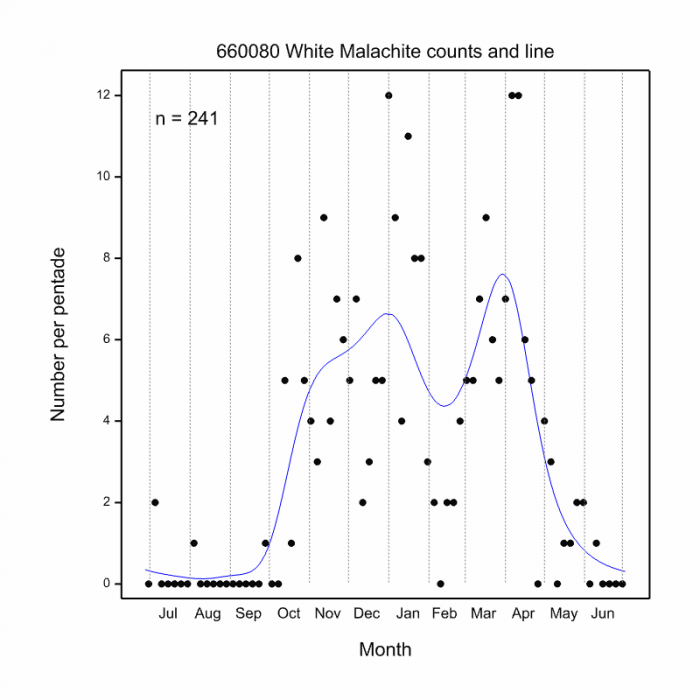
The White Malachite is active from September to May (see Phenology below).

White Malachite Chlorolestes umbratus – Male
Grootrivier, Western Cape
Photo by Ryan Tippett

Status and Conservation

Chlorolestes umbratus is a fairly common but localised species. Listed as of Least Concern in the IUCN Red List of Threatened Species. It is moderately sensitive to habitat damage.

Distribution

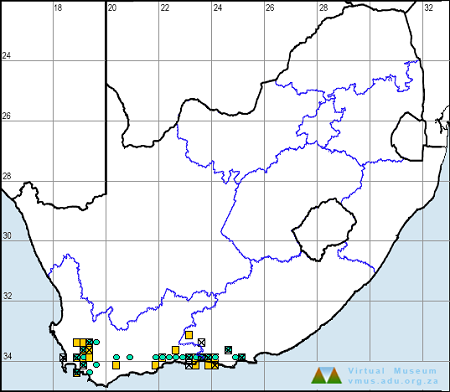
The White Malachite is endemic to the Western and Eastern Cape provinces in South Africa.

White Malachite Chlorolestes umbratus – Male
Marloth Nature Reserve, Western Cape
Photo by Ryan Tippett

The map below shows the distribution of records for Chlorolestes umbratus in the OdonataMAP database, as at January 2020.

The map below shows the distribution of records for Chlorolestes umbratus in the OdonataMAP database, as of December 2024.

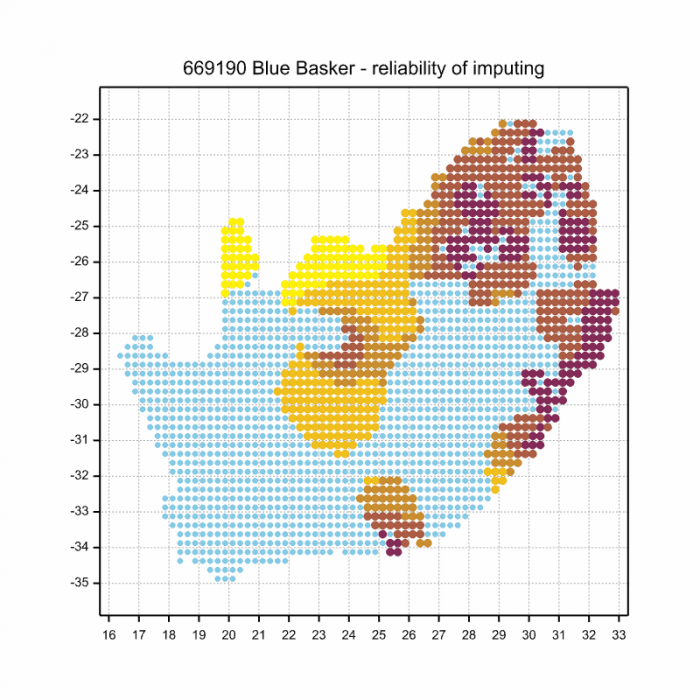
The following map below is an imputed map, produced by an interpolation algorithm, which attempts to generate a full distribution map from the partial information in the map above. This map will be improved by the submission of records to the OdonataMAP section of the Virtual Museum

Ultimately, we will produce a series of maps for all the odonata species in the region. The current algorithm is a new algorithm. The objective is mainly to produce “smoothed” maps that could go into a field guide for odonata. This basic version of the algorithm (as mapped above) does not make use of “explanatory variables” (e.g. altitude, terrain roughness, presence of freshwater — we will be producing maps that take these variables into account soon). Currently, it only makes use of the OdonataMAP records for the species being mapped, as well as all the other records of all other species. The basic maps are “optimistic” and will generally show ranges to be larger than what they probably are.

These maps use the data in the OdonataMAP section of the Virtual Museum, and also the database assembled by the previous JRS funded project, which was led by Professor Michael Samways and Dr KD Dijkstra.

Phenology

White Malachite Chlorolestes umbratus – Male
Grootrivier, Western Cape
Photo by Ryan Tippett
Further Resources

The use of photographs by Alan Manson and Jean Hirons is acknowledged. Other Photographs by Ryan Tippett.

White Malachite Chlorolestes umbratus Hagen in Selys, 1862

Other common names: Bleekmalagiet (Afrikaans).

Recommended citation format: Loftie-Eaton M; Navarro R; Tippett RM; Underhill L. 2025. White Malachite Chlorolestes umbratus. Biodiversity and Development Institute. Available online at https://thebdi.org/2020/02/11/white-malachite-chlorolestes-umbratus/
References: Tarboton, M; Tarboton, W. (2019). A Guide to the Dragonflies & Damselflies of South Africa. Struik Nature.

Samways, MJ. (2008). Dragonflies and Damselflies of South Africa. Pensoft

Samways, MJ. (2016). Manual of Freshwater Assessment for South Africa: Dragonfly Biotic Index.Suricata 2. South African National Biodiversity Institute, Pretoria

Similar Species

OdonataMAP Report for 2019

OdonataMAP is the Atlas of African Odonata and forms part of the Virtual Museum. OdonataMAP was launched in 2010. The first record was uploaded into the database on 22 September 2010. At its starting point the project described itself as a section of the Virtual Museum which aimed (1) “to map the current distribution of the insect Order Odonata, i.e. dragonflies and damselflies, occurring in Africa” and (2) “to serve as a repository of all existing distribution data for this group.”

OdonataMAP provides an atlas of the up-to-date distributions of the dragonflies and damselflies, which is a critical component of addressing their own conservation priorities, and also the conservation of freshwater ecosystems. The project provides a valuable input to the Red List status of each species. Besides the distribution maps, OdonataMAP aims to make a contribution to understanding the seasonal phenology of these species. Documenting and quantifying changes in seasonality are a critical component of understanding the impacts of climate change on biodiversity

Monthly data uploads to OdonataMAP by year. 2019 is represented by the light purple line

Although filled with challenges, like an ongoing drought throughout most parts of South Africa, 2019 was a good year for OdonataMAP. OdonataMAPpers submitted a total of 19,119 records to the Virtual Museum. And thanks to the amazing members of the OdonataMAP expert panel, 99% of the records have been identified already. Below is a map of Africa, and South Africa, showing the locations (grid cells) of the OdonataMAP data submitted during 2019

OdonataMAP data submissions for Africa for 2019

OdonataMAP data submissions for South Africa, Lesotho and Swaziland for 2019

We received records from 26 African countries (Table 1). Apart from South Africa, most of the other records came from Zambia (388), Namibia (369) and Swaziland (278), all three these countries having totals of more than 100 records submitted for the year.

Table 1: OdonataMAP records for 2019 by country

Country Records
Angola 2
Botswana 78
Cape Verde 4
Chad 66
Congo (DRC) 13
Cote d’Ivoire 3
Eswatini (Swaziland) 6
Gambia 2
Kenya 18
Lesotho 4
Madagascar 7
Malawi 29
Mali 21
Mauritius 35
Mozambique 55
Namibia 369
Nigeria 35
Republic of the Congo 1
Rwanda 3
South Africa 17665
Sudan 2
Swaziland 228
Tanzania 4
Uganda 36
Zambia 392
Zimbabwe 41
Map of Africa with countries for which we received OdonataMAP records highlighted in green

Diana Russell submitted the most records to OdonataMAP for the year, with a great total of 2555 records, followed by Richard Johnstone on 1427 records and Corrie du Toit with 1378 records (Table 2).

Table 2: OdonataMAP Observers with more than 100 records submitted for 2019

Observer Records
Russell Diana 2555
Johnstone Richard 1427
du Toit Corrie 1378
de Vries Andries Petrus; Joey de Vries 1120
La Grange Pieter 853
Hirons Jean 651
Bensch Gert; Juan-Pierre Antunes 396
Barrett Norman 273
Kleynhans Evert Philippus Jacobus 256
Small Christopher Peter 255
Nuttall Rick 248
Steenkamp Wilna 247
Van Rensburg Maritza 246
Wilkinson John 245
de Vries Andries Petrus; Blyde River OdonataBash 233
Bensch Gert 232
Willis Chris 227
Stanton Sharon 214
Stanton Sharon; Heleen Louw 208
Liebenberg Altha 180
Robinson Lance 177
Cronje Pieter 176
Nieuwoudt Phillip 172
van Dyk Zenobia 164
Hulme Ilse 155
de Vries Andries Petrus; Joey de Vries; Team Swadini Bio-Search 151
Stanton Mark 150
Kleynhans Evert Philippus Jacobus; Cherése Kleynhans 148
Kleynhans DH; Sarieta Kleynhans 147
Tippett Ryan 145
Braun Kate 140
Liptrot Mark 139
Thomson Neil 134
Antunes Juan-pierre Antunes; Gert Bensch 126
Snyman Antoinette 120
Dickinson Robyn 118
Kleynhans Dawie; Sarieta Kleynhans 113
de Vries Andries Petrus; Joey de Vries; Neels Snyman; Antoinette Snyman 106
Darling Desire; Gregg Darling 104
Troskie Eugene Anton; Lerm Rion 102

The two species most often recorded for 2019 were Broad Scarlet Crocothemis erythraea and Red-veined Dropwing Trithemis arteriosa (Table 3).

Broad Scarlet Crocothemis erythraeaOdonataMAP record 85924

Table 3: Number of OdonataMAP records by species, sorted from highest to lowest number of records (only contains records that have been identified)

Sp. code Family Scientific Name Common name Red data status Records
667130 Libellulidae Crocothemis erythraea Broad Scarlet LC 1109
668670 Libellulidae Trithemis arteriosa Red-veined Dropwing LC 1109
663100 Coenagrionidae Ischnura senegalensis Tropical Bluetail LC 891
667950 Libellulidae Orthetrum julia Julia Skimmer LC 743
667890 Libellulidae Orthetrum capicola Cape Skimmer LC 632
668420 Libellulidae Sympetrum fonscolombii Red-veined Darter or Nomad LC 548
662720 Coenagrionidae Ceriagrion glabrum Common Citril LC 495
667030 Libellulidae Brachythemis leucosticta Southern Banded Groundling LC 477
667770 Libellulidae Orthetrum     462
667690 Libellulidae Nesciothemis farinosa Eastern Blacktail LC 418
664140 Aeshnidae Anax imperator Blue Emperor LC 416
669120 Libellulidae Trithemis kirbyi Orange-winged Dropwing LC 405
668200 Libellulidae Palpopleura lucia Lucia Widow LC 387
663820 Coenagrionidae Pseudagrion massaicum Masai Sprite LC 384
668890 Libellulidae Trithemis furva Navy Dropwing LC 371
662330 Coenagrionidae Africallagma glaucum Swamp Bluet LC 344
668120 Libellulidae Orthetrum trinacria Long Skimmer LC 336
668660 Libellulidae Trithemis annulata Violet Dropwing LC 336
663460 Coenagrionidae Pseudagrion kersteni Powder-faced Sprite LC 335
669080 Libellulidae Trithemis stictica Jaunty Dropwing LC 333
663195 Coenagrionidae Pseudagrion     320
663560 Coenagrionidae Pseudagrion salisburyense Slate Sprite LC 298
667860 Libellulidae Orthetrum caffrum Two-striped Skimmer LC 298
667200 Libellulidae Diplacodes lefebvrii Black Percher LC 284
667900 Libellulidae Orthetrum chrysostigma Epaulet Skimmer LC 274
669190 Libellulidae Urothemis edwardsii Blue Basker LC 242
662630 Coenagrionidae Azuragrion nigridorsum Sailing Bluet LC 236
661810 Platycnemididae Elattoneura glauca Common Threadtail LC 220
661180 Chlorocyphidae Platycypha caligata Dancing Jewel LC 208
668230 Libellulidae Pantala flavescens Wandering Glider LC 199
667140 Libellulidae Crocothemis sanguinolenta Little Scarlet LC 197
668870 Libellulidae Trithemis dorsalis Highland Dropwing LC 195
667380 Libellulidae Hemistigma albipunctum African Piedspot LC 183
668640 Libellulidae Trithemis     161
668110 Libellulidae Orthetrum stemmale Bold Skimmer LC 160
663780 Coenagrionidae Pseudagrion hamoni Swarthy Sprite LC 155
663350 Coenagrionidae Pseudagrion furcigerum Palmiet Sprite LC 142
664830 Gomphidae Ictinogomphus ferox Common Tigertail LC 141
666770 Libellulidae Acisoma variegatum Slender Pintail   139
664550 Gomphidae Ceratogomphus pictus Common Thorntail LC 132
660360 Lestidae Lestes plagiatus Highland Spreadwing LC 129
663410 Coenagrionidae Pseudagrion hageni Painted Sprite LC 121
668540 Libellulidae Tetrathemis polleni Black-splashed Elf LC 120
665790 Gomphidae Paragomphus genei Common Hooktail LC 118
669180 Libellulidae Urothemis assignata Red Basker LC 116
661480 Platycnemididae Allocnemis leucosticta Goldtail LC 113
668370 Libellulidae Rhyothemis semihyalina Phantom Flutterer LC 111
668210 Libellulidae Palpopleura portia Portia Widow LC 110
668620 Libellulidae Tramea basilaris Keyhole Glider LC 109
663880 Coenagrionidae Pseudagrion sublacteum Cherry-eye Sprite LC 108
665740 Gomphidae Paragomphus cognatus Rock Hooktail LC 108
663300 Coenagrionidae Pseudagrion draconis Mountain Sprite LC 107
667210 Libellulidae Diplacodes luminans Barbet Percher LC 105
668630 Libellulidae Tramea limbata Ferruginous Glider LC 84
660080 Synlestidae Chlorolestes umbratus White Malachite LC 81
668900 Libellulidae Trithemis pluvialis Russet Dropwing LC 80
661640 Platycnemididae Mesocnemis singularis Common (Forest/Savanna) Riverjack LC 80
661790 Platycnemididae Elattoneura frenulata Sooty Threadtail LC 79
668800 Libellulidae Trithemis donaldsoni Denim Dropwing LC 74
660120 Synlestidae Chlorolestes fasciatus Mountain Malachite LC 71
667090 Libellulidae Chalcostephia flavifrons Inspector LC 70
664120 Aeshnidae Anax ephippiger Vagrant Emperor LC 65
667930 Libellulidae Orthetrum hintzi Dark-shouldered Skimmer LC 65
660300 Lestidae Lestes virgatus Smoky Spreadwing LC 64
660580 Calopterygidae Phaon iridipennis Glistening Demoiselle LC 63
663710 Coenagrionidae Pseudagrion coeleste Catshead Sprite LC 62
663260 Coenagrionidae Pseudagrion citricola Yellow-faced Sprite LC 60
660330 Lestidae Lestes tridens Spotted Spreadwing LC 60
668740 Libellulidae Trithemis aconita Halfshade Dropwing LC 57
662470 Coenagrionidae Agriocnemis falcifera White-masked Wisp LC 56
667780 Libellulidae Orthetrum abbotti Little Skimmer LC 52
668190 Libellulidae Palpopleura jucunda Yellow-veined Widow LC 52
660410 Lestidae Lestes pallidus Pallid Spreadwing LC 51
664170 Aeshnidae Anax speratus (Eastern) Orange Emperor LC 50
667020 Libellulidae Brachythemis lacustris Red Groundling LC 49
668060 Libellulidae Orthetrum robustum Robust Skimmer LC (Global); VU (RSA) 49
662370 Coenagrionidae Africallagma sapphirinum Sapphire Bluet LC 44
669390 Libellulidae Zygonyx natalensis Blue Cascader LC 44
668000 Libellulidae Orthetrum machadoi Highland Skimmer LC 42
668180 Libellulidae Palpopleura deceptor Deceptive Widow LC 41
660130 Synlestidae Chlorolestes tessellatus Forest Malachite LC 41
661210 Chlorocyphidae Platycypha fitzsimonsi Boulder Jewel LC 39
663360 Coenagrionidae Pseudagrion gamblesi Great Sprite LC 35
663610 Coenagrionidae Pseudagrion spernatum Upland Sprite LC 35
666750 Libellulidae Acisoma inflatum Stout Pintail LC 35
668250 Libellulidae Parazyxomma flavicans Banded Duskdarter LC (Global); VU (RSA) 34
667730 Libellulidae Notiothemis jonesi Eastern Forestwatcher LC 33
667060 Libellulidae Bradinopyga cornuta Horned Rockdweller LC 32
664470 Aeshnidae Pinheyschna subpupillata Stream Hawker LC 31
664880 Gomphidae Lestinogomphus angustus Spined Fairytail LC 28
669200 Libellulidae Urothemis luciana St Lucia Basker NT 27
663720 Coenagrionidae Pseudagrion commoniae Black Sprite LC 24
666620 Macromiidae Phyllomacromia picta Darting Cruiser LC 23
662140 Platycnemididae Spesbona angusta Ceres Streamjack EN 23
661710 Platycnemididae Elattoneura African threadtails   22
664070 Aeshnidae Anaciaeschna triangulifera Evening Hawker LC 21
667760 Libellulidae Olpogastra lugubris Bottletail LC 21
663670 Coenagrionidae Pseudagrion acaciae Acacia Sprite LC 20
669420 Libellulidae Zygonyx torridus Ringed Cascader LC 19
662150 Coenagrionidae       18
662290 Coenagrionidae Africallagma African bluets   18
664510 Aeshnidae Zosteraeschna minuscula Friendly Hawker LC 17
662320 Coenagrionidae Africallagma fractum Slender Bluet LC 17
665480 Gomphidae Notogomphus praetorius Yellowjack Longleg LC 17
668600 Libellulidae Tholymis tillarga Twister LC 17
663920 Coenagrionidae Pseudagrion vaalense Vaal Sprite LC 16
663890 Coenagrionidae Pseudagrion sudanicum Blue-sided Sprite LC 15
665640 Gomphidae Onychogomphus supinus Lined Claspertail LC 15
666920 Libellulidae Aethriamanta rezia Pygmy Basker LC 15
660320 Lestidae Lestes dissimulans Cryptic Spreadwing LC 14
666420 Macromiidae Phyllomacromia contumax Two-banded Cruiser LC 14
662490 Coenagrionidae Agriocnemis gratiosa Gracious Wisp LC (Global); NT (RSA) 13
662530 Coenagrionidae Agriocnemis pinheyi Pinhey’s Wisp LC 13
663170 Coenagrionidae Proischnura rotundipennis Round-winged Bluet LC 13
663530 Coenagrionidae Pseudagrion newtoni Harlequin Sprite VU 13
664640 Gomphidae Crenigomphus hartmanni Clubbed Talontail LC 13
666730 Libellulidae       13
668030 Libellulidae Orthetrum monardi Woodland Skimmer LC 13
662410 Coenagrionidae Agriocnemis wisps   11
662660 Coenagrionidae Ceriagrion citrils   11
660370 Lestidae Lestes uncifer Sickle Spreadwing LC (Global); NT (RSA) 11
668160 Libellulidae Palpopleura     10
669110 Libellulidae Trithemis hecate Silhouette Dropwing LC 10
666270 Libelluloidea incertae Syncordulia gracilis Yellow Presba VU 10
664080 Aeshnidae Anax     9
663870 Coenagrionidae Pseudagrion sjoestedti Variable Sprite LC 9
664560 Gomphidae Ceratogomphus triceraticus Cape Thorntail NT 9
667940 Libellulidae Orthetrum icteromelas Spectacled Skimmer LC 9
669250 Libellulidae Zygonoides fuelleborni Southern Riverking LC 9
664180 Aeshnidae Anax tristis Black Emperor LC 8
662790 Coenagrionidae Ceriagrion suave Suave Citril LC (Global); VU (RSA) 8
665890 Gomphidae Paragomphus sabicus Flapper Hooktail LC 8
667920 Libellulidae Orthetrum guineense Guinea Skimmer LC 8
661670 Platycnemididae Metacnemis valida Kubusi Streamjack EN 8
660070 Synlestidae Chlorolestes conspicuus Conspicuous Malachite LC 8
660220 Lestidae Lestes true spreadwings   7
666740 Libellulidae Acisoma     7
663680 Coenagrionidae Pseudagrion assegaii Assegai Sprite LC (Global); VU (RSA) 6
665130 Gomphidae Microgomphus nyassicus Eastern Scissortail   6
667830 Libellulidae Orthetrum brachiale Banded Skimmer LC 6
668340 Libellulidae Rhyothemis fenestrina Skylight Flutterer   6
669130 Libellulidae Trithemis werneri Elegant Dropwing LC (Global); NT (RSA) 6
666300 Libelluloidea incertae Syncordulia venator Mahogany Presba VU 6
660060 Synlestidae Chlorolestes apricans Amatola Malachite EN 6
663750 Coenagrionidae Pseudagrion glaucescens Blue-green Sprite   5
667120 Libellulidae Crocothemis divisa Rock Scarlet LC 5
669170 Libellulidae Urothemis     5
660040 Synlestidae Chlorolestes true malachites   5
660160 Synlestidae Ecchlorolestes peringueyi Rock Malachite NT 5
663250 Coenagrionidae Pseudagrion caffrum Springwater Sprite LC 4
660350 Lestidae Lestes pinheyi Pinhey’s Spreadwing   4
667220 Libellulidae Diplacodes pumila Dwarf Percher LC (Global); EN (RSA) 4
660110 Synlestidae Chlorolestes elegans Elegant Malachite LC (Global); VU (RSA) 4
660150 Synlestidae Ecchlorolestes nylephtha Queen Malachite NT 4
664270 Aeshnidae Gynacantha villosa Brown Duskhawker LC (Global); VU (RSA) 3
662460 Coenagrionidae Agriocnemis exilis Little Wisp LC 3
665780 Gomphidae Paragomphus elpidius Corkscrew Hooktail LC 3
667010 Libellulidae Brachythemis impartita Northern Banded Groundling   3
668610 Libellulidae Tramea     3
661140 Chlorocyphidae Platycypha dancing jewels   2
662220 Coenagrionidae Aciagrion gracile Graceful Slim LC (Global); NT (RSA) 2
662540 Coenagrionidae Agriocnemis ruberrima Orange Wisp LC (Global); EN (RSA) 2
663440 Coenagrionidae Pseudagrion inopinatum Balinsky’s Sprite NT 2
663200 Coenagrionidae Pseudagrion (A–group)   2
666720 Corduliidae Hemicordulia africana African Emerald LC (Global); VU (RSA) 2
664530 Gomphidae       2
666070 Gomphidae Phyllogomphus selysi Bold Leaftail LC 2
667070 Libellulidae Bradinopyga strachani Red Rockdweller   2
668070 Libellulidae Orthetrum rubens Elusive Skimmer CR 2
669290 Libellulidae Zygonyx     2
669440 Libellulidae Zyxomma atlanticum Smoky Duskdarter LC 2
664320 Aeshnidae Gynacantha manderica Little Duskhawker LC 1
660570 Calopterygidae Phaon camerunensis Emerald Demoiselle (RAINFOREST?)   1
660690 Calopterygidae Umma electa Metallic Sparklewing   1
660820 Chlorocyphidae Chlorocypha African jewels   1
660870 Chlorocyphidae Chlorocypha consueta Ruby Jewel LC (Global); RE (RSA) 1
662160 Coenagrionidae Aciagrion slims   1
662600 Coenagrionidae Azuragrion sailing bluets   1
662810 Coenagrionidae Ceriagrion whellani Yellow-faced Citril   1
663150 Coenagrionidae Proischnura fork-tailed bluets   1
663480 Coenagrionidae Pseudagrion makabusiense Makabusi Sprite LC (Global); NT (RSA) 1
663910 Coenagrionidae Pseudagrion torridum Wing-tailed Sprite   1
663660 Coenagrionidae Pseudagrion (B–group)   1
664540 Gomphidae Ceratogomphus   1
664770 Gomphidae Gomphidia quarrei Southern Fingertail LC (Global); NT (RSA) 1
664860 Gomphidae Lestinogomphus   1
665060 Gomphidae Mastigogomphus   1
665100 Gomphidae Microgomphus   1
665520 Gomphidae Onychogomphus   1
665720 Gomphidae Paragomphus cataractae Cataract Hooktail   1
666810 Libellulidae Aethiothemis bequaerti Skimmer-like Flasher   1
667100 Libellulidae Crocothemis     1
667180 Libellulidae Diplacodes     1
668480 Libellulidae Tetrathemis camerunensis Forest Elf   1
669070 Libellulidae Trithemis palustris Marsh Dropwing   1
666280 Libelluloidea incertae Syncordulia legator Gilded Presba VU 1
666320 Macromiidae Phyllomacromia Flymacs?   1
666350 Macromiidae Phyllomacromia africana Sahel Cruiser   1
666560 Macromiidae Phyllomacromia monoceros Sable Cruiser LC (Global); NT (RSA) 1