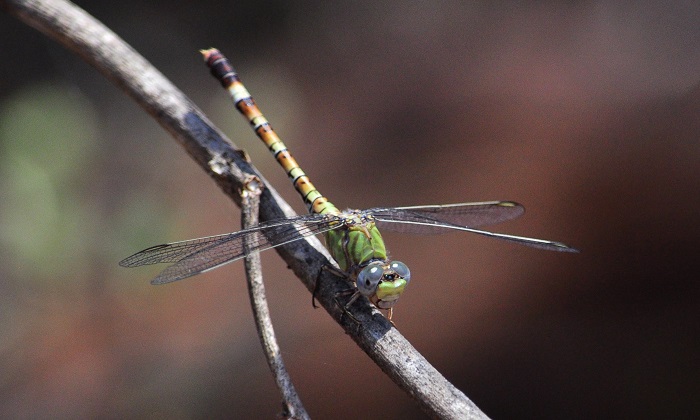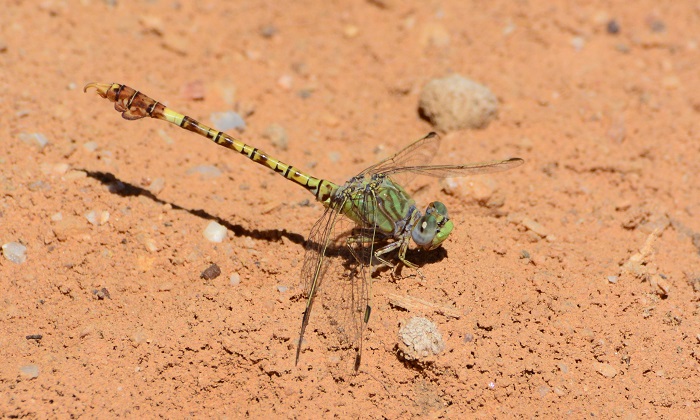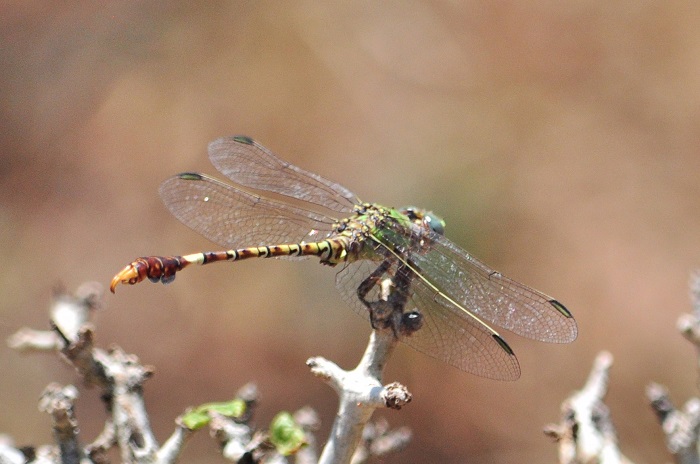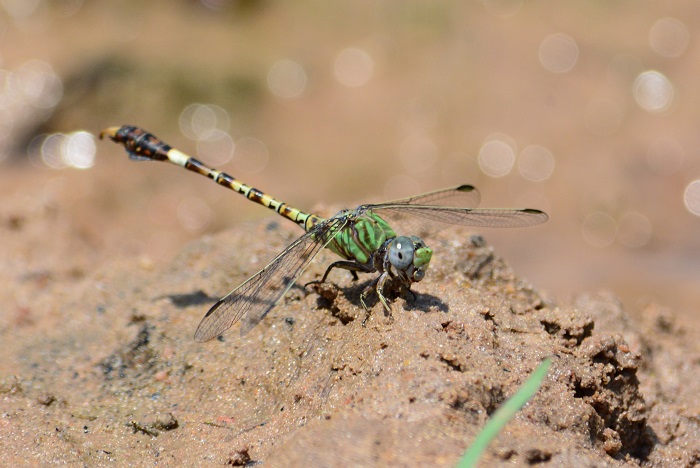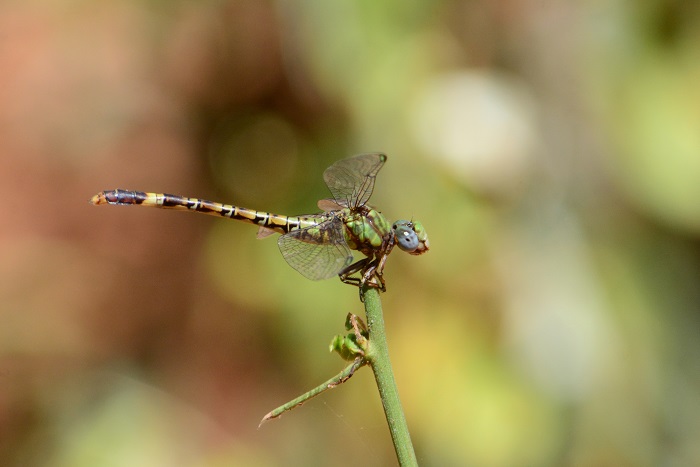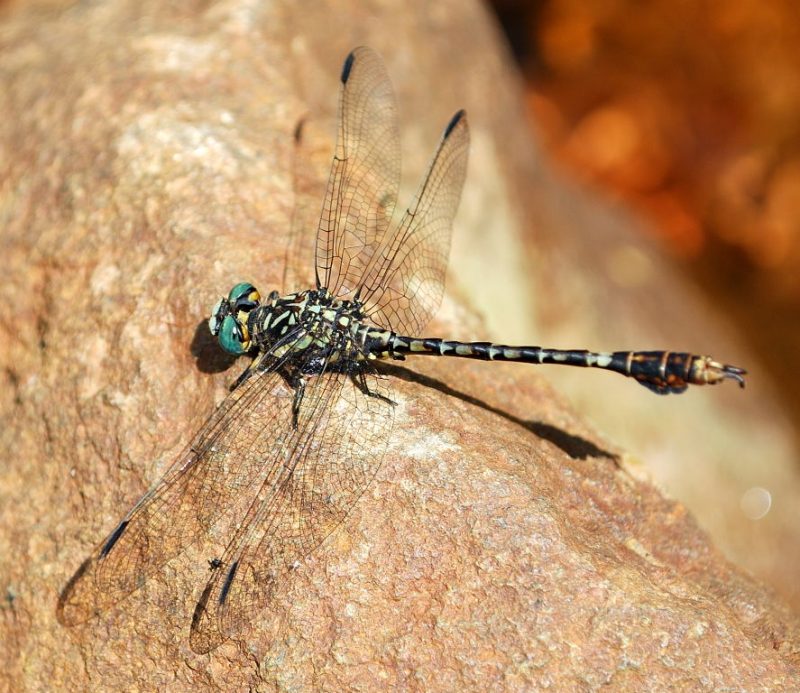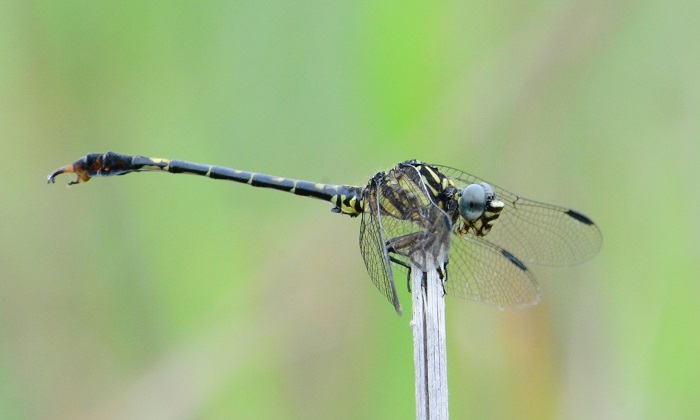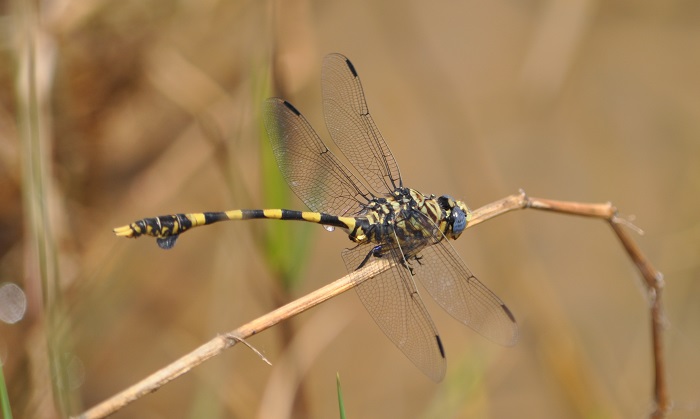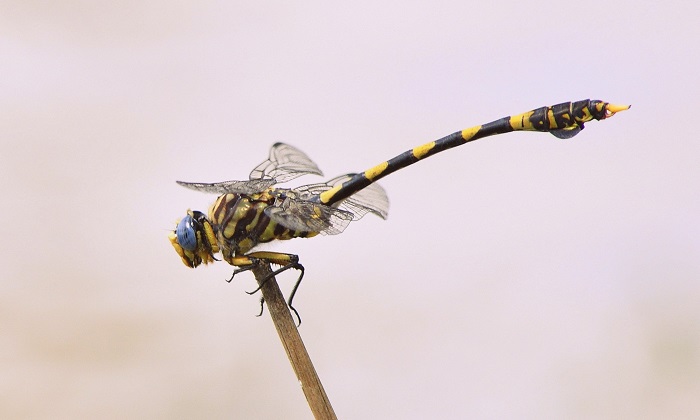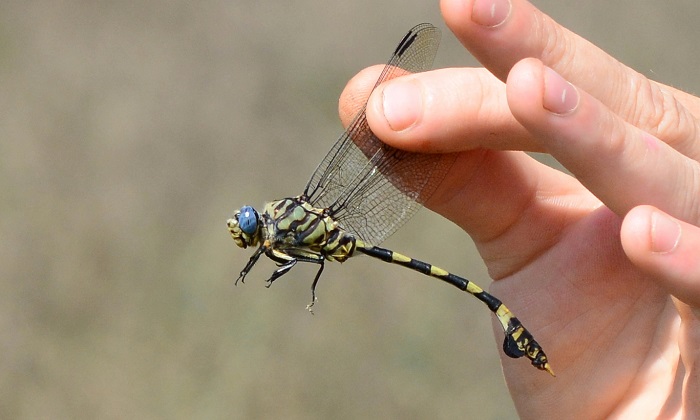
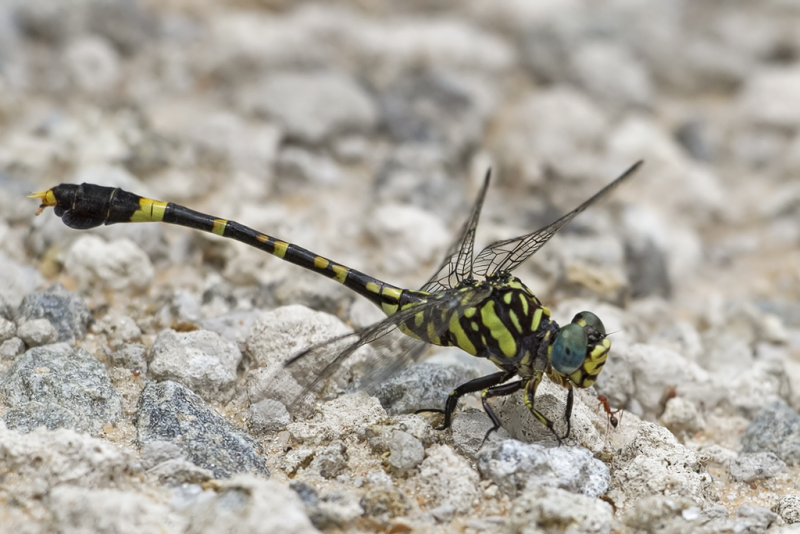
Flapper Hooktail (Paragomphus sabicus)

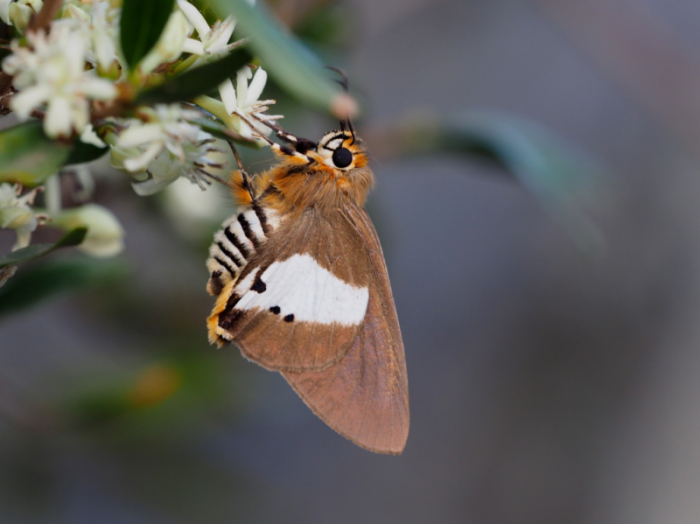
Cover photo by Desire Darling.

Find the Flapper Hooktail in the FBIS database (Freshwater Biodiversity Information System) here.

Family Gomphidae

Identification

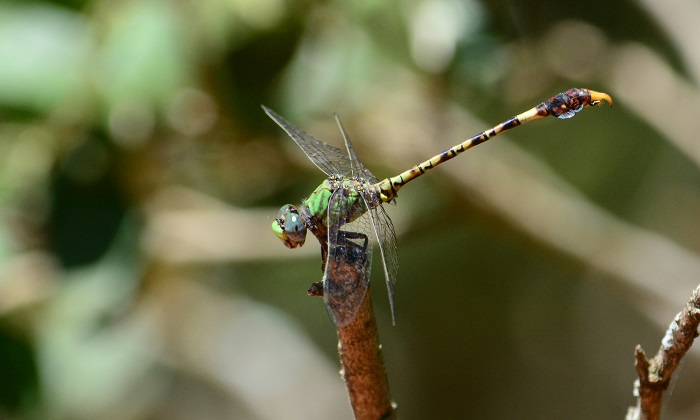
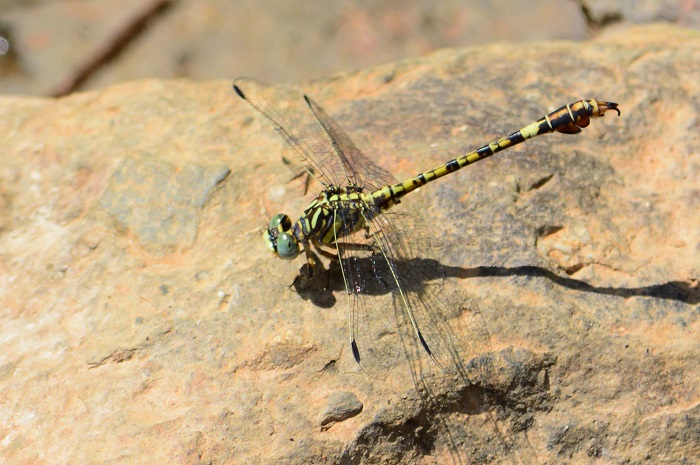
Flapper Hooktail Paragomphus sabicus – Male
Ndumo Game Reserve, KwaZulu-Natal
Photo by Ryan Tippett

Medium-large size

Length reaches 54mm;

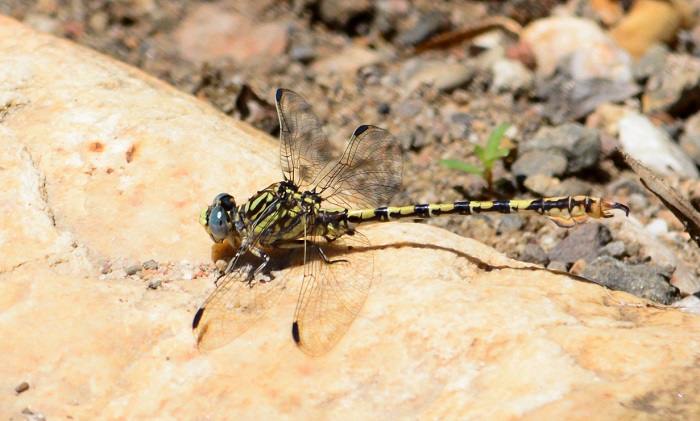
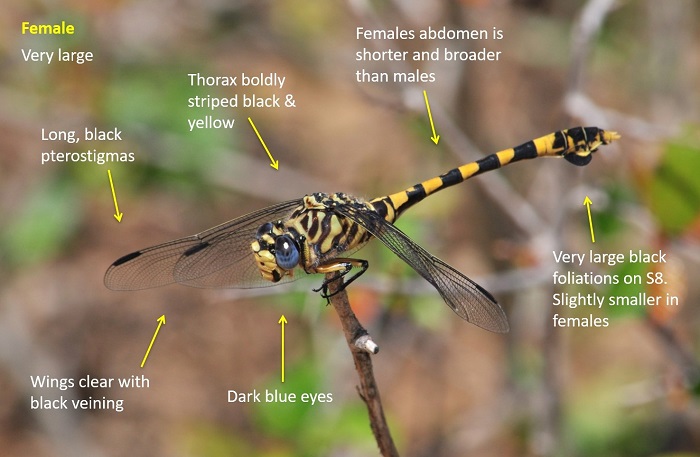
The male Flapper Hooktail Paragomphus sabicus is readily identified by the combination of its greenish-yellow and black colouration, large black-brown foliations, and the elongate, hooked upper claspers. Females are similar to the males but lack the hooked claspers and carry smaller foliations on the abdomen.

The Flapper Hooktail most resembles the Rock Hooktail Paragomphus cognatus, but that species is noticeably smaller and the hooked upper claspers are black-tipped and outwardly splayed. The Rock Hooktail also bears noticeably smaller and paler tail foliations.

Click here for more details on identification of the Flapper Hooktail.

Flapper Hooktail Paragomphus sabicus – Female
Ndumo Game Reserve, KwaZulu-Natal
Photo by Ryan Tippett

Habitat

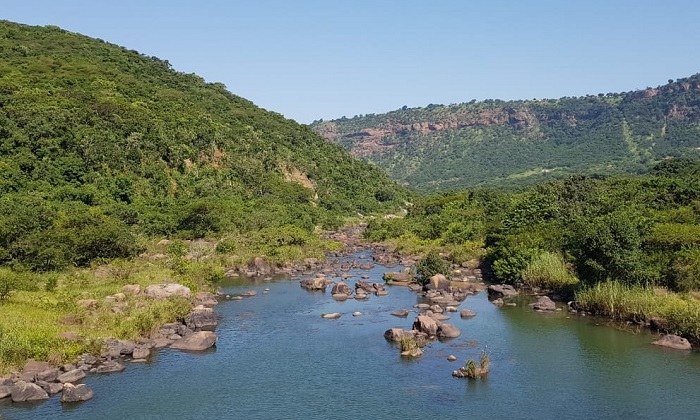
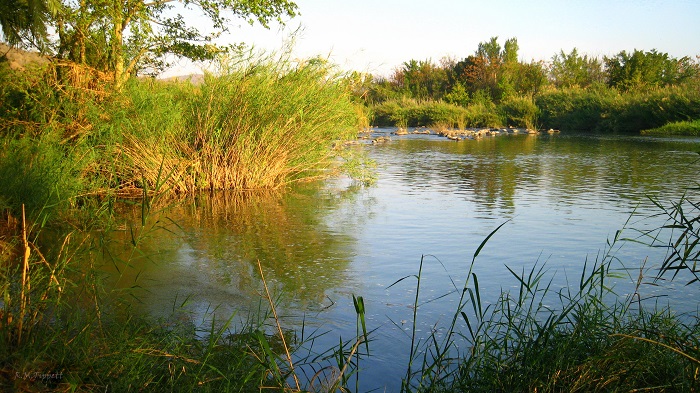
The Flapper Hooktail is a species of large, flowing savanna rivers with well-wooded banks and usually an abundance of reeds. Individuals are most likely to be found away from the water in the surrounding woodlands above the riverbank.

Habitat – Ndumo Game Reserve, KwaZulu-Natal
Photo by Ryan Tippett

Behaviour

The Flapper Hooktail is seldom seen at the water’s edge. Both sexes of the Flapper Hooktail are most often found perched among trees and bushes above the riverbank. This species hunts from a perch, making swift flights to intercept prey before returning to settle once again. It can be fairly tame and confiding.

The Flapper Hooktail flies mostly from November to March (See Phenology below).
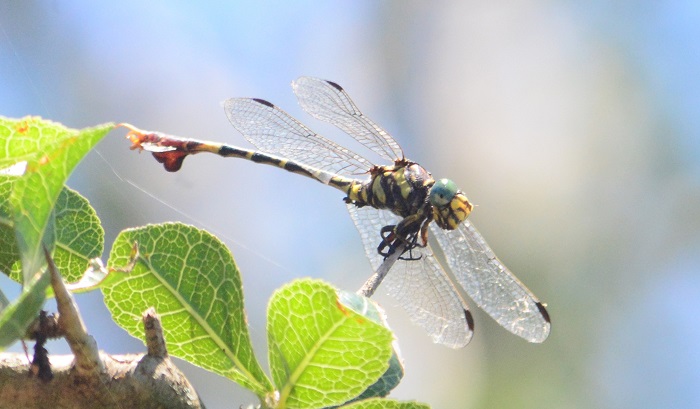
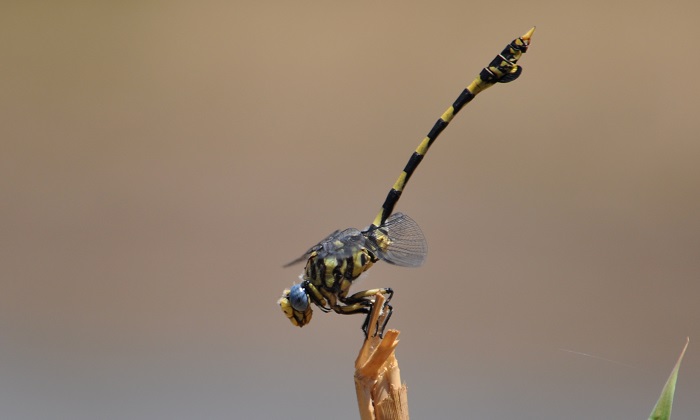
Flapper Hooktail Paragomphus sabicus – Male
Ndumo Game Reserve, KwaZulu-Natal
Photo by Ryan Tippett

Status and Conservation

The Flapper Hooktail is uncommon to rare and localised in South Africa. Overall, it is listed as of Least Concern in the IUCN Red List of Threatened Species. In South Africa, the Flapper Hooktail is only known from undisturbed habitats.
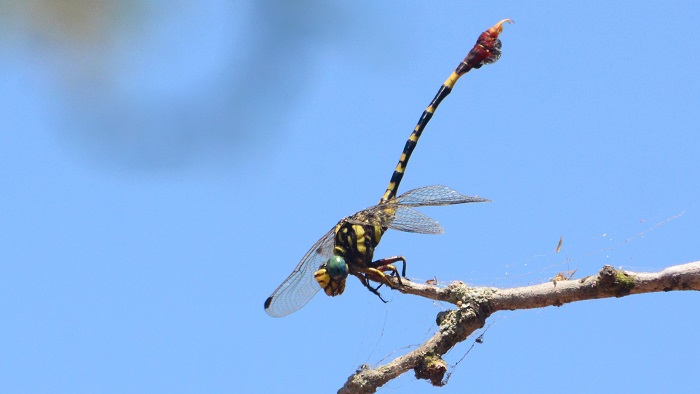
Flapper Hooktail Paragomphus sabicus – Male
Ndumo Game Reserve, KwaZulu-Natal
Photo by Ryan Tippett

Distribution

The Flapper Hooktail is sparsely and erratically distributed across its range, occurring mainly in Southern and East Africa. It ranges from north-eastern South Africa up through parts of Zimbabwe, Northern Botswana, and Namibia to Zambia, Malawi, Tanzania, and Kenya. It has also been recorded once from the Nile River in Sudan.

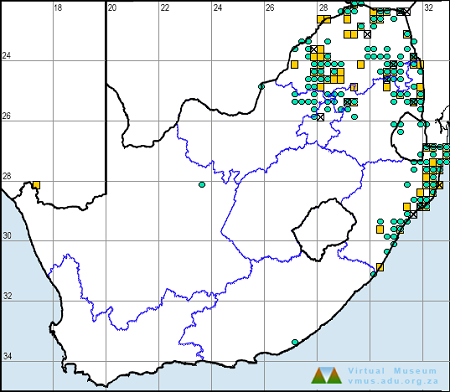
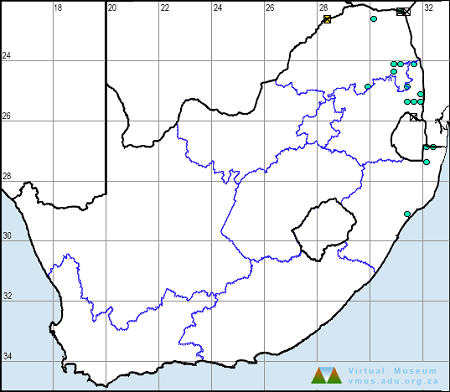
In South Africa, the Flapper Hooktail is restricted to hot, low-lying areas in the Limpopo River valley, the Lowveld, and north-eastern KwaZulu-Natal.

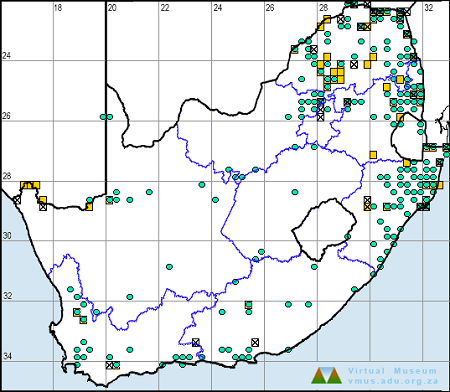
Below is a map showing the distribution of records for Flapper Hooktail in the OdonataMAP database as at February 2020.

Below is a map showing the distribution of records for Flapper Hooktail in the OdonataMAP database as at December 2024.
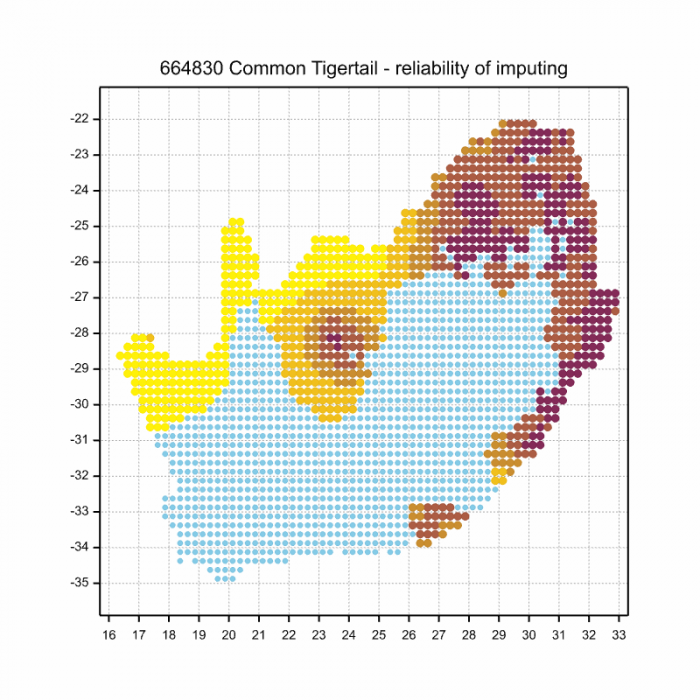
The next map below is an imputed map, produced by an interpolation algorithm, which attempts to generate a full distribution map from the partial information in the map above. This map will be improved by the submission of records to the OdonataMAP section of the Virtual Museum.

Ultimately, we will produce a series of maps for all the odonata species in the region. The current algorithm is a new algorithm. The objective is mainly to produce “smoothed” maps that could go into a field guide for odonata. This basic version of the algorithm (as mapped above) does not make use of “explanatory variables” (e.g. altitude, terrain roughness, presence of freshwater — we will be producing maps that take these variables into account soon). Currently, it only makes use of the OdonataMAP records for the species being mapped, as well as all the other records of all other species. The basic maps are “optimistic” and will generally show ranges to be larger than what they probably are.

These maps use the data in the OdonataMAP section of the Virtual Museum, and also the database assembled by the previous JRS funded project, which was led by Professor Michael Samways and Dr KD Dijkstra.

Phenology

Further Resources

The use of photographs by Desire Darling is acknowledged. All other photographs by Ryan Tippett.

Flapper Hooktail Paragomphus sabicus (Pinhey, 1950)

Other common names: Sabi Hooktail, Clubbed Hooktail (Alt. English); Flaphakiestert (Afrikaans)

Recommended citation format: Loftie-Eaton M; Navarro R; Tippett RM; Underhill L. 2025. Flapper Hooktail Paragomphus sabicus.  Biodiversity and Development Institute. Available online at https://thebdi.org/2020/06/08/flapper-hooktail-paragomphus-sabicus/

References: Tarboton, M; Tarboton, W. (2019). A Guide to the Dragonflies & Damselflies of South Africa. Struik Nature.

Samways, MJ. (2008). Dragonflies and Damselflies of South Africa. Pensoft

Samways, MJ. (2016). Manual of Freshwater Assessment for South Africa: Dragonfly Biotic Index.Suricata 2. South African National Biodiversity Institute, Pretoria

Martens, A; Suhling, F. (2007). Dragonflies and Damselflies of Namibia. Gamsberg Macmillan.

Similar Species

Great Hooktail (Paragomphus magnus)

Cover photo by Wil Leurs.

Find the Great Hooktail in the FBIS database (Freshwater Biodiversity Information System) here.

Family Gomphidae

Identification

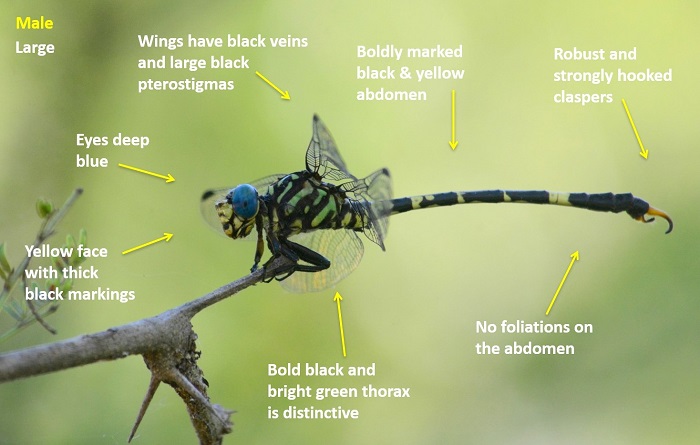
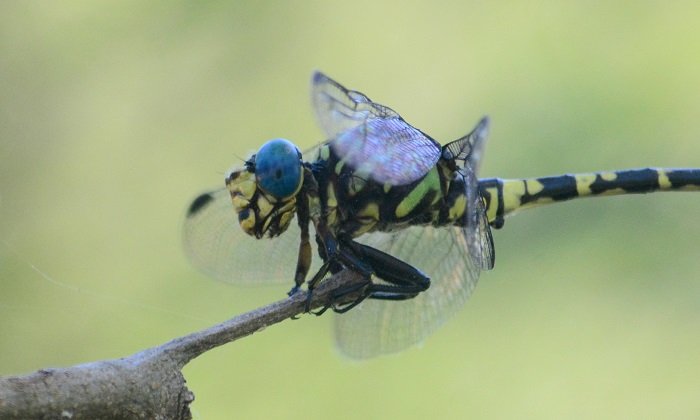
Great Hooktail Paragomphus magnus – Male
Pongola River, KwaZulu-Natal
Photo by Ryan Tippett

Large size

Length up to 58mm.

The Great Hooktail is a large and striking species. The combination of its large size, distinctive colouration and lack of foliations on the abdomen render this species unmistakable. Females, however, may be mistaken for those of the Zambezi Siphontail (Neurogompohus zambeziensis), but are more robustly built and with different thorax markings.

The sexes are similar but females lack the strongly hooked claspers of the male. Females are slightly duller, having a yellow-green and black thorax, rather than the bright green and black of the males.

Click here for more details on identification of the Great Hooktail.

Great Hooktail Paragomphus magnus – Female
Mkuze River, KwaZulu-Natal
Photo by Ryan Tippett

Habitat

The Great Hooktail inhabits the savanna rivers of the Lowveld and Northern KwaZulu-Natal. It prefers rocky, flowing rivers with rapids and well-wooded banks lined by trees and reeds.

Habitat – Mkuze River, KwaZulu-Natal
Photo by Ryan Tippett

Behaviour

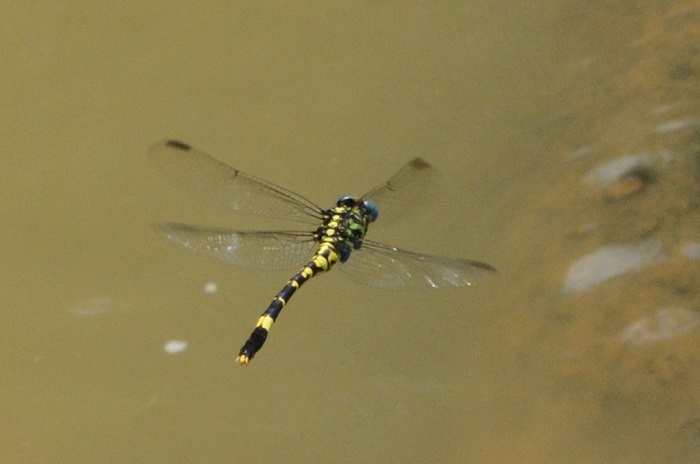
Not much is known about the Great Hooktail. It mostly perches on trees, both next to the water and in woodland above the riverbank. The Great Hooktail often sits fairly high up. It is also known to sit on the tips of reeds and sometimes on rocks near the water. Females have been observed depositing their eggs at rocky river sections with shallow, fast-flowing water. It hunts from a perch and has a fast, powerful flight.

The Great Hooktail is most active from October to April. See Phenology below.

Great Hooktail Paragomphus magnus – Female
Amakhosi Game Reserve, KwaZulu-Natal
Photo by Ryan Tippett

Status and Conservation

Paragomphus magnus is an uncommon and localised species. It was first recorded in South Africa as recently as 2012. It is listed as of Least Concern in the IUCN Red List of Threatened Species.

Distribution

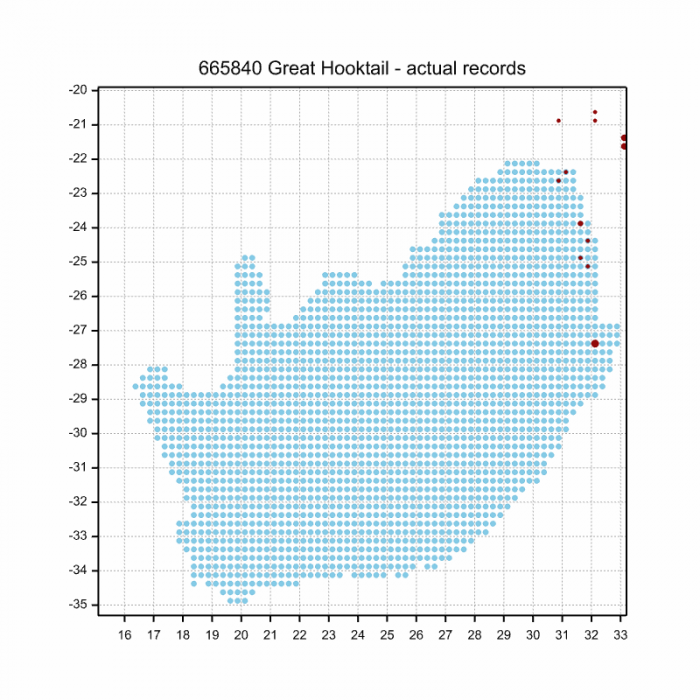
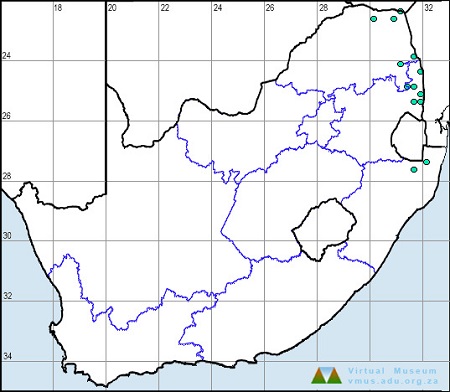
The Great Hooktail is very thinly distributed from northern South Africa, Zimbabwe, and Mozambique up to Malawi, Tanzania, and Kenya. In South Africa, the Great Hooktail has only been recorded from several localities in northeastern KwaZulu-Natal, and the Limpopo and Mpumalanga lowveld.

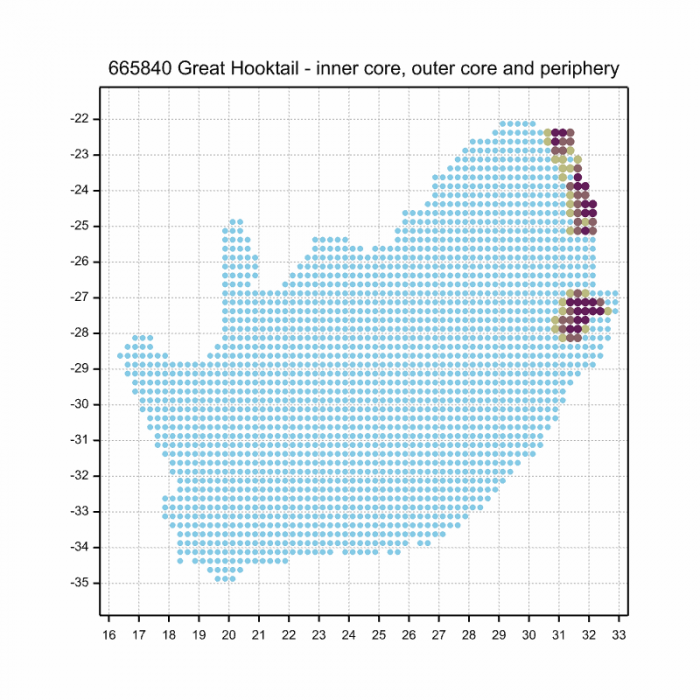
Below is a map showing the distribution of records for South Africa for the Great Hooktail. Taken from the OdonataMAP database as at February 2020.

Below is a map showing the distribution of records for South Africa for the Great Hooktail. Taken from the OdonataMAP database as of December 2024.

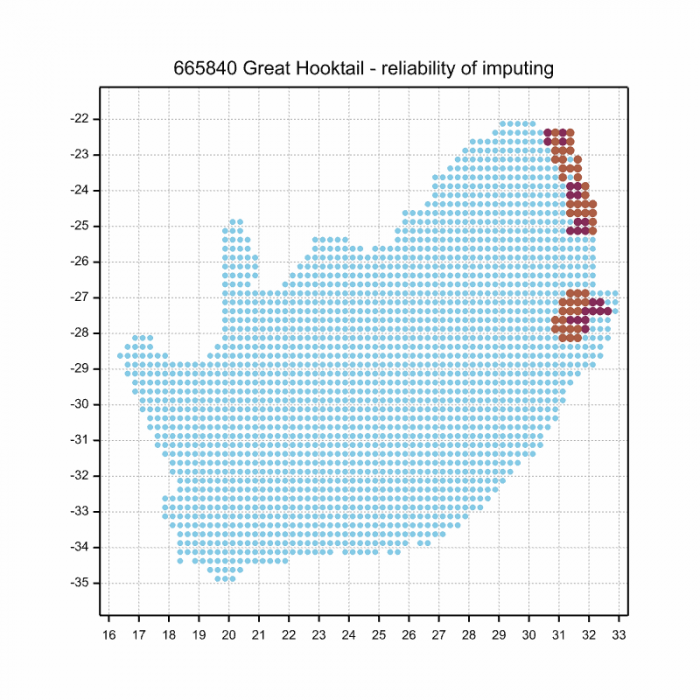
The next map below is an imputed map, produced by an interpolation algorithm, which attempts to generate a full distribution map from the partial information in the map above. This map will be improved by the submission of records to the OdonataMAP section of the Virtual Museum.
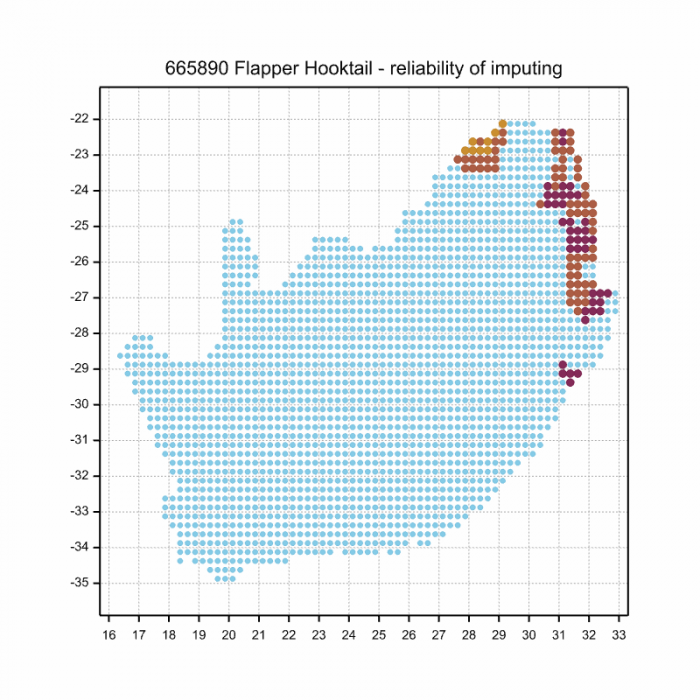
Ultimately, we will produce a series of maps for all the odonata species in the region. The current algorithm is a new algorithm. The objective is mainly to produce “smoothed” maps that could go into a field guide for odonata. This basic version of the algorithm (as mapped above) does not make use of “explanatory variables” (e.g. altitude, terrain roughness, presence of freshwater — we will be producing maps that take these variables into account soon). Currently, it only makes use of the OdonataMAP records for the species being mapped, as well as all the other records of all other species. The basic maps are “optimistic” and will generally show ranges to be larger than what they probably are.

These maps use the data in the OdonataMAP section of the Virtual Museum, and also the database assembled by the previous JRS funded project, which was led by Professor Michael Samways and Dr KD Dijkstra.

Great Hooktail Paragomphus magnus – Male
Pongola River, KwaZulu-Natal
Photo by Ryan Tippett

Further Resources

The use of photographs by Wil Leurs is acknowledged. Other photographs by Ryan Tippett.

Great Hooktail Paragomphus magnus Fraser, 1952

Other common names: Groothakiestert (Afrikaans)

Recommended citation format: Loftie-Eaton M; Navarro R; Tippett RM; Underhill L. 2025. Great Hooktail Paragomphus magnus. Biodiversity and Development Institute. Available online at https://thebdi.org/2020/06/08/great-hooktail-paragomphus-magnus/

References: Tarboton, M; Tarboton, W. (2019). A Guide to the Dragonflies & Damselflies of South Africa. Struik Nature.

Samways, MJ. (2008). Dragonflies and Damselflies of South Africa. Pensoft

Samways, MJ. (2016). Manual of Freshwater Assessment for South Africa: Dragonfly Biotic Index. Suricata 2. South African National Biodiversity Institute, Pretoria

Martens, A; Suhling, F. (2007). Dragonflies and Damselflies of Namibia. Gamsberg Macmillan.

Similar Species

BioMAPping in Lockdown – Abubakar Surajo Ringim shares his experience

Lockdown has impacted all of us, but that has not stopped citizen scientists from biomapping! We have been overwhelmed by the determination and enthusiasm shown by citizen scientists across the country and continent. Biodiversity data has poured into the Virtual Museum as biomappers refuse to let their love and passion for nature wane in the face of lockdown. We will be sharing some of their stories over the next while…

Please tell us a bit about yourself, and why do you love biomapping?

I am a Conservation Biologist, my goal in life is to advocate for the conservation and sustainable use of biodiversity. I obtained my BSc in Zoology from Bayero University Kano (Nigeria) and my MSc in Biodiversity Conservation from the University of Dar es Salaam, Tanzania. After my masters study on birds, I continued to do research on birds. That changed in 2017 when I started biomapping, and my focus started shifting to other kinds of creatures. I love contributing to the Virtual Museum projects cataloging organisms, especially butterflies, dragonflies, amphibians, and reptiles. Broadly, my research now focuses on citizen science projects and pressing conservation issues, including urbanization and biodiversity conservation, protected areas, and zoonotic diseases. I am deeply involved in the Nigeria Bird Atlas Project (NiBAP), where I am serving as the Secretary of the Arewa (northern Nigeria) Atlas Team.

Crocothemis erythraea — Broad Scarlet — OdonataMAPped by Abubakar

As a varsity lecturer, I teach courses on biodiversity and conservation, biogeography, animal diversity, and wildlife ecology and conservation. In 2019, I was among the 17-member committee (Technical Working Group) selected by the Federal Ministry of Agriculture and Rural Development for the Development and Implementation of Wildlife Disease Surveillance System in Nigeria (REDISSE Project). In 2019, I served as the Secretary, Local Organizing Committee for the 6th Nigeria Tropical Biology Association conference. I Co-founded the Federal University Dutse Conservation Society and serving as its Secretary. I have a keen interest in trying to promote biodiversity conservation and impact, sensu stricto, in Nigeria. To help with all of this I initiated the Nigerian Wildlife and Nature Photography Facebook group to improve local knowledge and awareness about Nigerian biodiversity.

I love biomapping in light of the fact that it is fun and exciting. What I love most about it is that it gives me the chance to connect; map and share records with other people and possibly contribute to knowledge about Nigerian biota. Throughout the years, biomapping has fortified my biodiversity identification skills. In the last three years of my biomapping, I have snapped and mapped over 1000 records on the Virtual Museum, including important discoveries: range extensions in House Sparrow Passer domesticus, Grey-backed Fiscal Lanius excubitoroides, and leucism in Long-tailed Glossy Starling Lamprotornis caudatus (see photo below). 

A leucistic Long-tailed Glossy-Starling

What has your experience been during lockdown and has biomapping helped you in any way to cope with these new challenges we face?

Well, my experience in biomapping in this worldwide pandemic and lockdown has not been the same, since it restricts my movement. Nevertheless, it aides and offers the chance to search within the immediate environment, especially inside our homes (that we share with many little creatures, such as insects and spiders), backyard, and along the roadside.

Where have you been biomapping during lockdown and what has the experience been like for you?

I have been biomapping around the pentad located near my home and the University. It is not generally an awful experience, as well, since I am able to snap and map a couple of species that I have not mapped in the last three years of biomapping in Nigeria.

Abubakar’s home pentad

Have you learnt anything new?

​Indeed! I had the opportunity to get familiar with certain things on the different Virtual Museum projects, for example, how to produce range and distribution maps. Presently, because of lockdown, I am investing more of my time in investigating the Virtual Museum site and reviewing my records.​

Anything interesting finds during your lockdown biomapping adventures?

Yes, I had the chance to map critters, some for the first time like a Bush Snake and a Wall Crab Spider (Subfamily Selenopidae). Northern Carmine Bee-eater, Rhinoceros Beetle, Grey-headed Kingfisher, Crowned Bullfrog, White-throated Bee-eater, and Broad Scarlet are also mapped. Plants, as well, were mapped, including Adansonia digitata, Ziziphus spina-christ, and Calotropis procera just to mention few!

Crowned Bullfrog Hoplobatrachus occipitalis FrogMAPed
Rhinoceros Beetle (Subfamily Dynastinae)
Grey-headed Kingfisher Halcyon leucocephala

BioMAPping in Lockdown – Corrie du Toit shares her experience

It has been more than 65 days since lockdown began here in South Africa, but that has not stopped citizen scientists from biomapping! We have been overwhelmed by the determination and enthusiasm shown by citizen scientists across the country and continent. Biodiversity data has poured into the Virtual Museum as biomappers refuse to let their love and passion for nature wane in the face of lockdown. Citizen scientists turned their mapping efforts to the confines of their homes and gardens (and even the blue skies up above!) and just kept on biomapping. We will be sharing some of their stories over the next while…

Please tell us a bit about yourself, a paragraph or two, and why do you love biomapping?

I was privileged to grow up in close contact with nature on a farm in the Paardeberg district of Paarl, Western Cape. My mother taught me the beautiful common names of wild flowers that grew on the uncultivated parts of veld, and I loved to slip away from my four younger siblings to enjoy the marvels of nature, which included picking waterblommetjies and sniffing out the wonderfully aromatic fruit of koekemakrankas.

My husband of 54 years, Ben, whom I first met on the slopes of Simonsberg while we were students at Stellenbosch, has always shared my intense love for nature. At this stage we are looking back on a lifetime of adventures and scores of hiking and camping tours with our family of five children through southern Africa as well as Europe and the British Isles. Now we are privileged to spend our golden years of retirement in the beautiful, safe environment of Schonenberg Estate in Somerset West with nature on our doorstep.

Since the early nineties our family has been hooked on birdwatching, and for the past ten years Ben and I  both had cameras to add a new dimension to our birding experience together.  Soon after we moved to Schonenberg some five years ago,  I was looking through our bedroom window one early November day, and noticed a large shimmering blue and green flying jewel patrolling a stretch of vlei outside –  to and fro it flew, swerving and turning with the utmost ease and grace.  I was fascinated.  A new world opened up before me. I am still fascinated beyond measure.

Cape Skimmer OdonataMAPped by Corrie in her garden

As soon as I  learnt how to photograph and identify a dragonfly, I started exploring the numerous green areas and ponds in the estate. I discovered an amazing world of tiny damselflies and butterflies too, and numerous other little creatures: bees, spiders, reptiles to name a few. I stumbled across the Facebook group for dragons and damsels, befriended numerous other odonata-lovers, joined a group on outings to odonata hotspots like Kogelberg and Jonkershoek Nature Reserves, and learnt how to submit every photographic record of whatever living creature to the Virtual Museum.

What has your experience been during lockdown and has biomapping helped you in any way to cope with these new challenges we face?

When lockdown started, we had been planning a tour to join a BioBash at the new dragonfly mecca, Swadini, in Mpumalanga Province and to visit the Kruger National Park. I had a long list of new species that I hoped to find there.

Ben and I understood and shared each other’s intense disappointment. We had to cancel all accommodation reservations.  In an effort to cheer ourselves and each other up, we grabbed our cameras and started working on a lockdown list of birds seen from our small patch of garden and bedroom window overlooking a wetland area.  Common sparrows, wagtails and starlings suddenly reached record status in on BirdPix in the Virtual Museum.

Of course every single insect and other living creature that dared to show itself within reach of my lens was photographed and recorded too, even a rat chased by a cat in the street!

Undoubtedly a shift of focus away from everything we missed and the freedom of movement we had to give up, towards the beauty of the treasures that I could still find around me and in the sky above, played a pivotal role in helping me to cope and to find joy despite the deeply frustrating lockdown restrictions.

A Jackal Buzzard being taunted by a Pied Crow

Where have you been biomapping during lockdown and what has the experience been like for you?

During the first 3 weeks our photographic efforts were confined to our small patch of garden, the paved street outside the low garden wall where birds feasted on the olives fallen from a tree two houses from ours, and the view from our bedroom window over a grassy wetland area, partly obscured by a wild olive tree. I had to stand on a plastic step to be able to maneuver the 400 mm lens at an awkward angle through the opening of a small tilted window.  

Levaillant’s cisticola with a mouthful of Cape Autumn Widow

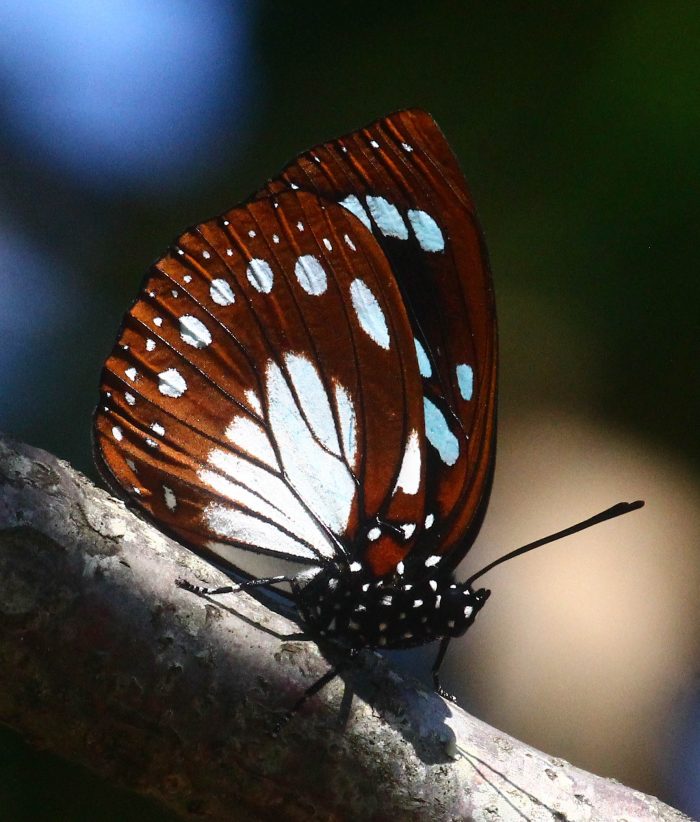
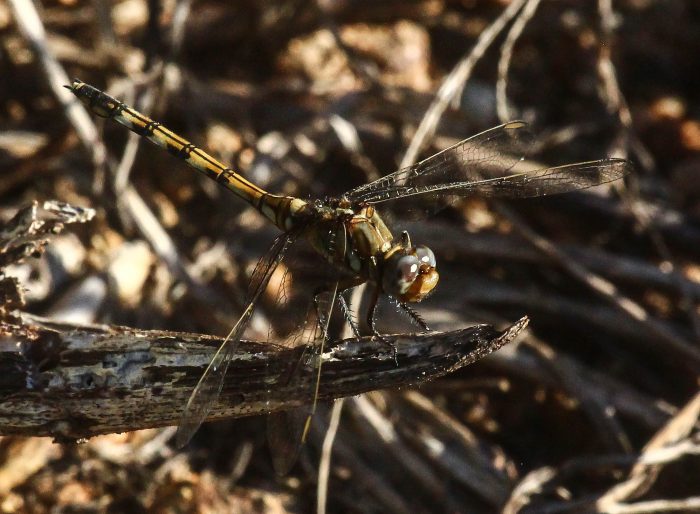
Despite the challenge I managed to get some decent photo’s of a Jackal buzzard harassed by a crow, a Levaillant’s cisticola catching a Cape Autumn Widow, a Silver-bottom Brown butterfly in the long grass,  a dragonfly sunning itself in the late afternoon sun, and – unbelievably – even a “lifer”: a White-barred Emperor that glided through the air one warm April morning and came to rest right in front of me on the wild olive tree. Each successful photo through that window was a complete triumph that boosted my spirit.

Silver-bottom Brown or Tower-bruintjie Pseudonympha magusLepiMAPped by Corrie

During May the bitou plants all over the estate were in full bloom, and no insect could resist the display of yellow flowers. Neither could I resist the temptation to walk to the nearest shrub a little later than nine in the morning!

Have you learnt anything new?

I have realised anew how resilient human nature is to adapt to adverse circumstances, and how dependent my own physical and spiritual well being is on nature and its wondrous gifts.

Anything interesting finds during your lockdown biomapping adventures?

Just to mention the birds, I was stunned to learn from Karis Daniel that I unwittingly managed to record a long list of first records for the grid cell: first record of European Honey Buzzard; first two records (in March and April) of Greater-Striped Swallow; first record of Peregrine Falcon; first two records (both in April) of Rock Dove/Feral Pigeon; first record of Cape Wagtail; first two records of Cape Sparrow (in April and May); first Great White Pelican; First Spotted Thick-Knee for 2020; first Black-Shouldered (Winged) Kite for 2020!

Surely it gives me great pleasure to find and share the beauty of the diversity of small wonders of nature that can be seen through my camera lens.  At the same time it is very rewarding to know that my humble efforts can contribute towards a better understanding and conservation of the exquisite gifts of our natural world.

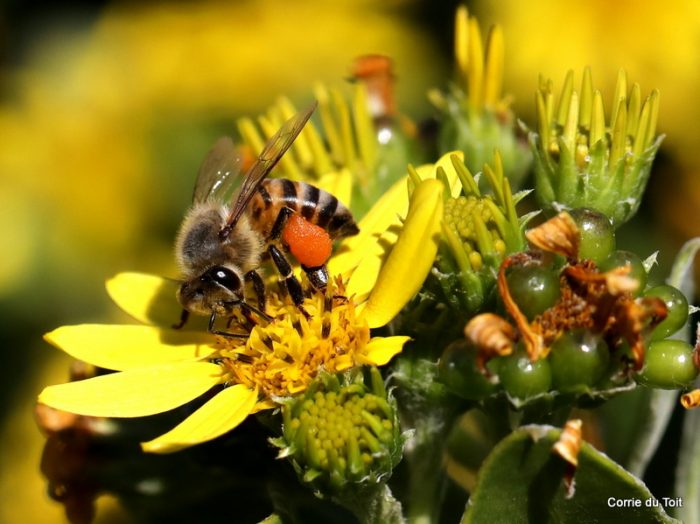
A beautiful photo of a honeybee going about its business, blissfully unaware of lockdown
A gorgeous Painted Lady, always a treat to LepiMAP one of these butterflies

BioMAPping in Lockdown – Peter Small shares his experience

It has been more than 65 days since lockdown began here in South Africa, but that has not stopped citizen scientists from biomapping! We have been overwhelmed by the determination and enthusiasm shown by citizen scientists across the country and continent. Biodiversity data has poured into the Virtual Museum as biomappers refuse to let their love and passion for nature wane in the face of lockdown. Citizen scientists turned their mapping efforts to the confines of their homes and gardens (and even the blue skies up above!) and just kept on biomapping. We will be sharing some of their stories over the next while…

Please tell us a bit about yourself, a paragraph or two, and why do you love biomapping?

I am, or was, a wildlife ecologist academic, but retired during lockdown. I used BioMapping to get my students more interested in all aspects of nature, and got smitten by the bug. I find BioMapping to be an amazing channel of interest and enthusiasm in all aspects of biodiversity, with like-minded peers and authorities cheering you on all the way.

What has your experience been during lockdown and has biomapping helped you in any way to cope with these new challenges we face?

Lockdown initially sent me into withdrawals, but the big dragon in the sky, and especially the big butterfly in the sky kept sending me amazing messengers to keep my enthusiasm going. BioMapping helped keep me sane and got me into the garden to enable my long-suffering wife to survive my constant companionship. This activity, even on a small tract of land, helped to keep my mind fresh and my body semi-active.

Where have you been biomapping during lockdown and what has the experience been like for you?

I Biomapped in and around my garden in a lifestyle village near Scottburgh, KwaZulu-Natal. We are blessed to have an indigenous garden designed and developed by Dr Elsa Pooley, and as a result the biodiversity in our garden is outstanding. However, I do believe that the butterflies especially came out in their numbers to keep all of us with cameras at the ready. Without these critters the hole that was being dug in my back garden may have been filled by now.

Even the relaxation to allow exercise between 06h00 and 09h00 did not assist, as the small critters really only appear after 10h00 – more frustration.

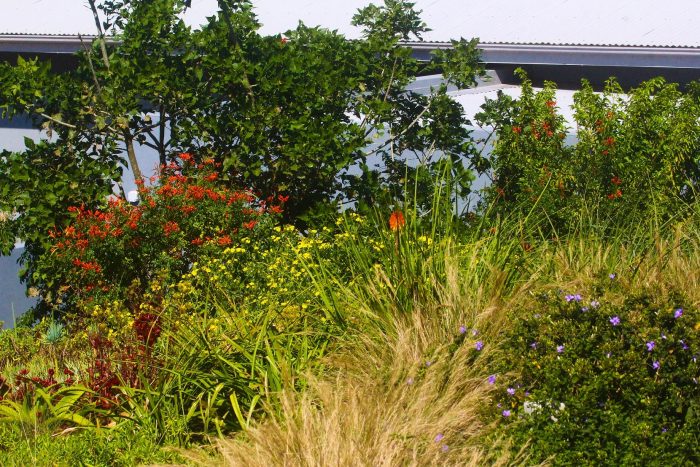
Peter’s fantastic garden with lots of indigenous plants that provide habitat and food for wildlife

Have you learnt anything new?

I think this experience has reinforced the importance of having natural areas/green spaces, even if they are fragmented like in urban environments, for the survival of wildlife; as well as the importance of indigenous vegetation with varied flowering periods for the maintenance of biodiversity.

Anything interesting finds during your lockdown biomapping adventures?

I was lucky enough to have a Dune Soapberry Deinbollia oblongifolia, and a Lowveld Tree Vernonia Vernonia colorata flowering in the garden, and due to lack of gardeners also blackjacks Bidens pillosa which are all butterfly favourites. This attracted a great variety of butterflies with some days yielding sixty or more species.

My butterfly highlights were the Forest Leopard, and my favourite, a Forest Queen.

Forest Queen Charaxes wakefieldiLepiMAPped by Peter Small

Dragonflies were a bit more difficult to find as I have no water nearby, but the Big Dragon in the Sky sent a Little Duskhawker and a Smoky Spreadwing into my house to cheer me up, and I found a Black Percher in the garden. The highlight, however, was my first record of a Banded Skimmer on the path outside my house.

Banded Skimmer Orthetrum brachialeOdonataMAPped by Peter Small

Watch this space for some more Lockdown BioMAPping stories…..

Common Hooktail (Paragomphus genei)

Cover photo by Diana Russell.

Find the Common Hooktail in the FBIS database (Freshwater Biodiversity Information System) here.

Family Gomphidae

Identification

Common Hooktail Paragomphus genei – Male
Near Hluhluwe, KwaZulu-Natal
Photo by Ryan Tippett

Medium sized

Length reaches 50mm; Wingspan up to 62mm.

The Common Hooktail is most similar to Paragomphus cognatus (Rock Hooktail) and especially Paragomphus elpidius (Corkscrew Hooktail).

It is easily differentiated from Paragomphus cognatus by having a brighter green thorax and all yellow rather than black-tipped claspers that are not splayed apart.

The Common Hooktail more closely resembles Paragomphus elpidius, but that species is slightly larger, brighter green and more boldly marked. Additionally Paragomphus elpidius has larger foliations near on the abdomen and more robust and strongly hooked upper claspers.

Females resemble males but are duller and lack the abdomen foliations and hooked claspers of the male.

Click here for more details on identification of the Common Hooktail.

Common Hooktail Paragomphus genei – Female
Ndumo Game Reserve, KwaZulu-Natal
Photo by Ryan Tippett

Habitat

The Common Hooktail frequents the sandy fringes of rivers, streams, ponds, pans, and dams. It is less reliant on running water than many other Paragomphus species and is often found around the fringes of still-water environments.

Habitat – Mkuze River, Lebombo Mountain Nature Reserve, KwaZulu-Natal
Photo by Ryan Tippett

Behaviour

Males most often perch on damp ground near the waters edge. Females are mostly found in woodlands and scrub a short distance from the water. The Common Hooktail hunts from the ground or a suitable perch and quickly returns to rest after each foray.

The Common Hooktail is on the wing from September to May. It may be active year-round in warmer areas.

Common Hooktail Paragomphus genei – Male
Vanrhynsdorp, Western Cape
Photo by Ryan Tippett

Status and Conservation

The Common Hooktail is common across much of South Africa. It is listed as of Least Concern in the IUCN Red List of Threatened Species. The Common Hooktail is an adaptable species that often inhabits man-made and degraded waterbodies.

Common Hooktail Paragomphus genei – Male
Ndumo Game Reserve, KwaZulu-Natal
Photo by Ryan Tippett

Distribution

Paragomphus genei is widely distributed over much of Africa. It is absent only from the Sahara and parts of the central rainforest block. It is also found in Mediterranean North Africa, southern Europe, and the Middle East.

The Common Hooktail is found virtually throughout South Africa but is less common and more localised in the Eastern, Western, and Northern Cape.

Common Hooktail Paragomphus genei – Male
Hluhluwe district, KwaZulu-Natal
Photo by Ryan Tippett

Below is a map showing the distribution of records for Common Hooktail in the OdonataMAP database as at February 2020.

Below is a map showing the distribution of records for Common Hooktail in the OdonataMAP database as of December 2024.

The next map below is an imputed map, produced by an interpolation algorithm, which attempts to generate a full distribution map from the partial information in the map above. This map will be improved by the submission of records to the OdonataMAP section of the Virtual Museum.

Ultimately, we will produce a series of maps for all the odonata species in the region. The current algorithm is a new algorithm. The objective is mainly to produce “smoothed” maps that could go into a field guide for odonata. This basic version of the algorithm (as mapped above) does not make use of “explanatory variables” (e.g. altitude, terrain roughness, presence of freshwater — we will be producing maps that take these variables into account soon). Currently, it only makes use of the OdonataMAP records for the species being mapped, as well as all the other records of all other species. The basic maps are “optimistic” and will generally show ranges to be larger than what they probably are.

Common Hooktail Paragomphus genei – Female
Ndumo Game Reserve, KwaZulu-Natal
Photo by Ryan Tippett

Further Resources

The use of photographs by Diana Russell is acknowledged. All other photographs by Ryan Tippett.

Common Hooktail Paragomphus genei (Selys, 1841)

Other common names: Green Hooktail (Alt. English); Gewone Hakiestert (Afrikaans)

Recommended citation format: Loftie-Eaton M; Navarro R; Tippett RM; Underhill L. 2025. Common Hooktail Paragomphus genei. Biodiversity and Development Institute. Available online at https://thebdi.org/2020/06/02/common-hooktail-paragomphus-genei/

References: Tarboton, M; Tarboton, W. (2019). A Guide to the Dragonflies & Damselflies of South Africa. Struik Nature.

Samways, MJ. (2008). Dragonflies and Damselflies of South Africa. Pensoft

Samways, MJ. (2016). Manual of Freshwater Assessment for South Africa: Dragonfly Biotic Index. Suricata 2. South African National Biodiversity Institute, Pretoria

Martens, A; Suhling, F. (2007). Dragonflies and Damselflies of Namibia. Gamsberg Macmillan.

Common Hooktail Paragomphus genei – Male
Ndumo Game Reserve, KwaZulu-Natal
Photo by Ryan Tippett

Similar Species

Rock Hooktail (Paragomphus cognatus)

Cover photo by Gerhard Diedericks.

Find the Rock Hooktail in the FBIS database (Freshwater Biodiversity Information System) here.

Family Gomphidae

Identification

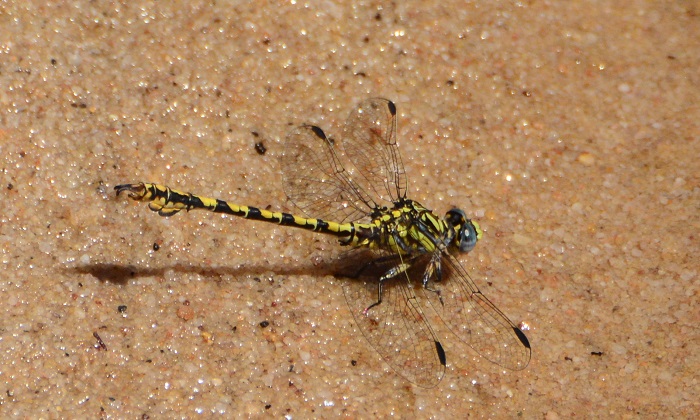
Rock Hooktail Paragomphus cognatus – Male
Moordkuil River, Western Cape
Photo by Ryan Tippett

Medium sized

Length reaches 46mm; Wingspan attains 60mm.

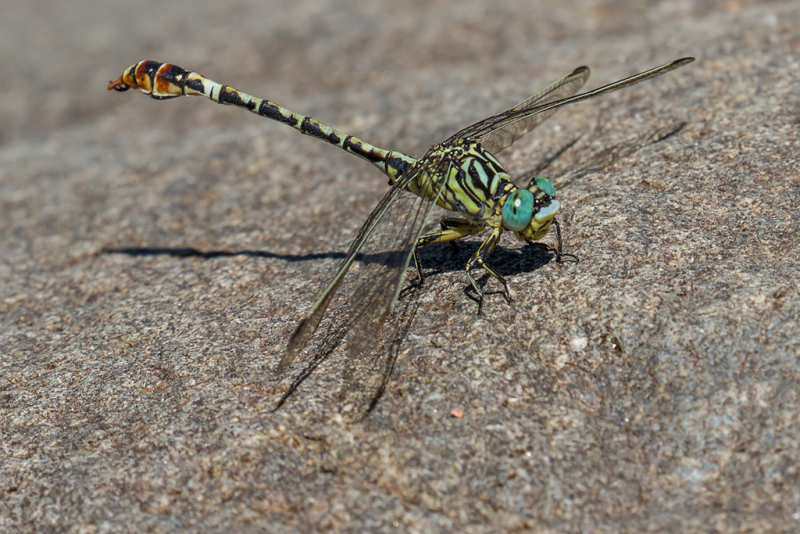
The overall colour of both sexes is yellow with thick, brownish-black markings. In mature males some of the dark bands on the thorax develop a weak grey-blue pruinosity. Males are easily recognised by their dark-tipped upper claspers that splay outwards near the tip. Females are a bit duller and have broader abdomens that lack foliations and hooked claspers.

Individuals from higher rainfall areas tend to be darker in colour.

Rock Hooktail Paragomphus cognatus – Female
Near Kosi Bay, KwaZulu-Natal
Photo by Ryan Tippett

The Rock Hooktail is most similar to the Flapper Hooktail (Paragomphus sabicus) and Common Hooktail (Paragomphus genei). Paragomphus sabicus is larger and brighter yellow with slender, elongate upper claspers. Paragomphus genei is of similar size but has a green thorax and yellowish upper claspers, that do not curve outwards near the tip.

Click here for more details on identification of the Rock Hooktail.

Rock Hooktail Paragomphus cognatus – Male dark form.
Kosi Bay,iSimangaliso Wetland Park, KwaZulu-Natal
Photo by Ryan Tippett

Habitat

The Rock Hooktail occurs in a wide range of biomes in both open and more wooded environments, including, grassland, fynbos, savanna, and forest. It is confined to rock-strewn rivers and streams where they may be seen at river pools or on mid-stream rocks. Some individuals may also be found a short distance from the river on trees and bushes in the surrounding habitat. The Rock Hooktail is found from sea-level up to 2000m above sea level.

Habitat – Umgeni River, KwaZulu-Natal
Photo by Alex Briggs

Behaviour

The Rock Hooktail is most often seen sitting prominently on rocks close to the water, but also occasionally sits on vegetation. They can sometimes be seen hunting from the tops of bushes or other vegetation. Non-breeding males and females are most often found away from the water. Females are encountered less frequently than males. The Rock Hooktail hunts from a perch, but quickly settles again. This species is on the wing from mid-September to May or early June in warmer areas (see Phenology below).

Rock Hooktail Paragomphus cognatus – Male
Ixopo district, KwaZulu-Natal
Photo by Ryan Tippett

Status and Conservation

The Rock Hooktail is a common species. It is listed as of least Concern in the IUCN Red List of Threatened species. The Rock Hooktail is a fairly hardy species but is nonetheless restricted to natural riverine habitat.

Rock Hooktail Paragomphus cognatus – Male
Seweweekspoort, Western Cape
Photo by Ryan Tippett

Distribution

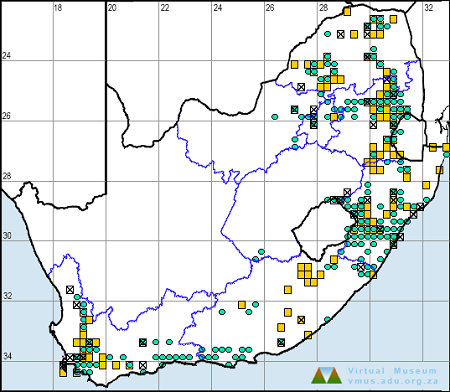
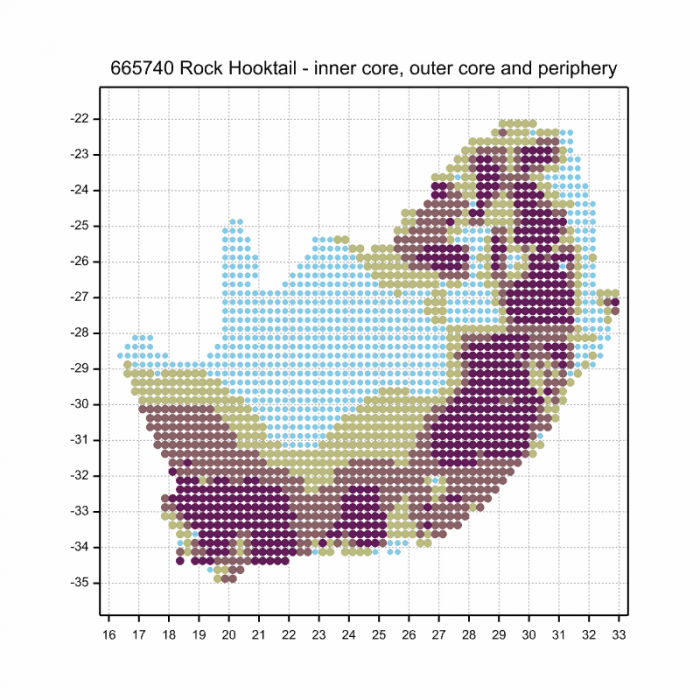
Paragomphus cognatus is widespread and occurs in Southern and East Africa, ranging from the Western Cape in South Africa up to Kenya and Uganda in the North. It also occurs across South-central Africa to parts of Angola and northern Namibia.

In South Africa, the Rock Hooktail is widespread in the South and east but is largely absent from the central interior.

Below is a map showing the distribution of records for Rock Hooktail in the OdonataMAP database as at February 2020.

Below is a map showing the distribution of records for Rock Hooktail in the OdonataMAP database as at December 2024.

The next map below is an imputed map, produced by an interpolation algorithm, which attempts to generate a full distribution map from the partial information in the map above. This map will be improved by the submission of records to the OdonataMAP section of the Virtual Museum.

Ultimately, we will produce a series of maps for all the odonata species in the region. The current algorithm is a new algorithm. The objective is mainly to produce “smoothed” maps that could go into a field guide for odonata. This basic version of the algorithm (as mapped above) does not make use of “explanatory variables” (e.g. altitude, terrain roughness, presence of freshwater — we will be producing maps that take these variables into account soon). Currently, it only makes use of the OdonataMAP records for the species being mapped, as well as all the other records of all other species. The basic maps are “optimistic” and will generally show ranges to be larger than what they probably are.

Further Resources

The use of photographs by John Wilkinson, and Sharon Stanton is acknowledged. All other photographs by Ryan Tippett.

Rock Hooktail Paragomphus cognatus (Rambur, 1842)

Other Common Names: Boulder Hooktail (Alt. English); Kliphakiestert (Afrikaans).

Recommended citation format: Loftie-Eaton M; Navarro R; Tippett RM; Underhill L. 2025. Rock Hooktail Paragomphus cognatus. Biodiversity and Development Institute. Available online at https://thebdi.org/2020/06/01/rock-hooktail-paragomphus-cognatus/

References: Tarboton, M; Tarboton, W. (2019). A Guide to the Dragonflies & Damselflies of South Africa. Struik Nature.

Samways, MJ. (2008). Dragonflies and Damselflies of South Africa. Pensoft

Samways, MJ. (2016). Manual of Freshwater Assessment for South Africa: Dragonfly Biotic Index. Suricata 2. South African National Biodiversity Institute, Pretoria

Martens, A; Suhling, F. (2007). Dragonflies and Damselflies of Namibia. Gamsberg Macmillan.

Rock Hooktail Paragomphus cognatus – Male
Vanrhynsdorp Waterfall, Western Cape
Photo by Ryan Tippett

Similar Species

Lined Claspertail (Onychogomphus supinus)

Cover photo by Gregg Darling.

Find the Lined Claspertail in the FBIS database (Freshwater Biodiversity Information System) here.

Family Gomphidae

Identification

Lined Claspertail Onychogomphus supinus – Male
Ithala Game Reserve, KwaZulu-Natal
Photo by Alan Manson

Medium sized

Length up to 48mm; Wingspan reaches 63mm.

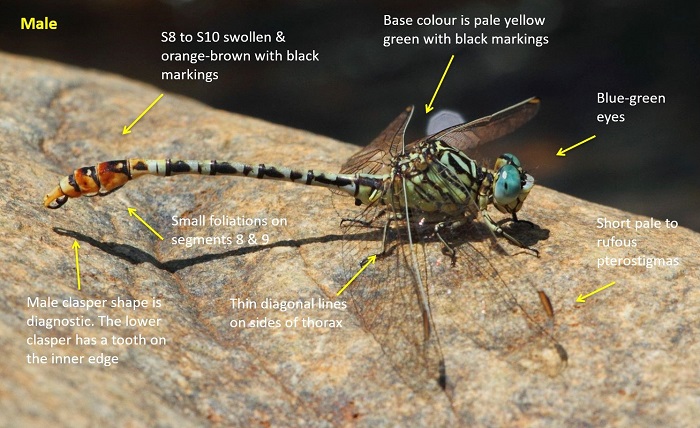
The Lined Claspertail is superficially similar to Crenigomphus hartmanni (Clubbed Talontail) in both size and general colouration. Onychogomphus supinus, however, has very differently shaped claspers, and the fine, diagonal lines on the thorax sides are a further aid in identification.

Additionally Onychogomphus supinus has unique wing venation, having a 2-celled anal loop in the hind wings.

Females are similar to males but have broader abdomens that lack the distinctive claspers.

Click here for more details on identification of the Lined Claspertail.

Habitat

The lined Claspertail inhabits clear, fast-flowing rivers and streams. It prefers shallow stretches with an abundance of large rocks and with wooded or grassy banks. The Lined Claspertail is typically found in hilly, mid-altitude areas 500 to 1100m above sea level.

This image has an empty alt attribute; its file name is Swadini.jpeg
Habitat – Blyde River, Mpumalanga
Photo by Andries De Vries

Behaviour

The Lined Claspertail prefers to perch on rocks close to the water, usually in or near the mid stream. It flies low and fast over the water or vegetation when hunting or if disturbed. The Lined Claspertail hunts from a perch and quickly returns to settle again. It can sometimes be found on grass or bushes along the riverbank. Females are seldom encountered.

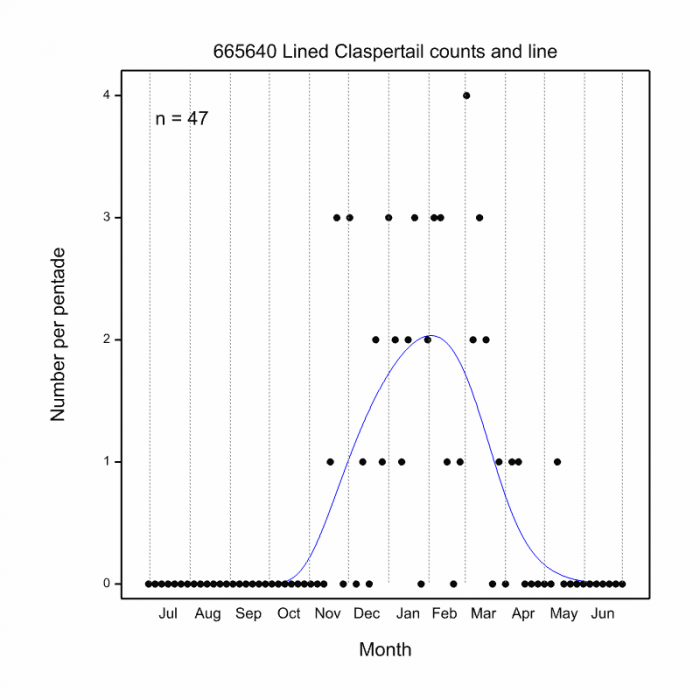
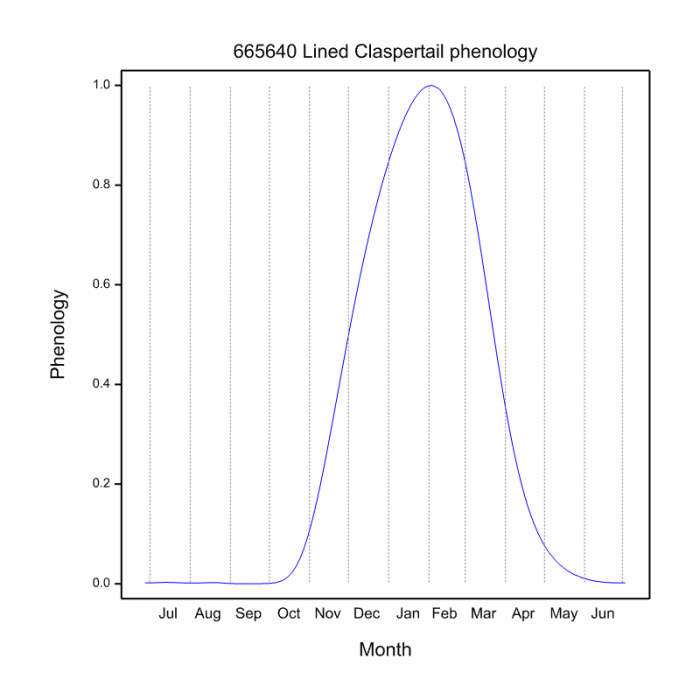
The Lined Claspertail is most Active from November to April (See Phenology below).

Status and Conservation

The Lined Claspertail is an uncommon and localised species. It is listed as of Least Concern in the IUCN Red List of Threatened Species. The Lined Claspertail is reliant on high-quality riverine habitat, and as such does not make use of degraded or man-made habitats.

Distribution

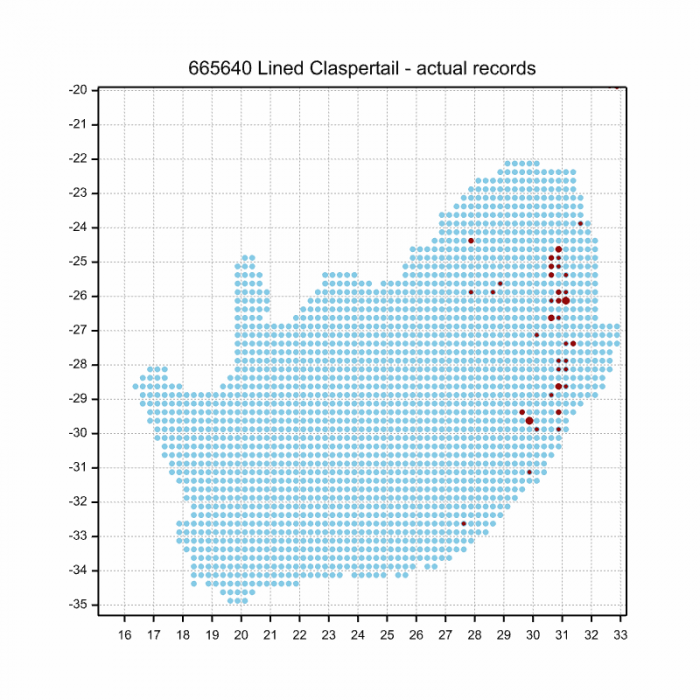
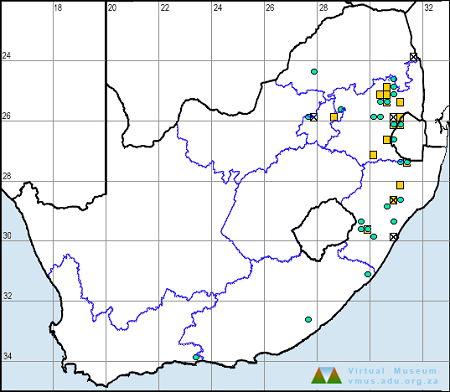
Onychogomphus supinus occurs in a narrow band along the escarpment of South Africa, from southern KwaZulu-Natal through Mpumalanga to Limpopo. It also occurs locally in the eastern highlands of Zimbabwe and neighbouring Mozambique.

Below is a map showing the distribution of records for Lined Claspertail in the OdonataMAP database as at February 2020.

Below is a map showing the distribution of records for Lined Claspertail in the OdonataMAP database as of December 2024.

The next map below is an imputed map, produced by an interpolation algorithm, which attempts to generate a full distribution map from the partial information in the map above. This map will be improved by the submission of records to the OdonataMAP section of the Virtual Museum.

Ultimately, we will produce a series of maps for all the odonata species in the region. The current algorithm is a new algorithm. The objective is mainly to produce “smoothed” maps that could go into a field guide for odonata. This basic version of the algorithm (as mapped above) does not make use of “explanatory variables” (e.g. altitude, terrain roughness, presence of freshwater — we will be producing maps that take these variables into account soon). Currently, it only makes use of the OdonataMAP records for the species being mapped, as well as all the other records of all other species. The basic maps are “optimistic” and will generally show ranges to be larger than what they probably are.

These maps use the data in the OdonataMAP section of the Virtual Museum, and also the database assembled by the previous JRS funded project, which was led by Professor Michael Samways and Dr KD Dijkstra.

Phenology

Further Resources

The use of photographs by Alan Manson, Andries de Vries and Gregg Darling is acknowledged.

Lined Claspertail Onychogomphus supinus Hagen in Selys, 1854

Other Common Names: Gorge Claspertail (Alt. English); Knypstert (Afrikaans).

Recommended citation format: Loftie-Eaton M; Navarro R; Tippett RM; Underhill L. 2025. Lined Claspertail Onychogomphus supinus. Biodiversity and Development Institute. Available online at https://thebdi.org/2020/06/01/lined-claspertail-onychogomphus-supinus/

References: Tarboton, M; Tarboton, W. (2019). A Guide to the Dragonflies & Damselflies of South Africa. Struik Nature.

Samways, MJ. (2008). Dragonflies and Damselflies of South Africa. Pensoft

Samways, MJ. (2016). Manual of Freshwater Assessment for South Africa: Dragonfly Biotic Index. Suricata 2. South African National Biodiversity Institute, Pretoria

Similar Species

BDInsight – May 2020

It has been more than 60 days since lockdown began here in South Africa, but that has not stopped citizen scientists from biomapping! We have been overwhelmed by the determination and enthusiasm shown by citizen scientists across the country. Biodiversity data poured into the Virtual Museum as biomappers refused to let their love and passion for nature wane in the face of lockdown. Citizen scientists turned their mapping efforts to the confines of their homes and gardens (and even the blue skies up above!) and just kept on biomapping. Well done!

Coming soon: BDI BioBashes

As citizen scientists, the long lockdown has turned us into tightly coiled springs in a clockwork engine, bursting to unleash our stored up energy on biodiversity projects. The BDI will try to provide constructive outlets for this enthusiasm.

As soon as we can travel a bit more easily, we will try to arrange BioBashes. We are in contact with several suitable places from the perspective of accommodation and meals. Each day we travel out independently to places where data needs are greatest. We will interact in ways deemed appropriate.

We are currently doing the groundwork for several BioBashes. These are broad plans which have no dates attached. Once we have the go ahead to move more freely, we will do our utmost to schedule events rapidly. Watch this space.

The first of these BioBashes will almost certainly be at the Karoo Gariep Nature Reserve, near Hanover in the Northern Cape. This is where we held the BDI Citizen Science Conference in February. It is a place we know well. As coordinators of the event, we can visualize how to keep safe there. See http://thebdi.org/2020/02/29/bdinsight-february-2020/ for a report on the conference in February.

The Karoo Gariep Nature Reserve is exactly halfway between Cape Town and Johannesburg. If you have a permit to travel, and this is a useful place at which to break your journey overnight, do contact PC Ferreira at info@karoogariep.co.za, or cell 082 567 9211 and find out if he can help you.

Virtual Museum News

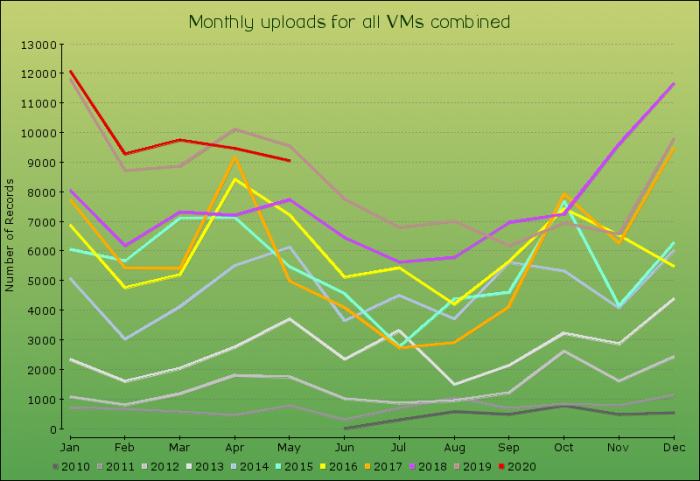
Up-to-date distribution maps are critical for conservation decision-making. We have all done our best during the lockdown to maintain the momentum of map building with the Virtual Museum. So it is awesome that, with five days left in May, we are at SecondBestMay. The RED dot for May only has one more line to cross to achieve BestMay.

BestMay is just 490 records away. It is still achievable, with some dedicated effort! If you have any records to send in, please upload them by Sunday 31 May 2020.

We are so close to BestMay, let’s bust a gut to get there. It is all about the “power of small numbers”. This is a power you witness regularly at the supermarket. A basketful of small items totals up to a surprisingly large amount! If we can all submit a few records, we can easily achieve BestMay.

BestMonthEver for LepiMAP

LepiMAP has had its BestMonthEver during the lockdown in April. That is amazing. We asked Fanie Rautenbach, the member of the expert panel who does almost all the formal identifications of butterflies to suggest records which he thought were especially interesting.

Two-pip Policeman or Dubbelkol-konstabel Coeliades pisistratus LepiMAP record by Stephen Ball

Fanie is an organic chemist, a researcher at the Cape Peninsula University of Technology. His research area is the chemistry of rooibos tea, especially its health value as an antioxidant. Here’s an article in the Health SA, which you can download, and there is a whole bunch of “full-text available” papers in his profile on Researchgate. It is fascinating. But what we are celebrating now is the contribution Fanie has made to LepiMAP. He has done 88,189 identifications in LepiMAP! He is also a big contributor to the rest of the Virtual Museum. We asked Fanie to select a few interesting records of butterflies submitted during Lockdown April. Read the full report here.

Common Tigertail (Ictinogomphus ferox)

Cover photo by Neels Jackson.

Find the Common Tigertail in the FBIS database (Freshwater Biodiversity Information System) here.

Family Gomphidae

Identification

Common Tigertail Ictinogomphus ferox – Male
Mpempe Pan, KwaZulu-Natal
Photo by Ryan Tippett

Very Large

Length up to 95mm; Wingspan attains 101mm.

The Common Tigertail is the largest member of the family Gomphidae in the region. Both sexes are readily identifiable by their very large size, large black foliations near the abdomen tip, and bold black and yellow colouration.

The Common Tigertail is most similar to Gomphidia quarrei (Southern Fingertail), but that species is smaller, more slender, and lacks the large foliations on the abdomen.

Click here for more details on identification of the Common Tigertail.

Common Tigertail Ictinogomphus ferox – Female
Hluhluwe River Floodplain, KwaZulu-Natal
Photo by Ryan Tippett

Habitat

The Common Tigertail inhabits the margins of rivers, lakes, pans, marshes, and dams. It is mostly confined to the warmer savanna regions. The Common Tigertail can be found at both still and flowing water, prefering areas lined with tall grasses, sedges, and especially Phragmites reeds. This is the only large Gomphid in South Africa that commonly inhabits the fringes of large still-water habitats.

Habitat – Savanna river with an abundance of tall reeds.
Pongola River, KwaZulu-Natal
Photo by Ryan Tippett

Behaviour

The Common Tigertail is conspicuous as it sits prominently in the open on reeds or other similar perches. It hunts from a perch, returning to their post after each foray to chase down prey or a potential rival. The flight is swift and powerful. The Common Tigertail often skypoints during the heat of the day to reduce the amount of the body in direct sunlight. Females and non-breeding males are mostly found further from the water. Females are seen less frequently than males.

The Common Tigertail is active from September to May (See phenology below).

Common Tigertail Ictinogomphus ferox – Male
Mkuze Dam, KwaZulu-Natal
Photo by Ryan Tippett

Status and Conservation

Ictinogomphus ferox is common in the northern and eastern parts of South Africa. Vagrants may occasionally be found in other parts of the country. It is listed as of Least Concern in the IUCN Red List of Threatened Species. The Common Tigertail is fairly tolerant of habitat degradation. It occurs commonly at man-made dams and reservoirs, provided they offer suitable habitat.

Common Tigertail Ictinogomphus ferox – Male
Hluhluwe district, KwaZulu-Natal
Photo by Ryan Tippett

Distribution

The Common Tigertail is found almost throughout sub-Saharan Africa, although it appears to be less common in West Africa. In South Africa, it is mostly confined to the northeast of the country.

Common Tigertail Ictinogomphus ferox – Male
Mpempe Pan, KwaZulu-Natal
Photo by Ryan Tippett

Below is a map showing the distribution of records for Common Tigertail in the OdonataMAP database as at February 2020.

Below is a map showing the distribution of records for Common Tigertail in the OdonataMAP database as of December 2024.

The next map below is an imputed map, produced by an interpolation algorithm, which attempts to generate a full distribution map from the partial information in the map above. This map will be improved by the submission of records to the OdonataMAP section of the Virtual Museum.

Ultimately, we will produce a series of maps for all the odonata species in the region. The current algorithm is a new algorithm. The objective is mainly to produce “smoothed” maps that could go into a field guide for odonata. This basic version of the algorithm (as mapped above) does not make use of “explanatory variables” (e.g. altitude, terrain roughness, presence of freshwater — we will be producing maps that take these variables into account soon). Currently, it only makes use of the OdonataMAP records for the species being mapped, as well as all the other records of all other species. The basic maps are “optimistic” and will generally show ranges to be larger than what they probably are.

These maps use the data in the OdonataMAP section of the Virtual Museum, and also the database assembled by the previous JRS funded project, which was led by Professor Michael Samways and Dr KD Dijkstra.

Common Tigertail Ictinogomphus ferox – Male
Mkuze Game Reserve, KwaZulu-Natal
Photo by Ryan Tippett

Phenology

Common Tigertail Ictinogomphus ferox – Male
Muzi Pan, KwaZulu-Natal
Photo by Ryan Tippett

Further Resources

The use of photographs by Neels Jackson is acknowledged. Other images by Ryan Tippett.

Common Tigertail Ictinogomphus ferox (Rambur, 1842)

Other Common Names: Gewone Streepstert (Afrikaans).

Recommended citation format: Loftie-Eaton M; Navarro R; Tippett RM; Underhill L. 2025. Common Tigertail Ictinogomphus ferox. Biodiversity and Development Institute. Available online at https://thebdi.org/2020/05/27/common-tigertail-ictinogomphus-ferox/

References: Tarboton, M; Tarboton, W. (2019). A Guide to the Dragonflies & Damselflies of South Africa. Struik Nature.

Samways, MJ. (2008). Dragonflies and Damselflies of South Africa. Pensoft

Samways, MJ. (2016). Manual of Freshwater Assessment for South Africa: Dragonfly Biotic Index. Suricata 2. South African National Biodiversity Institute, Pretoria

Martens, A; Suhling, F. (2007). Dragonflies and Damselflies of Namibia. Gamsberg Macmillan.

Common Tigertail Ictinogomphus ferox – Male
Mkuze Game Reserve, KwaZulu-Natal
Photo by Ryan Tippett

Similar Species