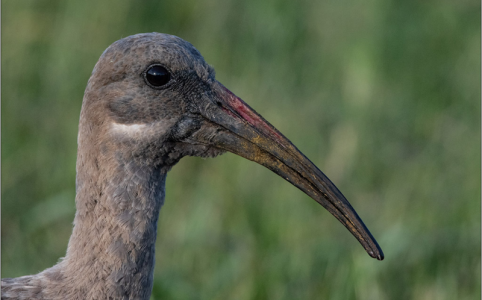
Hadada Ibis (Bostrychia hagedash)
The Hadada Ibis gets its name from its loud three to four note call uttered in flight, especially in the mornings and evenings when they fly out or return to th...

The Hadada Ibis gets its name from its loud three to four note call uttered in flight, especially in the mornings and evenings when they fly out or return to th...

Identification The Common (or European) Starling Sturnus vulgaris can be identified by its short tail, pointed head, triangular-shaped wings, and pale speckles ...
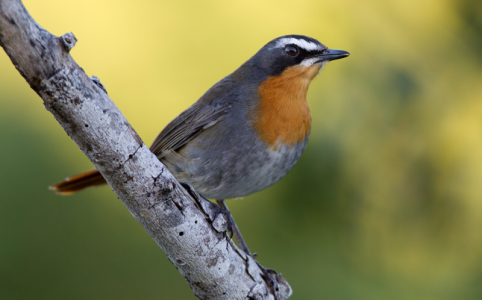
Identification The Cape Robin-Chat can be identified by its dark grey back, orange throat, white “eyebrows” and its orange rump and tail feathers. I...
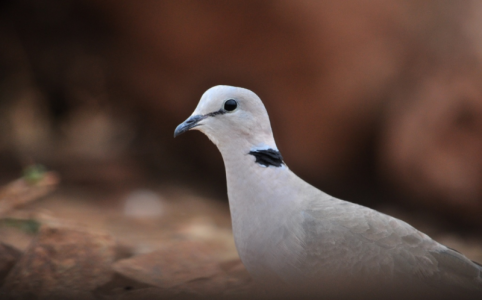
Identification The Ring-necked Dove, also known as the Cape Turtle Dove, is a very common bird species that occurs all over South Africa. It can be identified b...

Identification The Egyptian Goose is not actually a goose, but a shelduck. It has many characteristics of a duck, but also some external traits of a goose. Egyp...
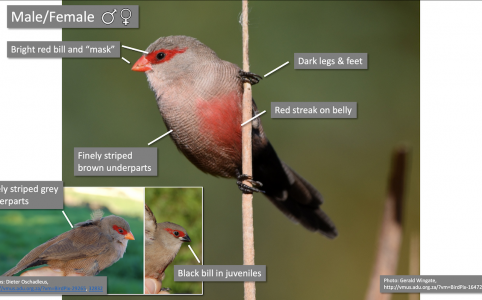
Identification Common Waxbills are small greyish-brown birds. This species is not sexually dimorphic; males females look the same. Overall, the Common Waxbill i...

Cape Canaries are small, brightly-coloured birds. Males and females can be difficult to tell apart; you must look closely!

The Cape White-eye is a very small, fast-moving bird. Males and females look alike but show geographic variation. This term means that one species can look diff...

Identification The Pin-tailed Whydah is a small sexually dimorphic species. Males and females differ dramatically when breeding, and appear similar outside of t...

Identification The Cape Weaver is a medium-sized, brightly coloured bird. Males and females look similar but are not quite alike. Males also differ slightly in ...