

Cover Photo by Gareth Yearsley.
Find this species in the FBIS database (Freshwater Biodiversity Information System) here.
Family Libellulidae
Identification

Mkhuze Game Reserve, KwaZulu-Natal
Photo by Ryan Tippett
Small size
Length up to 33mm; Wingspan attains 57mm.
Male Banded Groundlings are distinctive and easily recognised. They are unlike any other southern African species.
Females are yellowish-brown and lack the dark wing panels of the males. They can be mistaken for a female Dropwing (Trithemis spp.) or the Banded Duskdarter (Parazyxomma flavicans). These species however, lack the bi-coloured pterostigmas and can be further differentiated by wing venation, habitat and behaviour.
Click here for more details on identification.

Imfolozi Game Reserve, KwaZulu-Natal
Photo by Ryan Tippett
Habitat
The Southern Banded Groundling frequents open areas adjacent to almost any freshwater habitat, mostly in dry savanna areas. This includes rivers, dams, pans and marshes. The Southern Banded Groundling favours sites with bare ground such as sand, gravel and mud. Non-breeding individuals may be found far from water.

Nsumo Pan, Mkhuze Game Reserve, KwaZulu-Natal
Photo by Ryan Tippett
Behaviour
The Southern Banded Groundling sits in exposed positions, often on or close to the ground. Breeding males sit on vegetation overhanging the water and also on waterlilies. The Southern Banded Groundling is often gregarious and females are found alongside the males. They are frequently tame and confiding. Groups or individuals regularly follow humans and animals to catch small insects that get flushed from the grass.
Most active from September to May, but may be active throughout the year in warmer regions (see Phenology below).
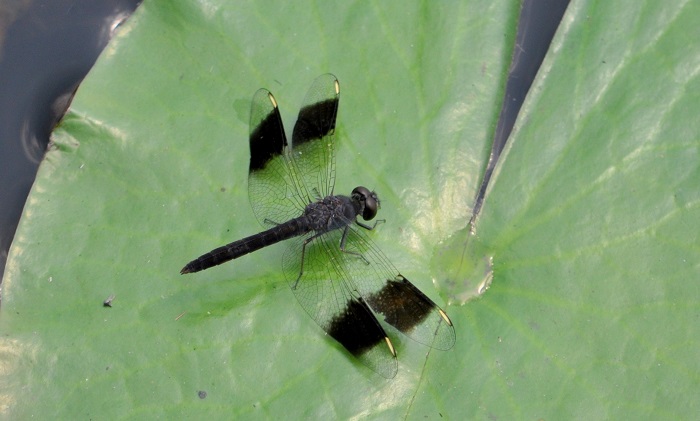
Hluhluwe River Floodplain, KwaZulu-Natal
Photo by Ryan Tippett
Status and Conservation
The Southern Banded Groundling is abundant and widespread. It is listed as of Least Concern in the IUCN Red List of Threatened Species. The Southern Banded Groundling is an adaptable species that is often common in disturbed habitats.
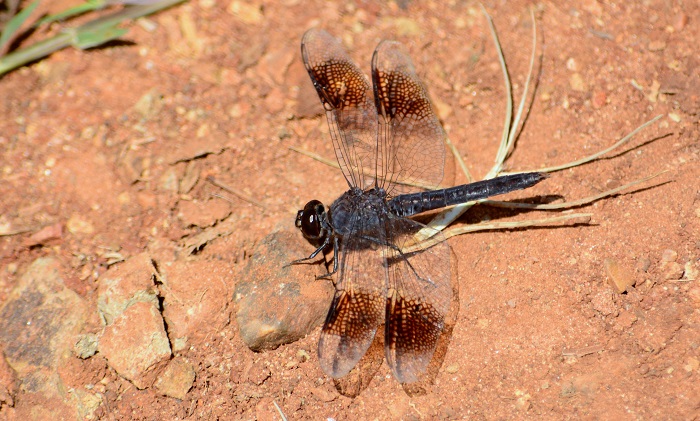
Near Ixopo, KwaZulu-Natal
Photo by Ryan Tippett
Distribution
The Southern Banded Groundling occurs widely through East and Central Africa and down to the northern parts of South Africa. In South Africa, it is mostly absent from the Western Cape, Karoo and colder parts of the Highveld.
Below is a map showing the distribution of records for Southern Banded Groundling in the OdonataMAP database as at February 2020.

Below is a map showing the distribution of records for Southern Banded Groundling in the OdonataMAP database as of December 2024.

The next map below is an imputed map, produced by an interpolation algorithm, which attempts to generate a full distribution map from the partial information in the map above. This map will be improved by the submission of records to the OdonataMAP section of the Virtual Museum.


Ultimately, we will produce a series of maps for all the odonata species in the region. The current algorithm is a new algorithm. The objective is mainly to produce “smoothed” maps that could go into a field guide for odonata. This basic version of the algorithm (as mapped above) does not make use of “explanatory variables” (e.g. altitude, terrain roughness, presence of freshwater — we will be producing maps that take these variables into account soon). Currently, it only makes use of the OdonataMAP records for the species being mapped, as well as all the other records of all other species. The basic maps are “optimistic” and will generally show ranges to be larger than what they probably are.
These maps use the data in the OdonataMAP section of the Virtual Museum, and also the database assembled by the previous JRS funded project, which was led by Professor Michael Samways and Dr KD Dijkstra.
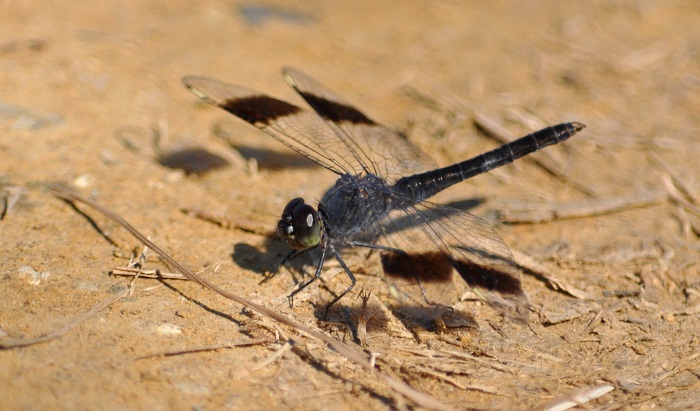
Sappi Stanger Bird Sanctuary, KwaZulu-Natal
Photo by Ryan Tippett
Phenology


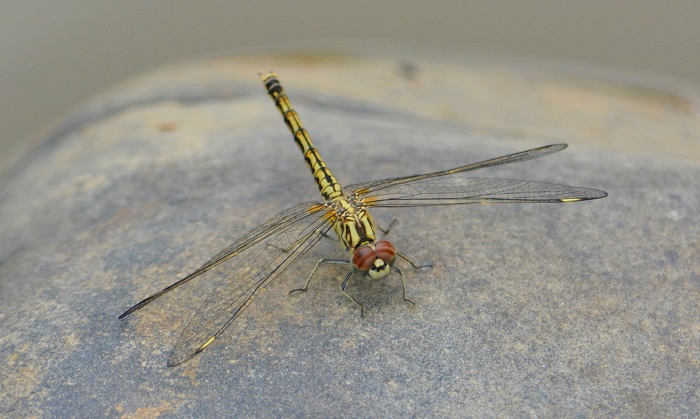
Amakhosi Game Reserve, KwaZulu-Natal
Photo by Ryan Tippett
Further Resources
The use of photographs by Gareth Yearsley is acknowledged. All other photographs by Ryan Tippett.
Southern Banded Groundling Brachythemis leucosticta (Burmeister, 1839)
Other common names: Banded Groundling (Alt. English); Suidelike Gebande Grondwagtertjie (Afrikaans)
Recommended citation format: Loftie-Eaton M; Navarro R; Tippett RM; Underhill L. 2025. Southern Banded Groundling Brachythemis leucosticta. Biodiversity and Development Institute. Available online at https://thebdi.org/2020/05/25/southern-banded-groundling-brachythemis-leucosticta/
References: Tarboton, M; Tarboton, W. (2019). A Guide to the Dragonflies & Damselflies of South Africa. Struik Nature.
Samways, MJ. (2008). Dragonflies and Damselflies of South Africa. Pensoft
Samways, MJ. (2016). Manual of Freshwater Assessment for South Africa: Dragonfly Biotic Index. Suricata 2. South African National Biodiversity Institute, Pretoria
Martens, A; Suhling, F. (2007). Dragonflies and Damselflies of Namibia. Gamsberg Macmillan.
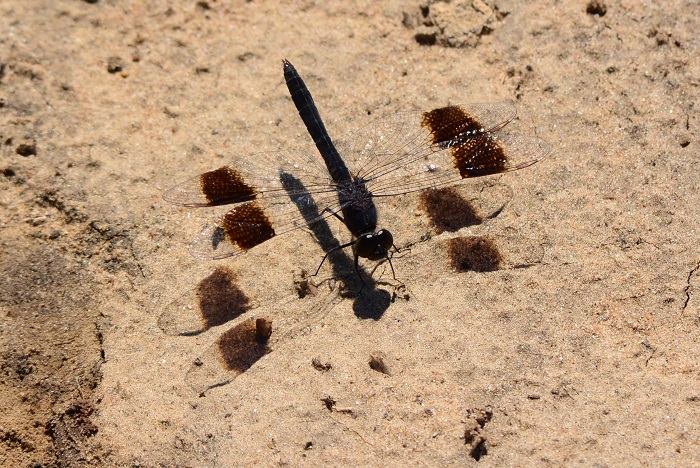
Mpempe Pan, KwaZulu-Natal
Photo by Ryan Tippett