
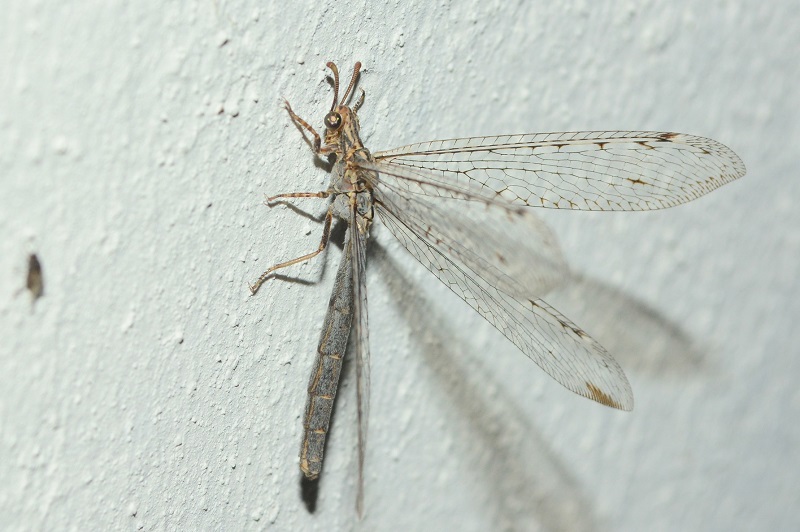
View the above photo record (by Ryan Tippett) in LacewingMAP here.
Myrmeleontidae (Antlions)
Furgella damarinus
(Péringuey, 1910)
Identification
Size: Small
The thorax is grey and pale yellowish with a broad black dorsal line running from the head to the start of the abdomen. The abdomen is mostly plain grey with variable yellowish-pink markings along the sides.
The wings are clear and thinly marked with scattered brown markings. The most distinctive of which are wedge shaped and found near the tips of the hind wings.
Larvae: The larvae are pink and resemble those of the genus Cueta.
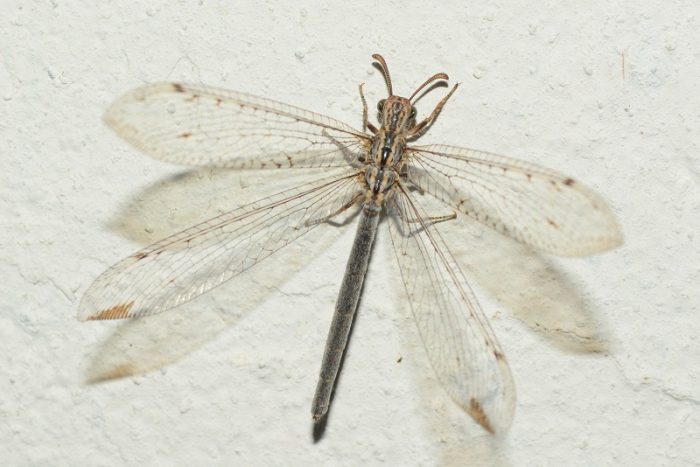
Photo by Ryan Tippett
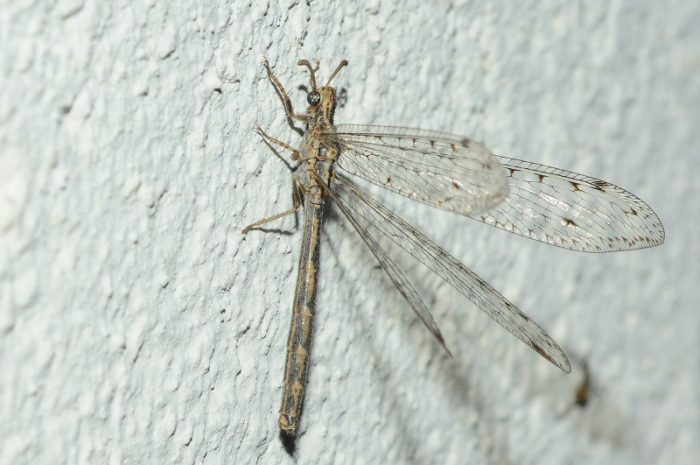
Photo by Ryan Tippett
Habitat
Furgella damarinus inhabits arid shrublands of the Nama Karoo as well as Kalahari scrub and savanna. It is usually found on sandy soils.
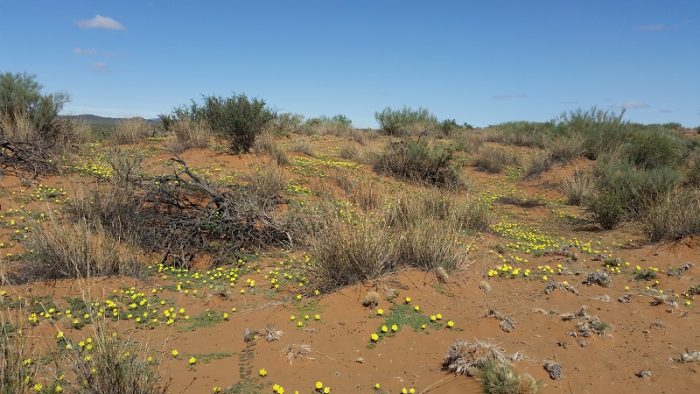
Photo by Ryan Tippett
Behaviour
Adults are nocturnal and they are sometimes attracted to lights. Nothing else is known about the biology of this species.
Adults are active during summer and have been recorded from November to March.
The larvae do not construct pits but instead live freely in loose sand.
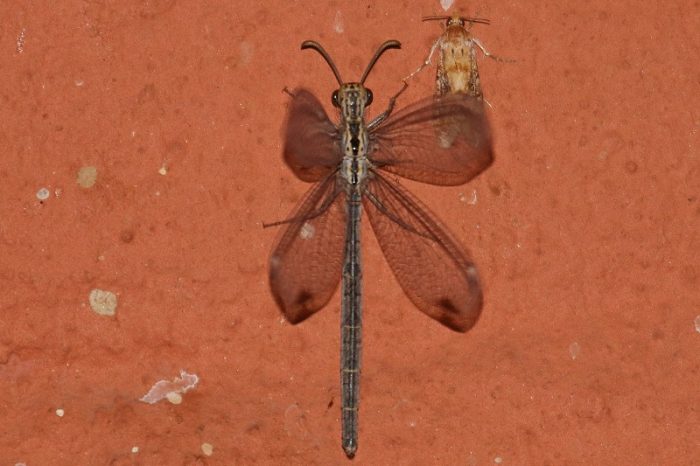
Photo by P. Nieuwoudt
Status and Distribution
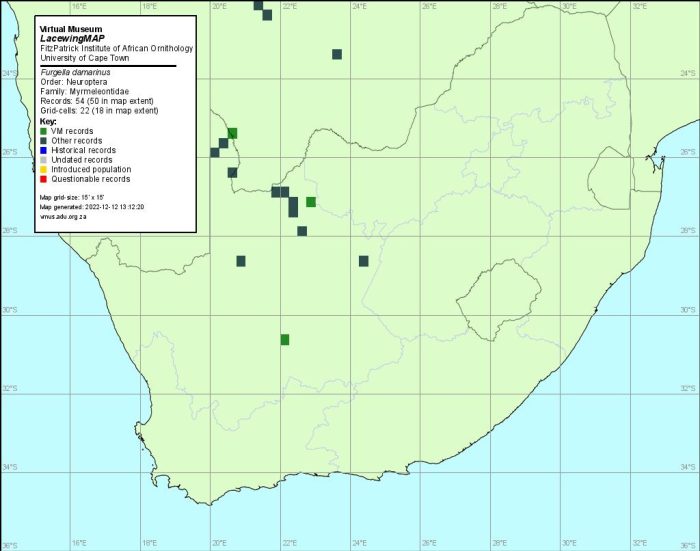
Furgella damarinus is uncommon and is endemic to South Africa, Botswana and Namibia. In South Africa, it is known only from the Northern Cape Province. It is fairly widespread in the Kalahari ecosystem.
Taxonomy
Order: Neuroptera Family: Myrmeleontidae Subfamily: Myrmeleontinae Tribe: Myrmecaelurini Genus: Furgella Species: damarinus
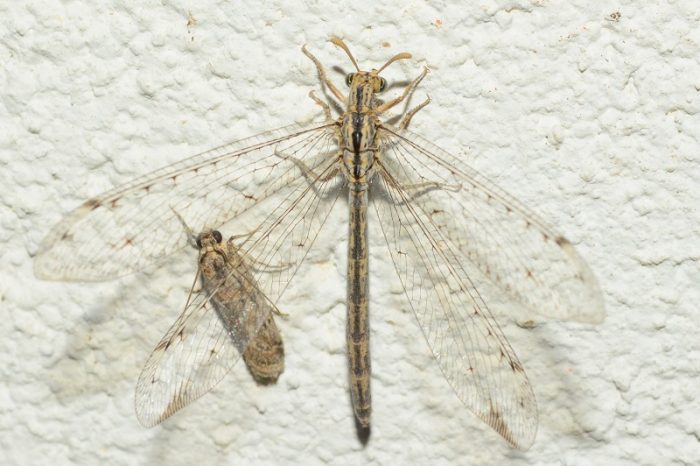
Photo by Ryan Tippett
Further Resources
Virtual Museum (LacewingMAP > Search VM > By Scientific or Common Name)
Acknowledgements:
The use of photographs by P. Nieuwoudt is acknowledged. This species text has benefited enormously from comments made by Mervyn Mansell on records he has identified in LacewingMAP. We acknowledge his important contribution.
Recommended citation format for this species text:
Tippett RM 2022. Furgella damarinus. Biodiversity and Development Institute, Cape Town.
Available online at http://thebdi.org/2022/12/12/furgella-damarinus/
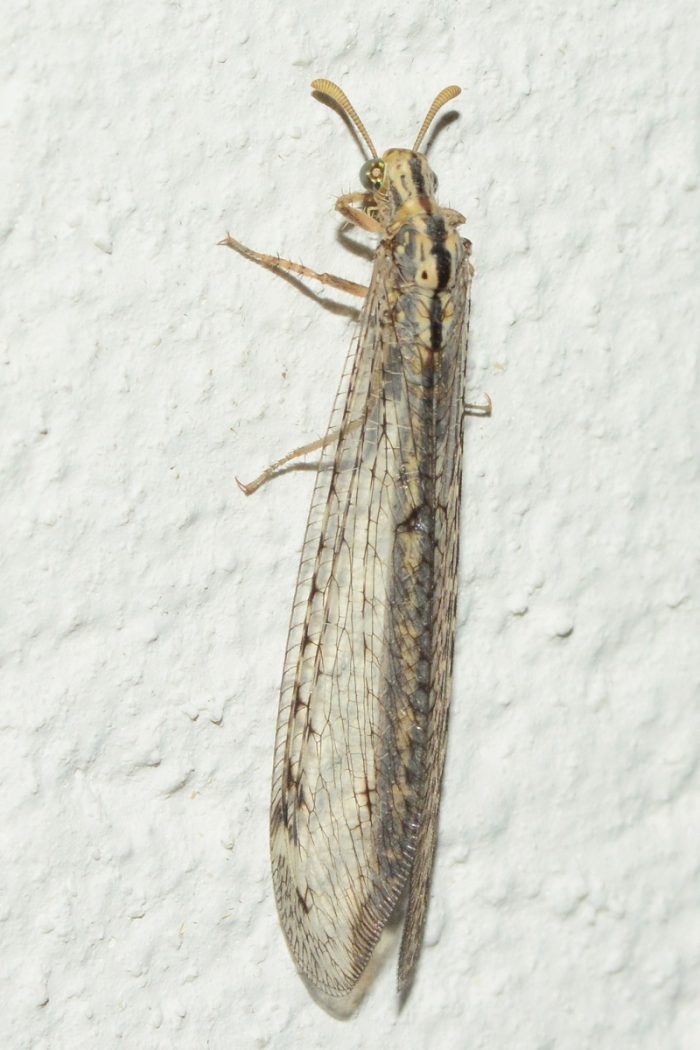
Photo by Ryan Tippett
