
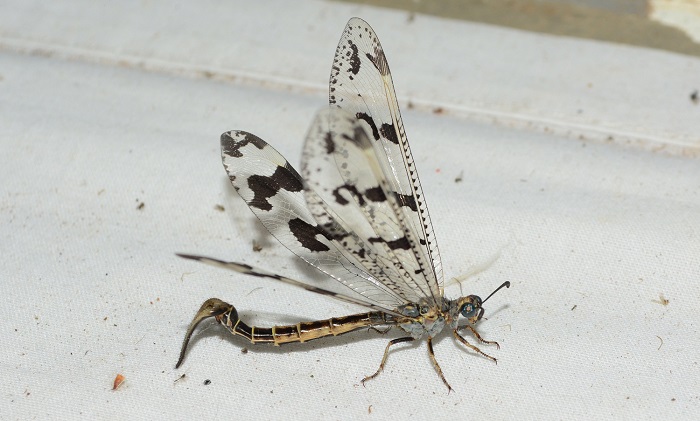
View the above photo record (by Ryan Tippett) in LacewingMAP here.
Palparidius capicola
Peringuey, 1910
Identification
Size: Medium-large (Wingspan around 90mm)
Palparidius capicola is readily identified by the diagnostic horseshoe-shaped markings in the forewings. The males are easily recognised due to their elongated ectoprocts (claspers).
Larvae: Not much is known about the larvae of this species.
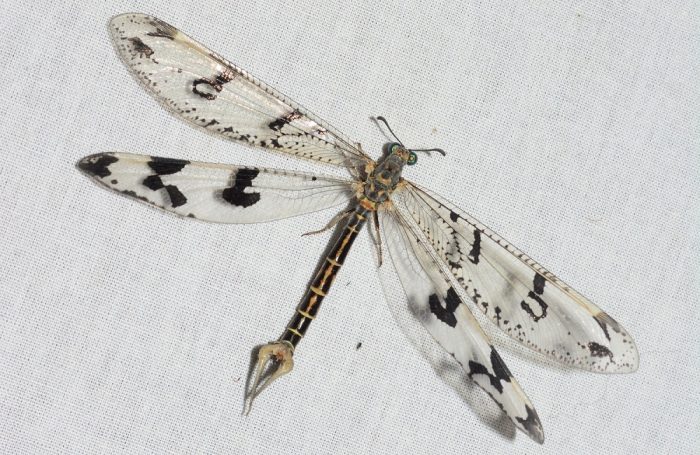
Photo by Ryan Tippett
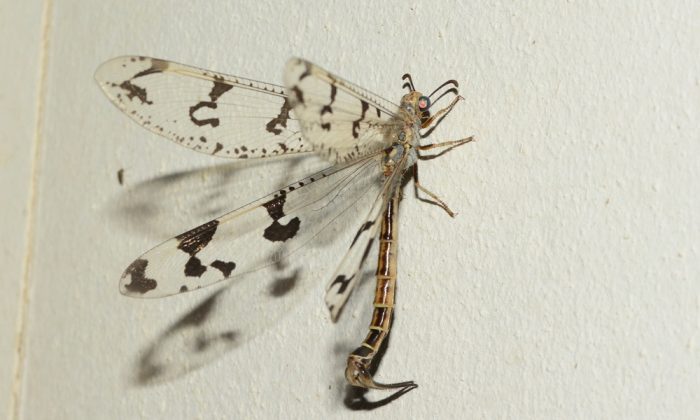
Photo by Ryan Tippett
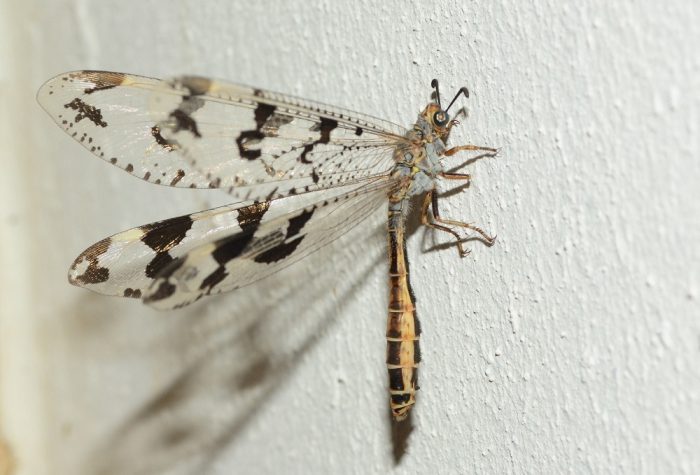
Photo by Ryan Tippett
Habitat
Palparidius capicola inhabits the open, arid shrublands of the Nama Karoo in flat or hilly terrain.
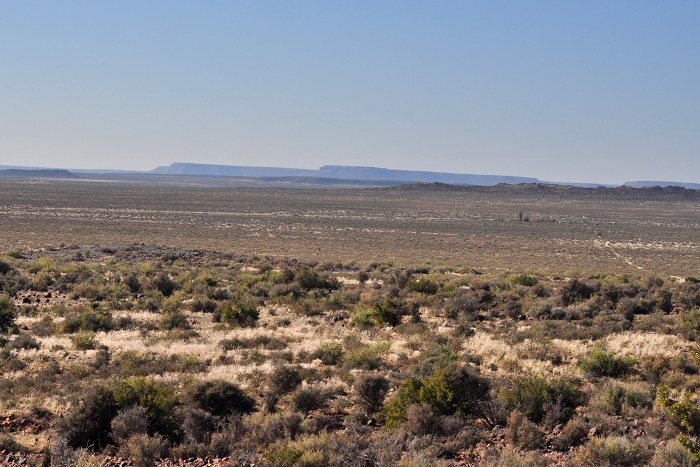
Photo by Ryan Tippett
Behaviour
Like most antlions Palparidius capicola is nocturnal. Adults often rest in a hanging position among the protective branches of larger bushes. They are regularly attracted to lights. Not much is known of its biology. The larvae are thought to live in deep soil.
Adults are active during the summer months. Most numerous from January to April but records exist from September to April.
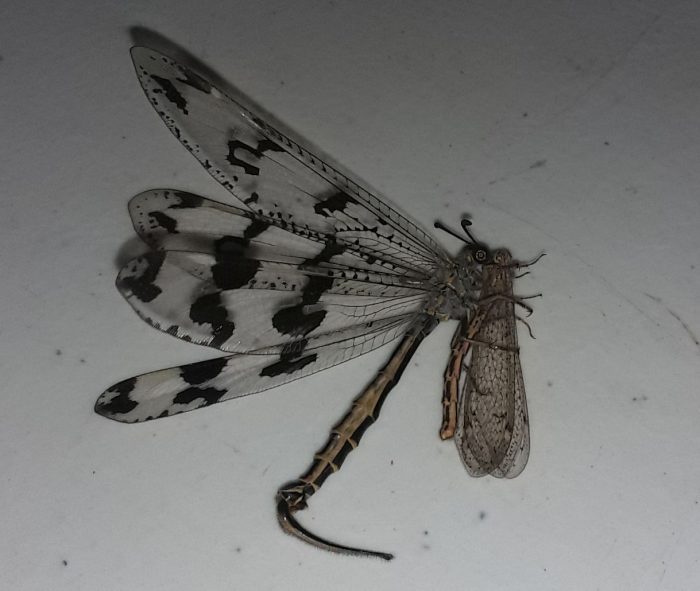
Photo by Neil Thomson
Status and Distribution
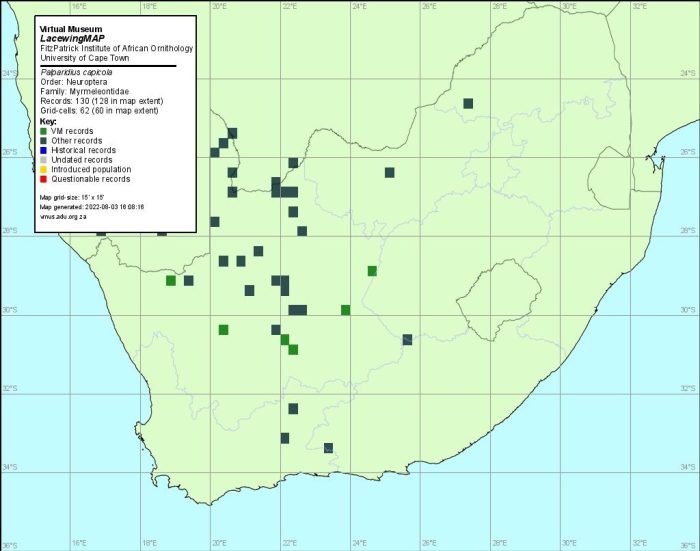
Fairly common and widespread in the drier western parts of South Africa. It is also known from Namibia and Botswana.
Taxonomy
Order: Neuroptera Family: Myrmeleontidae Subfamily: Palparinae Tribe: Palparini Genus: Palparidius Species: capicola
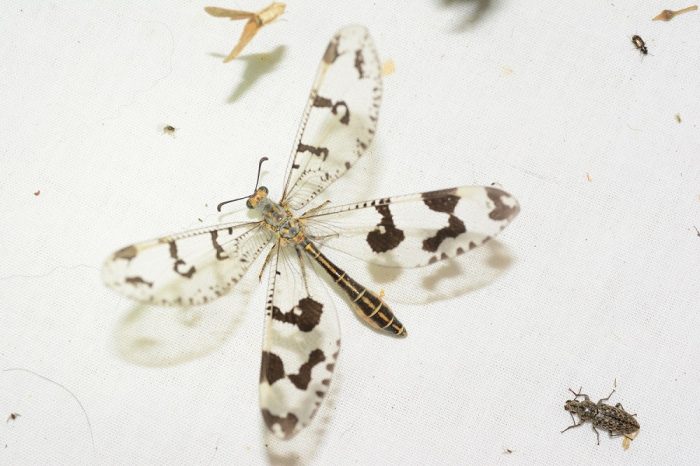
Photo by Ryan Tippett
Further Resources
Virtual Museum (LacewingMAP > Search VM > By Scientific or Common Name)
Acknowledgements:
The use of photographs by Neil Thomson is acknowledged. This species text has benefited enormously from comments made by Mervyn Mansell on records he has identified in LacewingMAP. We acknowledge his important contribution.
Recommended citation format for this species text:
Tippett RM 2022. Palparidius capicola. Biodiversity and Development Institute, Cape Town.
Available online at http://thebdi.org/2022/08/03/palparidius-capicola/

Photo by Ryan Tippett
