
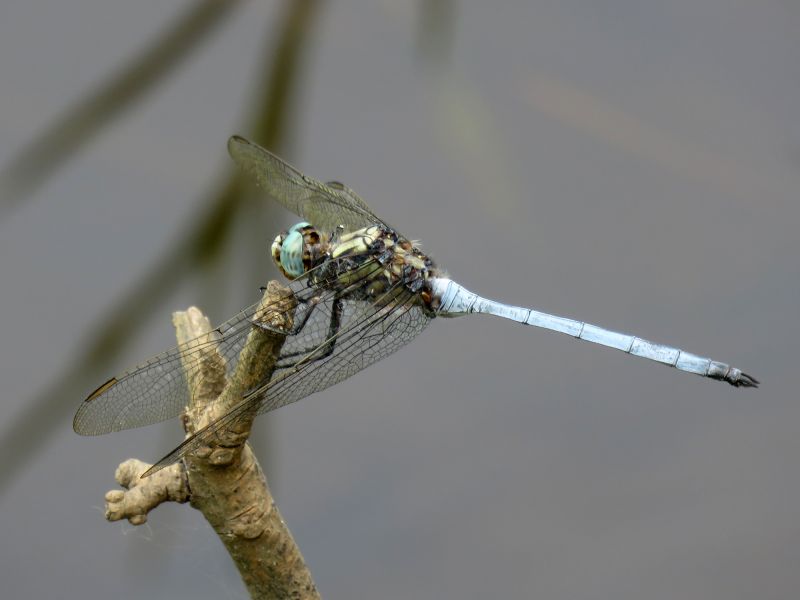
Cover photo by Diana Russell.
Find this species in the FBIS database (Freshwater Biodiversity Information System) here.
Family Libellulidae
Identification
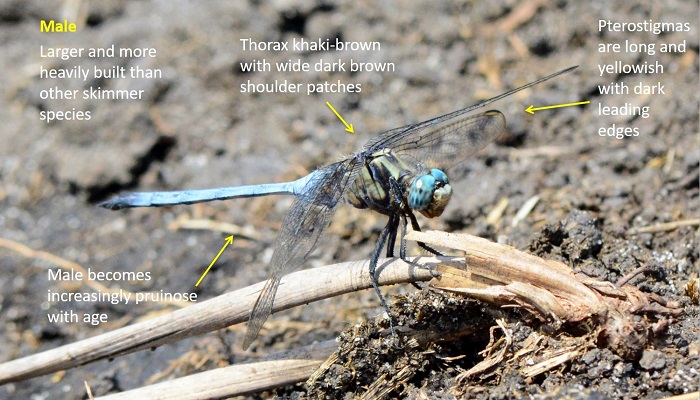
Near Kosi Bay, KwaZulu-Natal
Photo by Ryan Tippett
Large size
Length reaches 58mm; Wingspan attains 86mm.
The Robust Skimmer is the largest Orthetrum species. Key identification features include long yellow pterostigmas, with a dark leading edge and broad dark brown shoulder patches on a paler grey-brown thorax. The abdomen is pale pruinose blue. This pruinosity may spread onto the thorax with age. Fully pruinose males can be identified in the hand by the distinctive shape of the secondary genitalia.
The Robust Skimmer is slightly larger than the Long Skimmer (Orthetrum trinacria), but that species is very dark blue overall and does not have a tapered waist.
Generally similar to most other Orthetrum species, especially the Woodland Skimmer (Orthetrum monardi) in terms of colouration, but can be separated by its considerably larger size and broad dark brown shoulder patches.
Click here for more details on identification.
Habitat
The Robust Skimmer is associated with still-water habitats, particularly marshes, floodplains, and the verges of pans and lakes. It favours marshy ground, rich in grasses and sedge, and often with open patches of muddy or sandy substrate. The Robust Skimmer is regularly found where the waterside grass cover has been grazed short or trampled by large animals such as hippos, cattle, and buffalo. It is less frequent in areas of tall grass.
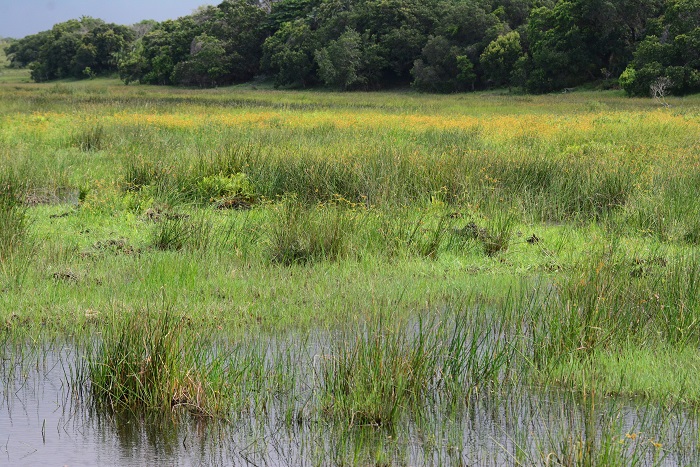
Photo by Ryan Tippett
Behaviour
The Robust Skimmer mostly sits low down over the ground or water. It hunts from a perch and frequently returns to the same spot. The flight is swift and powerful. The Robust Skimmer is fairly confiding, but flies far once disturbed. Non-breeding individuals may be found away from the water in the surrounding woodlands where they hawk insects from bushes and trees. Females are elusive and seldom recorded.
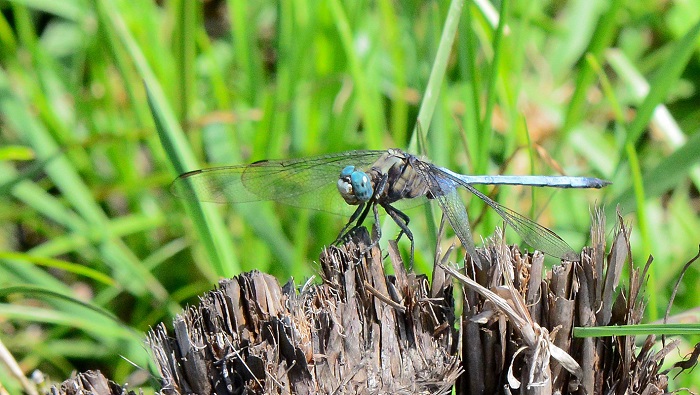
Near Kosi Bay, KwaZulu-Natal
Photo by Ryan Tippett
Status and Conservation
The Robust Skimmer is fairly common, but very localised. It is known to increase in abundance during wet climatic cycles, becoming more widespread locally. During dry periods it retreats to larger, permanent water bodies. The IUCN Red List of Threatened Species, lists the Robust Skimmer as Near Threatened in South Africa, but of Least Concern globally.
The Robust Skimmer is only recorded from high-quality habitats and is likely to be sensitive to habitat degradation. A large part of the South African range of this species is protected within the iSimangaliso Wetland Park.
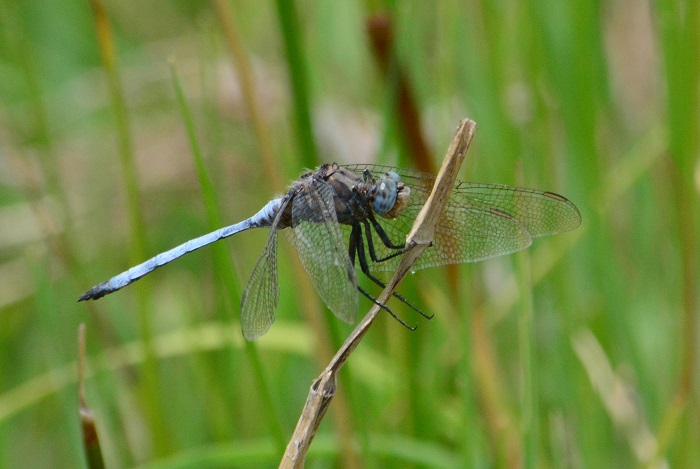
Linyanti, Botswana
Photo by Ryan Tippett
Distribution
Orthetrum robustum has a highly disjunct distribution in south-central and southern Africa. There appear to be three main distribution centers. These are north-eastern Zambia and the neighbouring Democratic Republic of the Congo. Northern Botswana and Namibia’s Caprivi Strip, and finally the north-eastern coastal plain of KwaZulu-Natal in South Africa, and probably adjacent Southern Mozambique.
In South Africa, the Robust Skimmer is restricted to the coastal plain of north-eastern KwaZulu-Natal, reaching as far south as Richards Bay.
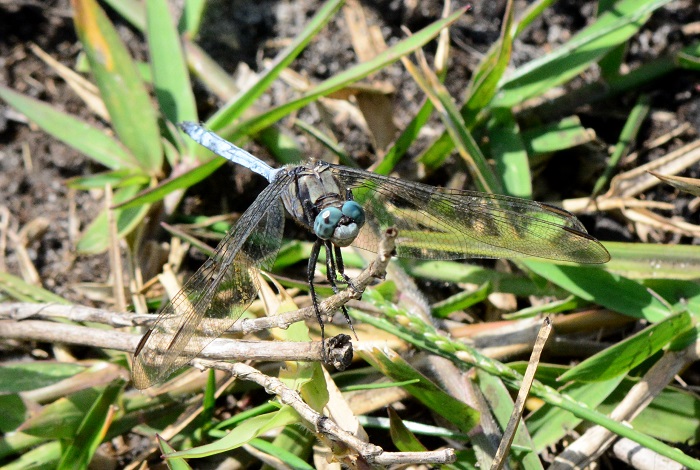
Near Kosi Bay, KwaZulu-Natal
Photo by Ryan Tippett
Below is a map showing the distribution of records for Robust Skimmer in the OdonataMAP database as at February 2020.
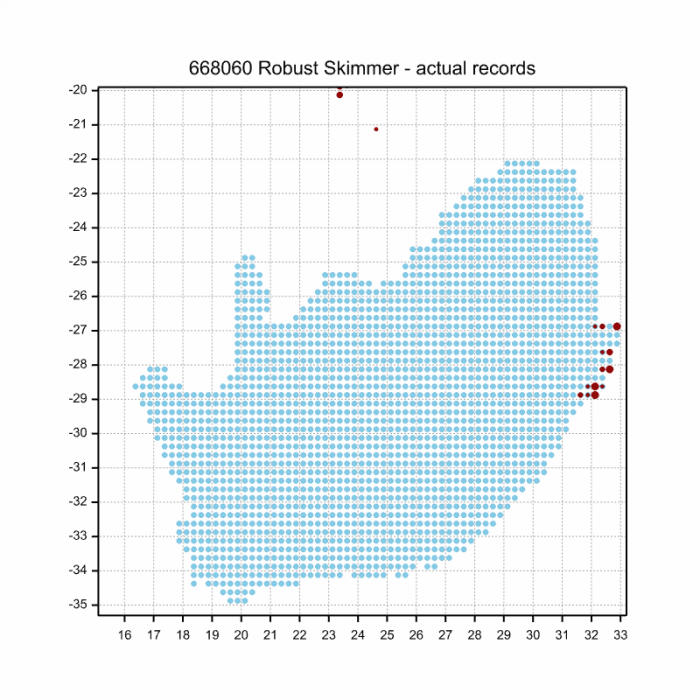
Below is a map showing the distribution of records for Robust Skimmer in the OdonataMAP database as of December 2024.
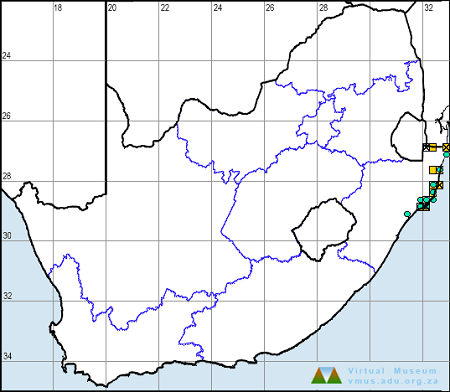
The next map below is an imputed map, produced by an interpolation algorithm, which attempts to generate a full distribution map from the partial information in the map above. This map will be improved by the submission of records to the OdonataMAP section of the Virtual Museum.
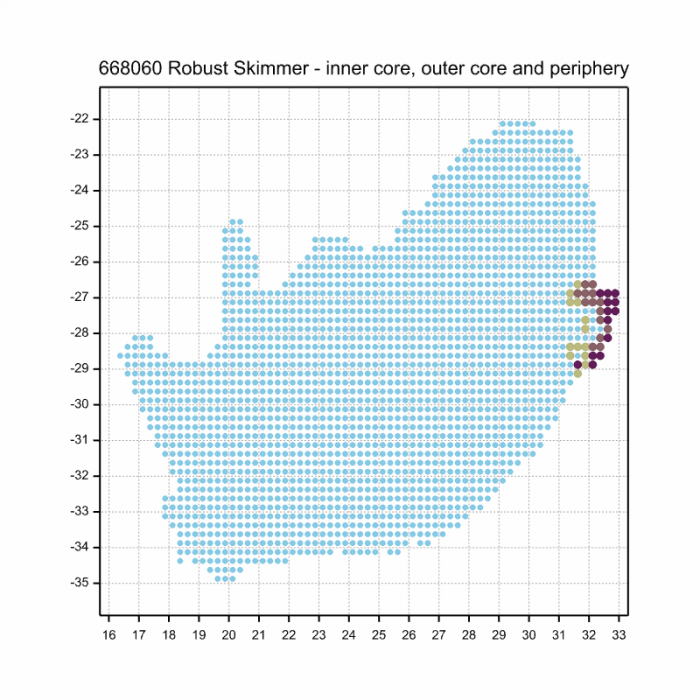
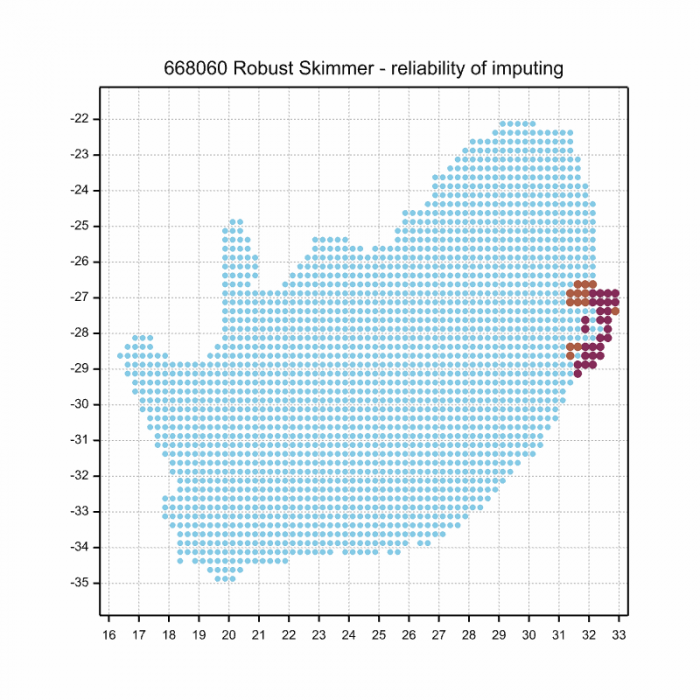
Ultimately, we will produce a series of maps for all the odonata species in the region. The current algorithm is a new algorithm. The objective is mainly to produce “smoothed” maps that could go into a field guide for odonata. This basic version of the algorithm (as mapped above) does not make use of “explanatory variables” (e.g. altitude, terrain roughness, presence of freshwater — we will be producing maps that take these variables into account soon). Currently, it only makes use of the OdonataMAP records for the species being mapped, as well as all the other records of all other species. The basic maps are “optimistic” and will generally show ranges to be larger than what they probably are.
These maps use the data in the OdonataMAP section of the Virtual Museum, and also the database assembled by the previous JRS funded project, which was led by Professor Michael Samways and Dr KD Dijkstra.
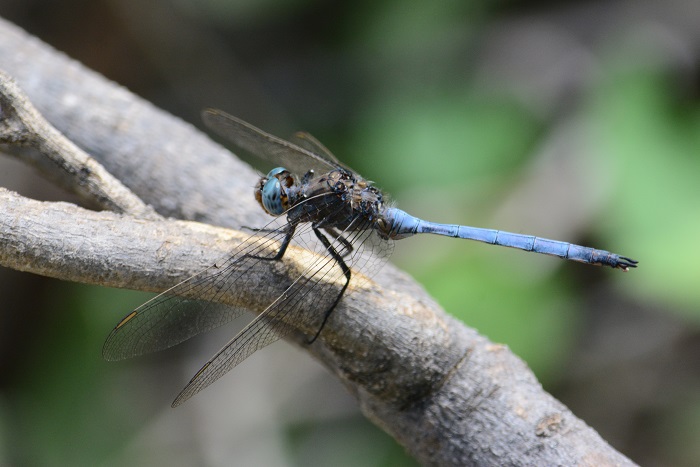
Okavango Delta, Botswana
Photo by Ryan Tippett
Further Resources
The use of photographs by Diana Russell is acknowledged. All other photographs by Ryan Tippett.
Robust Skimmer Orthetrum robustum Balinsky, 1965
Other common names: Forse Skepper (Afrikaans)
Recommended citation format: Loftie-Eaton M; Navarro R; Tippett RM; Underhill L. 2025. Robust Skimmer Orthetrum robustum. Biodiversity and Development Institute. Available online at https://thebdi.org/2020/05/18/robust-skimmer-orthetrum-robustum/
References: Tarboton, M; Tarboton, W. (2019). A Guide to the Dragonflies & Damselflies of South Africa. Struik Nature.
Samways, MJ. (2008). Dragonflies and Damselflies of South Africa. Pensoft
Samways, MJ. (2016). Manual of Freshwater Assessment for South Africa: Dragonfly Biotic Index. Suricata 2. South African National Biodiversity Institute, Pretoria
Martens, A; Suhling, F. (2007). Dragonflies and Damselflies of Namibia. Gamsberg Macmillan.
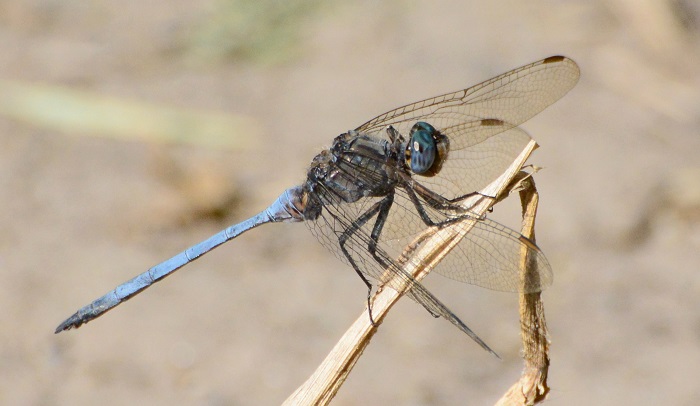
Linyanti, Botswana
Photo by Ryan Tippett