
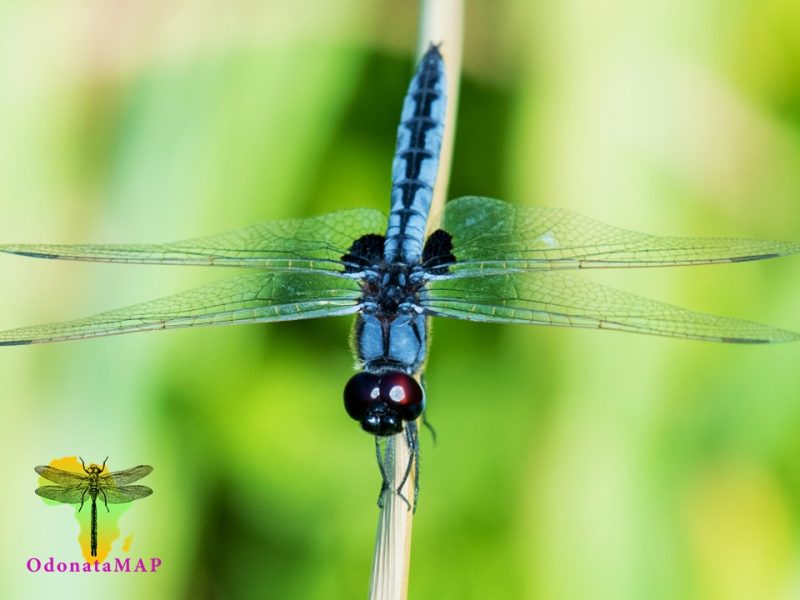
Cover photo by Christian Fry.
Find the Blue Basker in the FBIS database (Freshwater Biodiversity Information System) here.
Family Libellulidae
Identification

Enseleni Nature Reserve, KwaZulu-Natal
Photo by Ryan Tippett
Medium sized
Length up to 44mm; Wingspan reaches 80mm
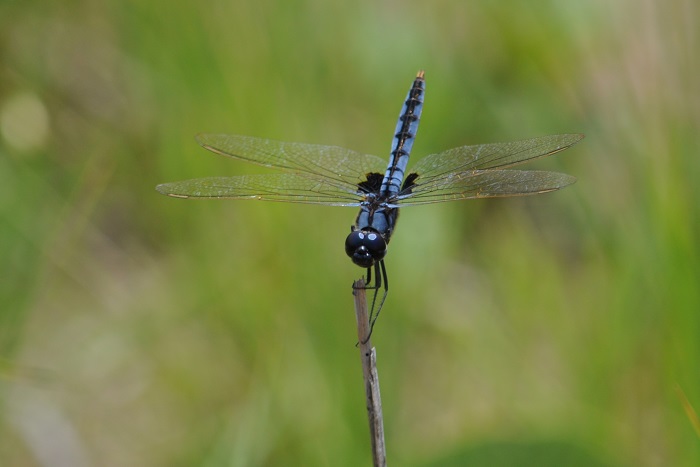
Male Blue Baskers are readily identified and unlike any other species in the region. The combination of the matt, dark blue body and black hind wing panels is diagnostic.
Females are overall yellowish with brown accents. They show bold black patterning down the length of the upper abdomen and dark brownish panels at the hind wing bases.
Females resemble those of Urothemis assignata (Red Basker). In that species the body colouration is more rufous than yellowish. The two species can be further differentiated by the patterning on the upper surface of the abdomen and by their slightly different hind wing markings.
Click here for more details on identification of the Blue Basker.
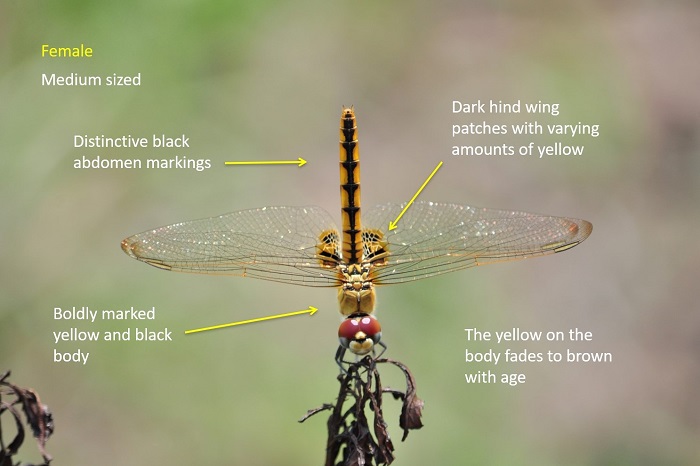
Enseleni Nature Reserve, KwaZulu-Natal
Photo by Ryan Tippett
Habitat
The Blue Basker inhabits freshwater lakes, pans, dams, marshes, and slow flowing sections of rivers. It prefers still-water habitats with abundant plant growth like reeds and sedges. Non-breeding individuals can often be found in open grassy areas away from water.
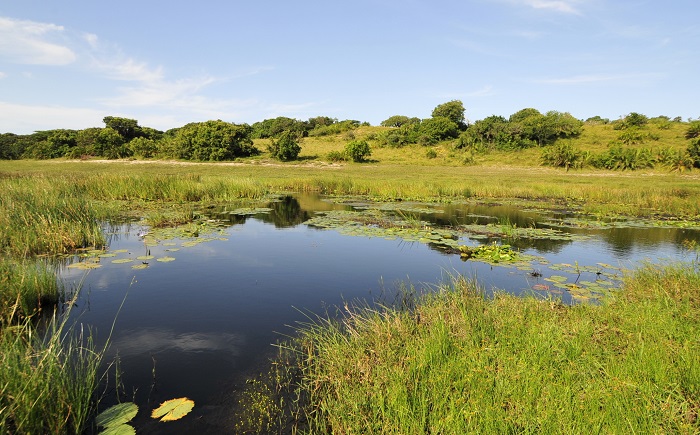
Photo by Ryan Tippett
Behaviour
Blue Baskers are perch hunters and spend as much time perched as they do darting off to intercept prey, or to chase off a rival. They like to sit in open, sunny positions. During the heat of the day they can often be seen in the obelisk position, pointing the abdomens at the sun to reduce the amount of direct sunlight on their bodies (see image below). Males and females both occur in the same areas.
The Blue Basker is on the wing from November to April.
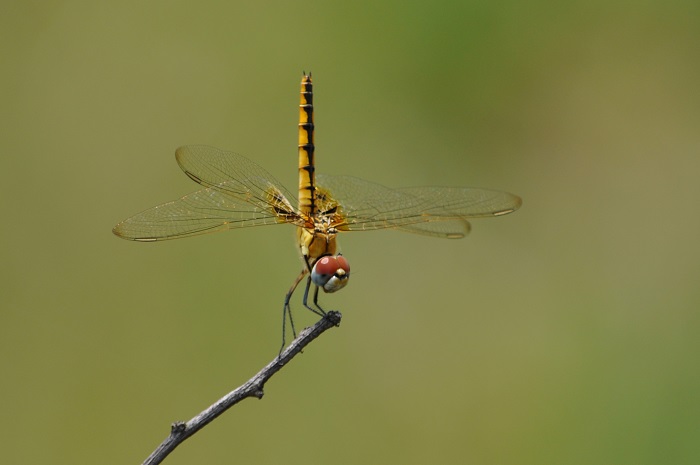
Enseleni Nature Reserve, KwaZulu-Natal
Photo by Ryan Tippett
Status and Conservation
Urothemis edwardsii is a common species in South Africa. It is listed as of Least Concern in the IUCN Red List of Threatened Species. The Blue Basker is fairly resistant to habitat degradation and commonly occupies man-made habitats, provided there is enough vegetation to meet its habitat requirements.
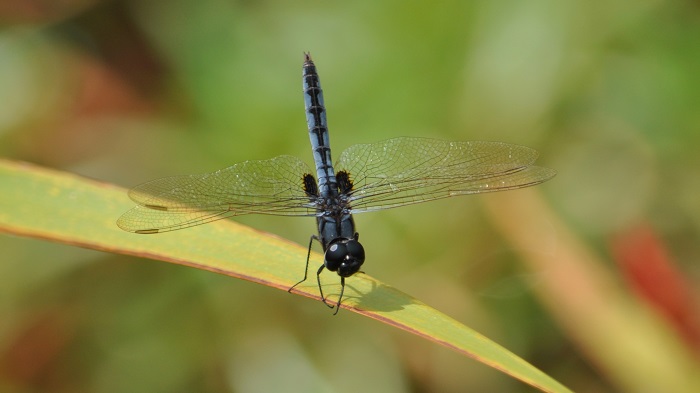
Near Hluhluwe, KwaZulu-Natal
Photo by Ryan Tippett
Distribution
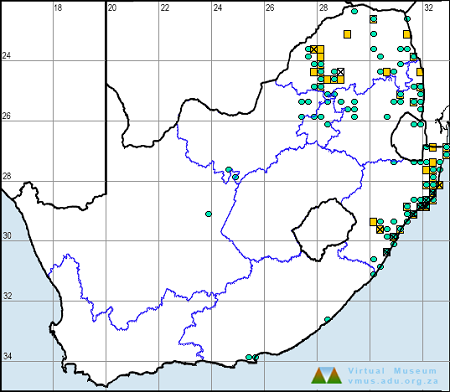
The Blue Basker is widespread and occurs virtually throughout Africa south of the Sahara, including parts of Madagascar and Mayotte in the Comoros archipelago. Isolated or relict populations are also found in Algeria and Oman. In South Africa, the Blue Basker is found mainly in the warmer and wetter north and east of the country.
Below is a map showing the distribution of records for Blue Basker in the OdonataMAP database as at February 2020.

Below is a map showing the distribution of records for Blue Basker in the OdonataMAP database as of December 2024.
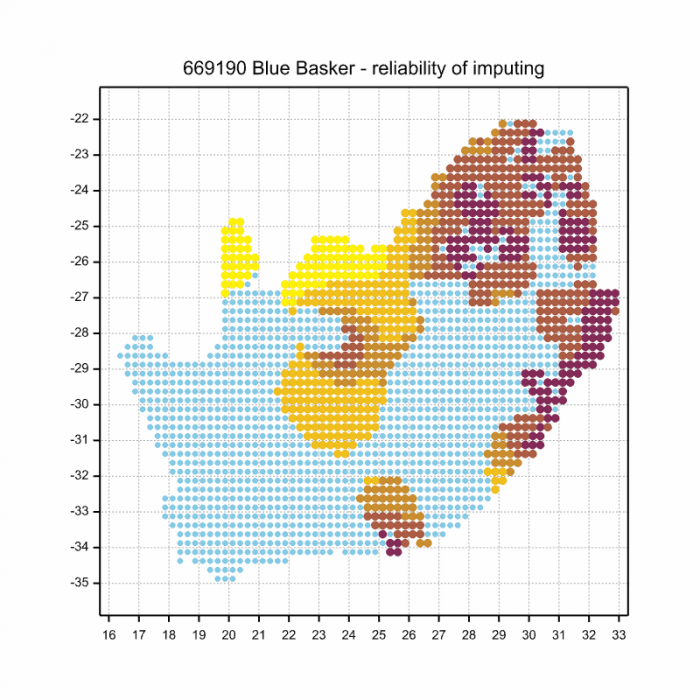
The next map below is an imputed map, produced by an interpolation algorithm, which attempts to generate a full distribution map from the partial information in the map above. This map will be improved by the submission of records to the OdonataMAP section of the Virtual Museum.

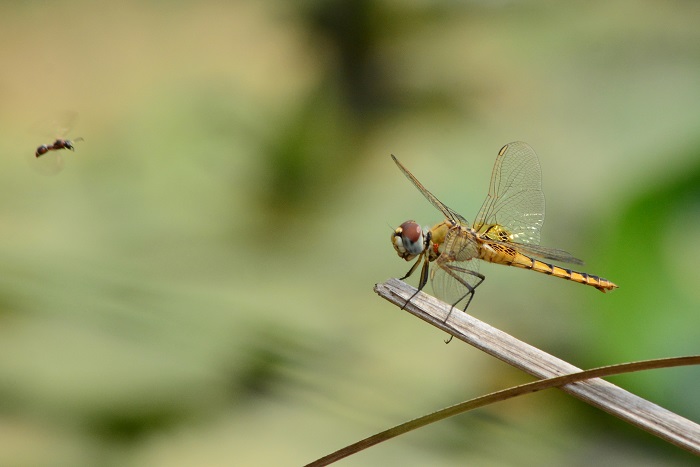
Ehlatini Bush Camp, KwaZulu-Natal
Photo by Ryan Tippett
Further Resources
The use of photographs by Christian Fry is acknowledged. All other photographs by Ryan Tippett.
Blue Basker Urothemis edwardsii (Selys, 1849)
Other common names: Blousonvangertjie (Afrikaans)
Recommended citation format: Loftie-Eaton M; Navarro R; Tippett RM; Underhill L. 2025. Blue Basker Urothemis edwardsii. Biodiversity and Development Institute. Available online at https://thebdi.org/2020/02/25/blue-basker-urothemis-edwardsii/
References: Tarboton, M; Tarboton, W. (2019). A Guide to the Dragonflies & Damselflies of South Africa. Struik Nature.
Samways, MJ. (2008). Dragonflies and Damselflies of South Africa. Pensoft
Samways, MJ. (2016). Manual of Freshwater Assessment for South Africa: Dragonfly Biotic Index. Suricata 2. South African National Biodiversity Institute, Pretoria
Martens, A; Suhling, F. (2007). Dragonflies and Damselflies of Namibia. Gamsberg Macmillan.
Enseleni Nature Reserve, KwaZulu-Natal
Photo by Ryan Tippett

Well done Ryan Tippett
Splendid achievement boy 👍🙏