Common starling Sturnus vulgaris expansion in South Africa
Ielyzaveta M Ivanova
School of Animal, Plant and Environmental Sciences, University of the Witwatersrand, Private Bag 3, Wits 2050, South Africa
Craig T Symes
School of Animal, Plant and Environmental Sciences, University of the Witwatersrand, Private Bag 3, Wits 2050, South Africa
The Common Starling Sturnus vulgaris is a medium-sized granivorous and frugivorous bird (Craig 2005), with a native range across large parts of Europe and western Asia. It was introduced to Cape Town in 1899, colonising the Cape region during the early 20th century (Winterbottom & Liversidge 1954). Since then, the species has continued to systematically extend its range into South Africa (Craig 2005). Using the available data in SABAP2, collected over the last 10 years (July 2007 – June 2017), we present a summary of the progressive expansion of the species in South Africa.
The presence of the Common Starling is reported in more pentads (5’X5’ geographical grids used in SABAP2) in the 2016/17 period (736 pentads) than in 2007/08 (383 pentads) (Table 1), demonstrating a significant increase in distribution over the past 10 years. The species range appears to be in a state of continuous expansion as it spreads from the original source of introduction, as shown by the large numbers of previously unoccupied pentads reporting the Starling over time (Figure 1, Table 1). Despite this, the actual number of pentads reporting the Starling in any given period is relatively stable, perhaps even declining slightly (Table 1). The overall proportion of pentads reporting the Starling shows a steady decline over the period, which would likely be attributed to increases in the overall SABAP sampling effort (of Starling absent pentads) outpacing the species range expansion. Across its range, the Common Starling appears to have a relatively consistent abundance over time (as represented by the Starling’s reporting rate, Table 1).
Fig 1. Reporting rates of the Common Starling across pentads (5’X5’ geographical grids) in South Africa, in July 2007 – June 2008 (A) and July 2016 – June 2017 (B). Different colours denote reporting rates, presented as percentage of all record cards completed in each given pentad.
Table 1: Range expansion and abundance of the Common Starling in South Africa, for July-June annual periods in 10 years of SABAP2 sampling (July 2007 – June 2017).
Year perioda
Pentadsb
Newc
Reporting rated
2007/08
383 (19.8)
383
50 ± 45
2008/09
677 (15.9)
423
52 ± 45
2009/10
864 (16.6)
334
52 ± 43
2010/11
865 (15.9)
251
53 ± 44
2011/12
843 (15.6)
191
52 ± 43
2012/13
759 (14.8)
124
51 ± 44
2013/14
636 (12.2)
83
47 ± 44
2014/15
659 (12.0)
82
48 ± 44
2015/16
804 (13.4)
106
46 ± 43
2016/17
736 (12.2)
72
45 ± 43
a(July – June) bbNumber of pentads with Starlings (as % of sampled pentads) cNumber of new pentads with Starlings dReporting rate across Starling-reporting pentads (mean % ± SD)
The slight declines in the species range and abundance over the 10 years indicate that the presence of the species in an area does not necessarily result in long-term persistence. A similar decline is observed for the Starling in the United States, following a very rapid period of initial colonisation (Sauer et al. 2008). The expansion of the Starling’s range appears to be mitigated numerically by its contraction elsewhere in the country. As such, the colonising behaviour of the Common Starling in South Africa appears to be one of venturing into new territory, with a lag period of decline in less suitable areas where it may not be able to persist. A possible explanation of the high expansion rate is the general tendency to move along pathways of lower resistance, such as lower elevation terrain that is preferably under cropland or pasture (with the contrary causing a greatly slowed expansion, such as in the Iberian Peninsula, Ferrer et al. 1991).
Common Starling in Gauteng
In Gauteng, the Common Starling first made an appearance in 1986 (Boucher 2018), but consistent reporting of the species in the region did not begin until the early 21st century. A recent arrival, the Starling is already making steady range gains, being reported in “new” Gauteng pentads in each data period (Table 2). With the increasing number of pentads reporting the Starling, the average reporting rate for the species across the province is showing an obvious rise (Table 2). Such an expansion pattern resembles the initial phases of the Starling’s colonisation of the country at large, as discussed previously – quick gains in range.
Table 2: Range expansion and abundance of Common Starling in Gauteng, for July-June annual periods in 10 years of SABAP2 sampling (July 2007 – June 2017).
Year perioda
Pentadsb
Newc
Reporting rated
2007/08
1 (0.5)
1
0.02 ± 0.30
2008/09
4 (1.5)
3
0.06 ± 0.50
2009/10
1 (0.4)
1
0.05 ± 0.86
2010/11
1 (0.4)
1
0.07 ± 1.20
2011/12
4 (1.5)
2
0.39 ± 3.82
2012/13
4 (1.6)
1
0.05 ± 0.48
2013/14
4 (1.4)
3
0.18 ± 1.69
2014/15
7 (2.5)
3
0.35 ± 2.68
2015/16
8 (2.9)
5
0.21 ± 1.96
2016/17
10 (3.7)
1
0.46 ± 3.19
a(July – June) bbNumber of pentads with Starlings (as % of sampled pentads) cNumber of new pentads with Starlings dReporting rate across all Gauteng pentads (mean % ± SD)
The reporting rate for the Starling across Gauteng as a whole averages only 0.18 % for the 10 years, reflecting the novel status that the species still holds in the province. The increase in Starling reporting rates is not statistically significant at this stage, despite their apparent growth (ANOVA single factor test; F(9,2647) = 1.627, p = 0.102). A likely explanation of this is the very high variability observed in the annual averages (Table 2).
From the growing reporting rates and increasing variability, it can be noted that the lag period of decline following rapid territory colonisation seen for the Common Starling in South Africa as a whole is not yet identified in Gauteng, but may follow on in the years to come.
Assessing a variety of land uses found in Gauteng, the Starling’s presence is consistently below 1 % throughout (when pentads are averaged by share of land-use type), not being reported at all in pentads with agriculture comprising over 60 % of land use (Table 3). This finding supports the attribution of the traditionally farmland-inhabiting Common Starling’s decline in Europe to the intensification of agricultural areas (Donald et al. 2001).
While sampling effort has increased over the years of the atlas, as awareness of and interest in the project grows, the range expansion of the Common Startling in Gauteng appears to not simply be a function of that effort – rather, we believe it reflects an actual increase in the number of pentads in which it occurs, which is supported by the growing percentage of sampled pentads reporting the species (Table 2).
General conclusions
In South Africa, the Common Starling appears to be following an expanding distribution pattern, as it spreads into new territory and establishes its presence. From the pattern of expansion, it is possible to speculate a future Starling distribution that spans the entire country and sub-region. Whether it is able to persist in more “unfavourable” regions (such as the dry Northern Cape Province) remains to be established. The species is expected to be most abundant in areas where agriculture is a prominent, but not dominant, land use (Table 3), indicating an avoidance for what is likely to be intensified farmland (cf. Donald et al. 2001).
Table 3: Reporting rate (%) for Common Starling in Gauteng within pentads containing different land-use types, averaged for all pentads of each type found in the province.
Land-use
Share of pentada
Reporting rateb
Agriculture
< 10
0.1
> 40
0.3
> 60
0.0
Natural
> 60
0.1
Settlement
> 60
0.3
Highly transformed
> 10
0.7
aShare of pentad occupied by land-use (%) b(%)
With regards to Gauteng, the future of the Common Starling is challenging to determine, as the observations are of a trend arguably in its initial phases. However, some extrapolations can be made. The open grassland of pre-settlement Gauteng would have been prohibitive to Common Starling colonisation, but the conditions for colonisation have since changed. Its diet of insects and fruits is well-suited to the now-afforested expanses of Gauteng cities (Schäffler & Swilling 2012), as is its preference of cavities for nesting. If its preference for areas with intermediate levels of agriculture, settlement, and land transformation persist, the species will continue increasing in both range and abundance across the province (which features a large proportion of relatively densely settled and transformed spaces). Therefore, it is likely that the species increase in Gauteng will become significant over time.
The Common Starling has been described as having the potential to disrupt natural processes such as seed dispersal (Richardson et al. 1996); however, not much work has been published on these impacts in the Cape region. The Starling is also thought to be able to displace cavity-nesting birds in southern Africa through nesting competition, as it does with the Olive Woodpecker Mesopicos griseocephalus (van der Merwe 1984). On the other hand, in the introduced range around New York City, there is little evidence to attribute a decline in cavity-nesting native species to competition with the Starling (Koenig 2003). Therefore, the impact of Starling on other bird species in Gauteng (many themselves occurring in increased abundance due to anthropogenic change) is difficult to predict. A further consideration is that alien birds are known to form positive as well as negative interactions with not only native birds, but also other “aliens” (Rosenzweig 2001; Orchan et al. 2013). This is important to note, as highly transformed environments such as Gauteng contain numerous “alien species” (Symes et al. 2017). As its distribution expands, the Starling may engage in competition for resources with other species in Gauteng, or it may expand to fill a vacant niche (a controversial concept in itself, Lekevicius 2009). If the Common Starling is to follow the footsteps of the Rose-ringed Parakeet Psittacula krameri, an alien species preceding it in Gauteng by a few decades, impacts on “indigenous” birds are predicted to be minimal to insignificant (Ivanova 2017). In attempting to quantify impact, and given that the species is a successful “invader” elsewhere in the world, we suggest that the Common Starling is one to closely monitor.
Public responses to exotic species are often emotive (Gozlan et al. 2013), and may lack credibility altogether when there is either little scientific evidence or when scientific evidence is ignored. From the trends found so far, it is clear that in the South African context much research is still needed to understand the complexities of changing bird communities in the face of rapid anthropogenic change. Indeed the clarification of numerous terms, and the context in which they are applied in this field of research, are frequently inconsistent and need attention (e.g. invasive and alien, as defined by Richardson et al. 2011). Furthermore, this topic needs informed public engagement to help prevent misinformation on complex ecological processes. A wealth of information in the form of citizen science SABAP data remains to be mined in helping understand these processes.
Acknowledgements
We would like to thank the large number of independent observers for their continued contribution to the SABAP2 database, whose work makes possible the project, and our use of it.
Craig AJFK 2005. Common starling Sturnus vulgaris. In: Hockey PAR, Dean WRJ, Ryan PG (eds). Roberts’ Birds of Southern Africa, 7th edition. The Trustees of the John Voelcker Bird Book Fund, Cape Town, South Africa: 971-972.
Donald PF, Green RE, Heath MF 2001. Agriculture intensification and the collapse of Europe’s farmland bird populations. Proceedings of the Royal Society of London B 268: 25-29.
Ferrer X, Motis A, Peris SJ 1991. Changes in the breeding range of starlings in the Iberian Peninsula during the last 30 years: competition as a limiting factor. Journal of Biogeography 18: 631-636.
Gozlan RE, Burnard D, Andreou D, Britton JR 2013. Understanding the Threats Posed by Non-Native Species: Public vs. Conservation Managers. PLoS ONE 8: e53200.
Ivanova IM 2017. Spatial and temporal impacts of the alien species Psittacula krameri on the occurrence of avifauna in Gauteng. Honours thesis, University of the Witwatersrand, Johannesburg.
Koenig WD 2003. European starlings and their effect on native cavity-nesting birds. Conservation Biology 17: 1134-1140.
Lekevicius E 2009. Vacant niches in nature, ecology, and evolutionary theory: a mini-review. Ekologija 55: 165-174.
Orchan Y, Chiron F, Shwartz A, Kark S 2013. The complex interaction network among multiple invasive bird species in a cavity-nesting community. Biological Invasions 15: 429-445.
Richardson DM, Pysek P, Carlton JT 2011. A compendium of essential concepts and terminology in invasion ecology. In: Richardson DM (ed). Fifty years of invasion ecology: The legacy of Charles Elton. Blackwell Publishing, Oxford, UK: 409-420.
Richardson DM, van Wilgen BW, Higgins SI, Trinder-Smith TH, Cowling RM, McKell DH 1996. Current and future threats to plant biodiversity on the Cape Peninsula, South Africa. Biodiversity and Conservation 5: 607-647.
Rosenzweig ML 2001. The four questions: what does the introduction of exotic species do to diversity? Evolutionary Ecology Research 3: 361-367.
Sauer JR, Hines JE, Fallon J 2008. The North American breeding bird survey, results and analysis 1966-2007. U.S. Geological Survey Patuxent Wildlife Research Centre, Laurel, Maryland.
Schäffler A, Swilling M 2012. Valuing green infrastructure in an urban environment under pressure – The Johannesburg case. Ecological Economics 86: 246-257.
Symes CT, Roller K, Howes C, Lockwood G, van Rensburg BJ 2017. Grassland to urban forest in 150 years: avifaunal response in an African metropolis. In: Murgui E, Hedbloom M (eds). Ecology and conservation of birds in urban environments. Springer International Publishing, Cham, Switzerland: 309-341.
Van der Merwe F 1984. ’n Nalatenskap van Rhodes: Europese Spreeus verdring Gryskopspegte. African Wildlife 38: 155-157.
Winterbottom JM, Liversidge R 1954. The European starling in the South West Cape. Ostrich 25: 89-96.
Geldenhuys L. 2018. Aggregations of African Black Oystercatchers in remote coastal areas of the Northern Cape Province, South Africa. Biodiversity Observations 9.8:1-5
Aggregations of African Black Oystercatchers in remote coastal areas of the Northern Cape Province, South Africa
Louise Geldenhuys
Northern Cape Department of Environment and Nature Conservation, Private Bag X16, Springbok, 8240
Abstract
Counts of African Black Oystercatchers along the Northern Cape Coastline, excluding the Namaqua National Park, were conducted during August and November of 2015, 2016 and 2017. An average of 387 oystercatchers were counted in this area. The area between Port Nolloth and Kleinsee accounted for 46 % of oystercatchers counted, and this relatively undisturbed and remote area could be an important site for the conservation of oystercatchers in South Africa.
Introduction
The African Black Oystercatcher Haematopus moquini is endemic to southern Africa, and breeds in the narrow coastal zone and on the offshore islands from southern Namibia to southern KwaZulu-Natal, South Africa (Hockey et al. 2003, Underhill 2014). Adults are monogamous and territorial, and will stay in their territory for life, but pre-breeding juveniles migrate between 150 and 2000 km during the first few years of their lives, after which they return to find a territory close to where they hatched. African Black Oystercatchers feed during low tide, and aggregate at specific roost sites during high tides (Figure 1). During the breeding season breeding birds do not join these roosts, and the aggregations of birds at roosts consists of juveniles and immature non-breeding birds. These aggregations of non-breeding birds usually feed in the vicinity of the roost (Rao et al. 2014).
The sites of these roosts stay more or less constant over years, and the conservation of these sites is important for the long-term survival of the species (Rao et al. 2014). The locations of these roost sites have previously been identified through aerial surveys of the coastline between Elands Bay in South Africa and the Kunene River at the border of Namibia and Angola (Rao et al. 2014). This paper presents more recent (2015-2017) observations of aggregations of African Black Oystercatchers in the Northern Cape Province.
The conservation status of the African Black Oystercatcher has recently been changed from Near Threatened to Least Concern, following an increase in numbers (BirdLife International 2017). This change in threat status can be attributed to an overall increase in population size; this, in turn, is attributed to a massive increase in food resources as a result of the invasion of the coastline by the Mediterranean Mussel Mytilus galloprovincialis, the sensitive management of the offshore islands along the South African and Namibian coastlines, and the exclusion of off-road vehicles from the coastline of South Africa (Underhill 2014).
Fig 1. A group of 39 African Black Oystercatchers between Port Nolloth and Kleinsee.
Northern Cape African Black Oystercatcher surveys: 2015 to 2017
African Black Oystercatcher numbers and locations were recorded during the annual Northern Cape coastal audits. Counts were conducted from 4×4 vehicles traveling as close to the coastline as possible. Counts were done throughout the day, and not exclusively during high tide. The area surveyed was divided into a northern and southern section (Figures 2 and 3), and each section was surveyed twice (northern section 2015 and 2017, and southern section 2015 and 2016). The area of the Namaqua National Park was excluded from these surveys.
In the northern section (Orange River Mouth to Kleinsee), totals of 290 and 364 oystercatchers were counted in 2015 and 2017 respectively. In the southern section (Western Cape boundary to Kleinsee), totals of 80 and 39 oystercatchers were counted in 2015 and 2016, respectively.
Fig 2. Oystercatcher counts in the northern section of the Northern Cape coastline in 2015 and 2017. Groups of ten or more are reflected by the orange circles (size correspond to group size). Large black circles indicates areas where groups were found in the same area in the different years.Fig 3. Oystercatcher counts in the southern section of the Northern Cape coastline in 2015 and 2016. Groups of ten or more are reflected by orange circles. There were no groups of ten or more observed in 2016.
For the entire Northern Cape coastline, excluding the Namaqua National Park, 370 oystercatchers were counted in the combined two sections in 2015, and 403 oystercatchers in the two sections in 2016 and 2017 combined. These totals are much greater than previously reported for oystercatchers between the Orange and Olifants Rivers as a total of 86 (1978-1980) and 79 (1997-2002) (Underhill 2014). It is not known if this difference is due to the differences in observation methods used, or if it is a reflection of an increase in oystercatcher numbers. It is more likely to be the latter; for example, on Robben Island, mean oystercatcher numbers increased from c. 120 in 2002 to 345 in 2012 to 516 in 2017 (Spiby 2012; Bukola Braimoh unpubl. observations).
Aggregation areas
In the northern section there were seven observations of groups of 10 or more oystercatchers in 2015, and 11 groups in 2017 (Figure 2). There were two groups of 10 or more oystercatchers in the southern section in 2015, and none in 2016 (Figure 3). Two of these aggregations occurred at the same place during both surveys (Figure 2), and these sites should be considered important for oystercatcher conservation. The area between Port Nolloth and Kleinsee appears to be an important area for aggregating oystercatchers, with an average of 46 % of the total number of oystercatcers in the Northern Cape (excluding Namaqua National Park) found in this area. This area is also currently relatively undisturbed. While access is restricted by De Beers, no active mining is currently taking place, unlike the areas between Alexander Bay and Port Nolloth, and between Kleinsee and the Spoeg River Mouth, where intensive coastal diamond mining is taking place.
Acknowledgements
Klaas van Zyl, Enrico Oosthuysen, Marnus Smit, Conrad Geldenhuys, Johan Jonk, Thinus Jonker, Adeleen Cloete, Bronwen Cornelissen, and Wilna Oppel assisted with oystercatcher spotting and counting. Alexcor, De Beers, and West Coast Resources granted access into mining areas. The Northern Cape Department of Environment and Nature Conservation funded this survey.
References
BirdLife International 2017. Haematopus moquini. [The IUCN Red List of Threatened Species 2017]. Available from http://www.iucnredlist.org/details/22693627/0, accessed on 25 January 2018.
Hockey PAR, Lesenberg A, Loewenthal D 2003. Dispersal and migration of juvenile African Black Oystercatchers Haematopus moquini. Ibis 145: E114-E123.
Rao AS, Hockey PAR, Montevecchi WA 2014. Coastal dispersal by pre-breeding African Black Oystercatchers Haematopus moquini. Marine Ornithology 42: 105-112.
Spiby J 2012. Trends in African Black Oystercatchers Haematopus moquini on Robben Island, South Africa: population size and nest characteristics. BSc(Hons) project, Department of Zoology, University of Cape Town.
Underhill LG 2014. Assessment of the conservation status of African Black Oystercatcher Haematopus moquini. International Water Studies 20:97-108.
Underhill LG, Loftie-Eaton M and Navarro R. 2018. Dragonflies and damselflies of the Western Cape – OdonataMAP report, August 2018. Biodiversity Observations 9.7:1-21
Animal Demography Unit, Department of Biological Sciences, University of Cape Town, Rondebosch, 7701 South Africa; Biodiversity and Development Institute, 25 Old Farm Road, Rondebosch, 7700 South Africa
Megan Loftie-Eaton
Animal Demography Unit, Department of Biological Sciences, University of Cape Town, Rondebosch, 7701 South Africa; Biodiversity and Development Institute, 25 Old Farm Road, Rondebosch, 7700 South Africa
Rene Navarro
Animal Demography Unit, Department of Biological Sciences, University of Cape Town, Rondebosch, 7701 South Africa; FitzPatrick Institute of African Ornithology, Department of Biological Sciences, University of Cape Town, Rondebosch, 7701 South Africa
What is this document about, and for whom was it written?
This paper is about the Odonata (dragonflies and damselflies) of the Western Cape. It contains a summary of the information in the combined database of the OdonataMAP project and the ODA initiative. It provides a species list for the province. It gives instructions that enable the reader to obtain up-to-date distribution maps for each species, and to obtain up-to-date lists of species for quarter degree grid cells in the Western Cape.
The main users will be the citizen scientists who collect photographic data of dragonflies and damselflies and submit it to OdonataMAP. We believe the information contained here will be useful for planning purposes, and to guide citizen scientists to the areas within the Western Cape where the data needs are greatest.
The paper also aims to provide a model for the presentation of biodiversity data in such a way that can be used by managers and policy makers, by researchers, and by conservation advocacy NGOs. For these groups of people it aims (1) to provide a snapshot, at a point in time, of the quality and volume of data available for the Western Cape, and (2) to provide links to the relevant databases, so that they have access to useful summaries of the ongoing data collection effort. The data can clearly be repackaged in many different formats (for example, species lists for individual sites, such as nature reserves). The aim here is to provide a broad brush overview at the provincial level.
What are the headlines?
In the two-year period 1 July 2016 to 30 June 2018, citizen scientists added seven species to the list of dragonflies and damselflies in the Western Cape, bringing the total to 76 species (Figure 1).
The database available for this report contained 11,267 records of dragonflies and damselflies. This includes the specimen record dating back to the start of the 20th century.
Of these records 2,433 records (22%) were added between July 2016 and June 2017, and 4,202 (37%) between July 2017 and June 2018.
Thus 59% of the entire Western Cape database of records of dragonflies and damselflies was contributed by citizen scientists in two years.
Fig 1. This was the third record of the Vagrant Emperor Anax ephippiger in the Western Cape. Somerset West, 15 May 2017, Corrie du Toit. (http://vmus.adu.org.za/?vm=OdonataMAP-33845)
Where is the study area?
The Western Cape is a province of South Africa, situated on the southwestern section of the country (Figure 2). Of South Africa’s nine provinces, it is the fourth largest with an area of 129,449 km2. The Western Cape is the third most populated province, with an estimated 6.5 million inhabitants in 2017 (Statistics South Africa 2017).
Fig 2. Map of the Western Cape, showing some of the keys centres of human population, and the main road network.
The Western Cape Province is roughly L-shaped, extending northward and eastward from the Cape of Good Hope, in the southwestern corner of South Africa. It stretches 400 km northward along the Atlantic Ocean coast, about halfway to Namibia, and 500 km eastward along the south coast, ending at Natures Valley on the Indian Ocean. It is bordered on the north by the Northern Cape and on the east by the Eastern Cape.
The province has large variation in rainfall, with the eastern end, bordered by the warm Indian Ocean, being almost forest, and the northern end, bordered by the cold Atlantic Ocean, being semi-desert. This wet-dry gradient has a strong influence on the distribution of Odonata within the province. The other major factor in Odonata distribution is a series of almost linear ranges of mountains, roughly parallel to the coast, but at varying distances from it.
There are 262 quarter degree grid cells (Figure 2) which are entirely or partly within the Western Cape. 186 are entirely within the Western Cape. 76 are partly within the Western Cape; 52 are shared with the Northern Cape, 22 are shared with the Eastern Cape, and there are two which are shared between the three provinces (3124CA Winterhoekberge and 3124CC Winterhoek). This report is based on all 262 grid cells which are “in” the Western Cape.
What data are available for the dragonflies and damselflies in the Western Cape?
On 14 August 2018, there were 11,267 records of Odonata in the combined database of OdonataMAP and the Odonata Database of Africa (ODA), recorded since 1980 for Western Cape (Table 1). These were the records strictly within the boundaries of the Western Cape. Of these, 8,938 (80%) had been submitted by citizen scientists as photographic records and the balance were from ODA.
The Odonata Database of Africa (ODA) is an open access database developed by a JRS-funded project (Clausnitzer et al. 2012, Dijkstra 2016). It contains records of the distribution of dragonflies and damselflies across Africa and includes most of the museum specimen records for the region. It is available online as the African Dragonflies and Damselflies Online (ADDO) (http://addo.adu.org.za/). ADDO is a collaboration between the Department of Conservation Ecology and Entomology (University of Stellenbosch) and the ADU (University of Cape Town). Although the two databases are separate, search queries made to the OdonataMAP database can include a search of the Odonata Database of Africa. This was done for this report. This collaboration represents a major consolidation of data resources.
The records in the database are georeferenced, often to an accuracy of metres. But for the purposes of this report each record has been allocated to its “quarter degree grid cell”, a well-known mapping standard in South Africa, which has been used for many biodiversity atlases. The quarter degree grid cells are defined on a geographical grid, and are 15 minutes of latitude north to south, about 27 km, and 15 minutes of longitude east to west, about 25 km at the latitude of the Western Cape (Figure 2). Each quarter degree grid cell has a six-character code, and a name, usually that of a town (or farm) in the grid cell. Exact localities are not disclosed in this report, but are available to anyone with a bona fide need for them.
The Western Cape section of the database has seen spectacular growth over the past two years: 2,433 records were added between July 2016 and June 2017, and 4,202 between July 2017 and June 2018. The total for the six-year period from 2010 to June 2016 was 2,275 records (Loftie-Eaton et al. 2018). In percentages, 22% of the database was added in the 2016/17 year, and 37% in the 2017/18 year. Thus 59% of the 11,267 records in the Western Cape database was contributed by citizen scientists in two years.
Table 1: The 76 species of Odonata (dragonflies and damselflies) in the Western Cape based on the combined databases of OdonataMAP and ODA (see text). The species are sorted first by family, then genus and species names. The Red List (RL) classification of the species is that of Samways and Samaika (2016) and the eight species in threat categories are in boldface. The quantitative information is the number of quarter degree grid cells, in the parts strictly within the Western Cape each species has been recorded in since 1980 (QDGC), and the number of records of the species (N). The final column gives the last date on which the species was recorded, prior to 14 August 2018, when this table was created from the database.
Family
Species code
Scientific name
Common name
RL
QDGC
N
Last recorded
Aeshnidae
664070
Anaciaeschna triangulifera
Evening Hawker
LC
6
6
23/01/2017
Aeshnidae
664120
Anax ephippiger
Vagrant Emperor
LC
2
3
15/05/2017
Aeshnidae
664140
Anax imperator
Blue Emperor
LC
66
350
30/07/2018
Aeshnidae
664170
Anax speratus
(Eastern) Orange Emperor
LC
23
83
05/04/2018
Aeshnidae
664180
Anax tristis
Black Emperor
LC
1
2
01/01/2005
Aeshnidae
664470
Pinheyschna subpupillata
Stream Hawker
LC
27
126
18/03/2018
Aeshnidae
664510
Zosteraeschna minuscula
Friendly Hawker
LC
30
75
14/04/2018
Chlorocyphidae
661180
Platyypha caligata
Dancing Jewel
LC
2
2
12/03/2018
Chlorocyphidae
661210
Platycypha fitzsimonsi
Boulder Jewel
LC
13
100
27/02/2018
Coenagrionidae
662330
Africallagma glaucum
Swamp Bluet
LC
45
202
27/07/2018
Coenagrionidae
662370
Africallagma sapphirinum
Sapphire Bluet
LC
2
3
20/12/2013
Coenagrionidae
662470
Agriocnemis falcifera
White-masked Wisp
LC
6
12
16/12/2017
Coenagrionidae
662630
Azuragrion nigridorsum
Sailing Bluet
LC
21
72
04/05/2018
Coenagrionidae
662720
Ceriagrion glabrum
Common Citril
LC
41
301
15/05/2018
Coenagrionidae
663100
Ischnura senegalensis
Tropical Bluetail
LC
87
859
08/08/2018
Coenagrionidae
663160
Proischnura polychromatica
Mauve Bluet
EN
3
45
21/10/2017
Coenagrionidae
663260
Pseudagrion citricola
Yellow-faced Sprite
LC
11
21
06/02/2018
Coenagrionidae
663300
Pseudagrion draconis
Mountain Sprite
LC
38
254
01/04/2018
Coenagrionidae
663350
Pseudagrion furcigerum
Palmiet Sprite
LC
36
329
30/04/2018
Coenagrionidae
663410
Pseudagrion hageni
Painted Sprite
LC
5
48
26/03/2018
Coenagrionidae
663460
Pseudagrion kersteni
Powder-faced Sprite
LC
43
245
05/06/2018
Coenagrionidae
663820
Pseudagrion massaicum
Masai Sprite
LC
28
160
29/05/2018
Coenagrionidae
663560
Pseudagrion salisburyense
Slate Sprite
LC
3
3
03/12/2009
Coenagrionidae
663880
Pseudagrion sublacteum
Cherry-eye Sprite
LC
1
1
04/05/2018
Gomphidae
664550
Ceratogomphus pictus
Common Thorntail
LC
31
121
08/04/2018
Gomphidae
664560
Ceratogomphus triceraticus
Cape Thorntail
NT
20
58
14/02/2018
Gomphidae
665740
Paragomphus cognatus
Rock Hooktail
LC
38
202
12/03/2018
Gomphidae
665790
Paragomphus genei
Common Hooktail
LC
11
18
21/04/2018
Lestidae
660360
Lestes plagiatus
Highland Spreadwing
LC
7
35
04/05/2018
Lestidae
660330
Lestes tridens
Spotted Spreadwing
LC
3
4
08/04/2018
Lestidae
660300
Lestes virgatus
Smoky Spreadwing
LC
5
21
06/06/2018
Libellulidae
667030
Brachythemis leucosticta
Southern Banded Groundling
LC
1
1
30/04/2017
Libellulidae
667130
Crocothemis erythraea
Broad Scarlet
LC
83
712
06/07/2018
Libellulidae
667140
Crocothemis sanguinolenta
Little Scarlet
LC
46
259
05/06/2018
Libellulidae
667200
Diplacodes lefebvrii
Black Percher
LC
16
60
27/04/2018
Libellulidae
667690
Nesciothemis farinosa
Eastern Blacktail
LC
21
154
01/04/2018
Libellulidae
667780
Orthetrum abbotti
Little Skimmer
LC
1
1
01/01/2004
Libellulidae
667860
Orthetrum caffrum
Two-striped Skimmer
LC
49
244
15/05/2018
Libellulidae
667890
Orthetrum capicola
Cape Skimmer
LC
61
1002
03/08/2018
Libellulidae
667900
Orthetrum chrysostigma
Epaulet Skimmer
LC
22
31
22/06/2018
Libellulidae
667950
Orthetrum julia
Julia Skimmer
LC
40
125
23/03/2018
Libellulidae
668000
Orthetrum machadoi
Highland Skimmer
LC
1
1
01/01/1991
Libellulidae
668120
Orthetrum trinacria
Long Skimmer
LC
37
150
22/04/2018
Libellulidae
668180
Palpopleura deceptor
Deceptive Widow
LC
1
1
23/03/2017
Libellulidae
668190
Palpopleura jucunda
Yellow-veined Widow
LC
13
25
12/03/2018
Libellulidae
668230
Pantala flavescens
Wandering Glider
LC
15
32
22/06/2018
Libellulidae
668370
Rhyothemis semihyalina
Phantom Flutterer
LC
5
11
14/03/2018
Libellulidae
668420
Sympetrum fonscolombii
Red-veined Darter or Nomad
LC
77
531
09/08/2018
Libellulidae
668540
Tetrathemis polleni
Black-splashed Elf
LC
2
2
01/04/2018
Libellulidae
668620
Tramea basilaris
Keyhole Glider
LC
3
3
21/03/2014
Libellulidae
668630
Tramea limbata
Ferruginous Glider
LC
27
106
22/06/2018
Libellulidae
668660
Trithemis annulata
Violet Dropwing
LC
6
31
06/07/2018
Libellulidae
668670
Trithemis arteriosa
Red-veined Dropwing
LC
81
963
31/05/2018
Libellulidae
668800
Trithemis donaldsoni
Denim Dropwing
LC
2
3
05/01/2017
Libellulidae
668870
Trithemis dorsalis
Highland Dropwing
LC
31
104
18/05/2018
Libellulidae
668890
Trithemis furva
Navy Dropwing
LC
58
370
05/06/2018
Libellulidae
669120
Trithemis kirbyi
Orange-winged Dropwing
LC
44
103
30/06/2018
Libellulidae
668900
Trithemis pluvialis
Russet Dropwing
LC
10
79
09/04/2018
Libellulidae
669080
Trithemis stictica
Jaunty Dropwing
LC
40
286
05/05/2018
Libellulidae
669180
Urothemis assignata
Red Basker
LC
1
8
03/05/2018
Libellulidae
669390
Zygonyx natalensis
Blue Cascader
LC
20
63
27/02/2018
Libellulidae
669420
Zygonyx torridus
Ringed Cascader
LC
1
1
18/01/2018
Libelluloidea incertae
666270
Syncordulia gracilis
Yellow Presba
VU
7
82
19/11/2017
Libelluloidea incertae
666280
Syncordulia legator
Gilded Presba
VU
7
28
21/10/2017
Libelluloidea incertae
666290
Syncordulia serendipator
Rustic Presba
VU
3
13
28/03/2016
Libelluloidea incertae
666300
Syncordulia venator
Mahogany Presba
VU
10
34
22/02/2018
Macromiidae
666620
Phyllomacromia picta
Darting Cruiser
LC
6
10
18/11/2012
Platycnemididae
661480
Allocnemis leucosticta
Goldtail
LC
23
162
05/04/2018
Platycnemididae
661790
Elattoneura frenulata
Sooty Threadtail
LC
28
240
18/03/2018
Platycnemididae
661810
Elattoneura glauca
Common Threadtail
LC
31
85
27/02/2018
Platycnemididae
662140
Spesbona angusta
Ceres Streamjack
EN
4
71
30/11/2017
Synlestidae
660070
Chlorolestes conspicuus
Conspicuous Malachite
LC
19
135
22/04/2018
Synlestidae
660120
Chlorolestes fasciatus
Mountain Malachite
LC
5
5
30/03/2018
Synlestidae
660130
Chlorolestes tessellatus
Forest Malachite
LC
12
118
14/05/2018
Synlestidae
660080
Chlorolestes umbratus
White Malachite
LC
23
305
03/08/2018
Synlestidae
660150
Ecchlorolestes nylephtha
Queen Malachite
NT
12
67
06/06/2018
Synlestidae
660160
Ecchlorolestes peringueyi
Rock Malachite
NT
10
99
21/03/2018
Table 2: The number of records of Odonata for each of 157 quarter degree grid cells in the Western Cape, South Africa. The six-character codes for the grid cells are given and the official names of the 1:50,000 map sheets for the grid cell. The final column gives the total number of records available for the grid cell for which identifications have been made at species, genus or family level. The third column gives the number of species in each grid cell, and the fourth column the number of records that were identified to species level. The fifth column provides a count of the overall number of taxa, including species, genus and family.
QDGC
QDGC Name
Species
Records
Taxa
Total
3118AD
Kliphoek
1
1
2
2
3118BB
Douse The Glim
2
2
2
2
3118BC
Wolwenes
1
1
1
1
3118BD
Grootdrif
1
2
1
2
3118CA
Papendorp
1
1
1
1
3118CB
Lutzville
8
9
8
9
3118CC
Doringbaai
1
1
1
1
3118DA
Van Rhynsdorp
7
14
7
14
3118DB
Urionskraal
8
27
9
28
3118DC
Klawer
7
11
7
11
3118DD
Bulshoek
11
15
13
18
3119AC
Nieuwoudtville
13
45
17
53
3119CA
Lokenburg
1
2
2
3
3119CC
Doringbos
4
6
4
6
3124CC
Winterhoek
4
4
4
4
3217DD
Vredenburg
1
1
1
1
3218AB
Lambert’s Bay
2
2
2
2
3218AD
Elandsbaai
6
6
6
6
3218BA
Graafwater
1
1
1
1
3218BB
Clanwilliam
21
39
22
41
3218BC
Redelinghuys
1
1
1
1
3218BD
Oliewenboskraal
12
18
15
24
3218CB
Aurora
2
2
2
2
3218CC
Velddrif
3
3
3
3
3218CD
Bergrivier
2
4
2
4
3218DA
Goergap
4
4
4
4
3218DB
Eendekuil
1
1
1
1
3218DC
Moravia
1
1
1
1
3218DD
Piketberg
8
19
9
20
3219AA
Pakhuis
26
154
31
166
3219AB
Uitspankraal
6
9
6
9
3219AC
Wuppertal
28
103
31
110
3219AD
Grootberg
25
39
25
39
3219BC
Elandsvlei
7
7
7
7
3219BD
Middeldrif
1
1
1
1
3219CA
Citrusdal
23
48
24
51
3219CB
Grootrivier
23
76
24
77
3219CC
Keerom
21
38
21
38
3219CD
De Meul
5
6
7
8
3219DC
Groenfontein
5
7
5
7
3219DD
Kareekolk
2
3
2
3
3220DB
Komsberg
1
1
1
1
3220DC
Kruispad
4
6
4
6
3221DD
Fraserburg Road
1
1
1
1
3222AB
Rosedene
1
1
1
1
3222AC
Paalhuis
3
3
3
3
3222AD
Klipbank
4
4
4
4
3222BA
Kuilspoort
1
1
1
1
3222BB
Renosterkop
3
4
4
5
3222BC
Beaufort West
8
18
8
18
3223AA
Nelspoort
1
1
1
1
3223AD
Oorlogspoort
1
1
2
3
3223BA
Toorfontein
15
26
20
32
3224AA
Toorberg
0
0
1
1
3318AA
Saldanha Bay
5
12
6
13
3318AC
Yzerfontein
2
2
2
2
3318AD
Darling
2
4
2
4
3318BA
Mooreesburg
6
11
7
12
3318BB
Porterville
6
7
6
7
3318BC
Malmesbury
7
10
7
10
3318BD
Riebeek-Kasteel
20
42
21
43
3318CB
Melkbosstrand
7
15
7
15
3318CD
Cape Town
27
377
30
404
3318DA
Philadelphia
5
10
5
10
3318DB
Paarl
26
77
29
80
3318DC
Bellville
25
182
30
193
3318DD
Stellenbosch
42
357
48
382
3319AA
Groot-Winterhoek
22
70
23
71
3319AB
Gydopas
4
4
5
5
3319AC
Tulbagh
27
43
28
44
3319AD
Ceres
39
155
40
156
3319BA
Baviaanshoek
2
4
2
4
3319BB
Inverdoorn
8
10
8
10
3319BC
De Doorns
11
14
11
14
3319CA
Bain’s Kloof
43
573
49
591
3319CB
Worcester
35
109
37
111
3319CC
Franschhoek
38
389
43
396
3319CD
Villiersdorp
33
134
34
135
3319DA
Nuy
9
10
9
10
3319DB
Koo
10
17
10
17
3319DC
Langvlei
5
7
5
7
3319DD
Robertson
19
43
19
43
3320AC
Touwsrivier
1
1
1
1
3320AD
Bloutoring
5
6
5
6
3320BA
Matjiesfontein
2
2
2
2
3320BC
Fisantekraal
1
2
1
2
3320CB
Allemorgens
4
6
4
6
3320CC
Montagu
10
13
10
13
3320CD
Scheepersrus
10
28
10
28
3320DA
Kareevlakte
3
3
3
3
3320DB
Plathuis
2
2
2
2
3320DC
Barrydale
17
25
19
27
3320DD
Warmwaterberg
7
10
8
11
3321AC
Vleiland
4
4
5
5
3321AD
Ladismith
33
85
33
85
3321BC
Matjiesvlei
14
22
17
26
3321BD
Kruisrivier
1
1
1
1
3321CA
Algerynskraal
4
4
4
4
3321CB
Van Wyksdorp
1
1
1
1
3321CC
Muiskraal
1
1
1
1
3321DA
Calitzdorp
7
7
9
13
3321DB
Vleirivier
1
1
1
1
3321DC
Langberg
5
6
5
6
3321DD
Attakwaskloof
1
1
1
1
3322AA
Prince Albert
1
1
1
1
3322AC
Kangogrotte
15
54
19
62
3322AD
Rosselerf
7
11
9
15
3322BA
Seekoegat
1
1
1
1
3322BC
De Rust
3
4
3
4
3322CA
Oudtshoorn
8
11
8
11
3322CB
Dysselsdorp
14
41
15
44
3322CC
Jonkersberg
22
60
26
65
3322CD
George
27
144
31
170
3322DA
Stompdrift
18
49
21
58
3322DB
Buffelsdrif
1
1
1
1
3322DC
The Wilderness
41
594
48
633
3322DD
Karatara
39
354
42
377
3323AC
Barandas
10
15
10
15
3323AD
Willowmore
5
7
5
7
3323BC
Willowmore (East)
4
4
4
4
3323CA
Uniondale
4
4
4
4
3323CC
Kruisvallei
40
383
47
422
3323CD
The Crags
32
111
36
115
3323DA
Voorkloof
1
1
1
1
3323DC
Nature’s Valley
46
594
52
612
3418AB
Cape Peninsula (central)
21
239
26
269
3418AD
Cape Peninsula (Cape Point)
16
42
16
42
3418BA
Mitchells Plain
16
38
16
38
3418BB
Somerset West
36
2166
49
2230
3418BD
Hangklip
42
1212
51
1268
3419AA
Grabouw
36
116
38
118
3419AB
Caledon
16
39
17
40
3419AC
Hermanus
21
52
22
53
3419AD
Stanford
22
117
25
122
3419BA
Greyton
33
179
39
195
3419BB
Riviersonderend
10
21
11
23
3419BC
Jongensklip
2
2
2
2
3419BD
Napier
6
6
6
6
3419CB
Gansbaai
15
82
18
89
3419DA
Baardskeerdersbos
7
9
8
10
3419DD
Elim
2
2
2
2
3420AA
Stormsvlei
1
1
1
1
3420AB
Swellendam
40
177
44
184
3420AD
Wydgelee
3
6
3
6
3420BB
Heidelberg
15
23
15
23
3420BC
Malgas
6
11
6
11
3420CA
Bredasdorp
11
14
11
14
3421AB
Riversdale
1
1
1
1
3421AC
Vermaaklikheid
9
10
9
10
3421AD
Stilbaai
16
51
16
51
3421BA
Albertinia
1
1
1
1
3421BB
Herbertsdale
2
2
2
2
3422AA
Mosselbaai
27
219
32
269
3422AB
Pacaltsdorp
6
12
6
12
3422BB
Sedgefield
18
122
22
130
3423AA
Knysna
22
86
23
88
3423AB
Plettenberg Bay
21
59
22
60
Fig 3. Numbers of species of dragonflies and damselflies recorded per quarter degree grid cell in the Western Cape. Based on OdonataMAP database, January 1980 to August 2018.
Of the 262 quarter degree grid cells “in” the Western Cape, there is at least one species of dragonfly or damselfly for 157 (60%) of them (Table 1, Figure 3). The total number of records submitted for these grid cells was 11,885 (Table 2), reflecting the fact that there were 618 records in the sections of the 74 grid cells which were part of the Northern Cape or Eastern Cape.
From this database, a total of 76 Odonata species were recorded in the Western Cape (Table 1). The Cape Skimmer Orthetrum capicola had the most, 1002, records; the most recent observation was on 3 August 2018, 11 days prior to the data extraction for this report (Table 1). The second most abundant species was Red-veined Dropwing Trithemis arteriosa with 963 records, followed by Tropical Bluetail Ischnura senegalensis (859), Broad Scarlet Crocothemis erythraea (712) and Red-veined Darter Sympetrum fonscolombii (531). There were 26 species with between 100 and 500 records, and 23 with between 20 and 99 records. The five species with between 10 and 18 records, and the 18 species with fewer than 10 records were all given careful consideration, with checks to confirm identifications. Eight of the 76 species recorded in the Western Cape were in IUCN Threat Categories (Table 1).
Two quarter degree grid cells had more than a thousand records: 3418BB Somerset West had 2,230 and 3418BD Hangklip had 1,268 (Table 2), both on the eastern side of False Bay. There were 25 grid cells with 100 or more records, and 57 with between 10 and 99 records.
How many new species been added to the Western Cape list recently?
Amazingly, seven species of Odonata were added to the Western Cape list in the most recent two years, 2016/17 and 2017/18.
There are three records of the Vagrant Emperor Anax ephippiger in the Western Cape. They come from two quarter degree grid cells: two records, in April and May 2017, from distinct sites within 3219AA Pakhuis in the northern Cederberg range; one record, in May 2017, in quarter degree grid cell 3418BB Somerset West (Figure 1). The nearest record to these is in the Great Karoo in the Northern Cape, from quarter degree grid cell 3022CA Garskolk near Carnarvon, made in December 2016. There are five records in the Eastern Cape in three quarter degree grid cells: from west to east these are from 3324DD Hankey in March 2017, three from 3325DC Port Elizabeth in May 2017, November 2017 and February 2018, and from 3237CB Stutterheim, an older record from March 2006.
Fig 4. The third record of Spotted Spreadwing Lestes tridens in the Western Cape. Plettenberg Bay, 6 January 2018, Andre Marais. (http://vmus.adu.org.za/?vm=OdonataMAP-42514)
The Spotted Spreadwing Lestes tridens also has four Western Cape records, all at the eastern end of the Western Cape, with a scattering of records in the adjacent part of the Eastern Cape. The Western Cape records, arranged from west to east are in three quarter degree grid cells 3322CD George in April 2018, 3322DC The Wilderness in December 2016 (two records), and 3423AB Plettenberg Bay in January 2018 (Figure 4). Over the border in the Eastern Cape, there are six records from quarter degree grid cell 3424BA Kruisfontein (with Oyster Bay as a more well-known locality within the grid cell) dated between January and April 2017, one record from the adjacent quarter degree grid cell 3424BB Humansdorp in September 2014, six records from quarter degree grid cell 3325CC Loerie dated between December 2017 and April 2018. There are four more records between Port Elizabeth and East London, then a gap to the KwaZulu-Natal border, and many records in the start of the core of the distribution, along the KwaZulu-Natal coast.
There are eight records of Red Basker Urothemis assignata in the Western Cape, all made in the quarter degree grid cell 3322DD Karatara, immediately north of Sedgefield (Figure 5). The eight records were made by three observers at two localities between February and May 2018. There is a single record in the Eastern Cape (quarter degree grid cell 3325DC Port Elizabeth) made in May 2017. There are multiple records in coastal KwaZulu-Natal.
Fig 5. The seventh record of Red Basker Urothemis assignata in the Western Cape. Karatara, inland from Sedgefield, 1 May 2018, Andre Marais. The first record had been made only three months earlier (http://vmus.adu.org.za/?vm=OdonataMAP-50295)
The Denim Dropwing Trithemis donaldsoni has three Western Cape records from two quarter degree grid cells, which are both in the interior: 3119CC Doringbos, north of the Cederberg range, in November 2016, and 3321BC Matijesvlei, north of Calitzdorp (two records in January in 2017). There are no records for the Eastern Cape and a single record for the Northern Cape in 2823DA Danielskuil, northwest of Kimberley, in January 2017. This record is itself vastly out of the known range, in the savanna biome in the northeast of South Africa.
The first Western Cape record of the Cherry-eye Sprite Pseudagrion sublacteum was made in January 2018 in quarter degree grid cell 3323DC Nature’s Valley, close to the border with the Eastern Cape. There are seven records of Cherry-eye Sprite from five quarter degree grid cells in the western half of the Eastern Cape in the database, all dated 2014 or later; the suggestion is that the distribution of this species is moving westwards from KwaZulu-Natal through the Eastern Cape and has recently reached the Western Cape.
The single record of Southern Banded Groundling Brachythemis leucosticta for the Western Cape was made in April 2017, in quarter degree grid cell 3320CC Montagu (Figure 6). The nearest records are in the western Eastern Cape, with four records in quarter degree grid cell 3325CD Uitenhage, west of Port Elizabeth. There is a thin scattering of records along the Eastern Cape coast, all dating from 2012 or later, suggesting that the distribution of Southern Banded Groundling is expanding westwards along the coast from KwaZulu-Natal.
Fig 6. The first record of Southern Banded Groundling Brachythemis leucosticta in the Western Cape. Montagu, 30 April 2017, Shaun Hayes, Christine Hayes and Kathy de Wet. (http://vmus.adu.org.za/?vm=OdonataMAP-34004)
The single record of Deceptive Widow Palpopleura deceptor for the Western Cape was made in March 2017, in quarter degree grid cell 3319BB Inverdoorn, south of the Cederberg range, north of Ceres. There is a single record for the Eastern Cape, from quarter degree grid cell 3129CB Tombo (near Port St Johns) and there are eight records, from four quarter degree grid cells for KwaZulu-Natal.
There are two alternative explanations of the occurrence of these species in the Western Cape. They have been present for decades, but have been overlooked until the proliferation of citizen science observers and observations associated with OdonataMAP. Alternatively, these are genuine range expansions. Many bird species have, during various decades of the past 50 years, extended their ranges westwards into the Western Cape. Well known examples are Hadeda Ibis Bostrychia hagadash and Fork-tailed Drongo Dicrurus adsimilis (Ainsley et al. 2016, Second Southern African Bird Atlas Project unpubl. data). Perrisnotti et al. (2011) reported on range expansions in South Africa between 1980s and the 2002 of some conspicuous insects: fruit chafers (Coleoptera, Scarabaeidae, Cetoniinae), longhorn beetles (Coleoptera, Cerambycidae) and butterflies (Lepidoptera, Rhopalocera). All except one of the eight species they considered showed range expansions of the order of 500-800 km from KwaZulu-Natal in the direction of the Western Cape along the coastline. Although the evidence is anecdotal, it seems that the Golden Orb-web Spider (or Black-legged Nephila) Nephila fenestra expanded its range westwards reaching the Cape Peninsula in the first 10 years of the 21st century, and have become abundant.
How do I obtain lists of species for quarter degree grid cells?
Up-to-date lists of the species recorded in a quarter degree grid cell can be obtained from the following link: https://www.slideshare.net/Animal_Demography_Unit/how-to-create-a-species-list-from-the-virtual-museum-data The list of grid cell codes is provided in Table 1. In the link below, replace the “locus” with the code for the QDGC required (consult also Figure 2). The link below provides the species list for the quarter degree grid cell 3219AA Pakhuis, in the northern Cederberg:
http://vmus.adu.org.za/vm_locus_map.php?vm=OdonataMAP&locus=3219AA.
This link provides a map of the quarter degree grid cell, a list of the species recorded in it, the number of records for each species and the date of the most recent record. In addition, you can look at all the details for all the individual records of a species. It is also possible to get the list of all the records for the quarter degree grid cell. These are presented in batches of 30 records. This feature is particularly useful if there is a relative handful of records for a grid cell, and you want to see the details for all of them at once.
How up-to-date is the database?
In Table 1, the most recent date on which each of the 77 species has been recorded in the Western Cape is provided in the last column. The median of these dates was 5 April 2018; in other words, half of the species recorded in the Western Cape have been recorded there since 5 April, in the most recent four months prior to the download of the database for this. Of the 77 species, 59 species had last been recorded in the Western Cape during 2018 and a further 10 during 2017 (Table 1). This is a remarkable achievement. Seven of the eight species in IUCN threat categories had most recently been recorded in 2017 or 2018, and one Rustic Presba Syncordulia serendipator was last recorded in March 2016 (Table 1, Figure 8).
Fig 8. The most recent record of the Vulnerable Rustic Presba Syncordulia serendipator was made near Stellenbosch on 28 March 2016 by Corrie du Toit. (http://vmus.adu.org.za/?vm=OdonataMAP-21577)
In the same way as the up-to-dateness of the provincial database can be assessed using the median of the most recent date for each species, this same approach can be applied to individual quarter degree grid cells. This median date is calculated and presented whenever the species list for a grid cell is downloaded (see section above). Special fieldwork attention needs to be paid to quarter degree grid cells for which the median date is more than three years from the present. For example, quarter degree grid cell 3223BA Toorfontein, in the Great Karoo near Murraysburg, contains 15 species, but their median date is 24 January 2013, more than five years ago. The species list for this grid cell can be downloaded using http://vmus.adu.org.za/vm_locus_map.php?vm=OdonataMAP&locus=3223BA
Are there species which have not been recorded in recent years?
For four species, the most recent record was prior to 2010. All these records come from the Odonata Database for Africa, and are supported by specimens, mostly curated in the Stellenbosch University Entomology Collection.
The Highland Skimmer Orthetrum machadoi has been recorded only once in the Western Cape, in 1991, in quarter degree grid cell 3219CB Grootrivier, in the southern Cederberg range. Until 2017, the nearest records to this one were in KwaZulu-Natal. However, in February 2017, Highland Skimmer was recorded in the western Eastern Cape, in QDGC 3325CB Uitenhage North (http://vmus.adu.org.za/?vm=OdonataMAP-30854), and seven further records have been made from this locality.
There is a single record of Little Skimmer Orthetrum abbotti for the Western Cape, made in 2004 in quarter degree grid cell 3421AC Vermaaklikheid, along the south coast. There are OdonataMAP records for this species in five grid cells of the Eastern Cape, two of which are near Port Elizabeth (3325CC Loerie, four records in May 2018, and 3325CB Uitenhage North, 16 records between November 2017 and April 2018).
Both Western Cape records of the Black Emperor Anax tristis were made in 2005 in quarter degree grid cell 3418BD Hangklip, which includes the village of Bettys Bay. The nearest record was made in quarter degree grid cell 2930CB Pietermaritzburg in KwaZulu-Natal in 1991, with recent records slightly to the northeast (2830DA Collessie in November 2012 and 2831DA Nkwalini in January 2018).
There are three records of the Slate Sprite Pseudagrion salisburyense in the eastern half of the Western Cape: in quarter degree grid cells 3321AD Ladismith in 2005, in 3322CA Oudtshoorn in December 2009 and in 3323DC Nature’s Valley in April 2008. There is a scattering of records throughout the Eastern Cape.
The continued occurrence of these four species in the Western Cape needs confirmation. The first place to search is at the location of the original discovery.
What are the priority areas for data collection in the Western Cape?
There were 156 quarter degree grid cells in, or partially in, the Western Cape with at least one species of dragonfly or damselfly identified to species level (Table 2, Figure 3). The largest number of species record in a quarter degree grid cell was 46 (in 3323DC Nature’s Valley, at the eastern limit of the province (Figure 2). 13 quarter degree grid cells had 36 or more species, and are shaded brown in Figure 3, and a further 12 had between 24 and 35 species, and were shaded dark green-brown in Figure 3.
These 25 quarter degree grid cells are characterised by areas of rugged and mountainous terrain. The grid cells of the mountains of the Boland, immediately east of Cape Town, show consistently large species richness, as do the mountains along the Garden Route in the eastern edge of the Western Cape. The intervening mountain ranges have patchy coverage. In simplistic terms, there are ranges of mountains to the south and the north of the Little Karoo. The main range to the south is the Langeberg; the quarter degree cell 3420AB Swellendam which lies along this axis has 40 species. The range to the north is known as the Groot Swartberge; within this range, quarter degree grid cell 3321AD Ladismith has 33 species. This gap, between the eastern and western ends of the Western Cape, probably represents the biggest challenge of fieldwork in the province, in the summer of 2018/19.
The second biggest challenge lies north of the mountains of the Boland, towards the Cederberg, and northwards along the Escarpment immediately inland of Vanrhynsdorp.
The third challenge is the Great Karoo, where the majority of the quarter degree grid cells without any coverage lie. The fact that quarter degree grid cell 3223BA Toorfontein, south of Murraysberg, has a list of 15 species (Table 2) is indicative of what is achievable in the Great Karoo.
The fourth coverage challenge lies in the Swartland and Overberg regions north and east of Cape Town, respectively. Large parts of these regions are almost totally transformed to agriculture, with complete loss of natural habitats to fields of wheat and canola, to vineyards and to orchards. A sensible strategy in these areas would be to increase the number of records per quarter degree grid cell to at least 50, and preferably 100, and to examine the species accumulation curves. Three candidate quarter degree grid cells in the Swartland, chosen only because they are conveniently close to Cape Town, are 3318DA Philadelphia (five species, 10 records), 3318BC Malmesbury (seven species, 10 records) and 3318BA Moorreesburg (six species, 12 records) (Table 2).
Any quarter degree grid cell in the Western Cape with fewer than 100 records should be regarded as a priority. That excludes only 25 grid cells (Table 2). Even for the grid cells with large volumes of data, every record should be submitted to the OdonataMAP database. There are three reasons for this: (1) it “refreshes” the record for the species, confirming the continued presence of the species in the grid cell; (2) it is only in the grid cells with the most data that studies of changes in species composition through time are going to be feasible; (3) every record contributes to our understanding of the “phenology” (the flight period) of the species. Studies of phenology require large data volumes.
How do I go about participating in data collection for this project?
In a nutshell, the protocol is simple. Take photos of dragonflies and damselflies, and upload them to the OdonataMAP section of the Virtual Museum website. There is no need to identify the species in the photograph. This gets done by an expert panel.
There is a slideshow entitled “How to shoot your dragon” at https://www.slideshare.net/Animal_Demography_Unit/how-to-shoot-your-dragon
Taking photographs of dragonflies and damselflies is less challenging than most people anticipate. Most individuals have a perch which they return to routinely after each foraging flight and generally remain on the perch for long enough for several photographs to be taken, from different angles. The foraging flights seldom last for more than a few minutes, so a measure of patience is required. Each time they land, they tend to perch differently, so this provides an opportunity to take photographs at several angles. The entire spectrum of cameras are in use; the most versatile for this type of photography are the new generation of “compact” cameras
Before you can upload into the Virtual Museum you need to register as a citizen scientist. The procedure for doing this is described here: https://www.slideshare.net/Animal_Demography_Unit/how-to-register-as-a-citizen-scientist-with-the-animal-demography-unit
Once you are registered you logon to the website using your email address and password. A “Data upload” section now becomes visible. The critical information that needs to be uploaded into the database is date, place and a series of one to three photographs of a single species, usually different angles on the same individual. Guidance on the upload process is provided in this slideshow: https://www.slideshare.net/Animal_Demography_Unit/how-to-submit-records-to-the-virtual-museums
The expert panels for each project consists of taxon experts and the most experienced citizen scientists. For OdonataMAP, many records get confirmed identifications within a week. Some records take longer, and for some photographs a positive identification to species level is not possible. Records are sometimes identified to genus or family level. Some species can readily be identified from a poor, even partially blurred photograph. At the other extreme a few species can only be identified in the hand. As a beginner participant, the best strategy for a positive confirmed identification is to submit the best one, two or three photographs, preferably from different angles. The most important parts of the dragonfly or damselfly to get in sharp focus are the thorax and a wing.
There is an exceptional fieldguide to the dragonflies and damselflies of South Africa. It was written by Warwick and Michèle Tarboton. It is called A Guide to the Dragonfllies and Damselflies of South Africa, and published by Struik Nature. It describes and illustrates 164 species of Odonata recorded in South Africa at the time of publication (Tarboton & Tarboton 2015). It is widely available in good bookshops, and an ebook version is also available (see https://www.warwicktarboton.co.za/Dragonfly%20Book.html).
Acknowledgements
Many friends and colleagues made helpful suggestions which improved this report: Sharon Stanton, Eugene Moll, John Wilkinson, Alan Manson, Warwick Tarboton and Lappies Labuschagne. Pete Laver prepared the maps. We acknowledge funding from the JRS Biodiversity Foundation, Seattle, USA. But above all, we celebrate the amazing contributions made by the citizen scientists responsible for 80% of the data upon which this report is based.
References
Ainsley J, Underhill LG, López Gómez M, Brooks M 2016. Bird distribution dynamics 8 – Hadeda Ibis Bostrychia hagedash in South Africa, Lesotho and Swaziland. Biodiversity Observations 8.6: 1-10. Available online at https://journals.uct.ac.za/index.php/BO/article/view/404Clausnitzer V, Dijkstra K-DB, Koch R, Boudot J-P, Darwall WRT, Kipping J, Samraoui B, Samways MJ, Simaika JP, Suhling F 2012. Focus on African freshwaters: hotspots of dragonfly diversity and conservation concern. Frontiers in Ecology and the Environment 10: 129-134.
Dijkstra, K-DB 2016. African Dragonflies and Damselflies Online. (Version 1 July 2016). Available online at http://addo.adu.org.za .
Loftie-Eaton M, Underhill LG, Navarro R 2018. OdonataMAP: progress report on the atlas of the dragonflies and damselflies of Africa, 2016/17 and 2017/18. Biodiversity Observations.
Perissinotto R, Pringle EL, Giliomee JH 2011. Southward expansion in beetle and butterfly ranges in South Africa. African Entomology 19: 61-69.
Samways MJ, Simaika JP 2016. Manual of Freshwater Assessment for South Africa: Dragonfly Biotic Index. Suricata 2. South African National Biodiversity Institute, Pretoria.
Statistics South Africa 2017. Mid- year population estimates. Available online at http://www.statssa.gov.za/publications/P0302/P03022017.pdfTarboton W, Tarboton M 2015. A Guide to Dragonflies and Damselflies of South Africa. Struik Nature, Cape Town.
Underhill LG, Navarro R, Manson AD, Labuschagne JP, Tarboton WR 2016. OdonataMAP: progress report on the atlas of the dragonflies and damselflies of Africa, 2010-2016. Biodiversity Observations 7.47: 1-10. Available online at https://journals.uct.ac.za/index.php/BO/article/view/340
Water, birds, and biodiversity – key elements of education
John Fincham
Cape Bird Club member & SABAP2 atlaser, Cape Town, South Africa
Skhumbuzo Mbewu
Tour Guide & SABAP2 atlaser, Cape Town, South Africa
Jo Hobbs
Cape Bird Club member & SABAP2 atlaser, Cape Town, South Africa
Introduction
Current and historical Facts
Given the reality of the water crisis in the Western Cape (WC), especially in the City of Cape Town and the satellite towns, a unique opportunity exists to use the combination of the Paarl Bird Sanctuary and the Drakenstein Waste Water Treatment Works (PBS/WWTW) for education about water and related facts. Severe drought is not the only reason for the shortage of fresh water. It is likely that the water requirements of the burgeoning human population of the province, together with the need to use water to irrigate food crops, now exceed the water resources of the WC, despite the storage created in dams. An associated fact is that in the WC a large proportion of employed people work in Agriculture, both directly and indirectly. So any cut in water for irrigation, would increase unemployment and intensify poverty, which are already huge problems. The overall predicament has country-wide, and even global implications, emphasising the need for water-related education.
The PBS/WWTW complex is situated on the east bank of the Berg River, about 30 km from the source, which is in the mountains above Franschhoek. This riverside location creates the responsibility to constantly ensure good water quality for downstream use by people and agriculture. It also provides an exceptional opportunity for environmental and health education, from schoolchildren to students at universities. For schools in particular, the venue can be an open-air classroom that excites and holds the attention of scholars, thereby increasing the educational impact of the available resources. Opportunities for research projects, tourism and recreation are also substantial. By contrast, the processed water from the Strandfontein WWTW at Cape Town flows directly into the sea without any reuse by people. However, the water crisis in the City is likely to soon compel recycling of the Strandfontein water.
Some of the history of PBS has been described (Schmidt 1996, Cohen, Spottiswoode & Rossouw 2006, Harebottle et al. 2008, Hobbs 2018). The seven existing pans form a substantial artificial wetland covering approximately 50 hectares (Figure 1). In recent years the waste water treatment process has been modernised, and final water quality is monitored in an on-site laboratory. The return of water to the river throughout the year contributes to a sustained flow for human and other uses, in towns and on farms downstream. In the dry summer months the proportion of treated water in the flow volume of the river, increases.
Fig.1 Paarl Bird Sanctuary is bordered by the Berg River and vineyards to the west, with industrial and residential areas to the east. Pans A-D form an artificial wetland that attracts prolific birdlife, and from which treated waste water feeds back to the river for reuse downstream.
In addition to the exceptional educational potential of the process of treating waste water for reuse, especially by people, the PBS artificial wetland and the adjacent Berg River, create an important opportunity for learning about biodiversity, especially as regards birds and invasive vegetation on the river banks. Key aspects of these components have not been described previously and are the main focus of this paper.
Bird counts at PBS
Monthly counts of water-associated birds at PBS are in the 24th year, and no count has been missed. Data for the first 10 years of counts has been analysed and published (Harebottle et al. 2008). It was concluded that PBS was second only to Strandfontein WWTW (now known as the Birding Section of the False Bay Nature Reserve) for conservation of water-associated birds in the Cape Town area. Furthermore, PBS supports 11 universally and regionally important species for monitoring numbers and migrations. A recommendation was that PBS qualifies globally and regionally as an Important Bird Area and a Ramsar Site.
The Grey-headed Gull Chroicocephalus cirrocephalus (Figure 2) is a sought-after bird that is numerous and approachable at PBS. The list of species seen regularly is substantial (Cohen, Spottiswoode & Rossouw 2006, Harebottle et al. 2008) Exciting vagrants that are occasionally present include Squacco Heron Ardeola ralloides, African Jacana Actophilornis africanus, Lesser Flamingo Phoeniconaias minor (nomadic), Little Bittern Ixobrychus minutus, and Goliath Heron Ardea goliath.
Fig 2. A Grey-headed Gull (Chroicocephalus cirrocephalus) sitting on nestlings. These gulls are numerous at PBS and allow a close approach, which facilitates photography.
Recent problems at PBS
It is on record that in 2004 thousands of local and international birders visited PBS (Harebottle et al. 2008). By 2017 the number of visitors had dwindled to a few at weekends only, and under security cover, because of robberies, sometimes with violence. The adverse publicity from this criminal activity has been disseminated widely, including online and by social media. Moreover, facilities have been repeatedly vandalised. The Yvonne Weiss bird lookout platform is a concrete and brick structure that provides high-level views over five pans (Figure 3). Below the platform there is an undercover area that can be used for audiovisual aids like videos, slide projection, and poster displays (Figure 4). There are also toilets. It was originally funded jointly by the Drakenstein Municipality and the Rowland & Leta Hill Trust. It has been severely vandalised twice. To try to stop further vandalism, it is now surrounded by high security fencing topped by razor wire; strong locked gates; pepper spray in the toilets (activated automatically at night); 24 hr CCTV camera surveillance; and flood lighting at night. It is currently only open to visitors over weekends because of the threat of vandalism and robberies.
Fig 3. The Yvonne Weiss bird lookout platform is a substantial structure that is a useful part of the outdoor classroom because the upper deck overlooks five pans. Here the waste water treatment process is being explained in Afrikaans, to children from Dalweide Primary School.Fig 4. Children watching a video showing microscopic, commensal organisms that occur normally in clean water. They are in the undercover part of the Yvonne Weiss bird lookout facility, which is also suitable for other teaching aids, such as projecting slides and showing posters.
“Donated by the Cape Bird Club” was the inscription on a plaque in the Rita Meyer/Sand Island bird hide, which was built by Paarl Boy Scouts (Schmidt 1996). This hide, and three others, have been destroyed by vandals, were rebuilt, and destroyed again. Since 2010 there have been about 10 robberies in PBS, three of which involved minor stabbings, and one couple was threatened with a firearm. These incidents are less serious and not as frequent as in some other areas. To counter crime, PBS is now only open at weekends when security officials are in attendance. Birders are instructed to stay in their cars and use them as hides by parking at cleared vantage points. Since these arrangements came into force visitor numbers have started to increase slowly.
Human population pressure
There is an ongoing increase in the population in the Mbekweni and Groenheuwel suburbs of Paarl along the eastern side of PBS. The provision of housing has been overwhelmed, so that many people are living in shacks under conditions of poverty, with a high rate of unemployment (Figure 5).
Fig 5. Human population pressure is high along the eastern side of PBS. Many people live in shacks under conditions of poverty, and there is a high rate of unemployment.
Methods
Informing communities through schools
It was proposed that if communities in Paarl, and particularly adjacent to PBS, were informed about the potential of the PBS/WWTW complex for environmental and health education, as well as for tourism, recreation, research and job creation, then they would come to realise these assets needed to be safeguarded and used wisely for their own benefit. The principle that local community support is essential for recreational and wildlife areas, and National Parks, is widely known and accepted.
The Drakenstein Municipality, which is the local government authority for the area, requested a business plan as a condition for authorisation of the project. A document was accordingly prepared, submitted and accepted by the top municipal management. It proposed to work through schools as an effective way to start to convey key information back to the communities they serve. This plan is on file with the first author.
School Principals arranged meetings with all the teachers at schools in order for the project to be described. There is time gap at 14h00 when teachers can attend meetings. Meetings took place at all the schools serving Mbekweni and Groenheuwel suburbs of Paarl. A total of 205 teachers attended, usually including the Principals. Details of the meetings are summarised in Table 1.
School
Date
Teacher attendance
Langabuya PS
1/3/2016
21
Imboniselo PS
18/4/2016
30
Mbekweni PS
4/5/2016
32
Desmond Tutu HS
5/5/2016
32
Dalweide PS
15/8/2016
25
Groenheuwel PS
6/10/2016
23
Ihlumelo HS
1/3/2016 & 14/9/2017
42
Total
205
Information presented to teachers at school meetings
Emphasis was placed on crucial environmental messages conveyed clearly by birds in five ecosystems. In addition, the need to ensure water quality and flow in the Berg River was explained (as specified previously), as well as the problem of invasive, non-indigenous trees along the river banks. Information was presented by means of discussion supported by visual aids. The teachers were advised that practical examples relating to the information presented could be demonstrated at the nearby PBS/WWTW complex, which is an ideal outdoor classroom for environmental and health education.
Examples of messages conveyed by birds, according to ecosystems they utilise, follow.
Terrestrial birds globally: long distance bird migrants are warning of devastating habitat destruction along flyways that span the earth (Hockey 2012; BirdLife International 2015; Taylor, Peacock & Wanless 2015). The numbers of some of the migrants that reach PBS, such as the Common Sandpiper Actitis hypoleucos, and the White-winged Tern Chlidonias leucopterus, have declined drastically since counts started 23 years ago. Human related pressures are damaging the flyways migrants use in several ways. These include urban sprawl; overgrazing by livestock; destruction of forests and woodlands; agricultural monocultures (crops, forestry and livestock); draining of wetlands; flooding of wetlands by dams; and lethal obstacles in flyways (electricity power lines, wind turbines, fences, roads, and railways). In India, migrating Amur Falcons Falco amurensis (which cross the Indian Ocean to reach Africa) are caught in nets for food (Kumar 2014). In Malta, there is ruthless hunting pressure on migrating birds (Azzopardi 2005), which is also the case in Cyprus and other Mediterranean countries.
Oceanic seabirds: pelagic birds that feed exclusively at sea include albatrosses, penguins, gannets, cormorants, and others. They are in serious trouble because industrialised over-fishing is depriving them of food and killing them as by-catch; and also because we have introduced predators that are killing their chicks on the islands where some of them breed (Crawford & Makhado 2012; Ryan 2012; Davies, Dilley et al. 2015; FitzPatrick Report 2015; Taylor, Peacock & Wanless 2015; Yeld 2015; Knapton 2016, Crawford et al. 2017; Ryan 2017; Wanless 2018). Ultimately there may be no fish left for birds or people because high-tech, mechanised, industrial fishing, was not part of evolution.
Birds regionally in southern Africa: here the avian messengers of disaster are all the vultures, some large eagles (e.g. Martial Eagle Polematus bellicosus, Crowned Eagle Stephanoaetus coronatus, Bateleur Terathophus ecaudatus & Tawny Eagle Aquila rapax), and the Secretarybird Sagittarius serpentarius. In 2015 they were classified as vulnerable, endangered or critically endangered (Taylor, Peacock & Wanless 2015; Ogada et al 2016). In South Africa there are many places named Aasvoëlskop/krans, but the vultures are no longer there. The background to this situation is that the region has been carved into 7 countries and numerous provinces by politicians, with no consideration of environmental impacts. The biomass of ecologically adapted migratory game, that fed vultures and some eagles, may well have exceeded the biomass of current farm animals. Seasonal migration routes have been cut by numerous barriers. Some of these are lethal, such as electricity power lines and the veterinary fences in Botswana and Namibia. Absurdly the fences are a condition for beef importation by the remote European Union. Moreover, there are now extra obstacles in wind turbines, as well as the less intrusive solar energy facilities. The link that follows provides recent information on damage from wind turbines: https://www.fin24.com/Economy/wind-farms-can-be-deadly-20171217-2
Urban birds locally: crows in towns are easy to see and can be important scavengers, indicating the presence of litter that they help to clean up. However, with litter there are inevitably rats, mice, fleas, lice and numerous microscopic pathogens in excreta from humans and animals. When there is promiscuous human defecation on the ground because there are no toilets, children are often infected by helminths, and other intestinal parasites (Fincham et al. 1998). The illustration of a piece of intestine surgically excised from a 3-year old boy because it was blocked by Ascaris lumbricoides worms, emphasises the risk, and elicited shocked gasps from some teachers.
Rural birds locally: away from towns crows must hunt for food. When they decimate tortoises it is an indication of an impoverished rural environment with an imbalanced biodiversity (Figure 6). The crows have moved into a niche vacated by vultures, eagles and other raptors (as described regionally), and tortoises can be a vulnerable residual prey species. (Uys 1966, Simmons & Barnard 2011, Fincham & Lambrechts 2014; Fincham et al. 2015; Fincham & Nupen 2016). Some local tortoise species are on the verge of extinction (Branch 2008).
Fig 6. The carapaces of 315 small tortoises killed by a pair of Pied Crows to feed four chicks and themselves, in the karoo. Additional prey must also have been taken. Photo by Nollie Lambrechts.
Water quality & quantity: natural wetlands are the source of rivers, into which they filter clean water. They are rich in biodiversity, of which birds are a part. Humans take clean water from rivers, emanating from natural wetlands, pollute it seriously (including sewage; other excreta; soaps, detergents and dirt from washing; discharges from hospitals, industry and agriculture), and must then return it to the river because it is needed for use downstream. This situation pertains to the Berg River at Paarl and Wellington. If the water is not cleaned thoroughly, pathogens, toxins and pollutants could be disseminated to communities all the way to Velddrif, at the mouth of the river. A warning of a dangerous situation is when ducks and other water-associated birds die in numbers due to excessive levels of botulism toxin in algae, snails, maggots, mussels & fish that they eat, especially when water is semi-stagnant (Soos & Wobeser 2006). Details of the water treatment process are not the main focus on this paper, but were summarised in introductory talks to teachers and scholars. The need to ensure minimal risk of transmitting water-borne diseases and toxicities downstream was emphasised in the preferred language of each tour group. It was confirmed by Primary and High School teachers that water purification is an important part of the curricula.
Invasive riverine trees: the Berg River and its banks are an ecosystem that is used by birds and a wide range of other organisms. The river banks have been invaded by non-indigenous trees, especially Eucalyptus spp and Black Wattle Acacia mearnsii. These trees need so much water to sustain their prolific growth that the hydrology of the river, as well as the biodiversity of the ecosystem, have both been adversely affected (Marais & Wannenburgh 2008). The river flow has been reduced, and erosion has been enhanced because peak flow pressures on the banks and the bed have changed. Moreover, the unnatural tree cover has compromised many of the indigenous plants and animals associated with the river. A programme is underway to eradicate the invasive trees and restore natural biodiversity (Figure 7).
Fig 7. Clearing of invasive trees from the banks of the Berg River is underway. Indigenous species are being planted to replace the non-indigenous invaders.
School tours
Following the descriptive introduction to the teachers, they were keen to have scholars undertake educational tours of the PBS/WWTW complex. Accordingly groups from two High Schools and three Primary Schools toured the complex, as detailed in Table 2.
Date
School
Scholars
Teachers
1/10/2016
Desmond Mpilo Tutu HS
42
1
2/10/2016
Desmond Mpilo Tutu HS
44
1
22/2/2017
Groenheuwel PS
76
1
23/2/2017
Groenheuwel PS
76
2
24/4/2017
Langabuya PS Scouts
64
2
4/9/2017
Dalweide PS
60
2
6/9/2017
Dalweide PS
60
2
12/9/2017
Dalweide PS
66
2
10/10/2017
Ihlumelo HS
45
2
11/10/2017
Ihlumelo HS
47
2
12/10/2017
Ihlumelo HS
47
2
23/10/2017
Ihlumelo HS
52
2
24/10/2017
Ihlumelo HS
21
1
25/10/2017
Dalweide PS
60
1
26/10/2017
Dalweide PS
30
1
Total
5
790
205
On arrival, each tour group was given a short introductory talk in their preferred language as far as was practical. So they were addressed in Afrikaans by Adam Small and Marshall Diedericks (WWTW); in isiXhosa by Mteteleli Sibaca (WWTW) and Skhumbuzo Mbewu; and in English by Albert van Vuuren (Aquavan consultant) and John Fincham. This helped the children to relax. They were introduced to how we use water, and the necessity for reuse after purification, since available water, sustained by natural wetlands, is limited. A key point was to explain and emphasise biodiversity as being the whole range of interacting, water-dependant life forms (animals and plants) in any ecosystem, including humans.
After this, groups were divided so that half were helped with bird identification by experienced birders, working from the Yvonne Weiss bird outlook platform, using binoculars and spotting scopes. Each child was provided with a laminated sheet (for reuse) with photographs in colour of 24 birds that are always present at PBS, printed on both sides. A score card corresponding to the coloured photos, with thumbnail bird images, gave the bird names in four languages: Afrikaans, English, SeSotho and isiXhosa. Completion of the score card created a competitive task for each individual on the day. The use of spotting scopes and binoculars to facilitate identification of different bird species was an exciting experience for the scholars (Figure 8).
Fig 8. Grade 10 scholars using a scope & binoculars as aids for identifying birds, at PBS. These are important tools for use in outdoor classrooms. The girls are on the Yvonne Weiss bird lookout platform, scanning pan A for birds (see Figure 1).
The other half of each group went on a guided nature walk along the berm between pans E2 & E3 (see Figure 1). On the walk a wide variety of birds were identified. Nests of the Southern Masked Weaver Ploceus velatus were demonstrated. The intricacy and complexity of nest construction by weavers is an important lesson for everyone (Figure 9), and deserves enormous respect. Nests with eggs of the Black-winged Stilt Himantopus himantopus (Figure 10), and the Grey-headed Gull Chroicocephalus cirrocephalus (Figure 2) were also shown to the scholars. After about an hour the groups changed around.
Figure 9. The woven nests of weaver birds are a wonder of Nature. Using only his bill, this male Southern Masked Weaver is weaving blades of grass into the nest structure.Fig 10. A nest of the Black-winged Stilt Himantopus himantopus with eggs, as demonstrated to scholars on the nature walk.
Results
Details of educational tours made by 790 scholars from five schools, accompanied by 24 teachers, are presented in Table 2.
Scholars from the High Schools in grades 10, 11 & 12 completed questionnaires to evaluate their educational experience from the tour of the PBS/WWTW complex. The analysis in Table 3 shows the percentage responses to specific questions by grade 10 scholars.
Question
Response
Paarl Bird Sanctuary (PBS)
Would you like to have bird-related school projects?
87% definitely would
Would you like to visit PBS again soon to learn more about birds?
87% definitely would
How much did you enjoy looking at the birds?
74% replied ‘A lot.’
Waste Water Treatment Works (WWTW)
How much did you learn about water purification?
60% replied ‘A lot.’
Will what you learned at the WWTW help with your school work?
70% replied ‘A lot.’
Written comments were submitted by 55 High School scholars. A selection of these is presented as the quotations that follow.
“This place is very attractive to tourists because it has things that attract people, such as different kinds of birds, and demonstrating how water is purified.”
“This tour helped us to get knowledge about how birds are important and how water is purified.”
“I learnt a lot about birds and how water is purified, and I loved it.”
“I definitely want to visit again. Outdoors studying is more interesting. I will educate my friends about the wonderful tour we had today. I will tell my peers and family to remove waste from the water because it can seriously damage the WWTW.”
“I splendidly enjoyed being here. It gave me more interest in nature. I will always remember what I have been taught about water.”
“It was quite a mind-blowing experience and I really enjoyed it. I liked the part where we learnt about birds. There was also useful information on water purification.”
“I have learned so much from you guys. You are excellent and I hope to see you again, teaching me about birds and how to purify water. Thank you.”
“I really enjoyed this session, especially water treatment because it taught me that I must respect water.”
“All I want to say is I enjoyed the day on both sections, water purification and birds. So I just say thank you guys. I have learned a lot.”
“The WWTW was great. It helped me a lot about water purification and birds.”
“Visiting the WWTW was very exciting and interesting. I would like to visit the place often because it helps you to know what is happening in the community we live in.”
“Visiting the WWTW was very exciting and more interesting than being in class to learn what exactly is the purpose and role of natural organisms. I would like to visit this place often.”
“I have learned many different things about birds, their behaviour and how they raise their children. It was the most awesome lesson I ever had. I want to learn more about birds.”
“I enjoyed each and every moment. I learned many new things about birds and nature. It made me more curious to study about nature.”
“I found the place so beautiful and I didn’t know there is a place like this in Paarl. It has a lot of exciting activities.”
Only one girl in 790 scholars commented that she was not interested in birds or water purification.
Evaluation by teachers: eight Primary School teachers stressed the need for security protection of the PBS/WWTW complex, especially to make it safe for education. Two teachers commented on the importance of community involvement, as follows:
“This is such a valuable part of our environment. So, if we can get more schools to visit the sanctuary, people and the community will become aware of it and learn how to appreciate, respect and conserve our environment.”
“The residents of the surrounding area should be informed about the value that PBS holds for tourism, and that new job opportunities can be created. Then they must work together with PBS to fight crime.”
A comment specific to education was: “Educational tours/excursions like these expand the learners’ frame of reference and make the curriculum more ‘alive’. It also teaches them to respect and appreciate our environment, as well as to conserve our animal and plant species.”
A teacher at Desmond Mpilo Tutu High School wrote as follows: “I would like to thank you for opening up opportunities to our learners at Desmond Mpilo Tutu. They have learned a lot, and the information gathered will be used on science-related projects. We are looking forward to have more of these awareness programmes and we hope that they can improve environmental awareness in our community and promote a healthy lifestyle. This initiative will strengthen our relationship.”
Discussion
The most important result from this project has been the enthusiasm of the teachers and scholars at all the schools serving Mbekweni and Groenheuwel townships in Paarl, for information about water, birds, and biodiversity. This thirst for vital knowledge can be contagious. Based on this, it is recommended this report should be circulated for consideration and action to all administrators of education, curriculum planners, and schools in the Western Cape, and possibly throughout South Africa. Education needs to be adjusted as a matter of urgency, in order to communicate the crucial messages about the unsustainable pressure from humanity on the global and local environments, that are conveyed so clearly by birds. Wherever there are outdoor classrooms similar to the PBS/WWTW complex, these should be used as they are the most appropriate and effective venues for this essential form of environmental and health education.
A grade 10 girl reinforced this recommendation when she wrote in the evaluation questionnaire: “The out of class lesson is much better because you are taught on what you can see and I would like it to be done every week, just one day a week, so we can understand what we are taught and help us to know how birds are essential in our environment. It gave me an interest to learn more about nature and water.”
A different but equally important reaction was from a boy at a different Senior School. After he had seen the wide range of bird species in PBS he said that before the tour he had thought that doves were the only birds. This emphasises the ignorance of many urban children about nature as a whole, and the urgent need to move education outdoors as the best way to teach holistically about biodiversity and threats imposed by humanity on the survival of their own species.
The current extreme shortage of potable and irrigation water in the Western Cape, and in much of the rest of South Africa, emphasises the reality of the environmental crisis that exists. The water requirements of the human population of the Western Cape now probably exceed the fresh water resources of the province, despite storage in dams. The water crisis defines the urgency of conservation of the natural wetlands from which our water originates, throughout southern Africa.
An overall conclusion and recommendation is that humanity needs to listen to and act on the clear messages from birds and biodiversity. It is imperative that human population pressure on the environment locally in the WC and universally, must be reduced. A key to achieving this is that the reproductive rate of our species needs to slow down, so that the global human population starts to show negative growth.
Acknowledgements
Our thanks go to Senior Engineer Ronald Brown, i/c the Drakenstein WWTW, who has supported this project throughout, together with key WWTW staff members: Adam Small (Access Controller), Marshall Diederichs (Process Manager), Mteteleli Sibaca (Chemist) all of whom gave short talks to the children; Nonkululeko Tyantsi (Chief Chemist) for her encouragement; and Sandra Ontong for organisational support. The Drakenstein Municipality provided administrative and financial support (by paying for buses) through their Environmental Management Division and staff members Ilze Fiellies and Cindy Winter.
The Principals and teachers of all the schools were enthusiastic and gave us great encouragement, and as did the scholars. Mr Chris Bam, the Principal of Dalweide Primary School, was a particularly strong supporter.
Many individuals helped the children to identify birds with binoculars, some using their own spotting scopes. Those who assisted on more than one occasion were: Simon Fogarty, Yolanda Wellem, Pikkie Rousseau, Priscilla Beeton, Thembanani Magazi, Dick Barnes and Patsy Copeland. Antoinette le Roux helped specifically with Groenheuwel and Dalweide Primary Schools based on her fluency in Afrikaans and teaching experience.
Others who came to help with the school visits were Lucia Rodrigues, Ian Rijsdik, Julian Hare, Penny Dichmont, Gillian Barnes, Rose Mills and Dale Wright. Rudolph Röscher and Francis Steyn of the Western Cape Department of Agriculture introduced us to the Junior LandCare Project. Cedric Morkel introduced us to Dalweide and Groenheuwel Primary Schools. The 20 pairs of binoculars on loan from the Cape Bird Club were essential tools and a strong incentive to the children.
Funding came from the Cape Bird Club, Tygerberg Bird Club, the Western Cape Birding Forum, BirdLife South Africa Western Cape, and the Western Cape Department of Agriculture through their Junior LandCare Project.
References
Azzopardi J 2005. Malta – a dangerous staging post for migrants. Promerops, 264: 11-14.
BirdLife International 2015. Decline of migratory birds wintering in Africa. African Birdlife, 3(2): 10-11.
Branch B 2008. Tortoises, Terrapins & Turtles of Africa. Struik Nature. Cape Town (see pp. 24-27).
Cohen C, Spottiswoode C, Rossouw J 2006. Southern African Birdfinder. Struik Publishers, Cape Town (see pp. 42-43).
Crawford RJM, Makhado AB 2012. South Africa’s seabirds in dire straits. African Birdlife, November/December: 34.
Crawford R, Ellenberg U, Esteban F, Hagen C, Baird K, Brewin P, Crofts S, Glass J, Mattern T, Pompert J, Ross K, Kemper J, Ludynia K, Sherley RB, Steinfurth A, Suazo CG, Yorio P, Tamini L, Mangel JC, Bugoni L, Uzcategui GJ, Simeone A, Luna-Jorquera G, Gandini P, Woehler EJ, Putz K, Dann P, Chiaradia A, Small C 2017. Tangled and drowned: a global review of penguin bycatch in fisheries. Endangered Species Research, 34: 373-396.
Davies D, Dilley BJ, Bond AL, Cuthbert RJ, Ryan PG 2015. Trends and tactics of mouse predation on Tristan Albatross Diomedia dabbenena chicks on Gough Island, South Atlantic Ocean. Avian Conservation & Ecology, 10(1): 5-12.
Dilley B, Davies D 2015. Mice massacre: help for Gough Island’s birds. African Birdlife, 4(1): 43-47.
Fincham JE, Markus MB, Appleton CC, Evans AC, Arendse VJ, Dhansay MA, Schoeman S 1998. Complications of worm infestations – serious, costly, predictable and preventable. South African Medical Journal, 88: 952-953
Fincham JE, Lambrechts N 2014. How many tortoises do a pair of Pied Crows Corvus albus need to kill to feed their chicks? Ornithological Observations, 5: 138-145. http://oo.adu.org.za/content.php?id=129
Fincham JE, Visagie R, Underhill LG, Brooks M, Markus MB 2015. The impacts of the Pied Crow Corvus albus on other species need to be determined. Ornithological Observations, 6: 232-239. http://oo.adu.org.za/content.php?id=192
Fincham JE, Nupen P 2016. A Pied Crow Corvus albus survey covering 4 000 km\(^2\) of the Karoo: Autumn 2015. Biodiversity Observations, Vol 7.3: 1-4. http://bo.adu.org.za/content.php?id=196
Harebottle DM, Williams AJ, Weiss Y, Tong GB 2008. Waterbirds at Paarl Waste Water Treatment Works, South Africa, 1994-2004: seasonality, trends and conservation importance. Ostrich, 79(2): 147-163.
Hobbs JA 2018. The Cape Bird Club’s Paarl Bird Sanctuary Project. Promerops, 310: 22 – 24.
Hockey P 2012. Waders on the wane? The FitzPatrick Report. African Birdlife, November/December: 35.
Knapton S 2018. Adélie Penguin colony in jeopardy. African Birdlife, 6(2): 10.
Kumar RS 2014. Flight for freedom. Saevus, 3(3): 24-31.
Marais IC, Wannenburgh AM 2008. Restoration of water resources (natural capital) through the cleaning of invasive alien plants from riparian areas in South Africa – costs and water benefits. The South African Journal of Botany, 74(3): 526-537.
Ogada D, Shaw P, Beyers RL, Buij R, Campbell M, et al. 2016. Another continental vulture crisis: Africa’s vultures collapsing towards extinction. Conservation Letters, 9(2): 89-97.
Ryan P 2012. African Penguins. African Birdlife, November/December: 30 – 31.
Ryan P 2017. Guide to Seabirds of Southern Africa. Seabird Conservation. Struik Nature, Cape Town (see pp. 17-28).
Schmidt O 1996. Second hide at Paarl Bird Sanctuary. Promerops, 226: 6-7.
Simmons R, Barnard P 2011. Pied pirates. Crow threat to raptors. Africa – Birds and Birding, 16 (5): 51-54.
Soos S, Wobeser G 2006. Identification of primary substrate in the initiation of avian botulism outbreaks. Journal of Wildlife Management, 70(1): 43-53.
Taylor MR, Peacock F, Wanless RM 2015. The 2015 Red Data Book of Birds of South Africa, Lesotho and Swaziland. BirdLife South Africa, Johannesburg.
Uys CJ 1966. At the nest of the Cape Raven. Bokmakierie, 18: 38-41.
Wanless R 2018. How much is enough? African Birdlife, 6(2): 61.
de Castro J, Castro L, de Castro M and Rijnders F. 2018. Predation by Southern Yellow-billed Hornbill on adult Southern Grey-headed Sparrow. Biodiversity Observations 9.5:1-7
Predation by Southern Yellow-billed Hornbill on adult Southern Grey-headed Sparrow
Julio de Castro
34 Hedsor Drive, Harare, Zimbabwe
Lola Castro
2102 Curzon Road, Bryanston, Johannesburg, South Africa
Mabel de Castro
34 Hedsor Drive, Harare, Zimbabwe
Frank Rijnders
2102 Curzon Road, Bryanston, Johannesburg, South Africa
July 08, 2018
On 17 October 2017 we camped at Camp No. 2 at Monamodi Pan (S 25° 03’ 16.3″ E 22° 06’ 21.3″) in the Mabusehube area of the Kgalagadi Transfrontier Park, Botswana, a very dry area where food and water were scarce at the time of the visit. Birds gathered in large numbers at the few watering points available (Figure 1).
Figure 1: Doves drinking at Monamodi Pan. Photo: Julio de Castro.
The main bird visitors at our campsite were Southern Grey-headed Sparrows (Passer diffusus) but Cape Sparrows (Passer melanurus), Violet-eared Waxbills (Uraeginthus granatinus) and Sociable Weavers (Philetairus socius) were also present. Half a dozen Southern Yellow-billed Hornbills (Tockus leucomelas) were residents at the camp and were regularly seen on the ground. All bird species came to look for possible food items and water throughout the day.
On 18 November 2017 at about 10:20 am some small birds suddenly flew off where they were foraging in a response usually observed when there is (or it is perceived to be) an attack by a bird of prey. We then saw that a Southern Yellow-billed Hornbill had caught one of the adult Southern Grey-headed Sparrow and it was in the process of killing it by violently shaking it and thrashing it against the ground (Figures. 2 and 3).
Figure 2: A few seconds after the bird was caught. Photo: Frank Rijnders.
Figure 3: The Hornbill thrashing the recently caught bird. Photo: Julio de Castro.
The hornbill partially defeathered the victim on the ground before flying into a nearby tree. Here it continued to remove some more feathers by vigorously hitting and rubbing the sparrow against the tree (Figures 4 & 5).
Figure 4: The hornbill ‘plucking’ the sparrow. Photo: Julio de Castro.
Figure 5: Another view of the bird being plucked. Photo: Frank Rijnders.
It succeeded in removing most of the feathers and, at 10:53am the hornbill finally swallowed its prey (Figures. 6 & 7). The whole process lasted a little over thirty minutes.
Figure 6: The Hornbill starting to swallow the now defeathered prey. Photo: Frank Rijnders.
Figure 7: The Hornbill swallowing its prey whole. Photo: Julio de Castro.
At no time did the other sparrows or other birds attempt to mob the attacker and, after a few minutes, birds were seen again feeding on the ground at the place where the predation had taken place a few minutes earlier.
Hockey et al. (2005) cites that the Southern Yellow-billed Hornbill’s diet includes “a wide range of invertebrates and small vertebrates”. Among the latter, nestlings of Red-billed Quelea (Quelea quelea) are mentioned, together with an extensive list of prey animals. However, the list does not mention predation on adult birds.
It is possible that the observed behaviour was fortuitous. However it appears more likely that Southern Yellow-billed Hornbills take advantage of the mayhem created when large numbers of birds gather at waterholes or are distracted when foraging together to catch their prey by surprise (Figure 8).
Figure 8: Birds crowded at a water source are easy prey to predatory birds. Photo: Frank Rijnders
It could be argued that, as hornbills do not produce pellets or casts, the removal of the feathers could be connected to this fact. However, it is more likely that, together with the strong knocking of the victim against the tree, this behaviour aims at facilitating the swallowing of the prey.
References
Hockey PAR, Dean WRJ and Ryan PG 2005. Roberts – Birds of Southern Africa. The Trustees of the John Voelcker Bird Book Fund.
Cycad seed dispersal – the importance of large frugivorous birds
Craig T. Symes
School of Animal, Plant and Environmental Sciences, University of the Witwatersrand, Private Bag 3, Wits 2050, South Africa
July 06, 2018
Cycads are of conservation importance yet very little research has been done on the dispersal of their fruit, particularly in Africa (Dyer 1965; Howe 1986; Murray 1986). Indeed, in an attempt to read up on the topic I discovered that many of the published accounts are secondary, anecdotal, and descriptive. In this paper I report on some of these reports, as well as new records (pers. obs.; various pers. comm. – see acknowledgements). I furthermore highlight the role that large frugivorous birds play in the dispersal of large seeds like cycads.
At a site near Nelspruit (25°34’S, 31°11’E, altitude = 800 m a.s.l.), Mpumalanga Province, I monitored a fruiting Encephalartos villosus (family Zamiaceae) using two motion-sensitive camera traps (Bushnell). The cameras, mounted on tripods at a height of about 1 metre, were erected at c. 07h00 on 30 October 2011 and removed the following day at c. 09h00. They were set at high sensitivity to take three images with an interval between triggering of 15 seconds. The cycad plant was growing in a savanna thicket, with two other smaller cycad plants, and quite inconspicuous in the thick vegetation. The most commonly recorded species observed visiting the fruiting plant was Purple-crested Turaco Gallirex porphyreolophus (Figure 1).
Figure 1: Camera trap photographs of Purple-crested Turaco Gallirex porphyreolophus visiting Encephalartos villosus to feed on fruit, Nelspruit, October 2011 (Photos: Craig Symes).
In one image a bird can be seen with an entire fruit in the bill and it is not unreasonable to assume that they swallowed fruit whole (Figure 1). By combining the sequence of visitation events using the photographs I was able to deduce that two visits (< 2 minutes each, one in the morning and one in the afternoon) were made by a single bird on 30 October 2011, and on 31 October 2011 three visits (< 2 minutes each) were made by a single bird, and one further visit by two birds (c. 4 minutes). The visits can be summarized as follows:
30 October 2011
08:36:15 – single turaco arrives at plant, with images of the bird climbing on branches around the cone and on the ground nearby; departs c. 08:38:24.
13:22:14 – a single baboon walks between the camera and the cycad.
15:17:34 – a single Dark-capped Bulbul Pycnonotus tricolor arrives on the cone, at 15:19:27 two birds appear to be feeding on fruit.
18:08:56 – single turaco arrives at plant, with images of the bird climbing on branches around the cone; flies off 18:10:29.
31 October 2011
06:56:58 – single turaco observed on plant near cone; departs c. 06:58:12.
06:58:27 – single turaco observed perched next to cones, fruit observed in bill, departs c. 06:59:36.
07:39:39 – single turaco on ground next to cycad, joined by second bird at 07:41:44, only one turaco on cycad at 07:42:05, two birds again observed at 07:43:04, these two depart at c. 07:44:02 and c. 07:44:40, respectively.
08:41:26 – single turaco observed feeding on fruit, departs c. 08:42:39.
The most likely attractant for the birds is the starchy sarcotesta, a bright red fleshy covering to the seeds. This activity was similarly recorded by Warwick Tarboton, who recorded a Purple-crested Turaco feeding on the fruit of Encephalartos villosus (likely species) in Ithala Game Reserve, KwaZulu-Natal, in September 2016 (Figure 2). Geoff Nichols has also recorded Knysna Turaco Tauraco corythaix swallowing whole fruit of E. villosus at Southport, KwaZulu-Natal South Coast (Geoff Nichols pers. comm.). Nearby at Oribi Gorge main camp (14-15 October 2010), I similarly photographed, using camera traps, Knysna Turacos visiting a fruiting cycad (possibly E. villosus), where the turacos were clearly seen eating the red cycad fruits. Furthermore, an early account (Jubb 1964, 1965) notes a Knysna Turaco feeding on the fruit of E. altensteinii and subsequently regurgitating the seed.
Figure 2: Purple-crested Turaco Gallirex porphyreolophus feeding on fruit of Encephalartos villosus (likely species) at Ithala Game Reserve, KZN in Sept 2016. (Photo: Warwick Tarboton).
At the Nelspruit site, discarded fruit found beneath the fruit cone showed evidence of feeding by other animals, probably smaller birds or small mammals that are unable to swallow the fruit whole (Figure 3) and Dark-capped Bulbuls were also photographed at the fruiting cycads (Figure 4). Other birds may also be attracted to the bright red fruits and the following observations have been made; Sombre Greenbul Andropadus importunus and Yellow-rumped Tinkerbird Pogoniulus bilineatus feeding on E. senticosus fruit (Geoff Nichols pers. comm.; Figure 4); and Yellow Weaver Ploceus subaureus on E. lebomboensis at Mtunzini (Hugh Chittenden pers. comm.; Figure 4). Also, an Olive Thrush Turdus olivaceus was observed feeding two chicks the cycad seed flesh (sarcotesta) at Kleinemonde in October 2004 (Williams 2005), and a Crested Barbet Trachyphonus vaillantii feeding “the soft flesh around the seed of a cycad to nestlings” (Hattingh 2012). Skead (1997) records a number of species feeding on the cycad species E. altensteinii, including Black-collared Barbet Lybius torquatus, Crowned Hornbill Tockus alboterminatus, Dark-capped Bulbul, European Starling Sturnus vulgaris, Amethyst Sunbird Chalcomitra amethystina (details of this record and what this species may have been feeding on are unclear) House Sparrow Passer domesticus, and Streaky-headed Seedeater Serinus gularis.
Figure 3: Encephalartos villosus plants at which Purple-crested Turaco Gallirex porphyreolophus were observed feeding, and fruit showing evidence of feeding (probably by smaller birds or small mammals that are unable to swallow fruit whole), 31 October 2011 (numbers indicate centimetres on rule; Photos: Craig Symes).
Figure 4: From left to right and top to bottom: Sombre Greenbul Andropadus importunus and Yellow-rumped Tinkerbird Pogoniulus bilineatus feeding on Encephalartos senticosus fruit at Southport, KwaZulu-Natal South Coast (Photos: Geoff Nichols), Dark-capped Bulbul Pycnonotus tricolor feeding on Encephalartos villosus near Nelspruit, Mpumalanga (Photo: Craig Symes), and Yellow Weaver Ploceus subaureus on Encephalartos lebomboensis at Mtunzini, KwaZulu-Natal (Photo: Hugh Chittenden).
Large frugivores may be important long-distance seed dispersers for cycads. Crowned Hornbill, Trumpeter Hornbill Bycanistes bucinator, and Cape Parrot Poicephalus robustus suahelicus are known to feed on cycad seeds (Grobbelaar 2004). In a recent review of cycads (Cousins and Witkowski 2017) these authors report that these species “carry cycad seeds over long distances to their nests where they consume the sarcotesta and drop the intact kernel (Grobbelaar 2004).” The statement that these birds carry cycad seeds to their nests is somewhat perplexing, especially for the Cape Parrot. While I have observed Greyheaded Parrot Poicephalus fuscicollis suahelicus flying with the fruit of five different species (including Mobola Plum Parinari curatellifolia) (Symes and Perrin 2003), I have not observed the same with Cape Parrot Poicephalus robustus, nor have I seen either species returning to the nest-cavity with fruit during breeding (Wirminghaus et al 2001; Symes and Perrin 2004). In these two parrot species food is regurgitated for the female (by the male) while she is incubating, and by both sexes for the nestlings (Wirminghaus et al 2001; Symes and Perrin 2004). However, this behaviour is not unlikely for hornbills because the two indicated species, Crowned Hornbill and Trumpeter Hornbill, are widely recorded to feed on cycad fruit (Kemp 2005). Trumpeter Hornbill has been reported feeding on E. villosus at Southport, KwaZulu-Natal South Coast (Geoff Nichols pers. comm.), and Crowned Hornbill has been observed feeding on E. ferox at Kosi Bay and Lake Sibaya (Geoff Nichols pers. obs.), and returning cycad fruit to a nest in Eshowe, KwaZulu-Natal (likely species E. lebomboensis; Hugh Chittenden pers. comm.; Figure 5). These latter observations support early accounts of regular feeding on cycad fruit by Crowned Hornbill in the Eastern Cape, and of returning fruit to the nest (Ranger 1950). Bill Howells (pers. comm.) has similarly reported Crowned Hornbill foraging on E. ferox fruit at a colony of c. 250 plants near Kosi Bay, KwaZulu-Natal north coast, and Ingrid Weiersbye (pers. comm.) has observed the same interaction at St. Lucia slightly further south. Fescura (2014) also reported a family group of Crowned Hornbill consuming “cycad seeds with great gusto”, swallowing the whole fruit (location not given).
Figure 5: Crowned Hornbill returning cycad fruit to a nest in Eshowe (likely species Encephalartos lebomboensis; Photo: Hugh Chittenden).
Purple-crested Turaco (family Musophagidae) is almost entirely frugivorous, feeding on a wide selection of fruit that are usually swallowed whole (du Plessis and Dean 2005). Turacos are restricted to Africa and constitute an ancient lineage of Gondwana origin (Tuinen and Valentine 1986). The bird-fruit association may be a long one (Mustoe 2007) especially considering that cycads (Order Cycales) are an ancient plant group with over 300 extant species today. They have probably remained functionally unchanged since the Jurassic, and in that time constituted an important component of the diet of ancestral “turacos”. However, while the lineage is ancient it is estimated that most extant cycad species have evolved in the past 12 million years (Nagalingum et al. 2011).
While there are numerous accounts of cycad fruit forming an important component of the diet (despite evidence that cycads can be toxic, Tustin 1983, Schneider et al. 2002) of many other animals (Cousins and Witkowski 2017), including Chacma Baboon Papio hamadryas, Vervet Monkey Cercopithecus pygerythrus, African Elephant Loxodonta africana, Bush Pig Potamochoerus larvatus, Rock Hyrax Procavia capensis, and rodents (e.g. vlei rats Otomys spp.) (Melville 1957; Giddy 1984; Grobbelaar 2004; Donaldson 2008), it is more likely, because of their ability to move greater distances over a shorter period of time, that birds are more efficient seed dispersers (Burbidge and Whelan 1982; Tang 1989; Mueller et al. 2014; Baños-Villalba et al. 2017). Their role as important seed dispersers for effective ecosystem functioning, and the maintenance of interactions that contributes to the dispersal of cycads, a plant group of major conservation importance, certainly warrants further research.
Acknowledgements
De Wet Bösenberg, Hugh Chittenden, Stephen Cousins, Greg Davies, John Donaldson, Bill Howells, Geoff Nichols, Darren Pietersen, Warwick Tarboton, Ingrid Weiersbye, and Vivienne Williams are thanked for their respective contributions to assisting in the preparation of this paper.
References
Baños-Villalba A, Blanco G, Díaz-Luque JA, Dénes FV, Hiraldo F, Tella JL 2017. Seed dispersal by macaws shapes the landscape of an Amazonian ecosystem. Scientific Reports 7: 7373.
Burbidge AH, Whelan RJ 1982. Seed dispersal in a cycad, Macrozamia riedlei. Austral Ecology 7: 63-67.
Cousins S, Witkowski E 2017. African cycad ecology, ethnobotany and conservation: A synthesis. The Botanical Review 83: 152-194.
Donaldson JS 2008. South African Encephalartos species. NDF workshop case studies: Case study 4: Encephalartos. Mexico.
Du Plessis MA, Dean WRL 2005. Purple-crested Turaco Gallirex porphyreolopus. In: Hockey P, Dean R, Ryan P (eds) Roberts’ birds of southern Africa, 7th edition. John Voelcker Bird Book Fund. Cape Town: 248-249.
Dyer RA 1965. The cycads of southern Africa. Bothalia 8: 405-515.
Fescura L 2014. Chair’s Chirps – Birdlife Port Natal. KZN Birds 41: 3-6.
Giddy C 1984. Cycads of South Africa. 2nd edition. C. Struik (Pty) Ltd. Publishers, Cape Town.
Grobbelaar N 2004. Cycads: With special reference to the southern African species. Published by the author. Pretoria.
Hattingh K 2012. Crested Barbets nesting in our garden. Laniarius 122: 35-37.
Howe HF 1986. Seed dispersal by fruit-eating birds and mammals. In: Murray DR (ed) Seed Dispersal Academic Press: Sydney: 123-189.
Jubb RA 1964. A Christmas visitor. Bokmakierie 16(1): 8-9.
Jubb RA 1965. Knysna Loerie Turacus corythaix (Wagler) feeding on poisonous plants. Ostrich 36(1): 36-37.
Kemp AC 2005. Crowned Hornbill Tockus alboterminatus. In: Hockey P, Dean R, Ryan P (eds) Roberts’ birds of southern Africa, 7th edition. John Voelcker Bird Book Fund. Cape Town: 153-154.
Melville R 1957. Encephalartos in central Africa. Kew Bulletin 12: 237-257.
Mueller T, Lenz J, Caprano T, Fiedler W, Böhning-Gaese K 2014. Large frugivorous birds facilitate functional connectivity of fragmented landscapes. Journal of Applied Ecology 51(3): 684-692.
Mustoe GE 2007. Coevolution of cycads and dinosaurs. Cycad Newsletter 30:6-9.
Nagalingum NS, Marshall CR, Quental TB, Rai HS, Little DP, Mathews S 2011. Recent synchronous radiation of a living fossil. Science 334(6057): 796-799.
Murray DR (ed) 1986. Seed dispersal. Academic Press: Sydney.
Ranger G 1950. Life of the crowned Hornbill (Part III). Ostrich 21: 2-14.
Schneider D, Wink M, Sporer F, Lounibos P 2002. Cycads: their evolution, toxins, herbivores and insect pollinators. Naturwissenschaften 89: 281-294.
Skead C 1995. Life history notes on East Cape bird species (1940-1990) Vol 1. Algoa Regional Services Council, Port Elizabeth.
Skead C 1997. Life history notes on East Cape bird species (1940-1990) Vol 2. Bird biology and bird movement in the Eastern Cape. Western District Regional Services Council (Formerly Algoa Regional Services Council), Port Elizabeth.
Symes CT, Perrin MR 2003. Feeding biology of the Greyheaded Parrot, Poicephalus fuscicollis suahelicus (Reichenow), in Northern Province, South Africa. Emu 103: 49-58.
Symes CT, Perrin MR 2004. Breeding biology of the Greyheaded Parrot (Poicephalus fuscicollis suahelicus) in the wild. Emu 104: 45-57.
Tang W 1989. Seed dispersal in the cycad Zamia pumila in Florida. Canadian Journal of Botany 67: 2066-2070.
Tuinen P, Valentine M 1986. Phylogenetic relationships of turacos (Musophagidae; Cuculiformes) based on comparative chromosome banding analysis. Ibis 128: 364-381.
Tustin R 1983. Notes on the toxicity and carcinogenicity of some South African cycad species with special reference to that of Encephalartos lanatus. Journal of the South African Veterinary Association 54: 33-42.
Williams A 2005. Observations – breeding. Diaz Diary 33(1): 20.
Wirminghaus JO, Downs CT, Perrin MR, Symes CT 2001. Breeding biology of the Cape Parrot, Poicephalus robustus. Ostrich 72: 159-164.
Port Elizabeth Museum (Bayworld), P. O. Box 13147, Humewood, Port Elizabeth, 6013, South Africa
David G. Herbert
School of Life Sciences, University of KwaZulu-Natal, P. Bag X01, Scottsville, 3209, South Africa
July 05, 2018
During a recent fieldwork trip to the Cradock region the lead author came across what he thought was a snail actively predating on a gecko egg (Fig. 1). The observation was made at Farm Waaiplaatz south of Cradock, Eastern Cape Province, South Africa (32°28’04.4“S 25°40’34.0”E, 1290 m above sea level) on 3 May 2016. Upon breaking open the egg the dead embryo was positively identified as a Spotted Thick-toed Gecko (Pachydactylus maculatus) based on the characteristic dorsal spots (Branch 1998). The snail was later identified as juvenile Afrorhytida knysnaensis (Family Rhytididae) by the second author.
Fig 1. A juvenile Afrorhytida knysnaensis extracting calcium from a gecko egg.
In the case of the juvenile Afrorhytida knysnaensis snail and the gecko egg it seems probable that the snail fortuitously encountered the gecko egg, and innately recognised it to be an object rich in calcium carbonate. It then proceeded to treat it, as it would a dead snail shell or a calcium carbonate nodule, as an exploitable source of a much-needed mineral. The image shows the snail with its foot extended and the sole wrapped around well over one third of the egg. Elsewhere the surface of the egg is clearly patchily eroded, indicating that the snail has been progressively moving around the egg, etching away at the surface, dissolving and absorbing its substance. Therefore, the gecko egg is a very unusual calcium carbonate source, as the usual source of calcium consists of other snail shells. The observed behaviour is thus well-known and typical of a rhytidid snail (Herbert & Moussalli 2010), but this is the first reported case of inter-species interaction we are aware of. It is also quite possible that the snail may have gone on to consume the dead gecko embryo inside the egg had the process been allowed to continue, but this would have been a bonus additional to the primary goal. Opportunism and adaptability are key to survival.
Except in areas where the underlying geology includes limestone deposits, environmental calcium in southern Africa is often in short supply. This mineral is needed by almost all animals for a multitude of physiological processes and is key to normal growth and reproduction. It is particularly important for snails, since they need it in relative abundance, in the form of calcium carbonate, for shell construction. As a result snails are known to take opportunistic advantage of any source of calcium carbonate that they encounter. This includes ingesting soil and by rasping soft calcareous rocks and the empty shells of dead snails. Calcium carbonate may also be obtained by means of acidic secretions from the sole of the foot that dissolve calcareous materials, such that these can be absorbed through the skin of the sole. This etching tactic is frequently used by cannibal snails of the family Rhytididae so that they can extract every bit of nutriment out of their prey, including its shell.
Branch WR 1998. Field guide to the snakes and other reptiles of southern Africa. Third Edition. Struik Publishers, Cape Town.
Herbert DG, Moussalli A 2010. Revision of the larger cannibal snails (Natalina s. l.) of southern Africa – Natalina s. s., Afrorhytida and Capitina (Mollusca: Gastropoda: Rhytididae). African Invertebrates 51: 1-132.
BDI travels to Klerksdorp to talk to an outstanding citizen scientist, Tony Archer. Tony has been involved with the second bird atlas since it started, and it is rare for a month to go by without several checklists being submitted by him. By June 2018, he had also submitted 3,600 photographic records to the Virtual Museum, and this interview is interspersed with a selection of those images.
BDI: How did you become a citizen scientist? What was the catalyst that got you going?
I started birding just at the very end of SABAP1 in 1992. Sam de Beer was a mentor of mine. He was one of the top atlasers for SABAP1 and I was so sorry I had missed this exercise. I therefore could not wait to start SABAP2 when it was announced.
BDI: What has been the highlight for you?
This is extremely difficult to answer. I think there is not just one thing. Every time you go out, there is the possibility (very likely) of finding something new. Humans love collecting things. I collected number plate numbers at one stage – started at 1 and went on to about 900. Used to turn around and chase cars with a number that I thought I needed. So atlasing fills that need completely.
This exquisite Long-tailed Widow was one of Tony’s earliest submissions to the BirdPix section of the Virtual Museum. BirdPix itself was very new at the time; it is record 1524 in BirdPix which currently has more than 55,000 records (http://vmus.adu.org.za/?vm=BirdPix-1524)
BDI: How has being a citizen scientist changed your view of the world?
I realise more and more how we are destroying it. There are just too many people on earth. In my lifetime I have seen such dramatic changes. I grew up in Cape Town and one could easily go to see “nature”. Now so many of those places are developed (or destroyed by development). The pressure on the Earth has become too much. I can see it in birds that have disappeared from areas where they were common.
BDI: What does the term “citizen scientist” mean to you?
Gives that good feeling, knowing I am doing something for future generations, even in a very small way.
Tony took this photo of a cluster of Brown-veined Whites on dung in Schweitzer-Reneicke in November 2010. These are the butterflies that undertake massive migrations mainly northeastwards in summers of years of high productivity. There has not been a strong passage of Brown-veined Whites for several summers. (http://vmus.adu.org.za/?vm=LepiMAP-15162)
BDI: What are you still hoping to achieve? This might be in terms of species, coverage, targets …
I have just achieved 2,000 SABAP2 cards which gives me so much pleasure. It has taken 11 years after a very slow start. I am now 70 and realise that by 80 I am most probably not going to be anywhere as active as now. In the ten years to come I want to reach at least 4,000 cards. And improve my ID capabilities to where I stop making those stupid ID mistakes!
On 26 May this year, Tony submitted his 2000th checklist to the bird atlas project. There are only eight atlasers who have done more than this.
BDI: What resources have been the most helpful? (And how can they be made better?)
Obviously BirdLasser. And the tremendous feedback one can draw from the SABAP2 web site. Google earth is amazing. My low cost 4×4 GWM bakkie. It takes me anywhere and I don’t mind scratching it.
Blue Emperors are a nightmare for OdonataMAPpers. This is a species of dragonflies that seldom settles on a perch. Tony has been successful in shooting them in flight, and getting in focus results. This Blue Emperor was flying over a slimes dam near Vaal Reefs (http://vmus.adu.org.za/?vm=OdonataMAP-5656)
BDI: How do you react to the statement that “Being a citizen scientist is good for my health, both physical and mental!”?
This is 100% the case. At 70 I wake up every morning with something to do. With passion and even at a cost to me. I have so many friends/clients who are bored to tears sitting in a chair watching TV. There is still so much I want to do from an atlasing point of view. It gets me out, I walk and am being forced to continuously learn. If I imagine myself without atlasing I see a dark, meaningless future.
BDI: What do you see as the role which citizen science plays in biodiversity conservation? What is the link?
Enabling the scientists working in biodiversity conservation to get raw information to work with. The cost for an organisation to have as many people as we are in the field would be astronomical. Now we are doing what we love and at our own cost, if one can call it cost. And getting the raw info for the scientists
It is horrible and disturbing to see animals, snakes and birds which have been killed on the roads. Sometimes, it is simply unsafe to stop and take a photo. Tony Archer has been a consistent recorder of animals killed by traffic. He submitted this photo to MammalMAP of a South African Spring Hare which he encountered in North West Province just a few days ago, on 23 June 2018. (http://vmus.adu.org.za/?vm=MammalMAP-24717)
Leopards are versatile predators. These elusive cats can successfully occupy any habitat that supports sufficient numbers of prey species and which provides adequate cover for their ambush-style of hunting.
Leopards also adapt well to settled environments near human activity. But this often brings them into conflict with humans. In South Africa it’s been clear since the late 1980s that although protected areas play an important role in leopard conservation, most of the country’s suitable leopard habitat lies outside the boundaries of protected areas, often on private or community-owned land.
This means that leopards must navigate their way across land dedicated to human development, agriculture or mining practices. As a result, they are exposed to an array of physiological, environmental and psycho-social factors that could cause stress.
Acute stress is essential for vertebrate survival. For example, hunting an impala may be stressful in the short term, but a successful kill equates to survival. In contrast, successive or simultaneous stressors experienced over prolonged periods of time, such as constantly having to avoid human interaction, can result in chronic stress. This, in combination with other factors could affect this already vulnerable species’ long-term health and survival.
But how do you measure the stress levels within a leopard population without causing further distress? I set out to develop a method that would allow us to make a non-invasive assessment of stress levels in free-ranging leopards. It proved to be a useful approach.
My results indicate that although animals were relatively habituated at both sites, those living on the housing estate were more stressed than those in the game reserve. Pregnant females or those rearing cubs had the highest (617% higher) stress hormone levels of all the cats monitored. Overall, we found that wild male leopards showed less variation in their stress levels than females, regardless of whether they were in a protected area or not.
This method offers a new way for leopard biologists to monitor this elusive and iconic species. It can also inform the development of strategies to protect and conserve them.
Stress hormones
When we – leopards or humans – perceive a stressor, the central nervous system activates the release of hormones which act on the brain. Almost immediately, the pituitary gland releases hormones into the bloodstream and causes an almost instantaneous secretion of adrenalin. This mobilises energy which increases the heart rate and blood flow to the muscles so we have the physical means to confront the threat – or run away.
Over the next few hours, the adrenal glands release glucocorticoids – a type of steroid hormone – into the blood. These glucocorticoids (cortisol or corticosterone, depending on the species) are metabolised in the liver. After metabolism, they are then excreted via the bile into the gut and out of the body in the faeces. They can also travel via the kidneys to the bladder, to be excreted in the urine.
Previous studies have found that glucocorticoid concentrations are reliable indicators of disturbance experienced by an individual. That makes glucocorticoid metabolites very useful physiological indicators to measure stress. In this study we used scat to monitor the stress levels of free-ranging leopards.
We monitored two leopard populations. One consisted of seven known individuals living on a housing estate in Hoedspruit, a town located to the west of the Kruger National Park, South Africa’s largest wildlife reserve. The other consisted of about 27 leopards living in a protected area adjoining the park.
Applying the science
We began the study by gathering faecal samples and observational data from leopards in two captive facilities. We used the faecal material to evaluate which of five chosen enzymeimmunoassays were best suited to pick up changes in the glucocorticoid concentrations in the faeces. Enzymeimmunoassays are widely accepted analytical tools for detecting particular antigens or antibodies in biological samples.
The captive leopards were monitored to determine how long food took to move through their systems, so we knew how long we needed to wait before getting a sample. It also enabled us to determine how long after defecation the hormones remained stable enough for measuring. We then used this information to compare the glucocorticoid concentrations in the faeces of our two groups of wild leopards.
Now that the method has been validated, we hope to use it to further examine how pregnancy, persecution outside of protected areas, levels of tourist activity and environmental factors contribute to the stress levels of this iconic African species.
Lisl van Deventer has birded extensively at many exciting destinations. Before she travels, she invests a lot of time learning the key features of the birds she plans to see, and especially she tries to learn their calls. Here she is, armed with telescope and binoculars on a beach in Mozambique, close to Inhambane: “I ticked my Lesser Sand Plover lifer, in fact, there were gazillions of them amongst gazillions of other waders.” Photo credit: Anneke Vincent
BDI: Lisl, how did you become a citizen scientist? What was the catalyst that got you going?
Atlasing = Birding plus Numbers! I absolutely LOVE both!
BDI: What has been the highlight for you?
It has improved my birding skills. Because of the pentad system of the atlas atlas, I have visited off-the-beaten-track places in South Africa, seeing landscapes I would never have had a reason to go to.
BDI: How has being a citizen scientist changed your view of the world?
Meeting other atlasers and participating in the challenges (such as challenges in Greater Gauteng to turn all the pentads Green (7 checklists) and later on Blue (11 checklists)). Citizen science has taken me beyond my small world – you learn so much from other birders.
Atlasing in (poor) rural areas has been quite an eye-opener, and especially meeting some of the local people in these areas. They have a wealth of knowledge that is very useful for citizen scientists; sometimes it is simple information about the conditions of roads and at other times it is profound insights about the birds and how they are changing. It always amazes me how many locals can imitate bird calls and are curious to know the English bird names. Some locals understood details about the movement and migration of birds! It’s a huge pity some locals can’t be involved in citizen science to “tap” their knowledge. Sometimes one wishes that the voice recorder on the phone had been switched on to capture the insights. Many of these people lack their own transport and travel long distances to work means and have little time at home to do citizen science as we understand it.
The data for the very last pentad to achieve the “Four Degrees Blue” status for Greater Gauteng was submitted to the bird atlas website by Lisl on 29 June 2016
BDI: What does the term “citizen scientist” mean to you?
Volunteers collecting and contributing data for research purposes.
BDI: What are you still hoping to achieve? This might be in terms of species, coverage, targets …
I am not focusing on atlasing at the moment, but rather using the knowledge that I’ve gained with the atlasing towards the BirdPix database. I am enjoying being part of the “expert panel” for BirdPix; sometimes it is a real puzzle to work out the species in the photograph.
The members of the expert panels for each section of the Virtual Museum are the hub on which the section stands or falls. Lisl’s passion is to keep the number of records in BirdPix without confirmed identifications as small as possible, preferably less than 20!!. Since she became a member of BirdPix last year, Lisl has done 6,234 identifications, and has helped relieve the pressure on the other members of the panel, one of whom has done over 19,000 identifications!
BDI: What resources have been the most helpful? (And how can they be made better?)
BirdLasser has been awesome!! Would love to have the option of sorting the species alphabetically.
BDI: How do you react to the statement that “Being a citizen scientist is good for my health, both physical and mental!”?
Definitely! Atlasing is so rewarding! Being in nature reduces the work stress I’ve built up during the week, I get my dose of Vitamin D, it connects me with similar-minded people, mentally my thinking shifts beyond my little world to birding and to positive thinking (for example, I HAVE to find a House Sparrow for this pentad, I have to find five more species for this card).
Lisl did the confirmation of the identification in BirdPix. It had already been IDed as Yellow-billed Oxpecker by Ryan Tippet, who uploaded this photo to the Virtual Museum (see http://vmus.adu.org.za/?vm=BirdPix-53804). Many of the photos uploaded to all sections of the Virtual Museum do not even have tentative identifications. The expert panels do the best they can to either make the ID or confirm it. This expert-driven system enables everyone everywhere to be a citizen scientist and to contribute to biodiversity conservation.
BDI: What do you see as the role which citizen science plays in biodiversity conservation? What is the link?
Citizen science creates awareness, the volunteers spread the word and the public becomes aware and even involved. Data collecting provides an updated map of the distribution of a species, which revises knowledge about e.g. endangered species and in turn the focus of conservation can shift to those species. Volunteers assist by collecting and submitting data with their own finances and in turn saving money for the research project. With citizen scientist spread out in all corners of a country, the area of data collection spreads out as well and data can be collecting for species with a limited range.
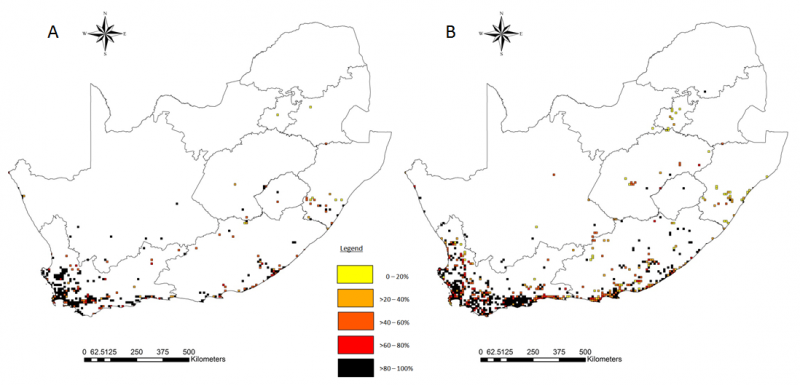


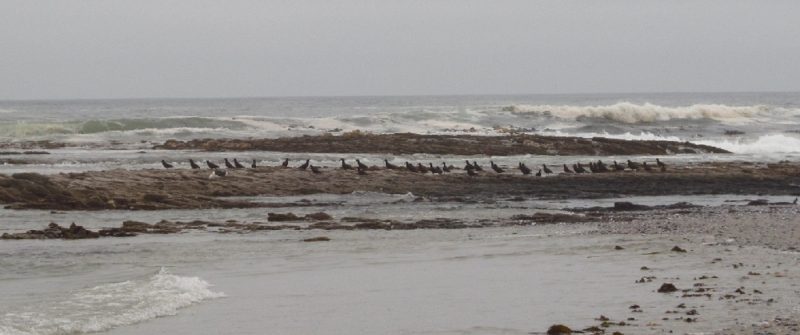

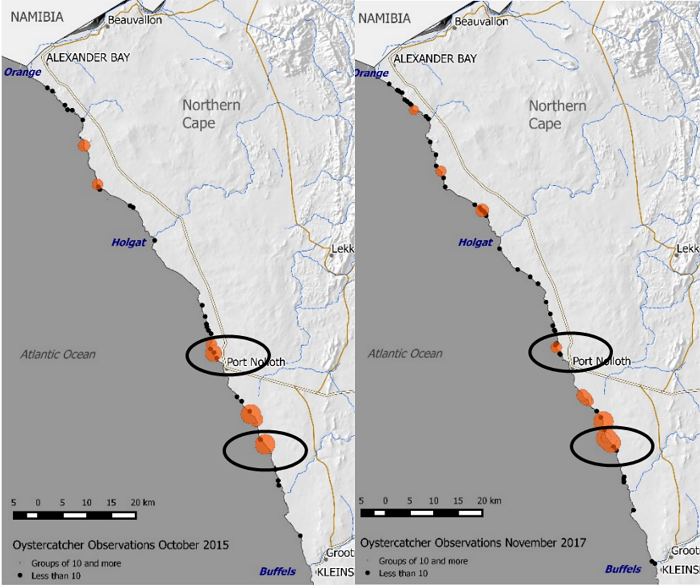
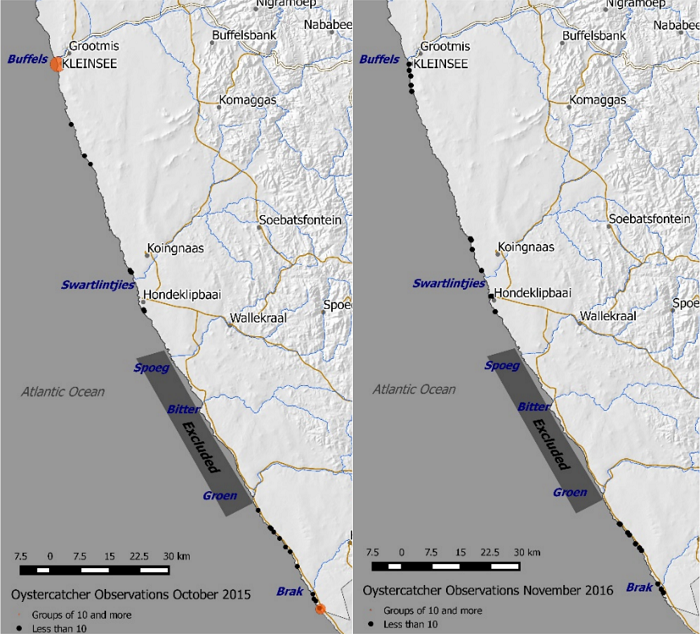
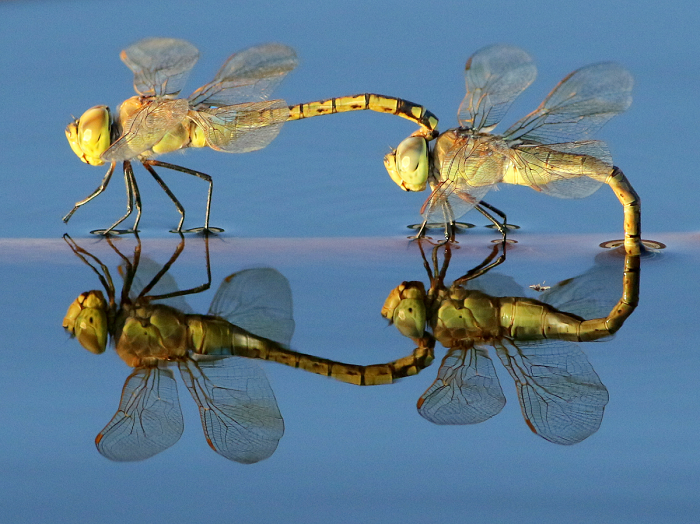

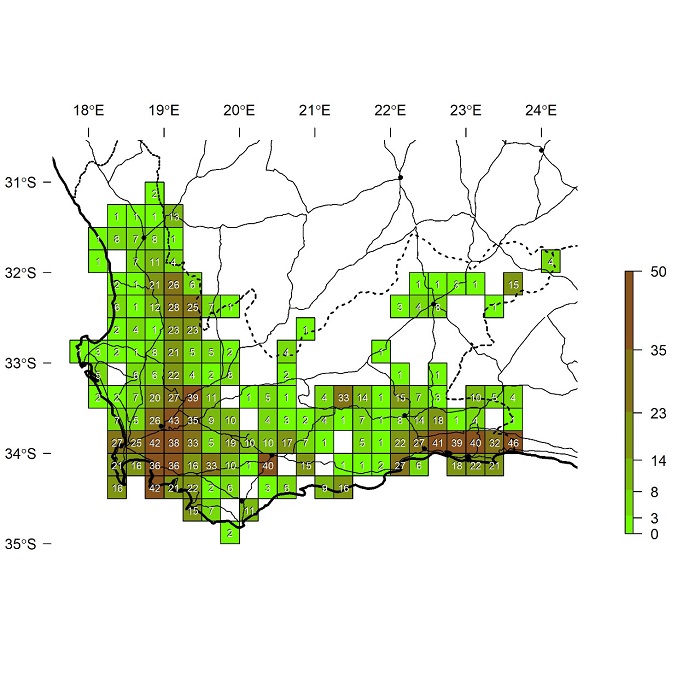
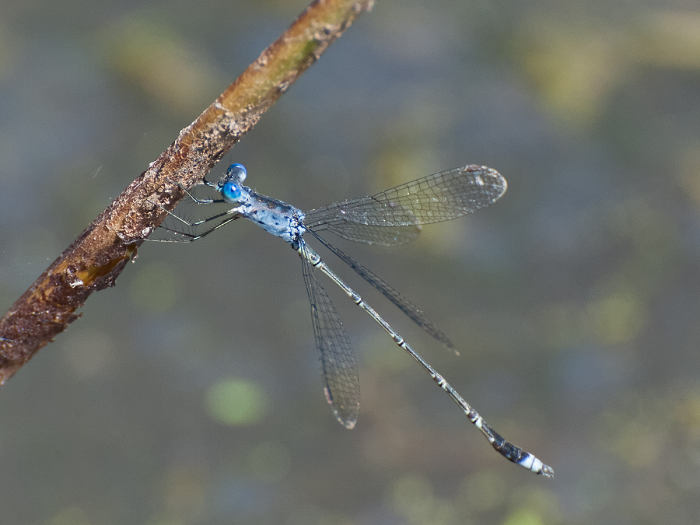
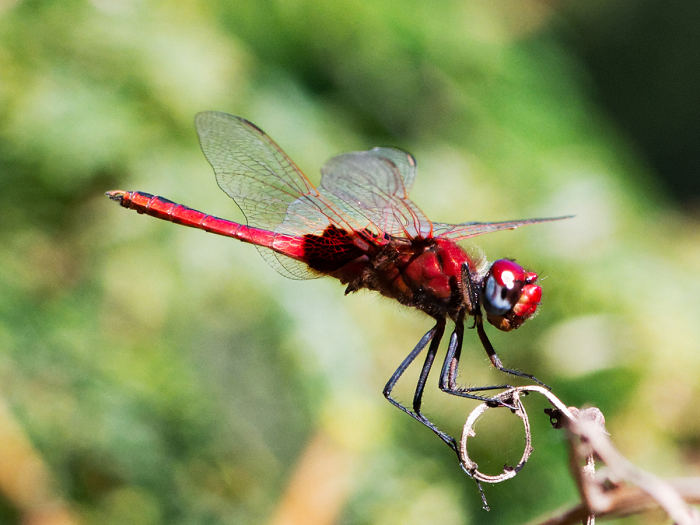
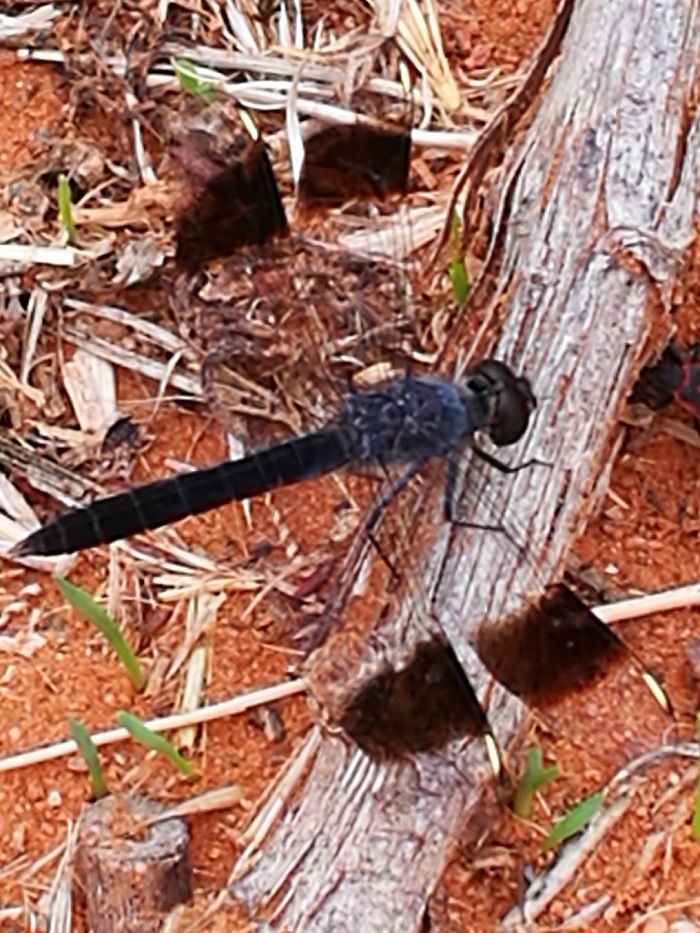
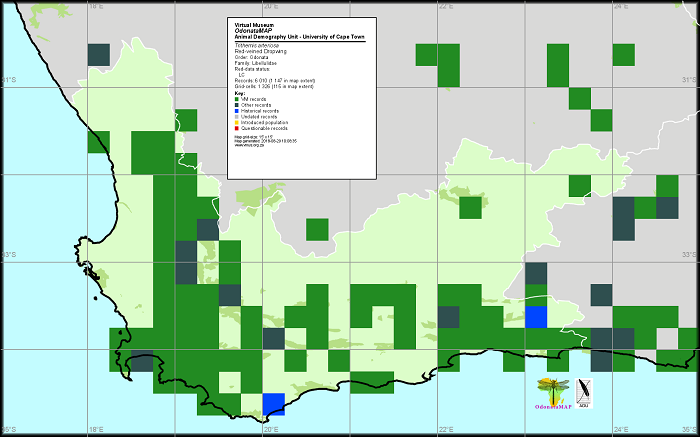


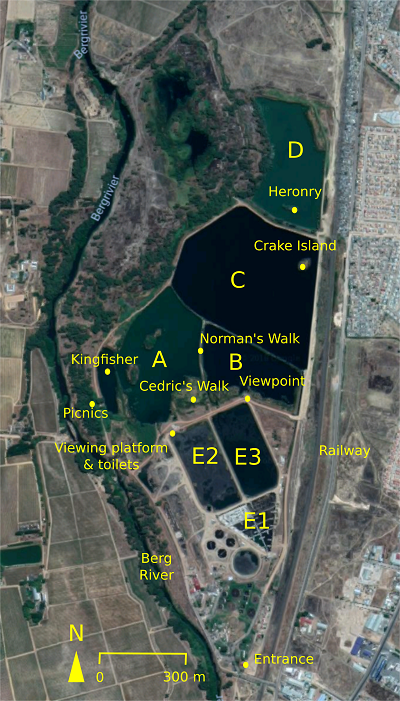
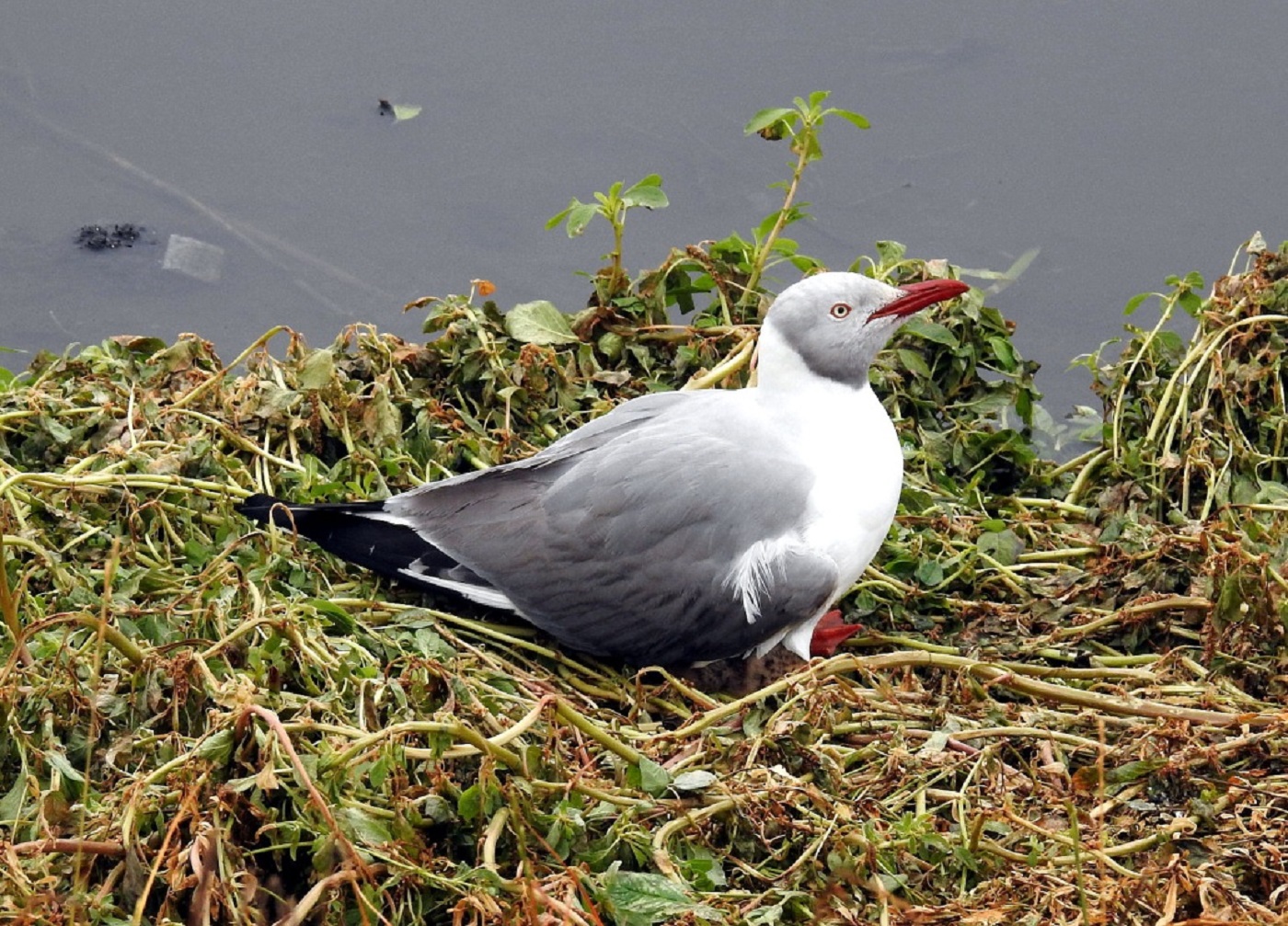
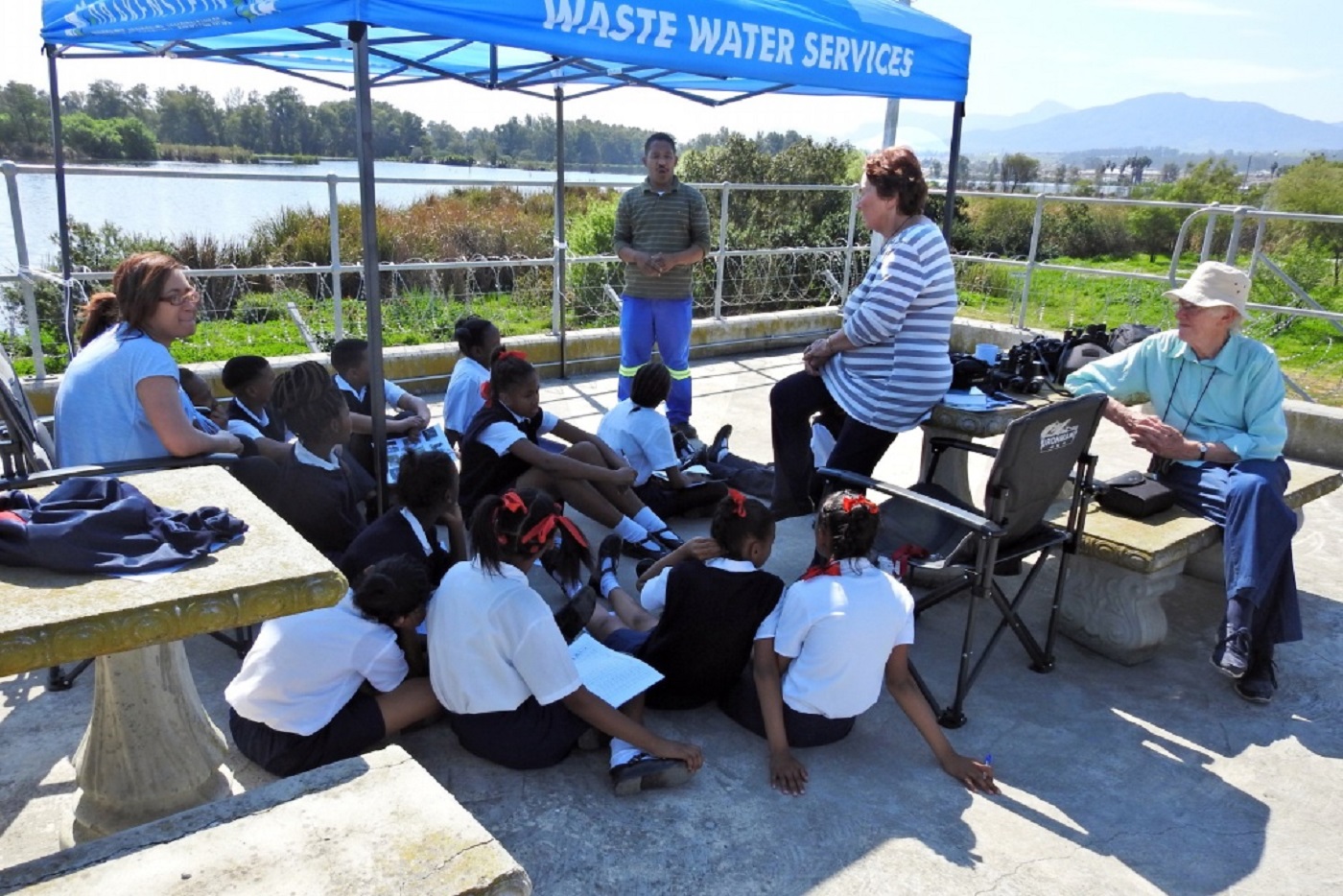
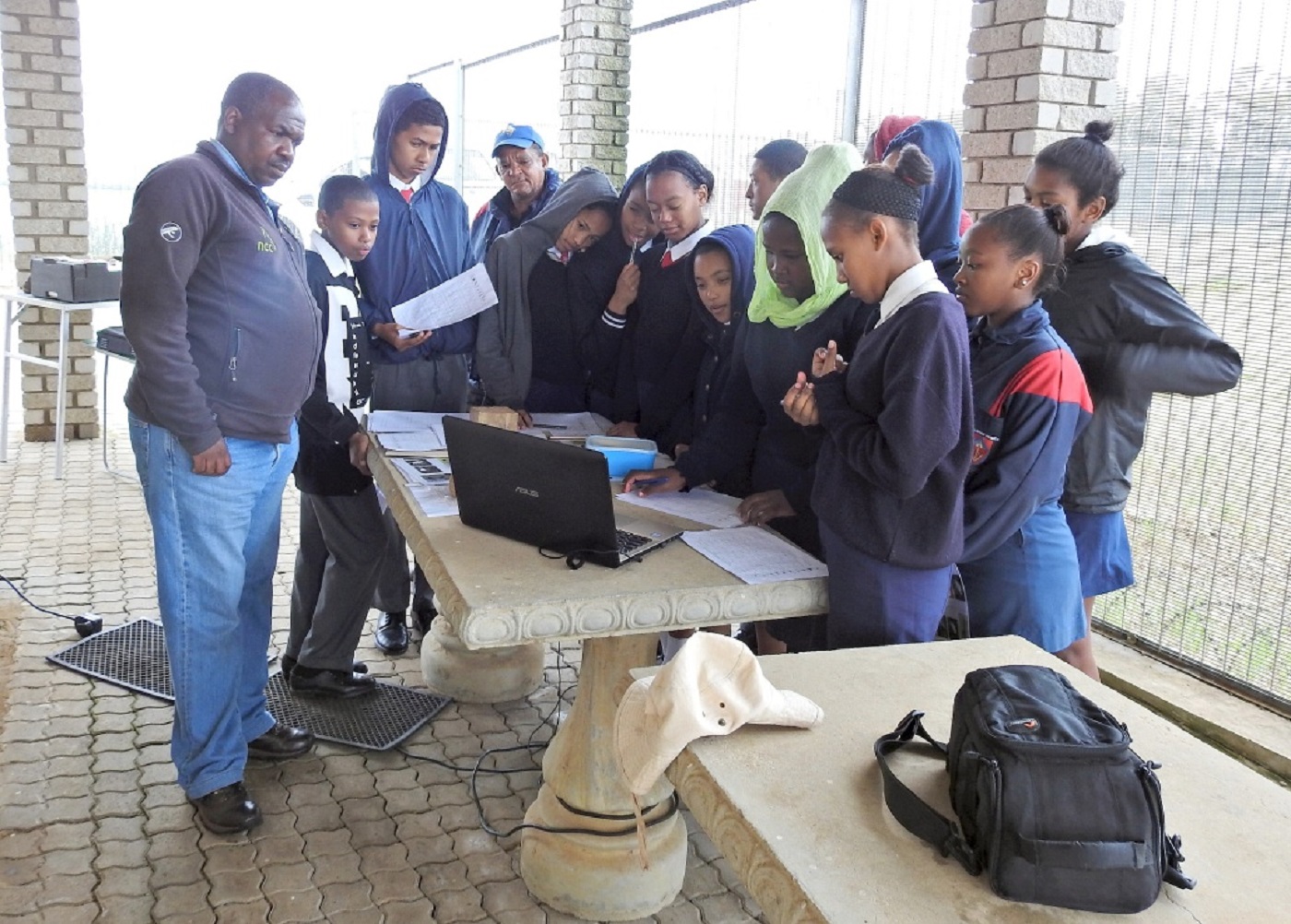
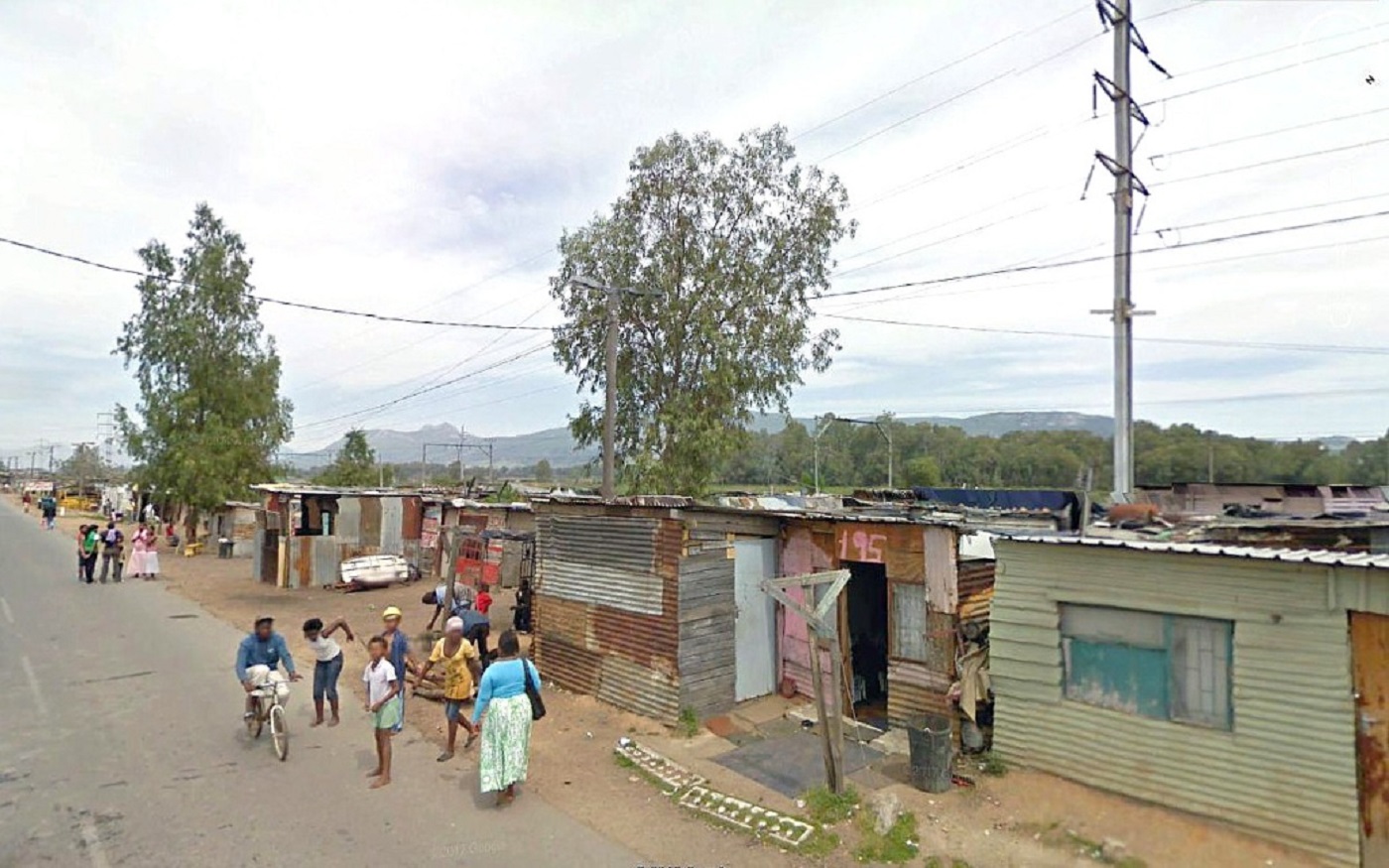
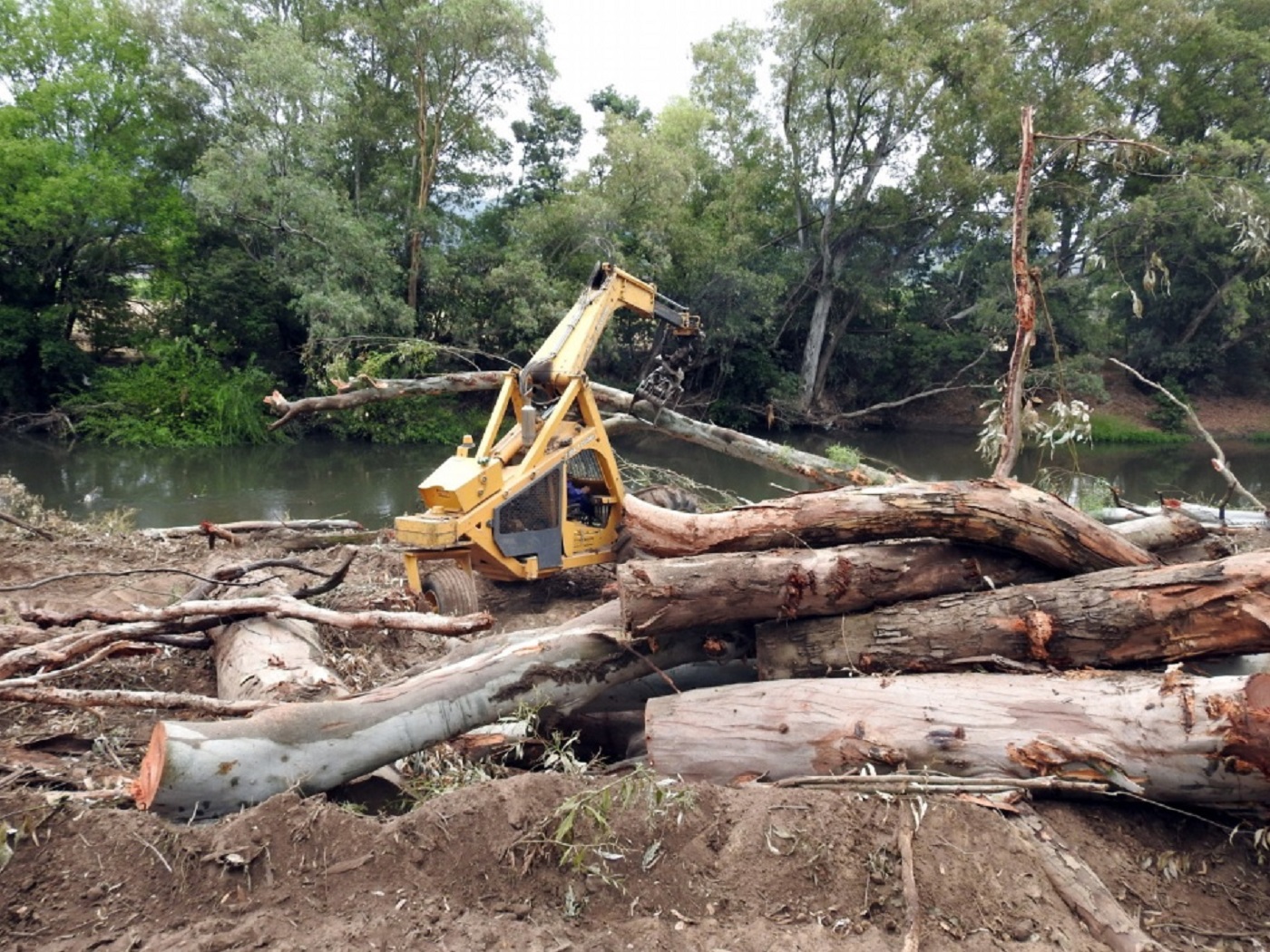
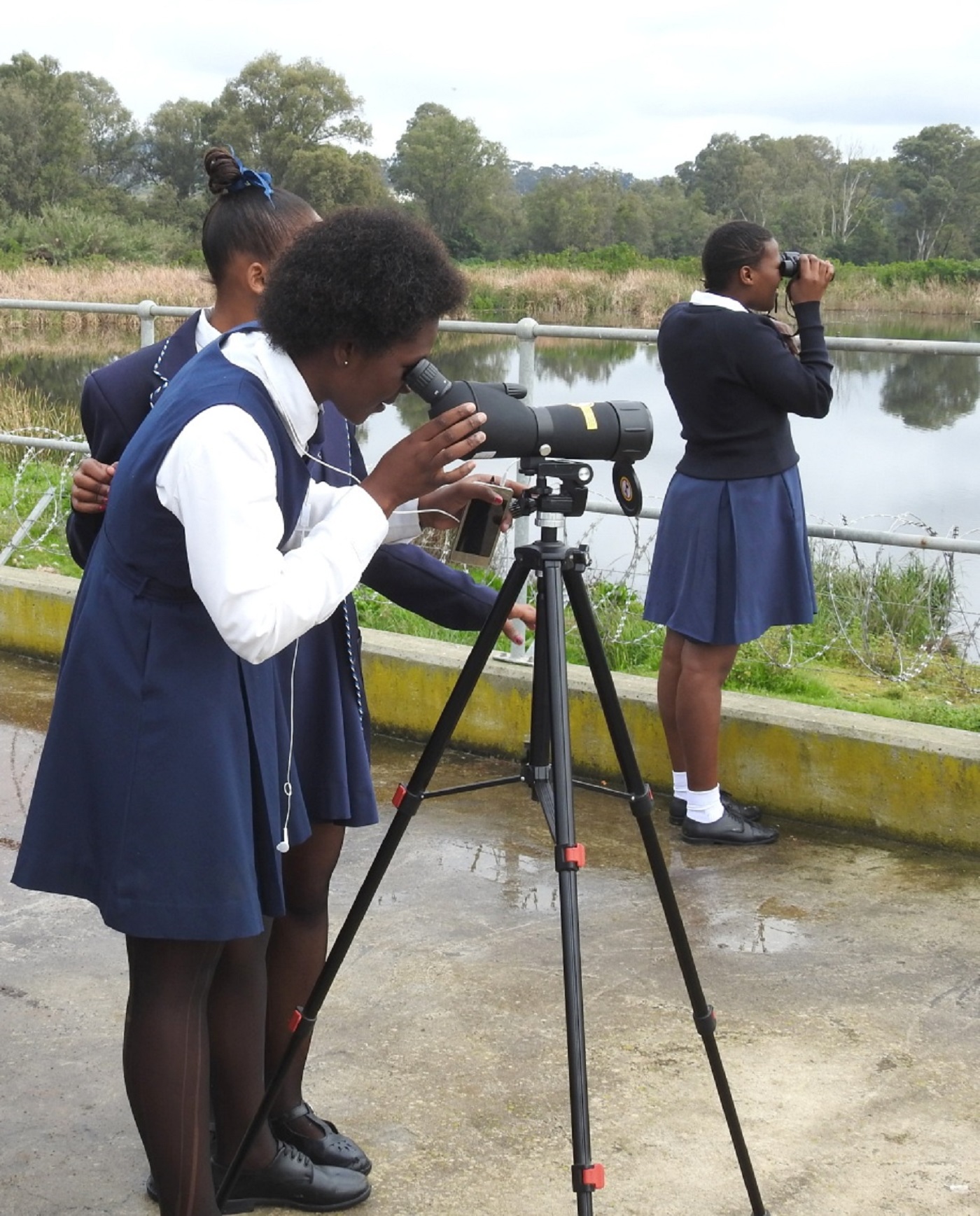
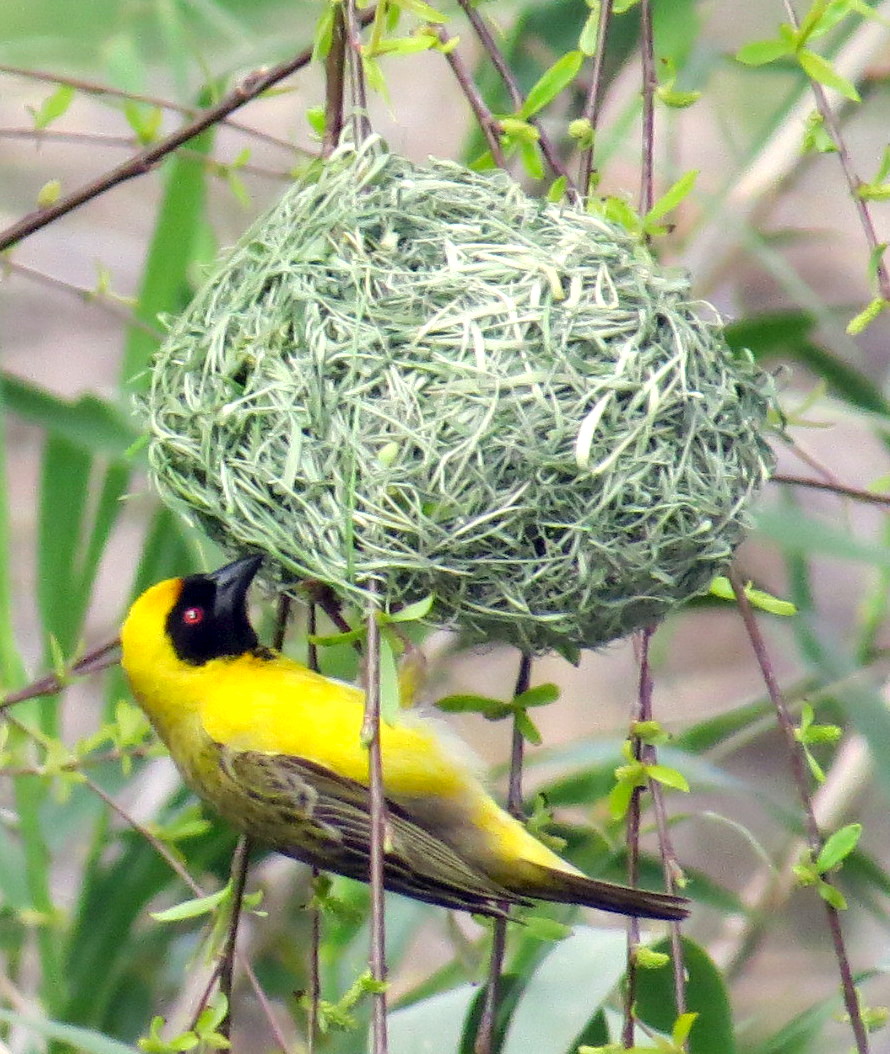
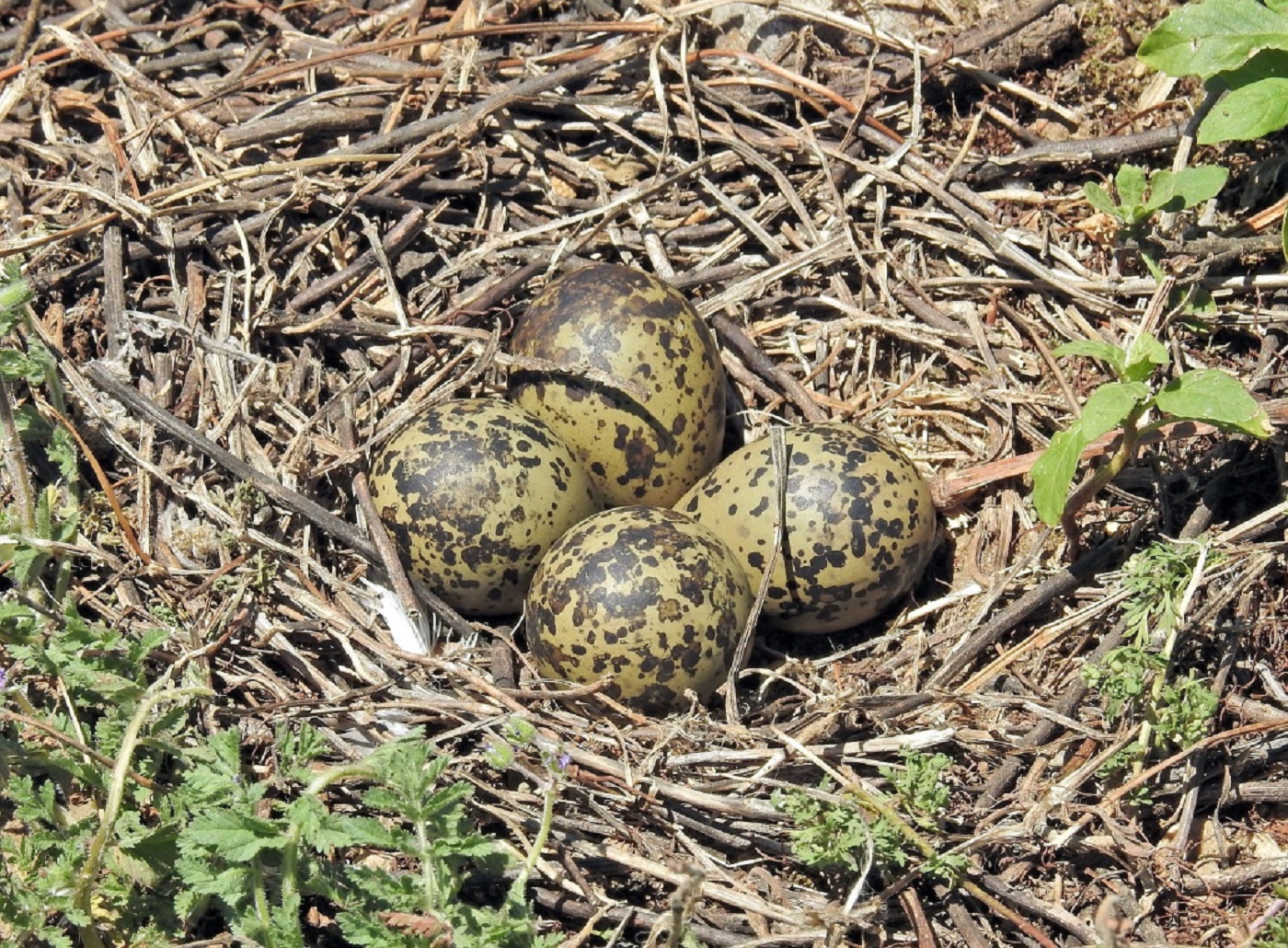
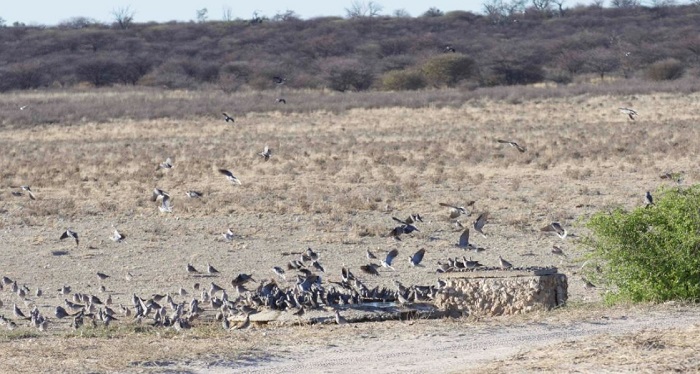
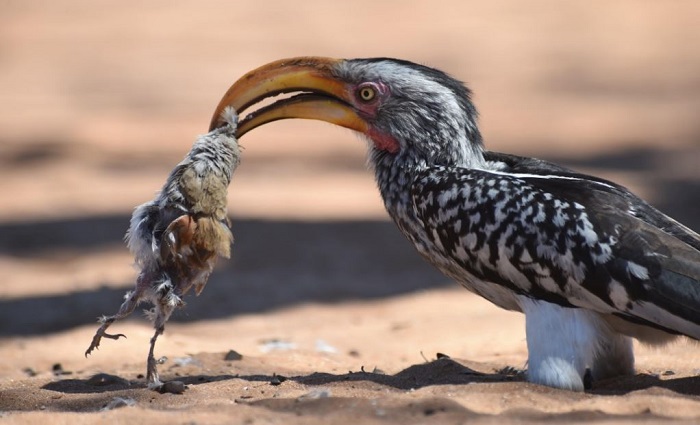
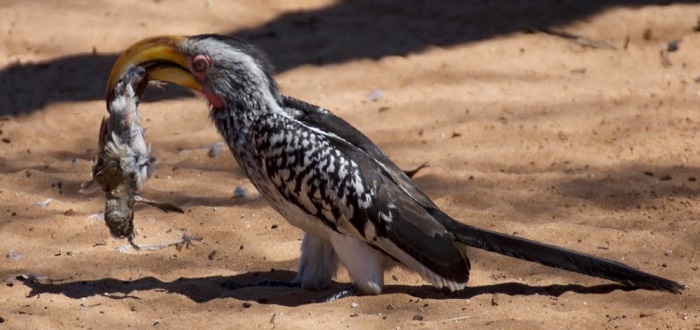

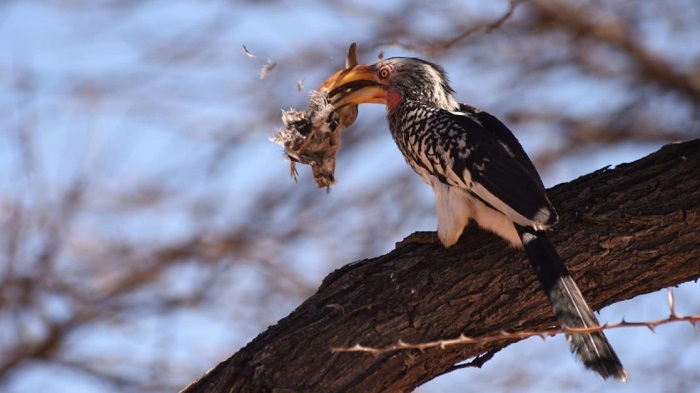

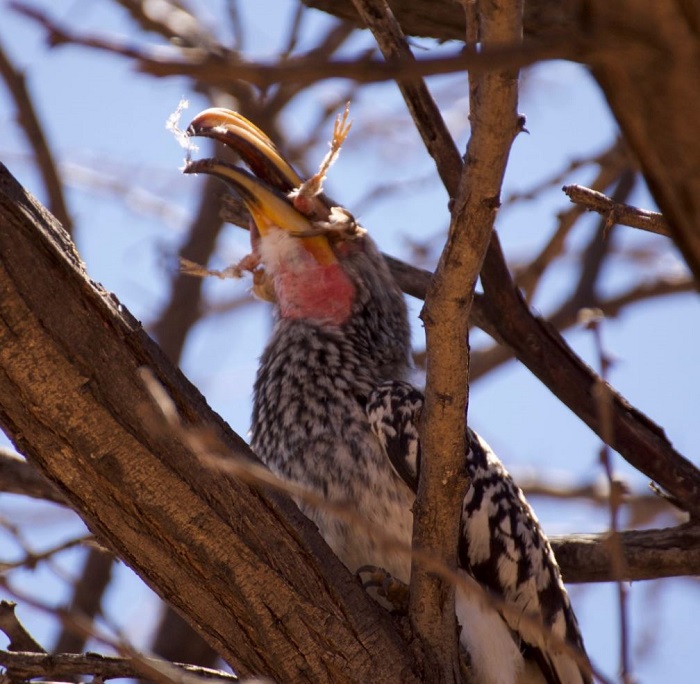

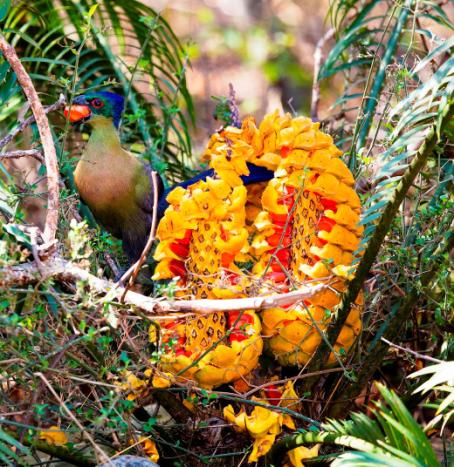
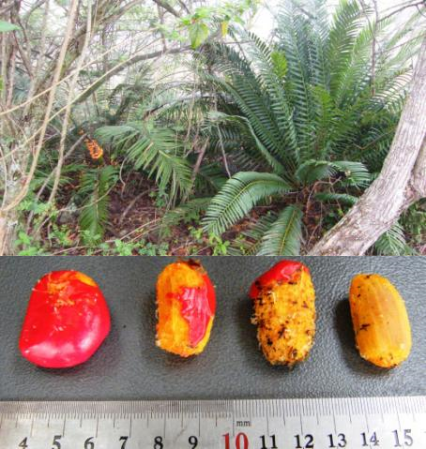




 Now that the method has been validated, we hope to use it to further examine how pregnancy, persecution outside of protected areas, levels of tourist activity and environmental factors contribute to the stress levels of this iconic African species.